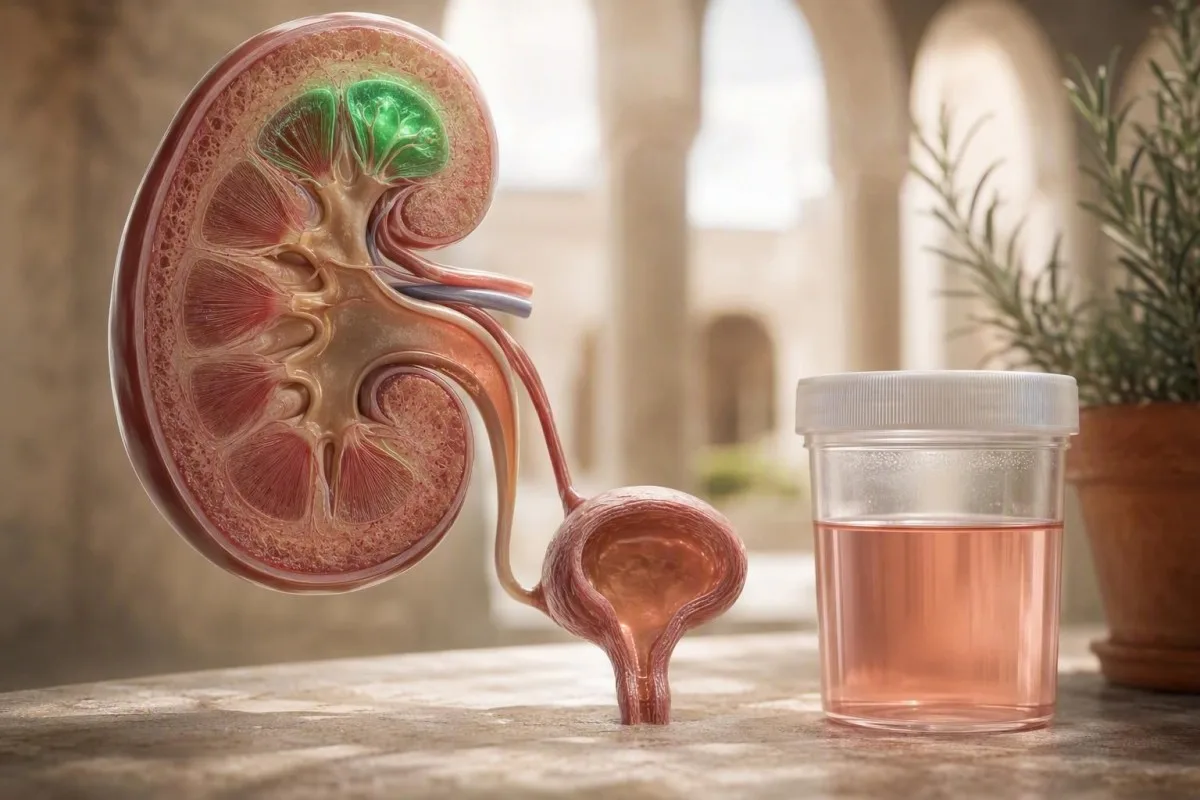
Узорак урина боје ружичасте или чајне боје након дугог трчања често је привремена хематурија индукована вежбањем, али видљива боја никада не сме бити аутоматски одбачена. Време, налази микроскопије, симптоми и правилно одморан поновљени узорак причају праву причу.


- Хематурија изазвана вежбањем обично нестане у року од 24–72 сата након интензивног трчања; перзистенција после 72 сата захтева медицински преглед.
- Праг микроскопије од 3 или више црвених крвних зрнаца по пољу великог увећања у правилно прикупљеном узорку урина испуњава дефиницију микрохематурије АУА.
- Неодговарајућа унакрсна анализа је битна: позитивна крвна подлога са нула до два црвена зрнца по пољу великог увећања указује на миоглобин или слободни хемоглобин, а не на уринарно крварење.
- Понављање у одређеним интервалима је практично: избегавајте напорне вежбе 48–72 сата, хидрирајте нормално, а затим дајте узорак урина из средњег млаза.
- Процена истог дана је разумно за згрушавање крви, немогућност мокрења, температуру, јаке болове у једном боку, или урин боје кола са израженим боловима у мишићима.
- Образац упозорења бубрега је крв плус протеин, црвена крвна зрнца у облику цилиндра, висок крвни притисак или падајући eGFR—не изолована унакрсна анализа после трке.
- Кључ за рабдомиолизу је несразмерно тамна урина са тешким мишићним симптомима и резултатом креатин киназе често изнад 5 пута већим од лабораторијске горње границе.
- Контекст ризика од рака мења праг за истрагу: старост, изложеност пушењу, претходно зрачење карлице и упорно видљиви хематурија су све важни.
Зашто трчање може учинити да урин изгледа ружичасто
Хематурија тркача је обично краткотрајно цурење црвених крвних зрнаца у урин након интензивног вежбања, често се решава у року од 24–72 сата одмора. Ипак, видљива роза, црвена или урин боје коле заслужује правилно сакупљен поновни тест, а не случајну претпоставку да је трчање узрок.
У клиници, охрабрујући образац је једноставан: промена боје почиње након неуобичајено дугог, брзог или низбрдог трчања; нема температуре, кољичне болове у слабинама или печење при мокрењу; и микроскопија се нормализује након одмора. Kantesti је анализатор крвних тестова заснован на AI који може повезати релевантне маркере бубрега — креатинин, eGFR, електролите и креатин киназу — са историјом вежбања, уместо да се један резултат након трке третира као дијагноза.
Предложени механизми су механички контакт зида бешике, привремени помери протока крви у бубрезима, концентрација повезана са дехидратацијом и повремено разлагање црвених крвних зрнаца од понављајућег удара стопала. Докази за сваки механизам су искрено помешани, јер је већина студија мала и користи различите дужине трка. У мојих 15 година клиничке праксе, историја новог напора је важнија од саме боје; први ултрамаратон и познати 5 км не носе исту преттест вероватноћу.
Видљива крв у урину након вежбања није синоним за бенигну хематурију тркача. А шири водич за црвене заставе хематурије је користан јер камен у бубрегу, инфекција, гломеруларна болест и карциноми уринарног тракта могу случајно да се први пут појаве након трчања.
Практична дефиниција
Хематурија изазвана вежбањем значи да се црвена крвна зрнца појављују у урину убрзо након напора и нестају на миру у поновљеном узорку. Позитиван тест траком сам по себи не доказује ову дијагнозу, јер реагент детектује хемски пигмент из неоштећених црвених крвних зрнаца, слободног хемоглобина или миоглобина.
Да ли је то хематурија, хемоглобин или миоглобин?
Тест трака за урин која показује позитиван резултат на крв може одражавати црвена крвна зрнца, хемоглобин или миоглобин, а микроскопија их раздваја. Рози урин са многим неоштећеним црвеним крвним зрнцима подржава хематурију; тамно смеђи урин са мало или без црвених крвних зрнаца изазива забринутост због пигмента од повреде мишића или хемолизе.
Микроскопија урина која показује 3 или више црвених крвних зрнаца по пољу високог увећања потврђује микрохематурију када је узорак чисто сакупљен. Насупрот томе, снажно позитиван тест траком са 0–2 црвена крвна зрнца по пољу високог увећања треба да натера лекара да размотри миоглобинурију, посебно након излагања топлоти, оптерећења мишића типа згњечења или јаког одложеног бола у мишићима. Браон или боја коле је типичнија за концентрован пигмент него за малу количину крварења из бешике.
Миоглобин је важан јер може пратити рабдомиолизу и акутну повреду бубрега. Концентрација креатин киназе изнад 5 пута већа од горње границе нормале у лабораторији се често користи као биохемијски праг за рабдомиолизу, иако симптоми, калијум, креатинин и излаз урина одређују хитну потребу. Погледајте наше практично објашњење opasno povišen kreatin kinaza za obrasce koji ne bi trebalo da čekaju preko noći.
Boje za hranu, cvekla, kupine, rifampicin, fenazopiridin i dehidratacija takođe mogu obojiti urin bez crvenih krvnih zrnaca. A razlika tamnog urina pomaže da se izbegne česta greška pretpostavke da svaki crvenkasti uzorak predstavlja krv.
Zašto se promena nege menja
Hematurija sa crvenim krvnim zrncima usmerava pažnju na urinarni trakt, dok mioglobinurija usmerava pažnju na skeletne mišiće i zaštitu bubrega. Obe pojave se mogu javiti nakon dugotrajnih aktivnosti, ali ih samo mikroskopija i ciljani krvni testovi mogu pouzdano razlučiti.
Како читати резултате анализе урина после трчања
Najinformativniji test urina nakon trčanja kombinuje test traku, mikroskopiju, merenje proteina i specifičnu težinu. Krv na test traci sa prolaznim crvenim krvnim zrncima i bez proteina je često niskog rizika; krv plus protein ili cilindri zahtevaju temeljniju procenu bubrega.
Rezultat krvi na test traci se izveštava kao negativan, trag, 1+, 2+, ili 3+, ali je to signal za skrining, a ne brojanje ćelija. AUA definiše mikrohematuriju kao više od 3 crvena krvna zrnca po vidnom polju visoke rezolucije na mikroskopskom pregledu, ne samo rezultat test trake (Barocas et al., 2020). Ova razlika sprečava da se trkači upuste u nepotrebnu proveru raka nakon lažno pozitivnog skrininga.
Specifična težina iznad 1.030 ukazuje na koncentrovan urin u mnogim laboratorijama i može učiniti boju alarmantnijom, ali ne objašnjava potvrđena crvena krvna zrnca. Protein od 1+ ili više treba kvantifikovati pomoću odnosa albumin-kreatinin u urinu ili odnosa protein-kreatinin; postoji prolazna vežba proteinurija, ali uporna albuminurija menja diferencijalnu dijagnozu ka oboljenju glomerula. Naš комплетан водич за анализу урина objašnjava zašto se ovi markeri ne smeju spajati u jedan rezultat.
Kantesti AI tumači kreatinin i eGFR zajedno sa nalazima urina, vremenom vežbanja i prethodnim vrednostima; jedan blago povišen kreatinin nakon vruće trke nije ekvivalentan hroničnoj bolesti bubrega. U praksi, pitam za udaljenost, teren, temperaturu, upotrebu antiinflamatornih lekova, menstrualni ciklus i da li je uzorak dat u roku od 2 sata od završetka.
Када треба поновити тест урина након трчања?
Ponovljeno testiranje urina 48–72 sata nakon poslednjeg napornog trčanja je razuman podrazumevani postupak za sumnju na hematuriju kod trkača. Koristite uzorak prve jutarnje ili srednjeg mlaza dobro hidrirane osobe, ali nemojte unositi litre vode neposredno pre toga jer ekstremna razblaženost može prikriti korisne nalaze.
Za rutinsku post-trkačku abnormalnost, obično preporučujem bez intervala, brda, teškog dizanja ili trka za 48 сати; nakon maratona, ultramaratona, toplotne bolesti ili neuobičajene upale, 72 сата je opravdaniji. Obično piće do žeđi je dovoljno. Prekomerna hidratacija može sniziti specifičnu težinu ispod 1.005 i povremeno otežati tumačenje graničnog rezultata.
Ako mikroskopija ostane pozitivna nakon 72 sata, dogovorite pregled kod primarnog lekara u roku od nekoliko dana, umesto da više puta testirate nakon treninga. Perzistentni rezultati opravdavaju merenje krvnog pritiska, serumskog kreatinina/eGFR, odnosa albumin-kreatinin u urinu i razmatranje kulture ili snimanja prema riziku. Odnos između napora, hidratacije i privremeno niže procene filtracije pokriven je u našem vodiču za eGFR nakon vežbanja.
Rekreativni maratonac od 52 godine koga sam video imao je 18 crvenih krvnih zrnaca po vidnom polju pod velikim uvećanjem uveče nakon vruće trke, ali 0–1 crvenih krvnih zrnaca nakon 72 sata mirovanja; njegov kreatinin se vratio sa 1,28 mg/dL na 0,96 mg/dL. Rezultat je bio umirujući, ali isti plan ne bi bio dovoljan za 52-godišnjeg pušača sa ponovljenom vidljivom bojom urina.
Ne testirajte na cilju ako to možete izbeći
Testiranje neposredno nakon vežbanja maksimizira šansu za pronalaženje privremenih crvenih krvnih zrnaca, koncentrisanog urina i proteina. To može biti klinički korisno kod sumnje na rabdomiolizu, ali je loše vreme za utvrđivanje osnovne linije trkača.
Који обрасци хематурије после трчања су обично охрабрујући?
Epizoda koja prolazi sama od sebe nakon intenzivnog trčanja je umirujuća kada potpuno nestane, nema bolova ili sistemskih simptoma, i nema proteinurije ili promene funkcije bubrega. Umirujuće ne znači ignorisano; to znači potvrđeno uzorkom iz mirovanja.
Fenotip sa nižim rizikom je mlađi ili sredovečni trkač sa jasnim okidačem napora, normalnim krvnim pritiskom, bez istorije pušenja i normalnom mikroskopijom iz mirovanja. U tom okruženju, pojedinačni prolazni rezultat od 3–10 RBC/HPF nakon trke se često povlači bez lečenja. Ipak bih to dokumentovao, jer recidiv nakon svake duge trke zaslužuje pažljiviji pregled od jednokratnog događaja.
Normalan odnos albumin-kreatinin u urinu je generalno ispod 30 mg/g (ispod 3 mg/mmol), iako laboratorije i zemlje prikazuju jedinice drugačije. Krv bez albumina, cilindara ili dizmorfinih crvenih krvnih zrnaca ukazuje na odsustvo glomerularnog curenja; to ne dokazuje izvor iz bešike, ali usmerava sledeće pitanje. Naše objašnjenje proteine u urinu покрива ово одељење јасно.
Траума бешике је вероватнија када је урин веома концентрисан и тркач заврши са скоро пражњеном бешиком. Неки спортски клиничари предлажу пражњење пре дугог трчања и редовно пијење, али ово су савети за превенцију са ограниченим доказима из испитивања – не замена за процену када боја перзистира.
Нормалан резултат има временску ознаку
Негативан тест 3 дана након трке је охрабрујући за ту епизоду, не гаранција за цео живот. Нова видљива хематурија месецима касније треба да се процени на основу сопствених заслуга, посебно након 40. године или са изложеношћу дувану.
Сигнали упозорења који чине хематурију код тркача мање вероватном
Хематурија захтева хитну процену када перзистира после 72 сата, понавља се без јаког вежбања, или се појављује са болом, грозницом, крвним угрушцима, протеинима или променом функције бубрега. Комбинација налаза је информативнија од узорака који сами по себи изгледају драматично.
Потражите благовремени медицински савет за видљив црвени урин који траје дуже од 24 сата, чак и ако се осећате добро; праг је нижи за људе старије од 40 година, пушаче или бивше пушаче, или оне са претходном карличном радијацијом. Смернице AUA користе стратификацију ризика на основу старости, пушења, степена и перзистенције микроскопске крви и претходне макроскопске хематурије, уместо третирања све микрохематурије на исти начин (Barocas et al., 2020).
Дизморфни еритроцити, цилиндри еритроцита, значајна албуминурија, нова хипертензија или смањен eGFR указују на извор у бубрежном филтеру, а не на потресену бешику. Цилиндри еритроцита никада нису очекивана последица обичног трчања и требало би да подстакну убрзану процену бубрега. Погледајте наш преглед грануларних и уринарних цилиндра зашто налази седимента значе.
Томас Клајн, MD, саветује тркачима да не врше само-тријажу само на основу боје: инфекција уринарног тракта може изазвати пецкање, ургентност, пиурију, а понекад и хематурију, док камење чешће изазива изненадни једнострани бол и мучнину. Култура је најкориснијија пре антибиотика када су присутни симптоми инфекције.
Комбинација крв-плус-протеин
Потврђена хематурија са протеинуријом је забрињавајућа од изоловане хематурије јер обе могу потицати из гломеруларног филтера. Однос албумин-креатинин у урину од 30 mg/g или више треба поновити и тумачити заједно са крвним притиском и функцијом бубрега.
Када ружичасти урин после вежбања захтева негу истог дана?
Потражите хитну процену истог дана за угрушке, немогућност мокрења, јак бол у боку, грозницу, вртоглавицу, смањену производњу урина, или тамни урин са јаким болом и слабошћу мишића. Ове карактеристике указују на нешто више од некомпликоване хематурије изазване вежбањем.
Угрушци могу опструирати проток урина, а немогућност мокрења је хитни проблем без обзира на атлетску спремност. Грозница 38.0°C или више са болом у боку може указивати на инфекцију горњих уринарних путева; јак кољични бол са повраћањем може указивати на камен. Нити једна ситуација се не сме управљати чекањем на поновни тест након трчања.
Тамно смеђи урин након напора уз јаку осетљивост мишића, слабост, отоке или смањену производњу изазива забринутост због рабдомиолизе. Почетно тестирање обично укључује креатин киназу, креатинин, калијум, калцијум, фосфате и анализу урина. A водич за рабдомиолизу код CrossFit-а je relevantan jer neuobičajena ekscentrična vežba – ne samo trčanje – često izaziva problem.
Teška dehidracija može učiniti da rezultati bubrega izgledaju lošije, ali se takođe može javiti uz stvarno oštećenje. Ako ste vrtoglavi, zbunjeni, ne možete da zadržite tečnost ili vrlo malo mokrite za 8–12 сати, ne pokušavajte kod kuće da rešite problem sportskim napicima.
Trudnoća i antikoagulansi
Trudnice koje trče i osobe koje uzimaju antikoagulanse treba odmah da prijave vidljivu hematuriju. Antikoagulansi mogu pojačati krvarenje, ali ne uklanjaju potrebu za identifikacijom njegovog izvora; trudnoća takođe menja prag za proveru infekcije, kamenca i bolesti bubrega.
Стања која трчање може открити, а не изазвати
Trčanje može otkriti postojeći urinarni problem koncentrisanjem urina ili podsticanjem testa, umesto da samo uzrokuje hematuriju. Kamenci, infekcija, glomerularna bolest, strukturne abnormalnosti i malignitet ostaju deo diferencijalne dijagnoze.
Kamenci u bubregu često uzrokuju jednostranu bol u boku do prepona, mučninu i crvena krvna zrnca na mikroskopiji, iako se javljaju i bezbolni kamenci. Urinarna infekcija češće izaziva peckanje, učestalo mokrenje, hitnost i bela krvna zrnca; negativan rezultat nitrita ga ne isključuje. Naš vodič za leukocitnu esterazu sa negativnim nitritom objašnjava ovaj čest mešoviti obrazac.
Glomerulonefritis se može javiti nakon infekcije gornjih disajnih puteva sa urinom boje kole, otokom, povišenim krvnim pritiskom, proteinurijom i dismorfnim crvenim krvnim zrncima. U KDIGO 2024 CKD smernici, uporna albuminurija i smanjeni eGFR se tretiraju kao komplementarni markeri rizika za bubrege, a ne kao zamenljiva merenja (KDIGO, 2024).
Kantesti je alat za analizu krvnih testova zasnovan na veštačkoj inteligenciji koji pomaže korisnicima da prepoznaju obrazac kreatinina, eGFR, albumina, elektrolita i CBC, ali ne može dijagnostikovati anatomski izvor hematurije. Slikovne metode, mikroskopija, kultura i pregled lekara i dalje obavljaju odlučujući posao.
Rak je redak kod mladih trkača, ali nije nemoguć kod odraslih
Vidljiva hematurija zahteva procenu čak i kada se vežbanje čini očiglednim objašnjenjem, posebno kod osoba sa izloženošću duvanskom dimu ili upornim simptomima. Rizik se povećava sa starošću i kumulativnom izloženošću duvanskom dimu, zbog čega identični rezultati urina ne dovode do identičnih planova testiranja.
Коме је потребно праћење код уролога или нефролога?
Trajna hematurija nakon ponovljenog uzorka u mirovanju treba da se proceni kao rizik za urologiju, dok hematurija plus proteinurija, cilindri, hipertenzija ili oštećenje eGFR ukazuje na nefrologiju. Mnogima je potrebno samo ponovljeno testiranje pod vođstvom primarne zdravstvene zaštite; upućivanje zavisi od obrasca.
Urološka procena je posebno prikladna za ponovljenu vidljivu hematuriju, upornu mikroskopsku hematuriju, istoriju pušenja, profesionalnu izloženost aromatičnim aminima, prethodno zračenje karlice ili urinarne simptome bez infekcije. U zavisnosti od rizika, lekari mogu koristiti ultrazvuk bubrega i bešike, CT urografiju i cistoskopiju. Jednokratni trag na test traci nakon trke kod 24-godišnjaka je veoma drugačiji scenario od ponovljene crvene mokraće kod 58-godišnjeg bivšeg pušača.
Nefrološka revizija postaje verovatnija sa odnosom albumina i kreatinina u urinu ≥30 mg/g, eGFR ispod 60 mL/min/1.73 m² u trajanju od 3 meseca ili duže, cilindrima crvenih krvnih zrnaca ili teško kontrolisanim krvnim pritiskom. Ti pragovi su važni jer se hronična bolest bubrega definiše trajanjem, kao i pojedinačnim merenjem. Pročitajte naš vodič za stadijume hronične bubrežne bolesti za praktične kategorije.
Usluga tumačenja laboratorijskih nalaza kompanije Kantesti može identifikovati ponavljajući obrazac krvi i proteina za diskusiju, posebno kada korisnici učitavaju rezultate iz različitih laboratorija. Ona treba da podrži, a ne zameni, kliničara koji odlučuje da li je potrebno snimanje urinarnog trakta ili specijalistički pregled.
Ne dozvolite da antikoagulacija okonča razgovor
Upotreba antikoagulanasa menja težinu krvarenja, ali ne utvrđuje uzrok hematurije. Iz mog iskustva, pripisivanje ponovljene krvi u urinu apiksabanu, varfarinu ili aspirinu bez ispitivanja može odložiti prepoznavanje kamenaca, infekcije ili strukturne bolesti.
Који крвни тестови помажу након хематурије повезане са вежбањем?
Korisni krvni testovi zavise od simptoma: kreatinin, eGFR, elektroliti i kreatin kinaza procenjuju stres bubrega i mišića, dok CBC procenjuje anemiju ili tragove infekcije. Rutinski široki paneli su manje korisni od ciljanog testiranja nakon precizne anamneze i analize urina.
Kreatinin može porasti prolazno nakon treninga izdržljivosti zbog metabolizma mišića, smanjene perfuzije bubrega i dehidracije. Jednačine za eGFR su manje pouzdane tokom brze promene kreatinina, zbog čega je ponovljena vrednost nakon 48–72 сата uobičajenog oporavka često značajnija od rezultata na cilju. Naš vodič za ponovnu proveru kreatinina povezanog sa vežbanjem daje kontekst za ovaj česti okidač anksioznosti.
Kreatin kinaza ima širok post-vežbački opseg: obučeni sportisti mogu pokazati povišene vrednosti nakon trke bez povrede bubrega, dok vrednosti mnogostruko iznad lokalne gornje granice plus simptomi zaslužuju hitnu procenu. Kalijum iznad 6,0 mmol/L je potencijalno opasan i zahteva hitnu kliničku procenu, posebno ako je funkcija bubrega oštećena ili se sumnja na povredu mišića.
CBC je najkorisniji kada postoji umor, bljedilo, jako menstrualno krvarenje, ponovljena hematurija ili zabrinutost zbog sistemske bolesti. Hemoglobin može pasti nakon događaja izdržljivosti usled širenja zapremine plazme, gubitka gvožđa ili hemolize; feritin treba tumačiti dalje od akutne upale i teških treninga. Trkači na duge staze mogu smatrati naš pregled krvnih analiza sportista korisnim za razuman osnovni nivo.
Ne dijagnostikujte bolest bubrega na osnovu jednog panela tokom nedelje trke
Povišenje kreatinina od 0,3 mg/dL ili više može zadovoljiti kriterijum akutne bubrežne povrede u pravom vremenskom okviru, ali kontekst i ponovljeno testiranje su odlučujući nakon trke. Nizak izlaz urina, rastući kalijum i uporno povišenje nose veću težinu od izolovanog graničnog rezultata.
Како прикупити поновни узорак урина коме лекари могу веровати
Uzorak urina iz srednjeg mlaza dobijen čistim hvatanjem nakon 48–72 sata bez napornog vežbanja najbolji je način za proveru da li se hematurija povukla. Greške u sakupljanju, kontaminacija menstrualnom krvlju i stari uzorak mogu stvoriti pogrešne rezultate.
Operite ruke, počnite da mokrite u toalet, a zatim sakupite srednji deo bez dodirivanja unutrašnjosti posude. Dostavite uzorak odmah – idealno u roku od 2 сата– ili pratite uputstva laboratorije za hlađenje. Produženo stajanje menja izgled ćelija i može učiniti mikroskopiju manje pouzdanom.
Izbegavajte testiranje tokom aktivne menstruacije gde je to moguće; ako testiranje ne može da čeka, obavestite kliničara i laboratoriju. Vaginalna kontaminacija može proizvesti prividne crvene krvne ćelije i proteine, dok skvamozne epitelne ćelije često signaliziraju loše sakupljen uzorak. Naš vodič za епителних ћелија у урину objašnjava zašto ovo nije trivijalna laboratorijska napomena.
Thomas Klein, MD, preporučuje zapisivanje četiri detalja uz uzorak: poslednja naporna sesija, trajanje događaja, spoljna temperatura i svi lekovi uzeti u prethodnih 72 sata. Rezultat bez vremenske odrednice je mnogo teži za tumačenje—posebno kada se urin prikupi nakon dvostrukog treninga.
Testiranje prvog jutarnjeg urina u odnosu na dnevno testiranje
Uzorak prvog jutarnjeg urina je koncentrovan i dobar za otkrivanje malih abnormalnosti, ali uzorak srednjeg mlaza tokom dana uz normalnu hidrataciju je prihvatljiv ako je sakupljanje čišće. Konzistentnost je važnija za serijsko poređenje: koristite otprilike iste uslove pri svakom ponovnom testiranju.
Хидратација, лекови против болова и суплементи који мењају слику
Dehidracija može da koncentriše urin i poveća bubrežno opterećenje, dok NSAIL mogu smanjiti protok krvi u bubrezima tokom vežbi izdržljivosti. Nijedan faktor ne dokazuje uzrok hematurije, ali oba utiču na to koliko oprezno kliničari tumače rezultat nakon trčanja.
Za većinu trkača, piti po žeđi i postepeno nadoknađivati gubitke je sigurnije nego uporno unositi tečnost. Vrlo nizak nivo natrijuma od prekomernog unosa vode može biti opasan; serumski natrijum ispod 125 mmol/L sa glavoboljom, povraćanjem, konfuzijom ili konvulzijama je hitno stanje. Boja urina je grub pokazatelj hidratacije, ne precizan merač hidratacije.
Ibuprofen, naproksen i drugi NSAIL mogu smanjiti protok krvi u bubrezima posredovan prostaglandinima, posebno tokom toplotnog stresa, povraćanja ili dugih događaja. Savetujem pacijentima da izbegavaju rutinsko profilaktičko uzimanje NSAIL-a pre maratona, osim ako im njihov lekar nije dao jasan razlog. Kontekst medikacije je istražen u našem članku o bezbednosti laboratorijskih trendova.
Visoke doze vitamina C mogu da ometaju određene reakcije urinskih test traka, a suplementi koji se prodaju za poboljšanje performansi ponekad sadrže neprijavljene stimulante ili diuretike. Ponesite originalna pakovanja ili jasne fotografije na pregled; to je često korisnije nego pokušavati da zapamtite listu sastojaka brendiranog praška. Naš vodič za bezbednost suplemenata za sportiste nudi razuman čeklist.
Hidratacija nije tretman za upornu krv
Voda može ispraviti koncentraciju, ali ne leči kamen, infekciju, glomerularni proces ili strukturni urinarni izvor. Ako crvena krvna zrnca ostanu u uzorku prikupljenom u mirovanju i pravilno, dalje postupanje treba da se zasniva na šemi, a ne na još jednom eksperimentu sa hidratacijom.
Можете ли наставити да трчите након хематурије индуковане вежбањем?
Većina trkača se može postepeno vratiti nakon što boja urina normalizuje, simptomi nestanu, a ponovljeni uzorak u mirovanju je umirujući. Nemojte se vraćati napornim treninzima dok urin ostaje vidljivo crven, rezultati bubrega su abnormalni, ili simptomi mišića ukazuju na rabdomiolizu.
Nakon nekomplikovane pojedinačne epizode, obično predlažem lagano trčanje samo nekoliko dana, zatim postepeno obnavljanje obima i intenziteta tokom 7–14 дана. Trkač treba da stane i potraži pregled ako se boja ponovi, pojavi se bol, ili se smanji izlučivanje urina. Ovo je pragmatičan klinički pristup, ne recept dokazan kliničkim ispitivanjima.
Ponovljena hematurija nakon iste distance može opravdati praktične eksperimente: izbegavajte trčanje dehidriran, mokrite pre dugog trčanja, sporije uvodite trening nizbrdo, i proverite pristajanje obuće ili teren. Vodite dnevnik tempa, toplote, trajanja, boje urina i rezultata uzoraka. лабораторијским водичем за маратонаца može pomoći da se razdvoje markeri oporavka od razloga za prekid treninga.
Nemojte trenirati uprkos neobjašnjenoj vidljivoj hematuriji samo zato što imate zakazano takmičenje. Sportisti su često odlični u podnošenju nelagodnosti; teža veština je prepoznavanje da je upornost dijagnostička informacija, a ne test izdržljivosti.
Izgradite pravi osnovni nivo
Analiza urina i panel bubrega urađeni najmanje 72 sata nakon napornog treninga mogu buduće rezultate nakon trke učiniti mnogo lakšim za tumačenje. Ovo je posebno korisno za ultra-trkače, osobe sa jednim bubregom, ili sportiste koji koriste lekove koji utiču na perfuziju bubrega.
Шта рећи свом лекару о крви у урину после вежбања
Najbrži put do korisne procene hematurije je sažeta vremenska linija: boja urina, doza vežbanja, simptomi, lekovi i vreme ponovnog testiranja. Navedite stvarne laboratorijske vrednosti umesto samo poruke da je uzorak bio “pozitivan na krv”.”
Navedite da li je urin bio roze, svetlo crven, boje čaja, ili je sadržao ugruške; da li se boja pojavila pre, tokom, ili posle vežbanja; i da li se razbistrila posle prvog mokrenja. Uključite peckanje, hitnost, groznicu, bol u boku, mučninu, oticanje i smanjenu diurezu. Detaljan referenca boje urina može pomoći da se zapažanje precizno opiše bez preteranog tumačenja.
Navedite prethodne analize urina, vrednosti kreatinina/eGFR, očitanja krvnog pritiska, istoriju pušenja, porodičnu istoriju bolesti bubrega i spisak lekova/dodataka. Kantesti je platforma za tumačenje AI biomarkera koji mogu organizovati ponovljene vrednosti krvnih testova i naglasiti značajne promene, ali lekar mora te vrednosti povezati sa mikroskopijom urina i pregledom.
Od 3. septembra 2026. godine, klinički princip ostaje jednostavan: vežbanje je verovatna$\textbf{ pretpostavka}$ samo nakon što se rezultat povuče i nema konkurentnih tragova. Ako niste sigurni, pitajte da li vam je potrebna mikroskopija, kultura, odnos albumin-kreatinin, ponovni kreatinin, snimanje, ili upućivanje—ne samo još jedan test trakom.
Pitanja koja vredi postaviti
Pitajte da li su viđene nepromenjene crvene krvne ćelije, da li su prisutni proteini ili cilindri, i kada bi trebalo ponoviti test u mirovanju. Ta tri odgovora obično pojašnjavaju da li je sledeći korak pažljivo praćenje, testiranje bubrega, testiranje na infekciju, ili urološka procena.
Разуман план деловања за хематурију код тркача
Za jednu bezbolnu epizodu nakon napornog trčanja, odmorite se od napornog vežbanja 48–72 sata i ponovite analizu urina iz čistog hvata; potražite raniju negu za crvene zastavice ili upornu vidljivu boju. Cilj nije panika niti odbacivanje—već dokaz da se nalaz povlači.
Korak jedan: prekinite naporan trening, hidrirajte se normalno, i zabeležite vreme i simptome. Korak dva: ponovite mikroskopiju nakon 48–72 сата. Korak tri: ako krv perzistira, ili ako se pojave proteini, cilindri, bol, groznica, ugrušci, niska diureza, ili abnormalni bubrežni markeri, odmah dogovorite medicinski pregled. Ovaj niz sprečava kako propuštanje bolesti, tako i nepotrebno snimanje nakon jednokratnog uzorka sa ciljne linije.
Kada naš klinički tim pregleda učitane laboratorijske podatke, dajemo prioritet obrascima: rastući kreatinin plus visok CK i niska diureza je hitniji od stabilnog kreatinina sa prolaznom trakom za urin. Metodologija i zaštitne mere Kantesti opisani su u našem klinički validacioni podaci, a naš lekarski nadzor je detaljno opisan kroz Медицински саветодавни одбор.
Većina pacijenata smatra da ponovljeni test u određeno vreme pretvara alarmantnu promenu boje u jasan plan. Ali ako vam instinkt govori da nešto nije u redu—posebno ako je urin i sutra još crven—verujte tom signalu i pregledajte se.
Pravilo od jedne rečenice
Roze urin jednom nakon napornog trčanja može biti prolazan; roze urin koji perzistira, ponavlja se, ili se javlja sa simptomima je hematurija dok se pravilno ne proceni.
Често постављана питања
Колико траје хематурија код тркача?
Хематурија код тркача обично престаје у року од 24–72 сата након прекида интензивног вежбања. Практичан поновни тест урина је узорак прикупљен средином млаза, након 48–72 сата без јаког трчања или тешких подизања. Упорно видљив ружичаст или црвен урин после 24 сата, или микроскопска хематурија која остаје након 72 сата, треба да процени лекар. Грозница, крвни угрушци, јак бол у боку, смањена запремина урина или јак бол у мишићима оправдавају процену истог дана.
Da li je krv u urinu posle vežbanja normalna?
Крв у урину након вежбања може бити пролазни ефекат интензивног трчања, дехидратације, удара у зид бешике или краткотрајних промена протока крви у бубрезима, али није аутоматски нормално. Микроскопија која потврди 3 или више црвених крвних зрнаца по пољу великог увећања испуњава АУА дефиницију микрохематурије. Резултат који нестане на понављаном узорку након одмора је охрабрујући, док упорна крв, протеини, цилиндри, бол или уринарни симптоми захтевају даљу процену. Видљиву боју урина увек треба пријавити, посебно код одраслих са изложеношћу пушењу или понављајућим епизодама.
Da li dehidracija može izazvati ružičasti urin nakon trčanja?
Dehidratacija može uzrokovati tamniji izgled urina i pojačati nalaz post-vežbačke hematurije koncentrisanjem sadržaja urina, ali sama dehidratacija ne objašnjava pouzdano potvrđene crvene krvne ćelije. Specifična težina urina iznad 1,030 često ukazuje na koncentrisani urin u mnogim laboratorijama. Pijte normalno do osećaja žeđi i ponovite uzorak nakon čišćenja nakon 48–72 sata odmora, umesto da pokušavate da "isperete" rezultat prekomernom količinom vode. Jaka žeđ, vrtoglavica, vrlo malo izlučivanje urina ili konfuzija zahtevaju hitan medicinski pregled.
Koja je razlika između hematurije i mioglobinurije nakon vežbanja?
Hematuria znači prisustvo neozleđenih crvenih krvnih zrnaca u urinu, dok mioglobinurija odražava pigment mišića oslobođen nakon povrede mišića. Test traka može biti pozitivna na krv u oba slučena, tako da je mikroskopija odlučujuća: mioglobinurija često daje pozitivnu test traku sa 0–2 eritrocita po vidnom polju pod velikim uveličanjem. Jaki bolovi u mišićima, slabost, otok, tamni urin boje kole ili vrednost kreatin kinaze iznad 5 puta veća od laboratorijske gornje granice izazivaju sumnju na rabdomiolizu. Taj obrazac zahteva hitnu kliničku procenu jer se kalijum i funkcija bubrega mogu brzo promeniti.
Da li treba da prestanem da trčim ako imam hematuriju izazvanu vežbanjem?
Prestanite sa intenzivnim trčanjem dok se boja urina ne normalizuje i ne završite ponovljeni test u mirovanju, obično nakon 48–72 sata. Ako je ponovljeni uzorak normalan i nemate bolove, groznicu, krvne ugruške, proteinuriju ili abnormalnosti bubrežne funkcije, većina trkača može se postepeno vratiti tokom oko 7–14 dana. Nemojte nastavljati sa intenzivnim treningom kada urin ostaje vidljivo crven ili taman, kada je smanjeno izlučivanje urina, ili kada su prisutni teški mišićni simptomi. Ponavljajući epizode nakon sličnih treninga zahtevaju medicinski pregled, čak i ako se svaka epizoda povuče.
Kada hematurija zahteva urologa?
Упорна микроскопска хематурија након узорка узетог у мировању, понављајућа видљива хематурија или хематурија код особе са историјом пушења, претходним зрачењем карлице или уринарним симптомима често захтевају процену уролошког ризика. Уролози могу размотрити ултразвук, ЦТ урографију и цистоскопију у зависности од старости и укупног ризика, уместо да користе један тест за све. Хематурија са албуминуријом од 30 mg/g или више, црвеним крвним цилиндрима, хипертензијом или eGFR испод 60 mL/min/1.73 m² јаче указује на нефрологију. Тачна специјалност зависи од комплетног обрасца урина и крвних тестова.
Укључите AI анализу крвне слике данас
Придружите се више од 2 милиона корисника широм света који верују Kantesti-у за тренутну и прецизну анализу лабораторијских тестова. Отпремите своје резултате крвне слике и добијте свеобухватно тумачење 15,000+ биомаркера за неколико секунди.
📚 Референциране научне публикације
Klajn, T., Mičel, S., i Veber, H. (2026). Višejezična AI podrška kliničkom odlučivanju za ranu trijažu Hantavirusa: Dizajn, inženjerska validacija i primena u realnom svetu na preko 50.000 interpretiranih izveštaja o analizi krvi. Kantesti AI Medical Research.
Klajn, T., Mičel, S., i Veber, H. (2026). Претходно регистровани, рубрик-вођени аутоматизовани технички бенчмарк тумачења крвних тестова за Kantesti Blood-Test Interpretation Engine на 100.000 синтетичких тест случајева. Kantesti AI Medical Research.
📖 Спољне медицинске референце
⚕️ Медицинска одрицање одговорности
Овај чланак је само у образовне сврхе и не представља медицински савет. За одлуке о дијагнози и лечењу увек се консултујте са квалификованим здравственим радником.
Е-Е-А-Т сигнали поверења
Искуство
Клиничка ревизија процеса тумачења лабораторијских налаза коју води лекар.
Експертиза
Фокус на лабораторијску медицину: како се биомаркери понашају у клиничком контексту.
Ауторитативност
Написао др Томас Клајн, уз рецензију др Саре Мичел и проф. др Ханса Вебера.
Поузданост
Тумачење засновано на доказима, са јасним путевима праћења како би се смањила узнемиреност.