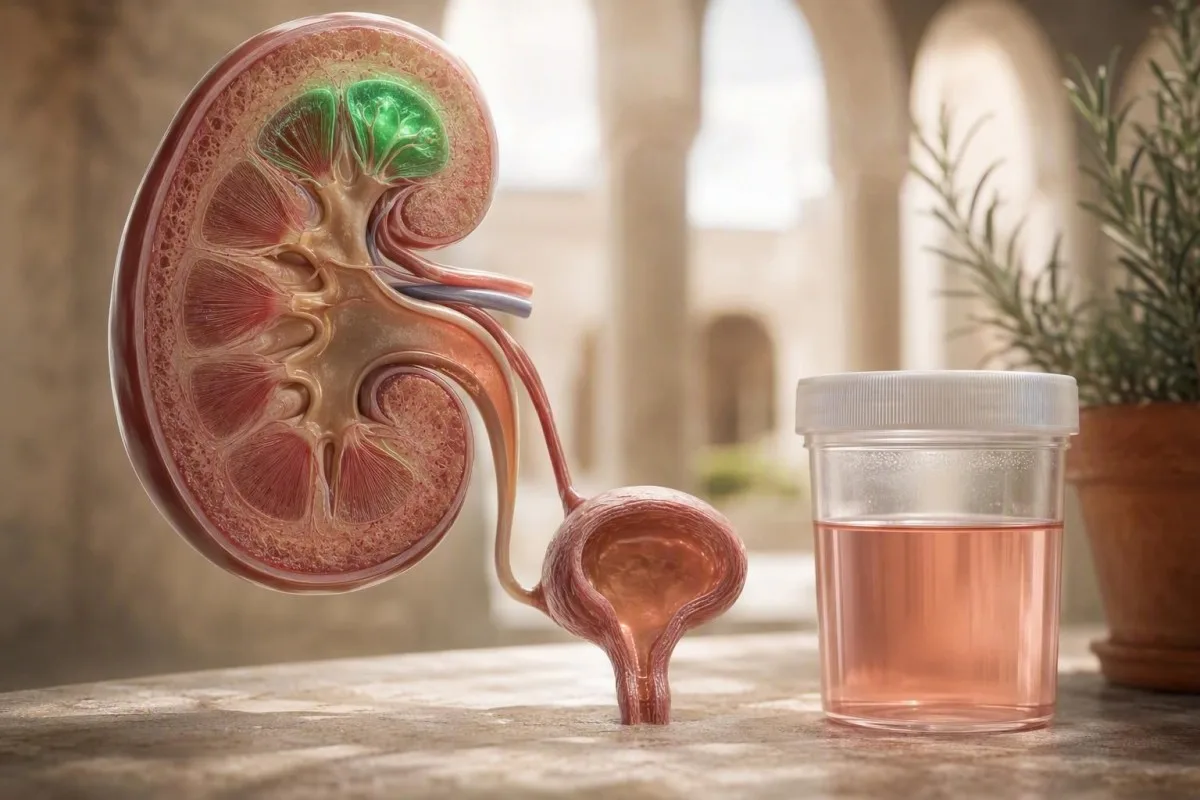
ئۇزۇن يۈگۈرگەندىن كېيىن سۈيدۈكنىڭ قىزىل ياكى چاينىڭ رەڭگىدە بولۇشى كۆپىنچە ۋاقىتلىق چېنىقىش سەۋەبىدىن قان تېپىش (hematuria) بولىدۇ، ئەمما كۆزگە كۆرۈنەرلىك رەڭنى ھەرگىزمۇ بىۋاسىتە كۆز يۇمۇپ كەتمەسلىك كېرەك. ۋاقتى، مىكروسكوپتىكى نەتىجىلەر، simptomlar ۋە ياخشى دەم ئالغاندىن كېيىن تەكرارلانغان ئەۋرۇنە ھەقىقىي ھېكايىنى سۆزلەيدۇ.


- چېنىقاشتىن كېلىپ چىققان ھېماتورىيە ئادەتتە قىيىن يۈگۈرگەندىن كېيىن 24-72 سائەت ئىچىدە ياخشىلىنىدۇ؛ 72 سائەتتىن ئاشسا دوختۇرنىڭ كۆزدىن كۆتۈرۈشى تەلەپ قىلىنىدۇ.
- مىكروسكوپ سۇيىتى ياخشى توپلانغان سۈيدۈك ئەۋرۇنىسىدە ھەر بىر ئالىي كۈچتىكى مەيداندا 3 ياكى ئۇنىڭدىن كۆپ قىزىل قان ھۈجەيرىسى AUA نىڭ مىكرو قان تېپىش (microhematuria).
- Dipstick mismatch ئەھمىيىتى: ھەر بىر چوڭ ئىقتىدارلىق مەيداندا 0-2 قىزىل قان تومۇرى بار قان سېلىنچىنىڭ مۇسبەت بولۇشى مىيوگلوگوبىلوگ ياكى ھەقسىز ھېمىلىمىگىنى تاشلاندۇق قان بىلەن سېلىشتۇرغاندا تېخىمۇ كۆپ ئىسپاتلايدۇ.
- تەكرار قىلىش ۋاقتى ئەمەلىي: 48-72 سائەت داۋامىدا قاتتىق چېنىقىشتىن ساقلىنىڭ, نورمال ئىچىملىك سۈيىنى ئىچىڭ, ئاندىن ئوتتۇرا ئېقىملىق سۈيدۈك ئەۋرىشكىسى بېرىڭ.
- شۇ كۈنىدىكى باھالاش پۇت-قول, سۈيدۈك چىقارالماسلىق, ئىسسىق, بىر تەرەپتىن قىيغاق ئاغرىقى ياكى ماسسى بىلەن يېشىل سۈيدۈك ئۈچۈن ئەقىللىق.
- بۆرەك ئاگاھلاندۇرۇش ئەندىزىسى قان بىلەن ئاقسىل, قىزىل قان تومۇر قۇيۇلغىنى, يۇقىرى قان بېسىمى, ياكى چۈشۈپ كېتىۋاتقان eGFR - پەقەت يۈگۈرگەندىن كېيىنكى تاشلاندۇق ئەمەس.
- رابdomiyolaizis (mushak to'qimasining parchalanishi) ning belgisi qattiq mushaklar og'rig'i va buyraklar fermenti (creatine kinase)ning laboratoriya chegarasidan 5 martadan ortiq yuqori natijasi bilan birga noodatiy to'q rangli siydikdir.
- Saraton xavfi konteksti tekshiruv chegarasini o'zgartiradi: yoshi, chekish tarixi, tos suyagi sohasiga oldingi nurli davolanish va barqaror ko'zga ko'rinarli gematuriyaning barchasi muhimdir.
نېمىشقا يۈگۈرۈش سۈيدۈكنى قىزىل رەڭدە قىلىشى مۇمكىن
Sportchilarning gematuriyasi odatda jismoniy mashqlardan keyin siydikdagi qizil qon hujayralarining qisqa muddatli oqishi, bo'lib, ko'pincha dam olgandan keyin 24–72 soat ichida yo'qoladi. Shunga qaramay, pushti, qizil yoki kola rangli siydikni yugurish sabab bo'ldi degan tasodifiy xulosaga kelishdan ko'ra, to'g'ri yig'ilgan takroriy tekshiruvga loyiqdir.
Klinikal holatda, tasalli beruvchi holat aniq: rang o'zgarishi odatdagidan uzun, tez yoki pastga yugurishdan keyin boshlanadi; isitma, bel og'rig'i yoki siydik yong'lashi yo'q; va mikroskopiya dam olgandan keyin normal holatga qaytadi. Kantesti بولسا بىر AI قان تەكشۈرۈش ئانالىزاتورى bu buyrak bilan bog'liq ko'rsatkichlarni — kreatinin, eGFR, elektrolitlar va kreatin kinazani — mashq tarixiga yonma-yon qo'yishga imkon beradi, balki poygadan keyingi bitta natijani tashxis sifatida qabul qilishdan ko'ra.
Taklif qilingan mexanizmlar - bu siydik pufagi devorining mexanik ta'siri, buyrak qon oqimining vaqtinchalik o'zgarishi, suvsizlanish bilan bog'liq konsentratsiya va ba'zan takroriy oyoq urishidan kelib chiqqan eritrotsitning parchalanishi. Har bir mexanizm uchun dalillar halol bo'lingan, chunki ko'pgina tadqiqotlar kichik va turli poyga masofalarini ishlatadi. Mening 15 yillik klinik tajribamda yangi urinish tarixi rangdan ko'ra muhimroqdir; birinchi ultramarafon va tanish 5 km bir xil oldingi sinov ehtimoliga ega emas.
Jismoniy mashqlardan keyin siydikda qon ko'rinishi benoz sportchi gematuriyasi bilan sinonim emas. A keng gematuriyaning qizil bayroqli qo'llanmasi foydalidir, chunki buyrak toshlari, infektsiya, glomerulyar kasalliklar va siydik yo'llarining saratonlari tasodifan yugurishdan keyin birinchi marta o'zini ko'rsatishi mumkin.
Amaliy ta'rif
Jismoniy mashqlar ta'sirida kelib chiqqan gematuriya deganda, mashqlardan so'ng darhol siydikda eritrotsitlar paydo bo'lib, dam olgandan keyin takroriy namuna olishda yo'qolishi tushuniladi. Faqatgina ijobiy dipstik bu tashxisni tasdiqlamaydi, chunki reaktiv butun eritrotsitlar, erkin gemoglobin yoki miyoglobin kabi gem pigmentini aniqlaydi.
قان تېپىش (hematuria)، ھېم
Qon uchun ijobiy o'qiladigan siydik dipstigi eritrotsitlar, gemoglobin yoki miyoglobinni aks ettirishi mumkin va mikroskopiya ularni ajratadi. Ko'p sonli butun eritrotsitlar bilan pushti siydik gematuriyani tasdiqlaydi; oz miqdordagi yoki eritrotsitlarsiz to'q jigarrang siydik mushak shikastlanishi yoki gemolizdan kelib chiqqan pigmentdan xavotirni uyg'otadi.
Siydik mikroskopiyasida ko'rsatilgan yuqori kuchli maydonda 3 yoki undan ko'p eritrotsit namuna toza yig'ilganida mikrohematuriyani tasdiqlaydi. Bunga zid bo'lsa, yuqori kuchli maydonda 0–2 eritrotsit bilan kuchli ijobiy dipstik, ayniqsa issiqlik ta'siri, ezilish tipidagi mushak yuklamasi yoki og'ir kechikkan mushak og'rig'idan keyin, miyoglobinuriyani ko'rib chiqishga undashi kerak. Jigarrang yoki kola rang konsentrlangan pigmentdan ko'ra siydik pufagining kam miqdordagi qon ketishiga ko'proq xosdir.
Miyoglobin muhim, chunki u rabdomiyolaizis va o'tkir buyrak shikastlanishi bilan birga bo'lishi mumkin. Kreatin kinaza konsentratsiyasi laboratoriya normal chegarasidan 5 martadan yuqori odatda rabdomiyolaizis uchun biokimyoviy chegarada ishlatiladi, ammo simptomlar, kaliy, kreatinin va siydik chiqarish hajmi shoshilinchlikni belgilaydi. Bizning amaliy tushuntirishimizni ko'ring يەكەنە يۇقىرى كراتىين كىناز ئەگەر يەنە بىر كېچە ساقلاشقا ئەرزىمايدىغان ئەندىزىلەرنى.
يېمەكلىك بويى، قىزىلچا، قارامۇچ، رىفامپىنىن، فېنازوپىرىدىن ۋە سۇسىزلىنىش قان تومۇرلىرىنى قاندىنمۇ ئۆزگەرتەلەيدۇ. بىر تەنكى ئىشچەكنىڭ پاراڭ-پەرقى قىزىل رەڭلىك ئەۋلادنىڭ ھەممىسى قاندىن ئىبارەت دەپ پەرەز قىلىشتا كۆپ ئۇچرايدىغان خاتالىقتىن ساقلىنىشقا ياردەم بېرىدۇ.
نېمىشقا پەرقى داۋالاشنى ئۆزگەرتىدۇ
قىزىل قان ھۈجەيرىلىك ھېماتوريا زۇم (شەپ) غا قارىتىلىدۇ، ھالبۇكى مىيوگلوبىنوريا ئۇچقۇر مۇسكۇل ۋە تومۇر قوغدىنىشىغا قارىتىلىدۇ. ھەر ئىككىسى ئۇزۇن مۇساپىلىك پائالىيەتلەردىن كېيىن يۈز بېرىشى مۇمكىن، ئەمما مىكروسكوپ ۋە تومۇر قان تەكشۈرۈشىلا ئۇلارنى توغرا ئايرىيالاي.
يۈگۈرگەندىن كېيىن سۈيدۈك تەكشۈرۈش نەتىجىسىنى قانداق ئوقۇش كېرەك
تەكشۈرۈشتىن كېيىنكى ئەڭ ئۈنۈملۈك تومۇر سىنىقى سىزىقلىق، مىكروسكوپ، ئاقسىل ئۆلچەش ۋە ئالاھىدە تارتىش كۈچىنى ئۆز ئىچىگە ئالىدۇ. سىزىقلىق سىناقتا قان تومۇرلىرى بار، تومۇرلار بولمىسا، كۆپىنچە خەتەر تۆۋەن بولىدۇ؛ قان بىلەن بىللە ئاقسىل ياكى قاتتىق تومۇرلارنى تومۇرنى تېخىمۇ ئەستايىدىل تەكشۈرۈشنى تەلەپ قىلىدۇ.
سىزىقلىق قان نەتىجىسىنى يوق، ئاز، 1+، 2+، ياكى 3+ دەپ خاتىرىلەنگەن، ئەمما ئۇ ھۈجەيرە سانىنى ئەمەس، بەلكى سىناق سىگنالى. AUA مىكروھېماتورىيەنى مىكروسكوپىيەلىك تەكشۈرۈشتە يۇقىرى ئېنېرگىيەلىك مەيدانغا 3 دىن ئارتۇق قىزىل قان ھۈجەيرىسى دەپ ئېنىقلايدۇ, ، پەقەت سىزىقلىق نەتىجە ئەمەس (Barocas et al., 2020). بۇ پەرقى يۈگۈرگۈچىلەرنى يالغان-ئىسپاتلىق سىناقتىن كېيىنكى تومۇرنى تەكشۈرۈشكە مەجبۇر قىلىشتىن ساقلايدۇ.
ئالاھىدە تارتىش كۈچىدىن يۇقىرى 1.030 كۆپلىگەن تەجرىبىخانىلاردا سۇسىز تومۇرنى كۆرسىتىدۇ ۋە رەڭنى تېخىمۇ قورقۇنچلۇق قىلىدۇ، ئەمما ئۇ جەزىملەشتۈرۈلگەن قىزىل قان ھۈجەيرىلىرىنى چۈشەندۈرەلمەيدۇ. 1+ ياكى ئۇنىڭدىن يۇقىرى ئاقسىلنى سۈت بېزى ۋە كراتىينىي كۈرۈنىشى ياكى ئاقسىل-كراتىينىي كۈرۈنىشى بىلەن مىقدارىنى ئۆلچەش كېرەك؛ ۋاقىتلىق چېنىقىش ئاقسىل بار، ئەمما داۋاملىق ئالبۇمىنورىيە تومۇر خاراكتېرلىك يۇقۇملىنىش تەرەپكە قارىتىلىدۇ. بىزنىڭ تولۇق سىيىش ئانالىزى قوللانمىسى بۇ بەلگىلەرنىڭ بىرلا نەتىجىگە بىرلەشتۈرۈلمەسلىكىنى چۈشەندۈرىدۇ.
Kantesti AI تومۇرغا، چېنىقىش ۋاقتىغا ۋە ئىلگىرىكى قىممەتلىرىگە قوشۇپ كراتىينىي ۋە eGFR نى تەكشۈرىدۇ؛ يۇقىرى ئىسسىق مۇسابىقىدىن كېيىنكى بىرلا قىممەتلىك كراتىينىي كرونىك تومۇر كېسىلى بىلەن باراۋەر ئەمەس. ئەمەلىيەتتە، مەن مۇساپە، تېررىئورىيە، تېمپېراتۇرا، ياللۇغ قارشى دورا ئىشلىتىش، ھەيز ۋاقتى، ۋە ئەۋلادنى تاماملاپ 2 سائەت ئىچىدە تاپشۇرغان-تاپمىغانلىقىنى سورىدىم.
يۈگۈرگەندىن كېيىن سۈيدۈك تەكشۈرۈشىنى قاچان تەكرارلىشىڭىز كېرەك؟
چېلىشىش قان سۈيدۈكى گۇمانى بولغاندا، ئەڭ ئاخىرقى قاتتىق يۈگۈرۈشتىن 48–72 سائەت كېيىن سۈيدۈكنى تەكرار تەكشۈرۈش توغرا تاللاش. ئەتىگەنلىك ياكى ياخشى ھۆل سۇيۇقلانغان ئوتتۇرا ئېقىم مىسالىنى ئىشلىتىڭ، ئەمما ئىلگىرى لىتىرلىق سۇ ئىستىمال قىلماڭ، چۈنكى ھەددىدىن زىيادە سۇيۇقلۇق پايدىلىق نەتىجىلەرنى يوشۇرۇپ قويىدۇ.
مۇسابىقەدىن كېيىنكى ئادەتتىكى نورمالسىزلىق ئۈچۈن، مەن ئادەتتە ئارىلىق, تېغى, ئېغىر نەرسە كۆتۈرۈش ياكى مۇسابىقىلاردىن ساقلىنىشنى تەۋسىيە قىلىمەن 48 سائەت; مارافون, دەرىجىدىن تاشقىرى مارافون, ئىسسىقلىق كېسەللىكى ياكى ئادەتتىن تاشقىرى ئاغرىق بولغاندىن كېيىن،, كەم دېگەندە 72 سائەت تېخىمۇ قوبۇل قىلىشقا بولىدۇ. قورسىقىڭىزنى تىنقاش ئۈچۈن ئاددىي ئىچىش كۇپايە. ھەددىدىن زىيادە ھۆل بولۇش بىر قەدەر سۇيۇقلۇقنى 1.005 دىن تۆۋەنگە چۈشۈرىدۇ ۋە بەزىدە چېتىدىكى نەتىجىنى چۈشىنىشنى قىيىنلاشتۇرىدۇ.
72 سائەتتىن كېيىن مىكروسكوپ تەكشۈرۈشى داۋاملىق ئاكتىپ بولسا، بىر نەچچە كۈن ئىچىدە باشلامچى داۋالاشنى تەرتىپلەڭ، ھەرىكەتتىن كېيىن تەكرار تەكشۈرۈش ئورنىغا. داۋاملىق نەتىجىلەر قان بېسىمىنى ئۆلچەش, سېرىق قان / eGFR, سۈيدۈك ئالبۇمىن-كرېئانتىن نىسبىتىنى، ۋە مەدەنىيەت ياكى تەسۋىرنى خەتەرگە قاراپ ئويلاشنى تەلەپ قىلىدۇ. ھەرىكەت, ھۆل بولۇش ۋە ۋاقىتلىق تۆۋەنلەپ كەتكەن سۈزۈش مۆلچەرى ئوتتۇرىسىدىكى مۇناسىۋەت بىزنىڭ ھەرىكەتتىن كېيىنكى eGFR يورۇتۇشىدا.
مەن كۆرگەن 52 ياشلىق ھەۋەسكار مارافونچى ئىسسىق مۇسابىقىدىن كېيىنكى كەچتە 18 قىزىل قان ھۈجەيرىسى بار ئىدى، ئەمما 72 سائەت ئارام ئالغاندىن كېيىن 0–1 قىزىل قان ھۈجەيرىسى بار ئىدى؛ ئۇنىڭ كرېئانتىنى 1.28 مىللىگىرام/دىن 0.96 مىللىگىرام/دىن چۈشتى. نەتىجە ھۇزۇرلۇق ئىدى، ئەمما شۇنىڭغا ئوخشاش پىلان 52 ياشلىق تاماكا چېكىدىغان ئادەمگە، تەكرار كۆرۈنەرلىك سۈيدۈك رەڭگى بىلەن يەتمەيتتى.
مۇمكىن بولسا، تاماملاش سېز قىلىشتا تەكشۈرمەڭ
ھەرىكەتتىن ھالقىماستىن تەكشۈرۈش ۋاقىتلىق قىزىل قان ھۈجەيرىلىرى, سۈيدۈك ۋە ئاقسىلنى تېپىش پۇرسىتىنى زورايتىدۇ. بۇ ئېغىر مۇسكۇل زەخىملىنىشى گۇمانىدا كلىنىكلىق پايدىلىق بولسا بولىدۇ، ئەمما يۈگۈرگۈچىنىڭ ئاساسىي ئەھۋالىنى بېكىتىشكە ناچار ۋاقىت.
يۈگۈرگەندىن كېيىنكى قان تېپىش (hematuria) نىشانلىرى ئادەتتە قانداق بولىدۇ؟
قاتتىق يۈگۈرگەندىن كېيىنكى ئۆز-ئۆزىگە چەكلىنىدىغان ۋەقە، ئۇ پۈتۈنلەي ساقىيىپ كەتكەندە، ئاغرىق ياكى سىستېمىلىق simptom يوق، ۋە ئاقسىل ياكى بۇيرەك پائالىيىتىدە ئۆزگىرىش يوق بولسا تېخىمۇ ھۇزۇرلۇق بولىدۇ. ھۇزۇرلۇق دېگەنلىك تاشلىۋېتىش دېگەنلىك ئەمەس؛ ئۇ ئارام ئالغان مىسال بىلەن جەزملەشتۈرۈش دېگەنلىك.
تۆۋەن خەتەرلىك phenotypes ياش ياكى ئوتتۇرا ياشتىكى يۈگۈرگۈچى بولۇپ، ئېنىق بىر ھەرىكەتتىن سىگنال، نورمال قان بېسىمى، تاماكا چېكىش تارىخى يوق، ۋە نورمال ئارام ئالغان مىكروسكوپ. بۇ ئەھۋالدا، بىر قېتىم ئىپادىلەنگەن نەتىجە 3–10 RBC/HPF مۇسابىقىدىن كېيىن كۆپىنچە داۋامسىز ساقىيىدۇ. مەن يەنىلا ھۆججەتلەشتۈرىمەن، چۈنكى ھەر قېتىم ئۇزۇن يۈگۈرگەندىن كېيىن قايتا-قايتا كۆرۈلۈش، بىر قېتىمقىدىن كۆپرەك ئەستايىدىل تەكشۈرۈشنى تەلەپ قىلىدۇ.
نورمال سۈيدۈك ئالبۇمىن-كرېئانتىن نىسبىتى ئادەتتە 30 مىللىگىرام/گرامدىن تۆۋەن (3 مىللىگىرام/millioli دىن تۆۋەن)، گەرچە لاگېرى بارلار ۋە دۆلەتلەر ھەر خىل ئۆلچەش بىرلىكىنى دوكلات قىلىدۇ. ئاقسىل، قۇرۇلمىسى ياكى دىسمورفلىق قىزىل قان ھۈجەيرىلىرى بولمىغان قان، گلۇمېرۇس سızıntىسىدىن يىراقلاشتۇرىدۇ؛ ئۇ سۈيدۈك خالتىسىنىڭ مەنبەسىنى ئىسپاتلىمايدۇ، ئەمما ئۇ كېيىنكى سوئالنى يېتەكلەيدۇ. بىزنىڭ چۈشەندۈرۈشىمىز سۈيدۈكتە ئاقسىل بۇ بۆلۈمنى ئېنىق قاپلايدۇ.
سۈيدۈك ناھايىتى قېلىنلاشقان ۋە يۈگۈرگۈچى تولۇق بولمىغان سۈيدۈك خالتىسى بىلەن تاماملىغاندا، سۈيدۈك خالتىسىنىڭ يارىلىنىشى مۇمكىن. بەزى تەنھەرىكەت كلىنىكلىرى ئۇزۇن يۈگۈرۈشتىن بۇرۇن سۈيدۈكنى ساقلاپ، دائىملىق سۇ ئىچىشنى تەۋسىيە قىلىدۇ، ئەمما بۇ تەجرىبىگە ئىگە پاكىتلىرى چەكلىك بولغان ئالدىنى ئېلىش مەسلىھىتى - رەڭ ساقلانغاندا تەكشۈرۈشنىڭ ئورنىنى ئالمايدۇ.
نورمال نەتىجىدە ۋاقىت تامغىسى بار
مۇسابىقىدىن 3 كۈن كېيىن يۈز بەرگەن سىناقنىڭ نەتىجىسى يوشۇرۇن، بۇ ۋەقە ئۈچۈن ئىشەنچلىك، ھاياتلىق كاپالىتى ئەمەس. بىر نەچچە ئايدىن كېيىن يېڭى كۆرۈنگەن قان سۈيدۈك، بولۇپمۇ 40 ياشتىن كېيىن ياكى تاماكا چېكىش تەسىرىگە ئۇچرىغاندا ئۆزىنىڭ مېرتىغا قاراپ باھالىنىشى كېرەك.
يۈگۈرگۈچىنىڭ قان تېپىشى (hematuria) نى ئاز كۆرۈنىدىغان قىلىدىغان ئىش
72 سائەتتىن كېيىن ساقلانغان، قاتتىق يۈگۈرۈشنىڭ ھاجىتى يوق، ياكى ئاغرىق، ئىسسىقلىق، قان تۈكۈرۈش، ئاقسىل ياكى بۆرەك فۇنكسىيەسى ئۆزگەرگەن ئەھۋالlarda قان سۈيدۈك تېز تەكشۈرۈشنى تەلەپ قىلىدۇ. پاكىتنىڭ بىرلەشمىسى پەقەت دراماتىك كۆرۈنىدىغان ئەۋلادتىن كۆپ ئۇچۇر بېرىدۇ.
يۈز 72 سائەتتىن ئاشىدىغان كۆرۈنگەن قىزىل سۈيدۈك ئۈچۈن ۋاقتىدا تىببىي مەسلىھەت سورىڭ 24 سائەت, ، ھەتتا ياخشى ھېس قىلسىڭىزمۇ؛ 40 ياشتىن ئاشقانلار، ھازىرقى ياكى سابىق تاماكا چېكىدىغانلار، ياكى ئۈستۈنكى رادىئاتسىيەنى ئالغانلار ئۈچۈن قەدەم تۆۋەن. AUA يول خەرىتىسى ياش، تاماكا چېكىش، مىكرو قاننىڭ دەرىجىسى ۋە ساقلىنىشى، ۋە ئىلگىرىكى چوڭ قان سۈيدۈككە ئاساسەن خەتەرنى خەرىتىلەش ئورنىغا بارلىق مىكرو قان سۈيدۈكنى ئوخشاش بىر تەرەپ قىلىشتىن پايدىلىنىدۇ (Barocas et al., 2020).
دىسمورففىك قىزىل ھۈجەيرىلەر، قىزىل ھۈجەيرە قېتىشماقلىرى، زور ئالبۇمىنىيە، يېڭى قان بېسىمى، ياكى تۆۋەنلەنگەن eGFR بۆرەك-فىلىتىر مەنبەسىنى چەكلەنگەن سۈيدۈك خالتىسىغا سېلىشتۇرغاندا كۆرسىتىدۇ. قىزىل ھۈجەيرە قېتىشماقلىرى ھەرگىزمۇ ئادەتتىكى يۈگۈرۈشنىڭ كۈتۈلمىگەن نەتىجىسى ئەمەس ۋە تېز بۆرەك تەكشۈرۈشنى تەشەببۇس قىلىشى كېرەك. بىزنىڭ ئومۇمىي كۆزۈمىزنى كۆرۈڭ زەرە، ۋە سۈيدۈك قېتىشماقلىرى نېمىشقا تۈكۈرۈش پاكىتلىرى مۇھىم.
توماس كلېيىن، MD، يۈگۈرگۈچىلەرگە پەقەت رەڭ بىلەن ئۆز-ئۆزىنى تاللاشقا يول قويمامدىكەن: سۈيدۈك يولى يۇقۇمى كۆيگەن، قىينالغان، پىريا، ۋە بەزىدە قان سۈيدۈك پەيدا قىلىدۇ، تاشلار ھەمىشە جىددىي بىر تەرەپلىك ئاغرىق ۋە كۆڭۈل سىقىلىشنى پەيدا قىلىدۇ. يۇقۇمىش كېسەللىكلىرىنىڭ ئالامەتلىرى كۆرۈلگەندە، ئانتىبىيوتىكلاردىن بۇرۇن يۇقۇمىش يۇقۇمى ياردەم بېرىدۇ.
قان-پەيزى قوشۇلۇشى
قوشۇلغان قان سۈيدۈك بىلەن ئاقسىل بولسا، پەقەت قان سۈيدۈكتىن كۆپرەك ئەندىشىلىنىدۇ، چۈنكى ھەر ئىككىسى بۆرەك-فىلىتىر filamentsىدىن كەلگەن بولۇشى مۇمكىن. سۈيدۈك ئالبۇمىن-كرېئىتانىن نىسبىتى 30 mg/g ياكى ئۇنىڭدىن يۇقىرى بولسا، قايتا-قايتا سىناپ، قان بېسىمى ۋە بۆرەك فۇنكسىيەسى بىلەن بىرلىكتە ئىزاھلىنىشى كېرەك.
چېنىقىش سەۋەبىدىن سۈيدۈك قىزىل بولغاندا قاچان شۇ كۈنىلا داۋالاش كېرەك؟
قان تۈكۈرۈش، سۈيدۈكنى ساقلاش ئىمكانىيىتى يوق، قاتتىق تىيان ئاغرىقى، ئىسسىقلىق، ھالىتى، سۈيدۈك چىقىرىش ئازىيىش، ياكى قاتتىق مۇسكۇل ئاغرىقى ۋە ئاجىزلىق بىلەن قاراڭغۇ سۈيدۈك ئۈچۈن شۇ كۈنى جىددىي تەكشۈرۈش ئېلىڭ. بۇ پاكىتلار ئاددىي يۈگۈرۈش تۈپەيلىدىن كېلىپ چىققان قان سۈيدۈكتىن ئۆتۈپ كېتىشنى كۆرسىتىدۇ.
قان تۈكۈرۈش سۈيدۈك ئېقىمىنى توسىيالايدۇ، ۋە سۈيدۈكنى چىقىرىش ئىمكانىيىتى يوق بولسا، تەنھەرىكەت ماھارىتىدىن قەتئىي نەزەر، جىددىي مەسىلە. ئىسسىقلىق 38.0°C ياكى ئۇنىڭدىن يۇقىرى بولسا تىيان ئاغرىقى بىلەن يۇقىرى سۈيدۈك يولى يۇقۇمىنى كۆرسىتىدۇ؛ قۇسۇش بىلەن قاتتىق ئاغرىق بىلەن ئاغرىش تاشنى كۆرسىتىدۇ. بۇ ئىككى خىل ئەھۋالنى مۇسابىقىدىن كېيىنكى قايتا سىناقنى ساقلاش بىلەن باشقۇرۇش كېرەك ئەمەس.
يۈگۈرۈشتىن كېيىنكى قارا قوڭۇر رەڭ سۈيدۈك، مۇسكۇللارنى قاتتىق سېزگەنلىك، ئاجىزلىق، ئىششىش، ياكى چىقىرىش ئازىيىشى رابدومايولىسقا ئەندىشە تۇغدۇرىدۇ. باشلىنىش تەكشۈرۈشى ئادەتتە كرېئىتىن كىنازا، كرېئىتىن، كاتولىي، كاكلېت، فوسفات، ۋە سۈيدۈك تەكشۈرۈشىنى ئۆز ئىچىگە ئالىدۇ. CrossFit رابدومىئولىز يېتەكچىسى بۇ نورمالسىز ھەرىكەتنىڭ (يۈگۈرۈشنىڭ ئۆزىلا ئەمەس) دائىم سەۋەب بولىدىغانلىقى سەۋەبلىك مۇناسىۋەتلىك.
قاتتىق سۇسلىشىش بۆرەك نەتىجىلىرىنى ناچار كۆرسىتىشى مۇمكىن، ئەمما ئۇ ھەقىقىي زەخملىنىش بىلەن بىرگە بولۇشىمۇ مۇمكىن. ئەگەر سىزدە بىھاللىق، چۈشەنمەسلىك، سۇيۇقلۇقنى ساقلاپ قېلىش ياكى سۈيدۈك چىقىرىش ئاز بولسا 8–12 سائەت, ، ئۆيدە تەنتەربىيە ئىچىملىكى بىلەن مەسىلىنى ھەل قىلىشقا ئۇرۇنماڭ.
ھامىلىدارلىق ۋە قاننى مايغۇزغۇچى دورىلار
ھامىلدار يۈگۈرگۈچىلەر ۋە قاننى مايغۇزغۇچى دورىلارنى ئىستىمال قىلىۋاتقانلار كۆرۈنۈپ تۇرغان قان سۈيدۈك بولسا دەرھال دوكلات قىلىشى كېرەك. قاننى مايغۇزغۇچى دورىلار قاناشنى كۆپەيتەلەيدۇ، ئەمما ئۇنىڭ مەنبەسىنى تەكشۈرۈش زۆرۈرىيىتىنى يوق قىلمايدۇ؛ ھامىلىدارلىق يەنە يۇقۇملىنىش، تاش ۋە بۆرەك كېسەللىكلىرىنى تەكشۈرۈش سىنىكىنى ئۆزگەرتىدۇ.
يۈگۈرۈش كەلتۈرۈپ چىقىرىدىغان ئەمەس، بەلكى بايقىغىلى بولىدىغان ئەھۋاللار
يۈگۈرۈش سۈيدۈكنى قويغۇنلاشتۇرۇش ياكى تەكشۈرۈشنى قوزغىتىش ئارقىلىق ئىلگىرى بار بولغان سۈيدۈك مەسىلىسىنى ئاشكارىلىشى مۇمكىن، سۈيدۈك قاناشنى ئۆزى كەلتۈرۈپ چىقارمايدۇ. تاش، يۇقۇملىنىش، گلومېرلى س كېسەللىكى، قۇرۇلما ئەگەشمەسلىكى ۋە راك يەنىلا پەرقلەندۈرۈش دىياگنوزىنىڭ بىر قىسمى.
بۆرەك تاشلىرى دائىم بىر تەرەپتىن بۆلەك-ئېچىغا ئاغرىش، كۆڭۈل سىلكىنىش ۋە مىكرو سكوبتا قىزىل قان ھۈجەيرىلىرىنى كەلتۈرۈپ چىقىرىدۇ، گەرچە ئاغرىقسىز تاشلارمۇ ئۇچرايدۇ. سۈيدۈك يۇقۇملىنىشى دائىم ئېچىشىش، دائىملىق، جىددىيلىشىش ۋە ئاق قان ھۈجەيرىلىرىنى كەلتۈرۈپ چىقىرىدۇ؛ نىترىت نەتىجىسىنىڭ يوقلىقى ئۇنى چىقىرىپ تاشلىمايدۇ. نىترىت يوقلىقى بىلەن لېيكوتىسېت ئېستېرازنى تەكشۈرۈش قوللانمىمىز لېيكوتىسېت ئېستېراز بىلەن نىترىت يوق بۇ دائىم ئۇچرايدىغان قوشما ئەندىزىنى چۈشەندۈرىدۇ.
گلومېرۇلونېفرىت يۇقىرى سۈيدۈك-نەپەس يولى يۇقۇملىنىشىدىن كېيىن قوڭغۇراق سۈيدۈك، ئىششىق، قېنىنىڭ قېلىنلىشىشى، پورتېينوريا ۋە دىزمورف قىزىل قان ھۈجەيرىلىرى بىلەن نامايان بولىدۇ. KDIGO 2024 CKD قوللانمىسىدا، داۋاملاشقان ئالبۇمىنوريا ۋە تۆۋەنلەنگەن eGFR بۆرەك خەتىرىنىڭ كۆرسەتكۈچى دەپ قارىلىدۇ، ئالمىشىشچان ئۆلچەش ئەمەس (KDIGO، 2024).
Kantesti بولسا AI ئارقىلىق قان تەكشۈرۈشنى ئانالىز قىلىدىغان قورال بۇ ئىشلەتكۈچىلەرنىڭ كرېئاتىنىن، eGFR، ئالبۇمىن، ئېلېكترولىت ۋە CBC غا قارشى ئەندىزىنى پەرقلەندۈرۈشىگە ياردەم بېرىدۇ، ئەمما ئۇ سۈيدۈك قاناشنىڭ ئاناتومىيىلىك مەنبەسىنى دىياگنوز قىلالمايدۇ. سۈرەتكە تارتىش، مىكرو سكوب، كالتسىي ۋە كلېنىك تەكشۈرۈش يەنىلا ھەل قىلغۇچى خىزمەتلەرنى ئېلىپ بارىدۇ.
راك ياش يۈگۈرگۈچىلەردە دائىم ئۇچرىمايدۇ، قۇرامىغا يەتكەنلەردە مۇمكىن ئەمەس
كۆرۈنۈپ تۇرغان قان سۈيدۈك ھەتتا يۈگۈرۈش ئېنىق چۈشەندۈرۈش بولسىمۇ، بولۇپمۇ تاماكا چېكىش تەسىرى ياكى داۋاملاشقان بىئارام ھالدىكى كىشىلەردە تەكشۈرۈشنى تەلەپ قىلىدۇ. خەتەر ياشقا ۋە تاماكىغا ئۇزۇنغا سوزۇلغان تەسىرگە ئېشىدۇ، شۇڭلاشقىمۇ ئوخشاش سۈيدۈك نەتىجىلىرى ئوخشاش بولمىغان تەكشۈرۈش پىلانلىرىنى كەلتۈرۈپ چىقارمايدۇ.
كىمگە تېرە كېسەللىكى (urology) ياكى بۆرەك كېسەللىكى (nephrology) نى قوللاپ تەكشۈرۈش كېرەك؟
ئارام ئالغاندىن كېيىنكى تەكرار سۈيدۈك ئەۋرىسىدىن كېيىنكى داۋاملاشقان قان سۈيدۈك ئۇروگولوگىيە ئۈچۈن خەتەرنى باھالاشقا تېگىشلىك، شۇنىڭ بىلەن بىرگە قان سۈيدۈك، پورتېينوريا، قۇياش، قان بېسىمى ياكى ئاجىزلاشقان eGFR بولسا نېفروولوگىيەگە مايىل بولىدۇ. نۇرغۇن كىشىلەرگە ئاساسلىق داۋالاش يېتەكچىلىكىدە تەكرار تەكشۈرۈش كۇپايە، پايدىلىنىش ئەندىزىگە باغلىق.
ئۇروولوگىيە تەكشۈرۈشى بولۇپمۇ تەكرار كۆرۈنۈپ تۇرغان قان سۈيدۈك، داۋاملاشقان مىكرو سكوبىك قان سۈيدۈك، تاماكا چېكىش تارىخى، كەسپىي خاراكتېرلىك ئاروماتىك ئامىنوكالىنىش، ئالدىنقى ئېگىز نۇرغا تېگىش، ياكى يۇقۇملىنىش بولمىغان سۈيدۈك بىئارام ھالتىسى ئۈچۈن ناھايىتى ماس كېلىدۇ. خەتەردىن ئاڭلىق بولۇش سۈپىتى بىلەن، خىزمەتچىلەر بۆرەك ۋە سۈيدۈك خالتىسىنى تەكشۈرۈش، CT urography ۋە cystoscopyنى ئىشلىتىشى مۇمكىن. 24 ياشلىق كىشىدىكى مۇسابىقىدىن كېيىنكى بىر قېتىملىق سۈيدۈك ئىزى 58 ياشلىق سابىق تاماكا چەككۈچىدىكى تەكرار قىزىل سۈيدۈك ئەھۋالىدىن زور پەرقلىق ئەھۋال.
نېفروولوگىيە تەكشۈرۈشى سۈيدۈك ئالبۇمىن-كرېئاتىنىن نىسبىتى بىلەن تېخىمۇ مۇمكىن بولىدۇ ≥30 mg/g, ، 3 ئاي ياكى ئۇنىڭدىنمۇ كۆپرەك داۋاملاشقان eGFR نىڭ تۆۋەنلىكى، قىزىل قان ھۈجەيرىلىرى ياكى كونترول قىلىش قىيىن بولغان قان بېسىمى. بۇ چەكلىمىلەرنىڭ ئەھمىيىتى شۇكى، مۇززايچە بۆرەك كېسەللىكى ئۆلچەش بىلەن بىرگە داۋاملىشىشى بىلەنمۇ بېكىتىلىدۇ. ئەمەلىي كاتېگورىيىلىرىمىزنى ئوقۇڭ دىن تۆۋەن بولسا CKD نى كۆرسىتىدۇ؛ 3 ئاي ياكى ئۇنىڭدىنمۇ كۆپرەك داۋاملاشقان eGFR نىڭ تۆۋەنلىكى، قىزىل قان ھۈجەيرىلىرى ياكى كونترول قىلىش قىيىن بولغان قان بېسىمى. سوزۇلما بۆرەك كېسەللىكى باسقۇچلىرى يېتەكچىسى ئەمەلىي تۈرلەر ئۈچۈن.
Kantesti نىڭ سۈنئىي ئىدراك پروگراممىسى (AI) ياردىمىدە ئېلىپ بېرىلغان قان تەكشۈرۈش نەتىجىلىرىنى چۈشەندۈرۈش مۇلازىمىتى، بولۇپمۇ ئىشلەتكۈچىلەر ھەر خىل كېسەلخانىلاردىن كەلگەن نەتىجىلەرنى يۈكلىگەندە، سۈيدۈك تەكشۈرۈش ياكى تەكشۈرۈش لازىملىقى توغرىسىدا خۇلاسە قىلىدىغان كىلىنكىچىنىڭ قارارىنى قوللىشى كېرەك، رَددىيىسىنى قوللىشى كېرەك، قوبۇل قىلىشى كېرەك.
قاننى مايىل قىلىش (anticoagulation) بىلەن پاراڭنى توختاتماڭ
قاننى مايىل قىلىدىغان دورىلارنى ئىشلىتىش قاناشنىڭ ئېغىرلىقىنى ئۆزگەرتىدۇ، ئەمما قان تومۇر قېنىنىڭ سەۋەبىنى ئېنىقلاپ چىقالمايدۇ. مېنىڭ تەجرىبەم بويىچە، سۈيدۈك قېنىنىڭ قايتا-قايتا كېلىشىنى ئاپىكسابان (apixaban)، ۋارفارىين (warfarin) ياكى ئاسپرىن (aspirin)غا باغلاش، تەكشۈرۈش ئۆتۈپ كەتكەندە تاش، يۇقۇم ياكى قۇرۇلما كېسەللىكىنى بايقاشنى كېچىكتۈرگىلى بولىدۇ.
چېنىقىش بىلەن مۇناسىۋەتلىك قان تېپىش (hematuria) دىن كېيىن قان تەكشۈرۈش قانداق ياردەم بېرىدۇ؟
پايدىلىق قان تەكشۈرۈشلەر كېسەللىك ئالامەتلىرىگە باغلىق: كرىئاتىنىن (creatinine)، eGFR، ئېل elektrolitlər (electrolytes)، ۋە كرىئاتىنىن كىنازا (creatine kinase) بۆرەك ۋە مۇسكۇلنىڭ زىيانلىق تەسىرىنى باھالايدۇ، شۇنىڭ بىلەن بىرگە CBC (مۇرەككەپ قان تەكشۈرۈش) قان ئازلىق ياكى يۇقۇمنىڭ ئالامەتلىرىنى باھالايدۇ. قورال سۈپىتىدە ئېلىپ بېرىلغان كەڭ تەكشۈرۈشلەر، كونكرېت تارىخ ۋە سۈيدۈك تەكشۈرۈشىدىن كېيىن ئېلىپ بېرىلغان نىشانلىق تەكشۈرۈشلەردىن پايدىسىز.
مۇسكۇلنىڭ مېتابولىزمى، بۆرەككە قان بېرىشنىڭ ئازىيىشى ۋە سۇسىزلىنىش سەۋەبىدىن، ئېنىرگىيەلىك چېنىقىشتىن كېيىن كرىئاتىنىن (creatinine) ۋاقىتلىق كۆتۈرۈلىدۇ. كرىئاتىنىن (creatinine) تېز ئۆزگەردىغان ۋاقىتتا eGFR formulas (eGFR equations) نىڭ ئىشەنچلىكلىكى تۆۋەنلەيدۇ، شۇڭا قايتا قېتىم تەكشۈرۈش قىممىتى 48–72 سائەت نورمال ئەسلىگە كېلىشتىن كېيىنكى نەتىجىدىن كۆپ ئەھمىيەتلىك بولىدۇ. بىزنىڭ چېنىقىش بىلەن مۇناسىۋەتلىك كرىئاتىنىن (creatinine) قايتا تەكشۈرۈش يېتەكچىسى بۇ دائىم كىشىنى ئەندىشىگە سالىدىغان سەۋەبنى چۈشەندۈرىدۇ.
كرىئاتىنىن كىنازا (creatine kinase) نىڭ چېنىقىشتىن كېيىنكى دائىرىسى كەڭ: چېنىقىش ماھىرلىرى مۇسابىقىدىن كېيىن بۆرەك يارلىنىشى بولمىسىمۇ يۇقىرى قىممەتنى كۆرسىتەلەيدۇ، شۇنىڭ بىلەن بىرگە يەرلىك مۆلچەمدىن نەچچە ھەسسە يۇقىرى قىممەت ۋە كېسەللىك ئالامەتلىرى شۇئان ساقلىقنى ساقلاشقا ئەھمىيەت بېرىشنى تەلەپ قىلىدۇ. كالىي (Potassium) 6.0 mmol/L دىن يۇقىرى خەتەرلىك بولۇپ، شۇئان كلىنىكىلىق باھالاشنى تەلەپ قىلىدۇ، بولۇپمۇ بۆرەك ئىقتىدارى بۇزۇلغان ياكى مۇسكۇل يارلىنىشىدىن گۇمانلانسۇن.
CBC (مۇرەككەپ قان تەكشۈرۈش) ھوردالغۇ، سارغىيىش، ھەيز قېنىنىڭ كۆپ كېلىشى، سۈيدۈك قېنىنىڭ قايتا-قايتا كېلىشى ياكى سىستېمىلىق كېسەللىكتىن گۇمانلانغاندا ئەڭ پايدىلىق. ھەموگلوبىن (Hemoglobin) ئېنېرگىيەلىك مۇسابىقىلاردىن كېيىن قان تومۇرنىڭ سۇ مىقدارىنىڭ كۆپىيىشى، تۆمۈرنىڭ يوقىلىشى ياكى قان تومۇرنىڭ پارچىلىنىشىدىن تۆۋەنلىشى مۇمكىن؛ فېرىتىن (ferritin) نى يۇقۇملىنىش ۋە قاتتىق چېنىقىش بىلەن بىر ۋاقىتتا باھالاش كېرەك. ئېنېرگىيەلىك رىياسەتچىلەر بىزنىڭ ماھىرلارنىڭ قان تەكشۈرۈش ئومۇمىي كۆز قاراشلىرى پايدىلىق دەپ بىلىشى مۇمكىن.
بىر مۇسابىقە ھەپتىلىك جەدۋىلىدىن بۆرەك كېسەللىكىنى دىياگنوز قىلماڭ
كرىئاتىنىن (creatinine) نىڭ 0.3 مىللىگرام/دىلىتە (mg/dL) ياكى ئۇنىڭدىن كۆپرەك ئۆسۈشى، مۇۋاپىق ۋاقىتتىكى ئۆتكۈر بۆرەك يارلىنىشىنىڭ (acute kidney injury) بىر قىياسىيىتىگە يېتىشى مۇمكىن، ئەمما مۇسابىقىدىن كېيىن ئەھۋال ۋە قايتا تەكشۈرۈش مۇھىم. سۈيدۈكنىڭ ئاز چىقىشى، كالىي (potassium) نىڭ ئۆسۈشى، ۋە داۋاملىق يۇقىرى قىممەت، بىر قېتىملىق چېگرا نەتىجىسىدىن كۆپ ئېغىرلىققا ئىگە.
دوختۇرلار ئىشىنىدىغان تەكرار سۈيدۈك ئەۋرۇنىسىنى قانداق توپلاش كېرەك
قاتتىق چېنىقىشسىز 48–72 سائەتتىن كېيىن پاكىز يۇيۇلغان ئوتتۇراھال سۈيدۈك ئەۋرىكى سۈيدۈك قېنىنىڭ تۈگىگەن-تۈگىمىگەنلىكىنى تەكشۈرۈشنىڭ ئەڭ ياخشى ئۇسۇلى. ئېلىش خاتالىقى، ھەيزنىڭ بۇلغىنىشى، ۋە كونا ئەۋرىك خاتا نەتىجىلەرنى پەيدا قىلىدۇ.
قوللارنى يۇيۇڭ، سۈيدۈكنى تاشقا چىقىرىشقا باشلاڭ، ئاندىن قاچىنىڭ ئىچىگە تېگىشتۈرمەي ئوتتۇراھال قىسمىنى جەم قىلىڭ. ئەۋرىكنى تېزلىكتە تاپشۇرۇڭ - ئەڭ ياخشىسى 2 سائەتكىچە— ياكى لაბوراتورىيەنىڭ سوۋۇتۇش ساقلاش ساقلاش ساقلاش ساقلاش ساقلاش ساقلاش ساقلاش ساقلاش ساقلاش ساقلاش ساقلاش ساقلاش ساقلاش ساقلاش ساقلاش ساقلاش ساقلاش ساقلاش ساقلاش ساقلاش ساقلاش ساقلاش ساقلاش ساقلاش ساقلاش ساقلاش ساقلاش ساقلاش ساقلاش ساقلاش ساقلاش ساقلاش ساقلاش ساقلاش ساقلاش ساقلاش ساقلاش ساقلاش ساقلاش ساقلاش ساقلاش ساقلاش ساقلاش ساقلاش ساقلاش ساقلاش ساقلاش ساقلاش ساقلاش ساقلاش ساقلاش ساقلاش ساقلاش ساقلاش ساقلاش ساقلاش ساقلاش ساقلاش ساقلاش ساقلاش ساقلاش ساقلاش ساقلاش ساقلاش ساقلاش ساقلاش ساقلاش ساقلاش ساقلاش ساقلاش ساقلاش ساقلاش ساقلاش ساقلاش ساقلاش ساقلاش ساقلاش ساقلاش ساقلاش ساقلاش ساقلاش ساقلاش ساقلاش ساقلاش ساقلاش ساقلاش ساقلاش ساقلاش ساقلاش ساقلاش ساقلاش ساقلاش ساقلاش ساقلاش ساقلاش ساقلاش ساقلاش ساقلاش ساقلاش ساقلاش ساقلاش ساقلاش ساقلاش ساقلاش ساقلاش ساقلاش ساقلاش ساقلاش ساقلاش ساقلاش ساقلاش ساقلاش ساقلاش ساقلاش ساقلاش ساقلاش ساقلاش ساقلاش ساقلاش ساقلاش ساقلاش ساقلاش ساقلاش ساقلاش ساقلاش ساقلاش ساقلاش ساقلاش ساقلاش ساقلاش ساقلاش ساقلاش ساقلاش ساقلاش ساقلاش ساقلاش ساقلاش ساقلاش ساقلاش ساقلاش ساقلاش ساقلاش ساقلاش ساقلاش ساقلاش ساقلاش ساقلاش ساقلاش ساقلاش ساقلاش ساقلاش ساقلاش ساقلاش ساقلاش ساقلاش ساقلاش ساقلاش ساقلاش ساقلاش ساقلاش ساقلاش ساقلاش ساقلاش ساقلاش ساقلاش ساقلاش ساقلاش ساقلاش ساقلاش ساقلاش ساقلاش ساقلاش ساقلاش ساقلاش ساقلاش ساقلاش ساقلاش ساقلاش ساقلاش ساقلاش ساقلاش ساقلاش ساقلاش ساقلاش ساقلاش ساقلاش ساقلاش ساقلاش ساقلاش ساقلاش ساقلاش ساقلاش ساقلاش ساقلاش ساقلاش ساقلاش ساقلاش ساقلاش ساقلاش ساقلاش ساقلاش ساقلاش ساقلاش ساقلاش ساقلاش ساقلاش ساقلاش ساقلاش ساقلاش ساقلاش ساقلاش ساقلاش ساقلاش ساقلاش ساقلاش ساقلاش ساقلاش ساقلاش ساقلاش ساقلاش ساقلاش ساقلاش ساقلاش ساقلاش ساقلاش ساقلاش ساقلاش ساقلاش ساقلاش ساقلاش ساقلاش ساقلاش ساقلاش ساقلاش ساقلاش ساقلاش ساقلاش ساقلاش ساقلاش ساقلاش ساقلاش ساقلاش ساقلاش ساقلاش ساقلاش ساقلاش ساقلاش ساقلاش ساقلاش ساقلاش ساقلاش ساقلاش ساقلاش ساقلاش ساقلاش ساقلاش ساقلاش ساقلاش ساقلاش ساقلاش ساقلاش ساقلاش ساقلاش ساقلاش ساقلاش ساقلاش ساقلاش ساقلاش ساقلاش ساقلاش ساقلاش ساقلاش ساقلاش ساقلاش ساقلاش ساقلاش ساقلاش ساقلاش ساقلاش ساقلاش ساقلاش ساقلاش ساقلاش ساقلاش ساقلاش ساقلاش ساقلاش ساقلاش ساقلاش ساقلاش ساقلاش ساقلاش ساقلاش ساقلاش ساقلاش ساقلاش ساقلاش ساقلاش ساقلاش ساقلاش ساقلاش ساقلاش ساقلاش ساقلاش ساقلاش ساقلاش ساقلاش ساقلاش ساقلاش ساقلاش ساقلاش ساقلاش ساقلاش ساقلاش ساقلاش ساقلاش ساقلاش ساقلاش ساقلاش ساقلاش ساقلاش ساقلاش ساقلاش ساقلاش ساقلاش ساقلاش ساقلاش ساقلاش ساقلاش ساقلاش ساقلاش ساقلاش ساقلاش ساقلاش ساقلاش ساقلاش ساقلاش ساقلاش ساقلاش ساقلاش ساقلاش ساقلاش ساقلاش ساقلاش ساقلاش ساقلاش ساقلاش ساقلاش ساقلاش ساقلاش ساقلاش ساقلاش ساقلاش ساقلاش ساقلاش ساقلاش ساقلاش ساقلاش ساقلاش ساقلاش ساقلاش ساقلاش ساقلاش ساقلاش ساقلاش ساقلاش ساقلاش ساقلاش ساقلاش ساقلاش ساقلاش ساقلاش ساقلاش ساقلاش ساقلاش ساقلاش ساقلاش ساقلاش ساقلاش ساقلاش ساقلاش ساقلاش ساقلاش ساقلاش ساقلاش ساقلاش ساقلاش ساقلاش ساقلاش ساقلاش ساقلاش ساقلاش ساقلاش ساقلاش ساقلاش ساقلاش ساقلاش ساقلاش ساقلاش ساقلاش ساقلاش ساقلاش ساقلاش ساقلاش ساقلاش ساقلاش ساقلاش ساقلاش ساقلاش ساقلاش ساقلاش ساقلاش ساقلاش ساقلاش ساقلاش ساقلاش ساقلاش ساقلاش ساقلاش ساقلاش ساقلاش ساقلاش ساقلاش ساقلاش ساقلاش ساقلاش ساقلاش ساقلاش ساقلاش ساقلاش ساقلاش ساقلاش ساقلاش ساقلاش ساقلاش ساقلاش ساقلاش ساقلاش ساقلاش ساقلاش ساقلاش ساقلاش ساقلاش ساقلاش ساقلاش ساقلاش ساقلاش ساقلاش ساقلاش ساقلاش ساقلاش ساقلاش ساقلاش ساقلاش ساقلاش ساقلاش ساقلاش ساقلاش ساقلاش ساقلاش ساقلاش ساقلاش ساقلاش ساقلاش ساقلاش ساقلاش ساقلاش ساقلاش ساقلاش ساقلاش ساقلاش ساقلاش ساقلاش ساقلاش ساقلاش ساقلاش ساقلاش ساقلاش ساقلاش ساقلاش ساقلاش ساقلاش ساقلاش ساقلاش ساقلاش ساقلاش ساقلاش ساقلاش ساقلاش ساقلاش ساقلاش ساقلاش ساقلاش ساقلاش ساقلاش ساقلاش ساقلاش ساقلاش ساقلاش ساقلاش ساقلاش ساقلاش ساقلاش ساقلاش ساقلاش ساقلاش ساقلاش ساقلاش ساقلاش ساقلاش ساقلاش ساقلاش ساقلاش ساقلاش ساقلاش ساقلاش ساقلاش ساقلاش ساقلاش ساقلاش ساقلاش ساقلاش ساقلاش ساقلاش ساقلاش ساقلاش ساقلاش ساقلاش ساقلاش ساقلاش ساقلاش ساقلاش ساقلاش ساقلاش ساقلاش ساقلاش ساقلاش ساقلاش ساقلاش ساقلاش ساقلاش ساقلاش ساقلاش ساقلاش ساقلاش ساقلاش ساقلاش ساقلاش ساقلاش ساقلاش ساقلاش ساقلاش ساقلاش ساقلاش ساقلاش ساقلاش ساقلاش ساقلاش ساقلاش ساقلاش ساقلاش ساقلاش ساقلاش ساقلاش ساقلاش ساقلاش ساقلاش ساقلاش ساقلاش ساقلاش ساقلاش ساقلاش ساقلاش ساقلاش ساقلاش ساقلاش ساقلاش ساقلاش ساقلاش ساقلاش ساقلاش ساقلاش ساقلاش ساقلاش ساقلاش ساقلاش ساقلاش ساقلاش ساقلاش ساقلاش ساقلاش ساقلاش ساقلاش ساقلاش ساقلاش ساقلاش ساقلاش ساقلاش ساقلاش ساقلاش ساقلاش ساقلاش ساقلاش ساقلاش ساقلاش ساقلاش ساقلاش ساقلاش ساقلاش ساقلاش ساقلاش ساقلاش ساقلاش ساقلاش ساقلاش ساقلاش ساقلاش ساقلاش ساقلاش ساقلاش ساقلاش ساقلاش ساقلاش ساقلاش ساقلاش ساقلاش ساقلاش ساقلاش ساقلاش ساقلاش ساقلاش ساقلاش ساقلاش ساقلاش ساقلاش ساقلاش ساقلاش ساقلاش ساقلاش ساقلاش ساقلاش ساقلاش ساقلاش ساقلاش ساقلاش ساقلاش ساقلاش ساقلاش ساقلاش ساقلاش ساقلاش ساقلاش ساقلاش ساقلاش ساقلاش ساقلاش ساقلاش ساقلاش ساقلاش ساقلاش ساقلاش ساقلاش ساقلاش ساقلاش ساقلاش ساقلاش ساقلاش ساقلاش ساقلاش ساقلاش ساقلاش ساقلاش ساقلاش ساقلاش ساقلاش ساقلاش ساقلاش ساقلاش ساقلاش ساقلاش ساقلاش ساقلاش ساقلاش ساقلاش ساقلاش ساقلاش ساقلاش ساقلاش ساقلاش ساقلاش ساقلاش ساقلاش ساقلاش ساقلاش ساقلاش ساقلاش ساقلاش ساقلاش ساقلاش ساقلاش ساقلاش ساقلاش ساقلاش ساقلاش ساقلاش ساقلاش ساقلاش ساقلاش ساقلاش ساقلاش ساقلاش ساقلاش ساقلاش ساقلاش ساقلاش ساقلاش ساقلاش ساقلاش ساقلاش ساقلاش ساقلاش ساقلاش ساقلاش ساقلاش ساقلاش ساقلاش ساقلاش ساقلاش ساقلاش ساقلاش ساقلاش ساقلاش ساقلاش ساقلاش ساقلاش ساقلاش ساقلاش ساقلاش ساقلاش ساقلاش ساقلاش ساقلاش ساقلاش ساقلاش ساقلاش ساقلاش ساقلاش ساقلاش ساقلاش ساقلاش ساقلاش ساقلاش ساقلاش ساقلاش ساقلاش ساقلاش ساقلاش ساقلاش ساقلاش ساقلاش ساقلاش ساقلاش ساقلاش ساقلاش ساقلاش ساقلاش ساقلاش ساقلاش ساقلاش ساقلاش ساقلاش ساقلاش ساقلاش ساقلاش ساقلاش ساقلاش ساقلاش ساقلاش ساقلاش ساقلاش ساقلاش ساقلاش ساقلاش ساقلاش ساقلاش ساقلاش ساقلاش ساقلاش ساقلاش ساقلاش ساقلاش ساقلاش ساقلاش ساقلاش ساقلاش ساقلاش ساقلاش ساقلاش ساقلاش ساقلاش ساقلاش ساقلاش ساقلاش ساقلاش ساقلاش ساقلاش ساقلاش ساقلاش ساقلاش ساقلاش ساقلاش ساقلاش ساقلاش ساقلاش ساقلاش ساقلاش ساقلاش ساقلاش ساقلاش ساقلاش ساقلاش ساقلاش ساقلاش ساقلاش ساقلاش ساقلاش ساقلاش ساقلاش ساقلاش ساقلاش ساقلاش ساقلاش ساقلاش ساقلاش ساقلاش ساقلاش ساقلاش ساقلاش ساقلاش ساقلاش ساقلاش ساقلاش ساقلاش ساقلاش ساقلاش ساقلاش ساقلاش ساقلاش ساقلاش ساقلاش ساقلاش ساقلاش ساقلاش ساقلاش ساقلاش ساقلاش ساقلاش ساقلاش ساقلاش ساقلاش ساقلاش ساقلاش ساقلاش ساقلاش ساقلاش ساقلاش ساقلاش ساقلاش ساقلاش ساقلاش ساقلاش ساقلاش ساقلاش ساقلاش ساقلاش ساقلاش ساقلاش ساقلاش ساقلاش ساقلاش ساقلاش ساقلاش ساقلاش ساقلاش ساقلاش ساقلاش ساقلاش ساقلاش ساقلاش ساقلاش ساقلاش ساقلاش ساقلاش ساقلاش ساقلاش ساقلاش ساقلاش ساقلاش ساقلاش ساقلاش ساقلاش ساقلاش ساقلاش ساقلاش ساقلاش ساقلاش ساقلاش ساقلاش ساقلاش ساقلاش ساقلاش ساقلاش ساقلاش ساقلاش ساقلاش ساقلاش ساقلاش ساقلاش ساقلاش ساقلاش ساقلاش ساقلاش ساقلاش ساقلاش ساقلاش ساقلاش ساقلاش ساقلاش ساقلاش ساقلاش ساقلاش ساقلاش ساقلاش ساقلاش ساقلاش ساقلاش ساقلاش ساقلاش ساقلاش ساقلاش ساقلاش ساقلاش ساقلاش ساقلاش ساقلاش ساقلاش ساقلاش ساقلاش ساقلاش ساقلاش ساقلاش ساقلاش ساقلاش ساقلاش ساقلاش ساقلاش ساقلاش ساقلاش ساقلاش ساقلاش ساقلاش ساقلاش ساقلاش ساقلاش ساقلاش ساقلاش ساقلاش ساقلاش ساقلاش ساقلاش ساقلاش ساقلاش ساقلاش ساقلاش ساقلاش ساقلاش ساقلاش ساقلاش ساقلاش ساقلاش ساقلاش ساقلاش ساقلاش ساقلاش ساقلاش ساقلاش ساقلاش ساقلاش ساقلاش ساقلاش ساقلاش ساقلاش ساقلاش ساقلاش ساقلاش ساقلاش ساقلاش ساقلاش ساقلاش ساقلاش ساقلاش ساقلاش ساقلاش ساقلاش ساقلاش ساقلاش ساقلاش ساقلاش ساقلاش ساقلاش ساقلاش ساقلاش ساقلاش ساقلاش ساقلاش ساقلاش ساقلاش ساقلاش ساقلاش ساقلاش ساقلاش ساقلاش ساقلاش ساقلاش ساقلاش ساقلاش ساقلاش ساقلاش ساقلاش ساقلاش ساقلاش ساقلاش ساقلاش ساقلاش ساقلاش ساقلاش ساقلاش ساقلاش ساقلاش ساقلاش ساقلاش ساقلاش ساقلاش ساقلاش ساقلاش ساقلاش ساقلاش ساقلاش ساقلاش ساقلاش ساقلاش ساقلاش ساقلاش ساقلاش ساقلاش ساقلاش ساقلاش ساقلاش ساقلاش ساقلاش ساقلاش ساقلاش ساقلاش ساقلاش ساقلاش ساقلاش ساقلاش ساقلاش ساقلاش ساقلاش ساقلاش ساقلاش ساقلاش ساقلاش ساقلاش ساقلاش ساقلاش ساقلاش ساقلاش ساقلاش ساقلاش ساقلاش ساقلاش ساقلاش ساقلاش ساقلاش ساقلاش ساقلاش ساقلاش ساقلاش ساقلاش ساقلاش ساقلاش ساقلاش ساقلاش ساقلاش ساقلاش ساقلاش ساقلاش ساقلاش ساقلاش ساقلاش ساقلاش ساقلاش ساقلاش ساقلاش ساقلاش ساقلاش ساقلاش ساقلاش ساقلاش ساقلاش ساقلاش ساقلاش ساقلاش ساقلاش ساقلاش ساقلاش ساقلاش ساقلاش ساقلاش ساقلاش ساقلاش ساقلاش ساقلاش ساقلاش ساقلاش ساقلاش ساقلاش ساقلاش ساقلاش ساقلاش ساقلاش ساقلاش ساقلاش ساقلاش ساقلاش ساقلاش ساقلاش ساقلاش ساقلاش ساقلاش ساقلاش ساقلاش ساقلاش ساقلاش ساقلاش ساقلاش ساقلاش ساقلاش ساقلاش ساقلاش ساقلاش ساقلاش ساقلاش ساقلاش ساقلاش ساقلاش ساقلاش ساقلاش ساقلاش ساقلاش ساقلاش ساقلاش ساقلاش ساقلاش ساقلاش ساقلاش ساقلاش ساقلاش ساقلاش ساقلاش ساقلاش ساقلاش ساقلاش ساقلاش ساقلاش ساقلاش ساقلاش ساقلاش ساقلاش ساقلاش ساقلاش ساقلاش ساقلاش ساقلاش ساقلاش ساقلاش ساقلاش ساقلاش ساقلاش ساقلاش ساقلاش ساقلاش ساقلاش ساقلاش ساقلاش ساقلاش ساقلاش ساقلاش ساقلاش ساقلاش ساقلاش ساقلاش ساقلاش ساقلاش ساقلاش ساقلاش ساقلاش ساقلاش ساقلاش ساقلاش ساقلاش ساقلاش ساقلاش ساقلاش ساقلاش ساقلاش ساقلاش ساقلاش ساقلاش ساقلاش ساقلاش ساقلاش ساقلاش ساقلاش ساقلاش ساقلاش ساقلاش ساقلاش ساقلاش ساقلاش ساقلاش ساقلاش ساقلاش ساقلاش ساقلاش ساقلاش ساقلاش ساقلاش ساقلاش ساقلاش ساقلاش ساقلاش ساقلاش ساقلاش ساقلاش ساقلاش ساقلاش ساقلاش ساقلاش ساقلاش ساقلاش ساقلاش ساقلاش ساقلاش ساقلاش ساقلاش ساقلاش ساقلاش ساقلاش ساقلاش ساقلاش ساقلاش ساقلاش ساقلاش ساقلاش ساقلاش ساقلاش ساقلاش ساقلاش ساقلاش ساقلاش ساقلاش ساقلاش ساقلاش ساقلاش ساقلاش ساقلاش ساقلاش ساقلاش ساقلاش ساقلاش ساقلاش ساقلاش ساقلاش ساقلاش ساقلاش ساقلاش ساقلاش ساقلاش ساقلاش ساقلاش ساقلاش ساقلاش ساقلاش ساقلاش ساقلاش ساقلاش ساقلاش ساقلاش ساقلاش ساقلاش ساقلاش ساقلاش ساقلاش ساقلاش ساقلاش ساقلاش ساقلاش ساقلاش ساقلاش ساقلاش ساقلاش ساقلاش ساقلاش ساقلاش ساقلاش ساقلاش ساقلاش ساقلاش ساقلاش ساقلاش ساقلاش ساقلاش ساقلاش ساقلاش ساقلاش ساقلاش ساقلاش ساقلاش ساقلاش ساقلاش ساقلاش ساقلاش ساقلاش ساقلاش ساقلاش ساقلاش ساقلاش ساقلاش ساقلاش ساقلاش ساقلاش ساقلاش ساقلاش ساقلاش ساقلاش ساقلاش ساقلاش ساقلاش ساقلاش ساقلاش ساقلاش ساقلاش ساقلاش ساقلاش ساقلاش ساقلاش ساقلاش ساقلاش ساقلاش ساقلاش ساقلاش ساقلاش ساقلاش ساقلاش ساقلاش ساقلاش ساقلاش ساقلاش ساقلاش ساقلاش ساقلاش ساقلاش ساقلاش ساقلاش ساقلاش ساقلاش ساقلاش ساقلاش ساقلاش ساقلاش ساقلاش ساقلاش ساقلاش ساقلاش ساقلاش ساقلاش ساقلاش ساقلاش ساقلاش ساقلاش ساقلاش ساقلاش ساقلاش ساقلاش ساقلاش ساقلاش ساقلاش ساقلاش ساقلاش ساقلاش ساقلاش ساقلاش ساقلاش ساقلاش ساقلاش ساقلاش ساقلاش ساقلاش ساقلاش ساقلاش ساقلاش ساقلاش ساقلاش ساقلاش ساقلاش ساقلاش ساقلاش ساقلاش ساقلاش ساقلاش ساقلاش ساقلاش ساقلاش ساقلاش ساقلاش ساقلاش ساقلاش ساقلاش ساقلاش ساقلاش ساقلاش ساقلاش ساقلاش ساقلاش ساقلاش ساقلاش ساقلاش ساقلاش ساقلاش ساقلاش ساقلاش ساقلاش ساقلاش ساقلاش ساقلاش ساقلاش ساقلاش ساقلاش ساقلاش ساقلاش ساقلاش ساقلاش ساقلاش ساقلاش ساقلاش ساقلاش ساقلاش ساقلاش ساقلاش ساقلاش ساقلاش ساقلاش ساقلاش ساقلاش ساقلاش ساقلاش ساقلاش ساقلاش ساقلاش ساقلاش ساقلاش ساقلاش ساقلاش ساقلاش ساقلاش ساقلاش ساقلاش ساقلاش ساقلاش ساقلاش ساقلاش ساقلاش ساقلاش ساقلاش ساقلاش ساقلاش ساقلاش ساقلاش ساقلاش ساقلاش ساقلاش ساقلاش ساقلاش ساقلاش ساقلاش ساقلاش ساقلاش ساقلاش ساقلاش ساقلاش ساقلاش ساقلاش ساقلاش ساقلاش ساقلاش ساقلاش ساقلاش ساقلاش ساقلاش ساقلاش ساقلاش ساقلاش ساقلاش ساقلاش ساقلاش ساقلاش ساقلاش ساقلاش ساقلاش ساقلاش ساقلاش ساقلاش ساقلاش ساقلاش ساقلاش ساقلاش ساقلاش ساقلاش ساقلاش ساقلاش ساقلاش ساقلاش ساقلاش ساقلاش ساقلاش ساقلاش ساقلاش ساقلاش ساقلاش ساقلاش ساقلاش ساقلاش ساقلاش ساقلاش ساقلاش ساقلاش ساقلاش ساقلاش ساقلاش ساقلاش ساقلاش ساقلاش ساقلاش ساقلاش ساقلاش ساقلاش ساقلاش ساقلاش ساقلاش ساقلاش ساقلاش ساقلاش ساقلاش ساقلاش ساقلاش ساقلاش ساقلاش ساقلاش ساقلاش ساقلاش ساقلاش ساقلاش ساقلاش ساقلاش ساقلاش ساقلاش ساقلاش ساقلاش ساقلاش ساقلاش ساقلاش ساقلاش ساقلاش ساقلاش ساقلاش ساقلاش ساقلاش ساقلاش ساقلاش ساقلاش ساقلاش ساقلاش ساقلاش ساقلاش ساقلاش ساقلاش ساقلاش ساقلاش ساقلاش ساقلاش ساقلاش ساقلاش ساقلاش ساقلاش ساقلاش ساقلاش ساقلاش ساقلاش ساقلاش ساقلاش ساقلاش ساقلاش ساقلاش ساقلاش ساقلاش ساقلاش ساقلاش ساقلاش ساقلاش ساقلاش ساقلاش ساقلاش ساقلاش ساقلاش ساقلاش ساقلاش ساقلاش ساقلاش ساقلاش ساقلاش ساقلاش ساقلاش ساقلاش ساقلاش ساقلاش ساقلاش ساقلاش ساقلاش ساقلاش ساقلاش ساقلاش ساقلاش ساقلاش ساقلاش ساقلاش ساقلاش ساقلاش ساقلاش ساقلاش ساقلاش ساقلاش ساقلاش ساقلاش ساقلاش ساقلاش ساقلاش ساقلاش ساقلاش ساقلاش ساقلاش ساقلاش ساقلاش ساقلاش ساقلاش ساقلاش ساقلاش ساقلاش ساقلاش ساقلاش ساقلاش ساقلاش ساقلاش ساقلاش ساقلاش ساقلاش ساقلاش ساقلاش ساقلاش ساقلاش ساقلاش ساقلاش ساقلاش ساقلاش ساقلاش ساقلاش ساقلاش ساقلاش ساقلاش ساقلاش ساقلاش ساقلاش ساقلاش ساقلاش ساقلاش ساقلاش ساقلاش ساقلاش ساقلاش ساقلاش ساقلاش ساقلاش ساقلاش ساقلاش ساقلاش ساقلاش ساقلاش ساقلاش ساقلاش ساقلاش ساقلاش ساقلاش ساقلاش ساقلاش ساقلاش ساقلاش ساقلاش ساقلاش ساقلاش ساقلاش ساقلاش ساقلاش ساقلاش ساقلاش ساقلاش ساقلاش ساقلاش ساقلاش ساقلاش ساقلاش ساقلاش ساقلاش ساقلاش ساقلاش ساقلاش ساقلاش ساقلاش ساقلاش ساقلاش ساقلاش ساقلاش ساقلاش ساقلاش ساقلاش ساقلاش ساقلاش ساقلاش ساقلاش ساقلاش ساقلاش ساقلاش ساقلاش ساقلاش ساقلاش ساقلاش ساقلاش ساقلاش ساقلاش ساقلاش ساقلاش ساقلاش ساقلاش ساقلاش ساقلاش ساقلاش ساقلاش ساقلاش ساقلاش ساقلاش ساقلاش ساقلاش ساقلاش ساقلاش ساقلاش ساقلاش ساقلاش ساقلاش ساقلاش ساقلاش ساقلاش ساقلاش ساقلاش ساقلاش ساقلاش ساقلاش ساقلاش ساقلاش ساقلاش ساقلاش ساقلاش ساقلاش ساقلاش ساقلاش ساقلاش ساقلاش ساقلاش ساقلاش ساقلاش ساقلاش ساقلاش ساقلاش ساقلاش ساقلاش ساقلاش ساقلاش ساقلاش ساقلاش ساقلاش ساقلاش ساقلاش ساقلاش ساقلاش ساقلاش ساقلاش ساقلاش ساقلاش ساقلاش ساقلاش ساقلاش ساقلاش ساقلاش ساقلاش ساقلاش ساقلاش ساقلاش ساقلاش ساقلاش ساقلاش ساقلاش ساقلاش ساقلاش ساقلاش ساقلاش ساقلاش ساقلاش ساقلاش ساقلاش ساقلاش ساقلاش ساقلاش ساقلاش ساقلاش ساقلاش ساقلاش ساقلاش ساقلاش ساقلاش ساقلاش ساقلاش ساقلاش ساقلاش ساقلاش ساقلاش ساقلاش ساقلاش ساقلاش ساقلاش ساقلاش ساقلاش ساقلاش ساقلاش ساقلاش ساقلاش ساقلاش ساقلاش ساقلاش ساقلاش ساقلاش ساقلاش ساقلاش ساقلاش ساقلاش ساقلاش ساقلاش ساقلاش ساقلاش ساقلاش ساقلاش ساقلاش ساقلاش ساقلاش ساقلاش ساقلاش ساقلاش ساقلاش ساقلاش ساقلاش ساقلاش ساقلاش ساقلاش ساقلاش ساقلاش ساقلاش ساقلاش ساقلاش ساقلاش ساقلاش ساقلاش ساقلاش ساقلاش ساقلاش ساقلاش ساقلاش ساقلاش ساقلاش ساقلاش ساقلاش ساقلاش ساقلاش ساقلاش ساقلاش ساقلاش ساقلاش ساقلاش ساقلاش ساقلاش ساقلاش ساقلاش ساقلاش ساقلاش ساقلاش ساقلاش ساقلاش ساقلاش ساقلاش ساقلاش ساقلاش ساقلاش ساقلاش ساقلاش ساقلاش ساقلاش ساقلاش ساقلاش ساقلاش ساقلاش ساقلاش ساقلاش ساقلاش ساقلاش ساقلاش ساقلاش ساقلاش ساقلاش ساقلاش ساقلاش ساقلاش ساقلاش ساقلاش ساقلاش ساقلاش ساقلاش ساقلاش ساقلاش ساقلاش ساقلاش ساقلاش ساقلاش ساقلاش ساقلاش ساقلاش ساقلاش ساقلاش ساقلاش ساقلاش ساقلاش ساقلاش ساقلاش ساقلاش ساقلاش ساقلاش ساقلاش ساقلاش ساقلاش ساقلاش ساقلاش ساقلاش ساقلاش ساقلاش ساقلاش ساقلاش ساقلاش ساقلاش ساقلاش ساقلاش ساقلاش ساقلاش ساقلاش ساقلاش ساقلاش ساقلاش ساقلاش ساقلاش ساقلاش ساقلاش ساقلاش ساقلاش ساقلاش ساقلاش ساقلاش ساقلاش ساقلاش ساقلاش ساقلاش ساقلاش ساقلاش ساقلاش ساقلاش ساقلاش ساقلاش ساقلاش ساقلاش ساقلاش ساقلاش ساقلاش ساقلاش ساقلاش ساقلاش ساقلاش ساقلاش ساقلاش ساقلاش ساقلاش ساقلاش ساقلاش ساقلاش ساقلاش ساقلاش ساقلاش ساقلاش ساقلاش ساقلاش ساقلاش ساقلاش ساقلاش ساقلاش ساقلاش ساقلاش ساقلاش ساقلاش ساقلاش ساقلاش ساقلاش ساقلاش ساقلاش ساقلاش ساقلاش ساقلاش ساقلاش ساقلاش ساقلاش ساقلاش ساقلاش ساقلاش ساقلاش ساقلاش ساقلاش ساقلاش ساقلاش ساقلاش ساقلاش ساقلاش ساقلاش ساقلاش ساقلاش ساقلاش ساقلاش ساقلاش ساقلاش ساقلاش ساقلاش ساقلاش ساقلاش ساقلاش ساقلاش ساقلاش ساقلاش ساقلاش ساقلاش ساقلاش ساقلاش ساقلاش ساقلاش ساقلاش ساقلاش ساقلاش ساقلاش ساقلاش ساقلاش ساقلاش ساقلاش ساقلاش ساقلاش ساقلاش ساقلاش ساقلاش ساقلاش ساقلاش ساقلاش ساقلاش ساقلاش ساقلاش ساقلاش ساقلاش ساقلاش ساقلاش ساقلاش ساقلاش ساقلاش ساقلاش ساقلاش ساقلاش ساقلاش ساقلاش ساقلاش ساقلاش ساقلاش ساقلاش ساقلاش ساقلاش ساقلاش ساقلاش ساقلاش ساقلاش ساقلاش ساقلاش ساقلاش ساقلاش ساقلاش ساقلاش ساقلاش ساقلاش ساقلاش ساقلاش ساقلاش ساقلاش ساقلاش ساقلاش ساقلاش ساقلاش ساقلاش ساقلاش ساقلاش ساقلاش ساقلاش ساقلاش ساقلاش ساقلاش ساقلاش ساقلاش ساقلاش ساقلاش ساقلاش ساقلاش ساقلاش ساقلاش ساقلاش ساقلاش ساقلاش ساقلاش ساقلاش ساقلاش ساقلاش ساقلاش ساقلاش ساقلاش ساقلاش ساقلاش ساقلاش ساقلاش ساقلاش ساقلاش ساقلاش ساقلاش ساقلاش ساقلاش ساقلاش ساقلاش ساقلاش ساقلاش ساقلاش ساقلاش ساقلاش ساقلاش ساقلاش ساقلاش ساقلاش ساقلاش ساقلاش ساقلاش ساقلاش ساقلاش ساقلاش ساقلاش ساقلاش ساقلاش ساقلاش ساقلاش ساقلاش ساقلاش ساقلاش ساقلاش ساقلاش ساقلاش ساقلاش ساقلاش ساقلاش ساقلاش ساقلاش ساقلاش ساقلاش ساقلاش ساقلاش ساقلاش ساقلاش ساقلاش ساقلاش ساقلاش ساقلاش ساقلاش ساقلاش ساقلاش ساقلاش ساقلاش ساقلاش ساقلاش ساقلاش ساقلاش ساقلاش ساقلاش ساقلاش ساقلاش ساقلاش ساقلاش ساقلاش ساقلاش ساقلاش ساقلاش ساقلاش ساقلاش ساقلاش ساقلاش ساقلاش ساقلاش ساقلاش ساقلاش ساقلاش ساقلاش ساقلاش ساقلاش ساقلاش ساقلاش ساقلاش ساقلاش ساقلاش ساقلاش ساقلاش ساقلاش ساقلاش ساقلاش ساقلاش ساقلاش ساقلاش ساقلاش ساقلاش ساقلاش ساقلاش ساقلاش ساقلاش ساقلاش ساقلاش ساقلاش ساقلاش ساقلاش ساقلاش ساقلاش ساقلاش ساقلاش ساقلاش ساقلاش ساقلاش ساقلاش ساقلاش ساقلاش ساقلاش ساقلاش ساقلاش ساقلاش ساقلاش ساقلاش ساقلاش ساقلاش ساقلاش ساقلاش ساقلاش ساقلاش ساقلاش ساقلاش ساقلاش ساقلاش ساقلاش ساقلاش ساقلاش ساقلاش ساقلاش ساقلاش ساقلاش ساقلاش ساقلاش ساقلاش ساقلاش ساقلاش ساقلاش ساقلاش ساقلاش ساقلاش ساقلاش ساقلاش ساقلاش ساقلاش ساقلاش ساقلاش ساقلاش ساقلاش ساقلاش ساقلاش ساقلاش ساقلاش ساقلاش ساقلاش ساقلاش ساقلاش ساقلاش ساقلاش ساقلاش ساقلاش ساقلاش ساقلاش ساقلاش ساقلاش ساقلاش ساقلاش ساقلاش ساقلاش ساقلاش ساقلاش ساقلاش ساقلاش ساقلاش ساقلاش ساقلاش ساقلاش ساقلاش ساقلاش ساقلاش ساقلاش ساقلاش ساقلاش ساقلاش ساقلاش ساقلاش ساقلاش ساقلاش ساقلاش ساقلاش ساقلاش ساقلاش ساقلاش ساقلاش ساقلاش ساقلاش ساقلاش ساقلاش ساقلاش ساقلاش ساقلاش ساقلاش ساقلاش ساقلاش ساقلاش ساقلاش ساقلاش ساقلاش ساقلاش ساقلاش ساقلاش ساقلاش ساقلاش ساقلاش ساقلاش ساقلاش ساقلاش ساقلاش ساقلاش ساقلاش ساقلاش ساقلاش ساقلاش ساقلاش ساقلاش ساقلاش ساقلاش ساقلاش ساقلاش ساقلاش ساقلاش ساقلاش ساقلاش ساقلاش ساقلاش ساقلاش ساقلاش ساقلاش ساقلاش ساقلاش ساقلاش ساقلاش ساقلاش ساقلاش ساقلاش ساقلاش ساقلاش ساقلاش ساقلاش ساقلاش ساقلاش ساقلاش ساقلاش ساقلاش ساقلاش ساقلاش ساقلاش ساقلاش ساقلاش ساقلاش ساقلاش ساقلاش ساقلاش ساقلاش ساقلاش ساقلاش ساقلاش ساقلاش ساقلاش ساقلاش ساقلاش ساقلاش ساقلاش ساقلاش ساقلاش ساقلاش ساقلاش ساقلاش ساقلاش ساقلاش ساقلاش ساقلاش ساقلاش ساقلاش ساقلاش ساقلاش ساقلاش ساقلاش ساقلاش ساقلاش ساقلاش ساقلاش ساقلاش ساقلاش ساقلاش ساقلاش ساقلاش ساقلاش ساقلاش ساقلاش ساقلاش ساقلاش ساقلاش ساقلاش ساقلاش ساقلاش ساقلاش ساقلاش ساقلاش ساقلاش ساقلاش ساقلاش ساقلاش ساقلاش ساقلاش ساقلاش ساقلاش ساقلاش ساقلاش ساقلاش ساقلاش ساقلاش ساقلاش ساقلاش ساقلاش ساقلاش ساقلاش ساقلاش ساقلاش ساقلاش ساقلاش ساقلاش ساقلاش ساقلاش ساقلاش ساقلاش ساقلاش ساقلاش ساقلاش ساقلاش ساقلاش ساقلاش ساقلاش ساقلاش ساقلاش ساقلاش ساقلاش ساقلاش ساقلاش ساقلاش ساقلاش ساقلاش ساقلاش ساقلاش ساقلاش ساقلاش ساقلاش ساقلاش ساقلاش ساقلاش ساقلاش ساقلاش ساقلاش ساقلاش ساقلاش ساقلاش ساقلاش ساقلاش ساقلاش ساقلاش ساقلاش ساقلاش ساقلاش ساقلاش ساقلاش ساقلاش ساقلاش ساقلاش ساقلاش ساقلاش ساقلاش ساقلاش ساقلاش ساقلاش ساقلاش ساقلاش ساقلاش ساقلاش ساقلاش ساقلاش ساقلاش ساقلاش ساقلاش ساقلاش ساقلاش ساقلاش ساقلاش ساقلاش ساقلاش ساقلاش ساقلاش ساقلاش ساقلاش ساقلاش ساقلاش ساقلاش ساقلاش ساقلاش ساقلاش ساقلاش ساقلاش ساقلاش ساقلاش ساقلاش ساقلاش ساقلاش ساقلاش ساقلاش ساقلاش ساقلاش ساقلاش ساقلاش ساقلاش ساقلاش ساقلاش ساقلاش ساقلاش ساقلاش ساقلاش ساقلاش ساقلاش ساقلاش ساقلاش ساقلاش ساقلاش ساقلاش ساقلاش ساقلاش ساقلاش ساقلاش ساقلاش ساقلاش ساقلاش ساقلاش ساقلاش ساقلاش ساقلاش ساقلاش ساقلاش ساقلاش ساقلاش ساقلاش ساقلاش ساقلاش ساقلاش ساقلاش ساقلاش ساقلاش ساقلاش ساقلاش ساقلاش ساقلاش ساقلاش ساقلاش ساقلاش ساقلاش ساقلاش ساقلاش ساقلاش ساقلاش ساقلاش ساقلاش ساقلاش ساقلاش ساقلاش ساقلاش ساقلاش ساقلاش ساقلاش ساقلاش ساقلاش ساقلاش ساقلاش ساقلاش ساقلاش ساقلاش ساقلاش ساقلاش ساقلاش ساقلاش ساقلاش ساقلاش ساقلاش ساقلاش ساقلاش ساقلاش ساقلاش ساقلاش ساقلاش ساقلاش ساقلاش ساقلاش ساقلاش ساقلاش ساقلاش ساقلاش ساقلاش ساقلاش ساقلاش ساقلاش ساقلاش ساقلاش ساقلاش ساقلاش ساقلاش ساقلاش ساقلاش ساقلاش ساقلاش ساقلاش ساقلاش ساقلاش ساقلاش ساقلاش ساقلاش ساقلاش ساقلاش ساقلاش ساقلاش ساقلاش ساقلاش ساقلاش ساقلاش ساقلاش ساقلاش ساقلاش ساقلاش ساقلاش ساقلاش ساقلاش ساقلاش ساقلاش ساقلاش ساقلاش ساقلاش ساقلاش ساقلاش ساقلاش ساقلاش ساقلاش ساقلاش ساقلاش ساقلاش ساقلاش ساقلاش ساقلاش ساقلاش ساقلاش ساقلاش ساقلاش ساقلاش ساقلاش ساقلاش ساقلاش ساقلاش ساقلاش ساقلاش ساقلاش ساقلاش ساقلاش ساقلاش ساقلاش ساقلاش ساقلاش ساقلاش ساقلاش ساقلاش ساقلاش ساقلاش ساقلاش ساقلاش ساقلاش ساقلاش ساقلاش ساقلاش ساقلاش ساقلاش ساقلاش ساقلاش ساقلاش ساقلاش ساقلاش ساقلاش ساقلاش ساقلاش ساقلاش ساقلاش ساقلاش ساقلاش ساقلاش ساقلاش ساقلاش ساقلاش ساقلاش ساقلاش ساقلاش ساقلاش ساقلاش ساقلاش ساقلاش ساقلاش ساقلاش ساقلاش ساقلاش ساقلاش ساقلاش ساقلاش ساقلاش ساقلاش ساقلاش ساقلاش ساقلاش ساقلاش ساقلاش ساقلاش ساقلاش ساقلاش ساقلاش ساقلاش ساقلاش ساقلاش ساقلاش ساقلاش ساقلاش ساقلاش ساقلاش ساقلاش ساقلاش ساقلاش ساقلاش ساقلاش ساقلاش ساقلاش ساقلاش ساقلاش ساقلاش ساقلاش ساقلاش ساقلاش ساقلاش ساقلاش ساقلاش ساقلاش ساقلاش ساقلاش ساقلاش ساقلاش ساقلاش ساقلاش ساقلاش ساقلاش ساقلاش ساقلاش ساقلاش ساقلاش ساقلاش ساقلاش ساقلاش ساقلاش ساقلاش ساقلاش ساقلاش ساقلاش ساقلاش ساقلاش ساقلاش ساقلاش ساقلاش ساقلاش ساقلاش ساقلاش ساقلاش ساقلاش ساقلاش ساقلاش ساقلاش ساقلاش ساقلاش ساقلاش ساقلاش ساقلاش ساقلاش ساقلاش ساقلاش ساقلاش ساقلاش ساقلاش ساقلاش ساقلاش ساقلاش ساقلاش ساقلاش ساقلاش ساقلاش ساقلاش ساقلاش ساقلاش ساقلاش ساقلاش ساقلاش ساقلاش ساقلاش ساقلاش ساقلاش ساقلاش ساقلاش ساقلاش ساقلاش ساقلاش ساقلاش ساقلاش ساقلاش ساقلاش ساقلاش ساقلاش ساقلاش ساقلاش ساقلاش ساقلاش ساقلاش ساقلاش ساقلاش ساقلاش ساقلاش ساقلاش ساقلاش ساقلاش ساقلاش ساقلاش ساقلاش ساقلاش ساقلاش ساقلاش ساقلاش ساقلاش ساقلاش ساقلاش ساقلاش ساقلاش ساقلاش ساقلاش ساقلاش ساقلاش ساقلاش ساقلاش ساقلاش ساقلاش ساقلاش ساقلاش ساقلاش ساقلاش ساقلاش ساقلاش ساقلاش ساقلاش ساقلاش ساقلاش ساقلاش ساقلاش ساقلاش ساقلاش ساقلاش ساقلاش ساقلاش ساقلاش ساقلاش ساقلاش ساقلاش ساقلاش ساقلاش ساقلاش ساقلاش ساقلاش ساقلاش ساقلاش ساقلاش ساقلاش ساقلاش ساقلاش ساقلاش ساقلاش ساقلاش ساقلاش ساقلاش ساقلاش ساقلاش ساقلاش ساقلاش ساقلاش ساقلاش ساقلاش ساقلاش ساقلاش ساقلاش ساقلاش ساقلاش ساقلاش ساقلاش ساقلاش ساقلاش ساقلاش ساقلاش ساقلاش ساقلاش ساقلاش ساقلاش ساقلاش ساقلاش ساقلاش ساقلاش ساقلاش ساقلاش ساقلاش ساقلاش ساقلاش ساقلاش ساقلاش ساقلاش ساقلاش ساقلاش ساقلاش ساقلاش ساقلاش ساقلاش ساقلاش ساقلاش ساقلاش ساقلاش ساقلاش ساقلاش ساقلاش ساقلاش ساقلاش ساقلاش ساقلاش ساقلاش ساقلاش ساقلاش ساقلاش ساقلاش ساقلاش ساقلاش ساقلاش ساقلاش ساقلاش ساقلاش ساقلاش ساقلاش ساقلاش ساقلاش ساقلاش ساقلاش ساقلاش ساقلاش ساقلاش ساقلاش ساقلاش ساقلاش ساقلاش ساقلاش ساقلاش ساقلاش ساقلاش ساقلاش ساقلاش ساقلاش ساقلاش ساقلاش ساقلاش ساقلاش ساقلاش ساقلاش ساقلاش ساقلاش ساقلاش ساقلاش ساقلاش ساقلاش ساقلاش ساقلاش ساقلاش ساقلاش ساقلاش ساقلاش ساقلاش ساقلاش ساقلاش ساقلاش ساقلاش ساقلاش ساقلاش ساقلاش ساقلاش ساقلاش ساقلاش ساقلاش ساقلاش ساقلاش ساقلاش ساقلاش ساقلاش ساقلاش ساقلاش ساقلاش ساقلاش ساقلاش ساقلاش ساقلاش ساقلاش ساقلاش ساقلاش ساقلاش ساقلاش ساقلاش ساقلاش ساقلاش ساقلاش ساقلاش ساقلاش ساقلاش ساقلاش ساقلاش ساقلاش ساقلاش ساقلاش ساقلاش ساقلاش ساقلاش ساقلاش ساقلاش ساقلاش ساقلاش ساقلاش ساقلاش ساقلاش ساقلاش ساقلاش ساقلاش ساقلاش ساقلاش ساقلاش ساقلاش ساقلاش ساقلاش ساقلاش ساقلاش ساقلاش ساقلاش ساقلاش ساقلاش ساقلاش ساقلاش ساقلاش ساقلاش ساقلاش ساقلاش ساقلاش ساقلاش ساقلاش ساقلاش ساقلاش ساقلاش ساقلاش ساقلاش ساقلاش ساقلاش ساقلاش ساقلاش ساقلاش ساقلاش ساقلاش ساقلاش ساقلاش ساقلاش ساقلاش ساقلاش ساقلاش ساقلاش ساقلاش ساقلاش ساقلاش ساقلاش ساقلاش ساقلاش ساقلاش ساقلاش ساقلاش ساقلاش ساقلاش ساقلاش ساقلاش ساقلاش ساقلاش ساقلاش ساقلاش ساقلاش ساقلاش ساقلاش ساقلاش ساقلاش ساقلاش ساقلاش ساقلاش ساقلاش ساقلاش ساقلاش ساقلاش ساقلاش ساقلاش ساقلاش ساقلاش ساقلاش ساقلاش ساقلاش ساقلاش ساقلاش ساقلاش ساقلاش ساقلاش ساقلاش ساقلاش ساقلاش ساقلاش ساقلاش ساقلاش ساقلاش ساقلاش ساقلاش ساقلاش ساقلاش ساقلاش ساقلاش ساقلاش ساقلاش ساقلاش ساقلاش ساقلاش ساقلاش ساقلاش ساقلاش ساقلاش ساقلاش ساقلاش ساقلاش ساقلاش ساقلاش ساقلاش ساقلاش ساقلاش ساقلاش ساقلاش ساقلاش ساقلاش ساقلاش ساقلاش ساقلاش ساقلاش ساقلاش ساقلاش ساقلاش ساقلاش ساقلاش ساقلاش ساقلاش ساقلاش ساقلاش ساقلاش ساقلاش ساقلاش ساقلاش ساقلاش ساقلاش ساقلاش ساقلاش ساقلاش ساقلاش ساقلاش ساقلاش ساقلاش ساقلاش ساقلاش ساقلاش ساقلاش ساقلاش ساقلاش ساقلاش ساقلاش ساقلاش ساقلاش ساقلاش ساقلاش ساقلاش ساقلاش ساقلاش ساقلاش ساقلاش ساقلاش ساقلاش ساقلاش ساقلاش ساقلاش ساقلاش ساقلاش ساقلاش ساقلاش ساقلاش ساقلاش ساقلاش ساقلاش ساقلاش ساقلاش ساقلاش ساقلاش ساقلاش ساقلاش ساقلاش ساقلاش ساقلاش ساقلاش ساقلاش ساقلاش ساقلاش ساقلاش ساقلاش ساقلاش ساقلاش ساقلاش ساقلاش ساقلاش ساقلاش ساقلاش ساقلاش ساقلاش ساقلاش ساقلاش ساقلاش ساقلاش ساقلاش ساقلاش ساقلاش ساقلاش ساقلاش ساقلاش ساقلاش ساقلاش ساقلاش ساقلاش ساقلاش ساقلاش ساقلاش ساقلاش ساقلاش ساقلاش ساقلاش ساقلاش ساقلاش ساقلاش ساقلاش ساقلاش ساقلاش ساقلاش ساقلاش ساقلاش ساقلاش ساقلاش ساقلاش ساقلاش ساقلاش ساقلاش ساقلاش ساقلاش ساقلاش ساقلاش ساقلاش ساقلاش ساقلاش ساقلاش ساقلاش ساقلاش ساقلاش ساقلاش ساقلاش ساقلاش ساقلاش ساقلاش ساقلاش ساقلاش ساقلاش ساقلاش ساقلاش ساقلاش ساقلاش ساقلاش ساقلاش ساقلاش ساقلاش ساقلاش ساقلاش ساقلاش ساقلاش ساقلاش ساقلاش ساقلاش ساقلاش ساقلاش ساقلاش ساقلاش ساقلاش ساقلاش ساقلاش ساقلاش ساقلاش ساقلاش ساقلاش ساقلاش ساقلاش ساقلاش ساقلاش ساقلاش ساقلاش ساقلاش ساقلاش ساقلاش ساقلاش ساقلاش ساقلاش ساقلاش ساقلاش ساقلاش ساقلاش ساقلاش ساقلاش ساقلاش ساقلاش ساقلاش ساقلاش ساقلاش ساقلاش ساقلاش ساقلاش ساقلاش ساقلاش ساقلاش ساقلاش ساقلاش ساقلاش ساقلاش ساقلاش ساقلاش ساقلاش ساقلاش ساقلاش ساقلاش ساقلاش ساقلاش ساقلاش ساقلاش ساقلاش ساقلاش ساقلاش ساقلاش ساقلاش ساقلاش ساقلاش ساقلاش ساقلاش ساقلاش ساقلاش ساقلاش ساقلاش ساقلاش ساقلاش ساقلاش ساقلاش ساقلاش ساقلاش ساقلاش ساقلاش ساقلاش ساقلاش ساقلاش ساقلاش ساقلاش ساقلاش ساقلاش ساقلاش ساقلاش ساقلاش ساقلاش ساقلاش ساقلاش ساقلاش ساقلاش ساقلاش ساقلاش ساقلاش ساقلاش ساقلاش ساقلاش ساقلاش ساقلاش ساقلاش ساقلاش ساقلاش ساقلاش ساقلاش ساقلاش ساقلاش ساقلاش ساقلاش ساقلاش ساقلاش ساقلاش ساقلاش ساقلاش ساقلاش ساقلاش ساقلاش ساقلاش ساقلاش ساقلاش ساقلاش ساقلاش ساقلاش ساقلاش ساقلاش ساقلاش ساقلاش ساقلاش ساقلاش ساقلاش ساقلاش ساقلاش ساقلاش ساقلاش ساقلاش ساقلاش ساقلاش ساقلاش ساقلاش ساقلاش ساقلاش ساقلاش ساقلاش ساقلاش ساقلاش ساقلاش ساقلاش ساقلاش ساقلاش ساقلاش ساقلاش ساقلاش ساقلاش ساقلاش ساقلاش ساقلاش ساقلاش ساقلاش ساقلاش ساقلاش ساقلاش ساقلاش ساقلاش ساقلاش ساقلاش ساقلاش ساقلاش ساقلاش ساقلاش ساقلاش ساقلاش ساقلاش ساقلاش ساقلاش ساقلاش ساقلاش ساقلاش ساقلاش ساقلاش ساقلاش ساقلاش ساقلاش ساقلاش ساقلاش ساقلاش ساقلاش ساقلاش ساقلاش ساقلاش ساقلاش ساقلاش ساقلاش ساقلاش ساقلاش ساقلاش ساقلاش ساقلاش ساقلاش ساقلاش ساقلاش ساقلاش ساقلاش ساقلاش ساقلاش ساقلاش ساقلاش ساقلاش ساقلاش ساقلاش ساقلاش ساقلاش ساقلاش ساقلاش ساقلاش ساقلاش ساقلاش ساقلاش ساقلاش ساقلاش ساقلاش ساقلاش ساقلاش ساقلاش ساقلاش ساقلاش ساقلاش ساقلاش ساقلاش ساقلاش ساقلاش ساقلاش ساقلاش ساقلاش ساقلاش ساقلاش ساقلاش ساقلاش ساقلاش ساقلاش ساقلاش ساقلاش ساقلاش ساقلاش ساقلاش ساقلاش ساقلاش ساقلاش ساقلاش ساقلاش ساقلاش ساقلاش ساقلاش ساقلاش ساقلاش ساقلاش ساقلاش ساقلاش ساقلاش ساقلاش ساقلاش ساقلاش ساقلاش ساقلاش ساقلاش ساقلاش ساقلاش ساقلاش ساقلاش ساقلاش ساقلاش ساقلاش ساقلاش ساقلاش ساقلاش ساقلاش ساقلاش ساقلاش ساقلاش ساقلاش ساقلاش ساقلاش ساقلاش ساقلاش ساقلاش ساقلاش ساقلاش ساقلاش ساقلاش ساقلاش ساقلاش ساقلاش ساقلاش ساقلاش ساقلاش ساقلاش ساقلاش ساقلاش ساقلاش ساقلاش ساقلاش ساقلاش ساقلاش ساقلاش ساقلاش ساقلاش ساقلاش ساقلاش ساقلاش ساقلاش ساقلاش ساقلاش ساقلاش ساقلاش ساقلاش ساقلاش ساقلاش ساقلاش ساقلاش ساقلاش ساقلاش ساقلاش ساقلاش ساقلاش ساقلاش ساقلاش ساقلاش ساقلاش ساقلاش ساقلاش ساقلاش ساقلاش ساقلاش ساقلاش ساقلاش ساقلاش ساقلاش ساقلاش ساقلاش ساقلاش ساقلاش ساقلاش ساقلاش ساقلاش ساقلاش ساقلاش ساقلاش ساقلاش ساقلاش ساقلاش ساقلاش ساقلاش ساقلاش ساقلاش ساقلاش ساقلاش ساقلاش ساقلاش ساقلاش ساقلاش ساقلاش ساقلاش ساقلاش ساقلاش ساقلاش ساقلاش ساقلاش ساقلاش ساقلاش ساقلاش ساقلاش ساقلاش ساقلاش ساقلاش ساقلاش ساقلاش ساقلاش ساقلاش ساقلاش ساقلاش ساقلاش ساقلاش ساقلاش ساقلاش ساقلاش ساقلاش ساقلاش ساقلاش ساقلاش ساقلاش ساقلاش ساقلاش ساقلاش ساقلاش ساقلاش ساقلاش ساقلاش ساقلاش ساقلاش ساقلاش ساقلاش ساقلاش ساقلاش ساقلاش ساقلاش ساقلاش ساقلاش ساقلاش ساقلاش ساقلاش ساقلاش ساقلاش ساقلاش ساقلاش ساقلاش ساقلاش ساقلاش ساقلاش ساقلاش ساقلاش ساقلاش ساقلاش ساقلاش ساقلاش ساقلاش ساقلاش ساقلاش ساقلاش ساقلاش ساقلاش ساقلاش ساقلاش ساقلاش ساقلاش ساقلاش ساقلاش ساقلاش ساقلاش ساقلاش ساقلاش ساقلاش ساقلاش ساقلاش ساقلاش ساقلاش ساقلاش ساقلاش ساقلاش ساقلاش ساقلاش ساقلاش ساقلاش ساقلاش ساقلاش ساقلاش ساقلاش ساقلاش ساقلاش ساقلاش ساقلاش ساقلاش ساقلاش ساقلاش ساقلاش ساقلاش ساقلاش ساقلاش ساقلاش ساقلاش ساقلاش ساقلاش ساقلاش ساقلاش ساقلاش ساقلاش ساقلاش ساقلاش ساقلاش ساقلاش ساقلاش ساقلاش ساقلاش ساقلاش ساقلاش ساقلاش ساقلاش ساقلاش ساقلاش ساقلاش ساقلاش ساقلاش ساقلاش ساقلاش ساقلاش ساقلاش ساقلاش ساقلاش ساقلاش ساقلاش ساقلاش ساقلاش ساقلاش ساقلاش ساقلاش ساقلاش ساقلاش ساقلاش ساقلاش ساقلاش ساقلاش ساقلاش ساقلاش ساقلاش ساقلاش ساقلاش ساقلاش ساقلاش ساقلاش ساقلاش ساقلاش ساقلاش ساقلاش ساقلاش ساقلاش ساقلاش ساقلاش ساقلاش ساقلاش ساقلاش ساقلاش ساقلاش ساقلاش ساقلاش ساقلاش ساقلاش ساقلاش ساقلاش ساقلاش ساقلاش ساقلاش ساقلاش ساقلاش ساقلاش ساقلاش ساقلاش ساقلاش ساقلاش ساقلاش ساقلاش ساقلاش ساقلاش ساقلاش ساقلاش ساقلاش ساقلاش ساقلاش ساقلاش ساقلاش ساقلاش ساقلاش ساقلاش ساقلاش ساقلاش ساقلاش ساقلاش ساقلاش ساقلاش ساقلاش ساقلاش ساقلاش ساقلاش ساقلاش ساقلاش ساقلاش ساقلاش ساقلاش ساقلاش ساقلاش ساقلاش ساقلاش ساقلاش ساقلاش ساقلاش ساقلاش ساقلاش ساقلاش ساقلاش ساقلاش ساقلاش ساقلاش ساقلاش ساقلاش ساقلاش ساقلاش ساقلاش ساقلاش ساقلاش ساقلاش ساقلاش ساقلاش ساقلاش ساقلاش ساقلاش ساقلاش ساقلاش ساقلاش ساقلاش ساقلاش ساقلاش ساقلاش ساقلاش ساقلاش ساقلاش ساقلاش ساقلاش ساقلاش ساقلاش ساقلاش ساقلاش ساقلاش ساقلاش ساقلاش ساقلاش ساقلاش ساقلاش ساقلاش ساقلاش ساقلاش ساقلاش ساقلاش ساقلاش ساقلاش ساقلاش ساقلاش ساقلاش ساقلاش ساقلاش ساقلاش ساقلاش ساقلاش ساقلاش ساقلاش ساقلاش ساقلاش ساقلاش ساقلاش ساقلاش ساقلاش ساقلاش ساقلاش ساقلاش ساقلاش ساقلاش ساقلاش ساقلاش ساقلاش ساقلاش ساقلاش ساقلاش ساقلاش ساقلاش ساقلاش ساقلاش ساقلاش ساقلاش ساقلاش ساقلاش ساقلاش ساقلاش ساقلاش ساقلاش ساقلاش ساقلاش ساقلاش ساقلاش ساقلاش ساقلاش ساقلاش ساقلاش ساقلاش ساقلاش ساقلاش ساقلاش ساقلاش ساقلاش ساقلاش ساقلاش ساقلاش ساقلاش ساقلاش ساقلاش ساقلاش ساقلاش ساقلاش ساقلاش ساقلاش ساقلاش ساقلاش ساقلاش ساقلاش ساقلاش ساقلاش ساقلاش ساقلاش ساقلاش ساقلاش ساقلاش ساقلاش ساقلاش ساقلاش ساقلاش ساقلاش ساقلاش ساقلاش ساقلاش ساقلاش ساقلاش ساقلاش ساقلاش ساقلاش ساقلاش ساقلاش ساقلاش ساقلاش ساقلاش ساقلاش ساقلاش ساقلاش ساقلاش ساقلاش ساقلاش ساقلاش ساقلاش ساقلاش ساقلاش ساقلاش ساقلاش ساقلاش ساقلاش ساقلاش ساقلاش ساقلاش ساقلاش ساقلاش ساقلاش ساقلاش ساقلاش ساقلاش ساقلاش ساقلاش ساقلاش ساقلاش ساقلاش ساقلاش ساقلاش ساقلاش ساقلاش ساقلاش ساقلاش ساقلاش ساقلاش ساقلاش ساقلاش ساقلاش ساقلاش ساقلاش ساقلاش ساقلاش ساقلاش ساقلاش ساقلاش ساقلاش ساقلاش ساقلاش ساقلاش ساقلاش ساقلاش ساقلاش ساقلاش ساقلاش ساقلاش ساقلاش ساقلاش ساقلاش ساقلاش ساقلاش ساقلاش ساقلاش ساقلاش ساقلاش ساقلاش ساقلاش ساقلاش ساقلاش ساقلاش ساقلاش ساقلاش ساقلاش ساقلاش ساقلاش ساقلاش ساقلاش ساقلاش ساقلاش ساقلاش ساقلاش ساقلاش ساقلاش ساقلاش ساقلاش ساقلاش ساقلاش ساقلاش ساقلاش ساقلاش ساقلاش ساقلاش ساقلاش ساقلاش ساقلاش ساقلاش ساقلاش ساقلاش ساقلاش ساقلاش ساقلاش ساقلاش ساقلاش ساقلاش ساقلاش ساقلاش ساقلاش ساقلاش ساقلاش ساقلاش ساقلاش ساقلاش ساقلاش ساقلاش ساقلاش ساقلاش ساقلاش ساقلاش ساقلاش ساقلاش ساقلاش ساقلاش ساقلاش ساقلاش ساقلاش ساقلاش ساقلاش ساقلاش ساقلاش ساقلاش ساقلاش ساقلاش ساقلاش ساقلاش ساقلاش ساقلاش ساقلاش ساقلاش ساقلاش ساقلاش ساقلاش ساقلاش ساقلاش ساقلاش ساقلاش ساقلاش ساقلاش ساقلاش ساقلاش ساقلاش ساقلاش ساقلاش ساقلاش ساقلاش ساقلاش ساقلاش ساقلاش ساقلاش ساقلاش ساقلاش ساقلاش ساقلاش ساقلاش ساقلاش ساقلاش ساقلاش ساقلاش ساقلاش ساقلاش ساقلاش ساقلاش ساقلاش ساقلاش ساقلاش ساقلاش ساقلاش ساقلاش ساقلاش ساقلاش ساقلاش ساقلاش ساقلاش ساقلاش ساقلاش ساقلاش ساقلاش ساقلاش ساقلاش ساقلاش ساقلاش ساقلاش ساقلاش ساقلاش ساقلاش ساقلاش ساقلاش ساقلاش ساقلاش ساقلاش ساقلاش ساقلاش ساقلاش ساقلاش ساقلاش ساقلاش ساقلاش ساقلاش ساقلاش ساقلاش ساقلاش ساقلاش ساقلاش ساقلاش ساقلاش ساقلاش ساقلاش ساقلاش ساقلاش ساقلاش ساقلاش ساقلاش ساقلاش ساقلاش ساقلاش ساقلاش ساقلاش ساقلاش ساقلاش ساقلاش ساقلاش ساقلاش ساقلاش ساقلاش ساقلاش ساقلاش ساقلاش ساقلاش ساقلاش ساقلاش ساقلاش ساقلاش ساقلاش ساقلاش ساقلاش ساقلاش ساقلاش ساقلاش ساقلاش ساقلاش ساقلاش ساقلاش ساقلاش ساقلاش ساقلاش ساقلاش ساقلاش ساقلاش ساقلاش ساقلاش ساقلاش ساقلاش ساقلاش ساقلاش ساقلاش ساقلاش ساقلاش ساقلاش ساقلاش ساقلاش ساقلاش ساقلاش ساقلاش ساقلاش ساقلاش ساقلاش ساقلاش ساقلاش ساقلاش ساقلاش ساقلاش ساقلاش ساقلاش ساقلاش ساقلاش ساقلاش ساقلاش ساقلاش ساقلاش ساقلاش ساقلاش ساقلاش ساقلاش ساقلاش ساقلاش ساقلاش ساقلاش ساقلاش ساقلاش ساقلاش ساقلاش ساقلاش ساقلاش ساقلاش ساقلاش ساقلاش ساقلاش ساقلاش ساقلاش ساقلاش ساقلاش ساقلاش ساقلاش ساقلاش ساقلاش ساقلاش ساقلاش ساقلاش ساقلاش ساقلاش ساقلاش ساقلاش ساقلاش ساقلاش ساقلاش ساقلاش ساقلاش ساقلاش ساقلاش ساقلاش ساقلاش ساقلاش ساقلاش ساقلاش ساقلاش ساقلاش ساقلاش ساقلاش ساقلاش ساقلاش ساقلاش ساقلاش ساقلاش ساقلاش ساقلاش ساقلاش ساقلاش ساقلاش ساقلاش ساقلاش ساقلاش ساقلاش ساقلاش ساقلاش ساقلاش ساقلاش ساقلاش ساقلاش ساقلاش ساقلاش ساقلاش ساقلاش ساقلاش ساقلاش ساقلاش ساقلاش ساقلاش ساقلاش ساقلاش ساقلاش ساقلاش ساقلاش ساقلاش ساقلاش ساقلاش ساقلاش ساقلاش ساقلاش ساقلاش ساقلاش ساقلاش ساقلاش ساقلاش ساقلاش ساقلاش ساقلاش ساقلاش ساقلاش ساقلاش ساقلاش ساقلاش ساقلاش ساقلاش ساقلاش ساقلاش ساقلاش ساقلاش ساقلاش ساقلاش ساقلاش ساقلاش ساقلاش ساقلاش ساقلاش ساقلاش ساقلاش ساقلاش ساقلاش ساقلاش ساقلاش ساقلاش ساقلاش ساقلاش ساقلاش ساقلاش ساقلاش ساقلاش ساقلاش ساقلاش ساقلاش ساقلاش ساقلاش ساقلاش ساقلاش ساقلاش ساقلاش ساقلاش ساقلاش ساقلاش ساقلاش ساقلاش ساقلاش ساقلاش ساقلاش ساقلاش ساقلاش ساقلاش ساقلاش ساقلاش ساقلاش ساقلاش ساقلاش ساقلاش ساقلاش ساقلاش ساقلاش ساقلاش ساقلاش ساقلاش ساقلاش ساقلاش ساقلاش ساقلاش ساقلاش ساقلاش ساقلاش ساقلاش ساقلاش ساقلاش ساقلاش ساقلاش ساقلاش ساقلاش ساقلاش ساقلاش ساقلاش ساقلاش ساقلاش ساقلاش ساقلاش ساقلاش ساقلاش ساقلاش ساقلاش ساقلاش ساقلاش ساقلاش ساقلاش ساقلاش ساقلاش ساقلاش ساقلاش ساقلاش ساقلاش ساقلاش ساقلاش ساقلاش ساقلاش ساقلاش ساقلاش ساقلاش ساقلاش ساقلاش ساقلاش ساقلاش ساقلاش ساقلاش ساقلاش ساقلاش ساقلاش ساقلاش ساقلاش ساقلاش ساقلاش ساقلاش ساقلاش ساقلاش ساقلاش ساقلاش ساقلاش ساقلاش ساقلاش ساقلاش ساقلاش ساقلاش ساقلاش ساقلاش ساقلاش ساقلاش ساقلاش ساقلاش ساقلاش ساقلاش ساقلاش ساقلاش ساقلاش ساقلاش ساقلاش ساقلاش ساقلاش ساقلاش ساقلاش ساقلاش ساقلاش ساقلاش ساقلاش ساقلاش ساقلاش ساقلاش ساقلاش ساقلاش ساقلاش ساقلاش ساقلاش ساقلاش ساقلاش ساقلاش ساقلاش ساقلاش ساقلاش ساقلاش ساقلاش ساقلاش ساقلاش ساقلاش ساقلاش ساقلاش ساقلاش ساقلاش ساقلاش ساقلاش ساقلاش ساقلاش ساقلاش ساقلاش ساقلاش ساقلاش ساقلاش ساقلاش ساقلاش ساقلاش ساقلاش ساقلاش ساقلاش ساقلاش ساقلاش ساقلاش ساقلاش ساقلاش ساقلاش ساقلاش ساقلاش ساقلاش ساقلاش ساقلاش ساقلاش ساقلاش ساقلاش ساقلاش ساقلاش ساقلاش ساقلاش ساقلاش ساقلاش ساقلاش ساقلاش ساقلاش ساقلاش ساقلاش ساقلاش ساقلاش ساقلاش ساقلاش ساقلاش ساقلاش ساقلاش ساقلاش ساقلاش ساقلاش ساقلاش ساقلاش ساقلاش ساقلاش ساقلاش ساقلاش ساقلاش ساقلاش ساقلاش ساقلاش ساقلاش ساقلاش ساقلاش ساقلاش ساقلاش ساقلاش ساقلاش ساقلاش ساقلاش ساقلاش ساقلاش ساقلاش ساقلاش ساقلاش ساقلاش ساقلاش ساقلاش ساقلاش ساقلاش ساقلاش ساقلاش ساقلاش ساقلاش ساقلاش ساقلاش ساقلاش ساقلاش ساقلاش ساقلاش ساقلاش ساقلاش ساقلاش ساقلاش ساقلاش ساقلاش ساقلاش ساقلاش ساقلاش ساقلاش ساقلاش ساقلاش ساقلاش ساقلاش ساقلاش ساقلاش ساقلاش ساقلاش ساقلاش ساقلاش ساقلاش ساقلاش ساقلاش ساقلاش ساقلاش ساقلاش ساقلاش ساقلاش ساقلاش ساقلاش ساقلاش ساقلاش ساقلاش ساقلاش ساقلاش ساقلاش ساقلاش ساقلاش ساقلاش ساقلاش ساقلاش ساقلاش ساقلاش ساقلاش ساقلاش ساقلاش ساقلاش ساقلاش ساقلاش ساقلاش ساقلاش ساقلاش ساقلاش ساقلاش ساقلاش ساقلاش ساقلاش ساقلاش ساقلاش ساقلاش ساقلاش ساقلاش ساقلاش ساقلاش ساقلاش ساقلاش ساقلاش ساقلاش ساقلاش ساقلاش ساقلاش ساقلاش ساقلاش ساقلاش ساقلاش ساقلاش ساقلاش ساقلاش ساقلاش ساقلاش ساقلاش ساقلاش ساقلاش ساقلاش ساقلاش ساقلاش ساقلاش ساقلاش ساقلاش ساقلاش ساقلاش ساقلاش ساقلاش ساقلاش ساقلاش ساقلاش ساقلاش ساقلاش ساقلاش ساقلاش ساقلاش ساقلاش ساقلاش ساقلاش ساقلاش ساقلاش ساقلاش ساقلاش ساقلاش ساقلاش ساقلاش ساقلاش ساقلاش ساقلاش ساقلاش ساقلاش ساقلاش ساقلاش ساقلاش ساقلاش ساقلاش ساقلاش ساقلاش ساقلاش ساقلاش ساقلاش ساقلاش ساقلاش ساقلاش ساقلاش ساقلاش ساقلاش ساقلاش ساقلاش ساقلاش ساقلاش ساقلاش ساقلاش ساقلاش ساقلاش ساقلاش ساقلاش ساقلاش ساقلاش ساقلاش ساقلاش ساقلاش ساقلاش ساقلاش ساقلاش ساقلاش ساقلاش ساقلاش ساقلاش ساقلاش ساقلاش ساقلاش ساقلاش ساقلاش ساقلاش ساقلاش ساقلاش ساقلاش ساقلاش ساقلاش ساقلاش ساقلاش ساقلاش ساقلاش ساقلاش ساقلاش ساقلاش ساقلاش ساقلاش ساقلاش ساقلاش ساقلاش ساقلاش ساقلاش ساقلاش ساقلاش ساقلاش ساقلاش ساقلاش ساقلاش ساقلاش ساقلاش ساقلاش ساقلاش ساقلاش ساقلاش ساقلاش ساقلاش ساقلاش ساقلاش ساقلاش ساقلاش ساقلاش ساقلاش ساقلاش ساقلاش ساقلاش ساقلاش ساقلاش ساقلاش ساقلاش ساقلاش ساقلاش ساقلاش ساقلاش ساقلاش ساقلاش ساقلاش ساقلاش ساقلاش ساقلاش ساقلاش ساقلاش ساقلاش ساقلاش ساقلاش ساقلاش ساقلاش ساقلاش ساقلاش ساقلاش ساقلاش ساقلاش ساقلاش ساقلاش ساقلاش ساقلاش ساقلاش ساقلاش ساقلاش ساقلاش ساقلاش ساقلاش ساقلاش ساقلاش ساقلاش ساقلاش ساقلاش ساقلاش ساقلاش ساقلاش ساقلاش ساقلاش ساقلاش ساقلاش ساقلاش ساقلاش ساقلاش ساقلاش ساقلاش ساقلاش ساقلاش ساقلاش ساقلاش ساقلاش ساقلاش ساقلاش ساقلاش ساقلاش ساقلاش ساقلاش ساقلاش ساقلاش ساقلاش ساقلاش ساقلاش ساقلاش ساقلاش ساقلاش ساقلاش ساقلاش ساقلاش ساقلاش ساقلاش ساقلاش ساقلاش ساقلاش ساقلاش ساقلاش ساقلاش ساقلاش ساقلاش ساقلاش ساقلاش ساقلاش ساقلاش ساقلاش ساقلاش ساقلاش ساقلاش ساقلاش ساقلاش ساقلاش ساقلاش ساقلاش ساقلاش ساقلاش ساقلاش ساقلاش ساقلاش ساقلاش ساقلاش ساقلاش ساقلاش ساقلاش ساقلاش ساقلاش ساقلاش ساقلاش ساقلاش ساقلاش ساقلاش ساقلاش ساقلاش ساقلاش ساقلاش ساقلاش ساقلاش ساقلاش ساقلاش ساقلاش ساقلاش ساقلاش ساقلاش ساقلاش ساقلاش ساقلاش ساقلاش ساقلاش ساقلاش ساقلاش ساقلاش ساقلاش ساقلاش ساقلاش ساقلاش ساقلاش ساقلاش ساقلاش ساقلاش ساقلاش ساقلاش ساقلاش ساقلاش ساقلاش ساقلاش ساقلاش ساقلاش ساقلاش ساقلاش ساقلاش ساقلاش ساقلاش ساقلاش ساقلاش ساقلاش ساقلاش ساقلاش ساقلاش ساقلاش ساقلاش ساقلاش ساقلاش ساقلاش ساقلاش ساقلاش ساقلاش ساقلاش ساقلاش ساقلاش ساقلاش ساقلاش ساقلاش ساقلاش ساقلاش ساقلاش ساقلاش ساقلاش ساقلاش ساقلاش ساقلاش ساقلاش ساقلاش ساقلاش ساقلاش ساقلاش ساقلاش ساقلاش ساقلاش ساقلاش ساقلاش ساقلاش ساقلاش ساقلاش ساقلاش ساقلاش ساقلاش ساقلاش ساقلاش ساقلاش ساقلاش ساقلاش ساقلاش ساقلاش ساقلاش ساقلاش ساقلاش ساقلاش ساقلاش ساقلاش ساقلاش ساقلاش ساقلاش ساقلاش ساقلاش ساقلاش ساقلاش ساقلاش ساقلاش ساقلاش ساقلاش ساقلاش ساقلاش ساقلاش ساقلاش ساقلاش ساقلاش ساقلاش ساقلاش ساقلاش ساقلاش ساقلاش ساقلاش ساقلاش ساقلاش ساقلاش ساقلاش ساقلاش ساقلاش ساقلاش ساقلاش ساقلاش ساقلاش ساقلاش ساقلاش ساقلاش ساقلاش ساقلاش ساقلاش ساقلاش ساقلاش ساقلاش ساقلاش ساقلاش ساقلاش ساقلاش ساقلاش ساقلاش ساقلاش ساقلاش ساقلاش ساقلاش ساقلاش ساقلاش ساقلاش ساقلاش ساقلاش ساقلاش ساقلاش ساقلاش ساقلاش ساقلاش ساقلاش ساقلاش ساقلاش ساقلاش ساقلاش ساقلاش ساقلاش ساقلاش ساقلاش ساقلاش ساقلاش ساقلاش ساقلاش ساقلاش ساقلاش ساقلاش ساقلاش ساقلاش ساقلاش ساقلاش ساقلاش ساقلاش ساقلاش ساقلاش ساقلاش ساقلاش ساقلاش ساقلاش ساقلاش ساقلاش ساقلاش ساقلاش ساقلاش ساقلاش ساقلاش ساقلاش ساقلاش ساقلاش ساقلاش ساقلاش ساقلاش ساقلاش ساقلاش ساقلاش ساقلاش ساقلاش ساقلاش ساقلاش ساقلاش ساقلاش ساقلاش ساقلاش ساقلاش ساقلاش ساقلاش ساقلاش ساقلاش ساقلاش ساقلاش ساقلاش ساقلاش ساقلاش ساقلاش ساقلاش ساقلاش ساقلاش ساقلاش ساقلاش ساقلاش ساقلاش ساقلاش ساقلاش ساقلاش ساقلاش ساقلاش ساقلاش ساقلاش ساقلاش ساقلاش ساقلاش ساقلاش ساقلاش ساقلاش ساقلاش ساقلاش ساقلاش ساقلاش ساقلاش ساقلاش ساقلاش ساقلاش ساقلاش ساقلاش ساقلاش ساقلاش ساقلاش ساقلاش ساقلاش ساقلاش ساقلاش ساقلاش ساقلاش ساقلاش ساقلاش ساقلاش ساقلاش ساقلاش ساقلاش ساقلاش ساقلاش ساقلاش ساقلاش ساقلاش ساقلاش ساقلاش ساقلاش ساقلاش ساقلاش ساقلاش ساقلاش ساقلاش ساقلاش ساقلاش ساقلاش ساقلاش ساقلاش ساقلاش ساقلاش ساقلاش ساقلاش ساقلاش ساقلاش ساقلاش ساقلاش ساقلاش ساقلاش ساقلاش ساقلاش ساقلاش ساقلاش ساقلاش ساقلاش ساقلاش ساقلاش ساقلاش ساقلاش ساقلاش ساقلاش ساقلاش ساقلاش ساقلاش ساقلاش ساقلاش ساقلاش ساقلاش ساقلاش ساقلاش ساقلاش ساقلاش ساقلاش ساقلاش ساقلاش ساقلاش ساقلاش ساقلاش ساقلاش ساقلاش ساقلاش ساقلاش ساقلاش ساقلاش ساقلاش ساقلاش ساقلاش ساقلاش ساقلاش ساقلاش ساقلاش ساقلاش ساقلاش ساقلاش ساقلاش ساقلاش ساقلاش ساقلاش ساقلاش ساقلاش ساقلاش ساقلاش ساقلاش ساقلاش ساقلاش ساقلاش ساقلاش ساقلاش ساقلاش ساقلاش ساقلاش ساقلاش ساقلاش ساقلاش ساقلاش ساقلاش ساقلاش ساقلاش ساقلاش ساقلاش ساقلاش ساقلاش ساقلاش ساقلاش ساقلاش ساقلاش ساقلاش ساقلاش ساقلاش ساقلاش ساقلاش ساقلاش ساقلاش ساقلاش ساقلاش ساقلاش ساقلاش ساقلاش ساقلاش ساقلاش ساقلاش ساقلاش ساقلاش ساقلاش ساقلاش ساقلاش ساقلاش ساقلاش ساقلاش ساقلاش ساقلاش ساقلاش ساقلاش ساقلاش ساقلاش ساقلاش ساقلاش ساقلاش ساقلاش ساقلاش ساقلاش ساقلاش ساقلاش ساقلاش ساقلاش ساقلاش ساقلاش ساقلاش ساقلاش ساقلاش ساقلاش ساقلاش ساقلاش ساقلاش ساقلاش ساقلاش ساقلاش ساقلاش ساقلاش ساقلاش ساقلاش ساقلاش ساقلاش ساقلاش ساقلاش ساقلاش ساقلاش ساقلاش ساقلاش ساقلاش ساقلاش ساقلاش ساقلاش ساقلاش ساقلاش ساقلاش ساقلاش ساقلاش ساقلاش ساقلاش ساقلاش ساقلاش ساقلاش ساقلاش ساقلاش ساقلاش ساقلاش ساقلاش ساقلاش ساقلاش ساقلاش ساقلاش ساقلاش ساقلاش ساقلاش ساقلاش ساقلاش ساقلاش ساقلاش ساقلاش ساقلاش ساقلاش ساقلاش ساقلاش ساقلاش ساقلاش ساقلاش ساقلاش ساقلاش ساقلاش ساقلاش ساقلاش ساقلاش ساقلاش ساقلاش ساقلاش ساقلاش ساقلاش ساقلاش ساقلاش ساقلاش ساقلاش ساقلاش ساقلاش ساقلاش ساقلاش ساقلاش ساقلاش ساقلاش ساقلاش ساقلاش ساقلاش ساقلاش ساقلاش ساقلاش ساقلاش ساقلاش ساقلاش ساقلاش ساقلاش ساقلاش ساقلاش ساقلاش ساقلاش ساقلاش ساقلاش ساقلاش ساقلاش ساقلاش ساقلاش ساقلاش ساقلاش ساقلاش ساقلاش ساقلاش ساقلاش ساقلاش ساقلاش ساقلاش ساقلاش ساقلاش ساقلاش ساقلاش ساقلاش ساقلاش ساقلاش ساقلاش ساقلاش ساقلاش ساقلاش ساقلاش ساقلاش ساقلاش ساقلاش ساقلاش ساقلاش ساقلاش ساقلاش ساقلاش ساقلاش ساقلاش ساقلاش ساقلاش ساقلاش ساقلاش ساقلاش ساقلاش ساقلاش ساقلاش ساقلاش ساقلاش ساقلاش ساقلاش ساقلاش ساقلاش ساقلاش ساقلاش ساقلاش ساقلاش ساقلاش ساقلاش ساقلاش ساقلاش ساقلاش ساقلاش ساقلاش ساقلاش ساقلاش ساقلاش ساقلاش ساقلاش ساقلاش ساقلاش ساقلاش ساقلاش ساقلاش ساقلاش ساقلاش ساقلاش ساقلاش ساقلاش ساقلاش ساقلاش ساقلاش ساقلاش ساقلاش ساقلاش ساقلاش ساقلاش ساقلاش ساقلاش ساقلاش ساقلاش ساقلاش ساقلاش ساقلاش ساقلاش ساقلاش ساقلاش ساقلاش ساقلاش ساقلاش ساقلاش ساقلاش ساقلاش ساقلاش ساقلاش ساقلاش ساقلاش ساقلاش ساقلاش ساقلاش ساقلاش ساقلاش ساقلاش ساقلاش ساقلاش ساقلاش ساقلاش ساقلاش ساقلاش ساقلاش ساقلاش ساقلاش ساقلاش ساقلاش ساقلاش ساقلاش ساقلاش ساقلاش ساقلاش ساقلاش ساقلاش ساقلاش ساقلاش ساقلاش ساقلاش ساقلاش ساقلاش ساقلاش ساقلاش ساقلاش ساقلاش ساقلاش ساقلاش ساقلاش ساقلاش ساقلاش ساقلاش ساقلاش ساقلاش ساقلاش ساقلاش ساقلاش ساقلاش ساقلاش ساقلاش ساقلاش ساقلاش ساقلاش ساقلاش ساقلاش ساقلاش ساقلاش ساقلاش ساقلاش ساقلاش ساقلاش ساقلاش ساقلاش ساقلاش ساقلاش ساقلاش ساقلاش ساقلاش ساقلاش ساقلاش ساقلاش ساقلاش ساقلاش ساقلاش ساقلاش ساقلاش ساقلاش ساقلاش ساقلاش ساقلاش ساقلاش ساقلاش ساقلاش ساقلاش ساقلاش ساقلاش ساقلاش ساقلاش ساقلاش ساقلاش ساقلاش ساقلاش ساقلاش ساقلاش ساقلاش ساقلاش ساقلاش ساقلاش ساقلاش ساقلاش ساقلاش ساقلاش ساقلاش ساقلاش ساقلاش ساقلاش ساقلاش ساقلاش ساقلاش ساقلاش ساقلاش ساقلاش ساقلاش ساقلاش ساقلاش ساقلاش ساقلاش ساقلاش ساقلاش ساقلاش ساقلاش ساقلاش ساقلاش ساقلاش ساقلاش ساقلاش ساقلاش ساقلاش ساقلاش ساقلاش ساقلاش ساقلاش ساقلاش ساقلاش ساقلاش ساقلاش ساقلاش ساقلاش ساقلاش ساقلاش ساقلاش ساقلاش ساقلاش ساقلاش ساقلاش ساقلاش ساقلاش ساقلاش ساقلاش ساقلاش ساقلاش ساقلاش ساقلاش ساقلاش ساقلاش ساقلاش ساقلاش ساقلاش ساقلاش ساقلاش ساقلاش ساقلاش ساقلاش ساقلاش ساقلاش ساقلاش ساقلاش ساقلاش ساقلاش ساقلاش ساقلاش ساقلاش ساقلاش ساقلاش ساقلاش ساقلاش ساقلاش ساقلاش ساقلاش ساقلاش ساقلاش ساقلاش ساقلاش ساقلاش ساقلاش ساقلاش ساقلاش ساقلاش ساقلاش ساقلاش ساقلاش ساقلاش ساقلاش ساقلاش ساقلاش ساقلاش ساقلاش ساقلاش ساقلاش ساقلاش ساقلاش ساقلاش ساقلاش ساقلاش ساقلاش ساقلاش ساقلاش ساقلاش ساقلاش ساقلاش ساقلاش ساقلاش ساقلاش ساقلاش ساقلاش ساقلاش ساقلاش ساقلاش ساقلاش ساقلاش ساقلاش ساقلاش ساقلاش ساقلاش ساقلاش ساقلاش ساقلاش ساقلاش ساقلاش ساقلاش ساقلاش ساقلاش ساقلاش ساقلاش ساقلاش ساقلاش ساقلاش ساقلاش ساقلاش ساقلاش ساقلاش ساقلاش ساقلاش ساقلاش ساقلاش ساقلاش ساقلاش ساقلاش ساقلاش ساقلاش ساقلاش ساقلاش ساقلاش ساقلاش ساقلاش ساقلاش ساقلاش ساقلاش ساقلاش ساقلاش ساقلاش ساقلاش ساقلاش ساقلاش ساقلاش ساقلاش ساقلاش ساقلاش ساقلاش ساقلاش ساقلاش ساقلاش ساقلاش ساقلاش ساقلاش ساقلاش ساقلاش ساقلاش ساقلاش ساقلاش ساقلاش ساقلاش ساقلاش ساقلاش ساقلاش ساقلاش ساقلاش ساقلاش ساقلاش ساقلاش ساقلاش ساقلاش ساقلاش ساقلاش ساقلاش ساقلاش ساقلاش ساقلاش ساقلاش ساقلاش ساقلاش ساقلاش ساقلاش ساقلاش ساقلاش ساقلاش ساقلاش ساقلاش ساقلاش ساقلاش ساقلاش ساقلاش ساقلاش ساقلاش ساقلاش ساقلاش ساقلاش ساقلاش ساقلاش ساقلاش ساقلاش ساقلاش ساقلاش ساقلاش ساقلاش ساقلاش ساقلاش ساقلاش ساقلاش ساقلاش ساقلاش ساقلاش ساقلاش ساقلاش ساقلاش ساقلاش ساقلاش ساقلاش ساقلاش ساقلاش ساقلاش ساقلاش ساقلاش ساقلاش ساقلاش ساقلاش ساقلاش ساقلاش ساقلاش ساقلاش ساقلاش ساقلاش ساقلاش ساقلاش ساقلاش ساقلاش ساقلاش ساقلاش ساقلاش ساقلاش ساقلاش ساقلاش ساقلاش ساقلاش ساقلاش ساقلاش ساقلاش ساقلاش ساقلاش ساقلاش ساقلاش ساقلاش ساقلاش ساقلاش ساقلاش ساقلاش ساقلاش ساقلاش ساقلاش ساقلاش ساقلاش ساقلاش ساقلاش ساقلاش ساقلاش ساقلاش ساقلاش ساقلاش ساقلاش ساقلاش ساقلاش ساقلاش ساقلاش ساقلاش ساقلاش ساقلاش ساقلاش ساقلاش ساقلاش ساقلاش ساقلاش ساقلاش ساقلاش ساقلاش ساقلاش ساقلاش ساقلاش ساقلاش ساقلاش ساقلاش ساقلاش ساقلاش ساقلاش ساقلاش ساقلاش ساقلاش ساقلاش ساقلاش ساقلاش ساقلاش ساقلاش ساقلاش ساقلاش ساقلاش ساقلاش ساقلاش ساقلاش ساقلاش ساقلاش ساقلاش ساقلاش ساقلاش ساقلاش ساقلاش ساقلاش ساقلاش ساقلاش ساقلاش ساقلاش ساقلاش ساقلاش ساقلاش ساقلاش ساقلاش ساقلاش ساقلاش ساقلاش ساقلاش ساقلاش ساقلاش ساقلاش ساقلاش ساقلاش ساقلاش ساقلاش ساقلاش ساقلاش ساقلاش ساقلاش ساقلاش ساقلاش ساقلاش ساقلاش ساقلاش ساقلاش ساقلاش ساقلاش ساقلاش ساقلاش ساقلاش ساقلاش ساقلاش ساقلاش ساقلاش ساقلاش ساقلاش ساقلاش ساقلاش ساقلاش ساقلاش ساقلاش ساقلاش ساقلاش ساقلاش ساقلاش ساقلاش ساقلاش ساقلاش ساقلاش ساقلاش ساقلاش ساقلاش ساقلاش ساقلاش ساقلاش ساقلاش ساقلاش ساقلاش ساقلاش ساقلاش ساقلاش ساقلاش ساقلاش ساقلاش ساقلاش ساقلاش ساقلاش ساقلاش ساقلاش ساقلاش ساقلاش ساقلاش ساقلاش ساقلاش ساقلاش ساقلاش ساقلاش ساقلاش ساقلاش ساقلاش ساقلاش ساقلاش ساقلاش ساقلاش ساقلاش ساقلاش ساقلاش ساقلاش ساقلاش ساقلاش ساقلاش ساقلاش ساقلاش ساقلاش ساقلاش ساقلاش ساقلاش ساقلاش ساقلاش ساقلاش ساقلاش ساقلاش ساقلاش ساقلاش ساقلاش ساقلاش ساقلاش ساقلاش ساقلاش ساقلاش ساقلاش ساقلاش ساقلاش ساقلاش ساقلاش ساقلاش ساقلاش ساقلاش ساقلاش ساقلاش ساقلاش ساقلاش ساقلاش ساقلاش ساقلاش ساقلاش ساقلاش ساقلاش ساقلاش ساقلاش ساقلاش ساقلاش ساقلاش ساقلاش ساقلاش ساقلاش ساقلاش ساقلاش ساقلاش ساقلاش ساقلاش ساقلاش ساقلاش ساقلاش ساقلاش ساقلاش ساقلاش ساقلاش ساقلاش ساقلاش ساقلاش ساقلاش ساقلاش ساقلاش ساقلاش ساقلاش ساقلاش ساقلاش ساقلاش ساقلاش ساقلاش ساقلاش ساقلاش ساقلاش ساقلاش ساقلاش ساقلاش ساقلاش ساقلاش ساقلاش ساقلاش ساقلاش ساقلاش ساقلاش ساقلاش ساقلاش ساقلاش ساقلاش ساقلاش ساقلاش ساقلاش ساقلاش ساقلاش ساقلاش ساقلاش ساقلاش ساقلاش ساقلاش ساقلاش ساقلاش ساقلاش ساقلاش ساقلاش ساقلاش ساقلاش ساقلاش ساقلاش ساقلاش ساقلاش ساقلاش ساقلاش ساقلاش ساقلاش ساقلاش ساقلاش ساقلاش ساقلاش ساقلاش ساقلاش ساقلاش ساقلاش ساقلاش ساقلاش ساقلاش ساقلاش ساقلاش ساقلاش ساقلاش ساقلاش ساقلاش ساقلاش ساقلاش ساقلاش ساقلاش ساقلاش ساقلاش ساقلاش ساقلاش ساقلاش ساقلاش ساقلاش ساقلاش ساقلاش ساقلاش ساقلاش ساقلاش ساقلاش ساقلاش ساقلاش ساقلاش ساقلاش ساقلاش ساقلاش ساقلاش ساقلاش ساقلاش ساقلاش ساقلاش ساقلاش ساقلاش ساقلاش ساقلاش ساقلاش ساقلاش ساقلاش ساقلاش ساقلاش ساقلاش ساقلاش ساقلاش ساقلاش ساقلاش ساقلاش ساقلاش ساقلاش ساقلاش ساقلاش ساقلاش ساقلاش ساقلاش ساقلاش ساقلاش ساقلاش ساقلاش ساقلاش ساقلاش ساقلاش ساقلاش ساقلاش ساقلاش ساقلاش ساقلاش ساقلاش ساقلاش ساقلاش ساقلاش ساقلاش ساقلاش ساقلاش ساقلاش ساقلاش ساقلاش ساقلاش ساقلاش ساقلاش ساقلاش ساقلاش ساقلاش ساقلاش ساقلاش ساقلاش ساقلاش ساقلاش ساقلاش ساقلاش ساقلاش ساقلاش ساقلاش ساقلاش ساقلاش ساقلاش ساقلاش ساقلاش ساقلاش ساقلاش ساقلاش ساقلاش ساقلاش ساقلاش ساقلاش ساقلاش ساقلاش ساقلاش ساقلاش ساقلاش ساقلاش ساقلاش ساقلاش ساقلاش ساقلاش ساقلاش ساقلاش ساقلاش ساقلاش ساقلاش ساقلاش ساقلاش ساقلاش ساقلاش ساقلاش ساقلاش ساقلاش ساقلاش ساقلاش ساقلاش ساقلاش ساقلاش ساقلاش ساقلاش ساقلاش ساقلاش ساقلاش ساقلاش ساقلاش ساقلاش ساقلاش ساقلاش ساقلاش ساقلاش ساقلاش ساقلاش ساقلاش ساقلاش ساقلاش ساقلاش ساقلاش ساقلاش ساقلاش ساقلاش ساقلاش ساقلاش ساقلاش ساقلاش ساقلاش ساقلاش ساقلاش ساقلاش ساقلاش ساقلاش ساقلاش ساقلاش ساقلاش ساقلاش ساقلاش ساقلاش ساقلاش ساقلاش ساقلاش ساقلاش ساقلاش ساقلاش ساقلاش ساقلاش ساقلاش ساقلاش ساقلاش ساقلاش ساقلاش ساقلاش ساقلاش ساقلاش ساقلاش ساقلاش ساقلاش ساقلاش ساقلاش ساقلاش ساقلاش ساقلاش ساقلاش ساقلاش ساقلاش ساقلاش ساقلاش ساقلاش ساقلاش ساقلاش ساقلاش ساقلاش ساقلاش ساقلاش ساقلاش ساقلاش ساقلاش ساقلاش ساقلاش ساقلاش ساقلاش ساقلاش ساقلاش ساقلاش ساقلاش ساقلاش ساقلاش ساقلاش ساقلاش ساقلاش ساقلاش ساقلاش ساقلاش ساقلاش ساقلاش ساقلاش ساقلاش ساقلاش ساقلاش ساقلاش ساقلاش ساقلاش ساقلاش ساقلاش ساقلاش ساقلاش ساقلاش ساقلاش ساقلاش ساقلاش ساقلاش ساقلاش ساقلاش ساقلاش ساقلاش ساقلاش ساقلاش ساقلاش ساقلاش ساقلاش ساقلاش ساقلاش ساقلاش ساقلاش ساقلاش ساقلاش ساقلاش ساقلاش ساقلاش ساقلاش ساقلاش ساقلاش ساقلاش ساقلاش ساقلاش ساقلاش ساقلاش ساقلاش ساقلاش ساقلاش ساقلاش ساقلاش ساقلاش ساقلاش ساقلاش ساقلاش ساقلاش ساقلاش ساقلاش ساقلاش ساقلاش ساقلاش ساقلاش ساقلاش ساقلاش ساقلاش ساقلاش ساقلاش ساقلاش ساقلاش ساقلاش ساقلاش ساقلاش ساقلاش ساقلاش ساقلاش ساقلاش ساقلاش ساقلاش ساقلاش ساقلاش ساقلاش ساقلاش ساقلاش ساقلاش ساقلاش ساقلاش ساقلاش ساقلاش ساقلاش ساقلاش ساقلاش ساقلاش ساقلاش ساقلاش ساقلاش ساقلاش ساقلاش ساقلاش ساقلاش ساقلاش ساقلاش ساقلاش ساقلاش ساقلاش ساقلاش ساقلاش ساقلاش ساقلاش ساقلاش ساقلاش ساقلاش ساقلاش ساقلاش ساقلاش ساقلاش ساقلاش ساقلاش ساقلاش ساقلاش ساقلاش ساقلاش ساقلاش ساقلاش ساقلاش ساقلاش ساقلاش ساقلاش ساقلاش ساقلاش ساقلاش ساقلاش ساقلاش ساقلاش ساقلاش ساقلاش ساقلاش ساقلاش ساقلاش ساقلاش ساقلاش ساقلاش ساقلاش ساقلاش ساقلاش ساقلاش ساقلاش ساقلاش ساقلاش ساقلاش ساقلاش ساقلاش ساقلاش ساقلاش ساقلاش ساقلاش ساقلاش ساقلاش ساقلاش ساقلاش ساقلاش ساقلاش ساقلاش ساقلاش ساقلاش ساقلاش ساقلاش ساقلاش ساقلاش ساقلاش ساقلاش ساقلاش ساقلاش ساقلاش ساقلاش ساقلاش ساقلاش ساقلاش ساقلاش ساقلاش ساقلاش ساقلاش ساقلاش ساقلاش ساقلاش ساقلاش ساقلاش ساقلاش ساقلاش ساقلاش ساقلاش ساقلاش ساقلاش ساقلاش ساقلاش ساقلاش ساقلاش ساقلاش ساقلاش ساقلاش ساقلاش ساقلاش ساقلاش ساقلاش ساقلاش ساقلاش ساقلاش ساقلاش ساقلاش ساقلاش ساقلاش ساقلاش ساقلاش ساقلاش ساقلاش ساقلاش ساقلاش ساقلاش ساقلاش ساقلاش ساقلاش ساقلاش ساقلاش ساقلاش ساقلاش ساقلاش ساقلاش ساقلاش ساقلاش ساقلاش ساقلاش ساقلاش ساقلاش ساقلاش ساقلاش ساقلاش ساقلاش ساقلاش ساقلاش ساقلاش ساقلاش ساقلاش ساقلاش ساقلاش ساقلاش ساقلاش ساقلاش ساقلاش ساقلاش ساقلاش ساقلاش ساقلاش ساقلاش ساقلاش ساقلاش ساقلاش ساقلاش ساقلاش ساقلاش ساقلاش ساقلاش ساقلاش ساقلاش ساقلاش ساقلاش ساقلاش ساقلاش ساقلاش ساقلاش ساقلاش ساقلاش ساقلاش ساقلاش ساقلاش ساقلاش ساقلاش ساقلاش ساقلاش ساقلاش ساقلاش ساقلاش ساقلاش ساقلاش ساقلاش ساقلاش ساقلاش ساقلاش ساقلاش ساقلاش ساقلاش ساقلاش ساقلاش ساقلاش ساقلاش ساقلاش ساقلاش ساقلاش ساقلاش ساقلاش ساقلاش ساقلاش ساقلاش ساقلاش ساقلاش ساقلاش ساقلاش ساقلاش ساقلاش ساقلاش ساقلاش ساقلاش ساقلاش ساقلاش ساقلاش ساقلاش ساقلاش ساقلاش ساقلاش ساقلاش ساقلاش ساقلاش ساقلاش ساقلاش ساقلاش ساقلاش ساقلاش ساقلاش ساقلاش ساقلاش ساقلاش ساقلاش ساقلاش ساقلاش ساقلاش ساقلاش ساقلاش ساقلاش ساقلاش ساقلاش ساقلاش ساقلاش ساقلاش ساقلاش ساقلاش ساقلاش ساقلاش ساقلاش ساقلاش ساقلاش ساقلاش ساقلاش ساقلاش ساقلاش ساقلاش ساقلاش ساقلاش ساقلاش ساقلاش ساقلاش ساقلاش ساقلاش ساقلاش ساقلاش ساقلاش ساقلاش ساقلاش ساقلاش ساقلاش ساقلاش ساقلاش ساقلاش ساقلاش ساقلاش ساقلاش ساقلاش ساقلاش ساقلاش ساقلاش ساقلاش ساقلاش ساقلاش ساقلاش ساقلاش ساقلاش ساقلاش ساقلاش ساقلاش ساقلاش ساقلاش ساقلاش ساقلاش ساقلاش ساقلاش ساقلاش ساقلاش ساقلاش ساقلاش ساقلاش ساقلاش ساقلاش ساقلاش ساقلاش ساقلاش ساقلاش ساقلاش ساقلاش ساقلاش ساقلاش ساقلاش ساقلاش ساقلاش ساقلاش ساقلاش ساقلاش ساقلاش ساقلاش ساقلاش ساقلاش ساقلاش ساقلاش ساقلاش ساقلاش ساقلاش ساقلاش ساقلاش ساقلاش ساقلاش ساقلاش ساقلاش ساقلاش ساقلاش ساقلاش ساقلاش ساقلاش ساقلاش ساقلاش ساقلاش ساقلاش ساقلاش ساقلاش ساقلاش ساقلاش ساقلاش ساقلاش ساقلاش ساقلاش ساقلاش ساقلاش ساقلاش ساقلاش ساقلاش ساقلاش ساقلاش ساقلاش ساقلاش ساقلاش ساقلاش ساقلاش ساقلاش ساقلاش ساقلاش ساقلاش ساقلاش ساقلاش ساقلاش ساقلاش ساقلاش ساقلاش ساقلاش ساقلاش ساقلاش ساقلاش ساقلاش ساقلاش ساقلاش ساقلاش ساقلاش ساقلاش ساقلاش ساقلاش ساقلاش ساقلاش ساقلاش ساقلاش ساقلاش ساقلاش ساقلاش ساقلاش ساقلاش ساقلاش ساقلاش ساقلاش ساقلاش ساقلاش ساقلاش ساقلاش ساقلاش ساقلاش ساقلاش ساقلاش ساقلاش ساقلاش ساقلاش ساقلاش ساقلاش ساقلاش ساقلاش ساقلاش ساقلاش ساقلاش ساقلاش ساقلاش ساقلاش ساقلاش ساقلاش ساقلاش ساقلاش ساقلاش ساقلاش ساقلاش ساقلاش ساقلاش ساقلاش ساقلاش ساقلاش ساقلاش ساقلاش ساقلاش ساقلاش ساقلاش ساقلاش ساقلاش ساقلاش ساقلاش ساقلاش ساقلاش ساقلاش ساقلاش ساقلاش ساقلاش ساقلاش ساقلاش ساقلاش ساقلاش ساق.
مۇمكىن بولسا، ئاكتىپ ھەيز جەريانىدا سىناقتىن ساقلىنىڭ؛ ئەگەر سىناق ساقلاشقا بولمايدىكەن, دوختۇر ۋە تەجرىبىخانىغا خەۋەر قىلىڭ. ۋاجىنا بۇلغىنىشى قىزىل قان تومۇرى ۋە ئاقسىل كۆرىنىشىنى پەيدا قىلالايدۇ, تېرىنىڭ قولتىقىدىكى ھۈجەيرىلەر دائىم ناچار توپلانغان ئەۋرىشكە سىگنالى بېرىدۇ. بىزنىڭ رەھبىرىمىز سۈيدۈكتىكى epithelial cells بۇنىڭ نېمە ئۈچۈن تەس بولمىغان بىر تەجرىبىخانا قىسقا ئۇچۇر ئەمەسلىكىنى چۈشەندۈرىدۇ.
دوكتور توماس كلېين (Thomas Klein, MD) ئەۋرىشكە تەڭ بىر قاتار تۆت خىل ئۇچۇرنى خاتىرىلەشنى تەۋسىيە قىلىدۇ: ئەڭ ئاخىرقى جىسمانىي چېنىقىش، پائالىيەت داۋامى، سىرتتىكى تېمپېراتۇرا ۋە ئالدىنقى 72 سائەت ئىچىدە ئىستېمال قىلىنغان بارلىق دورىلار. ۋاقتى بولمىغان نەتىجىنى چۈشەندۈرۈش تېخىمۇ قىيىن بولىدۇ - بولۇپمۇ ئىككى قېتىم چېنىققاندىن كېيىن تۇڭ تارتىلسا.
سەھەر تۇنجى سۈيدۈك بىلەن كۈندۈزلۈك سىناق
سەھەردىكى تۇنجى ئەۋرىشكە قويۇق بولۇپ، كىچىككىنە نورمالسىزلىقلارنى بايقىغاندا پايدىلىق، ئەمما نورمال ھۆل-يېغىنلىق كۈندۈزلۈك ئوتتۇرا ئېقىم ئەۋرىشكىسى ئەگەر يىغىش پاكىز بولسا، قوبۇل قىلىشقا بولىدۇ. نۆۋەتتىكى سېلىشتۇرۇش ئۈچۈن ئىجرا قىلىش مۇھىم: ھەر قېتىم تەكرارلىغاندا ئوخشاش شارائىتتا بولۇشى كېرەك.
سۇيۇقلۇق، ئاغرىق ساقايتىش دورىلىرى ۋە قوشۇمچە مەھسۇلاتلار بۇ رەسىمنى قانداق ئۆزگەرتىدۇ
سۇ كەملىك سۈيدۈكنى قويۇقلاشتۇرۇپ، بۆرەك بېسىمىنى ئاشۇرالايدۇ، شۇڭا NSAIDs چېنىقىش جەريانىدا بۆرەك قان ئېقىمىنى ئازايتىدۇ. بۇ ئىككى خىل ئامىل قان يۈزلىنىشىنىڭ سەۋەبىنى ئىسپاتلىمايدۇ، ئەمما چېنىقىشتىن كېيىنكى نەتىجىنى قانچىلىك قىيىنچىلىق بىلەن چۈشەندۈرىدىغانلىقىغا تەسىر قىلىدۇ.
كۆپ قىسىم يۈگۈرگۈچىلەر ئۈچۈن، چېنىقىش ۋە ئاستا-ئاستا يوقىتىشلارنى تولۇقلاش سۇنى قاتتىق ئىچىشتىن تېخىمۇ بىخەتەر. ناھايىتى تۆۋەن تۇزنىڭ كۆپ سۇ ئىستېمال قىلىشىدىن بولۇشى مۇمكىن؛ تۇز مىقدارىنىڭ تۆۋەن بولۇشى 125 mmol/L دىن تۆۋەن باش ئاغرىش، قۇسۇش، ئىپتىخارلىق ياكى تۇتقاق كېسىلى بىلەن جىددىي قۇتقۇزۇش كېرەك. سۈيدۈك رەڭگى سۇ مىقدارىنىڭ ئاددىي كۆرسەتكۈچى، ئەمما سۇ مىقدارىنى ئۆلچەيدىغان ئۈسكۈنى ئەمەس.
ئىبوپروفېن، نابروپېن ۋە باشقا NSAIDs پەپتىد-يول بىلەن بۆرەك قان ئېقىمىنى ئازايتىدۇ، بولۇپمۇ ئىسسىقلىق بېسىمى، قۇسۇش ياكى ئۇزۇن مۇساپىلىك پائالىيەتلەر جەريانىدا. مەن بىمارلارغا مۇسابىقە ئالدىدىكى ئادەتتىكى NSAIDs دىن ساقلىنىشنى تەۋسىيە قىلىمەن، ئەگەر ئۇلارنىڭ خاس دوختۇرى تەرىپىدىن ئېنىق سەۋەبى بولمىسا. دورا مىقدارى بىزنىڭ تەجرىبىخانا تەرەققىياتى بىخەتەرلىك ماقالىسىدە تەكشۈرۈلىدۇ.
يۇقىرى مىقداردىكى ۋىتامىن C بەزى سۈيدۈك ئىشغالىيىتىنىڭ رېئاكسىيەسىگە تەسىر قىلىدۇ، ۋە ئىپتىداسىي ئىپتىداسىيىت ئۈچۈن سېتىلىدىغان قوشۇمچە دورىلاردا بەزىدە تىزىملىكتە بولمىغان ھەۋەس يېتىشتۈرگۈچىلەر ياكى سۈيدۈك قاچۇرغۇچىلار بار. قاچىلار ياكى ئېنىق رەسىملەرنى دوختۇرغا كۆرۈنۈش جەريانىدا ئېلىپ كېلىڭ؛ بۇ بىر ماركا پاراشوكىنىڭ تەركىبىنى ئەسلەش تېخىمۇ پايدىلىق. بىزنىڭ تەنھەرىكەتچىلەر ئۈچۈن قوشۇمچە بىخەتەرلىك قوللانمىسى پايدىلىق تەكشۈرۈش تىزىملىكىنى تەمىنلەيدۇ.
سۇ بىلەن تەمىنلەش داۋاملىشىۋاتقان قان ئۈچۈن داۋالاش ئەمەس
سۇ قويۇقلىشىشنى تۈزەتسە بولىدۇ، ئەمما ئۇ تاش، يۇقۇم، بۆرەك قان تومۇر جەريانى ياكى سىستېما سۈيدۈك مەنبەسىنى داۋالمايدۇ. ئەگەر قىزىل قان ھۈجەيرىلىرى تىنىچ، ياخشى توپلانغان ئەۋرۈكتە قالسا، كېيىنكى قەدەم سۇ بىلەن يەنە بىر قېتىم سىناق قىلىش ئورنىغا، تەرەققىياتىغا ئاساسلىنىشى كېرەك.
چېنىقىش سەۋەبىدىن قان تېپىش (hematuria) دىن كېيىن يۈگۈرۈشنى داۋاملاشتۇرغىلى بولامدۇ؟
كۆپ قىسىم يۈگۈرگۈچىلەر سۈيدۈك رەڭگى نورماللاشقاندىن كېيىن، كېسەللىك ئالامەتلىرى يوق بولسا، ۋە تىنىچ ھالەتتىكى تەكرار ئەۋرۈك ئىسپاتلاشقاندىن كېيىن ئاستا-ئاستا قايتىپ كېلىشى مۇمكىن. سۈيدۈك ھېلىمۇ قىزىل بولغاندا، بۆرەك نەتىجىلىرى نورمال بولمىغاندا، ياكى مۇسكۇل كېسەللىكى ئالامەتلىرى رابدميولىزنى كۆرسەتسە، قاتتىق چېنىقىشقا قايتماڭ.
بىخەتەر بىر قېتىملىق ئەھۋالدىن كېيىن، مەن ئادەتتە بىر نەچچە كۈنلۈك يېنىك يۈگۈرۈشنى، ئاندىن ھەجىمنى ۋە جىددىيلىكنى ئاستا-ئاستا كۆپەيتىشنى تەۋسىيە قىلىمەن. 7–14 كۈن ئىچىدە. يۈگۈرگۈچى رەڭگى قايتىپ كەلگەن، ئاغرىق پەيدا بولغان ياكى سۈيدۈك چىقىشى تۆۋەنلىگەن بولسا، توختاپ، تەكشۈرۈش كېرەك. بۇ ئەمەلىي كلىنىكىلىق مۇئامىلە، سىناق بىلەن ئىسپاتلانغان ياكى قىسما قوللانما ئەمەس.
ئوخشاش مۇساپىدىن كېيىن سۈيدۈكنىڭ قايتا-قايتا ئايلىنىشى ئەمەلىي سىناقلارنى قىلىشنى تەلەپ قىلىدۇ: سۇسلاشماي مۇسابىقىگە قاتناشقاندىن ساقلىنىڭ، ئۇزۇن يۈگۈرۈشتىن بۇرۇن سۈيدۈك چىقىرىڭ، تاغدىن چۈشۈش مەشىقىنى ئاستا-ئاستا كۆپەيتىڭ، ۋە ئاياغنىڭ ماسلىشىشى ياكى يەر يۈزىنى تەكشۈرۈڭ. تېزلىك، ئىسسىقلىق، داۋامى، سۈيدۈك رەڭگى ۋە ئەۋرۈك نەتىجىلىرىنىڭ خاتىرىسىنى ساقلاڭ. بىر مارافون يۈگۈرگۈچى تەجرىبە-تەكشۈرۈش يېتەكچىسى بىلەن سېلىشتۇرۇڭ ئەسلىگە كېلىش ئامىللىرىنى تەنتەنە قىلىش ياكى چېنىقىشنى توختىتىش سەۋەبلىرىنى پەرقلەندۈرۈشكە ياردەم بېرەلەيدۇ.
مەيدانغا كەلگەن قاننى ئىزدىماڭ، ھەتتا پائالىيەت پىلانلانغان بولسىمۇ. چېنىكەتچىلەر كۆپىنچە ئاغرىققا قارشى تۇرۇشتا ياخشى. تېخىمۇ قىيىن ئىش تاقىم قۇدرىتىنى سىناش ئەمەس، بەلكى دىئاگنوز قويۇش ئۇچۇرلىرىنى تونۇش.
نۇقتا قۇرۇڭ
قاتتىق چېنىقىشتىن كەم دېگەندە 72 سائەتتىن كېيىن ئېلىنغان سۈيدۈك ۋە بۆرەك پارامېتىرلىرىنى ئۆلچەش، مۇسابىقىدىن كېيىنكى نەتىجىلەرنى چۈشىنىشنى ئاسانلاشتۇرىدۇ. بۇ ئالاھىدە ئۇزۇنغا سوزۇلغان يۈگۈرگۈچىلەر، بىر بۆرىكى بار كىشىلەر ياكى بۆرەك قان تومۇرلىرىغا تەسىر قىلىدىغان دورا ئىشلىتىدىغان چېنىكەتچىلەر ئۈچۈن پايدىلىق.
يۈگۈرگەندىن كېيىن سۈيدۈكتە قان بارلىقى ھەققىدە دوختۇرلىرىڭىزغا نېمە دەيسىز
قان تومۇرنى باھالاشنىڭ ئەڭ تېز يولى قىسقىچە ۋاقىت جەدۋىلى: سۈيدۈك رەڭگى، چېنىقىش مىقدارى، ئالامەتلەر، دورا ۋە قايتا سىناق ۋاقتى. ئەسلىي تەجرىبىخانا قىممىتىنى ئېلىپ كېلىڭ، پەقەت “قانغا ئىجابىي” دېگەن خەت بىلەنلا ئەمەس.”
سۈيدۈكنىڭ ئەينەك رەڭگىدە، قىزىلمۇچ، چاي رەڭگىدە ياكى قېلىنلاشقانلىقىنى؛ رەڭگىنىڭ چېنىقىشتىن بۇرۇن، جەريانىدا ياكى كېيىن پەيدا بولغانلىقىنى؛ ۋە تۇنجى قېتىم سۈيدۈك چىققاندىن كېيىن يوقالغانلىقىنى خاتىرىلەڭ. كۆيۈش، جىددىيلىشىش، ئىچتۈمەر، ئەتراپتىكى ئاغرىق، كۆڭۈل ئېلىش، ئىششىق ۋە سۈيدۈك چىقىشنىڭ ئازىيىشىنى ئۆز ئىچىگە ئالىدۇ. تەپسىلىي سۈيدۈك رەڭگىنى تەسۋىرلەش ھوسۇلنى ھەددىدىن زىيادە كۆپ چۈشەندۈرۈشنىڭ ئورنىغا، كۆزىتىشنى توغرا تەسۋىرلەشكى ياردەم بېرىدۇ.
ئالدىنقى سۈيدۈك تەكشۈرۈش، كرېئاتىنىن/eGFR قىممىتى، قان بېسىمىنى ئۆلچەش، تاماكا چېكىش تارىخى، ئائىلە بۆرەك تارىخى، ۋە دورا/قوشۇمچە تىزىملىكىنى ئېلىپ كېلىڭ. Kantesti بولسا AI بىئوماركىر تەبىرىنى چۈشەندۈرۈش سۇپىسى قايتا-قايتا قان تەكشۈرۈش قىممىتىنى تەرتىپكە سېلىپ، مۇھىم ئۆزگىرىشلەرنى گەۋدىلەندۈرەلەيدۇ، ئەمما كىلىنكا خادىملىرى بۇ قىممەتلەرنى سۈيدۈك مىكروسكوپىيەسى ۋە تەكشۈرۈشى بىلەن بىرلەشتۈرۈشى كېرەك.
2026-يىلى 9-ئاينىڭ 3-كۈنىگىچە، كلىنىكىلىق پرىنسىپ ئاددىي: چېنىقىش ئەجەللىك زىيىنى يوقالغان ۋە رىقابەتلىشىدىغان ئىسپاتلار يوق بولغاندىلا پايدىلىق چۈشەندۈرۈش بولىدۇ. ئەگەر سىزگە ئىشەنچلىك بولمىسا، مىكروسكوپىيە، مەدەنىيەت، ئالbüمىن-كرېئاتىنىن نىسبىتى، قايتا كرېئاتىنىن، تەسۋىر، ياكى يۆتكەش - پەقەت بىر يۈرۈش سىناق قەغىزى ئەمەس - كېرەملىك-يوقلىقىنى سوراپ بېقىڭ.
Ebibuuzo ebikozesa
بىتەرەپ قىزىل قان ھۈجەيرىسى كۆرۈلگەنلىكىنى، ياكى ئاقسىل ياكى ئاسما بارلىقىنى، ۋە جىددىي قايتا تەكشۈرۈشنىڭ قاچان بولىدىغانلىقىنى سوراپ بېقىڭ. بۇ ئۈچ جاۋاب ئادەتتە كېيىنكى قەدەم ساقلاش، بۆرەك سىنىقى، يۇقۇم سىنىقى، ياكى سۈيدۈك يولى تەكشۈرۈشىنى ئېنىقلايدۇ.
يۈگۈرگۈچىنىڭ قان تېپىشى (hematuria) ئۈچۈن مۇۋاپىق ھەرىكەت پىلانى
قاتتىق يۈگۈرگەندىن كېيىن بىر قېتىم ئاغرىق بولمىغان ھېچقانداق ئەھۋال ئۈچۈن، قاتتىق چېنىقىشتىن 48-72 سائەتتىن كېيىن ئارام ئېلىڭ ۋە پاكىز سۈيدۈكنى قايتا تەكشۈرۈڭ؛ قىزىل بايراق ياكى داۋاملاشقان كۆرۈنەرلىك رەڭ ئۈچۈن ئالدىراپ ساقلىقنى ساقلاش كېرەك. مەقسەت ھارماستلىق ياكى رەت قىلىش ئەمەس - بۇ ھوسۇلنى يوقىتىش.
بىرىنچى قەدەم: قاتتىق چېنىقىشنى توختىتىڭ، نورمال ھالەتتە سۇ ئىچىڭ، ۋە ۋاقىت ۋە ئالامەتلەرنى خاتىرىلەڭ. ئىككىنچى قەدەم: مىكروسكوپىيەنى قايتا سىناپ بېقىڭ 48–72 سائەت. ئۈچىنچى قەدەم: قان داۋاملاشسا، ياكى ئاقسىل، ئاسما، ئاغرىق، ئىچتۈمەر، قېلىنلاشقان، سۈيدۈك چىقىشنىڭ ئازىيىشى، ياكى نورمالسىز بۆرەك ماركېرلىرى پەيدا بولسا، تېز ساقلىقنى ساقلاش. بۇ تەرتىپ يۇقۇمنى تاشلاپ قويۇش ۋە بىر قېتىم مەخسۇس مىكروسكوپىيەنى سىناش.
بىزنىڭ كلىنىكىلىق گۇرۇپپىمىز يۈكلەنگەن تەجرىبىخانا سانلىق مەلۇماتلىرىنى كۆزدىن كەچۈرگەندە، بىز ئەندىزىلەرنى ئەستايىدىل قارايمىز: كرېئاتىنىننىڭ ئېشىشى بىلەن CKنىڭ يۇقىرى بولۇشى ۋە سۈيدۈك چىقىشنىڭ ئازىيىشى، كرېئاتىنىننىڭ مۇقىم بولۇشى ۋە سۈيدۈكنىڭ ۋاقىتلىق سىناق قەغىزىدىن تېخىمۇ جىددىي. Kantesti نىڭ مېتودى ۋە قوغدىغۇچىلىرى بىزنىڭ كلىنىكىلىق دەلىللەش ئۇچۇرى, ، ۋە بىزنىڭ دوختۇر نازارىتىمىز ئارقىلىق تەپسىلىي بايان قىلىنغان داۋالاش مەسلىھەتچىلەر كومىتېتى.
كۆپىنچە بىمارلار ۋاقىتلىق قايتا سىناقنى قورقۇنچلۇق رەڭ ئۆزگىرىشىنى ئېنىق پىلانغا ئايلاندۇرىدۇ. ئەمما سىزنىڭ تۇيغۇڭىز ياخشى بولمىسا - بولۇپمۇ ئەگەر سۈيدۈك ئەتىگەنكى چاغدا قىزىل بولسا - بۇ سىگنالغا ئىشىنىڭ ۋە تەكشۈرتۈڭ.
بىر جۈملىدىن ئىبارەت قائىدە
قاتتىق يۈگۈرگەندىن كېيىن بىر قېتىم ئەينەك رەڭلىك سۈيدۈك ۋاقىتلىق بولۇشى مۇمكىن؛ داۋاملاشسا، قايتىلسا ياكى ئالامەتلەر بىلەن پەيدا بولسا، تەكشۈرۈلمىگەنچە قان تومۇر بولىدۇ.
دائىم سورايدىغان سوئاللار
چېۋەندازلىق قان تەرەتتىن قان كېتىش قانچە ۋاقىت داۋام قىلىدۇ؟
چېتىشدىن كېيىنكى قان سۈيدۈرۈش، ئادەتتە قىيىن چېتىش توختىغاندىن كېيىن 24-72 سائەت ئىچىدە ئەسلىگە كېلىدۇ. ئەمەلىي سۈيدۈك سىنىقىنىڭ قايتىدىن قويۇپ بېرىلىشى، 48-72 سائەت داۋامىدا قاتتىق چېتىش ياكى ئېغىر نەرسە كۆتۈرۈشتىن ساقلانغاندىن كېيىن، پاكىز تۇتۇلغان، ئوتتۇرا ئېقىم مىسالىنى توپلاش. 24 سائەتتىن كېيىن داۋاملاشقان كۆرۈنەرلىك ئەتىرگۈل ياكى قىزىل سۈيدۈك، ياكى 72 سائەتتىن كېيىن داۋاملاشقان مىكرو سۈيدۈك قان كېسىلى تەكشۈرۈلۈشى كېرەك. ئىسسىق، قان ئۇيۇشما، قورساقنىڭ ئاغرىش، سۈيدۈك چىقىرىش مىقدارىنىڭ تۆۋەنلىشى ياكى مۇسكۇلنىڭ ئاغرىشى ئوخشاش كۈندە تەكشۈرۈشنى تەلەپ قىلىدۇ.
يۈگۈرگەندىن كېيىن سۈيدۈكتە قان بولۇشى نورمالمۇ؟
يېنىك مەشىقتىن كېيىن سۈيدە قان بولۇشى، چېنىك يۈگۈرۈش، سۇسىزلىنىش، سۈيدەك تېمىتى ۋە ياكى تۇراقسىز تۇرغان تۇرۇش، ياكى سۈيدەك قان ئېقىمىنىڭ ئۆزگىرىشىدىن بولۇشى مۇمكىن، ئەمما بۇ ئۆزلۈكىدىن نورمال ئىش ئەمەس. مىكرو رايوندا ھەر يۇقىرى كۈچتىكى ساھەدە 3 ياكى ئۇنىڭدىن كۆپ قىزىل قان ھۈجەيرىسىنى كۆرۈش مىكروھېماتورىيەنىڭ AUA (ئامېرىكا ئۇروولوگىيە جەمئىيىتى) كلىنىك ئېنىقلىمىسىنى قاندۇرىدۇ. دەم ئالغاندىن كېيىن تەكرارلانغان ئەۋرەمدە كۆرۈنمەيدىغان نەتىجە خاتىرجەم قىلىدۇ، شۇنىڭ بىلەن بىرگە دائىملىق قان، ئاقسىل، قېلىپلار، ئاغرىق ياكى سۈيدۈك simptomلىرى تېخىمۇ تەكشۈرۈشنى تەلەپ قىلىدۇ. كۆرۈنەرلىك سۈيدۈك رەڭگى ھەمىشە دوكلات قىلىنىشى كېرەك، بولۇپمۇ تاماكا چېكىش تەسىرىگە ئۇچرىغان ياكى قايتا-قايتا كۆرۈلگەن چوڭلاردا.
سۇسىزلىنىش يۈگۈرگەندىن كېيىن سۈيدۈكنىڭ قىزغۇچ كۇلۇق بولۇشىنى كەلتۈرۈپ چىقىرىدۇ؟
سۇسۇزلۇق سۈيدۈكنى قېنىق رەڭدە قىلىدۇ ۋە سۈيدۈك مەزمۇنلىرىنى زىچلاشتۇرۇش ئارقىلىق چېنىقىشدىن كېيىنكى ھېماتورىيە (سۈيدۈكتە قان) ئەندىشىسىنى كۈچەيتىشى مۇمكىن ، ئەمما سۇسۇزلۇقنىڭ ئۆزىلا ئىسپاتلانغان قىزىل قان ھۈجەيرىلىرىنى ئىشەنچلىك چۈشەندۈرەلمەيدۇ. نۇرغۇن تەجرىبىخانىلاردىكى سۈيدۈكنىڭ ئالاھىدە تارتىش كۈچى 1.030 دىن يۇقىرى بولسا ، سۈيدۈكنىڭ زىچلاشقانلىقىنى كۆرسىتىدۇ. 48-72 سائەتتىن كېيىن يېنىك سۈيدۈك ئەۋرىشكىسىنى تەكرارلاڭ ، ئۆزىڭىزنى 48-72 سائەت جەريانىدا نورمال ئىچىش بىلەن كۆپ سۇ ئىچىپ نەتىجىنى يۇيۇشقا ئۇرۇنماسلىقىڭىز كېرەك. قاتتىق تېرىش ، ئىس-تۈتەك ، سۈيدۈك چىقىرىش مىقدارىنىڭ ئىنتايىن تۆۋەن بولۇشى ياكى كاللامۇشلىق تېزلىكتە دوختۇر تەكشۈرۈشنى تەلەپ قىلىدۇ.
مەشقتىن كېيىنكى قان سىيىش بىلەن مىيوگلوبىن سىيىشنىڭ پەرقى نېمە؟
قانداش (hematuria) دېگەندە سۈيدۈكتە پۈتۈن قىزىل قان ھۈجەيرىلىرى بارلىقىنى، مىيوگلوبىنلىق (myoglobinuria) دېگەندە بولسا مۇسكۇل يارىلىنىش كېيىن قويۇپ بەرگەن مۇسكۇل رەڭلىك ماددىسىنى كۆرسىتىدۇ. بۇ ئىككى خىل ئەھۋالدىمۇ داغ (dipstick) قانغا پروگرامما چىقىشى مۇمكىن، شۇڭا مىكروسكوپىك تەكشۈرۈش ھەل قىلغۇچى: مىيوگلوبىنلىقدا دائىم سۇزۇق كۈچتىكى مەيدانغا 0-2 قىزىل قان ھۈجەيرە بىلەن داغ پروگرامما چىقىدۇ. مۇسكۇلنىڭ قاتتىق ئاغرىشى، ئىممۇنىتېتتىن قېلىش، ئىششىش، قېنىق قېنىق ئىچىملىككە ئوخشاش سۈيدۈك ياكى كرېئىتىن كىنازا (creatine kinase) قىممىتىنىڭ بىئارام قىلىدىغان يۇقىرى چېكىدىن 5 ھەسسە ئېشىپ كېتىشى رابوميولىز (rhabdomyolysis) دىن گۇمانلىنىشنى كەلتۈرۈپ چىقىرىدۇ. بۇ خىل ئەندىزە جىددىي كلىنىكىلىق باھالاشنى تەلەپ قىلىدۇ، چۈنكى كالىي (potassium) ۋە بۆرەك (kidney) ئىقتىدارى تېز ئۆزگىرىشى مۇمكىن.
چېنۋەرلىك ھەجىمدە قان كېتىش بولسا چېنىقىشنى توختىتىشىم كېرەكمۇ؟
Dughusiz yig'il qanining rangi normal ashqunche we taghmanni teshkkilidighan sinaghni tamamlighunche, adette 48-72 saghet tinip turlisighizdin kéyin, qattiq yug'urushni toxtiting. Tekrarlanghan namune normal bolsa we sizde awqu, qizish, qan tunikisi, proteinuria, yaki börek ishlishta buzulush bolsa, köp qatnowchilar asta-sekin 7-14 kün ichide qaitish élin'alaydu. Qan qanining rengi közin'izge körün'erlik qizil yaki qara bolsa, qan chiqish azaytsa, yaki mushkul sintomi éghir bolsa, intizami yighilishni dawamlashturmang. Tekrarlanghan episodi oxshash tejribilerdin keyin médisinikü teshkkil qilishqa layiq, her bir episodi heshese tamamlansa té.
قىزاڵ سۈيدۈككە قان قاچقاندا، ئۇروگېن سېرىقىش دوختۇرىغا قاچان كۆرۈنۈش كېرەك؟
داۋاملاشقان مىكروسكوپىك قان سۈيدۈك, يېڭىدىن قويۇلغان ئەۋزەك ئەۋرەكتىن كېيىن, قايتا-قايتا كۆرۈنەلەيدىغان قان سۈيدۈك, ياكى تاماكا چەككەنلەر, ئىلگىرى ھەيزىغا نۇرداۋالاش قىلغانلار, ياكى سۈيدۈك يولىدا كېسەللىك ئەلامەتلىرى بار كىشىلەردىكى قان سۈيدۈك, كۆپىنچە ھاللاردا سۈيدۈك يولىنى خەتەرنى باھالاشنى تەلەپ قىلىدۇ. سۈيدۈك يولى دوختۇرلىرى ھەممە ئادەمگە بىر خىل سىناق قوللىنىشتىن, ياش ۋە ئومۇمىي خەتەرگە ئاساسەن ئالتراساۋۇن, CT سۈيدۈك ئېغىزى ۋە سىستوسكوپىنى كۆزدە تۇتسا بولىدۇ. 30 مىللىگىرام/گرامما ياكى ئۇنىڭدىن كۆپرەك ئالبۇمىنا, قىزىل قان ھۈجەيرە قېلىپى, قان بېسىمى يۇقىرى ياكى eGFR 60 مىللىلېتىر/مىنۇت/1.73 m² دىن تۆۋەن بولغاندا قان سۈيدۈك, نېفرولوگىيە تەرەپكە قارىتىدۇ. توغرا كەسپىي تاللاش تولۇق سۈيدۈك ۋە قان تەكشۈرۈش ئەندىزىسىگە باغلىق.
بۈگۈنلا AI بىلەن قان تەكشۈرۈش تەھلىلى ئېلىڭ
دۇنيادىكى 2 مىليوندىن ئارتۇق ئىشلەتكۈچى Kantesti نى دەرھال، توغرا تەجرىبىخانا تەھلىلى ئۈچۈن ئىشەنچ قىلىدۇ. قان تەكشۈرۈش نەتىجىڭىزنى يوللاپ، 15,000+ بىئوماركىرلىرىنىڭ تولۇق چۈشەندۈرۈشىنى بىر نەچچە سېكۇنتتا ئېلىڭ.
📚 پايدىلىنىلغان تەتقىقات ئېلانلىرى
Klein, T., Mitchell, S., & Weber, H. (2026). 50000 مىقيۋىلىپ ىكىرلىگەن قان تەكشۇرۇشتىن پايدىلىنىپ ھانتاۋېرۇس دەسلەپكى بېكىتىش ئۈچۈن كۆپ خىل تىلدا سۈنئىي ئىدراك ياردىمىدە كىلىنىكىلىق قارار قوللاش: لايىھىلەش، قۇرۇلۇشنى ئىسپاتلاش، ۋە ئەمەلىي قوللىنىش. Kantesti AI Medical Research.
Klein, T., Mitchell, S., & Weber, H. (2026). Kantesti قان تەكشۈرۈش چۈشەندۈرۈش ماتورىنىڭ 100,000 دانە سۈنئىي سىناق ئەھۋالىدىكى ئالدىن تىزىمغا ئېلىنغان، Rubric-ئاساسلىق ئاپتوماتىك تېخنىكىلىق Benchmark. Kantesti AI Medical Research.
📖 تاشقى داۋالاش پايدىلىنىش ماتېرىياللىرى
⚕️ تېببىي ئەسكەرتىش
بۇ ماقالە پەقەت تەربىيە-ئوقۇتۇش مەقسىتى ئۈچۈن بولۇپ، داۋالاش مەسلىھەتىنى تەشكىل قىلمايدۇ. دىئاگنوز قويۇش ۋە داۋالاش قارارلىرى ئۈچۈن ھەمىشە لاياقەتلىك ساغلاملىق مۇلازىمىتى تەمىنلىگۈچى بىلەن مەسلىھەتلىشىڭ.
E-E-A-T ئىشەنچ سىگناللىرى
تەجرىبە
دوختۇر رەھبەرلىكىدىكى لابوراتورىيە تەبىرىنى چۈشەندۈرۈش خىزمەت ئېقىملىرىنى بالىياتقۇچلۇق تەكشۈرۈش.
مۇتەخەسسىسلىك
بىئوماركىرلارنىڭ كىلىنىكىلىق مۇھىتتا قانداق ھەرىكەت قىلىدىغانلىقىغا مەركەزلەشكەن لابوراتورىيە تېبابىتى.
ھوقۇقدارلىق
دوكتور توماس كلېين تەرىپىدىن يېزىلغان، دوكتور سارا ميتچېل ۋە پروف. دوكتور ھانس ۋېبېر تەرىپىدىن تەكشۈرۈلگەن.
ئىشەنچلىكلىك
ئاگاھلاندۇرۇشنى ئازايتىش ئۈچۈن ئېنىق كېيىنكى قەدەملەر بىلەن ئىسپات-ئاساسلىق تەبىر.