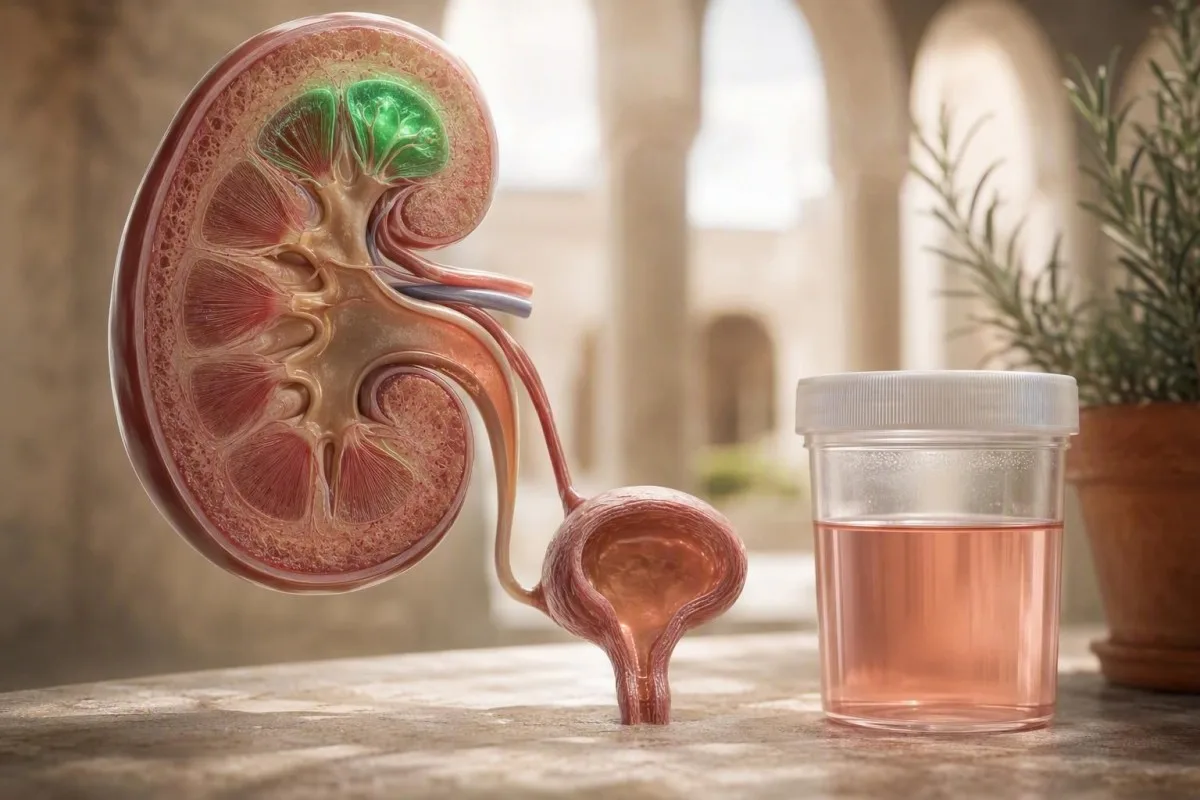
የረጅም ርቀት ሩጫ በኋላ የሚታይ ሮዝ ወይም የሻይ ቀለም ያለው የሽንት ናሙና ብዙውን ጊዜ ጊዜያዊ የአካል ብቃት እንቅስቃሴ-የተከሰተ የደም ሽንት (hematuria) ሲሆን ነገር ግን የሚታይ ቀለም በራስ-ሰር ችላ ሊባል አይገባም። ሰዓቱ፣ በማይክሮስኮፕ ምርመራ የተገኙ ግኝቶች፣ ምልክቶች እና በትክክል እረፍት የተደረገበት ተደጋጋሚ ናሙና ትክክለኛውን ታሪክ ይናገራሉ።.


- የልምምድ የደም ሽንት ብዙውን ጊዜ ከከባድ ሩጫ በኋላ በ24–72 ሰዓታት ውስጥ ይጠፋል፤ ከ72 ሰዓታት በላይ ከቀጠለ የህክምና ግምገማ ያስፈልገዋል።.
- የማጉያ ማጣሪያ ገደብ በትክክል ከተሰበሰበ የሽንት ናሙና በአንድ ከፍተኛ-ኃይል መስክ (high-power field) 3 ወይም ከዚያ በላይ ቀይ የደም ሴሎች መኖራቸው የአሜሪካ የዩሮሎጂካል ማህበር (AUA) ማይክሮሄማቱሪያ (microhematuria) ትርጓሜን ያሟላል።.
- የዲፕስቲክ (Dipstick) አለመጣጣም ጠቃሚ ነው፦ አዎንታዊ የደም ንጣፍ (blood pad) ከዜሮ እስከ ሁለት ቀይ የደም ሴሎች በአንድ ከፍተኛ-ኃይል መስክ (high-power field) ላይ ከሽንት ደም ይልቅ ማዮግሎቢን (myoglobin) ወይም ነጻ ሂሞግሎቢን (free hemoglobin)ን ያሳያል።.
- የመደጋገም ጊዜ ተግባራዊ ነው፦ 48–72 ሰዓታት ከባድ የአካል ብቃት እንቅስቃሴን ያስወግዱ፣ በተለመደው ሁኔታ ውሃ ይጠጡ፣ ከዚያም የመሀል ፍሰት የሽንት ናሙና ያቅርቡ።.
- በዚያው ቀን ግምገማ ለደም መርጋት፣ ሽንት የማስወጣት ችግር፣ ትኩሳት፣ አንድ-ጎን ከባድ የወገብ ህመም፣ ወይም ኮላ-አረንጓዴ ሽንት ከከባድ የጡንቻ ህመም ጋር ከሆነ ነው።.
- የኩላሊት ማስጠንቀቂያ ዘይቤ ደም እና ፕሮቲን፣ የቀይ የደም ሴል ሲሊንደሮች (red-cell casts)፣ ከፍተኛ የደም ግፊት፣ ወይም እየቀነሰ የሚሄድ eGFR — ከዘር በኋላ የሚከሰት የተነጠለ ዲፕስቲክ (dipstick) አይደለም።.
- የርሃብዶምዬሎሲስ ፍንጭ ከባድ የጡንቻ ምልክቶች እና ከላቦራቶሪ የላይኛው ገደብ ከ5 እጥፍ በላይ የሆነ የ creatinine kinase ውጤት ጋር በተመጣጠነ መልኩ ጥቁር ሽንት ነው።.
- የካንሰር ስጋት ሁኔታ ምርመራ ለማድረግ ገደቡን ይቀይራል፡- ዕድሜ፣ የሲጋራ ተጋላጭነት፣ የቀድሞ የዳሌ ራዲయేሽን እና የማያቋርጥ የሚታይ የደም ሽንት ሁሉም ጠቃሚ ናቸው።.
ሩጫ ለምን ሽንት ሮዝ እንዲመስል ያደርጋል
የሯጭ የደም ሽንት በአብዛኛው ከከፍተኛ የአካል ብቃት እንቅስቃሴ በኋላ የሚከሰት ቀይ የደም ሴሎችን ወደ ሽንት የሚፈስ ነው።, ብዙ ጊዜ በ24–72 ሰዓታት እረፍት ውስጥ ይድናል። ሆኖም ግን፣ ሮጠው ስላመጣው ብቻ casually ከመገመት ይልቅ ሮዝ፣ ቀይ፣ ወይም የኮላ ቀለም ያለው ሽንት በትክክል ለተሰበሰበ ድጋሚ ምርመራ ይገባዋል።.
በክሊኒክ ውስጥ፣ የሚያረጋጋው ንድፍ ቀጥተኛ ነው፡- ቀለሙ ያልተለመደ ረጅም፣ ፈጣን፣ ወይም ቁልቁል ሩጫ በኋላ ይጀምራል፤ ትኩሳት፣ የጎድን ህመም፣ ወይም የሽንት ማቃጠል የለም፤ እና ማይክሮስኮፒ በእረፍት ይስተካከላል።. Kantesti የAI የደም ምርመራ አናላይዘር ነው የኩላሊት ማርከሮችን—creatinine, eGFR, electrolytes, and creatine kinase—ከአካል ብቃት እንቅስቃሴ ታሪክ ጋር ማስቀመጥ የሚችል እንጂ፣ ከአንድ የሩጫ በኋላ ውጤት ምርመራ አድርጎ ከመያዝ ይልቅ።.
የተጠቆሙት ዘዴዎች የሜካኒካል ፊኛ ግድግዳ ንክኪ፣ ጊዜያዊ የኩላሊት ደም ፍሰት ለውጦች፣ የድርቀት-ነክ ክምችት፣ እና አንዳንድ ጊዜ በተደጋጋሚ የእግር ምት ምክንያት የሚከሰት ቀይ የደም ሴል መበላሸት ናቸው። ለእያንዳንዱ ዘዴ ያለው ማስረጃ በቅንነት የተደባለቀ ነው፣ ምክንያቱም አብዛኛዎቹ ጥናቶች ትንሽ እና የተለያዩ የሩጫ ርቀቶችን ይጠቀማሉ። በ15 ዓመታት ክሊኒካዊ ልምዴ፣ የአዲስ ጥረት ታሪክ ከቀለም ብቻ የበለጠ አስፈላጊ ነው፤ የመጀመሪያው አልትራማራቶን እና የታወቀው 5 ኪ.ሜ. አንድ አይነት ቅድመ-ምርመራ ዕድል አይኖራቸውም።.
ከስፖርት በኋላ በሽንት ውስጥ የሚታይ ደም ማለት benign የሯጭ የደም ሽንት ማለት አይደለም። ሰፊ የደም ሽንት ቀይ ባንዲራ መመሪያ ጠቃሚ ነው ምክንያቱም የኩላሊት ጠጠር፣ ኢንፌክሽን፣ የግሎሜሩላር በሽታ፣ እና የሽንት ቱቦ ካንሰሮች ከሩጫ በኋላ በአጋጣሚ እራሳቸውን ለመጀመሪያ ጊዜ ሊያሳዩ ይችላሉ።.
ተግባራዊ ፍቺ
በስፖርት ምክንያት የሚከሰት የደም ሽንት ማለት ከከባድ የአካል ብቃት እንቅስቃሴ በኋላ ቀይ የደም ሴሎች በሽንት ውስጥ ይታያሉ እና በእረፍት በተወሰደ ናሙና ውስጥ ይጠፋሉ ማለት ነው።. የሽንት ንጣፍ ብቻውን ይህንን ምርመራ አያረጋግጥም፣ ምክንያቱም ሪአጀንቱ ሄሜ ፒግመንትን ከቀይ የደም ሴሎች፣ ከነጻ ሂሞግሎቢን ወይም ከ myoglobin ያገኛል።.
የደም ሽንት (hematuria)፣ ሂሞግሎቢን (hemoglobin) ወይስ ማዮግሎቢን (myoglobin)?
ለደም አዎንታዊ የሆነ የሽንት ንጣፍ ቀይ የደም ሴሎችን፣ ሂሞግሎቢንን፣ ወይም myoglobinን ሊያንጸባርቅ ይችላል፣ እና ማይክሮስኮፒ ይለያቸዋል።. ብዙ ቀይ የደም ሴሎች ያሉት ሮዝ ሽንት የደም ሽንትን ይደግፋል፤ ጥቂት ወይም ምንም ቀይ የደም ሴሎች የሌለው ጥቁር ቡናማ ሽንት ከጡንቻ ጉዳት ወይም ከሄሞሊሲስ የሚመጣውን ፒግመንት ስጋት ያስነሳል።.
የሽንት ማይክሮስኮፒ ማሳየት ከ3 በላይ ቀይ የደም ሴሎች በአንድ ከፍተኛ-ኃይል መስክ ናሙናው በንጽህና ከተሰበሰበ ማይክሮሄማቱሪያን ያረጋግጣል። በንፅፅር፣ በ0–2 ቀይ የደም ሴሎች በአንድ ከፍተኛ-ኃይል መስክ በብርቱ አዎንታዊ የሆነ የንጣፍ ምርመራ ሐኪሙ myoglobinuria እንዲያስብ ማድረግ አለበት፣ በተለይም ከሙቀት ተጋላጭነት፣ ከጭነት አይነት የጡንቻ ሸክም፣ ወይም ከከባድ የዘገየ የጡንቻ ህመም በኋላ። ቡናማ ወይም የኮላ ቀለም ከትንሽ የፊኛ ደም ይልቅ የቆሸሸ ፒግመንት የበለጠ የተለመደ ነው።.
Myoglobin አስፈላጊ ነው ምክንያቱም ርሃብዶምዬሎሲስ እና አጣዳፊ የኩላሊት ጉዳት ሊያጅብ ይችላል። የ creatine kinase ክምችት ከ ከላቦራቶሪ የላይኛው መደበኛ ገደብ ከ5 እጥፍ በላይ ርሃብዶምዬሎሲስን ለመለየት በብዛት ጥቅም ላይ የሚውል ባዮኬሚካላዊ ገደብ ነው፣ ምንም እንኳን ምልክቶች፣ ፖታሲየም፣ creatinine፣ እና የሽንት ምርት ድንገተኛነትን ቢወስኑም። የእኛን ተግባራዊ ማብራሪያ ይመልከቱ የክሬቲኒን ኪናሴ (creatine kinase) በከፍተኛ መጠን ከፍ ማለት ሌሊት መጠበቅ የሌለባቸውን ሁኔታዎች ለማወቅ።.
የምግብ ማቅለሚያዎች፣ ቢት፣ ብላክቤሪ፣ ሪፋምፒሲን፣ ፊናዞፒሪዲን እና የውሃ እጥረት ያለ ቀይ የደም ሴሎችም ሽንት ቀለም ሊቀይሩ ይችላሉ። ጥቁር የሽንት ልዩነት ቀይ የሆነ ማንኛውም ናሙና ደም ነው ብሎ ከማሰብ የጋራ ስህተት ለመራቅ ይረዳል።.
ለምን ልዩነቱ እንክብካቤን ይለውጣል
ቀይ የደም ሴል ያለው የሽንት ደም (hematuria) ትኩረትን ወደ ሽንት ስርዓት ይመራል፣ የጡንቻ ፋይበር መበጣጠስ (myoglobinuria) ደግሞ ትኩረትን ወደ አጥንት ጡንቻ እና የኩላሊት ጥበቃ ይመራል።. ሁለቱም ከከፍተኛ የአካል ብቃት እንቅስቃሴ በኋላ ሊከሰቱ ይችላሉ፣ ነገር ግን ማይክሮስኮፒ እና የደም ምርመራ ብቻ በእርግጠኝነት መለየት ይችላሉ።.
ከሩጫ በኋላ የሽንት ምርመራ ውጤትን እንዴት ማንበብ ይቻላል
በጣም መረጃ ሰጭ የሆነው ከሩጫ በኋላ የሚደረግ የሽንት ምርመራ የዲፕስቲክ፣ ማይክሮስኮፒ፣ የፕሮቲን መለኪያ እና የይዘት መጠን (specific gravity)ን ያጠቃልላል።. በዲፕስቲክ ላይ ደም ከጊዜያዊ ቀይ የደም ሴሎች ጋር እና ያለ ፕሮቲን አብዛኛውን ጊዜ ዝቅተኛ ስጋት ነው፤ ደም ከፕሮቲን ወይም ከሲሊንደር (casts) ጋር ከሆነ የኩላሊት ጥልቅ ግምገማ ያስፈልጋል።.
የዲፕስቲክ የደም ውጤት እንደ አሉታዊ፣ ዱካ (trace)፣ 1+፣ 2+፣ ወይም 3+ ይሰየማል፣ ነገር ግን የሴል ብዛት ሳይሆን የማጣሪያ ምልክት ነው።. AUA የማይክሮሄማቱሪያን (microhematuria) ከ3 ቀይ የደም ሴሎች በላይ በከፍተኛ የኃይል መስክ (high-power field) በማይክሮስኮፕ ምርመራ ይገልጻል።, ፤ የዲፕስቲክ ውጤት ብቻውን አይደለም (Barocas et al., 2020)። ይህ ልዩነት ሯጮች ከውሸት አወንታዊ ምርመራ በኋላ ወደማያስፈልግ የካንሰር ምርመራ እንዳይሄዱ ያደርጋል።.
የይዘት መጠን (Specific gravity) በላይ 1.030 በብዙ ቤተ-ሙከራዎች የሽንት ክምችት (concentrated urine)ን ያሳያል እና ቀለሙን ይበልጥ አስደንጋጭ ሊያደርገው ይችላል፣ ነገር ግን የተረጋገጡ ቀይ የደም ሴሎችን አያፀድቅም። የ1+ ወይም ከዚያ በላይ የሆነ ፕሮቲን በሽንት አልቡሚን-ክሬቲኒን ጥምርታ (urine albumin-creatinine ratio) ወይም ፕሮቲን-ክሬቲኒን ጥምርታ (protein-creatinine ratio) መለካት አለበት፤ ጊዜያዊ የአካል ብቃት እንቅስቃሴ ፕሮቲኑሪያ (exercise proteinuria) አለ፣ ነገር ግን የማያቋርጥ አልቡሚኑሪያ (albuminuria) ልዩነቱን ወደ ግሎሜሩላር በሽታ (glomerular disease) ያመራል። የእኛ የተሟላ የሽንት ምርመራ መመሪያ እነዚህን መለኪያዎች በአንድ ውጤት ውስጥ ለምን አንድ ላይ ማዋሀድ እንደሌለባቸው ያብራራል።.
Kantesti AI ክሬቲኒን (creatinine) እና eGFR ከሽንት ግኝቶች፣ የአካል ብቃት እንቅስቃሴ ሰዓት፣ እና የቀደሙ እሴቶች ጋር ያነባል።ከሙቀት ሩጫ በኋላ በትንሹ የጨመረ ክሬቲኒን (creatinine) ሥር የሰደደ የኩላሊት በሽታ (chronic kidney disease) ጋር እኩል አይደለም። በተግባር፣ የርቀቱን፣ የመሬት አቀማመጥን፣ ሙቀቱን፣ የፀረ-ኢንፍላማቶሪ መድሃኒት አጠቃቀምን፣ የወር አበባን ጊዜ፣ እና ናሙናው ከተጠናቀቀ በ2 ሰዓት ውስጥ የተሰጠ መሆኑን እጠይቃለሁ።.
ከሩጫ በኋላ መቼ ነው የሽንት ምርመራ መድገም ያለበት?
ከጠንካራ ሩጫ በኋላ 48–72 ሰዓት ላይ የሽንት ምርመራን መድገም የሯጭ የደም ሽንት (hematuria) ጥርጣሬ ላለባቸው ምክንያታዊ የሆነ መደበኛ ነው።. የጠዋት የመጀመሪያ ወይም በደንብ የጠጣ ናሙና ይጠቀሙ፣ ነገር ግን ወዲያውኑ ከመጠን በላይ ውሃ አይጠጡ ምክንያቱም እጅግ በጣም መሳሳት ጠቃሚ ግኝቶችን ሊያደበዝዝ ይችላል።.
ለወትሮው ከውድድር በኋላ መዛባት፣ እኔ ብዙውን ጊዜ ክፍተቶች፣ ኮረብቶች፣ ከባድ ማንሳት፣ ወይም ውድድሮች የለኝም እላለሁ 48 ሰዓታት; ማራቶን፣ አልትራማራቶን፣ የሙቀት ሕመም፣ ወይም ያልተለመደ ህመም በኋላ፣, 72 ሰዓታት የበለጠ ተከላካይ ነው። የተለመደው የመጠጣት መጠን በቂ ነው። ከመጠን በላይ መጠጣት የፍፁም ስበትን ከ1.005 በታች ሊቀንስ ይችላል እና አንዳንዴም ወሰን ያለፈ ውጤትን ለመተርጎም አስቸጋሪ ያደርገዋል።.
ማይክሮስኮፒ ከ 72 ሰአታት በኋላ አወንታዊ ሆኖ ከቀጠለ፣ ከቀናት በኋላ የመጀመሪያ ደረጃ እንክብካቤ ግምገማን ያዘጋጁ እንጂ ከስራ በኋላ በተደጋጋሚ ከመመርመር ይልቅ። የማያቋርጥ ውጤቶች የደም ግፊት መለኪያ፣ የሴረም ክሬቲኒን/eGFR፣ የሽንት አልቡሚን-ክሬቲኒን ጥምርታ፣ እና ባህል ወይም ምስልን እንደ ስጋት ግምት መውሰድ ይገባቸዋል። በ እና በ መካከል ያለው ግንኙነት በአጻጻፍ (our) የአካል ብቃት እንቅስቃሴ በኋላ eGFR መመሪያ.
ያየሁት የ52 ዓመት ተራ ማራቶኒስት ምሽት ላይ ከሞቃት ውድድር በኋላ በከፍተኛ ኃይል መስክ 18 ቀይ ሴሎች ነበሩት፣ ነገር ግን ከ72 ሰአታት እረፍት በኋላ 0–1 ቀይ ሴሎች ነበሩት፤ የሱ ክሬቲኒን ከ1.28 mg/dL ወደ 0.96 mg/dL ተመለሰ። ውጤቱ አበረታች ነበር፣ ነገር ግን ተመሳሳይ እቅድ ለ 52 ዓመት አጫሽ እና ተደጋጋሚ የሚታይ የሽንት ቀለም ላለው በቂ አይሆንም።.
መቻል ከቻሉ በውድድር መስመር ላይ አይፈትሹ
የአካል ብቃት እንቅስቃሴ ወዲያውኑ መሞከር ጊዜያዊ ቀይ ሴሎችን፣ የተከማቸ ሽንት እና ፕሮቲን የማግኘት እድልን ይጨምራል።. ይህም ራብዶምዮሊሲስ (rhabdomyolysis) ጥርጣሬ ላለባቸው ክሊኒካዊ ጠቃሚ ሊሆን ይችላል፣ ነገር ግን የሯጭን መሰረታዊ ሁኔታ ለመመስረት መጥፎ ጊዜ ነው።.
ከሩጫ በኋላ የትኞቹ የደም ሽንት (hematuria) ዘይቤዎች ብዙውን ጊዜ የሚያረጋጉ ናቸው?
ከከባድ ሩጫ በኋላ ራስን የሚገዛ ክፍል ሙሉ በሙሉ ሲጸዳ፣ ህመም ወይም የስርዓት ምልክቶች በማይኖርበት ጊዜ፣ እና ፕሮቲኑሪያ ወይም የኩላሊት ተግባር ለውጥ በማይኖርበት ጊዜ የበለጠ አበረታች ነው።. አበረታች ማለት ችላ ማለት አይደለም፤ ማለትም ከእረፍት ናሙና ጋር ተረጋግጧል።.
ዝቅተኛ-ስጋት ያለው phenotype ወጣት ወይም የመካከለኛ ዕድሜ ሯጭ ሲሆን ግልጽ የሆነ የአካል ብቃት እንቅስቃሴ ቀስቅሴ፣ መደበኛ የደም ግፊት፣ የትምባሆ ታሪክ የሌለው እና መደበኛ የእረፍት ማይክሮስኮፒ ያለው ነው። በዚህ ሁኔታ፣ የ 3–10 RBC/HPF ከውድድር በኋላ ብዙውን ጊዜ ያለ ህክምና ይረጋጋል። አሁንም እመዘግበዋለሁ፣ ምክንያቱም ከእያንዳንዱ ረጅም ሩጫ በኋላ መደጋገም ከአንድ ጊዜ ክስተት በላይ ጥንቃቄ የተሞላበት ግምገማ ይገባዋል።.
መደበኛ የሽንት አልቡሚን-ክሬቲኒን ጥምርታ በአጠቃላይ ከ 30 mg/g በታች (ከ 3 mg/mmol በታች) ነው፣ ምንም እንኳን የላቦራቶሪዎች እና ሀገራት አሃዶችን በተለያየ መንገድ ሪፖርት ቢያደርጉም። አልቡሚን፣ ካስትስ፣ ወይም ዲስሞርፊክ ቀይ ሴሎች የሌሉበት ደም ከግሎሜሩላር ፍሳሽ ይርቃል። የፊኛ ምንጭን አያረጋግጥም፣ ነገር ግን ቀጣዩን ጥያቄ ይመራል። የእኛ ማብራሪያ የ በሽን ውስጥ ፕሮቲን ይህ ክፍል በግልጽ ይሸፍናል።.
ፊኛ ላይ የሚደርስ ጉዳት ሽንት በጣም የተከማቸ ከሆነና ሯጩ ባዶ ፊኛ ይዞ ውድድሩን ሲጨርስ ይበልጥ ሊከሰት ይችላል። አንዳንድ የስፖርት ህክምና ባለሙያዎች ከረጅም ሩጫ በፊት ሽንት እንዲሸኑና በመደበኛነት እንዲጠጡ ይመክራሉ፣ ነገር ግን ይህ የመከላከል ምክር እንጂ ቀለም (ሽንት) በማይታወቅ ሁኔታ ከቀጠለ መገምገምን የማይተካ የተወሰነ የሙከራ ማስረጃ ብቻ ነው።.
መደበኛ ውጤት የጊዜ ማህተም አለው
ከውድድር በኋላ በ3 ቀናት አሉታዊ ምርመራ ለዚያው ክስተት ማረጋገጫ እንጂ የዕድሜ ልክ ዋስትና አይደለም።. ወራት በኋላ የሚታየው አዲስ ደም በሽንት ውስጥ (hematuria) በተለይ ከ40 ዓመት በላይ ከሆኑ ወይም ሲጋራ የሚያጨሱ ከሆነ በራሱ መታየት አለበት።.
የሯጮችን የደም ሽንት (hematuria) የሚያሳዩ የጥንቃቄ ምልክቶች
ደም በሽንት ውስጥ (hematuria) ከ72 ሰአት በኋላ ከቀጠለ፣ ከከባድ የአካል ብቃት እንቅስቃሴ ውጭ ተመልሶ ከመጣ፣ ወይም ከህመም፣ ትኩሳት፣ የደም መርጋት፣ ፕሮቲን፣ ወይም የኩላሊት ተግባር ለውጥ ጋር ከታየ በፍጥነት መገምገም ያስፈልጋል።. የውጤቶቹ ጥምረት ከመአከላዊ የሆነ ናሙና (sample) ይልቅ የበለጠ መረጃ ሰጪ ነው።.
የሚከተለው ከሆነ ለቀይ ሽንት (visible red urine) በፍጥነት የህክምና ምክር ይጠይቁ ከፍተኛ መጠን ያለውን, ፣ ምንም እንኳን ደህና ቢሰማዎትም፤ ዕድሜያቸው ከ40 በላይ ለሆኑ፣ አሁን የሚያጨሱ ወይም አጫሾች የነበሩ፣ ወይም ቀደም ሲል የዳሌ ራዲయేሽን ያደረጉ ሰዎች የደፍረት ገደብ ዝቅተኛ ነው። የ AUA መመሪያ የማይክሮ ሄማቱሪያን ሁሉ በአንድ አይነት ከመያዝ ይልቅ፣ ዕድሜን፣ ማጨስን፣ ጥቃቅን ደም (microscopic blood) ያለውን መጠንና መቆየት፣ እና ቀደም ሲል የነበረውን ግሮስ ሄማቱሪያ (gross hematuria) መሠረት ያደረገ የጥናት ስትራቴጂ ይጠቀማል (Barocas et al., 2020)።.
የተበላሹ ቀይ የደም ሴሎች (dysmorphic red cells)፣ ቀይ የደም ሴል ሲሊንደሮች (red-cell casts)፣ ከፍተኛ የሆነ አልቡሚኑሪያ (albuminuria)፣ አዲስ የደም ግፊት፣ ወይም የተቀነሰ eGFR የሚያመለክቱት ፊኛ በመነቃነቅ ከመሆኑ ይልቅ የኩላሊት ማጣሪያ (kidney-filter) ምንጭ ነው።. ቀይ የደም ሴል ሲሊንደሮች (Red-cell casts) ከመደበኛ ሩጫ የሚጠበቅ ውጤት በፍጹም አይደሉም እና ፈጣን የኩላሊት ግምገማ ሊጠይቁ ይገባል። ስለ ጥራጥሬ እና የሽንት ሲሊንደሮች (granular and urinary casts) የደለበ (sediment) ግኝቶች ለምን አስፈላጊ እንደሆኑ ይመልከቱ።.
ዶ/ር ቶማስ ክላይን (Thomas Klein, MD) ሯጮች ቀለሙን ብቻ ተጠቅመው ራስን አለመመርመርን ይመክራሉ፡ የሽንት ቱቦ ኢንፌክሽን ማቃጠል፣ የመሽናት ብዛት፣ pyuria፣ እና አንዳንድ ጊዜ hematuria ሊያስከትል ይችላል፣ ድንጋዮች ደግሞ ብዙ ጊዜ ድንገተኛ የአንድ ወገን ህመም እና ማቅለሽለሽ ይፈጥራሉ። ኢንፌክሽን ምልክቶች በሚኖሩበት ጊዜ አንቲባዮቲክ ከመውሰድዎ በፊት ባህል (culture) በጣም ጠቃሚ ነው።.
የደም እና የፕሮቲን ጥምረት
ከፕሮቲኑሪያ (proteinuria) ጋር የተረጋገጠ hematuria ከብቻው hematuria ይልቅ የሚያስጨንቅ ነው ምክንያቱም ሁለቱም ከግሎሜሩላር ማጣሪያ (glomerular filter) ሊመጡ ይችላሉ።. የሽንት አልቡሚን-ክሬቲኒን ሬሾ (urine albumin-creatinine ratio) 30 mg/g ወይም ከዚያ በላይ ከሆነ መደገም አለበት እና ከደም ግፊት እና ከኩላሊት ተግባር ጋር ተተርጉሞ መገምገም አለበት።.
የአካል ብቃት እንቅስቃሴ በኋላ የሚታይ ሮዝ ሽንት መቼ ነው በተመሳሳይ ቀን እንክብካቤ የሚያስፈልገው?
የደም መርጋት (clots)፣ የመሽናት አለመቻል፣ ከባድ የጎድን ህመም፣ ትኩሳት፣ መደንገጥ፣ የሽንት ውፅዓት መቀነስ፣ ወይም ከባድ የጡንቻ ህመምና ድክመት ጋር ጥቁር ሽንት ካለ በዚሁ ቀን አስቸኳይ ግምገማ ያግኙ።. እነዚህ ባህሪያት ያልተወሳሰበ የአካል ብቃት እንቅስቃሴ-የተከሰተ hematuriaን ያልፋሉ።.
የደም መርጋት (Clots) የሽንት ፍሰትን ሊያደናቅፉ ይችላሉ፣ እና ሽንት ማለፍ አለመቻል ከስፖርት ብቃት ጋር በተያያዘ አስቸኳይ ችግር ነው። ትኩሳት 38.0°C ወይም ከዚያ በላይ ከጎድን ህመም ጋር ከሆነ የላይኛው የሽንት ቱቦ ኢንፌክሽንን ሊያመለክት ይችላል፤ ከማስታወክ ጋር ያለው ከባድ የሆድ ቁርጠት ህመም ድንጋይን ሊያመለክት ይችላል። ሁለቱም ሁኔታዎች ከሩጫ በኋላ ያለውን ምርመራ በመጠበቅ መታከም የለባቸውም።.
ከ exertion በኋላ ጥቁር ቡናማ ሽንት ከከፍተኛ የጡንቻ ህመም፣ ድክመት፣ እብጠት፣ ወይም የተቀነሰ ውፅዓት ጋር ከሆነ ለ ራብዶምዮሊሲስ (rhabdomyolysis) ስጋትን ይፈጥራል። የመጀመሪያ ምርመራዎች በተለምዶ creatine kinase, creatinine, potassium, calcium, phosphate, እና urinalysis ያካትታሉ። ሀ CrossFit rhabdomyolysis መመሪያ ጠቃሚ የሆነው ያልተለመደው አግድም የአካል ብቃት እንቅስቃሴ—ማለትም ሩጫ ብቻ ሳይሆን—ተደጋጋሚ ምክንያት ነው።.
ከባድ የውሃ እጥረት የኩላሊት ውጤቶችን የከፋ ሊያደርግ ይችላል፣ ነገር ግን እውነተኛ ጉዳትንም ሊያመጣ ይችላል። ማዞር፣ ግራ መጋባት፣ ፈሳሽ መውሰድ አለመቻል፣ ወይም በጣም ትንሽ ሽንት ማጣት ካለብዎ 8–12 ሰዓት, በቤት ውስጥ በስፖርት መጠጦች ችግሩን ለመፍታት አይሞክሩ።.
እርግዝና እና የደም መርጋት መከላከያዎች
ነፍሰ ጡር ሯጮች እና የደም መርጋት መከላከያዎችን የሚወስዱ ሰዎች የሚታዩ የደም ሽንት (hematuria) በፍጥነት ሪፖርት ማድረግ አለባቸው።. የደም መርጋት መከላከያዎች የደም መፍሰስን ሊያባብሱ ይችላሉ ነገር ግን የምንጩን የመለየት ፍላጎት አያስወግዱም፤ እርግዝናም የኢንፌክሽን፣ ጠጠር እና የኩላሊት በሽታ ምርመራን የመመዘኛ መጠን ይለውጣል።.
ሩጫ ሊያጋልጣቸው የሚችሉ እንጂ ሊያስከትላቸው የማይችሉ ሁኔታዎች
ሩጫ የሽንት መከማቸትን በማጎልበት ወይም ምርመራን በማነሳሳት ነባር የሽንት ችግርን ሊያጋልጥ ይችላል እንጂ የደም ሽንትን ራሱ ከመፍጠር ይልቅ።. ጠጠሮች፣ ኢንፌክሽን፣ የግሎሜሩላር በሽታ፣ መዋቅራዊ የአካል ጉዳቶች እና ካንሰር የምርመራ መርሃ ግብር አካል ሆነው ይቀጥላሉ።.
የኩላሊት ጠጠሮች በተደጋጋሚ አንድ-ጎን የጎድን አጥንት-ወደ-ብልት ህመም፣ ማቅለሽለሽ፣ እና ማይክሮስኮፕ ላይ ቀይ የደም ሴሎች ያስከትላሉ፤ ምንም እንኳን ህመም የሌላቸው ጠጠሮች ቢኖሩም። የሽንት ኢንፌክሽን በተደጋጋሚ ማቃጠል፣ ተደጋጋሚ መሽናት፣ አስገዳጅነት እና ነጭ የደም ሴሎችን ያስከትላል፤ አሉታዊ የናይትሬት ውጤት አይገልጸውም። የእኛ መመሪያ ለ leukeocyte esterase with negative nitrite ይህንን የተለመደ ድብልቅ ስርዓት ያብራራል።.
Glomerulonephritis ከላይኛው የመተንፈሻ አካላት ኢንፌክሽን በኋላ እንደ የኮላ ሽንት፣ እብጠት፣ የደም ግፊት መጨመር፣ ፕሮቲኑሪያ እና ዲስሞርፊክ ቀይ የደም ሴሎች ሊታይ ይችላል። በ KDIGO 2024 CKD መመሪያ ውስጥ፣ የማያቋርጥ አልቡሚኑሪያ እና የተቀነሰ eGFR የኩላሊት-አደጋ መለኪያዎች ተደርገው ይወሰዳሉ እንጂ ተለዋጭ መለኪያዎች አይደሉም (KDIGO, 2024)።.
Kantesti በAI የሚሰራ የደም ምርመራ ትንታኔ መሳሪያ ነው ይህም ተጠቃሚዎች በ creatinine, eGFR, albumin, electrolytes, እና CBC ውስጥ አንድ ስርዓተ-ጥለት እንዲያውቁ ይረዳል, ነገር ግን የደም ሽንትን (hematuria) የሚያስከትለውን አናቶሚካል ምንጭ ማወቅ አይችልም። ምስል ማሳየት፣ ማይክሮስኮፒ፣ ባህል እና የሀኪም ምርመራ አሁንም ውሳኔ ሰጪ ስራዎችን ያደርጋሉ።.
ካንሰር በወጣት ሯጮች ላይ ብርቅ ነው፣ በአዋቂዎች ላይ ግን የማይቻል አይደለም
የሚታይ የደም ሽንት (hematuria) ምንም እንኳን የአካል ብቃት እንቅስቃሴ ግልጽ የሆነ ማብራሪያ ቢመስልም፣ በተለይም ጭስ ያለባቸው ሰዎች ወይም የማያቋርጥ ምልክቶች ባሉባቸው ሰዎች ላይ ምርመራ ይገባዋል።. ዕድሜ እና ተከማች የትምባሆ ተጋላጭነት እየጨመረ ሲሄድ አደጋው ይጨምራል, ለዚህም ነው ተመሳሳይ የሽንት ውጤቶች ተመሳሳይ የሙከራ እቅዶችን የማይመሩት።.
የሽንት ወይም የኩላሊት ህክምና (urology or nephrology) ክትትል የሚያስፈልጋቸው እነማን ናቸው?
ከእረፍት በኋላ በተደጋገመ ናሙና ውስጥ የሚከሰት የማያቋርጥ የደም ሽንት (hematuria) ለ urology ለአደጋ ግምገማ መቅረብ አለበት፣ የደም ሽንት (hematuria) በተጨማሪም ፕሮቲኑሪያ፣ ካስትስ፣ የደም ግፊት መጨመር፣ ወይም የተዳከመ eGFR የ nephrology ን ይጠቁማሉ።. ብዙ ሰዎች የመጀመሪያ ደረጃ እንክብካቤ በሚመራው ተደጋጋሚ ምርመራ ብቻ ይፈልጋሉ፤ ሪፈራል በስርዓተ-ጥለት ላይ የተመሰረተ ነው።.
የ urology ግምገማ በተለይ ተደጋጋሚ የሚታይ የደም ሽንት (hematuria), የማያቋርጥ ማይክሮስኮፒክ የደም ሽንት (hematuria), የትምባሆ ታሪክ, የሙያ አሮማቲክ-አሚን ተጋላጭነት, ቀደም ሲል የዳሌ የጨረር ህክምና, ወይም ያለ ኢንፌክሽን የሽንት ምልክቶች ተገቢ ነው። እንደ አደጋው መጠን, ሐኪሞች የኩላሊት እና የፊኛ አልትራሳውንድ, ሲቲ urography, እና cystoscopy ሊጠቀሙ ይችላሉ. በ 24-አመት ልጅ ውስጥ ያለው ነጠላ የድህረ-ውድድር ዝቅተኛ የዲፕስቲክ ውጤት ከ 58-አመት የቀድሞ አጫሽ ተደጋጋሚ ቀይ ሽንት ጋር በጣም የተለየ ሁኔታ ነው።.
የ nephrology ግምገማ ከሽንት አልቡሚን-creatinine ratio ጋር የመሆን እድል ይጨምራል ≥30 ሚግ/ግ, eGFR ከ በታች መሆን ለ 3 ወራት ወይም ከዚያ በላይ የቆየ, ቀይ የደም ሴል ካስትስ, ወይም የደም ግፊትን ለመቆጣጠር አስቸጋሪ. እነዚህ ገደቦች አስፈላጊ የሆኑት ሥር የሰደደ የኩላሊት በሽታ የሚወሰነው እንደ ቆይታ እና እንደ አንድ መለኪያ ስለሆነ ነው። የእኛን ያንብቡ ይጠቀሙ። ለተግባራዊ ምድቦች።.
የ[Kantesti] የ AI የላብራቶሪ ምርመራ ትርጓሜ አገልግሎት፣ በተለይም ተጠቃሚዎች ከተለያዩ ላቦራቶሪዎች የተገኙ ውጤቶችን ሲያስገቡ፣ ሊደገም የሚችል የደም እና የፕሮቲን ቅጦችን ለውይይት እንዲያቀርብ ይችላል። ሽንት የብልት ምስል ወይም የልዩ ባለሙያ ምርመራ እንደሚያስፈልግ ለሚወስነው ሐኪም ድጋፍ እንጂ ምትክ መሆን የለበትም።.
የደም መርጋት መድኃኒቶች ንግግሩን እንዳያቋርጡ ያድርጉ
የደም መርጋት መድኃኒቶች አጠቃቀም የደም መፍሰስን ክብደት ሊቀይር ይችላል ነገር ግን ለሽንት ደም መንስኤውን አይወስንም።. በኔ ልምድ፣ ድንጋዮች፣ ኢንፌክሽን ወይም የሰውነት አወቃቀር በሽታን ከማወቅ መዘግየት ለማስቀረት፣ ከምርመራ በፊት፣ ተደጋጋሚ የሽንት ደምን ለአፒክሳባን፣ ዋርፋሪን ወይም አስፕሪን መመደብ ይቻላል።.
ከአካል ብቃት እንቅስቃሴ ጋር በተያያዘ የደም ሽንት በኋላ የትኞቹ የደም ምርመራዎች ይረዳሉ?
ጠቃሚ የደም ምርመራዎች በምልክቶች ላይ ይመረኮዛሉ፡ የ creatinine፣ eGFR፣ ኤሌክትሮላይቶች እና የ creatine kinase የኩላሊት እና የጡንቻ ጭንቀትን ይገመግማሉ፣ የ CBC ደግሞ የደም ማነስ ወይም የኢንፌክሽን ፍንጮችን ይገመግማል።. መደበኛ ሰፊ ፓነሎች ከትክክለኛ የህክምና ታሪክ እና የሽንት ምርመራ በኋላ ከታለሙ ምርመራዎች ያነሰ ጠቃሚ ናቸው።.
የ creatinine መጠን ከከፍተኛ የጡንቻ ሜታቦሊዝም፣ የኩላሊት የደም ፍሰት መቀነስ እና የውሃ እጥረት የተነሳ ከከፍተኛ የአካል ብቃት እንቅስቃሴ በኋላ በጊዜያዊነት ሊጨምር ይችላል። የ eGFR ቀመሮች ፈጣን የ creatinine ለውጥ በሚኖርበት ጊዜ ያን ያህል አስተማማኝ አይደሉም፣ ለዚህም ነው ከ 48–72 hours ከተለመደው ማገገም በኋላ ያለው ድግግሞሽ ውጤት ከመጨረሻው መስመር ውጤት የበለጠ ትርጉም ያለው ነው። የእኛ ከአካል ብቃት እንቅስቃሴ ጋር በተያያዘ የ creatinine ዳግም ምርመራ መመሪያ ይህንን በተደጋጋሚ የሚከሰት የጭንቀት መንስኤ ሁኔታን ያብራራል።.
የ creatine kinase ከከፍተኛ የአካል ብቃት እንቅስቃሴ በኋላ ሰፊ ክልል አለው፡ የሰለጠኑ አትሌቶች ከውድድር በኋላ የኩላሊት ጉዳት ሳይኖርባቸው ከፍ ያለ እሴቶችን ሊያሳዩ ይችላሉ፣ ከሀገር ውስጥ የላይኛው ወሰን በላይ የሆኑ እሴቶች ደግሞ ምልክቶች ካሉባቸው አስቸኳይ ግምገማ ያስፈልጋቸዋል። የፖታሺየም መጠን ከ 6.0 mmol/L በላይ የሆነ መጠን አደገኛ ሊሆን ይችላል እና በተለይም የኩላሊት ተግባር ከተጎዳ ወይም የጡንቻ ጉዳት ከተጠረጠረ አስቸኳይ ክሊኒካዊ ግምገማ ያስፈልገዋል።.
የ CBC ከድካም፣ ከገረጣ፣ ከባድ የወር አበባ ደም መፍሰስ፣ ተደጋጋሚ የሽንት ደም፣ ወይም ለስርዓታዊ ህመም ስጋት በሚኖርበት ጊዜ በጣም ጠቃሚ ነው። የሂሞግሎቢን መጠን ከከፍተኛ የአካል ብቃት እንቅስቃሴ በኋላ በፕላዝማ-ድምጽ መስፋፋት፣ በብረት መጥፋት ወይም በሄሞሊሲስ ምክንያት ሊወድቅ ይችላል፤ የፌሪቲን መጠን ከባድ እብጠት እና ከባድ ስልጠና ራቅ ብሎ መተርጎም አለበት። የሩጫ አትሌቶች የእኛን የአትሌት የደም ምርመራ አጠቃላይ እይታ ምክንያታዊ የባዝላይን ለማግኘት ጠቃሚ ሆኖ ሊያገኙት ይችላሉ።.
ከአንድ የውድድር ሳምንት ፓነል የኩላሊት በሽታን አይመርምሩ
የ creatinine መጠን 0.3 mg/dL ወይም ከዚያ በላይ መጨመር በአግባቡ ጊዜ ውስጥ ከባድ የኩላሊት ጉዳት መስፈርት ሊያሟላ ይችላል፣ ነገር ግን ከውድድር በኋላ ሁኔታው እና ድግግሞሽ ምርመራ ወሳኝ ናቸው።. ዝቅተኛ የሽንት ውፅዓት፣ እየጨመረ የመጣው የፖታሺየም መጠን እና የማያቋርጥ ከፍተኛ መጠን ከብቸኝነት አጠራጣሪ ውጤት የበለጠ ክብደት አላቸው።.
ዶክተሮች ሊተማመኑበት የሚችሉትን ተደጋጋሚ የሽንት ናሙና እንዴት መሰብሰብ ይቻላል
ከ48–72 ሰአታት በኋላ ከከባድ የአካል ብቃት እንቅስቃሴ ነጻ የሆነ ንፁህ-መያዝ መካከለኛ የሽንት ናሙና የሽንት ደም መቆሙን ለማረጋገጥ ምርጡ መንገድ ነው።. የመሰብሰብ ስህተቶች፣ የወር አበባ መበከል እና የቆየ ናሙና የተሳሳተ ውጤት ሊፈጥሩ ይችላሉ።.
እጅዎን ይታጠቡ፣ ወደ መጸዳጃ ቤት መሽናት ይጀምሩ፣ ከዚያም ኮንቴነሩን ሳትነኩ መካከለኛውን ክፍል ይሰብስቡ። ናሙናውን በቶሎ ያቅርቡ — በተለይም በ 2 ሰዓት— ወይም የላቦራቶሪውን የማቀዝቀዣ መመሪያ ይከተሉ። ለረጅም ጊዜ መቆየት የሴሎችን ገጽታ ይለውጣል እና ማይክሮስኮፒን ያን ያህል አስተማማኝ እንዳይሆን ሊያደርግ ይችላል።.
በሚቻልበት ጊዜ ንቁ የወር አበባ በሚኖርበት ጊዜ ምርመራን ያስወግዱ፤ ምርመራ መጠበቅ ካልቻለ፣ ለሐኪሙ እና ለላቦራቶሪ ይንገሩ። የሴት ብልት ብክለት የውሸት ቀይ የደም ሴሎች እና ፕሮቲን ሊፈጥር ይችላል፣ የፍላጎት ኤፒተልያል ሴሎች ደግሞ መጥፎ ናሙና መኖሩን ሊያመለክቱ ይችላሉ። የእኛ መመሪያ ወደ በሽንት ውስጥ ያሉ ኤፒተልያል ሴሎች የሚያብራራው ለዚህ ነው ይህ ቀላል የላቦራቶሪ ማስታወሻ ያልሆነው።.
ዶክተር ቶማስ ክላይን፣ MD፣ ከናሙናው ጋር አራት ዝርዝሮችን እንዲመዘገቡ ይመክራሉ፡ የመጨረሻው ከባድ የአካል ብቃት እንቅስቃሴ፣ የክስተቱ ቆይታ፣ የውጪው የሙቀት መጠን እና ባለፉት 72 ሰአታት ውስጥ የወሰዷቸው ሁሉም መድሃኒቶች። የጊዜ አጠባበቅ የሌለው ውጤት ለመተርጎም በጣም ከባድ ነው—በተለይ ሽንት ከሁለት ጊዜ የአካል ብቃት እንቅስቃሴ በኋላ ከተሰበሰበ።.
የጧት የመጀመሪያ ናሙና ከቀን ምርመራ ጋር ሲነጻጸር
የጧት የመጀመሪያ ናሙና የተጠናከረ እና ትናንሽ ያልተለመዱ ነገሮችን ለመለየት ጥሩ ነው፣ ነገር ግን የሰበሰበው ንጹህ ከሆነ በተለምዶ የሚጠጣ የደረጃ የሽንት ናሙና ተቀባይነት አለው።. ተከታታይ ንፅፅር ለማድረግ ወጥነት የበለጠ ጠቃሚ ነው፡ በእያንዳንዱ ድግግሞሽ ተመሳሳይ ሁኔታዎችን ይጠቀሙ።.
የውሃ አቅርቦት፣ የህመም ማስታገሻ መድኃኒቶች እና ተጨማሪዎች ስዕሉን የሚቀይሩ
የውሃ እጥረት ሽንት ሊጠናክር እና የኩላሊት ጭንቀት ሊጨምር ይችላል፣በጽናት የአካል ብቃት እንቅስቃሴ ወቅት ኤንኤስኤአይዲዎች ደግሞ የኩላሊት የደም ፍሰት ሊቀንስ ይችላል።. ሁለቱም ነገሮች የሄማቱሪያ (በሽንት ውስጥ ደም) መንስኤን አያረጋግጡም፣ ነገር ግን ሁለቱም ከሩጫ በኋላ ያለውን ውጤት ሐኪሞች ምን ያህል ጥንቃቄ እንደሚያደርጉ ይነካሉ።.
ለአብዛኛዎቹ ሯጮች፣ ጥማትን መጠጣት እና ኪሳራዎችን ቀስ በቀስ መተካት ከመጠን በላይ ውሃ ከመጠጣት የደህንነት እጥረት ሊያስከትል ይችላል; የሴረም ሶዲየም ከ 125 mmol/L ራስ ምታት፣ ማስታወክ፣ ግራ መጋባት ወይም መናጋት ካለበት ድንገተኛ አደጋ ነው። የሽንት ቀለም የውሃ መሟጠጥን የሚያመለክት ግምታዊ ፍንጭ እንጂ ትክክለኛ የውሃ መሟጠጥ መለኪያ አይደለም።.
Ibuprofen, naproxen, and other NSAIDs may reduce prostaglandin-mediated kidney blood flow, especially during heat stress, vomiting, or long events. I advise patients to avoid routine prophylactic NSAIDs before marathons unless their own clinician has given a clear reason. The medication context is explored in our የላብራቶሪ አዝማሚያዎች የደህንነት ጽሑፍ.
ከፍተኛ መጠን ያለው ቫይታሚን ሲ አንዳንድ የሽንት ምርመራዎችን ሊያስተጓጉል ይችላል፣ እና ለአፈጻጸም የሚሸጡ ተጨማሪዎች አንዳንድ ጊዜ ያልተዘረዘሩ አነቃቂዎች ወይም ዳይሪቲክስ ይዘዋል። ወደ ቀጠሮው መሄድዎን ወይም ግልጽ ፎቶግራፎችን ይዘው ይምጡ፤ ይህ ከብራንድ ዱቄት ንጥረ ነገር ዝርዝር ለማስታወስ ከመሞከር የበለጠ ጠቃሚ ነው። የእኛ ለአትሌቶች ተጨማሪዎች የደህንነት መመሪያ ምክንያታዊ የሆነ የፍተሻ ዝርዝር ያቀርባል።.
የውሃ መሟጠጥ የማያቋርጥ የደም ህክምና አይደለም
ውሃ የሽንት ክምችት ሊያስተካክል ይችላል፣ ነገር ግን ድንጋይ፣ ኢንፌክሽን፣ የግሎሜሩላር ሂደት ወይም መዋቅራዊ የሽንት ምንጭን አይፈውስም።. ቀይ የደም ሴሎች በእረፍት ላይ ባሉ፣ በትክክል በተሰበሰቡ ናሙናዎች ላይ ከቀሩ፣ መስፋፋቱ ከሌላ የውሃ ሙከራ ይልቅ በአሰራጭ ላይ የተመሰረተ መሆን አለበት።.
ከሰውነት እንቅስቃሴ-የተከሰተ የደም ሽንት (hematuria) በኋላ መሮጥ ይቻላል?
አብዛኛዎቹ ሯጮች የሽንት ቀለማቸው ከተለመደው በኋላ፣ ምልክቶች ከሌሉ እና የእረፍት ናሙና ማጽናኛ ከሰጠ በኋላ ቀስ በቀስ መመለስ ይችላሉ።. ሽንት አሁንም በግልጽ ቀይ ከሆነ፣ የኩላሊት ውጤቶች ያልተለመዱ ከሆኑ ወይም የጡንቻ ምልክቶች ራብዶምዮሊሲስን የሚያመለክቱ ከሆነ ወደ ከባድ ስልጠና አይመለሱ።.
ባልተወሳሰበ ነጠላ ክስተት በኋላ፣ ብዙ ጊዜ ለጥቂት ቀናት ብቻ ቀላል ሩጫ እንዲያደርጉ እመክራለሁ፣ ከዚያም የድምፅ መጠን እና የፅናት ቀስ በቀስ ግንባታ over 7–14 ቀናት ውስጥ. ቀለሙ ከተደጋገመ፣ ህመም ከተፈጠረ ወይም የሽንት ምርት ከወደቀ ሯጩ ማቆም እና ግምገማ መፈለግ አለበት። ይህ ተግባራዊ ክሊኒካዊ አቀራረብ እንጂ በሙከራ የተረጋገጠ ማዘዣ አይደለም።.
ተመሳሳይ ርቀት ከተጓዘ በኋላ ተደጋጋሚ ሄማቱሪያ በተግባራዊ ሙከራዎች ሊጸድቅ ይችላል፡ የውሃ እጥረት እንዳይኖር ያድርጉ፣ ከረጅም ሩጫ በፊት ይሽኑ፣ የቁልቁለት ስልጠናን ቀስ ብለው ያስተዋውቁ፣ እና የጫማ ጥብቅነት ወይም የመሬት አቀማመጥን ይከልሱ። የፍጥነት፣ የሙቀት፣ የቆይታ ጊዜ፣ የሽንት ቀለም እና የናሙና ውጤቶችን መዝገብ ያቆዩ። አንድ የማራቶን ሩጫ ተመራማሪ ላብ መመሪያ የማገገሚያ ምልክቶችን ከስልጠናን ከማቆም ምክንያቶች ለመለየት ሊረዳ ይችላል።.
ምንም እንኳን ዝግጅት ቢኖርብዎትም ባልተገለጸ የሽንት ደም መፍሰስ ለማሠልጠን አይሞክሩ። አትሌቶች ብዙውን ጊዜ ምቾትን ለመቋቋም በጣም ጥሩ ናቸው; ይበልጥ አስቸጋሪው ችሎታ ጽናት የመመርመሪያ መረጃ እንጂ የጥንካሬ ፈተና እንዳልሆነ ማወቅ ነው።.
እውነተኛ መሠረት ይገንቡ
ከከባድ ስልጠና ቢያንስ 72 ሰዓታት በፊት የተወሰደ የሽንት እና የኩላሊት ፓነል የድህረ-ውድድር ውጤቶችን ለመተርጎም በጣም ቀላል ያደርገዋል።. ይህ በተለይ ለአልትራ ሯጮች፣ አንድ ኩላሊት ላላቸው ሰዎች፣ ወይም የኩላሊት ዝውውርን በሚነኩ መድኃኒቶች ለሚጠቀሙ አትሌቶች ጠቃሚ ነው።.
ከሰውነት እንቅስቃሴ በኋላ በሽንት ውስጥ ስላለው ደም ለክሊኒሺያንዎ ምን እንደሚሉ
የሽንት ደም መፍሰስን ለመገምገም ፈጣኑ መንገድ አጭር የጊዜ መስመር ነው፡ የሽንት ቀለም፣ የአካል ብቃት እንቅስቃሴ መጠን፣ ምልክቶች፣ መድኃኒቶች እና የድጋሚ ምርመራ ጊዜ።. የሽንት ናሙናው “ለደም አዎንታዊ” ከሚል መልእክት ይልቅ ትክክለኛ የላብራቶሪ እሴቶችን ይዘው ይምጡ።”
ሽንቱ ሮዝ፣ ደማቅ ቀይ፣ ሻይ-ቀለም ያለው፣ ወይም የረጋ ደም የያዘ መሆኑን፤ ቀለሙ ከስልጠና በፊት፣ በጊዜው፣ ወይም በኋላ እንደታየ፤ እና ከመጀመሪያው የሽንት መሽናት በኋላ መጥፋቱን ይግለጹ። ማቃጠል፣ መሽናት የመፈለግ ፍላጎት፣ ትኩሳት፣ የወገብ ህመም፣ ማቅለሽለሽ፣ እብጠት እና የሽንት መጠን መቀነስን አካት። ዝርዝር የሽንት ቀለም ማመሳከሪያ ከመጠን በላይ ሳይተረጉሙ ምልከታውን በትክክል ለመግለጽ ይረዳል።.
የቀድሞ የሽንት ምርመራዎች፣ creatinine/eGFR እሴቶች፣ የደም ግፊት ንባቦች፣ የሲጋራ ታሪክ፣ የቤተሰብ የኩላሊት ታሪክ እና የመድኃኒት/የማሟያ ዝርዝር ይዘው ይምጡ።. Kantesti የAI ባዮማርከር ትርጓሜ መድረክ ነው ተደጋጋሚ የደም ምርመራ እሴቶችን ማደራጀት እና ትርጉም ያላቸውን ለውጦች ማጉላት የሚችሉ፣ ነገር ግን ሐኪም ከሽንት ማይክሮስኮፒ እና ምርመራ ጋር እነዚህን እሴቶች ማገናኘት ይኖርበታል።.
ከሴፕቴምበር 3, 2026 ጀምሮ፣ የክሊኒካል መርህ ቀላል ሆኖ ይቆያል፡ ውጤቱ ከተረጋጋ እና ተቃራኒ ፍንጮች ከሌሉ በኋላ የአካል ብቃት እንቅስቃሴ ሊሆን የሚችል ማብራሪያ ነው። እርግጠኛ ካልሆኑ፣ ማይክሮስኮፒ፣ ባህል፣ አልቡሚን-ክሬቲኒን ሬሾ፣ የድጋሚ ክሬቲኒን፣ ምስል፣ ወይም ሪፈራል - እንጂ ሌላ ዲፕስቲክ ይፈልጋሉ ብለው ይጠይቁ።.
የመጠየቅ ዋጋ ያላቸው ጥያቄዎች
ሙሉ ቀይ የደም ሴሎች እንደታዩ፣ ፕሮቲን ወይም ካስትስ እንደነበሩ፣ እና እረፍት የወሰደ የድጋሚ ምርመራ መቼ መደረግ እንዳለበት ይጠይቁ።. እነዚህ ሶስት መልሶች ብዙውን ጊዜ የሚቀጥለው እርምጃ የጥበቃ ክትትል፣ የኩላሊት ምርመራ፣ የኢንፌክሽን ምርመራ፣ ወይም የዩሮሎጂ ግምገማ መሆኑን ያብራራሉ።.
ለሯጮች የደም ሽንት (hematuria) ምክንያታዊ የድርጊት መርሃ ግብር
ከባድ ሩጫ በኋላ አንድ ህመም የሌለው ክስተት ካለ፣ ከከባድ የአካል ብቃት እንቅስቃሴ ለ48–72 ሰአታት እረፍት ይውሰዱ እና ንጹህ-ማድረግ የሽንት ምርመራ ይድገሙት፤ ለቀይ ባንዲራዎች ወይም ለቀጠለ የሚታይ ቀለም ቀደም ብሎ እንክብካቤ ይፈልጉ።. ዓላማውም ሽብርም ሆነ መናቅ አይደለም - ግኝቱ መጥፋቱን ማረጋገጥ ነው።.
ደረጃ አንድ: ከባድ ስልጠና ያቁሙ፣ በተለመደው ሁኔታ ውሃ ይጠጡ፣ እና የጊዜውን እና የበሽታ ምልክቶችን ያስተውሉ። ደረጃ ሁለት: ማይክሮስኮፒን ከ 48–72 hours. በኋላ ይድገሙት። ደረጃ ሶስት: ደም ከቀጠለ፣ ወይም ፕሮቲን፣ ካስትስ፣ ህመም፣ ትኩሳት፣ የረጋ ደም፣ ዝቅተኛ የሽንት መጠን፣ ወይም መደበኛ ያልሆነ የኩላሊት ምልክቶች ከታዩ፣ የህክምና ግምገማን በቶሎ ያዘጋጁ። ይህ ቅደም ተከተል የተሳሳተ ህመምን እና ከఒን-ኦፍ የፍጻሜ መስመር ናሙና በኋላ አላስፈላጊ ምስልን ይከላከላል።.
የእኛ ክሊኒካል ቡድን የተሰቀለውን የላብራቶሪ መረጃ ሲገመግም፣ ቅጦችን እናስቀድማለን፡ ከፍ ያለ CK እና ዝቅተኛ የሽንት መጠን ያለው እየጨመረ የሚሄድ ክሬቲኒን ከሚለዋወጥ የሽንት ዲፕስቲክ ጋር የተረጋጋ ክሬቲኒን ይልቅ አስቸኳይ ነው። የKantesti ዘዴ እና ደህንነቶች በእኛ የክሊኒካል ማረጋገጫ መረጃ, ውስጥ ተገልጸዋል፣ እና የዶክተራችን ቁጥጥር በ የሕክምና አማካሪ ቦርድ.
በኩል ዝርዝር ነው። አብዛኛዎቹ ታካሚዎች የጊዜውን የድጋሚ ምርመራ አስደንጋጭ የቀለም ለውጥ ወደ ግልጽ እቅድ እንደሚለውጠው ያምናሉ። ነገር ግን የእርስዎ በደመ ነፍስ የሆነ ነገር ስህተት እንደሆነ ከተሰማዎት - በተለይም ሽንቱ ነገም ቀይ ከሆነ - ያንን ምልክት ያምኑ እና ይገመገሙ።.
የአንድ-ቃል ህግ
ከከባድ ሩጫ በኋላ አንድ ጊዜ ሮዝ ሽንት ጊዜያዊ ሊሆን ይችላል፤ የሚቀጥል፣ ተደጋጋሚ፣ ወይም ከሕመም ምልክቶች ጋር የሚመጣ ሮዝ ሽንት በትክክል እስኪገመገም ድረስ የደም ሽንት ነው።.
በተደጋጋሚ የሚጠየቁ ጥያቄዎች
የሯጮች የደም ሽንት ለምን ያህል ጊዜ ይቆያል?
የሯጭ хематуриа በተለምዶ ከከባድ የአካል ብቃት እንቅስቃሴ ከተቋረጠ ከ24–72 ሰአታት በኋላ ይጠፋል። ተግባራዊ የሆነ የሽንት ምርመራ ከ48–72 ሰአታት በኋላ ከባድ ሩጫ ወይም ከባድ ማንሳት ሳይኖር በንፁህ ንፁህ መካከለኛ ፍሰት ናሙና መሰብሰብ ነው። ከ24 ሰአታት በኋላ የሚቆይ የሚታይ ሮዝ ወይም ቀይ ሽንት፣ ወይም ከ72 ሰአታት በኋላ የሚቀረው ጥቃቅን хематуриа በክሊኒክ ባለሙያ መገምገም አለበት። ትኩሳት፣ የደም መርጋት፣ ከባድ የጎን ህመም፣ የሽንት መጠን መቀነስ ወይም ከባድ የጡንቻ ህመም በተመሳሳይ ቀን ግምገማ ያስፈልጋቸዋል።.
ከስፖርት በኋላ ሽንት ደም ማየት የተለመደ ነው?
በስፖርት እንቅስቃሴ ምክንያት በሽንት ውስጥ ደም መታየት የድካም ውጤት፣ የውሃ እጥረት፣ የፊኛ ግድግዳ ላይ መመታት፣ ወይም ለጊዜያዊ የኩላሊት የደም ፍሰት ለውጦች ውጤት ሊሆን ይችላል ነገር ግን በራስ-ሰር የተለመደ አይደለም። ማይክሮስኮፕ በከፍተኛ የኃይል መስክ 3 ወይም ከዚያ በላይ ቀይ የደም ሴሎችን ማረጋገጥ ማይክሮሄማቱሪያን የAUA ፍቺ ያሟላል። በተረጋጋ ተደጋጋሚ ናሙና ላይ የሚጠፋ ውጤት ማጽናኛ ነው, ከባድ ደም, ፕሮቲን, የሽንት ቱቦ መዘጋት, ህመም, ወይም የሽንት ምልክቶች ተጨማሪ ምርመራ ያስፈልጋቸዋል. የሚታይ የሽንት ቀለም ሁልጊዜ ሪፖርት መደረግ አለበት, በተለይም በአዋቂዎች ላይ የሚያጨሱ ወይም ተደጋጋሚ ክስተቶች ያጋጠማቸው.
ድርቀት ከሩጫ በኋላ ሮዝ ሽንት ሊያስከትል ይችላል?
ድርቀት ሽንትን ጥቁር ሊያደርግ ይችላል፤ እንዲሁም የሽንት ይዘቶችን በማከማቸት ከስፖርት በኋላ የሚገኘውን የደም ሽንት ግኝት ሊያባብሰው ይችላል፣ ነገር ግን ድርቀት ብቻውን የተረጋገጡ ቀይ የደም ሴሎችን በከፍተኛ አስተማማኝነት ማስረዳት አይችልም። በብዙ ላቦራቶሪዎች ውስጥ ከ1.030 በላይ የሆነ የሽንት ልዩ ግበት (specific gravity) የተከማቸ ሽንት ያሳያል። ከመጠን በላይ ውሃ በመጠጣት ውጤቱን ለማስወገድ ከመሞከር ይልቅ፣ እስከ ጥማትዎ ድረስ በተለመደው ሁኔታ ይጠጡ እና ከ48-72 ሰአታት እረፍት በኋላ ንጹህ ናሙና ይውሰዱ። ከባድ ጥማት፣ ራስ ምታት፣ በጣም ዝቅተኛ የሽንት መጠን፣ ወይም ግራ መጋባት የፈጣን የህክምና ክትትል ያስፈልጋቸዋል።.
ከዕለት ተዕለት የአካል ብቃት እንቅስቃሴ በኋላ በሄማቱሪያ እና ማዮግሎቢኑሪያ መካከል ያለው ልዩነት ምንድን ነው?
ሄማቱሪያ ማለት በሽንት ውስጥ ያልተነካኩ ቀይ የደም ሴሎች መኖራቸውን ያመለክታል፤ በ myoglobinuria ደግሞ የጡንቻ ጉዳት ከተከሰተ በኋላ የሚለቀቅ የጡንቻ ቀለም ያሳያል። በተለዋጭ ምርመራ (dipstick) በሁለቱም ሁኔታዎች ደም ሊኖር ይችላል፤ ስለዚህ ማይክሮስኮፒ ውሳኔ ይሰጣል፤ myoglobinuria ብዙ ጊዜ ማይክሮስኮፒ ምርመራው (dipstick) ከ 0-2 ቀይ የደም ሴሎች በከፍተኛ ኃይል መስክ (high-power field) ያሳያል። ከባድ የጡንቻ ህመም፣ ድክመት፣ እብጠት፣ ጥቁር ኮላ ቀለም ያለው ሽንት፣ ወይም የ creatine kinase መጠን ከላቦራቶሪ የላይኛው ገደብ 5 እጥፍ በላይ ከሆነ ራብዶምሞሊሲስ (rhabdomyolysis) የመከሰት ስጋትን ያሳድጋል። ያ ሁኔታ ድንገተኛ ክሊኒካዊ ግምገማ ያስፈልገዋል ምክንያቱም ፖታሺየም እና የኩላሊት ተግባር በፍጥነት ሊለወጡ ይችላሉ።.
የአካል ብቃት እንቅስቃሴ-የተከሰተ የሽንት ደም ካለብኝ ሩጫ ማቆም አለብኝ?
የሽንት ቀለም መደበኛ እስኪሆን እና ያረፉበት የዳግም ምርመራ እስኪጠናቀቅ ድረስ የከፍተኛ ሩጫን ያቁሙ፣ ይህም ብዙውን ጊዜ ከ48-72 ሰአታት በኋላ ነው። የዳግም ናሙናው መደበኛ ከሆነ እና ህመም፣ ትኩሳት፣ የደም መርጋት፣ ፕሮቲኑሪያ ወይም የኩላሊት ተግባር መዛባት ከሌለዎት አብዛኛዎቹ ሯጮች ከ7-14 ቀናት ባለው ጊዜ ውስጥ ቀስ በቀስ ሊመለሱ ይችላሉ። ሽንት በግልጽ ቀይ ወይም ጥቁር በሚሆንበት ጊዜ፣ የሽንት ፍሰት ሲቀንስ ወይም ከባድ የጡንቻ ምልክቶች ሲኖሩ ከፍተኛ ስልጠናን አያድሱ። ተመሳሳይ የሥራ ክፍሎች ከተጠናቀቁ በኋላ ተደጋጋሚ ክፍሎች በእያንዳንዱ ክፍል ቢፈቱም የህክምና ግምገማ ይገባቸዋል።.
ሄማቱሪየስ መቼ ነው የዩሮሎጂስት የሚያስፈልገው?
ከእረፍት በኋላም የማያቋረጥ ጥቃቅን ደም በሽንት መታየት፣ ተደጋጋሚ የሚታይ ደም በሽንት መምጣት፣ ወይም የሚያጨሱ፣ ከዚህ በፊት ለዳሌ ራዲయేሽን የወሰዱ ወይም የሽንት ምልክቶች ያለባቸው ግለሰቦች ላይ የሚታይ ደም በሽንት መታየት ብዙውን ጊዜ የዩሮሎጂስት ምርመራን ይጠይቃል። የዩሮሎጂስቶች ለሁሉም ሰው አንድ አይነት ምርመራ ከመስጠት ይልቅ፣ በዕድሜ እና በአጠቃላይ ተጋላጭነት መሰረት አልትራሳውንድ፣ ሲቲ ዩሮግራፊ እና ሳይስቶስኮፒን ሊያስቡ ይችላሉ። ከ30 mg/g በላይ የሆነ አልቡሚኑሪያ፣ የቀይ የደም ሴል ሲሊንደር፣ የደም ግፊት፣ ወይም ከ60 mL/min/1.73 m² በታች የሆነ eGFR ጋር ተያይዞ የሚታይ ደም በሽንት መታየት ወደ ኔፍሮሎጂ (የኩላሊት ህክምና) የመሄድ እድልን ያጠናክራል። ትክክለኛው የህክምና ዘርፍ የሚወሰነው በተሟላ የሽንት እና የደም ምርመራ ውጤቶች ላይ ነው።.
ዛሬ የAI-የኃይል የደም ምርመራ ትንተና ያግኙ
በፍጥነት እና ትክክለኛ የላቦራቶሪ ምርመራ ትንተና ለማግኘት Kantestiን የሚያምኑ ከ2 ሚሊዮን በላይ ተጠቃሚዎችን ይቀላቀሉ። የደም ምርመራ ውጤትዎን ይስቀሉ እና በ15,000+ ባዮማርከሮች ላይ የተሟላ ትርጓሜን በሰከንዶች ውስጥ ይቀበሉ።.
📚 የተጠቀሱ የምርምር ህትመቶች
Klein, T., Mitchell, S., & Weber, H. (2026). ባለብዙ ቋንቋ በAI የታገዘ የክሊኒካል ውሳኔ ድጋፍ ለቀደምት የሃንታቫይረስ ትርያጅ፦ ንድፍ፣ መሐንዲስነት ማረጋገጫ እና በእውነተኛ ሁኔታ ማሰማራት በ50,000 በተተረጎሙ የደም ምርመራ ሪፖርቶች ላይ. Kantesti AI የሕክምና ምርምር።.
Klein, T., Mitchell, S., & Weber, H. (2026). በKantesti የደም-ምርመራ ትርጓሜ ሞተር ላይ በ100,000 ሰው ሰራሽ ሙከራ ጉዳዮች የተመዘገበ፣ ሩብሪክ-ተኮር ራስ-ሰር ቴክኒካዊ መመዘኛ. Kantesti AI የሕክምና ምርምር።.
📖 ውጫዊ የሕክምና ማጣቀሻዎች
⚕️ የሕክምና ማስተባበያ
ይህ ጽሑፍ ለትምህርታዊ ዓላማ ብቻ ነው እና የሕክምና ምክር አይደለም። ለምርመራ እና ለሕክምና ውሳኔዎች ሁልጊዜ ብቁ የጤና ባለሙያን ያማክሩ።.
የE-E-A-T እምነት ምልክቶች
ልምድ
በሐኪም መሪነት የላቦራቶሪ ትርጓሜ የስራ ፍሰቶች ክሊኒካዊ ግምገማ።.
ባለሙያነት
በክሊኒካዊ አውድ ውስጥ ባዮማርከሮች እንዴት እንደሚሰሩ ላይ የላቦራቶሪ ሕክምና ትኩረት።.
ስልጣን ያለው
በዶክተር ቶማስ ክላይን የተፃፈ ከዶክተር ሳራ ሚቸል እና ፕሮፌሰር ዶክተር ሃንስ ዌበር ግምገማ ጋር።.
አስተማማኝነት
ለማስጠንቀቂያ ምላሽ መቀነስ ግልጽ የቀጣይ መንገዶች ያለው በማስረጃ የተደገፈ ትርጓሜ።.