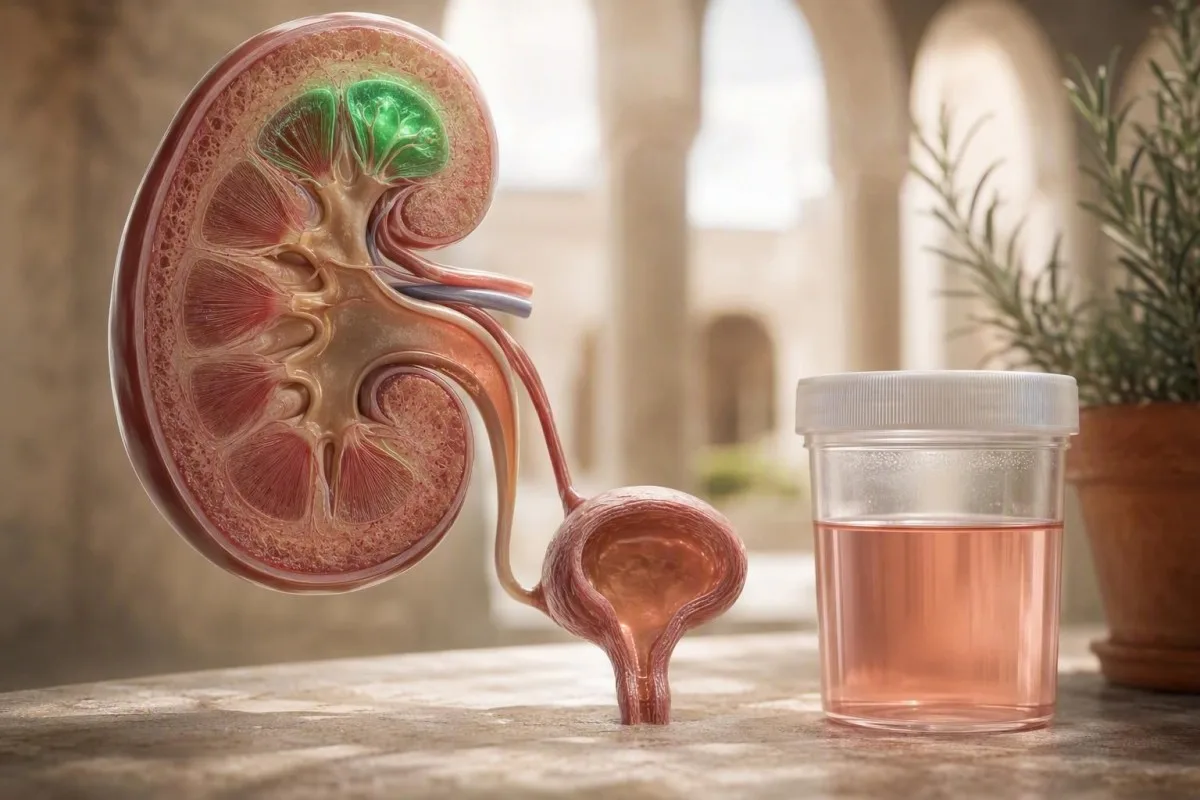
Վազքից հետո միզի վարդագույն կամ թեյի գույնի նմուշը հաճախ ժամանակավոր վարժությունից առաջացած հեմատուրիա է, սակայն տեսանելի գույնը երբեք չպետք է ինքնաբերաբար անտեսել։ Ժամկետը, մանրադիտակային արդյունքները, ախտանշանները և պատշաճ հանգստացած կրկնակի նմուշը պատմում են իրական պատմությունը։.


- Ֆիզիկական ծանրաբեռնվածությունից առաջացած հեմատուրիա սովորաբար անցնում է 24-72 ժամվա ընթացքում ծանր վազքից հետո; 72 ժամից ավելի տևողությունը պահանջում է բժշկական հետազոտություն։.
- Մանրադիտակային շեմ 3 կամ ավելի կարմիր արյան բջիջներ բարձր ուժի դաշտում պատշաճ կերպով հավաքված միզանմուշում համապատասխանում են AUA-ի միկրոհեմատուրիայի սահմանմանը։.
- Թղթե փորձարկման անհամապատասխանություն ունի նշանակություն. արյան դրական բարձիկ՝ ոչ մի կարմիր բջիջ կամ երկու կարմիր բջիջ բարձր ուժի դաշտում, ենթադրում է միոգլոբին կամ ազատ հեմոգլոբին, այլ ոչ թե միզուղիների արյունահոսություն։.
- Կրկնման ժամկետը գործնական է. խուսափել ծանր վարժություններից 48-72 ժամ, նորմալ հիդրատացիա, այնուհետև տրամադրել միջին հոսքի միզանմուշ։.
- Նույն օրվա գնահատում ողջամիտ է թրոմբների, միզարձակման անկարողության, տենդի, միակողմանի ուժեղ ցավի կողքին, կամ կակաոյի գույնի միզի և մկանային ուժեղ ցավի դեպքում։.
- Առողջական նախազգուշացում է արյուն, պլյուս սպիտակուց, կարմիր արյան բջիջների ձողիկներ, բարձր արյան ճնշում, կամ ընկնող eGFR — ոչ թե մեկուսացված մրցաշարից հետո թղթե փորձարկում։.
- Ռաբդոմիոլիզի ցուցում ոչ համաչափ մուգ մեզ, մկանային ծանր ախտանիշներ և կրեատին կինազի մակարդակը, որը հաճախ 5 անգամ գերազանցում է լաբորատոր վերին սահմանը։.
- Քաղցկեղի ռիսկի համատեքստ փոխում է հետաքննության շեմը. տարիքը, ծխելու ազդեցությունը, նախկինում կոնքի ճառագայթումը և տեսանելի հեմատուրիայի մշտական առկայությունը, բոլորը կարևոր են։.
Ինչու՞ կարող է վազքը միզի գույնը դարձնել վարդագույն
Վազորդի հեմատուրիան սովորաբար կարճատև արյան կարմիր բջիջների արտահոսք է մեզի մեջ՝ ինտենսիվ ֆիզիկական ծանրաբեռնվածությունից հետո։, հաճախ լուծվում է հանգստի 24-72 ժամվա ընթացքում։ Այնուամենայնիվ, վարդագույն, կարմիր կամ կոլայի գույնի մեզը արժանի է պատշաճ կերպով հավաքված կրկնակի թեստի, այլ ոչ թե պատահական ենթադրության, որ վազքն է պատճառ դարձել։.
Կլինիկայում հուսադրող պատկերը պարզ է. գույնի փոփոխությունը սկսվում է անսովոր երկար, արագ կամ վայրէջք վազքից հետո; չկա տենդ, երիկամային ցավ կամ միզային այրոց; և միկրոսկոպիան նորմալանում է հանգստից հետո։. Kantesti-ը AI արյան թեստի անալիզատոր է , որը կարող է երիկամների հետ կապված մարկերները՝ կրեատինին, eGFR, էլեկտրոլիտները և կրեատին կինազը, դնել վարժության պատմության կողքին, այլ ոչ թե մեկ մրցույթից հետո ստացված արդյունքը համարել ախտորոշում։.
Առաջարկվող մեխանիզմներն են՝ միզապարկի պատի մեխանիկական շփումը, երիկամային արյան հոսքի ժամանակավոր տեղաշարժերը, ջրազրկումից առաջացած կոնցենտրացիան և երբեմն ոտքերի կրկնվող հարվածներից կարմիր բջիջների քայքայումը։ Յուրաքանչյուր մեխանիզմի ապացույցները, ազնվորեն ասած, խառն են, քանի որ ուսումնասիրությունների մեծ մասը փոքր է և օգտագործում է տարբեր մրցատարածություններ։ Իմ 15 տարվա կլինիկական պրակտիկայում նոր ջանքերի պատմությունը ավելի կարևոր է, քան միայն գույնը. առաջին ուլտրա մարաթոնը և ծանոթ 5 կմ-ը չունեն նույն նախա-թեստային հավանականությունը։.
Մարզումից հետո մեզի մեջ արյան տեսանելի առկայությունը նույնը չէ, ինչ բարեխիղճ վազորդի հեմատուրիան։ հեմատուրիայի կարմիր դրոշակի ավելի լայն ուղեցույց օգտակար է, քանի որ երիկամաքարերը, վարակները, գլոմերուլային հիվանդությունները և միզուղիների քաղցկեղը կարող են պատահաբար առաջին անգամ հայտնաբերվել վազքից հետո։.
Գործնական սահմանումը
Մարզական հեմատուրիան նշանակում է, որ կարմիր բջիջները հայտնվում են մեզի մեջ շուտով ֆիզիկական ծանրաբեռնվածությունից հետո և անհետանում են հանգստյան կրկնակի նմուշում։. Միայն դրական թեստային շերտը չի հաստատում այս ախտորոշումը, քանի որ ռեակտիվը հայտնաբերում է հեմ խեցեմետաղ հեմի, ազատ հեմոգլոբինի կամ միոգլոբինի։.
Հեմատուրիան, հեմոգլոբինը, թե՞ միոգլոբինը
Արյան համար դրական արդյունք ցույց տվող մեզի թեստային շերտը կարող է արտացոլել կարմիր բջիջներ, հեմոգլոբին կամ միոգլոբին, իսկ միկրոսկոպիան տարբերակում է դրանք։. Վարդագույն մեզ՝ շատ ամբողջական կարմիր բջիջներով, աջակցում է հեմատուրիային. մուգ շագանակագույն մեզ՝ քիչ կամ առանց կարմիր բջիջների, մտահոգություն է առաջացնում մկանային վնասվածքից կամ հեմոլիզից առաջացած պիգմենտի համար։.
Մեզի միկրոսկոպիան ցույց է տալիս 3 կամ ավելի կարմիր արյան բջիջներ բարձր ուժի դաշտում հաստատում է միկրոհեմատուրիան, երբ նմուշը մաքուր է հավաքված։ Ընդհակառակը, 0-2 կարմիր բջիջներով բարձր ուժի դաշտում ուժեղ դրական թեստային շերտը պետք է ստիպի բժշկին մտածել միոգլոբինուրիայի մասին, հատկապես ջերմության ազդեցությունից, կռչան-տիպի մկանային բեռից կամ մկանների ծանր ուշացած ցավից հետո։ Շագանակագույն կամ կոլայի գույնը ավելի բնորոշ է կոնցենտրացված պիգմենտին, քան միզապարկի արյունահոսության փոքր քանակությանը։.
Միոգլոբինը կարևոր է, քանի որ այն կարող է ուղեկցել ռաբդոմիոլիզին և սուր երիկամային վնասվածքին։ Կրեատին կինազի խտությունը ավելի բարձր է, քան 5 անգամ լաբորատոր վերին նորմալ սահմանից հաճախ օգտագործվում է որպես ռաբդոմիոլիզի կենսաքիմիական շեմ, թեև ախտանիշները, կալիումը, կրեատինինը և մեզի արտահոսքը որոշում են հրատապությունը։ Տե՛ս մեր գործնական բացատրությունը Չափազանց բարձր կրեատին կինազ այն օրինաչափությունների համար, որոնք չպետք է սպասեն մինչև առավոտ։.
Սննդային ներկերը, ճակնդեղը, սև մոշը, ռիֆամպիցինը, ֆենազոպիրիդինը և դեհիդրատացիան նույնպես կարող են մեզի գույնը փոխել առանց կարմիր բջիջների։ Ա մուգ մեզի դիֆերենցիալ օգնում է խուսափել այն տարածված սխալից, երբ ենթադրվում է, որ յուրաքանչյուր կարմրավուն նմուշ արյուն է։.
Ինչու՞ է տարբերությունը փոխում խնամքը
Կարմիր բջիջների հեմատուրիան ուղղում է ուշադրությունը միզուղիների վրա, մինչդեռ միոգլոբինուրիան ուղղում է ուշադրությունը կմախքային մկանների և երիկամների պաշտպանությանը։. Երկուսն էլ կարող են առաջանալ դիմացկունության մարզումներից հետո, բայց միայն մանրադիտակային հետազոտությունը և թիրախային արյան ստուգումները կարող են հուսալիորեն դրանք տարբերակել։.
Ինչպե՞ս կարդալ վազքից հետո միզանմուշի արդյունքը
Վազքից հետո ամենահատկանշական մեզի թեստը ներառում է դիփսթիք, մանրադիտակային հետազոտություն, սպիտակի չափում և խտություն։. Դիփսթիքի վրա արյունը՝ անցողիկ կարմիր բջիջներով և առանց սպիտակի, հաճախ ցածր ռիսկ է. արյունը՝ սպիտակի կամ ձողիկների հետ, ավելի մանրակրկիտ երիկամային գնահատում է պահանջում։.
Դիփսթիքի արյան արդյունքը զեկուցվում է որպես բացասական, հետք, 1+, 2+, կամ 3+, բայց այն հանդիսանում է էկրանավորման ազդանշան, այլ ոչ թե բջիջների հաշվարկ։. AUA-ն միկրոհեմատուրիան սահմանում է որպես ավելի քան 3 կարմիր արյան բջիջ մանրադիտակային քննության ժամանակ մեկ բարձր հզորության դաշտում, ոչ թե միայն դիփսթիքի արդյունքը (Barocas et al., 2020): Այս տարբերակումը խուսափում է վազորդներին ավելորդ քաղցկեղի հետազոտության մեջ ուղարկելուց՝ կեղծ դրական էկրանավորումից հետո։.
Խտություն, որը բարձր է 1.030 շատ լաբորատորիաներում ցույց է տալիս խտացված մեզ և կարող է գույնն ավելի վախեցնող դարձնել, բայց այն չի բացատրում հաստատված կարմիր բջիջները։ 1+ կամ ավելի բարձր սպիտակուցը պետք է քանակականորեն որոշվի մեզի ալբումին-կրեատինին հարաբերակցությամբ կամ սպիտակուց-կրեատինին հարաբերակցությամբ; գոյություն ունի անցողիկ վարժական պրոտեինուրիա, սակայն մշտական ալբումինուրիան փոխում է դիֆերենցիալը դեպի երիկամային գլոմերուլային հիվանդություն։ Մեր ամբողջական մեզի վերլուծության ուղեցույց բացատրում է, թե ինչու այս մարկերները չպետք է միավորվեն մեկ արդյունքի մեջ։.
Kantesti AI-ն մեկնաբանում է կրեատինինը և eGFR-ը մեզի արդյունքների, մարզման ժամանակի և նախորդ արժեքների հետ միասին. միայն մեկ փոքր-ինչ բարձրացած կրեատինինը տաք մրցավազքից հետո հավասար չէ քրոնիկ երիկամային հիվանդությանը։ Փաստացի, ես հարցնում եմ հեռավորությունը, ռելիեֆը, ջերմաստիճանը, հակաբորբոքային դեղերի օգտագործումը, դաշտանի ժամկետը և արդյոք նմուշը վերցվել է ավարտից 2 ժամվա ընթացքում։.
Ե՞րբ պետք է կրկնեք միզանմուշի փորձարկումը վազքից հետո
Միզազգ ամիսը 48–72 ժամ անց կրկնակի թեստավորումը խելամիտ լռելայն է վազորդի հեմատուրիայի կասկածի դեպքում։. Օգտագործեք առաջին առավոտյան կամ լավ հիդրացված միջին հոսքի նմուշ, բայց մի հարկադրեք լիտր ջուր անմիջապես առաջ, քանի որ ծայրահեղ նոսրացումը կարող է թաքցնել օգտակար արդյունքները։.
Եթե մրցույթից հետո լինի աննորմալություն, ես սովորաբար խորհուրդ չեմ տալիս ինտերվալներ, բլուրներ, ծանր բեռ, կամ մրցույթներ 48 ժամվա ընթացքում; մարաթոնից, ուլտրա մարաթոնից, ջերմային հիվանդությունից կամ անսովոր ցավից հետո, 72 ժամ ավելի շատ պաշտպանված է։ Սովորական խմելը ծարավին բավական է։ Գերհիդրացիան կարող է նվազեցնել հարաբերական խտությունը 1.005-ից ցածր և երբեմն սահմանային արդյունքը դժվարացնել մեկնաբանելը։.
Եթե միկրոսկոպիան մնում է դրական 72 ժամից հետո, կազմակերպեք առաջնային բժշկական հսկողություն օրերի ընթացքում, այլ ոչ թե կրկնակի թեստավորում մարզումներից հետո։ Կայուն արդյունքները արժանի են արյան ճնշման չափման, շիճուկային կրեատինին/eGFR, միզային ալբումին-կրեատինին հարաբերակցության, և մշակույթի կամ պատկերման դիտարկման՝ ըստ ռիսկի։ Ուժի, հիդրացիայի և ժամանակավորապես ցածր ֆիլտրացիայի գնահատման միջև կապը մեր մարզումից հետո eGFR ուղեցույցում.
Ես տեսա 52-ամյա սիրողական մարաթոնավազորդի, ով ուներ 18 կարմիր բջիջներ մեկ բարձր մանրադիտակի դաշտում տաք մրցավազքից հետո երեկոյան, բայց 0-1 կարմիր բջիջ՝ 72 ժամ հանգստից հետո; նրա կրեատինինը վերադարձել է 1.28 մգ/դլ-ից 0.96 մգ/դլ-ի։ Արդյունքը հուսադրող էր, բայց նույն ծրագիրը բավարար չէր 52-ամյա ծխողի համար, ով կրկնակի տեսանելի էր միզի գույնը։.
Միզազգի թեստ մի արդեն եզրագծում, եթե կարելի է խուսափել
Մարզումից անմիջապես հետո թեստավորումը մեծացնում է ժամանակավոր կարմիր բջիջներ, խտացված միզ և սպիտակուց գտնելու հնարավորությունը։. Դա կարող է կլինիկապես օգտակար լինել կասկածվող ռաբդոմիոլիզի դեպքում, բայց դա վատ ժամանակ է վազորդի բազային գծի հաստատման համար։.
Վազքից հետո հեմատուրիայի ո՞ր նախշերն են սովորաբար հուսադրող
Ուժեղ վազքից հետո ինքնագիտակցական դրվագն ավելի հուսադրող է, երբ այն ամբողջովին մաքրվում է, չունի ցավ կամ համակարգային ախտանիշներ, և չունի պրոտեինուրիա կամ երիկամների գործառույթի փոփոխություն։. Հուսադրող չի նշանակում անտեսված; դա նշանակում է հաստատված հանգստացած նմուշով։.
Նվազ ռիսկայնության ֆենոտիպը երիտասարդ կամ միջին տարիքի վազորդ է՝ պարզ ֆիզիկական ակտիվության պատճառով, նորմալ արյան ճնշում, չծխողի պատմություն, և նորմալ հանգստացած միկրոսկոպիա։ Այդ պայմաններում, մեկ անցողիկ արդյունք 3–10 RBC/HPF մրցավազքից հետո հաճախ մարսվում է առանց բուժման։ Ես դեռ կփաստեմ դա, քանի որ յուրաքանչյուր երկար վազքից հետո կրկնությունը արժանի է ավելի զգույշ վերանայման, քան մեկանգամյա իրադարձությունը։.
Միզային ալբումին-կրեատինինի նորմալ հարաբերակցությունը ընդհանուր առմամբ 30 մգ/գ-ից ցածր (3 մգ/մմոլ-ից ցածր), չնայած լաբորատորիաները և երկրները տարբեր կերպ են հաղորդում միավորները։ Արյունը առանց ալբումինի, ձողիկների կամ դիսմորֆիկ կարմիր բջիջների հեռու է մղում ակրոմիալ արտահոսքից; այն չի ապացուցում միզապարկի աղբյուր, բայց ուղղորդում է հաջորդ հարցը։ Մեր բացատրությունը մեզում սպիտակուց ծածկում է այս ստորաբաժանումը հստակ։.
Միզապարկի վնասվածքն ավելի հավանական է, երբ մեզը շատ խիտ է, և վազորդն ավարտում է գրեթե դատարկ միզապարկով։ Որոշ սպորտային կլինիցիստներ առաջարկում են դատարկել միզապարկը երկար վազքից առաջ և կանոնավոր խմել, բայց սա կանխարգելման խորհուրդ է՝ սահմանափակ փորձային ապացույցներով, այլ ոչ թե գնահատման փոխարինող, երբ գույնը պահպանվում է։.
Նորմալ արդյունքն ունի ժամային նշում։
Մրցումից 3 օր հետո բացասական թեստը հուսադրող է այդ դեպքի համար, ոչ թե ցմահ երաշխիք։. Նոր տեսանելի հեմատուրիան մի քանի ամիս անց պետք է գնահատվի ինքնուրույն, հատկապես 40 տարեկանից հետո կամ ծխելու ազդեցության դեպքում։.
Զգուշացման նշաններ, որոնք ավելի քիչ հավանական են դարձնում վազորդի հեմատուրիան
Հեմատուրիան անհապաղ գնահատման կարիք ունի, երբ այն պահպանվում է 72 ժամից հետո, կրկնվում է առանց ուժեղ ֆիզիկական ծանրաբեռնվածության, կամ հայտնվում է ցավի, տենդի, մակարդուկների, սպիտակի կամ երիկամների ֆունկցիայի փոփոխության հետ։. Գտածոների համադրությունը ավելի շատ տեղեկատվություն է տալիս, քան ինքնին դրամատիկ տեսք ունեցող նմուշը։.
Ժամանակին բժշկական խորհուրդ փնտրեք տեսանելի կարմիր մեզի համար, որը տևում է ավելի քան 24 ժամ, նույնիսկ եթե լավ եք զգում. շեմը ցածր է 40-ից բարձր տարիքի, ծխող կամ նախկին ծխողների, կամ նախկինում ճառագայթում ստացած անձանց համար։ AUA ուղեցույցը օգտագործում է ռիսկի շերտավորում՝ հիմնված տարիքի, ծխելու, միկրոսկոպիկ արյան աստիճանի և պահպանման, ինչպես նաև նախկինում եղած մակրոհեմատուրիայի վրա, այլ ոչ թե բոլոր միկրոհեմատուրիաները նույն կերպ վերաբերվելով (Barocas et al., 2020)։.
Դիսմորֆիկ կարմիր բջիջները, կարմիր բջիջների ձողիկները, զգալի ալբումինուրիան, նոր հիպերտոնիան կամ նվազած eGFR-ը երիկամային զտիչի աղբյուր են ենթադրում, այլ ոչ թե ցնցված միզապարկի։. Կարմիր բջիջների ձողիկները երբեք սովորական վազքի սպասված հետևանք չեն։ և պետք է հրավիրեն արագացված երիկամային գնահատում։ Տեսեք մեր ակնարկը հատիկավոր և մեզի ձողիկներ , թե ինչու են նստվածքի գտածոներն կարևոր։.
Թոմաս Քլայնը, MD, խորհուրդ է տալիս վազորդներին ինքնուրույն չդասակարգել միայն գույնով. միզուղիների վարակը կարող է առաջացնել այրոց, հրատապություն, պիուրիա և երբեմն հեմատուրիա, մինչդեռ քարերն ավելի հաճախ առաջացնում են հանկարծակի միակողմանի ցավ և սրտխառնոց։ Մանրէաբանական մշակույթը առավել օգտակար է հակաբիոտիկներից առաջ, երբ առկա են վարակի ախտանիշներ։.
Արյան գումարած սպիտակուցի համադրությունը
Հաստատված հեմատուրիան պրոտեինուրիայի հետ ավելի անհանգստացնող է, քան մեկուսացված հեմատուրիան, քանի որ երկուսն էլ կարող են ծագել ծոցի զտիչից։. Մեզի ալբումին-կրեատինին հարաբերակցությունը 30 մգ/գ կամ ավելի բարձր պետք է կրկնվի և մեկնաբանվի արյան ճնշման և երիկամների ֆունկցիայի հետ։.
Ե՞րբ է վարժությունից հետո վարդագույն միզը պահանջում նույն օրվա խնամք
Համաօրյա հրատապ գնահատում ստացեք մակարդուկների, միզարձակման անկարողության, կողքի ուժեղ ցավի, տենդի, մոլագարության, մեզի արտադրության նվազման կամ մուգ մեզի՝ մկանների ուժեղ ցավի և թուլության դեպքում։. Այս հատկանիշները մատնանշում են ոչ բարդ վարժության հետևանքով առաջացած հեմատուրիայից դուրս։.
Մակարդուկները կարող են խցկել մեզի հոսքը, իսկ մեզի անցկացնելու անկարողությունը հրատապ խնդիր է՝ անկախ մարզական ֆիթնեսից։ Տենդը 38.0°C կամ ավելի կողքի ցավով կարող է վերին միզային վարակիչ լինել. սուր ցավային ցավը փսխումով կարող է քարի վկայել։ Ոչ մի իրավիճակ չպետք է կառավարվի՝ սպասելով վազքից հետո կրկնակի թեստի։.
Մուգ շագանակագույն մեզը ֆիզիկական ծանրաբեռնվածությունից հետո, պլյուս մկանների նկատելի ցավը, թուլությունը, այտուցը կամ նվազած արտադրությունը, մտահոգություն է առաջացնում ռաբդոմիոլիզի համար։ Նախնական թեստավորումը սովորաբար ներառում է կրեատին կինազ, կրեատինին, կալիում, կալցիում, ֆոսֆատ և մեզի վերլուծություն։ Ա CrossFit ռաբդոմիոլիզի ուղեցույցը կարևոր է, քանի որ ոչ սովորական էքսցենտրիկ վարժությունները, ոչ միայն վազքը, հաճախակի դրդապատճառ են։.
Ծանր ջրազրկումը կարող է վատացնել երիկամների արդյունքները, բայց այն կարող է նաև զուգակցվել իրական վնասվածքի հետ։ Եթե դուք ունեք գլխապտույտ, շփոթվածություն, չեք կարողանում հեղուկներ ընդունել, կամ շատ քիչ է միզում 8–12 ժամ, մի փորձեք ինքնուրույն լուծել խնդիրը սպորտային ըմպելիքներով։.
Հղիությունը և հակաcoagulants (հակա արյան մակարդուկ)
Հղի վազորդները և հակաcoagulants (հակա արյան մակարդուկ) ընդունող մարդիկ պետք է անհապաղ զեկուցեն տեսանելի հեմատուրիան։. Հակաcoagulants (հակա արյան մակարդուկ) կարող են ուժեղացնել արյունահոսությունը, բայց չեն վերացնում դրա աղբյուրը պարզելու անհրաժեշտությունը. հղիությունը նաև փոխում է վարակի, քարերի և երիկամների հիվանդության ստուգման շեմը։.
Վիճակներ, որոնք վազքը կարող է բացահայտել, այլ ոչ թե պատճառել
Վազքը կարող է բացահայտել առկա միզային խնդիր՝ կոնցենտրացնելով միզուկը կամ խրախուսելով թեստավորում, այլ ոչ թե հեմատուրիայի առաջացումը։. Քարերը, վարակը, գլոմերուլյար հիվանդությունը, կառուցվածքային անոմալիաները և չարորակությունը մնում են դիֆերենցիալ ախտորոշման մաս։.
Ողնաշարի քարերը հաճախ առաջացնում են միակողմանի ցավ մարմնի կողքից մինչև աճուկ, սրտխառնոց և կարմիր բջիջներ միկրոսկոպիայի վրա, թեև անցավ քարերը նույպես հանդիպում են։ Միզային վարակն ավելի հաճախ առաջացնում է այրոց, հաճախակի միզարձակում, հրատապություն և սպիտակ բջիջներ; նիտրիտի բացասական արդյունքը չի բացառում այն։ Մեր ուղեցույցը լեյկոցիտ էստերազայի՝ բացասական նիտրիտով բացատրում է այս ընդհանուր խառը պատկերը։.
Գլոմերուլոնեֆրիտը կարող է դրսևորվել վերին շնչական ուղիների վարակից հետո՝ մուգ (կոլայի նման) միզի, այտուցի, բարձր արյան ճնշման, պրոտեինուրիայի և դիսմորֆիկ կարմիր բջիջների հետ։ KDIGO-ի 2024 թ. ԲԵՀ ուղեցույցում, մշտական ալբումինուրիան և նվազած eGFR-ը դիտարկվում են որպես երիկամների ռիսկի լրացուցիչ մարկերներ, ոչ թե փոխփոխվող չափումներ (KDIGO, 2024)։.
Kantesti-ը AI-ի վրա հիմնված արյան թեստի վերլուծության գործիք է որն օգնում է օգտատերերին ճանաչել կրեատինինի, eGFR-ի, ալբումինի, էլեկտրոլիտների և CBC-ի օրինակը, բայց չի կարող ախտորոշել հեմատուրիայի անատոմիական աղբյուրը։ Պատկերումը, միկրոսկոպիան, կուլտուրան և բժշկի զննումը դեռևս կատարում են որոշիչ աշխատանքը։.
Քաղցկեղը հազվադեպ է երիտասարդ վազորդների մոտ, բայց ոչ անհնար մեծահասակների մոտ։
Տեսանելի հեմատուրիան արժանի է գնահատման, նույնիսկ երբ վարժությունը թվացյալ ակնհայտ բացատրություն է, հատկապես ծխելու ազդեցության կամ մշտական ախտանիշներ ունեցող մարդկանց մոտ։. Ռիսկը մեծանում է տարիքի և ծխախոտի կուտակային ազդեցության հետ, այդ իսկ պատճառով միանման միզային արդյունքները չեն հանգեցնում միանման թեստավորման պլանների։.
Ո՞վքեր են կարիք ունենում ուրոլոգիայի կամ նեֆրոլոգիայի հետևողականության
Հանգստացված կրկնակի նմուշից հետո մշտական հեմատուրիան պետք է գնահատվի ռիսկի համար ուրոլոգիայի համար, մինչդեռ հեմատուրիան, պրոտեինուրիան, ձգումները, հիպերտոնիան կամ վատացած eGFR-ը ուղղված են նեֆրոլոգիայի։. Շատ մարդկանց պարզապես անհրաժեշտ է առաջնային բժշկական օգնության կողմից կրկնակի թեստավորում. ուղեգրումը կախված է օրինակից։.
Ուրոլոգիայի գնահատումը հատկապես հարմար է կրկնվող տեսանելի հեմատուրիայի, մշտական միկրոսկոպիկ հեմատուրիայի, ծխելու պատմության, աշխատանքային ազդեցության ալիֆատիկ ամիների, նախկինում կրծքավանդակի ճառագայթման կամ առանց վարակի միզային ախտանիշների դեպքում։ Կախված ռիսկից՝ բժիշկները կարող են օգտագործել երիկամների և միզապարկի ուլտրաձայն, CT ուրոգրաֆիա և ցիստոսկոպիա։ 24-ամյա մարդու մոտ մրցույթից հետո մեկ անգամյա հետքի չափման արդյունքը շատ տարբեր իրավիճակ է, քան 58-ամյա նախկին ծխողի մոտ մուգ կարմիր միզի կրկնությունը։.
Նեֆրոլոգիայի վերանայումն ավելի հավանական է միզի ալբումին-կրեատինին հարաբերակցությամբ ≥30 մգ/գ, eGFR-ը ցածր է 60 մլ/րոպե/1.73 մ²-ից ցածր 3 ամիս կամ ավելի տևողությամբ, կարմիր բջիջներով ձգումներով, կամ դժվար վերահսկվող արյան ճնշմամբ։ Այս կտրվածքներն ունեն նշանակություն, քանի որ քրոնիկ երիկամային հիվանդությունը սահմանվում է տևողությամբ, ինչպես նաև մեկ չափումով։ Կարդացեք մեր քրոնիկ երիկամային հիվանդության փուլերի ուղեցույցը -ը գործնական կատեգորիաների համար։.
«Kantesti»-ի AI լաբորատոր թեստերի մեկնաբանման ծառայությունը կարող է նշել արյան և սպիտակուցների կրկնվող նախշը քննարկման համար, հատկապես երբ օգտատերերը ներբեռնում են տարբեր լաբորատորիաներից ստացված արդյունքները։ Այն պետք է աջակցի, այլ ոչ թե փոխարինի, այն կլինիցիստին, ով որոշում է, թե արդյոք անհրաժեշտ է միզասեռական պատկերում կամ մասնագիտական հետազոտություն։.
Մի թույլ տվեք, որ հակաընդմանումը վերջ դնի զրույցին։
Հակաընդմանիչների օգտագործումը փոխում է արյունահոսության ծանրությունը, սակայն չի հաստատում հեմատուրիայի պատճառը։. Իմ փորձով, առանց հետազոտության, առանց աշխատանքի, կրկնվող մեզի արյան վերագրումը ապիքսաբանի, վարֆարինի կամ ասպիրինի վրա կարող է ուշացնել քարերի, վարակի կամ կառուցվածքային հիվանդությունների ճանաչումը։.
Ի՞նչ արյան անալիզներ են օգնում վարժությունից առաջացած հեմատուրիայի դեպքում
Արդյունավետ արյան թեստերը կախված են ախտանշաններից. կրեատինին, eGFR, էլեկտրոլիտներ և կրեատին կինազ գնահատում են երիկամների և մկանների սթրեսը, մինչդեռ CBC-ն գնահատում է անեմիայի կամ վարակի հուշումները։. Ուսումնասիրության լայն պանելներն ավելի քիչ օգտակար են, քան թիրախային թեստավորումը՝ ճշգրիտ պատմության և մեզի վերլուծությունից հետո։.
Կրեատինինը կարող է անցողիկորեն բարձրանալ դիմացկունության մարզումներից հետո՝ մկանների նյութափոխանակության, երիկամների պերֆուզիայի նվազման և դեհիդրացիայի պատճառով։ eGFR հավասարումներն ավելի քիչ հուսալի են կրեատինինի արագ փոփոխության ժամանակ, ինչի պատճառով արժեքի կրկնությունը հետո 48–72 ժամ սովորական վերականգնման ավելի շատ իմաստ ունի, քան եզրագծի արդյունքը։ Մեր մարզումներից առաջացած կրեատինինի վերստուգման ուղեցույցը տալիս է համատեքստ այս հաճախակի անհանգստության պատճառի համար։.
Կրեատին կինազը ունի լայն հետմարզական միջակայք․ մարզված մարզիկները կարող են ցույց տալ բարձրացումներ մրցավազքից հետո՝ առանց երիկամների վնասման, մինչդեռ տեղական վերին սահմանից բազմակի անգամ բարձր արժեքները՝ ախտանշանների հետ մեկտեղ, արժանի են շտապ գնահատման։ Կալիումի մակարդակը բարձր է 6.0 mmol/L-ից բարձր պոտենցիալ վտանգավոր է և պահանջում է շտապ կլինիկական գնահատում, հատկապես, եթե երիկամների ֆունկցիան խանգարված է կամ կասկածվում է մկանների վնասվածք։.
CBC-ն առավել օգտակար է, երբ առկա է հոգնածություն, գլխապտույտ, առատ դաշտանային արյունահոսություն, կրկնվող հեմատուրիա կամ մտահոգություն համակարգային հիվանդության վերաբերյալ։ Հեմոգլոբինը կարող է ընկնել դիմացկունության իրադարձություններից հետո՝ պլազմայի ծավալի ընդլայնման, երկաթի կորստի կամ հեմոլիզի պատճառով. ֆերրիտինը պետք է մեկնաբանվի սուր բորբոքումից և ծանր մարզումներից հեռու։ Դիմացկունության վազորդները կարող են գտնել մեր մարզիկի արյան թեստի ակնարկը օգտակար՝ ողջամիտ բազային գծի համար։.
Մի ախտորոշեք երիկամների հիվանդություն մեկ մրցաշրջանային պանելից
Կրեատինինի 0.3 մգ/դլ կամ ավելի բարձրացումը կարող է հանդիպել երիկամների սուր վնասվածքի չափանիշին ճիշտ ժամկետներում, բայց համատեքստը և կրկնակի թեստավորումը վճռորոշ են մրցավազքից հետո։. Մեզի ցածր արտադրությունը, կալիումի բարձրացումը և կայուն բարձրացումը ավելի մեծ քաշ ունեն, քան մեկուսացված սահմանային արդյունքը։.
Ինչպե՞ս հավաքել կրկնակի միզանմուշ, որին բժիշկները կարող են վստահել
Մաքուր-ծորակային միջին հոսքի մեզի նմուշ 48-72 ժամ հետո առանց ուժեղ մարզումների լավագույն միջոցն է ստուգելու, արդյոք հեմատուրիան վերացել է։. Հավաքագրման սխալները, դաշտանային աղտոտումը և հին նմուշը կարող են ստեղծել կեղծ արդյունքներ։.
Լվացեք ձեռքերը, սկսեք միզել զուգարանակոնքի մեջ, այնուհետև հավաքեք միջին հոսքի մասը՝ առանց կոնտեյների ներսը դիպչելու։ Անմիջապես մատակարարեք նմուշը՝ իդեալականորեն մինչև 2 ժամ— կամ հետևեք լաբորատորիայի սառնարանային հրահանգներին։ Երկարատև կանգնելը փոխում է բջիջների տեսքը և կարող է դարձնել մանրադիտակային հետազոտությունը պակաս հուսալի։.
Խուսափեք թեստավորումից ակտիվ դաշտանի ընթացքում, եթե հնարավոր է. եթե թեստավորումը չի կարող սպասել, տեղեկացրեք կլինիցիստին և լաբորատորիային։ Վերաբերմունքի աղտոտումը կարող է առաջացնել կարմիր արյան բջիջներ և սպիտակուց, մինչդեռ հարթ էպիթելային բջիջները հաճախ ազդանշում են վատ հավաքված նմուշի մասին։ Մեր ուղեցույցը միզում էպիթելային բջիջների վերաբերյալ բացատրում է, թե ինչու սա տրիվիալ լաբորատորական ծանոթագրություն չէ։.
Թոմաս Քլայնը, MD, խորհուրդ է տալիս արձանագրել չորս մանրամասներ նմուշի հետ միասին. վերջին լարված մարզումը, իրադարձության տևողությունը, դրսի ջերմաստիճանը և վերջին 72 ժամվա ընթացքում ընդունված բոլոր դեղորայքները։ Ժամանակաչափման բացակայությամբ արդյունքը շատ ավելի դժվար է մեկնաբանել, հատկապես երբ մեզի նմուշը հավաքվում է կրկնակի մարզումից հետո։.
Առավոտյան առաջին թեստավորում՝ ցերեկային թեստավորման համեմատ
Առավոտյան առաջին նմուշը խտացված է և լավ է մանր հիվանդությունները հայտնաբերելու համար, սակայն նորմալ հիդրատացված ցերեկային միջին հոսքի նմուշը ընդունելի է, եթե հավաքումն ավելի մաքուր է։. Համատեղելիությունը ավելի կարևոր է սերիական համեմատության համար. օգտագործեք մոտավորապես նույն պայմանները յուրաքանչյուր կրկնությունում։.
Հիդրատացիան, ցավազրկող դեղերը և հավելումները, որոնք փոխում են պատկերը
Դեհիդրատացիան կարող է խտացնել մեզի և մեծացնել երիկամների լարվածությունը, մինչդեռ NSAID-ները կարող են նվազեցնել երիկամների արյան հոսքը դիմացկունության մարզումների ընթացքում։. Ոչ մի գործոն ապացուցում է հեմատուրիայի պատճառը, բայց երկուսն էլ ազդում են նմուշի մեկնաբանության վրա, որը հավաքվել է վազքից հետո։.
Վազորդների մեծամասնության համար ավելի անվտանգ է խմել ըստ ծարավի և կորուստները աստիճանաբար փոխարինել, քան կոշտորեն հարկադրել հեղուկներ։ Շատ ցածր նատրիումը չափից շատ ջրի օգտագործումից կարող է վտանգավոր լինել; շիճուկային նատրիումը ցածր է 125 mmol/L-ից ցածր գլխացավով, փսխումով, շփոթվածությամբ կամ ցնցումներով, դա շտապ դեպք է։ Մեզի գույնը հիդրատացիայի կոպիտ ցուցիչ է, ոչ թե ճշգրիտ հիդրատացիայի մետր։.
Իբուպրոֆենը, նապրոքսենը և այլ NSAID-ները կարող են նվազեցնել պրոստագլանդինով միջնորդավորված երիկամների արյան հոսքը, հատկապես ջերմային լարվածության, փսխման կամ երկարատև մրցումների ժամանակ: Ես խորհուրդ եմ տալիս հիվանդներին խուսափել սովորական պրոֆիլակտիկ NSAID-ներից մինչև մարաթոնները, եթե նրանց սեփական բժիշկը հստակ պատճառ չի տվել։ Դեղորայքային համատեքստը քննարկվում է մեր լաբորատորական տ్రెդերի անվտանգության հոդվածում.
Վիտամին C-ի բարձր դոզան կարող է խանգարել մեզի ստիկային որոշ ռեակցիաների, իսկ կատարողականության համար նախատեսված հավելումները երբեմն պարունակում են չնշված խթանիչներ կամ միզամուղներ։ Բերեք տարաները կամ հստակ լուսանկարները հանդիպմանը; դա հաճախ ավելի օգտակար է, քան փորձել հիշել ապրանքային փոշու բաղադրիչների ցանկը։ Մեր մարզիկների համար նախատեսված հավելումների անվտանգության ուղեցույցը առաջարկում է ողջամիտ ստուգաթերթ։.
Հիդրատացիան անընդմեջ արյան բուժում չէ
Ջուրը կարող է շտկել խտությունը, բայց այն չի բուժում քարը, վարակը, գլոմերուլյար գործընթացը կամ միզուղիների կառուցվածքային աղբյուրը։. Եթե կարմիր բջիջները մնում են հանգած, լավ հավաքված նմուշի վրա, ապա ծանրացումը պետք է հիմնված լինի ձևի վրա, այլ ոչ թե հիդրատացիայի մեկ այլ փորձի։.
Կարո՞ղ եք շարունակել վազել վարժությունից առաջացած հեմատուրիայից հետո
Վազորդների մեծ մասը կարող է աստիճանաբար վերադառնալ, երբ մեզի գույնը նորմալանա, ախտանիշները բացակայեն, և հանգած կրկնակի նմուշը հուսադրող լինի։. Մի վերադարձեք ինտենսիվ մարզումների, մինչև մեզի գույնը մնում է տեսանելի կարմիր, երիկամների արդյունքները աբնորմալ են, կամ մկանային ախտանիշները ենթադրում են ռաբդոմիոլիզ։.
Անսարքային միայնակ դրվագից հետո ես սովորաբար առաջարկում եմ մի քանի օր միայն թեթև վազք, այնուհետև ծավալի և ինտենսիվության աստիճանական վերականգնում 7–14 օրերի ընթացքում. Վազորդը պետք է դադարեցնի և դիմի վերանայման, եթե գույնը կրկնվի, ցավը զարգանա, կամ մեզի արտադրությունը նվազի։ Սա պրագմատիկ կլինիկական մոտեցում է, ոչ թե փորձարկված դեղատոմս։.
Նույն հեռավորությունից հետո կրկնվող հեմատուրիան կարող է արդարացնել գործնական փորձարկումներ. խուսափել մրցելուց դեհիդրատացված, միզել նախքան երկար վազքը, ավելի դանդաղ ներդնել ներքև վազքի մարզումը, և վերանայել կոշիկի հարմարանքը կամ տեղանքը։ Պահպանեք տեմպի, ջերմության, տևողության, մեզի գույնի և նմուշի արդյունքների մատյան։ Ա մարաթոն վազորդի լաբորատոր ուղեցույց կարող է օգնել տարբերել վերականգնման մարկերները այն պատճառներից, որոնք պետք է դադարեցնել մարզումը։.
Մարզումներ մի կատարեք ցանկացած տեսանելի հեմատուրիայի պատճառով միայն այն պատճառով, որ նախատեսված է մրցաշար։ Մարզիկները հաճախ գերազանց են տհաճություններին դիմակայելու հարցում. ավելի դժվար հմտությունը ճանաչելն է, որ համառությունը ախտորոշիչ տեղեկատվություն է, այլ ոչ թե դիմացկունության փորձություն։.
Ստեղծեք իրական բազային գիծ
Մարզումից առնվազն 72 ժամ անց արված մեզի անալիզի և երիկամների պանելի բազային չափումը կարող է ապագա մրցումներից հետո արդյունքները շատ ավելի հեշտ դարձնել մեկնաբանելու համար։. Սա հատկապես օգտակար է ուլտրա վազորդների, մեկ երիկամ ունեցող մարդկանց կամ երիկամների պերֆուզիայի վրա ազդող դեղորայք օգտագործող մարզիկների համար։.
Ի՞նչ ասել ձեր բժշկին միզում արյան մասին վարժությունից հետո
Հեմատուրիայի արդյունավետ գնահատման ամենաարագ ուղին հակիրճ ժամանակագրությունն է. մեզի գույնը, վարժանքի չափը, ախտանշանները, դեղորայքը և կրկնակի թեստի ժամկետը։. Ներկայացրեք լաբորատոր իրական արժեքները, այլ ոչ միայն այն հաղորդագրությունը, որ նմուշը “դրական է արյան համար”։”
Նշեք, թե արդյոք մեզը վարդագույն էր, վառ կարմիր, թեյի գույնի, կամ պարունակում էր մակարդուկներ; արդյոք գույնը հայտնվել է մարզումից առաջ, ընթացքում, թե հետո; և արդյոք այն պարզվել է առաջին միզարձակումից հետո։ Ներառեք այրոց, հրատապություն, տենդ, ողնաշարի ցավ, սրտխառնոց, այտուց և միզարձակման նվազում։ Մանրամասն մեզի գույնի վերաբերյալ ուղեցույց կարող է օգնել ճշգրիտ նկարագրել դիտարկումը՝ առանց այն չափից դուրս մեկնաբանելու։.
Ներկայացրեք նախորդ մեզի անալիզները, կրեատինին/eGFR արժեքները, արյան ճնշման չափումները, ծխելու պատմությունը, երիկամների ընտանեկան պատմությունը և դեղորայքի/հավելումների ցուցակը։. Kantesti-ը AI կենսամարկերների մեկնաբանման հարթակ է որը կարող է կազմակերպել կրկնակի արյան թեստերի արժեքները և ընդգծել կարևոր փոփոխությունները, սակայն կլինիցիստը պետք է այդ արժեքները կապի մեզի մանրադիտակային հետազոտության և քննության հետ։.
2026 թվականի սեպտեմբերի 3-ի դրությամբ կլինիկական սկզբունքը մնում է պարզ. վարժանքը հավանական բացատրություն է միայն այն բանից հետո, երբ արդյունքը վերականգնվում է, և հակասող ակնարկները բացակայում են։ Եթե անորոշ եք, հարցրեք, թե արդյոք ձեզ անհրաժեշտ է մանրադիտակային հետազոտություն, կուլտուրա, ալբումին-կրեատինին հարաբերակցություն, կրկնակի կրեատինին, պատկերացում կամ ուղղորդում – ոչ միայն ևս մեկ դիպստիկ։.
Հարցեր, որոնց արժե անդրադառնալ
Հարցրեք, թե արդյոք ամբողջական կարմիր արյան բջիջներ են երևացել, արդյոք սպիտակուցներ կամ ձողիկներ են եղել, և երբ պետք է տեղի ունենա հանգստացած վիճակում կրկնակի չափումը։. Այս երեք պատասխանները սովորաբար պարզաբանում են, թե արդյոք հաջորդ քայլը զգոն հետևումն է, երիկամների թեստավորումը, վարակի թեստավորումը, թե ուրոլոգիական գնահատումը։.
Վազորդի հեմատուրիայի համար ողջամիտ գործողությունների պլան
Մեկ անցավ ցիկլից հետո ծանր վազքից հետո, հանգստացեք ծանր վարժանքից 48–72 ժամ, և կրկնեք մաքուր-քլիփ մեզի անալիզը. վաղաժամ խնամք փնտրեք կարմիր դրոշների կամ տեսանելի գույնի պահպանման համար։. Նպատակը ոչ պանիկան է, ոչ էլ մերժումը - դա ապացուցելն է, որ գտնվածը վերականգնվում է։.
Քայլ առաջին. դադարեցրեք ծանր մարզումը, նորմալ հիդրատացեք և նշեք ժամանակը և ախտանշանները։ Քայլ երկրորդ. կրկնեք մանրադիտակային հետազոտությունը հետո 48–72 ժամ. : Քայլ երրորդ. եթե արյունը պահպանվում է, կամ եթե սպիտակուցներ, ձողիկներ, ցավ, տենդ, մակարդուկներ, ցածր միզարձակում, կամ երիկամների ոչ նորմալ մարկերներ են հայտնվում, շտապ կազմակերպեք բժշկական գնահատում։ Այս հաջորդականությունը կանխում է ինչպես բաց թողնված հիվանդությունը, այնպես էլ ոչ անհրաժեշտ պատկերացումը մեկանգամյա ավարտական գծի նմուշից հետո։.
Երբ մեր կլինիկական թիմը վերանայում է վերբեռնված լաբորատոր տվյալները, մենք առաջնահերթություն ենք տալիս ձևերին. աճող կրեատինին, ինչպես նաև բարձր CK և ցածր միզարձակում ավելի շտապ է, քան կայուն կրեատինինը ժամանակավոր մեզի դիպստիկով։ Kantesti-ի մեթոդաբանությունը և պաշտպանությունը նկարագրված են մեր կլինիկական վավերացման տեղեկատվությունը, և մեր բժշկական վերահսկողությունը մանրամասնորեն ներկայացված է Բժշկական խորհրդատվական խորհուրդ.
. Շատ հիվանդներ գտնում են, որ ժամանակավոր կրկնակի թեստը վախեցնող գույնի փոփոխությունը վերածում է պարզ պլանի։ Բայց եթե ձեր ինտուիցիան ասում է, որ ինչ-որ բան այն չէ - հատկապես, եթե մեզը վաղը դեռ կարմիր է - վստահեք այդ ազդանշանին և գնահատվեք։.
Մեկ նախադասության կանոն
Վարդագույն մեզը մեկ անգամ ծանր վազքից հետո կարող է լինել ժամանակավոր. վարդագույն մեզը, որը պահպանվում է, կրկնվում է կամ հայտնվում է ախտանշաններով, հեմատուրիա է, մինչև պատշաճ գնահատվի։.
Հաճախակի տրվող հարցեր
Որքա՞ն է տևում վազորդի հեմատուրիան։
Վազորդների հեմատուրիան սովորաբար անցնում է ծանր ֆիզիկական ակտիվությունից հետո 24–72 ժամվա ընթացքում։ Կարելի է կրկնել մեզի թեստը՝ օգտագործելով «մաքուր միզարձակման միջին հոսք» մեթոդը 48–72 ժամ՝ առանց ծանր վազքի կամ ծանր բարձրացման։ 24 ժամից ավելի տևող վարդագույն կամ կարմիր մեզը, կամ 72 ժամից հետո մնացած միկրոսկոպիկ հեմատուրիան պետք է գնահատվի բժշկի կողմից։ Տենդը, մակարդուկները, կողքի ուժեղ ցավը, մեզի արտադրության նվազումը կամ մկանների ուժեղ ցավը հիմք են հանդիսանում նույն օրը գնահատելու համար։.
Վարժությունից հետո մեզի մեջ արյունը նորմալ երևույթ է։
Մարզանքից հետո միզամուտքում արյունը կարող է լինել ինտենսիվ վազքի, ջրազրկման, միզապարկի պատի հարվածի կամ երիկամների արյան հոսքի կարճաժամկետ փոփոխությունների անցողիկ երևույթ, սակայն այն ինքնաբերաբար նորմալ չէ։ Մանրադիտակային հետազոտությունը, որը հաստատում է 3 կամ ավելի կարմիր արյան բջիջ բարձր խոշորացման դաշտում, համապատասխանում է AUA-ի միկրոհեմատուրիայի սահմանմանը։ Հանգստացած կրկնակի նմուշի դեպքում անհետացող արդյունքը հուսադրող է, մինչդեռ արյան, սպիտակուցի, ցուլինդրների, ցավի կամ միզային ախտանշանների դեպքում պահանջվում է հետագա գնահատում։ Միզի տեսանելի գույնը միշտ պետք է հաղորդվի, հատկապես չափահասների մոտ, ովքեր ծխախոտի ազդեցության տակ են կամ ունեն կրկնվող դրվագներ։.
Ողնուղեղային ջրազրկումը կարո՞ղ է վարդագույն մեզ առաջացնել վազքից հետո։
Ջրազրկումը կարող է մեզ ավելի մուգ երևալ և կենտրոնացնելով մեզի բաղադրիչները, ուժեղացնել մարզումից հետո հայտնաբերված հեմատուրիան, սակայն միայն ջրազրկումը հստակ կարմիր բջիջների առկայությունը հուսալիորեն չի բացատրում։ Շատ լաբորատորիաներում մեզի 1.030-ից բարձր տեսակարար կշիռը հաճախ խոսում է մեզի կենտրոնացվածության մասին։ Խմեք նորմալ, ըստ ծարավի, և կրկնեք մաքուր նմուշի վերցում 48-72 ժամվա հանգստից հետո, այլ ոչ թե փորձեք հեռացնել արդյունքը՝ չափից շատ ջուր խմելով։ Ծանր ծարավը, գլխապտույտը, մեզի շատ քիչ արտադրությունը կամ շփոթվածությունը պահանջում են անհապաղ բժշկական զննում։.
Որո՞նք են մարզումներից հետո հեմատուրիայի և միոգլոբինուրիայի տարբերությունները։
Հեմատուրիան նշանակում է, որ մեզի մեջ առկա են անվնաս կարմիր արյան բջիջներ, մինչդեռ միոգլոբինուրիան արտացոլում է մկանային վնասվածքից հետո արտազատված մկանային պիգմենտը։ Երկու դեպքերում էլ թեստերիչը կարող է դրական լինել արյան առկայության համար, ուստի մանրադիտակային հետազոտությունը որոշիչ է. միոգլոբինուրիան հաճախ դրական թեստիչ է արտադրում 0–2 կարմիր բջիջներով բարձր խոշորացման դաշտում։ Ուժեղ մկանային ցավը, թուլությունը, այտուցը, մուգ կոլայի գույնի մեզը կամ լաբորատոր վերին սահմանից 5 անգամ ավելի բարձր կրեատին կինազի մակարդակը մտահոգություն է առաջացնում ռաբդոմիոլիզի վերաբերյալ։ Այս պատկերը պահանջում է անհապաղ կլինիկական գնահատում, քանի որ կալիումի և երիկամների ֆունկցիան կարող են արագ փոխվել։.
Դադարեցնե՞մ վազելը, եթե ունեմ մարզանքից առաջացած արյունամաքսություն։
Դադարեցրեք ինտենսիվ վազքը, մինչև մեզի գույնը նորմալանա, և դուք անցկացնեք հանգստացված կրկնակի թեստ, սովորաբար 48-72 ժամ հետո: Եթե կրկնակի նմուշը նորմալ է, և դուք չունեք ցավ, տենդ, մակարդուկներ, պրոտեինուրիա կամ երիկամների ֆունկցիայի խանգարում, վազորդների մեծ մասը կարող է աստիճանաբար վերադառնալ մարզումներին մոտ 7-14 օրվա ընթացքում: Մի վերսկսեք ինտենսիվ մարզումները, երբ մեզը մնում է տեսանելի կարմիր կամ մուգ, մեզի արտահոսքը նվազել է, կամ առկա են մկանային ծանր ախտանշաններ: Նմանատիպ մարզումներից հետո կրկնվող դրվագները, նույնիսկ եթե յուրաքանչյուր դրվագ լուծվում է, արժանի են բժշկական գնահատման:.
Ե՞րբ է հեմատուրիան բուժման կարիք ունենում ուրոլոգի կողմից։
Մանրադիտակային հեմատուրիայի կայունությունը հանգստից հետո կրկնակի նմուշի դեպքում, կրկնվող տեսանելի հեմատուրիան կամ ծխելու պատմություն ունեցող անձի մոտ հեմատուրիան, նախկինում կոնքի ճառագայթային թերապիան կամ միզուղիների ախտանշանները հաճախ պահանջում են ուրոլոգիական ռիսկի գնահատում։ Ուրոլոգները կարող են դիտարկել ուլտրաձայնային հետազոտություն, ոստայնային ուրոգրաֆիա և ցիստոսկոպիա՝ ըստ տարիքի և ընդհանուր ռիսկի, այլ ոչ թե մեկ թեստ օգտագործել բոլորի համար։ Հեմատուրիան ալբումինուրիայով 30 մգ/գ կամ ավելի, կարմիր արյան բջիջներով ձուլուկներ, հիպերտոնիա կամ eGFR 60 մլ/րոպե/1.73 մ²-ից ցածր ցուցումները ավելի ուժեղ են հակված նեֆրոլոգիայի կողմը։ Ճիշտ մասնագիտությունը կախված է մեզի և արյան ամբողջական թեստերի պատկերից։.
Ստացեք AI-ով աշխատող արյան անալիզի վերլուծություն այսօր
Միացեք ավելի քան 2 միլիոն օգտատերերի ամբողջ աշխարհում, ովքեր վստահում են Kantesti-ին՝ լաբորատոր թեստերի ակնթարթային, ճշգրիտ վերլուծության համար։ Վերբեռնեք ձեր արյան անալիզի արդյունքները և ստացեք 15,000+ բիոմարկերների համապարփակ մեկնաբանություն վայրկյանների ընթացքում։.
📚 Հղված հետազոտական հրապարակումներ
Klein, T., Mitchell, S., & Weber, H. (2026). Բազմալեզու AI-ի օգնությամբ կլինիկական որոշում կայացնելու աջակցություն հանտավիրուսի վաղ տրիաժի համար․ նախագծում, ինժեներական վավերացում և իրական աշխարհում կիրառում 50 000 մեկնաբանված արյան թեստի հաշվետվություններում.։ Kantesti AI Medical Research.
Klein, T., Mitchell, S., & Weber, H. (2026). Kantesti Արյան թեստի մեկնաբանման շարժիչի նախապես գրանցված, ռուբրիկային վրա հիմնված ավտոմատացված տեխնիկական բենչմարկը 100,000 սինթետիկ թեստային դեպքերի վրա.։ Kantesti AI Medical Research.
📖 Արտաքին բժշկական հղումներ
⚕️ Բժշկական հրաժարում
Այս հոդվածը միայն կրթական նպատակների համար է և չի հանդիսանում բժշկական խորհրդատվություն։ Ախտորոշման և բուժման որոշումների համար միշտ խորհրդակցեք որակավորված բուժաշխատողի հետ։.
E-E-A-T վստահության ազդանշաններ
Փորձառություն
Բժշկի կողմից ղեկավարվող կլինիկական վերանայում՝ լաբորատոր մեկնաբանության աշխատանքային հոսքերի համար։.
Մասնագիտություն
Լաբորատոր բժշկության կենտրոնացում՝ այն բանի վրա, թե ինչպես են բիոմարկերները դրսևորվում կլինիկական համատեքստում։.
Հեղինակություն
Գրված է դոկտոր Թոմաս Քլայնի կողմից՝ դոկտոր Սառա Միթչելի և պրոֆեսոր դոկտոր Հանս Վեբերի կողմից վերանայմամբ։.
Հուսալիություն
Ապացույցների վրա հիմնված մեկնաբանություն՝ հստակ հետագա քայլերի ուղիներով՝ ահազանգերը նվազեցնելու համար։.