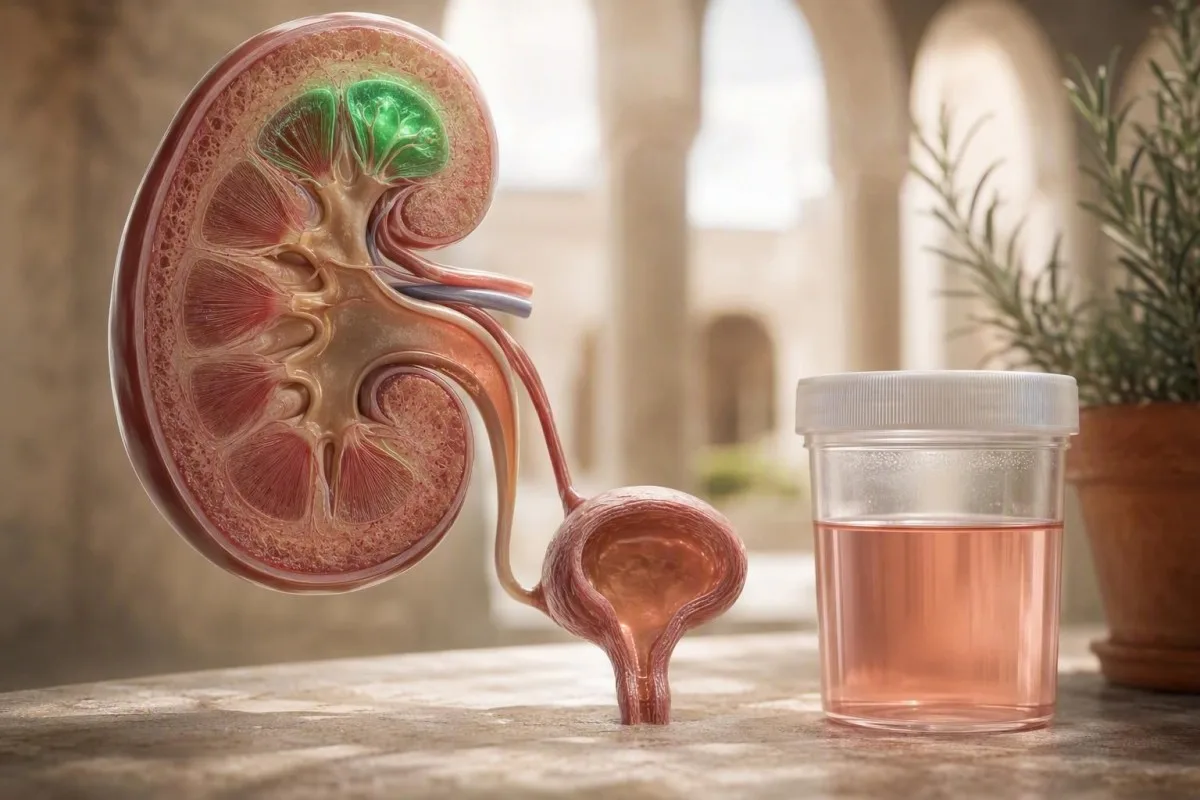
In urineeftich of tee-kleurich urine- of urine-eftich sample nei in lange rin is faak tydlike oefeningsinducearre hematuria, mar sichtber kleur moat nea automatysk ôfwiisd wurde. De timing, mikroskopy befiningen, symptomen, en in goed rêste sample fertelle it echte ferhaal.


- Oefening-indusearre hematurie ferdwynt meastentiids binnen 24–72 oeren nei swiere rin; oanwêzigens bûten 72 oeren freget medyske beoardieling.
- Mikroskopy drompel fan 3 of mear reade bloedsellen per hege-krêftfjild yn in goed sammele urine-sample foldocht oan de AUA-definysje fan microhematuria.
- Dipstick ûngelyk makket út: in posityf bloedkessen mei nul oant twa reade sellen per hege-krêftfjild suggerearret myoglobine of frije hemoglobine ynstee fan urine-bloeding.
- Werhelje timing is praktysk: mije hurd oefenjen foar 48–72 oeren, hydrate normaal, en jou dan in midstream urine-sample.
- Beoardieling op deselde dei is ferstannich foar klots, ûnfermogen om urine te passearjen, koarts, iensidige slimme flankpine, of kofje-urine mei markearre spierpine.
- Nier warskôgingspatroan is bloed plus proteïne, read-selkasten, hege bloeddruk, of in falling eGFR—net in isolearre post-race dipstick.
- Rabdomyolysis-ôflêzing is ûnferhâldber donkere urine mei swiere spiersymptomen en in kreatinekinase-resultaat faak boppe 5 kear de boppegrins fan it laboratoarium.
- Kanker-risiko kontekst feroaret de drompel foar ûndersyk: leeftiid, smookeksposysje, eardere bekkenbestraling en oanhâldende sichtbere hematurie binne allegear fan belang.
Wêrom kin in rin urine roze meitsje
Atleet-hematurie is meastentiids in koartstânich lekken fan reade sellen yn urine nei yntinsyf oefenjen, faak oplost binnen 24-72 oeren fan rêst. Dochs fertsjinnet sichtbere rôze, reade of cola-kleurige urine in goed sammele werheltestest ynstee fan in loftige oanname dat it rinnen it feroarsake hat.
Yn 'e klinyk is it geruststellende patroan rjochtút: kleurferoaring begjint nei in ûngewoan lange, flugge of delgeande rin; der is gjin koarts, kolikante flankpijn of urinebrân; en mikroskopie normalisearret nei rêst. Kantesti is in AI-bloedtestanalyzer dat relatearre niermerken - kreatinine, eGFR, elektrolyten en kreatinekinase - neist de oefenskiednis pleatse kin, ynstee fan ien post-race resultaat as in diagnoaze te behanneljen.
De foarstelde meganismen binne meganyske blaaswandkontakt, tydlike nierbloedstreamferskowingen, útdroging-relatearre konsintraasje, en soms reade-sellen ôfbrekking fan repetitive fuotstappen. It bewiis foar elk meganisme is earlik mingd, om't de measte stúdzjes lyts binne en ferskillende rasôfstannen brûke. Yn myn 15 jier klinyske praktyk is de skiednis fan in nije ynspanning wichtiger dan allinnich de kleur; in earste ultramarathon en in fertroude 5 km drage net deselde pre-test kâns.
Sichtber bloed yn urine nei oefening is net synonym mei ûnskuldige atleet-hematurie. In bredere hematurie read-flagge gids is nuttich, om't nierstiennen, ynfeksje, glomerulêre sykte en urinekanaalkanker by tafal earst nei in rin harsels kinne ferklearje.
De praktyske definysje
Oefeningsinducearre hematurie betsjut dat reade sellen yn urine ferskine nei ynspanning en ferdwine op in rêstige werheltsample. In positive dipstick allinnich bewiist dizze diagnoaze net, om't it reagens heme-pigment detektearret fan yntakte reade sellen, frije hemoglobine of myoglobine.
Is it hematuria, hemoglobine, of myoglobine?
In urine-dipstick dy't posityf lêst foar bloed kin reade sellen, hemoglobine of myoglobine reflektearje, en mikroskopie skiedt se. Rôze urine mei in protte yntakte reade sellen stipe hematurie; donkere brune urine mei in pear of gjin reade sellen fergruttet soarch foar pigmint fan spierskea of hemolyse.
Urine-mikroskopie dy't 3 of mear reade bloedsellen per heech-krêftfjild toant befêstiget microhematuria as it sample skjin sammele is. Krektoarsom, in sterk positive dipstick mei 0-2 reade sellen per heech-krêftfjild moat in klinikus myoglobineuria beskôgje, benammen nei waereksposysje, in crush-type spierbelêsting, of swiere fertrage spierpijn. Brúne of cola-kleur is mear typysk foar konsintrearre pigmint dan in lyts bedrach fan blaasbloeding.
Myoglobine is wichtich, om't it rhabdomyolysis en akute nierskea begeliede kin. In kreatinekinase-konsintraasje boppe 5 kear de laboratoarium boppegrins fan normaal wurdt faak brûkt as in biochemyske drompel foar rhabdomyolysis, hoewol't symptomen, kalium, kreatinine en urine-útfier de urgency bepale. Sjoch ús praktyske útlis fan Gefaarlik hege kreatinekinase foar de patroanen dy't net oernachtich wachtsje moatte.
Fiedselkleurstof, biet, swarte bessen, rifampicine, phenazopyridine, en útdroeging kinne ek urine ferkleurje sûnder read bloed. In dûnkere urine differinsjaasje helpt de mienskiplike flater te foarkommen om oan te nimmen dat elke readige stekproef bloed fertsjintwurdiget.
Wêrom it ûnderskie soarch feroaret
Hematuria fan reade bloedsellen rjochtet de oandacht op it urinekanaal, wylst myoglobineuria de oandacht rjochtet op skeletspieren en nierbeskerming. Beide kinne foarkomme nei duorjende eveneminten, mar allinich mikroskopie en rjochte bloedûndersiken kinne se betrouber skiede.
Hoe kinne jo in urine-analyzje resultaat nei de rin lêze
De meast ynformative urine test nei it rinnen kombinearret dipstick, mikroskopie, proteïnemeting, en spesifike swiertekrêft. Bloed op dipstick mei tydlike reade bloedsellen en gjin proteïne is faak leech risiko; bloed plus proteïne of silinders fereaskje in mear doelgerichte nierbeoardieling.
In dipstick bloedresultaat wurdt rapporteare as negatyf, spoar, 1+, 2+, of 3+, mar it is in screening-sinjaal ynstee fan in selopjefte. De AUA definiearret microhematuria as mear as 3 reade bloedsellen per heechkrêftfjild by mikroskopysk ûndersyk, net allinich in dipstickresultaat (Barocas et al., 2020). Dit ûnderskie foarkomt dat runners yn in ûnnedige kankerûndersyk stjoerd wurde nei in falsk-posityf skerm.
Spesifike swiertekrêft boppe 1.030 jout yn in protte laboratoaren konsintrearre urine oan en kin de kleur alarmerender meitsje, mar it ferklearret befêstige reade bloedsellen net. Proteïne fan 1+ of heger moat kwantifisearre wurde mei in urine-albumin-kreatinine-ferhâlding of proteïne-kreatinine-ferhâlding; tydlike oefeningsproteinuria bestiet, mar oanhâldende albuminuria feroaret de differinsjaal nei glomerulaire sykte. Us folsleine hantlieding foar urineanalyse ferklearret wêrom't dizze markers net yn ien resultaat gearfoege wurde moatte.
Kantesti AI ynterpreteart kreatinine en eGFR neist urinebefinings, timing fan oefening, en foarige wearden; in inkele licht ferhege kreatinine nei in hjit race is net lyk oan chronike nier sykte. Yn 'e praktyk freegje ik nei de ôfstân, terrein, temperatuer, gebrûk fan anty-inflammatoare medisinen, menstruaasjetiming, en oft de stekproef jûn is binnen 2 oeren nei it einigjen.
Wannear moatte jo in urine-test nei it rinnen werhelje?
Werhelje urine-testen 48–72 oeren nei de lêste hurde rin is in ferstannige standert foar fertochte runner's hematuria. Brûk in earste-moarn of goed-hydreare midstream-sansearring, mar twing gjin liters wetter fuortendaliks derfoar, om't ekstreme ferwettering nuttige resultaten ferbergje kinne.
Foar in routine post-race abnormaliteit, advisearje ik meastentiids gjin yntervallen, heuvels, swier tillen, of races foar 48 oeren; nei in maraton, ultramaraton, hjitte sykte, of ûngewoane pine, 72 oeren is mear ferdigenber. Gewoan drinken nei toarst is genôch. Oerhydraasje kin it spesifike gewicht ûnder 1.005 ferleegje en soms in grinsresultaat dreger te ynterpretearjen meitsje.
As mikroskopie posityf bliuwt nei 72 oeren, regelje primêre soarch beoardieling binnen dagen ynstee fan werhelle testen nei workouts. Oanhâldende resultaten rjochtfeardigje bloeddrukmeting, serum kreatinine/eGFR, urine albumine-kreatinine-ratio, en beskôging fan kultuer of byldfoarming neffens risiko. De relaasje tusken inspanning, hydraasje en in tydlik legere filtraasje-skatting wurdt behannele yn ús post-exercise eGFR gids.
In 52-jierrige rekreative maratonrinner dy't ik seach hie 18 reade sellen per hege-krêftfjild de jûns nei in hjitte race, mar 0-1 reade sellen nei 72 rêstige oeren; syn kreatinine gie fan 1.28 mg/dL werom nei 0.96 mg/dL. It resultaat wie gerêststellend, mar itselde plan soe net genôch wêze foar in 52-jierrige smooker mei werhellende sichtbere urinekleur.
Test net oan de finishline as jo it foarkomme kinne
Testen fuort nei de oefening maksimalisearret de kâns om tydlike reade sellen, konsintrearre urine en proteïne te finen. Dat kin klinysk nuttich wêze by fertochte rhabdomyolysis, mar it is in minne tiid om in baseline fan in runner te fêst te stellen.
Hokker patroanen fan hematuria nei de rin binne meastentiids gerêststellend?
In selsbehearende episode nei yntinsive rinnen is mear gerêststellend as it folslein oplost, gjin pine of systemyske symptomen hat, en gjin proteinuria of feroaring fan nierfunksje hat. Gerêststellend betsjuttet net negearre; it betsjut befêstige mei in rêstige sample.
It legere risiko fenotype is in jongere of middelbere leeftyd runner mei in dúdlike útputtings-trigger, normale bloeddruk, gjin smookhistoarje, en normale rêstige mikroskopie. Yn dy setting, in inkele foarbygeande resultaat fan 3–10 RBC/HPF nei in race sakket faak sûnder behanneling. Ik soe it noch altyd dokumintearje, om't werhelling nei elke lange rin mear soarchfâldige beoardieling fertsjinnet as in ienmalich barren.
In normale urine albumine-kreatinine-ratio is oer it algemien ûnder 30 mg/g (ûnder 3 mg/mmol), hoewol laboratoaren en lannen ienheden oars rapportearje. Bloed sûnder albumine, casts, of dysmorphic reade sellen wiist fuort fan glomerulêre lekkaazje; it bewize gjin blaasboarne, mar it liedt de folgjende fraach. Us útlis fan proteïne yn urine dekt dizze ferdieling dúdlik.
Blaasferwûning is mear plausibel as urine tige konsintrearre is en de hurdrinner einiget mei in hast lege blaas. Guon sportartsen suggerearje urinearjen foar in lange rin en regelmjittich drinken, mar dit is previnsjeadvies mei beheind proefbewiis—net in ferfanging foar evaluaasje as de kleur oanhâldt.
In normaal resultaat hat in tiidstempel
In negative test 3 dagen nei in race is geruststellend foar dy episode, net in libbenslange garânsje. Nij sichtbere hematuria moannen letter moat op eigen meriten beoardiele wurde, benammen nei 40 jier of by tabaksútstrieling.
Warskôgingsbuorden dy't runner's hematuria minder wierskynlik meitsje
Hematuria hat driuwende evaluaasje nedich as it oanhâldt nei 72 oeren, weromkomt sûnder swiere oefening, of ferskynt mei pine, koarts, stôken, proteïne, of feroaring yn nierfunksje. De kombinaasje fan fynsten is ynformatyf as in dramatysk sjend stekproef op himsels.
Sykje op tiid medysk advys foar sichtber read urine dat langer duorret as 24 oeren, ek al fiele jo jo goed; de drompel is leger foar minsken boppe de 40, hjoeddeistige of eardere smokers, of dy mei eardere bekkenbestraling. De AUA-rjochtline brûkt risikostratifikaasje basearre op leeftiid, smoken, mjitte en oanhâldendens fan mikroskopysk bloed, en eardere bruto hematuria ynstee fan alle mikrohematuria identyk te behanneljen (Barocas et al., 2020).
Dysmorfe reade sellen, reade-selkasten, signifikante albuminuria, nije hypertensie, of in fermindere eGFR suggerearje in nierfilterboarne ynstee fan in opskoarre blaas. Reade-selkasten binne nea in ferwachte gefolch fan gewoane rinnen en moatte ferfelende renale beoardieling oproppe. Sjoch ús oersjoch fan granulêre en urinekasten foar wêrom't sedimintfynsten fan belang binne.
Thomas Klein, MD, advisearret hurdrinners om net sels te triearjen mei allinich kleur: in urinektrochynfeksje kin brânjen, urginsje, pyuria, en soms hematuria feroarsaakje, wylst stiennen faker abrupte iensidige pine en misselijkheid feroarsaakje. In kweek is it meast nuttich foar antibiotika as ynfeksjesymptomen oanwêzich binne.
De kombinaasje bloed-plus-proteïne
Befêstige hematuria mei proteinurie is soarchliker as isolearre hematuria, om't beide fan it glomerulêre filter kinne komme. In urine-albumin-kreatinine-ratio fan 30 mg/g of heger moat werhelle wurde en ynterpretearre wurde mei bloeddruk en nierfunksje.
Wannear hat rôze urine nei oefening soarch op deselde dei nedich?
Krij deselde dei driuwende beoardieling foar stôken, ûnfermogen om te urinearjen, slimme rêchpine, koarts, flauens, fermindere urine-útfier, of tsjustere urine mei slimme spierpine en swakte. Dizze skaaimerken wize foarby ûnkomplisearre oefening-induzearre hematuria.
Stôken kinne urinefloed hinderje, en ûnfermogen om urine te passearjen is in driuwend probleem, nettsjinsteande atletyske kondysje. Koarts fan 38.0°C of heger mei rêchpine kin wize op in boppeste urineinfeksje; slimme kolikende pine mei braken kin wize op in stien. Gjin fan beide situaasjes moat beheard wurde troch te wachtsjen op in post-run werhellingstest.
Tsjusterbrune urine nei ynspanning plus markearre spier-teagen, swakte, swelling, of fermindere útfier ropt soargen op foar rhabdomyolyse. Earste testen omfetsje faak kreatine kinase, kreatinine, kalium, kalsium, fosfaat, en urineanalyse. In CrossFit-rhabdomyolyse-hantlieding is relevant om't ûngewoane eksintrike oefening - net allinich rinnen - faak in trigger is.
Swiere útdroeging kin nierresultaten slimmer meitsje, mar it kin ek gearrinne mei echte blessueres. As jo duizelig binne, betize, floeistoffen net binnen hâlde kinne, of tige lyts urinearje foar 8–12 oeren, besykje dan net om it probleem thús mei sportdranken op te lossen.
Swangerskip en antikoagulantia
Swangere hurddravers en minsken dy't antikoagulantia nimme, moatte sichtbere hematuria fuortendaliks melde. Antikoagulantia kinne bloedingen fersterkje, mar nimme de needsaak om de boarne te identifisearjen net fuort; swangerskip feroaret ek de drompel foar it kontrolearjen fan ynfeksje, stiennen, en niersykte.
Kondysjes dy't in rin kin iepenbierje ynstee fan feroarsaakje
Rinnen kin in besteand urinêr probleem bleatstelle troch urine te konsintrearjen of in test te promptjen, ynstee fan de hematuria sels te feroarsaakjen. Stiennen, ynfeksje, glomerulêre sykte, strukturele abnormaliteiten, en maligniteit bliuwe ûnderdiel fan de differinsjaaldiagnoaze.
Nierstiennen feroarsaakje faak unilaterale flanke-oant-ingelspijn, wearze, en reade sellen op mikroskopy, hoewol't pineleaze stiennen foarkomme. Urinêre ynfeksje produsearret meastentiids brânjen, frekwinsje, urgency, en wite sellen; in negatyf nitritresultaat slút it net út. Us gids foar leukocyte esterase mei negatyf nitrit ferklearret dit mienskiplike mingde patroan.
Glomerulonefritis kin foarkomme nei in ynfeksje fan 'e boppeste luchtwegen mei cola-urine, swelling, ferhege bloeddruk, proteinuria, en dysmorf reade sellen. Yn de KDIGO 2024 CKD rjochtline wurde persistente albuminuria en fermindere eGFR behannele as oanfoljende nierrisiko-markers, net útwikselbere mjittingen (KDIGO, 2024).
Kantesti is in AI-oandreaune bloedtest-analysetool dat brûkers helpt om in patroan te herkennen yn kreatinine, eGFR, albumine, elektrolyten, en in CBC, mar it kin de anatomyske boarne fan hematuria net diagnostearje. Imaging, mikroskopy, kultuer, en klinysk ûndersyk dogge noch it beslissende wurk.
Kanker is ûngewoan by jonge hurddravers, net ûnmooglik by folwoeksenen
Sêft sichtbere hematuria fertsjinnet evaluaasje, sels as oefening in dúdlike ferklearring liket, benammen by minsken mei blootstelling oan smoken of persistente symptomen. It risiko nimt ta mei leeftiid en kumulative tabaksblootstelling, dêrom liede identike urine-resultaten net ta identike testplannen.
Wa hat follow-up fan urology of nefrology nedich?
Persistinte hematuria nei in rêstich werhelle sample moat risiko-beoardiele wurde foar urology, wylst hematuria plus proteinuria, silinders, hypertensie, of beheinde eGFR wize op nefrology. In protte minsken hawwe allinich herhelle tests nedich ûnder lieding fan primêre soarch; de ferwizing hinget ôf fan it patroan.
Urologyske beoardieling is benammen geskikt foar weromkommende sichtbere hematuria, persistinte mikroskopyske hematuria, in skiednis fan smoken, beroepsmatige aromaatyske amyn-eksposysje, foarige bekkenbestraling, of urinêre symptomen sûnder ynfeksje. Ofhinklik fan it risiko kinne dokters nier- en blaasultrasûne, CT urography, en cystoscopy brûke. In inkele post-race spoar dipstick by in 24-jierrige is in hiel oar senario as weromkommende reade urine by in 58-jierrige eardere smoker.
Nephrology resinsje wurdt mear wierskynlik mei urine albumine-kreatinine ratio ≥30 mg/g, eGFR ûnder 60 mL/min/1.73 m² duorret 3 moannen of langer, reade-sellen silinders, of lestich te kontrolearjen bloeddruk. Dy drompels binne wichtich, om't chronike niersykte wurdt definiearre troch duorjende perioade likegoed as in inkelde mjitting. Lês ús gids foar stadia fan chronike niersykte foar de praktyske kategoryen.
De tsjinst foar ynterpretaasje fan labtests fan Kantesti kin in werhelber patroan fan bloed en proteïne markearje foar besprekking, benammen as brûkers resultaten fan ferskate laboratoaren uploade. It moat in klinikus stypje, net ferfange, dy't beslút oft urineôfbylding of spesjalistysk ûndersyk nedich is.
Lit antikoagulaasje it petear net beëinigje
Antikoagulantgebrûk feroaret bloedingsheftigens, mar stelt gjin oarsaak foar hematuria fêst. Nei myn ûnderfining kin it taskriuwen fan weromkommend urinebloed oan apiksaban, warfarine of aspirine sûnder ûndersyk de erkenning fan stiennen, ynfeksje of strukturele sykte fertrage.
Hokker bloedtests helpe nei oefeningsrelatearre hematuria?
De nuttige bloedtests hingje ôf fan symptomen: kreatinine, eGFR, elektrolyten en kreatinekinase beoardielje nieren- en muskelske stress, wylst in CBC anemy of ynfeksjeclues evaluearret. Routinematige brede panielen binne minder nuttich dan doelgerichte tests nei in presize skiednis en urineanalyse.
Kreatinine kin tydlik omheech gean nei duorjende oefening fanwegen muskmetabolisme, fermindere nierperfusy en útdroeging. eGFR-ekwations binne minder betrouber by rappe kreatinineferoaring, dêrom is in werhellingswearde nei 48–72 oeren fan gewoane herstel faak mear betsjuttend dan in finishline-resultaat. Us gids foar kreatinine-opnij kontrôle nei oefening jout kontekst foar dizze faak foarkommende angstrekker.
Kreatinekinase hat in breed post-oefenberik: trainde atleten kinne ferhegingen sjen nei in race sûnder nierskea, wylst wearden fan meardere-fâlden boppe de lokale limyt plus symptomen driuwende beoardieling fertsjinje. Kalium boppe 6.0 mmol/L is potinsjeel gefaarlik en fereasket driuwende klinyske evaluaasje, foaral as nierfunksje beheind is of muskelskade wurdt fermoede.
In CBC is it meast nuttich as der wurgens, bleekheid, swiere menstruaasjebloeding, weromkommende hematuria of soargen foar systemyske sykte is. Hemoglobine kin falle nei duorjende eveneminten fanwege plasma-folum-útwreiding, izerferlies of hemolyse; ferritin moat ynterpretearre wurde fuort fan akute ûntstekking en hurde training. Duorjende runners fine ús oersjoch fan bloedtests foar atleten nuttich foar in ferstannige baseline.
Diagnostisearje gjin niersykte fan in ienmalich paniel yn 'e wike fan in race
In kreatinineferheging fan 0,3 mg/dL of mear kin foldwaan oan in kritearium foar akute nierskea yn it juste tiidsbestek, mar kontekst en werhellingstests binne beslissend nei in race. Lege urine-útfier, stijgend kalium en oanholden ferheging hawwe mear gewicht dan in isolearre grinsresultaat.
Hoe kinne jo in urine-sample foar werhelling sammelje dy't dokters kinne fertrouwe
In skjinne-catch midstream urine sample nei 48-72 oeren sûnder swiere oefening is de bêste manier om te kontrolearjen oft hematuria oplost is. Kolleksjefouten, menstruaasjekontaminaasje en in âld eksimplaar kinne misliedende resultaten jaan.
Waskje hannen, begjin te urinearjen yn it húske, sammelje dan it midstream-diel sûnder de binnenkant fan de kontener oan te reitsjen. Leverje it monster prompt - by foarkar binnen 2 oeren- of folgje de koelinstruksjes fan it laboratoarium. Lang stean feroaret sel-ferskining en kin mikroskopie minder betrouber meitsje.
Mije tests tidens aktive menstruaasje wêr't mooglik; as de test net wachtsje kin, fertel de klinikus en it laboratoarium. Faginaal kontaminaasje kin skynbere reade sellen en proteïne produsearje, wylst sk Calebelle sellen faak signalearje in min sammele monster. Us gids foar epiteliale sellen yn urine leit út hoe't dit gjin triviale laboratoariumvoetnoot is.
Thomas Klein, MD, riedt oan om fjouwer details tegearre mei it stekproef op te nimmen: de lêste swiere sesje, de doer fan it evenemint, de bûtenlucht temperatuer, en alle medisinen dy't yn de foarige 72 oeren nommen binne. In resultaat sûnder timing is folle dreger te ynterpretearjen - foaral as de urine sammele wurdt nei in dûbele workout.
Earste-moarns versus deiljocht testen
In earste-moarns stekproef is konsintrearre en goed foar it detektearjen fan lytse abnormaliteiten, mar in normaal hydratearre deiljocht midstream stekproef is akseptabel as de kolleksje skjinnet is. Konsistinsje is wichtiger foar rige fergeliking: brûk sawat deselde omstannichheden by elke werhelling.
Hydrataasje, pine medisinen, en oanfollingen dy't it byld feroarje
Dehidraasje kin urine konsintrearje en de nieren stressje, wylst NSAIDs de bloedstream yn de nieren kinne ferminderje by duorsume oefening. Gjin fan beide faktoaren bewize de oarsaak fan hematuria, mar beide hawwe ynfloed op hoe foarsichtich klinisy in post-run resultaat ynterpretearje.
Foar de measte hurdrinners is drinken nei toarst en it stadichoan ferfangen fan ferliezen feiliger as it strak twingen fan floeistoffen. Hiel lege natrium troch oermjittige wetteropname kin gefaarlik wêze; serum natrium ûnder 125 mmol/L mei hollepine, braken, betizing, of seizures is in needgefallen. Urine kleur is in rûge hydrataasje oanwizing, net in presys hydrataasjemeter.
Ibuprofen, naproxen, en oare NSAIDs kinne de prostaglandin-mediearre bloedstream yn de nieren ferminderje, benammen by waarmtestress, braken, of lange eveneminten. Ik advisearje pasjinten om routine profylaktyske NSAIDs foar maraton te foarkommen, útsein as har eigen klinikus in dúdlike reden jûn hat. De medisynkontekst wurdt ûndersocht yn ús laboratoarium trend feiligens artikel.
Hege-dosearring vitamine C kin ynterferearje mei bepaalde urine dipstick reaksjes, en supplements ferkocht foar prestaasjes befetsje soms ûnlistige stimulearders of diuretika. Bring de konteners of dúdlike foto's nei in ôfspraak; it is faak nuttiger as besykje in merkpoeder syn yngrediïntenlist te ûnthâlden. Us supplement feiligensgids foar atleten biedt in ferstannige checklist.
Hydrataasje is gjin behanneling foar oanhâldende bloed
Wetter kin konsintraasje korrigearje, mar it behannelet gjin stien, ynfeksje, glomereulêr proses, of strukturele urineboarne. As reade sellen bliuwe op in rêstich, goed sammele stekproef, moat eskalearje basearre wêze op it patroan ynstee fan in oare hydrataasje-eksperimint.
Kinne jo trochgean mei rinnen nei oefeningsinducearre hematuria?
De measte hurdrinners kinne stadichoan weromkomme nei't de urine kleur normalisearre is, symptomen ôfwêzich binne, en in rêstich werhelling stekproef geruststellend is. Kom net werom nei hurd training wylst urine sichtber read bliuwt, nierresultaten abnormal binne, of spiersymptomen rhabdomyolysis suggerearje.
Nei in ûngekomplisearre ienmalige episode suggerearje ik meastentiids allinnich maklik rinnen foar ferskate dagen, dan in graduele opbou fan folume en yntensiteit oer 7–14 dagen. De hurdrinner moat stopje en ûndersyk sykje as kleur weromkomt, pine ûntstiet, of urineproduksje falt. Dit is in pragmatyske klinyske oanpak, gjin proefbewiisde medisyn.
Werkearjende hematuria nei deselde ôfstân kin praktyske eksperiminten rjochtfeardigje: foarkom dat jo útdroege race, urinearje foar in lange rin, stadiger yn downhill training yntrodusearje, en kontrolearje de skuonpassend of terrein. Hâld in logboek fan tempo, waarmte, doer, urine kleur, en stekproef resultaten. In marathonrinner-labgids kin helpe om herstelmarkers te ûnderskieden fan redenen om training te pauzearjen.
Train net troch ûnferklearre sichtbere hematuria allinich om't jo in evenemint pland hawwe. Atleten binne faak poerbêst yn it tolerearjen fan ûngemak; de dreger feardigens is it werkenjen dat trochsettingsfermogen diagnostyske ynformaasje is, net in taaiensstest.
Bou in echte basisline
In basisline urinalyse en nierpaniel nommen op syn minst 72 oeren fan hurde training kin takomstige post-race resultaten folle makliker te ynterpretearjen meitsje. Dit is foaral nuttich foar ultrarunners, minsken mei ien nier, of atleten dy't medisinen brûke dy't nierperfusje beynfloedzje.
Wat te fertellen oan jo klinikus oer bloed yn urine nei oefening
De fluchste rûte nei in nuttige hematuria-beoardieling is in bondige tiidline: urine kleur, oefeningsdosis, symptomen, medisinen, en werhelje-test timing. Bring eigentlike laboratoariumwearden ynstee fan allinich in berjocht dat it monster “posityf wie foar bloed.”
Jou oan oft de urine rôze, helder read, tee-kleurich wie, of klonten befette; oft kleur ferskynde foar, tidens, of nei oefening; en oft it opklaarde nei de earste urinearring. Befetsje baarnen, urginsje, koarts, flankpijn, wearze, swelling, en fermindere output. In detaillearre urine kleur referinsje kin helpe om de observaasje krekt te beskriuwen sûnder it te oerinterpretare.
Bring foarige urinalyses, kreatinine/eGFR-wearden, bloeddrukmetingen, smookskiednis, famyljenierrenskiednis, en in medisinen/supplementlist. Kantesti is in AI-biomarker-ynterpretaasjeplatfoarm dat werhelle bloedtestwearden organisearje kin en betsjuttende feroaringen markearje kin, mar in klinikus moat dy wearden ferbine mei urinemikroskopie en ûndersyk.
Fan 3 septimber 2026 ôf bliuwt it klinyske prinsipe ienfâldich: oefening is in plausibele ferklearring allinich nei't it resultaat oplost en konkurrearjende oanwizings ôfwêzich binne. As jo ûnwissich binne, freegje dan oft jo mikroskopie, kultuer, albumine-kreatinine-ratio, werhelje kreatinine, ôfbylding, of ferwizing nedich hawwe - net allinich in oare dipstick.
Fragen wurdich te freegjen
Freegje oft yntakte reade sellen waarden sjoen, oft proteïne of kasten oanwêzich wiene, en wannear't in rêste werhelje foarkomme moat. Dy trije antwurden ferdúdlikje meastentiids oft de folgjende stap wachtsjende opfolging, nier-testing, ynfeksje-testing, of in urologyske evaluaasje is.
In ferstannich aksjeplan foar runner's hematuria
Foar ien pynleaze episode nei hurde rinnen, rêst fan swiere oefening foar 48-72 oeren en werhelje in skjinne-catch urinelibben; sykje earder soarch foar reade flaggen of oanhâldende sichtbere kleur. It doel is noch spanning noch ôfwizing - it is it bewiisjen dat de befining oplost.
Stap ien: stopje hurde training, hydrate normaal, en notearje de timing en symptomen. Stap twa: werhelje mikroskopie nei 48–72 oeren. Stap trije: as bloed oanhâldt, of as proteïne, kasten, pine, koarts, klonten, lege urineútfier, of abnormale nier-markers ferskine, regelje dan fuortendaliks medyske beoardieling. Dizze sekwinsje foarkomt sawol miste sykte as ûnnedige ôfbylding nei in ienmalich finishline-monster.
As ús klinyske team uploaded laboratoariumgegevens beoardielet, jouwe wy prioriteit oan patroanen: in tanimmend kreatinine plus hege CK en lege urineútfier is urgenter dan in stabyl kreatinine mei in tydlike urine-dipstick. De metoade en feiligens fan Kantesti wurde beskreaun yn ús ynformaasje oer klinyske validaasje, en ús medyske tafersjoch is detaillearre troch de Medyske Advysried.
De measte pasjinten fine dat in tiidde werhelje test in alarmearjende kleurferoaring ferandert yn in dúdlik plan. Mar as jo ynstinkt seit dat der wat mis is - foaral as de urine moarn noch read is - fertrou dy sinjaal en lit jo beoardielje.
De regel fan ien sin
Rôze urine ienris nei in hurde run kin tydlik wêze; rôze urine dy't oanhâldt, weromkomt, of ferskynt mei symptomen is hematuria oant it goed evaluearre is.
Faak stelde fragen
Hoe lang duorret runnershematury?
Hematuria fan hurdrûners ferdwynt meastentiids binnen 24–72 oeren nei’t it swiere sporten stoppe is. In praktyske urinekontrôle is in skjinne, midstream-ôfsetting dy’t sammele wurdt nei 48–72 oeren sûnder hurdrinnen of swier tille. Oanhâldend sichtber rôze of read urine nei 24 oeren, of mikroskopyske hematuria dy’t nei 72 oeren oanhâldt, moat beoardiele wurde troch in klinikus. Koarts, stollingen, slimme flankpine, fermindere urineútfier of slimme spierpijn rjochtfeardigje beoardieling op deselde dei.
Is bloed yn urine nei oefening normaal?
Bloed yn urine nei oefening kin in tydlik effekt wêze fan yntinsyf draven, útdroeging, ynslaggen op 'e blaaswand, of tydlike feroaringen yn bloedstream yn 'e nieren, mar it is net automatysk normaal. Mikroskopysk ûndersyk dat 3 of mear reade bloedsellen per fjild mei hege fergrutting befêstiget, foldocht oan de definysje fan mikrohematury fan 'e AUA. In resultaat dat ferdwynt op in rêstich werhelle stekproef is gerêststellend, wylst oanhâldend bloed, proteïne, kasten, pine of urineare symptomen fierdere evaluaasje nedich binne. Synbere urinekleur moat altyd rapportearre wurde, benammen by folwoeksenen mei eksposysje oan smoken of weromkommende episoades.
Kin útdroeging rôze urine feroarsaakje nei it rinnen?
Droege tastân kin urine tsjusterder meitsje en in hematuria-resultaat nei it sporten fersterkje troch de ynhâld fan 'e urine te konsintrearjen, mar allinich droechte ferklearret befêstige reade bloedsellen net betrouber. In urine spesifike swiertekrêft boppe 1.030 jout yn in protte laboratoaren faak konsintrearre urine oan. Drink normaal oant jo toarst hawwe en nim in skjinne-catch sample wer nei 48-72 oeren rêst ynstee fan te besykjen it resultaat fuort te spoelen mei tefolle wetter. Swiere toarst, duizeligheid, heul lyts urine-útfier, of betizing fereasket driuwende medyske beoardieling.
Wat is it ferskil tusken hematuria en myoglobinuria nei oefening?
Hematuria betsiet dat yntakte reade bloedsellen yn urine oanwêzich binne, wylst myoglobineuria spierpigment reflektearret dat frijkomt nei spierskea. In dipstick kin yn beide gefallen posityf wêze foar bloed, dus mikroskopie is beslissend: myoglobineuria jout faak in posityf dipstick mei 0-2 reade sellen per fjild mei hege fergrutting. Swiere spierpine, swakte, swelling, donkere cola-kleurige urine, of in kreatinekinase-wearde boppe 5 kear de laboratoariumhege limyt wekket soargen foar rhabdomyolysis. Dat patroan fereasket driuwend klinysk ûndersyk, om't kalium en nierfunksje fluch kinne feroarje.
Moat ik stopje mei draven as ik oefening-induzearre hematuria haw?
Stop swierdrankjen oant de urinekleur wer normaal is en jo in rêstich werhelle test dien hawwe, meastentiids nei 48-72 oeren. As de werhelle urine normaal is en jo gjin pine, koarts, klonten, proteïnurie of abnormaliteiten fan 'e nierfunksje hawwe, kinne de measte hurdrinners stadichoan wer begjinne yn sawat 7-14 dagen. Begjin net wer mei yntinsjele training as de urine sichtber read of tsjuster bliuwt, de urineproduksje fermindere is, of earnstige spiersymptomen oanwêzich binne. Weromkommende episoades nei ferlykbere workouts fertsjinje medyske resinsje, sels as elke episode oplost.
Wannear moat hematuria nei de urolooch?
Persisteare mikroskopyske hematuria nei in rêste repetitive stekproef, weromkommende sichtbere hematuria, of hematuria by in persoan mei in smookskiednis, foarige bekkenbestraling, of urineare symptomen rjochtfeardiget faak in urologyske risikobeoardieling. Urologen kinne echografie, CT-urografy en cystoskopy beskôgje neffens leeftiid en algemien risiko ynstee fan ien test foar elkenien te brûken. Hematuria mei albuminuria fan 30 mg/g of mear, readkalsjes, hypertensie, of eGFR ûnder de 60 mL/min/1.73 m² wiist sterker nei nefrology. De juste spesjaliteit hinget ôf fan it folsleine urine- en bloedtestpatroan.
Krij hjoed noch AI-oandreaune bloedtest-analyse
Doch mei oan mear as 2 miljoen brûkers wrâldwiid dy’t Kantesti fertrouwe foar direkte, krekte analyse fan laboratoariumtests. Upload jo bloedtest resultaten en ûntfange wiidweidige ynterpretaasje fan 15,000+-biomarkers yn sekonden.
📚 Ferwiisde ûndersykspublikaasjes
Klein, T., Mitchell, S., & Weber, H. (2026). Meartalige AI-stipe Klinyske Beslútfoarming foar Iere Hantavirus Trije: Untwerp, Yngenieursvalidaasje, en Echte Ynset oer 50.000 ynterpretearre Bloedtestrapporten. Kantesti AI Medysk Undersyk.
Klein, T., Mitchell, S., & Weber, H. (2026). In Pre-Registered, Rubric-Based Automated Technical Benchmark fan de Kantesti Blood-Test Interpretation Engine op 100.000 syntetyske testgefallen. Kantesti AI Medysk Undersyk.
📖 Eksterne medyske referinsjes
⚕️ Medyske disclaimer
Dit artikel is allinnich foar ûnderwiisdoelen en foarmet gjin medysk advys. Rieplachtsje altyd in kwalifisearre soarchferliener foar besluten oer diagnoaze en behanneling.
E-E-A-T fertrouwensignalen
Ûnderfining
Dokter-oandreaune klinyske resinsje fan lab-ynterpretaasje-wurkprosessen.
Ekspertize
Fokus fan laboratoariummedisyne op hoe’t biomarkers har gedrage yn in klinyske kontekst.
Autoriteit
Skreaun troch dr. Thomas Klein mei resinsje troch dr. Sarah Mitchell en prof. dr. Hans Weber.
Betrouberens
Bewiis-basearre ynterpretaasje mei dúdlike ferfolchpaadkes om alarm te ferminderjen.