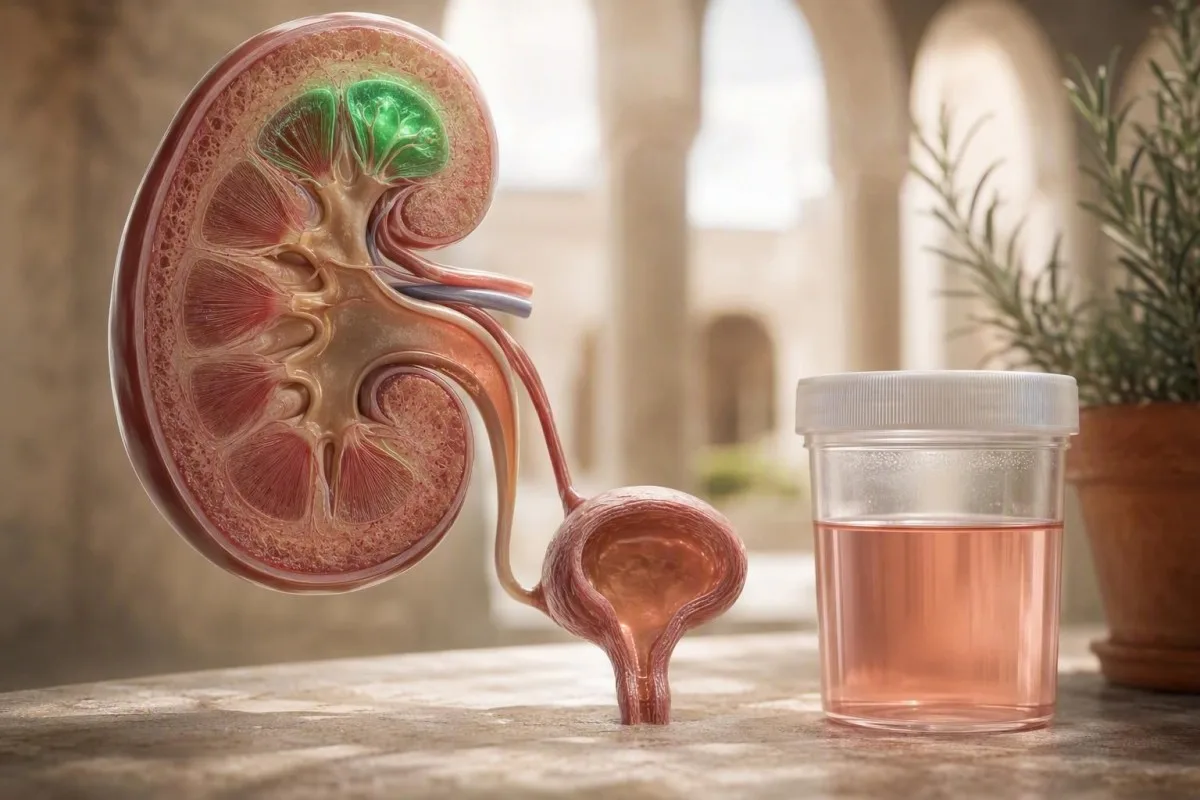
長距離走の後のピンク色または茶色の尿サンプルは、一時的な運動誘発性血尿であることが多いですが、目に見える色は決して自動的に無視されるべきではありません。タイミング、顕微鏡検査の結果、症状、および適切に休息した後の再検査が、真実を物語ります。.


- 運動誘発性血尿 通常、激しいランニングの24〜72時間以内に消失しますが、72時間を超えて持続する場合は医学的な評価が必要です。.
- 顕微鏡検査の閾値 適切に採取された尿サンプルで、高倍率視野あたり3個以上の赤血球は、AUAの微小血尿の定義を満たします。.
- 試験紙の不一致 が重要です。血液パッドが陽性で、高倍率視野あたりの赤血球が0〜2個の場合、尿路からの出血ではなく、ミオグロビンまたは遊離ヘモグロビンを示唆します。.
- 繰り返しのタイミング は実用的です。48〜72時間激しい運動を避け、通常通り水分補給をしてから、中間尿サンプルを提供してください。.
- 当日中の評価 は、血塊、排尿困難、発熱、片側性の重度の脇腹痛、または顕著な筋肉痛を伴うコーラ色の尿の場合に賢明です。.
- 腎臓の警告パターン は、タンパク質、赤血球円柱、高血圧、またはeGFRの低下を伴う血液であり、レース後の単独の試験紙反応ではありません。.
- 横紋筋融解症の兆候 は、重度の筋肉症状と、しばしば検査室上限の5倍を超えるクレアチンキナーゼ値を示す、著しく濃い尿です。.
- がんリスクの文脈 は、調査の閾値を変更します:年齢、喫煙歴、骨盤への過去の放射線療法、および持続的な肉眼的血尿はすべて重要です。.
なぜランニングで尿がピンク色になるのか
ランナーズ血尿は、通常、激しい運動後の赤血球の短期的な尿への漏出です。, 、多くの場合、24〜72時間の休息で回復します。それでも、ピンク、赤、またはコーラ色の尿が見える場合は、ランニングが原因であるという casual な仮定ではなく、適切に採取された再検査に値します。.
診察室では、安心できるパターンは単純です:色の変化は、異常に長い、速い、または下り坂のランニングの後に始まります。発熱、疝痛性の脇腹痛、または排尿時の灼熱感はありません。そして、休息後に顕微鏡検査が正常化します。. KantestiはAI血液検査アナライザーです 、運動歴の横に、クレアチニン、eGFR、電解質、およびクレアチンキナーゼといった関連する腎臓マーカーを配置でき、レース後の1回の結果を診断として扱うのではなく。.
提案されているメカニズムは、機械的な膀胱壁の接触、一時的な腎血流の変化、脱水に関連した濃縮、および時折の反復的な足の衝撃による赤血球の分解です。正直なところ、各メカニズムの証拠は混在しています。なぜなら、ほとんどの研究は小規模で、異なるレース距離を使用しているからです。私の15年間の臨床経験では、新しい努力の病歴は色だけではなく、より重要です。最初のウルトラマラソンと見慣れた5 kmでは、同じ事前の検査確率ではありません。.
運動後の尿中の血液の視認は、良性のランナーズ血尿と同義ではありません。 より広範な血尿のレッドフラッグガイド は、腎臓結石、感染症、糸球体疾患、および尿路がんが、偶然にも、ランニング後に初めて現れる可能性があるため、有用です。.
実用的な定義
運動誘発性血尿とは、運動直後に尿中に赤血球が現れ、安静時の再検査サンプルで消失することを意味します。. 陽性の試験紙だけではこの診断は証明されません。なぜなら、試薬は、 intact な赤血球、遊離ヘモグロビン、またはミオグロビンからのヘム色素を検出するからです。.
血尿なのか、ヘモグロビンなのか、それともミオグロビンなのか?
血液に対して陽性となる尿試験紙は、赤血球、ヘモグロビン、またはミオグロビンを反映する可能性があり、顕微鏡検査でそれらを分離します。. 多くの intact な赤血球を伴うピンク色の尿は血尿を支持します。赤血球がほとんどまたは全くない濃い茶色の尿は、筋肉の損傷または溶血からの色素の懸念を高めます。.
尿顕微鏡検査で 高倍率視野あたり3個以上の赤血球 が示されると、検体がきれいに採取されている場合、顕微鏡下血尿が確認されます。対照的に、高倍率視野あたり0〜2個の赤血球を伴う強く陽性の試験紙は、特に熱暴露、圧挫様筋負荷、または重度の遅発性筋肉痛の後には、臨床医にミオグロビン尿を考慮させるべきです。茶色またはコーラ色は、膀胱のわずかな出血よりも、濃縮された色素の典型です。.
ミオグロビンは、横紋筋融解症や急性腎障害を伴う可能性があるため、重要です。クレアチンキナーゼ濃度が 検査室正常上限の5倍を超える であることは、横紋筋融解症の生化学的閾値として一般的に使用されますが、症状、カリウム、クレアチニン、および尿量が緊急性を決定します。の実際的な説明をご覧ください。 危険なほど高値のクレアチンキナーゼ 夜間まで待つべきではないパターンについて。.
食紅、ビーツ、ブラックベリー、リファンピシン、フェナゾピリジン、脱水症状も、赤血球がない場合でも尿を着色することがあります。A 濃い尿の鑑別診断 赤みがかった検体がすべて血液を表すと思い込むという一般的な間違いを避けるのに役立ちます。.
なぜこの区別がケアを変えるのか
赤血球性血尿は尿路に注意を向けさせるが、ミオグロビン尿は骨格筋と腎保護に注意を向かせる。. どちらも耐久運動の後に起こりうるが、顕微鏡検査と標的を絞った血液検査だけが確実に鑑別できる。.
ランニング後の尿検査結果の読み方
ランニング後の最も情報量の多い尿検査は、試験紙、顕微鏡検査、タンパク質測定、比重を組み合わせたものです。. 一過性の赤血球がありタンパク質がない試験紙上の血液は、低リスクであることが多い。血液とタンパク質または円柱は、より慎重な腎臓評価を必要とする。.
試験紙の血液結果は陰性、微量、1+、2+、または3+と報告されますが、これは細胞数ではなくスクリーニング信号です。. AUAは、顕微鏡検査で高倍率視野あたり3個以上の赤血球を微量血尿と定義しています。, 、試験紙の結果だけではありません(Barocas et al., 2020)。この区別により、偽陽性スクリーニングの後にランナーが不必要な癌の検査を受けるのを避けることができます。.
比重が 1.030 多くの検査室で濃縮された尿を示し、色がより危険に見える可能性がありますが、確認された赤血球を説明することはできません。1+以上のタンパク質は、尿中アルブミン/クレアチニン比または尿中タンパク質/クレアチニン比で定量されるべきです。一過性の運動性タンパク尿は存在しますが、持続性のアルブミン尿は鑑別診断を糸球体疾患の方へ変化させます。私たちの 完全な尿検査ガイド は、これらのマーカーを1つの結果に統合すべきでない理由を説明しています。.
Kantesti AIは、クレアチニンとeGFRを尿所見、運動タイミング、および過去の値と併せて解釈します。暑いレース後の単一のわずかに上昇したクレアチニンは、慢性腎臓病と同等ではありません。実際には、距離、地形、温度、抗炎症薬の使用、月経周期、および終了後2時間以内に検体が採取されたかどうかを尋ねます。.
ランニング後に尿検査を再検査すべきなのはいつか?
ランナー性血尿が疑われる場合、最後のハードランから48〜72時間後に尿検査を再検査するのが妥当なデフォルトです。. 朝一番または十分に水分補給した中間尿検体を使用してください。ただし、極端な希釈は有用な所見を不明瞭にする可能性があるため、直前に大量の水を無理に飲まないでください。.
通常のレース後の異常に対しては、インターバル、坂道、高重量トレーニング、またはレースを避けることを推奨します。 48時間; ;マラソン、ウルトラマラソン、熱中症、または異常な筋肉痛の後には、, 72時間は激しい運動を避けてください。 がより正当化されます。喉の渇きに応じた普通の飲水で十分です。過剰な水分摂取は、比重を1.005未満に低下させ、境界線上の結果を解釈しにくくする可能性があります。.
72時間後も顕微鏡検査で陽性が続く場合は、運動後のワークアウト後に繰り返し検査するのではなく、数日以内にプライマリケアの診察を手配してください。持続的な結果は、血圧測定、血清クレアチニン/eGFR、尿中アルブミン/クレアチニン比、およびリスクに応じた培養または画像診断の検討に値します。運動、水分補給、および一時的に低下した糸球体濾過率との関係については、当社の 運動後のeGFRガイド.
を参照してください。52歳のレクリエーションマラソンランナーは、暑いレースの翌日の夕方に高倍率視野で赤血球18個を認めましたが、72時間安静にした後では赤血球0〜1個でした。クレアチニンは1.28 mg/dLから0.96 mg/dLに低下しました。この結果は安心できるものでしたが、喫煙歴のある52歳の男性で、尿の色が繰り返し可視的であった場合には、同じ計画では不十分でしょう。.
可能であれば、フィニッシュラインでの検査は避けてください。
運動直後の検査は、一時的な赤血球、濃縮された尿、およびタンパク質を見つける可能性を最大化します。. これは、横紋筋融解症が疑われる場合に臨床的に有用になる可能性がありますが、ランナーのベースラインを確立するには不適切な時期です。.
ランニング後の血尿のどのようなパターンが通常安心できるのか?
激しいランニング後の自己限定的なエピソードは、完全に消失し、痛みや全身症状がなく、タンパク尿や腎機能の変化がない場合に、より安心できます。. 安心できるということは無視できるということではありません。安静時の検体で確認されたということです。.
低リスクの表現型は、明確な運動誘発因子、正常な血圧、喫煙歴がなく、安静時の顕微鏡検査が正常である、若年または中年ランナーです。その状況では、レース後の RBC 3-10 個/視野 という一時的な結果は、治療なしで改善することがよくあります。それでも記録しておきます。なぜなら、すべてのロングランの後に再発が見られる場合は、一度きりのイベントよりも慎重な検討が必要だからです。.
尿中アルブミン/クレアチニン比が正常な場合、一般的に 30 mg/g 未満 (3 mg/mmol未満)ですが、検査室や国によって単位の表示が異なります。アルブミン、円柱、または異形赤血球がない血液は、糸球体からの漏出を示唆しません。膀胱からの原因を証明するものではありませんが、次の質問を導きます。当社の説明、 尿中蛋白 は、この区分を明確にカバーしています。.
尿が非常に濃縮されており、ランナーがほぼ空の膀胱でフィニッシュした場合、膀胱損傷の可能性が高くなります。一部のスポーツ臨床医は、長距離走の前に排尿し、定期的に水分を摂取することを推奨していますが、これは証拠が限られている予防策であり、色が持続した場合の評価の代わりにはなりません。.
正常な結果にはタイムスタンプが付いています
レースの3日後の陰性検査は、そのエピソードについては安心ですが、生涯の保証ではありません。. 何ヶ月も後の新たな肉眼的血尿は、特に40歳以上や喫煙歴がある場合は、それ自体で評価されるべきです。.
ランナーの血尿の可能性を低くする警告サイン
血尿は、72時間以上持続する場合、激しい運動なしに再発する場合、または痛み、発熱、血塊、タンパク質、または腎機能の変化を伴う場合は、速やかな評価が必要です。. 所見の組み合わせは、それ自体が劇的に見える検体よりも情報量が多いです。.
visible red urine that lasts beyond 24時間, 、たとえ体調が良くても、受診してください。40歳以上、現在または過去の喫煙者、または骨盤放射線療法を受けたことがある人は、閾値が低くなります。AUAガイドラインは、すべての顕微鏡的血尿を同じように扱うのではなく、年齢、喫煙、顕微鏡的血液の程度と持続性、および過去の肉眼的血尿に基づいたリスク層別化を使用しています(Barocas et al., 2020)。.
分化赤血球、赤血球円柱、顕著なアルブミン尿、新たな高血圧、またはeGFRの低下は、 jostled bladder ではなく、腎フィルター源を示唆しています。. 赤血球円柱は、通常のランニングの結果として予想されるものではありません 、速やかな腎臓評価を促すべきです。概要をご覧ください 顆粒円柱および尿円柱 sediment findings matter.
Thomas Klein, MD, は、ランナーに色だけで自己判断しないようにアドバイスしています。尿路感染症は、灼熱感、切迫感、膿尿、そして時には血尿を引き起こす可能性がありますが、結石はより頻繁に突然の片側性の痛みや吐き気を引き起こします。感染症状がある場合は、抗生物質投与前に培養が最も役立ちます。.
血液とタンパク質の組み合わせ
蛋白尿を伴う確認された血尿は、孤立した血尿よりも懸念されます。なぜなら、両方とも糸球体フィルターで発生する可能性があるからです。. 尿中アルブミン/クレアチニン比が30 mg/g以上の場合、血圧と腎機能を考慮して再検査し、解釈する必要があります。.
運動後のピンク色の尿は、いつ即日受診が必要か?
血塊、排尿不能、激しい側腹部痛、発熱、失神、尿量減少、または激しい筋肉痛と衰弱を伴う濃い尿がある場合は、同日中の緊急評価を受けてください。. これらの特徴は、単純な運動誘発性血尿を超えた懸念を示唆しています。.
血塊は尿の流れを妨げることがあり、尿を排出できないことは、運動能力に関係なく緊急の問題です。発熱 38.0°C以上の発熱は、
を伴う側腹部痛は、上部尿路感染症を示す可能性があります。激しい疝痛性の痛みと嘔吐は、結石を示す可能性があります。どちらの状況も、ランニング後の再検査を待って管理されるべきではありません。.
運動後の濃い茶色の尿と、著しい筋肉の圧痛、衰弱、腫れ、または尿量の低下は、横紋筋融解症の懸念を高めます。初期検査には、通常、クレアチンキナーゼ、クレアチニン、カリウム、カルシウム、リン酸塩、および尿検査が含まれます。 CrossFit横紋筋融解症ガイド は、頻繁な誘因となるのは、ランニングだけでなく、慣れていないエキセントリック運動であるため、関連性があります。.
重度の脱水は腎臓の検査結果を悪化させる可能性がありますが、実際の損傷と併存する可能性もあります。めまい、混乱、水分を保持できない、または尿量が非常に少ない場合は、 8–12時間, 、スポーツドリンクで自宅で問題を解決しようとしないでください。.
妊娠と抗凝固薬
妊娠中のランナーおよび抗凝固薬を服用している人は、肉眼的血尿を速やかに報告する必要があります。. 抗凝固薬は出血を増幅させる可能性がありますが、その原因を特定する必要性をなくすわけではありません。妊娠はまた、感染症、結石、腎疾患の検査の閾値を変化させます。.
ランニングが原因ではなく、明らかにする可能性のある疾患
ランニングは、血尿自体を引き起こすのではなく、尿を濃縮したり検査を促したりすることによって、既存の尿路の問題を露呈させる可能性があります。. 結石、感染症、糸球体疾患、構造異常、悪性腫瘍は、鑑別診断の一部であり続けます。.
腎結石は、無痛性結石も発生しますが、しばしば片側の背部から鼠径部への痛み、吐き気、および顕微鏡下での赤血球を引き起こします。尿路感染症は、より頻繁に灼熱感、頻尿、尿意切迫、および白血球を引き起こします。硝酸塩陰性の結果は、それを除外するものではありません。当社のガイドは 白血球エステラーゼと硝酸塩陰性 この一般的な混合パターンを説明しています。.
糸球体腎炎は、上気道感染症の後、コーラ色の尿、腫れ、高血圧、タンパク尿、および異形赤血球を呈することがあります。KDIGO 2024 CKDガイドラインでは、持続性アルブミン尿とeGFR低下は、相互に交換可能な測定値ではなく、補完的な腎リスクマーカーとして扱われます(KDIGO、2024)。.
KantestiはAIを活用した血液検査の解析ツールです クレアチニン、eGFR、アルブミン、電解質、およびCBC全体のパターンを認識するのに役立ちますが、血尿の解剖学的な原因を診断することはできません。画像診断、顕微鏡検査、培養、および臨床医の診察が依然として決定的な作業を行います。.
がんは若いランナーにはまれですが、成人にはありえないわけではありません
肉眼的血尿は、運動が明らかな原因であるように見える場合でも、特に喫煙曝露がある人や持続的な症状がある人では、評価に値します。. リスクは年齢と累積的なタバコ曝露とともに増加するため、同じ尿検査結果でも検査計画が同じになるとは限りません。.
泌尿器科や腎臓内科のフォローアップが必要なのは誰か?
安静後の再検体で持続する血尿は、泌尿器科のリスク評価を受けるべきですが、血尿にタンパク尿、円柱、高血圧、またはeGFR低下が伴う場合は、腎臓内科を指します。. 多くの人はプライマリケア主導の再検査だけで済みます。紹介はパターンによって異なります。.
泌尿器科の評価は、再発性の肉眼的血尿、持続性の顕微鏡的血尿、喫煙歴、職業的芳香族アミン曝露、骨盤への過去の放射線療法、または感染症のない尿路症状に特に適しています。リスクに応じて、臨床医は腎臓および膀胱の超音波検査、CT尿路造影検査、および膀胱鏡検査を使用する場合があります。24歳のレース後の微量の尿検査1回は、58歳の元喫煙者の再発性の赤い尿とは非常に異なるシナリオです。.
尿アルブミン/クレアチニン比が高い場合、腎臓内科のレビューの可能性が高まります ≥30 mg/gであることはCKDを支持します。一方、48時間でのクレアチニン上昇が, 、3ヶ月以上続くeGFR低下 未満であればCKDを示唆し、さらに 、赤血球円柱、または制御困難な血圧。これらのカットオフ値は、慢性腎臓病が単一の測定値だけでなく期間によっても定義されるため重要です。実用的なカテゴリーについては、当社の 慢性腎臓病のステージガイド をお読みください。.
Kantesti のAI検査結果解釈サービスは、特にユーザーが異なる検査機関の検査結果をアップロードした場合に、繰り返し見られる血液とタンパク質のパターンを議論のためにフラグ付けできます。それは、尿路画像検査や専門医による検査が必要かどうかを判断する臨床医をサポートするものであり、置き換えるものではありません。.
抗凝固療法が会話を終わらせないように
抗凝固薬の使用は出血の重症度を変化させますが、血尿の原因を確立するものではありません。. 私の経験では、検査なしに再発性尿路出血をアピキスバム、ワルファリン、またはアスピリンに起因させると、結石、感染症、または構造的疾患の認識が遅れる可能性があります。.
運動関連血尿の後、どの血液検査が役立つか?
有用な血液検査は症状によって異なります:クレアチニン、eGFR、電解質、クレアチンキナーゼは腎臓と筋肉のストレスを評価し、CBCは貧血または感染症の手がかりを評価します。. 定期的な広範なパネルは、正確な病歴と尿検査後の標的検査よりも役立ちません。.
クレアチニンは、筋肉代謝、腎血流低下、脱水のため、激しい運動後に一時的に上昇することがあります。eGFRの計算式は、クレアチニンの急激な変化中は信頼性が低いため、その後の繰り返し値が 48〜72時間 通常の回復の が、フィニッシュラインの結果よりも意味があることがよくあります。私たちの 運動関連クレアチニン再検査ガイド は、この頻繁な不安トリガーの文脈を提供します。.
クレアチンキナーゼは、運動後の範囲が広いです:訓練されたアスリートは、腎臓への損傷なしにレース後に上昇を示すことがありますが、地域の基準上限の何倍もの値に症状を伴う場合は、緊急の評価に値します。カリウムが 6.0 mmol/Lを超える を超えるカリウムは潜在的に危険であり、特に腎機能が低下している場合や筋肉損傷が疑われる場合は、緊急の臨床評価が必要です。.
CBCは、疲労、蒼白、重度の月経出血、再発性血尿、または全身性疾患の懸念がある場合に最も役立ちます。ヘモグロビンは、血漿量増加、鉄喪失、または溶血により、激しい運動後に低下することがあります。フェリチンは、急性炎症や激しいトレーニングから離して解釈する必要があります。長距離ランナーは私たちの アスリート血液検査概要 が、合理的なベースラインとして役立つことに気づくかもしれません。.
レース週の1回のパネルで腎臓病を診断しないでください
クレアチニンが0.3 mg/dL以上上昇すると、適切な期間内であれば急性腎障害の基準を満たす可能性がありますが、レース後の状況と繰り返し検査が決定的なものとなります。. 低い尿量、上昇するカリウム、および持続的な上昇は、孤立した境界線結果よりも重要です。.
医師が信頼できる、ランニング後の尿サンプルを採取する方法
激しい運動なしに48〜72時間後の清潔なキャッチミッドストリーム尿サンプルは、血尿が解決したかどうかを確認する最良の方法です。. 採取エラー、月経による汚染、および古い検体は、誤解を招く結果を生み出す可能性があります。.
手を洗い、トイレに排尿を開始し、容器の内側に触れずに中間部分を採取します。検体は速やかに提出してください — できれば 2時間— または、検査機関の冷蔵指示に従ってください。長時間放置すると、細胞の外観が変化し、顕微鏡検査の信頼性が低下する可能性があります。.
可能であれば、月経中の検査は避けてください。検査を待てない場合は、臨床医と検査機関に伝えてください。膣の汚染は、赤血球やタンパク質のように見えるものを生成する可能性があり、扁平上皮細胞はしばしば不適切に採取された検体を示します。私たちのガイドへの 尿中の上皮細胞 これは些細な検査室の脚注ではない理由を説明しています。.
Thomas Klein, MD, は、検体とともに4つの詳細を記録することを推奨しています。最後の激しいセッション、イベントの持続時間、屋外の気温、および過去72時間に服用したすべての薬です。タイミングのない結果は、特にダブルワークアウトの後に尿が採取された場合、解釈がはるかに困難です。.
最初の朝の検査と日中の検査
最初の朝の検体は濃縮されており、小さな異常を検出するのに適していますが、通常は水分補給された日中の中間流検体は、採取がより清潔であれば許容できます。. 連続比較では一貫性がより重要です。繰り返しのたびに、ほぼ同じ条件を使用してください。.
水分補給、鎮痛薬、サプリメントが状況を変える
脱水は尿を濃縮し、腎臓への負担を増加させる可能性がありますが、NSAIDは持久力運動中の腎臓への血流を減少させることができます。. どちらの要因も血尿の原因を証明するものではありませんが、どちらも医師がランニング後の結果をどの程度慎重に解釈するかに影響します。.
ほとんどのランナーにとって、喉の渇きに応じて飲み、徐々に失われた水分を補給することは、無理に水分を強制することよりも安全です。過剰な水分摂取による非常に低いナトリウムは危険な場合があります。血清ナトリウムが 125 mmol/L未満 頭痛、嘔吐、混乱、またはけいれんを伴う場合は、緊急事態です。尿の色は、大まかな水分補給のヒントであり、正確な水分補給計ではありません。.
イブプロフェン、ナプロキセン、その他のNSAIDは、特に熱ストレス、嘔吐、または長時間のイベント中に、プロスタグランジンを介した腎臓への血流を減少させる可能性があります。私は患者に、担当の医師から明確な理由が示されていない限り、マラソンの前に日常的な予防的なNSAIDを避けるようにアドバイスしています。薬の文脈は、私たちの 検査室のトレンド安全記事.
大量のビタミンCは、特定の尿検査紙の反応を妨げる可能性があり、パフォーマンスのために販売されているサプリメントには、リストにない刺激物や利尿剤が含まれている場合があります。容器または鮮明な写真を持参して診察を受けてください。ブランド化された粉末の成分リストを覚えようとするよりも、それが役立つことが多いです。私たちの アスリート向けのサプリメント安全ガイド は、 sensibleなチェックリストを提供しています。.
水分補給は、持続的な血尿の治療法ではありません。
水は濃縮を正すかもしれませんが、結石、感染症、糸球体疾患、または構造的な尿路の原因を治療するものではありません。. 安静にして適切に採取された検体に赤血球が残っている場合、エスカレーションは、別の水分補給実験ではなく、パターンに基づいて行うべきです。.
運動誘発性血尿の後もランニングを続けられるか?
ほとんどのランナーは、尿の色が正常に戻り、症状がなく、安静にして再検査した検体が安心できるものであれば、徐々に復帰できます。. 尿がまだ目に見えて赤い場合、腎臓の結果が異常な場合、または筋肉の症状が横紋筋融解症を示唆している場合は、激しいトレーニングに戻らないでください。.
合併症のない単一のエピソードの後、通常は数日間は軽いランニングのみを推奨し、その後、ボリュームと強度の段階的な再構築を 7〜14日以内に、. します。ランナーは、色が再発した場合、痛みが現れた場合、または尿量が減少した場合は、停止して診察を受ける必要があります。これは実践的な臨床アプローチであり、試験で証明された処方ではありません。.
同じ距離の後の繰り返しの血尿は、実践的な実験を正当化する場合があります。脱水状態でレースを避ける、長距離ランの前に排尿する、下り坂トレーニングをよりゆっくり導入する、靴のフィット感や地形を見直す。ペース、気温、持続時間、尿の色、検体の結果のログを保持します。 マラソン走者の検査ガイド は、回復マーカーとトレーニングを一時停止する理由を区別するのに役立ちます。.
イベントが予定されているという理由だけで、原因不明の肉眼的血尿を放置しないでください。アスリートはしばしば不快感に耐えることに長けていますが、より難しいスキルは、粘り強さがタフネスのテストではなく、診断情報であると認識することです。.
真のベースラインを構築する
ハードトレーニングから少なくとも72時間後に採取されたベースラインの尿検査と腎臓パネルは、将来のレース後の結果をより容易に解釈するのに役立ちます。. これは、ウルトラランナー、片腎の人、または腎臓の灌流に影響を与える薬を使用しているアスリートに特に役立ちます。.
運動後の尿中の血液について、かかりつけ医に何を伝えるべきか
有用な血尿評価への最も速いルートは、簡潔なタイムラインです。尿の色、運動量、症状、薬、および再検査のタイミング。. サンプルが「血液陽性」であったというメッセージだけでなく、実際の検査室の値を提示してください。“
尿がピンク、鮮やかな赤、お茶色であったか、または血塊を含んでいたか。運動の前、中、または後に色が現れたか。そして最初の排尿後にクリアになったか。燃焼感、尿意、発熱、脇腹の痛み、吐き気、腫れ、および尿量の減少を含みます。詳細な 尿の色参照 は、過剰に解釈することなく、観察を正確に説明するのに役立ちます。.
過去の尿検査、クレアチニン/eGFR値、血圧測定値、喫煙歴、家族の腎臓病歴、および薬剤/サプリメントのリストを持参してください。. KantestiはAIバイオマーカー解釈プラットフォームです 反復血液検査値を整理し、意味のある変化を強調できるものですが、臨床医はそれらの値を尿顕微鏡検査と検査と結びつける必要があります。.
2026年9月3日現在、臨床原則は単純なままです。運動は、結果が解決し、競合する手がかりがない場合にのみ、もっともらしい説明となります。不確かな場合は、顕微鏡検査、培養、アルブミン-クレアチニン比、クレアチニンの再検査、画像検査、または紹介が必要かどうかを尋ねてください。単なるもう一度の試験紙ではありません。.
尋ねる価値のある質問
元の赤血球が見られたか、タンパク質または円柱が存在したか、そして安静時の再検査はいつ行われるべきか尋ねてください。. これら3つの回答は、次のステップが注意深いフォローアップ、腎臓検査、感染症検査、または泌尿器科的評価のいずれであるかを通常明らかにします。.
ランナーの血尿に対する賢明な行動計画
ハードランニング後の痛みのない1回のエピソードについては、激しい運動を48〜72時間休み、クリーンキャッチ尿検査を再検査してください。危険信号または持続する肉眼的変色がある場合は、早期に受診してください。. 目標はパニックでも却下でもなく、所見が解決したことを証明することです。.
ステップ1:ハードトレーニングを中止し、通常通り水分補給し、タイミングと症状を記録します。ステップ2:顕微鏡検査を再検査します。 48〜72時間. 。 ステップ3:血液が持続する場合、またはタンパク質、円柱、痛み、発熱、血塊、尿量が少ない、または異常な腎臓マーカーが現れた場合は、速やかに医療評価を手配してください。このシーケンスは、病気の見落としと、一度限りのフィニッシュラインサンプル後の不要な画像検査の両方を防ぎます。.
私たちの臨床チームがアップロードされた検査室データをレビューするとき、私たちはパターンを優先します。クレアチニンの上昇、CKの高値、尿量の減少は、クレアチニンの安定と一時的な尿試験紙よりも緊急性が高いです。Kantestiの方法論とセーフガードは、私たちの 臨床的妥当性に関する情報, で説明されており、私たちの医師の監督は 医療諮問委員会.
で詳述されています。ほとんどの患者は、時間指定の再検査で、警告的な色の変化が明確な計画に変わることに気づきます。しかし、何かがおかしいという本能がある場合、特に明日も尿がまだ赤い場合は、その信号を信頼して評価を受けてください。.
一文ルール
ハードランニング後に一度ピンク色の尿が出た場合は一時的なものである可能性があります。持続する、再発する、または症状を伴うピンク色の尿は、適切に評価されるまで血尿とみなされます。.
よくある質問
ランナー血尿はどのくらい続きますか?
ランナー性血尿は、激しい運動を中止してから通常24~72時間以内に消失します。実用的な再尿検査は、激しいランニングや重い物 lifting を48~72時間行わない期間に採取した、クリーンキャッチ・ミッドストリーム検体です。24時間以上持続する目に見えるピンク色または赤色の尿、あるいは72時間後も残存する鏡検的血尿は、臨床医による評価を受けるべきです。発熱、血塊、重度の腰痛、尿量減少、または重度の筋肉痛は、当日の評価を正当化します。.
運動後の尿に血が混じるのは正常ですか?
運動後の尿中血は、激しいランニング、脱水、膀胱壁への衝撃、または一時的な腎臓血流の変化による一過性の影響である可能性がありますが、自動的に正常というわけではありません。高倍率視野で赤血球が3個以上確認される顕微鏡検査は、AUAの微量血尿の定義に該当します。安静にした再検査で消失する結果は安心材料ですが、持続する血尿、タンパク尿、円柱、痛み、または尿路症状はさらなる評価が必要です。肉眼で見える尿の色は、特に喫煙歴のある成人や再発エピソードがある場合は、常に報告されるべきです。.
脱水症状は、ランニング後の尿のピンク色の原因となりますか?
脱水は尿を濃く見せ、尿中の成分を濃縮することで運動後の血尿所見を増幅させる可能性がありますが、脱水だけでは確認された赤血球を確実に説明することはできません。多くの検査室では、尿比重が1.030を超えると尿が濃縮されていることを示します。過剰な水分で結果を洗い流そうとするのではなく、喉の渇きを感じるまで通常通り水分を摂取し、48〜72時間の休息後に清潔採取検体を再度採取してください。ひどい喉の渇き、めまい、尿量の極端な低下、または錯乱は、速やかな医学的評価が必要です。.
運動後の血尿とミオグロビン尿の違いは何ですか?
血尿は尿中に赤血球がそのまま存在することを意味するのに対し、ミオグロビン尿は筋肉損傷後に放出される筋肉色素を反映します。どちらの状況でも試験紙は陽性となる可能性があるため、顕微鏡検査が決定的な方法となります。ミオグロビン尿では、高倍率視野あたり赤血球が0〜2個でも試験紙が陽性となることがよくあります。激しい筋肉痛、脱力感、腫れ、コーラ色の濃い尿、またはクレアチンキナーゼ値が検査室の上限値の5倍を超える場合は、横紋筋融解症が懸念されます。このパターンは、カリウムと腎機能が急速に変化する可能性があるため、緊急の臨床評価が必要です。.
運動誘発性血尿がある場合、ランニングを中止すべきですか?
尿の色が正常に戻り、通常48〜72時間後の安静にした状態での再検査を完了するまで、激しいランニングは中止してください。再検査の検体が正常で、痛み、発熱、血栓、タンパク尿、または腎機能異常がない場合、ほとんどのランナーは14日〜7日かけて徐々に再開できます。尿が目に見えて赤または暗いまま、尿量が減少している、または重度の筋肉症状がある場合は、激しいトレーニングを再開しないでください。同様のワークアウトの後に繰り返されるエピソードは、各エピソードが解決した場合でも、医学的なレビューに値します。.
血尿はいつ泌尿器科医の診察が必要ですか?
休息後の反復検体でも持続する微小血尿、再発性の肉眼的血尿、または喫煙歴、骨盤部への放射線療法歴、もしくは尿路症状のある人における血尿は、しばしば泌尿器科的リスク評価を必要とします。泌尿器科医は、すべての人に一つの検査を用いるのではなく、年齢や全体的なリスクに応じて超音波検査、CT尿路造影、膀胱鏡検査を考慮することがあります。アルブミン尿が30 mg/g以上、赤血球円柱、高血圧、またはeGFRが60 mL/min/1.73 m²未満の血尿は、より強く腎臓内科を示唆します。適切な専門科は、完全な尿検査および血液検査のパターンによって決まります。.
今日、AIによる血液検査分析を
いますぐ利用しませんか。即時で正確な検査分析を提供するKantestiを信頼する、世界中の200万人以上のユーザーに参加してください。血液検査結果をアップロードすると、15,000+のバイオマーカーについて数秒で包括的な解釈が得られます。.
📚 参考文献
Klein, T., Mitchell, S., & Weber, H. (2026). 多言語AI支援臨床意思決定サポートによる早期ハンタウイルストリアージ:50,000件の解釈済み血液検査レポートにおける設計、エンジニアリング検証、および実世界展開.。 Kantesti AI Medical Research.
Klein, T., Mitchell, S., & Weber, H. (2026). 100,000件の合成テストケースにおけるKantesti血液検査解釈エンジンのための、事前登録・ルーブリックベースの自動化技術ベンチマーク.。 Kantesti AI Medical Research.
📖 外部の医学的参考文献
⚕️ 医療免責事項
この記事は教育目的のみを対象としており、医療助言を構成するものではありません。診断や治療の判断を行う際は、必ず有資格の医療提供者にご相談ください。.
E-E-A-T 信頼性シグナル
経験
医師主導による、検査結果解釈ワークフローの臨床レビュー。.
専門知識
臨床的な文脈においてバイオマーカーがどのように振る舞うかに焦点を当てた検査医学。.
権威
トーマス・クライン博士が執筆し、サラ・ミッチェル博士およびハンス・ヴェーバー教授によるレビュー。.
信頼性
アラームを減らすための明確なフォローアップ経路を備えた、エビデンスに基づく解釈。.