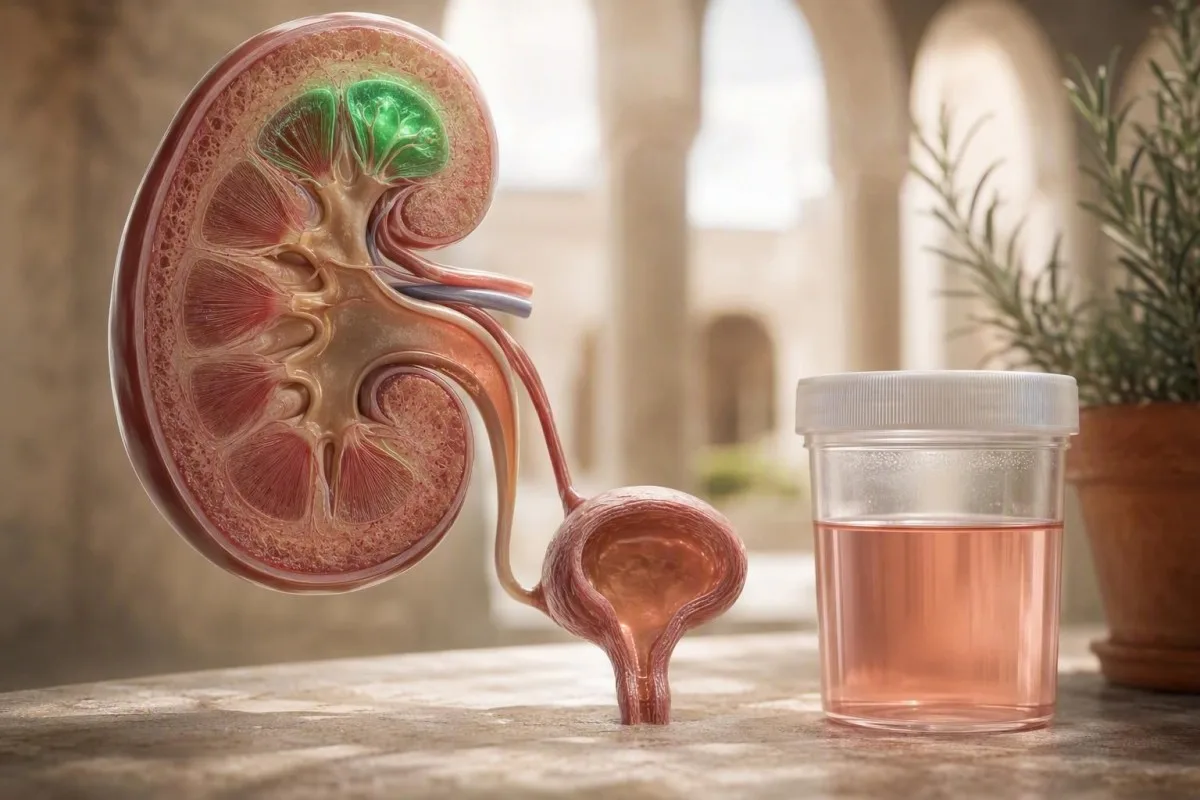
Примерок на ролева или чајна боја на урина по долго трчање често е привремена хематурија предизвикана од вежбање, но видливата боја никогаш не треба автоматски да се отфрли. Времето, наодите од микроскопот, симптомите и правилно одморен повторен примерок ја кажуваат вистинската приказна.


- Еритроцитурии предизвикана од вежбање обично исчезнува во рок од 24–72 часа по интензивно трчање; перзистенција по 72 часа бара медицински преглед.
- Праг на микроскопија од 3 или повеќе црвени крвни клетки по поле со висока моќност во правилно собран примерок на урина ги исполнува дефиницијата на AUA за микрохематурија.
- Несоодветност на тест лента е важна: позитивна подлога за крв со нула до две црвени клетки по поле со висока моќност сугерира миоглобин или слободен хемоглобин наместо уринарно крварење.
- Понавторно темпирање е практично: избегнувајте интензивно вежбање 48–72 часа, хидрирајте нормално, а потоа дадете примерок на урина од среден тек.
- Проценка истиот ден е разумен за згрутчувања, неможност за мокрење, треска, едностран силен бол во бубрезите, или урина со боја на кола со изразен мускулен бол.
- Образец за предупредување на бубрезите е крв плус протеини, црвено-клеточни касти, висок крвен притисок или намалување на eGFR—не само изолирана тест лента после трка.
- Знаци за рабдомиолиза е непропорционално темна урина со тешки мускулни симптоми и резултат на креатин киназа често над 5 пати над горната граница на лабораторијата.
- Контекст за ризик од рак го менува прагот за истрага: возраста, изложеноста на пушење, претходно зрачење на карлицата и постојана видлива хематурија се важни.
Зошто трчањето може да ја обои урината розева
Хематуријата на тркачите е обично краткотрајно истекување на црвени крвни клетки во урината по интензивно вежбање, честопати се решава во рок од 24–72 часа одмор. Сепак, видлива розова, црвена или кафеава урина заслужува правилно земен примерок за повторно тестирање, наместо случајна претпоставка дека трчањето ја предизвикало.
Во клиниката, уверливата шема е едноставна: промената на бојата започнува по невообичаено долго, брзо или спуштено трчање; нема треска, болка во бубрезите како грч или печење при мокрење; и микроскопијата се нормализира по одмор. Kantesti е анализатор на крвни тестови со вештачка интелигенција што може да ги стави поврзаните бубрежни маркери — креатинин, eGFR, електролити и креатин киназа — покрај историјата на вежбање, наместо да го третира еден резултат по трката како дијагноза.
Предложените механизми се механички контакт со ѕидот на мочниот меур, привремени промени во бубрежниот проток на крв, концентрација поврзана со дехидратација и повремено разградување на црвените крвни клетки од повторени удари на стапалото. Доказите за секој механизам се искрено измешани, бидејќи повеќето студии се мали и користат различни тркачки дистанци. Во моите 15 години клиничка пракса, историјата на нов напор е поважна од самата боја; првиот ултрамаратон и познатата трка на 5 км не носат иста предтестна веројатност.
Видлива крв во урината по вежбање не е синоним за бенигна хематурија на тркачите. поширок водич за црвени знамиња за хематурија е корисен бидејќи камења во бубрезите, инфекција, гломерулна болест и рак на уринарниот тракт можат случајно да се манифестираат по трчање.
Практичната дефиниција
Хематурија предизвикана од вежбање значи дека црвените крвни клетки се појавуваат во урината набргу по напор и исчезнуваат во повторен примерок земен во мирување. Позитивен тест со стапче сам по себе не ја докажува оваа дијагноза, бидејќи реагенсот открива хем пигмент од цели црвени крвни клетки, слободен хемоглобин или миоглобин.
Дали е хематурија, хемоглобин или миоглобин?
Тест со стапче за урина позитивен на крв може да укажува на црвени крвни клетки, хемоглобин или миоглобин, а микроскопијата ги раздвојува. Розова урина со многу цели црвени крвни клетки укажува на хематурија; темно кафеава урина со малку или без црвени крвни клетки предизвикува загриженост за пигмент од мускулно оштетување или хемолиза.
Уринарна микроскопија која покажува 3 или повеќе црвени крвни клетки по поле со големо зголемување потврдува микрохематурија кога примерокот е чисто собран. Спротивно на тоа, силно позитивен тест со стапче со 0–2 црвени крвни клетки по поле со големо зголемување треба да го натера лекарот да размисли за миоглобинурија, особено по изложеност на топлина, оптоварување на мускулите од типот на притискање или силна одложена болка во мускулите. Кафеава или боја на кола е потипична за концентриран пигмент отколку за мала количина на крварење од мочниот меур.
Миоглобинот е важен бидејќи може да го придружува рабдомиолизата и акутната бубрежна повреда. Концентрација на креатин киназа над 5 пати над горната граница на нормалата на лабораторијата често се користи како биохемиски праг за рабдомиолиза, иако симптомите, калиумот, креатининот и излачувањето на урина ја одредуваат итноста. Видете го нашето практично објаснување на опасно високо ниво на креатин киназа за обрасци кои не треба да се чекаат преку ноќ.
Прехранбените бои, цвекло, капини, рифампицин, феназопиридин и дехидрација исто така можат да ја обојат урината без црвени крвни клетки. А диференцијал за темна урина помага да се избегне вообичаената грешка да се претпостави дека секој црвеникав примерок претставува крв.
Зошто разликата ја менува грижата
Хематуријата со црвени крвни клетки го насочува вниманието кон уринарниот тракт, додека миоглобинуријата го насочува вниманието кон скелетните мускули и заштитата на бубрезите. И двете можат да се појават по напорни вежби, но само микроскопијата и насочените крвни анализи можат сигурно да ги разликуваат.
Како да се прочита резултат од анализа на урина по трчање
Најинформативниот тест на урината по трчање комбинира тест лента, микроскопија, мерење на протеини и специфична тежина. Крв на тест лента со минливи црвени крвни клетки и без протеини често е со низок ризик; крв плус протеини или цилиндри бараат посеопфатна проценка на бубрезите.
Резултатот за крв на тест лента се пријавува како негативен, траги, 1+, 2+, или 3+, но тоа е сигнал за скрининг, наместо број на клетки. AUA дефинира микрохематурија како повеќе од 3 црвени крвни клетки на поле со висока моќност при микроскопско испитување, не само резултат од тест лента (Barocas et al., 2020). Оваа разлика ги спречува тркачите да влезат во непотребна потрага по рак по лажен позитивен скрининг.
Специфична тежина над 1.030 укажува на концентрирана урина во многу лаборатории и може да ја направи бојата позастрашувачка, но не ја објаснува потврдената присутност на црвени крвни клетки. Протеините од 1+ или повеќе треба да се квантифицираат со сооднос албумин-креатинин во урината или сооднос протеин-креатинин; постои минлива протеинурија после вежбање, но постојаната албуминурија ја менува диференцијалната дијагноза кон гломеруларна болест. Нашата комплетен водич за анализа на урина објаснува зошто овие маркери не треба да се спојат во еден резултат.
Kantesti AI ги толкува креатининот и eGFR заедно со наодите од урината, времето на вежбање и претходните вредности; единечен малку покачен креатинин после жешка трка не е еквивалент на хронична бубрежна болест. Во пракса, прашувам за дистанцата, теренот, температурата, употребата на антиинфламаторни лекови, времето на менструалниот циклус и дали примерокот е даден во рок од 2 часа по завршувањето.
Кога треба да се повтори тест на урина по трчање?
Повторно тестирање на урина 48–72 часа по последното тешко трчање е разумен стандард за сомнителна хематурија кај тркач. Користете примерок од прва утринска урина или примерок од средината на мокрењето добро хидриран, но не пијте литри вода непосредно пред тоа бидејќи екстремното разредување може да ги прикрие корисните наоди.
За рутинска абнормалност по трка, обично препорачувам без интервали, брдо, тешко кревање или трки за 48 часа; по маратон, ултрамаратон, топлотна болест или необична болка, 72 часа е поприфатливо. Обичното пиење до жед е доволно. Прекумерната хидратација може да ја намали специфичната тежина под 1.005 и повремено да го направи граничниот резултат потежок за толкување.
Ако микроскопијата остане позитивна по 72 часа, договорете преглед од примарната здравствена заштита во рок од неколку дена наместо повторно тестирање по тренинзите. Упорните резултати бараат мерење на крвниот притисок, серумски креатинин/eGFR, однос албумин-креатинин во урината и разгледување на култура или снимање според ризикот. Врската помеѓу напор, хидратација и привремено пониска проценка на филтрација е покриена во нашиот водич за eGFR после вежбање.
52-годишен рекреативен маратонец што го видов имаше 18 црвени крвни клетки по поле со голема моќност вечерта по жешка трка, но 0–1 црвени крвни клетки по 72 одморени часа; неговиот креатинин се врати од 1,28 mg/dL на 0,96 mg/dL. Резултатот беше охрабрувачки, но истиот план не би бил доволен за 52-годишен пушач со повторена видлива боја на урината.
Не тестирајте на целта ако можете да го избегнете
Тестирањето веднаш по вежбање ја зголемува шансата за наоѓање привремени црвени крвни клетки, концентрирана урина и протеини. Тоа може да биде клинички корисно при сомнение за рабдомиолиза, но тоа е лошо време за воспоставување на основната линија на тркачот.
Кои обрасци на хематурија по трчање обично се охрабрувачки?
Епизода која се самоограничува по интензивно трчање е позасигурна кога целосно ќе се расчисти, нема болка или системски симптоми и нема протеинурија или промена во функцијата на бубрезите. Охрабрувачки не значи игнорирано; значи потврдено со примерок од урина одморен.
Фенотипот со понизок ризик е помлад или средовечен тркач со јасен ексерциски тригер, нормален крвен притисок, без историја на пушење и нормална микроскопија одморен. Во таа ситуација, единствен привремен резултат од 3–10 RBC/HPF по трка често се решава без третман. Сепак, би го документирал, бидејќи повторувањето по секое долго трчање заслужува повнимателно испитување отколку еднократен настан.
Нормален однос албумин-креатинин во урината е генерално под 30 mg/g (под 3 mg/mmol), иако лабораториите и земјите прикажуваат единици различно. Крв без албумин, леукоцити или дисморфни црвени крвни клетки укажува подалеку од гломеруларно истекување; не докажува извор од мочниот меур, но го насочува следното прашање. Нашето објаснување на протеин во урината ја покрива оваа поделба јасно.
Траума на мочниот меур е поверојатна кога урината е многу концентрирана и тркачот завршува со речиси празен мочен меур. Некои спортски клиничари предлагаат празнење пред долг трк и редовно пиење, но ова е совет за превенција со ограничена докажаност – не замена за евалуација кога бојата перзистира.
Нормален резултат има временска ознака
Негативен тест 3 дена по трка е охрабрувачки за таа епизода, не доживотна гаранција. Нова видлива хематурија месеци подоцна треба да се процени самостојно, особено по 40-годишна возраст или со изложеност на пушење.
Знаци за предупредување што ја прават хематуријата на тркачот помалку веројатна
Хематуријата бара навремена евалуација кога перзистира после 72 часа, се повторува без интензивно вежбање, или се појавува со болка, треска, тромби, протеини, или промена на бубрежната функција. Комбинацијата од наоди е поинформативна од примерок кој сам по себе изгледа драматично.
Барајте навремено медицинско советување за видлива црвена урина која трае подолго од 24 часа, дури и ако се чувствувате добро; прагот е понизок за лица над 40 години, сегашни или поранешни пушачи, или оние со претходна зрачна терапија на карлицата. Упатството на AUA користи стратификација на ризик врз основа на возраст, пушење, степен и перзистентност на микроскопска крв, и претходна груба хематурија наместо третирање на секоја микрохематурија идентично (Barocas et al., 2020).
Дизморфни црвени крвни клетки, црвенокрвни цилиндри, значајна албуминурија, нова хипертензија, или намалена eGFR сугерираат извор од бубрежниот филтер наместо раздвижен мочен меур. Црвенокрвните цилиндри никогаш не се очекувана последица од обично трчање и треба да предизвикаат забрзана бубрежна проценка. Погледнете го нашиот преглед на грануларни и уринарни цилиндри за тоа зошто наодите од седиментот се важни.
Томас Клајн, MD, ги советува тркачите да не се само-дијагностицираат само со боја: инфекција на уринарниот тракт може да предизвика печење, итност, пиурија, и понекогаш хематурија, додека камењата почесто создаваат ненадејна еднострана болка и гадење. Културата е најкорисна пред антибиотици кога има симптоми на инфекција.
Комбинацијата крв-плус-протеин
Потврдена хематурија со протеинурија е позагрижувачка од изолирана хематурија бидејќи и двете може да потекнуваат од гломеруларниот филтер. Сооднос албумин-креатинин во урината од 30 mg/g или повисок треба да се повтори и да се толкува заедно со крвниот притисок и бубрежната функција.
Кога розовата урина по вежбање бара нега во истиот ден?
Барајте итна проценка истиот ден за тромби, неможност за мокрење, силна болка во слабините, треска, малаксаност, намалено мокрење, или темна урина со силна мускулна болка и слабост. Овие карактеристики упатуваат надвор од некомплицирана хематурија предизвикана од вежбање.
Тромбите можат да го блокираат протокот на урина, а неможноста за мокрење е итен проблем без оглед на атлетската кондиција. Треска од 38.0°C или повисока со болка во слабините може да укажува на инфекција на горниот уринарен тракт; силна грчевита болка со повраќање може да укажува на камен. Ниту една од овие ситуации не треба да се управува со чекање на повторен тест по трката.
Темно кафеава урина по напор плус забележителна мускулна чувствителност, слабост, оток, или намален излез предизвикува загриженост за рабдомиолиза. Почетното тестирање обично вклучува креатин киназа, креатинин, калиум, калциум, фосфат и анализа на урината. A водич за рабдомиолиза кај CrossFit е релевантно бидејќи невообичаеното ексцентрично вежбање — не само трчање — е чест тригер.
Тешката дехидратација може да ги влоши резултатите од бубрезите, но исто така може да се појави заедно со вистинско оштетување. Ако сте вртоглави, збунети, не можете да ги задржите течностите или многу малку уринирате за 8–12 часа, не обидувајте се да го решите проблемот со спортски пијалоци дома.
Бременост и антикоагуланси
Трудниците кои трчаат и лицата кои земаат антикоагуланси треба веднаш да пријават видлива хематурија. Антикоагулансите можат да го засилат крвавењето, но не ја отстрануваат потребата за идентификување на неговиот извор; бременоста исто така го менува прагот за проверка на инфекции, камења и бубрежни заболувања.
Состојби што трчањето може да ги открие наместо да ги предизвика
Трчањето може да открие постоечки уринарен проблем со концентрирање на урината или поттикнување на тест, наместо самото да ја предизвика хематуријата. Камења, инфекции, гломеруларна болест, структурни абнормалности и малигнитет остануваат дел од диференцијалната дијагноза.
Камењата во бубрезите често предизвикуваат едностран бол во пределот од слабините до препоните, гадење и црвени крвни клетки на микроскопија, иако се јавуваат и безболни камења. Уринарната инфекција почесто произведува печење, често мокрење, итност и бели крвни клетки; негативен резултат на нитрити не ја исклучува. Нашиот водич за леукоцитен естераза со негативни нитрити го објаснува овој чест мешан образец.
Гломерулонефритисот може да се појави по инфекција на горниот респираторен тракт со урина како кафе, оток, покачен крвен притисок, протеинурија и дисморфни црвени крвни клетки. Во насоките на KDIGO 2024 за ХББ, перзистентната албуминурија и намалениот eGFR се третираат како комплементарни маркери за ризик од бубрежни заболувања, а не како заменливи мерења (KDIGO, 2024).
Kantesti е алатка за анализа на крвни тестови со вештачка интелигенција што им помага на корисниците да препознаат шема низ креатинин, eGFR, албумин, електролити и CBC, но не може да ја дијагностицира анатомската причина за хематурија. Слики, микроскопија, култура и преглед од страна на лекар сè уште ја вршат одлучувачката работа.
Ракот е редок кај младите тркачи, но не е невозможно кај возрасните
Видливата хематурија заслужува проценка дури и кога вежбањето изгледа како очигледно објаснување, особено кај лица со изложеност на пушење или со постојани симптоми. Ризикот се зголемува со возраста и кумулативната изложеност на тутун, поради што идентични резултати од урината не водат до идентични планови за тестирање.
Кој има потреба од уролошка или нефролошка контрола?
Перзистентната хематурија по повторен примерок во мирување треба да се процени за ризик од урологија, додека хематурија плус протеинурија, леукоцити, хипертензија или нарушен eGFR укажуваат на нефрологија. Многу луѓе имаат потреба само од повторно тестирање предводено од примарна нега; упатувањето зависи од шемата.
Уролошки преглед е особено погоден за повторна видлива хематурија, постојана микроскопска хематурија, историја на пушење, професионална изложеност на ароматични амини, претходно зрачење на карлицата или уринарни симптоми без инфекција. Во зависност од ризикот, лекарите може да користат ултразвук на бубрезите и мочниот меур, КТ урографија и цистоскопија. Единичен траг на тест лента по трка кај 24-годишник е многу поинаква сцена од повторна црвена урина кај 58-годишен поранешен пушач.
Нефролошки преглед станува поверојатен со однос албумин-креатинин во урината ≥30 mg/g, eGFR под 60 ml/min/1,73 m² што трае 3 месеци или подолго, црвено-клетчени цилиндри или тешко контролиран крвен притисок. Тие прагови се важни бидејќи хроничната бубрежна болест се дефинира со времетраење, како и со единствено мерење. Прочитајте го нашиот водич за стадиуми на хронична бубрежна болест за практичните категории.
Услугата за толкување на лабораториски тестови на Kantesti може да идентификува повторлива шема на крв и протеини за дискусија, особено кога корисниците поставуваат резултати од различни лаборатории. Треба да поддржува, а не да го заменува, клиницистот кој одлучува дали е потребно снимање на уринарните патишта или специјалистички преглед.
Не дозволувајте антикоагулацијата да го прекине разговорот
Употребата на антикоагуланси ја менува сериозноста на крвавењето, но не утврдува причина за хематурија. Според моето искуство, припишувањето на повторлива крв во урината на апиксабан, варфарин или аспирин без анализа може да го одложи препознавањето на камења, инфекции или структурни заболувања.
Кои крвни тестови помагаат по хематурија поврзана со вежбање?
Корисните крвни тестови зависат од симптомите: креатинин, eGFR, електролити и креатин киназа ја проценуваат стресот на бубрезите и мускулите, додека CBC ги оценува знаците за анемија или инфекција. Рутинските широки панели се помалку корисни од таргетираното тестирање по прецизна историја и анализа на урината.
Креатининот може привремено да се зголеми по издржливо вежбање поради мускулен метаболизам, намалена перфузија на бубрезите и дехидрација. Формулите за eGFR се помалку сигурни за време на брза промена на креатининот, затоа вредност од повторување по 48–72 часа од обичното закрепнување често е позначајна од резултатот на целната линија. Нашиот водич за повторна проверка на креатинин поврзан со вежбање дава контекст за овој чест тригер за анксиозност.
Креатин киназата има широк пост-вежбачки опсег: обучени спортисти може да покажат зголемувања по трка без повреда на бубрезите, додека вредности многукратно над локалната горна граница плус симптоми заслужуваат итна проценка. Калиум над 6,0 mmol/L е потенцијално опасен и бара итна клиничка евалуација, особено ако функцијата на бубрезите е нарушена или се сомнева на мускулна повреда.
CBC е најкорисен кога има замор, бледило, обилно менструално крвавење, повторлива хематурија или загриженост за системска болест. Хемоглобинот може да опадне по настани за издржливост од експанзија на плазма-волумен, загуба на железо или хемолиза; феритинот треба да се толкува подалеку од акутно воспаление и интензивен тренинг. Тркачите на долги патеки може да го најдат нашиот преглед на крвни тестови за спортисти корисен за разумен основен преглед.
Не дијагностицирајте бубрежно заболување од еден панел од тркачка недела
Зголемување на креатининот од 0,3 mg/dL или повеќе може да исполни критериум за акутна бубрежна повреда во соодветниот временски рок, но контекстот и повторното тестирање се одлучувачки по трката. Низок излез на урина, зголемување на калиумот и упорно зголемување носат поголема тежина од изолиран граничен резултат.
Како да се собере повторен примерок на урина на кој лекарите можат да му веруваат
Чист примерок од среден тек на урина по 48–72 часа без напорно вежбање е најдобар начин да се провери дали хематуријата е помината. Грешки при собирање, менструална контаминација и стар примерок може да создадат погрешни резултати.
Измијте ги рацете, почнете да мокрите во тоалетот, а потоа соберете го средниот дел без да го допирате внатрешноста на садот. Испорачајте го примерокот брзо – идеално во рок од 2 часа—или следете ги инструкциите за ладење на лабораторијата. Продолженото стоење ја менува појавата на клетките и може да ја направи микроскопијата помалку сигурна.
Избегнувајте тестирање за време на активна менструација каде што е можно; ако тестирањето не може да чека, информирајте го клиницистот и лабораторијата. Вагиналната контаминација може да предизвика очигледни црвени крвни клетки и протеини, додека епителните клетки од сквамозен епител често сигнализираат лошо собран примерок. Нашиот водич за епителни клетки во урината објаснува зошто оваа забелешка од лабораторијата не е тривијална.
Томас Клајн, MD, препорачува покрај примерокот да се запишат четири детали: последната напорна сесија, времетраењето на настанот, надворешната температура и сите лекови земени во претходните 72 часа. Резултат без временски податоци е многу потежок за толкување — особено кога урината се собира по двојна тренинг сесија.
Тестирање на примерок од прва утринска наспроти дневен примерок
Примерок од прва утринска урина е концентриран и добар за откривање мали абнормалности, но нормално хидриран дневен примерок од среден тек е прифатлив ако собирањето е почисто. Конзистентноста е поважна за сериско споредување: користете приближно исти услови при секое повторување.
Хидратација, лекови против болки и додатоци што ја менуваат сликата
Дехидрацијата може да ја концентрира урината и да го зголеми реналниот стрес, додека НСАИЛ може да го намалат бубрежниот проток на крв за време на тренинг за издржливост. Ниту еден фактор не ја докажува причината за хематурија, но двата влијаат на тоа колку претпазливо клиницистите ги толкуваат резултатите по трчање.
За повеќето тркачи, пиењето до чувство на жед и постепеното надоместување на загубите е посигурно отколку ригидно форсирање на течности. Многу низок натриум од прекумерен внес на вода може да биде опасен; серумски натриум под 125 mmol/L со главоболка, повраќање, конфузија или напади е итен случај. Бојата на урината е груба индиција за хидратација, не прецизен метар за хидратација.
Ибупрофен, напроксен и други НСАИЛ можат да го намалат протокот на крв во бубрезите посредуван од простагландини, особено за време на топлински стрес, повраќање или долги настани. Им советувам на пациентите да ги избегнуваат рутинските профилактички НСАИЛ пред маратони, освен ако нивниот клиничар не дал јасна причина. Медикаментозниот контекст е истражен во нашата статија за безбедност на лабораториски трендови.
Високата доза на витамин Ц може да интерферира со одредени реакции на тест ленти за урина, а додатоците што се продаваат за перформанси понекогаш содржат непријавени стимуланси или диуретици. Донесете ги контејнерите или јасни фотографии на состанок; тоа често е покорисно отколку да се обидувате да запомните листа на состојки на брендиран прав. Нашиот водич за безбедност на додатоци за спортисти нуди разумен контролен список.
Хидратацијата не е третман за упорен крвен
Водата може да ја поправи концентрацијата, но не третира камен, инфекција, гломерулна процена или структурно уринарно потекло. Ако црвените крвни клетки останат на примерок земен во мирување и правилно собран, ескалацијата треба да се заснова на моделот, а не на друг експеримент со хидратација.
Можете ли да продолжите да трчате по хематурија предизвикана од вежбање?
Повеќето тркачи можат постепено да се вратат откако бојата на урината ќе се нормализира, симптомите отсуствуваат, а повторниот примерок земен во мирување е охрабрувачки. Не враќајте се на напорни тренинзи додека урината останува видливо црвена, бубрежните резултати се абнормални, или мускулните симптоми сугерираат рабдомиолиза.
По некомплицирана единечна епизода, обично предлагам лесно трчање само неколку дена, потоа постепено обновување на обемот и интензитетот во текот на 7–14 дена. Тркачот треба да престане и да побара преглед ако се врати бојата, се појави болка, или се намали производството на урина. Ова е прагматичен клинички пристап, а не рецепт докажан со испитувања.
Повторена хематурија по иста дистанца може да оправда практични експерименти: избегнувајте тркачки дехидрирани, мокрете пред долго трчање, воведувајте тренинг на спуштање побавно, и прегледајте го фитсингот на чевлите или теренот. Водете дневник за темпо, топлина, времетраење, боја на урина и резултати од примероци. А лабораториско упатство за маратонски тркач може да помогне да се разликуваат маркерите за опоравување од причините за паузирање на тренингот.
Не тренирајте поради необјаснета видлива хематурија само затоа што имате закажан настан. Спортистите честопати се одлични во толерирање на непријатност; потешката вештина е препознавањето дека упорноста е дијагностичка информација, а не тест за цврстина.
Воспоставете вистинска основна линија
Основна анализа на урината и бубрежен панел земени најмалку 72 часа од интензивен тренинг може да ги направи идните резултати по трката многу полесни за толкување. Ова е особено корисно за ултрамаратонци, луѓе со еден бубрег или спортисти кои користат лекови што влијаат на перфузијата на бубрезите.
Што да му кажете на вашиот лекар за крв во урината по вежбање
Најбрзиот пат до корисна проценка на хематурија е концизна временска рамка: боја на урината, доза на вежбање, симптоми, лекови и време на повторно тестирање. Доставете вистински лабораториски вредности наместо само порака дека примерокот бил “позитивен на крв”.”
Наведете дали урината била розова, светло црвена, обоена како чај или содржела згрутчувања; дали бојата се појавила пред, за време или по вежбањето; и дали се исчистила по првото мокрење. Вклучете печење, итност, треска, болка во слабините, гадење, оток и намален излез. Детална референца за бојата на урината може да помогне точно да се опише набљудувањето без да се претера во толкувањето.
Доставете претходни анализи на урината, вредности на креатинин/eGFR, читања на крвен притисок, историја на пушење, семејна историја на бубрежни заболувања и список со лекови/додатоци. Kantesti е платформа за интерпретација на AI биомаркери што може да ги организира повторените вредности на тестовите на крвта и да ги истакне значајните промени, но лекар мора да ги поврзе тие вредности со микроскопија и преглед на урината.
Од 3 септември 2026 година, клиничкиот принцип останува едноставен: вежбањето е веројатно објаснување само откако резултатот ќе се реши и ќе отсуствуваат конкурентни индиции. Ако сте неодлучни, прашајте дали ви треба микроскопија, култура, сооднос албумин-креатинин, повторен креатинин, снимање или упатување — не само уште еден тест лента.
Прашања вредни за поставување
Прашајте дали биле видени недопрени црвени крвни клетки, дали биле присутни протеини или цилиндри, и кога треба да се случи повторен тест во мирување. Тие три одговори обично разјаснуваат дали следниот чекор е будно следење, тестирање на бубрезите, тестирање на инфекција или уролошка евалуација.
Разумен план за акција за хематурија на тркачот
За една епизода без болка по интензивно трчање, одморете се од напорно вежбање 48–72 часа и повторете ја анализата на урина со чист примерок; побарајте порана нега за црвени знамиња или упорна видлива боја. Целта не е ниту паника ниту отфрлање — тоа е докажување дека наодот се решава.
Чекор еден: престанете со интензивен тренинг, хидрирајте нормално и забележете го времето и симптомите. Чекор два: повторете ја микроскопијата по 48–72 часа. Чекор три: ако крвта перзистира, или ако се појават протеини, цилиндри, болка, треска, згрутчувања, низок излез на урина или абнормални бубрежни маркери, договорете медицинска проценка веднаш. Оваа секвенца спречува и пропуштени болести и непотребни снимања по еднократен примерок на линијата за цел.
Кога нашиот клинички тим ги прегледува прикачените лабораториски податоци, ние даваме приоритет на обрасците: зголемен креатинин плус висок CK и низок излез на урина е поитна од стабилен креатинин со минлива лента за урина. Методологијата и заштитата на Kantesti се опишани во нашиот информации за клиничка валидација, а нашиот лекарски надзор е детално прикажан преку Медицински советодавен одбор.
Повеќето пациенти откриваат дека повторениот тест во одредено време претвора алармантна промена на бојата во јасен план. Но, ако вашиот инстинкт вели дека нешто не е во ред — особено ако урината е сè уште црвена утре — верувајте му на тој сигнал и направете проценка.
Правилото од една реченица
Розова урина еднаш по тешко трчање може да биде минлива; розова урина која перзистира, се повторува или се јавува со симптоми е хематурија додека не се процени правилно.
Често поставувани прашања
Колку трае хематуријата кај тркачите?
Хематуријата кај тркачи обично исчезнува во рок од 24–72 часа по прекинот на интензивното вежбање. Практичен повторен тест на урина е среден млаз од чист примерок собран по 48–72 часа без напорно трчање или кревање тегови. Упорна видлива розова или црвена урина по 24 часа, или микроскопска хематурија што останува по 72 часа, треба да се процени од страна на лекар. Треска, згрутчување, силна болка во бубрезите, намалено излачување на урина или силна болка во мускулите оправдуваат проценка истиот ден.
Дали е нормално присуство на крв во урината по вежбање?
Крв во урината по вежбање може да биде минлив ефект од интензивно трчање, дехидрација, удар на ѕидот на мочниот меур или краткорочни промени во протокот на крв во бубрезите, но не е автоматски нормално. Микроскопијата што потврдува 3 или повеќе црвени крвни клетки по поле со висока моќност ја исполнува дефиницијата на AUA за микрохематурија. Резултат што исчезнува на повторен примерок по одмор е охрабрувачки, додека упорната крв, протеини, цилиндри, болка или уринарни симптоми бараат понатамошна евалуација. Видливата боја на урината секогаш треба да се пријави, особено кај возрасни со изложеност на пушење или повторени епизоди.
Може ли дехидрацијата да предизвика розова урина после трчање?
Дехидрацијата може да предизвика потемна урина и да го засили наодот за пост-вежбање хематурија со концентрирање на уринарните компоненти, но самата дехидрација не ја објаснува сигурно потврдената присутност на црвени крвни клетки. Специфична гравитација на урината над 1.030 често укажува на концентрирана урина во многу лаборатории. Пијте нормално додека не почувствувате жед и повторете го примерокот од чиста утрина по 48–72 часа одмор, наместо да се обидувате да го поништите резултатот со прекумерно внесување вода. Силна жед, вртоглавица, многу намалено излачување на урина или конфузија бараат итна медицинска помош.
Каква е разликата помеѓу хематурија и миоглобинурија после вежбање?
Хематурија значи присуство на цели црвени крвни клетки во урината, додека миоглобинуријата ја рефлектира пигментацијата на мускулите ослободена по повреда на мускулите. Тест лента може да биде позитивна на крв во двете ситуации, па затоа микроскопијата е одлучувачка: миоглобинуријата често произведува позитивна тест лента со 0–2 црвени крвни клетки на поле со големо зголемување. Силна мускулна болка, слабост, оток, темна урина како кола или вредност на креатин киназа над 5 пати повисока од горната лабораториска граница предизвикуваат сомнеж за рабдомиолиза. Тој образец бара итна клиничка проценка бидејќи калиумот и функцијата на бубрезите можат брзо да се променат.
Да престанам ли со трчање ако имам хематурија предизвикана од вежбање?
Престанете со интензивното трчање додека бојата на урината не се нормализира и не го завршите тестот за мирување, обично по 48-72 часа. Ако повторниот примерок е нормален и немате болка, треска, згрутчување, протеинурија или абнормалност на функцијата на бубрезите, повеќето тркачи можат постепено да се вратат за околу 7-14 дена. Не продолжувајте со интензивен тренинг кога урината останува видливо црвена или темна, излезноста на урината е намалена или се присутни тешки мускулни симптоми. Повторливите епизоди по слични тренинзи заслужуваат медицински преглед дури и ако секоја епизода се реши.
Кога хематуријата треба да ја прегледа уролог?
Упорна микроскопска хематурија по повторен тест во мирување, повторлива видлива хематурија или хематурија кај лице со историја на пушење, претходна карлична радијација или уринарни симптоми честопати укажува на потреба од уролошка проценка на ризикот. Уролозите може да разгледаат ултразвук, КТ урографија и цистоскопија во зависност од возраста и целокупниот ризик, наместо да користат еден тест за сите. Хематурија со албуминурија од 30 mg/g или повеќе, црвено-клетчани цилиндри, хипертензија или eGFR под 60 mL/min/1.73 m² посилно укажуваат на нефрологија. Точната специјалност зависи од целокупниот образец на уринарни и крвни тестови.
Добијте AI анализа на крв со моќ на вештачка интелигенција денес
Придружете се на над 2 милиони корисници ширум светот кои му веруваат на Kantesti за инстантна, точна анализа на лабораториски тестови. Поставете ги вашите резултати од крвна слика и добијте сеопфатно толкување на 15,000+ биомаркери за секунди.
📚 Реферирани научни публикации
Клајн, Т., Мичел, С., и Вебер, Х. (2026). Мултијазична поддршка за клиничко одлучување асистирана од вештачка интелигенција за рано тријажирање на Хан-тавирус: дизајн, инженерска валидација и примена во реалниот свет на 50.000 толкувани извештаи од крвни тестови. AI Medical Research.
Клајн, Т., Мичел, С., и Вебер, Х. (2026). Пререгистрирана, рубрика-базирана автоматизирана техничка бенчмарка на Kantesti Blood-Test Interpretation Engine на 100.000 синтетички тест-случаи. AI Medical Research.
📖 Надворешни медицински референци
⚕️ Медицинско одрекување од одговорност
Овој напис е само за едукативни цели и не претставува медицински совет. Секогаш консултирајте се со квалификуван здравствен работник за одлуки за дијагноза и третман.
Сигнали за доверба E-E-A-T
Искуство
Клиничка ревизија водена од лекар за работните текови на толкување на лабораториски резултати.
Експертиза
Фокус на лабораториска медицина за тоа како биомаркерите се однесуваат во клинички контекст.
Авторитивност
Напишано од д-р Thomas Klein, со ревизија од д-р Sarah Mitchell и проф. д-р Hans Weber.
Доверливост
Толкување засновано на докази со јасни патеки за следење за да се намали алармирањето.