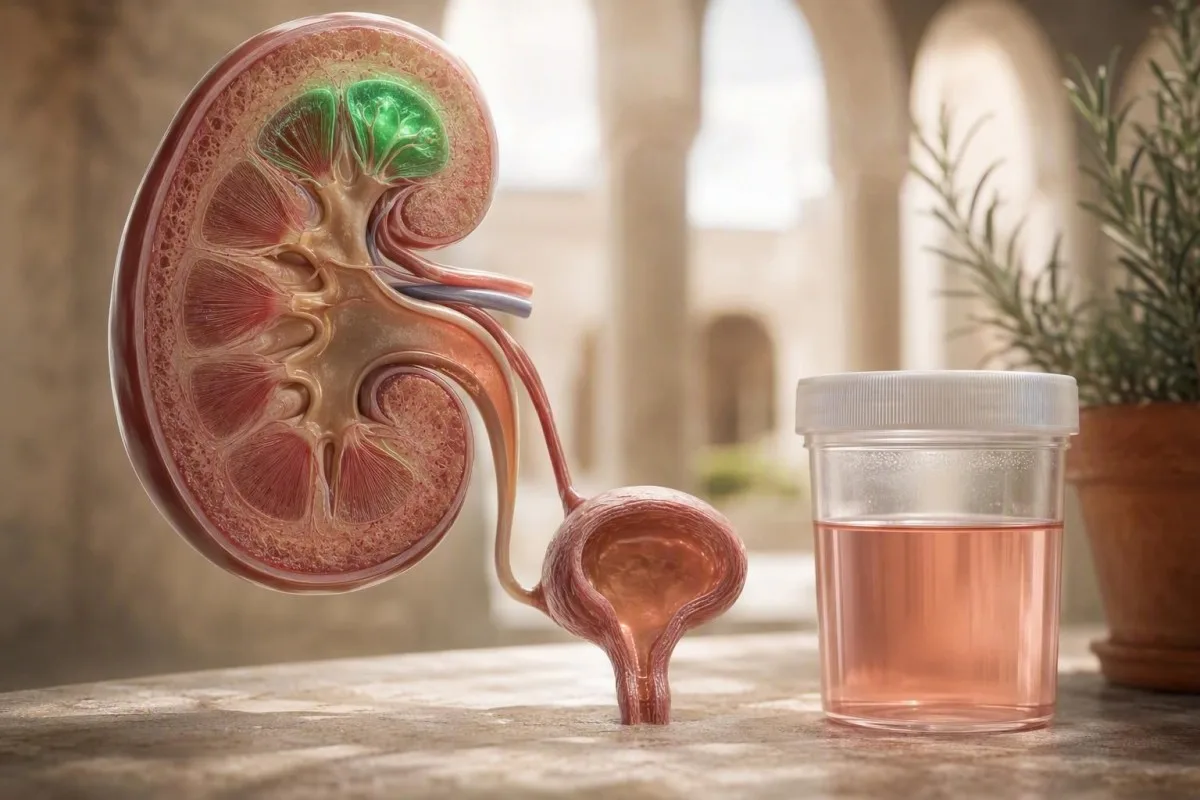
Узак чуркоодон кийинки кызгылт же чай сыяктуу заара көбүнчө убактылуу көнүгүүдөн улам пайда болгон гематурия, бирок көрүнгөн түстү эч качан автоматтык түрдө этибарга албоо керек. Убакыт, микроскоптук табылгалар, симптомдор жана жакшылап эс алган кайталап үлгү чындыкты айтып берет.


- Көнүгүүдөн улам келип чыккан гематурия адатта, катуу чуркоодон кийин 24–72 сааттын ичинде жоголот; 72 сааттан ашык созулса, медициналык кароо талап кылынат.
- Микроскопия чеги жакшылап чогултулган заара үлгүсүндөгү жогорку кубаттуулук талаасына 3 же андан көп кызыл кан клеткасы микрогематуриянын AUA аныктамасына туура келет.
- Тест тилкесинин дал келбестиги маанилүү: жогорку кубаттуулук талаасына нөл же эки кызыл клеткага каршы оң кан жаздыгы заарадагы кан кетүүгө караганда миоглобинди же эркин гемоглобинди көрсөтөт.
- Кайра текшерүү мөөнөтү практикалык: 48–72 саат катуу көнүгүүдөн алыс болуңуз, кадимкидей суюктук ичиңиз, андан кийин ортоңку агымдагы заара үлгүсүн бериңиз.
- Same-day assessment бычактар, заара чыгара албай калуу, ысытма, бир тарабы катуу каптал оорусу же таң калыштуу булчуң оорусу менен кокс заарасы үчүн акылга сыярлык.
- Бөйрөк эскертүү үлгүсү бул кан плюс протеин, эритроциттердин цилиндрлери, жогорку кан басымы же төмөндөшү eGFR—жарыштан кийинки жалгыз тест тилкеси эмес.
- Рабдомиолиздин белгиси өтө караңгы заара, оор булчуң симптомдору жана креатин киназанын натыйжасы лабораториянын жогорку чегинен 5 эсе жогору болгондо байкалат.
- Рактын рискинин контексти текшерүүнүн чегин өзгөртөт: жаш курагы, тамеки чегүү, мурунку жамбаштын нурлануусу жана көрүнүп турган гематуриянын туруктуулугу маанилүү.
Эмне үчүн чуркоо заараны кызгылт кыла алат
Спортчунун гематуриясы, адатта, катуу көнүгүүдөн кийин заарага эритроциттердин кыска мөөнөттүү агып чыгышы, көбүнчө эс алуунун 24–72 саатынын ичинде калыбына келет. Ошентсе да, кызгылт, кызыл же кола түстөгү заара чуркоо себеп болгон деген жөнөкөй божомолдон көрө, туура чогултулган кайталап текшерүүнү талап кылат.
Клиникада ишенимдүү көрүнүш жөнөкөй: түс өзгөрүү адаттан тыш узун, ылдам же ылдый чуркоодон кийин башталат; ысытма, капталдын оорушу же заара чыгаруудагы күйүү жок; жана эс алуудан кийин микроскопия нормалдашат. Kantesti — бул AI кан анализин талдоочу аппарат ага байланыштуу бөйрөк маркерлерин — креатинин, eGFR, электролиттер жана креатин киназа — көнүгүү тарыхына карата коюуга мүмкүндүк берет, бирок жарыштан кийинки бир натыйжаны диагноз катары кароого болбойт.
Сунушталган механизмдер - бул механикалык табарсык дубалынын байланышы, бөйрөккө кан агымынын убактылуу өзгөрүшү, суусуздануудан улам концентрациянын жогорулашы жана кээде кайталанган бут соккусунан эритроциттердин бузулушу. Ар бир механизм үчүн далилдер чынчылдык менен аралаш, анткени көпчүлүк изилдөөлөр кичинекей жана ар кандай жарыш аралыктарын колдонушат. Менин 15 жылдык клиникалык тажрыйбамда, жаңы аракеттин тарыхы түстөн гана артык; биринчи ультрамарафон жана тааныш 5 км бирдей алдын ала тесттик ыктымалдуулукка ээ эмес.
Көнүгүүдөн кийинки заарадагы көрүнүп турган кан benign спортчунун гематуриясы менен бирдей эмес. гематуриянын кызыл желектеринин кеңири жетекчилиги пайдалуу, анткени бөйрөктөгү таштар, инфекция, гломерулярдык оорулар жана заара-жыныс органдарынын рактары чуркоодон кийин кокусунан биринчи жолу билинер-билинер болушу мүмкүн.
Практикалык аныктама
Көнүгүүдөн улам пайда болгон гематурия, эритроциттердин exertion кийин заарада пайда болуп, эс алуудан кийинки кайталап текшерүүдө жоголуп кетиши дегенди билдирет. Позитивдүү тест тилкеси жалгыз бул диагнозду далилдебейт, анткени реагент бүт эритроциттерден, эркин гемоглобин же миоглобиндин гема пигментин аныктайт.
Бул гематуриябы, гемоглобинби же миоглобинби?
Кан үчүн позитивдүү көрсөткөн заара тести тилкеси эритроциттерди, гемоглобинди же миоглобинди чагылдырышы мүмкүн, жана микроскопия аларды бөлөт. Көптөгөн бүт эритроциттер менен кызгылт заара гематурияны колдойт; аз же эритроциттер жок кара-күрөң заара булчуң жаракатынан же гемолизден пигменттин тынчсыздануусун жаратат.
Заара микроскопиясы көрсөткөн жогорку кубаттуулуктагы талаага 3 же андан көп эритроциттер таза чогултулган үлгү болгондо микрогематурияны тастыктайт. Тескерисинче, 0–2 эритроциттерге жогорку кубаттуулуктагы талаада катуу позитивдүү тест тилкеси клиницистке миоглобинурияны, айрыкча ысыкка дуушар болгондо, майдалоо сыяктуу булчуң жүктөмүндө же оор кечиктирилген булчуң оорусунда карап чыгууга себеп болушу керек. Күрөң же кола түсү концентрацияланган пигменттин, табарсыктын аз кан кетүүсүнөн көрө, мүнөздүү.
Миоглобин маанилүү, анткени ал рабдомиолиз жана курч бөйрөк жаракаты менен коштолушу мүмкүн. Креатин киназанын концентрациясы жогору нормалдуу лабораториялык жогорку чегинен 5 эсе рабдомиолиз үчүн биохимиялык чекит катары колдонулат, бирок симптомдору, калий, креатинин жана зааранын чыгышы шашылышты аныктайт. Биздин практикалык түшүндүрмөбүздү караңыз. коркунучтуу жогору креатин киназа түнү күтпөй турган жагдайлар үчүн.
Тамак-аш боёктору, кызылча, кара бүлдүркөн, рифампицин, феназопиридин жана суусуздануу да кызыл клеткаларсыз заараны боёйт. А кара зааранын дифференциалы зааранын ар бир кызыл үлгүсү канды билдирет деген туура эмес ойду болтурбоого жардам берет.
Айрымачылык эмне үчүн дарылоону өзгөртөт
Кызыл кан клеткалары гематурия заара чыгаруу жолуна көңүл бурат, ал эми миоглобинурия скелет булчуңуна жана бөйрөккө коргоого багыттайт. Экөө тең чыдамкайлык боюнча мелдештерден кийин пайда болушу мүмкүн, бирок аны ишенимдүү түрдө аныктоо үчүн микроскопия жана багытталган кан анализи гана мүмкүн.
Чуркоодон кийинки заара анализинин жыйынтыгын кантип окуу керек
Эң маалыматтуу чуркоодон кийинки заара анализине тест-тиш, микроскопия, белокту өлчөө жана специфик гравитация кирет. Жөнөкөй тесттеги кан, убактылуу кызыл клеткалар жана белок жок болсо, бул аз тобокелдик; кан жана белок же цилиндрлер бөйрөктү кылдаттык менен баалоону талап кылат.
Кандын тест-тишинин натыйжасы терс, из, 1+, 2+, же 3+ катары отчетто көрсөтүлөт, бирок бул клеткалардын санын эмес, скрининг сигналы. AUA микрогематурияны микроскоп астында караганда жогорку күч талаасына 3 кызыл кан клеткасынан ашык деп аныктайт., жалгыз тест-тиштин натыйжасы эмес (Barocas et al., 2020). Бул айырмачылык жалган оң скринден кийин чуркоочуларды керексиз рак текшерүүсүнө жөнөтүүнү болтурбоого жардам берет.
Специфик гравитация жогору 1.030 көпчүлүк лабораторияларда концентраттуу заараны көрсөтөт жана түстү коркунучтуу кылып көрсөтүшү мүмкүн, бирок ал тастыкталган кызыл клеткаларды түшүндүрбөйт. 1+ же андан жогору белок заарадагы альбумин-креатинин катышы же белок-креатинин катышы менен аныкталышы керек; көнүгүүдөн улам пайда болгон убактылуу протеинурия бар, бирок туруктуу альбуминурия айырмачылыкты гломерулярдык ооруга өзгөртөт. Биздин заара анализинин толук көрсөтмөсү бул маркерлер эмне үчүн бир натыйжага бириктирилбеши керектигин түшүндүрөт.
Kantesti AI креатининди жана eGFRди заарадагы табылгалар, көнүгүү убактысы жана мурунку маанилер менен бирге интерпретациялайт; ысык жарыштан кийин бир жолу бир аз көтөрүлгөн креатинин өнөкөт бөйрөк оорусуна барабар эмес. Иш жүзүндө, мен аралыкты, рельефти, температураны, сезгенүүгө каршы каражаттарды колдонууну, этек кирдин графигин жана үлгү алынганбы же жокпу, фиништен 2 саат ичинде сурайм.
Чуркоодон кийин заараны качан кайталап текшерүү керек?
Жарышчынын гематуриясы шектелген учурда, акыркы оор чуркоодон 48–72 сааттан кийин заараны кайрадан текшерүү акылга сыярлык демейки болуп саналат. Биринчи эртеңки же жакшы гидратталган ортодогу заара үлгүсүн колдонуңуз, бирок дароо эле бир нече литр суу ичпеңиз, анткени өтө суюлтуу пайдалуу табылгаларды жашырып коюшу мүмкүн.
Кадимки жарыштан кийинки аномалия үчүн, мен адатта интервалдарды, тоолорду, оор көтөрүүнү же жарыштарды сунуштабайм 48 саат; марафондон, ультрамарафондон, ысык оорусунан же адаттан тыш оорутуудан кийин, 72 саат көбүрөөк негиздүү. Кадимки суусатуу менен ичүү жетиштүү. Ашыкча гидраттация специфик гравитацияны 1.005 төмөн түшүрүп, кээде чек арадагы натыйжаны чечмелөөнү кыйындатат.
Микроскопия 72 сааттан кийин да позитивдүү болсо, бир нече күндүн ичинде биринчилик жардамды кароону уюштуруңуз, көнүгүүлөрдөн кийин кайра-кайра текшерүүнүн ордуна. Туруктуу натыйжалар кан басымын өлчөөнү, кан креатинин/eGFR, зааранын альбумин-креатинин катышын жана коркунучтун негизинде маданиятты же сүрөттөөнү карап чыгууну талап кылат. Көнүгүү, гидраттация жана убактылуу төмөндөгөн чыпкалоо баалоо ортосундагы байланыш биздин көнүгүүдөн кийинки eGFR колдонмосунда.
каралган. Мен көргөн 52 жаштагы ышкыбоз марафончу жарыштан кийин кечинде ысык болгондо жогорку күч талаасында 18 кызыл клеткага ээ болгон, бирок 72 саат эс алгандан кийин 0-1 кызыл клеткага ээ болгон; анын креатинини 1,28 мг/длден 0,96 мг/длге чейин төмөндөгөн. Натыйжа ишенимдүү болгон, бирок кайталануучу көрүнгөн зааранын түсү бар 52 жаштагы тамеки чеккен адам үчүн бирдей план жетишсиз болмок.
Мүмкүн болсо, финиш сызыгында текшербеңиз
Көнүгүүдөн кийин дароо текшерүү убактылуу кызыл клеткаларды, концентрленген заараны жана протеинди табуу мүмкүнчүлүгүн жогорулатат. Бул рабдомиолиз шектүү болгон учурда клиникалык жактан пайдалуу болушу мүмкүн, бирок жарышчынын базалык линиясын аныктоо үчүн бул жаман убакыт.
Чуркоодон кийинки гематуриянын кайсы үлгүлөрү көбүнчө ишенимдүү?
Интенсивдүү чуркоодон кийин өзүн-өзү чектеген эпизод, эгер ал толугу менен тазаланса, оорусу же системалуу симптомдору жок болсо жана протеинурия же бөйрөк функциясынын өзгөрүүсү болбосо, көбүрөөк ишеним берет. Ишенимдүү дегенди этибарга албоо дегенди билдирбейт; бул эс алган үлгү менен тастыкталгандыгын билдирет.
Төмөнкү коркунучтуу фенотип - бул жаш же орто жаштагы жарышчы, анда ачык көнүгүү триггери, нормалдуу кан басымы, тамеки чеккен тарыхы жок жана нормалдуу эс алган микроскопия бар. Бул шартта, убактылуу бир жолку натыйжа 3–10 RBC/HPF жарыштан кийин көбүнчө дарылоосуз эле чечилет. Мен аны документтештирем, анткени ар бир узак чуркоодон кийин кайталанышы бир жолку окуяга караганда кылдат кароону талап кылат.
Зааранын альбумин-креатинин катышынын нормалдуу мааниси, адатта, 30 мг/г дан төмөн (3 мг/ммольдон төмөн), бирок лабораториялар жана өлкөлөр бирдиктерди ар кандай билдиришет. Альбумин, цилиндрлер же дисморфик эритроциттерсиз кан гломерулярдык агуудан алыс болот; бул табарсыктын булагын далилдебейт, бирок ал кийинки суроону багыттайт. Биздин түшүндүрүү заарадагы белок боюнча гиддерде камтылган муну бул бөлүм так камтыйт.
Заара өтө концентрацияланган жана чуркоочу адам дээрлик бош табарсык менен бүткөндө табарсыктын травмасы көбүрөөк болот. Кээ бир спорт клиницисттери узак чуркоо алдында заара кылууну жана үзгүлтүксүз ичүүнү сунушташат, бирок бул чектелген сыноо далилдери бар алдын алуу боюнча кеңеш – түс сакталып калса, баалоонун ордуна келбейт.
Нормалдуу натыйжада убакыт белгиси бар
Жарыштан 3 күн өткөндөн кийинки терс тест ошол окуяга ишеним берет, өмүр бою кепилдик бербейт. Айлар өткөндөн кийин пайда болгон жаңы көрүнгөн гематурия өз алдынча бааланышы керек, айрыкча 40 жаштан өткөндөн кийин же тамеки чегүү тарыхы бар болсо.
Чуркоочунун гематуриясын азыраак кылуучу эскертүү белгилери
Гематурия 72 сааттан кийин сакталып калса, катуу көнүгүүсүз кайталанса, же оору, ысытма, уюган кан, белок же бөйрөк иштешинин өзгөрүшү менен пайда болсо, тез арада баалоону талап кылат. Табылгалардын айкалышы өз алдынча драмалык көрүнгөн үлгүгө караганда көбүрөөк маалымат берет.
Көрүнүп турган кызыл заара узакка созулган учурда тез арада медициналык кеңешке кайрылыңыз 24 hours, жада калса өзүңүздү жакшы сезсеңиз да; 40 жаштан өткөндөр, учурда же мурда тамеки чеккендер же жамбаштын мурунку нурлануусу бар адамдар үчүн чеги төмөн. AUA көрсөтмөсү бардык микрогематурияны бирдей кароонун ордуна жашка, тамеки чегүүгө, микроскопиялык кандын даражасына жана сакталышына, ошондой эле мурунку макрогематурияга негизделген тобокелчиликти стратификациялоону колдонот (Barocas et al., 2020).
Дисморфтик эритроциттер, эритроциттердин цилиндрлери, олуттуу альбуминурия, жаңы гипертония же төмөндөгөн eGFR бөйрөк чыпкасынын булагын көрсөтүп турат, жамбаштын чайкалышынан айырмаланып. Эритроциттердин цилиндрлери кадимки чуркоонун күтүлүүчү натыйжасы эмес жана бөйрөккө тездетүү менен баалоону талап кылышы керек. Биздин карап чыгууну караңыз гранулдуу жана заара цилиндрлери эмне үчүн чөкмө табылгалары маанилүү.
Томас Клейн, MD, чуркоочуларга түс боюнча өз алдынча аныктама бербөөнү сунуштайт: заара чыгаруу жолдорунун инфекциясы күйүү, шашылуу, пиурия жана кээде гематурияны пайда кылышы мүмкүн, ал эми таш көбүнчө күтүлбөгөн бир тараптуу ооруну жана жүрөк айланууну жаратат. Инфекциянын белгилери байкалганда, антибиотиктерди колдонуудан мурун маданият эң пайдалуу.
Кан жана белоктун айкалышы
Белок менен тастыкталган гематурия обочолонгон гематурияга караганда көбүрөөк тынчсызданууну жаратат, анткени экөө тең бөйрөк чыпкасында пайда болушу мүмкүн. Зааранын альбумин-креатинин катышы 30 мг/г же андан жогору болсо, кайталап, кан басымы жана бөйрөк функциясы менен бирге бааланышы керек.
Машыгуудан кийинки кызгылт заара качан бир күндүк жардамды талап кылат?
Уюган кан, заара кыла албоо, катуу каптал оорусу, ысытма, эстен тануу, зааранын азайышы же булчуңдардын оорушу жана алсыздыгы менен кара заара болгон учурда ошол эле күнү шашылыш баалоодон өтүңүз. Бул белгилер жөнөкөй көнүгүүдөн улам гематуриядан тышкары нерселерди көрсөтүп турат.
Уюган кан зааранын агымын тосуп коюшу мүмкүн, ал эми заара чыгара албоо атлеттик фитнесине карабастан, шашылыш көйгөй болуп саналат. Ысытма 38.0°C же андан жогору каптал оорусу менен бирге жогорку заара жолдорунун инфекциясын көрсөтүшү мүмкүн; кусуу менен коштолгон катуу кармаган оору ташты көрсөтүшү мүмкүн. Бул жагдайлардын эч бири чуркоодон кийин кайталап текшерүүнү күтүү менен чечилбеши керек.
Көнүгүүдөн кийинки кара күрөң заара, ошондой эле булчуңдардын катуу оорушу, алсыздык, шишик же азайышы рабдомиолизге шектенүүнү жаратат. Баштапкы тестирлөө көбүнчө креатин киназа, креатинин, калий, кальций, фосфат жана заара анализин камтыйт. А CrossFit рабдомиолиз боюнча колдонмо экени маанилүү, анткени көнүл бурбаган эксцентрик көнүгүү – жалгыз чуркоо эмес – көбүнчө триггер болуп саналат.
Катуу суусуздануу бөйрөккө баа берүүнү начарлатышы мүмкүн, бирок ал чыныгы жаракат менен бирге жүрүшү мүмкүн. Эгерде сиз башыңыз айланып, башыңыз маң, суюктукту иче албай жатсаңыз, же өтө аз заара кылсаңыз, 8–12 саат, үйдө спорт ичимдиктери менен көйгөйдү чечүүгө аракет кылбаңыз.
Кош бойлуулук жана антикоагулянттар
Кош бойлуу чуркоочулар жана антикоагулянттарды ичкен адамдар көрүнүүчү гематурияны дароо билдириши керек. Антикоагулянттар кан кетүүнү күчөтүшү мүмкүн, бирок анын булагын аныктоо зарылчылыгын жок кылбайт; кош бойлуулук да инфекция, таш жана бөйрөк ооруларын текшерүү чегин өзгөртөт.
Чуркоо пайда кылбастан, ачып бере турган шарттар
Чуркоо заараны концентрат кылып же тестти талап кылып, мурунку заара көйгөйүн ачыкка чыгарышы мүмкүн, гематуриянын өзүн пайда кылбастан. Таш, инфекция, гломерулярдык оору, структуралык аномалиялар жана залалдуу шишик дифференциалдык диагноздун бөлүгү бойдон калууда.
Бөйрөктөгү таштар көбүнчө бир тараптуу белден-чуңкурдукка чейинки ооруну, жүрөк айланууну жана микроскопияда кызыл клеткаларды пайда кылат, бирок оорутпаган таштар да кездешет. Заара инфекциясы көбүнчө күйүү, тез-тез заара кылуу, шашылыш заара кылуу жана ак клеткаларды пайда кылат; нитриттин терс натыйжасы аны жокко чыгарбайт. Биздин колдонмо лейкоцит эстераза жана терс нитрит бул жалпы аралаш үлгүсүн түшүндүрөт.
Гломерулонефрит жогорку респиратордук инфекциядан кийин кола сымал заара, шишик, жогорку кан басымы, протеинурия жана дисморфтик кызыл клеткалар менен пайда болушу мүмкүн. KDIGO 2024 CKD боюнча көрсөтмөдө, туруктуу альбуминурия жана төмөндөгөн eGFR бөйрөк тобокелдигинин кошумча маркерлери катары каралат, алмаштырылуучу өлчөөлөр эмес (KDIGO, 2024).
Kantesti — AI менен иштеген кан анализин чечмелөө куралы бул колдонуучуларга креатинин, eGFR, альбумин, электролиттер жана CBC боюнча үлгүлөрдү таанууга жардам берет, бирок ал гематуриянын анатомиялык булагын диагноздой албайт. Сүрөттөө, микроскопия, культура жана клиницисттин экспертизасы чечүүчү иштерди аткарат.
Рак жаш чуркоочуларда сейрек кездешет, чоңдордо мүмкүн эмес
Көрүнүүчү гематурия, көнүгүү көрүнүктүү түшүндүрмө сыяктуу сезилгенде да, өзгөчө тамеки чегүү тарыхы бар адамдарда же туруктуу симптомдордо бааланууга татыктуу. Тобокелдик жаш куракка жана тамекиге болгон топтолгон таасирге байланыштуу көбөйөт, ошондуктан бирдей заара жыйынтыктары бирдей текшерүү пландарына алып келбейт.
Урологияга же нефрологияга кайрылууну ким талап кылат?
Эс алган кайталап үлгүдөн кийинки туруктуу гематурия урология үчүн тобокелдикке бааланышы керек, ал эми гематурия плюс протеинурия, цилиндрлер, гипертония же бузулган eGFR нефрологияны көрсөтөт. Көпчүлүк адамдарга бир гана биринчилик жардамга негизделген кайталап текшерүү керек; жолдомо үлгүгө жараша болот.
Урологиялык баалоо айрыкча кайталануучу көрүнүүчү гематурия, туруктуу микроскопиялык гематурия, тамеки чегүү тарыхы, кесиптик ароматтык аминге дуушарлануу, мурунку жамбаштын нурлануусу же инфекциясыз заара симптомдору үчүн ылайыктуу. Тобокелдикке жараша, клиницисттер бөйрөк жана табарсыктын УЗИ, КТ урографиясын жана цистоскопиясын колдонушу мүмкүн. 24 жаштагы адамдагы жарыштан кийинки бир жолку изи бар тест 58 жаштагы мурунку тамеки чеккен адамдагы кайталануучу кызыл заарадан абдан айырмаланат.
Зааранын альбумин-креатинин катышы менен нефрологиялык кароо ыктымалдуулугу жогорулайт ≥30 мг/г, 3 ай же андан көпкө созулган 60 мл/мин/1.73 м² , кызыл кан клеткасынын цилиндрлери, же көзөмөлдөө кыйын болгон кан басымы. Бул чектөөлөр маанилүү, анткени өнөкөт бөйрөк оорусу бир эле өлчөө сыяктуу эле узактыгы менен аныкталат. Биздин өнөкөт бөйрөк оорусунун стадиялары боюнча колдонмону практикалык категориялар үчүн окуңуз.
Kantestiтин AI лабораториялык тестти интерпретациялоо кызматы кайталануучу кан жана протеин үлгүсүн талкуулоо үчүн белгилей алат, айрыкча колдонуучулар ар кандай лабораториялардан алынган жыйынтыктарды жүктөгөндө. Ал зарыл болгон заараны сүрөттөө же адистин текшерүүсүн чечкен клиницистти колдоого тийиш, алмаштырбашы керек.
Кандын уюшун кетирүү сүйлөшүүнү токтотпосун
Кандын уюшун кетирүүчү дарыларды колдонуу кан кетүүнүн оордугун өзгөртөт, бирок гематуриянын себебин аныктабайт. Менин тажрыйбамда, кайталануучу заарадагы канды апиксабан, варфарин же аспиринге байланыштыруу, иликтөөсүз таш, инфекция же структуралык ооруну аныктоону кечиктириши мүмкүн.
Көнүгүүгө байланыштуу гематуриядан кийин кайсы кан анализи жардам берет?
Пайдалуу кан тесттери симптомдорго жараша болот: креатинин, eGFR, электролиттер жана креатин киназа бөйрөк жана булчуң стрессин баалайт, ал эми CBC анемияны же инфекциянын белгилерин баалайт. Так тарых жана заара анализинен кийинки багытталган тестирлөөгө караганда, кадимки кеңири панелдер азыраак пайдалуу.
Креатинин көнүгүүдөн кийин өткөөл мезгилде көбөйүшү мүмкүн, анткени булчуң метаболизми, бөйрөк кан менен камсыздоонун азайышы жана суусуздануу. Креатининдин тез өзгөрүшү учурунда eGFR теңдемелери азыраак ишенимдүү, ошондуктан кайталап баалоо 48–72 саат кадимки калыбына келтирүүдөн кийинки жыйынтык финиш сызыгындагы жыйынтыкка караганда көбүнчө маанилүү. Биздин көнүгүүгө байланыштуу креатининди кайра текшерүү боюнча колдонмо бул тез-тез пайда болгон тынчсызданууну жараткан нерсеге контекст берет.
Креатин киназа көнүгүүдөн кийин кеңири диапазонго ээ: машыккан спортчулар бөйрөк жаракаты жок жарыштан кийин көбөйүшү мүмкүн, ал эми жергиликтүү жогорку чекке бир нече эсе жогору болгон баалуулуктар жана симптомдор шашылыш баалоону талап кылат. Калий жогору 6.0 ммоль/лден жогору потенциалдуу коркунучтуу жана шашылыш клиникалык баалоону талап кылат, айрыкча бөйрөк функциясы бузулган же булчуң жаракаты шектүү болсо.
CBC чарчоо, боздук, оор мезгилдик кан кетүү, кайталануучу гематурия же системалык оору жөнүндө тынчсыздануу болгондо эң пайдалуу. Гемоглобин плазманын көлөмүнүн кеңейишинен, темирдин жоголушунан же гемолизден улам узакка созулган иш-чаралардан кийин төмөндөшү мүмкүн; ферритинди курч сезгенүүнүн жана катуу машыгуунун алдында баалоо керек. Узак аралыкка чуркоочулар биздин спортчунун кан анализинин серепи акылга сыярлык негизги баа үчүн пайдалуу деп табышы мүмкүн.
Бир жарыш жумалык панелден бөйрөк оорусун аныктабаңыз
Креатининдин 0,3 мг/дл же андан жогору көбөйүшү тийиштүү убакыт алкагында курч бөйрөк жаракаты критерийин канааттандырышы мүмкүн, бирок жарыштан кийин контекст жана кайталап текшерүү чечүүчү болуп саналат. Зааранын аз чыгышы, калийдин көбөйүшү жана туруктуу көбөйүшү обочолонгон чек арадагы жыйынтыкка караганда көбүрөөк салмакка ээ.
Дарыгерлер ишенген кайталап заара үлгүсүн кантип чогултуу керек
Катуу көнүгүүсүз 48–72 сааттан кийин таза кармалган ортоңку заара үлгүсү гематуриянын басаңдаганын текшерүүнүн эң жакшы жолу. Чогултуу каталары, этек кир менен булгануу жана эски үлгү туура эмес жыйынтыктарды жаратышы мүмкүн.
Колду жууп, заара кылууну дааратканага баштаңыз, анан идиштин ичин тийгизбей ортоңку бөлүгүн чогултуңуз. Үлгүсүн тез арада жеткириңиз - идеалдуу ичинде 2 саат—же лабораториянын муздаткыч нускамаларын аткарыңыз. Узакка туруу клеткалардын көрүнүшүн өзгөртөт жана микроскопияны азыраак ишенимдүү кылышы мүмкүн.
Мүмкүн болсо, активдүү этек кир учурунда тестирлөөдөн алыс болуңуз; эгер тестирлөө күтө албаса, клиницистке жана лабораторияга билдириңиз. Вагиналдык булгануу көрүнгөн кызыл клеткаларды жана протеинди жаратышы мүмкүн, ал эми сквама клеткалары көбүнчө начар чогултулган үлгүнү көрсөтөт. Биздин колдонмо заарадагы эпителий клеткалары муну жөнөкөй эмес лабораториялык эскертүү кылгандыгын түшүндүрөт.
Томас Клейн, MD, үлгү менен бирге төрт деталды жазууну сунуштайт: акыркы оор сессия, иш-чаранын узактыгы, сырткы температура жана акыркы 72 саатта ичилген бардык дары-дармектер. Убактысы жок жыйынтык - айрыкча экинчи машыгуудан кийин заара чогултулганда - интерпретациялоо өтө кыйын.
Биринчи эртең мененки жана күндүзгү тестирлөө
Биринчи эртең мененки үлгү концентрат болуп, кичинекей аномалияларды аныктоо үчүн жакшы, бирок кадимкидей гидратталган күндүзгү ортоңку агымдагы үлгү чогултуу таза болсо, кабыл алынат. Сериялык салыштыруу үчүн ырааттуулук маанилүү: ар бир кайталоодо болжол менен бирдей шарттарды колдонуңуз.
Гидратация, ооруну басаңдатуучу каражаттар жана сүрөттү өзгөртүүчү кошумчалар
Суусуздануу заараны концентрациялап, бөйрөк стрессин күчөтүшү мүмкүн, ал эми NSAIDтер endurance көнүгүүлөр учурунда бөйрөккө кан агымын азайтышы мүмкүн. Бул факторлордун бири да гематуриянын себебин далилдебейт, бирок экөө тең чуркоодон кийинки натыйжаны канчалык этияттык менен чечмелөөнү таасир этет.
Көпчүлүк чуркоочулар үчүн, суусаганга чейин ичүү жана жоготууларды акырындык менен калыбына келтирүү, суюктукту катуу мажбурлоодон коопсуз. Ашыкча суу ичүүнүн өтө төмөн натрий коркунучтуу болушу мүмкүн; серумдагы натрий төмөн 125 ммоль/лден төмөн баш оору, кусуу, баш аламандык же талма менен - бул өзгөчө кырдаал. Зааранын түсү гидраттануунун болжолдуу белгиси, так гидраттануу өлчөгүчү эмес.
Ибупрофен, напроксен жана башка NSAIDтер бөйрөккө кан агымын азайтышы мүмкүн, айрыкча ысык стресс, кусуу же узак иш-чаралар учурунда. Мен бейтаптарга марафонго чейин күнүмдүк алдын алуучу NSAIDтерден баш тартууну сунуштайм, эгерде алардын клиницисти ачык себеп бербесе. Дары-дармек контексти биздин лабораториялык тенденциялардагы коопсуздук макаласында.
каралат. Жогорку дозадагы витамин С кээ бир заара чүпүрөк реакцияларына тоскоол болушу мүмкүн, ал эми өндүрүмдүүлүк үчүн сатылган кошумчалар кээде тизмеленбеген стимуляторлорду же диуретиктерди камтыйт. Идиштерди же так сүрөттөрдү жолугушууга алып келгиле; бул көбүнчө бренд порошоктын курамын эстеп калууга аракет кылуудан пайдалуураак. Биздин спортчулар үчүн кошумча коопсуздук боюнча колдонмо акылга сыярлык текшерүү тизмесин сунуштайт.
Гидраттануу туруктуу кандын дарысы эмес
Суу концентрацияны оңдошу мүмкүн, бирок ал таш, инфекция, гломерулярдык процесс же структуралык заара булагын дарылабайт. Эгерде эс алган, жакшы чогултулган үлгүдө кызыл кан клеткалары калса, кийинки кадамдар дагы бир гидраттануу экспериментине эмес, үлгүгө негизделиши керек.
Көнүгүүдөн улам пайда болгон гематуриядан кийин чуркай берсе болобу?
Көпчүлүк чуркоочулар зааранын түсү калыбына келгенден, симптомдор жок болгондон жана эс алган кайталанган үлгү ишенимдүү болгондон кийин акырындык менен кайтып келе алышат. Заара дагы эле көрүнүп кызыл болгондо, бөйрөк натыйжалары анормалдуу болгондо же булчуң симптомдору рабдомиолизге шектелсе, катуу машыгууга кайтып келбеңиз.
Жөнөкөй бир жолку окуядан кийин, мен адатта бир нече күн гана жеңил чуркоону, андан кийин көлөмүн жана интенсивдүүлүгүн акырындык менен жогорулатууну сунуштайм 7–14 күндүн ичинде. Эгерде түс кайталанса, оору пайда болсо же зааранын чыгышы азайса, чуркоочу токтоп, кароого тийиш. Бул далилденген дарылоо эмес, клиникалык практикалык мамиле.
Бирдей аралыктан кийин кайталанган гематурия практикалык эксперименттерди талап кылышы мүмкүн: суусузданбай жарышуудан алыс болуу, узак чуркоо алдында заара кылуу, эңкейиш машыгууну жайыраак киргизүү жана бут кийимдин туура келишин же жерди текшерүү. Ылдамдык, ысык, узактык, зааранын түсү жана үлгү натыйжаларынын журналын сактаңыз. марафон чуркоочунун лабораториялык колдонмосу менен салыштырыңыз калыбына келтирүү маркерлерин машыгууну токтотууга себептерден айырмалоого жардам берет.
Иштеп жаткан иш-чара болгондугу үчүн себеби белгисиз көрүнгөн гематурия аркылуу машыкпаңыз. Спортчулар көбүнчө ыңгайсыздыкты жакшы көтөрүшөт; андан да татаал көндүм - бул туруктуулукту диагностикалык маалымат катары, ал эми чыдамкайлыктын сынагы эмес, кабыл алуу.
Чыныгы негизги баалуулукту түзүңүз
Катуу машыгуудан кеминде 72 саат мурун жасалган базалдык сийдикти жана бөйрөк панелин текшерүү келечектеги жарыштан кийинки натыйжаларды чечмелөөнү бир топ жеңилдетет. Бул өзгөчө ультрамарафончулар, бир бөйрөгү бар адамдар же бөйрөк перфузиясына таасир этүүчү дары-дармектерди колдонгон спортчулар үчүн пайдалуу.
Машыгуудан кийин заарадагы кан жөнүндө клиницистке эмнени айтуу керек
Пайдалуу гематурияны баалоонун эң ылдам жолу - бул кыскача убакыт тизмеги: сийдиктин түсү, көнүгүүлөрдүн дозасы, симптомдору, дары-дармектер жана кайталап текшерүүнүн убактысы. Үлгү “кан үчүн позитивдүү” деген билдирүүгө гана эмес, чыныгы лабораториялык маанилерди алып келиңиз.”
Сийдик кызгылт, ачык кызыл, чай сыяктуу түстө болгонбу же уюган кан барбы; түс көнүгүү алдында, учурунда же кийин пайда болгонбу; жана биринчи жолу заара кылгандан кийин кеткенби. Күйүү, шашылыш, ысытма, капталдагы оору, жүрөк айлануу, шишик жана зааранын азайышын камтыйт. Толук сийдиктин түсүн көрсөтүүчү шилтеме байкоону ашыкча чечмелебестен так сүрөттөөгө жардам берет.
Мурунку сийдикти текшерүүлөрдү, креатинин/eGFR баалуулуктарын, кан басымынын көрсөткүчтөрүн, тамеки чеккендиги тууралуу маалыматтарды, үй-бүлөлүк бөйрөк ооруларынын тарыхын жана дары-дармектердин/кошумчалардын тизмесин алып келиңиз. Kantesti — бул AI биомаркер интерпретация платформасы кайталап канды текшерүү баалуулуктарын уюштуруп, маанилүү өзгөрүүлөрдү баса белгилей алган, бирок клиницист бул баалуулуктарды сийдиктин микроскопиясы жана экспертизасы менен байланыштырышы керек.
3-сентябрь, 2026-жылга карата клиникалык принциби жөнөкөй бойдон калууда: көнүгүү натыйжасы жоюлуп, атаандаштык белгилер жок болгондон кийин гана plausible түшүндүрмө болуп саналат. Эгер сиз ишенбесеңиз, микроскопия, культура, альбумин-креатинин катышы, кайталап креатинин, сүрөттөө же жөн гана дагы бир дипстик эмес, жөн гана шилтеме керекпи деп сураңыз.
Сураш керек болгон суроолор
Толук эмес эритроциттер көрүнгөнбү, белок же цилиндрлер барбы, жана эс алган кайталап текшерүү качан өткөрүлүшү керек деп сураңыз. Бул үч жооп, адатта, кийинки кадам байкоочу көзөмөл, бөйрөк текшерүү, инфекция текшерүү же урологиялык баалоо болобу, тактайт.
Чуркоочунун гематуриясы үчүн акылга сыярлык иш-аракет планы
Катуу чуркоодон кийин бир жолку оорутпаган эпизод үчүн, катуу көнүгүүлөрдөн 48–72 саат эс алыңыз жана таза чөйчөккө сийдикти кайталап текшериңиз; кызыл белгилер же туруктуу көрүнгөн түс үчүн мурдараак жардам издеңиз. Максат - бул кооптонуу да, четке кагуу да эмес - бул табылганын жоюлганын далилдөө.
Биринчи кадам: катуу машыгууну токтотуңуз, нормалдуу гидраттаңыз жана убакытты жана симптомдорду белгилеңиз. Экинчи кадам: микроскопияны кайталап текшериңиз 48–72 саат. Үчүнчү кадам: эгер кан кетүү улана берсе, же белок, цилиндрлер, оору, ысытма, уюган кан, зааранын аз чыгышы же бөйрөк маркерлери пайда болсо, тез арада медициналык жардамга кайрылыңыз. Бул ырааттуулук бир жолку финиш сызыгындагы үлгүдөн кийин ооруну өткөрүп жибербөөнү да, керексиз сүрөттөөнү да алдын алат.
Биздин клиникалык командабыз жүктөлгөн лабораториялык маалыматтарды карап чыкканда, биз үлгүлөргө артыкчылык беребиз: көбөйүп жаткан креатинин, жогорку CK жана аз заара чыгаруу - бул туруктуу креатинин менен убактылуу сийдик дипстикке караганда көбүрөөк шашылыш. Kantesti методологиясы жана коргоо чаралары биздин клиникалык тастыктоо маалыматы, жана биздин дарыгердин көзөмөлү биздин Медициналык кеңеш.
аркылуу деталдаштырылган. Көпчүлүк бейтаптар убакыт боюнча кайталап текшерүү тынчсыздандырган түс өзгөрүүнү ачык планга айландырганын табышат. Бирок, эгер сиздин инстинктиңиз бир нерсе туура эмес экенин айтса - айрыкча, эгер сийдик эртең да кызыл бойдон калса - бул сигналга ишенип, текшерилүүгө жазылыңыз.
Бир сүйлөм эрежеси
Катуу чуркоодон кийин бир жолку кызгылт сийдик убактылуу болушу мүмкүн; эгер ал улана берсе, кайталанса же симптомдор менен пайда болсо, туура бааланмайынча, ал гематурия болуп саналат.
Көп берилүүчү суроолор
Жөө күлүктөрдүн гематуриясы канчага чейин созулат?
Спортчунун гематуриясы, адатта, катуу көнүгүү токтогондон кийин 24–72 сааттын ичинде жоголот. Практикалык кайталап текшерүү үчүн 48–72 саат бою катуу чуркоосуз же оор көтөрбөөсүз чогултулган, ортодогу зааранын таза үлгүсү колдонулат. 24 сааттан ашык убакытка чейин көрүнүп турган кызгылт же кызыл заара же 72 сааттан кийин да микроскопиялык гематурия болсо, клиницист тарабынан бааланышы керек. Жылуулук, уюулар, белдин катуу оорушу, зааранын азайышы же булчуңдардын катуу оорушу бир күндүк баалоону талап кылат.
Машыгуудан кийин заарада кандын пайда болушу нормалдуубу?
Көнүгүүдөн кийинки заарадагы кан чуркоо, суусуздануу, табарсыктын дубалына урунуу же бөйрөккө кан агымынын кыска мөөнөттүү өзгөрүшүнүн өткөөл таасири болушу мүмкүн, бирок бул автоматтык түрдө нормалдуу эмес. Микроскопияда жогорку күч талаасына 3 же андан көп эритроциттин аныкталышы микрогематуриянын AUA аныктамасына туура келет. Эс алган кайталап үлгүдө жоголуп кеткен натыйжа ишенимдүү, ал эми туруктуу кан, протеин, цилиндрлер, оору же заара чыгаруунун белгилери кошумча баалоону талап кылат. Көрүнүп турган зааранын түсү, айрыкча чоңдордо тамеки чегүү таасири же кайталануучу эпизоддор болгондо, ар дайым билдирилиши керек.
Суусуздануу чуркоодон кийин зааранын кызгылт болушуна себеп болобу?
Суусуздануу зааранын карарып кетишине алып келиши мүмкүн жана зааранын курамын концентрациялоо аркылуу көнүгүүдөн кийинки гематуриянын табылышын күчөтүшү мүмкүн, бирок суусуздануу өзү эле тастыкталган кызыл кан клеткаларын ишенимдүү түрдө түшүндүрбөйт. Көпчүлүк лабораторияларда зааранын спецификалык салмагынын 1.030 жогору болушу көбүнчө концентратталган заараны билдирет. Натыйжаны ашыкча суу менен жууп салууга аракет кылбастан, кадимкидей суусаганга чейин ичип, 48–72 саат эс алгандан кийин таза кармоо үлгүсүн кайталаңыз. Катуу суусабоо, баш айлануу, зааранын чыгышы өтө аз болушу же башаламандык кечиктирилбестен медициналык кароону талап кылат.
Машыгуудан кийинки гематурия менен миоглобинуриянын айырмасы эмнеде?
Гематурия дегениңиз заарада эритроциттердин бар экендиги, ал эми миоглобинурия булчуң жаракат алгандан кийин бөлүнүп чыккан булчуң пигментин чагылдырат. Экөөндө тең тест тилкеси кан үчүн оң болушу мүмкүн, ошондуктан микроскопия чечүүчү болуп саналат: миоглобинурия көбүнчө жогорку күчтөгү талаага 0–2 эритроцит менен тест тилкесинин оң болушуна алып келет. Катуу булчуң оорусу, алсыздык, шишик, коңур-кола өңдүү заара же лабораториялык жогорку чектен 5 эсе жогору креатин киназанын көрсөткүчү рабдомиолизден шектенүүнү жаратат. Бул көрүнүш шашылыш клиникалык баалоону талап кылат, анткени калий жана бөйрөк иштеши тез өзгөрүшү мүмкүн.
Эгерде менде көнүгүүдөн улам гематурия пайда болсо, чуркоону токтотушум керекпи?
Зарыл болгондон кийин, зааранын түсү калыбына келгенге чейин жана адатта 48–72 сааттан кийин текшерилип, кайталап текшерүүдөн өткөнгө чейин катуу чуркоону токтотуңуз. Кайталап текшерүү нормалдуу болсо жана сизде оору, ысытма, уюулар, протеинурия же бөйрөк функциясынын бузулушу болбосо, көпчүлүк жөө күлүктөр 7–14 күндүн ичинде акырындык менен калыбына келе алышат. Заара дагы эле көрүнүп кызыл же кара болуп турса, зааранын чыгышы азайса же катуу булчуң симптомдору бар болсо, интенсивдүү машыгууну улантыбаңыз. Ошол эле көнүгүүлөрдөн кийин кайталанган эпизоддор, ар бир эпизод чечилсе да, медициналык кароого татыктуу.
Гематурия качан урологго кайрылууну талап кылат?
Эс алуудан кийинки кайталанген үлгүдөгү микроскопиялык гематурия, кайталануучу көрүнүүчү гематурия же тамеки чеккен адамда, мурунку жамбаш нурлануусунда же заара чыгаруу симптомдору бар адамдарда гематурия көбүнчө урологиялык тобокелдикти баалоону талап кылат. Урологдор жашка жана жалпы тобокелчиликке жараша, бардыгы үчүн бир тестти колдонуунун ордуна, УЗИ, КТ урографиясын жана цистоскопияны карап чыгышы мүмкүн. Альбуминуриясы 30 мг/г же андан көп, эритроциттердин цилиндрлери, гипертония же eGFR 60 мл/мин/1.73 м² төмөн болгон гематурия нефрологияга көбүрөөк багыттайт. Туура адистик зааранын жана кандын толук анализинин үлгүсүнө жараша болот.
Бүгүн AI менен күчөтүлгөн кан анализин талдоону алыңыз
Дүйнө жүзү боюнча 2 миллиондон ашык колдонуучу Kantestiти заматта, так лабораториялык анализ талдоосу үчүн ишенет. Кан анализиңизди жүктөп, бир нече секунд ичинде 15,000+ биомаркерлеринин комплекстүү чечмелөөсүн алыңыз.
📚 Шилтемеленген изилдөө басылмалары
Кляйн, Т., Митчелл, С., & Вебер, Х. (2026). Коп тилдүү AI жардам берген клиникалык чечимдерди колдоо, Хан авасынын алдын алуу, долбоорлоо, инженерияны текшерүү жана 50,000 кан анализинин отчетторун чечмелөө боюнча реалдуу дүйнөлүк жайылтуу. Kantesti AI медициналык изилдөө.
Кляйн, Т., Митчелл, С., & Вебер, Х. (2026). Kantesti Blood-Test Interpretation Engine үчүн 100,000 синтетикалык тест учурларында алдын ала катталган, рубрика-негизделген автоматташтырылган техникалык бенчмарк. Kantesti AI медициналык изилдөө.
📖 Тышкы медициналык шилтемелер
⚕️ Медициналык эскертүү
Бул макала билим берүү максатында гана жана медициналык кеңеш болуп саналбайт. Диагноз коюу жана дарылоо чечимдери үчүн дайыма квалификациялуу саламаттыкты сактоо адисине кайрылыңыз.
E-E-A-T ишеним сигналдары
Тажрыйба
Дарыгер жетектеген лабораториялык чечмелөө иш процесстерин клиникалык кароо.
Экспертиза
Биомаркерлер клиникалык контекстте кандай жүрөрүнө лабораториялык медицина багыты.
Авторитеттүүлүк
Доктор Томас Клейн жазган, доктор Сара Митчелл жана профессор доктор Ханс Вебер тарабынан каралган.
Ишенимдүүлүк
Тынчсызданууну азайтуу үчүн так кийинки кадамдар менен далилге негизделген чечмелөө.