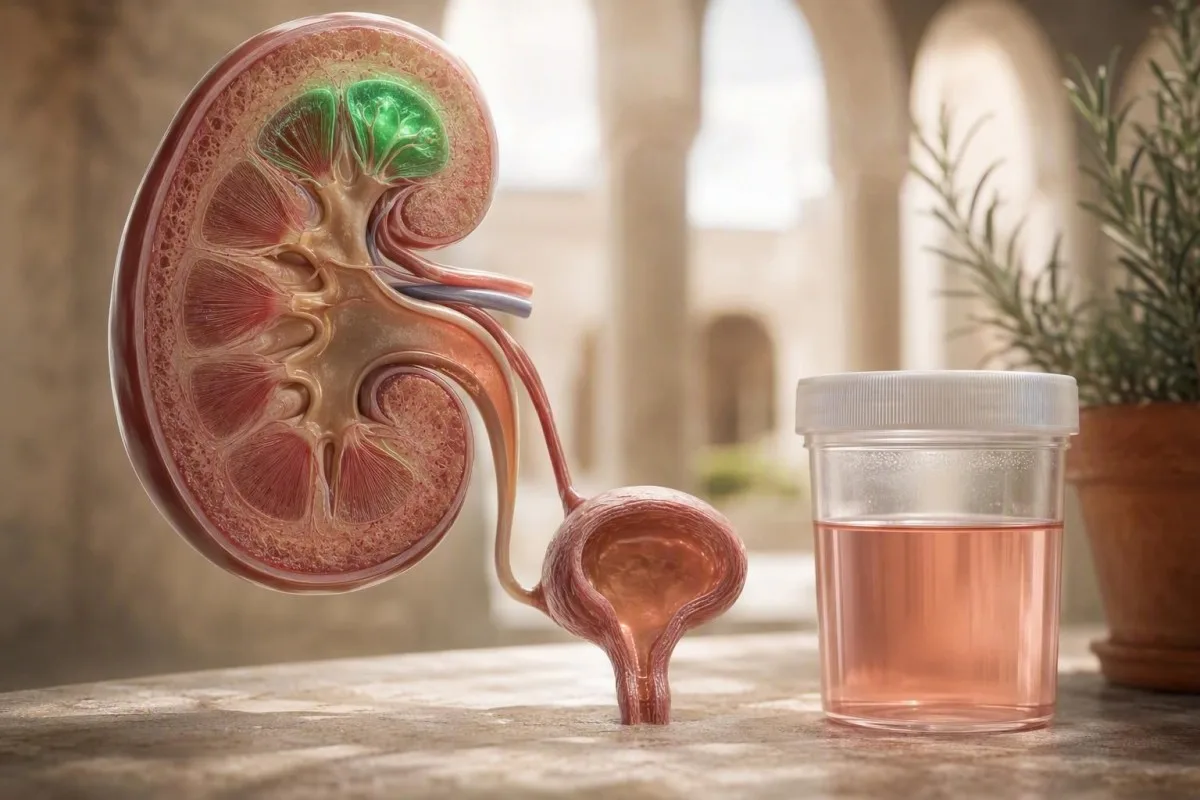
Rozā vai tējas krāsas urīna paraugs pēc garas skriešanas bieži vien ir īslaicīga, ar fizisko slodzi saistīta hematūrija, taču redzama krāsa nekad nav automātiski jāignorē. Laiks, mikroskopiskie atradumi, simptomi un pienācīgi atpūtušies atkārtots paraugs pastāsta patieso stāstu.


- Ar slodzi izraisīta hematūrija parasti izzūd 24–72 stundu laikā pēc intensīvas skriešanas; ja tas saglabājas ilgāk par 72 stundām, nepieciešama medicīniska izmeklēšana.
- Mikroskopijas slieksnis 3 vai vairāk sarkano asins šūnu uz vienu augstas palielinājuma redzes lauku pienācīgi savāktā urīna paraugā atbilst AUA definīcijai par mikrohematūriju.
- Dipstick nesakritība ir svarīga: pozitīvs asins tests ar nulli līdz divām sarkanām šūnām uz vienu augstas palielinājuma redzes lauku norāda uz mioglobīnu vai brīvo hemoglobīnu, nevis urīna asiņošanu.
- Atkārtošanas biežums ir praktisks: izvairieties no intensīvas fiziskās slodzes 48–72 stundas, normāli uzņemiet šķidrumu, pēc tam nododiet vidējās krasas urīna paraugu.
- Izvērtēšana tajā pašā dienā ir jēdzīgs, ja ir recekļi, nespēja urinēt, drudzis, vienpusējas stipras sāpes vēdera sānos vai kolas krāsas urīns ar izteiktām muskuļu sāpēm.
- Nieru brīdinājuma paraugs ir asinis kopā ar proteīniem, sarkano asinsķermenīšu cilindriem, augstu asinsspiedienu vai samazinātu eGFR — nevis izolēts pēc skrējiena testa.
- Rhabdomiolīzes pazīmes ir neproporcionāli tumšs urīns ar smagiem muskuļu simptomiem un kreatīnkināzes līmeni, kas bieži pārsniedz 5 reizes laboratorijas augšējo robežu.
- Vēža riska konteksts maina izmeklējumu slieksni: vecums, smēķēšanas ilgums, iepriekšēja iegurņa apstarošana un pastāvīga redzama hematūrija ir svarīga.
Kāpēc skriešana var padarīt urīnu rozā
Skrējēju hematūrija parasti ir īslaicīga sarkano asinsķermenīšu noplūde urīnā pēc intensīvas slodzes, bieži vien izzūdot 24–72 stundu laikā pēc atpūtas. Tomēr redzams rozā, sarkans vai kolas krāsas urīns prasa pareizi savāktu atkārtotu analīzi, nevis nejaušu pieņēmumu, ka skrējienam tas ir izraisījis.
Klīnikā nomierinošais modelis ir vienkāršs: krāsas maiņa sākas pēc neparasti gara, ātra vai lejupvērsta skrējiena; nav drudža, koliku sāpju jostasvietā vai dedzinošas sajūtas urinējot; un mikroskopija normalizējas pēc atpūtas. Kantesti ir AI asins analīžu analizators , kas var novietot saistītos nieru rādītājus — kreatinīnu, eGFR, elektrolītus un kreatīnkināzi — līdztekus fiziskās slodzes vēsturei, nevis ārstēt vienu rezultātu pēc sacensībām kā diagnozi.
Ierosinātie mehānismi ir mehānisks urīnpūšļa sienas kontakts, pagaidu nieru asins plūsmas izmaiņas, atūdeņošanās izraisīta koncentrācija un dažreiz sarkano asinsķermenīšu sadalīšanās atkārtotu soļu triecienu dēļ. Katra mehānisma pierādījumi ir godīgi jaukti, jo lielākā daļa pētījumu ir mazi un izmanto dažādas sacensību distances. Manā 15 gadu klīniskajā praksē jaunas slodzes vēsture ir svarīgāka par vien krāsu; pirmā ultramaratona un pazīstamie 5 km nesniedz tādu pašu pirmsanalīzes varbūtību.
Redzamas asinis urīnā pēc fiziskās slodzes nav sinonīms ar labdabīgu skrējēju hematūriju. A plašāks hematūrijas sarkano karogu ceļvedis ir noderīgs, jo nierakmeņi, infekcijas, glomerulārās slimības un urīnceļu audzēji var sakrist ar pirmās izpausmes pēc skrējiena.
Praktiskā definīcija
Ar slodzi izraisīta hematūrija nozīmē, ka sarkanie asinsķermenīši parādās urīnā drīz pēc slodzes un pazūd atkārtotā paraugā pēc atpūtas. Pozitīvs strēmelīšu tests pats par sevi nenodrošina šo diagnozi, jo reaģents nosaka hēma pigmentu no veseliem sarkanajiem asinsķermenīšiem, brīvā hemoglobīna vai mioglobīna.
Vai tā ir hematūrija, hemoglobīns vai mioglobīns?
Urīna strēmelīšu tests, kas uzrāda pozitīvu reakciju uz asinīm, var atspoguļot sarkanos asinsķermenīšus, hemoglobīnu vai mioglobīnu, un mikroskopija tos atdala. Rozā urīns ar daudziem veseliem sarkaniem asinsķermenīšiem atbalsta hematūriju; tumši brūns urīns ar maz vai bez sarkanajiem asinsķermenīšiem rada bažas par pigmentu no muskuļu bojājumiem vai hemolīzi.
Urīna mikroskopija, kas uzrāda 3 vai vairāk sarkano asinsķermenīšu uz lauka ar lielu palielinājumu apstiprina mikrohematūriju, ja paraugs ir tīri savākts. Turpretim spēcīgi pozitīvs strēmelīšu tests ar 0–2 sarkaniem asinsķermenīšiem uz lauka ar lielu palielinājumu būtu jāliek ārstam apsvērt mioglobinūriju, īpaši pēc karstuma iedarbības, saspiešanas tipa muskuļu slodzes vai smagām aizkavētām muskuļu sāpēm. Brūna vai kolas krāsa vairāk raksturīga koncentrētam pigmentam nekā nelielam urīnpūšļa asiņošanas daudzumam.
Mioglobīns ir svarīgs, jo tas var pavadīt rhabdomiolīzi un akūtu nieru bojājumu. Kreatīnkināzes koncentrācija virs 5 reizes pārsniedz laboratorijas normas augšējo robežu bieži tiek izmantota kā bioloģiskā slieksne rhabdomiolīzei, lai gan simptomi, kālijs, kreatinīns un urīna izdalīšanās nosaka steidzamību. Skatiet mūsu praktisko skaidrojumu par Bīstami paaugstināts kreatīna kināzes līmenis gadījumos, kuri neprasa gaidīt nakti.
Pārtikas krāsvielas, bietes, kazenes, rifampicīns, fenazopiridīns un dehidratācija var arī iekrāsot urīnu bez sarkanajām šūnām. A tumša urīna diferenciāldiagnostika palīdz izvairīties no biežas kļūdas, pieņemot, ka jebkurš sarkans paraugs ir asinis.
Kāpēc atšķirība maina ārstēšanu
Sarkanās šūnas hematūrija norāda uz urīnceļiem, savukārt mioglobinūrija norāda uz skeleta muskuļiem un nieru aizsardzību. Abi var rasties pēc izturības pasākumiem, taču tikai mikroskopija un mērķtiecīgas asins analīzes var tos ticami atšķirt.
Kā nolasīt skrējiena analīžu rezultātus
Visinformatīvākās urīna analīzes pēc skriešanas ietver teststrēmeli, mikroskopiju, olbaltumvielu mērīšanu un specifisko svaru. Asinis uz teststrēmeles ar pārejošām sarkanajām šūnām un bez olbaltumvielām bieži vien ir zems risks; asinis plus olbaltumvielas vai cilindri prasa rūpīgāku nieru izvērtēšanu.
Asins rezultāts uz teststrēmeles tiek ziņots kā negatīvs, viegls, 1+, 2+ vai 3+, taču tas ir skrīninga signāls, nevis šūnu skaits. AUA definē mikrohematūriju kā vairāk nekā 3 sarkanās asins šūnas uz augsta redzes lauka mikroskopiskas izmeklēšanas laikā, nevis tikai teststrēmeles rezultāts (Barocas et al., 2020). Šī atšķirība novērš skrīninga gadījumā radušos skrīninga gadījumā nepieciešamo vēža izmeklēšanu skrīninga gadījumā.
Specifiskais svars virs 1.030 daudzās laboratorijās norāda uz koncentrētu urīnu un var padarīt krāsu šķietami biedējošāku, taču tas neizskaidro apstiprinātās sarkanās šūnas. Olbaltumvielas 1+ vai vairāk jākvantificē, izmantojot urīna albumīna-kreatinīna attiecību vai olbaltumvielu-kreatinīna attiecību; pastāv pārejoša slodzes proteinūrija, taču pastāvīga albuminūrija maina diferenciāldagnnostiku uz glomerulāro slimību. Mūsu Pilnīga urīna analīzes rokasgrāmata izskaidro, kāpēc šie marķieri nedrīkst apvienot vienā rezultātā.
Kantesti AI interpretē kreatinīnu un eGFR kopā ar urīna atradumiem, slodzes laiku un iepriekšējām vērtībām; viens nedaudz paaugstināts kreatinīna līmenis pēc karstas sacīkstes nav līdzvērtīgs hroniskai nieru slimībai. Praksē es jautāju par distanci, reljefu, temperatūru, pretiekaisuma līdzekļu lietošanu, menstruāciju cikla laiku un to, vai paraugs tika nodots 2 stundu laikā pēc finiša.
Kad atkārtot urīna testu pēc skriešanas?
Urīna atkārtota izmeklēšana 48–72 stundas pēc pēdējā smagā skrējiena ir saprātīgs standarts aizdomu gadījumā par skrējēja hematūriju. Izmantojiet pirmā rīta vai labi hidratēta vidusteces parauga, bet neuzņemiet litriem ūdens tieši pirms tam, jo pārmērīga atšķaidīšana var noslēpt noderīgus atklājumus.
Rutīnas novērojumu novērtējumam pēc sacensībām es parasti iesaku bez intervāliem, kalniem, smagiem pacēlumiem vai sacensībām 48 stundu laikā; pēc maratona, ultramaratona, karstuma slimības vai neparastām sāpēm, 72 stundas ir pamatotāka. Pietiek ar parastu dzeršanu slāpes. Pārmērīga hidratācija var pazemināt specifisko svaru zem 1,005 un dažreiz apgrūtināt robežrezultāta interpretāciju.
Ja mikroskopija joprojām ir pozitīva pēc 72 stundām, organizējiet primārās aprūpes apskati dažu dienu laikā, nevis atkārtoti testējiet pēc treniņiem. Pastāvīgi rezultāti prasa asinsspiediena mērīšanu, serumu kreatinīna/eGFR, urīna albumīna-kreatinīna attiecību un kultūras vai attēlveidošanas apsvēršanu atbilstoši riskam. Attiecības starp slodzi, hidratāciju un īslaicīgi zemāku filtrācijas novērtējumu ir aplūkotas mūsu rokasgrāmatā par eGFR pēc fiziskās slodzes.
52 gadus vecs amatieru maratonists, ko redzēju, vakarā pēc karstām sacensībām viņam bija 18 sarkano šūnu uz lauka laukumu, bet pēc 72 atpūtas stundām 0–1 sarkano šūnu; viņa kreatinīns samazinājās no 1,28 mg/dL līdz 0,96 mg/dL. Rezultāts bija nomierinošs, bet tas pats plāns nebūtu pietiekams 52 gadus vecam smēķētājam ar atkārtotu redzamu urīna krāsu.
Nepārbau dietes finiša līnijā, ja vien to var izvairīties
Testēšana tūlīt pēc fiziskās slodzes palielina iespēju atrast pagaidu sarkanās šūnas, koncentrētu urīnu un olbaltumvielas. Tas var būt klīniski noderīgi aizdomās par rabdomiolīzi, taču tas ir slikts laiks, lai noteiktu skrējēja pamata līmeni.
Kuri skrējiena izraisītas hematūrijas paraugi parasti ir nomierinoši?
Pašlimitēts epizode pēc intensīvas skriešanas ir nomierinošāka, ja tā pilnībā izzūd, nav sāpju vai sistēmisku simptomu, un nav proteīnūrijas vai nieru funkciju izmaiņu. Nomierinošs nenozīmē ignorēts; tas nozīmē apstiprinātu ar atpūtas paraugu.
Zems riska fenotips ir jaunāks vai vidēja vecuma skrējējs ar skaidru slodzes izraisītāju, normālu asinsspiedienu, bez smēķēšanas vēstures un normālu atpūtas mikroskopiju. Šajā vidē viens pārejošs rezultāts 3–10 RBC/HPF pēc sacensībām bieži izzūd bez ārstēšanas. Es to joprojām dokumentētu, jo atkārtošanās pēc katra gara skrējiena prasa rūpīgāku izmeklēšanu nekā vienreizējs notikums.
Normāla urīna albumīna-kreatinīna attiecība parasti ir zem 30 mg/g (zem 3 mg/mmol), lai gan laboratorijas un valstis ziņo par vienībām atšķirīgi. Asinis bez albumīna, cilindriem vai dismorfām sarkanajām šūnām norāda prom no glomerulārās noplūdes; tas neapliecina urīnpūšļa avotu, bet tas norāda uz nākamo jautājumu. Mūsu skaidrojums par proteīnu urīnā skaidri aptver šo iedalījumu.
Urīnpūšļa trauma ir ticamāka, ja urīns ir ļoti koncentrēts un skrējējs finišē ar gandrīz tukšu urīnpūsli. Daži sporta ārsti iesaka iztukšot urīnpūsli pirms gara skrējiena un regulāri dzert, taču tas ir profilakses padoms ar ierobežotiem izmēģinājumu pierādījumiem — nevis aizvietotājs izmeklēšanai, ja krāsa saglabājas.
Normālam rezultātam ir laika zīmogs
Negatīvs tests 3 dienas pēc sacensībām ir nomierinošs šim gadījumam, nevis mūža garantija. Jauna redzama hematūrija vairākus mēnešus vēlāk jāizvērtē tās nopelnu dēļ, īpaši pēc 40 gadu vecuma vai smēķēšanas ietekmes gadījumā.
Brīdinājuma pazīmes, kas padara skrējēja hematūriju mazāk ticamu
Hematurija prasa tūlītēju izmeklēšanu, ja tā saglabājas pēc 72 stundām, atkārtojas bez intensīvas slodzes vai parādās kopā ar sāpēm, drudzi, recekļiem, olbaltumvielām vai nieru darbības izmaiņām. Atklājumu kombinācija ir informatīvāka nekā pats par sevi dramatiski izskatās paraugs.
Meklējiet savlaicīgu medicīnisku palīdzību, ja sarkans urīns, kas ir redzams, ilgst ilgāk par , pārtrauciet lielas devas, pat ja jūtaties labi; slieksnis ir zemāks cilvēkiem virs 40 gadiem, pašreizējiem vai bijušajiem smēķētājiem vai tiem, kuriem agrāk bijusi iegurņa starojuma terapija. AUA vadlīnijas izmanto riska stratifikāciju, pamatojoties uz vecumu, smēķēšanu, mikroskopisko asiņu pakāpi un ilgumu, un iepriekšēju bruto hematūriju, nevis apstrādājot visu mikroskops hematūriju vienādi (Barocas et al., 2020).
Dīmorfas sarkanās šūnas, sarkanās šūnu cilindri, ievērojama albuminūrija, jauna hipertensija vai samazināts eGFR norāda uz nieru filtra avotu, nevis uz sasisto urīnpūsli. Sarkanās šūnu cilindri nekad nav gaidāmas parastas skriešanas sekas un tiem jāveicina paātrināta nieru izmeklēšana. Skatiet mūsu pārskatu par granulētiem un urīna cilindriem , kāpēc sedimenta atradumi ir svarīgi.
Tomass Kleins, MD, iesaka skrējējiem netikt pašdiagnostikā tikai pēc krāsas: urīnceļu infekcija var izraisīt dedzināšanu, steidzamību, pūriju un dažreiz hematūriju, savukārt akmeņi biežāk izraisa pēkšņīgas vienpusējas sāpes un sliktu dūšu. Kultūra ir visnoderīgākā pirms antibiotikām, ja ir infekcijas simptomi.
Asins un olbaltumvielu kombinācija
Apstiprināta hematūrija ar proteinūriju ir vairāk satraucoša nekā izolēta hematūrija, jo abas var rasties nieru filtrā. Urīna albumīna un kreatinīna attiecība 30 mg/g vai augstāka ir jāatkārto un jāinterpretē kopā ar asinsspiedienu un nieru darbību.
Kad rozā urīns pēc fiziskās slodzes ir jāārstē nekavējoties?
Saņemiet vienas dienas steidzamu izmeklēšanu, ja ir recekļi, nespēja urinēt, stipras sāpes jostasvietā, drudzis, vājums, samazināta urīna izdalīšanās vai tumšs urīns ar stiprām muskuļu sāpēm un vājumu. Šīs pazīmes norāda uz sarežģītas slodzes izraisītas hematūrijas ārpus sarežģītas situācijas.
Recekļi var aizsprostot urīna plūsmu, un nespēja urinēt ir steidzama problēma neatkarīgi no fiziskās sagatavotības. Drudzis 38.0°C vai augstāks kopā ar sāpēm jostasvietā var norādīt uz augšējo urīnceļu infekciju; stipras kolikas sāpes ar vemšanu var norādīt uz akmeni. Nevienu no šīm situācijām nedrīkst novērst, gaidot atkārtotu testu pēc skrējiena.
Tumši brūns urīns pēc slodzes, kā arī izteikta muskuļu jutība, vājums, pietūkums vai samazināta izdalīšanās rada bažas par rabdomiolīzi. Sākotnējā testēšana parasti ietver kreatīna kināzi, kreatinīnu, kāliju, kalciju, fosfātu un urīna analīzi. A CrossFit rabdomiolīzes ceļvedis ir nozīmīgs, jo neierasta ekscentriska slodze — nevis tikai skriešana — ir biežs izraisītājs.
Smaga dehidratācija var pasliktināt nieru rādītājus, taču tā var arī pastāvēt kopā ar reālu traumu. Ja jums ir reibonis, apjukums, nevarat saglabāt šķidrumu organismā vai ļoti maz urinējat, 8–12 stundas, neatrisiniet problēmu mājās ar sporta dzērieniem.
Grūtniecība un antikoagulanti
Grūtniecēm skrējējām un cilvēkiem, kuri lieto antikoagulantus, nekavējoties jāziņo par redzamu hematūriju. Antikoagulanti var pastiprināt asiņošanu, taču tie neatceļ nepieciešamību noteikt tās avotu; grūtniecība arī maina infekcijas, akmeņu un nieru slimību pārbaudes slieksni.
Stāvokļi, ko skriešana var atklāt, nevis izraisīt
Skriešana var atklāt esošu urīnceļu problēmu, koncentrējot urīnu vai izraisot testu, nevis pati par sevi izraisot hematūriju. Akmeņi, infekcija, glomerulārās slimības, strukturālās anomālijas un ļaundabīgi audzēji joprojām ir daļa no diferenciāldiagnostikas.
Nierakmeņi bieži izraisa sāpes vienā sānu-kājas daļā, sliktu dūšu un sarkanās asins šūnas mikroskopiski, lai gan sastopami arī nesāpīgi akmeņi. Urīnceļu infekcija biežāk izraisa dedzināšanu, biežu urinēšanu, steidzamību un baltās asins šūnas; negatīvs nitrītu rezultāts to neizslēdz. Mūsu ceļvedis par leikocītu esterāzi ar negatīvu nitrītu izskaidro šo bieži sastopamo kombinēto modeli.
Glomerulonefrīts var parādīties pēc augšējo elpceļu infekcijas ar kolas krāsas urīnu, tūsku, paaugstinātu asinsspiedienu, proteinūriju un dismorfām sarkanajām asins šūnām. KDIGO 2024 CKD vadlīnijās pastāvīga albuminūrija un samazināta eGFR tiek uzskatītas par papildu nieru riska marķieriem, nevis savstarpēji aizstājamām mērījumām (KDIGO, 2024).
Kantesti ir ar AI darbināts asins analīzes interpretācijas rīks kas palīdz lietotājiem atpazīt korelāciju starp kreatinīnu, eGFR, albumīnu, elektrolītiem un CBC, taču tas nevar diagnosticēt hematūrijas anatomisko avotu. Attēldiagnostika, mikroskopija, kultūra un klīniskā izmeklēšana joprojām veic izšķirošo darbu.
Vēzis ir reti sastopams jauniem skrējējiem, bet nav neiespējams pieaugušajiem
Redzama hematūrija prasa izmeklēšanu pat tad, ja vingrošana šķiet acīmredzams skaidrojums, īpaši cilvēkiem ar smēķēšanas anamīzi vai pastāvīgiem simptomiem. Risks palielinās ar vecumu un kumulatīvo tabakas iedarbību, tāpēc identiski urīna rezultāti nenoved pie identiskiem testēšanas plāniem.
Kam nepieciešama uroloģijas vai nefroliģijas tālāka izmeklēšana?
Pastāvīga hematūrija pēc atpūtas atkārtota parauga jānovērtē uroloģiski, savukārt hematūrija kopā ar proteinūriju, cilindriem, hipertensiju vai traucētu eGFR norāda uz nefrologu. Daudziem cilvēkiem nepieciešama tikai primārās aprūpes vadīta atkārtota testēšana; nosūtīšana ir atkarīga no korelācijas.
Uroloģiska izmeklēšana ir īpaši piemērota atkārtotas redzamas hematūrijas, pastāvīgas mikroskopiskas hematūrijas, smēķēšanas anamnēzes, profesionālas aromātisko amīnu iedarbības, iepriekšējas iegurņa starošanas vai urīnceļu simptomu bez infekcijas gadījumā. Atkarībā no riska, klīnicisti var izmantot nieru un urīnpūšļa ultraskaņu, CT urografiju un cistoskopiju. Viens pēcpasaules trases teststrēmeles rezultāts 24 gadus vecam jaunietim ir pavisam cita situācija nekā atkārtota sarkana urīna parādīšanās 58 gadus vecam bijušam smēķētājam.
Nefrologu apskate kļūst biežāka ar urīna albumīna-kreatinīna attiecību ≥30 mg/g, eGFR zem 60 mL/min/1,73 m² ilgst 3 mēnešus vai ilgāk, sarkanās šūnu cilindri vai grūti kontrolējams asinsspiediens. Šie sliekšņi ir svarīgi, jo hroniska nieru slimība tiek definēta gan pēc ilguma, gan pēc vienas mērīšanas. Lasiet mūsu hroniskas nieru slimības stadiju ceļvedi praktiskajām kategorijām.
Kantesti mākslīgā intelekta laboratorisko analīžu interpretācijas pakalpojums var atzīmēt atkārtojami asins un olbaltumvielu izmeklējumu kopumu apspriešanai, jo īpaši, ja lietotāji augšupielādē rezultātus no dažādām laboratorijām. Tam vajadzētu atbalstīt, nevis aizstāt klīnicistu, kas lemj, vai ir nepieciešama urīna attēlveidošana vai speciālista izmeklēšana.
Neļaujiet antikoagulācijai izbeigt sarunu
Antikoagulantu lietošana maina asiņošanas smagumu, bet nenosaka hematūrijas cēloni. Manā pieredzē atkārtotas urīna asiņošanas piedēvēšana apiksabanam, varfarīnam vai aspirīnam bez izmeklēšanas var aizkavēt akmeņu, infekciju vai strukturālu slimību atpazīšanu.
Kādus asins testus veikt pēc ar fizisko slodzi saistītas hematūrijas?
Noderīgas asins analīzes ir atkarīgas no simptomiem: kreatinīns, eGFR, elektrolīti un kreatīna kināze novērtē nieres un muskuļu stresu, savukārt CBC izvērtē anēmijas vai infekcijas pazīmes. Rutīnas plašās paneļu analīzes ir mazāk noderīgas nekā mērķtiecīga testēšana pēc precīzas anamnēzes un urīna analīzes.
Kreatinīna līmenis var īslaicīgi paaugstināties pēc izturības vingrinājumiem muskuļu metabolismam, samazinātai nieru perfūzijai un dehidratācijai. eGFR formulas ir mazāk uzticamas strauju kreatinīna izmaiņu laikā, tāpēc atkārtota vērtība pēc 48–72 stundām parastās atveseļošanās bieži vien ir nozīmīgāka nekā finiša rezultāts. Mūsu ar vingrinājumiem saistīta kreatinīna pārbaužu vadlīnijas sniedz kontekstu šim biežajam trauksmes izraisītājam.
Kreatīna kināzei ir plašs pēcpārkārtojumu diapazons: apmācīti sportisti var uzrādīt paaugstināšanos pēc sacensībām bez nieru bojājumiem, savukārt vērtības, kas daudzkārt pārsniedz vietējo augšējo robežu, kopā ar simptomiem, prasa steidzamu novērtēšanu. Kālijs virs 6,0 mmol/L ir potenciāli bīstams un prasa steidzamu klīnisko novērtēšanu, īpaši, ja nieru funkcija ir traucēta vai tiek uzskatīts par muskuļu bojājumu.
CBC ir visnoderīgākā, ja ir nogurums, bālums, stipra menstruālā asiņošana, atkārtota hematūrija vai bažas par sistēmisku slimību. Hemoglobīna līmenis var pazemināties pēc izturības pasākumiem plazmas apjoma paplašināšanās, dzelzs zuduma vai hemolīzes; feritīns jāinterpretē atsevišķi no akūtas iekaisuma un smaga treniņa. Izturības skrējējiem var būt noderīgs mūsu sportistu asins analīžu pārskats saprātīgam pamatlīmenim.
Nepastāviniet nieru slimību no vienas sacensību nedēļas paneļa
Kreatinīna paaugstināšanās par 0,3 mg/dL vai vairāk var atbilst akūtas nieru traumas kritērijiem pareizajā laika posmā, taču konteksts un atkārtota testēšana ir izšķiroša pēc sacensībām. Zema urīna izdalīšanās, paaugstināts kālijs un pastāvīgs paaugstināšanās ir nozīmīgāki nekā izolēts robežvērtības rezultāts.
Kā savākt atkārtotu urīna paraugu, kam ārsti var uzticēties
Tīra vidusplūsmas urīna paraugs pēc 48–72 stundām bez smagiem vingrinājumiem ir labākais veids, kā pārbaudīt, vai hematūrija ir izzudusi. Savākšanas kļūdas, menstruālā piesārņojums un vecs paraugs var radīt maldinošus rezultātus.
Nomazgājiet rokas, sāciet urinēt tualetē, tad savāciet vidusplūsmas daļu, nepieskaroties trauka iekšpusei. Nogādājiet paraugu nekavējoties – vēlams līdz 2 stundām— vai ievērojiet laboratorijas saldēšanas norādījumus. Ilgstoša stāvēšana maina šūnu izskatu un var padarīt mikroskopiju mazāk uzticamu.
Ja iespējams, izvairieties no testēšanas aktīvas menstruācijas laikā; ja testēšana nevar pagaidīt, informējiet klīnicistu un laboratoriju. Maksts piesārņojums var radīt redzamas sarkanās šūnas un olbaltumvielas, savukārt plakanās epitēlija šūnas bieži norāda uz slikti savāktu paraugu. Mūsu ceļvedis uz epitēlija šūnām urīnā skaidro, kāpēc šī nav triviāla laboratorijas piezīme.
Tomass Kleins, MD, iesaka kopā ar paraugu reģistrēt četras detaļas: pēdējo intensīvo slodzi, pasākuma ilgumu, āra temperatūru un visas zāles, kas lietotas iepriekšējās 72 stundās. Rezultāts bez laika norādes ir daudz grūtāk interpretējams — īpaši, ja urīns tiek savākts pēc dubulta treniņa.
Pirmā rīta testa salīdzinājums ar dienas testu
Pirmā rīta paraugs ir koncentrēts un piemērots nelielu anomāliju noteikšanai, taču, ja savākšana ir tīrāka, pieņemams ir normāli hidratēts dienas vidusteces paraugs. Konsekvencei ir lielāka nozīme atkārtotām salīdzinošām analīzēm: katrā atkārtotā testā izmantojiet aptuveni tādus pašus apstākļus.
Šķidruma uzņemšana, pretsāpju medikamenti un uztura bagātinātāji, kas maina ainu
Dehidrēšana var koncentrēt urīnu un palielināt nieru slodzi, savukārt NPLP var samazināt nieru asins plūsmu ilgstošas slodzes laikā. Neviens no šiem faktoriem nepierāda hematūrijas cēloni, taču abi ietekmē to, cik piesardzīgi klīnicisti interpretē rezultātu pēc skrējiena.
Lielākajai daļai skrējēju dzeršana līdz slāpju sajūtai un zaudējumu pakāpeniska aizstāšana ir drošāka nekā stingra šķidrumu piespiedu uzņemšana. Ļoti zems nātrija līmenis no pārmērīgas ūdens uzņemšanas var būt bīstams; seruma nātrija līmenis zem 125 mmol/L ar galvassāpēm, vemšanu, apjukumu vai krampjiem ir ārkārtas stāvoklis. Urīna krāsa ir aptuvens hidratācijas rādītājs, nevis precīzs hidratācijas mērītājs.
Ibuprofēns, naproksēns un citi NPLP var samazināt prostaglandīnu mediēto nieru asins plūsmu, īpaši karstuma stresa, vemšanas vai ilgu pasākumu laikā. Es iesaku pacientiem izvairīties no parastiem profilaktiskiem NPLP pirms maratoniem, ja vien viņu ārsts nav devis skaidru iemeslu. Zāļu konteksts ir apskatīts mūsu laboratorijas tendenču drošības rakstā.
Lielas D vitamīna C devas var traucēt noteiktas urīna testa strēmelīšu reakcijas, un piedevas, kas tiek tirgotas veiktspējas uzlabošanai, dažreiz satur nenorādītus stimulētājus vai diurētiskos līdzekļus. Neskatiet konteinerus vai skaidras fotogrāfijas uz vizīti; tas bieži ir noderīgāk nekā mēģināt atcerēties zīmola pulvera sastāvdaļu sarakstu. Mūsu uztura bagātinātāju drošības ceļvedis sportistiem piedāvā saprātīgu kontrolsarakstu.
Hidratācija nav ārstēšana pret pastāvīgu asiņu
Ūdens var izlabot koncentrāciju, bet tas neārstē akmeni, infekciju, glomerulāru procesu vai strukturālu urīna izcelsmi. Ja sarkanās asinsķermenītes paliek atpūtas stāvoklī, labi savāktā paraugā, palielinājums ir jābalsta uz modeli, nevis uz citu hidratācijas eksperimentu.
Vai var turpināt skriet pēc ar fizisko slodzi izraisītas hematūrijas?
Lielākā daļa skrējēju var pakāpeniski atgriezties, kad urīna krāsa ir normalizējusies, nav simptomu un atpūtas atkārtots paraugs ir nomierinošs. Neatgriezieties pie intensīviem treniņiem, kamēr urīns ir redzami sarkans, nieru rezultāti ir nenormāli vai muskuļu simptomi liecina par rabdomiolīzi.
Pēc vienkāršas vienas epizodes es parasti iesaku vieglu skriešanu tikai dažas dienas, pēc tam pakāpeniski palielinot apjomu un intensitāti vairāk nekā 7–14 dienu laikā. Skrējējam vajadzētu apstāties un meklēt pārskatīšanu, ja krāsa atkārtojas, rodas sāpes vai samazinās urīna izdalīšanās. Šī ir pragmatiska klīniskā pieeja, nevis izmēģinājumā pierādīta recepte.
Atkārtota hematūrija pēc tās pašas distances var attaisnot praktiskus eksperimentus: izvairieties no sacensībām dehidrējot, urinējiet pirms garas skriešanas, lēnāk iepazīstiniet ar nobraukumu treniņiem, un pārskatiet apavu piemērotību vai reljefu. Saglabājiet tempu, karstumu, ilgumu, urīna krāsu un paraugu rezultātu žurnālu. A maratona skrējēja laboratorijas ceļvedi var palīdzēt atšķirt atveseļošanās marķierus no iemesliem pārtraukt treniņus.
Ne trenējieties neizskaidrojamai redzamai hematūrijai tikai tāpēc, ka jums ir plānots pasākums. Sportisti bieži vien spēj lieliski panesam diskomfortu; sarežģītāka prasme ir atpazīt, ka neatlaidība ir diagnostiska informācija, nevis izturības pārbaude.
Izveidojiet reālu pamata līmeni
Urīna analīze un nieru panelis, kas veikts vismaz 72 stundas pirms intensīvas slodzes, var padarīt turpmākus rezultātus pēc sacensībām daudz vieglāk interpretējamus. Tas ir īpaši noderīgi ultramaratonistiem, cilvēkiem ar vienu nieru vai sportistiem, kas lieto medikamentus, kas ietekmē nieru perfūziju.
Ko teikt savam ārstam par asinīm urīnā pēc fiziskās slodzes
Ātrākais ceļš uz noderīgu hematūrijas novērtēšanu ir kodolīgs laika grafiks: urīna krāsa, slodzes deva, simptomi, medikamenti un atkārtotas testēšanas laiks. Uzrādiet faktiskās laboratoriskās vērtības, nevis tikai ziņojumu, ka paraugs bija “pozitīvs uz asinīm”.”
Norādiet, vai urīns bija rozā, spilgti sarkans, tējas krāsas vai saturēja recekļus; vai krāsa parādījās pirms, laikā vai pēc slodzes; un vai tā izzuda pēc pirmās urinācijas. Iekļaujiet dedzināšanu, urinācijas vajadzību, drudzi, sāpes sānos, sliktu dūšu, pietūkumu un samazinātu izdalījumu daudzumu. Detalizēts urīna krāsas atsauce var palīdzēt precīzi aprakstīt novērojumu, nepārvērtējot to.
Uzrādiet iepriekšējās urīna analīzes, kreatinīna/eGFR vērtības, asinsspiediena rādījumus, smēķēšanas vēsturi, ģimenes nieru slimību vēsturi un medikamentu/papildinājumu sarakstu. Kantesti ir AI biomarķieru interpretācijas platforma kas var organizēt atkārtotas asins analīžu vērtības un izcelt nozīmīgas izmaiņas, taču klīnicistam ir jāsaista šīs vērtības ar urīna mikroskopiju un izmeklēšanu.
Sākot ar 2026. gada 3. septembri, klīniskais princips paliek vienkāršs: fiziskā slodze ir ticams skaidrojums tikai pēc tam, kad rezultāts izzudis un nav citu konkurējošu norāžu. Ja neesat pārliecināts, jautājiet, vai jums ir nepieciešama mikroskopija, kultūra, albumīna-kreatinīna attiecība, atkārtots kreatinīna mērījums, attēlveidošana vai nosūtīšana — ne tikai vēl viens teststrēmelīte.
Jautājumi, ko vērts uzdot
Jautājiet, vai tika redzētas veselas sarkanās šūnas, vai bija klātesošs olbaltumvielas vai cilindri, un kad vajadzētu veikt atkārtotu mērījumu mierīgā stāvoklī. Šīs trīs atbildes parasti noskaidro, vai nākamais solis ir uzmanīga novērošana, nieru testēšana, infekcijas testēšana vai uroloģiska izmeklēšana.
Jēdzīga rīcības plāna skrējēja hematūrijas gadījumā
Vienas nesāpīgas epizodes gadījumā pēc intensīvas skriešanas atpūtieties no smagas fiziskās slodzes 48–72 stundas un atkārtojiet tīras urīna noskalošanas analīzi; meklējiet agrāku palīdzību, ja ir brīdinājuma zīmes vai pastāvīga redzama krāsa. Mērķis nav panika vai noraidīšana — tas ir pierādīt, ka atradums izzūd.
Pirmais solis: pārtrauciet intensīvus treniņus, dzeriet normāli un atzīmējiet laiku un simptomus. Otrais solis: atkārtojiet mikroskopiju pēc 48–72 stundām. Trešais solis: ja asinis saglabājas, vai ja parādās olbaltumvielas, cilindri, sāpes, drudzis, recekļi, zems urīna izdalījumu daudzums vai patoloģiski nieru rādītāji, nekavējoties organizējiet medicīnisko izmeklēšanu. Šī secība novērš gan saslimšanu nepamanīšanu, gan nevajadzīgu attēlveidošanu pēc vienreizējas parauga no finiša līnijas.
Kad mūsu klīniskā komanda pārskata augšupielādētos laboratorijas datus, mēs piešķiram prioritāti modeļiem: augošs kreatinīns kopā ar augstu CK un zemu urīna izdalījumu daudzumu ir steidzamāks nekā stabils kreatinīns ar īslaicīgu urīna teststrēmelīti. Kantesti metodoloģija un drošības pasākumi ir aprakstīti mūsu klīniskās validācijas informācija, un mūsu ārstu uzraudzība ir detalizēta caur Medicīnas konsultatīvā padome.
Lielākā daļa pacientu atklāj, ka laika gaitā atkārtots tests pārvērš satraucošu krāsas izmaiņu skaidrā plānā. Bet, ja jūsu instinkts saka, ka kaut kas nav kārtībā — īpaši, ja urīns joprojām ir sarkans rīt — uzticieties tam signālam un dodieties uz izmeklēšanu.
Vienas frāzes noteikums
Rozā urīns vienu reizi pēc intensīva skrējiena var būt pārejošs; rozā urīns, kas saglabājas, atkārtojas vai parādās kopā ar simptomiem, ir hematūrija, līdz tā tiek pienācīgi izvērtēta.
Bieži uzdotie jautājumi
Cik ilgi ilgst skrējēju hematūrija?
Skrējēju hematūrija parasti izzūd 24–72 stundu laikā pēc fiziskās slodzes pārtraukšanas. Praktisks atkārtots urīna tests ir tīras savākšanas, vidējās strūklas paraugs, kas savākts pēc 48–72 stundām bez intensīvas skriešanas vai smagas celšanas. Ilgstoša redzama rozā vai sarkanā krāsā urīns pēc 24 stundām vai mikroskopiska hematūrija, kas saglabājas pēc 72 stundām, jāizvērtē klīnicistam. Drudzis, recekļi, stipras sāpes jostasvietā, samazināta urīna izdalīšanās vai stipras muskuļu sāpes pamato izvērtēšanu tajā pašā dienā.
Vai asinis urīnā pēc fiziskas slodzes ir normālas?
Asinis urīnā pēc fiziskās slodzes var būt pārejošs efekts no intensīvas skriešanas, dehidratācijas, urīnpūšļa sienas ietekmes vai īslaicīgām nieru asins plūsmas izmaiņām, taču tas nav automātiski normāli. Mikroskopija, kas apstiprina 3 vai vairāk sarkano asins šūnu uz vienu liela palielinājuma redzes lauku, atbilst AUA (American Urological Association) definīcijai par mikrohematūriju. Rezultāts, kas izzūd atkārtotā paraugā pēc atpūtas, ir nomierinošs, savukārt pastāvīgas asinis, olbaltumvielas, cilindri, sāpes vai urīna simptomi prasa tālāku izmeklēšanu. Redzamas urīna krāsas izmaiņas vienmēr jāziņo, īpaši pieaugušajiem, kuri ir pakļauti smēķēšanas ietekmei vai kuriem ir atkārtoti gadījumi.
Vai atūdeņošanās var izraisīt sārtu urīnu pēc skriešanas?
Dehidratācija var padarīt urīnu tumšāku un var pastiprināt pēcslodzes hematūrijas atradumu, koncentrējot urīna sastāvdaļas, taču dehidratācija pati par sevi neattaisno apstiprinātas sarkanās asins šūnas. Urīna specifiskais svars virs 1.030 daudzās laboratorijās bieži norāda uz koncentrētu urīnu. Dzeriet normāli līdz slāpēm un atkārtojiet tīras uztveršanas paraugu pēc 48–72 stundām atpūtas, nevis mēģiniet "izskalot" rezultātu ar pārmērīgu ūdens daudzumu. Spēcīgas slāpes, reibonis, ļoti zems urīna izdalīšanās apjoms vai apjukums prasa nekavējošu medicīnisku izmeklēšanu.
Kāda ir atšķirība starp hematūriju un mioglobinūriju pēc slodzes?
Hematūrija nozīmē, ka urīnā ir veselas sarkano asinsķermenīši, savukārt mioglobinūrija atspoguļo muskuļu pigmentu, kas atbrīvojas pēc muskuļu traumas. Dipstiks var būt pozitīvs asinīm abās situācijās, tāpēc mikroskopija ir izšķiroša: mioglobinūrija bieži rada pozitīvu dipstiku ar 0–2 sarkanajām šūnām uz redzes lauku pie liela palielinājuma. Spēcīgas muskuļu sāpes, vājums, pietūkums, tumša, kolas krāsas urīns vai kreatīnkināzes vērtība, kas pārsniedz 5 reizes laboratorijas augšējo robežu, rada bažas par rabdomiolīzi. Šāds stāvoklis prasa steidzamu klīnisko novērtēšanu, jo kālija un nieru funkcija var ātri mainīties.
Vai man vajadzētu pārtraukt skriešanu, ja man ir ar slodzi saistīta hematūrija?
Pārtrauciet intensīvu skriešanu, līdz urīna krāsa normalizējas un esat veikuši atpūtas atkārtoto testu, parasti pēc 48–72 stundām. Ja atkārtotais paraugs ir normāls un jums nav sāpju, drudža, trombu, proteinūrijas vai nieru darbības traucējumu, lielākā daļa skrējēju var pakāpeniski atsākt treniņus aptuveni 7–14 dienu laikā. Neatjaunojiet intensīvus treniņus, ja urīns joprojām ir redzami sarkans vai tumšs, samazināta urīna izdalīšanās, vai ir izteikti muskuļu simptomi. Atkārtoti gadījumi pēc līdzīgiem treniņiem prasa medicīnisku izvērtēšanu, pat ja katrs gadījums izzūd.
Kad hematūrija prasa urologa konsultāciju?
Pastāvīga mikroskopiska hematūrija pēc atpūtas atkārtota parauga, atkārtota makroskopiska hematūrija vai hematūrija personai ar smēķēšanas anamnēzi, iepriekšēju iegurņa starojumu vai urīnceļu simptomiem bieži vien prasa uroloģisku riska novērtēšanu. Urologi var apsvērt ultralsongrāfiju, CT urogrāfiju un cistoskopiju atkarībā no vecuma un kopējā riska, nevis izmantot vienu testu visiem. Hematūrija ar albuminūriju 30 mg/g vai vairāk, sarkano asins šūnu cilindriem, hipertensiju vai eGFR zem 60 mL/min/1,73 m² spēcīgāk norāda uz nefrologa nepieciešamību. Pareizā specialitāte ir atkarīga no pilna urīna un asins analīžu kopuma.
Iegūstiet AI vadītu asins analīžu analīzi jau šodien
Pievienojieties vairāk nekā 2 miljoniem lietotāju visā pasaulē, kuri uzticas Kantesti tūlītējai, precīzai laboratorijas analīžu interpretācijai. Augšupielādējiet savas asins analīzes rezultātus un dažu sekunžu laikā saņemiet visaptverošu 15,000+ biomarķieru interpretāciju.
📚 Atsauces pētniecības publikācijas
Kleins, T., Mičels, S., un Vēbers, H. (2026). Daudzvalodu AI palīdzība klīniskās lēmumu pieņemšanas atbalstā agrīnai hantavīrusa noteikšanai: projektēšana, inženierzinātņu validācija un reāllaika ieviešana vairāk nekā 50 000 interpretētu asins analīžu pārskatu gadījumā. Kantesti AI Medicīnas pētījumi.
Kleins, T., Mičels, S., un Vēbers, H. (2026). Iepriekš reģistrēts, uz rubrikām balstīts automatizēts tehniskais etalons Kantesti asins analīžu interpretācijas dzinējam 100 000 sintētisku testa gadījumu. Kantesti AI Medicīnas pētījumi.
📖 Ārējās medicīniskās atsauces
⚕️ Medicīniskā atruna
Šis raksts ir paredzēts tikai izglītojošiem nolūkiem un nav medicīnisks padoms. Vienmēr konsultējieties ar kvalificētu veselības aprūpes speciālistu, lai pieņemtu lēmumus par diagnostiku un ārstēšanu.
E-E-A-T uzticēšanās signāli
Pieredze
Ārstu vadīta klīniskā laboratorijas interpretācijas darbplūsmu pārskatīšana.
Ekspertīze
Laboratorijas medicīnas fokuss uz to, kā biomarķieri uzvedas klīniskā kontekstā.
Autoritāte
Sagatavojis Dr. Thomas Klein, pārskatījusi Dr. Sarah Mitchell un prof. Dr. Hans Weber.
Uzticamība
Uz pierādījumiem balstīta interpretācija ar skaidriem turpmākās rīcības ceļiem, lai mazinātu trauksmi.