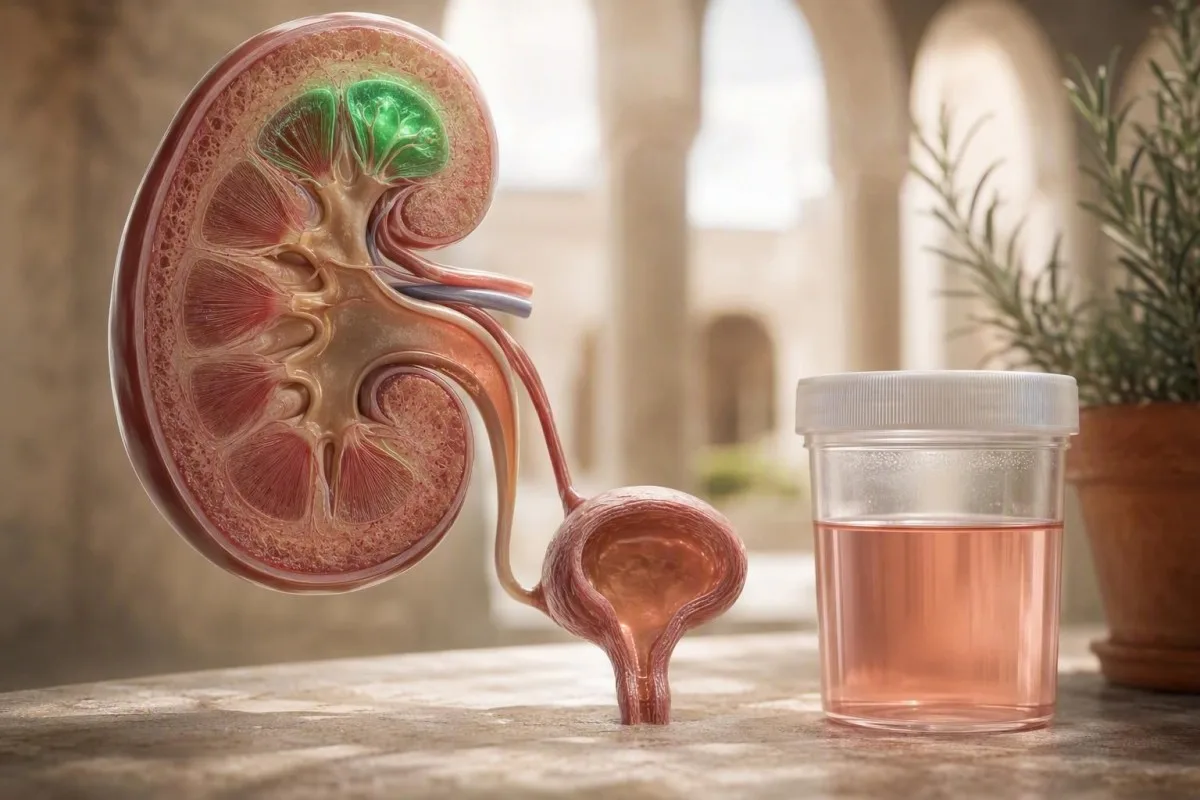
عينة بول بلون وردي أو بلون الشاي بعد جري لمسافة طويلة غالباً ما تكون بيلة دموية مؤقتة ناتجة عن ممارسة الرياضة، ولكن لا يجب أبداً التغاضي عن اللون المرئي. التوقيت، نتائج الفحص المجهري، الأعراض، وعينة مكررة بعد راحة كافية تكشف القصة الحقيقية.


- بول دم ناتج عن ممارسة الرياضة عادة ما تختفي في غضون 24-72 ساعة بعد الجري المجهد؛ الاستمرار لأكثر من 72 ساعة يتطلب مراجعة طبية.
- عتبة الفحص المجهري 3 خلايا دم حمراء أو أكثر لكل مجال عالي القوة في عينة بول تم جمعها بشكل صحيح تلبي تعريف AUA للبيلة الدموية المجهرية.
- عدم تطابق الشريط الكاشف مهم: وسادة الدم الإيجابية مع صفر إلى خليتين حمراوين لكل مجال عالي القوة تشير إلى ميoglobin أو هيموغلوبين حر بدلاً من نزيف في المسالك البولية.
- توقيت التكرار عملي: تجنب التمارين الشاقة لمدة 48-72 ساعة، ورطب بشكل طبيعي، ثم قدم عينة بول وسط مجرى البول.
- تقييم فـنفس اليوم معقول للتخثرات، عدم القدرة على التبول، الحمى، ألم حاد في الخاصرة من جانب واحد، أو بول بلون الكولا مع ألم عضلي شديد.
- نمط تحذير الكلى هو دم بالإضافة إلى بروتين، أسطوانات خلايا حمراء، ارتفاع ضغط الدم، أو انخفاض eGFR—وليس مجرد شريط كاشف بعد السباق.
- علامة انحلال الربيدات هو بول داكن بشكل غير متناسب مع أعراض عضلية شديدة ونتيجة كرياتين كيناز غالباً ما تكون أعلى بخمس مرات من الحد الأعلى للمختبر.
- سياق خطر الإصابة بالسرطان يغير عتبة التحقيق: العمر، والتعرض للتدخين، والعلاج الإشعاعي السابق للحوض، والنزف الدموي المرئي المستمر كلها أمور مهمة.
لماذا يمكن للجري أن يجعل البول يبدو وردياً
نزف الدم البولي لدى العدّائين هو عادة تسرب قصير الأمد لخلايا الدم الحمراء في البول بعد ممارسة الرياضة الشديدة, ، غالباً ما يزول خلال 24-72 ساعة من الراحة. ومع ذلك، فإن البول الوردي أو الأحمر أو بلون الكولا يستحق اختبارًا متكررًا تم جمعه بشكل صحيح بدلاً من افتراض عرضي بأن الجري هو السبب.
في العيادة، يكون النمط المطمئن مباشرًا: يبدأ تغير اللون بعد جري طويل أو سريع أو هبوطي بشكل غير عادي؛ لا توجد حمى، أو ألم خاصرة مغصي، أو حرقان بول؛ والمجهر يعود إلى طبيعته بعد الراحة. Kantesti هو محلّل تحاليل دم بالذكاء الاصطناعي التي يمكن أن تضع علامات الكلى ذات الصلة - الكرياتينين، و eGFR، والكهارل، وكرياتين كيناز - بجانب تاريخ التمرين، بدلاً من اعتبار نتيجة واحدة بعد السباق تشخيصًا.
الآليات المقترحة هي تلامس جدار المثانة الميكانيكي، وتحولات تدفق الدم الكلوي المؤقتة، والتركيز المرتبط بالجفاف، وأحيانًا تحلل خلايا الدم الحمراء من ضربات القدم المتكررة. الأدلة لكل آلية مختلطة بصراحة، لأن معظم الدراسات صغيرة وتستخدم مسافات سباق مختلفة. في 15 عامًا من الممارسة السريرية، يعد تاريخ جهد جديد أكثر أهمية من اللون وحده؛ لماراثون طويل لأول مرة و 5 كيلومترات مألوفة لا يحملان نفس الاحتمالية قبل الاختبار.
وجود دم مرئي في البول بعد التمرين لا يعني بالضرورة نزف دم بولي حميد للعدّائين. دليل أوسع للعلامات الحمراء لنزف الدم البولي مفيد لأن حصوات الكلى، والعدوى، وأمراض الكبيبات، وسرطانات المسالك البولية يمكن أن تظهر بالصدفة لأول مرة بعد الجري.
التعريف العملي
نزف الدم البولي الناجم عن التمرين يعني ظهور خلايا الدم الحمراء في البول بعد فترة وجيزة من المجهود واختفائها في عينة راحة متكررة. لا يثبت اختبار المسحة الإيجابي وحده هذا التشخيص، لأن الكاشف يكتشف صبغة الهيم من خلايا الدم الحمراء السليمة، أو الهيموغلوبين الحر، أو الميوغلوبين.
هل هي بيلة دموية، هيموغلوبين، أم ميoglobin؟
يمكن أن يعكس اختبار المسحة البولية الذي يقرأ إيجابيًا للدم خلايا الدم الحمراء، أو الهيموغلوبين، أو الميوغلوبين، ويفصلها المجهر. البول الوردي مع العديد من خلايا الدم الحمراء السليمة يدعم نزف الدم البولي؛ البول البني الداكن مع القليل أو لا شيء من خلايا الدم الحمراء يثير القلق بشأن الصبغة الناتجة عن إصابة العضلات أو انحلال الدم.
مجهر البول يظهر 3 أو أكثر من خلايا الدم الحمراء لكل مجال قوي يؤكد وجود نزف دم بولي مجهري عندما يتم جمع العينة بشكل نظيف. في المقابل، فإن اختبار المسحة الإيجابي بقوة مع 0-2 خلية دم حمراء لكل مجال قوي يجب أن يجعل الطبيب يفكر في ميوغلوبين البول، خاصة بعد التعرض للحرارة، أو حمل عضلي من نوع السحق، أو ألم عضلي متأخر شديد. اللون البني أو لون الكولا هو أكثر نمطية للصبغة المركزة من كمية صغيرة من نزيف المثانة.
الميوغلوبين مهم لأنه يمكن أن يصاحب انحلال الربيدات وإصابة الكلى الحادة. تركيز كرياتين كيناز فوق 5 مرات الحد الأعلى الطبيعي للمختبر يستخدم بشكل شائع كعتبة كيميائية حيوية لانحلال الربيدات، على الرغم من أن الأعراض، والبوتاسيوم، والكرياتينين، ومخرجات البول تحدد مدى الاستعجال. انظر شرحنا العملي لـ creatine kinase مرتفع بشكل خطير للأنماط التي لا يجب أن تنتظر طوال الليل.
يمكن أيضًا للأصباغ الغذائية، والبنجر، والتوت الأسود، والريفامبيسين، والفين أزوبيريدين، والجفاف أن تلون البول دون خلايا حمراء. أ التمييز بين البول الداكن يساعد على تجنب الخطأ الشائع المتمثل في افتراض أن كل عينة محمرة تمثل دمًا.
لماذا يغير التمييز الرعاية
الهيماطوريا لخلايا الدم الحمراء توجه الانتباه إلى المسالك البولية، بينما توجه الميوجلوبينوريا الانتباه إلى العضلات الهيكلية وحماية الكلى. يمكن أن يحدث كلاهما بعد أحداث التحمل، ولكن المجهر وفحص الدم المستهدف فقط يمكنهما فرزهما بشكل موثوق.
كيفية قراءة نتيجة تحليل بول بعد الجري
يجمع اختبار البول الأكثر إفادة بعد الجري بين الشريط التشخيصي، والمجهر، وقياس البروتين، والجاذبية النوعية. الدم الموجود على الشريط التشخيصي مع خلايا حمراء عابرة ولا بروتين يعتبر غالبًا منخفض الخطورة؛ الدم بالإضافة إلى البروتين أو الأسطوانات تتطلب تقييمًا أكثر تعمدًا للكلى.
يتم الإبلاغ عن نتيجة دم الشريط التشخيصي على أنها سلبية، أثر، 1+، 2+، أو 3+، ولكنه إشارة فحص وليست عدد خلايا. تحدد AUA الميكروهيماطوريا على أنها أكثر من 3 خلايا دم حمراء لكل حقل عالي القوة عند الفحص المجهري, ، وليس نتيجة شريط تشخيصي وحده (Barocas et al.، 2020). هذا التمييز يتجنب إرسال العدائين في فحص غير ضروري للسرطان بعد فحص إيجابي خاطئ.
الجاذبية النوعية أعلى 1.030 تشير إلى بول مركز في العديد من المختبرات ويمكن أن تجعل اللون يبدو أكثر إثارة للقلق، ولكنه لا يفسر الخلايا الحمراء المؤكدة. يجب قياس البروتين 1+ أو أكبر باستخدام نسبة الألبومين إلى الكرياتينين في البول أو نسبة البروتين إلى الكرياتينين في البول؛ توجد بروتينية التمرين العابرة، ومع ذلك فإن الألبومينوريا المستمرة تغير التفريق نحو مرض الكبيبات. ت explains لماذا لا ينبغي دمج هذه العلامات في نتيجة واحدة. دليل شامل لتحليل البول تشرح لماذا لا ينبغي دمج هذه العلامات في نتيجة واحدة.
يفسر Kantesti AI الكرياتينين و eGFR جنبًا إلى جنب مع نتائج البول، وتوقيت التمرين، والقيم السابقة؛ كرياتينين مرتفع قليلاً بشكل فردي بعد سباق حار لا يعادل مرض الكلى المزمن. في الممارسة العملية، أطلب المسافة، والتضاريس، ودرجة الحرارة، واستخدام مضادات الالتهاب، وتوقيت الدورة الشهرية، وما إذا كانت العينة قد تم تقديمها في غضون ساعتين من الانتهاء.
متى يجب تكرار فحص البول بعد الجري؟
تكرار فحص البول بعد 48-72 ساعة من آخر جري قاسٍ هو إجراء قياسي معقول لللاشتباه في وجود دم في البول لدى العدّاء. استخدم عينة الصباح الأولى أو عينة منتصف مجرى البول المرطّبة جيدًا، ولكن لا تجبر على شرب لترات من الماء قبل ذلك مباشرة لأن الإفراط في تخفيف البول يمكن أن يخفي النتائج المفيدة.
بالنسبة لمشكلة روتينية بعد السباق، أوصي عادةً بعدم القيام بفترات زمنية، أو التسلق، أو رفع الأثقال، أو السباقات لـ 48 ساعة; ؛ بعد الماراثون، أو الماراثون الفائق، أو ضربة الشمس، أو الألم غير العادي،, 72 ساعة يكون الأمر أكثر قابلية للدفاع عنه. الشرب العادي عند الشعور بالعطش يكفي. الإفراط في الترطيب يمكن أن يخفض الثقل النوعي إلى ما دون 1.005 وأحيانًا يجعل النتيجة الحدية أصعب في التفسير.
إذا ظل الفحص المجهري إيجابيًا بعد 72 ساعة، قم بترتيب مراجعة الرعاية الأولية في غضون أيام بدلاً من تكرار الفحص بعد التمارين. النتائج المستمرة تتطلب قياس ضغط الدم، الكرياتينين في الدم/eGFR، نسبة الألبومين إلى الكرياتينين في البول، والنظر في الزراعة أو التصوير حسب المخاطر. العلاقة بين المجهود والترطيب وتقدير الترشيح المنخفض مؤقتًا مغطاة في دليل eGFR بعد التمرين.
عداء ترفيهي عمره 52 عامًا رأيته كان لديه 18 خلية حمراء لكل حقل عالي الطاقة في المساء بعد سباق حار، ولكن 0-1 خلية حمراء بعد 72 ساعة راحة؛ عاد الكرياتينين لديه من 1.28 ملغ/ديسيلتر إلى 0.96 ملغ/ديسيلتر. كانت النتيجة مطمئنة، لكن نفس الخطة لن تكون كافية لمدخن عمره 52 عامًا يعاني من تكرار ظهور لون بول مرئي.
لا تختبر عند خط النهاية إذا استطعت تجنب ذلك
الاختبار مباشرة بعد التمرين يزيد من فرصة العثور على خلايا حمراء مؤقتة، بول مركز، وبروتين. يمكن أن يكون ذلك مفيدًا سريريًا في حالات الاشتباه في انحلال الربيدات، ولكنه وقت سيء لتحديد خط الأساس للعدّاء.
أي أنماط البيلة الدموية بعد الجري عادة ما تكون مطمئنة؟
نوبة محدودة ذاتيًا بعد الجري المكثف تكون مطمئنة أكثر عندما تزول تمامًا، وتفتقر إلى الألم أو الأعراض الجهازية، ولا يوجد بها بروتينية أو تغير في وظائف الكلى. مطمئن لا يعني تجاهل؛ يعني تأكيد بعينة راحة.
النمط الظاهري الأقل خطورة هو عدّاء شاب أو في منتصف العمر لديه محفز واضح للمجهود، وضغط دم طبيعي، وتاريخ تدخين طبيعي، وفحص مجهري طبيعي مع الراحة. في هذه الحالة، نتيجة عابرة واحدة لـ 3-10 RBC/HPF بعد السباق غالبًا ما تزول دون علاج. سأقوم بتوثيقها على أي حال، لأن التكرار بعد كل جري طويل يستحق مراجعة أكثر دقة من حدث لمرة واحدة.
نسبة الألبومين إلى الكرياتينين الطبيعية في البول هي عمومًا أقل من 30 ملغ/غ (أقل من 3 ملغ/مل)، على الرغم من أن المختبرات والبلدان تقدم وحدات مختلفة. الدم بدون ألبومين، أو أسطوانات، أو خلايا حمراء غير طبيعية يشير بعيدًا عن التسرب الكبيبي؛ لا يثبت مصدرًا في المثانة، ولكنه يوجه السؤال التالي. شرحنا لـ البروتين فالبول يغطي هذا التقسيم بوضوح.
يعتبر رض المثانة أكثر احتمالاً عندما يكون البول مركزًا جدًا وينتهي العداء بمثانة فارغة تقريبًا. يقترح بعض أطباء الرياضة التبول قبل الجري لمسافة طويلة والشرب بانتظام، ولكن هذه نصيحة وقائية بأدلة محدودة على التجارب - وليست بديلاً عن التقييم عند استمرار اللون.
النتيجة العادية لها ختم زمني
يعتبر الاختبار السلبي بعد 3 أيام من السباق مطمئنًا لتلك النوبة، وليس ضمانًا مدى الحياة. يجب تقييم ظهور الدم المرئي الجديد بعد أشهر بناءً على مزاياه الخاصة، خاصة بعد سن الأربعين أو مع التعرض للتدخين.
علامات التحذير التي تجعل بيلة الدم الناتجة عن الجري أقل احتمالاً
يتطلب ظهور الدم المستمر تقييمًا فوريًا عندما يستمر بعد 72 ساعة، أو يتكرر بدون مجهود شاق، أو يظهر مع ألم، حمى، جلطات، بروتين، أو تغير في وظائف الكلى. يعتبر الجمع بين النتائج أكثر إفادة من عينة تبدو درامية بحد ذاتها.
اطلب المشورة الطبية في الوقت المناسب للبول الأحمر المرئي الذي يستمر بعد تجنب مجهود قوي لمدة, ، حتى لو كنت تشعر بأنك بخير؛ العتبة أقل للأشخاص فوق سن الأربعين، المدخنين الحاليين أو السابقين، أو أولئك الذين لديهم تاريخ من العلاج الإشعاعي للحوض. تستخدم إرشادات AUA تقسيم المخاطر بناءً على العمر، والتدخين، ودرجة واستمرارية الدم المجهري، وظهور الدم الكلي السابق بدلاً من التعامل مع كل حالات ظهور الدم المجهري بنفس الطريقة (Barocas et al., 2020).
الخلايا الحمراء غير الطبيعية، أو أسطوانات الكريات الحمراء، أو البيلة الألبومينية الملحوظة، أو ارتفاع ضغط الدم الجديد، أو انخفاض eGFR تشير إلى مصدر ترشيح الكلى بدلاً من مثانة مهتزة. أسطوانات الكريات الحمراء ليست أبدًا نتيجة متوقعة للجري العادي ويجب أن تدفع إلى تقييم الكلى السريع. راجع نظرتنا العامة لـ الأسطوانات الحبيبية والبولية لسبب أهمية نتائج الرواسب.
ينصح توماس كلاين، MD، العدائين بعدم التشخيص الذاتي بناءً على اللون وحده: قد يسبب التهاب المسالك البولية حرقانًا، وإلحاحًا، وبيلة قيحية، وأحيانًا ظهور الدم، بينما غالبًا ما تسبب الحصوات ألمًا مفاجئًا من جانب واحد وغثيانًا. يكون المزرع مفيدًا جدًا قبل المضادات الحيوية عند وجود أعراض عدوى.
تركيبة الدم الزائد البروتين
يعتبر ظهور الدم المؤكد مع البيلة البروتينية أكثر إثارة للقلق من ظهور الدم المنفرد لأن كلاهما قد ينشأ عند مرشح الكبيبات. يجب تكرار نسبة الألبومين إلى الكرياتينين في البول البالغة 30 ملغم / غرام أو أكثر وتفسيرها مع ضغط الدم ووظائف الكلى.
متى تحتاج البيلة الدموية الوردية بعد التمرين إلى رعاية في نفس اليوم؟
احصل على تقييم عاجل في نفس اليوم للجلطات، أو عدم القدرة على التبول، أو ألم شديد في الخاصرة، أو حمى، أو دوخة، أو انخفاض إخراج البول، أو بول داكن مع آلام شديدة في العضلات وضعف. تشير هذه الميزات إلى ما هو أبعد من ظهور الدم غير المعقد الناتج عن المجهود.
يمكن للجلطات أن تسد تدفق البول، وعدم القدرة على تمرير البول مشكلة عاجلة بغض النظر عن اللياقة البدنية الرياضية. الحمى 38.0°C أو أكثر مع ألم الخاصرة يمكن أن تشير إلى عدوى في الجزء العلوي من المسالك البولية؛ قد يشير الألم المغصي الشديد مع القيء إلى حصوة. لا ينبغي التعامل مع أي من هاتين الحالتين بالانتظار لاختبار ما بعد الجري.
البول البني الداكن بعد المجهود بالإضافة إلى حساسية شديدة في العضلات، أو ضعف، أو تورم، أو انخفاض الإخراج يثير القلق بشأن انحلال الربيدات. تشمل الاختبارات الأولية عادةً الكرياتين كيناز، والكرياتينين، والبوتاسيوم، والكالسيوم، والفوسفات، وتحليل البول. A حول rhabdomyolysis في CrossFit مهمة لأن التمارين اللامعتادة ذات الانقباض الغريب— وليس الجري وحده— هي سبب متكرر.
الجفاف الشديد يمكن أن يجعل نتائج الكلى تبدو أسوأ، ولكنه يمكن أن يتواجد أيضًا مع إصابة حقيقية. إذا كنت تشعر بالدوار، الارتباك، لا يمكنك الاحتفاظ بالسوائل، أو تتبول قليلاً جدًا 8–12 ساعة, ، لا تحاول حل المشكلة بمشروبات رياضية في المنزل.
الحمل ومضادات التخثر
يجب على العداءات الحوامل والأشخاص الذين يتناولون مضادات التخثر الإبلاغ عن البيلة الدموية المرئية فورًا. يمكن لمضادات التخثر أن تزيد من النزيف ولكنها لا تزيل الحاجة إلى تحديد مصدره؛ الحمل أيضًا يغير العتبة لفحص العدوى، الحصوات، وأمراض الكلى.
الحالات التي يمكن للجري أن يكشفها بدلاً من أن يسببها
قد يكشف الجري عن مشكلة بولية موجودة مسبقًا عن طريق تركيز البول أو إثارة اختبار، بدلاً من التسبب في البيلة الدموية نفسها. تبقى الحصوات، العدوى، أمراض الكبيبات، التشوهات الهيكلية، والسرطان جزءًا من التشخيص التفريقي.
تسبب حصوات الكلى غالبًا ألمًا جانبيًا أحادي الجانب إلى الأربية، والغثيان، وخلايا حمراء عند الفحص المجهري، على الرغم من وجود حصوات غير مؤلمة. ينتج عن عدوى المسالك البولية بشكل أكثر شيوعًا حرقان، تكرار، إلحاح، وخلايا بيضاء؛ نتيجة النيتريت السلبية لا تستبعدها. دليلنا لـ إستريز الكريات البيضاء مع نيتريت سلبي يشرح هذا النمط المختلط الشائع.
يمكن أن يتظاهر التهاب كبيبات الكلى بعد عدوى الجهاز التنفسي العلوي مع بول بلون الكولا، تورم، ارتفاع ضغط الدم، بروتينية، وخلايا حمراء مشوهة. في دليل KDIGO 2024 لأمراض الكلى المزمنة، يتم التعامل مع الألبومينية المستمرة وانخفاض eGFR كعلامات خطر مكملة للكلى، وليست قياسات قابلة للتبديل (KDIGO، 2024).
Kantesti هي أداة تحليل ديال فحص دم معتمد على الذكاء الاصطناعي الذي يساعد المستخدمين على التعرف على نمط عبر الكرياتينين، eGFR، الألبومين، الإلكتروليتات، و CBC، ولكنه لا يمكنه تشخيص مصدر البيلة الدموية التشريحي. لا يزال التصوير، والفحص المجهري، والزرع، والفحص السريري يقوم بالعمل الحاسم.
السرطان غير شائع في العدائين الشباب، ولكنه ليس مستحيلاً في البالغين
تستدعي البيلة الدموية المرئية التقييم حتى عندما يبدو التمرين تفسيرًا واضحًا، خاصة لدى الأشخاص المعرضين للتدخين أو الذين يعانون من أعراض مستمرة. يزداد الخطر مع التقدم في العمر والتعرض التراكمي للتبغ، وهذا هو السبب في أن نتائج البول المتطابقة لا تؤدي إلى خطط اختبار متطابقة.
من يحتاج إلى متابعة مع أخصائي المسالك البولية أو الكلى؟
يجب تقييم خطر البيلة الدموية المستمرة بعد تكرار عينة راحة لإجراء فحوصات المسالك البولية، بينما تشير البيلة الدموية بالإضافة إلى البروتينية، الأسطوانات، ارتفاع ضغط الدم، أو انخفاض eGFR إلى أمراض الكلى. يحتاج الكثير من الأشخاص فقط إلى تكرار الاختبار بقيادة الرعاية الأولية؛ الإحالة تعتمد على النمط.
تقييم المسالك البولية مناسب بشكل خاص للبيلة الدموية المرئية المتكررة، والبيلة الدموية المجهرية المستمرة، وتاريخ التدخين، والتعرض المهني للأمينات العطرية، والإشعاع الحوضي السابق، أو أعراض المسالك البولية دون عدوى. اعتمادًا على الخطر، قد يستخدم الأطباء الموجات فوق الصوتية للكلى والمثانة، والتصوير المقطعي المحوسب للمسالك البولية، وتنظير المثانة. إن وجود كمية ضئيلة في اختبار شريط البول بعد السباق لدى شاب يبلغ من العمر 24 عامًا هو سيناريو مختلف تمامًا عن البول الأحمر المتكرر لدى مدخن سابق يبلغ من العمر 58 عامًا.
تصبح مراجعة أمراض الكلى أكثر احتمالاً مع نسبة الألبومين إلى الكرياتينين في البول ≥30 mg/g, ، eGFR أقل من 60 مل/دقيقة/1.73 متر مربع لمدة 3 أشهر أو أكثر، أسطوانات خلايا حمراء، أو ضغط دم يصعب السيطرة عليه. هذه العتبات مهمة لأن مرض الكلى المزمن يُعرف بالمدة وكذلك بالقياس الواحد. اقرأ لمراحل مرض الكلى المزمن الخاص بنا للفئات العملية.
خدمة تفسير التحاليل المخبرية بالذكاء الاصطناعي من Kantesti يمكنها الإشارة إلى نمط متكرر من الدم والبروتين للمناقشة، خاصة عندما يقوم المستخدمون بتحميل نتائج من مختبرات مختلفة. يجب أن تدعم، وليس أن تحل محل، قرار الطبيب حول ما إذا كانت هناك حاجة لتصوير المسالك البولية أو فحص متخصص.
لا تدع مضادات التخثر تنهي المحادثة
استخدام مضادات التخثر يغير شدة النزيف ولكنه لا يحدد سبباً للدم في البول. في تجربتي، فإن عزو نزيف البول المتكرر إلى أogeneity، أو الوارفارين، أو الأسبرين دون فحوصات يمكن أن يؤخر التعرف على الحصوات، أو العدوى، أو أمراض هيكلية.
ما هي فحوصات الدم التي تساعد بعد البيلة الدموية المتعلقة بالتمارين؟
تعتمد الفحوصات الدموية المفيدة على الأعراض: الكرياتينين، و eGFR، والكهارل، وكيناز الكرياتين تقيّم إجهاد الكلى والعضلات، بينما CBC يقيم فقر الدم أو دلائل العدوى. اللوحات الروتينية الواسعة أقل فائدة من الاختبارات المستهدفة بعد تاريخ مرضي دقيق وتحليل بول.
يمكن أن يرتفع الكرياتينين بشكل مؤقت بعد التمارين الشاقة بسبب استقلاب العضلات، وانخفاض تروية الكلى، والجفاف. معادلات eGFR أقل موثوقية أثناء تغير الكرياتينين السريع، ولهذا السبب فإن القيمة المتكررة بعد 48–72 ساعة الشفاء العادي غالباً ما تكون أكثر أهمية من نتيجة خط النهاية. دليل إعادة فحص الكرياتينين المتعلق بالتمارين يعطي سياقاً لمثير القلق هذا المتكرر.
كيناز الكرياتين له نطاق ما بعد التمرين واسع: يمكن للرياضيين المدربين أن تظهر لديهم ارتفاعات بعد السباق دون إصابة الكلى، بينما القيم التي تزيد أضعافاً مضاعفة عن الحد الأعلى المحلي بالإضافة إلى الأعراض تستدعي تقييماً عاجلاً. البوتاسيوم فوق 6.0 mmol/L يحتمل أن يكون خطيراً ويتطلب تقييماً سريرياً عاجلاً، خاصة إذا كانت وظائف الكلى ضعيفة أو يشتبه في إصابة عضلية.
CBC يكون أكثر فائدة عند وجود إرهاق، شحوب، نزيف حيض غزير، دم في البول متكرر، أو قلق بشأن مرض جهازي. يمكن أن ينخفض الهيموجلوبين بعد الأحداث الشاقة بسبب توسع حجم البلازما، أو فقدان الحديد، أو انحلال الدم؛ يجب تفسير الفيريتين بعيداً عن الالتهاب الحاد والتدريب المكثف. قد يجد عدّاؤو التحمل نظرة عامة على فحوصات دم الرياضيين مفيدة لخط أساس معقول.
لا تشخّص أمراض الكلى من لوحة أسبوع سباق واحد
يمكن أن يستوفي ارتفاع الكرياتينين بمقدار 0.3 ملغم/ديسيلتر أو أكثر معيار إصابة الكلى الحادة في الإطار الزمني الصحيح، ولكن السياق وإعادة الاختبار حاسمان بعد السباق. انخفاض إنتاج البول، ارتفاع البوتاسيوم، والارتفاع المستمر تحمل وزناً أكبر من نتيجة حدية معزولة.
كيفية جمع عينة بول مكررة يمكن للأطباء الوثوق بها
عينة بول نظيفة بعد منتصف مجرى البول بعد 48-72 ساعة بدون تمارين شاقة هي أفضل طريقة للتحقق مما إذا كان الدم في البول قد زال. أخطاء الجمع، وتلوث الحيض، وعينة قديمة يمكن أن تخلق نتائج مضللة.
اغسل يديك، ابدأ التبول في المرحاض، ثم اجمع الجزء الأوسط دون لمس داخل الحاوية. سلّم العينة بسرعة - يفضل خلال ساعتين- أو اتبع تعليمات التبريد للمختبر. الوقوف لفترات طويلة يغير مظهر الخلايا ويمكن أن يجعل الفحص المجهري أقل موثوقية.
تجنب الاختبار أثناء الحيض النشط حيثما أمكن؛ إذا لم يكن الاختبار قابلاً للانتظار، أخبر الطبيب والمختبر. يمكن أن ينتج عن تلوث المهبل خلايا حمراء وبروتين ظاهري، بينما غالباً ما تشير الخلايا الظهارية الحرشفية إلى عينة تم جمعها بشكل سيء. دليلنا إلى الخلايا الظهارية في البول كيشرح علاش هادشي ماشي مجرد هامش صغير تافه في التحاليل.
توماس كلاين، MD، كينصح بتسجيل أربعة تفاصيل مع العينة: آخر مجهود بدني قوي، مدة الحدث، درجة الحرارة الخارجية، وجميع الأدوية التي تم تناولها في الـ 72 ساعة السابقة. نتيجة بدون توقيت كتكون أصعب بزااف باش تفاهمها - خصوصاً ملي كيتجمع البول بعد تمرين مضاعف.
عينة الصباح الباكر مقابل اختبار النهار
عينة الصباح الباكر كتكون مركزة وجيدة للكشف عن التشوهات الصغيرة، لكن عينة منتصف النهار مع ترطيب عادي مقبولة إذا كان الجمع أنظف. الانتظام مهم أكثر للمقارنة المتسلسلة: استخدم نفس الظروف تقريبًا في كل مرة تتكرر فيها.
الترطيب، مسكنات الألم، والمكملات التي تغير الصورة
الجفاف يمكن أن يركز البول ويزيد من إجهاد الكلى، بينما NSAIDs يمكن أن تقلل تدفق الدم إلى الكلى أثناء تمارين التحمل. لا يوجد عامل يثبت سبب وجود الدم في البول، لكن كلاهما يؤثر على مدى حذر الأطباء عند تفسير نتيجة ما بعد الجري.
بالنسبة لمعظم العدائين، الشرب عند الشعور بالعطش واستبدال الخسائر تدريجيًا أكثر أمانًا من إجبار السوائل بقسوة. انخفاض الصوديوم بشكل كبير بسبب الإفراط في تناول الماء يمكن أن يكون خطيرًا؛ انخفاض صوديوم الدم أقل من 125 mmol/L مع صداع، قيء، ارتباك، أو نوبات هو حالة طارئة. لون البول مؤشر تقريبي للترطيب، وليس مقياسًا دقيقًا للترطيب.
الإيبوبروفين، النابروكسين، وغيرها من NSAIDs يمكن أن تقلل من تدفق الدم إلى الكلى بوساطة البروستاجلاندين، خاصة أثناء الإجهاد الحراري، القيء، أو الأحداث الطويلة. أنصح المرضى بتجنب NSAIDs الوقائية الروتينية قبل الماراثون ما لم يكن طبيبهم الخاص قد قدم سببًا واضحًا. سياق الدواء مستكشف في مقالتنا عن سلامة اتجاهات المختبر.
جرعات عالية من فيتامين سي يمكن أن تتداخل مع بعض تفاعلات شرائط اختبار البول، والمكملات الغذائية المسوقة للأداء تحتوي أحيانًا على منشطات غير مدرجة أو مدرات بول. أحضر الحاويات أو صورًا واضحة للموعد؛ غالبًا ما يكون ذلك أكثر فائدة من محاولة تذكر قائمة مكونات مسحوق يحمل علامة تجارية. دليل سلامة المكملات الرياضية للرياضيين يقدم قائمة مرجعية معقولة.
الترطيب ليس علاجًا لوجود الدم المستمر
قد يصلح الماء التركيز، لكنه لا يعالج حصوة، عدوى، عملية كبيبية، أو مصدر بول هيكلي. إذا بقيت خلايا الدم الحمراء في عينة تم جمعها بعد راحة، فيجب أن يعتمد التصعيد على النمط بدلاً من تجربة ترطيب أخرى.
هل يمكنك الاستمرار في الجري بعد البيلة الدموية الناتجة عن التمارين؟
يمكن لمعظم العدائين العودة تدريجيًا بمجرد أن يعود لون البول إلى طبيعته، وتختفي الأعراض، وتكون عينة الراحة المتكررة مطمئنة. لا تعود إلى التدريب الشاق أثناء بقاء البول أحمر بشكل واضح، أو كانت نتائج الكلى غير طبيعية، أو تشير أعراض العضلات إلى انحلال الربيدات.
بعد حلقة واحدة غير معقدة، أقترح عادةً الجري الخفيف فقط لبضعة أيام، ثم إعادة بناء تدريجية للحجم والشدة على مدار 7–14 يوم. يجب على العداء التوقف وطلب المراجعة إذا عاد اللون، أو ظهر الألم، أو انخفض إنتاج البول. هذا نهج سريري عملي، وليس وصفة طبية مثبتة بالتجارب.
قد تبرر وجود الدم المتكرر بعد نفس المسافة تجارب عملية: تجنب السباق وأنت جاف، تبول قبل الجري الطويل، قدم تدريب الهبوط ببطء أكبر، وراجع ملاءمة الحذاء أو التضاريس. احتفظ بسجل للسرعة، الحرارة، المدة، لون البول، ونتائج العينات. دليل مختبر عدّاء الماراثون يمكن أن يساعد في التمييز بين علامات الاسترداد وأسباب التوقف عن التدريب.
ما تدربوش عبر نزيف مرئي غير مفسر غير لمجرد أن عندكم حدث منظم. الرياضيين غالبًا بارعين في تحمل الآلام؛ المهارة الأصعب هي الاعتراف بأن الإصرار هو معلومات تشخيصية، وليس اختبار قوة.
بنوا خط أساس حقيقي
تحليل بول و لوحة كلى عند خط أساس، خذت على الأقل 72 ساعة من التدريب القوي، يمكن جعل نتائج ما بعد السباق المستقبلية أسهل بكثير للتفسير. هذا مفيد بشكل خاص لعدائي المسافات الطويلة، الناس اللي عندهم كلية واحدة، أو الرياضيين اللي يستعملوا أدوية تؤثر على تروية الكلى.
ماذا تخبر طبيبك عن الدم في البول بعد التمرين
أسرع طريق لتقييم نزيف فعال هو جدول زمني مختصر: لون البول، جرعة التمرين، الأعراض، الأدوية، وتوقيت إعادة الاختبار. أحضروا قيم مخبرية فعلية بدلاً من مجرد رسالة أن العينة كانت “إيجابية للدم”.”
اذكروا ما إذا كان البول وردي، أحمر زاهي، بلون الشاي، أو يحتوي على جلطات؛ ما إذا كان اللون ظهر قبل، أثناء، أو بعد التمرين؛ وما إذا كان اختفى بعد أول تبول. شملوا حرقان، إلحاح، حمى، ألم في الخاصرة، غثيان، تورم، وانخفاض في الإخراج. مرجع لون البول يمكن أن يساعد في وصف الملاحظة بدقة دون المبالغة في تفسيرها.
أحضروا تحاليل بول سابقة، قيم كرياتينين/eGFR، قراءات ضغط الدم، تاريخ التدخين، تاريخ أمراض الكلى العائلية، وقائمة أدوية/مكملات. Kantesti هي منصة لتفسير مؤشرات حيوية (biomarker) بالذكاء الاصطناعي اللي يمكنها تنظيم قيم اختبارات الدم المتكررة وإبراز التغييرات الهامة، لكن الطبيب يجب أن يربط تلك القيم مع ميكروسكوب البول والفحص.
اعتبارًا من 3 سبتمبر 2026، يظل المبدأ السريري بسيطًا: التمرين هو تفسير معقول فقط بعد زوال النتيجة وغياب الأدلة المتنافسة. إذا كنتم غير متأكدين، اسألوا ما إذا كنتم بحاجة إلى ميكروسكوب، مزرعة، نسبة ألبومين/كرياتينين، إعادة كرياتينين، تصوير، أو إحالة - وليس مجرد شريط اختبار آخر.
أسئلة تستحق الطرح
اسألوا ما إذا شوهدت خلايا دم حمراء سليمة، ما إذا كان البروتين أو الأسطوانات موجودة، ومتى يجب أن يحدث تكرار بعد الراحة. هذه الإجابات الثلاث عادة ما توضح ما إذا كانت الخطوة التالية هي المتابعة اليقظة، اختبار الكلى، اختبار العدوى، أو تقييم المسالك البولية.
خطة عمل معقولة للبيلة الدموية الناتجة عن الجري
لحالة واحدة غير مؤلمة بعد الجري الشاق، ارتاحوا من التمرين الشاق لمدة 48-72 ساعة وكرروا تحليل بول نظيف؛ اطلبوا رعاية مبكرة للعلامات الحمراء أو استمرار اللون المرئي. الهدف ليس الذعر ولا الرفض - بل إثبات أن النتيجة تزول.
الخطوة الأولى: أوقفوا التدريب الشاق، اشربوا ماء بشكل طبيعي، وسجلوا التوقيت والأعراض. الخطوة الثانية: كرروا الميكروسكوب بعد 48–72 ساعة. الخطوة الثالثة: إذا استمر الدم، أو إذا ظهر بروتين، أسطوانات، ألم، حمى، جلطات، قلة إخراج البول، أو علامات كلى غير طبيعية، رتبوا لتقييم طبي فورًا. هذا التسلسل يمنع كل من المرض المفقود والتصوير غير الضروري بعد عينة خط نهاية لمرة واحدة.
عندما يقوم فريقنا السريري بمراجعة بيانات المختبر التي تم تحميلها، نعطي الأولوية للأنماط: ارتفاع الكرياتينين بالإضافة إلى ارتفاع CK وقلة إخراج البول أكثر إلحاحًا من كرياتينين مستقر مع شريط بول عابر. منهجية وضمانات Kantesti موصوفة في informazzjoni ta’ validazzjoni klinika ta’ Kantesti, ، وإشراف أطبائنا مفصل من خلال المجلس الاستشاري الطبي.
يجد معظم المرضى أن اختبار تكرار موقوت يحول تغيير اللون المخيف إلى خطة واضحة. ولكن إذا كان حدسك يقول أن هناك شيئًا خاطئًا - خاصة إذا كان البول لا يزال أحمر غدًا - ثق بهذه الإشارة وقم بتقييم حالتك.
قاعدة الجملة الواحدة
البول الوردي مرة واحدة بعد جري شاق قد يكون عابرًا؛ البول الوردي الذي يستمر، يعود، أو يأتي مع أعراض هو نزيف حتى يتم تقييمه بشكل صحيح.
الأسئلة الشائعة
شحال كتبقى الهدرة في البول عند لي كيجريو؟
الهيماطوريا ديال لعدّائين كتمشي في العادة خلال 24-72 ساعة من بعد ما يوقف التمرين القوي. واحد الاختبار ديال البول عملي باش يتعاود هو عينة ديال "التقاط نظيف، منتصف التيار" (clean-catch, midstream specimen) لي كتاخدها من بعد 48-72 ساعة بلا ما تجري بزاف ولا تهز شي حاجة ثقيلة. البول لي كيبقى أحمر أو وردي باين أكتر من 24 ساعة، أو الهيماطوريا المجهرية لي كتبقى من بعد 72 ساعة، خاص طبيب يشوفها. السخانة، الكلاوي، آلام قوية في الجناب، نقص في كمية البول، أو آلام قوية في العضلات، كيستاهلو تقييم في نفس النهار.
واش الدم في البول من بعد الرياضة عادي؟
الدم في البول بعد الرياضة يمكن أن يكون أثرًا عابرًا للجري الشديد، أو الجفاف، أو اصطدام جدار المثانة، أو تغيرات قصيرة الأمد في تدفق الدم إلى الكلى، ولكنه ليس طبيعيًا تلقائيًا. الفحص المجهري الذي يؤكد وجود 3 خلايا دم حمراء أو أكثر لكل حقل عالي القوة يفي بتعريف AUA للـ microhematuria. النتيجة التي تختفي في عينة متكررة بعد الراحة مطمئنة، بينما الدم المستمر، أو البروتين، أو الـ casts، أو الألم، أو الأعراض البولية تتطلب مزيدًا من التقييم. يجب دائمًا الإبلاغ عن لون البول المرئي، خاصة عند البالغين الذين يتعرضون للتدخين أو لديهم نوبات متكررة.
واش العطش يقدر يسبب بول وردي من بعد الجري؟
الجفاف يمكن أن يجعل البول يبدو داكناً ويمكن أن يزيد من وجود دم في البول بعد التمرين من خلال تركيز محتويات البول، لكن الجفاف وحده لا يفسر بشكل موثوق خلايا الدم الحمراء المؤكدة. غالباً ما تشير الجاذبية النوعية للبول فوق 1.030 إلى بول مركز في العديد من المختبرات. اشرب بشكل طبيعي حتى تشعر بالعطش وكرر أخذ عينة نظيفة بعد 48-72 ساعة من الراحة بدلاً من محاولة تضخيم النتيجة عن طريق الإفراط في شرب الماء. العطش الشديد، الدوخة، قلة البول، أو الارتباك تتطلب مراجعة طبية فورية.
شنو الفرق بين البيلة الدموية و البيلة العضلية بعد الرياضة؟
تعني بيلة الدم وجود خلايا دم حمراء سليمة في البول، بينما تعكس البيلة العضلية صبغة العضلات المتحررة بعد إصابة العضلات. يمكن أن تكون اختبارات البول الشريطية إيجابية لوجود الدم في كلتا الحالتين، لذا فإن الفحص المجهري هو الفاصل: غالبًا ما تنتج البيلة العضلية اختبارات شريطية إيجابية مع 0-2 خلية حمراء لكل حقل عالي التكبير. ألم عضلي شديد، ضعف، تورم، بول داكن بلون الكولا، أو قيمة كرياتين كيناز أعلى من 5 أضعاف الحد الأعلى للمختبر تثير القلق بشأن انحلال الربيدات. هذا النمط يتطلب تقييمًا سريريًا عاجلاً لأن وظائف البوتاسيوم والكلى يمكن أن تتغير بسرعة.
واش نوقف الجري إذا كان عندي دم في البول بسبب الرياضة؟
حبس الجري المجهد حتى يعود لون البول إلى طبيعته وتكون قد أجريت اختبار إعادة بعد الراحة، عادة بعد 48-72 ساعة. إذا كانت العينة المكررة طبيعية ولا تعاني من ألم أو حمى أو جلطات أو بروتينية أو خلل في وظائف الكلى، يمكن لمعظم العدائين العودة تدريجياً على مدى حوالي 7-14 يوماً. لا تستأنف التدريب المكثف عندما يبقى البول أحمر أو داكناً بشكل واضح، أو ينخفض إنتاج البول، أو تكون هناك أعراض عضلية شديدة. الحلقات المتكررة بعد التمارين المماثلة تستحق مراجعة طبية حتى لو تم حل كل حلقة.
متى تحتاج البيلة الدموية إلى طبيب المسالك البولية؟
بول دم مجهري مستمر بعد عينة مكررة في حالة الراحة، أو بول دم مرئي متكرر، أو بول دم لدى شخص لديه تاريخ تدخين، أو إشعاع سابق للحوض، أو أعراض بولية غالبا ما تستدعي تقييم مخاطر المسالك البولية. قد يأخذ أخصائيو المسالك البولية في الاعتبار الموجات فوق الصوتية، والتصوير المقطعي المحوسب للمسالك البولية، وتنظير المثانة وفقًا للعمر والمخاطر الإجمالية بدلاً من استخدام اختبار واحد للجميع. بول الدم مع وجود زلال البول (albuminuria) بمقدار 30 مجم/جم أو أكثر، أو أسطوانات خلايا الدم الحمراء (red-cell casts)، أو ارتفاع ضغط الدم، أو eGFR أقل من 60 مل/دقيقة/1.73 م² يشير بقوة أكبر إلى أمراض الكلى. التخصص الصحيح يعتمد على النمط الكامل لفحوصات البول والدم.
احصل على تحليل الدم بالذكاء الاصطناعي اليوم
انضم إلى أكثر من 2 مليون مستخدم عالمي يثقون في Kantesti لتحليل فوري ودقيق لنتائج التحاليل المخبرية. ارفع نتائج تحليل الدم الخاصة بك واحصل على تفسير شامل لـ 15,000+ للـ biomarkers في ثوانٍ.
📚 أبحاث منشورة مُشار إليها
Klein, T., Mitchell, S., & Weber, H. (2026). الذكاء الاصطناعي متعدد اللغات المدعوم في دعم القرارات السريرية لفرز فيروس هانتا المبكر: التصميم، التحقق الهندسي، والنشر في العالم الحقيقي عبر 50,000 تقرير فحص دم مفسر. Kantesti بحث طبي بالذكاء الاصطناعي.
Klein, T., Mitchell, S., & Weber, H. (2026). معيار تقني آلي مُسجَّل مسبقًا ومبني على Rubric لمحرك تفسير تحليل الدم Kantesti على 100,000 حالة اختبار اصطناعية. Kantesti بحث طبي بالذكاء الاصطناعي.
📖 مراجع طبية خارجية
⚕️ إخلاء مسؤولية طبية
هذه المقالة لأغراض تعليمية فقط ولا تشكل نصيحة طبية. استشر دائمًا مقدم رعاية صحية مؤهلًا لاتخاذ قرارات التشخيص والعلاج.
إشارات الثقة E-E-A-T
خبرة
مراجعة سريرية يقودها الأطباء لسير عمل تفسير التحاليل.
خبرة
تركيز طب المختبر على كيفية سلوك الـ biomarkers في السياق السريري.
السلطة
مكتوب من طرف الدكتور Thomas Klein مع مراجعة من طرف الدكتورة Sarah Mitchell والأستاذ الدكتور Hans Weber.
الجدارة بالثقة
تفسير قائم على الأدلة مع مسارات متابعة واضحة لتقليل الإنذار.