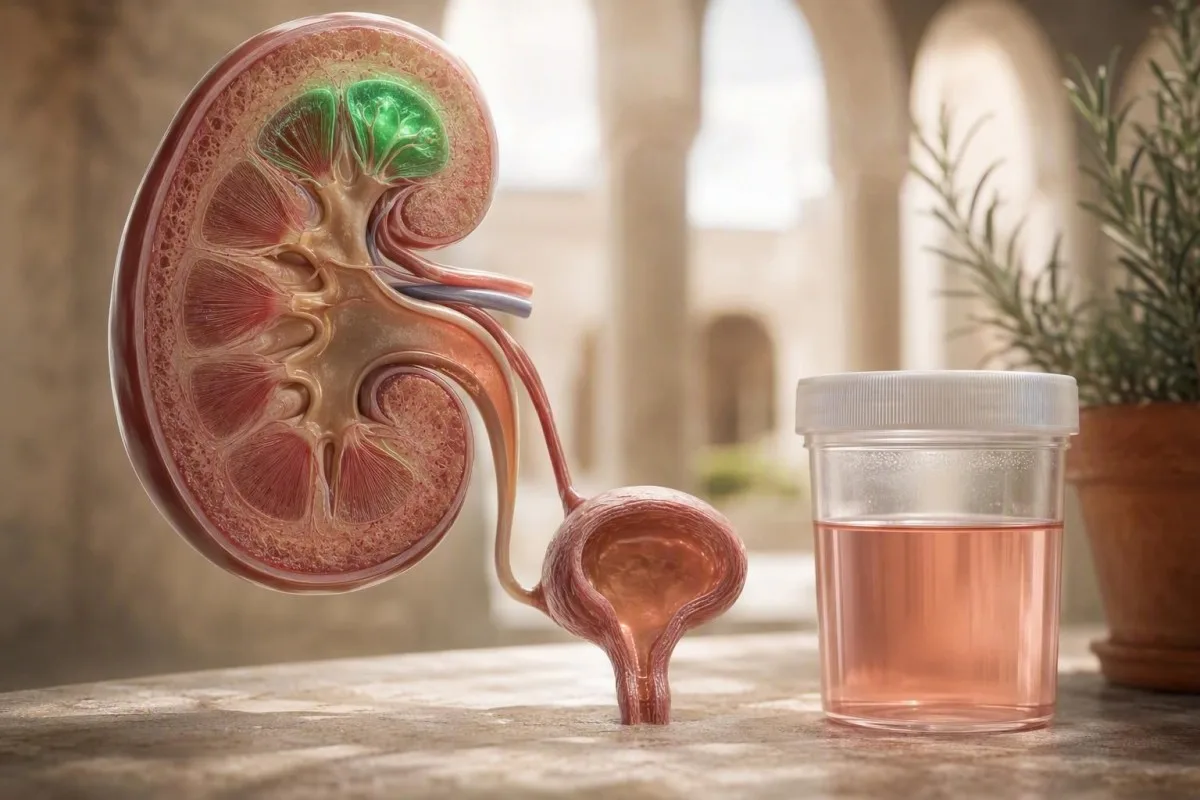
Ұзақ жүгіруден кейін пайда болған қызғылт немесе шай түстес зәр сынамасы көбінесе уақытша жаттығудан туындаған гематурия болып табылады, бірақ көрінетін түсті ешқашан автоматты түрде елемеуге болмайды. Уақыты, микроскоптық зерттеу нәтижелері, симптомдар және тиісті түрде демалудан кейін қайта алынған сынама нақты жағдайды көрсетеді.


- Жатырдан туындаған гематурия әдетте қарқынды жүгіруден кейін 24–72 сағат ішінде жоғалады; 72 сағаттан асса, медициналық тексеруді қажет етеді.
- Микроскоптық тексеру шегі тиісті түрде алынған зәр сынамасында жоғары қуатты өрістің 3 немесе одан да көп қызыл қан жасушалары Американдық урология ассоциациясының (AUA) микрогематурия анықтамасына сәйкес келеді.
- Тест жолағының сәйкессіздігі маңызды: қан төсемшесінің оң нәтижесі, жоғары қуатты өрісте нөлден екі қан жасушасының болуы, зәрдегі қан кетуіне қарағанда миоглобиннің немесе бос гемоглобиннің болуын көрсетеді.
- Қайталану уақыты практикалық: 48–72 сағат бойы ауыр жаттығулардан аулақ болыңыз, суды қалыпты ішіңіз, содан кейін ортаңғы зәр сынамасын беріңіз.
- Сол күні бағалау қан ұйығы, зәр шығару мүмкін еместігі, қызба, бір жағынан қатты бүйрек ауыруы немесе қола түстес зәр және айқын бұлшықет ауыруы болған жағдайда ақылға қонымды.
- Бүйрек туралы ескерту белгісі қан мен ақуыз, эритроциттік цилиндрлер, жоғары қан қысымы немесе төмендеген eGFR — жарыснан кейінгі жалғыз тест жолағы емес.
- Рабдомиолиздің белгісі зәрдің шамадан тыс қараюымен, ауыр бұлшықет симптомдарымен және зертхананың жоғарғы шегінен 5 есе жоғары креатинкиназа нәтижесімен сипатталады.
- Қатерлі ісік қаупінің контексті зерттеу шегін өзгертеді: жасы, темекі шегу, бұрынғы жамбас сәулесі және тұрақты көрінетін гематурия бәрі маңызды.
Неліктен жүгіру зәрді қызғылт етеді
Спортшының гематуриясы - бұл әдетте қарқынды жаттығудан кейін қызыл жасушалардың зәрге қысқа мерзімді ағып кетуі, әдетте демалыстың 24-72 сағаты ішінде қалпына келеді. Соған қарамастан, қызғылт, қызыл немесе кофенің түсіндегі зәр жүгіру себеп болды деген жеңіл болжамнан гөрі, мұқият алынған қайталама тестке лайық.
Клиникада қолайлы үлгі қарапайым: түс өзгеруі әдеттегіден ұзақ, жылдам немесе төмен қарай жүгіруден кейін басталады; температура, бүйрек шаншуы немесе зәр шығару кезіндегі күйдіру жоқ; және демалыстан кейін микроскопия қалыпқа келеді. Kantesti — бұл AI қан талдауын автоматты түрде жүргізетін анализатор бұл бүйрек маркерлерін - креатинин, eGFR, электролиттер және креатинкиназаны - жаттығу тарихымен қатар қоюға мүмкіндік береді, жарыстан кейінгі бір нәтижені диагноз ретінде қарастырудың орнына.
Ұсынылған механизмдер - бұлшықет қабырғасының механикалық жанасуы, бүйрек қан ағымының уақытша өзгеруі, сусызданудан туындаған концентрация және кейде аяқ соққысынан қызыл жасушалардың ыдырауы. Әр механизмге дәлелдер әртүрлі, өйткені көптеген зерттеулер кішкентай және әртүрлі жарыс қашықтықтарын қолданады. Менің 15 жылдық клиникалық тәжірибемде жаңа күш-жігер туралы тарих тек түсіне қарағанда маңыздырақ; алғашқы ультрамарафон және таныс 5 км бірдей алдын-ала тест ықтималдығын бермейді.
Жаттығудан кейін зәрде қанның көрінуі жай ғана жаттығушының гематуриясымен бірдей емес. гематурияның қызыл белгілерінің кеңейтілген нұсқаулығы пайдалы, өйткені бүйрек тастары, инфекция, гломерулярлық ауру және зәр шығару жолдарының қатерлі ісіктері жаттығудан кейін кездейсоқ бірінші рет пайда болуы мүмкін.
Практикалық анықтама
Жаттығудан туындаған гематурия - бұл жаттығудан кейін көп ұзамай зәрде қызыл жасушалардың пайда болуы және демалыстағы қайталама сынамада жоғалып кетуі. Жалғыз позитивті тест жоғарыда аталған диагнозды растамайды, өйтөйтіні реагент бүтін қызыл жасушалардан, бос гемоглобиннен немесе миоглобиннен шыққан гем пигментін анықтайды.
Бұл гематурия ма, гемоглобин бе, әлде миоглобин бе?
Қанға оң нәтиже беретін зәр тест жоғарыда аталған қызыл жасушаларды, гемоглобинді немесе миоглобинді көрсетуі мүмкін, ал микроскопия оларды бөледі. көптеген бүтін қызыл жасушалары бар қызғылт зәр гематурияны қолдайды; аз немесе мүлдем қызыл жасушалары жоқ қоңыр зәр бұлшықеттің зақымдануынан немесе гемолизден шыққан пигмент туралы алаңдаушылықты тудырады.
Зәр микроскопиясы көрсеткен жоғары қуатты өрісте 3 немесе одан көп қызыл қан жасушасы таза жиналған үлгі болған кезде микрогематурияны растайды. Керісінше, жоғары қуатты өрісте 0-2 қызыл жасушасы бар күшті позитивті тест миоглобинурияны қарастыруды талап етеді, әсіресе ыстыққа ұшырағаннан кейін, соққы типті бұлшықет жүктемесінен немесе ауыр кешіктірілген бұлшықет ауыруынан. Қоңыр немесе кофенің түсі бүйектің шамалы қан кетуінен гөрі концентрленген пигментке тән.
Миоглобин маңызды, өйткені ол рабдомиолиз және жедел бүйрек жеткіліксіздігімен бірге жүруі мүмкін. Қреатинкиназа концентрациясы зертхананың қалыпты жоғарғы шегінен 5 есе жоғары рабдомиолиз үшін биохимиялық шек ретінде жиі қолданылады, бірақ симптомдар, калий, креатинин және зәр шығару жиілігі шұғылдықты анықтайды. Біздің практикалық түсіндірмемізді қараңыз қауіпті жоғары креатинкиназа түнде күтуге болмайтын белгілер үшін.
Тағамдық бояғыштар, қызылша, қара бүлдірген, рифампицин, феназопиридин және сусыздану қызыл жасушаларсыз зәрді де бояуы мүмкін. А қою несептің айырмашылығы әрбір қызыл үлгі қанды білдіреді деген жалпы қателікті болдырмауға көмектеседі.
Неліктен айырмашылық күтімді өзгертеді
Қызыл жасушалы гематурия зәр шығару жолдарына, ал миоглобинурия қаңқа бұлшықеті мен бүйрек қорғанысына бағыттайды. Екеуі де ұзақ қашықтыққа жүгіруден кейін пайда болуы мүмкін, бірақ оларды сенімді түрде ажырату үшін тек микроскопия мен мақсатты қан талдауы қажет.
Жүгіруден кейінгі зәр талдауының нәтижесін қалай оқуға болады
Жүгіруден кейінгі ең ақпаратты зәр сынағы сынақ таяқшасын, микроскопияны, ақуызды өлшеуді және меншікті салмақты біріктіреді. Уақытша қызыл жасушалармен және ақуызсыз сынақ таяқшасындағы қан әдетте төмен тәуекелді білдіреді; қан мен ақуыз немесе цилиндрлер бүйректі мұқият бағалауды қажет етеді.
Сынақ таяқшасының қан нәтижесі жоқ, із, 1+, 2+, немесе 3+ деп хабарланады, бірақ бұл жасуша саны емес, скрининг сигналы. AUA микрогематурияны микроскопиялық зерттеу кезінде жоғары қуатты өріске 3-тен астам қызыл қан жасушасы ретінде анықтайды, тек сынақ таяқшасының нәтижесі емес (Barocas et al., 2020). Бұл айырмашылық жарысшыларды жалған-оң нәтижелі скринингтен кейін қажетсіз қатерлі ісік тексеруіне жіберуден аулақ болады.
Меншікті салмағы жоғары 1.030 көптеген зертханаларда зәрдің концентрацияланғанын көрсетеді және түсті едәуір қорқынышты етуі мүмкін, бірақ расталған қызыл жасушаларды жоққа шығармайды. 1+ немесе одан жоғары ақуыз зәр альбумин-креатинин қатынасы немесе ақуыз-креатинин қатынасымен анықталуы керек; жаттығудан кейінгі уақытша протеинурия бар, бірақ тұрақты альбуминурия дифференциалды гломерулярлық ауруға қарай өзгертеді. Біздің зәр анализіне арналған толық нұсқаулық бұл маркерлерді бір нәтижеге біріктіруге болмайтынын түсіндіреді.
Kantesti AI креатинин мен eGFR-ді зәр нәтижелерімен, жаттығу уақытымен және бұрынғы мәндермен бірге талдайды; ыстық жарыстан кейін бір рет аздап көтерілген креатинин созылмалы бүйрек ауруына тең емес. Тәжірибеде мен қашықтықты, жер бедерін, температураны, қабынуға қарсы дәрілерді қолдануды, етеккір циклінің уақытын және сынаманың тапсырылған уақытын, жарысты аяқтағаннан кейін 2 сағат ішінде болғанын сұраймын.
Жүгіруден кейін зәрді қайта тексеруді қашан жасау керек?
Спортшылардың гематуриясы күдікті болған жағдайда, соңғы ауыр жүгіруден кейін 48–72 сағаттан соң зәрді қайта сынау - бұл сенімді әдепкі әрекет. Бірінші таңертеңгі немесе жақсы су ішкеннен кейінгі орта ағымдағы сынаманы пайдаланыңыз, бірақ пайдалы нәтижелерді бұрмалауы мүмкін болғандықтан, алдын ала бірден көп литр су ішпеңіз.
Әдеттегі жарыстан кейінгі ауытқу үшін, мен әдетте аралықтарды, төбелерді, ауыр жүк көтеруді немесе жарыстарды ұсынбаймын 48 сағаттың ішінде; марафон, ультрамарафон, ыстық ауруы немесе ерекше ауырсынудан кейін, 72 сағат көбірек қорғауға болады. Шөлдегендіктен ішу жеткілікті. Шамадан тыс ішу меншікті салманы 1,005 төмен түсіріп, кейде шекті нәтижені түсіндіруді қиындатуы мүмкін.
72 сағаттан кейін микроскопия оң болса, жаттығулардан кейін қайта-қайта сынаудың орнына бірнеше күн ішінде бастапқы медициналық көмекке жүгінуді ұйымдастырыңыз. Ұзаққа созылған нәтижелер қан қысымын өлшеуді, қан сарысуындағы креатинин/eGFR, зәр альбумин-креатинин қатынасын және қауіптілікке байланысты мәдениетті немесе бейнелеуді қарастыруды талап етеді. Экзерсис, сулану және уақытша төмендеген фильтрация бағасы арасындағы байланыс біздің жаттығудан кейінгі eGFR нұсқаулығында.
қамтылған. Мен көрген 52 жастағы әуесқой марафоншы жарыстан кейінгі кешке 18 қызыл қан жасушасы бар, бірақ 72 сағат тыныққаннан кейін 0–1 қызыл қан жасушасы болған; оның креатині 1,28 мг/дл-ден 0,96 мг/дл-ге дейін төмендеген. Нәтиже сенімді болды, бірақ темекі шегетін 52 жастағы, қайта-қайта көрінетін зәр түсі бар адам үшін бұл жоспар жеткіліксіз болар еді.
Мүмкіндік болса, мәре сызығында сынама алмаңыз
Жаттығудан кейін дереу сынама алу уақытша қызыл қан жасушаларын, концентрленген зәрді және ақуызды табу мүмкіндігін арттырады. Бұл рабдомиолиз күдікті болған жағдайда клиникалық пайдалы болуы мүмкін, бірақ бұл спортшының негізгі көрсеткіштерін анықтау үшін қолайсыз уақыт.
Жүгіруден кейінгі гематурияның қандай үлгілері әдетте сенімді болып саналады?
Интенсивті жүгіруден кейінгі уақытша эпизод толығымен кеткенде, ауырсыну немесе жүйелі симптомдар болмағанда және протеинурия немесе бүйрек қызметінің өзгерісі болмағанда, ол көбірек сенімді болады. Сенімді болу - елемеу дегенді білдірмейді; бұл тыныққан сынамамен расталғандығын білдіреді.
Төмен қауіпті фенотип - бұл жас немесе орта жастағы спортшы, себебі жаттығудың нақты триггері, қалыпты қан қысымы, темекі шегу тарихының жоқтығы және қалыпты тыныққан микроскопиясы. Бұл жағдайда, жарыстан кейінгі 3–10 RBC/HPF бір реттік уақытша нәтижесі көбінесе емсіз кетеді. Мен оны әлі де құжаттаймын, себебі әр ұзақ жүгіруден кейінгі қайталану бір реттік жағдайға қарағанда мұқият қарауды талап етеді.
Қалыпты зәр альбумин-креатинин қатынасы әдетте 30 мг/г-дан төмен (3 мг/ммоль-ден төмен), бірақ зертханалар мен елдер әр түрлі бірліктерді көрсетеді. Альбумин, цилиндрлер немесе дисморфты қызыл қан жасушалары жоқ қан гломерулярлы ағудан басқаны білдіреді; бұл қуықтың көзі екенін дәлелдемейді, бірақ ол келесі сұрақты бағыттайды. Біздің түсіндірмеміз зәрдегі ақуыз бұл бөлімді анық көрсетеді.
Зәрдің тым қоюланғандығына және жарыс соңында босаған қуығына байланысты қуық жарақаты ықтимал. Кейбір спорт клиницистері ұзақ жарыс алдында зәр шығаруды және жүйелі түрде су ішуді ұсынады, бірақ бұл сынақтардың дәлелденуі шектеулі алдын алу жөніндегі кеңес, әрі түсі өзгерген кезде тексеруге балама емес.
Қалыпты нәтиже уақыт белгісімен бірге келеді
Жарыстан 3 күн өткен соң теріс нәтиже сол жағдай үшін сенімді, бірақ өмір бойына кепілдік бермейді. Бірнеше айдан кейін пайда болатын жаңа гематурияны, әсіресе 40 жастан асқан немесе темекі шеккен жағдайларда, жеке бағалау керек.
Марафоншының гематуриясының ықтималдығын азайтатын ескерту белгілері
Гематурия 72 сағаттан кейін сақталса, қатты жаттығусыз қайталанса немесе ауырсыну, қызба, ұйындылар, ақуыз немесе бүйрек қызметінің өзгеруімен бірге пайда болса, жедел тексеруді қажет етеді. Нәтижелердің үйлесімділігі, жекелеген көзге шалынатын үлгіге қарағанда, көбірек ақпарат береді.
көрінетін қызыл зәр пайда болған жағдайда уақытында медициналық кеңес алыңыз 24 сағат бойы ауыр жаттығудан бас тартыңыз,, әсіресе сіз өзіңізді жақсы сезінсеңіз де; 40 жастан асқан, темекі шегетін немесе бұрын шеккен, немесе жамбасқа сәулелік ем алған адамдар үшін бұл көрсеткіш төмен. AUA нұсқаулығы барлық микрогематурияны бірдей қарастырудың орнына, жасқа, темекі шегуге, микроскопиялық қанның дәрежесі мен ұзақтығына және бұрынғы ірі гематурияға негізделген тәуекелді бағалауды қолданады (Barocas et al., 2020).
Дисморфты эритроциттер, эритроцитарлық цилиндрлер, айтарлықтай альбуминурия, жаңа гипертензия немесе төмендеген eGFR бүйрек сүзгісінің көзі екенін, қуықтың шайқалуынан емес екенін көрсетеді. Эритроцитарлық цилиндрлер қарапайым жүгірудің күтілетін салдары болып табылмайды және бүйректі жедел тексеруді талап етеді. Біздің шолуымызды қараңыз гранулярлы және зәр цилиндрлері неліктен седимент нәтижелері маңызды екенін түсіндіру үшін.
Томас Клей, MD, жарысшыларға тек түсіне қарап өздігінен диагноз қоюға кеңес бермейді: зәр шығару жолдарының инфекциясы күйдіру, шұғыл несеп шығару қажеттілігі, пиурия және кейде гематурия тудыруы мүмкін, ал тастар жиі кенеттен бір жақты ауырсыну мен жүрек айнуын тудырады. Инфекция белгілері болған кезде антибиотиктерді қолданар алдында зертханалық зерттеу ең пайдалы.
Қан мен ақуыздың тіркесімі
Ақуызы бар расталған гематурия, тек гематурияға қарағанда көбірек алаңдаушылық тудырады, себебі екеуі де гломерулярлық сүзгіде пайда болуы мүмкін. 30 мг/г немесе одан жоғары зәр альбумин-креатинин қатынасы қайта тексеріліп, қан қысымымен және бүйрек қызметімен бірге бағалануы керек.
Жатығудан кейінгі қызғылт зәрді күндізгі уақытта қашан емдеу керек?
Ұйындылар, несеп шығара алмау, қатты бүйрек ауырсынуы, қызба, естен тану, несеп шығарудың азаюы немесе қатты бұлшықет ауырсынуы мен әлсіздігі бар қараңғы зәр пайда болған жағдайда сол күні жедел тексерістен өтуге тырысыңыз. Бұл белгілер қарапайым жаттығудан туындаған гематуриядан тысқары жағдайларды көрсетеді.
Ұйындылар несеп ағынын бөгеп тастауы мүмкін, ал несеп шығара алмау спорттық фитнесіне қарамастан, шұғыл проблема болып табылады. Қызба 38,0°C немесе одан жоғары болса бүйрек ауырсынуымен бірге жоғарғы зәр жолдарының инфекциясын көрсетуі мүмкін; құсумен қатар жүретін қатты шаншу ауырсынуы тасты көрсетуі мүмкін. Ешбір жағдайды жарыстан кейінгі қайталану тестін күту арқылы басқаруға болмайды.
Жаттығудан кейінгі қою қоңыр зәр, сондай-ақ бұлшықеттің қатты ауырсынуы, әлсіздік, ісіну немесе шығарылудың азаюы рабдомиолиз туралы алаңдаушылықты тудырады. Бастапқы тестілеу әдетте креатин киназа, креатинин, калий, кальций, фосфат және жалпы зәр анализін қамтиды. CrossFit рабдомиолиз жөніндегі нұсқаулықта жаттығудың әдеттегіден тыс эсентриктік жаттығулары – тек жүгіру емес – жиі себеп болады.
Қатты сусыздану бүйрек нәтижелерін нашарлатуы мүмкін, бірақ ол нақты жарақатпен бірге жүруі мүмкін. Егер сізді бас айналса, басыңыз шатысып кетсе, сұйықтықты іше алмасаңыз немесе өте аз несеп шығарсаңыз, 8–12 сағат, спорттық сусындармен үйдегі мәселені шешуге тырыспаңыз.
Жүктілік және антикоагулянттар
Жүкті әйелдер мен антикоагулянттарды қабылдайтын адамдар көрінетін гематурияны дереу хабарлауы керек. Антикоагулянттар қан кетуді күшейтуі мүмкін, бірақ оның көзін анықтау қажеттілігін жоймайды; жүктілік сондай-ақ инфекция, тас және бүйрек ауруларын тексеру үшін шекті өзгертеді.
Жүгіру себеп болатын емес, жасайтын жағдайлар
Жүгіру гематурияның өзін тудырудан гөрі, несепті шоғырландыру немесе сынақ жүргізу арқылы бүйрек проблемасын ашуы мүмкін. Тастар, инфекция, гломерулярлық ауру, құрылымдық аномалиялар және қатерлі ісік дифференциалды диагностиканың бөлігі болып қала береді.
Бүйрек тастары жиі бір жақты бүйрек-шапқа дейін ауырсыну, жүрек айну және микроскоп арқылы қызыл қан жасушаларын тудырады, бірақ ауырмайтын тастар кездеседі. Зәр шығару инфекциясы жиі күйдіру, жиі несеп шығару, шұғыл қажеттілік және ақ қан жасушаларын тудырады; нитриттің теріс нәтижесі оны жоққа шығармайды. Біздің нұсқаулығымыз лейкоцит эстеразасы бар теріс нитрит бұл жалпы аралас үлгіні түсіндіреді.
Гломерулонефрит жоғарғы тыныс жолдарының инфекциясынан кейін, коладай несеп, ісіну, жоғары қан қысымы, протеинурия және дисморфты қызыл қан жасушаларымен пайда болуы мүмкін. KDIGO 2024 CKD нұсқаулығында, тұрақты альбуминурия және төмендеген eGFR бүйрек тәуекелінің өзара байланысты емес маркерлері ретінде қарастырылады (KDIGO, 2024).
Kantesti — AI арқылы жұмыс істейтін қан талдауын интерпретациялау құралы бұл пайдаланушыларға креатинин, eGFR, альбумин, электролиттер және CBC бойынша үлгіні тануға көмектеседі, бірақ гематурияның анатомиялық көзін диагностикалай алмайды. Визуалдау, микроскопия, культрование және дәрігердің тексеруі әлі де шешуші жұмысты атқарады.
Рак жас жүгірушілерде сирек кездеседі, ересектерде мүмкін емес
Көрінетін гематурия жаттығулар айқын себеп болып көрінген кезде де, әсіресе темекі шегуге бейімділігі бар адамдарда немесе тұрақты симптомдары бар адамдарда бағалауды талап етеді. Тәуекел жаспен және жинақталған темекіні қолданумен артады, сондықтан бірдей зәр нәтижелері бірдей тестілеу жоспарларына әкелмейді.
Урология немесе нефрология бойынша кеңес алуды кімдер қажет етеді?
Тыныққан қайталама үлгіден кейін тұрақты гематурия урология үшін тәуекелді бағалауды талап етеді, ал гематурия плюс протеинурия, цилиндрлер, гипертензия немесе eGFR бұзылуы нефрологияға бағыттайды. Көптеген адамдарға тек бастапқы медициналық көмекке бағытталған қайталама тестілеу қажет; жолдама үлгіге байланысты.
Урологиялық тексеру, әсіресе, қайталанатын көрінетін гематурия, тұрақты микроскопиялық гематурия, темекі шеккен тарихы, кәсіптік иісті аминмен байланысу, жамбас сәулеленуінің алдыңғы тарихы немесе инфекциясыз бүйрек симптомдары үшін қолайлы. Тәуекелге байланысты, дәрігерлер бүйрек пен қуықтың УДД, КТ урографиясын және цистоскопияны қолдануы мүмкін. 24 жасар 24 жасар ер адамның жарыстан кейінгі бір реттік кішкене сынағы, 58 жасар бұрынғы темекі шегушінің қайталанатын қызыл несебінен әлдеқайда өзгеше жағдай.
Нефрологиялық тексеру зәр альбумин-креатинин қатынасымен ықтимал артады ≥30 мг/г, 3 ай немесе одан ұзақ уақытқа созылған eGFR төмендеуі, қызыл қан жасушаларының цилиндрлері немесе бақылауға қиын қан қысымы. Бұл шекті мәндер маңызды, өйткені созылмалы бүйрек ауруы бір өлшеммен ғана емес, уақытпен де анықталады. Біздің 60 мл/мин/1.73 м² 3 айдан немесе одан ұзақ уақытқа созылатын, эритроцитарлық цилиндрлер немесе бақылауы қиын қан қысымы. Бұл шекті мәндер маңызды, себебі созылмалы бүйрек ауруы бір өлшеммен ғана емес, сонымен қатар уақыттың ұзақтығымен анықталады. Біздің басқа адамнан бөлек қарау керек, өйткені сүзілудің төмендеуі дәрі-дәрмек таңдауын және тас түзілу қаупін өзгертеді. eGFR санатын түсіну үшін біздің практикалық санаттар үшін оқыңыз.
Kantesti компаниясының AI зертханалық тест нәтижелерін түсіндіру қызметі, әсіресе пайдаланушылар әртүрлі зертханалардан алынған нәтижелерді жүктегенде, қайталанатын қан мен ақуыз үлгісін анықтап, талқылауға ұсынуы мүмкін. Бұл қандай-да бір клиникалық зерттеу жүргізу немесе мамандардың тексеруі қажет пе деген шешімді клиницистті қолдауы керек, бірақ оны алмастырмауы тиіс.
Антикоагулянтты терапияны әңгіме аяқталуына жол бермеңіз
Антикоагулянттарды қолдану қан кетудің ауырлығын өзгертеді, бірақ гематурияның себебін анықтамайды. Менің тәжірибемде, қайталанатын қанды зәрді апиксабан, варфарин немесе аспиринге жатқызу, тексерусіз тастардың, инфекцияның немесе құрылымдық аурулардың анықталуын кешіктіруі мүмкін.
Жатығуға байланысты гематуриядан кейін қандай қан тесттері көмектеседі?
Пайдалы қан тесттері симптомдарға байланысты: креатинин, eGFR, электролиттер және креатинкиназа бүйрек пен бұлшықет стрессін бағалайды, ал CBC анемияны немесе инфекцияны анықтауға көмектеседі. Дәл тарих пен зәр анализін жүргізгеннен кейін таңдалған тесттер қарапайым кең панельдерден гөрі тиімдірек.
Креатинин ұзаққа созылған жаттығудан кейін бұлшықет метаболизмі, бүйрек қан айналымының азаюы және сусыздану салдарынан уақытша жоғарылауы мүмкін. Креатининнің жылдам өзгеруі кезінде eGFR теңдеулері сенімсіз болады, сондықтан қайталанатын мән 48–72 сағат әдеттегі қалпына келгеннен кейін, мәре сызығындағы нәтижеден гөрі маңыздырақ болады. Біздің жаттығулармен байланысты креатинин қайта тексеру нұсқаулығы бұл жиі кездесетін алаңдаушылық тудыратын себепке контекст береді.
Креатинкиназаның жаттығудан кейінгі диапазоны кең: дайындықтан өткен спортшылар жарыстан кейін бүйрекке зиян келтірмей жоғарылауы мүмкін, ал жергілікті жоғарғы шектен бірнеше есе жоғары мәндер мен симптомдар шұғыл бағалауды қажет етеді. Калий жоғары 6,0 ммоль/л-ден жоғары қауіпті болуы мүмкін және шұғыл клиникалық бағалауды қажет етеді, әсіресе бүйрек функциясы бұзылған немесе бұлшықет жарақаты күдіктелсе.
CBC шаршау, бозғылттық, ауыр етеккір қан кетуі, қайталанатын гематурия немесе жүйелі ауру туралы алаңдаушылық болған кезде ең пайдалы. Гемоглобин ұзаққа созылған жаттығулардан кейін плазма көлемінің ұлғаюынан, темір жоғалуынан немесе гемолизден төмендеуі мүмкін; ферритин жедел қабынудан және қарқынды жаттығудан бөлек бағалануы керек. Ұзақ қашықтыққа жүгіретін спортшылар біздің спортшыларға арналған қан тесттері шолуын ақылға қонымды базалық көрсеткіш үшін пайдалы деп тапуы мүмкін.
Бір жарыс аптасындағы панель нәтижесінен бүйрек ауруын анықтамаңыз
Креатининнің 0,3 мг/дл немесе одан жоғары көтерілуі белгілі бір уақыт аралығында жедел бүйрек жарақаты критерийіне сәйкес келуі мүмкін, бірақ жарыстан кейін контекст пен қайта тексеру шешуші болып табылады. Зәр шығарудың аз мөлшері, калийдің жоғарылауы және тұрақты жоғарылауы оқшауланған шекті нәтижеден гөрі салмақтырақ.
Дәрігерлер сенетін қайталама зәр сынамасын қалай жинауға болады
Шынында да, қарқынды жаттығусыз 48–72 сағаттан кейін таза ұсталатын ортаңғы зәр үлгісі гематурияның жойылғанын тексерудің ең жақсы жолы болып табылады. Жинау қателері, етеккірмен ластану және ескі үлгілер жалған нәтижелерді тудыруы мүмкін.
Қолды жуыңыз, дәретханаға зәр шығаруды бастаңыз, содан кейін ыдыстың ішін ұстамай, ортаңғы бөлігін жинаңыз. Үлгіні дереу жеткізіңіз — идеалды жағдайда 2 сағатқа дейін— немесе зертхананың тоңазытқыш нұсқауларын орындаңыз. Ұзақ тұру жасушаның көрінісін өзгертеді және микроскопияны сенімсіз етеді.
Мүмкін болған жағдайда белсенді етеккір кезінде тестілеуден аулақ болыңыз; егер тестілеуді күтуге болмаса, клиницист пен зертханаға хабарлаңыз. Қынаптың ластануы қызыл қан жасушалары мен ақуызды пайда болуы мүмкін, ал қалбырлы эпителий жасушалары көбінесе нашар жиналған үлгіні көрсетеді. Біздің нұсқаулық зәрдегі эпителий жасушалары бұл қарапайым емес зертханалық ескертпе екенін түсіндіреді.
Томас Клейн, MD, үлгімен бірге төрт мәліметті жазуды ұсынады: соңғы күрделі жаттығу, жаттығу ұзақтығы, сыртқы температура және соңғы 72 сағатта қабылданған барлық дәрі-дәрмектер. Уақыты көрсетілмеген нәтижені түсіндіру әлдеқайда қиын, әсіресе егер зәр екі рет жаттығудан кейін алынса.
Бірінші таңғы және күндізгі сынақ
Бірінші таңғы үлгі шоғырланған және кішігірім ауытқуларды анықтау үшін қолайлы, бірақ қалыпты суландырылған күндізгі орта ағынды үлгі, егер жинау таза болса, қолайлы. Сериялық салыстыру үшін үйлесімділік маңыздырақ: әрбір қайталау кезінде шамамен бірдей жағдайларды қолданыңыз.
Гидратация, ауырсынуды басатын дәрілер және қоспалар, бұл жағдайды өзгертеді
Сусыздану зәрді шоғырландырып, бүйрекке түсетін жүктемені арттыруы мүмкін, ал стероидты емес қабынуға қарсы дәрілер (NSAID) төзімділік жаттығулары кезінде бүйрек қан ағымын азайтуы мүмкін. Бұл факторлардың ешбірі гематурияның себебін дәлелдемейді, бірақ екеуі де жүгіруден кейінгі нәтижені дәрігерлер қаншалықты мұқият түсіндіретініне әсер етеді.
Көптеген жүгірушілер үшін, шөлдеуді басу және жоғалтқандарды біртіндеп толтыру, сұйықтықты қатаң түрде мәжбүрлеуден гөрі қауіпсіз. Шамадан тыс су ішуден болатын өте төмен натрий қауіпті; сарысудағы натрий төмен 125 ммоль/л-ден төмен бас ауруы, құсу, шатасу немесе құрысулармен бірге болса, бұл төтенше жағдай. Зәрдің түсі суланудың шамамен көрсеткіші, дәл сулану өлшегіші емес.
Ибупрофен, напроксен және басқа да стероидты емес қабынуға қарсы дәрілер (NSAID) простагландинмен байланысты бүйрек қан ағымын азайтуы мүмкін, әсіресе ыстыққа шалынғанда, құсу кезінде немесе ұзақ жарыстарда. Мен пациенттерге марафондар алдында дәрігерлері нақты себебін айтпаса, стероидты емес қабынуға қарсы дәрілерді (NSAID) профилактикалық түрде қолданудан аулақ болуға кеңес беремін. Дәрі-дәрмек контексті біздің зертханалық қауіпсіздік мақаламызда.
қамтылған. Жоғары дозадағы С дәрумені зәрді анықтайтын кейбір реакцияларға кедергі келтіруі мүмкін, ал өнімділікті арттыруға арналған қоспаларда кейде тізімде көрсетілмеген стимуляторлар немесе диуретиктер болуы мүмкін. Контейнерлерді немесе анық фотосуреттерді кездесуге әкеліңіз; брендті ұнтақтың құрамын есте сақтауға тырысудан гөрі бұл көбінесе пайдалырақ. Біздің спортшыларға арналған қоспалардың қауіпсіздігі жөніндегі нұсқаулығымыз ақылға қонымды тексеру тізімін ұсынады.
Сулану - бұл тұрақты қанның емі емес
Су шоғырлануды түзетуі мүмкін, бірақ тасты, инфекцияны, гломерулярлық процесті немесе несеп-жыныс жүйесінің құрылымдық көзін емдемейді. Егер демалып, жақсы жиналған үлгіден қызыл жасушалар қалса, жағдайды нашарлатуды келесі сулану тәжірибесіне емес, үлгіге негіздеу керек.
Жатығудан туындаған гематуриядан кейін жүгіруді жалғастыруға бола ма?
Көптеген жүгірушілер зәрдің түсі қалыпқа келгенде, симптомдар жоқ болғанда және демалған үлгідіні қайта тексеру сенімді болғанда біртіндеп жаттығуға орала алады. Зәр әлі де көрінетіндей қызыл болса, бүйрек нәтижелері қалыпты болмаса немесе бұлшықет симптомдары рабдомиолизді көрсетсе, қатты жаттығуға оралмаңыз.
Қиындықсыз бір реттік эпизодтан кейін, мен әдетте бірнеше күн бойы тек жеңіл жүгіруді, содан кейін көлем мен қарқынды біртіндеп арттыруды ұсынамын. 7–14 күн ішінде. Егер түс қайта пайда болса, ауырсыну пайда болса немесе зәр шығару азайса, жүгіруші тоқтап, тексерілуі керек. Бұл практикалық клиникалық тәсіл, сынақпен дәлелденген нұсқаулық емес.
Бірдей қашықтықтан кейін қайталанатын гематурия практикалық тәжірибелерді ақтауы мүмкін: сусызданған күйде жарысқа қатысудан аулақ болыңыз, ұзақ жүгіру алдында зәр шығарыңыз, төмен қарай жаттығуды баяуырақ енгізіңіз және аяқ киімнің сәйкестігін немесе жер бедерін тексеріңіз. Қарқын, ыстық, ұзақтық, зәрдің түсі және сынақ нәтижелерінің журналын жүргізіңіз. марафон жүгірушісінің зертханалық нұсқаулығымен салыстырыңыз қалпына келтіру маркерлерін жаттығуды тоқтату себептерінен ажыратуға көмектеседі.
Түсініксіз көрінетін гематурия кезінде жарыс алда тұрғаны үшін жаттығуды тоқтатпаңыз. Спортшылар көбінесе ауырсынуды жақсы көтереді; шыдамдылықты диагностикалық ақпарат ретінде емес, төзімділік сынағы ретінде бағалау маңызды дағды.
Нақты базалық көрсеткішті қалыптастырыңыз
Қатты жаттығудан кем дегенде 72 сағат бұрын жасалған базалық зәр талдауы және бүйрек панелі жарыстан кейінгі нәтижелерді түсіндіруді жеңілдетеді. Бұл әсіресе ультрамарафонында жүгіретіндерге, бір бүйрегі бар адамдарға немесе бүйрек қан айналымына әсер ететін дәрі-дәрмектерді қолданатын спортшыларға пайдалы.
Жатығудан кейін зәрдегі қан туралы клиницистке не айту керек
Қажетті гематурия бағалауына ең жылдам жол - бұл қысқаша уақыт тізбегі: зәрдің түсі, жаттығу мөлшері, симптомдар, дәрі-дәрмектер және қайталап сынау уақыты. Зертханалық зерттеулердің нақты мәндерін келтіріңіз, тек “қанға оң нәтиже” деген хабарламамен шектелмеңіз.”
Зәрдің қызғылт, ашық қызыл, шай түстес болғанын немесе ұйындылар болғанын; түсі жаттығу алдында, кезінде немесе кейін пайда болғанын; және бірінші зәр шығарғаннан кейін кеткенін көрсетіңіз. Жану, зәр шығаруға асығу, қызу, бүйрек тұсында ауырсыну, жүрек айну, ісіну және зәр шығарудың азаюын қосыңыз. Толық зәр түсі анықтамасы байқауды артық бағаламастан, оны дәл сипаттауға көмектеседі.
Бұрынғы зәр талдаулары, креатинин/eGFR мәндері, қан қысымы көрсеткіштері, темекі шегу тарихы, отбасындағы бүйрек ауруларының тарихы және дәрі-дәрмектер/қоспалар тізімін келтіріңіз. Kantesti — AI биомаркер интерпретациялау платформасы қайталамалы қан сынағының мәндерін ұйымдастырып, маңызды өзгерістерді атап көрсете алады, бірақ клиницист бұл мәндерді зәр микроскопиясымен және тексерумен байланыстыруы керек.
3 қыркүйек 2026 жылдан бастап клиникалық қағида қарапайым болып қалады: жаттығу нәтижесі қалыпқа келгеннен кейін және басқа да күмәнді белгілер жоқ болғаннан кейін ғана жаттығудың ықтимал себебі болып табылады. Егер сіз сенімсіз болсаңыз, сізге микроскопия, мәдениет, альбумин-креатинин қатынасы, қайталамалы креатинин, бейнелеу немесе медициналық көмекке жүгіну қажет пе, тек басқа сынақ лентасы емес пе деп сұраңыз.
Сұрауға тұрарлық сұрақтар
Қызыл эритроциттердің тұтас көрінгенін, ақуыз немесе цилиндрлердің болғанын және қашан тынығып қайта тексеру керектігін сұраңыз. Бұл үш жауап әдетте келесі қадамдарды - мұқият бақылау, бүйрек сынағы, инфекция сынағы немесе урологиялық бағалауды анықтауға көмектеседі.
Марафоншының гематуриясы үшін ақылға қонымды әрекет жоспары
Қатты жүгіргеннен кейін бір рет ауырмайтын қан кету болса, 48-72 сағатқа ауыр жаттығуларды тоқтатып, таза үлгіні қайта зерттеңіз; қызыл белгілер немесе тұрақты көрінетін қан болса, ертерек медициналық көмекке жүгініңіз. Мақсат - үрейлену де емес, елемеу де емес - нәтиженің жойылуын дәлелдеу.
Бірінші қадам: қатты жаттығуды тоқтатыңыз, суды қалыпты ішіңіз, уақытын және симптомдарын ескеріңіз. Екінші қадам: микроскопияны қайталаңыз 48–72 сағат. Үшінші қадам: қан кетсе, немесе ақуыз, цилиндрлер, ауырсыну, қызу, ұйындылар, зәр шығарудың азаюы немесе бүйрек маркерлерінің бұзылуы байқалса, тез арада медициналық көмекке жүгініңіз. Бұл тізбек ауруды елемеуді де, бір реттік финиш үлгісінен кейін қажетсіз бейнелеуді де болдырмайды.
Біздің клиникалық командамыз жүктелген зертханалық деректерді қарағанда, біз үлгілерге басымдық береміз: креатининнің жоғарылауы, жоғары CK және зәр шығарудың азаюы, креатининнің тұрақты болуымен және зәрдің уақытша сынақ лентасымен салыстырғанда, маңыздырақ. Kantesti әдістемесі мен қорғау шаралары біздің клиникалық валидация туралы ақпараты, -де сипатталған, ал біздің дәрігерлік бақылауымыз Медициналық консультативтік кеңес.
арқылы толықтай сипатталған. Көптеген пациенттер уақытша қайта тексеруді қорқынышты түсті өзгерісті нақты жоспарға айналдыратынын байқайды. Бірақ егер сіздің инстинктіңіз бірдеңе дұрыс емес екенін сезсе - әсіресе егер зәр әлі де ертең қызыл болса - сол сигналға сеніп, тексеріліңіз.
Бір сөйлем ережесі
Қатты жүгіргеннен кейін бір рет қызғылт зәр уақытша болуы мүмкін; егер қызғылт зәр сақталса, қайталанса немесе симптомдармен бірге пайда болса, тиісті түрде бағаланбағанша гематурия болып табылады.
Жиі қойылатын сұрақтар
Тәуірленуші гематурия қанша уақытқа созылады?
Спортшылардың гематуриясы әдетте, ауыр жаттығулар тоқтағаннан кейін 24–72 сағат ішінде жоғалып кетеді. Зертханалық сынақтар үшін 48–72 сағат бойы қатты жүгіру немесе ауыр жүк көтерусіз, таза ұсталатын, орта ағынды зәр үлгісін жинау керек. 24 сағаттан кейін көрінетін жалғасқан қызғылт немесе қызыл зәр немесе 72 сағаттан кейін қалатын микроскопиялық гематурия клиницистпен бағалануы тиіс. Қызба, қан ұйындылары, белдің қатты ауыруы, зәр шығарудың азаюы немесе бұлшықеттің қатты ауыруы бір күн ішінде бағалауды талап етеді.
Жаттығудан кейін несепте қанның болуы қалыпты жағдай ма?
Жаттығудан кейін несепте қанның пайда болуы қарқынды жүгірудің, сусызданудың, қуық қабырғасының соғылуының немесе бүйректің қан ағымының қысқа мерзімді өзгеруінің өткінші әсері болуы мүмкін, бірақ бұл автоматты түрде қалыпты жағдай емес. Әрбір жоғары қуатты алаңда 3 немесе одан да көп қызыл қан клеткаларының бар екенін растайтын микроскопия АУА микрогематурия анықтамасына сәйкес келеді. Тыныққан қайталама сынамада жоғалып кететін нәтиже жанға қонымды, ал қанның, ақуыздың, цилиндрлердің, ауырсынудың немесе зәр шығару симптомдарының сақталуы қосымша тексеруді қажет етеді. Көрінетін несеп түсі, әсіресе ересектерде темекі шегуге байланысты немесе қайталанатын эпизодтар болған жағдайда, әמיד хабарлануы керек.
Шөлдеу жүгіргеннен кейін қызғылт несепке әкелуі мүмкін бе?
Сұйықтықтан айырылу зәрді қоюырақ ете алады және зәрдегі заттарды шоғырландыру арқылы жаттығудан кейінгі гематурия нәтижесін күшейте алады, бірақ сұйықтықтан айырылудың өзі расталған қызыл жасушаларды сенімді түрде түсіндірмейді. Құрамындағы зәрдің меншікті салмағының 1.030-дан жоғары болуы көптеген зертханаларда зәрдің шоғырланғанын білдіреді. Жауапты жою үшін шамадан тыс су ішуге тырысудың орнына, шөлдегенге дейін қалыпты ішіп, 48–72 сағат демалғаннан кейін таза үлгіні қайталаңыз. Қатты шөлдеу, бас айналу, зәрдің өте аз шығуы немесе шатасу жағдайларында жедел медициналық көмек қажет.
Спорттан кейінгі гематурия мен миоглобинурия арасындағы айырмашылық неде?
Гематурия дегеніміз несепте бүтін қызыл қан клеткаларының болуы, ал миоглобинурия бұлшықеттің зақымдануынан кейін бөлінетін бұлшықет пигментін көрсетеді. Екі жағдайда да тест жолағы қанға оң нәтиже көрсетуі мүмкін, сондықтан микроскопия шешуші болып табылады: миоглобинурия көбінесе жоғары күшті өрісте 0–2 қызыл жасушасы бар оң тест жолағын береді. Ауыр бұлшықет ауруы, әлсіздік, ісіну, қоңыр кола түстес несеп немесе зертхананың жоғарғы шегінен 5 есе жоғары креатинкиназа мәні рабдомиолизді күдіктендіреді. Бұл жағдайды шұғыл клиникалық бағалау қажет, себебі калий мен бүйрек функциясы тез өзгеруі мүмкін.
Егер менде жаттығудан туындаған гематурия болса, жүгіруді тоқтатуым керек пе?
Егер зәрдің түсі қалыпқа келмесе және қайталама сынақты (әдетте 48-72 сағаттан кейін) орындамасаңыз, қарқынды жүгіруді тоқтатыңыз. Егер қайталама сынақ қалыпты болса және сізде ауырсыну, қызба, қан ұйындылары, протеинурия немесе бүйрек функциясының бұзылуы болмаса, көптеген жүгірушілер шамамен 7-14 күн ішінде біртіндеп қайта бастай алады. Егер зәр көрінетіндей қызыл немесе қоңыр болса, зәр шығару азайса немесе ауыр бұлшықет симптомдары байқалса, қарқынды жаттығуларды қайта бастамаңыз. Ұқсас жаттығулардан кейін қайталанатын эпизодтар әрбір эпизодтың өзі шешілсе де, медициналық тексеруді қажет етеді.
Гематурия урологті қашан қажет етеді?
Тынықтан кейін қайта алынған сынамада тұрақты микроскопиялық гематурия, қайталанатын көрінетін гематурия немесе темекі шегу тарихы, бұрын жамбасқа сәулелік терапия алған немесе зәр шығару симптомдары бар адамдағы гематурия урологиялық тәуекелді бағалауды талап етеді. Урологтар жасына және жалпы тәуекеліне байланысты, барлығына бір тест қолданудың орнына, ультрадыбыстық, КТ урографиясын және цистоскопияны қарастыруы мүмкін. 30 мг/г немесе одан жоғары альбуминуриямен, эритроцитарлық цилиндрлермен, гипертензиямен немесе 60 мл/мин/1,73 м² төмен eGFR-мен гематурия нефрологияға бағыттайды. Қажетті мамандық зәр және қан сынақтарының толық үлгісіне байланысты.
Бүгін AI арқылы қан талдауы нәтижесін алыңыз
Kantesti-ті лезде әрі дәл зертханалық талдау үшін сенетін бүкіл әлем бойынша 2 миллионнан астам пайдаланушыға қосылыңыз. Қан анализінің нәтижелерін ж.үктеп, бірнеше секунд ішінде 15,000+ биомаркерлерінің жан-жақты түсіндірмесін алыңыз.
📚 Сілтеме жасалған ғылыми жарияланымдар
Кляйн, Т., Митчелл, С., & Вебер, Х. (2026). Ерте Хантавирус триажына арналған көптілді AI көмегімен клиникалық шешім қабылдауды қолдау: дизайн, инженерлік валидация және 50,000 интерпретацияланған қан талдауы есебі бойынша нақты өмірде орналастыру. Kantesti AI медициналық зерттеулер.
Кляйн, Т., Митчелл, С., & Вебер, Х. (2026). Kantesti Қан талдауын түсіндіру қозғалтқышының 100 000 синтетикалық тест жағдайындағы алдын ала тіркелген, рубрикаға негізделген автоматтандырылған техникалық бенчмарк. Kantesti AI медициналық зерттеулер.
📖 Сыртқы медициналық сілтемелер
⚕️ Медициналық ескерту
Бұл мақала тек білім беру мақсатында ғана және медициналық кеңес болып табылмайды. Диагноз және ем туралы шешімдер үшін әрдайым білікті медицина қызметкеріне жүгініңіз.
E-E-A-T сенім сигналдары
Тәжірибе
Дәрігер басқаратын зертханалық талдауды түсіндіру жұмыс ағындарын клиникалық шолу.
Сараптама
Биомаркерлердің клиникалық контексте қалай әрекет ететініне зертханалық медицина фокусы.
Билік
Доктор Томас Клейн жазған, доктор Сара Митчелл және профессор доктор Ханс Вебер шолған.
Сенімділік
Дабыл қаупін азайту үшін айқын бақылау жолдарымен дәлелге негізделген түсіндіру.