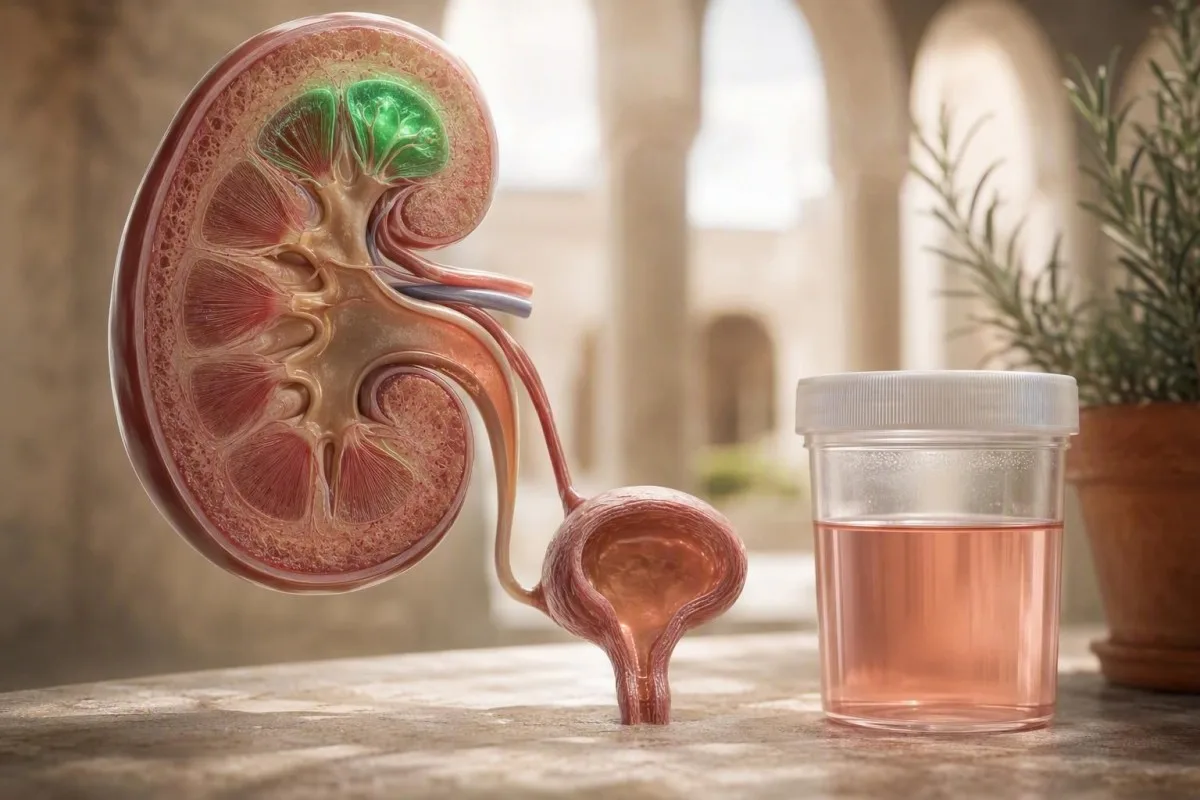
דגימת שתן ורודה או בצבע תה לאחר ריצה ארוכה היא לעיתים קרובות המטוריה זמנית הנגרמת מפעילות גופנית, אך צבע נראה לעולם אין לבטל אותו אוטומטית. התזמון, ממצאי המיקרוסקופ, תסמינים, ודגימה חוזרת לאחר מנוחה מתאימה מספרים את הסיפור האמיתי.


- המטוריה הנגרמת מפעילות גופנית בדרך כלל חולף תוך 24–72 שעות לאחר ריצה מאומצת; הימשכות מעבר ל-72 שעות דורשת בדיקה רפואית.
- סף המיקרוסקופיה של 3 או יותר תאי דם אדומים לשדה ראייה בעוצמה גבוהה (high-power field) בדגימת שתן שנאספה כהלכה, עומד בהגדרת ה-AUA למיקרוהמטוריה.
- אי-התאמה במקלון הבדיקה חשוב: מקלון דם חיובי עם אפס עד שני תאי דם אדומים לשדה ראייה בעוצמה גבוהה, מרמז על מיוגלובין או המוגלובין חופשי ולא על דימום בדרכי השתן.
- תזמון חוזר פרקטי: הימנע מפעילות גופנית קשה במשך 48–72 שעות, שתה כרגיל, ואז ספק דגימת שתן אמצעית (midstream).
- הערכה באותו יום הגיוני במקרים של קרישי דם, חוסר יכולת להטיל שתן, חום, כאב חמור באחת מצלעות הכליה, או שתן בצבע קולה עם כאבי שרירים ניכרים.
- דפוס אזהרה כלייתי הוא דם בתוספת חלבון, גלילי תאי דם אדומים, לחץ דם גבוה, או ירידה ב-eGFR — לא מקלון בדיקה בודד לאחר מרוץ.
- רמז לרבדומיוליזיס הוא שתן כהה באופן לא פרופורציונלי עם תסמינים שריריים חמורים ותוצאת קריאטין קינאז שלעיתים קרובות גבוהה פי 5 מהגבול העליון של המעבדה.
- הקשר לסיכון סרטני משנה את הסף לבדיקה: גיל, חשיפה לעישון, קרינה קודמת לאגן, והמטוריה גלויה מתמשכת - כולם חשובים.
מדוע ריצה יכולה לגרום לשתן להיראות ורוד
המטוריה של רצים היא בדרך כלל דליפה קצרת מועד של תאי דם אדומים לשתן לאחר פעילות גופנית מאומצת, שלעיתים קרובות נפתרת תוך 24–72 שעות מנוחה. ובכל זאת, שתן ורוד, אדום או בצבע קולה גלוי ראוי לבדיקה חוזרת שנאספה כראוי ולא להנחה מקרית שהריצה גרמה לכך.
במרפאה, הדפוס המרגיע פשוט: שינוי הצבע מתחיל לאחר ריצה ארוכה מהרגיל, מהירה, או בירידה; אין חום, כאב אגני עוויתי, או צריבה בשתן; ומיקרוסקופיה חוזרת לנורמה לאחר מנוחה. Kantesti הוא מנתח בדיקות דם מבוסס AI שיכולה למקם סמני כליות קשורים—קריאטינין, eGFR, אלקטרוליטים, וקריאטין קינאז—לצד היסטוריית הפעילות הגופנית, במקום לטפל בתוצאה אחת לאחר מרוץ כאבחנה.
המנגנונים המוצעים הם מגע מכני בדופן שלפוחית השתן, שינויים זמניים בזרימת דם כלייתית, ריכוז הקשור להתייבשות, ולעיתים פירוק תאי דם אדומים מפגיעת רגל חוזרנית. הראיות לכל מנגנון מעורבות בכנות, מכיוון שרוב המחקרים קטנים ומשתמשים במרחקי מרוץ שונים. ב-15 שנות הניסיון הקליני שלי, ההיסטוריה של מאמץ חדש חשובה יותר מהצבע בלבד; אולטרה-מרתון ראשון ו-5 ק"מ מוכר אינם נושאים את אותה הסתברות לפני בדיקה.
דם גלוי בשתן לאחר פעילות גופנית אינו שם נרדף להמטוריה של רצים שפירה. מדריך דגלים אדומים רחב יותר להמטוריה שימושי מכיוון שאבני כליה, זיהום, מחלה גלומרולרית, וסרטני דרכי השתן יכולים להופיע במקרה לראשונה לאחר ריצה.
ההגדרה המעשית
המטוריה מושרית מפעילות גופנית פירושה שתאי דם אדומים מופיעים בשתן זמן קצר לאחר מאמץ ונעלמים בדגימה חוזרת במנוחה. בדיקת סטיק חיובית לבדה אינה מוכיחה אבחנה זו, מכיוון שהריאגנט מזהה פיגמנט המוגלובין מתאי דם אדומים שלמים, המוגלובין חופשי, או מיוגלובין.
האם זו המטוריה, המוגלובין, או מיוגלובין?
בדיקת סטיק שתן שקוראת חיובי לדם יכולה לשקף תאי דם אדומים, המוגלובין, או מיוגלובין, ומיקרוסקופיה מבדילה ביניהם. שתן ורוד עם תאי דם אדומים שלמים רבים תומך בהמטוריה; שתן חום כהה עם מעט או ללא תאי דם אדומים מעורר חשש לפיגמנט מפגיעה בשריר או המוליזה.
מיקרוסקופיה של שתן המראה 3 או יותר תאי דם אדומים בשדה ראייה גבוה מאשרת מיקרוהמטוריה כאשר הדגימה נאספה בצורה נקייה. לעומת זאת, בדיקת סטיק חיובית חזקה עם 0-2 תאי דם אדומים בשדה ראייה גבוה צריכה לגרום לרופא לשקול מיוגלובינוריה, במיוחד לאחר חשיפה לחום, עומס שריר מסוג ריסוק, או כאבי שרירים מאוחרים קשים. צבע חום או קולה אופייני יותר לפיגמנט מרוכז מאשר לכמות קטנה של דימום בשלפוחית השתן.
מיוגלובין חשוב מכיוון שהוא יכול ללוות רבדומיוליזיס ופגיעה כליה חריפה. ריכוז קריאטין קינאז מעל פי 5 מהגבול העליון הנורמלי של המעבדה משמש בדרך כלל כסף ביוכימי לרבדומיוליזיס, אם כי תסמינים, אשלגן, קריאטינין, ותפוקת שתן קובעים את הדחיפות. ראה ההסבר המעשי שלנו על קריאטין קינאז גבוה באופן מסוכן עבור הדפוסים שלא כדאי לחכות איתם ללילה.
צבעי מאכל, סלק, אוכמניות, ריפמפיצין, פנאזופירידין והתייבשות יכולים גם הם לצבוע את השתן ללא תאי דם אדומים. א אבחנה מבדלת של שתן כהה מסייע להימנע מהטעות הנפוצה של הנחת שכל דגימה אדמדמה מייצגת דם.
מדוע ההבחנה משנה את הטיפול
המטוריה מתאי דם אדומים מפנה את תשומת הלב למערכת השתן, בעוד המוגלובינוריה מפנה את תשומת הלב לשרירי השלד ולהגנה על הכליות. שתיהן יכולות להתרחש לאחר אירועי סיבולת, אך רק מיקרוסקופיה ובדיקות דם ממוקדות יכולות למיין אותן באופן אמין.
כיצד לקרוא תוצאת בדיקת שתן לאחר ריצה
בדיקת השתן האינפורמטיבית ביותר לאחר ריצה משלבת בדיקה סטיק, מיקרוסקופיה, מדידת חלבון ומשקל סגולי. דם בבדיקה סטיק עם תאים אדומים חולפים וללא חלבון הוא לרוב בסיכון נמוך; דם בתוספת חלבון או גלילים דורש הערכת כליות מדויקת יותר.
תוצאת דם בבדיקה סטיק מדווחת כשלילית, עקבות, 1+, 2+, או 3+, אך היא אות איתות סקר ולא ספירת תאים. ה-AUA מגדיר מיקרוהמטוריה כ-3 תאי דם אדומים או יותר בשדה ראייה חזק לאחר בדיקה מיקרוסקופית., ולא רק תוצאת בדיקה סטיק (Barocas et al., 2020). הבחנה זו מונעת שליחת רצים להערכה מקיפה של סרטן מיותרת לאחר בדיקת סקר חיובית שגויה.
משקל סגולי מעל 1.030 מצביע על שתן מרוכז במעבדות רבות ויכול לגרום לצבע להיראות מטריד יותר, אך הוא אינו מסביר תאי דם אדומים מאושרים. יש לכמת חלבון של 1+ או יותר עם יחס אלבומין-קריאטינין בשתן או יחס חלבון-קריאטינין; קיימת חלבון עומס חולף, אך אלבומינוריה מתמשכת משנה את ההפרש לכיוון מחלת כליה גלומרולרית. ה מדריך מלא לבדיקת שתן שלנו מסביר מדוע אין למזג סמנים אלו לתוצאה אחת.
ה-AI של Kantesti מפרש קריאטינין ו-eGFR לצד ממצאי שתן, תזמון פעילות גופנית וערכים קודמים; קריאטינין מוגבר מעט יחיד לאחר מירוץ חם אינו שווה ערך למחלת כליות כרונית. בפועל, אני מבקש את המרחק, השטח, הטמפרטורה, שימוש בנוגדי דלקת, תזמון המחזור החודשי, והאם הדגימה ניתנה תוך שעתיים מסיום.
מתי יש לחזור על בדיקת שתן לאחר ריצה?
בדיקת שתן חוזרת 48–72 שעות לאחר הריצה הקשה האחרונה היא ברירת מחדל הגיונית להמטוריה חשודה של רצים. השתמש בדגימת בוקר ראשונה או דגימה אמצעית לאחר שתייה מספקת, אך אל תכריח שתיית ליטרים של מים מיד לפני כן מכיוון שדילול קיצוני יכול להסתיר ממצאים שימושיים.
עבור חריגות שגרתית לאחר מרוץ, אני בדרך כלל ממליץ על ללא אינטרוולים, גבעות, הרמת משקולות כבדה, או מרוצים עבור 48 שעות; לאחר מרתון, אולטרה-מרתון, מחלת חום, או כאבים חריגים, 72 שעות הגיוני יותר. שתייה רגילה לפי הצמא מספיקה. שתיית יתר עלולה להוריד את המשקל הסגולי מתחת ל-1.005 ולעיתים להקשות על פירוש תוצאה גבולית.
אם המיקרוסקופיה נותרת חיובית לאחר 72 שעות, קבע בדיקה אצל רופא ראשוני תוך ימים במקום בדיקות חוזרות לאחר אימונים. תוצאות מתמשכות מצדיקות מדידת לחץ דם, קריאטינין בסרום/eGFR, יחס אלבומין-קריאטינין בשתן, ושקילת תרבית או הדמיה בהתאם לסיכון. הקשר בין מאמץ, הידרציה, והערכה זמנית נמוכה יותר של סינון מכוסה במדריך שלנו מדריך eGFR לאחר מאמץ.
רץ חובב שעשיתי לו מרתון בן 52, היה לו 18 תאי דם אדומים לשדה ראייה בעוצמה גבוהה בערב שלאחר מרוץ חם, אך 0–1 תאי דם אדומים לאחר 72 שעות מנוחה; הקריאטינין שלו חזר מ-1.28 מ"ג/ד"ל ל-0.96 מ"ג/ד"ל. התוצאה הייתה מרגיעה, אך אותה תוכנית לא תספיק עבור מעשן בן 52 עם צבע שתן נראה חוזר.
אל תבדוק בקו הסיום אם ניתן להימנע מכך
בדיקה מיד לאחר מאמץ מגדילה את הסיכוי למצוא תאי דם אדומים זמניים, שתן מרוכז, וחלבון. זה יכול להיות שימושי קלינית בחשד לרבדומיוליזיס, אך זהו זמן גרוע לקבוע את קו הבסיס של רץ.
אילו דפוסי המטוריה לאחר ריצה מרגיעים בדרך כלל?
אירוע מוגבל מעצמו לאחר ריצה אינטנסיבית מרגיע יותר כאשר הוא חולף לחלוטין, ללא כאבים או תסמינים מערכתיים, וללא פרוטאינוריה או שינוי בתפקוד הכליות. מרגיע לא אומר מתעלמים; זה אומר מאושרר עם דגימה במנוחה.
הפנוטיפ בסיכון נמוך יותר הוא רץ צעיר או בגיל העמידה עם טריגר ברור של מאמץ, לחץ דם תקין, ללא היסטוריית עישון, ומיקרוסקופיה תקינה במנוחה. בהקשר זה, תוצאה בודדת וחולפת של 3–10 RBC/HPF לאחר מרוץ לרוב מסתדרת ללא טיפול. הייתי מתעד זאת בכל זאת, מכיוון שחזרה לאחר כל ריצה ארוכה מצדיקה בדיקה זהירה יותר מאשר אירוע חד-פעמי.
יחס אלבומין-קריאטינין תקין בשתן הוא בדרך כלל מתחת ל-30 מ"ג/גרם (מתחת ל-3 מ"מול/מ"ג), אם כי מעבדות ומדינות מדווחות על יחידות שונות. דם ללא אלבומין, גלילים, או תאי דם אדומים דיסמורפיים מצביע הרחק מדליפה גלומרולרית; זה לא מוכיח מקור שלפוחית השתן, אבל זה מכוון את השאלה הבאה. ההסבר שלנו של חלבון בשתן מכסה חלוקה זו בבירור.
חבלה בשלפוחית השתן סבירה יותר כאשר השתן מרוכז מאוד והרצים מסיימים עם שלפוחית כמעט ריקה. כמה קלינאים ספורטיביים מציעים לרוקן לפני ריצה ארוכה ולשתות באופן קבוע, אך זוהי עצה מניעתית עם עדויות ניסיוניות מוגבלות - לא תחליף להערכה כאשר הצבע נמשך.
לתוצאה תקינה יש חותמת זמן
בדיקה שלילית 3 ימים לאחר מרוץ מרגיעה לגבי אירוע זה, לא ערובה לכל החיים. המטוריה נראית חדשה חודשים לאחר מכן יש להעריך לגופה, במיוחד לאחר גיל 40 או עם חשיפה לעישון.
סימני אזהרה שהופכים המטוריה של רצים לפחות סבירה
המטוריה דורשת הערכה מיידית כאשר היא נמשכת לאחר 72 שעות, חוזרת ללא פעילות גופנית קשה, או מופיעה עם כאב, חום, קרישי דם, חלבון, או שינוי בתפקוד הכליות. השילוב של ממצאים אינפורמטיבי יותר מדגימה דרמטית לכשעצמה.
חפשו ייעוץ רפואי בזמן עבור שתן אדום נראה שנמשך מעבר ל- 24 שעות, גם אם אתם מרגישים טוב; הסף נמוך יותר עבור אנשים מעל גיל 40, מעשנים בהווה או בעבר, או כאלה עם הקרנות אגן קודמות. קווים מנחים של AUA משתמשים בחלוקת סיכונים המבוססת על גיל, עישון, דרגה והתמדה של דם מיקרוסקופי, והמטוריה גסה קודמת במקום לטפל בכל המטוריה מיקרוסקופית באופן זהה (Barocas et al., 2020).
תאי דם אדומים דיסמורפיים, גלילי תאי דם אדומים, אלבומינוריה משמעותית, יתר לחץ דם חדש, או eGFR מופחת מרמזים על מקור מסנן כליות ולא על שלפוחית שנחבטה. גלילי תאי דם אדומים אינם תוצאה צפויה של ריצה רגילה ויש לזרז הערכה כלייתית. ראה סקירה שלנו של גלילים גרנולריים ושתן מדוע ממצאי משקע חשובים.
תומאס קליין, MD, מייעץ לרצים לא לאבחן את עצמם רק לפי צבע: דלקת בדרכי השתן עלולה לגרום לצריבה, דחיפות, פיוריה, ולעיתים המטוריה, בעוד שאבנים לרוב יוצרות כאב פתאומי חד-צדדי ובחילות. תרבית מועילה ביותר לפני אנטיביוטיקה כאשר תסמיני זיהום נוכחים.
השילוב של דם + חלבון
המטוריה מאושרת עם פרוטאינוריה מדאיגה יותר מהמטוריה מבודדת מכיוון ששניהם עשויים לנבוע מהפילטר הגלומרולרי. יחס אלבומין-קריאטינין בשתן של 30 מ"ג/גרם או יותר יש לחזור עליו ולפרש אותו יחד עם לחץ דם ותפקוד כלייתי.
מתי שתן ורוד לאחר פעילות גופנית מצריך טיפול באותו יום?
קבלו הערכה דחופה באותו יום עבור קרישי דם, אי-יכולת להשתין, כאבי גב חמורים, חום, עילפון, ירידה בתפוקת השתן, או שתן כהה עם כאבי שרירים חמורים וחולשה. מאפיינים אלו מצביעים מעבר להמטוריה פשוטה הנגרמת מפעילות גופנית.
קרישי דם יכולים לחסום את זרימת השתן, ואי-יכולת להעביר שתן היא בעיה דחופה ללא קשר לכושר גופני. חום של 38.0°C או יותר עם כאבי גב יכול להצביע על זיהום בדרכי השתן העליונות; כאב קוליק חמור עם הקאות יכול להצביע על אבן. אף אחד מהמצבים הללו לא אמור להיות מטופל על ידי המתנה לבדיקה חוזרת לאחר הריצה.
שתן חום כהה לאחר מאמץ בתוספת רגישות שרירים סימפטית, חולשה, נפיחות, או פלט מופחת מעורר דאגה לרבדומיוליזיס. בדיקה ראשונית כוללת בדרך כלל קריאטין קינאז, קריאטינין, אשלגן, סידן, זרחן, ובדיקת שתן. א מדריך לרבדומיוליזיס של CrossFit רלוונטי מכיוון שפעילות גופנית אקסצנטרית שאינה מורגלת – לא ריצה בלבד – היא טריגר תכוף.
התייבשות חמורה יכולה לגרום לתוצאות כליות להיראות גרועות יותר, אך היא יכולה גם להתקיים לצד פגיעה אמיתית. אם את/ה סובל/ת מסחרחורת, בלבול, אי יכולת לבלוע נוזלים, או מפיק/ה מעט מאוד שתן 8–12 שעות, אל תנסו לפתור את הבעיה עם משקאות ספורט בבית.
הריון ותרופות נוגדות קרישה
רצות בהריון ואנשים הנוטלים תרופות נוגדות קרישה צריכים לדווח על המטוריה נראית לעין באופן מיידי. תרופות נוגדות קרישה יכולות להגביר דימום אך אינן מבטלות את הצורך לזהות את מקורו; הריון גם משנה את הסף לבדיקת זיהומים, אבנים ומחלות כליה.
מצבים שריצה יכולה לחשוף ולא לגרום להם
ריצה עשויה לחשוף בעיה קיימת במערכת השתן על ידי ריכוז השתן או הנעת בדיקה, ולא לגרום להמטוריה עצמה. אבנים, זיהומים, מחלות גלומרולריות, חריגות מבניות וממאירות נותרות חלק מהאבחנה המבדלת.
אבני כליה גורמות לעיתים קרובות לכאב חד-צדדי מצד אחד של הגב המוקרן למפשעה, בחילות, ותאי דם אדומים במיקרוסקופיה, אם כי קיימות אבנים ללא כאב. זיהום בדרכי השתן מפיק לרוב צריבה, תכיפות, דחיפות, ותאי דם לבנים; תוצאה שלילית של ניטריט אינה שוללת זאת. המדריך שלנו ל לאוקוציט אסטראז עם ניטריט שלילי מסביר תבנית מעורבת נפוצה זו.
גלומרולונפריטיס יכולה להתבטא לאחר זיהום בדרכי הנשימה העליונות עם שתן דמוי קולה, נפיחות, לחץ דם מוגבר, פרוטאינוריה, ותאי דם אדומים דיסמורפיים. בהנחיית KDIGO 2024 CKD, אלבומינוריה מתמשכת ו-GFR מופחת מטופלים כסמני סיכון כליה משלימים, לא כמדידות הניתנות להחלפה (KDIGO, 2024).
Kantesti הוא כלי לניתוח בדיקות דם מבוסס AI המסייע למשתמשים לזהות תבנית בין קריאטינין, eGFR, אלבומין, אלקטרוליטים, ו-CBC, אך הוא אינו יכול לאבחן את המקור האנטומי להמטוריה. הדמיה, מיקרוסקופיה, תרבית ובדיקה קלינית עדיין מבצעות את העבודה המכרעת.
סרטן אינו שכיח אצל רצים צעירים, אך אינו בלתי אפשרי אצל מבוגרים.
המטוריה נראית לעין מצדיקה הערכה גם כאשר פעילות גופנית נראית הסבר ברור, במיוחד אצל אנשים עם חשיפה לעישון או תסמינים מתמשכים. הסיכון גובר עם הגיל וחשיפה מצטברת לטבק, וזו הסיבה שתוצאות שתן זהות אינן מובילות לתכניות בדיקה זהות.
מי זקוק למעקב אורולוגי או נפרולוגי?
המטוריה מתמשכת לאחר דגימה חוזרת במנוחה צריכה להיות מוערכת סיכון עבור אורולוגיה, בעוד המטוריה בתוספת פרוטאינוריה, גלילים, יתר לחץ דם, או GFR פגוע מצביעה על נפרולוגיה. אנשים רבים זקוקים רק לבדיקות חוזרות בהובלת רפואת המשפחה; ההפניה תלויה בתבנית.
הערכה אורולוגית מתאימה במיוחד להמטוריה נראית לעין חוזרת, המטוריה מיקרוסקופית מתמשכת, היסטוריה של עישון, חשיפה תעסוקתית לאמין ארומטי, קרינה קודמת לאגן, או תסמיני שתן ללא זיהום. בהתאם לסיכון, רופאים עשויים להשתמש באולטרסאונד כליה ושלפוחית, CT אורוגרפיה, וציסטוסקופיה. טביעת שתן עקבות בודדת לאחר מרוץ אצל בת 24 היא תרחיש שונה מאוד מילנה אדומה חוזרת אצל מעשן לשעבר בן 58.
סקירה נפרולוגית הופכת לסבירה יותר עם יחס אלבומין-קריאטינין בשתן ≥30 מ״ג/ג׳, eGFR מתחת ל 60 מ״ל/דקה/1.73 מ״ר למשך 3 חודשים או יותר, גלילי תאי דם אדומים, או לחץ דם שקשה לשלוט בו. חתכים אלו חשובים מכיוון שמחלת כליה כרונית מוגדרת על ידי משך זמן וכן על ידי מדידה בודדת. קרא את שלנו לשלבי מחלת כליות כרונית עבור הקטגוריות המעשיות.
שירות פרשנות בדיקות המעבדה של Kantesti באמצעות AI יכול לסמן דפוס דם וחלבון הניתן לחזרה לדיון, במיוחד כאשר משתמשים מעלים תוצאות ממעבדות שונות. הוא צריך לתמוך, לא להחליף, קלינאי המחליט אם נדרש הדמיה של דרכי השתן או בדיקה מומחית.
אל תיתן לטיפול נוגד קרישה לסיים את השיחה
שימוש בנוגדי קרישה משנה את חומרת הדימום אך אינו קובע סיבה להמטוריה. מניסיוני, ייחוס דם חוזר בשתן לאפיקסבאן, וורפרין או אספירין ללא בירור עלול לעכב זיהוי של אבנים, זיהום או מחלה מבנית.
אילו בדיקות דם מסייעות לאחר המטוריה הקשורה לפעילות גופנית?
בדיקות הדם השימושיות תלויות בתסמינים: קריאטינין, eGFR, אלקטרוליטים וקריאטין קינאז מעריכים לחץ כליות ושרירים, בעוד ש-CBC מעריך רמזים לאנמיה או זיהום. פאנלים רחבים שגרתיים פחות שימושיים מבדיקות ממוקדות לאחר היסטוריה מדויקת ובדיקת שתן.
קריאטינין יכול לעלות באופן חולף לאחר פעילות גופנית מתמשכת עקב חילוף חומרים בשרירים, ירידה בפרפוזיה של הכליות והתייבשות. משוואות eGFR פחות אמינות במהלך שינוי קריאטינין מהיר, וזו הסיבה לערך חוזר לאחר 48–72 שעות התאוששות רגילה משמעותית יותר מתוצאת קו סיום. שלנו מדריך לבדיקה חוזרת של קריאטינין הקשורה לפעילות גופנית נותן הקשר לטריגר חרדה תכוף זה.
קריאטין קינאז בעל טווח פוסט-מאמץ רחב: ספורטאים מאומנים יכולים להראות עליות לאחר מרוץ ללא פגיעה בכליות, בעוד שערכים גבוהים פי כמה מהגבול העליון המקומי בתוספת תסמינים מצריכים הערכה דחופה. אשלגן מעל 6.0 ממול/ל׳ הוא עלול להיות מסוכן ומצריך הערכה קלינית דחופה, במיוחד אם תפקוד הכליות נפגע או חשוד בפגיעה בשריר.
CBC שימושי ביותר כאשר יש עייפות, חיוורון, דימום וסתי כבד, המטוריה חוזרת או חשש למחלה מערכתית. המוגלובין יכול לרדת לאחר אירועי סיבולת מהרחבת נפח פלזמה, איבוד ברזל או המוליזה; פריטין יש לפרש הרחק מדלקת חריפה ואימון קשה. רצי סיבולת עשויים למצוא שלנו סקירת בדיקות דם לספורטאים שימושי עבור קו בסיס סביר.
אל תאבחן מחלת כליות על סמך פאנל אחד משבוע המרוץ
עלייה בקריאטינין של 0.3 מ"ג/ד"ל או יותר יכולה לעמוד בקריטריון פגיעה חריפה בכליות במסגרת הזמן הנכונה, אך ההקשר ובדיקה חוזרת הם מכריעים לאחר מרוץ. תפוקת שתן נמוכה, אשלגן עולה והתרוממות מתמשכת נושאים יותר משקל מתוצאה גבולית מבודדת.
כיצד לאסוף דגימת שתן חוזרת שרופאים יכולים לסמוך עליה
דגימת שתן אמצעית נקייה לאחר 48-72 שעות ללא פעילות גופנית מאומצת היא הדרך הטובה ביותר לבדוק אם ההמטוריה חלפה. שגיאות איסוף, זיהום וסתי ודגימה ישנה עלולים ליצור תוצאות מטעות.
שטוף ידיים, התחל להשתין לשירותים, ואז אסוף את החלק האמצעי מבלי לגעת בחלק הפנימי של המיכל. מסור את הדגימה מיד – באופן אידיאלי בתוך שעתיים—או עקוב אחר הוראות הקירור של המעבדה. עמידה ממושכת משנה את מראה התאים ויכולה להפוך את המיקרוסקופיה לפחות אמינה.
הימנע מבדיקות במהלך וסת פעילה במידת האפשר; אם הבדיקה אינה יכולה לחכות, יידע את הקלינאי והמעבדה. זיהום וגינלי עלול לייצר תאי דם אדומים וחלבון נראים לעין, בעוד שתאי אפיתל קשקשיים מעידים לעתים קרובות על דגימה שנאספה בצורה גרועה. המדריך שלנו ל תאי אפיתל בשתן מסביר מדוע זו אינה הערת שוליים זניחה במעבדה.
תומאס קליין, MD, ממליץ לתעד ארבעה פרטים לצד הדגימה: הפעילות המאומצת האחרונה, משך האירוע, טמפרטורת הסביבה החיצונית, וכל התרופות שנלקחו ב-72 השעות שקדמו לכך. תוצאה ללא תזמון קשה יותר לפירוש - במיוחד כאשר השתן נאסף לאחר אימון כפול.
בדיקת שתן ראשון בבוקר לעומת בדיקה במהלך היום
דגימה ראשונה בבוקר מרוכזת וטובה לזיהוי חריגות קטנות, אך דגימת אמצע היום עם הידרציה תקינה מקובלת אם איסוף הדגימה נקי יותר. עקביות חשובה יותר להשוואה סדרתית: השתמש בתנאים דומים בערך בכל בדיקה חוזרת.
שתייה, תרופות נגד כאבים, ותוספים המשנים את התמונה
התייבשות יכולה לרכז את השתן ולהגביר עומס כלייתי, בעוד ש-NSAIDs יכולים להפחית את זרימת הדם לכליות במהלך אימוני סיבולת. אף אחד מהגורמים אינו מוכיח את הגורם להמטוריה, אך שניהם משפיעים על מידת הזהירות שבה קלינאים מפרשים תוצאה לאחר ריצה.
עבור רוב הרצים, שתייה לפי תחושת צמא והחלפת נוזלים שאבדו בהדרגה בטוחה יותר מאשר הכרחת נוזלים באופן נוקשה. נתרן נמוך מאוד כתוצאה מצריכת מים מופרזת עלול להיות מסוכן; נתרן בסרום מתחת 125 ממול/ל׳ עם כאב ראש, הקאות, בלבול או פרכוסים הוא מצב חירום. צבע השתן הוא רמז גס להידרציה, לא מד מים מדויק.
איבופרופן, נפרוקסן ו-NSAIDs אחרים יכולים להפחית את זרימת הדם הכלייתית המתווכת על ידי פרוסטגלנדינים, במיוחד במהלך עומס חום, הקאות או אירועים ארוכים. אני ממליץ למטופלים להימנע מ-NSAIDs פרופילקטיים שגרתיים לפני מרתונים, אלא אם כן הקלינאי שלהם נתן סיבה ברורה. הקשר התרופתי נבחן במאמר שלנו על בטיחות מגמות מעבדה.
ויטמין C במינון גבוה עלול להפריע לתגובות מסוימות של בדיקות שתן בסטיק, ותוספים המשווקים לביצועים מכילים לעיתים חומרים מעוררים או משתנים שלא הוזכרו. הביאו את האריזות או תצלומים ברורים לפגישה; זה לעתים קרובות שימושי יותר מאשר לנסות לזכור את רשימת המרכיבים של אבקה ממותגת. שלנו מדריך בטיחות תוספים לספורטאים מציע רשימת בדיקה הגיונית.
הידרציה אינה טיפול לדם מתמשך
מים עשויים לתקן ריכוז, אך הם אינם מטפלים באבן, זיהום, תהליך גלומרולרי או מקור מבני בדרכי השתן. אם תאי דם אדומים נותרים בדגימה במנוחה, שנאספה כראוי, ההסלמה צריכה להתבסס על הדפוס ולא על ניסוי הידרציה נוסף.
האם ניתן להמשיך לרוץ לאחר המטוריה הנגרמת מפעילות גופנית?
רוב הרצים יכולים לחזור בהדרגה לאחר שצבע השתן חזר לקדמותו, התסמינים נעדרים, ודגימה חוזרת במנוחה מרגיעה. אל תחזור לאימונים קשים כל עוד השתן נותר אדום באופן נראה לעין, תוצאות הכליות אינן תקינות, או תסמיני שרירים מצביעים על רבדומיוליזה.
לאחר אירוע בודד ולא מסובך, אני בדרך כלל מציע ריצה קלה בלבד למשך מספר ימים, ואז בנייה הדרגתית של נפח ועצימות על פני 7–14 ימים. הרץ צריך לעצור ולבקש הערכה מחדש אם הצבע חוזר, מופיע כאב, או נפח השתן יורד. זהו גישה קלינית פרגמטית, לא מרשם שהוכח בניסוי.
המטוריה חוזרת לאחר אותו מרחק עשויה להצדיק ניסיונות מעשיים: הימנע ממירוץ מיובש, הטלת שתן לפני ריצה ארוכה, הוספת אימוני ירידה לאט יותר, ובדיקת התאמת נעליים או שטח. שמור יומן של קצב, חום, משך, צבע שתן, ותוצאות דגימה. מדריך מעבדתי לרץ מרתון יכול לסייע להבחין בין סימני התאוששות לבין סיבות להפסקת אימונים.
אל תתאמן דרך המטוריה נראית בלתי מוסברת רק בגלל שיש לך אירוע מתוכנן. ספורטאים הם לעתים קרובות מצוינים בסבילת אי נוחות; המיומנות הקשה יותר היא זיהוי שהתמדה היא מידע אבחוני, לא מבחן קשיחות.
בנה קו בסיס אמיתי
בדיקת שתן ובדיקת כליות בקו בסיס שבוצעה לפחות 72 שעות לאחר אימון קשה יכולה להפוך תוצאות לאחר מרוץ לקלות הרבה יותר לפירוש. זה שימושי במיוחד עבור אולטרה-רצים, אנשים עם כליה אחת, או ספורטאים המשתמשים בתרופות המשפיעות על פרפוזיה כלייתית.
מה לומר לאיש הצוות הרפואי שלך לגבי דם בשתן לאחר פעילות גופנית
הדרך המהירה ביותר להערכת המטוריה שימושית היא ציר זמן תמציתי: צבע השתן, מינון פעילות גופנית, תסמינים, תרופות, ותזמון בדיקה חוזרת. הבא ערכים מעבדתיים אמיתיים ולא רק הודעה שהדגימה “חיובית לדם”.”
ציין אם השתן היה ורדרד, אדום בוהק, בצבע תה, או הכיל קרישי דם; אם הצבע הופיע לפני, במהלך, או אחרי פעילות גופנית; והאם הוא נעלם לאחר ההשתנה הראשונה. כלול צריבה, דחיפות, חום, כאבי אגף, בחילה, נפיחות, ותפוקת שתן מופחתת. מפורט רפרנס צבעי שתן יכול לעזור לתאר את התצפית במדויק מבלי לפרש אותה יתר על המידה.
הבא בדיקות שתן קודמות, ערכי קריאטינין/eGFR, מדידות לחץ דם, היסטוריית עישון, היסטוריה משפחתית של מחלות כליה, ורשימת תרופות/תוספים. Kantesti היא פלטפורמת פרשנות לביומרקרים של AI שיכולה לארגן ערכי בדיקות דם חוזרות ולהדגיש שינויים משמעותיים, אך קלינאי חייב לחבר את הערכים הללו עם מיקרוסקופיית שתן ובדיקה.
נכון ל-3 בספטמבר 2026, העיקרון הקליני נותר פשוט: פעילות גופנית היא הסבר סביר רק לאחר שהתוצאה חולפת וסימנים מתחרים נעדרים. אם אינך בטוח, שאל אם אתה זקוק למיקרוסקופיה, תרבית, יחס אלבומין-קריאטינין, קריאטינין חוזר, הדמיה, או הפניה – לא רק בדיקת סרגל נוספת.
שאלות שכדאי לשאול
שאל אם נצפו תאי דם אדומים שלמים, אם חלבון או גלילים היו נוכחים, ומתי צריכה להתרחש בדיקה חוזרת במנוחה. שלוש תשובות אלו בדרך כלל מבהירות אם הצעד הבא הוא מעקב השגחתי, בדיקת כליות, בדיקת זיהום, או הערכה אורולוגית.
תוכנית פעולה הגיונית להמטוריה של רצים
לאפיזודה אחת ללא כאב לאחר ריצה קשה, לנוח מפעילות גופנית מאומצת למשך 48–72 שעות ולחזור על בדיקת שתן "clean-catch"; לפנות מוקדם יותר לטיפול במדורים אדומים או צבע נראה מתמשך. המטרה אינה פניקה ולא ביטול – היא הוכחה שהממצא נפתר.
שלב אחד: הפסק אימון קשה, שתה כרגיל, ורשום את התזמון והתסמינים. שלב שני: חזור על מיקרוסקופיה לאחר 48–72 שעות. שלב שלוש: אם הדם נמשך, או אם חלבון, גלילים, כאב, חום, קרישי דם, תפוקת שתן נמוכה, או סמני כליה חריגים מופיעים, קבע הערכה רפואית באופן מיידי. רצף זה מונע הן מחלה שהוחמצה והן הדמיה מיותרת לאחר דגימת קו סיום חד פעמית.
כאשר צוות הקלינאי שלנו סוקר נתוני מעבדה שהועלו, אנו מתעדפים דפוסים: קריאטינין עולה בתוספת CK גבוה ותפוקת שתן נמוכה דחופים יותר מקריאטינין יציב עם בדיקת סרגל שתן חולפת. השיטה והבטיחות של Kantesti מתוארות ב מידע על אימות קליני, שלנו, והפיקוח הרפואי שלנו מפורט דרך המועצה המייעצת הרפואית.
רוב המטופלים מוצאים שבדיקה חוזרת בזמן הופכת שינוי צבע מבהיל לתוכנית ברורה. אבל אם האינסטינקט שלך אומר שמשהו לא בסדר – במיוחד אם השתן עדיין אדום מחר – סמוך על האות הזה וקבל הערכה.
כלל המשפט היחיד
שתן ורדרד פעם אחת לאחר ריצה קשה עשוי להיות חולף; שתן ורדרד שנמשך, חוזר, או מופיע עם תסמינים הוא המטוריה עד שיוערך כראוי.
שאלות נפוצות
כמה זמן נמשך המטוריה של רצים?
המטוריה של רצים חולפת בדרך כלל תוך 24–72 שעות לאחר הפסקת פעילות גופנית מאומצת. בדיקת שתן חוזרת מעשית היא דגימת אמצע זרם נקייה שנאספת לאחר 48–72 שעות ללא ריצה קשה או הרמת משקולות כבדה. המטוריה גלויה ורדרדה או אדומה הנמשכת מעבר ל-24 שעות, או המטוריה מיקרוסקופית הנמשכת לאחר 72 שעות, צריכה להיבדק על ידי איש מקצוע רפואי. חום, קרישי דם, כאבי צד חמורים, ירידה בתפוקת השתן, או כאבי שרירים חמורים מצדיקים הערכה באותו היום.
האם דם בשתן לאחר פעילות גופנית זה תקין?
דם בשתן לאחר פעילות גופנית יכול להיות השפעה חולפת של ריצה נמרצת, התייבשות, פגיעה בדופן השלפוחית, או שינויים קצרי טווח בזרימת הדם בכליות, אך הוא אינו תקין באופן אוטומטי. בדיקה מיקרוסקופית המאשרת 3 תאי דם אדומים או יותר לשדה ראייה בעוצמה גבוהה (high-power field) עומדת בהגדרת ה-AUA להמטוריה מיקרוסקופית (microhematuria). תוצאה שנעלמת בדגימה חוזרת לאחר מנוחה מרגיעה, בעוד שדם, חלבון, גלילים (casts), כאב או תסמינים בשתן המתמידים דורשים הערכה נוספת. צבע נראה של השתן תמיד צריך להיות מדווח, במיוחד במבוגרים עם חשיפה לעישון או אפיזודות חוזרות.
האם התייבשות יכולה לגרום לשתן ורדרד לאחר ריצה?
התייבשות יכולה לגרום לשתן להיראות כהה יותר ולהגביר ממצא של המטוריה לאחר מאמץ על ידי ריכוז תכולת השתן, אך התייבשות לבדה אינה מסבירה באופן מהימן תאי דם אדומים מאושרים. צפיפות שתן ספציפית מעל 1.030 מצביעה לעתים קרובות על שתן מרוכז במעבדות רבות. יש לשתות כרגיל עד לתחושת צמא ולחזור על דגימת "לכידה נקייה" לאחר 48–72 שעות מנוחה, במקום לנסות "לשטוף" את התוצאה עם מים מופרזים. צמא עז, סחרחורת, תפוקת שתן נמוכה מאוד, או בלבול מחייבים בדיקה רפואית מיידית.
מה ההבדל בין המטוריה למיגלובינוריה לאחר פעילות גופנית?
המטוריה פירושה נוכחות של תאי דם אדומים שלמים בשתן, בעוד ש מיוגלובינוריה משקפת פיגמנט שריר המשתחרר לאחר פגיעת שריר. סטיק בדיקה יכול להיות חיובי לדם בשני המצבים, ולכן מיקרוסקופיה היא מכרעת: מיוגלובינוריה מייצרת לעיתים קרובות סטיק בדיקה חיובי עם 0–2 תאי דם אדומים לשדה ראייה בעוצמה גבוהה. כאבי שרירים חזקים, חולשה, נפיחות, שתן כהה כמו קולה, או ערך קריאטין קינאז מעל פי 5 מהגבול העליון של המעבדה מעוררים חשד לרבדומיוליזיס. דפוס זה דורש הערכה קלינית דחופה מכיוון שאשלגן ותפקוד הכליות יכולים להשתנות במהירות.
האם עליי להפסיק לרוץ אם יש לי המטוריה הנגרמת מפעילות גופנית?
הפסק ריצות מאומצות עד שמצב צבע השתן חזר לקדמותו ועד שהשלמת בדיקת חזרה במנוחה, בדרך כלל לאחר 48-72 שעות. אם הדגימה החוזרת תקינה ואין לך כאב, חום, קרישים, המטוריה, או חריגות בתפקוד הכליות, רוב הרצים יכולים לחזור בהדרגה במהלך כ-7-14 ימים. אל תחזור לאימונים אינטנסיביים כאשר השתן נותר אדום או כהה באופן נראה לעין, כאשר תפוקת השתן מופחתת, או כאשר קיימים תסמינים חמורים של השרירים. פרקים חוזרים לאחר אימונים דומים מצריכים הערכה רפואית גם אם כל פרק חולף.
מתי המטוריה מצריכה אורולוג?
המטוריה מיקרוסקופית מתמשכת לאחר דגימה חוזרת במנוחה, המטוריה גלויה חוזרת, או המטוריה באדם עם היסטוריה של עישון, הקרנות אגן קודמות, או תסמינים בדרכי השתן, מצדיקים לעיתים קרובות הערכת סיכון אורולוגית. אורולוגים עשויים לשקול אולטרסאונד, CT אורוגרפיה וציסטוסקופיה בהתאם לגיל ולסיכון הכולל במקום להשתמש בבדיקה אחת לכולם. המטוריה עם אלבומינוריה של 30 מ"ג/גרם או יותר, גלילי כדוריות דם אדומות, יתר לחץ דם, או eGFR מתחת ל-60 מ"ל/דקה/1.73 מ"ר מצביעים בחוזקה רבה יותר על נפרולוגיה. המומחיות הנכונה תלויה בתבנית המלאה של בדיקות השתן והדם.
קבל ניתוח בדיקות דם מבוסס בינה מלאכותית כבר היום
הצטרף ליותר מ-2 מיליון משתמשים ברחבי העולם שסומכים על Kantesti לצורך ניתוח מיידי ומדויק של בדיקות מעבדה. העלה את תוצאות בדיקות הדם שלך וקבל פרשנות מקיפה של ביומרקרים של 15,000+ בתוך שניות.
📚 פרסומי מחקר עם הפניות
Klein, T., Mitchell, S., & Weber, H. (2026). סיוע קליני רב-לשוני מבוסס בינה מלאכותית לטריאז' מוקדם של האנטאווירוס: תכנון, אימות הנדסי ופריסה בעולם האמיתי על פני 50,000 דוחות בדיקות דם מפורשים. מחקר רפואי של Kantesti בינה מלאכותית.
Klein, T., Mitchell, S., & Weber, H. (2026). Benchmark טכני אוטומטי מבוסס-רובריקה, שנרשם מראש, של מנוע פרשנות בדיקות הדם של Kantesti על 100,000 מקרי מבחן סינתטיים. מחקר רפואי של Kantesti בינה מלאכותית.
📖 הפניות רפואיות חיצוניות
⚕️ הצהרת אחריות רפואית
מאמר זה מיועד למטרות חינוכיות בלבד ואינו מהווה ייעוץ רפואי. תמיד יש להתייעץ עם גורם מוסמך בתחום הבריאות לצורך החלטות אבחון וטיפול.
אותות אמון E-E-A-T
הִתנַסוּת
סקירה קלינית בהובלת רופא של תהליכי עבודה לפענוח בדיקות מעבדה.
מוּמחִיוּת
רפואה מעבדתית מתמקדת באופן שבו סמנים ביולוגיים מתנהגים בהקשר קליני.
סמכותיות
נכתב על ידי ד״ר תומאס קליין, עם סקירה על ידי ד״ר שרה מיטשל ופרופ׳ ד״ר האנס וובר.
אֲמִינוּת
פרשנות מבוססת-ראיות עם מסלולי המשך ברורים כדי להפחית בהלה.