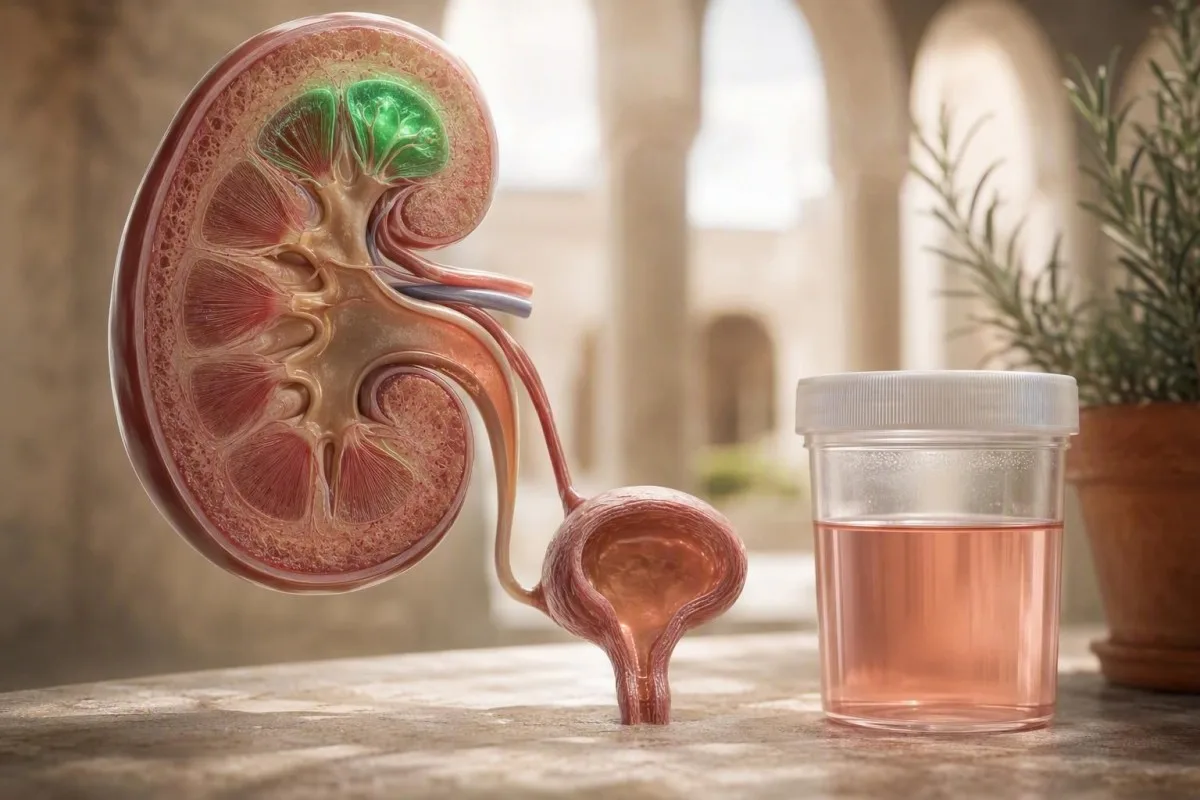
Lasterketa luze baten ondoren gernu lagin arrosa edo te kolorekoa izatea behin-behineko ariketa-induzitutako hematuria izan ohi da, baina ez da inoiz automatikoki baztertu behar ikusgai dagoen kolorea. Uneak, mikroskopioaren aurkikuntzek, sintomek eta behar bezala atseden hartutako lagin errepikatu batek kontatzen dute benetako istorioa.


- Ariketa eragindako hematuria normalean 24–72 ordu barru desagertzen da ariketa fisiko estentsiboaren ondoren; 72 ordu baino gehiago irauten badu, berriz aztertu behar da medikuek.
- Mikroskopiaren atalasea 3 edo gehiago globulu gorri zeluletako potentzia handiko eremu bakoitzeko, behar bezala jasotako gernu-lagin batean, microhematuriaren AUA definizioa betetzen du.
- Dipstick-etako desegokitasuna garrantzitsua da: odol-konponketa positiboa, potentzia handiko eremu bakoitzeko zero edo bi globulu gorrirekin, gernu-odoljarioa baino gehiago mioglobina edo hemoglobin librea adierazten du.
- Errepikatzeko denbora praktikoa da: saihestu ariketa fisiko gogorra 48–72 orduz, hidratatu normalean, eta gero eman gernu-lagin bat erdiko isuritik.
- Egun bereko ebaluazioa zentzuzkoa da odol-koaguluak, gernua pasatzeko ezintasuna, sukarra, alde bakarreko mina bizia edo muskulu-min nabarmena duen pixa kola kolorekoa bada.
- Giltzurrunen abisu-eredua odola gehi proteinak, globulu gorrien galdarak, presio arterial altua edo beherakako eGFR bat dira—ez lasterketa osteko dipstick isolatu bat.
- Rabdomiolisi zantzurra gernu oso iluna da, muskulu-sintoma larriak eta kreatina kinasa laborategiko gehienezko mugaren gainetik 5 aldiz baino gehiagoko emaitza duena.
- Minbiziaren arriskuaren testuingurua azterketarako atalasea aldatzen du: adina, erretzeari izandako esposizioa, aurretiko pelbiseko erradiazioa eta hematuria bisual iraunkorrak axola dute.
Zergatik egin dezake korrikak pixa arrosa izan?
Korrikalariaren hematuria, normalean, gorputz-zelulen isuri labur bat da gernuan ariketa bizi baten ondoren, askotan 24–72 orduko atsedenean bere onera etortzen dena. Hala ere, gernu arrosak, gorriak edo kolako kolorekoak ikustea merezi du proba errepikatu bat behar bezala jasotzea, korrikak eragin duela besterik gabe suposatzea baino.
Klinikan, eredu lasaigarria zuzena da: kolore-aldaketa ezohiko lasterketa luze, azkar edo beheranzko baten ondoren hasten da; ez dago sukarrik, albo-min koliikorik edo gernu-erretzerik; eta mikroskopia bere onera dator atsedenean. Kantesti AI odol-analisien analizatzaile bat da horrek giltzurrunetako markatzaile erlazionatuak—kreatinina, eGFR, elektrolitoak eta kreatina kinasa—ariketa-historiaren ondoan jar ditzake, lasterketa osteko emaitza bakar bat diagnostiko gisa tratatu beharrean.
Proposatutako mekanismoak txahalaren hormaren ukipen mekanikoa, giltzurrunetako odol-fluxuaren aldi baterako aldaketak, deshidratazioarekin lotutako kontzentrazioa eta, batzuetan, errepikatutako oin-kolpeen ondoriozko gorputz-zelulen haustura dira. Mekanismo bakoitzaren ebidentzia nahasia da, zintzotasunez esanda, azterketa gehienak txikiak direlako eta lasterketa-distantzia desberdinak erabiltzen dituztelako. Nire 15 urteko praktika klinikoan, ahalegin berri baten historia koloreak bakarrik baino axola gehiago du; lehen ultramaratoiak eta ohiko 5 km-koak ez dute proba aurreko probabilitate bera.
Ariketaren ondoren gernuan odol agerikoa ez da korrikalari-hematuria onbera sinonimoa. A hematuria gorri-bandera gida zabalagoa baliagarria da, giltzurrunetako harriak, infekzioak, glomerulopatiak eta gernu-bideko minbiziak korrikaren ondoren bakarrik ager daitezkeelako.
Definizio praktikoa
Ariketak eragindako hematuriak gorputz-zelulak agertzea esan nahi du gernuan esfortzuaren ondoren eta atseden hartutako lagin errepikatu batean desagertzea. Dipstick positibo batek bakarrik ez du diagnostiko hau frogatzen, erreaktiboak heme pigmentua detektatzen duelako gorputz-zelula osorik, hemoglobin asketik edo mioglobinatik.
Hematuria al da, hemoglobinaren edo mioglobinaren eraginez?
Odolagatik positibo irakur daitekeen gernu dipstick batek gorputz-zelulak, hemoglobina edo mioglobina ispilu ditzake, eta mikroskopia bereizten ditu. Gorputz-zelula asko dituen gernu arrosak hematuria onartzen du; gorputz-zelula gutxi edo bat ere ez duen gernu marroi ilunak muskulu-lesio edo hemolisiaren pigmentuaren kezka pizten du.
Gernu-mikroskopia erakusten du 3 edo gehiago gorputz-zelula eremu altu bakoitzeko mikromaturia baieztatzen du lagina garbi jasotzen denean. Aitzitik, 0–2 gorputz-zelula eremu altu bakoitzeko dipstick positibo sendo batek mioglobinuria kontuan hartu beharko luke kliniko batek, batez ere beroa, muskulu-karga mota birrintzailea edo muskuluen min atzeratua izan ondoren. Kolore marroia edo kola gehiago da pigmentu kontzentratu baten tipikoa, maskuriaren odoljario txiki batena baino.
Mioglobina axola du, rabdomiolisia eta giltzurruneko lesio akutua lagun baititzake. Kreatina kinasa kontzentrazio bat baino gehiago laborategiko ohiko gehienezko mugaren 5 aldiz rabdomiolisiaren atalase biokimiko gisa erabiltzen da, nahiz eta sintomak, potasioa, kreatinina eta gernuaren irteerak premiazkoa zehaztu. Ikusi gure azalpen praktikoa Kreatin kinasa maila altua arriskutsua egunaren buruan itxaron behar ez duten ereduetarako.
Elikagai-koloratzaileek, erremolatxa, masustak, rifampizina, fenazopiridina eta deshidratazioak ere kolorezta dezakete gernua, baina errediaziorik gabe. A gernu ilunaren diferentziala lagin gorriztatu guztiak odola adierazten duela sustratzea ohiko akatsa saihesten laguntzen du.
Zergatik aldatzen da bereizketa horrek arreta
Errezelen hematuriak gernu-traktuari arreta bideratzen dio, mioglobinuriak, berriz, gihar eskeletikoei eta giltzurrunen babesari. Biak gerta daitezke iraunpen luzeko ariketa ondoren, baina mikroskopia eta odol-analisiaren bidez soilik bereiz daitezke fidagarritasunez.
Nola irakurri korrika osteko gernu-analisiaren emaitza
Ariketa ondorengo gernu-analisiaren emaitzarik informatiboenak dipstick, mikroskopia, proteina neurketa eta grabitate espezifikoa konbinatzen ditu. Dipstick-ean odola, errezel iragankorrak eta proteina gabekoak arrisku gutxikoak dira; odol gehi proteina edo cakes-ek giltzurrunen azterketa zehatzagoa behar dute.
Dipstick-eko odol emaitza negatiboa, arrastoa, 1+, 2+ edo 3+ gisa ematen da, baina zelula kopuru bat baino gehiago seinale bat da. AUAk mikrohematuria deskribatzen du mikroskopian hiru zelula gorri baino gehiago eremu ikusgai altu bakoitzeko, ez bakarrik dipstick emaitza bat (Barocas et al., 2020). Bereizketa honek korrikalariak alferrikako minbiziaren azterketa batean ez sartzea ekiditen du, faltsua den emaitza baten ondoren.
Grabitate espezifikoa altua 1.030 gernu kontzentratua adierazten du laborategi askotan eta koloreak beldurgarriagoak izan daitezke, baina ez ditu errediaz berretsiak azaltzen. 1+ edo gehiagoko proteina gernu albumin-kreatinina erlazio edo proteina-kreatinina erlazio batekin kuantifikatu behar da; ariketa-proteinuria iragankorra existitzen da, baina persistentzia albuminuriak, gaixotasun glomerulodunarekiko desberdintasuna aldatzen du. Gure gernu-analisi gida osoa azalduz zergatik ez diren marka hauek emaitza bakarrean bateratu behar.
Kantesti AI-k kreatinina eta eGFR interpretatzen ditu gernuko aurkikuntzekin, ariketa-denborarekin eta aurreko balioekin batera; lasterketa bero baten ondoren kreatinina apur bat igota edukitzea ez da giltzurrunetako gaixotasun kronikoaren baliokidea. Praktikan, distantzia, lurzorua, tenperatura, antiinflamatorioen erabilera, hilekoaren egutegia eta lagina amaitu eta bi ordutan eman zen galdetzen dut.
Noiz errepikatu behar da gernu-proba bat korrika egin ondoren?
Korrikalariaren hematuria susmatzeko, gernu-azterketa errepikatu 48–72 ordu igaro ondoren azken korrika gogorretik, lehenetsi zentzuzko bat da. Goizeko lehenengo edo ondo hidratatutako erdiko gernu-lagin bat erabili, baina ez edan litroka ur berehala aurretik, gehiegizko diluzioak aurkikuntza baliagarriak ezkuta ditzakeelako.
Lasterketa osteko ohiko anomalia batentzat, normalean ez dut gomendatzen tarteak, aldapak, pisu astunak altxatzea edo lasterketak egitea 48 ordutan; maratoi, ultramaratoi, bero-gaixotasun edo min ezohiko baten ondoren, 72 orduz defendagarriagoa da. Egarriaren araberako edate arrunta nahikoa da. Gehiegizko hidratazioak grabitate espezifikoa 1.005 azpitik jaitsi dezake eta, batzuetan, muga bateko emaitza interpretatzea zaildu dezake.
Mikroskopia 72 ordu igaro ondoren positiboa izaten jarraitzen badu, antolatu lehen mailako arretako berrikuspena egun gutxiren buruan, ariketen ondoren behin eta berriro aztertzearen ordez. Emaitza iraunkorrek odol-presioaren neurketa, serum kreatinina/eGFR, gernu albumin-kreatinina ratioa eta kulturaren edo irudien azterketaren kontuan hartzea eskatzen dute arriskuaren arabera. Ariketa, hidratazioa eta iragazketa-balioespen behin-behineko jaitsiera baten arteko erlazioa gure ariketa osteko eGFR gidan.
Ikusi nuen 52 urteko maratoi-korrikalari afizionatu batek erredura bero baten ondorengo arratsaldean mila potentzia eremuko 18 zelula gorri zituen, baina 72 ordu atseden hartu ondoren 0–1 zelula gorri; bere kreatinina 1,28 mg/dL-tik 0,96 mg/dL-ra itzuli zen. Emaitza lasaigarria izan zen, baina plan bera ez zen nahikoa izango erretzaile 52 urteko batek, errepikatutako gernu kolore ikusgarriarekin.
Ez aztertu helmugan saihestu dezakezun bada
Ariketa egin eta berehala aztertzeak behin-behineko zelula gorriak, gernu kontzentratua eta proteina aurkitzeko aukera maximizatzen du. Hori klinikoki erabilgarria izan daiteke susmatutako rabdomiolisian, baina denbora txarra da korrikalariaren oinarrizko egoera ezartzeko.
Zein korrika osteko hematuria-eredu dira normalean lasaigarriak?
Ariketa bizi baten ondoren gertatutako pasarte mugatu bat lasaigarriagoa da erabat sendatzen denean, minik edo sintoma sistemikorik ez duenean, eta proteinuriarik edo giltzurrun-funtzioaren aldaketarik ez duenean. Lasaigarria ez da ahaztea esan nahi, baizik eta atseden hartutako laginarekin berretsi.
Arrisku txikiagoko fenotipoa korrikalari gazte edo erdi-adinekoa da, ariketaren abiarazle argi bat duena, odol-presio normala, ez du erretzeko historiako, eta atseden hartutako mikroskopia normala duena. Egoera horretan, behin-behineko emaitza bakar bat 3–10 RBC/HPF lasterketa baten ondoren sarritan tratamendurik gabe konpontzen da. Hala ere, dokumentatuko nuke, ibilbide luze bakoitzaren ondoren errepikatzeak behin-behineko gertaera bat baino berrikuspen zainduago bat merezi duelako.
Gernu albumin-kreatinina ratio normal bat oro har 30 mg/g baino gutxiago (3 mg/mmol baino gutxiago), nahiz eta laborategiek eta herrialdeek unitateak desberdin ematen dituzten. Albuminarik, zilindrorik edo zelula gorri dismorfikorik gabeko odolak glomeruluen ihesketatik urruntzen du; ez du frogetan maskuriaren jatorria, baina hurrengo galdera bideratzen du. Gure azalpena gernuan proteina argitasunez estaltzen du dibisio hori.
Gernu-traumatismoa sinesgarriagoa da gernua oso kontzentratuta dagoenean eta korrikalariak ia hustutako maskuri batekin amaitzen duenean. Kirol-klinikari batzuek iradokitzen dute korrika luze baten aurretik pixa egitea eta erregularki edatea, baina hori frogak mugatuak dituen prebentzio-aholkua da, ez ebaluazioaren ordezkoa, kolorea mantentzen bada.
Emaitza normal batek denbora-marka bat du
Lasterketa batetik 3 egunera egindako proba negatibo batek atal horretarako lasaitasuna ematen du, ez bizitza osorako bermea. Hilabete geroago agertzen den hematuria berria bere kabuz ebaluatu behar da, bereziki 40 urtetik aurrera edo erretzeari lotutako esposizioa dagoenean.
Korrikalarien hematuria gutxitan gertatzen duten abisu-seinaleak
Hematuriak premiazko ebaluazioa behar du 72 ordu igaro ondoren mantentzen bada, ariketa gogorrik gabe errepikatzen bada, edo mina, sukarra, koaguluak, proteina edo giltzurrun-funtzioaren aldaketa agertzen bada. Aurkikuntzen konbinazioa lagin batek bakarrik itxura dramatikoa izatea baino informatiboagoa da.
Bilatu garaiz mediku-laguntza gernu gorri nabarmena mantentzen bada 24 orduz, ondo sentitzen bazara ere; 40 urtetik gorakoentzat, erretzaileentzat edo erretakoentzat edo aurretik pelbiseko erradiazioa izan dutenentzat, atalasea txikiagoa da. AUAren jarraibideak arriskuen estratifikazio bat erabiltzen du, adina, erretzea, odol mikroskopikoaren gradua eta iraupena, eta aurretiko hematuria lodia kontuan hartuta, mikromauria guztiak modu berean tratatu beharrean (Barocas et al., 2020).
Zelula gorri dismorfikoak, zelula gorrien galdarak, albuminuria esanguratsua, hipertentsio berria edo eGFR murriztua giltzurrun-iragazki baten jatorria iradokitzen dute, ez maskuri bat kolpatua. Zelula gorrien galdarak ez dira inoiz korrika arrunten ondorio espero diren eta giltzurrun-ebaluazio azkartua bultzatu beharko lukete. Ikusi gure ikuspegi orokorra galdara granularrei eta gernu-galdarei buruzkoa sedimentuen aurkikuntzek zergatik diren garrantzitsuak ulertzeko.
Thomas Klein doktoreak, korrikalariei aholkatzen die ez dutela beren kabuz triaje egiten kolorearen arabera bakarrik: gernu-infekzio batek erredura, premia, piuria eta batzuetan hematuria sor ditzake, harriek, aldiz, mina eta goragalea bat-batean eragiten dituzte maizago. Kultura bat lagungarriena da antibiotikoen aurretik, infekzioaren sintomak daudenean.
Odola eta proteina konbinazioa
Proteinuria duen hematuria konfirmatuak hematuria isolatua baino kezka handiagoa du, biak gloméruluen iragazkitik baitaitezke. 30 mg/g edo gehiagoko gernu-albuminaren eta kreatininaren ratioa errepikatu eta odol-presioarekin eta giltzurrun-funtzioarekin interpretatu behar da.
Ariketa egin ondoren arrosa den pixa noiz behar da egun bereko arreta?
Lortu egun berean premiazko ebaluazioa koaguluak, pixa egiteko ezintasuna, saihets-min bizia, sukarra, ahultasuna, gernu-irteera murriztua, edo gernu iluna muskulu-mina eta ahultasun larriarekin badago. Ezaugarri hauek ariketa eragindako hematuria konplikatu gabea baino haratago doaz.
Koaguluak gernu-fluxua oztopatu dezakete, eta pixa egiteko ezintasuna arazo premiazkoa da, edozein kirol-egokitasun gorabehera. Sukarra 38,0°C edo handiagoa bada saihets-minarekin gernu-infekzio bat adieraz daiteke; mina koliko bizia gorakoarekin harri bat adieraz dezake. Egoera horietako bat bera ere ez da kudeatu behar lasterketa ondorengo proba errepikatzeko itxaroten.
Ariketa egin ondoren gernu marroi iluna, muskulu-samurtasun, ahultasun, hantura edo irteera murriztuarekin batera, rabdomiolisiaren kezka sortzen du. Hasierako probak ohikoak dira kreatina kinasa, kreatinina, potasioa, kaltzioa, fosfatoa eta gernu-analisia. CrossFit errabdomiolisia gidak egokitzat jotzen da, ohituta ez dagoen ariketa eszentrikoa—ez bakarrik korrika egitea—maiz pizgarri bat baita.
Deshidratazio larriak giltzurrunen emaitzak okerragoak izan daitezke, baina benetako lesioarekin batera ere egon daiteke. Zorabiatuta, nahastuta, ezin baduzu likidorik hartu, edo oso gutxi pixa egiten baduzu 8–12 ordu, ez saiatu etxetik edari isotonikoekin arazoa konpontzen.
Haurdunaldia eta antikoagulatzaileak
Haurdun dauden korrikalariek eta antikoagulatzaileak hartzen dituzten pertsonek berehala jakinarazi beharko lukete hematuria agerikoa. Antikoagulatzaileek odoljarioa areagotu dezakete, baina ez dute bere iturria identifikatzeko beharraz kentzen; haurdunaldiak ere infekzioa, harriak eta giltzurruneko gaixotasuna aztertzeko atalasea aldatzen du.
Korrikak eragin baino gehiago agerian utzi ditzakeen egoerak
Korrika egiteak lehendik dagoen gernu arazo bat agerian utzi dezake gernua kontzentratuz edo proba bat bultzatuz, hematuria bera eragin beharrean. Harriak, infekzioa, glomérulu-gaixotasuna, anomalia estrukturalak eta minbizia diagnostiko diferentzialaren parte izaten jarraitzen dute.
Giltzurrunetako harriek sarritan eragiten dute alde bakarreko minarekin saihetsaldetik-gerrikalera, goragalea eta mikroskopian zelula gorriekin, nahiz eta harri mingarriak egon. Gernu-infekzioak maizago eragiten du erredura, maiztasuna, presak eta zuri zelulekin; nitrito emaitza negatibo batek ez du baztertzen. Gure gida leukozito esterasa nitrito negatiboarekin eredu misto ohiko hau azaltzen du.
Glomerulonefritisak goiko arnasbideetako infekzio baten ondoren ager daiteke, kola gernuarekin, hanturarekin, odol-presio altuarekin, proteinureiarekin eta zelula gorri dismorfikoekin. KDIGO 2024 CKD gidan, albuminuria iraunkorra eta murriztua GFR tratatzen dira giltzurruneko arrisku-markatzaile osagarri gisa, ez neurketa trukagarriak (KDIGO, 2024).
Kantesti AI-k bultzatutako odol-analisirako tresna da erabiltzaileek kreatinina, eGFR, albumina, elektrolitoak eta CBC bat zehar eredu bat ezagutzen laguntzen duena, baina ezin du hematuriaren jatorri anatomikoa diagnostikatu. Irudietan, mikroskopian, kulturak eta mediku azterketak oraindik lan erabakigarria egiten dute.
Minbizia ez da ohikoa gazte korrikalariengan, ez ezinezkoa helduengan
Hematuria agerikoak ebaluazioa merezi du ariketak azalpen nabaria ematen duenean ere, batez ere erretzeari aurre egin dioten pertsonetan edo sintoma iraunkorrak dituztenetan. Arriskua adinarekin eta tabako esposizio metatuarekin handitzen da, horregatik gernu emaitza berdinak ez dute probak egiteko plan berdinak sortzen.
Nork behar du urologia edo nefrologia jarraipena?
Atseden hartutako lagin errepikatu baten ondoren hematuria iraunkorrak urologiarako arriskua ebaluatu beharko luke, eta hematuria gehi proteinuria, galdarak, hipertentsioa edo GFR kaltetua nefrologiara bideratuko da. Pertsona askori lehen mailako arretak zuzendutako proba errepikatuak baino ez zaie behar; erreferentzia ereduaren araberakoa da.
Urologiaren ebaluazioa bereziki egokia da hematuria ageriko errepikatuarentzat, hematuria mikroskopiko iraunkorrarentzat, erretzeko historiarentzat, aromako aminen esposizio profesionalarentzat, pelbiseko erradiazio aurrekoarentzat edo infekziorik gabeko gernu-sintomak direnentzat. Arriskuaren arabera, medikuek giltzurruneko eta maskuriko ultrasoinuak, CT urographia eta zistoskopia erabil ditzakete. 24 urteko gazte baten lasterketa osteko arrasto bakarra 58 urteko erretzaile ohi baten gorri gernu errepikatu bat baino askoz ere egoera ezberdinagoa da.
Nefrologiaren berrikuspena probabilitate handiagoa bihurtzen da gernu albumina-kreatinina erlazioarekin ≥30 mg/g, GFR azpitik 60 mL/min/1,73 m² 3 hilabete edo gehiago irauten duena, gorri zelulen galdarak, edo kontrolatzeko zailak diren odol-presioa. Ebaki horiek garrantzitsuak dira, kronikoki giltzurruneko gaixotasuna iraupenaren arabera eta neurketa bakar baten arabera definitzen baita. Irakurri gure giltzurrunetako gaixotasun kronikoaren faseen gida kategoriak praktikoak direnak.
Kantesti-en AI laborategiko proben interpretazio-zerbitzuak odolaren eta proteinen patroi errepikagarri bat markatu dezake eztabaidarako, batez ere erabiltzaileek laborategi ezberdinetako emaitzak igotzen dituztenean. Giltzazain baten erabakia babestu behar du, ez ordezkatu, ea gernu-irudigintza edo azterketa espezializatua behar den erabakitzeko.
Ez utzi antikoagulazioak elkarrizketa eteten
Antikoagulanteen erabilerak odoljarioaren larritasuna aldatzen du, baina ez du hematuriaren kausarik ezartzen. Nire esperientzian, gernuko odoljario errepikakorrak apixaban, warfarin edo aspirinari egozteak, azterketarik gabe, giltzurrunetako harriak, infekzioa edo gaixotasun estrukturalak antzematea atzeratu dezake.
Zein odol-probak laguntzen dute ariketa erlazionatutako hematuriaren ondoren?
Odol-proba baliagarriak sintomen araberakoak dira: kreatinina, eGFR, elektrolitoak eta kreatina kinasa giltzurrunetako eta giharretako estresa ebaluatzen dute, aldiz, CBCk anemia edo infekzio-zantzuen berri ematen du. Ohiko panel zabalak baino baliagarriagoak dira proba zuzenduak, historia zehatz bat eta gernu-azterketa egin ondoren.
Kreatinina aldi baterako igo daiteke iraupen-ariketa fisikoaren ondoren, giharren metabolismoa, giltzurrunetako perfusio murriztua eta deshidratazioa dela eta. eGFR ekuazioak ez dira fidagarriak kreatinina azkar aldatzen denean, horregatik balio errepikatu bat 48–72 ordu ohiko berreskuratzearen ondoren, helmuga-lerroko emaitza baino esanguratsuagoa izan ohi da. Gure ariketa fisikoari lotutako kreatinina berriz aztertzeko gida antsietate-abiarazle ohiko honen testuingurua ematen du.
Kreatina kinasak zifra zabala du ariketa fisikoaren ondoren: kirolari entrenatuek balioak handitu ditzakete lasterketa baten ondoren giltzurrunetako kalterik gabe, aldiz, tokiko goiko mugatik askoz goragoko balioek, sintomekin batera, ebaluazio azkarra merezi dute. Potasio maila 6,0 mmol/L-tik gora horrenbestez, arriskutsua izan daiteke eta ebaluazio kliniko azkarra eskatzen du, batez ere giltzurrun-funtzioa kaltetuta badago edo muskulu-lesioa susmatzen bada.
CBC gehienbat nekea, zurbiltasuna, hileko odoljario handia, hematuria errepikakorra edo gaixotasun sistemiko baten kezka dagoenean da baliagarria. Hemoglobina jaitsi egin daiteke iraupen-ekitaldien ondoren plasma-bolumenaren hedapenagatik, burdinaren galeragatik edo hemolisiarengatik; ferritinaren interpretazioa hantura akutuetatik eta entrenamendu gogorretik bereiztu behar da. Iraupen-korrikalariek gure kirolarien odol-proben berrikuspena oinarri sentsible baterako baliagarria izan dezakete.
Ez diagnostikatu giltzurrunetako gaixotasuna lasterketa-asteko panel bakar batetik
Kreatinina 0,3 mg/dL edo gehiago igotzeak giltzurrun-kalte akutuaren irizpide bat bete dezake denbora-tarte egokian, baina testuinguruak eta errepikatutako probak erabakigarriak dira lasterketa baten ondoren. Gernu-irteera txikia, potasio mailaren igoera eta etengabeko igoerak pisu handiagoa dute emaitza mugatu isolatu batek baino.
Nola bildu medikuek fidatu dezaketen gernu-lagin errepikatu bat
Gernu-lagin garbi eta erdiko jarioa, 48-72 orduko ariketa fisiko indartsurik gabe, hematuria konpondu den egiaztatzeko modurik onena da. Bilketako akatsak, hilekoaren kutsadura eta lagin zaharkitu batek emaitza engainagarriak sor ditzakete.
Garbitu eskuak, hasi pixak egiteko komunera, gero bildu erdiko jarioa ontziaren barrualdea ukitu gabe. Entregatu lagina berehala—ahal dela 2 ordu—edo jarraitu laborategiko hozte-argibideak. Denbora luzez egoteak zelulen itxura aldatzen du eta mikroskopia gutxiago fidagarria bihur dezake.
Saiatu ahal izanez gero hileko aktiboan zehar probak egitea; probak itxaron ezin badu, esan klinizistari eta laborategiari. Baganeko kutsadurak zelula gorri eta proteina agerikoak sor ditzake, aldiz, zelula epitelial lauek askotan gaizki bildutako lagin bat adierazten dute. Gure gidak gernuko zelula epitelialak argitzen du zergatik hau ez den laborategiko ohar marjinal hutsal bat.
Thomas Klein, MD, lau xehetasun jasotzea gomendatzen du espezimenarekin batera: azken ahalegin handiko saioa, ekitaldiaren iraupena, kanpoko tenperatura eta aurreko 72 orduetan hartutako botika guztiak. Denborarik gabeko emaitza bat askoz zailagoa da interpretatzeko, batez ere gernua entrenamendu bikoitz baten ondoren biltzen denean.
Goizeko lehen orduko probak vs. eguneko probak
Goizeko lehen orduko lagin bat kontzentratua da eta anomalia txikiak hautemateko ona da, baina behar bezala hidratatutako eguneko erdiko korronteko lagin bat onargarria da bilketa garbiagoa bada. Koherentziak axola handiagoa du serieko konparaziorako: erabili baldintza berdinak gutxi gorabehera errepikapen bakoitzean.
Hidratazioak, minaren aurkako sendagaiek eta osagarriek aldatzen dutena
Deshidratazioak gernua kontzentratu eta giltzurruneko estresa areagotu dezake, eta AINEek giltzurrunetako odol-fluxua murriztu dezakete iraupeneko ariketan. Eragile horietako batek ere ez du hematuriaren kausa frogatzen, baina biek eragiten dute klinikoek lasterketa osteko emaitza bat interpretatzeko zein zuhurtziaz.
Lasterkari gehienentzat, egarriaren arabera edatea eta galerak pixkanaka ordezkatzea seguruagoa da likidoak zurruntasunez behartzea baino. Sodio oso baxua ur gehiegi edateagatik arriskutsua izan daiteke; serumeko sodioa azpitik 125 mmol/L-tik behera buruko minarekin, goragalearekin, nahasmenduarekin edo krisiekin larrialdi bat da. Gernuaren kolorea hidratazioaren zantzu latza da, ez hidratazio neurgailu zehatza.
Ibuprofenoak, naproxenoak eta beste AINE batzuek prostaglandinaz baliatutako giltzurrunetako odol-fluxua murriztu dezakete, batez ere bero-estresa, goragalea edo ekitaldi luzeetan. Pazienteei gomendatzen diet AINE profilaktiko arruntak saihestea maratoien aurretik, beren klinikoak arrazoi argi bat eman ez badie. Botiken testuingurua gurean aztertzen da laborategiko joera segurtasunari buruzko artikulua.
C bitamina dosi altuak gernuko listoi-erreakzio batzuetan eragina izan dezake, eta errendimendurako saltzen diren osagarriek sarritan izaten dituzte zerrendatu gabeko estimulatzaileak edo diuretikoak. Ekarri ontziak edo argazki argiak hitzordura; askotan erabilgarriagoa da markatako hauts baten osagaien zerrenda gogoratzen saiatzea baino. Gure kirolarientzako osagarrien segurtasun gida kontrol-zerrenda zentzuzko bat eskaintzen du.
Hidratazioa ez da odoljario iraunkorraren tratamendua
Urak kontzentrazioa zuzendu dezake, baina ez du harri bat, infekzio bat, prozesu glomeruluko bat edo gernu-iturri estruktural bat tratatzen. Gorri-zelulak atseden hartu duen, ondo bildutako lagin batean geratzen badira, eskalada patroian oinarritu behar da hidratazio-esperimentu berri batean baino.
Ariketa eragindako hematuriaren ondoren korrika egiten jarrai al daiteke?
Lasterkari gehienek pixkanaka itzul daitezke gernuaren kolorea normaldu denean, sintomak ez daudenean eta atseden hartutako errepikapen-lagin batek lasaitzen duenean. Ez itzuli entrenamendu gogorrera gernua gorri jarraitzen duen bitartean, giltzurrunetako emaitzak ez diren normalak, edo muskulu-sintomak rabdomiolisia iradokitzen duten bitartean.
Aldizko atal bakar bat izan ondoren, normalean egun gutxitan bakarrik korrika egitea gomendatzen dut, gero bolumena eta intentsitatea pixkanaka berreskuratuz 7–14 egunetan. Lasterkariak gelditu eta berriro aztertu beharko luke, kolorea errepikatzen bada, mina sortzen bada edo gernu-irteera jaisten bada. Hau ikuspegi kliniko pragmatiko bat da, ez probatutako errezeta bat.
Distantzia beraren ondoren behin eta berriro agertzen den hematuriak esperimentu praktikoak justifika ditzake: saihestu deshidratazioarekin lasterka egitea, gernua egin aurretik korrika luze bat egiteko, aurkeztu jaitsiera entrenamendua astiroago, eta berrikusi zapata egokitasuna edo lurra. Mantendu erritmoaren, beroaren, iraupenaren, gernuaren kolorearen eta laginaren emaitzen egunkari bat. A maratoi-lasterkariaren gida laborategikoa berreskuratze-markak entrenamendua eteteko arrazoietatik bereizten lagun dezake.
Ez entrenatu azaldu gabeko hematuria nabaririk soilik ekitaldi bat programatuta duzuelako. Atletek askotan bikainak izaten dira ondoeza jasateko; trebetasun zailagoa da iraunkortasuna informazio diagnostiko gisa aitortzea, ez irmotasun proba gisa.
Eraiki benetako oinarrizko lerro bat
Entrenamendu gogorretatik gutxienez 72 ordu lehenago hartutako analisi-probak eta giltzurruneko panel batek lasterketaren osteko emaitzak interpretatzea askoz errazagoa izan dezake. Hau bereziki erabilgarria da ultralasterkarientzat, giltzurrun bakarra duten pertsonentzat edo giltzurrunen perfusioan eragina duten sendagaiak erabiltzen dituzten kirolarientzat.
Zer esan klinikoari ariketa egin ondoren pixan dagoen odolari buruz
Hematuriaren balioespen erabilgarri baterako biderik azkarrena egutegi zehatza da: gernuaren kolorea, ariketa fisikoaren dosia, sintomak, sendagaiak eta errepikapen probaren denbora. Ekarri laborategiko balio errealak, ez bakarrik lagina “odola izateko positiboa” zela zioen mezu bat.”
Adierazi gernua arrosa, gorri argia, tea kolorekoa zen ala txingorrak zituen; kolorea ariketa fisikoa baino lehen, bitartean edo ondoren agertu zen; eta lehen gernuaren ondoren argitu zen. Erre, presazko gernua, sukarra, saiheskaldeko mina, goragalea, hantura eta gernu-irteera murriztua sartu. Zehatza gernu kolorearen erreferentzia behaketa zehatz deskribatzen lagun dezake, gehiegi interpretatu gabe.
Ekarri aurreko gernu-analisiak, kreatinina/eGFR balioak, odol-presioaren irakurketak, erretzearen historia, giltzurrunetako familia-historia eta sendagai/osagarri zerrenda. Kantesti AI biomarkatzaileen interpretazio-plataforma bat da odol-proba errepikatuen balioak antolatu eta aldaketa esanguratsuak nabarmendu ditzakeena, baina kliniko batek balio horiek gernu-mikroskopiarekin eta azterketarekin lotu behar ditu.
2026ko irailaren 3tik aurrera, printzipio klinikoa sinplea izaten jarraitzen du: ariketa fisikoa azalpen posiblea da emaitza konpondu eta kontrako zantzuak falta ondoren. Zalantzarik baduzu, galdetu ea mikroskopia, kultura, albuminaren-kreatininaren ratioa, kreatinina errepikatua, irudia edo erreferentzia behar duzun, ez bakarrik beste dipstick bat.
Galdetzea merezi duten galderak
Galdetu ea zelula gorri osorik ikusi ziren, proteina edo galdarak agertu ziren, eta noiz gertatu behar den atseden hartutako errepikapen bat. Hiru erantzun horiek normalean argitzen dute ea hurrengo urratsa zaintza jarraipena, giltzurrunen probak, infekzio probak edo ebaluazio urologikoa den.
Korrikalarien hematuriarako ekintza-plan zentzuzkoa
Korrika gogorraren ondoren mina gabeko pasarte batengatik, atseden hartu ariketa ahalegin handietatik 48–72 orduz eta errepikatu garbi-kolektako gernu-analisia; bilatu lehenago arreta gorrizko banderak edo kolore iraunkorra ikusgarrirako. Helburua ez da izua ezta baztertzea ere; aurkikuntza konpontzen dela frogatzea da.
Lehen urratsa: entrenamendu gogorra gelditu, hidratatu normal, eta hartu denbora eta sintomak. Bigarren urratsa: errepikatu mikroskopia ondoren 48–72 ordu. Hirugarren urratsa: odola mantentzen bada, edo proteina, galdarak, mina, sukarra, txingorrak, gernu-irteera txikia edo giltzurrunen markatzaile anormalak agertzen badira, antolatu azterketa medikoa berehala. Sekuentzia honek gaixotasun galdua eta alferrikako irudia ekiditen ditu helmugako lagin bat-bateko baten ondoren.
Gure talde klinikoak igotako laborategiko datuak berrikusten dituenean, patroiak lehenesten ditugu: kreatinina igotzen duen CK altuarekin eta gernu-irteera txikiarekin batera, egoera egonkorreko kreatinina dipstick bat-bateko gernu batekin baino premiazkoagoa da. Kantesti-ren metodologia eta babesak gurean deskribatzen dira baliozkotze klinikoari buruzko informazioa, eta gure medikuaren gainbegiratzea gure bidez zehazten da Medikuntza Aholku Batzordea.
Paziente gehienek aurkitzen dute denboraz errepikatutako probak kolore aldaketa izugarri bat plan argi batean bihurtzen duela. Baina zure instintuak zerbait gaizki dagoela esaten badu, batez ere gernua bihar gorri badago, fidatu seinale horretan eta ebaluatu.
Goieneko araua
Korrika gogor baten ondoren arrosa gernua behin izan daiteke iragankorra; arrosa gernua mantentzen bada, errepikatzen bada edo sintomekin badator, hematuria da behar bezala ebaluatu arte.
Maiz egiten diren galderak
Zenbat irauten du korrikalarien hematuriak?
Korrikalariaren hematuria
arrastaka ariketa fisiko gelditu eta 24–72 ordutan galtzen da.
Praktikoki berriz egiteko gernu proba bat, erdiko gernua,
48–72 orduz korrika edo karga astunik egin gabe bildu behar da.
Gernu arrosa edo gorri iraunkorrak 24 orduz edo
mikroskopiko hematuria 72 orduren buruan mantentzen bada,
mediku batek ebaluatu behar du.
Sukarra, koaguluak, sabeleko mina, gernu produkzio murriztua,
edo giharretako mina larriak egunean bertan ebaluatzea eskatzen dute.
Ariketa fisikoa egin ondoren gernuan odola agertzea normala al da?
Ariketa fisikoa egin ondoren gernuan odola agertzea ohiko egoera iraunkorra izan daiteke lasterketa biziaren, deshidratazioaren, gernu-maskuriaren hormaren inpaktuaren edo giltzurrunetako odol-fluxuaren aldi baterako aldaketen ondorioz, baina ez da automatikoki normala. Mikroskopiaren bidez zelula gorri kopurua handi-handiko eremu bakoitzeko 3 edo gehiago baieztatzeak mikohamaturiaren AUA definizioa betetzen du. Atseden hartutako lagin berri batean desagertzen den emaitza lasaigarria da, baina etengabeko odolak, proteinak, galdarak, minak edo gernu-sintomak azterketa gehiago behar ditu. Gernuaren ikusizko kolorea beti jakinarazi behar da, bereziki helduengan, erretzeko esposizioa dutenengan edo pasarte errepikatuak dituztenengan.
Deshidratazioak gernu arrosa sor dezake korrika egin ondoren?
Deshidratazioak gernua ilunagoa izan dezake eta ariketa osteko hematuriaren aurkikuntza areagotu dezake gernu-edukiak kontzentratuz, baina deshidratazioak bakarrik ez du fidagarritasunez azaltzen baieztatutako globulu gorriak. Laborategi askotan, 1.030-etik gorako gernu-dentsitate espezifikoak gernu kontzentratua adierazten du askotan. Edan normalean egarria sentitu arte eta errepikatu garbi-harrapaketa lagin bat 48–72 orduko atsedenaren ondoren, gehiegizko urarekin emaitza uxatzen saiatu beharrean. Egarri larriak, zorabioak, gernu-irteera oso txikiak edo nahasmenduak berehalako mediku-azterketa behar dute.
Zer alde dago hematuriaren eta mioglobinuriaren artean ariketa fisikoa egin ondoren?
Hematuria esan nahi du globulu gorri osorik daudela gernuan, aldiz, mioglobinuria muskulu-lesioaren ondoren askatutako muskulu-pigmentua islatzen du. Dipstick positiboa izan daiteke odolerako bi egoeretan, beraz, mikroskopia erabakigarria da: mioglobinuriak askotan dipstick positiboa sortzen du eremu altuko potentzia ikuspuntu bakoitzeko 0–2 globulu gorrirekin. Muskuluen min larria, ahultasuna, hantura, txokolate ilunaren koloreko gernua edo laborategiko muga gorena baino 5 aldiz handiagoa den kreatinina kinasa balioak rabdomiolisi susmoa pizten dute. Eredu horrek premiazko ebaluazio klinikoa behar du, potasioak eta giltzurrun-funtzioak azkar alda daitezkeelako.
Ariketa eragindako hematuria badut, utzi al beharko genioke korrika egiteari?
Utzi korrika egiteko ahalegin handiak egiteari, gernuaren kolorea normaldu arte eta atseden hartutako errepikapen-proba bat egin arte, normalean 48-72 ordu igaro ondoren. Froga errepikatua normala bada eta ez baduzu minik, sukarrik, koagulurik, proteinuririk edo giltzurrun-funtzioaren anomaliarik, korrikalari gehienek pixkanaka itzul daitezke 7-14 egun ingurutan. Ez hasi berriro entrenamendu intentsiboa gernua nabarmen gorria edo iluna izaten jarraitzen badu, gernu-irteera murriztuta badago, edo muskulu-sintoma larriak badaude. Antzeko entrenamenduen ondoren pasarte errepikatuak izanez gero, medikuaren ebaluazioa merezi dute, pasarte bakoitza hobetu arren.
Noiz behar du urologo bat hematuriak?
Mikrohematuria iraunkorra atseden hartuta egindako lagin berri baten ondoren, hematuria bisual errepikakorra, edo erretzaile-historia, pelbiseko erradiazio-historia edo gernu-sintomak dituen pertsona batean hematuria izateak askotan urologoaren arrisku-ebaluazioa justifikatzen du. Urologoek ultrasoinua, CT urografia eta zistoskopia kontuan har ditzakete adinaren eta arrisku orokorraren arabera, guztientzako proba bakarra erabili beharrean. Albuminuria 30 mg/g edo gehiagoko hematuria, eritrozito-galdarak, hipertentsioa edo 60 mL/min/1,73 m² baino gutxiagoko eGFR nefrolojiaranzko joera nabariagoa adierazten dute. Espezialitate zuzena gernu eta odol-analisien patroi osoaren araberakoa da.
Lortu gaur AI bidezko odol-analisien analisia
Batu mundu osoko 2 milioi erabiltzaile baino gehiagok Kantesti-n konfiantza dutenak, laborategiko analisiak berehala eta zehaztasunez aztertzeko. Igo zure odol-analisien emaitzak eta jaso 15,000+ biomarkatzaileen interpretazio integrala segundo gutxitan.
📚 Erreferentziatutako ikerketa-argitalpenak
Klein, T., Mitchell, S., & Weber, H. (2026). Adimen Artifizialeko Lagundutako Aniz hizkuntza-Aholkularitza Klinikoa Hantabirusaren Triaje Goiztiarrerako: Diseinua, Balidazio Teknikoa eta Mundu Errealeko Ezarpenea 50.000 Odol-Analisi Txosten Interpretatuetan. Kantesti AI Medical Research.
Klein, T., Mitchell, S., & Weber, H. (2026). Kantesti Odol-probaren Interpretazio Motorra 100.000 proba-kasu sintetikoetan ebaluatzeko Aurrez Erregistratutako, Rubrika-oinarritutako Auzitegi Tekniko Automatizatu bat. Kantesti AI Medical Research.
📖 Kanpoko erreferentzia medikoak
⚕️ Ohar medikoa
Artikulu hau hezkuntza-helburuetarako da soilik eta ez du mediku-aholkurik ematen. Diagnostiko- eta tratamendu-erabakietarako, beti kontsultatu osasun-profesional kualifikatu bati.
E-E-A-T Konfiantza-seinaleak
Esperientzia
Medikuek gidatutako berrikuspen klinikoa laborategiko interpretazioaren lan-fluxuei buruz.
Espezializazioa
Laborategiko medikuntzaren ikuspegia biomarkatzaileek testuinguru klinikoan nola jokatzen duten aztertzean.
Autoritatea
Dr. Thomas Klein-ek idatzia, eta Dr. Sarah Mitchell eta Prof. Dr. Hans Weber-ek berrikusia.
Fidagarritasuna
Ebidentzian oinarritutako interpretazioa, alarma murrizteko jarraipen-bide argiekin.