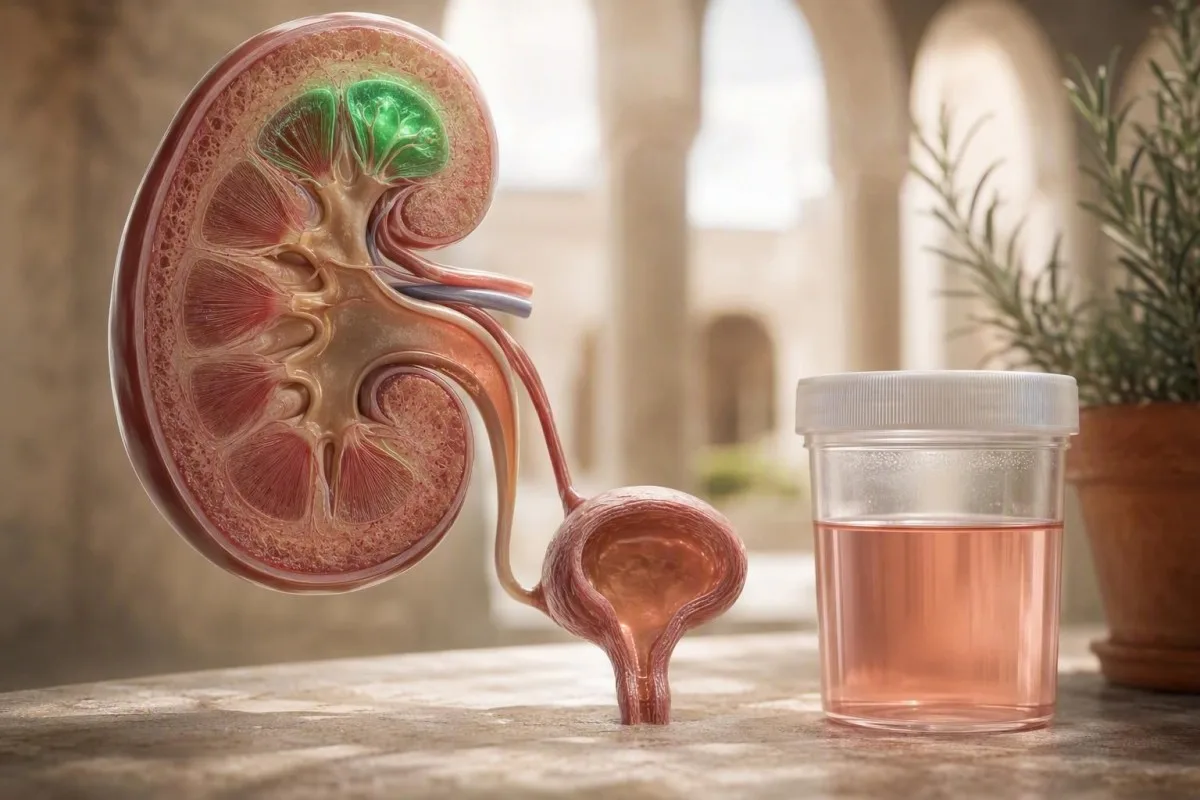
عينة بول وردية أو بلون الشاي بعد عدو طويل غالباً ما تكون بيلة دموية مؤقتة ناتجة عن التمرين، ولكن لا ينبغي أبداً تجاهل اللون المرئي تلقائياً. التوقيت، نتائج الفحص المجهري، الأعراض، وعينة متكررة تم الحصول عليها بعد راحة كافية تحكي القصة الحقيقية.


- البيلة الدموية الناتجة عن ممارسة الرياضة عادة ما يختفي في غضون 24-72 ساعة بعد الجري الشاق؛ الاستمرار لأكثر من 72 ساعة يتطلب مراجعة طبية.
- عتبة الفحص المجهري 3 أو أكثر من خلايا الدم الحمراء لكل حقل عالي الطاقة في عينة بول تم جمعها بشكل صحيح تلبي تعريف AUA للبيلة الدموية المجهرية.
- عدم تطابق شريط الاختبار مهم: وسادة دم إيجابية مع صفر إلى خليتين من خلايا الدم الحمراء لكل حقل عالي الطاقة تشير إلى ميوجلوبين أو هيموغلوبين حر بدلاً من نزيف بولى.
- توقيت التكرار عملي: تجنب التمارين الشاقة لمدة 48-72 ساعة، واشرب السوائل بشكل طبيعي، ثم قدم عينة بول وسط الجريان.
- تقييم في نفس اليوم معقول للجلطات، عدم القدرة على تمرير البول، الحمى، ألم شديد في الخاصرة من جانب واحد، أو بول بلون الكولا مع ألم عضلي ملحوظ.
- نمط تحذير الكلى هو دم بالإضافة إلى بروتين، أو أسطوانات خلايا حمراء، أو ارتفاع ضغط الدم، أو انخفاض eGFR - وليس مجرد شريط اختبار سلبي بعد السباق.
- دليل انحلال الربيدات (Rhabdomyolysis clue) هو بول داكن بشكل غير متناسب مع أعراض عضلية شديدة ونتيجة كرياتين كيناز غالباً ما تكون أعلى بخمس مرات من الحد الأعلى للمختبر.
- سياق خطر الإصابة بالسرطان يغير عتبة التحقيق: العمر، والتعرض للتدخين، والعلاج الإشعاعي السابق للحوض، والنزف البولي المرئي المستمر كلها أمور مهمة.
لماذا يمكن للعدو أن يجعل البول يبدو وردياً
نزف البول لدى العدّاء هو عادة تسرب قصير الأمد لخلايا الدم الحمراء إلى البول بعد ممارسة التمارين الرياضية الشديدة, ، وغالباً ما يختفي في غضون 24-72 ساعة من الراحة. ومع ذلك، فإن البول الوردي أو الأحمر أو ذو اللون البني الداكن يستحق إعادة فحص بشكل صحيح بدلاً من افتراض عرضي بأن الجري هو السبب.
في العيادة، النمط المطمئن مباشر: يبدأ تغير اللون بعد جري لمسافة طويلة بشكل غير عادي، أو بسرعة، أو نزولاً؛ لا توجد حمى، أو ألم جانبي مغصي، أو حرقان بول؛ وتعود المجهرية إلى طبيعتها بعد الراحة. Kantesti هو محلل فحوصات دم بالذكاء الاصطناعي التي يمكن أن تضع علامات الكلى ذات الصلة - الكرياتينين، eGFR، الإلكتروليتات، وكرياتين كيناز - إلى جانب تاريخ التمرين، بدلاً من معالجة نتيجة واحدة بعد السباق كتشخيص.
الآليات المقترحة هي الاتصال الميكانيكي بجدار المثانة، وتحولات مؤقتة في تدفق الدم الكلوي، والتركيز المرتبط بالجفاف، وأحياناً تكسر خلايا الدم الحمراء بسبب ضربات القدم المتكررة. الأدلة لكل آلية مختلطة بصراحة، لأن معظم الدراسات صغيرة وتستخدم مسافات سباق مختلفة. في خبرتي السريرية التي تمتد لـ 15 عاماً، فإن تاريخ جهد جديد أهم من اللون وحده؛ فسباق ألترا ماراثون الأول وسباق 5 كم المألوف لا يحملان نفس الاحتمال المسبق للاختبار.
الدم المرئي في البول بعد التمرين ليس مرادفاً لنزف البول الحميد لدى العدّاء. دليل أوسع لعلامات نزف البول الحمراء (red-flag) مفيد لأن حصوات الكلى، والعدوى، وأمراض الكبيبات، وسرطانات المسالك البولية يمكن أن تظهر بشكل عرضي لأول مرة بعد الجري.
التعريف العملي
يعني نزف البول المستحث بالتمارين الرياضية ظهور خلايا الدم الحمراء في البول بعد فترة وجيزة من المجهود واختفائها في عينة راحة مكررة. لا تثبت الإيجابية فقط لشريط الاختبار (dipstick) هذا التشخيص، لأن الكاشف يكتشف صبغة الهيم من خلايا الدم الحمراء السليمة، أو الهيموغلوبين الحر، أو الميوغلوبين.
هل هي بيلة دموية، أم هيموغلوبين، أم ميوجلوبين؟
يمكن لشريط اختبار البول الذي يقرأ إيجابياً للدم أن يعكس خلايا الدم الحمراء، أو الهيموغلوبين، أو الميوغلوبين، والمجهرية تفصل بينها. البول الوردي مع العديد من خلايا الدم الحمراء السليمة يدعم نزف البول؛ البول البني الداكن مع قليل أو لا شيء من خلايا الدم الحمراء يثير القلق بشأن صبغة من إصابة العضلات أو انحلال الدم.
مجهرية البول تظهر 3 أو أكثر من خلايا الدم الحمراء لكل حقل عالي الطاقة (high-power field) يؤكد نزف البول المجهري عندما يتم جمع العينة بشكل نظيف. في المقابل، شريط اختبار إيجابي بقوة مع 0-2 خلايا حمراء لكل حقل عالي الطاقة يجب أن يجعل الطبيب يفكر في وجود ميوغلوبين في البول، خاصة بعد التعرض للحرارة، أو حمل عضلي من نوع السحق، أو ألم عضلي متأخر شديد. اللون البني أو لون الكولا هو أكثر نمطية لصبغة مركزة من كمية صغيرة من نزيف المثانة.
الميوغلوبين مهم لأنه يمكن أن يصاحب انحلال الربيدات (rhabdomyolysis) وإصابة الكلى الحادة. تركيز كرياتين كيناز أعلى من 5 أضعاف الحد الأعلى الطبيعي للمختبر يستخدم عادة كعتبة كيميائية حيوية لانحلال الربيدات، على الرغم من أن الأعراض، والبوتاسيوم، والكرياتينين، ومخرجات البول تحدد مدى الاستعجال. انظر شرحنا العملي لـ ارتفاع خطير في إنزيم الكرياتين كيناز للأنماط التي لا يجب تأجيلها إلى اليوم التالي.
يمكن أيضًا أن تلون الأصباغ الغذائية، والبنجر، والتوت الأسود، والريفامبيسين، والفينازوبيريدين، والجفاف البول دون وجود خلايا حمراء. أ تفريق البول الداكن يساعد في تجنب الخطأ الشائع المتمثل في افتراض أن كل عينة حمراء اللون تمثل دمًا.
لماذا يغير التمييز الرعاية
يشير وجود كريات الدم الحمراء في البول إلى الجهاز البولي، بينما يشير وجود الميوغلوبين في البول إلى العضلات الهيكلية وحماية الكلى. يمكن أن يحدث كلاهما بعد أحداث التحمل، ولكن الفحص المجهري والفحوصات الدموية المستهدفة فقط يمكنها تصنيفها بشكل موثوق.
كيفية قراءة نتيجة تحليل البول بعد العدو
يجمع اختبار البول الأكثر إفادة بعد الجري بين الشريط التشخيصي، والفحص المجهري، وقياس البروتين، والجاذبية النوعية. يعتبر وجود الدم على الشريط التشخيصي مع وجود خلايا حمراء عابرة وعدم وجود بروتين ذا مخاطر منخفضة؛ الدم بالإضافة إلى البروتين أو الأسطوانات يتطلب تقييمًا أكثر دقة للكلى.
يتم الإبلاغ عن نتيجة الدم على الشريط التشخيصي على أنها سلبية، أثر، 1+، 2+، أو 3+، ولكنها إشارة فحص بدلاً من عد الخلايا. يعرف الاتحاد الأمريكي لجراحة المسالك البولية (AUA) وجود الدم المجهري في البول بأنه وجود أكثر من 3 خلايا دم حمراء لكل حقل مرتفع القوة في الفحص المجهري, ، وليس نتيجة الشريط التشخيصي وحدها (Barocas et al., 2020). هذا التمييز يتجنب إرسال العدائين إلى فحوصات سرطان غير ضرورية بعد نتيجة فحص إيجابية خاطئة.
الجاذبية النوعية أعلى من 1.030 تشير إلى تركيز البول في العديد من المختبرات ويمكن أن تجعل اللون يبدو أكثر إثارة للقلق، ولكنها لا تفسر الخلايا الحمراء المؤكدة. يجب قياس البروتين الذي يساوي 1+ أو أكثر باستخدام نسبة الألبومين إلى الكرياتينين في البول أو نسبة البروتين إلى الكرياتينين؛ يوجد بروتين عابر بعد التمرين، ومع ذلك فإن وجود الألبومين المستمر يغير التشخيص التفريقي نحو أمراض الكبيبات. شرح دليل شامل لتحليل البول لماذا لا ينبغي دمج هذه العلامات في نتيجة واحدة.
يفسر الذكاء الاصطناعي (AI) قيم الكرياتينين و eGFR جنبًا إلى جنب مع نتائج البول، وتوقيت التمرين، والقيم السابقة؛ ارتفاع طفيف في الكرياتينين بعد سباق حار لا يعادل مرض الكلى المزمن. عمليًا، أطلب المسافة، والتضاريس، ودرجة الحرارة، واستخدام مضادات الالتهاب، وتوقيت الدورة الشهرية، وما إذا كانت العينة قد تم جمعها في غضون ساعتين من الانتهاء.
متى يجب تكرار فحص البول بعد الجري؟
تكرار فحص البول بعد 48-72 ساعة من آخر تمرين شاق هو إعداد افتراضي معقول للنزف البولي المشتبه به لدى العدّاء. استخدم عينة من الصباح الأول أو عينة منتصف مجرى البول مع الترطيب الجيد، ولكن لا تفرط في شرب لترات من الماء قبل ذلك مباشرة لأن التخفيف الشديد يمكن أن يحجب النتائج المفيدة.
بالنسبة للاختلال الروتيني بعد السباق، أوصي عادةً بعدم القيام بفترات تدريبية، أو الجري على تلال، أو رفع الأثقال الثقيلة، أو السباقات لـ 48 ساعة; ؛ بعد سباق ماراثون، أو سباق فائق، أو ضربة حرارة، أو ألم غير عادي،, 72 ساعة يكون الأمر أكثر قابلية للدفاع عنه. الشرب العادي عند الشعور بالعطش يكفي. الإفراط في الترطيب يمكن أن يخفض الثقل النوعي إلى أقل من 1.005 وأحيانًا يجعل النتيجة الحدودية أصعب في التفسير.
إذا ظلت المجهرية إيجابية بعد 72 ساعة، قم بترتيب مراجعة الرعاية الأولية في غضون أيام بدلاً من تكرار الاختبارات بعد التمارين. النتائج المستمرة تستدعي قياس ضغط الدم، وكرياتينين المصل/eGFR، ونسبة الألبومين-كرياتينين في البول، والنظر في الزراعة أو التصوير وفقًا للمخاطر. العلاقة بين الجهد والترطيب وتقدير الترشيح المنخفض مؤقتًا مغطاة في دليلنا الخاص بـ eGFR بعد التمرين.
كان لدى عداء ماراثون ترفيهي يبلغ من العمر 52 عامًا 18 خلية حمراء لكل حقل عالي القوة في المساء بعد سباق حار، ولكن 0-1 خلية حمراء بعد 72 ساعة من الراحة؛ عاد الكرياتينين لديه من 1.28 ملغم/ديسيلتر إلى 0.96 ملغم/ديسيلتر. كانت النتيجة مطمئنة، لكن نفس الخطة لن تكون كافية لمدخن يبلغ من العمر 52 عامًا لديه تكرار ظهور لون بول مرئي.
لا تختبر عند خط النهاية إذا استطعت تجنب ذلك
يؤدي الاختبار فورًا بعد التمرين إلى زيادة فرصة العثور على خلايا حمراء مؤقتة، وبول مركز، وبروتين. يمكن أن يكون ذلك مفيدًا سريريًا في حالة الاشتباه في انحلال الربيدات، ولكنه وقت سيء لتحديد خط الأساس للعدّاء.
أي أنماط البيلة الدموية بعد العدو مطمئنة عادة؟
تكون نوبة محدودة ذاتيًا بعد الجري المكثف أكثر طمأنينة عندما تختفي تمامًا، وتفتقر إلى الألم أو الأعراض الجهازية، ولا يوجد لديها بروتينية أو تغير في وظائف الكلى. مطمئن لا يعني متجاهل؛ بل يعني مؤكدًا بعينة بعد الراحة.
النمط الظاهري الأقل خطورة هو عدّاء شاب أو في منتصف العمر لديه محفز بذل واضح، وضغط دم طبيعي، ولا تاريخ تدخين، ومجهرية طبيعية بعد الراحة. في تلك البيئة، غالبًا ما تستقر نتيجة عابرة واحدة لـ 3–10 RBC/HPF بعد السباق دون علاج. سأوثقها على أي حال، لأن التكرار بعد كل تمرين طويل يستحق مراجعة أكثر دقة من حدث لمرة واحدة.
نسبة الألبومين-كرياتينين الطبيعية في البول تكون عمومًا أقل من 30 ملغم/غرام (أقل من 3 ملغم/مل)، على الرغم من أن المختبرات والبلدان تبلغ عن الوحدات بشكل مختلف. الدم بدون ألبومين، أو أسطوانات، أو خلايا دم حمراء مشوهة يشير بعيدًا عن التسرب الكبيبي؛ ولكنه لا يثبت مصدرًا من المثانة، ولكنه يوجه السؤال التالي. شرحنا لـ البروتين في البول يغطي هذا التقسيم بوضوح.
يعتبر نزيف المثانة أكثر احتمالاً عندما يكون البول مركزاً جداً وينتهي العداء بمثانة فارغة تقريباً. يقترح بعض أطباء الرياضة التبول قبل الجري لمسافات طويلة والشرب بانتظام، ولكن هذه نصيحة وقائية مع دليل محدود للتجربة - وليست بديلاً عن التقييم عندما يستمر اللون.
النتيجة الطبيعية لها طابع زمني
الاختبار السلبي بعد 3 أيام من السباق مطمئن لهذه الحلقة، وليس ضمانًا مدى الحياة. يجب تقييم وجود دم مرئي في البول بعد عدة أشهر بناءً على مزاياه الخاصة، خاصة بعد سن الأربعين أو مع التعرض للتدخين.
علامات التحذير التي تجعل بيلة الدم لدى العدّاء أقل احتمالاً
يحتاج وجود الدم في البول إلى تقييم فوري عندما يستمر بعد 72 ساعة، أو يتكرر بدون مجهود بدني شديد، أو يظهر مع ألم، أو حمى، أو جلطات، أو بروتين، أو تغير في وظائف الكلى. يعتبر الجمع بين النتائج أكثر إفادة من عينة تبدو مثيرة للقلق بحد ذاتها.
اطلب المشورة الطبية في الوقت المناسب للبول الأحمر المرئي الذي يستمر لفترة أبعد من 24 ساعة, ، حتى لو كنت تشعر بصحة جيدة؛ الحد الأدنى أقل للأشخاص الذين تزيد أعمارهم عن 40 عامًا، أو المدخنين الحاليين أو السابقين، أو أولئك الذين تعرضوا للإشعاع الحوضي سابقًا. تستخدم إرشادات AUA تقييم المخاطر بناءً على العمر والتدخين ودرجة واستمرارية الدم المجهري، ووجود دم مرئي سابق بدلاً من معاملة جميع حالات الدم المجهري بشكل متماثل (Barocas et al., 2020).
تشير خلايا الدم الحمراء غير النمطية، أو أسطوانات خلايا الدم الحمراء، أو وجود كمية كبيرة من الزلال في البول، أو ارتفاع ضغط الدم الجديد، أو انخفاض eGFR إلى مصدر ترشيح الكلى بدلاً من المثانة التي تم هزها. أسطوانات خلايا الدم الحمراء ليست نتيجة متوقعة للجري العادي أبدًا ويجب أن تؤدي إلى تقييم سريع للكلى. انظر نظرتنا العامة على الأسطوانات الحبيبية والبولية لمعرفة سبب أهمية نتائج الرواسب.
ينصح توماس كلاين، MD، العدائين بعدم الفحص الذاتي بناءً على اللون وحده: قد يسبب التهاب المسالك البولية حرقة، وإلحاحًا، وصلاح البول، وأحيانًا وجود دم في البول، بينما تسبب الحصوات غالبًا ألمًا مفاجئًا من جانب واحد وغثيانًا. المزرعة تكون الأكثر فائدة قبل المضادات الحيوية عند وجود أعراض العدوى.
الجمع بين الدم والبروتين
يعتبر وجود دم وبروتين مؤكد في البول أكثر إثارة للقلق من وجود دم معزول لأن كلاهما قد ينشأ من المرشح الكبيبي. يجب تكرار نسبة الزلال إلى الكرياتينين في البول البالغة 30 ملغم/غم أو أكثر وتفسيرها مع ضغط الدم ووظائف الكلى.
متى تحتاج البيلة الدموية الوردية بعد التمرين إلى رعاية في نفس اليوم؟
احصل على تقييم عاجل في نفس اليوم في حالة وجود جلطات، أو عدم القدرة على التبول، أو ألم شديد في الخاصرة، أو حمى، أو دوخة، أو انخفاض في كمية البول، أو بول داكن مع ألم عضلي شديد وضعف. تشير هذه الميزات إلى ما هو أبعد من نزيف التمارين غير المعقد.
يمكن للجلطات أن تعيق تدفق البول، وعدم القدرة على إخراج البول مشكلة عاجلة بغض النظر عن اللياقة البدنية الرياضية. قد تشير الحمى 38.0°C أو أعلى مع ألم في الخاصرة إلى عدوى في المسالك البولية العلوية؛ قد يشير الألم المغصي الشديد مع القيء إلى حصوة. لا ينبغي التعامل مع أي من هاتين الحالتين بالانتظار حتى إجراء اختبار ما بعد الجري.
يشير البول البني الداكن بعد المجهود مع وجود ألم عضلي شديد، أو ضعف، أو تورم، أو انخفاض في كمية البول إلى اشتباه في انحلال الربيدات. تشمل الاختبارات الأولية عادةً إنزيم الكرياتين كيناز، والكرياتينين، والبوتاسيوم، والكالسيوم، والفوسفات، وتحليل البول. حول انحلال الربيدات في CrossFit ذات صلة لأن التمرين اللامعتاد عليه الذي يتضمن انقباض العضلات (eccentric exercise) - وليس الجري وحده - هو محفز متكرر.
يمكن للجفاف الشديد أن يجعل نتائج الكلى تبدو أسوأ، ولكنه يمكن أن يتواجد أيضًا مع إصابة حقيقية. إذا كنت تشعر بالدوار، أو الارتباك، أو لا تستطيع الاحتفاظ بالسوائل، أو تتبول قليلاً جدًا لمدة 8–12 ساعة, ، فلا تحاول حل المشكلة بالمشروبات الرياضية في المنزل.
الحمل ومضادات التخثر
يجب على العداءات الحوامل والأشخاص الذين يتناولون مضادات التخثر الإبلاغ عن وجود دم مرئي في البول (hematuria) على الفور. يمكن لمضادات التخثر أن تزيد من النزيف ولكنها لا تزيل الحاجة إلى تحديد مصدره؛ كما يغير الحمل عتبة فحص العدوى والحصوات وأمراض الكلى.
الحالات التي يمكن أن يكشفها العدو بدلاً من أن يسببها
قد يكشف الجري عن مشكلة بولية موجودة من خلال تركيز البول أو تحفيز إجراء اختبار، بدلاً من التسبب في وجود دم في البول (hematuria) بحد ذاته. لا تزال الحصوات والعدوى وأمراض الكبيبات التشوهات الهيكلية والأورام الخبيثة جزءًا من التشخيص التفريقي.
غالبًا ما تسبب حصوات الكلى ألمًا جانبيًا أحاديًا إلى الأربية، وغثيانًا، ووجود خلايا حمراء في الفحص المجهري، على الرغم من حدوث حصوات غير مؤلمة. ينتج التهاب المسالك البولية بشكل أكثر شيوعًا عن الحرقان، وكثرة التبول، والإلحاح، ووجود خلايا بيضاء؛ ومع ذلك، فإن نتيجة سلبية لمادة النيتريت لا تستبعده. دليلنا حول إنزيم الليوكوسايت إستيراز (leukocyte esterase) مع نيتريت سلبي يشرح هذا النمط المختلط الشائع.
يمكن أن تظهر التهاب كبيبات الكلى (Glomerulonephritis) بعد عدوى الجهاز التنفسي العلوي مع بول بلون الكولا، وتورم، وارتفاع ضغط الدم، وبروتينية البول (proteinuria)، وخلايا حمراء مشوهة (dysmorphic red cells). في إرشادات KDIGO 2024 لمرضى CKD، يتم التعامل مع وجود ألبومين البول المستمر وانخفاض eGFR كعلامات مخاطر تكميلية للكلى، وليست قياسات قابلة للتبديل (KDIGO, 2024).
Kantesti هي أداة تحليل لفحص دم مدعوم بالذكاء الاصطناعي الذي يساعد المستخدمين على التعرف على نمط عبر الكرياتينين (creatinine) و eGFR والألبومين (albumin) والكهارل (electrolytes) و CBC، ولكنه لا يستطيع تشخيص المصدر التشريحي لـ hematuria. لا يزال التصوير والفحص المجهري والزراعة وفحص الطبيب يقوم بالعمل الحاسم.
السرطان غير شائع لدى العدائين الشباب، ولكنه ليس مستحيلًا لدى البالغين
يتطلب وجود دم مرئي في البول (visible hematuria) تقييمًا حتى عندما تبدو ممارسة الرياضة تفسيرًا واضحًا، خاصة لدى الأشخاص الذين تعرضوا للتدخين أو يعانون من أعراض مستمرة. يزداد الخطر مع التقدم في العمر والتعرض التراكمي للتبغ، وهذا هو السبب في أن نتائج البول المتطابقة لا تؤدي إلى خطط اختبار متطابقة.
من يحتاج إلى متابعة مع أخصائي المسالك البولية أو أمراض الكلى؟
يجب تقييم مخاطر وجود دم مستمر في البول (persistent hematuria) بعد تكرار العينة بعد الراحة لتحديد الحاجة إلى مراجعة المسالك البولية، بينما يشير وجود دم في البول بالإضافة إلى بروتينية البول (proteinuria) أو الأسطوانات (casts) أو ارتفاع ضغط الدم أو انخفاض eGFR إلى الحاجة لمراجعة أمراض الكلى. يحتاج العديد من الأشخاص فقط إلى تكرار الاختبار بإشراف الرعاية الأولية؛ ويعتمد الإحالة على النمط.
يعتبر تقييم المسالك البولية مناسبًا بشكل خاص لوجود دم مرئي متكرر في البول، أو دم مجهري مستمر في البول، أو تاريخ تدخين، أو التعرض المهني للأمينات العطرية، أو العلاج الإشعاعي السابق للحوض، أو أعراض بولية بدون عدوى. اعتمادًا على المخاطر، قد يستخدم الأطباء الموجات فوق الصوتية للكلى والمثانة، والأشعة المقطعية للكلى، وتنظير المثانة. إن نتيجة سلبية طفيفة لشريط اختبار البول بعد السباق لدى شاب يبلغ من العمر 24 عامًا هو سيناريو مختلف تمامًا عن وجود بول أحمر متكرر لدى مدخن سابق يبلغ من العمر 58 عامًا.
تزداد احتمالية مراجعة أمراض الكلى مع نسبة ألبومين البول إلى الكرياتينين (urine albumin-creatinine ratio) ≥30 ملغ/غ, ، و eGFR أقل من 60 مل/دقيقة/1.73 م² لمدة 3 أشهر أو أكثر، ووجود أسطوانات خلايا حمراء، أو ارتفاع ضغط الدم الذي يصعب السيطرة عليه. هذه الحدود مهمة لأن مرض الكلى المزمن يُعرَّف بالمدة بالإضافة إلى قياس واحد. اقرأ لمراحل مرض الكلى المزمن الخاص بنا للفئات العملية.
يمكن لخدمة تفسير الفحوصات المعملية بالذكاء الاصطناعي من Kantesti تحديد نمط متكرر من الدم والبروتين لمناقشته، خاصةً عندما يقوم المستخدمون بتحميل النتائج من مختبرات مختلفة. يجب أن تدعم، ولا تحل محل، قرار الطبيب بشأن ما إذا كانت هناك حاجة إلى تصوير المسالك البولية أو فحص متخصص.
لا تدع مضادات التخثر تنهي المحادثة
يؤدي استخدام مضادات التخثر إلى تغيير شدة النزيف ولكنه لا يحدد سبب وجود الدم في البول. في تجربتي، فإن عزو وجود الدم المتكرر في البول إلى الأبيكسابان أو الوارفارين أو الأسبرين دون إجراء فحوصات يمكن أن يؤخر التعرف على الحصوات أو العدوى أو الأمراض الهيكلية.
أي اختبارات الدم تساعد بعد البيلة الدموية المتعلقة بالتمرين؟
تعتمد الفحوصات الدموية المفيدة على الأعراض: يقيم الكرياتينين، و eGFR، والكهارل، وكرياتين كيناز الإجهاد الكلوي والعضلي، بينما يقيم CBC فقر الدم أو أدلة العدوى. تكون اللوحات العامة الروتينية أقل فائدة من الاختبارات المستهدفة بعد تاريخ مرضي دقيق وتحليل للبول.
يمكن أن يرتفع الكرياتينين بشكل عابر بعد التمارين الرياضية المجهدة بسبب التمثيل الغذائي للعضلات، وانخفاض تروية الكلى، والجفاف. معادلات eGFR أقل موثوقية أثناء التغير السريع في الكرياتينين، وهذا هو السبب في أن القيمة المتكررة بعد 48–72 ساعة التعافي العادي غالبًا ما تكون أكثر أهمية من نتيجة خط النهاية. دليل إعادة فحص الكرياتينين المتعلق بالتمارين الرياضية يقدم سياقًا لهذا المحفز المتكرر للقلق.
لكرياتين كيناز نطاق واسع بعد التمرين: يمكن للرياضيين المدربين إظهار ارتفاعات بعد السباق دون إصابة الكلى، بينما تستحق القيم التي تزيد عدة أضعاف عن الحد الأعلى المحلي بالإضافة إلى الأعراض تقييمًا عاجلاً. البوتاسيوم أعلى من 6.0 ملي مول/لتر يمكن أن يكون خطيرًا ويتطلب تقييمًا سريريًا عاجلاً، خاصةً إذا كانت وظائف الكلى ضعيفة أو يشتبه في إصابة العضلات.
يكون CBC أكثر فائدة عند وجود التعب أو الشحوب أو نزيف الحيض الغزير أو وجود دم في البول المتكرر أو القلق بشأن مرض جهازي. يمكن أن ينخفض الهيموجلوبين بعد الأحداث المجهدة بسبب توسع حجم البلازما، أو فقدان الحديد، أو انحلال الدم؛ يجب تفسير الفيريتين بعيدًا عن الالتهابات الحادة والتدريب المكثف. قد يجد عدّاؤو التحمل نظرتنا الشاملة لـ فحوصات الدم للرياضيين مفيدة كخط أساس معقول.
لا تشخص مرض الكلى من لوحة واحدة لأسبوع السباق
يمكن أن يؤدي ارتفاع الكرياتينين بمقدار 0.3 ملغ/ديسيلتر أو أكثر إلى استيفاء معيار إصابة الكلى الحادة في الإطار الزمني الصحيح، ولكن السياق والاختبار المتكرر حاسمان بعد السباق. انخفاض إنتاج البول، وارتفاع البوتاسيوم، والارتفاع المستمر يحمل وزنًا أكبر من نتيجة حدودية معزولة.
كيفية جمع عينة بول متكررة يمكن للأطباء الوثوق بها
عينة بول منتصف التبول النظيف بعد 48-72 ساعة دون ممارسة تمارين رياضية شاقة هي أفضل طريقة للتحقق مما إذا كان الدم في البول قد زال. أخطاء الجمع، وتلوث الحيض، والعينة القديمة يمكن أن تخلق نتائج مضللة.
اغسل يديك، وابدأ التبول في المرحاض، ثم اجمع جزء منتصف التبول دون لمس الجزء الداخلي من الحاوية. قم بتسليم العينة على الفور - في غضون ساعتين- أو اتبع تعليمات المختبر الخاصة بالتبريد. الوقوف المطول يغير مظهر الخلايا ويمكن أن يجعل المجهر أقل موثوقية.
تجنب الاختبار أثناء فترة الحيض النشطة حيثما أمكن؛ إذا كان الاختبار لا يمكن أن ينتظر، أخبر الطبيب والمختبر. يمكن أن ينتج التلوث المهبلي خلايا حمراء وبروتين واضحة، بينما تشير الخلايا الظهارية الحرشفية غالبًا إلى عينة تم جمعها بشكل سيئ. دليلنا لـ الخلايا الظهارية في البول يشرح سبب كون هذه ليست مجرد ملاحظة هامشية في المختبر.
يوصي توماس كلاين، MD، بتسجيل أربعة تفاصيل بجانب العينة: آخر جلسة شاقة، مدة الحدث، درجة الحرارة الخارجية، وجميع الأدوية التي تم تناولها في الـ 72 ساعة السابقة. النتيجة بدون توقيت يصعب تفسيرها - خاصة عندما يتم جمع البول بعد تمرين مزدوج.
اختبار عينة الصباح الأولى مقابل عينة النهار
عينة الصباح الأولى تكون مركزة وجيدة للكشف عن التشوهات الصغيرة، ولكن عينة منتصف النهار العادية المرطبة مقبولة إذا كان الجمع أنظف. الاتساق أكثر أهمية للمقارنة المتسلسلة: استخدم نفس الظروف تقريبًا في كل تكرار.
الترطيب، أدوية الألم، والمكملات التي تغير الصورة
يمكن أن يؤدي الجفاف إلى تركيز البول وزيادة إجهاد الكلى، بينما يمكن لمضادات الالتهاب غير الستيرويدية أن تقلل تدفق الدم إلى الكلى أثناء ممارسة التمارين الهوائية. لا يثبت أي من العاملين سبب وجود الدم في البول، لكن كلاهما يؤثر على مدى حذر الأطباء عند تفسير نتيجة ما بعد الجري.
بالنسبة لمعظم العدائين، فإن الشرب حسب العطش واستبدال السوائل المفقودة تدريجيًا أكثر أمانًا من الإكراه على شرب السوائل. انخفاض الصوديوم الشديد الناتج عن زيادة استهلاك الماء يمكن أن يكون خطيرًا؛ مستوى الصوديوم في الدم أقل من 125 ملي مول/لتر مع الصداع، القيء، الارتباك، أو النوبات هو حالة طارئة. لون البول هو دليل تقريبي على الترطيب، وليس مقياسًا دقيقًا للترطيب.
يمكن أن تقلل الإيبوبروفين، والنابروكسين، وغيرها من مضادات الالتهاب غير الستيرويدية من تدفق الدم إلى الكلى بوساطة البروستاجلاندين، خاصة أثناء الإجهاد الحراري، أو القيء، أو الأحداث الطويلة. أنصح المرضى بتجنب مضادات الالتهاب غير الستيرويدية الوقائية الروتينية قبل الماراثون ما لم يكن طبيبهم قد قدم سببًا واضحًا. يتم استكشاف سياق الدواء في مقالنا سلامة اتجاهات المختبر.
يمكن أن يتداخل فيتامين سي بجرعة عالية مع بعض تفاعلات شرائط البول، وقد تحتوي المكملات التي يتم تسويقها للأداء على محفزات أو مدرات بول غير مدرجة. أحضر الحاويات أو صورًا واضحة معك إلى الموعد؛ غالبًا ما يكون ذلك أكثر فائدة من محاولة تذكر قائمة مكونات مسحوق ذي علامة تجارية. دليلنا سلامة المكملات الرياضية للرياضيين يقدم قائمة تحقق معقولة.
الترطيب ليس علاجًا للدم المستمر
قد يصلح الماء التركيز، لكنه لا يعالج حصوة، أو عدوى، أو عملية كبيبية، أو مصدر بول هيكلي. إذا بقيت خلايا الدم الحمراء في عينة راحة تم جمعها جيدًا، فيجب أن يعتمد التصعيد على النمط بدلاً من تجربة ترطيب أخرى.
هل يمكنك الاستمرار في الجري بعد البيلة الدموية الناتجة عن التمرين؟
يمكن لمعظم العدائين العودة تدريجيًا بمجرد أن يعود لون البول إلى طبيعته، وتختفي الأعراض، وتكون عينة راحة مكررة مطمئنة. لا تعود إلى التدريب الشاق أثناء بقاء البول أحمر بشكل واضح، أو كانت نتائج الكلى غير طبيعية، أو تشير أعراض العضل إلى انحلال الربيدات.
بعد حلقة واحدة غير معقدة، أقترح عادةً الجري الخفيف فقط لبضعة أيام، ثم إعادة بناء تدريجية للحجم والشدة على مدار 7–14 يومًا. يجب على العدّاء التوقف وطلب المراجعة إذا تكرر اللون، أو تطور الألم، أو انخفضت كمية البول. هذا نهج سريري عملي، وليس وصفة طبية مثبتة بالتجارب.
قد تبرر الهيماطوريا المتكررة بعد نفس المسافة تجارب عملية: تجنب السباق الجفاف، والتبول قبل الجري الطويل، وإدخال تدريب المنحدرات ببطء أكبر، ومراجعة ملاءمة الحذاء أو التضاريس. احتفظ بسجل للسرعة، والحرارة، والمدة، ولون البول، ونتائج العينات. دليل مختبر عدّاء الماراثون يمكن أن يساعد في التمييز بين علامات التعافي والأسباب التي تستدعي إيقاف التدريب.
لا تتدرب من خلال وجود دم في البول غير مبرر مرئيًا لمجرد أن لديك حدثًا مقررًا. غالبًا ما يكون الرياضيون ممتازين في تحمل الانزعاج؛ المهارة الأكثر صعوبة هي إدراك أن المثابرة هي معلومات تشخيصية، وليست اختبارًا للقوة.
بناء خط أساس حقيقي
يمكن لتحليل البول ولوحة الكلى الأساسية التي تم إجراؤها قبل 72 ساعة على الأقل من التدريب الشاق أن تجعل تفسير نتائج ما بعد السباق المستقبلية أسهل بكثير. هذا مفيد بشكل خاص للعدائين لمسافات طويلة، والأشخاص الذين لديهم كلية واحدة، أو الرياضيين الذين يستخدمون أدوية تؤثر على تدفق الدم إلى الكلى.
ما الذي يجب أن تخبر به طبيبك عن الدم في البول بعد التمرين
أسرع طريق لتقييم فعال لوجود دم في البول هو جدول زمني موجز: لون البول، جرعة التمرين، الأعراض، الأدوية، وتوقيت الاختبار المتكرر. قدم قيم المختبر الفعلية بدلاً من مجرد رسالة تفيد بأن العينة كانت “إيجابية لوجود دم”.”
اذكر ما إذا كان البول ورديًا، أو أحمر فاتحًا، أو بلون الشاي، أو يحتوي على جلطات؛ وما إذا كان اللون قد ظهر قبل التمرين أو أثناءه أو بعده؛ وما إذا كان قد زال بعد أول تبول. قم بتضمين حرقان، وإلحاح، وحمى، وألم في الخاصرة، وغثيان، وتورم، وانخفاض في الإخراج. تفصيلي مرجع لون البول يمكن أن يساعد في وصف الملاحظة بدقة دون المبالغة في تفسيرها.
قدم تحاليل بول سابقة، قيم الكرياتينين/eGFR، قراءات ضغط الدم، تاريخ التدخين، تاريخ أمراض الكلى العائلية، وقائمة الأدوية/المكملات الغذائية. Kantesti هي منصة لتفسير مؤشرات حيوية للذكاء الاصطناعي التي يمكن أن تنظم قيم اختبارات الدم المتكررة وتسلط الضوء على التغييرات الهامة، ولكن يجب على الطبيب ربط تلك القيم بالمجهر البولي والفحص.
اعتبارًا من 3 سبتمبر 2026، يظل المبدأ السريري بسيطًا: التمرين هو تفسير محتمل فقط بعد زوال النتيجة وغياب الأدلة المتعارضة. إذا كنت غير متأكد، اسأل عما إذا كنت بحاجة إلى مجهر، أو مزرعة، أو نسبة الألبومين إلى الكرياتينين، أو تكرار الكرياتينين، أو تصوير، أو إحالة - وليس مجرد اختبار شرائط آخر.
أسئلة تستحق طرحها
اسأل عما إذا شوهدت خلايا دم حمراء سليمة، وما إذا كان البروتين أو الأسطوانات موجودة، ومتى يجب إجراء اختبار متكرر بعد الراحة. هذه الإجابات الثلاثة عادة ما توضح ما إذا كانت الخطوة التالية هي المتابعة اليقظة، أو اختبار الكلى، أو اختبار العدوى، أو تقييم المسالك البولية.
خطة عمل معقولة لبيلة الدم لدى العدّاء
بالنسبة لحلقة واحدة غير مؤلمة بعد الجري الشاق، ارتاح من التمارين الشاقة لمدة 48-72 ساعة وكرر تحليل البول بالنظافة؛ اطلب الرعاية المبكرة للإشارات الحمراء أو اللون المرئي المستمر. الهدف ليس الذعر ولا التجاهل - بل هو إثبات أن النتيجة قد زالت.
الخطوة الأولى: توقف عن التدريب الشاق، وترطيب بشكل طبيعي، ولاحظ التوقيت والأعراض. الخطوة الثانية: كرر الفحص المجهري بعد 48–72 ساعة. الخطوة الثالثة: إذا استمر الدم، أو إذا ظهر بروتين، أو أسطوانات، أو ألم، أو حمى، أو جلطات، أو انخفاض في إنتاج البول، أو علامات غير طبيعية للكلى، فقم بترتيب تقييم طبي على الفور. يمنع هذا التسلسل كلاً من تفويت المرض والتصوير غير الضروري بعد عينة واحدة من خط النهاية.
عندما يقوم فريقنا السريري بمراجعة بيانات المختبر المحملة، فإننا نعطي الأولوية للأنماط: زيادة الكرياتينين مع ارتفاع CK وانخفاض إنتاج البول أكثر إلحاحًا من الكرياتينين المستقر مع اختبار بول عابر. يتم وصف منهجية وضمانات Kantesti في التحقق السريري من Kantesti, ، ويتم تفصيل إشرافنا الطبي من خلال المجلس الاستشاري الطبي.
يجد معظم المرضى أن اختبارًا متكررًا في الوقت المناسب يحول تغيير اللون المقلق إلى خطة واضحة. ولكن إذا كان حدسك يشير إلى أن هناك خطأ ما - خاصة إذا كان البول لا يزال أحمر في اليوم التالي - فثق بهذا الإشارة واحصُل على تقييم.
قاعدة الجملة الواحدة
قد يكون البول الوردي مرة واحدة بعد جريان شاق عابرًا؛ البول الوردي الذي يستمر، أو يتكرر، أو يظهر مع أعراض هو دم في البول حتى يتم تقييمه بشكل صحيح.
الأسئلة الشائعة
كم تستمر البيلة الدموية لدى العدائين؟
يزول البول الدموي الناتج عن العدائين عادةً في غضون 24-72 ساعة بعد التوقف عن التمارين الشاقة. ينبغي إجراء فحص بول متكرر عملي بعينة منتصف التبول النظيفة التي يتم جمعها بعد 48-72 ساعة دون جري لمسافات طويلة أو رفع أوزان ثقيلة. يجب على الطبيب تقييم وجود دم مرئي وردي أو أحمر في البول يتجاوز 24 ساعة، أو وجود دم مجهري في البول يستمر بعد 72 ساعة. الحمى، أو التجلطات، أو ألم شديد في الخاصرة، أو انخفاض كمية البول، أو آلام عضلية شديدة تستدعي تقييمًا في نفس اليوم.
هل وجود دم في البول بعد ممارسة الرياضة أمر طبيعي؟
يمكن أن يكون وجود الدم في البول بعد التمرين تأثيرًا عابرًا للجري الشاق، أو الجفاف، أو ارتطام جدار المثانة، أو تغيرات قصيرة المدى في تدفق الدم إلى الكلى، ولكنه ليس أمرًا طبيعيًا تلقائيًا. تؤكد المجهرية وجود 3 خلايا دم حمراء أو أكثر لكل حقل عالي القوة التعريف الأمريكي للمسالك البولية (AUA) للـ microhematuria. تعتبر النتيجة التي تختفي في عينة متكررة بعد الراحة مطمئنة، بينما يتطلب وجود الدم المستمر أو البروتين أو الأسطوانات أو الألم أو الأعراض البولية تقييمًا إضافيًا. يجب دائمًا الإبلاغ عن لون البول المرئي، لا سيما لدى البالغين الذين تعرضوا للتدخين أو لديهم نوبات متكررة.
هل يمكن أن يسبب الجفاف بولًا ورديًا بعد الجري؟
يمكن أن يؤدي الجفاف إلى ظهور البول بلون أغمق وقد يضخم نتيجة وجود خلايا الدم الحمراء بعد التمرين من خلال تركيز محتويات البول، ولكن الجفاف وحده لا يفسر بشكل موثوق الخلايا الحمراء المؤكدة. غالبًا ما يشير الثقل النوعي للبول فوق 1.030 إلى تركيز البول في العديد من المختبرات. اشرب بشكل طبيعي حسب العطش وكرر عينة تجميع نظيفة بعد 48-72 ساعة من الراحة بدلاً من محاولة التخلص من النتيجة عن طريق الإفراط في شرب الماء. العطش الشديد، أو الدوار، أو قلة كمية البول، أو الارتباك تحتاج إلى مراجعة طبية فورية.
ما الفرق بين البيلة الدموية والبيلة العضلية بعد التمرين؟
تعني البيلة الدموية وجود خلايا دم حمراء سليمة في البول، في حين تعكس البيلة العضلية صبغة العضلات المتحررة بعد إصابة العضلات. يمكن أن يكون اختبار الشريط إيجابيًا للدم في كلتا الحالتين، لذا فإن الفحص المجهري هو الفيصل: غالبًا ما ينتج عن البيلة العضلية اختبار شريط إيجابي مع 0-2 خلايا حمراء لكل حقل ذي قوة عالية. يثير الألم العضلي الشديد، والضعف، والتورم، والبول الداكن بلون الكولا، أو قيمة إنزيم الكرياتين كيناز أعلى بخمس مرات من الحد الأعلى للمختبر، القلق بشأن انحلال الربيدات. يتطلب هذا النمط تقييمًا سريريًا عاجلاً لأن البوتاسيوم ووظائف الكلى يمكن أن تتغير بسرعة.
هل يجب أن أتوقف عن الركض إذا كنت أعاني من بيلة دموية ناتجة عن ممارسة الرياضة؟
توقف عن الجري الشاق حتى يعود لون البول إلى طبيعته وتكمل اختبار تكرار بعد الراحة، عادة بعد 48-72 ساعة. إذا كانت العينة المكررة طبيعية ولا تعاني من ألم أو حمى أو جلطات أو بروتينية أو خلل في وظائف الكلى، يمكن لمعظم العدائين العودة تدريجياً على مدار 7-14 يومًا. لا تستأنف التدريب المكثف عندما يظل البول أحمر أو داكنًا بشكل واضح، أو يكون ناتج البول منخفضًا، أو توجد أعراض عضلية شديدة. تستدعي النوبات المتكررة بعد التمارين المماثلة مراجعة طبية حتى لو زالت كل نوبة.
متى تحتاج البيلة الدموية إلى أخصائي المسالك البولية؟
غالباً ما تستدعي البيلة المجهرية المستمرة بعد تكرار فحص العينة في حالة الراحة، أو البيلة الدموية المرئية المتكررة، أو البيلة الدموية لدى شخص لديه تاريخ تدخين، أو تلقى علاجًا إشعاعيًا سابقًا للحوض، أو يعاني من أعراض بولية، تقييم مخاطر المسالك البولية. قد ينظر أخصائيو المسالك البولية في استخدام الموجات فوق الصوتية، والتصوير المقطعي المحوسب للجهاز البولي، وتنظير المثانة وفقًا للعمر والمخاطر الإجمالية بدلاً من استخدام اختبار واحد للجميع. تشير البيلة الدموية مع وجود الألبومين في البول بمعدل 30 ملجم/جم أو أكثر، أو وجود أسطوانات خلايا حمراء، أو ارتفاع ضغط الدم، أو انخفاض eGFR إلى أقل من 60 مل/دقيقة/1.73 م²، بقوة أكبر إلى تخصص أمراض الكلى. يعتمد التخصص الصحيح على نمط كامل اختبارات البول والدم.
احصل على تحليل الدم بالذكاء الاصطناعي اليوم
انضم إلى أكثر من 2 مليون مستخدم حول العالم يثقون في Kantesti لتحليل فوري ودقيق لفحوصات المختبر. ارفع نتائج تحليل الدم واحصل على تفسير شامل لمؤشرات 15,000+ الحيوية خلال ثوانٍ.
📚 منشورات بحثية مُشار إليها
كلاين، تي.، ميتشل، إس.، & ويبر، إتش. (2026). دعم القرار السريري بمساعدة الذكاء الاصطناعي متعدد اللغات للكشف المبكر عن الفيروسات الهانتاوية: التصميم والتحقق الهندسي والنشر في العالم الحقيقي عبر 50,000 تقرير اختبار دم تم تفسيره. Kantesti أبحاث طبية بالذكاء الاصطناعي.
كلاين، تي.، ميتشل، إس.، & ويبر، إتش. (2026). معيار تقني آلي مُسجَّل مسبقًا ومبني على Rubric لتفسير نتائج اختبار الدم الخاص بـ Kantesti على 100,000 حالة اختبار اصطناعية. Kantesti أبحاث طبية بالذكاء الاصطناعي.
📖 مراجع طبية خارجية
⚕️ إخلاء مسؤولية طبية
هذه المقالة لأغراض تعليمية فقط ولا تشكل نصيحة طبية. استشر دائمًا مقدم رعاية صحية مؤهلًا لاتخاذ قرارات التشخيص والعلاج.
إشارات الثقة E-E-A-T
خبرة
مراجعة سريرية تقودها طبيبة/طبيب لخطوات تفسير نتائج المختبر.
خبرة
تركيز طب المختبر على كيفية سلوك المؤشرات الحيوية في السياق السريري.
السلطة
تمّت الكتابة بواسطة الدكتور توماس كلاين مع مراجعة من الدكتور سارة ميتشل والأستاذ الدكتور هانس فيبر.
الجدارة بالثقة
تفسير قائم على الأدلة مع مسارات متابعة واضحة لتقليل حالة الإنذار.