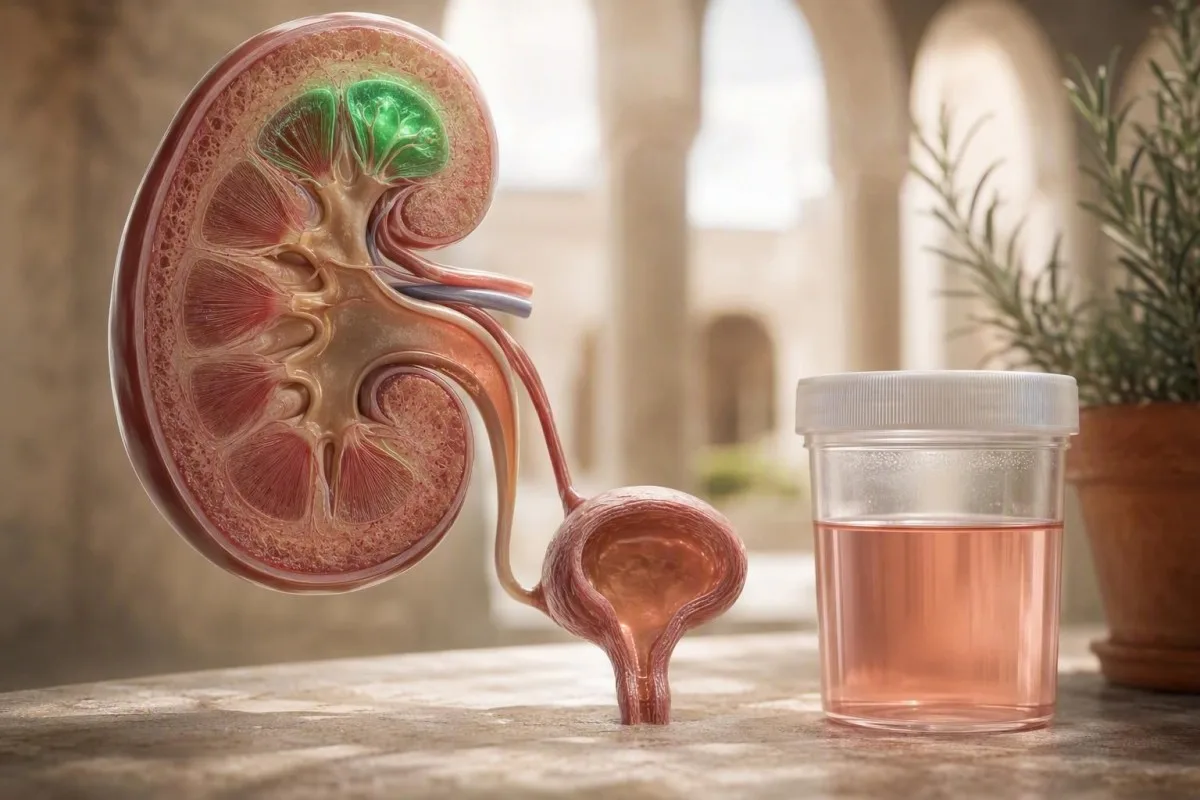
Rožnata ali čajna barva urina po dolgem teku je pogosto začasna, zaradi vadbe povzročena hematurija, vendar vidne barve nikoli ne gre samodejno prezreti. Čas, izvidi mikroskopije, simptomi in ustrezno počivan ponovni vzorec povedo resnično zgodbo.


- Hematuria vyvolaná cvičením običajno izgine v 24–72 urah po naporni vadbi; vztrajanje po 72 urah potrebuje zdravniški pregled.
- Mikroskopski prag 3 ali več rdečih krvnih celic na polje z visoko povečavo v ustrezno zbranem vzorcu urina ustreza definiciji mikrohematurije AUA.
- Neskladje testnih lističev je pomembno: pozitiven krvni test s nič do dvema celicama na polje z visoko povečavo kaže na mioglobin ali prosti hemoglobin, ne na krvavitev iz urinarnega trakta.
- Ponovitev glede na čas je praktično: izogibajte se intenzivni vadbi 48–72 ur, normalno hidrirajte, nato oddajte vmesni vzorec urina.
- Ocenitev še isti dan je smiselno pri krvnih strdki, nezmožnosti uriniranja, vročini, močni bolečini v boku na eni strani ali urinu barve kole z izrazito bolečino v mišicah.
- ledvični opozorilni vzorec je kri plus beljakovine, rdečelistni valji, visok krvni tlak ali padajoči GFR—ne izoliran testni listič po dirki.
- Namig za rabdomiolizo je nesorazmerno temen urin s hudimi mišičnimi simptomi in vrednostjo kreatin kinaze, ki je pogosto več kot 5-krat višja od zgornje laboratorijske meje.
- Kontekst tveganja za raka spremeni prag za preiskave: starost, izpostavljenost kajenju, predhodno obsevanje medenice in vztrajna vidna hematurija so pomembni.
Zakaj lahko tek obarva urin rožnato
Hematurija pri tekačih je običajno kratkotrajno puščanje rdečih krvničk v seču po intenzivni vadbi, ki pogosto izzveni v 24–72 urah počitka. Kljub temu roza, rdeč ali obarvan urin v barvi kole zasluži ustrezno zbran ponovni test, namesto lahkežakne predpostavke, da je za to kriv tek.
V kliniki je pomirjujoč vzorec enostaven: sprememba barve se začne po nenavadno dolgem, hitrem ali spustnem teku; ni vročine, kolikaste bolečine v boku ali pekočega občutka pri uriniranju; in mikroskopija se normalizira po počitku. Kantesti je analizator krvnih testov z umetno inteligenco ki lahko povežejo povezane ledvične markerje – kreatinin, eGFR, elektrolite in kreatin kinazo – z zgodovino vadbe, namesto da bi en sam rezultat po dirki obravnavali kot diagnozo.
Predlagani mehanizmi so mehanski stik stene mehurja, začasni premiki pretoka krvi v ledvicah, koncentracija zaradi dehidracije in občasno razpad rdečih krvničk zaradi ponavljajočega se udarjanja stopal. Dokazi za vsak mehanizem so iskreno mešani, ker je večina študij majhnih in uporablja različne razdalje dirk. V mojih 15 letih klinične prakse je zgodovina novega napora pomembnejša od same barve; prvi ultramaraton in znani 5 km nimata enake predtestne verjetnosti.
Vidna kri v urinu po vadbi ni sinonim za benigno hematurijo pri tekačih. širši vodnik za rdeče zastavice pri hematuriji je uporaben, ker se ledvični kamni, okužbe, glomerularne bolezni in rak sečil lahko naključno prvič pojavijo po teku.
Praktična definicija
Z vadbo povzročena hematurija pomeni, da se rdeče krvničke pojavijo v urinu kmalu po naporu in izginejo v ponovljenem vzorcu v mirovanju. Pozitiven testni listič sam po sebi ne dokazuje te diagnoze, ker reagent zazna hemov pigment iz nepoškodovanih rdečih krvničk, prosti hemoglobin ali mioglobin.
Je to hematurija, hemoglobin ali mioglobin?
Testni listič za urin, ki je pozitiven na kri, lahko odraža rdeče krvničke, hemoglobin ali mioglobin, mikroskopija pa jih loči. Roza urin z veliko nepoškodovanih rdečih krvničk podpira hematurijo; temno rjav urin z malo ali brez rdečih krvničk vzbuja skrb zaradi pigmenta iz poškodbe mišic ali hemolize.
Urinska mikroskopija, ki kaže 3 ali več rdečih krvničk na vidno polje z veliko povečavo potrjuje mikrohematurijo, ko je vzorec čisto zbran. V nasprotju s tem bi močno pozitiven testni listič z 0–2 rdečimi krvničkami na vidno polje z veliko povečavo moral zdravnika spodbuditi k razmisleku o mioglobinuriji, zlasti po izpostavljenosti vročini, obremenitvi mišic tipa drobljenja ali hudi zamrznjeni mišični bolečini. Rjava ali barva kole je bolj tipična za koncentrirani pigment kot za majhno količino krvavitve iz mehurja.
Mioglobin je pomemben, ker ga lahko spremljata rabdomioliza in akutna ledvična okvara. Koncentracija kreatin kinaze nad 5-kratno zgornjo laboratorijsko mejo normalne vrednosti se pogosto uporablja kot biokemični prag za rabdomiolizo, čeprav nujnost določajo simptomi, kalij, kreatinin in izločanje urina. Glejte naš praktični opis nevarno visoka raven kreatin kinaze za vzorce, ki ne smejo čakati čez noč.
Živilski barvili, rdeča pesa, robide, rifampicin, fenazopiridin in dehidracija lahko prav tako obarvajo seč brez rdečih krvničk. A diferencialna diagnoza temnega urina pomaga preprečiti pogosto napako domnevanja, da vsak rdečkast vzorec predstavlja kri.
Zakaj se nega spreminja zaradi razlik
Hematurija z rdečimi krvničkami usmerja pozornost na sečila, medtem ko mioglobinurija usmerja pozornost na skeletne mišice in zaščito ledvic. Obe se lahko pojavita po vzdržljivostnih dogodkih, vendar ju lahko zanesljivo ločita le mikroskopija in ciljno testiranje krvi.
Kako brati izvide urinske analize po teku
Najbolj informativen test urina po teku združuje testne lističe, mikroskopijo, merjenje beljakovin in specifično težo. Kri na testnem lističu s prehodnimi rdečimi krvničkami in brez beljakovin je pogosto nizko tveganje; kri plus beljakovine ali cilindri potrebujejo bolj premišljeno oceno ledvic.
Rezultat krvnega testnega lističa je naveden kot negativen, sled, 1+, 2+ ali 3+, vendar je to signal za presejanje, ne pa štetje celic. AUA definira mikrohematurijo kot več kot 3 rdeče krvničke na vidno polje visoke povečave pri mikroskopskem pregledu, ne le rezultat testnega lističa (Barocas et al., 2020). Ta razlika preprečuje, da bi tekače po lažno pozitivnem presejanju poslali na nepotrebne preiskave za raka.
Specifična teža nad 1.030 v mnogih laboratorijih kaže na koncentriran seč in lahko povzroči, da je barva videti bolj alarmantna, vendar ne pojasni potrjenih rdečih krvničk. Beljakovine 1+ ali več je treba kvantificirati z razmerjem albumin/kreatinin ali razmerjem beljakovine/kreatinin v urinu; obstaja prehodna vadbena proteinurija, vendar vztrajna albuminurija spremeni diferencialno diagnozo proti glomerularni bolezni. Naša popoln vodnik za analizo urina pojasnjuje, zakaj teh označevalcev ne smemo združiti v en sam rezultat.
Kantesti AI interpretira kreatinin in eGFR skupaj z ugotovitvami urina, časom vadbe in prejšnjimi vrednostmi; en sam rahlo povišan kreatinin po vročem dirki ni enak kronični ledvični bolezni. V praksi vprašam za razdaljo, teren, temperaturo, uporabo protivnetnih zdravil, čas menstrualnega cikla in ali je bil vzorec oddan v 2 urah po koncu.
Kdaj ponoviti test urina po teku?
Ponovno testiranje urina 48–72 ur po zadnjem težkem teku je razumen privzeti postopek za sum na hematurijo pri tekačih. Uporabite vzorec prvega jutranjega ali dobro hidriranega srednjega toka, vendar takoj pred tem ne siliti litrov vode, ker lahko ekstremna razredčitev prikrije koristne ugotovitve.
Za rutinsko nepravilnost po dirki običajno priporočam brez intervalov, klancev, težkega dvigovanja ali dirk za 48 urah; po maratonu, ultramaratonu, vročinski bolezni ali nenavadni bolečini, 72 ur je bolj upravičeno. Običajno pitje do žeje je dovolj. Prekomerna hidracija lahko zniža specifično težo pod 1,005 in občasno oteži interpretacijo mejnega rezultata.
Če mikroskopija ostane pozitivna po 72 urah, se dogovorite za pregled pri osebnem zdravniku v nekaj dneh, namesto da večkrat testirate po vadbi. Vztrajni rezultati upravičujejo merjenje krvnega tlaka, serumskega kreatinina/eGFR, razmerja med beljakovinami in kreatininom v urinu ter upoštevanje kulture ali slikanja glede na tveganje. Povezava med naporom, hidracijo in začasno nižjo oceno filtracije je obravnavana v našem vodniku eGFR po vadbi.
52-letni rekreativni maratonec, ki sem ga videl, je imel zvečer po vročem teku 18 rdečih krvničk na vidno polje, po 72 urah mirovanja pa 0–1 rdeče krvničke; njegov kreatinin se je znižal s 1,28 mg/dL na 0,96 mg/dL. Rezultat je bil pomirjujoč, vendar enak načrt ne bi bil dovolj za 52-letnega kadilca s ponavljajočo se vidno barvo urina.
Če se lahko izognete, ne testirajte na ciljni črti
Testiranje takoj po telesni aktivnosti poveča možnost odkrivanja začasnih rdečih krvničk, zgoščenega urina in beljakovin. To je lahko klinično koristno pri sumu na rabdomiolizo, vendar je to slab čas za določitev osnovne vrednosti tekača.
Kateri vzorci hematurije po teku so običajno pomirjujoči?
Samoomejena epizoda po intenzivnem teku je bolj pomirjujoča, ko popolnoma izgine, nima bolečin ali sistemskih simptomov in nima proteinurije ali sprememb v delovanju ledvic. Pomirjujoče ne pomeni ignorirano; pomeni potrjeno z vzorcem iz mirovanja.
Fenotip z nižjim tveganjem je mlajši ali srednjeletni tekač z jasnim vzrokom zaradi napora, normalnim krvnim tlakom, brez zgodovine kajenja in normalno mikroskopijo iz mirovanja. V takem primeru se enkratni začasni rezultat 3–10 RBC/HPF po dirki pogosto uredi brez zdravljenja. Še vedno bi ga dokumentiral, saj si ponovitev po vsakem dolgem teku zasluži bolj skrbno obravnavo kot enkratni dogodek.
Normalno razmerje med beljakovinami in kreatininom v urinu je običajno pod 30 mg/g (pod 3 mg/mmol), čeprav laboratoriji in države poročajo enote drugače. Kri brez beljakovin, cilindrov ali dismorfic rdečih krvničk kaže stran od glomerularne puščanja; ne dokazuje izvora iz mehurja, vendar usmerja naslednje vprašanje. Naša razlaga beljakovine v urinu pokriva to delitev jasno.
Poškodba mehurja je bolj verjetna, ko je urin zelo koncentriran in tekač konča s skoraj praznim mehurjem. Nekateri športni klinični zdravniki svetujejo praznjenje pred dolgim tekom in redno pitje, vendar je to nasvet za preprečevanje z omejenimi dokazi s preizkušanj – ne nadomestilo za oceno, kadar barva vztraja.
Normalni rezultat ima časovni žig
Negativni test 3 dni po dirki je pomirjujoč za to epizodo, ne pa doživljenjska garancija. Novo vidna hematurija mesece kasneje je treba oceniti glede na njene zasluge, zlasti po 40. letu starosti ali ob izpostavljenosti kajenju.
Opozorilni znaki, zaradi katerih je hematurija pri tekačih manj verjetna
Hematurijo je treba nujno oceniti, kadar vztraja po 72 urah, se ponovi brez hudega napora ali se pojavi z bolečino, vročino, strdki, beljakovinami ali spremembo ledvične funkcije. Kombinacija najdb je bolj informativna kot sam vzorec z dramatičnim videzom.
Poiščite pravočasen zdravniški nasvet za vidno rdeč urin, ki traja dlje kot 24 ur, prekinite visokoodmerni, tudi če se počutite dobro; prag je nižji za ljudi, starejše od 40 let, kadilce ali nekdanje kadilce ali tiste s predhodnim obsevanjem medenice. Smernice AUA uporabljajo stratifikacijo tveganja na podlagi starosti, kajenja, stopnje in vztrajnosti mikroskopske krvi ter predhodne makroskopske hematurije, namesto da bi vse mikrogematnurije obravnavali enako (Barocas et al., 2020).
Dismorfne rdeče krvničke, valji rdečih krvničk, znatna albuminurija, nov visok krvni tlak ali zmanjšan eGFR kažejo na vir ledvičnega filtra namesto na pretresen mehur. Valji rdečih krvničk nikoli niso pričakovana posledica običajnega teka in bi morali sprožiti pospešeno oceno ledvic. Glejte naš pregled zrnatosti in urinskih valjev zakaj najdbe sedimenta so pomembne.
Thomas Klein, MD, svetuje tekačem, naj ne sami postavljajo diagnoze samo po barvi: okužba sečil lahko povzroči pekoč občutek, nujnost, piurijo in včasih hematurijo, medtem ko kamni pogosteje povzročajo nenadno enostransko bolečino in slabost. Preiskava je najbolj koristna pred antibiotiki, kadar so prisotni simptomi okužbe.
Kombinacija krvi in beljakovin
Potrjena hematurija z beljakovinami je bolj skrb vzbujajoča kot izolirana hematurija, ker lahko obe izvirata iz glomerularnega filtra. Razmerje med albumini in kreatininom v urinu 30 mg/g ali več je treba ponoviti in ga razlagati skupaj s krvnim tlakom in ledvično funkcijo.
Kdaj potrebujete nujno oskrbo zaradi rožnatega urina po vadbi?
Poiščite nujno oceno še isti dan ob prisotnosti strdkov, nezmožnosti uriniranja, močne bolečine v boku, vročine, omotice, zmanjšanega izločanja urina ali temnega urina z močno bolečino in šibkostjo mišic. Te značilnosti kažejo izven ne zapletene hematurije, povzročene z vadbo.
Strdi lahko ovirajo pretok urina, nezmožnost odvajanja urina pa je nujna težava ne glede na atletske sposobnosti. Vročina 38,0 °C ali več z bolečino v boku lahko kaže na okužbo zgornjih sečil; huda kolikasta bolečina z bruhanjem lahko kaže na kamne. Nobenega od teh stanj ne smemo obravnavati s čakanjem na ponovni test po teku.
Temno rjav urin po naporu in močna občutljivost, šibkost, otekanje ali zmanjšano izločanje mišic vzbujajo skrb za rabdomiolizo. Začetno testiranje običajno vključuje kreatin kinazo, kreatinin, kalij, kalcij, fosfate in analizo urina. A vodnik za rabdomiolizo pri CrossFitu je pomemben, ker neobičajna ekscentrična vadba – ne le tek – pogosto sproži težave.
Huda dehidracija lahko poslabša rezultate ledvic, vendar lahko obstaja tudi skupaj s pravo poškodbo. Če ste omotični, zmedeni, ne morete zadržati tekočine ali zelo malo urinite za 8–12 ur, ne poskušajte težave odpraviti s športnimi pijačami doma.
Nosečnost in antikoagulanti
Nosečnice, ki tečejo, in osebe, ki jemljejo antikoagulante, morajo takoj poročati o vidni hematuriji. Antikoagulanti lahko povečajo krvavitev, vendar ne odpravijo potrebe po identifikaciji njenega izvora; nosečnost prav tako spremeni prag za preverjanje okužb, kamnov in ledvičnih bolezni.
Stanja, ki jih lahko tek razkrije in ne povzroči
Tek lahko razkrije obstoječo urinarno težavo s koncentriranjem urina ali spodbujanjem testa, namesto da bi sam povzročil hematurijo. Kamni, okužba, glomerularna bolezen, strukturne nepravilnosti in malignost ostanejo del diferencialne diagnoze.
Ledvični kamni pogosto povzročajo enostransko bolečino v boku do dimelj, slabost in rdeče celice pri mikroskopiji, čeprav se pojavljajo tudi neboleči kamni. Urinarna okužba pogosteje povzroča pekoč občutek, pogosto uriniranje, nujnost in bele celice; negativen test na nitrite je ne izključuje. Naš vodnik po levkocitni esterazi z negativnim nitritom pojasnjuje ta pogost mešani vzorec.
Glomerulonefritis se lahko pojavi po okužbi zgornjih dihal z urinom, podobnim koli, oteklinami, zvišanim krvnim tlakom, proteinurijo in d মোটরorfico rdečimi celicami. V smernicah KDIGO 2024 za kronično ledvično bolezen (CKD) se vztrajna albuminurija in zmanjšana eGFR obravnavata kot komplementarna dejavnika tveganja za ledvice, ne kot zamenljivi meritvi (KDIGO, 2024).
Kantesti je orodje za analizo krvnih testov z umetno inteligenco , ki uporabnikom pomaga prepoznati vzorec kreatinina, eGFR, albumina, elektrolitov in CBC, vendar ne more diagnosticirati anatomske lokacije hematurije. Slikovne preiskave, mikroskopija, kultura in klinični pregled še vedno opravljajo odločilno delo.
Rak je pri mladih tekačih neobičajen, pri odraslih pa ni nemogoč.
Vidna hematurija upravičuje oceno, tudi ko se vadba zdi očitna razlaga, zlasti pri ljudeh s izpostavljenostjo kajenju ali vztrajnimi simptomi. Tveganje se povečuje s starostjo in kumulativno izpostavljenostjo tobaku, zato enaki rezultati urina ne vodijo do enakih načrtov testiranja.
Kdo potrebuje nadaljnje urološko ali nefrološko spremljanje?
Vztrajna hematurija po počivanju in ponovnem vzorcu mora biti ocenjena glede tveganja za urologijo, medtem ko hematurija plus proteinurija, cilindri, hipertenzija ali zmanjšana eGFR kažejo na nefrologijo. Mnogi ljudje potrebujejo le ponovno testiranje pod vodstvom splošnega zdravnika; napotitev je odvisna od vzorca.
Urološka ocena je še posebej primerna pri ponavljajoči se vidni hematuriji, vztrajni mikroskopski hematuriji, zgodovini kajenja, poklicni izpostavljenosti aromatskim aminom, predhodnem obsevanju medenice ali urinarnih simptomih brez okužbe. Glede na tveganje lahko zdravniki uporabijo ultrazvok ledvic in mehurja, CT urografijo in cistoskopijo. Enkratni sledljiv test po dirki pri 24-letniku je zelo drugačen scenarij od ponavljajočega se rdečega urina pri 58-letnem nekdanjemu kadilcu.
Nefrološka ocena postaja bolj verjetna pri razmerju med albumini in kreatininom v urinu ≥30 mg/g, eGFR pod 60 mL/min/1,73 m² , ki traja 3 mesece ali dlje, rdečecelični cilindri ali težko obvladljiv krvni tlak. Ti pragovi so pomembni, ker je kronična ledvična bolezen opredeljena z dolžino trajanja in eno samo meritvijo. Preberite naš vodnik po stadijih kronične ledvične bolezni za praktične kategorije.
Storitev Kantesti za interpretacijo laboratorijskih izvidov s pomočjo umetne inteligence lahko zazna ponavljajoč se vzorec krvi in beljakovin za nadaljnjo obravnavo, še posebej, ko uporabniki nalagajo rezultate iz različnih laboratorijev. Storitev naj bi podprla, ne nadomestila, kliničnega zdravnika pri odločanju, ali je potrebna slikovna preiskava urinarnega trakta ali pregled pri specialistu.
Ne dovolite, da antikoagulacija prekine pogovor.
Uporaba antikoagulantov spremeni resnost krvavitve, vendar ne vzpostavi vzroka za hematurijo. Po mojih izkušnjah lahko pripisovanje ponavljajoče se krvi v urinu apiksabanu, varfarinu ali aspirinu brez dodatne preiskave odloži prepoznavanje kamnov, okužbe ali strukturne bolezni.
Kateri krvni testi pomagajo po hematuriji, povezani z vadbo?
Uporabni krvni testi so odvisni od simptomov: kreatinin, eGFR, elektroliti in kreatin kinaza ocenijo obremenitev ledvic in mišic, medtem ko CBC oceni znake anemije ali okužbe. Rutinski obsežni paneli so manj koristni kot ciljno testiranje po natančnem anamnestičnem preseganju in analizi urina.
Kreatinin se lahko po vzdržljivostnem naporu prehodno dvigne zaradi mišičnega metabolizma, zmanjšane perfuzije ledvic in dehidracije. Enakosti za eGFR so manj zanesljive med hitro spremembo kreatinina, zato je ponovljena vrednost po 48–72 ur običajnem okrevanju pogosto bolj pomenljiva kot rezultat na ciljni črti. Naš vodnik za ponovno preverjanje kreatinina po telesni dejavnosti ponuja kontekst za ta pogost sprožilec tesnobe.
Kreatin kinaza ima širok razpon po telesni dejavnosti: trenirani športniki lahko po dirki pokažejo zvišane vrednosti brez poškodbe ledvic, medtem ko vrednosti, ki so mnogokrat višje od lokalne zgornje meje in spremljane s simptomi, zahtevajo nujno oceno. Kalij nad kalij nad je lahko nevaren in zahteva nujno klinično oceno, še posebej, če je delovanje ledvic okrnjeno ali se sumi na poškodbo mišic.
CBC je najbolj uporaben pri utrujenosti, bledi polti, močni menstrualni krvavitvi, ponavljajoči se hematuriji ali sumu na sistemsko bolezen. Hemoglobin lahko po vzdržljivostnih dogodkih pade zaradi povečanja plazemske prostornine, izgube železa ali hemolize; feritin je treba interpretirati ločeno od akutne vnetne reakcije in intenzivnega treninga. Tečajniki lahko najdejo naš pregled krvnih preiskav za športnike koristen za razumen osnovni nivo.
Ne diagnosticirajte bolezni ledvic na podlagi enega tedenskega panela ob dirki.
Zvišanje kreatinina za 0,3 mg/dL ali več lahko v ustreznem časovnem okviru izpolnjuje merilo akutne poškodbe ledvic, vendar sta kontekst in ponovno testiranje odločilna po dirki. Nizka količina urina, naraščajoč kalij in vztrajno zvišanje imajo večjo težo kot osamljen mejni rezultat.
Kako zbrati ponovni vzorec urina, ki mu lahko zdravniki zaupajo
Vzorec urina srednjega toka, odvzet s čisto lovilno tehniko po 48–72 urah brez naporne telesne dejavnosti, je najboljši način za preverjanje, ali je hematurija prenehala. Napake pri zbiranju, menstrualna kontaminacija in star vzorec lahko povzročijo zavajajoče rezultate.
Umijte si roke, začnite urinirati v stranišče, nato zberite srednji tok brez dotikanja notranje strani posode. Vzorec dostavite nemudoma – po možnosti v 2 uri—ali upoštevajte navodila laboratorija glede shranjevanja v hladilniku. Daljše stanje povzroči spremembe videza celic in lahko zmanjša zanesljivost mikroskopije.
Po možnosti se izogibajte testiranju med aktivno menstruacijo; če testiranje ne more počakati, obvestite zdravnika in laboratorij. Vaginalna kontaminacija lahko povzroči vidne rdeče krvničke in beljakovine, medtem ko skvamozne epitelne celice pogosto kažejo na slabo odvzet vzorec. Naš vodnik po epitelijskih celicah v urinu pojasnjuje, zakaj to ni nepomembna laboratorijska opomba.
Thomas Klein, MD, priporoča, da ob vzorcu zabeležite štiri podrobnosti: zadnja naporna aktivnost, trajanje dogodka, zunanjo temperaturo in vsa zdravila, vzeta v preteklih 72 urah. Rezultat brez časovnih podatkov je veliko težje interpretirati – še posebej, ko je urin zbran po dvojnem treningu.
Prvi jutranji vzorec v primerjavi s testiranjem podnevi
Prvi jutranji vzorec je koncentriran in dober za odkrivanje majhnih nepravilnosti, vendar je normalno hidriran dnevni srednji curek urina sprejemljiv, če je zbiranje čistejše. Doslednost je bolj pomembna pri zaporednih primerjavah: pri vsakem ponovnem testiranju uporabite približno enake pogoje.
Hidracija, protibolečinska zdravila in dodatki, ki spremenijo sliko
Dehidracija lahko koncentrira urin in poveča obremenitev ledvic, medtem ko lahko NSAID zmanjšajo pretok krvi v ledvicah med vzdržljivostnimi napori. Noben od teh dejavnikov ne dokazuje vzroka hematurije, vendar oba vplivata na to, kako previdno klinični strokovnjaki interpretirajo rezultat po teku.
Za večino tekačev je pitje na žejo in postopno nadomeščanje izgub varnejše kot strogo prisilno pitje tekočine. Zelo nizka raven natrija zaradi prekomernega vnosa vode je lahko nevarna; serumski natrij pod , natrij pod z glavobolom, bruhanjem, zmedo ali epileptičnimi napadi je nujno stanje. Barva urina je grob pokazatelj hidracije, ne natančen merilnik hidracije.
Ibuprofen, naproksen in drugi NSAID lahko zmanjšajo pretok krvi v ledvicah, posredovan s prostaglandini, zlasti med vročinskim stresom, bruhanjem ali dolgimi dogodki. Svetujem bolnikom, naj se izogibajo rutinskim profilaktičnim NSAID pred maratoni, razen če jim je njihov zdravnik dal jasen razlog. Okoliščine zdravljenja so obravnavane v našem članku o varnosti laboratorijskih trendov.
Visok odmerek vitamina C lahko moti nekatere reakcije urinskih testnih lističev, dodatki, ki se tržijo za zmogljivost, pa včasih vsebujejo neoznačene stimulanse ali diuretike. Na posvet prinesite embalaže ali jasne fotografije; pogosto je bolj koristno, kot če se poskušate spomniti seznam sestavin praška določene blagovne znamke. Naš vodnik o varnosti dodatkov za športnike ponuja smiseln seznam.
Hidracija ni zdravilo za vztrajno kri
Voda lahko popravi koncentracijo, vendar ne zdravi kamna, okužbe, glomerulnega procesa ali strukturnega urinskega izvora. Če rdeče krvničke ostanejo v vzorcu, odvzetem v mirovanju in pravilno zbranem, naj se spremljanje stopnjuje glede na vzorec in ne glede na nov poskus hidracije.
Ali lahko nadaljujete s tekom po hematuriji, povzročeni z vadbo?
Večina tekačev se lahko postopoma vrne, ko se barva urina normalizira, simptomi izginejo in ponovljeni vzorec v mirovanju pomirjujoče vpliva. Ne vračajte se k intenzivnemu treningu, dokler je urin vidno rdeč, so rezultati ledvic nenormalni ali simptomi mišic kažejo na rabdomiolizo.
Po nekompliciranem posameznem pojavu običajno svetujem le lahkotno tek nekaj dni, nato postopno povečevanje obsega in intenzivnosti med 7–14 dni. Tekač naj se ustavi in poišče oceno, če se barva ponovi, se pojavi bolečina ali se izločanje urina zmanjša. To je praktičen klinični pristop, ne dokazan s preskušanjem predpisan postopek.
Ponovljena hematurija po isti razdalji lahko upraviči praktične poskuse: izogibajte se dirkanju dehidrirani, urinirajte pred dolgim tekom, počasneje uvajajte trening po klancu navzdol in preglejte prileganje čevljev ali teren. Vodite dnevnik tempa, vročine, trajanja, barve urina in rezultatov vzorcev. laboratorijskim vodnikom za tekače na maratonu lahko pomaga razlikovati med markerji okrevanja in razlogi za prekinitev treninga.
Ne trenirajte zaradi nepojasnjene vidne hematurije samo zato, ker imate načrtovan dogodek. Športniki pogosto odlično prenašajo nelagodje; težja veščina je prepoznati, da je vztrajnost diagnostična informacija, ne preizkus trdnosti.
Ustvarite pravo izhodišče
Osnovna analiza urina in panel ledvic, opravljena vsaj 72 ur po intenzivnem treningu, lahko v prihodnje bistveno olajša interpretacijo rezultatov po dirki. To je še posebej koristno za ultrakolesarje, osebe z eno ledvico ali športnike, ki uporabljajo zdravila, ki vplivajo na perfuzijo ledvic.
Kaj povedati svojemu zdravniku o krvi v urinu po vadbi
Najhitrejša pot do uporabne ocene hematurije je jedrnat časovni načrt: barva urina, odmerek vadbe, simptomi, zdravila in čas ponovnega testiranja. Prinesite dejanske laboratorijske vrednosti, ne samo sporočila, da je bil vzorec “pozitiven na kri”.”
Navedite, ali je bil urin rožnat, svetlo rdeč, barve čaja ali je vseboval strdke; ali se je barva pojavila pred, med ali po vadbi; in ali je izginila po prvem odvajanju seča. Vključite pekoč občutek, nujnost, vročino, bolečino v boku, slabost, otekanje in zmanjšano izločanje. Podroben referenčni seznam barv urina lahko pomaga natančno opisati opazovanje, ne da bi ga preveč interpretirali.
Prinesite prejšnje analize urina, vrednosti kreatinina/eGFR, odčitke krvnega tlaka, zgodovino kajenja, družinsko anamnezo ledvic in seznam zdravil/dodatkov. Kantesti je platforma za interpretacijo biomarkerjev z AI ki lahko organizira ponavljajoče se vrednosti krvnih preiskav in poudari pomembne spremembe, vendar mora zdravnik te vrednosti povezati z mikroskopijo urina in pregledom.
Od 3. septembra 2026 ostaja klinično načelo preprosto: vadba je verjeten vzrok le po tem, ko se rezultat umiri in ni nasprotujočih si namigov. Če ste v dvomih, vprašajte, ali potrebujete mikroskopijo, kulturo, razmerje med albuminom in kreatininom, ponovni kreatinin, slikanje ali napotitev – ne le še en testni listič.
Vprašanja, ki si jih velja zastaviti
Vprašajte, ali so bili vidni nepoškodovani rdeči krvnički, ali so bili prisotni beljakovine ali cilindri, in kdaj naj se ponovi test v mirovanju. Ti trije odgovori običajno pojasnijo, ali je naslednji korak skrbno spremljanje, testiranje ledvic, testiranje okužb ali urološka ocena.
Razumen načrt ukrepanja za hematurijo pri tekačih
Pri eni neboleči epizodi po intenzivnem teku počivajte od naporne vadbe 48–72 ur in ponovite analizo urina iz čistega vzorca; poiščite zgodnjo oskrbo ob rdečih zastavah ali vztrajni vidni barvi. Cilj ni niti panika niti zavrnitev – cilj je dokazati, da se izvid umiri.
Prvi korak: prenehajte z intenzivnim treningom, hidrirajte normalno in zabeležite čas in simptome. Drugi korak: ponovite mikroskopijo po 48–72 ur. Tretji korak: če kri vztraja, ali če se pojavijo beljakovine, cilindri, bolečina, vročina, strdki, nizko izločanje urina ali nenormalni ledvični markerji, takoj uredite zdravniško oceno. Ta zaporedje preprečuje tako spregledano bolezen kot nepotrebno slikanje po enkratnem vzorcu s ciljne črte.
Ko naša klinična ekipa pregleda naložene laboratorijske podatke, dajemo prednost vzorcem: naraščajoči kreatinin ob visokem CK in nizkem izločanju urina je bolj nujno kot stabilen kreatinin s prehodnim testnim lističem urina. Metodologija in zaščite Kantesti so opisane v našem informacije o klinični validaciji, naš zdravniški nadzor pa je podrobno opisan v Zdravniški svetovalni odbor.
Večina bolnikov ugotovi, da pravočasen ponovni test spremeni zastrašujočo spremembo barve v jasen načrt. Če pa vaš instinkt pravi, da nekaj ni v redu – še posebej, če je urin še vedno rdeč jutri – zaupajte temu signalu in se pustite oceniti.
Pravilo ene povedi
Rožnat urin enkrat po napornem teku je lahko prehoden; rožnat urin, ki vztraja, se ponovi ali se pojavi s simptomi, je hematurija, dokler ni ustrezno ocenjen.
Pogosto zastavljena vprašanja
Kako dolgo traja hematurija pri tekačih?
Hematurija pri tekačih običajno izzveni v 24–72 urah po prenehanju naporne telesne dejavnosti. Praktični ponovni test urina je čisti, srednji curek urina, zbran po 48–72 urah brez intenzivnega teka ali težkega dvigovanja bremen. Vztrajna vidna rožnata ali rdeča barva urina po 24 urah ali mikroskopska hematurija, ki ostane po 72 urah, mora biti ocenjena s strani kliničnega zdravnika. Vročina, strdki, močna bolečina v boku, zmanjšano izločanje urina ali močna mišična bolečina upravičujejo oceno še isti dan.
Je kri v urinu po vadbi normalna?
Kri v urinu po telesni dejavnosti je lahko prehoden učinek intenzivnega teka, dehidracije, udarcev ob stene mehurja ali kratkotrajnih sprememb pretoka krvi v ledvicah, vendar ni samodejno normalna. Mikroskopija, ki potrdi 3 ali več rdečih krvnih celic na vidno polje visoke povečave, ustreza definiciji mikrohematurije AUA. Rezultat, ki izgine pri ponovnem vzorcu po počitku, je pomirjujoč, medtem ko vztrajna kri, beljakovine, cilindri, bolečina ali urinarni simptomi zahtevajo nadaljnjo obravnavo. Vidna barva urina je treba vedno prijaviti, zlasti pri odraslih s izpostavljenostjo kajenju ali ponavljajočimi se epizodami.
Ali lahko dehidracija povzroči roza urin po teku?
Dehidracija lahko povzroči, da je urin videti temnejši, in lahko okrepi ugotovljeno makrohematurijo po vadbi s koncentriranjem urinskih sestavin, vendar sama dehidracija zanesljivo ne pojasnjuje potrjenih rdečih krvnih celic. Specifična teža urina nad 1,030 v mnogih laboratorijih pogosto kaže na koncentriran urin. Pijte normalno do občutka žeje in ponovite vzorec čiste odvzemne urina po 48–72 urah počitka, namesto da bi poskušali izplakniti rezultat s prekomernim pitjem vode. Huda žeja, omotica, zelo majhna količina urina ali zmedenost zahtevajo takojšen zdravniški pregled.
Kakšna je razlika med hematurijo in mioglobinurijo po telesni dejavnosti?
Hematúrija pomeni prisotnost nepoškodovanih rdečih krvnih celic v urinu, medtem ko mikoglobinurija odraža mišični pigment, ki se sprosti po poškodbi mišic. Testni listič je lahko v obeh primerih pozitiven na kri, zato je mikroskopija odločilna: mikoglobinurija pogosto povzroči pozitiven testni listič z 0–2 rdečima celicama na vidno polje pri močnem povečevalnem steklu. Huda mišična bolečina, šibkost, otekanje, temen urin, podoben koli, ali vrednost kreatin kinaze, ki je več kot 5-krat višja od laboratorijske zgornje meje, vzbujajo skrb za rabdomiolizo. Ta vzorec zahteva nujno klinično oceno, ker se lahko kalij in ledvična funkcija hitro spremenita.
Ali naj preneham teči, če imam mikcijsko hematurijo, povzročeno z vadbo?
Ustavite naporno tekanje, dokler se barva urina ne normalizira in opravite ponovni test v mirovanju, običajno po 48–72 urah. Če je ponovni vzorec normalen in nimate bolečin, vročine, strdkov, proteinurije ali nenormalnosti ledvične funkcije, se lahko večina tekačev postopoma vrne v približno 7–14 dneh. Ne nadaljujte z intenzivnim treningom, ko urin ostane vidno rdeč ali temen, se zmanjša izločanje urina ali so prisotni hudi mišični simptomi. Ponovni pojavi po podobnih treningih si zaslužijo zdravniško oceno, tudi če vsak pojav mine.
Kdaj hematurija potrebuje urologa?
Perzistentna mikroskopska hematurija po mirnem ponovljenem vzorcu, ponavljajoča se vidna hematurija ali hematurija pri osebi z zgodovino kajenja, predhodnim obsevanjem medenice ali urinskimi simptomi pogosto upravičuje urološko oceno tveganja. Urologi lahko upoštevajo ultrazvok, CT urografijo in cistoskopijo glede na starost in splošno tveganje, namesto da bi uporabili en test za vse. Hematurija z albuminurijo 30 mg/g ali več, rdečimi celicami v sedimentu, hipertenzijo ali eGFR pod 60 mL/min/1.73 m² močneje kaže na nefrologijo. Pravilna specialnost je odvisna od celotnega vzorca urinskih in krvnih preiskav.
Danes pridobite analizo krvnih preiskav z umetno inteligenco
Pridružite se več kot 2 milijonoma uporabnikov po vsem svetu, ki zaupajo Kantesti za takojšnjo, natančno analizo laboratorijskih preiskav. Naložite svoje rezultate krvnih preiskav in v nekaj sekundah prejmite celovito razlago biomarkerjev 15,000+.
📚 Citirane raziskovalne publikacije
Klein, T., Mitchell, S., & Weber, H. (2026). Vejezično klinično podporo odločanju s pomočjo umetne inteligence za zgodnje triaže hantavirusov: zasnova, inženirsko vrednotenje in uvedba v resničnem svetu za 50.000 interpretiranih poročil o krvnih preiskavah. Kantesti AI Medical Research.
Klein, T., Mitchell, S., & Weber, H. (2026). Predregistrirana, na rubrikah temelječa avtomatizirana tehnična primerjava interpretacijskega stroja za krvne teste Kantesti na 100.000 sintetičnih testnih primerih. Kantesti AI Medical Research.
📖 Zunanje medicinske reference
⚕️ Medicinska izjava o omejitvi odgovornosti
Ta članek je namenjen izobraževalnim namenom in ne predstavlja medicinskega nasveta. Za odločitve o diagnozi in zdravljenju se vedno posvetujte z usposobljenim izvajalcem zdravstvenih storitev.
E-E-A-T zaupanja vredni signali
Izkušnje
Zdravniški klinični pregled delovnih postopkov za interpretacijo laboratorijskih izvidov.
Strokovno znanje
Laboratorijska medicina s poudarkom na tem, kako se biomarkerji obnašajo v kliničnem kontekstu.
Avtoritativnost
Napisal dr. Thomas Klein, pregledala dr. Sarah Mitchell in prof. dr. Hans Weber.
Zanesljivost
Interpretacija na podlagi dokazov z jasnimi nadaljnjimi potmi za zmanjšanje alarmiranja.