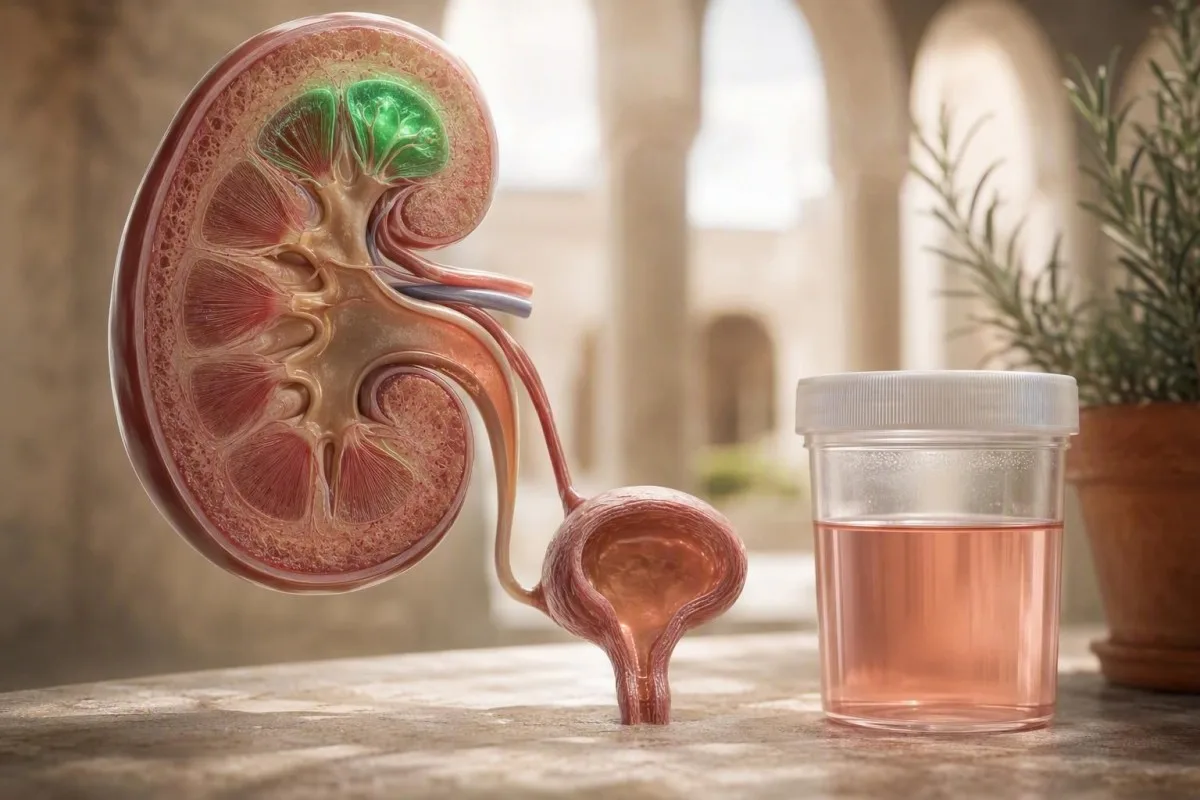
Ружовая або гарбатавага колеру праба sampel мачы пасля працяглай прабежкі часта з'яўляецца часовай гематурыяй, выкліканай фізічнай нагрузкай, але бачны колер ніколі нельга аўтаматычна адкідваць. Час, высновы мікраскапіі, сімптомы і правільна адпачылы паўторны sampel раскажуць сапраўдную гісторыю.


- Гематурыя, выкліканая фізічнымі нагрузкамі звычайна праходзіць на працягу 24–72 гадзін пасля інтэнсіўнай прабежкі; працягласць больш за 72 гадзіны патрабуе медыцынскага агляду.
- Крок мікраскапіі 3 ці больш эрытрацытаў на поле высокага павелічэння ў правільна сабраным sampel мачы адпавядае вызначэнню мікрагематурыі AUA.
- Несупадзенне тэст-палоскі мае значэнне: станоўчая крывяная падушка з нуля да двух эрытрацытаў на поле высокага павелічэння сведчыць аб міяглабінурыі або вольным гемаглабіне, а не аб крывацёку з мочавыдзяльных шляхоў.
- Паўторны тэрмін разумна пры наяўнасці згусткаў, немагчымасці мачавыпускання, ліхаманкі, аднабаковай моцнай болі ў паясніцы або мачы колеру колы з выяўленай болем у мышцах.
- Ацэнка ў той жа дзень з'яўляецца падставай для выкліку пры згустках, немагчымасці мачавыпускання, ліхаманцы, моцным аднабаковым болю ў пастаральным аддзеле, або карычневай мачы з выяўленым болем у мышцах.
- Блок папярэджання нырак - гэта кроў плюс бялок, цыліндры эрытрацытаў, высокі крывяны ціск або зніжэнне eGFR — а не ізаляваная тэст-палоска пасля гонкі.
- Сімптом рабдаміялізу — гэта непрапарцыйна цёмная моча з сур'ёзнымі цягліцавымі сімптомамі і ўзроўнем креатінкіназы, які часта перавышае ў 5 разоў верхнюю мяжу нормы па лабараторыі.
- Кантэкст рызыкі раку змяняе парог для даследавання: узрост, уздзеянне курэння, папярэдняе прамянёвае ўздзеянне на вобласць малога таза і ўстойлівая бачная гематурыя — усё гэта мае значэнне.
Чаму прабежка можа зрабіць мачу ружовай
Гематурыя бегуноў — гэта звычайна кароткі час крывацёк эрытрацытаў у мочу пасля інтэнсіўных фізічных нагрузак, які часта праходзіць на працягу 24–72 гадзін адпачынку. Тым не менш, бачная ружовая, чырвоная або колеру колы моча заслугоўвае старанна сабранага паўторнага аналізу, а не павярхоўнага меркавання, што гэта выклікана бегам.
У клініцы пазітыўны прагноз просты: змена колеру пачынаецца пасля незвычайна доўгага, хуткага або спусцістага бегу; няма ліхаманкі, колікападобнай болі ў паясніцы або палення пры мачавыпусканні; і мікраскапія нармалізуецца пасля адпачынку. Kantesti — гэта аналізатар крыві на базе AI , якія могуць размясціць звязаныя маркеры нырак — крэатынін, eGFR, электраліты і креатінкіназу — побач з гісторыяй фізічных нагрузак, а не разглядаць адзін вынік пасля гонкі як дыягназ.
Прапанаваныя механізмы — гэта механічны кантакт сценкі мачавога пузыра, часовыя змены крывацёку ў нырках, канцэнтрацыя, звязаная з абязводжваннем, і часам разбурэнне эрытрацытаў ад паўторных удараў нагой. Доказы для кожнага механізму шчыра кажучы змешаныя, таму што большасць даследаванняў невялікія і выкарыстоўваюць розныя дыстанцыі гонак. У маёй 15-гадовай клінічнай практыцы гісторыя новага напружання мае большае значэнне, чым толькі колер; першы ультрамарафон і звычайныя 5 км не нясуць аднолькавай пратэстнай імавернасці.
Бачная кроў у мове пасля фізічнай нагрузкі не з'яўляецца сінонімам дабраякаснай гематурыі бегуноў. Шырокая панэль "чырвоных сцяжкоў" гематурыі карысная, таму што нырачныя камяні, інфекцыі, гломерулярныя захворванні і рак мачавыводзячых шляхоў могуць выпадкова ўпершыню праявіцца пасля бегу.
Практычнае азначэнне
Гематурыя, выкліканая фізічнай нагрузкай, азначае, што эрытрацыты з'яўляюцца ў мове неўзабаве пасля напружання і знікаюць пры паўторным аналізе ў стане адпачынку. Адзін толькі станоўчы тэст-палоска не пацвярджае гэты дыягназ, бо рэагент выяўляе гемы пігмент з цэлых эрытрацытаў, вольнага гемаглабіну або миоглобина.
Гэта гематурыя, гемаглабін ці міяглабін?
Тэст-палоска мачы, якая станоўча рэагуе на кроў, можа адлюстроўваць эрытрацыты, гемаглабін або миоглобин, і мікраскапія іх падзяляе. Ружовая моча з вялікай колькасцю цэлых эрытрацытаў пацвярджае гематурыю; цёмна-карычневая моча з невялікай колькасцю эрытрацытаў або без іх выклікае занепакоенасць з-за пігмента ад пашкоджання мышцаў або гемалізу.
Мікраскапія мачы, якая паказвае 3 або больш эрытрацытаў на поле высокага павелічэння пацвярджае мікрагематурыю, калі ўзор сабраны чыста. Наадварот, моцна станоўчы тэст-палоска з 0–2 эрытрацытамі на поле высокага павелічэння павінна прымусіць лекара разгледзець міяглабінурыю, асабліва пасля ўздзеяння цяпла, нагрузкі на мышцы тыпу ўдару або цяжкай запаволенай болі ў мышцах. Карычневы або колеру колы колер больш характэрны для канцэнтраванага пігмента, чым для невялікай колькасці крывацёку з мачавога пузыра.
Миоглобин мае значэнне, таму што ён можа суправаджаць рабдаміяліз і вострае пашкоджанне нырак. Канцэнтрацыя креатінкіназы вышэй за 5 разоў верхнюю мяжу нормы па лабараторыі часта выкарыстоўваецца як біяхімічны парог для рабдаміялізу, хоць сімптомы, калій, крэатынін і вылучэнне мачы вызначаюць тэрміновасць. Глядзіце наша практычнае тлумачэнне небяспечна высокі ўзровень креатінкіназы для тых паказанняў, якія не павінны чакаць усю ноч.
Харчовыя фарбавальнікі, буракі, ажына, рифампицин, феназопиридин і абязводжванне таксама могуць афарбоўваць мачу без чырвоных крывяных цельцаў. A diferencial de urina escura дапамагае пазбегнуць распаўсюджанай памылкі меркавання, што кожны чырванаваты ўзор уяўляе кроў.
Чаму адрозненне змяняе лячэнне
Гематурыі з-за чырвоных крывяных цельцаў накіроўвае ўвагу на мочавыдзяляльную сістэму, у той час як миоглобинурия накіроўвае ўвагу на шкірныя мышцы і абарону нырак. Абодва могуць узнікаць пасля працяглых трэніровак, але толькі мікраскапія і мэтанакіраваныя аналізы крыві могуць надзейна іх адрозніць.
Як чытаць вынікі аналізу мачы пасля прабежкі
Найбольш інфарматыўны паслябегавы аналіз мачы ўключае тэст-палоску, мікраскапію, вымярэнне бялку і ўдзельную вагу. Кроў на тэст-палоску з часовымі чырвонымі крывянымі цельцамі і без бялку часта з'яўляецца нізкарызыкоўнай; кроў плюс бялок або цилиндры патрабуюць больш дбайнай ацэнкі нырак.
Вынік тэст-палоскі крыві паведамляецца як адмоўны, сляды, 1+, 2+ або 3+, але гэта скрынінгавы сігнал, а не падлік клетак. AUA вызначае микрогематурию як больш за 3 чырвоныя крывяныя цельцы на поле высокага павелічэння пры мікраскапічным даследаванні, а не толькі вынік тэст-палоскі (Barocas et al., 2020). Гэта адрозненне дазваляе пазбегнуць непатрэбнага абследавання бегуноў на рак пасля ілжыва-станоўчага скрынінгу.
Удзельная вага вышэй 1.030 паказвае на канцэнтраваную мачу ў многіх лабараторыях і можа зрабіць колер больш трывожным, але гэта не тлумачыць пацверджаныя чырвоныя крывяныя цельцы. Бялок 1+ або больш павінен быць колькасна ацэнены з дапамогай суадносін альбумін-крэатынін у мачы або бялок-крэатынін; існуе часовая нагрузачная протеинурия, аднак пастаянная альбуминурия змяняе дыферэнцыял у бок гломерулярнага захворвання. Наш поўнае кіраўніцтва па аналізе мачы тлумачыць, чаму гэтыя маркеры не павінны аб'ядноўвацца ў адзін вынік.
Kantesti AI аналізуе креатынін і eGFR разам з вынікамі аналізу мачы, часам практыкаванняў і папярэднімі значэннямі; адзіны нязначна павышаны креатынін пасля гарачай гонкі не эквівалентны хранічнай хваробе нырак. На практыцы я запытваю дыстанцыю, рэльеф, тэмпературу, выкарыстанне супрацьзапаленчых сродкаў, час менструальнага цыклу і ці быў узор здадзены на працягу 2 гадзін пасля заканчэння.
Калі варта паўтарыць аналіз мачы пасля бегу?
Паўторнае тэсціраванне мачы праз 48–72 гадзіны пасля апошняга інтэнсіўнага бегу з'яўляецца разумным стандартным падыходам пры падазрэнні на гематурыю ў бегуна. Выкарыстоўвайце прабу ранішняй мачы або сярэдняй струмені добра ўвільготненай мачы, але не прымусова выпівайце літры вады непасрэдна перад гэтым, бо экстрэмальнае развядзенне можа замаскіраваць карысныя высновы.
Для звычайнай пасля赛 abnormalities, I usually recommend no intervals, hills, heavy lifting, or races for 48 гадзін; пасля марафону, ультрамарафону, цеплавога захворвання або незвычайнай болю, 72 гадзіны з'яўляецца больш апраўданым. Звычайная піццё да пачуцця смагі дастаткова. Перагідратацыя можа знізіць удзельную вагу ніжэй за 1.005 і часам зрабіць памежны вынік цяжэйшым для інтэрпрэтацыі.
Калі мікраскапія застаецца станоўчай пасля 72 гадзін, арганізуйце агляд у першаснай медыцынскай установе на працягу некалькіх дзён, а не паўторнае тэсціраванне пасля трэніровак. Устойлівыя вынікі патрабуюць вымярэння артэрыяльнага ціску, узроўню креатыніну ў сыроватцы/eGFR, суадносін альбуміну да креатыніну ў мачы, а таксама разгляду культуры або візуалізацыі ў залежнасці ад рызыкі. Сувязь паміж фізічнай нагрузкай, гідратацыяй і часова ніжэйшай ацэнкай фільтрацыі апісана ў нашым кіраўніцтва па eGFR пасля фізічнай нагрузкі.
52-гадовы бегун-аматар, які бегаў марафон, які я бачыў, меў 18 эрытрацытаў на поле высокай павелічальнасці ўвечары пасля гарачай гонкі, але 0–1 эрытрацытаў праз 72 гадзіны адпачынку; яго креатынін знізіўся з 1,28 мг/дл да 0,96 мг/дл. Вынік быў супакойваючым, але той жа план не быў бы дастатковым для 52-гадовага курца з паўторным бачным колерам мачы.
Не тэсціруйце на фінішы, калі можаце гэтага пазбегнуць
Тэсціраванне неадкладна пасля фізічнай нагрузкі максімізуе шанцы выявіць часовыя эрытрацыты, канцэнтраваную мачу і бялок. Гэта можа быць клінічна карысным пры падазрэнні на рабдаміоліз, але гэта дрэнны час для ўстанаўлення базавага ўзроўню бегуна.
Якія станоўчыя мадэлі гематурыі пасля бегу звычайна супакойваюць?
Эпізод, які самастойна праходзіць пасля інтэнсіўнага бегу, больш супакойвае, калі ён цалкам праходзіць, не мае болю або сістэмных сімптомаў і не суправаджаецца пратэінурыяй або зменамі функцыі нырак. Супакойваючы не азначае ігнараваць; гэта азначае пацверджанне з пробай, сабранай пасля адпачынку.
Фенатып з меншым рызыкай - гэта бягун маладога або сярэдняга ўзросту з ясным трыгерным механізмам, нармальным артэрыяльным ціскам, адсутнасцю гісторыі курэння і нармальнай мікраскапіяй пасля адпачынку. У гэтай сітуацыі адзінкавы часовы вынік 3–10 RBC/HPF пасля гонкі часта праходзіць без лячэння. Я б усё роўна дакументаваў гэта, таму што паўтарэнне пасля кожнага доўгага бегу патрабуе больш уважлівага разгляду, чым адзінкавы выпадак.
Нармальнае суадносіны альбуміну да креатыніну ў мачы звычайна ніжэй за 30 мг/г (ніжэй за 3 мг/ммоль), хоць лабараторыі і краіны паведамляюць адзінкі па-рознаму. Кроў без альбуміну, цыліндраў або дызморфных эрытрацытаў паказвае на адсутнасць гломерулярнай выцекі; гэта не даказвае крыніцу з мачавой бурбалкі, але накіроўвае наступнае пытанне. Наша тлумачэнне бялку ў мачы ахоплівае гэты падзел выразна.
Траўма мачавой бурбалкі больш імаверная, калі мача вельмі канцэнтраваная, а бегун заканчвае з амаль пустым мачавым бурбалкай. Некаторыя спартыўныя клініцысты прапануюць апаражненне перад доўгім бегам і рэгулярнае піццё, але гэта парады па прафілактыцы з абмежаванымі дадзенымі выпрабаванняў - не замена ацэнкі, калі колер захоўваецца.
Нармальны вынік мае адзнаку часу
Адмоўны тэст праз 3 дні пасля гонкі супакойвае адносна гэтага эпізоду, а не гарантуе на ўсё жыццё. Новая бачная гематурыя праз некалькі месяцаў павінна ацэньвацца самастойна, асабліва пасля 40 гадоў або пры ўздзеянні курэння.
Сігналы трывогі, якія робяць гематурыю бегуна менш верагоднай
Гематурыя патрабуе неадкладнай ацэнкі, калі яна захоўваецца больш за 72 гадзіны, паўтараецца без інтэнсіўных практыкаванняў або з'яўляецца з болем, ліхаманкай, згусткамі, бялком або змяненнем функцыі нырак. Спалучэнне вынікаў больш інфарматыўнае, чым адзін толькі дзіўна выглядаючы ўзор.
Звярніцеся за своечасовай медыцынскай дапамогай пры бачнай чырвонай мачы, якая захоўваецца даўжэй 24 гадзіны, нават калі вы адчуваеце сябе добра; парог ніжэй для людзей старэйшыя за 40 гадоў, курцоў або былых курцоў, або тых, хто раней праходзіў прамянёвую тэрапію таза. Кіраўніцтва AUA выкарыстоўвае стратыфікацыю рызыкі на аснове ўзросту, курэння, ступені і ўстойлівасці мікраскапічнай крыві, і папярэдняй макрагематурыі, а не аднолькавага лячэння ўсёй мікрагематурыі (Barocas et al., 2020).
Дысмарфічныя эрытрацыты, эрытрацытарныя цыліндры, значная альбумінурыя, новая гіпертэнзія або зніжэнне eGFR сведчаць аб крыніцы ў фільтры нырак, а не аб страсенні мачавой бурбалкі. Эрытрацытарныя цыліндры ніколі не з'яўляюцца чаканым следствам звычайнага бегу і павінны прыводзіць да паскоранай ацэнкі нырак. Глядзіце наш агляд гранулярных і мачавых цыліндраў , чаму вынікі аналізу мачы важныя.
Томас Кляйн, MD, раіць бегунам не займацца самадыягностыкай толькі па колеры: інфекцыя мачавых шляхоў можа выклікаць паленне, тэрміновасць, піурыю, а часам і гематурыю, у той час як камяні часцей выклікаюць рэзкі аднабаковы боль і млоснасць. Культура найбольш карысная перад антыбіётыкамі пры наяўнасці сімптомаў інфекцыі.
Спалучэнне крыві і бялку
Пацверджаная гематурыя з пратэінурыяй выклікае больш занепакоенасці, чым ізаляваная гематурыя, паколькі абодва могуць паходзіць з гломерулярнага фільтра. Суадносіны альбумін-крэатынін у мачы 30 мг/г або вышэй павінны быць паўтораны і інтэрпрэтаваны разам з артэрыяльным ціскам і функцыяй нырак.
Калі ружовая мача пасля фізічнай нагрузкі патрабуе дапамогі ў той жа дзень?
Звярніцеся за тэрміновай ацэнкай у той жа дзень пры наяўнасці згусткаў, немагчымасці мачавыпускання, моцнай болі ў паясніцы, ліхаманкі, слабасці, зніжэння выпрацоўкі мачы або цёмнай мачы з моцнай болю і слабасцю ў цягліцах. Гэтыя прыкметы выходзяць за межы неўскладненай гематурыі, выкліканай практыкаваннямі.
Згусткі могуць перашкаджаць току мачы, а немагчымасць прапускаць мачу з'яўляецца тэрміновай праблемай незалежна ад спартыўнай падрыхтоўкі. Ліхаманка 38,0°C або вышэй з болем у паясніцы можа сведчыць аб інфекцыі верхніх мачавых шляхоў; моцная колікавая боль з ванітамі можа сведчыць аб камяні. Ні адна з гэтых сітуацый не павінна кіравацца чаканнем паўторнага тэсту пасля бегу.
Цёмна-карычневая мача пасля нагрузкі плюс значная балючасць, слабасць, ацёк або зніжэнне выпрацоўкі цягліц выклікаюць занепакоенасць наконт рабдаміялізу. Першапачатковае тэсціраванне звычайна ўключае креацінкіназу, крэатынін, калій, кальцый, фосфат і аналіз мачы. A даведнік па рабдаміёлізе CrossFit з'яўляецца актуальным, паколькі непрывычныя эксцэнтрычныя нагрузкі, а не толькі бег, часта з'яўляюцца трыгерам.
Моцная абязводжванне можа пагоршыць вынікі аналізу нырак, але яно таксама можа суправаджацца сапраўдным пашкоджаннем. Калі вы адчуваеце галавакружэнне, спутанность свядомасці, не можаце ўтрымліваць вадкасць у страўніку або вельмі мала мачыце на працягу 8–12 гадзін, не спрабуйце вырашыць праблему спартыўнымі напоямі дома.
Цяжарнасць і антыкаагулянты
Бягучыя цяжарныя жанчыны і людзі, якія прымаюць антыкаагулянты, павінны неадкладна паведамляць аб бачнай гематурыі. Антыкаагулянты могуць узмацніць крывацёк, але не здымаюць неабходнасці вызначэння яго крыніцы; цяжарнасць таксама змяняе парог для праверкі на інфекцыю, камяні і захворванні нырак.
Стан, які прабежка можа выявіць, а не выклікаць
Бег можа выявіць існуючую праблему мачавыпускання шляхам канцэнтрацыі мачы або правядзення тэсту, а не выклікаць саму гематурыю. Камяні, інфекцыя, гломерулярнае захворванне, структурныя анамаліі і злаякасныя новаўтварэнні застаюцца часткай дыферэнцыйнай дыягностыкі.
Бягучае аднабаковае боль у паясніцы да пахвіны, млоснасць і эрытрацыты пры мікраскапіі часта выклікаюцца нырачнымі камянямі, хоць сустракаюцца і бязбольныя камяні. Інфекцыя мачавыводзячых шляхоў часцей выклікае паленне, частае мачавыпусканне, тэрміновасць і лейкацыты; адмоўны вынік на нітрыты не выключае яе. Наша кіраўніцтва па лейкацытарнай эстеразе з адмоўным нітрытам тлумачыць гэтую распаўсюджаную змешаную карціну.
Гломеруланефрыт можа праяўляцца пасля інфекцыі верхніх дыхальных шляхоў з "кака-кольнай" мачай, ацёкамі, павышэннем артэрыяльнага ціску, пратэінурыяй і дызморфнымі эрытрацытамі. У рэкамендацыях KDIGO 2024 па ХБП устойлівая альбумінурыя і зніжэнне eGFR разглядаюцца як дадатковыя маркеры рызыкі захворвання нырак, а не ўзаемазаменныя вымярэнні (KDIGO, 2024).
Kantesti — інструмент аналізу аналізу крыві з дапамогай ШІ , які дапамагае карыстальнікам распазнаваць заканамернасці паміж крэатынінам, eGFR, альбумінам, электралітамі і CBC, але не можа дыягнаставаць анатамічную крыніцу гематурыі. Візуалізацыя, мікраскапія, культуральнае даследаванне і агляд лекара-клініцыста па-ранейшаму адыгрываюць вырашальную ролю.
Рак рэдка сустракаецца ў маладых бегуноў, але не немагчымы ў дарослых.
Бачная гематурыя патрабуе ацэнкі, нават калі фізічная нагрузка здаецца відавочнай прычынай, асабліва ў людзей з уздзеяннем тытуню або ўстойлівымі сімптомамі. Рызыка павялічваецца з узростам і назапашаным уздзеяннем тытуню, таму аднолькавыя вынікі аналізу мачы не прыводзяць да аднолькавых планаў абследавання.
Каму патрэбна наступнае назіранне ў уролага ці нефролага?
Устойлівая гематурыя пасля адпачынку і паўторнага ўзору павінна быць ацэнена на рызыку ўралагічнага захворвання, у той час як гематурыя плюс пратэінурыя, гістыя, гіпертэнзія або зніжэнне eGFR паказвае на нефралагічную праблему. Многія людзі патрабуюць толькі паўторнага тэсціравання пад кіраўніцтвам першаснай медыцынскай дапамогі; накіраванне залежыць ад заканамернасці.
Уралагічная ацэнка асабліва мэтазгодная пры рэцыдывуючай бачнай гематурыі, устойлівай мікраскапічнай гематурыі, анамнезе курэнне, прафесійным уздзеянні араматычных амінаў, папярэднім прамянёвым уздзеянні на вобласць таза або сімптомах мачавыпускання без інфекцыі. У залежнасці ад рызыкі, лекары могуць выкарыстоўваць ультрагукавое даследаванне нырак і мачавога пузыра, КТ-урографію і цистоскопию. Адзіны слядовы тэст пасля забегу ў 24-гадовага чалавека - гэта зусім іншая сітуацыя, чым рэцыдывуючая чырвоная мача ў 58-гадовага былога курца.
Агляд у нефролага становіцца больш верагодным пры суадносінах альбумінурыі і крэатыніну ў мачы ≥30 мг/г, eGFR ніжэй 60 мл/мін/1.73 м² , які доўжыцца 3 месяцы ці больш, цыліндры з эрытрацытаў або цяжка кантралюемы артэрыяльны ціск. Гэтыя парогі важныя, таму што хранічнае захворванне нырак вызначаецца працягласцю, а таксама адным вымярэннем. Прачытайце наша гідам па стадыях хранічнай хваробы нырак для практычных катэгорый.
Сэрвіс інтэрпрэтацыі лабараторных аналізаў Kantesti можа вызначыць паўтаральны шаблон крыві і бялкоў для абмеркавання, асабліва калі карыстальнікі загружаюць вынікі з розных лабараторый. Ён павінен падтрымліваць, а не замяняць, лекара, які вырашае, ці патрэбна візуалізацыя мачавыводзячых шляхоў ці спецыялістычнае абследаванне.
Не дазваляйце антыкаагулянтнай тэрапіі спыніць размову
Ужыванне антыкаагулянтаў змяняе цяжкасць крывацёку, але не ўстанаўлівае прычыну гематурыі. З майго досведу, прыпісванне рэцыдывавальнай крыві ў мачы да апіксабану, варфарыну або аспірыну без абследавання можа затрымаць выяўленне камянёў, інфекцый ці структурных захворванняў.
Якія аналізы крыві дапамагаюць пры гематурыі, звязанай з фізічнай нагрузкай?
Карысныя аналізы крыві залежаць ад сімптомаў: крэатынін, eGFR, электраліты і креацінкіназа ацэньваюць стрэс нырак і цягліц, у той час як CBC ацэньвае прыкметы анеміі ці інфекцыі. Руцінныя шырокія панэлі менш карысныя, чым мэтавае тэсціраванне пасля дакладнага анамнезу і аналізу мачы.
Крэатынін можа часова павышацца пасля інтэнсіўных фізічных нагрузак з-за метабалізму цягліц, зніжэння перфузии нырак і абязводжвання. Ураўненні eGFR менш надзейныя падчас хуткіх змен крэатыніну, таму паўторнае значэнне пасля 48–72 гадзіны звычайнага аднаўлення часта больш значнае, чым вынік на фінішы. Наша кіраўніцтва па паўторнай праверцы крэатыніну пасля фізічных нагрузак дае кантэкст для гэтага частага трыгера трывогі.
Креацінкіназа мае шырокі дыяпазон пасля фізічных нагрузак: трэніраваныя спартсмены могуць паказваць павышэнне ўзроўню пасля гонкі без пашкоджання нырак, у той час як значэнні, якія ў некалькі разоў перавышаюць мясцовы верхні ліміт, плюс сімптомы, патрабуюць неадкладнай ацэнкі. Калій вышэй 6,0 ммоль/л патэнцыйна небяспечны і патрабуе неадкладнай клінічнай ацэнкі, асабліва калі функцыя нырак парушана або падазраецца пашкоджанне цягліц.
CBC найбольш карысны пры стомленасці, бледнасці, моцных менструальных крывацёках, рэцыдывавальнай гематурыі або пры падазрэнні на сістэмнае захворванне. Гемаглабін можа знізіцца пасля інтэнсіўных нагрузак з-за пашырэння аб'ёму плазмы, страты жалеза або гемолізу; феритин павінен тлумачыцца асобна ад вострага запалення і інтэнсіўных трэніровак. Бегуны на доўгія дыстанцыі могуць знайсці наш агляд аналізаў крыві спартсменаў карысным для разумнай базавай лініі.
Не ставіць дыягназ захворвання нырак па адной панэлі перад гонкай
Павышэнне крэатыніну на 0,3 мг/дл або больш можа адпавядаць крытэрыю вострага пашкоджання нырак у правільныя тэрміны, але кантэкст і паўторнае тэсціраванне з'яўляюцца вырашальнымі пасля гонкі. Нізкі адток мачы, павышэнне калію і ўстойлівае павышэнне маюць большае значэнне, чым ізаляваны мяжовы вынік.
Як сабраць паўторны sampel мачы, якому давяраюць лекары
Проба мачы сярэдняй порцыі, сабраная пасля 48–72 гадзін без інтэнсіўных фізічных нагрузак, з'яўляецца лепшым спосабам праверыць, ці знікла гематурыі. Памылкі пры зборы, менструальная кантымінацыя і стары ўзор могуць даць зманлівыя вынікі.
Вымыйце рукі, пачніце мачавыпусканне ў туалет, затым збярыце сярэднюю порцыю, не дакранаючыся ўнутранай часткі кантэйнера. Даставіце ўзор неадкладна — у ідэале на працягу 2 гадзін— або выконвайце інструкцыі лабараторыі па захоўванні ў халадзільніку. Працяглае стаянне змяняе знешні выгляд клетак і можа зрабіць мікраскапію менш надзейнай.
Па магчымасці пазбягайце тэсціравання падчас актыўнай менструацыі; калі тэсціраванне не можа чакаць, паведаміце лекара і лабараторыю. Вагінальная кантымінацыя можа выклікаць з'яўленне чырвоных крывяных цельцаў і бялку, у той час як пласкаклетачныя эпітэліяльныя клеткі часта сведчаць аб дрэнна сабраным узоры. Наша кіраўніцтва па эпітэліяльных клетках у мачы тлумачыць, чаму гэта не другарадная заўвага ў лабараторыі.
Томас Кляйн, MD, рэкамендуе запісваць чатыры дэталі разам з узорам: апошнюю напружаную трэніроўку, працягласць мерапрыемства, тэмпературу на вуліцы і ўсе лекі, прынятыя за папярэднія 72 гадзіны. Вынік без часу значна цяжэй інтэрпрэтаваць, асабліва калі моча збіраецца пасля падвойнай трэніроўкі.
Першы ранішні аналіз у параўнанні з дзённым
Першы ранішні ўзор канцэнтраваны і добры для выяўлення невялікіх адхіленняў, але ўзор сярэдзіны дня пры нармальнай гідратацыі прымальны, калі збор больш чысты. Паслядоўнасць больш важная для серыйнага параўнання: пры кожным паўторным аналізе выкарыстоўвайце прыкладна аднолькавыя ўмовы.
Увільгатненне, болесуцішальныя сродкі і дабаўкі, якія змяняюць карціну
Абязводжванне можа канцэнтраваць мочу і павялічваць нагрузку на ныркі, у той час як НПВС могуць знізіць крывацёк нырак падчас трэніровак на цягавітасць. Ні адзін з гэтых фактараў не даказвае прычыну гематурыі, але абодва ўплываюць на тое, наколькі асцярожна клініцысты інтэрпрэтуюць вынік пасля прабежкі.
Для большасці бегуноў пітво па сітавіне і паступовае аднаўленне страт больш бяспечнае, чым жорсткае прымусовае прыём вадкасці. Вельмі нізкі ўзровень натрыю з-за празмернага спажывання вады можа быць небяспечным; натрый у сыроватцы ніжэй 125 ммоль/л з галаўным болем, ванітамі, спутанностью свядомасці або курчамі з'яўляецца надзвычайнай сітуацыяй. Колер мачы з'яўляецца прыблізнай падказкай гідратацыі, а не дакладным вымяральнікам гідратацыі.
Ібупрофен, напроксен і іншыя НПВС могуць знізіць крывацёк нырак, медыяваны простагландынамі, асабліва падчас цеплавога стрэсу, ваніты або працяглых мерапрыемстваў. Я раю пацыентам пазбягаць звычайнага прафілактычнага прыёму НПВС перад марафонамі, калі іх уласны лекар не даў яўнай прычыны. Кантэкст прыёму лекаў разглядаецца ў нашым артыкуле аб бяспецы лабараторных тэндэнцый.
Высокія дозы вітаміна С могуць уплываць на некаторыя рэакцыі тэст-палачак для мачы, а харчовыя дабаўкі, якія прадаюцца для павышэння працаздольнасці, часам утрымліваюць неўказаныя стымулятары або діуретікі. Прынясіце кантэйнеры або выразнае фота на прыём; гэта часта больш карысна, чым спрабаваць запомніць спіс інгрэдыентаў брэндаваных парашкоў. Наш кіраўніцтва па бяспецы харчовых дабавак для спартсменаў прапануе разумны кантрольны спіс.
Гідратацыя не з'яўляецца лячэннем хранічнай крыві
Вада можа выправіць канцэнтрацыю, але яна не лечыць камень, інфекцыю, гломерулярны працэс або структурную прычыну ў мачавыводзячых шляхах. Калі эрытрацыты застаюцца ў спакойным, добра сабраным узоры, далейшыя дзеянні павінны грунтавацца на характарыстыках, а не на іншым эксперыменце з гідратацыяй.
Ці можна працягваць бегаць пасля гематурыі, выкліканай фізічнай нагрузкай?
Большасць бегуноў могуць вяртацца паступова, калі колер мачы нармалізуецца, сімптомы адсутнічаюць, і спакойны паўторны ўзор заспакаяльны. Не вяртайцеся да інтэнсіўных трэніровак, пакуль моча застаецца бачна чырвонай, вынікі аналізу нырак ненармальныя, або сімптомы цягліц сведчаць пра рабдаміяліз.
Пасля не ўскладненага адзінкавага эпізоду я звычайна рэкамендую лёгкія прабежкі толькі на некалькі дзён, затым паступовае аднаўленне аб'ёму і інтэнсіўнасці на працягу 7–14 дзён. Бегун павінен спыніцца і звярнуцца па кансультацыю, калі колер паўтараецца, з'яўляецца боль або зніжаецца выпрацоўка мачы. Гэта прагматычны клінічны падыход, а не правераны эксперыментальна прызначэнне.
Паўторная гематурыя пасля той жа дыстанцыі можа апраўдаць практычныя эксперыменты: пазбягайце спаборніцтваў у абязводжаным стане, мачыцеся перад доўгім прабежкам, павольней уводзіце трэніроўкі на спускі і правярайце падганянне абутку або паверхню. Вядзіце журнал тэмпу, цяпла, працягласці, колеру мачы і вынікаў аналізаў. лабараторным гідам для марафонцаў можа дапамагчы адрозніць маркеры аднаўлення ад прычын для прыпынення трэніровак.
Не трэніруйцеся з-за невытлумачальнай бачнай гематурыі толькі таму, што ў вас запланавана спаборніцтва. Атлеты часта добра пераносяць дыскамфорт; больш складаны навык - прызнаць, што настойлівасць - гэта дыягнастычная інфармацыя, а не тэст на цвёрдасць.
Стварыце рэальную базавую лінію
Базавы аналіз мачы і панэль нырачных функцый, зробленыя прынамсі за 72 гадзіны да інтэнсіўных трэніровак, могуць значна палегчыць інтэрпрэтацыю будучых вынікаў пасля спаборніцтваў. Гэта асабліва карысна для ультрамарафону, людзей з адной ныркай або спартсменаў, якія ўжываюць лекі, што ўплываюць на перфузию нырак.
Што сказаць лекару пра кроў у мачы пасля фізічнай нагрузкі
Самы хуткі шлях да карыснай ацэнкі гематурыі - гэта сціслая шкала часу: колер мачы, дазоўка фізічнай актыўнасці, сімптомы, лекі і час паўторнага тэсціравання. Праявіце фактычныя лабараторныя значэнні, а не толькі паведамленне аб тым, што ўзор быў “станоўчым на кроў”.”
Пакажыце, быў ці колер мачы ружовы, ярка-чырвоны, колеру гарбаты, ці змяшчаў згусткі; ці з'явіўся колер да, падчас ці пасля фізічнай актыўнасці; і ці знік ён пасля першага мачавыпускання. Уключыце паленне, тэрміновасць, ліхаманку, боль у паясніцы, млоснасць, ацёк і зніжэнне выпрацоўкі мачы. Падрабязны эталон колеру мачы можа дапамагчы дакладна апісаць назіранне без празмернай інтэрпрэтацыі.
Прадастаўце папярэднія аналізы мачы, значэнні креатыніну/eGFR, паказанні артэрыяльнага ціску, анамнез курэння, сямейны анамнез нырак і спіс лекаў/дабавак. Kantesti — гэта платформа інтэрпрэтацыі біямаркерных даных AI якія могуць арганізаваць паўторныя значэнні аналізаў крыві і вылучыць значныя змены, але лекар павінен звязаць гэтыя значэнні з мікраскапіяй і аналізам мачы.
Па стане на 3 верасня 2026 года клінічны прынцып застаецца простым: фізічная актыўнасць з'яўляецца праўдападобным тлумачэннем толькі пасля таго, як вынік знікне і адсутнічаюць канкуруючыя падказкі. Калі вы не ўпэўненыя, спытайце, ці патрэбна вам мікраскапія, пасеў, суадносіны альбумін-крэатынін, паўторны крэатынін, візуалізацыя або накіраванне - а не проста яшчэ адзін тэст-палоска.
Perguntas que valem a pena fazer
Спытайце, ці былі бачныя цэлыя эрытрацыты, ці быў бялок або цыліндры, і калі павінна адбыцца паўторнае даследаванне ў стане спакою. Гэтыя тры адказы звычайна высвятляюць, ці будзе наступным крокам назіральнае назіранне, тэсціраванне нырак, тэсціраванне на інфекцыю або уролагічнае абследаванне.
Разумны план дзеянняў пры гематурыі бегуна
Пры адным бязбольным эпізодзе пасля інтэнсіўных трэніровак адпачніце ад інтэнсіўных фізічных нагрузак на 48-72 гадзіны і паўторыце аналіз мачы з чыстага забору; звярніцеся па дапамогу раней пры наяўнасці трывожных сігналаў або ўстойлівага бачнага колеру. Мэта - не паніка і не адхіленне, а даказаць, што вынік знікае.
Крок першы: спыніць інтэнсіўныя трэніроўкі, нармальна піць ваду і адзначыць час і сімптомы. Крок другі: паўтарыць мікраскапію пасля 48–72 гадзіны. Крок трэці: калі кроў захоўваецца, або калі з'яўляецца бялок, цыліндры, боль, ліхаманка, згусткі, нізкая выпрацоўка мачы або анамальныя нырачныя маркеры, неадкладна звярніцеся па медыцынскую дапамогу. Гэтая паслядоўнасць прадухіляе як прапушчаныя захворванні, так і празмерную візуалізацыю пасля аднаразовага ўзору на фінішнай лініі.
Калі наша клінічная каманда разглядае загружаныя лабараторныя дадзеныя, мы прыярытызуем шаблоны: рост крэатыніну плюс высокі CK і нізкая выпрацоўка мачы больш тэрміновыя, чым стабільны крэатынін з часовым аналізам мачы тэст-палоскай. Метадалогія і меры бяспекі Kantesti апісаны ў нашым інфармацыя пра клінічную валідацыю, а наш лекарскі нагляд дэталізаваны праз Медыцынская кансультатыўная рада.
Большасць пацыентаў лічаць, што паўторны тэст у вызначаны час ператварае трывожны змяненне колеру ў ясны план. Але калі ваша інтуіцыя падказвае, што нешта не так - асабліва калі мача ўсё яшчэ чырвоная заўтра - давярайце гэтаму сігналу і прайдзіце абследаванне.
Правіла адной прапановы
Ружовая мача адзін раз пасля цяжкай прабежкі можа быць часовай; ружовая мача, якая захоўваецца, паўтараецца або з'яўляецца разам з сімптомамі, з'яўляецца гематурыяй да належнай ацэнкі.
Часта задаваныя пытанні
Колькі доўжыцца гематурыя бегуноў?
Гематурыя бегуноў звычайна праходзіць на працягу 24–72 гадзін пасля спынення інтэнсіўных фізічных нагрузак. Практычным паўторным аналізам мачы з’яўляецца сярэдняя порцыя мачы, сабраная пасля 48–72 гадзін без цяжкіх прабежак ці моцных уздымаў, пры метадзе «чыстага забору». Устойлівая бачная ружовая або чырвоная мача праз 24 гадзіны, альбо мікраскапічная гематурыя, якая захоўваецца праз 72 гадзіны, павінны быць ацэнены лекарам. Ліхаманка, згусткі, моцны боль у паясніцы, зніжэнне выпрацоўкі мачы або моцны боль у мышцах апраўдваюць ацэнку ў той жа дзень.
Ці з'яўляецца кроў у мачы пасля фізічных нагрузак нармальнай з'явай?
Кроў у мочы пасля фізічных нагрузак можа быць часовым эфектам інтэнсіўных прабежак, абязводжвання, удараў па сценцы мачавой бурбалкі або кароткачасовых змен крывацёку нырак, але гэта не з'яўляецца аўтаматычна нормай. Мікраскапія, якая пацвярджае 3 ці больш эрытрацытаў на поле высокага павелічэння, адпавядае вызначэнню мікрагематурыі AUA. Вынік, які знікае пры паўторным узоры пасля адпачынку, супакойвае, у той час як настойлівая кроў, бялок, гілінды, боль або мачавыя сімптомы патрабуюць далейшага абследавання. Відавочная афарбоўка мачы заўсёды павінна паведамляцца, асабліва ў дарослых з уздзеяннем курэння або паўторнымі эпізодамі.
Ці можа абязводжванне выклікаць ружовую мочу пасля бегу?
Абязводжванне можа зрабіць колер мачы больш цёмным і ўзмацніць выяўленне гематурыі пасля фізічных нагрузак шляхам канцэнтрацыі змесціва мачы, але само па сабе абязводжванне не можа надзейна тлумачыць пацверджаныя эрытрацыты. У спецыфічнай вазе мачы вышэй за 1.030 часта пазначаецца канцэнтраваная мача ў многіх лабараторыях. Піце звычайна да пачуцця смагі і паўторыце ўзор, узяты пасля гігіенічнай апрацоўкі, праз 48–72 гадзіны адпачынку, замест таго, каб спрабаваць "змыць" вынік празмернай колькасцю вады. Моцная смага, галавакружэнне, вельмі нізкі вывад мачы або спутанность свядомасці патрабуюць неадкладнага медыцынскага агляду.
У чым розніца паміж гематурыяй і миоглобинурией пасля фізічных нагрузак?
Гематурыя азначае наяўнасць цэлых эрытрацытаў у мачы, тады як миоглобинурия адлюстроўвае пігмент мышц, які вылучаецца пасля пашкоджання мышц. Тэст-палоска можа быць станоўчай на кроў у абедзвюх сітуацыях, таму мікраскапія з'яўляецца вырашальнай: миоглобинурия часта дае станоўчую тэст-палоску з 0–2 эрытрацытамі на поле зроку пры моцным павелічэнні. Моцны боль у мышцах, слабасць, ацёк, цёмная мача колеру колы або значэнне креатінкіназы, што перавышае лабараторную верхнюю мяжу ў 5 разоў, выклікаюць занепакоенасць рабдаміёлізам. Гэтая карціна патрабуе тэрміновай клінічнай ацэнкі, паколькі калій і функцыя нырак могуць хутка змяняцца.
Ці варта мне спыняць бегаць, калі ў мяне кроў у мачы, выкліканая фізічнымі практыкаваннямі?
Спыніце інтэнсіўныя трэніроўкі, пакуль колер мачы не нармалізуецца і вы не прайдзеце паўторны тэст у стане адпачынку, звычайна праз 48–72 гадзіны. Калі паўторны ўзор у норме, і ў вас няма болю, ліхаманкі, згусткаў, протеинурии або парушэння функцыі нырак, большасць бегуноў могуць паступова вяртацца да трэніровак на працягу прыкладна 7–14 дзён. Не аднаўляйце інтэнсіўныя трэніроўкі, калі мача застаецца бачна чырвонай або цёмнай, вывядзенне мачы зніжаецца або прысутнічаюць моцныя цягліцавыя сімптомы. Паўторныя эпізоды пасля падобных трэніровак патрабуюць медыцынскага агляду, нават калі кожны эпізод праходзіць.
Калі гематурыя патрабуе ўралога?
Устойлівая мікраскапічная гематурыя пасля адпачынку і паўторнага ўзору, рэцыдывуючая бачная гематурыя або гематурыя ў чалавека з курэннем у анамнезе, папярэднім прамянёвым уздзеяннем на таз або сімптомамі з боку мочавыдзяляльнай сістэмы часта патрабуе ацэнкі ўролагам. Уролагі могуць разглядаць ультрагукавое даследаванне, КТ-ураграфію і цыстаскапію ў залежнасці ад узросту і агульнага рызыкі, а не выкарыстоўваць адзін тэст для ўсіх. Гематурыя з альбумінурыяй 30 мг/г або больш, чырвонаклетачныя гіліндры, гіпертэнзія або eGFR ніжэй за 60 мл/мін/1,73 м² больш накіроўваюць да нефролага. Правільная спецыяльнасць залежыць ад поўнай карціны аналізу мачы і крыві.
Атрымаць аналіз крыві з AI сёння
Далучайцеся больш чым да 2 мільёнаў карыстальнікаў па ўсім свеце, якія давяраюць Kantesti для імгненнага, дакладнага аналізу лабараторных тэстаў. Загрузіце вынікі аналізу крыві і атрымайце поўную інтэрпрэтацыю біямаркераў 15,000+ за лічаныя секунды.
📚 Публікацыі даследаванняў са спасылкамі
Кляйн, Т., Мітчэл, С., і Вебер, Г. (2026). Шматмоўная AI-падтрымка пры прыняцці клінічных рашэнняў для ранняга трыажу хантавірусу: дызайн, інжынерная валідацыя і разгортванне ў рэальных умовах для 50 000 прааналізаваных справаздач аб аналізах крыві. Kantesti AI Medical Research.
Кляйн, Т., Мітчэл, С., і Вебер, Г. (2026). Папярэдне зарэгістраваны, рубрыка-аснаваны аўтаматызаваны тэхнічны бенчмарк інтэрпрэтацыйнага рухавіка Kantesti для аналізу крыві на 100 000 сінтэтычных тэставых выпадках. Kantesti AI Medical Research.
📖 Знешнія медыцынскія спасылкі
⚕️ Медыцынская адмова ад адказнасці
Гэты артыкул прызначаны толькі для адукацыйных мэт і не з’яўляецца медычнай парадай. Заўсёды кансультуйцеся з кваліфікаваным спецыялістам аховы здароўя для прыняцця рашэнняў па дыягностыцы і лячэнні.
Сігналы даверу E-E-A-T
Вопыт
Клінічны агляд, які вядзе лекар, працэсаў інтэрпрэтацыі лабараторных паказчыкаў.
Экспертыза
Фокус лабараторнай медыцыны на тым, як біямаркеры паводзяць сябе ў клінічным кантэксце.
Аўтарытэтнасць
Напісана доктарам Томасам Кляйнам, з аглядам доктара Сара Мітчэл і праф. доктара Ганса Вебера.
Надзейнасць
Інтэрпрэтацыя на аснове доказаў з выразнымі шляхамі далейшых дзеянняў, каб паменшыць трывогу.