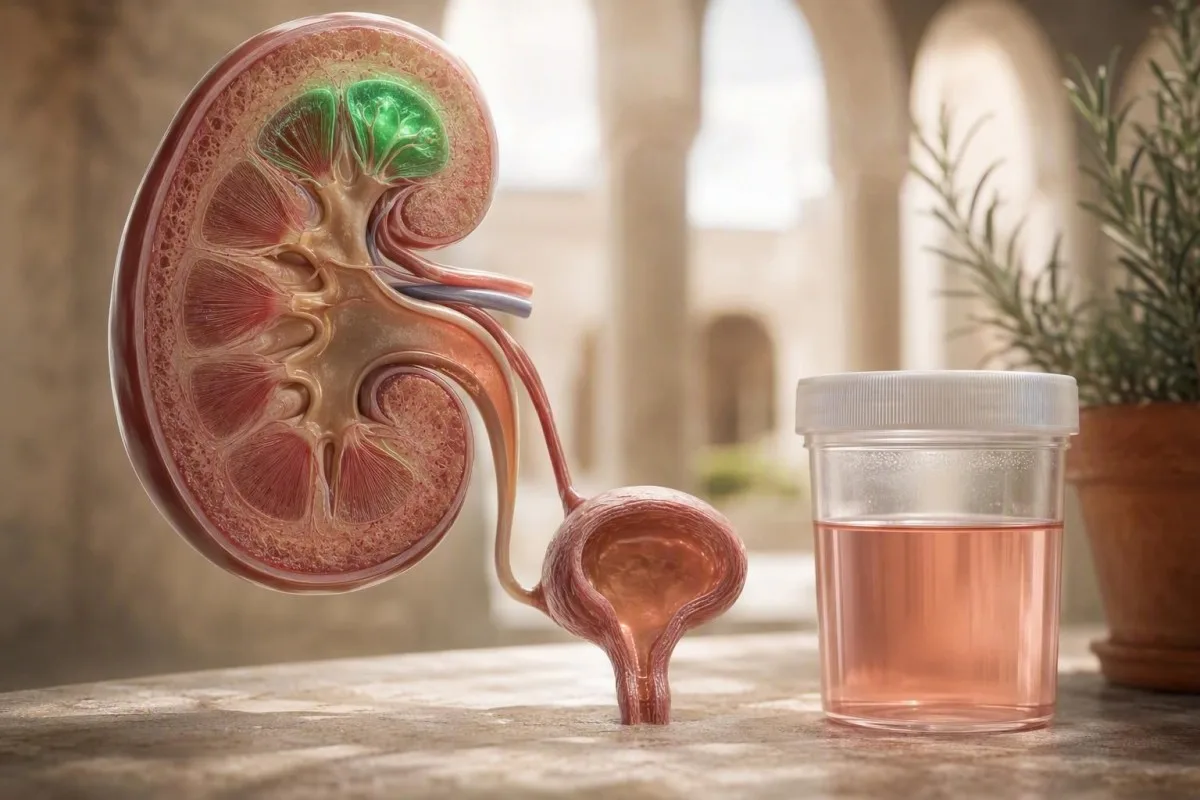
Vzorka moču ružovej alebo čajovej farby po dlhom behu je často dočasná, cvičením vyvolaná hematúria, ale viditeľnú farbu by ste nikdy nemali automaticky ignorovať. Načasovanie, nálezy pod mikroskopom, symptómy a správne odpočinutá opakovaná vzorka prezradia skutočný stav.


- Hematuria vyvolaná námahou zvyčajne zmizne do 24–72 hodín po náročnom behu; pretrvávanie dlhšie ako 72 hodín si vyžaduje lekárske vyšetrenie.
- Mikroskopický prah 3 alebo viac červených krviniek na pole s vysokou zväčšením v správne odobratej vzorke moču spĺňa definíciu mikrohematúrie AUA.
- Neshoda testovacieho prúžku je dôležitá: pozitívny krvný test s nulou až dvoma červenými krvinkami na pole s vysokou zväčšením naznačuje myoglobín alebo voľný hemoglobín namiesto krvácania z močových ciest.
- Opakovať načasovanie je praktické: vyhnite sa intenzívnemu cvičeniu po dobu 48–72 hodín, normálne hydratujte, potom poskytnite vzorku stredného prúdu moču.
- Vyšetrenie v ten istý deň je rozumné pri krvných zrazeninách, neschopnosti močiť, horúčke, jednostrannej silnej bolesti v boku alebo kolovom moči so silnou bolesťou svalov.
- Vzor varovania obličiek je krv plus proteín, červené krvinkové odliatky, vysoký krvný tlak alebo klesajúci eGFR – nie izolovaný testovací prúžok po preteku.
- Náznak rabdomyolýzy je neprimerane tmavý moč so závažnými svalovými príznakmi a hladinou kreatínkinázy často nad 5-násobkom hornej hranice laboratórnych hodnôt.
- Kontext rizika rakoviny mení prah pre vyšetrenie: vek, expozícia fajčeniu, predchádzajúce ožiarenie panvy a pretrvávajúca viditeľná hematúria sú dôležité.
Prečo môže beh spôsobiť, že moč vyzerá ružovo
Hematuria bežca je zvyčajne krátkodobé pretekanie červených krviniek do moču po intenzívnom cvičení, často sa upraví do 24–72 hodín od odpočinku. Napriek tomu, viditeľný ružový, červený alebo kolový moč si zaslúži riadne odobratý opakovaný test namiesto neopatrného predpokladu, že to spôsobil beh.
V klinickej praxi je upokojujúci vzorec priamy: zmena farby sa začína po nezvyčajne dlhom, rýchlom alebo zbehnutom behu z kopca; nie je prítomná horúčka, koliková bolesť v boku ani pálenie pri močení; a mikroskopia sa po odpočinku normalizuje. Kantesti je analyzátor AI na vyšetrenie krvi , ktoré môžu umiestniť súvisiace obličkové markery – kreatinín, eGFR, elektrolyty a kreatínkinázu – vedľa anamnézy cvičenia, namiesto liečby jedného výsledku po preteku ako diagnózy.
Navrhované mechanizmy sú mechanický kontakt steny močového mechúra, dočasné posuny prietoku krvi v obličkách, koncentrácia súvisiaca s dehydratáciou a občasné rozpad červených krviniek z opakovaného dopadu nôh. Dôkazy pre každý mechanizmus sú úprimne zmiešané, pretože väčšina štúdií je malá a používa rôzne dĺžky pretekov. V mojej 15-ročnej klinickej praxi anamnéza nového úsilia má väčšiu váhu ako samotná farba; prvý ultramaratón a známy 5 km beh nenesú rovnakú predtestovú pravdepodobnosť.
Viditeľná krv v moči po cvičení nie je synonymom benígnej hematúrie bežca. A širší sprievodca červenými vlajkami pre hematúriu je užitočný, pretože obličkové kamene, infekcia, glomerulárne ochorenie a rakoviny močových ciest sa môžu náhodne prvýkrát prejaviť po behu.
Praktická definícia
Hematuria vyvolaná cvičením znamená, že sa červené krvinky objavia v moči krátko po námahe a zmiznú pri odpočinkovej opakovaní vzorky. Pozitívny testovací prúžok samotný nedokazuje túto diagnózu, pretože činidlo deteguje heme pigment z neporušených červených krviniek, voľného hemoglobínu alebo myoglobínu.
Je to hematúria, hemoglobín alebo myoglobín?
Testovací prúžok moču, ktorý je pozitívny na krv, môže odrážať červené krvinky, hemoglobín alebo myoglobín a mikroskopia ich rozlišuje. Ružový moč s mnohými neporušenými červenými krvinkami podporuje hematúriu; tmavohnedý moč s malým počtom alebo žiadnymi červenými krvinkami vzbudzuje obavy z pigmentu z poškodenia svalov alebo hemolýzy.
Mikroskopia moču ukazujúca 3 alebo viac červených krviniek na zorné pole s vysokým zväčšením potvrdzuje mikroleukocytúriu, ak je vzorka čistá. Naopak, silne pozitívny testovací prúžok s 0–2 červenými krvinkami na zorné pole s vysokým zväčšením by mal lekára prinútiť zvážiť myoglobinúriu, najmä po expozícii teplu, zaťaženiu svalov typu drvenia alebo závažnej oneskorenej bolesti svalov. Hnedá alebo kolová farba je typickejšia pre koncentrovaný pigment ako malé množstvo krvácania z močového mechúra.
Myoglobín je dôležitý, pretože môže sprevádzať rabdomyolýzu a akútne poškodenie obličiek. Koncentrácia kreatínkinázy nad 5-násobkom hornej hranice normy laboratória sa bežne používa ako biochemický prah pre rabdomyolýzu, hoci príznaky, draslík, kreatinín a výdaj moču určujú naliehavosť. Pozri naše praktické vysvetlenie nebezpečne vysoká kreatínkináza pre vzory, ktoré by nemali čakať cez noc.
Potravinárske farbivá, červená repa, černice, rifampicín, fenazopyridín a dehydratácia môžu tiež sfarbiť moč bez červených krviniek. A diferenciálna diagnostika tmavého moču pomáha vyhnúť sa bežnej chybe predpokladu, že každý načervenalý vzorka predstavuje krv.
Prečo sa starostlivosť mení v závislosti od rozlíšenia
Hematuria z červených krviniek nasmeruje pozornosť na močové cesty, zatiaľ čo myoglobinúria nasmeruje pozornosť na kostrové svaly a ochranu obličiek. Obe sa môžu vyskytnúť po vytrvalostných cvičeniach, ale spoľahlivo ich môžu rozlíšiť iba mikroskopia a cielené krvné testy.
Ako čítať výsledky analýzy moču po behu
Najinformatívnejší test moču po behu kombinuje prúžok, mikroskopiu, meranie bielkovín a špecifickú gravitáciu. Krv na prúžku s prechodnými červenými krvinkami a bez bielkovín má často nízke riziko; krv plus bielkoviny alebo odliatky si vyžadujú dôkladnejšie vyšetrenie obličiek.
Výsledok krvného testu na prúžku sa vykazuje ako negatívny, stopový, 1+, 2+ alebo 3+, ale je to skríningový signál skôr ako počet buniek. AUA definuje mikrohematúriu ako viac ako 3 červené krvinky na pole s vysokým zväčšením pri mikroskopickom vyšetrení, nie samotný výsledok prúžku (Barocas et al., 2020). Toto rozlíšenie zabraňuje tomu, aby sa bežci po falošne pozitívnom skríningu zbytočne podrobovali vyšetreniu na rakovinu.
Špecifická gravitácia nad 1.030 v mnohých laboratóriách naznačuje koncentrovaný moč a môže spôsobiť, že farba bude vyzerať alarmujúcejšie, ale nevysvetľuje potvrdené červené krvinky. Bielkoviny 1+ alebo vyššie by sa mali kvantifikovať pomerom albumín-kreatinín v moči alebo pomerom bielkoviny ku kreatinínu; existuje prechodná cvičením vyvolaná proteinúria, ale pretrvávajúca albuminúria mení diferenciálnu diagnózu smerom k glomerulárnemu ochoreniu. Naša kompletný sprievodca analýzou moču vysvetľuje, prečo sa tieto markery nesmú zlúčiť do jedného výsledku.
Kantesti AI interpretuje kreatinín a eGFR spolu s nálezmi moču, časovaním cvičenia a predchádzajúcimi hodnotami; jeden mierne zvýšený kreatinín po horúcom preteku nie je ekvivalentný chronickému ochoreniu obličiek. V praxi sa pýtam na vzdialenosť, terén, teplotu, užívanie protizápalových liekov, časovanie menštruácie a či bol vzorka odobratý do 2 hodín po dokončení.
Kedy opakovať test moču po behu?
Opakované vyšetrenie moču 48–72 hodín po poslednom náročnom behu je rozumným štandardom pri podozrení na bežeckú hematúriu. Použite vzorku z prvého ranného alebo dobre hydratovaného stredného prúdu moču, ale netlačte do seba litre vody bezprostredne predtým, pretože extrémna dehydratácia môže zakryť užitočné nálezy.
Pri bežnej po-závodnej abnormalite zvyčajne odporúčam žiadne intervaly, kopce, ťažké zdvíhanie alebo preteky 48 hodín; po maratóne, ultramaratóne, horúčkovitom ochorení alebo neobvyklej bolesti, 72 hodín je obhájiteľnejšie. Bežné pitie podľa smädu je dostatočné. Nadmerná hydratácia môže znížiť špecifickú gravitáciu pod 1,005 a občas sťažiť interpretáciu hraničného výsledku.
Ak mikroskopia zostane pozitívna po 72 hodinách, naplánujte si prehliadku u primárneho lekára do niekoľkých dní namiesto opakovaného testovania po tréningoch. Pretrvávajúce výsledky si vyžadujú meranie krvného tlaku, sérový kreatinín/eGFR, pomer albuminu ku kreatinínu v moči a zváženie kultivácie alebo zobrazovacích metód podľa rizika. Vzťah medzi námahou, hydratáciou a dočasne nižším odhadom filtrácie je pokrytý v našej príručke eGFR po cvičení.
52-ročný rekreačný maratónec, ktorého som videl, mal 18 červených krviniek na pole s vysokým zväčšením večer po horúcom behu, ale 0–1 červených krviniek po 72 hodinách odpočinku; jeho kreatinín sa vrátil z 1,28 mg/dl na 0,96 mg/dl. Výsledok bol upokojujúci, ale rovnaký plán by nestačil pre 52-ročného fajčiara s opakovanou viditeľnou farbou moču.
Netestujte na cieľovej čiare, ak sa tomu môžete vyhnúť
Testovanie bezprostredne po cvičení maximalizuje šancu na nájdenie dočasných červených krviniek, koncentrovaného moču a proteínu. To môže byť klinicky užitočné pri podozrení na rabdomyolýzu, ale je to zlý čas na stanovenie základnej línie bežca.
Ktoré vzory hematúrie po behu sú zvyčajne upokojujúce?
Samolimitované epizódy po intenzívnom behu sú upokojujúcejšie, keď úplne zmiznú, chýba bolesť alebo systémové príznaky a nedochádza k žiadnej proteinúrii alebo zmene funkcie obličiek. Upokojujúce neznamená ignorované; znamená to potvrdené odpočinutou vzorkou.
Fenotyp s nižším rizikom je mladší alebo stredne vekový bežec s jasným spúšťačom súvisiacim s námahou, normálnym krvným tlakom, bez fajčiarskej anamnézy a s normálnou mikroskopiou v pokoji. V tomto prostredí sa výsledok jednej prechodnej 3–10 RBC/HPF po pretekoch často vyrieši bez liečby. Stále by som to zaznamenal, pretože opakované výskyty po každom dlhom behu si vyžadujú starostlivejšie preskúmanie ako jednorazová udalosť.
Normálny pomer albuminu ku kreatinínu v moči je vo všeobecnosti pod 30 mg/g (pod 3 mg/mmol), hoci laboratóriá a krajiny uvádzajú jednotky odlišne. Krv bez albumínu, valov alebo dysmorfických červených krviniek naznačuje odklon od glomerulárneho úniku; nedokazuje to pôvod z močového mechúra, ale usmerňuje nasledujúcu otázku. Naše vysvetlenie bielkoviny v moči pokrýva túto klasifikáciu jasne.
Trauma močového mechúra je pravdepodobnejšia, keď je moč veľmi koncentrovaný a bežec skončí s takmer prázdnym močovým mechúrom. Niektorí športoví lekári navrhujú vyprázdniť sa pred dlhým behom a pravidelne piť, ale toto sú preventívne rady s obmedzenými skúšobnými dôkazmi – nie náhrada za vyšetrenie, ak farba pretrváva.
Normálny výsledok má časovú značku
Negatívny test 3 dni po pretekoch je upokojujúci pre danú epizódu, nie celoživotná záruka. Nová viditeľná makrohematúria mesiace potom by mala byť posúdená individuálne, najmä po 40. roku života alebo pri vystavení fajčeniu.
Varovné signály, vďaka ktorým je hematúria bežca menej pravdepodobná
Makrohematúria si vyžaduje urýchlené vyšetrenie, ak pretrváva po 72 hodinách, recidivuje bez intenzívneho cvičenia alebo sa objaví s bolesťou, horúčkou, zrazeninami, proteínom alebo zmenou funkcie obličiek. Kombinácia nálezov je informatívnejšia ako samotný dramaticky vyzerajúci vzorka.
Vyhľadajte včasnú lekársku pomoc pri viditeľnej červenej moči, ktorá pretrváva dlhšie ako , prestaňte užívať vysoké dávky, aj keď sa cítite dobre; prah je nižší pre osoby staršie ako 40 rokov, súčasných alebo bývalých fajčiarov alebo tých s predchádzajúcou panvovou radiáciou. Usmernenie AUA používa stratifikáciu rizika na základe veku, fajčenia, stupňa a perzistencie mikroskopickej krvi a predchádzajúcej hrubej hematúrie namiesto toho, aby sa všetka mikrohematúria liečila rovnako (Barocas et al., 2020).
Dysmorfné červené krvinky, erytrocytové valčeky, významná albuminúria, nová hypertenzia alebo znížené eGFR naznačujú zdroj obličkového filtra namiesto otriasnutého močového mechúra. Erytrocytové valčeky nie sú nikdy očakávaným dôsledkom bežného behu a mali by si vyžiadať urýchlené renálne posúdenie. Pozri náš prehľad granulárnych a močových valčekov prečo nálezy sedimentu sú dôležité.
Thomas Klein, MD, radí bežcom, aby sa netriageovali len podľa farby: infekcia močových ciest môže spôsobiť pálenie, nutkanie, pyúriu a niekedy hematúriu, zatiaľ čo kamene častejšie spôsobujú náhlu jednostrannú bolesť a nevoľnosť. Kultivácia je najužitočnejšia pred antibiotikami, keď sú prítomné príznaky infekcie.
Kombinácia krvi a proteínu
Potvrdená hematúria s proteinúriou je znepokojujúcejšia ako izolovaná hematúria, pretože obe môžu pochádzať z glomerulárneho filtra. Pomer albumín-kreatinín v moči 30 mg/g alebo vyšší by sa mal zopakovať a interpretovať spolu s krvným tlakom a funkciou obličiek.
Kedy si ružový moč po cvičení vyžaduje starostlivosť v ten istý deň?
Vyhľadajte neodkladné posúdenie v ten istý deň pri zrazeninách, neschopnosti močiť, silnej bolesti v boku, horúčke, mdlobách, zníženom výdaji moču alebo tmavej moči so silnou bolesťou a slabosťou svalov. Tieto príznaky naznačujú niečo viac ako nekomplikovanú hematúriu vyvolanú cvičením.
Zrazeniny môžu obštruovať prietok moču a neschopnosť močiť je naliehavý problém bez ohľadu na športovú kondíciu. Horúčka 38,0 °C alebo vyššia s bolesťou v boku môže znamenať hornú močovú infekciu; silná kolikovitá bolesť s vracaním môže znamenať kameň. Ani jedna situácia by sa nemala riešiť čakaním na opakované vyšetrenie po behu.
Tmavohnedý moč po námahe plus výrazná svalová citlivosť, slabosť, opuch alebo znížený výdaj vyvoláva obavy z rabdomyolýzy. Počiatočné testovanie zvyčajne zahŕňa kreatínkinázu, kreatinín, draslík, vápnik, fosfát a analýzu moču. A sprievodca rabdomyolýzou CrossFit je relevantný, pretože neobyčajné excentrické cvičenie – nie samotné behanie – je častou príčinou.
Závažná dehydratácia môže zhoršiť výsledky obličiek, ale môže sa vyskytnúť aj spolu so skutočným poškodením. Ak ste malátni, zmätení, nedokážete udržať tekutiny v sebe alebo veľmi málo močíte po dobu 8–12 hodín, neskúšajte problém doma riešiť športovými nápojmi.
Tehotenstvo a antikoagulanciá
Tehotné bežkyne a ľudia užívajúci antikoagulanciá by mali okamžite nahlásiť viditeľnú hematúriu. Antikoagulanciá môžu zosilniť krvácanie, ale neodstraňujú potrebu identifikovať jeho zdroj; tehotenstvo tiež mení prah na kontrolu infekcií, kameňov a ochorení obličiek.
Stavy, ktoré beh môže odhaliť, namiesto spôsobiť
Beh môže odhaliť existujúci močový problém tým, že koncentruje moč alebo vyvolá test, namiesto toho, aby sám spôsobil hematúriu. Kamene, infekcia, glomerulárne ochorenie, štrukturálne abnormality a malignita zostávajú súčasťou diferenciálnej diagnostiky.
Obličkové kamene často spôsobujú jednostrannú bolesť od boku po slabiny, nevoľnosť a červené krvinky pri mikroskopii, hoci sa vyskytujú aj bezbolestné kamene. Močová infekcia častejšie spôsobuje pálenie, časté močenie, nutkanie na močenie a biele krvinky; negatívny výsledok nitritov ho nevylučuje. Náš sprievodca leukocyt esterázou s negatívnymi nitritmi vysvetľuje tento bežný zmiešaný vzor.
Glomerulonefritída sa môže prejaviť po infekcii horných dýchacích ciest s kolovým močom, opuchom, zvýšeným krvným tlakom, proteinúriou a dysmorfickými červenými krvinkami. V usmernení KDIGO 2024 CKD sa perzistentná albuminúria a znížená eGFR považujú za doplnkové markery rizika obličiek, nie za zameniteľné merania (KDIGO, 2024).
Kantesti je nástroj na analýzu krvných testov s podporou AI ktorý pomáha používateľom rozpoznať vzor naprieč kreatinínom, eGFR, albumínom, elektrolytmi a CBC, ale nedokáže diagnostikovať anatomický zdroj hematúrie. Zobrazovacie metódy, mikroskopia, kultivácia a vyšetrenie lekárom stále vykonávajú rozhodujúcu prácu.
Rakovina je u mladých bežcov neobvyklá, u dospelých nie nemožná
Viditeľná hematúria si vyžaduje vyšetrenie, aj keď sa cvičenie zdá byť zjavnou príčinou, najmä u ľudí s vystavením fajčeniu alebo pretrvávajúcimi príznakmi. Riziko sa zvyšuje s vekom a kumulatívnym vystavením tabaku, preto rovnaké výsledky moču nevedú k rovnakým testovacím plánom.
Kto potrebuje následnú starostlivosť urológa alebo nefrológa?
Pretrvávajúca hematúria po opakovanom odobratí vzorky v pokoji by mala byť posúdená z hľadiska rizika pre urológiu, zatiaľ čo hematúria plus proteinúria, odliatky, hypertenzia alebo poškodená eGFR poukazuje na nefrológiu. Mnohí ľudia potrebujú iba opakované testovanie pod vedením primárnej starostlivosti; odporúčanie závisí od vzoru.
Urologické vyšetrenie je obzvlášť vhodné pri rekurentnej viditeľnej hematúrii, pretrvávajúcej mikroskopickej hematúrii, anamnéze fajčenia, expozícii profesionálnym aromatickým amínom, predchádzajúcom ožiarení panvy alebo močových príznakoch bez infekcie. V závislosti od rizika môžu lekári použiť ultrazvuk obličiek a močového mechúra, CT urografiu a cystoskopiu. Jednorazový stopový nález na testovacej tyčinke po pretekoch u 24-ročného človeka je veľmi odlišný scenár ako rekurentná červená moč u 58-ročného bývalého fajčiara.
Nefrologické hodnotenie sa stáva pravdepodobnejším pri pomere albumín/kreatinín v moči ≥30 mg/g, eGFR pod eGFR pod 60 ml/min/1,73 m² trvajúce 3 mesiace alebo dlhšie, červené krvinkové odliatky alebo ťažko kontrolovateľný krvný tlak. Tieto hraničné hodnoty sú dôležité, pretože chronické ochorenie obličiek je definované trvaním aj jedným meraním. Prečítajte si náš príručku štádií chronického ochorenia obličiek pre praktické kategórie.
Služba interpretácie laboratórnych výsledkov Kantesti pomocou AI dokáže rozpoznať opakujúci sa vzor krvi a bielkovín na diskusiu, najmä keď používatelia nahrávajú výsledky z rôznych laboratórií. Mala by podporovať, nie nahrádzať, rozhodovanie lekára o tom, či je potrebné zobrazenie močových ciest alebo špecializované vyšetrenie.
Nedovoľte, aby antikoagulácia ukončila konverzáciu
Užívanie antikoagulancií mení závažnosť krvácania, ale nestanovuje príčinu hematúrie. Podľa mojej skúsenosti pripisovanie rekurentnej krvi v moči apixabanu, warfarínu alebo aspirínu bez vyšetrenia môže oddialiť rozpoznanie kameňov, infekcie alebo štrukturálneho ochorenia.
Ktoré krvné testy pomáhajú po hematúrii súvisiacej s cvičením?
Užitočné krvné testy závisia od symptómov: kreatinín, eGFR, elektrolyty a kreatínkináza hodnotia stres obličiek a svalov, zatiaľ čo CBC vyhodnocuje anémiu alebo príznaky infekcie. Rutinné široké panely sú menej užitočné ako cielené testovanie po presnej anamnéze a analýze moču.
Kreatinín sa môže prechodne zvýšiť po vytrvalostnom cvičení kvôli metabolizmu svalov, zníženému prekrveniu obličiek a dehydratácii. Rovnice eGFR sú menej spoľahlivé počas rýchlej zmeny kreatinínu, preto je opakovaná hodnota po 48–72 hodín bežného zotavenia je často zmysluplnejšia ako výsledok na cieľovej páske. Náš sprievodca kontrolou kreatinínu po cvičení poskytuje kontext pre tento častý spúšťač úzkosti.
Kreatínkináza má široký postcvičný rozsah: trénovaní atléti môžu mať zvýšené hodnoty po pretekoch bez poškodenia obličiek, zatiaľ čo hodnoty mnohonásobne vyššie ako lokálny horný limit plus symptómy si zaslúžia urýchlené vyhodnotenie. Draslík nad 6,0 mmol/l je potenciálne nebezpečný a vyžaduje si urýchlené klinické vyhodnotenie, najmä ak je poškodená funkcia obličiek alebo sa podozrieva svalové poškodenie.
CBC je najužitočnejšia pri únave, bledosti, silnom menštruačnom krvácaní, rekurentnej hematúrii alebo pri podozrení na systémové ochorenie. Hemoglobín môže klesnúť po vytrvalostných udalostiach v dôsledku rozšírenia plazmatického objemu, straty železa alebo hemolýzy; feritín by sa mal interpretovať mimo akútneho zápalu a intenzívneho tréningu. Vytrvalostní bežci môžu nájsť náš prehľad krvných testov pre športovcov užitočný pre rozumnú východiskovú hodnotu.
Ne diagnostikujte ochorenie obličiek z jedného panelu počas týždňa pretekov
Zvýšenie kreatinínu o 0,3 mg/dl alebo viac môže spĺňať kritérium akútneho poškodenia obličiek vo vhodnom časovom rámci, ale kontext a opakované testovanie sú rozhodujúce po pretekoch. Nízky výdaj moču, zvyšujúci sa draslík a pretrvávajúce zvýšenie majú väčšiu váhu ako izolovaný hraničný výsledok.
Ako odobrať opakovanú vzorku moču, ktorej lekári môžu dôverovať
Vzorka stredného prúdu moču odobratá čistým odberom po 48–72 hodinách bez namáhavého cvičenia je najlepší spôsob, ako skontrolovať, či hematúria ustúpila. Chyby pri odbere, kontaminácia menštruačnou krvou a stará vzorka môžu viesť k zavádzajúcim výsledkom.
Umyte si ruky, začnite močiť do toalety, potom odoberte stredný prúd bez dotyku vnútra nádoby. Vzorku doručte promptne – ideálne do 2 hodín—alebo dodržujte pokyny laboratória na chladenie. Dlhé státie mení vzhľad buniek a môže znížiť spoľahlivosť mikroskopie.
Vyhnite sa testovaniu počas aktívnej menštruácie, ak je to možné; ak testovanie nemôže počkať, informujte lekára a laboratórium. Vaginálna kontaminácia môže spôsobiť zjavné červené krvinky a bielkoviny, zatiaľ čo dlaždicové epitelové bunky často signalizujú zle odobratú vzorku. Náš sprievodca epiteliálnym bunkám v moči vysvetľuje, prečo toto nie je triviálna poznámka pod čiarou v laboratórnych výsledkoch.
Thomas Klein, MD, odporúča spolu so vzorkou zaznamenať štyri detaily: posledná náročná fyzická aktivita, dĺžka trvania udalosti, vonkajšia teplota a všetky lieky užité v predchádzajúcich 72 hodinách. Výsledok bez časového údaju je oveľa ťažšie interpretovateľný – najmä keď sa moč odoberá po dvojitom tréningu.
Testovanie prvého ranného moču verzus denného moču
Vzorka prvého ranného moču je koncentrovaná a vhodná na detekciu malých abnormalít, ale normálne hydratovaný denný stredný prúd moču je prijateľný, ak je odber čistejší. Konzistentnosť je dôležitejšia pri sériovom porovnávaní: pri každom opakovaní použite približne rovnaké podmienky.
Hydratácia, lieky proti bolesti a doplnky, ktoré menia obraz
Dehydratácia môže koncentrovať moč a zvýšiť zaťaženie obličiek, zatiaľ čo NSAID môžu znížiť prietok krvi obličkami počas vytrvalostného cvičenia. Žiadny z týchto faktorov nedokazuje príčinu hematúrie, ale oba ovplyvňujú, ako opatrne lekári interpretujú výsledok po behu.
Pre väčšinu bežcov je pitie podľa smädu a postupné dopĺňanie strát bezpečnejšie ako rigidné nútenie tekutín. Veľmi nízky obsah sodíka z nadmerného príjmu vody môže byť nebezpečný; hladina sodíka v sére pod 125 mmol/l s bolesťou hlavy, vracaním, zmätenosťou alebo záchvatmi je núdzový stav. Farba moču je hrubým ukazovateľom hydratácie, nie presným meradlom hydratácie.
Ibuprofén, naproxén a iné NSAID môžu znížiť prietok krvi obličkami sprostredkovaný prostaglandínmi, najmä počas tepelného stresu, vracania alebo dlhých udalostí. Radím pacientom, aby sa vyhli bežnému profylaktickému užívaniu NSAID pred maratónmi, pokiaľ im ich lekár nedal jasný dôvod. Kontext liekov je preskúmaný v našom článku o bezpečnosti laboratórnych trendov.
Vysoké dávky vitamínu C môžu interferovať s niektorými reakciami močových prúžkov a doplnky stravy označené ako podpora výkonu niekedy obsahujú neuvedené stimulanty alebo diuretiká. Prineste nádoby alebo jasné fotografie na konzultáciu; je to často užitočnejšie, ako sa snažiť zapamätať si zoznam zložiek značkového prášku. Naša príručka o bezpečnosti doplnkov stravy pre športovcov ponúka rozumný zoznam.
Hydratácia nie je liečbou pre pretrvávajúcu krv
Voda môže napraviť koncentráciu, ale nelieči kameň, infekciu, glomerulárny proces alebo štrukturálny močový zdroj. Ak červené krvinky zostanú vo vzorke z pokojového stavu a správne odobratej vzorke, eskalácia by mala byť založená na vzore, nie na ďalšom experimente s hydratáciou.
Môžete pokračovať v behu po hematúrii vyvolanej cvičením?
Väčšina bežcov sa môže postupne vrátiť k tréningu, keď sa farba moču normalizuje, príznaky pominú a opakovaná vzorka z pokojového stavu je upokojujúca. Nevracajte sa k náročnému tréningu, kým je moč viditeľne červený, výsledky obličiek sú abnormálne, alebo príznaky svalov naznačujú rabdomyolýzu.
Po nekomplikovanom jednorazovom prípade zvyčajne odporúčam ľahké behanie len niekoľko dní, potom postupne zvyšujem objem a intenzitu počas 7–14 dní. Bežec by mal prestať a vyhľadať lekársku pomoc, ak sa farba moču zopakuje, objaví sa bolesť alebo sa zníži produkcia moču. Toto je pragmatický klinický prístup, nie lekársky predpis overený štúdiou.
Opakovaná hematúria po tej istej vzdialenosti môže odôvodniť praktické experimenty: vyhnite sa pretekaniu v dehydratácii, vymočiť sa pred dlhým behom, pomalšie zavádzať tréning z kopca a skontrolovať si priliehavosť topánok alebo terén. Veďte si záznamy o tempe, horúčave, dĺžke trvania, farbe moču a výsledkoch vzoriek. laboratórnym sprievodcom pre maratónskeho bežca môže pomôcť rozlíšiť markery zotavenia od dôvodov na pozastavenie tréningu.
Netrénujte kvôli nevysvetliteľnému viditeľnému hematúrii len preto, že máte naplánovanú udalosť. Športovci často výborne znášajú nepohodlie; zložitejšou zručnosťou je rozpoznať, že vytrvalosť je diagnostická informácia, nie test húževnatosti.
Vytvorte si skutočný východiskový bod
Východiskové vyšetrenie moču a panel obličkových parametrov odobratý najmenej 72 hodín pred náročným tréningom môže v budúcnosti uľahčiť interpretáciu výsledkov po pretekoch. To je obzvlášť užitočné pre ultrabežcov, ľudí s jednou obličkou alebo športovcov užívajúcich lieky, ktoré ovplyvňujú perfúziu obličiek.
Čo povedať svojmu lekárovi o krvi v moči po cvičení
Najrýchlejšou cestou k užitočnému posúdeniu hematúrie je stručný časový prehľad: farba moču, dávka cvičenia, príznaky, lieky a načasovanie opakovanej skúšky. Predložte skutočné laboratórne hodnoty, nie len informáciu, že vzorka bola “pozitívna na krv”.”
Uveďte, či bol moč ružový, jasne červený, zafarbený ako čaj, alebo obsahoval zrazeniny; či sa farba objavila pred, počas alebo po cvičení; a či zmizla po prvom močení. Zahrňte pálenie, nutkanie, horúčku, bolesť v boku, nevoľnosť, opuch a znížený výdaj. Podrobný referenčný zoznam farieb moču môže pomôcť presne opísať pozorovanie bez nadmernej interpretácie.
Prineste predchádzajúce vyšetrenia moču, hodnoty kreatinínu/eGFR, hodnoty krvného tlaku, anamnézu fajčenia, rodinnú anamnézu ochorení obličiek a zoznam liekov/doplnkov. Kantesti je platforma na interpretáciu biomarkerov pomocou AI ktoré môžu organizovať opakované hodnoty krvných testov a zvýrazniť významné zmeny, ale lekár musí tieto hodnoty spojiť s mikroskopiou moču a vyšetrením.
Od 3. septembra 2026 zostáva klinický princíp jednoduchý: cvičenie je pravdepodobnou príčinou až po tom, čo výsledok pominie a chýbajú iné vysvetľujúce faktory. Ak si nie ste istí, opýtajte sa, či potrebujete mikroskopiu, kultiváciu, pomer albumín-kreatinín, opakovaný kreatinín, zobrazovacie metódy alebo odporúčanie – nielen ďalší test prúžkom.
Otázky, na ktoré sa oplatí pýtať
Opýtajte sa, či boli videné celistvé červené krvinky, či boli prítomné bielkoviny alebo valčeky, a kedy by malo dôjsť k opakovanému vyšetreniu v pokoji. Tieto tri odpovede zvyčajne objasnia, či je ďalším krokom sledovanie, testovanie obličiek, testovanie infekcie alebo urologické vyšetrenie.
Rozumný akčný plán pre hematúriu bežca
Pri jednej bezbolestnej epizóde po náročnom behu si doprajte 48–72 hodín odpočinku od intenzívneho cvičenia a zopakujte vyšetrenie moču čistým odberom; v prípade varovných signálov alebo pretrvávajúcej viditeľnej farby vyhľadajte lekársku pomoc skôr. Cieľom nie je ani panika, ani zamietnutie – cieľom je dokázať, že nález pominie.
Prvý krok: zastavte náročný tréning, normálne hydratujte a zaznamenajte načasovanie a príznaky. Druhý krok: opakujte mikroskopiu po 48–72 hodín. Tretí krok: ak krv pretrváva, alebo ak sa objaví bielkovina, valčeky, bolesť, horúčka, zrazeniny, nízky výdaj moču alebo abnormálne obličkové markery, neodkladne vyhľadajte lekárske vyšetrenie. Tento postup zabraňuje zmeškaniu choroby aj zbytočnému zobrazovaniu po jednorazovom odbernom mieste v cieli.
Keď náš klinický tím kontroluje nahrané laboratórne údaje, uprednostňujeme vzory: stúpajúci kreatinín spolu s vysokým CK a nízkym výdajom moču je naliehavejší ako stabilný kreatinín s prechodným testom moču pomocou prúžkov. Metodika a ochranné mechanizmy Kantesti sú opísané v našich informácie o klinickej validácii, a náš lekársky dohľad je podrobne popísaný prostredníctvom Lekárska poradná rada.
Väčšina pacientov zistí, že včasné opakované vyšetrenie premení znepokojujúcu zmenu farby na jasný plán. Ale ak máte pocit, že niečo nie je v poriadku – najmä ak je moč stále červený aj zajtra – dôverujte tomuto signálu a nechajte sa vyšetriť.
Pravidlo jednej vety
Ružový moč raz po náročnom behu môže byť prechodný; ružový moč, ktorý pretrváva, sa opakuje alebo sa objavuje so symptómami, je hematúria, kým nie je riadne vyhodnotený.
Často kladené otázky
Ako dlho trvá športová mikroskopická hematúria?
Hematuria u bežcov zvyčajne ustúpi do 24 – 72 hodín po ukončení namáhavej fyzickej aktivity. Praktický opakovaný test moču spočíva v odobratí stredného prúdu moču z čistého odberu po 48 – 72 hodinách bez intenzívneho behu alebo ťažkého dvíhania. Pretrvávajúca viditeľná ružová alebo červená farba moču po 24 hodinách, alebo mikroskopická hematúria pretrvávajúca po 72 hodinách, by mala byť vyšetrená lekárom. Horúčka, krvné zrazeniny, silná bolesť v boku, znížený výdaj moču alebo silná bolesť svalov oprávňujú posúdenie v ten istý deň.
Je krv v moči po cvičení normálna?
Prítomnosť krvi v moči po cvičení môže byť prechodným účinkom intenzívneho behu, dehydratácie, nárazu na stenu močového mechúra alebo krátkodobých zmien prietoku krvi v obličkách, ale nie je to automaticky normálne. Mikroskopické vyšetrenie potvrdzujúce 3 alebo viac červených krviniek na vysokozväčšenom poli spĺňa definíciu mikrohematúrie podľa AUA. Výsledok, ktorý zmizne pri opakovanom odobratí vzorky v pokoji, je upokojujúci, zatiaľ čo pretrvávajúca krv, bielkoviny, valčeky, bolesť alebo močové príznaky si vyžadujú ďalšie vyšetrenie. Viditeľné zafarbenie moču by sa malo vždy hlásiť, najmä u dospelých s expozíciou fajčeniu alebo s opakovanými epizódami.
Môže dehydratácia spôsobiť ružový moč po behu?
Dehydratácia môže spôsobiť tmavší vzhľad moču a môže zosilniť nález hemoptýzy po cvičení koncentráciou močových zložiek, ale dehydratácia sama osebe nespoľahlivo nevysvetľuje potvrdené červené krvinky. Špecifická hmotnosť moču nad 1,030 často v mnohých laboratóriách naznačuje koncentrovaný moč. Pite normálne do pocitu smädu a zopakujte odber vzorky čistého odberu po 48 – 72 hodinách odpočinku namiesto toho, aby ste sa pokúšali z výsledku „spláchnuť“ nadmerným množstvom vody. Silný smäd, závraty, veľmi nízky výdaj moču alebo zmätenosť si vyžadujú urýchlené lekárske vyšetrenie.
Aký je rozdiel medzi hematúriou a myoglobínúriou po cvičení?
Hematuria znamená prítomnosť intaktných červených krviniek v moči, zatiaľ čo myoglobinúria odráža svalový pigment uvoľnený po poranení svalov. Testovací prúžok môže byť v oboch príptoch pozitívny na krv, preto je rozhodujúce mikroskopické vyšetrenie: myoglobinúria často vedie k pozitívnemu testovaciemu prúžku s 0–2 červenými krvinkami na vysokozväčšenom poli. Silná bolesť svalov, slabosť, opuch, tmavý moč farby koly alebo hodnota kreatínkinázy nad 5-násobkom hornej hranice laboratória vyvolávajú podozrenie na rabdomyolýzu. Tento stav si vyžaduje urýchlené klinické posúdenie, pretože draslík a funkcia obličiek sa môžu rýchlo meniť.
Mám prestať behať, ak mám pri cvičení hematúriu?
Zastavte namáhavé behanie, kým sa farba moču neupraví a absolvujete odpočinkový opakovaný test, zvyčajne po 48–72 hodinách. Ak je opakovaný vzorka normálna a nemáte bolesti, horúčku, krvné zrazeniny, proteinúriu alebo abnormalitu funkcie obličiek, väčšina bežcov sa môže postupne vrátiť k tréningu v priebehu približne 7–14 dní. Neobnovujte intenzívny tréning, ak moč zostáva viditeľne červený alebo tmavý, výdaj moču je znížený, alebo sú prítomné vážne svalové príznaky. Opakované epizódy po podobných tréningoch si zaslúžia lekárske posúdenie, aj keď sa každá epizóda upraví.
Kedy si hematúria vyžaduje urológa?
Perzistentná mikroskopická hematúria po odpočinkovom opakovanom vzorku, rekurentná makroskopická hematúria alebo hematúria u osoby s fajčiarskou anamnézou, predchádzajúcim panvovým ožiarením alebo močovými príznakmi si často vyžaduje urologické posúdenie rizika. Urológovia môžu zvážiť ultrazvuk, CT urografiu a cystoskopiu v závislosti od veku a celkového rizika namiesto použitia jedného testu pre každého. Hematuria s albuminúriou 30 mg/g alebo viac, červené krvinkové valčeky, hypertenzia alebo eGFR pod 60 mL/min/1.73 m² silnejšie smerujú k nefrológii. Správna špecializácia závisí od kompletného vzoru vyšetrenia moču a krvi.
Získajte analýzu krvných testov s podporou AI už dnes
Pridajte sa k viac než 2 miliónom používateľov na celom svete, ktorí dôverujú Kantesti pri okamžitej a presnej analýze laboratórnych testov. Nahrajte svoje výsledky krvných testov a získajte komplexnú interpretáciu biomarkerov 15,000+ v priebehu sekúnd.
📚 Citované publikácie výskumu
Klein, T., Mitchell, S., & Weber, H. (2026). Multilingválna umelá inteligencia asistovaná podpora klinického rozhodovania pre včasné triedenie hantavírusov: Návrh, inžinierske overenie a nasadenie v reálnom svete pre 50 000 interpretovaných správ krvných testov. Kantesti AI Medical Research.
Klein, T., Mitchell, S., & Weber, H. (2026). Predregistrovaný, rubrikou riadený automatizovaný technický benchmark interpretácie výsledkov krvných testov pre motor Kantesti na 100 000 syntetických testovacích prípadoch. Kantesti AI Medical Research.
📖 Externé lekárske referencie
⚕️ Vyhlásenie o lekárskej starostlivosti
Tento článok je určený len na vzdelávacie účely a nepredstavuje lekárske poradenstvo. Pri rozhodnutiach o diagnostike a liečbe sa vždy poraďte s kvalifikovaným poskytovateľom zdravotnej starostlivosti.
Signály dôvery E-E-A-T Trust Signals
Skúsenosti
Klinické hodnotenie vedené lekárom pracovných postupov interpretácie laboratórnych výsledkov.
Odbornosť
Laboratórna medicína so zameraním na to, ako sa biomarkery správajú v klinickom kontexte.
Autoritatívnosť
Napísané Dr. Thomasom Kleinom, recenzia Dr. Sarah Mitchell a prof. Dr. Hans Weber.
Dôveryhodnosť
Interpretácia založená na dôkazoch s jasnými následnými krokmi na zníženie poplachu.