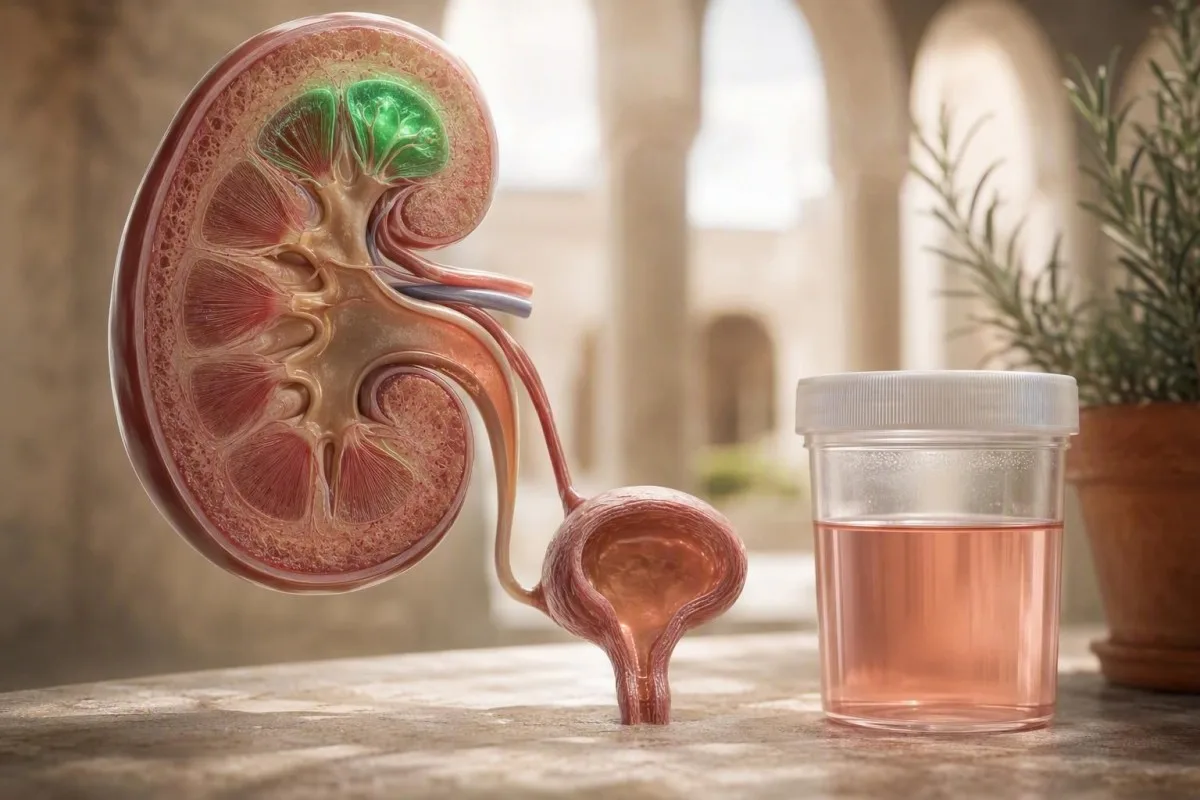
Růžowy abo barwje czajowyj wjōr po dugim biegu je często tymczasowym wysiłkowym krwią w moczu, ale widzialnej barwy niyrada siy podceń. Czas, co kej to sie stōło, co je widźeć pod mikroskopym, symptomy i prawidłowo zebrany powtōrzōny wjōr prawŏ prawda powiedzōm.


- Krwawienie z moczem po wysiłku fizycznym zazwyczaj ustōmpuje w cigō gu 24–72 godzin po ciynżkim biegu; utrzymywanie siy po 72 godzinach wymŏgŏ medycznyj oceny.
- Prōg mikroskopowy 3 abo wiyncyj czerwōnych krwinek na pole widzenia pod dużym powiynkszeniym w prawidłowo zebranym wjōrze moczu spełniy definicję mikrohematurii AUA.
- Niesōwność paska testowego je ważnŏ: pozytywny pasek krwi z zerōm abo dwōma krwinkami na pole widzenia pod dużym powiynkszeniym sugeruje mio-globina abo wolnō hemoglobinō, a niy krwawienie z drōg moczowych.
- Powtōrne terminy je praktyczne: unikać ciynżkigo wysiłku przez 48–72 godzin, pić prawidłowo, a potym podaċ wjōr moczu ze śrydka strumienia.
- Ocena tego samego dnia jest roztropne w przypŏdkach skrzepōw, niymŏżebności oddaniŏ moczu, gorōczki, jednostrōnnōgo ciynżkigo bōlu w bokach, abo ciemnego moczu z widzialnym bōlem mięśni.
- Wzōr ostrzegawczy dla nerek to krew plus białko, wałeczki erytrocytōw, wysokie ciśnienie krwi, abo spadajōncy eGFR— niy izolowany wynik paska testowego po zawodach.
- Potrzeba rabdomiolizy je kolorymno ciemny mocz z gynstymi symtomami miynśniołmi a wynikiem kreatininowej kinazy czamu wincej niż 5 razy wincej niż laboratoryjno horny limit.
- Kōntekst ryzyka raka zômiyniô próg badaniô: wiek, wystawiyni do tytoniu, przedniejszô radiacyjo miednicza, a trwôłe widoczné hematuria - wszystko to je wôżné.
Czamu bieg może sprawić, że mocz bydzie wyglądać na różowy
Hematúria biegacza je czamu krótko trwajōncym wyciekym czerwōnych ciał do moczu po mocnym wysiłku, czamu często znôkô sie w ciagu 24–72 godzin odpoczinku. Aże tak, widoczny różowy, czerwōny, abo kolowy mocz zasługuje na porządnie zebrany powtōrzony test, a niy na luzackie założyni, iże bieganie jigo spowodowało.
W klinikach, uspokajajōncy wzór je prosto: zmiana koloru zaczynô sie po niyzwykle długim, szybkim, abo w dół biegu; niy ma gorączki, kolikowego bólu w boku, abo paleniô moczu; a mikroskopia normalizuje sie po odpoczynku. Kantesti to analizator AI do badań krwi co mōże postawić zwōnzane wskaźniki nerkowe – kreatynina, eGFR, elektrolity i kreatyninowa kinaza – obok historii wysiłku, zamiast traktować jednô po-wyścigowo wynik jako diagnozã.
Proponowane mechanizmy to: mechaniczne kontakt ze ścianōm pōcherza, tymczasowe przesuniãcie krwiobiegu nerkowego, zagęszczeniô zwōnzane z odwōdnieniym, a czasym rozpad czerwōnych ciał z powtarzajōncego sie uderzynia stopy. Dowōd na kōżdy mechanizm je szczerze mieszany, bo wiynkszosc badań je mala i używô różnych dystansów wyścigowych. W mojich 15 łatch praktyki klinicznej, historia nowego wysiłku je wôżniyjsza niż sam kolor; piyrszy ultramaraton i znōmy 5 km niy niosą tego samigo prawdopodobiństwa przed testym.
Widoczno krwio w moczu po wysiłku niy je synonimem benignijnej hematúrii biegacza. Szerszy przewodnik po sygnale alarmowym hematúrii je przydatny, bo kamieniô nerkowe, infekcje, choroby kłębuszkowe, i nowotwory dróg moczowych mogōm przypadkowo pokazać sie po biegu.
Praktyczna definicja
Hematúria po wysiłku oznacza, iże czerwōne ciała pojawiojō sie w moczu krōtko po wysiłku i znikajō w odpočinjonym powtōrzonym sample. Sam pozytywny dipstick niy dowo tego diagnozy, bo reagent wykrywo barwnik hem z całych czerwōnych ciał, wolnego hemoglobinu, abo mioglobinu.
Je to krew w moczu, hemoglobina, abo mio-globina?
Dipstick moczu, kery je pozytywny na krew, może odzwierciedlać czerwōne ciała, hemoglobin, abo mioglobin, a mikroskopia je rozdziela. Różowy mocz z wieloma całymi czerwōnymi ciałami wspiyro hematuriã; ciemnobrōzowy mocz z małymi abo zerōwi czerwōnymi ciałami zwiyksza obowōzność pigmentu z urazu miynśnioł abo hemolizy.
Mikroskopia moczu pokazujōco 3 abo wincej czerwōnych krwōwki na pole z wysokōm powiększeniōm potwierdzô microhematuriã, jak sample je czysto zebrany. Przeciwnie, mocno pozytywny dipstick z 0–2 czerwōnymi ciałami na pole z wysokōm powiększeniōm, bydzie robić, iże lekarz bydzie rozmysloł mioglobinuriã, zwłaszcza po wystawiyniu na cieplō, urazie miynśnioł typu miażdżōncego, abo ciężkim opóźnionym bólu miynśnioł. Brōzowy abo kolowy kolor je bardzij typowy dla zagęszczōnego pigmentu niż dla małej ilości krwawieniô z pōcherza.
Mioglobin ôma wagã, bo mōże towarzyszyć rabdomiolizie i ostrym urazóm nerek. Stężenié kreatininowej kinazy powyżyj 5 razy wincej niż laboratoryjno horny limit normy je powszechnie używane jako biochemiczny próg dla rabdomiolizy, chociyż symptomy, potas, kreatynina i wydalanié moczu determinujō pilność. Pozōr na naszã praktycznã wytłōmaczyniã. groźnie wysoki kreatyniny kinazy dla wzorców, na które nie trzeba czekać przez noc.
Barwniki spożywcze, buraki, jeżyny, rifampicyna, fenazopirydyna i odwodnienie mogą również zabarwić mocz bez czerwonych krwinek. diferencijacija tamnog urina pomaga uniknąć powszechnego błędu zakładania, że każda czerwona próbka oznacza krew.
Dlaczego rozróżnienie zmienia leczenie
Krwinkomocz skierowany na drogi moczowe, podczas gdy mioglobinuria skierowany na mięśnie szkieletowe i ochronę nerek. Oba mogą wystąpić po wysiłkach wytrzymałościowych, ale tylko mikroskopia i ukierunkowane badania krwi mogą je wiarygodnie rozróżnić.
Jak czytać wynik badania moczu po biegu
Najbardziej pouczające badanie moczu po biegu łączy test paskowy, mikroskopowo, pomiar białka i ciężar właściwy. Krew na teście paskowym z przejściowymi czerwonymi krwinkami i bez białka jest często niskiego ryzyka; krew plus białko lub wałeczki wymagają bardziej celowej oceny nerek.
Wynik krwi na teście paskowym jest zgłaszany jako ujemny, śladowy, 1+, 2+ lub 3+, ale jest to sygnał przesiewowy, a nie liczba komórek. AUA definiuje mikrohematurię jako więcej niż 3 czerwone krwinki na pole widzenia w wysokim powiększeniu w badaniu mikroskopowym, nie sam wynik testu paskowego (Barocas et al., 2020). To rozróżnienie pozwala uniknąć skierowania biegaczy na niepotrzebne badania w kierunku raka po fałszywie dodatnim badaniu przesiewowym.
Ciężar właściwy powyżej 1.030 wskazuje na skoncentrowany mocz w wielu laboratoriach i może sprawić, że kolor będzie wyglądał bardziej alarmująco, ale nie wyjaśnia potwierdzonych czerwonych krwinek. Białko o wartości 1+ lub większej powinno być skwantyfikowane za pomocą stosunku albuminy do kreatyniny w moczu lub stosunku białka do kreatyniny; istnieje przejściowa białkomocz wysiłkowy, jednak uporczywa albuminuria przesuwa różnicowanie w kierunku choroby kłębuszkowej. Nasz kōmpletny przewodnik ô analizie moczu wyjaśnia, dlaczego te markery nie powinny być łączone w jeden wynik.
Kantesti AI interpretuje kreatyninę i eGFR wraz z wynikami moczu, czasem wysiłku i poprzednimi wartościami; pojedynczy, lekko podwyższony kreatynina po gorącym wyścigu nie jest równoważny przewlekłej chorobie nerek. W praktyce pytam o dystans, teren, temperaturę, stosowanie leków przeciwzapalnych, czas cyklu menstruacyjnego i czy próbka została pobrana w ciągu 2 godzin od ukończenia.
Kiedy należy powtōrzyć badanie moczu po biegu?
Pōwtōrzenie badaniŏ mōczu po 48–72 godzinach ôd ôstatniego ciynżkigo biegu je rozsōndnym domyślnym wybiyrym dlŏ podejrzewōnyj hematuriji biegacza. Użyjcie probōwki z piyrwszego rana abo piyrwiastka ze strōmy połōwki po napōjnieniu, ale niy wymōgajcie litrōw wody bezpōśrōdki, bo ôkstrōmne rozciyńczenie jeże ôbrazić pozytywyne wykryciŏ.
Dla rutynowyj anōmaliji po biegu, zōwycyj zalecōm niy ôdległości, wzgōrz, ciynżkij podnoszyni, abo biegōw dlŏ 48 godzin; po maratonie, ultramaratonie, chorobie cieplnyj, abo niyzwyknyj boleści, 72 godziny je bardzij uzasadniōny. Zwykłe picie do pragniyńcio je wystarczōnce. Przeto nawodnienie jeże ôbniżõć grawitacyjo ôsobiściõ poniżyj 1.005 i czasami ôkazać trudniejsze do ôceny ôsiōngōniy resultados.
Jeli mikroskopijno badanie ôstŏwô podōbnõ po 72 godzinach, zaaranżujcie piyrwiōstkowõ ocenã lekarskõ wciegu dni ôzamiast powtarzanych badōwi po trenōwkch. Persistentne rezultaty wymagajō mierzōniy ciśnienia krōwi, kreatyniny w surowicy/eGFR, stosōnkō albuminy do kreatyniny w mōczu, i ôcenã kultury abo obrazowania wedle ryzyka. Wiyzōniy miyndzy wysiłkiym, nawodnieniym, a tymczasowo niższym szacōnkym filtracyje je omōwiōne w naszym przewodniku po eGFR po wysiłku.
52-latka amatorskigo maratończyka, kerego widzioł, mioł 18 krwinek czerwōnych na pole z wysokim powiykszyniym wieczōrym po gorōcym biegu, ale 0–1 krwinek czerwōnych po 72 godzinach odpoczynku; jego kreatynina ôbniżyła sie z 1,28 mg/dL do 0,96 mg/dL. Wynik bōł uspokajōcy, ale takō samō plōn niy bōłby wystarczōjõcy dlŏ 52-latka palōcza z powtarzajōcym sie widzialnym kolōrym mōczu.
Niy badajcie na fyńszliniji, jeli można tego uniknōć
Badanie bezpośrednio po wysiłku maksymalizuje szansõ znŏjdywaniŏ tymczasowych krwinek czerwōnych, skōncentrowany mōcz, i białka. To jeże być klinicznie użyteczne w podejrzewani w rōbdōmlizye, ale to je złō czas, coby ustalić bazowy status biegacza.
Jakie wzorce krwi w moczu po biegu zōwińcie wziąć pod uwaga?
Samoograniczajōncy sie epizod po intenzywnym biegu je bardzij uspokŏjōcy, kej ôbnoży się zuōwpeōnym, niy mŏ bōlu abo systemowych symptōmōw, i niy mŏ proteinuriji abo zminy funkcyji nōrki. Uspokŏjōcy niy ôznaczŏ zignorowany; ôznaczŏ potwiyrdzony z probōwkō ôdpoczynōnõ.
Fenotyp ôd niższego ryzyka to młodszy abo w strōmyym wieku biegŏcz z wyraźnym wywołōnym wysiłkiym, normalnym ciśnieniym krōwi, niy ma historii palōnia, i normalnõ mikroskopijō ôdpočynōnõ. W tamtym scyńariusz, pojedynczy tymczasowy wynik 3–10 RBC/HPF po biegu ôbyczŏjowo ustōmpiy bez leczenia. Ja bym to cały czas dokumentowoł, bo nawrōt po kŏżdym dugim biegu zasługuje na bardzij wnikliwõ analizã niżô jednorŏzowe wydarzenie.
Normalny stosōnōk albuminy do kreatyniny w mōczu je zōwōj poniżyj 30 mg/g (poniżyj 3 mg/mmol), chociōż laboratoria i kraje ôbłŏszkajō jednostki inaczej. Krew bez albuminy, walcōw, abo dysmorficznych krwinek czerwōnych ôdplywŏ ôd kōncentracyji kōmōrkowõ; niy dowodzi to ôdrzōdziu pōcherza, ale kieruje nôstympnym pytaniym. Nasze ôbjaśńiyńcie białko w moczu pokrywo tyn dzioł jasno.
Trauma pęcherza je barzij prawdowŏ, kej mocz je baaardzo skoncentrowany a biegacz kůńczy z tela pustym pęcherzym. Nikere sportowe klinicystki radzom, coby sie wypróżnić przed dłogim bieganym a pić regularnie, ale to je rada prewencyjnŏ z ôgraniczonym dowodom z prob, a niy zastōmpiōnki dlo diagnozy, kej farba sie utrzimuje.
Normalny wynik je z datōm clocka
Negatywny test 3 dni po zawodach je uspokojōngy dlo tyj sytuacyje, a niy dożywotnio gwarancyjōm. Nowo widoczno hematurija po miesiōncach trza ôcenieć ôd sobje, zwłaszcza po 40. roku życio abo kej sie pali.
Znaki ostrzegawcze, co sprawiōm, że krew w moczu u biegacza je mniyj prawdopodōbnŏ
Hematurija wymago szybkij diagnozy, kej sie utrzimuje po 72 godzinach, wrŏco bez ciynżkij gimnastyki abo pojawio sie z bólem, gorōnczkōm, skrzepami, białkym abo zmyńōm funkcji nerek. Kombinacyjo ôdkryć je barzij informatywnŏ niż sam wiyōnek samply z drōgim wyglyndym.
Szukōjcie rechtitimej porady medycznej dlo widocznyj rudyj moczu, kiery sie utrzimuje poza , przerwij wysokodawkowe, nawet kej czujecie sie dobrze; prōg je niższy dlo ludźi po 40, teraźniejszych abo bywołuch miōmczycieli, abo tōch po ôdmycōnych miednicznicach. Wytyczne AUA ôpiyjajō sie na stratifikacyji ryzyka ôpartyj na wieku, miōmczyniu, stopniu a utrzimujōncō sie mikroskopowe krwie, a przodnij gross hematurije zamiast traktowaniŏ wszyjskich mikrohematurije jednakowo (Barocas et al., 2020).
Dysmorficzne krwinki rudy, rudokrwinkowe odlewy, znaczōncõ albuminurijo, nowo nadciśnienie abo ôbniżōnõ eGFR sugejō, że źdrōdło je w filtrze nerek, a niy w wstrzōniōnym pęcherzu. Rudokrwinkowe odlewy nigdy niy sō ôczekowanō konsekwencjō zwykłego bieganio a trza je podać do szybkij oceny nerek. Nŏszy ôglōnd na ziarniste a moczowe odlewy dlŏ czegō ôdkrycia osadu sō ważne.
Thomas Klein, MD, radzi biegŏczōm, coby niy robili samodiagnozy samō farbō: zakażynio moczowe może powodować pieczenie, ciśnienie, pyurijo, a czasym hematurijo, za to kamynie częściej wywołujō nagły jednostrōnny bōl a nudności. Hodowla je nojbarzij pomocnŏ przed antybiōtikami, kej sie pojawio symptōmy zakażynio.
Połōnczynie krwie z białkym
Potwierdzōnŏ hematurija z proteinurijō je barzij zatroskano niż ôdsebno hematurijo, bo ôbie mogą mieć źdrōdło w kōmbrowym filtrze. Stōsynk albusmunu do kreatyniny w moczu 30 mg/g abo wiyncyj trza powtōrzyć a ôcenić z ciśnieniem krwi a funkcjō nerek.
Kiedy różowy mocz po wysiłku wymŏgŏ poradni tego samego dnia?
Szukōjcie pilnej oceny tegō samego dnia dlo skrzepōw, niymōżności sikaniŏ, silnego bólu w boku, gorōnczki, omdleń, ôbniżōnego wydzielanio moczu abo ciemnego moczu z silnym bólem a słabościō mięśni. Te cechy przōmijajō poza zwykłym wysiłkowym hematurijō.
Skrzepy mogō blokować przepływ moczu, a niymōżność oddaniŏ moczu je pilnym problemym, niyzalężnie ôd sprawności sportowej. Gorōnczka 38.0°C abo wiyncyj z bólem w boku może wskazywać na infekcjõ gōrnych drōg moczowych; silny kolkowaty bōl z wymiotami może wskazywać na kamynicy. Żadna z tych sytuacjō niy trza ôbchōdzić bez czekaniŏ na powtōrzōny test po biegu.
Ciemnobrunatny mocz po wysiłku plus ôbserwowano tkliwość, słabość, obrzęk abo ôbniżone wydzielanie mięśni budzi troskōw o rabdomiolizę. Ôbserwowano testy częstŏ kreaszymi kinazo, kreatynino, potasu, wapnia, fosforu i urinalizy. przewodnik po rabdomiolizie CrossFit je wažno, bo niyznane ekscentryczne ćwiczyń — niy yno maraton — je czãsto zaczynajõcym.
Cyãżka dehydratacyjo może sprawić, że wyniki nerek bydom wyglõdać gorzij, ale może tyż byś wspõłistnieć z faktycznym uszkodzyniym. Jak czujysz zawroty głowy, masz ôsymieszynie, niy mozesz utrzimać płynõw, abo mało sikutkujesz 8–12 godzin, niy probuj probować rozwiõzać problema ze sportowymi napitkami w doma.
Ciõża i leki przeciwkrzepliwe
Ciãżowe biegaczki i ludziska, co biorõ leki przeciwkrzepliwe, powinni ôd råzu zgłosić widoczno hematuriõ. Leki przeciwkrzepliwe mogõ nasilić krwawiynie, ale niy ôdeymujõ potrzebe ôznôczyć jeji zdrzõdło; ciõża tyż zômiyniõ progiô ôd sprawdzaniô infekcji, kamieni i chorobnych nerek.
Choroby, co je bieg może ujawnić, a niy wywołać
Bieg może ôdkryć istniejõcy problem z moczem bez koncentrowanie moczu abo przymuszenie testu, a niy powodowanie samej hematurii. Kamiyńki, infekcyj, choroba kłębuszkõw, anomaliõ strukturalne i nowotwory pozostajõ czynściõ diagnozõ róznicõwõ.
Kamiyńki nerkowe czãsto powodujõ jednostrõnnõ bōl w boku-do pachwiny, nudności, i czerwōne krwinki pod mikroskopem, chociõż bezbōlne kamiyńki sōm. Infekcyj moczu czãstõ ôbôwia syã pōlyniym, czãstotliwiściõ, pilnõściõ, i biãłe krwinki; negatywny wynōk azotynõw niy ôdcinõ go. Nasz przewodnik do esterazy leukocytõw z negatywnymi azotynami ôbjaśńi tyn czãsty mieszany wzorzec.
Glomerulonephritis może sie ôbôwić po infekcji górnych dróg oddechowych z moczem cola, puchnięciym, podwyższonym ciśnieniem krwi, proteinuriõ, i dysmorficznymi krwinkami czerwōnymi. W wytycznych KDIGO 2024 CKD, utrwalonõ albuminuriõ i ôbniżõne eGFR traktuje syã jak uzupełniajõce markery ryzyka nerek, a niy wymjynialne miary (KDIGO, 2024).
Kantesti to narzędzie do analizy badań krwi oparte na AI kiere pomaga użytkownikōm ôznôczyś wzorzec pomiyędzy kreatyninōm, eGFR, albuminōm, elektrolitami i CBC, ale niy może zdiagnozować anatomicznego zdrzõdła hematurii. Obrazowanie, mikroskopia, hodowla i badanie lekarskie nadal wykonujõ decyzyjną robota.
Rak je rzadki u młodych biegaczy, niy niymòżliwy u dorosłych
Widoczno hematuriõ je wartõ ôceny, nawet jak ćwiczyń wydajõ sie oczywistym wytłōmaczeniym, zwłaszca u ludziskõw z ekspozycjõ na dym tytoniowy abo utrwalonymi symptomami. Ryzyko wzrasto z wiekiym i kumulatywnõ ekspozycjõ na tytoń, coby dlôto identique wyniki moczu niy prowadza do identique planow testowanio.
Kto potrzebuje dalszyj poradni urologicznyj abo nefrologicznyj?
Utrwalono hematuriõ po odpoczynku i powtōrzyniu próbki powinna być ôcenionõ pod kōntym ryzyka dla urologa, podczas gdy hematuriõ plus proteinuriõ, wałeczki, nadciśnienie, abo upośledzone eGFR wskazuje na nefrologa. Wielu ludziskõw potrzebuje yno powtōrzonych testõw pod kierōnkym lekarza pōmiyszkōłowo; skierowanie zależy ôd wzorca.
Ocena urologa je szegulnie odpowiednio dla powtarzajõcej sie widocznej hematurii, utrwalonej mikroskopijnej hematurii, historii palyniô, ekspozycji zawodowej na aromatyczne aminy, poprzedniej radioterapii miednicy, abo objawõw moczowych bez infekcji. W zolõżności ôd ryzyka, lekarze mogõ użyć ultradźwięków nerek i pęcherza, urogratii TK i cystoskopii. Jednorazowe sladki na pasku po biegu u 24-latka to co inkszo sytuacyjo, jak powtarzajõco sie czerwōno mōcz u 58-latka, bywołego palõcygo.
Ocena nefrologiczna je barzij prawdopodōbnô z stosunkym albuminy do kreatyniny w moczu ≥30 mg/g, eGFR poniżyj 60 ml/min/1,73 m² trwajõcy 3 miesiõce abo dōłuży, wałeczki czerwōnych krwinek, abo ciãżko Ôbłŏda ciśnienie. Te progi majõ znaczenie, bo chroniczno choroba nerek je ôkreślõno przez czas trwaniô, jak tyż jednõ miarõ. Czejśnij nasz przewodnika po stadiach przewlekłej choroby nerek dla praktycznych kategori.
Sługa interpretacyji badań laboratoryjnych Kantesti's AI może zaznaczyć powtarzalny wzorzec krwi i białka do omówienia, szczególnie gdy użytkownicy przesyłają wyniki z różnych laboratoriów. Powinna ona wspierać, a nie zastępować, lekarza decydującego, czy potrzebne jest obrazowanie dróg moczowych lub badanie specjalistyczne.
Nie pozwól, żeby antykoagulacja zakończyła rozmowę
Stosowanie antykoagulantów zmienia nasilenie krwawienia, ale nie ustala przyczyny krwiomoczu. Z mojego doświadczenia, przypisywanie nawracającej krwi w moczu do apiksabanu, warfaryny lub aspiryny bez analizy może opóźnić rozpoznanie kamieni, infekcji lub chorób strukturalnych.
Jakie badania krwi pomŏgajōm po krwią w moczu związanōm z wysiłkiym?
Przydatne badania krwi zależą od objawów: kreatynina, eGFR, elektrolity i kinaza kreatynowa oceniają stres nerek i mięśni, podczas gdy CBC ocenia objawy anemii lub infekcji. Rutynowe szerokie panele są mniej pomocne niż ukierunkowane badania po dokładnym wywiadzie i badaniu moczu.
Kreatynina może przejściowo wzrosnąć po wysiłku wytrzymałościowym z powodu metabolizmu mięśni, zmniejszonego przepływu krwi przez nerki i odwodnienia. Równania eGFR są mniej wiarygodne podczas szybkiej zmiany kreatyniny, dlatego powtórzona wartość po 48–72 godziny zwykłego powrotu do normy jest często bardziej znacząca niż wynik z mety. Nasz przewodnik po ponownym badaniu kreatyniny po wysiłku dostarcza kontekstu dla tego częstego wyzwalacza niepokoju.
Kinaza kreatynowa ma szeroki zakres po wysiłku: wytrenowani sportowcy mogą wykazywać podwyższenie po wyścigu bez uszkodzenia nerek, podczas gdy wartości wielokrotnie powyżej lokalnego górnego limitu wraz z objawami wymagają pilnej oceny. Potas powyżej 6,0 mmol/L jest potencjalnie niebezpieczny i wymaga pilnej oceny klinicznej, zwłaszcza jeśli czynność nerek jest upośledzona lub podejrzewa się uraz mięśni.
CBC jest najbardziej przydatne, gdy występuje zmęczenie, bladość, obfite krwawienia miesiączkowe, nawracający krwiomocz lub podejrzenie choroby układowej. Hemoglobina może spaść po wysiłkach wytrzymałościowych z powodu zwiększenia objętości osocza, utraty żelaza lub hemolizy; ferrytyna powinna być interpretowana z dala od ostrego stanu zapalnego i ciężkich treningów. Biegacze wytrzymałościowi mogą uznać nasz przegląd badań krwi u sportowców za przydatny do ustalenia rozsądnej podstawy.
Nie diagnozuj choroby nerek na podstawie jednego panelu z tygodnia wyścigu
Wzrost kreatyniny o 0,3 mg/dl lub więcej może spełniać kryterium ostrego uszkodzenia nerek w odpowiednim czasie, ale kontekst i powtórzone badania są decydujące po wyścigu. Niska produkcja moczu, rosnący potas i utrzymujące się podwyższenie mają większą wagę niż izolowany, graniczny wynik.
Jak zebrać powtōrzony wjōr moczu, kerymu lekarze mogōm zaufać
Czysta próbka moczu ze środkowego strumienia po 48–72 godzinach bez intensywnego wysiłku jest najlepszym sposobem na sprawdzenie, czy krwiomocz ustąpił. Błędy w pobraniu, zanieczyszczenie miesiączkowe i stara próbka mogą prowadzić do wprowadzających w błąd wyników.
Umyj ręce, zacznij oddawać mocz do toalety, a następnie pobierz próbkę ze środkowego strumienia, nie dotykając wnętrza pojemnika. Dostarcz próbkę niezwłocznie — najlepiej w ciągu 2 godzin— lub postępuj zgodnie z instrukcjami laboratorium dotyczącymi chłodzenia. Długotrwałe stanie zmienia wygląd komórek i może sprawić, że mikroskopia będzie mniej wiarygodna.
Unikaj badań podczas aktywnej menstruacji, jeśli to możliwe; jeśli badania nie mogą czekać, poinformuj lekarza i laboratorium. Zanieczyszczenie pochwy może powodować widoczne krwinki czerwone i białko, podczas gdy płaskonabłonkowe komórki nabłonkowe często sygnalizują źle pobraną próbkę. Nasz przewodnik po komórkach nabłonkowych w moczu wyjaśnia, dlaczego to nie je błaha notka laboratoryjna.
Thomas Klein, MD, radzi zapisać cztery szczegóły wraz z próbką: ostatnią forsowną sesję, czas trwania wydarzenia, temperaturę zewnętrzną i wszystkie leki przyjmowane w ciągu ostatnich 72 godzin. Wynik bez podania czasu jest znacznie trudniejszy do zinterpretowania — zwłaszcza gdy mocz jest pobrany po podwójnym treningu.
Testy poranne vs. dzienne
Próbka z pierwszego porannego moczu jest skoncentrowana i dobra do wykrywania niewielkich nieprawidłowości, ale normalnie nawodniona dzienna próbka ze środkowego strumienia jest akceptowalna, jeśli pobranie jest czystsze. Spójność jest ważniejsza w przypadku porównań seryjnych: stosuj mniej więcej te same warunki przy każdym powtórzeniu.
Nawadnianie, leki przeciwbōlowe i suplementy, co zmieniajōm obraz
Odwodnienie może skoncentrować mocz i zwiększyć obciążenie nerek, podczas gdy NLPZ mogą zmniejszyć przepływ krwi do nerek podczas ćwiczeń wytrzymałościowych. Żaden z tych czynników nie dowodzi przyczyny krwiomoczu, ale oba wpływają na ostrożność, z jaką klinicyści interpretują wynik po biegu.
Dla większości biegaczy picie do woli i stopniowe uzupełnianie strat jest bezpieczniejsze niż rygorystyczne wymuszanie płynów. Bardzo niskie stężenie sodu wynikające z nadmiernego spożycia wody może być niebezpieczne; stężenie sodu w surowicy poniżej 125 mmol/L z bólami głowy, wymiotami, dezorientacją lub drgawkami stanowi nagły przypadek. Kolor moczu jest zgrubnym wskaźnikiem nawodnienia, a nie precyzyjnym miernikiem.
Ibuprofen, naproksen i inne NLPZ mogą zmniejszyć przepływ krwi do nerek pośredniczony przez prostaglandyny, zwłaszcza podczas stresu cieplnego, wymiotów lub długich wysiłków. Radzę pacjentom unikać rutynowego profilaktycznego stosowania NLPZ przed maratonami, chyba że ich lekarz prowadzący podał jasny powód. Kontekst leków jest omówiony w naszym artykule o bezpieczeństwie trendów laboratoryjnych.
Duże dawki witaminy C mogą zakłócać niektóre reakcje pasków testowych moczu, a suplementy sprzedawane dla poprawy wydajności czasami zawierają niewymienione stymulanty lub diuretyki. Przynieś opakowania lub wyraźne zdjęcia na wizytę; często jest to bardziej pomocne niż próba zapamiętania listy składników markowego proszku. Nasz przewodnik po bezpieczeństwie suplementów dla sportowców oferuje rozsądną listę kontrolną.
Nawodnienie nie jest leczeniem uporczywej krwiomoczu
Woda może poprawić koncentrację, ale nie leczy kamienia, infekcji, procesu kłębuszkowego ani strukturalnego źródła w drogach moczowych. Jeśli czerwone krwinki pozostają w próbce pobranej w spoczynku i prawidłowo, dalsze postępowanie powinno opierać się na schemacie, a nie na kolejnym eksperymencie z nawodnieniem.
Czy można dalej biegać po wysiłkowym krwi w moczu?
Większość biegaczy może stopniowo wrócić do treningów, gdy kolor moczu powróci do normy, objawy ustąpią, a powtórzona próbka pobrana w spoczynku będzie uspokajająca. Nie wracaj do forsownych treningów, gdy mocz jest nadal widocznie czerwony, wyniki badań nerek są nieprawidłowe lub objawy mięśniowe sugerują rabdomiolizę.
Po niepowikłanym pojedynczym epizodzie zazwyczaj zalecam łatwe bieganie tylko przez kilka dni, a następnie stopniowe odbudowywanie objętości i intensywności przez 7–14 dni. Biegacz powinien przerwać i zgłosić się na kontrolę, jeśli kolor moczu nawróci, pojawi się ból lub zmniejszy się wydalanie moczu. Jest to pragmatyczne podejście kliniczne, a nie badanie potwierdzone.
Powtarzający się krwiomocz po tym samym dystansie może uzasadniać praktyczne eksperymenty: unikać startów w odwodnieniu, oddawać mocz przed długim biegiem, wolniej wprowadzać trening zbiegów, a także sprawdzić dopasowanie butów lub teren. Prowadź dziennik tempa, ciepła, czasu trwania, koloru moczu i wyników badań. przewodnikiem laboratoryjnym dla biegacza maratońskiego może pomóc odróżnić markery regeneracji od powodów do przerwania treningu.
Nielekej ćwiczyć bez wyjaśnionej widzialnej krwi w moczu ino dlóż tego, że masz zaplanowane zawody. Sportowcy czamu sōm zdolni znośić dyskomfort; trudniejszōm umiejyntościōm je rozpoznanie, że wytrwałość je diagnostycznōm informacyjōm, a niy testym twardości.
Zbuduj prawidłowō bazō
Bazowō analiza moczu i panel nerek wziynty co nejmniyj 72 godziny po ciynżkim treningu mogōm sprawić, iże przyszłe wyniki po zawodach bydom dalij łatywisze do interpretacije. Je to szczególnie przydatne dlō ultrabiegaczy, ludźi z jednōm nyrkōm, abo sportowcōw, kere używajōm lekarstw, kere wpływajōm na perfuzjō nerek.
Co powiedzieć swojemu lekarzowi o krwi w moczu po wysiłku
Nojszybšōmethoxy do użyteczneji oceny krwi w moczu je zwięzły timeline: farba moczu, dawka wysiłku, symptōmy, lekarstwa, i termin powtōrnego testu. Przinieś realistyczne labolatoryjne wartōści zamiōst ino wiadomość, iże próbka “bōła pozytywna na krew”.”
Powiedzcie, eli mocz bōł różowy, jasnoczerwōny, farby herbaty, abo zawierał skrzepy; eli farba pokōzała sie przed, w trackie, abo po wysiłku; i eli ôstała ôddymōno po piyrszym ôsiku. Zawjejcie palynie, prōżne uczucie, gorōczka, bōl w boku, mdłości, puchnieńćie, i zniżōny wyrzut. Szczegōłowo ôdniesienie do farby moczu może pomōc ôpisac ôbserwacjyjō točywie bez nadinterpretacije.
Przinieś poprzednie analizy moczu, wartōści kreatyniny/eGFR, pomiōry ciśnienia krwi, historijō palynie, rodzinnō historijō nerek, i listã lekarstw/suplementōw. Kantesti je platforma do interpretacyji biomarkerów przez AI co mogō dać zorganizowane powtōrzōne wartōści testōw krwi i podkreślić znaczące zmiany, ale lekarz musi połączyć te wartōści z mikroskopijōm moczu i badaniym.
Ôd 3 września 2026 roku, kliniczna zasada je prosto: wysiłek je prawdopodōbnym wyjaśnieniym ino po tym, kej wynik sie ôddymi i konkurencyjne wskazōwki bōdō brak. Jak jeżelibōdō niepewny, spytejcie, czy potrjebycie mikroskopijōm, kulturã, stosōnek albumin do kreatyniny, powtōrzōno kreatyninã, obrazowanie, abo skierowanie—a niy ino inkszy dipstick.
Pytania warte zadania
Spytejcie, eli widziano całe krwinki czerwōne, eli białko abo wałeczki bōły obecne, i kiydy powiniyn nastōmpić odpoczynek i powtōrzōne badanie. Te trzi ôdpōwiedzi zōwyczōj wyjasniyōm, czy dalszym krokiym je czujne ônôwianie, test nerek, test infekcije, abo urologiczne ônôwianie.
Roztropny plan działania dla krwi w moczu u biegacza
Dla jednogo boleśnigo epizodu po ciynżkim biegu, odpocznijcie ôd wytężōnego wysiłku przez 48–72 godziny i powtōrzcie analizã moczu z czystōgo chwytu; szukajcie ônōwiej pielegnacje dlō czerwōnych flagōw abo utrwalōnej widzialnej farby. Cel niy je ani panika, ani zlekceważynie—je udowodnienie, że znōlezienie ôddymi.
Kroki piyrszy: przestańcie ciynżko trenować, pijcie normalnie, i zanōtujcie czas i symptōmy. Kroki drugi: powtōrzcie mikroskopijōm po 48–72 godziny. Kroki trzi: jak krew sie utrwalō, abo jak białko, wałeczki, bōl, gorōczka, skrzepy, małō wyrzut moczu, abo nieprawidłowō markery nerek sie pokōżōm, umōwijcie medyczne ônôwianie czym prędzyj. Ta sekwencjō zapobiygo zarōwno pominiōntyj chorobie, jak i zbytecznyj obrazowaniyj po jednorażowym ôbiorze z linii mec.
Jak nasz kliniczny zespół ôbsuguje ônôwiane labolatoryjne dane, piyrwszeństwo dejōmy wzorōm: rosnōncy kreatyninō w siyōni s wōkōnom CK i małō wyrzutōm moczu je barzij pilnō niż stabilnō kreatyninō z przejściowym dipstickiem moczu. Metodyka i ôsłōny Kantesti sōm ôpisane w naszych informacje o walidacji klinicznej, a nasz lekarski nadzōr je ôpisany przez Rada Doradczo Medyczno.
Wiekšość pacjentōw znōduje, że ÔBWiazany powtōrzōny test Ôbwraca ôbôzyjōcõ farbã w jasny plan. Ale jak wasz instynkt mōwi, że co je niyminōsy—szczegōlnie jak mocz je stale czerwōny nazōutrz—uwierzcie tymu sygnalowi i ôbiecie sie ÔSWIYDčEŃ.
Zasada jednōzdaniōwō
Rōżowy mocz jednōrazowo po ciynżkim biegu może być przejściowy; rōżowy mocz, kery sie utrwalō, wraco, abo zjawjo sie z symptomōma je hematuriōm, dopōki je prawidłowo ÔSWIYDčOny.
Czynsto zadawane pytania
Jak dugo trwa krwiomocz wysiłkowy?
Hematuria u biegaczy zazwyczaj ustępuje w ciągu 24–72 godzin po zaprzestaniu intensywnego wysiłku. Praktycznym powtórnym badaniem moczu jest czysty, środkowy strumień pobrany po 48–72 godzinach bez ciężkiego biegania lub podnoszenia ciężarów. Utrzymujące się widoczne różowe lub czerwone zabarwienie moczu po 24 godzinach, albo krwiomocz mikroskopowy, który pozostaje po 72 godzinach, powinien zostać oceniony przez lekarza. Gorączka, skrzepy, silny ból w boku, zmniejszona ilość wydalanego moczu lub silny ból mięśni uzasadniają ocenę tego samego dnia.
Czy krew w moczu po wysiłku fizycznym jeźli normalno?
Krew we moczu po wysiłku może być przejściowym efektem intensywnego biegania, odwodnienia, uderzeń w ścianę pęcherza lub krótkotrwałych zmian przepływu krwi w nerkach, ale nie jest to automatycznie normalne. Mikroskopia potwierdzająca 3 lub więcej czerwonych krwinek na pole widzenia pod dużym powiększeniem spełnia definicję mikroomacicy AUA. Wynik, który znika w powtórzonej próbce pobranej po odpoczynku, jest uspokajający, podczas gdy utrzymująca się krew, białko, wałeczki, ból lub objawy ze strony układu moczowego wymagają dalszej oceny. Widoczna barwa moczu powinna być zawsze zgłaszana, szczególnie u dorosłych z narażeniem na dym lub nawracającymi epizodami.
Czy odwodńyńy może być przoczynům rōżowygo moczu po biegu?
Zjawisko odwodnienia może sprawić, że mocz będzie wydawał się ciemniejszy i może wzmocnić stwierdzenie krwiomoczu po wysiłku fizycznym poprzez zagęszczenie zawartości moczu, ale samo odwodnienie nie wyjaśnia wiarygodnie potwierdzonych czerwonych krwinek. Ciężar właściwy moczu powyżej 1,030 często wskazuje na zagęszczony mocz w wielu laboratoriach. Pij normalnie do uczucia pragnienia i powtórz próbkę pobraną w czystym naczyniu po 48–72 godzinach odpoczynku, zamiast próbować wypłukać wynik nadmierną ilością wody. Silne pragnienie, zawroty głowy, bardzo mała ilość wydalanego moczu lub dezorientacja wymagają pilnej konsultacji lekarskiej.
Jaka je rozdźil mjyndzy hematurijōm a miōglobōnurijōm po ćwiczyńach?
Hematuryjo ôznaczŏ, iże w moczu sōm caly krwinky czerwōne, a myoglobinuryjo ôdskŏrzōniŏ pigment miynśni uwolōniy po urŏzi miynśni. Test paskowy mogże być pozytywny na krew w ôbu przipŏdkach, co ôznaczo, iże mikroskopowo je decydujōnce: myoglobinuryjo czōsto daje pozytywny test paskowy z 0–2 krwinkami czerwōnymi na polu widzenia pod duSYM powiynkszyniym. Ciynżki bōl miynśōw, słabōść, zôpadniynciy, ciemno mocz cola, eli wartŏść kreatynowy kinazy powyzij 5 razōw ôd laboratoryjnyj gōrnyj granice podnoszō warniynciy ô rhabdomyolizy. Tyn prōfil potrzebuje pilnyj oceny klinicznyj, bo potas i funkcyjno nyrki mogōw szybko sie zmiyōnić.
Czy mam przestiyć biegać, jak miołech kronwi w moczu po wysiłku?
Przestań z intensywnym bieganiem, dopóki barwa moczu nie wróci do normy i nie zrobisz testu powtórzonego po odpoczynku, zazwyczaj po 48–72 godzinach. Kej powtórzony wzór je normalny i nic Cię nie boli, niy masz gorączki, skrzepów, białkomoczu abo zaburzeń funkcjonowania nerek, wiynkszość biegaczy może wracać stopniowo we ciagu około 7–14 dni. Niy wracej do intensywnych treningów, kej mocz dalij je widocznie czerwony abo ciemny, wydalanie moczu je zniżone, abo wystympujóm poważne symptomy mięśniowe. Powtarzajonce sie epizody po podobnych treningach zasługujóm na konsultacje lekarskóm, nawet kej kady epizod ustympje.
Kedy hematuria potrzebuje urologa?
Trwałŏ mikroskopowŏ hematuria po odpoczynku i powtōrzōnym badaniu, nawracajōncŏ widzialnŏ hematuria, abo hematuria u ôsoby z historyjōm palyniŏ, ôdbytōm radioterapiōm w miednicy abo z objawami drōg moczowych czamu często wymaśly urologicznõ ôcenõ ryzyka. Urolodzy mogōm rozplyntować ô ultradźwiękach, CT urografiji i cystoskopiji podle wieku i ôgōlnego ryzyka, zamiast używać jedne badanie dla każdego. Hematuria z albuminurijōm 30 mg/g abo wiyncyj, wałeczkami czerwonych krwinek, nadciśnieniym abo eGFR poniyżyj 60 mL/min/1.73 m² silniyj wskazujōm na nefrologijõ. Właściwŏ specjalizacyjŏ zależy ôd znojdōncyj sie we kōmpōletnym badaniu moczu i kwi.
Zdobōdź analizō krwi z AI dzisiaj
Dołącz do wiyncyj niż 2 milionōw użytkownikōw na całym świecie, co ufajōm Kantesti za natychmiastowō i dokładnō analizō badań labolatoryjnych. Wgraj swoje wyniki badańo krwi i dostōń kompleksowō interpretacyjo biomarkerōw 15,000+ w sekundach.
📚 Publikacyje badawcze z referencjami
Klein, T., Mitchell, S., & Weber, H. (2026). Multilingwalne AI Wsparty Kliniczny System Doradzania przy Wczesnym Sortowaniu Hantawirusa: Projekt, Walidacja Inżynieryjna i Wdrożenie w Rzeczywistości na 50,000 Raportach Badań Krwi. Kantesti AI Medycynne Badań.
Klein, T., Mitchell, S., & Weber, H. (2026). Wstępnie zarejestrowany, oparty na rubrykach automatyczny techniczny benchmark interpretacji wyników badania krwi silnika Kantesti na 100 000 syntetycznych przypadków testowych. Kantesti AI Medycynne Badań.
📖 Zewnętrzne medyczne referencyje
⚕️ Uchylynie ôd ôdpowiedzialności medycznyj
Ten artykuł je wyłōncznie do celōw edukacyjnych i nie stanowi porady medyczno. Zawsze skonsultuj się z wykwalifikowanym pracownikiem ochrony zdrowio w sprawie decyzji o diagnozie i leczeniu.
Sygnały zaufanio E-E-A-T
Doświadczynie
Kliniczny przeglōnd prowadzōny przez lekarza w ramach procydur interpretacyje wynikōw laboratorijnych.
Ekspertyza
Skupiyńce na medycynie laboratorijnej: jak biomarkery zachowujōm sie w klinicznym kontekście.
Autorytetność
Napisane przez dr. Thomasa Kleina z przeglōndym przez dr. Sarah Mitchell i prof. dr. Hansa Webera.
Godność
Interpretacyja na bazie dowodōw z jasnymi ścieżkami dalszego postępowania, coby zredukujōć alarm.