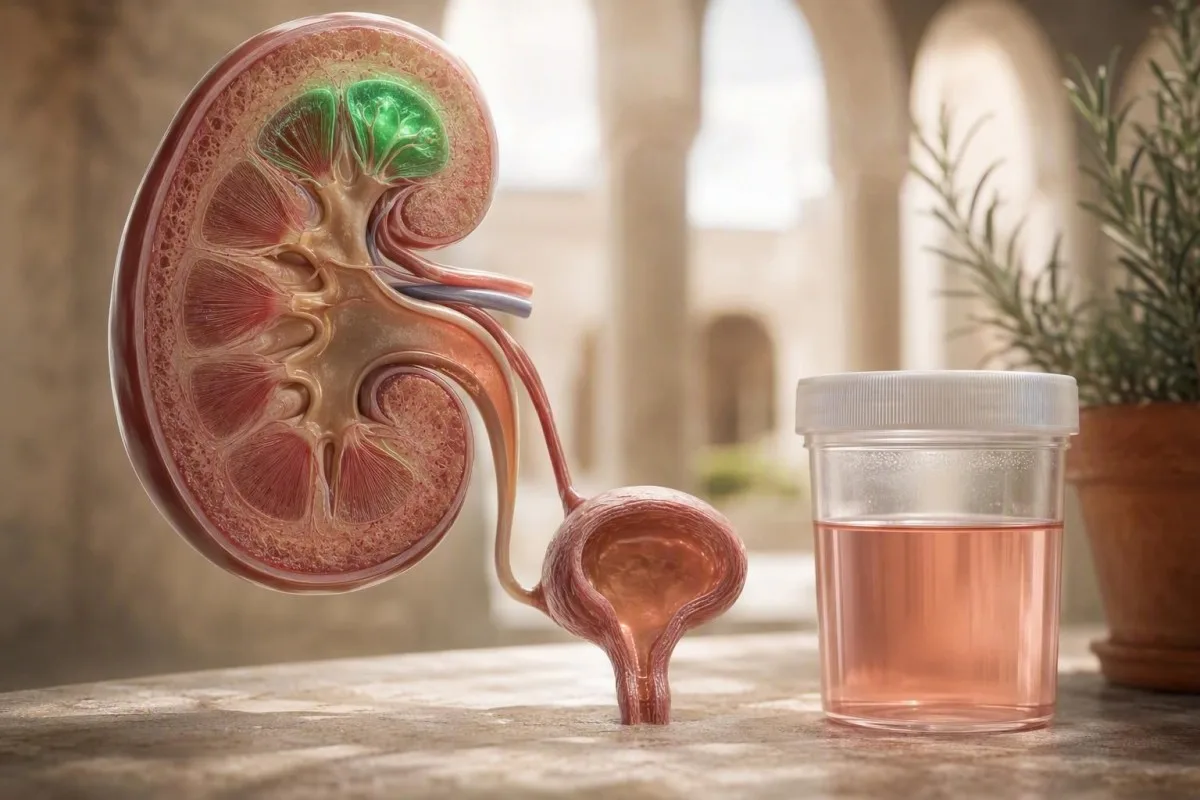
Uzun qaçışdan sonra çəhrayı və ya çay rəngində sidik nümunəsi çox vaxt müvəqqəti məşqdən qaynaqlanan hematuriyadır, lakin görünən rəng heç vaxt təsadüfən buraxılmamalıdır. Vaxtlama, mikroskopik tapıntılar, simptomlar və düzgün dincəldilmiş təkrarlanan nümunə əsl hekayəni söyləyir.


- İdmanla bağlı hematuriya adətən gərgin qaçışdan 24-72 saat sonra yox olur; 72 saatdan sonra davam etməsi tibbi baxış tələb edir.
- Mikroskopiya həddi Düzgün toplanmış sidik nümunəsində yüksək güclü sahədə 3 və ya daha çox qırmızı qan hüceyrəsi mikromaterialı AUA tərifinə uyğundur.
- Dipstick uyğunsuzluğu əhəmiyyətlidir: yüksək güclü sahədə sıfır və ya iki qırmızı hüceyrə ilə müsbət qan pedi, sidik qanaması əvəzinə mioloqbin və ya sərbəst hemoqlobin olduğunu göstərir.
- Təkrar etmə vaxtı praktikdir: 48-72 saat ərzində çətin məşqdən çəkinin, normal nəmləndirin, sonra orta axın sidik nümunəsi verin.
- Eyni gün qiymətləndirmə qan laxtaları, sidik ifraz edə bilməmə, hərarət, bir tərəfli şiddətli yan ağrısı və ya kəskin əzələ ağrısı ilə birlikdə cola sidiyi üçün məqsədəuyğundur.
- Böyrək xəbərdarlıq nümunəsi qan və zülal, qırmızı qan hüceyrəsi dəstələri, yüksək qan təzyiqi və ya düşən eGFR - yarışdan sonrakı izolyasiya olunmuş dipstick deyil.
- Rabdomioliz əlaməti laboratoriyanın yuxarı həddindən 5 dəfə çox olan kreatin kinaz nəticəsi ilə birlikdə, adətən tünd sidik və şiddətli əzələ əlamətləri ilə özünü göstərir.
- Xərçəng riski konteksti araşdırma üçün həddi dəyişir: yaş, siqaret çəkmə, əvvəllər çanaq nahiyəsinə radiasiya qəbul etmə və davamlı görünən hematuriya hamısı əhəmiyyətlidir.
Niyə qaçış sidiyi çəhrayı edə bilər
Qaçıçının hematuriyası adətən güclü məşqdən sonra sidikdə qırmızı qan hüceyrələrinin qısa müddətli sızmasıdır, çox vaxt istirahətlə 24-72 saat ərzində keçir. Yenə də görünən çəhrayı, qırmızı və ya kolalı sidik, adi hal kimi qaçışın buna səbəb olduğu fərziyyəsindən daha çox, düzgün toplanmış təkrar testə layiqdir.
Klinikada, ürəkaçan nümunə birbaşa olur: rəng dəyişikliyi qeyri-adi dərəcədə uzun, sürətli və ya enişli qaçışdan sonra başlayır; qızdırma, sancı kimi yan ağrısı və ya sidikdə yanma yoxdur; və mikroskopiya istirahətdən sonra normallaşır. Kantesti AI qan analizi analizatorudur bu, əlaqəli böyrək markerlərini - kreatinin, eGFR, elektrolitlər və kreatin kinazı - bir yarış sonrası nəticəni diaqnoz kimi qəbul etmək əvəzinə, məşq tarixi ilə yanaşı yerləşdirə bilər.
Təklif olunan mexanizmlər sidik kisəsinin divarı ilə mexaniki təmas, böyrək qan axınının müvəqqəti dəyişməsi, dehidrasiya ilə əlaqəli konsentrasiya və bəzən təkrarlanan ayaq zərbəsindən qırmızı qan hüceyrələrinin parçalanmasıdır. Hər bir mexanizm üçün dəlillər qəribə şəkildə qarışıqdır, çünki əksər tədqiqatlar kiçikdir və fərqli yarış məsafələrindən istifadə edir. Mənim 15 illik kliniki təcrübəmə görə, yeni bir səyin tarixi tək rəngdən daha vacibdir; ilk ultramarafon və tanış 5 km eyni ön test ehtimalına malik deyil.
Məşqdən sonra sidikdə görünən qan, xoşxassəli qaçıçının hematuriyası ilə eyni deyil. A daha geniş hematuriya qırmızı bayraq təlimatı faydalıdır, çünki böyrək daşları, infeksiya, qlomerulyar xəstəliklər və sidik yollarının xərçəngləri təsadüfən ilk dəfə qaçışdan sonra özünü büruzə verə bilər.
Praktik tərif
Məşqdən qaynaqlanan hematuriya, məşqdən qısa müddət sonra sidikdə qırmızı qan hüceyrələrinin görünməsi və istirahətdə təkrar nümunədə yox olması deməkdir. Tək bir pozitiv dipstik bu diaqnozu təsdiq etmir, çünki reaktiv tam qırmızı qan hüceyrələri, sərbəst hemoqlobin və ya miyoglobin kimi heme piqmentini aşkar edir.
Bu hematuriya, hemoqlobin və ya mioloqbin midir?
Sidik dipstikinin qan üçün pozitiv oxunması qırmızı qan hüceyrələri, hemoqlobin və ya miyoglobinə işarə edə bilər və mikroskopiya onları ayırır. Çox sayda tam qırmızı qan hüceyrəsi olan çəhrayı sidik hematuriyanı dəstəkləyir; az və ya heç bir qırmızı qan hüceyrəsi olmayan tünd qəhvəyi sidik, əzələ zədələnməsi və ya hemolizdən piqmentdən narahatlıq yaradır.
Sidik mikroskopiyası göstərir yüksək güc sahəsinə 3 və ya daha çox qırmızı qan hüceyrəsi nümunə təmiz toplandıqda mikrohematuriyanı təsdiqləyir. Əksinə, 0–2 qırmızı qan hüceyrəsi olan yüksək güc sahəsinə güclü bir şəkildə pozitiv dipstik, xüsusilə istilik məruz qalması, əzələ yükünün əzilmə tipli zədələnməsi və ya şiddətli gecikmiş əzələ ağrısı, miyoglobinuriyanı nəzərdən keçirməyə səbəb olmalıdır. Qəhvəyi və ya kolalı rəng, sidik kisəsindən az miqdarda qanaxmadan çox, konsentratlaşmış piqmentin tipik göstəricisidir.
Miyoglobin vacibdir, çünki o, rabdomioliz və kəskin böyrək zədələnməsinə səbəb ola bilər. Yuxarıda olan kreatin kinaz konsentrasiyası laboratoriyanın normal yuxarı həddindən 5 dəfə çoxdur rabdomioliz üçün ümumi biokimyəvi hədd kimi istifadə olunur, baxmayaraq ki, əlamətlər, kalium, kreatinin və sidik axını təcili vəziyyəti müəyyən edir. Bizim praktik izahatımızı baxın təhlükəli dərəcədə yüksək kreatin kinaz gecəboyu gözləməli olmayan nümunələr üçün.
Qida boyaları, çuğundur, qarağat, rifampisin, fenazopiridin və dehidratasiya da hüceyrələr olmadan sidiyə rəng verə bilər. A tünd sidik fərqləndirilməsi hər qırmızı nümunənin qan təmsil etdiyini güman etməyin yaygın səhvini aradan qaldırmağa kömək edir.
Fərq niyə qayğıları dəyişir
Qırmızı qan hüceyrəli hematuriya sidik yollarına, miyoglobinuriya isə sümük əzələlərinə və böyrək qorunmasına yönəldir. Hər ikisi dözümlülük hadisələrindən sonra baş verə bilər, lakin yalnız mikroskopiya və hədəfli qan testləri onları etibarlı şəkildə ayırd edə bilər.
Qaçışdan sonrakı sidik təhlili nəticəsini necə oxumaq olar
Qaçışdan sonrakı ən məlumatlı sidik testi dipstik, mikroskopiya, zülal ölçümü və xüsusi çəkini birləşdirir. Keçici qırmızı qan hüceyrələri və zülal olmadan dipstikdəki qan aşağı risklidir; zülal və ya silindrlərlə birlikdə qan daha qəti böyrək müayinəsi tələb edir.
Dipstik qan nəticəsi mənfi, iz, 1+, 2+ və ya 3+ olaraq bildirilir, lakin bu, hüceyrə sayından çox bir skrininq siqnalıdır. AUA mikromokraniyanı mikroskopik müayinədə yüksək güc sahəsinə görə 3-dən çox qırmızı qan hüceyrəsi olaraq təyin edir, yalnız dipstik nəticəsi deyil (Barocas et al., 2020). Bu fərq, səhv-pozitiv skrininqdən sonra qaçışçıları lazımsız xərçəng müayinəsinə göndərməyin qarşısını alır.
Xüsusi çəkisi yuxarıdadır 1.030 bir çox laboratoriyalarda konsentrik sidik göstərir və rəngi daha qorxulu göstərə bilər, lakin bu, təsdiqlənmiş qırmızı qan hüceyrələrini izah etmir. 1+ və ya daha yüksək zülal sidik albumin-kreatinin nisbəti və ya zülal-kreatinin nisbəti ilə miqdarlandırılmalıdır; keçici idman proteinuriyası mövcuddur, lakin davamlı albuminuriya fərqli diaqnozu qlomerulyar xəstəliyə doğru dəyişir. Bizim tam sidik analizi təlimatı bu markerlərin niyə bir nəticəyə birləşdirilməməli olduğunu izah edir.
Kantesti AI sidik tapıntıları, məşq vaxtı və əvvəlki dəyərlərlə yanaşı kreatinin və eGFR-i təhlil edir; isti yarışdan sonra tək bir qaldırılmış kreatinin xroniki böyrək xəstəliyinə bərabər deyil. Təcrübədə mən məsafəni, ərazini, temperaturu, iltihab əleyhinə dərman istifadəsini, menstrual vaxtı və nümunənin bitməsindən 2 saat ərzində verilib-verilmədiyini soruşuram.
Qaçışdan sonra sidik testini nə vaxt təkrarlamalıyıq?
Qaçış hematüriyasından şübhələnilərsə, son intensiv qaçışdan 48–72 saat sonra sidik testini təkrarlamaq məqbul bir üsuldur. Səhər ilk və ya yaxşı hidrogenləşdirilmiş orta axın nümunəsindən istifadə edin, lakin faydalı tapıntıları gizləyə biləcək həddindən artıq durulaşmadan qaçmaq üçün dərhal əvvəl litrlərlə su içməyə məcbur etməyin.
Rutin yarış sonrası anomaliya üçün, adətən intensiv məşqlər, təpələr, ağır qaldırma və ya yarışlar üçün heç bir interval tövsiyə etmirəm 48 saat ərzində; marafon, ultramarafon, istilik xəstəliyi və ya qeyri-adi ağrıdan sonra, 72 saat daha etibarlıdır. Susuzluğa görə adi içki kifayətdir. Həddindən artıq su qəbulu xüsusi çəki 1,005-in altına düşürə bilər və bəzən sərhəddə olan nəticənin şərhini çətinləşdirə bilər.
Mikroskopiya 72 saatdan sonra müsbət qalarsa, təkrarlanan testlər əvəzinə bir neçə gün ərzində ilkin səhiyyə baxışını təyin edin. Davam edən nəticələr qan təzyiqi ölçülməsini, serum kreatininini/eGFR-i, sidik albumin-kreatinin nisbətini tələb edir və riskə uyğun olaraq kultura və ya görüntü diaqnostikasının nəzərdən keçirilməsini tələb edir. Məşq, hidrogenləşmə və müvəqqəti olaraq aşağı filtrasiya təxmini arasındakı əlaqə bizim məşqdən sonrakı eGFR bələdçimizdə əhatə olunur.
Mən gördüyüm 52 yaşlı həvəskar marafonçu isti yarışdan sonrakı axşam 18 qırmızı hüceyrəyə (yüksək sahədə) sahib idi, lakin 72 saat istirahətdən sonra 0-1 qırmızı hüceyrəyə; onun kreatinini 1,28 mq/dl-dən 0,96 mq/dl-ə düşdü. Nəticə təsəlli verici idi, lakin eyni plan, təkrarlanan görünən sidik rəngi olan 52 yaşlı siqaret çəkən şəxs üçün kifayət etməzdi.
Əgər bacarırsınızsa, finiş xəttində test aparmayın.
Məşqdən dərhal sonra test aparmaq, müvəqqəti qırmızı qan hüceyrələrini, konsentrik sidiyi və zülalı tapma şansını artırır. Bu, rabdomiyolizdən şübhələnilən hallarda kliniki cəhətdən faydalı ola bilər, lakin qaçışçının əsas xəttini müəyyən etmək üçün pis zamandır.
Qaçışdan sonrakı hansı hematuriya nümunələri adətən təsəllivericidir?
Həddindən artıq qaçışdan sonra öz-özünə keçən epizod tamamilə təmizləndikdə, ağrı və ya sistemik simptomları olmadıqda və proteinuriya və ya böyrək funksiyası dəyişikliyi olmadıqda daha çox təsəlli verir. Təsəlli vermək, laqeydlik demək deyil; bu, istirahət etmiş nümunə ilə təsdiqlənmək deməkdir.
Aşağı riskli fenotip, açıq bir məşq tətikli, normal qan təzyiqinə, siqaret çəkmə tarixçəsi olmayan və normal istirahət mikroskopiyasına malik gənc və ya orta yaşlı qaçışçıdır. Bu vəziyyətdə, bir dəfəlik müvəqqəti nəticə 3–10 RBC/HPF yarışdan sonra adətən müalicəsiz keçir. Buna baxmayaraq, mən onu sənədləşdirərdim, çünki hər uzun qaçışdan sonra təkrarlanması, bir dəfəlik hadisədən daha diqqətli bir nəzərdən keçirməyi tələb edir.
Normal sidik albumin-kreatinin nisbəti ümumiyyətlə 30 mq/q (3 mq/mmol-dan aşağı) olur, baxmayaraq ki, laboratoriyalar və ölkələr vahidləri fərqli şəkildə bildirirlər. Albumin, silindrlər və ya dismorf qırmızı qan hüceyrələri olmadan qan, glomerulyar sızmadan uzaqlaşır; bu, sidik kisəsi mənbəyini sübut etmir, lakin növbəti sualı yönləndirir. Bizim izahımız sidikdə zülal bu bölməni aydın şəkildə əhatə edir.
İdrar çox qatı olduqda və qaçışçı demək olar ki, boş sidik kisəsi ilə bitirdikdə sidik kisəsi travması daha güman edilir. Bəzi idman həkimləri uzun qaçışdan əvvəl sidiyə getməyi və mütəmadi olaraq su içməyi məsləhət görürlər, lakin bu, məhdud təcrübə sübutu olan profilaktika məsləhətidir — rəng davam etdikdə qiymətləndirmə əvəzi deyil.
Normal nəticə vaxt nişanı daşıyır
Yarışdan 3 gün sonra mənfi test bu epizod üçün təskinedicidir, ömürlük zəmanət deyil. Aylar sonra yeni görünən hematuriya özünəməxsus şəkildə qiymətləndirilməlidir, xüsusən 40 yaşdan sonra və ya siqaret çəkmə təsirinə məruz qaldıqda.
Qaçıçının hematuriyasını daha az ehtimal edən xəbərdarlıq əlamətləri
Hematuriya 72 saatdan sonra davam etdikdə, sərt məşqdən sonra təkrarlansa və ya ağrı, hərarət, laxtalar, zülal və ya böyrək funksiyası dəyişikliyi ilə müşahidə olunarsa, təcili qiymətləndirilmə tələb edir. Əlamətlərin birləşməsi özlüyündə dramatik görünən nümunədən daha informativdir.
Davam edən görünən qırmızı sidik üçün vaxtında tibbi məsləhət alın 24 saat, yaxşı hiss etsəniz belə; 40 yaşdan yuxarı, hazırda və ya keçmişdə siqaret çəkənlər və ya əvvəllər pelvik radiasiyaya məruz qalmış şəxslər üçün hədd aşağıdır. AUA təlimatı bütün mikrohematuriyanı eyni şəkildə müalicə etmək əvəzinə yaş, siqaret çəkmə, mikroskopik qanın dərəcəsi və davamlılığı və əvvəlki makro hematuriya əsasında risk stratifikasiyasından istifadə edir (Barocas et al., 2020).
Dismorfik qırmızı hüceyrələr, qırmızı qan hüceyrəsi silindrləri, əhəmiyyətli albuminuriya, yeni hipertoniya və ya azalmış eGFR, tərpənən sidik kisəsindən deyil, böyrək filtrindən qaynaqlanmağı göstərir. Qırmızı qan hüceyrəsi silindrləri adi qaçışın gözlənilən nəticəsi deyil və təcili böyrək qiymətləndirilməsini tələb etməlidir. Bizim icmalımıza baxın qranulyar və sidik silindrləri sidik çöküntüsü tapıntılarının niyə vacib olduğunu anlamaq üçün.
Thomas Klein, MD, qaçışçılara yalnız rəngə görə özlərinə diaqnoz qoymamağı tövsiyə edir: sidik yolu infeksiyası yanma, təcili ehtiyac, pyuria və bəzən hematuriya səbəb ola bilər, daşlar isə daha çox kəskin bir tərəfli ağrı və ürəkbulanmaya səbəb olur. İnflamasiya simptomları olduqda antibiotiklərdən əvvəl mədəniyyət ən faydalıdır.
Qan-zülal birləşməsi
Proteynuriya ilə təsdiqlənmiş hematuriya, tək hematuriyadan daha narahatdır, çünki hər ikisi qlomerulyar filtirdən qaynaqlana bilər. Sidik albumin-kreatinin nisbəti 30 mq/q və ya daha yüksək olarsa, təkrar edilməli və qan təzyiqi və böyrək funksiyası ilə birlikdə yozulmalıdır.
Məşqdən sonra çəhrayı sidik nə vaxt həmin gün qayğı tələb edir?
Laxtalar, sidiyə çıxa bilməmə, şiddətli yan ağrısı, hərarət, zəiflik, sidik ifrazının azalması və ya şiddətli əzələ ağrısı və zəifliyi ilə qaranlıq sidik üçün həmin gün təcili qiymətləndirmə alın. Bu əlamətlər qeyri-komplikasiyalı idmanla əlaqəli hematuriyadan kənara çıxır.
Laxtalar sidik axınının qarşısını ala bilər və sidik buraxa bilməmək idman sağlamlığından asılı olmayaraq təcili bir problemdir. Hərarət 38,0°C və ya daha yüksəkdirsə yan ağrısı ilə yuxarı sidik yolu infeksiyasını göstərə bilər; qusma ilə şiddətli kolik ağrısı daşı göstərə bilər. Heç bir vəziyyətdə yarışdan sonrakı təkrar test üçün gözləməklə idarə olunmamalıdır.
Məşqdən sonra qaranlıq qəhvəyi sidik, əzələlərdə nəzərə çarpan həssaslıq, zəiflik, şişkinlik və ya ifrazın azalması rabdomiyolizdən şübhələnməyə səbəb olur. İlkin testlər adətən kreatin kinaz, kreatinin, kalium, kalsium, fosfat və sidik analizi daxildir. A CrossFit rabdomiyoliz bələdçimiz vacibdir, çünki qeyri-adi ekssentrik məşq – təkcə qaçış deyil – tez-tez tetikləyici olur.
Ciddi dehidratasiya böyrək nəticələrini daha pis göstərə bilər, lakin real zədə ilə də birlikdə mövcud ola bilər. Əgər sizdə başgicəllənmə, çaşqınlıq, maye qəbul edə bilməmə və ya çox az sidik ifrazı varsa, 8–12 saat, evdə idman içkiləri ilə problemi həll etməyə çalışmayın.
Hamiləlik və antikoaqulyantlar
Hamilə qaçışçılar və antikoaqulyant qəbul edən şəxslər görünən hematuriyanı dərhal bildirməlidirlər. Antikoaqulyantlar qanaxmanı gücləndirə bilər, lakin onun mənbəyini müəyyənləşdirmək ehtiyacını aradan qaldırmır; hamiləlik həmçinin infeksiya, daşlar və böyrək xəstəliyini yoxlamaq üçün həssaslığı dəyişir.
Qaçışın səbəb olmaqdan daha çox ortaya çıxara biləcəyi şərtlər
Qaçış, sidiyi konsentrasiya edərək və ya testə səbəb olaraq mövcud sidik problemini ortaya çıxara bilər, hematuriyanın özünə səbəb olmaqdan daha çox. Daşlar, infeksiya, glomerulyar xəstəlik, struktural anomaliyalar və xərçəng differensial diaqnozın bir hissəsi olaraq qalır.
Böyrək daşları tez-tez birtərəfli qabırğa-ağrı nahiyəsindən qasığa qədər ağrıya, ürəkbulanmaya və mikroskopiyada qırmızı qan hüceyrələrinə səbəb olur, baxmayaraq ki, ağrısız daşlar da olur. Sidik infeksiyası daha çox yanma, tez-tez sidiyəgetmə, təcili sidiyəgetmə və ağ qan hüceyrələrinə səbəb olur; mənfi nitrit nəticəsi onu istisna etmir. Bizim leykosit esteraza və mənfi nitrit bu ümumi qarışıq nümunəni izah edir.
Glomerulonefrit yuxarı tənəffüs yollarının infeksiyasından sonra qəhvəyi sidik, şişkinlik, yüksək qan təzyiqi, proteinuriya və dizmorfik qırmızı qan hüceyrələri ilə təqdim oluna bilər. KDIGO 2024 CKD (Xroniki Böyrək Xəstəliyi) təlimatında, davamlı albuminuriya və azalmış eGFR, bir-birinin yerini tutan ölçmələr deyil, tamamlayıcı böyrək riski markerləri kimi qəbul edilir (KDIGO, 2024).
Kantesti AI ilə işləyən qan analizi alətidir istifadəçilərə kreatinin, eGFR, albumin, elektrolitlər və CBC (tam qan sayımı) üzrə bir nümunəni tanımaqda kömək edir, lakin hematuriyanın anatomik mənbəyini diaqnoz edə bilmir. Görüntüləmə, mikroskopiya, kultura və klinisyenin müayinəsi hələ də qəti işi görür.
Xərçəng gənc qaçışçılarda nadirdir, böyüklərdə isə qeyri-mümkün deyil
Görünən hematuriya, hətta məşqlər aşkar bir izahat kimi görünsə belə, qiymətləndirməyə layiqdir, xüsusən də siqaret çəkən şəxslərdə və ya davamlı simptomları olanlarda. Risk yaşla və kümülatif tütünə məruz qalma ilə artır, buna görə də eyni sidik nəticələri eyni test planlarına səbəb olmur.
Urologiya və ya nefrologiya təqibi kimə lazımdır?
İstirahət edilmiş təkrar nümunədən sonra davamlı hematuriya urologiya üçün risk qiymətləndirməsini tələb edir, hematuriya ilə birlikdə proteinuriya, silindrlər, hipertansiyon və ya pozulmuş eGFR isə nefrologiya tərəfə işarə edir. Bir çox insan yalnız birincilərin rəhbərlik etdiyi təkrar testə ehtiyac duyur; istiqamətləndirmə nümunədən asılıdır.
Urologiya qiymətləndirilməsi xüsusilə təkrarlanan görünən hematuriya, davamlı mikroskopik hematuriya, siqaret çəkmə tarixi, peşəkar aromatik-aminə məruz qalma, əvvəlki pelvik radiasiya və ya infeksiyasız sidik simptomları üçün uyğundur. Risklərdən asılı olaraq, klinisyenlər böyrək və sidik kisəsi ultrasəsini, KT uroqrafiyasını və sistoskopiyanı istifadə edə bilərlər. 24 yaşlı bir şəxsdə yarışdan sonra bir dəfə aşkarlanan iz miqdarı sidikdə qırmızı rəngdə olan təkrarlanan sidiklə 58 yaşlı keçmiş siqaret çəkən bir şəxsdə çox fərqli bir ssenaridir.
Sidik albumin-kreatinin nisbəti ilə nefrologiya baxışı daha çox ehtimal olunur ≥30 mq/g, eGFR-dən aşağı 60 ml/dəq/1.73 m² 3 ay və ya daha uzun müddət davam edən, qırmızı qan hüceyrəsi silindrləri və ya nəzarəti çətin olan qan təzyiqi. Bu kəsilmələr əhəmiyyətlidir, çünki xroniki böyrək xəstəliyi tək bir ölçmə ilə yanaşı müddəti ilə də müəyyən edilir. Bizim istifadə edin praktik kateqoriyalar üçün oxuyun.
Kantesti-nin AI laboratoriya testlərinin təfsiri xidməti, xüsusilə istifadəçilər fərqli laboratoriyalardan nəticələr yüklədikdə, təkrarlanan qan və zülal nümunəsinin müzakirə üçün qeyd edilməsini təmin edə bilər. Bu, sidik görüntükləmə və ya mütəxəssis müayinəsinin lazım olub-olmadığına qərar verən klinisyeni dəstəkləməli, əvəz etməməlidir.
Antikoaqulyant müalicənin söhbəti bitirməsinə icazə verməyin.
Antikoaqulyant istifadəsi qanaxmanın şiddətini dəyişir, lakin hematuriyanın səbəbini müəyyən etmir. Təcrübəmə görə, təkrarlanan sidik qanaxmasını apiksaban, varfarin və ya aspirinə, müayinə aparılmadan bağlamaq daşların, infeksiyanın və ya struktural xəstəliklərin tanınmasını gecikdirə bilər.
Məşqdən sonrakı hematuriyada hansı qan testləri kömək edir?
Faydalı qan testləri simptomlardan asılıdır: kreatinin, eGFR, elektrolitlər və kreatin kinazı böyrək və əzələ stressini qiymətləndirir, CBC isə anemiya və ya infeksiya əlamətlərini qiymətləndirir. Dəqiq tarix və sidik analizi aparıldıqdan sonra aparılan hərtərəfli geniş panellər, hədəflənmiş testlərdən daha az faydalıdır.
Kreatinin, əzələ metabolizmi, böyrək qan təchizatının azalması və dehidrasiya səbəbindən dözümlülük məşqindən sonra keçici olaraq arta bilər. Kreatininin sürətli dəyişməsi zamanı eGFR tənlikləri daha az etibarlıdır, buna görə də təkrarlanan dəyər 48–72 saat adi bərpa müddətindəki nəticə, finiş xəttindəki nəticədən daha mənalı olur. Bizim məşqlə əlaqəli kreatinin yenidən yoxlama bələdçimiz bu tez-tez narahatlıq tetikleyicisi üçün kontekst təmin edir.
Kreatin kinazı, məşqdən sonra geniş bir diapazona malikdir: təlimli idmançılarda böyrək zədələnməsi olmadan yarışdan sonra yüksəlmə müşahidə oluna bilər, yerli yuxarı həddən dəfələrlə yuxarı olan dəyərlər isə simptomlarla birlikdə təcili qiymətləndirmə tələb edir. Kaliumun səviyyəsi 6.0 mmol/L-dən yuxarı olduqda potensial olaraq təhlükəlidir və təcili kliniki qiymətləndirmə tələb edir, xüsusən də böyrək funksiyası pozulmuşdursa və ya əzələ zədələnməsi şübhəsi varsa.
CBC, yorğunluq, solğunluq, güclü menstruasiya qanaxması, təkrarlanan hematuriya və ya sistemik xəstəlik şübhəsi olduqda ən faydalıdır. Hemoglobin, plazma həcminin genişlənməsi, dəmir itkisi və ya hemoliz nəticəsində dözümlülük hadisələrindən sonra düşə bilər; ferritin, kəskin iltihab və gərgin məşqlərdən uzaqda yozulmalıdır. Dözümlülük qaçışçıları, mənim idmançı qan testi icmalımızdan məlumatlı bir baza xətti üçün faydalana bilər.
Bir yarış həftəsi panelindən böyrək xəstəliyini diaqnoz etməyin.
0.3 mq/dl və ya daha çox kreatinin artımı, uyğun zaman çərçivəsində kəskin böyrək zədələnməsi meyarına cavab verə bilər, lakin yarışdan sonra kontekst və təkrarlanan testlər həlledicidir. Aşağı sidik ifrazı, artan kalium və davamlı yüksəlmə, təcrid olunmuş sərhəd nəticəsindən daha çox əhəmiyyət kəsb edir.
Həkimlərin etibar edə biləcəyi təkrarlanan sidik nümunəsini necə toplamaq olar
Kəskin məşq etmədən 48–72 saat sonra təmiz tutulmuş orta axın sidik nümunəsi, hematuriyanın həll olub olmadığını yoxlamağın ən yaxşı yoludur. Toplama səhvləri, menstruasiya çirklənməsi və köhnə nümunə yanlış nəticələrə səbəb ola bilər.
Əllərinizi yuyun, sidiyə tualetə başlayın, sonra qabın içərisinə toxunmadan orta axın hissəsini toplayın. Nümunəni təcili olaraq təhvil verin - tercihen içində 2 saat—və ya laboratoriyanın soyuducu təlimatlarına əməl edin. Uzun müddət qalması hüceyrə görünüşünü dəyişir və mikroskopiyanı daha az etibarlı edə bilər.
Mümkün olduqda aktiv menstruasiya zamanı testdən çəkinin; test etmək mümkün deyilsə, klinisyeni və laboratoriyanı məlumatlandırın. Vajinal çirklənmə görünən qırmızı qan hüceyrələri və zülal verə bilər, halbuki skuamoz epitel hüceyrələri tez-tez pis toplanmış nümunəni göstərir. Bizim ... bələdçimiz sidikdə epitel hüceyrələri izah edir ki, bu adi bir laboratoriya qeydi deyil.
Thomas Klein, MD, nümunə ilə yanaşı dörd detalı qeyd etməyi tövsiyə edir: son gərgin məşq, hadisənin müddəti, açıq hava temperaturu və son 72 saat ərzində qəbul edilmiş bütün dərmanlar. vaxtı qeyd olunmamış nəticəni yozmaq xüsusilə çətindir - xüsusən də sidik ikiqat məşqdən sonra toplandıqda.
Səhər ilk sidik nümunəsi ilə gün ərzindəki testin müqayisəsi
Səhər ilk sidik nümunəsi qatılaşdırılmışdır və kiçik anomaliyaları aşkar etmək üçün yaxşıdır, lakin normal nəmləndirilmiş gündüz ortası axan nümunə toplama daha təmizdirsə, qəbul edilə bilər. Ardıcıl müqayisə üçün ardıcıllıq daha vacibdir: hər təkrarda təxminən eyni şəraitdən istifadə edin.
Həyat tərzini, ağrı dərmanlarını və əlavələri dəyişdirən şeylər
Susuzluq sidiyi qatılaşdıra və böyrək stressini artıra bilər, NSAID-lər isə davamlı məşq zamanı böyrək qan axışını azalda bilər. Heç bir faktor hematuriyanın səbəbini sübut etmir, lakin hər ikisi qaçışdan sonrakı nəticəni nə qədər ehtiyatla yozduqlarını təsir edir.
Əksər qaçışçılar üçün susuzluğa görə içmək və itkiləri tədricən əvəz etmək, mayeləri sərt şəkildə içməyə məcbur etməkdən daha təhlükəsizdir. Həddindən artıq su qəbulundan yaranan çox aşağı natrium təhlükəlidir; serum natriumunun aşağı olması 125 mmol/L-dən aşağı olduqda baş ağrısı, qusma, çaşqınlıq və ya qıcolma ilə təcili tibbi yardım tələb edir. Sidiyin rəngi qabaqcadan nəmlənmə göstəricisidir, dəqiq nəmlənmə ölçüsü deyil.
İbuprofen, naproksen və digər NSAID-lər, xüsusilə istilik stressi, qusma və ya uzun müddətli tədbirlər zamanı, prostaglandinlə idarə olunan böyrək qan axışını azalda bilər. Xəstələrə, həkimləri aydın bir səbəb göstərmədiyi təqdirdə, marafondan əvvəl adi profilaktik NSAID-lərdən çəkinməyi məsləhət görürəm. Dərman konteksti bizim laboratoriya trendi təhlükəsizlik məqaləmizdə.
araşdırılır. Həddindən artıq dozada C vitamini bəzi sidik çipləri reaksiyalarına mane ola bilər və performans üçün satılan əlavələr bəzən siyahıda olmayan stimullaşdırıcılar və ya diuretiklər ehtiva edir. Markalı tozun tərkib siyahısını xatırlamağa çalışmaqdan daha faydalı ola biləcəyi üçün görüşə qabları və ya aydın şəkilləri gətirin. Bizim idmançılar üçün əlavə təhlükəsizlik təlimatımız məqbul bir siyahı təklif edir.
Nəmlənmə davamlı qanın müalicəsi deyil
Su qatılaşmanı düzəldə bilər, lakin daş, infeksiya, qlomerulyar proses və ya sidik sistemindəki struktural mənbəyi müalicə etmir. İstirahət etmiş, düzgün toplanmış nümunədə qırmızı qan hüceyrələri qalırsa, irəliləyiş başqa bir nəmlənmə təcrübəsinə deyil, naxışa əsaslanmalıdır.
Məşqdən qaynaqlanan hematuriyadan sonra qaçmağa davam edə bilərsinizmi?
Əksər qaçışçılar sidiyin rəngi normallaşdıqdan, simptomlar aradan qaldırıldıqdan və istirahət etmiş təkrarlanan nümunə təsəlli verəndən sonra tədricən qayıda bilərlər. Sidikdə görünən qırmızı rəng qaldıqda, böyrək nəticələri anormal olduqda və ya əzələ simptomları rabdomiyolizə işarə etdikdə ağır məşqlərə qayıtmayın.
Qeyri-komplike olmuş bir epizoddan sonra, adətən bir neçə gün yalnız yüngül qaçış etməyi, sonra həcmi və intensivliyi tədricən artırmağı təklif edirəm. 7–14 gün ərzində. Rəng təkrarlanarsa, ağrı yaranarsa və ya sidik ifrazı azalarsa, qaçışçı dayanmalı və müayinə olunmalıdır. Bu, təcrübəyə əsaslanan bir kliniki yanaşmadır, təcrübə ilə sübut olunmuş bir resept deyil.
Eyni məsafədən sonra təkrarlanan hematuriya praktik təcrübələrə haqq qazandıra bilər: susuz yarışmaqdan çəkinin, uzun qaçışdan əvvəl sidik ifraz edin, eniş məşqlərini daha yavaş tətbiq edin və ya ayakkabı uyğunluğunu və ya ərazini nəzərdən keçirin. tempi, istilik, müddəti, sidik rəngini və nümunə nəticələrini qeyd edin. marafon qaçışçısı laborator bələdçisi bərpa markerlərini məşqlərə fasilə vermə səbəblərindən ayırd etməyə kömək edə bilər.
Təlimlərinizi açıqlanmayan görünən hematuriya səbəbindən təxirə salmayın, yalnız ona görə ki, bir tədbir planlaşdırılıb. İdmançılar tez-tez narahatlığa dözümlüdə yaxşıdır; daha çətin bacarıq, davamlılığın diaqnostik məlumat olduğunu, sərtlik testi olmadığını tanımaqdır.
Əsl əsas xətti qurun
Sərt məşqdən ən az 72 saat əvvəl götürülmüş baza sidik analizi və böyrək paneli, gələcək yarış sonrası nəticələri şərh etməyi çox asanlaşdıra bilər. Bu, xüsusilə ultrarunnerlər, bir böyrəyi olan insanlar və ya böyrək perfüziyasına təsir edən dərmanlardan istifadə edən idmançılar üçün faydalıdır.
Məşqdən sonra sidikdə qan haqqında klinisistinizə nə demək lazımdır
Faydalı hematuriya qiymətləndirilməsinə ən sürətli yol qısa bir zaman qrafikidir: sidik rəngi, məşq dozası, simptomlar, dərmanlar və təkrar test vaxtı. Nümunənin “qan üçün müsbət” olması barədə yalnız bir mesajdan daha çox əsl laboratoriya dəyərlərini gətirin.”
Sidik çəhrayı, parlaq qırmızı, çay rəngində olub olmadığını və ya laxtalanmalar olub olmadığını; məşqdən əvvəl, zamanı və ya sonra rəngin görünüb-görünmədiyini; və ilk sidik ifrazından sonra təmizlənib-təmizlənmədiyini bildirin. Yanma, təcili ehtiyac, qızdırma, yan ağrısı, ürəkbulanma, şişlik və sidik ifrazının azalması daxildir. Ətraflı sidik rəngi təsviri müşahidəni həddindən artıq şərh etmədən dəqiq təsvir etməyə kömək edə bilər.
Əvvəlki sidik analizləri, kreatinin/eGFR dəyərləri, qan təzyiqi göstəriciləri, siqaret çəkmə tarixi, ailəvi böyrək xəstəliyi tarixi və dərman/əlavə siyahısını gətirin. Kantesti AI biomarker şərhi platformasıdır təkrarlanan qan testi dəyərlərini təşkil edə bilən və mənalı dəyişiklikləri vurğulayan, lakin bir həkim bu dəyərləri sidik mikroskopiyası və müayinəsi ilə əlaqələndirməlidir.
3 sentyabr 2026-cı il tarixinə kimi, klinik prinsip sadə qalır: məşq yalnız nəticə həll olunduqdan və əks təsirlər aradan qalxdıqdan sonra ağlabatan bir izahatdır. Əmin deyilsə, mikroskopiya, kultura, albumin-kreatinin nisbəti, təkrar kreatinin, görüntüleme və ya müraciət tələb olunub-olunmadığını soruşun - təkcə başqa bir dipstik deyil.
Sorğuya dəyər suallar
Bütöv qırmızı qan hüceyrələrinin görüldüyünü, zülal və ya silindrlərin olub-olmadığını və sakit təkrar testin nə vaxt baş verməli olduğunu soruşun. Bu üç cavab adətən növbəti addımın izlənməli təqib, böyrək testi, infeksiya testi və ya uroloji müayinə olub olmadığını aydınlaşdırır.
Qaçıçının hematuriyası üçün məqsədyönlü hərəkət planı
Sərt qaçışdan sonra ağrısız bir epizod üçün, gərgin məşqdən 48–72 saat istirahət edin və təmiz tutulmuş sidik analizi təkrarlayın; qırmızı bayraqlar və ya davamlı görünən rəng üçün əvvəlcədən tibbi yardım alın. Məqsəd nə panika, nə də rədd etmədir - bu, tapıntının həll olunduğunu sübut etməkdir.
Birinci addım: sərt məşqi dayandırın, normal maye qəbul edin və vaxtı və simptomları qeyd edin. İkinci addım: mikroskopiyanı təkrar edin 48–72 saat. Üçüncü addım: qan davam edərsə, və ya zülal, silindrlər, ağrı, qızdırma, laxtalanmalar, sidik ifrazının azalması və ya qeyri-adi böyrək markerləri görünərsə, dərhal tibbi müayinə təyin edin. Bu ardıcıllıq həm qaçırılmış xəstəlikləri, həm də təkrar finiş xətti nümunəsindən sonra lazımsız görüntüleməni qarşısını alır.
Klinik komandamız yüklənmiş laboratoriya məlumatlarını nəzərdən keçirərkən, biz nümunələrə üstünlük veririk: yüksələn kreatinin, yüksək CK və sidik ifrazının azalması, sabit kreatinin və keçici sidik dipstikindən daha təcildir. Kantesti-nin metodologiyası və təhlükəsizlik tədbirləri bizim klinik validasiya məlumatı, təsvir olunur və həkim nəzarətimiz vasitəsilə ətraflı şəkildə Tibbi Məsləhət Şurası.
Əksər xəstələr vaxtlı təkrar testin həyəcanverici rəng dəyişikliyini aydın bir plana çevirdiyini düşünür. Ancaq instinktiniz bir şeyin səhv olduğunu söyləyirsə - xüsusilə sidik sabah hələ də qırmızıdırsa - bu siqnala etibar edin və qiymətləndirilin.
Bir cümlə qaydası
Sərt qaçışdan sonra bir dəfə çəhrayı sidik keçici ola bilər; davam edən, təkrarlanan və ya simptomlarla başlayan çəhrayı sidik, düzgün qiymətləndirilənə qədər hematuriyadır.
Tez-tez verilən suallar
Qaçış hematuriyası nə qədər davam edir?
İdmançılarda hematuriya adətən gərgin məşqdən 24–72 saat sonra öz-özünə keçir. Təcrübi sidik testi, 48–72 saat ərzində ağır qaçış və ya ağır qaldırmadan sonra təmiz tutma, orta axın nümunəsidir. 24 saatdan sonra davam edən görünən çəhrayı və ya qırmızı sidik, yaxud 72 saatdan sonra qalan mikroskopik hematuriya həkim tərəfindən qiymətləndirilməlidir. Qızdırma, qan laxtaları, şiddətli bel ağrısı, sidik ifrazının azalması və ya şiddətli əzələ ağrısı eyni gündə həkimə müraciəti tələb edir.
İdrarda idman sonrası qan normaldırmı?
İdman sonrası sidikdə qan, yorucu qaçışın, susuzluğun, sidik kisəsi divarının zədələnməsinin və ya qısa müddətli böyrək qan axını dəyişikliklərinin müvəqqəti təsiri ola bilər, lakin bu avtomatik olaraq normal deyil. Yüksək güclü sahədə hər 3 və ya daha çox qırmızı qan hüceyrəsini təsdiqləyən mikroskopiya, AUA-nın mikrohematuriya tərifinə uyğundur. İstirahətdən sonra təkrarlanan nümunədə yox olan nəticə əminlik verir, lakin davamlı qan, zülal, silindrlər, ağrı və ya sidiklə bağlı simptomlar əlavə qiymətləndirmə tələb edir. Görünən sidik rəngi, xüsusilə siqaretdən istifadə edən və ya təkrarlanan epizodları olan böyüklərdə həmişə bildirilmişdir.
İdrarın qaçışdan sonra qırmızı rəngdə olması susuzluğun əlaməti ola bilər?
Susuzluq sidiyi daha tünd göstərə bilər və sidik məzmununu qatılaşdırmaqla məşq sonrası hematuriya nəticəsini gücləndirə bilər, lakin susuzluq təsdiqlənmiş qırmızı qan hüceyrələrini özbaşına etibarlı şəkildə izah etmir. 1.030-dan yuxarı sidik nisbi sıxlığı çox laboratoriyalarda qatılaşmış sidiyi göstərir. Nəticəni həddindən artıq su ilə yumağa çalışmaq əvəzinə, susuzluğa qədər normal için və 48–72 saat istirahətdən sonra təmiz qab tutma nümunəsini təkrarlayın. Ciddi susuzluq, başgicəllənmə, çox az sidik ifrazı və ya çaşqınlıq təcili tibbi müayinə tələb edir.
Məşqdən sonra hematuriya ilə miyoglobinuriya arasındakı fərq nədir?
Hematuria o deməkdir ki, sidikdə bütöv qırmızı qan hüceyrələri var, halbuki miyoglobinuriya əzələ zədələnməsindən sonra əzələ piqmentinin sərbəst buraxılmasını əks etdirir. Hər iki vəziyyətdə sidik test zolağı qan üçün pozitiv ola bilər, buna görə mikroskopiya həlledicidir: miyoglobinuriya tez-tez yüksək güc sahəsi üçün 0-2 qırmızı qan hüceyrəsi ilə pozitiv test zolağı verir. Şiddətli əzələ ağrısı, zəiflik, şişkinlik, qəhvəyi-kolalı sidik və ya laboratoriya yuxarı həddindən 5 dəfə yuxarı kreatin kinaz dəyəri rabdomiolizdən şübhələnməyə səbəb olur. Bu vəziyyət təcili klinik qiymətləndirmə tələb edir, çünki kalium və böyrək funksiyası tez dəyişə bilər.
Məşqdən yaranan hematuriyam varsa, qaçmağı dayandırmalıyamı?
İdrarın rəngi normallaşana və istirahətli təkrar test (adətən 48–72 saat sonra) tamamlanana qədər gərgin qaçışı dayandırın. Təkrar nümunə normaldırsa və sizdə ağrı, qızdırma, laxtalar, proteinuriya və ya böyrək funksiyasının pozulması yoxdursa, əksər qaçışçılar tədricən təxminən 7–14 gün ərzində davam edə bilərlər. İdrar görünən qırmızı və ya tünd qalırsa, sidik ifrazı azalıbsa və ya ciddi əzələ əlamətləri varsa, intensiv məşqlərə davam etməyin. Təkrarlanan epizodlar, hər bir epizod həll olunsa belə, oxşar məşqlərdən sonra tibbi müayinəyə layiqdir.
Hematuri̇ya uroloqa nə vaxt müraci̇ət tələb edir?
İzlənən təkrarlanan nümunədən sonra davam edən mikroskopik hematuriya, təkrarlanan görünən hematuriya və ya siqaret çəkmə tarixi, pelvik radioterapiya və ya sidik əlamətləri olan şəxsdə hematuriya, uroloji riskin qiymətləndirilməsini tez-tez tələb edir. Uroloqlar hamı üçün bir testdən istifadə etmək əvəzinə yaş və ümumi riskə uyğun olaraq ultrasəs, KT uroqrafiyası və sistoskopiyanı nəzərdən keçirə bilərlər. 30 mq/q və ya daha çox albuminuriya, qırmızı qan hüceyrəsi silindrləri, hipertenziya və ya 60 mL/min/1.73 m²-dən aşağı eGFR ilə hematuriya nefrologiyaya daha güclü işarə edir. Düzgün ixtisas tam sidik və qan testi nümunəsindən asılıdır.
Bu gün AI ilə gücləndirilmiş qan analizi nəticələrinin şərhini əldə edin
Ani və dəqiq laborator analiz şərhinə güvənən dünya üzrə 2 milyondan çox istifadəçiyə qoşulun. Qan analizinin nəticələrini yükləyin və bir neçə saniyəyə 15,000+ biomarkerlərinin hərtərəfli şərhini alın.
📚 İstinad edilən tədqiqat nəşrləri
Klein, T., Mitchell, S., & Weber, H. (2026). Erkən Hantavirus Triage üçün Çoxdilli Süni Zəka ilə Dəstəklənən Klinik Qərar Qəbulu: 50,000 Yorumlanmış Qan Testi Reportunda Dizayn, Mühəndislik Təsdiqi və Reallıq Tətbiqi. Kantesti AI Tibbi Tədqiqatlar.
Klein, T., Mitchell, S., & Weber, H. (2026). Kantesti Qan Testi Şərh Mühərrikinin 100.000 sintetik sınaq halında əvvəlcədən qeydiyyatdan keçmiş, rubrikaya əsaslanan avtomatlaşdırılmış texniki benchmarkı. Kantesti AI Tibbi Tədqiqatlar.
📖 Xarici Tibbi İstinadlar
⚕️ Tibbi Məsuliyyətdən İmtina
Bu məqalə yalnız təhsil məqsədlidir və tibbi məsləhət təşkil etmir. Diaqnoz və müalicə qərarları üçün həmişə ixtisaslı səhiyyə işçisi ilə məsləhətləşin.
E-E-A-T Etibar Siqnalları
Təcrübə
Həkim rəhbərliyi ilə laborator şərh iş axınlarının klinik icmalı.
Ekspertiza
Biomarkerlərin klinik kontekstdə necə davrandığına dair laboratoriya təbabəti diqqəti.
Səlahiyyətlilik
Dr. Thomas Klein tərəfindən yazılıb; Dr. Sarah Mitchell və Prof. Dr. Hans Weber tərəfindən nəzərdən keçirilib.
Etibarlılıq
Aydın izləmə yolları ilə həyəcanı azaltmağa yönəlmiş sübuta əsaslanan şərh.