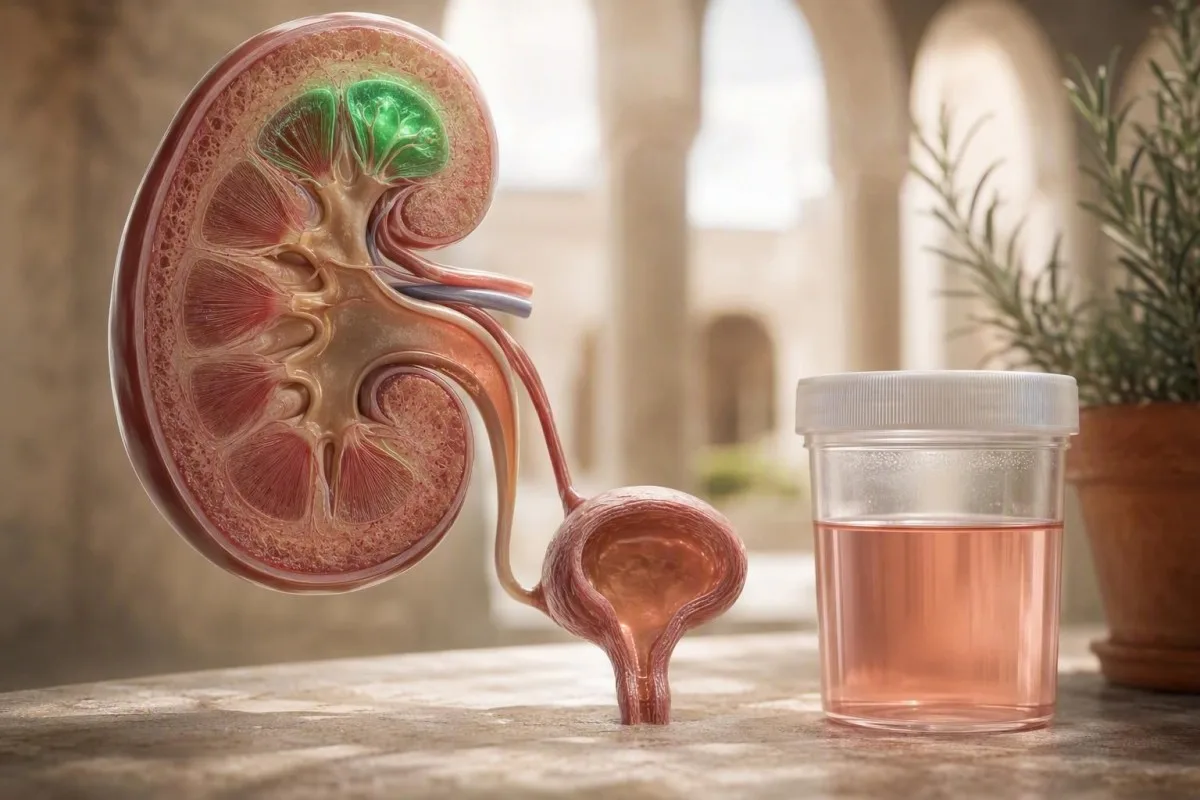
Një mostër urini me ngjyrë rozë ose si çaj pas një vrapimi të gjatë është shpesh një hematuri e përkohshme e shkaktuar nga ushtrimi, por ngjyra e dukshme nuk duhet kurrë të përjashtohet automatikisht. Koha, rezultatet mikroskopike, simptomat dhe një mostër e përsëritur e marrë pas pushimit të duhur tregojnë historinë e vërtetë.


- Hematuria e shkaktuar nga ushtrimi zakonisht zhduket brenda 24–72 orëve pas vrapimit të rëndë; persistenca pas 72 orësh kërkon vlerësim mjekësor.
- Pragu mikroskopik prej 3 ose më shumë qelizave të kuqe të gjakut për fushë me fuqi të lartë në një mostër urini të mbledhur siç duhet plotëson përkufizimin AUA të mikrohematurisë.
- Mospërputhja e testit me shpirt ka rëndësi: një jastëk pozitiv për gjak me zero deri në dy qeliza të kuqe për fushë me fuqi të lartë sugjeron mioglobinë ose hemoglobinë të lirë, më tepër sesa gjakderdhje urinare.
- Përsëritja e intervalit është praktike: shmangni ushtrimin e rëndë për 48–72 orë, hidratohuni normalisht, pastaj jepni një mostër urini të mesme.
- Vlerësim në të njëjtën ditë është e arsyeshme për mpiksje gjaku, paaftësi për të urinuar, ethe, dhimbje të forta të njëanshme në zonën e veshkave, ose urinë me ngjyrë kole me dhimbje të theksuar muskulore.
- Modeli paralajmërues i veshkave është gjak plus proteinë, gyptha të qelizave të kuqe, presion i lartë i gjakut, ose një rënie e GFR - jo një test i izoluar pas garës.
- Tërheqës për rabdomiolizë është urinë jo proporcionalisht e errët me simptoma të rënda muskulore dhe një rezultat të kreatinë kinazës shpesh mbi 5 herë më të lartë se limiti i sipërm laboratorik.
- Konteksti i rrezikut nga kanceri ndryshon pragun për hetim: mosha, ekspozimi ndaj pirjes së duhanit, rrezatimi i mëparshëm në pelvik dhe hematuria e vazhdueshme e dukshme kanë rëndësi.
Pse një vrapim mund ta bëjë urinën të duket rozë
Hematuria e vrapuesit zakonisht është rrjedhje e shkurtër e qelizave të kuqe në urinë pas ushtrimit të fortë, shpesh duke u zgjidhur brenda 24–72 orësh pushim. Megjithatë, urina me ngjyrë rozë, të kuqe ose të ngjashme me atë të kolës meriton një test të përsëritur të mbledhur siç duhet, në vend që të bëhet një supozim i rastësishëm se vrapimi e ka shkaktuar atë.
Në klinikë, modeli qetësues është i thjeshtë: ndryshimi i ngjyrës fillon pas një vrapimi jashtëzakonisht të gjatë, të shpejtë ose në zbaticë; nuk ka ethe, dhimbje krahësh kolike, ose djegie urinare; dhe mikroskopia normalizohet pas pushimit. Kantesti është një analizues i gjakut me AI që mund t'i vendosë treguesit e lidhur me veshkat—kreatinina, eGFR, elektrolitet dhe kreatinë kinaza—krahas historisë së ushtrimit, në vend që të trajtojë një rezultat pas garës si një diagnozë.
Mekanizmat e propozuar janë kontakti mekanik i murit të fshikëzës, ndryshimet e përkohshme të rrjedhës së gjakut në veshka, përqendrimi i lidhur me dehidratimin dhe ndonjëherë ndarja e qelizave të kuqe nga goditja e përsëritur e këmbës. Dëshmitë për çdo mekanizëm janë sinqerisht të përziera, sepse shumica e studimeve janë të vogla dhe përdorin distanca të ndryshme garash. Në 15 vitet e mia të praktikës klinike, historia e një përpjekjeje të re ka më shumë rëndësi sesa vetëm ngjyra; një ultramaratonë e parë dhe një 5 km e njohur nuk kanë të njëjtën probabilitet para-testi.
Gjaku i dukshëm në urinë pas ushtrimit nuk është sinonim me hematurinë beninje të vrapuesit. A udhëzues më i gjerë për shenjat e kuqe të hematurisë është i dobishëm sepse gurët në veshka, infeksioni, sëmundja glomerulare dhe kanceret e traktit urinar mund të shfaqen rastësisht pas një vrapimi.
Përkufizimi praktik
Hematuria e shkaktuar nga ushtrimi do të thotë se qelizat e kuqe shfaqen në urinë menjëherë pas përpjekjes dhe zhduken në një mostër të përsëritur të pushuar. Një test me shirit pozitiv vetëm nuk e provon këtë diagnozë, sepse reagentja zbulon pigmentin hem nga qelizat e kuqe të papërfshira, hemoglobinën e lirë ose mioglobinën.
A është hematuri, hemoglobinë, apo mioglobinë?
Një test me shirit urinar që lexon pozitivisht për gjak mund të pasqyrojë qeliza të kuqe, hemoglobinë ose mioglobinë, dhe mikroskopia i ndan ato. Urina rozë me shumë qeliza të kuqe të papërfshira mbështet hematurinë; urina kafe e errët me pak ose pa qeliza të kuqe ngre shqetësim për pigmentin nga dëmtimi i muskujve ose hemoliza.
Mikroskopia e urinës që tregon 3 ose më shumë qeliza të kuqe të gjakut për fushë me ingranazh të lartë konfirmon mikrohematurinë kur mostra mblidhet pastër. Në të kundërt, një test me shirit shumë pozitiv me 0–2 qeliza të kuqe për fushë me ingranazh të lartë duhet të bëjë që një klinicist të marrë në konsideratë mioglobinurinë, veçanërisht pas ekspozimit ndaj nxehtësisë, një ngarkesë muskulore të tipit shtrydhje, ose dhimbje muskulore të rëndë të vonuar. Ngjyra kafe ose e ngjashme me kolën është më tipike për pigment të përqendruar sesa një sasi e vogël gjakderdhjeje nga fshikëza.
Mioglobina ka rëndësi sepse mund të shoqërojë rabdomiolizën dhe dëmtimin akut të veshkave. Një përqendrim i kreatinë kinazës mbi 5 herë limiti i sipërm normal laboratorik përdoret zakonisht si një prag biokimik për rabdomiolizën, megjithëse simptomat, potasiumi, kreatinina dhe dalja e urinës përcaktojnë urgjencën. Shihni shpjegimin tonë praktik të Kreatinë kinazë e lartë në mënyrë të rrezikshme për modelet që nuk duhet të presin gjatë natës.
Ngjyruesit ushqimorë, panxhari, manaferrat, rifampicina, fenazopiridina dhe dehidrimi gjithashtu mund të ngjyrosin urinën pa qeliza të kuqe. A diferencimi i urinës së errët ndihmon në shmangien e gabimit të zakonshëm të supozimit se çdo mostër e kuqërremtë paraqet gjak.
Pse dallimi ndryshon kujdesin
Hematuria e qelizave të kuqe të gjakut drejton vëmendjen drejt traktit urinar, ndërsa mioglobinuria drejton vëmendjen drejt muskujve skeletorë dhe mbrojtjes së veshkave. Të dyja mund të ndodhin pas ngjarjeve të qëndrueshmërisë, por vetëm mikroskopia dhe analizat e gjakut të synuara mund t'i dallojnë ato në mënyrë të besueshme.
Si të lexoni rezultatin e analizës së urinës pas vrapimit
Testi më informues i urinës pas vrapimit kombinon shiritin testues, mikroskopinë, matjen e proteinave dhe peshën specifike. Gjaku në shiritin testues me qeliza të kuqe të përkohshme dhe pa proteina është shpesh me rrezik të ulët; gjaku plus proteina ose cilindrat kërkojnë një vlerësim më të kujdesshëm të veshkave.
Një rezultat gjaku në shiritin testues raportohet si negativ, gjurmë, 1+, 2+, ose 3+, por është një sinjal shqyrtimi më tepër sesa një numërim qelizash. AUA përcakton mikrohematurinë si më shumë se 3 qeliza të kuqe të gjakut për fushë me zmadhim të lartë gjatë ekzaminimit mikroskopik, jo vetëm një rezultat i shiritit testues (Barocas et al., 2020). Ky dallim shmang dërgimin e vrapuesve në një vlerësim të panevojshëm të kancerit pas një ekrani me rezultate false pozitive.
Pesha specifike mbi 1.030 tregon urinë të përqendruar në shumë laboratorë dhe mund ta bëjë ngjyrën të duket më alarmante, por nuk shpjegon qelizat e konfirmuara të kuqe. Proteina 1+ ose më e lartë duhet të kuantifikohet me një raport albuminë-kreatininë urinar ose raport proteinë-kreatininë; ekziston proteinuria kalimtare e ushtrimit, megjithatë albuminuria persistente ndryshon diferencën drejt sëmundjes glomerulare. Oferta jonë udhëzues i plotë për analizën e urinës shpjegon pse këto shenja nuk duhet të bashkohen në një rezultat.
Kantesti AI interpreton kreatininën dhe eGFR së bashku me gjetjet e urinës, kohën e ushtrimit dhe vlerat e mëparshme; një kreatininë e vetme pak e rritur pas një vrapimi të nxehtë nuk është ekuivalente me sëmundjen kronike të veshkave. Në praktikë, kërkoj distancën, terrenin, temperaturën, përdorimin e anti-inflamatorëve, kohën e menstruacioneve dhe nëse mostra është dhënë brenda 2 orëve pas përfundimit.
Kur duhet të përsëritni një test urinar pas vrapimit?
Testimi i urinës përsëritet 48–72 orë pas vrapimit të fundit të vështirë është një masë par fallcore për hematurinë e dyshuar të vrapuesit. Përdorni një mostër të mëngjesit të parë ose të mesit të rrjedhës mirë të hidratuar, por mos pini litra ujë menjëherë para, sepse hollimi ekstrem mund të fshehë gjetje të dobishme.
Për një anomali rutinë pas garës, unë zakonisht rekomandoj asnjë interval, kodra, ngritje të rëndë, ose gara për 48 orësh; pas një maratonë, ultramaratone, sëmundje nga nxehtësia, ose dhimbje të pazakontë, 72 orë është më e justifikueshme. Pirja e zakonshme sipas etjes është e mjaftueshme. Mbi-hidratimi mund të ulë peshën specifike nën 1.005 dhe ndonjëherë ta bëjë një rezultat kufitar më të vështirë për t'u interpretuar.
Nëse mikroskopia mbetet pozitive pas 72 orësh, rregulloni një rishikim nga mjeku i familjes brenda ditësh në vend që të testoni përsëritur pas stërvitjeve. Rezultatet persistente kërkojnë matjen e presionit të gjakut, kreatininën në serum/eGFR, raportin albuminë-kreatininë në urinë, dhe konsiderimin e kulturës ose imazherisë sipas rrezikut. Marëdhënia midis përpjekjes, hidratimit dhe një vlerësimi të përkohshëm më të ulët të filtrimit është mbuluar në udhëzuesin tonë udhëzues post-ushtrim eGFR.
Një maratonist amator 52-vjeçar që pashë kishte 18 qeliza të kuqe për fushë me fuqi të lartë në mbrëmjen pas një gare të nxehtë, por 0-1 qeliza të kuqe pas 72 orësh pushim; kreatinina e tij u kthye nga 1.28 mg/dL në 0.96 mg/dL. Rezultati ishte qetësues, por i njëjti plan nuk do të ishte i mjaftueshëm për një duhanpirës 52-vjeçar me ngjyrë të dukshme të urinës përsëritur.
Mos testoni në vijën e finishit nëse mund ta shmangni
Testimi menjëherë pas ushtrimit maksimizon mundësinë e gjetjes së qelizave të kuqe të përkohshme, urinës së përqendruar dhe proteinave. Kjo mund të jetë klinikisht e dobishme në rast të rabdomiolizës së dyshuar, por është një kohë e keqe për të përcaktuar bazën e vrapuesit.
Cilat modele të hematurisë pas vrapimit janë zakonisht inkurajuese?
Një episod i vetë-kufizuar pas vrapimit intensiv është më qetësues kur zhduket plotësisht, nuk ka dhimbje ose simptoma sistemike, dhe nuk ka proteinuri ose ndryshim të funksionit të veshkave. Qetësues nuk do të thotë injoruar; do të thotë konfirmuar me një mostër të qetë.
Fenotipi me rrezik më të ulët është një vrapues më i ri ose i moshës së mesme me një shkaktar të qartë ushtrimor, presion normal të gjakut, histori jo-duhanpirësi dhe mikroskopi normal në qetësi. Në atë mjedis, një rezultat i vetëm kalimtar i 3–10 RBC/HPF pas një garë shpesh stabilizohet pa trajtim. Unë do ta dokumentoja atë, sepse përsëritja pas çdo vrapimi të gjatë meriton një rishikim më të kujdesshëm se një ngjarje e vetme.
Një raport normal albuminë-kreatininë në urinë është në përgjithësi nën 30 mg/g (nën 3 mg/mmol), megjithëse laboratorët dhe vendet raportojnë njësi ndryshe. Gjaku pa albuminë, cilindra, ose qeliza të kuqe dizmorfike tregon larg rrjedhjes glomerulare; nuk provon një burim nga fshika, por udhëzon pyetjen tjetër. Shpjegimi ynë i proteinën në urinë mbulon këtë ndarje qartë.
Trauma e fshikëzës është më e mundshme kur urina është shumë e përqendruar dhe vrapuesi përfundon me një fshikëz pothuajse të zbrazët. Disa mjekë sportivë sugjerojnë të urinohet para një vrapimi të gjatë dhe të pihet rregullisht, por ky është këshillë parandaluese me prova të kufizuara të provës—jo një zëvendësim për vlerësimin kur ngjyra vazhdon.
Një rezultat normal ka një vulë kohore
Një test negativ 3 ditë pas një gare është qetësues për atë episod, jo një garanci për gjithë jetën. Hematuria e re e dukshme muaj më vonë duhet të vlerësohet në bazë të merituar, veçanërisht pas moshës 40 vjeç ose me ekspozim ndaj pirjes së duhanit.
Shenjat paralajmëruese që e bëjnë hematurinë e vrapuesit më pak të mundshme
Hematuria kërkon vlerësim të shpejtë kur vazhdon pas 72 orësh, përsëritet pa ushtrime të forta, ose shfaqet me dhimbje, ethe, mpiksje, proteina ose ndryshim të funksionit të veshkave. Kombinimi i gjetjeve është më informues sesa një mostër dramatike në vetvete.
Kërkoni këshillë mjekësore në kohë për urinë të kuqe të dukshme që zgjat më shumë se 24 orë, edhe nëse ndiheni mirë; pragu është më i ulët për personat mbi 40 vjeç, duhanpirësit aktualë ose të mëparshëm, ose ata me rrezatim të mëparshëm të legenit. Udhëzimi i AUA përdor stratifikimin e rrezikut bazuar në moshën, pirjen e duhanit, shkallën dhe vazhdimin e gjakut mikroskopik dhe hematurinë e mëparshme të dukshme në vend që të trajtojë të gjitha mikrohematuritë në mënyrë identike (Barocas et al., 2020).
Qelizat e kuqe dismorfike, cilindrat e qelizave të kuqe, albuminuria e rëndësishme, hipertensioni i ri ose një eGFR i reduktuar sugjerojnë një burim të filtrit të veshkave në vend të një fshikëze të tronditur. Cilindrat e qelizave të kuqe nuk janë kurrë një pasojë e pritshme e vrapimit të zakonshëm dhe duhet të nxisin vlerësim të përshpejtuar të veshkave. Shikoni përmbledhjen tonë të cilindrave granularë dhe urinarë pse gjetjet e sedimentit kanë rëndësi.
Thomas Klein, MD, këshillon vrapuesit të mos bëjnë vetë-zgjedhje vetëm me ngjyrën: një infeksion i traktit urinar mund të shkaktojë djegie, urgjencë, pyuri dhe ndonjëherë hematuri, ndërsa gurët më shpesh krijojnë dhimbje të papritur njëansore dhe nauze. Një kulturë është më e dobishme para antibiotikëve kur simptomat e infeksionit janë të pranishme.
Kombinimi gjak-plus-proteinë
Hematuria e konfirmuar me proteinuri është më shqetësuese sesa hematuria e izoluar sepse të dyja mund të kenë origjinën në filtrin glomerular. Një raport albuminë-kreatininë në urinë prej 30 mg/g ose më i lartë duhet të përsëritet dhe interpretohet me presionin e gjakut dhe funksionin e veshkave.
Kur urina rozë pas ushtrimit kërkon kujdes të njëjtën ditë?
Kërkoni vlerësim urgjent në të njëjtën ditë për mpiksje, pamundësi për të urinuar, dhimbje të forta të mesit, ethe, të fikët, ulje të prodhimit të urinës, ose urinë të errët me dhimbje dhe dobësi të rëndë të muskujve. Këto veçori tregojnë përtej hematurisë së pakomplikuar të shkaktuar nga ushtrimi.
Mpiksjet mund të pengojnë rrjedhën e urinës, dhe pamundësia për të nxjerrë urinë është një problem urgjent pavarësisht nga aftësia atletike. Ethe prej 38.0°C ose më e lartë me dhimbje të mesit mund të tregojnë një infeksion të sipërm urinar; dhimbja e rëndë kolike me të vjella mund të tregojë një gur. Asnjë situatë nuk duhet të menaxhohet duke pritur për një test të përsëritur pas vrapimit.
Urina e errët kafe pas përpjekjes plus ndjeshmëri të theksuar të muskujve, dobësi, ënjtje ose ulje të prodhimit ngre shqetësim për rabdomiolizë. Testimi fillestar zakonisht përfshin kreatinë kinazë, kreatininë, kalium, kalcium, fosfat dhe analizë urinarie. Një për rabdomiolizën CrossFit është e rëndësishme sepse ushtrimi ekscentrik i pazakontë—jo vetëm vrapimi—është një shkas i shpeshtë.
Dehidratimi i rëndë mund t'i bëjë rezultatet e veshkave të duken më keq, por gjithashtu mund të shoqërojë dëmtimin e vërtetë. Nëse jeni të turbulluar, të konfuzuar, nuk mund të mbani lëngje ose urinoni shumë pak për 8–12 orë, mos u përpiqni ta zgjidhni problemin me pije sportive në shtëpi.
Shtatzënia dhe antikoagulantët
Vrapueset shtatzëna dhe personat që marrin antikoagulantë duhet të raportojnë menjëherë hematurinë e dukshme. Antikoagulantët mund të përforcojnë gjakderdhjen, por nuk heqin nevojën për të identifikuar burimin e saj; shtatzënia gjithashtu ndryshon pragun për kontrollin e infeksionit, gurëve dhe sëmundjes së veshkave.
Sëmundjet që një vrapim mund t'i zbulojë më shumë sesa t'i shkaktojë
Vrapimi mund të ekspozojë një problem urinar ekzistues duke koncentruar urinën ose duke nxitur një test, në vend që të shkaktojë vetë hematurinë. Gurët, infeksioni, sëmundja glomerulare, anomalitë strukturore dhe kanceri mbeten pjesë e diagnozës diferenciale.
Gurët në veshka shpesh shkaktojnë dhimbje të njëanshme nga barku në ijë, nauze dhe qeliza të kuqe në mikroskopi, megjithëse gurët pa dhimbje ndodhin. Infeksioni urinar më shpesh prodhon djegie, frekuencë, urgjencë dhe qeliza të bardha; një rezultat negativ i nitriteve nuk e përjashton atë. Udhëzuesi ynë për esterazën e leukociteve me nitrite negative shpjegon këtë model të përzier të zakonshëm.
Glomerulonefriti mund të paraqitet pas një infeksioni të traktit të sipërm respirator me urinë me ngjyrë kolë, ënjtje, presion të lartë të gjakut, proteinuri dhe qeliza të kuqe dizmorfe. Në udhëzuesin KDIGO 2024 CKD, albuminuria persistente dhe eGFR e reduktuar trajtohen si markues plotësues të rrezikut të veshkave, jo matje të këmbyeshme (KDIGO, 2024).
Kantesti është një mjet për analizën e testeve të gjakut me AI që ndihmon përdoruesit të njohin një model përmes kreatininës, eGFR, albuminës, elektroliteve dhe një CBC, por nuk mund të diagnostikojë burimin anatomik të hematurisë. Imazheria, mikroskopia, kultura dhe ekzaminimi nga klinicisti ende kryejnë punën vendimtare.
Kanceri është i pazakontë te vrapuesit e rinj, jo i pamundur te të rriturit
Hematuria e dukshme kërkon vlerësim edhe kur ushtrimi duket një shpjegim i qartë, veçanërisht te personat me ekspozim ndaj duhanit ose simptoma persistente. Rreziku rritet me moshën dhe ekspozimin kumulativ ndaj duhanit, prandaj rezultate identike të urinës nuk çojnë në plane testimi identike.
Kujt i nevojitet ndjekje nga urologjia ose nefrologjia?
Hematuria persistente pas një mostre të përsëritur të pushuar duhet të vlerësohet për rrezikun urologjik, ndërsa hematuria plus proteinuria, cilindrat, hipertensioni ose eGFR i dëmtuar tregon drejt nefrologjisë. Shumë njerëz kanë nevojë vetëm për testime të përsëritura të udhëhequra nga kujdesi primar; referimi varet nga modeli.
Vlerësimi urologjik është veçanërisht i përshtatshëm për hematurinë e dukshmeRecidivante, hematurinë mikroskopike persistente, historinë e duhanpirjes, ekspozimin profesional ndaj amineve aromatike, rrezatim të mëparshëm në legen, ose simptoma urinare pa infeksion. Në varësi të rrezikut, klinicistët mund të përdorin ultratinguj të veshkave dhe fshikëzës, CT urography dhe cystoscopy. Një gjurmë e vetme e testit pas garës te një 24-vjeçar është një skenar shumë i ndryshëm nga urina e kuqeRecidivante te një ish-duhanpirës 58-vjeçar.
Rishikimi nefrologjik bëhet më i mundshëm me raportin albuminë-kreatininë në urinë ≥30 mg/g, eGFR nën 60 mL/min/1.73 m² zgjatet 3 muaj ose më gjatë, cilindrat e kuq, ose presioni i gjakut i vështirë për t'u kontrolluar. Këto kufij kanë rëndësi sepse sëmundja kronike e veshkave përcaktohet nga kohëzgjatja si dhe një matje e vetme. Lexoni tonë për stadet e sëmundjes kronike të veshkave për kategoritë praktike.
Shërbimi i interpretimit të testeve laboratorike të AI-së së Kantesti mund të sinjalizojë një model të përsëritshëm të gjakut dhe proteinave për diskutim, veçanërisht kur përdoruesit ngarkojnë rezultate nga laboratorë të ndryshëm. Ai duhet të mbështesë, jo të zëvendësojë, një mjek që vendos nëse nevojitet imazhe urinare ose ekzaminim specialist.
Mos lejoni që antikoagulimi t'i japë fund bisedës
Përdorimi i antikoagulantëve ndryshon ashpërsinë e gjakderdhjes, por nuk përcakton shkakun e hematurisë. Në përvojën time, atribuimi i gjakut të përsëritur në urinë ndaj apixabanit, warfarinës ose aspirinës pa një analizë mund të vonojë njohjen e gurëve, infeksionit ose sëmundjes strukturore.
Cilat teste gjaku ndihmojnë pas hematurisë së lidhur me ushtrimin?
Testet e dobishme të gjakut varen nga simptomat: kreatinina, eGFR, elektrolitet dhe kreatin kinaza vlerësojnë stresin e veshkave dhe muskujve, ndërsa një CBC vlerëson aneminë ose shenjat e infeksionit. Panelet rutinë të gjera janë më pak të dobishme se testimi i synuar pas një historie të saktë dhe urinalize.
Kreatinina mund të rritet kalimtarisht pas ushtrimeve të qëndrueshmërisë për shkak të metabolizmit të muskujve, uljes së perfuzionit të veshkave dhe dehidrimit. Ekuacionet e eGFR-së janë më pak të besueshme gjatë ndryshimeve të shpejta të kreatininës, prandaj një vlerë e përsëritur pas 48–72 orë rikuperimit të zakonshëm është shpesh më kuptimplote sesa një rezultat në vijën e finishit. Tonë udhëzues për rishikimin e kreatininës pas ushtrimeve jep kontekst për këtë shkak të shpeshtë ankthi.
Kreatin kinaza ka një gamë të gjerë pas ushtrimeve: atletët e trajnuar mund të tregojnë rritje pas një gare pa dëmtim të veshkave, ndërsa vlerat shumëfish më të larta se kufiri i sipërm lokal plus simptomat meritojnë vlerësim urgjent. Kaliumi mbi 6.0 mmol/L është potencialisht i rrezikshëm dhe kërkon vlerësim mjekësor urgjent, veçanërisht nëse funksioni i veshkave është i dëmtuar ose dyshohet për dëmtim të muskujve.
Një CBC është më e dobishme kur ka lodhje, zbehje, gjakderdhje të rëndë menstruale, hematuri të përsëritur, ose shqetësim për sëmundje sistemike. Hemoglobina mund të bjerë pas ngjarjeve të qëndrueshmërisë nga zgjerimi i vëllimit plazmatik, humbja e hekurit, ose hemoliza; ferritina duhet të interpretohet larg inflamacionit akut dhe stërvitjes së vështirë. Vrapsit e qëndrueshmërisë mund ta gjejnë tonën përmbledhje testesh gjaku për atletët të dobishme për një bazë të arsyeshme.
Mos diagnostikoni sëmundje të veshkave nga një panel i javës së garës
Një rritje e kreatininës prej 0.3 mg/dL ose më shumë mund të plotësojë një kriter të dëmtimit akut të veshkave në kuadrin kohor të duhur, por konteksti dhe testimi i përsëritur janë vendimtarë pas një gare. Dalja e ulët e urinës, rritja e kaliumit dhe ngritja e vazhdueshme kanë më shumë peshë sesa një rezultat i izoluar kufitar.
Si të mblidhni një mostër urini të përsëritur që mjekët mund ta besojnë
Një kampioni i urinës me rrjedhë të mesme të pastër pas 48–72 orësh pa ushtrime të forta është mënyra më e mirë për të kontrolluar nëse hematuria është zgjidhur. Gabimet në mbledhje, kontaminimi menstrual dhe një mostër e vjetër mund të krijojnë rezultate mashtruese.
Lani duart, filloni të urinoni në tualet, pastaj mblidhni pjesën e rrjedhës së mesme pa prekur pjesën e brendshme të enës. Dorëzoni mostrën menjëherë—idealisht brenda 2 orë—ose ndiqni udhëzimet e laboratorit për frigorifer. Qëndrimi i zgjatur ndryshon pamjen e qelizave dhe mund ta bëjë mikroskopinë më pak të besueshme.
Shmangni testin gjatë menstruacioneve aktive ku është e mundur; nëse testimi nuk mund të presë, njoftoni mjekun dhe laboratorin. Kontaminimi vaginal mund të prodhojë qeliza të kuqe dhe proteina të dukshme, ndërsa qelizat epiteliale skuamoze shpesh sinjalizojnë një mostër të mbledhur dobët. Udhëzuesi ynë drejt qelizat epiteliale në urinë shpjegon pse ky nuk është një shënim i parëndësishëm në laborator.
Thomas Klein, MD, rekomandon regjistrimin e katër detajeve krahas mostrës: sesioni i fundit i intensitetit, kohëzgjatja e aktivitetit, temperatura e jashtme dhe të gjitha medikamentet e marra në 72 orët e mëparshme. Një rezultat pa kohëzgjatje është shumë më i vështirë për t'u interpretuar—sidomos kur urina mblidhet pas një stërvitjeje të dyfishtë.
Testimi i mëngjesit të parë kundrejt ditës
Një mostër e mëngjesit të parë është e përqendruar dhe e mirë për zbulimin e anomalive të vogla, por një mostër e mesme e ditës e hidratuar normalisht është e pranueshme nëse mbledhja është më e pastër. Konsistenca ka më shumë rëndësi për krahasimin serial: përdorni rreth të njëjta kushte në çdo përsëritje.
Hydration, medikamentet për dhimbje, dhe suplementet që ndryshojnë pamjen
Dehidratimi mund të përqendrojë urinën dhe të rrisë stresin renal, ndërsa barnat anti-inflamatore jo-steroide (NSAIDs) mund të zvogëlojnë rrjedhjen e gjakut në veshka gjatë ushtrimeve të qëndrueshmërisë. Asnjë nga këta faktorë nuk provon shkakun e hematurisë, por të dy ndikojnë në mënyrë më të kujdesshme se si klinicistët interpretojnë një rezultat pas vrapimit.
Për shumicën e vrapuesve, pirja sipas etjes dhe zëvendësimi gradual i humbjeve është më i sigurt sesa detyrimi i rreptë i lëngjeve. Sodiumi shumë i ulët nga marrja e tepërt e ujit mund të jetë i rrezikshëm; natriumi në serum nën 125 mmol/L me dhimbje koke, të vjella, konfuzion ose konvulsione është një urgjencë. Ngjyra e urinës është një tregues i përafërt i hidratimit, jo një metër i saktë i hidratimit.
Ibuprofeni, naproxeni dhe NSAIDs të tjerë mund të zvogëlojnë rrjedhën e gjakut në veshka të ndërmjetësuar nga prostaglandinat, veçanërisht gjatë stresit nga nxehtësia, të vjellave ose ngjarjeve të gjata. Unë këshilloj pacientët të shmangin NSAIDs profilaktike rutinë para maratonave, nëse mjeku i tyre nuk ka dhënë një arsye të qartë. Konteksti i medikamenteve hartohet në artikullin tonë mbi sigurinë e trendeve laboratorike.
Doza e lartë e vitaminës C mund të ndërhyjë në disa reaksione të shiritit urinar, dhe suplementet e tregtuara për performancë ndonjëherë përmbajnë stimulantë ose diuretikë të pashënuar. Sillni enët ose fotografi të qarta në një takim; shpesh është më e dobishme sesa të përpiqeni të mbani mend listën e përbërësve të një pluhuri të markuar. guida jonë për sigurinë e suplementeve për atletët ofron një listë kontrolli të arsyeshme.
Hidratimi nuk është një trajtim për gjakun e vazhdueshëm
Uji mund të korrigjojë përqendrimin, por nuk trajton një gur, infeksion, proces glomerular ose burim urinar strukturor. Nëse qelizat e kuqe mbeten në një mostër të qetë, të mbledhur mirë, përshkallëzimi duhet të bazohet në modelin dhe jo në një eksperiment tjetër hidratimi.
A mund të vazhdoni të vraponi pas hematurisë së shkaktuar nga ushtrimi?
Shumica e vrapuesve mund të kthehen gradualisht pasi ngjyra e urinës të jetë normalizuar, simptomat të mungojnë dhe një mostër e përsëritur e qetë të jetë qetësuese. Mos u ktheheni në stërvitje të vështirë ndërsa urina mbetet dukshëm e kuqe, rezultatet e veshkave janë jonormale, ose simptomat muskulore sugjerojnë rabdomiolizë.
Pas një episode të vetme pa komplikime, unë zakonisht sugjeroj vrapim të lehtë vetëm për disa ditë, pastaj një rindërtim gradual të vëllimit dhe intensitetit gjatë 7–14 ditësh. Vrapuesi duhet të ndalojë dhe të kërkojë rishikim nëse ngjyra përsëritet, zhvillohet dhimbje, ose vëllimi i urinës bie. Ky është një qasje pragmatike klinike, jo një recetë e provuar në provë.
Hematuria e përsëritur pas së njëjtës distancë mund të justifikojë eksperimente praktike: shmangni garat e dehidratuara, urino para një vrapimi të gjatë, futni stërvitjen zbritëse më ngadalë dhe rishikoni përshtatjen e këpucëve ose terrenin. Mbani një regjistër të ritmit, nxehtësisë, kohëzgjatjes, ngjyrës së urinës dhe rezultateve të mostrave. Një udhëzues laboratorik për vrapuesit e maratonës mund të ndihmojë në dallimin e shenjave të rikuperimit nga arsyet për të ndaluar stërvitjen.
Mos u stërvitni përmes ematurisë së dukshme të pashpjegueshme thjesht sepse keni një ngjarje të planifikuar. Atëletët shpesh janë të shkëlqyer në tolerimin e sikletit; aftësia më e vështirë është njohja se këmbëngulja është informacion diagnostikues, jo një test qëndrueshmërie.
Ndërtoni një nivel bazë real
Një analizë rutinë e urinës dhe një panel veshkash, të marra të paktën 72 orë nga stërvitja e rëndë, mund ta bëjnë interpretimin e rezultateve të ardhshme pas garës shumë më të lehtë. Kjo është veçanërisht e dobishme për ultraløparët, njerëzit me një veshkë, ose atletët që përdorin ilaçe që ndikojnë në perfuzionin e veshkave.
Çfarë t'i tregoni mjekut tuaj për gjakun në urinë pas ushtrimit
Rruga më e shpejtë drejt një vlerësimi të dobishëm të ematurisë është një afat kohor i përmbledhur: ngjyra e urinës, doza e ushtrimit, simptomat, medikamentet dhe koha e testit të përsëritur. Sillni vlerat aktuale laboratorike në vend të vetëm një mesazhi se kampioni ishte “pozitiv për gjak”.”
Të dhënat nëse urina ishte rozë, e kuqe e ndezur, ngjyrë çaji, apo përmbante mpiksje; nëse ngjyra u shfaq para, gjatë, apo pas ushtrimit; dhe nëse u zhduk pas urinimit të parë. Përfshini djegie, urgjencë, ethe, dhimbje në ijë, nauze, enjtje, dhe ulje të prodhimit. Një detaj referencë për ngjyrën e urinës mund të ndihmojë në përshkrimin e vëzhgimit me saktësi pa e interpretuar atë.
Sillni analizat e mëparshme të urinës, vlerat e kreatininës/eGFR, leximet e presionit të gjakut, historinë e pirjes së duhanit, historinë familjare të veshkave dhe një listë medikamentesh/shtojcave. Kantesti është një platformë për interpretimin e biomarkerëve me AI që mund të organizojë vlerat e përsëritura të testeve të gjakut dhe të nxjerrë në pah ndryshime domethënëse, por një mjek duhet t'i lidhë ato vlera me mikroskopinë e urinës dhe ekzaminimin.
Që nga 3 shtatori 2026, parimi klinik mbetet i thjeshtë: ushtrimi është një shpjegim i mundshëm vetëm pasi rezultati të jetë zgjidhur dhe kundërthëniet të jenë mungesë. Nëse jeni të pasigurt, pyesni nëse keni nevojë për mikroskopi, kulturë, raport albumin-kreatininë, kreatininë të përsëritur, imazhe, apo referim—jo vetëm një test tjetër me shkopinj.
Pyetje që ia vlen të bëhen
Pyesni nëse u panë qeliza të kuqe të papërsosura, nëse proteina ose cilindrat ishin të pranishme, dhe kur duhet të ndodhë një përsëritje pas pushimit. Këto tre përgjigje zakonisht sqarojnë nëse hapi i ardhshëm është ndjekja vigjilente, testimi i veshkave, testimi i infeksionit, ose një vlerësim urologjik.
Një plan veprimi i arsyeshëm për hematurinë e vrapuesit
Për një episod të dhimbshëm pas vrapimit të rëndë, pushoni nga stërvitja e rëndë për 48–72 orë dhe përsëritni një analizë urina të pastër; kërkoni kujdes më të hershëm për shenjat paralajmëruese ose ngjyrën e dukshme të vazhdueshme. Qëllimi nuk është as paniku as hedhja poshtë—është vërtetimi se gjetja zhduket.
Hapi i parë: ndaloni stërvitjen e rëndë, hidratohuni normalisht dhe vini re kohën dhe simptomat. Hapi i dytë: përsëriteni mikroskopinë pas 48–72 orë. Hapi i tretë: nëse gjaku vazhdon, ose nëse shfaqen proteina, cilindra, dhimbje, ethe, mpiksje, prodhim i ulët urinar, ose shenja jonormale të veshkave, organizoni një vlerësim mjekësor menjëherë. Kjo sekuencë parandalon si humbjen e sëmundjes ashtu edhe imazhet e panevojshme pas një kampioni të vetëm në vijën e finishit.
Kur ekipi ynë mjekësor shqyrton të dhënat laboratorike të ngarkuara, ne i japim përparësi modeleve: një kreatininë në rritje plus CK të lartë dhe prodhim të ulët urinar është më urgjente se një kreatininë e qëndrueshme me një test urinar të përkohshëm. Metodologjia dhe masat mbrojtëse të Kantesti përshkruhen në tonë validimit klinik të Kantesti, dhe mbikëqyrja jonë mjekësore është detajuar përmes Bordi Këshillimor Mjekësor.
Shumica e pacientëve gjejnë se një test i përsëritur i kohëzuar e kthen një ndryshim ngjyre alarmante në një plan të qartë. Por nëse instikti juaj thotë se diçka nuk është në rregull—sidomos nëse urina është ende e kuqe nesër—besoni atë sinjal dhe bëni një vlerësim.
Rregulli i një fraze
Urina rozë një herë pas një vrapimi të rëndë mund të jetë e përkohshme; urina rozë që vazhdon, përsëritet, ose shfaqet me simptoma është ematuria derisa të vlerësohet siç duhet.
Pyetje të Shpeshta
Sa kohë zgjat hematuria e vrapuesit?
Hematuria e vrapuesit zakonisht zhduket brenda 24–72 orësh pas ndalimit të ushtrimeve të lodhshme. Një test praktik i përsëritur i urinës është një mostër e pastër, e mesme e urinuar e mbledhur pas 48–72 orësh pa vrapim të fortë ose ngritje të rëndë. Urina e vazhdueshme e dukshme rozë ose e kuqe pas 24 orësh, ose hematuria mikroskopike që mbetet pas 72 orësh, duhet të vlerësohet nga një mjek. Shenjat si ethe, mpiksje gjaku, dhimbje të forta në ijë, ulje e sasisë së urinës ose dhimbje të forta muskulore justifikojnë vlerësimin brenda ditës.
A është normale të kesh gjak në urinë pas stërvitjes?
Gjak në urinë pas ushtrimeve mund të jetë një efekt kalimtar i vrapimit të fortë, dehidrimit, goditjes së murit të fshikëzës, ose ndryshimeve afatshkurtra të rrjedhjes së gjakut në veshka, por nuk është automatikisht normale. Mikroskopia që konfirmon 3 ose më shumë qeliza të kuqe të gjakut për fushë me zmadhim të lartë plotëson përkufizimin e AUA për mikrohematuri. Një rezultat që zhduket në një mostër të përsëritur pas pushimit është qetësues, ndërsa gjaku, proteina, cilindrat, dhimbja ose simptomat urinare të vazhdueshme kërkojnë vlerësim të mëtejshëm. Ngjyra e dukshme e urinës duhet gjithmonë të raportohet, veçanërisht te të rriturit me ekspozim ndaj pirjes së duhanit ose episode të përsëritura.
A mund të shkaktojë dehidrimi urinë rozë pas vrapimit?
Dehidratimi mund të bëjë që urina të duket më e errët dhe mund të përforcojë gjetjen e hematurisë pas stërvitjes duke koncentruar përmbajtjen urinare, por dehidratimi vetë nuk shpjegon në mënyrë të besueshme qelizat e kuqe të konfirmuara. Graviteti specifik i urinës mbi 1.030 shpesh tregon urinë të koncentruar në shumë laboratorë. Pirni normalisht derisa të ndieni etje dhe përsëritni një mostër të pastër pas 48–72 orësh pushim, në vend që të përpiqeni të "shplani" rezultatin me ujë të tepërt. Etja e rëndë, marramendja, sasia shumë e ulët e urinës ose konfuzioni kërkojnë rishikim të menjëhershëm mjekësor.
Cili është ndryshimi midis hematurisë dhe mioglobinurisë pas ushtrimeve?
Hematuria do të thotë prani të qelizave të kuqe të gjakut të papërhapura në urinë, ndërsa mioglobinuria pasqyron pigmentin muskulor të lëshuar pas dëmtimit të muskulit. Një shirit testues mund të jetë pozitiv për gjak në të dy situatë, kështu që mikroskopia është vendimtare: mioglobinuria shpesh prodhon një shirit testues pozitiv me 0-2 qeliza të kuqe për fushë me zmadhim të lartë. Dhimbja e rëndë muskulore, dobësia, ënjtja, urina e errët si kola, ose një vlerë e kreatinë kinazës mbi 5 herë limiti më i lartë laboratorik ngre shqetësim për rabdomiolizë. Ky model kërkon vlerësim të menjëhershëm klinik sepse potasiumi dhe funksioni i veshkave mund të ndryshojnë shpejt.
A duhet të ndaloj së vrapuari nëse kam hematuri të shkaktuar nga ushtrimet?
Ndaloni vrapimin e sforcuar derisa ngjyra e urinës të jetë normalizuar dhe të keni përfunduar një test të përsëritur të pushuar, zakonisht pas 48–72 orësh. Nëse mostra e përsëritur është normale dhe nuk keni dhimbje, ethe, mpiksje gjaku, proteinuri ose anomali të funksionit të veshkave, shumica e vrapuesve mund të kthehen gradualisht gjatë rreth 7–14 ditëve. Mos rifilloni stërvitjen intensive kur urina mbetet dukshëm e kuqe ose e errët, vëllimi i urinës është i reduktuar, ose janë të pranishme simptoma të rënda të muskujve. Episodet e përsëritura pas stërvitjeve të ngjashme kërkojnë rishikim mjekësor edhe nëse çdo episod zgjidhet.
Kur hematuria kërkon një urolog?
Hematuria mikroskopike persistente pas një mostre të përsëritur të marrë pas pushimit, hematuria e dukshme rikthehet, ose hematuria te një person me histori pirja e duhanit, rrezatim i mëparshëm pelvik, ose simptoma urinare shpesh kërkojnë vlerësim të rrezikut urologjik. Urologët mund të konsiderojnë ultratinguj, CT urographic, dhe cistoskopi në varësi të moshës dhe rrezikut të përgjithshëm në vend që të përdorin një test për të gjithë. Hematuria me albuminuri prej 30 mg/g ose më shumë, cilindrat eritrocitarë, hipertensioni, ose eGFR nën 60 mL/min/1.73 m² tregon më fort drejt nefrologjisë. Specialiteti i duhur varet nga modeli i plotë i testeve të urinës dhe gjakut.
Merrni sot analizë të analizave të gjakut me AI
Bashkohuni me mbi 2 milionë përdorues në mbarë botën që i besojnë Kantesti për analizë të menjëhershme dhe të saktë të analizave laboratorike. Ngarkoni rezultatet e analizave të gjakut dhe merrni interpretim gjithëpërfshirës të biomarkerëve të 15,000+ brenda sekondash.
📚 Publikime kërkimore të cituara
Klein, T., Mitchell, S., & Weber, H. (2026). Mbështetje vendimmarrëse klinike e asistuar nga AI multilinguale për tregimin e hershëm të Hantavirusit: Dizajn, Validim Inxhinierik dhe Vendosje Reale në më shumë se 50,000 Raporte të Analizave të Gjakut të Interpretuara. Kantesti Kërkim Mjekësor me AI.
Klein, T., Mitchell, S., & Weber, H. (2026). Një Benchmark Teknik i Parregjistruar, i Bazuar në Rubrika, i Motorit të Interpretimit të Analizës së Gjakut Kantesti mbi 100,000 Raste Testi Sintetike. Kantesti Kërkim Mjekësor me AI.
📖 Referenca të jashtme mjekësore
⚕️ Mohim përgjegjësie mjekësore
Ky artikull është vetëm për qëllime edukative dhe nuk përbën këshilla mjekësore. Gjithmonë konsultohuni me një ofrues të kualifikuar të kujdesit shëndetësor për vendimet e diagnozës dhe trajtimit.
Sinjalet e Besimit E-E-A-T
Përvoja
Rishikim klinik i udhëhequr nga mjeku i flukseve të punës për interpretimin e analizave.
Ekspertizë
Fokus i mjekësisë laboratorike mbi mënyrën se si sillen biomarkerët në kontekstin klinik.
Autoritariteti
Shkruar nga Dr. Thomas Klein me rishikim nga Dr. Sarah Mitchell dhe Prof. Dr. Hans Weber.
Besueshmëria
Interpretim i bazuar në prova, me rrugë të qarta për ndjekje për të reduktuar alarmin.