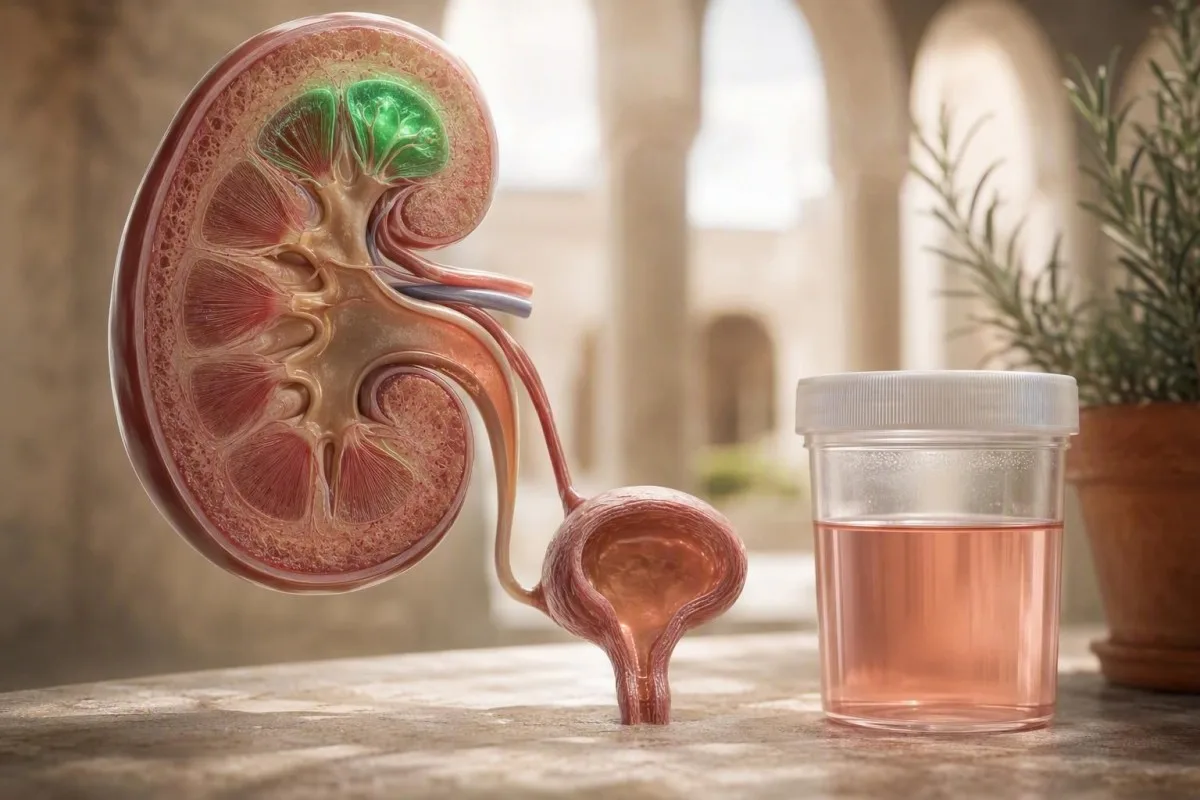
Un campione di urina rosa o color tè dopo una lunga corsa è spesso un'ematuria temporanea indotta dall'esercizio, ma il colore visibile non dovrebbe mai essere trascurato automaticamente. La tempistica, i reperti microscopici, i sintomi e un campione ripetuto dopo un adeguato riposo raccontano la vera storia.


- Ematuria da sforzo solitamente si risolve entro 24-72 ore dopo una corsa intensa; la persistenza oltre le 72 ore richiede una valutazione medica.
- Soglia microscopica di 3 o più globuli rossi per campo ad alto ingrandimento in un campione di urina raccolto correttamente soddisfa la definizione AUA di microematuria.
- Discrepanza del dipstick è importante: un pad sanguigno positivo con zero o due globuli rossi per campo ad alto ingrandimento suggerisce mioglobina o emoglobina libera piuttosto che sanguinamento urinario.
- Ripetere i tempi è pratico: evitare esercizi intensi per 48-72 ore, idratarsi normalmente, quindi fornire un campione di urina di flusso intermedio.
- Valutazione nella stessa giornata è sensato in caso di coaguli, incapacità di urinare, febbre, dolore renale unilaterale grave o urine color cola con marcato dolore muscolare.
- Modello di allarme renale è sangue più proteine, cilindri eritrocitari, ipertensione o un calo della eGFR, non un semplice dipstick post-gara isolato.
- Indizio di rabdomiolisi è un'urina sproporzionatamente scura con gravi sintomi muscolari e un risultato della creatina chinasi spesso superiore a 5 volte il limite superiore del laboratorio.
- Contesto di rischio oncologico cambia la soglia per l'indagine: età, esposizione al fumo, precedente radioterapia pelvica ed ematuria visibile persistente sono tutti fattori rilevanti.
Perché una corsa può far apparire le urine rosa
L'ematuria del corridore è solitamente una perdita di breve durata di globuli rossi nelle urine dopo un esercizio fisico intenso, che spesso si risolve entro 24-72 ore di riposo. Tuttavia, urine visibilmente rosa, rosse o color cola meritano un test ripetuto raccolto correttamente piuttosto che una presunzione casuale che la corsa ne sia la causa.
In clinica, il quadro rassicurante è semplice: il cambiamento di colore inizia dopo una corsa insolitamente lunga, veloce o in discesa; non c'è febbre, dolore renale colico o bruciore urinario; e la microscopia si normalizza dopo il riposo. Kantesti è un analizzatore di analisi del sangue basato su AI che può mettere gli indicatori renali correlati—creatinina, eGFR, elettroliti e creatina chinasi—accanto alla storia dell'esercizio, piuttosto che trattare un singolo risultato post-gara come una diagnosi.
I meccanismi proposti sono il contatto meccanico con la parete vescicale, temporanei spostamenti del flusso sanguigno renale, concentrazione correlata alla disidratazione e occasionalmente la rottura dei globuli rossi dovuta all'impatto ripetitivo del piede. Le prove per ciascun meccanismo sono onestamente contrastanti, poiché la maggior parte degli studi sono piccoli e utilizzano diverse distanze di gara. Nei miei 15 anni di pratica clinica, la storia di uno sforzo nuovo conta più del colore da solo; una prima ultramaratona e un familiare 5 km non hanno la stessa probabilità pre-test.
Il sangue visibile nelle urine dopo l'esercizio non è sinonimo di ematuria benigna del corridore. Un guida più ampia per i segnali d'allarme dell'ematuria è utile perché calcoli renali, infezioni, malattie glomerulari e tumori delle vie urinarie possono dichiararsi incidentalmente per la prima volta dopo una corsa.
La definizione pratica
L'ematuria indotta dall'esercizio significa che i globuli rossi appaiono nelle urine poco dopo lo sforzo e scompaiono in un campione ripetuto a riposo. Un solo stick reattivo positivo non conferma questa diagnosi, poiché il reagente rileva pigmento eme da globuli rossi intatti, emoglobina libera o mioglobina.
Si tratta di ematuria, emoglobina o mioglobina?
Un stick reattivo urinario positivo per il sangue può riflettere globuli rossi, emoglobina o mioglobina, e la microscopia li distingue. L'urina rosa con molti globuli rossi intatti supporta l'ematuria; l'urina marrone scuro con pochi o nessun globulo rosso solleva preoccupazione per il pigmento da lesioni muscolari o emolisi.
Microscopia urinaria che mostra 3 o più globuli rossi per campo ad alto ingrandimento conferma la microematuria quando il campione è raccolto in modo pulito. Al contrario, uno stick reattivo fortemente positivo con 0-2 globuli rossi per campo ad alto ingrandimento dovrebbe far considerare al clinico la mioglobinuria, in particolare dopo esposizione al calore, un carico muscolare di tipo contusivo o un grave dolore muscolare ritardato. Il colore marrone o cola è più tipico di un pigmento concentrato che di una piccola quantità di sanguinamento vescicale.
La mioglobina è importante perché può accompagnare la rabdomiolisi e l'insufficienza renale acuta. Una concentrazione di creatina chinasi superiore a 5 volte il limite superiore di normalità del laboratorio è comunemente usata come soglia biochimica per la rabdomiolisi, sebbene i sintomi, il potassio, la creatinina e la diuresi determinino l'urgenza. Vedere la nostra spiegazione pratica di creatin-chinasi pericolosamente alta per i pattern che non dovrebbero attendere la notte.
Coloranti alimentari, barbabietola, more, rifampicina, fenazopiridina e disidratazione possono anche colorare l'urina senza globuli rossi. A differenziale urine scure aiuta a evitare il comune errore di presumere che ogni campione rossastro rappresenti sangue.
Perché la distinzione cambia la cura
L'ematuria da globuli rossi dirige l'attenzione alle vie urinarie, mentre la mioglobinuria dirige l'attenzione al muscolo scheletrico e alla protezione renale. Entrambi possono verificarsi dopo eventi di resistenza, ma solo la microscopia e gli esami del sangue mirati possono distinguerli in modo affidabile.
Come leggere un referto di analisi delle urine post-corsa
Il test delle urine post-corsa più informativo combina stick reattivo, microscopia, misurazione delle proteine e peso specifico. Il sangue sullo stick reattivo con globuli rossi transitori e nessuna proteina è spesso a basso rischio; sangue più proteine o cilindri richiede una valutazione renale più deliberata.
Un risultato di sangue con stick reattivo viene riportato come negativo, tracce, 1+, 2+ o 3+, ma è un segnale di screening piuttosto che un conteggio cellulare. L'AUA definisce la microematuria come più di 3 globuli rossi per campo ad alto ingrandimento all'esame microscopico, non solo un risultato dello stick reattivo (Barocas et al., 2020). Questa distinzione evita di sottoporre i corridori a un'inutile indagine oncologica dopo uno screening falso positivo.
Densità urinaria superiore a 1.030 indica urina concentrata in molti laboratori e può rendere il colore più allarmante, ma non giustifica globuli rossi confermati. La proteina di 1+ o superiore dovrebbe essere quantificata con un rapporto albumina/creatinina urinaria o rapporto proteina/creatinina; esiste una proteinuria da esercizio transitoria, tuttavia l'albuminuria persistente sposta la diagnosi differenziale verso le malattie glomerulari. Il nostro guida completa all'analisi delle urine spiega perché questi marcatori non dovrebbero essere fusi in un unico risultato.
L'AI di Kantesti interpreta la creatinina e l'eGFR insieme ai reperti urinari, alla tempistica dell'esercizio e ai valori precedenti; una singola creatinina leggermente elevata dopo una gara calda non equivale a una malattia renale cronica. In pratica, chiedo la distanza, il terreno, la temperatura, l'uso di antinfiammatori, la tempistica mestruale e se il campione è stato fornito entro 2 ore dalla fine.
Quando ripetere un test delle urine dopo una corsa?
Ripetere l'esame delle urine 48–72 ore dopo l'ultima corsa intensa è una scelta ragionevole di default per l'ematuria sospetta del corridore. Utilizzare un campione del primo mattino o un campione intermedio ben idratato, ma non forzare litri d'acqua immediatamente prima, poiché un'eccessiva diluizione può oscurare risultati utili.
Per un'anomalia di routine post-gara, di solito raccomando nessun intervallo, salite, sollevamento pesi o gare per 48 ore; dopo una maratona, ultramaratona, colpo di calore o indolenzimento insolito, 72 ore è più giustificabile. Bere normalmente secondo la sete è sufficiente. L'iperidratazione può abbassare il peso specifico al di sotto di 1.005 e occasionalmente rendere un risultato borderline più difficile da interpretare.
Se la microscopia rimane positiva dopo 72 ore, programmare una visita di cure primarie entro pochi giorni anziché ripetere gli esami dopo gli allenamenti. Risultati persistenti giustificano la misurazione della pressione sanguigna, creatinina sierica/eGFR, rapporto albumina-creatinina urinaria e la considerazione di coltura o imaging in base al rischio. La relazione tra sforzo, idratazione e una stima di filtrazione temporaneamente più bassa è trattata nella nostra guida eGFR post-esercizio.
Un maratoneta amatoriale di 52 anni che ho visto aveva 18 globuli rossi per campo ad alto ingrandimento la sera dopo una gara calda, ma 0-1 globuli rossi dopo 72 ore di riposo; la sua creatinina è tornata da 1,28 mg/dL a 0,96 mg/dL. Il risultato è stato rassicurante, ma lo stesso piano non sarebbe stato sufficiente per un fumatore di 52 anni con ripetuta colorazione visibile dell'urina.
Non effettuare test al traguardo, se possibile
Il test immediatamente dopo l'esercizio fisico massimizza la possibilità di trovare globuli rossi temporanei, urina concentrata e proteine. Questo può essere clinicamente utile nella rabdomiolisi sospetta, ma è un momento inopportuno per stabilire la baseline di un corridore.
Quali modelli di ematuria post-corsa sono solitamente rassicuranti?
Un episodio autolimitante dopo una corsa intensa è più rassicurante quando si risolve completamente, non presenta dolore o sintomi sistemici, e non ha proteinuria o alterazioni della funzionalità renale. Rassicurante non significa ignorato; significa confermato con un campione a riposo.
Il fenotipo a basso rischio è un corridore giovane o di mezza età con un chiaro fattore scatenante legato allo sforzo, pressione sanguigna normale, nessuna storia di fumo e microscopia a riposo normale. In tale contesto, un singolo risultato transitorio di 3–10 RBC/HPF dopo una gara spesso si risolve senza trattamento. Lo documenterei comunque, perché la ricorrenza dopo ogni corsa lunga merita una revisione più attenta rispetto a un evento isolato.
Un normale rapporto albumina-creatinina urinaria è generalmente inferiore a 30 mg/g (inferiore a 3 mg/mmol), sebbene laboratori e paesi riportino unità diverse. Sangue senza albumina, cilindri o globuli rossi dismorfici indica una probabile assenza di perdita glomerulare; non prova una fonte vescicale, ma guida la prossima domanda. La nostra spiegazione di proteine nelle urine copre chiaramente questa divisione.
Il trauma vescicale è più plausibile quando l'urina è molto concentrata e il corridore finisce con una vescica quasi vuota. Alcuni clinici sportivi suggeriscono di urinare prima di una corsa lunga e di bere regolarmente, ma questi sono consigli di prevenzione con prove limitate di efficacia, non un sostituto della valutazione quando il colore persiste.
Un risultato normale ha un marcatore temporale.
Un test negativo 3 giorni dopo una gara è rassicurante per quell'episodio, non una garanzia a vita. L'ematuria visibile e nuova mesi dopo dovrebbe essere valutata per i propri meriti, in particolare dopo i 40 anni o in caso di esposizione al fumo.
Segnali di allarme che rendono meno probabile l'ematuria del corridore
L'ematuria richiede una valutazione tempestiva quando persiste dopo 72 ore, si ripresenta senza esercizio fisico intenso, o compare con dolore, febbre, coaguli, proteine o alterazione della funzionalità renale. La combinazione di reperti è più informativa di un campione dall'aspetto drammatico di per sé.
Cercare un consiglio medico tempestivo per l'urina rossa visibile che dura oltre 24 ore, anche se ci si sente bene; la soglia è più bassa per le persone sopra i 40 anni, fumatori attuali o ex, o coloro che hanno subito irradiazione pelvica precedente. La linea guida AUA utilizza la stratificazione del rischio basata su età, fumo, grado e persistenza di sangue microscopico ed ematuria macroscopica precedente piuttosto che trattare tutte le microematurie in modo identico (Barocas et al., 2020).
Cellule rosse dismorfiche, cilindri di globuli rossi, albuminuria significativa, ipertensione nuova o un eGFR ridotto suggeriscono una fonte a livello del filtro renale piuttosto che una vescica scossa. I cilindri di globuli rossi non sono mai una conseguenza attesa della corsa ordinaria e dovrebbero richiedere una valutazione renale accelerata. Vedi la nostra panoramica sui cilindri granulari e urinari per capire perché i reperti sedimentari sono importanti.
Thomas Klein, MD, sconsiglia ai corridori di autovalutarsi solo dal colore: un'infezione delle vie urinarie può causare bruciore, urgenza, piuria e talvolta ematuria, mentre i calcoli creano più spesso un dolore improvviso unilaterale e nausea. Una coltura è più utile prima degli antibiotici quando sono presenti sintomi di infezione.
La combinazione sangue-più-proteine
L'ematuria confermata con proteinuria è più preoccupante dell'ematuria isolata perché entrambe possono originare dal filtro glomerulare. Un rapporto albumina-creatinina urinaria di 30 mg/g o superiore deve essere ripetuto e interpretato con la pressione sanguigna e la funzionalità renale.
Quando le urine rosa dopo l'esercizio richiedono un'assistenza in giornata?
Ottenere una valutazione urgente in giornata per coaguli, incapacità di urinare, dolore lombare grave, febbre, svenimento, ridotta produzione di urina o urine scure con forte dolore e debolezza muscolare. Queste caratteristiche puntano oltre la semplice ematuria non complicata indotta dall'esercizio fisico.
I coaguli possono ostruire il flusso urinario e l'incapacità di espellere urina è un problema urgente indipendentemente dalla forma fisica atletica. La febbre di 38,0°C o superiore con dolore lombare può indicare un'infezione delle vie urinarie superiori; un dolore colico grave con vomito può indicare un calcolo. Nessuna delle due situazioni dovrebbe essere gestita aspettando un test di controllo post-corsa.
Urine marrone scuro dopo lo sforzo più marcata dolorabilità muscolare, debolezza, gonfiore o ridotta produzione solleva preoccupazione per rabdomiolisi. I test iniziali comunemente includono creatina chinasi, creatinina, potassio, calcio, fosfato e analisi delle urine. Un guida alla rabdomiolisi CrossFit è rilevante perché l'esercizio eccentrico non abituale, non la corsa da sola, è un fattore scatenante frequente.
Una grave disidratazione può peggiorare i risultati renali, ma può anche coesistere con un danno reale. Se si avverte vertigini, confusione, non si riesce a trattenere i liquidi o si urina pochissimo per 8–12 ore, non tentare di risolvere il problema con bevande sportive a casa.
Gravidanza e anticoagulanti
Le corridrici incinte e le persone che assumono anticoagulanti devono segnalare tempestivamente l'ematuria visibile. Gli anticoagulanti possono amplificare il sanguinamento ma non eliminano la necessità di identificarne la fonte; la gravidanza altera anche la soglia per il controllo di infezioni, calcoli e malattie renali.
Condizioni che una corsa può rivelare piuttosto che causare
La corsa può esporre un problema urinario preesistente concentrando le urine o inducendo un esame, piuttosto che causare l'ematuria stessa. Calcoli, infezioni, malattie glomerulari, anomalie strutturali e malignità rimangono parte della diagnosi differenziale.
I calcoli renali causano frequentemente dolore unilaterale dal fianco all'inguine, nausea e globuli rossi all'esame microscopico, sebbene esistano calcoli indolori. L'infezione urinaria più spesso provoca bruciore, frequenza, urgenza e globuli bianchi; un risultato negativo ai nitriti non la esclude. La nostra guida a esterasi leucocitaria con nitriti negativi spiega questo comune schema misto.
La glomerulonefrite può manifestarsi dopo un'infezione delle alte vie respiratorie con urine color cola, gonfiore, ipertensione, proteinuria e globuli rossi dismorfici. Nella linea guida KDIGO 2024 CKD, l'albuminuria persistente e la riduzione dell'eGFR sono considerate marcatori complementari di rischio renale, non misurazioni intercambiabili (KDIGO, 2024).
Kantesti è uno strumento di analisi del test del sangue basato sull’AI che aiuta gli utenti a riconoscere uno schema tra creatinina, eGFR, albumina, elettroliti e un CBC, ma non può diagnosticare la fonte anatomica dell'ematuria. L'imaging, la microscopia, la coltura e l'esame clinico svolgono ancora il lavoro decisivo.
Il cancro è raro nei giovani corridori, ma non impossibile negli adulti.
L'ematuria visibile merita una valutazione anche quando l'esercizio sembra una spiegazione ovvia, specialmente in persone con esposizione al fumo o sintomi persistenti. Il rischio aumenta con l'età e l'esposizione cumulativa al tabacco, motivo per cui risultati urinari identici non portano a piani di test identici.
Chi necessita di follow-up urologico o nefrologico?
L'ematuria persistente dopo un campione ripetuto a riposo deve essere valutata per il rischio urologico, mentre l'ematuria più proteinuria, cilindri, ipertensione o eGFR compromesso indirizzano verso la nefrologia. Molte persone necessitano solo di test ripetuti sotto la guida dell'assistenza primaria; il rinvio dipende dallo schema.
La valutazione urologica è particolarmente appropriata per ematuria visibile ricorrente, ematuria microscopica persistente, storia di fumo, esposizione professionale ad ammine aromatiche, precedente radioterapia pelvica o sintomi urinari senza infezione. A seconda del rischio, i medici possono utilizzare ecografia renale e vescicale, uro-TC e cistoscopia. Un singolo test a strisce traccia post-gara in un 24enne è uno scenario molto diverso da urine rosse ricorrenti in un 58enne ex fumatore.
La revisione nefrologica diventa più probabile con il rapporto albumina-creatinina urinaria ≥30 mg/g, eGFR inferiore a 60 mL/min/1,73 m² della durata di 3 mesi o più, cilindri eritrocitari o pressione sanguigna difficile da controllare. Questi valori di cut-off sono importanti perché la malattia renale cronica è definita dalla durata oltre che da una singola misurazione. Leggi la nostra guida alle fasi della malattia renale cronica per le categorie pratiche.
Il servizio di interpretazione degli esami del sangue basato sull'intelligenza artificiale di Kantesti può segnalare uno schema ripetibile di sangue e proteine da discutere, in particolare quando gli utenti caricano risultati di diversi laboratori. Dovrebbe supportare, non sostituire, un medico nel decidere se sono necessarie immagini renali o un esame specialistico.
Non lasciare che l'anticoagulazione interrompa la conversazione
L'uso di anticoagulanti modifica la gravità del sanguinamento ma non stabilisce una causa per l'ematuria. Nella mia esperienza, attribuire sangue ricorrente nelle urine ad apixaban, warfarin o aspirina senza un'indagine può ritardare il riconoscimento di calcoli, infezioni o malattie strutturali.
Quali esami del sangue sono utili dopo un'ematuria correlata all'esercizio fisico?
Gli esami del sangue utili dipendono dai sintomi: creatinina, eGFR, elettroliti e creatina chinasi valutano lo stress renale e muscolare, mentre un CBC valuta indizi di anemia o infezione. Pannelli ampi di routine sono meno utili rispetto a test mirati dopo un'anamnesi precisa e un'analisi delle urine.
La creatinina può aumentare transitoriamente dopo un esercizio di resistenza a causa del metabolismo muscolare, della ridotta perfusione renale e della disidratazione. Le equazioni eGFR sono meno affidabili durante rapidi cambiamenti della creatinina, motivo per cui un valore ripetuto dopo 48–72 ore del recupero ordinario è spesso più significativo di un risultato all'arrivo. La nostra guida al controllo della creatinina correlata all'esercizio fisico fornisce contesto per questo frequente fattore scatenante di ansia.
La creatina chinasi ha un ampio intervallo post-esercizio: atleti allenati possono mostrare aumenti dopo una gara senza lesioni renali, mentre valori moltiplicati rispetto al limite superiore locale più sintomi meritano una valutazione urgente. Il potassio sopra 6,0 mmol/L è potenzialmente pericoloso e richiede un'urgente valutazione clinica, specialmente se la funzione renale è compromessa o si sospetta una lesione muscolare.
Un CBC è più utile quando c'è affaticamento, pallore, sanguinamento mestruale abbondante, ematuria ricorrente o preoccupazione per una malattia sistemica. L'emoglobina può diminuire dopo eventi di resistenza a causa dell'espansione del volume plasmatico, della perdita di ferro o dell'emolisi; la ferritina dovrebbe essere interpretata lontano da infiammazioni acute e allenamenti intensi. I corridori di resistenza potrebbero trovare la nostra panoramica degli esami del sangue per atleti utile per una linea di base sensata.
Non diagnosticare malattie renali da un pannello della settimana della gara
Un aumento della creatinina di 0,3 mg/dL o più può soddisfare un criterio di lesione renale acuta nel lasso di tempo corretto, ma il contesto e i test ripetuti sono decisivi dopo una gara. Una bassa produzione di urina, un aumento del potassio e un innalzamento persistente hanno più peso di un risultato isolato e borderline.
Come raccogliere un campione di urina ripetuto di cui i medici possano fidarsi
Un campione di urine pulite a metà flusso dopo 48-72 ore senza esercizio fisico intenso è il modo migliore per verificare se l'ematuria si è risolta. Errori di raccolta, contaminazione mestruale e un campione vecchio possono creare risultati fuorvianti.
Lavarsi le mani, iniziare a urinare nel WC, quindi raccogliere la porzione intermedia senza toccare l'interno del contenitore. Consegnare il campione tempestivamente — idealmente entro 2 ore— o seguire le istruzioni di refrigerazione del laboratorio. Stare fermi a lungo altera l'aspetto delle cellule e può rendere la microscopia meno affidabile.
Evitare test durante la mestruazione attiva quando possibile; se il test non può attendere, informare il medico e il laboratorio. La contaminazione vaginale può produrre globuli rossi e proteine apparenti, mentre le cellule epiteliali squamose spesso segnalano un campione raccolto in modo improprio. La nostra guida a cellule epiteliali nelle urine spiega perché questa non è una nota a piè di pagina di laboratorio banale.
Thomas Klein, MD, raccomanda di registrare quattro dettagli insieme al campione: l'ultima sessione faticosa, la durata dell'evento, la temperatura esterna e tutti i farmaci assunti nelle 72 ore precedenti. Un risultato senza indicazioni temporali è molto più difficile da interpretare, soprattutto quando le urine vengono raccolte dopo un doppio allenamento.
Primo mattino contro test diurno
Un campione del primo mattino è concentrato e utile per rilevare piccole anomalie, ma un campione diurno a metà flusso normalmente idratato è accettabile se la raccolta è più pulita. La coerenza è più importante per il confronto seriale: utilizzare condizioni approssimativamente le stesse ad ogni ripetizione.
Idratazione, antidolorifici e integratori che cambiano il quadro
La disidratazione può concentrare le urine e aumentare lo stress renale, mentre i FANS possono ridurre il flusso sanguigno renale durante l'esercizio di resistenza. Nessuno dei due fattori dimostra la causa dell'ematuria, ma entrambi influenzano la cautela con cui i medici interpretano un risultato post-corsa.
Per la maggior parte dei corridori, bere a sete e reintegrare le perdite gradualmente è più sicuro che forzare rigidamente i liquidi. Un sodio molto basso dovuto a un'eccessiva assunzione di acqua può essere pericoloso; il sodio sierico al di sotto di 125 mmol/L con mal di testa, vomito, confusione o convulsioni è un'emergenza. Il colore delle urine è un indizio approssimativo di idratazione, non un misuratore preciso.
L'ibuprofene, il naprossene e altri FANS possono ridurre il flusso sanguigno renale mediato dalle prostaglandine, specialmente durante lo stress da calore, il vomito o eventi lunghi. Consiglio ai pazienti di evitare i FANS profilattici di routine prima delle maratone, a meno che il loro medico non abbia fornito una chiara motivazione. Il contesto dei farmaci è esplorato nel nostro articolo sulla sicurezza delle tendenze di laboratorio.
L'alta dose di vitamina C può interferire con alcune reazioni dei test con strisce reattive per le urine, e gli integratori commercializzati per le prestazioni a volte contengono stimolanti o diuretici non elencati. Portare i contenitori o fotografie nitide a un appuntamento; è spesso più utile che cercare di ricordare l'elenco degli ingredienti di una polvere di marca. La nostra guida alla sicurezza degli integratori per atleti offre una checklist sensata.
L'idratazione non è un trattamento per il sangue persistente
L'acqua può correggere la concentrazione, ma non tratta un calcolo, un'infezione, un processo glomerulare o una fonte urinaria strutturale. Se i globuli rossi rimangono in un campione a riposo e ben raccolto, l'escalation dovrebbe basarsi sullo schema piuttosto che su un altro esperimento di idratazione.
Si può continuare a correre dopo un'ematuria indotta dall'esercizio?
La maggior parte dei corridori può tornare gradualmente una volta che il colore delle urine è tornato alla normalità, i sintomi sono assenti e un campione ripetuto a riposo è rassicurante. Non tornare ad allenamenti intensi mentre le urine rimangono visibilmente rosse, i risultati renali sono anomali, o i sintomi muscolari suggeriscono rabdomiolisi.
Dopo un singolo episodio non complicato, di solito suggerisco corsa leggera solo per diversi giorni, poi una ricostruzione graduale del volume e dell'intensità nel corso di 7–14 giorni. Il corridore dovrebbe fermarsi e cercare una valutazione se il colore ricorre, si sviluppa dolore, o l'output urinario diminuisce. Questo è un approccio clinico pragmatico, non una prescrizione provata da studi clinici.
L'ematuria ripetuta dopo la stessa distanza può giustificare esperimenti pratici: evitare di gareggiare disidratati, urinare prima di una corsa lunga, introdurre più lentamente l'allenamento in discesa e rivedere la calzata delle scarpe o il terreno. Tenere un registro di ritmo, calore, durata, colore delle urine e risultati dei campioni. Un guida di laboratorio per il corridore di maratona può aiutare a distinguere i marcatori di recupero dai motivi per interrompere l'allenamento.
Non allenarti attraverso ematuria visibile inspiegabile solo perché hai un evento in programma. Gli atleti sono spesso eccellenti nel tollerare il disagio; l'abilità più difficile è riconoscere che la persistenza sono informazioni diagnostiche, non un test di resistenza.
Costruisci una linea di base reale
Un'analisi delle urine e un pannello renale di base effettuati almeno 72 ore prima di un allenamento intenso possono rendere i futuri risultati post-gara molto più facili da interpretare. Ciò è particolarmente utile per gli ultrarunner, le persone con un rene solo o gli atleti che utilizzano farmaci che influenzano la perfusione renale.
Cosa dire al proprio medico riguardo al sangue nelle urine dopo l'esercizio
Il percorso più rapido per una valutazione utile dell'ematuria è una linea temporale concisa: colore dell'urina, dose di esercizio, sintomi, farmaci e tempi di ripetizione del test. Porta i valori di laboratorio effettivi piuttosto che solo un messaggio che il campione era “positivo per il sangue”.”
Indica se l'urina era rosa, rosso brillante, color tè o conteneva coaguli; se il colore è comparso prima, durante o dopo l'esercizio; e se è scomparso dopo la prima minzione. Includi bruciore, urgenza, febbre, dolore al fianco, nausea, gonfiore e riduzione della diuresi. Un dettagliato riferimento sul colore delle urine può aiutare a descrivere l'osservazione accuratamente senza interpretarla eccessivamente.
Porta analisi delle urine precedenti, valori di creatinina/eGFR, letture della pressione sanguigna, storia di fumo, storia familiare di problemi renali ed elenco di farmaci/integratori. Kantesti è una piattaforma di interpretazione di biomarcatori basata su AI che può organizzare i valori ripetuti degli esami del sangue e evidenziare cambiamenti significativi, ma un clinico deve collegare tali valori con la microscopia urinaria e l'esame.
A partire dal 3 settembre 2026, il principio clinico rimane semplice: l'esercizio fisico è una spiegazione plausibile solo dopo che il risultato si risolve e gli indizi concorrenti sono assenti. In caso di incertezza, chiedi se hai bisogno di microscopia, coltura, rapporto albumina-creatinina, creatinina ripetuta, imaging o riferimento, non solo di un altro stick.
Domande da porre
Chiedi se sono state viste cellule intere, se erano presenti proteine o cilindri, e quando dovrebbe avvenire una ripetizione a riposo. Queste tre risposte solitamente chiariscono se il passo successivo è il monitoraggio attento, il test renale, il test per le infezioni o una valutazione urologica.
Un piano d'azione sensato per l'ematuria del corridore
Per un episodio indolore dopo una corsa intensa, riposa dall'esercizio fisico strenuo per 48–72 ore e ripeti un'analisi delle urine da "clean catch"; cerca assistenza anticipata per segnali di allarme o colore visibile persistente. L'obiettivo non è né il panico né il rifiuto, ma dimostrare che il reperto si risolve.
Primo passo: interrompi l'allenamento intenso, idratati normalmente e annota i tempi e i sintomi. Secondo passo: ripeti la microscopia dopo 48–72 ore. Terzo passo: se il sangue persiste, o se compaiono proteine, cilindri, dolore, febbre, coaguli, scarsa diuresi o marcatori renali anomali, programma tempestivamente una valutazione medica. Questa sequenza previene sia malattie non diagnosticate che imaging inutili dopo un campione unico al traguardo.
Quando il nostro team clinico esamina i dati di laboratorio caricati, diamo priorità ai pattern: una creatinina in aumento con CK elevata e bassa diuresi è più urgente di una creatinina stabile con un test delle urine transitorio. La metodologia e le salvaguardie di Kantesti sono descritte nel nostro informazioni di validazione clinica di Kantesti, e la nostra supervisione medica è dettagliata attraverso il Comitato consultivo medico.
La maggior parte dei pazienti scopre che un test ripetuto e programmato trasforma un preoccupante cambiamento di colore in un piano chiaro. Ma se il tuo istinto dice che qualcosa non va, soprattutto se l'urina è ancora rossa il giorno dopo, fidati di quel segnale e fatti valutare.
La regola della frase singola
Urina rosa una volta dopo una corsa intensa può essere transitoria; urina rosa che persiste, si ripresenta o compare con sintomi è ematuria fino a valutazione adeguata.
Domande frequenti
Per quanto tempo dura l'ematuria del corridore?
L'ematuria del corridore regredisce comunemente entro 24-72 ore dalla cessazione dell'esercizio fisico intenso. Un test urinario pratico di ripetizione consiste in un campione ottenuto mediante "clean catch" a metà del getto, raccolto dopo 48-72 ore senza corsa intensa o sollevamento pesi. Ematuria visibile persistente di colore rosa o rosso oltre le 24 ore, o ematuria microscopica che persiste dopo 72 ore, deve essere valutata da un medico. Febbre, coaguli, dolore intenso al fianco, ridotta produzione di urina o grave dolore muscolare giustificano una valutazione in giornata.
È normale la presenza di sangue nelle urine dopo l'esercizio fisico?
Sangue nelle urine dopo l'esercizio fisico può essere un effetto transitorio di corsa vigorosa, disidratazione, impatto sulla parete vescicale o cambiamenti a breve termine del flusso sanguigno renale, ma non è automaticamente normale. La microscopia che conferma 3 o più globuli rossi per campo ad alto ingrandimento soddisfa la definizione AUA di microematuria. Un risultato che scompare in un campione ripetuto a riposo è rassicurante, mentre sangue persistente, proteine, cilindri, dolore o sintomi urinari richiedono ulteriori indagini. Il colore visibile dell'urina deve sempre essere segnalato, in particolare negli adulti con esposizione al fumo o episodi ricorrenti.
La disidratazione può causare urine rosa dopo la corsa?
La disidratazione può far apparire l'urina più scura e può amplificare un reperto di ematuria post-esercizio concentrando i componenti urinari, ma la disidratazione da sola non spiega in modo affidabile la presenza di globuli rossi confermata. Una densità urinaria superiore a 1,030 indica spesso urina concentrata in molti laboratori. Beva normalmente fino a sentire la sete e ripeta un campione a mitto intermedio dopo 48-72 ore di riposo anziché tentare di annullare il risultato con un'eccessiva quantità di acqua. Sete intensa, vertigini, produzione di urina molto scarsa o confusione richiedono un'immediata revisione medica.
Qual è la differenza tra ematuria e mioglobinuria dopo l'esercizio fisico?
Ematuria significa che globuli rossi intatti sono presenti nelle urine, mentre la mioglobinuria riflette il pigmento muscolare rilasciato dopo un danno muscolare. Un dipstick può essere positivo per il sangue in entrambe le situazioni, quindi la microscopia è decisiva: la mioglobinuria produce spesso un dipstick positivo con 0-2 globuli rossi per campo ad alto ingrandimento. Dolore muscolare intenso, debolezza, gonfiore, urine scure color cola o un valore di creatina chinasi superiore a 5 volte il limite superiore di laboratorio sollevano il sospetto di rabdomiolisi. Tale quadro necessita di valutazione clinica urgente perché il potassio e la funzionalità renale possono cambiare rapidamente.
Devo smettere di correre se ho ematuria indotta dall'esercizio fisico?
Interrompere la corsa intensa fino a quando il colore delle urine non si è normalizzato e non è stato completato un test di ripetizione a riposo, solitamente dopo 48-72 ore. Se il campione di ripetizione è normale e non si avvertono dolore, febbre, coaguli, proteinuria o anomalie della funzionalità renale, la maggior parte dei corridori può riprendere gradualmente nell'arco di circa 7-14 giorni. Non riprendere allenamenti intensi quando le urine rimangono visibilmente rosse o scure, la produzione di urina è ridotta o sono presenti sintomi muscolari gravi. Episodi ricorrenti dopo allenamenti simili meritano una revisione medica anche se ogni episodio si risolve.
Quando l'ematuria necessita di una visita urologica?
L'ematuria microscopica persistente dopo un nuovo campione a riposo, l'ematuria visibile ricorrente o l'ematuria in un soggetto con storia di fumo, pregressa radioterapia pelvica o sintomi urinari giustifica spesso una valutazione del rischio urologico. Gli urologi possono prendere in considerazione l'ecografia, la TC urografica e la cistoscopia in base all'età e al rischio complessivo piuttosto che utilizzare un unico esame per tutti. L'ematuria con albuminuria di 30 mg/g o superiore, cilindri eritrocitari, ipertensione o eGFR inferiore a 60 mL/min/1.73 m² suggeriscono più fortemente una valutazione nefrologica. La specialità corretta dipende dal quadro completo degli esami delle urine e del sangue.
Ottieni oggi l’analisi degli esami del sangue con IA (AI-Powered Blood Test Analysis)
Unisciti a oltre 2 milioni di utenti in tutto il mondo che si fidano di Kantesti per un’analisi istantanea e accurata degli esami di laboratorio. Carica i tuoi risultati analisi del sangue e ricevi un’interpretazione completa dei biomarcatori di 15,000+ in pochi secondi.
📚 Pubblicazioni di ricerca di riferimento
Klein, T., Mitchell, S., & Weber, H. (2026). AI multilingue con supporto alle decisioni cliniche per il triage precoce dell'Hantavirus: progettazione, validazione ingegneristica e implementazione nel mondo reale su 50.000 referti di esami del sangue interpretati. Kantesti AI Medical Research.
Klein, T., Mitchell, S., & Weber, H. (2026). Un benchmark tecnico automatizzato pre-registrato, basato su rubriche, dell’engine di interpretazione del test del sangue Kantesti su 100.000 casi di test sintetici. Kantesti AI Medical Research.
📖 Riferimenti medici esterni
⚕️ Esclusione di responsabilità medica
Questo articolo ha solo scopo educativo e non costituisce consulenza medica. Consulta sempre un operatore sanitario qualificato per decisioni su diagnosi e trattamento.
Segnali di fiducia E-E-A-T
Esperienza
Revisione clinica guidata da un medico dei flussi di lavoro di interpretazione degli esami.
Competenza
Focus sulla medicina di laboratorio su come i biomarcatori si comportano nel contesto clinico.
autorevolezza
Scritto dal dott. Thomas Klein con revisione della dott.ssa Sarah Mitchell e del Prof. Dr. Hans Weber.
Affidabilità
Interpretazione basata su evidenze, con percorsi di follow-up chiari per ridurre l’allarme.