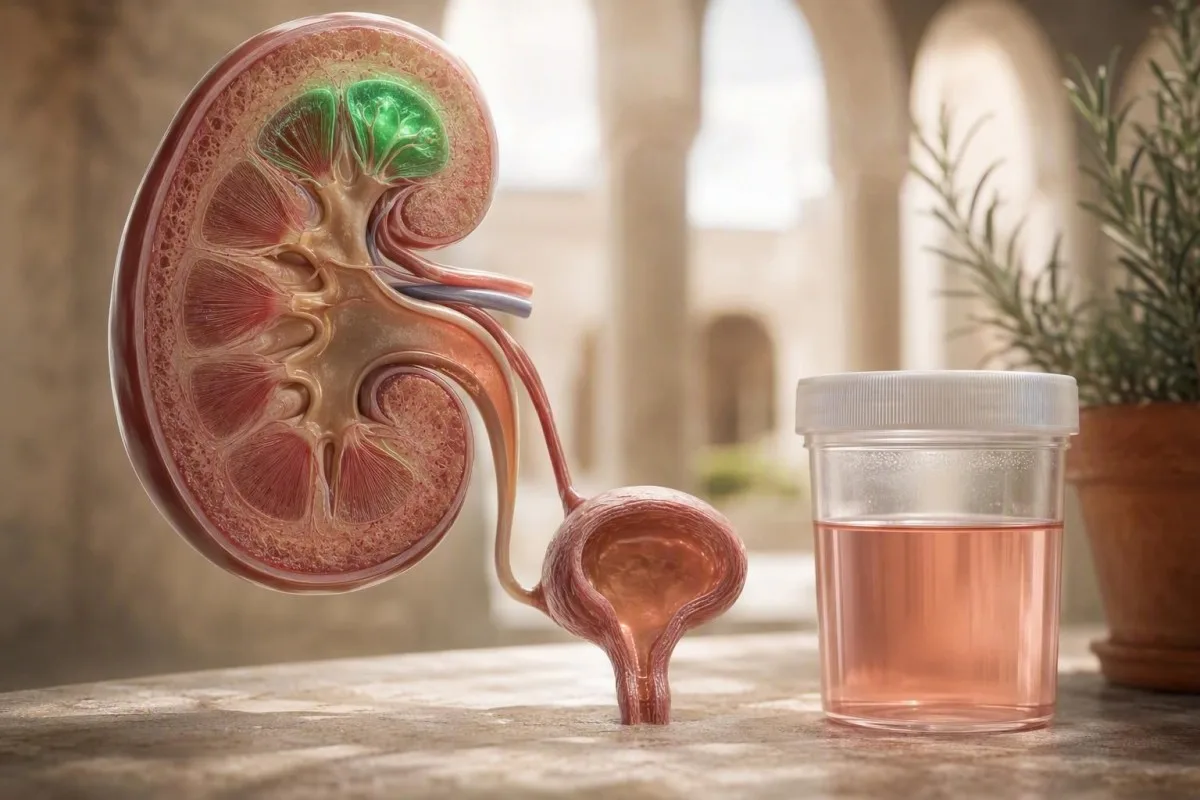
ಸುದೀರ್ಘ ಓಟದ ನಂತರ ಗುಲಾಬಿ ಅಥವಾ ಟೀ ಬಣ್ಣದ ಮೂತ್ರದ ಮಾದರಿಯು ಸಾಮಾನ್ಯವಾಗಿ ತಾತ್ಕಾಲಿಕ ವ್ಯಾಯಾಮ-ಪ್ರೇರಿತ ಹೆಮಟೂರಿಯಾ ಆಗಿರುತ್ತದೆ, ಆದರೆ ಗೋಚರ ಬಣ್ಣವನ್ನು ಎಂದಿಗೂ ಸ್ವಯಂಚಾಲಿತವಾಗಿ ತಳ್ಳಿಹಾಕಬಾರದು. ಸಮಯ, ಸೂಕ್ಷ್ಮದರ್ಶಕದ ಫಲಿತಾಂಶಗಳು, ರೋಗಲಕ್ಷಣಗಳು ಮತ್ತು ಸಂಪೂರ್ಣವಾಗಿ ವಿಶ್ರಾಂತಿ ಪಡೆದ ಪುನರಾವರ್ತಿತ ಮಾದರಿಯು ನಿಜವಾದ ಕಥೆಯನ್ನು ಹೇಳುತ್ತದೆ.


- ವ್ಯಾಯಾಮ-ಪ್ರೇರಿತ ಹೆಮಟೂರಿಯಾ ಸಾಮಾನ್ಯವಾಗಿ ಕಠಿಣ ಓಟದ ನಂತರ 24–72 ಗಂಟೆಗಳಲ್ಲಿ ಸ್ಪಷ್ಟವಾಗುತ್ತದೆ; 72 ಗಂಟೆಗಳ ನಂತರ ಮುಂದುವರಿದರೆ ವೈದ್ಯಕೀಯ ವಿಮರ್ಶೆ ಅಗತ್ಯ.
- ಸೂಕ್ಷ್ಮದರ್ಶಕದ ಮಿತಿ ಸರಿಯಾಗಿ ಸಂಗ್ರಹಿಸಿದ ಮೂತ್ರದ ಮಾದರಿಯಲ್ಲಿ ಪ್ರತಿ ಉನ್ನತ-ಶಕ್ತಿ ಕ್ಷೇತ್ರಕ್ಕೆ 3 ಅಥವಾ ಅದಕ್ಕಿಂತ ಹೆಚ್ಚು ಕೆಂಪು ರಕ್ತ ಕಣಗಳು ಸೂಕ್ಷ್ಮಹೆಮಟೂರಿಯಾದ AUA ವ್ಯಾಖ್ಯಾನವನ್ನು ಪೂರೈಸುತ್ತವೆ.
- ಡಿಪ್ಸ್ಟಿಕ್ ಲೆಕ್ಕಾಚಾರ ಮುಖ್ಯವಾಗಿದೆ: ಪ್ರತಿ ಉನ್ನತ-ಶಕ್ತಿ ಕ್ಷೇತ್ರಕ್ಕೆ ಶೂನ್ಯದಿಂದ ಎರಡು ಕೆಂಪು ಕಣಗಳೊಂದಿಗೆ ಧನಾತ್ಮಕ ರಕ್ತದ ಪ್ಯಾಡ್ ಮೂತ್ರ ನಾಳದ ರಕ್ತಸ್ರಾವಕ್ಕಿಂತ ಮಯೋಗ್ಲೋಬಿನ್ ಅಥವಾ ಉಚಿತ ಹಿಮೋಗ್ಲೋಬಿನ್ ಅನ್ನು ಸೂಚಿಸುತ್ತದೆ.
- ಪುನರಾವರ್ತನೆ ಸಮಯ ಆಚರಣಾತ್ಮಕವಾಗಿದೆ: 48–72 ಗಂಟೆಗಳ ಕಾಲ ಕಠಿಣ ವ್ಯಾಯಾಮವನ್ನು ತಪ್ಪಿಸಿ, ಸಾಮಾನ್ಯ ಹೈಡ್ರೇಟ್ ಮಾಡಿ, ನಂತರ ಮಧ್ಯ-ಪ್ರವಾಹದ ಮೂತ್ರದ ಮಾದರಿಯನ್ನು ಒದಗಿಸಿ.
- ಅದೇ ದಿನದ ಮೌಲ್ಯಮಾಪನ ಹೆಪ್ಪುಗಟ್ಟುವಿಕೆ, ಮೂತ್ರ ವಿಸರ್ಜಿಸಲು ಅಸಮರ್ಥತೆ, ಜ್ವರ, ಒಂದು-ಬದಿಯ ತೀವ್ರ ಬೆನ್ನು ನೋವು, ಅಥವಾ ತೀವ್ರ ಸ್ನಾಯು ನೋವಿನೊಂದಿಗೆ ಕೋಲಾ ಮೂತ್ರಕ್ಕೆ ಸೂಕ್ತವಾಗಿದೆ.
- ಮೂತ್ರಪಿಂಡದ ಎಚ್ಚರಿಕೆ ಮಾದರಿ ರಕ್ತದ ಜೊತೆಗೆ ಪ್ರೋಟೀನ್, ಕೆಂಪು-ಕೋಶದ ಎರಕಗಳು, ಅಧಿಕ ರಕ್ತದೊತ್ತಡ, ಅಥವಾ ಕುಸಿಯುತ್ತಿರುವ eGFR—ಒಂಟಿ ಓಟದ ನಂತರದ ಡಿಪ್ಸ್ಟಿಕ್ ಅಲ್ಲ.
- الرابومایولیز gejala (Rhabdomyolysis clue) ತೀವ್ರವಾದ ಸ್ನಾಯು ಲಕ್ಷಣಗಳು ಮತ್ತು ಲ್ಯಾಬೋರೇಟರಿಯ ಮೇಲಿನ ಮಿತಿಗಿಂತ 5 ಪಟ್ಟು ಹೆಚ್ಚಿರುವ ಕ್ರಿಯೇಟೈನ್ ಕೈನೇಸ್ ಫಲಿತಾಂಶದೊಂದಿಗೆ ಅತಿಯಾಗಿ ಕಡು ಮೂತ್ರ.
- ಕ್ಯಾನ್ಸರ್-ಅಪಾಯ ಸಂದರ್ಭ (Cancer-risk context) ತನಿಖೆಯ ಮಿತಿಯನ್ನು ಬದಲಾಯಿಸುತ್ತದೆ: ವಯಸ್ಸು, ಧೂಮಪಾನದ ಸಂಪರ್ಕ, ಹಿಂದಿನ ಪೆಲ್ವಿಕ್ ವಿಕಿರಣ, ಮತ್ತು ನಿರಂತರ ಗೋಚರಿಸುವ ರಕ್ತಮೂತ್ರ ಎಲ್ಲವೂ ಮುಖ್ಯ.
ಓಟವು ಮೂತ್ರವನ್ನು ಗುಲಾಬಿ ಬಣ್ಣಕ್ಕೆ ಏಕೆ ಮಾಡಬಹುದು
ಓಟಗಾರನ ಮೂತ್ರದಲ್ಲಿ ರಕ್ತಸ್ರಾವ (Runner’s hematuria) is usually a short-lived leakage of red cells into urine after vigorous exercise, ಸಾಮಾನ್ಯವಾಗಿ 24-72 ಗಂಟೆಗಳ ವಿಶ್ರಾಂತಿಯಲ್ಲಿ ಪರಿಹಾರ ನೀಡುತ್ತದೆ. ಆದರೂ, ಗೋಚರಿಸುವ ಗುಲಾಬಿ, ಕೆಂಪು, ಅಥವಾ ಕೋಲಾ-ಬಣ್ಣದ ಮೂತ್ರವು ಅದನ್ನು ಓಟವು ಉಂಟುಮಾಡಿದೆ ಎಂಬ ಸಾಮಾನ್ಯ ಊಹೆಗೆ ಬದಲಾಗಿ ಸರಿಯಾಗಿ ಸಂಗ್ರಹಿಸಿದ ಪುನರಾವರ್ತಿತ ಪರೀಕ್ಷೆಗೆ ಅರ್ಹವಾಗಿದೆ.
ಕ್ಲಿನಿಕ್ನಲ್ಲಿ, ಭರವಸೆ ನೀಡುವ ಮಾದರಿ ಸರಳವಾಗಿದೆ: ಅಸಾಮಾನ್ಯವಾಗಿ ದೀರ್ಘ, ವೇಗವಾದ, ಅಥವಾ ಕೆಳಗಿಳಿಯುವ ಓಟದ ನಂತರ ಬಣ್ಣ ಬದಲಾವಣೆ ಪ್ರಾರಂಭವಾಗುತ್ತದೆ; ಜ್ವರ, ಜಿಡ್ಡು ನೋವು, ಅಥವಾ ಮೂತ್ರದಲ್ಲಿ ಸುಡುವಿಕೆ ಇರುವುದಿಲ್ಲ; ಮತ್ತು ಸೂಕ್ಷ್ಮದರ್ಶಕವು ವಿಶ್ರಾಂತಿಯ ನಂತರ ಸಾಮಾನ್ಯ ಸ್ಥಿತಿಗೆ ಮರಳುತ್ತದೆ. Kantesti ಒಂದು AI ರಕ್ತ ಪರೀಕ್ಷಾ ವಿಶ್ಲೇಷಕ ಇದು ಸಂಬಂಧಿತ ಮೂತ್ರಪಿಂಡದ ಮಾರ್ಕರ್ಗಳಾದ - ಕ್ರಿಯೇಟಿನೈನ್, eGFR, ಎಲೆಕ್ಟ್ರೋಲೈಟ್ಸ್, ಮತ್ತು ಕ್ರಿಯೇಟೈನ್ ಕೈನೇಸ್ - ಅನ್ನು ವ್ಯಾಯಾಮದ ಇತಿಹಾಸದ ಪಕ್ಕದಲ್ಲಿ ಇರಿಸಲು ಸಹಾಯ ಮಾಡುತ್ತದೆ, ಬದಲಾಗಿ ರೇಸ್ ನಂತರದ ಒಂದು ಫಲಿತಾಂಶವನ್ನು ರೋಗನಿರ್ಣಯವಾಗಿ ಪರಿಗಣಿಸುವುದಿಲ್ಲ.
ಪ್ರಸ್ತಾವಿತ ಕಾರ್ಯವಿಧಾನಗಳು ಯಾಂತ್ರಿಕ ಮೂತ್ರಕೋಶ-ಗೋಡೆಯ ಸಂಪರ್ಕ, ತಾತ್ಕಾಲಿಕ ಮೂತ್ರಪಿಂಡದ ರಕ್ತ-ಹರಿವಿನ ಬದಲಾವಣೆಗಳು, ನಿರ್ಜಲೀಕರಣ-ಸಂಬಂಧಿತ ಸಾಂದ್ರತೆ, ಮತ್ತು ಕೆಲವೊಮ್ಮೆ ಪುನರಾವರ್ತಿತ ಪಾದದ ಹೊಡೆತದಿಂದ ಕೆಂಪು-ಕೋಶಗಳ ಒಡೆಯುವಿಕೆ. ಪ್ರತಿ ಕಾರ್ಯವಿಧಾನಕ್ಕೆ ಪುರಾವೆಗಳು ಪ್ರಾಮಾಣಿಕವಾಗಿ ಮಿಶ್ರವಾಗಿವೆ, ಏಕೆಂದರೆ ಹೆಚ್ಚಿನ ಅಧ್ಯಯನಗಳು ಚಿಕ್ಕದಾಗಿರುತ್ತವೆ ಮತ್ತು ವಿಭಿನ್ನ ಓಟದ ದೂರವನ್ನು ಬಳಸುತ್ತವೆ. ನನ್ನ 15 ವರ್ಷಗಳ ಕ್ಲಿನಿಕಲ್ ಅಭ್ಯಾಸದಲ್ಲಿ, ಹೊಸ ಪ್ರಯತ್ನದ ಇತಿಹಾಸವು ಬಣ್ಣಕ್ಕಿಂತ ಹೆಚ್ಚು ಮುಖ್ಯವಾಗಿದೆ; ಮೊದಲ ಅಲ್ಟ್ರಾಮ್ಯಾರಥಾನ್ ಮತ್ತು ಪರಿಚಿತ 5 ಕಿಮೀ ಒಂದೇ ರೀತಿಯ ಪೂರ್ವ-ಪರೀಕ್ಷೆಯ ಸಂಭವನೀಯತೆಯನ್ನು ಹೊಂದಿಲ್ಲ.
ವ್ಯಾಯಾಮದ ನಂತರ ಮೂತ್ರದಲ್ಲಿ ರಕ್ತ ಕಾಣಿಸಿಕೊಳ್ಳುವುದು ಸಾಮಾನ್ಯ ಓಟಗಾರನ ಮೂತ್ರರಕ್ತಸ್ರಾವಕ್ಕೆ ಸಮಾನಾರ್ಥವಲ್ಲ. ಎ ವಿಶಾಲವಾದ ಮೂತ್ರದಲ್ಲಿ ರಕ್ತಸ್ರಾವದ ಎಚ್ಚರಿಕೆ ಮಾರ್ಗದರ್ಶಿ (broader hematuria red-flag guide) ಮೂತ್ರಪಿಂಡದ ಕಲ್ಲುಗಳು, ಸೋಂಕು, ಗ್ಲೋಮೆರುಲರ್ ರೋಗ, ಮತ್ತು ಮೂತ್ರನಾಳದ ಕ್ಯಾನ್ಸರ್ಗಳು ಆಕಸ್ಮಿಕವಾಗಿ ಓಟದ ನಂತರ ತಮ್ಮನ್ನು ಮೊದಲ ಬಾರಿಗೆ ಘೋಷಿಸಿಕೊಳ್ಳಬಹುದು ಎಂಬ ಕಾರಣದಿಂದ ಉಪಯುಕ್ತವಾಗಿದೆ.
ಪ್ರಾಯೋಗಿಕ ವ್ಯಾಖ್ಯಾನ (The practical definition)
ವ್ಯಾಯಾಮ-ಪ್ರೇರಿತ ಮೂತ್ರರಕ್ತಸ್ರಾವ ಎಂದರೆ ಎಕ್ಸರ್ಷನ್ ನಂತರ ಶೀಘ್ರದಲ್ಲೇ ಮೂತ್ರದಲ್ಲಿ ಕೆಂಪು ರಕ್ತ ಕಣಗಳು ಕಾಣಿಸಿಕೊಳ್ಳುತ್ತವೆ ಮತ್ತು ವಿಶ್ರಾಂತಿಯಲ್ಲಿರುವ ಪುನರಾವರ್ತಿತ ಮಾದರಿಯಲ್ಲಿ ಕಣ್ಮರೆಯಾಗುತ್ತವೆ. ಧನಾತ್ಮಕ ಡಿಪ್ಸ್ಟಿಕ್ ಮಾತ್ರ ಈ ರೋಗನಿರ್ಣಯವನ್ನು ಸಾಬೀತುಪಡಿಸುವುದಿಲ್ಲ, ಏಕೆಂದರೆ ರಿಯಾಜೆಂಟ್ ಸಂಪೂರ್ಣ ಕೆಂಪು ಕೋಶಗಳು, ಮುಕ್ತ ಹಿಮೋಗ್ಲೋಬಿನ್, ಅಥವಾ ಮಯೊಗ್ಲೋಬಿನ್ನಿಂದ ಹೀಮ್ ವರ್ಣದ್ರವ್ಯವನ್ನು ಪತ್ತೆ ಮಾಡುತ್ತದೆ.
ಇದು ಹೆಮಟೂರಿಯಾ, ಹಿಮೋಗ್ಲೋಬಿನ್, ಅಥವಾ ಮಯೋಗ್ಲೋಬಿನ್?
ರಕ್ತಕ್ಕಾಗಿ ಧನಾತ್ಮಕವಾಗಿ ಓದುವ ಮೂತ್ರ ಡಿಪ್ಸ್ಟಿಕ್ ಕೆಂಪು ಕೋಶಗಳು, ಹಿಮೋಗ್ಲೋಬಿನ್, ಅಥವಾ ಮಯೊಗ್ಲೋಬಿನ್ ಅನ್ನು ಪ್ರತಿಬಿಂಬಿಸಬಹುದು, ಮತ್ತು ಸೂಕ್ಷ್ಮದರ್ಶಕ ಅವುಗಳನ್ನು ಪ್ರತ್ಯೇಕಿಸುತ್ತದೆ. ಅನೇಕ ಸಂಪೂರ್ಣ ಕೆಂಪು ಕೋಶಗಳೊಂದಿಗೆ ಗುಲಾಬಿ ಮೂತ್ರವು ಮೂತ್ರರಕ್ತಸ್ರಾವವನ್ನು ಬೆಂಬಲಿಸುತ್ತದೆ; ಕೆಲವು ಅಥವಾ ಕೆಂಪು ಕೋಶಗಳಿಲ್ಲದ ಕಡು ಕಂದು ಮೂತ್ರವು ಸ್ನಾಯು ಗಾಯ ಅಥವಾ ರಕ್ತಹೀನತೆಯಿಂದ ಬಣ್ಣದ ವರ್ಣದ್ರವ್ಯದ ಬಗ್ಗೆ ಕಳವಳವನ್ನು ಹೆಚ್ಚಿಸುತ್ತದೆ.
ಮೂತ್ರ ಸೂಕ್ಷ್ಮದರ್ಶಕ ಪರೀಕ್ಷೆ ತೋರಿಸುತ್ತಿದೆ (Urine microscopy showing) ಪ್ರತಿ ಹೈ-ಪವರ್ ಫೀಲ್ಡ್ಗೆ 3 ಅಥವಾ ಅದಕ್ಕಿಂತ ಹೆಚ್ಚಿನ ಕೆಂಪು ರಕ್ತ ಕಣಗಳು ಮಾದರಿಯನ್ನು ಸ್ವಚ್ಛವಾಗಿ ಸಂಗ್ರಹಿಸಿದಾಗ ಮೈಕ್ರೋಹೆಮಟೂರಿಯಾವನ್ನು ದೃಢೀಕರಿಸುತ್ತದೆ. ಇದಕ್ಕೆ ವ್ಯತಿರಿಕ್ತವಾಗಿ, ಪ್ರತಿ ಹೈ-ಪವರ್ ಫೀಲ್ಡ್ಗೆ 0-2 ಕೆಂಪು ಕೋಶಗಳೊಂದಿಗೆ ಬಲವಾಗಿ ಧನಾತ್ಮಕ ಡಿಪ್ಸ್ಟಿಕ್, ವಿಶೇಷವಾಗಿ ಶಾಖದ ಸಂಪರ್ಕ, ಜಜ್ಜಿದ-ಮಾದರಿಯ ಸ್ನಾಯು ಹೊರೆ, ಅಥವಾ ತೀವ್ರವಾದ ವಿಳಂಬಿತ ಸ್ನಾಯು ನೋವಿನ ನಂತರ, ಮಯೊಗ್ಲೋಬಿನೂರಿಯಾವನ್ನು ಪರಿಗಣಿಸಲು ವೈದ್ಯರನ್ನು ಮಾಡಬೇಕು. ಕಂದು ಅಥವಾ ಕೋಲಾ ಬಣ್ಣವು ಮೂತ್ರಕೋಶದ ರಕ್ತಸ್ರಾವದ ಸಣ್ಣ ಪ್ರಮಾಣಕ್ಕಿಂತ ಸಾಂದ್ರೀಕೃತ ವರ್ಣದ್ರವ್ಯಕ್ಕೆ ಹೆಚ್ಚು ವಿಶಿಷ್ಟವಾಗಿದೆ.
ಮಯೊಗ್ಲೋಬಿನ್ ಮುಖ್ಯವಾಗಿದೆ ಏಕೆಂದರೆ ಇದು ರಾಬ್ಡೋಮೈಯೊಲಿಸಿಸ್ ಮತ್ತು ತೀವ್ರ ಮೂತ್ರಪಿಂಡದ ಗಾಯದೊಂದಿಗೆ ಇರಬಹುದು. ಕ್ರಿಯೇಟೈನ್ ಕೈನೇಸ್ ಸಾಂದ್ರತೆಗಿಂತ ಹೆಚ್ಚು ಲ್ಯಾಬೋರೇಟರಿಯ ಸಾಮಾನ್ಯ ಮೇಲಿನ ಮಿತಿಗಿಂತ 5 ಪಟ್ಟು ಸಾಮಾನ್ಯವಾಗಿ ರಾಬ್ಡೋಮೈಯೊಲಿಸಿಸ್ಗೆ ಜೀವರಾಸಾಯನಿಕ ಮಿತಿಯಾಗಿ ಬಳಸಲಾಗುತ್ತದೆ, ಆದರೂ ರೋಗಲಕ್ಷಣಗಳು, ಪೊಟ್ಯಾಸಿಯಮ್, ಕ್ರಿಯೇಟಿನೈನ್, ಮತ್ತು ಮೂತ್ರದ ಉತ್ಪಾದನೆ ತುರ್ತುಸ್ಥಿತಿಯನ್ನು ನಿರ್ಧರಿಸುತ್ತದೆ. ನಮ್ಮ ಪ್ರಾಯೋಗಿಕ ವಿವರಣೆಯನ್ನು ನೋಡಿ ಅಪಾಯಕಾರಿಯಾಗಿ ಹೆಚ್ಚಿನ ಕ್ರಿಯೇಟಿನೈನ್ ಕೈನೇಸ್ ರಾತ್ರಿಯಿಡೀ ಕಾಯಬಾರದೆಂದು ಸೂಚಿಸುವ ಮಾದರಿಗಳಿಗಾಗಿ.
ಆಹಾರ ಬಣ್ಣಗಳು, ಬೀಟ್ರೂಟ್, ಕಪ್ಪುಬೆರ್ರಿ, ರಿಫಾಂಪಿಸಿನ್, ಫೆನಾಜೊಪೈರಿಡಿನ್, ಮತ್ತು ನಿರ್ಜಲೀಕರಣವು ಕೆಂಪು ರಕ್ತ ಕಣಗಳಿಲ್ಲದೆ ಮೂತ್ರಕ್ಕೆ ಬಣ್ಣವನ್ನು ನೀಡಬಹುದು. ಎ ಗಾಢ ಮೂತ್ರದ ವ್ಯತ್ಯಾಸ ಯಾವುದೇ ಕೆಂಪು ಮಾದರಿಯು ರಕ್ತವನ್ನು ಪ್ರತಿನಿಧಿಸುತ್ತದೆ ಎಂದು ಊಹಿಸುವ ಸಾಮಾನ್ಯ ತಪ್ಪನ್ನು ತಪ್ಪಿಸಲು ಸಹಾಯ ಮಾಡುತ್ತದೆ.
ವ್ಯತ್ಯಾಸವು ಆರೈಕೆಯನ್ನು ಏಕೆ ಬದಲಾಯಿಸುತ್ತದೆ
ಕೆಂಪು-ರಕ್ತ ಕಣದ ಹೆಮಟೂರಿಯ ಮೂತ್ರ ವ್ಯವಸ್ಥೆಯ ಕಡೆಗೆ ಗಮನ ಸೆಳೆಯುತ್ತದೆ, ಆದರೆ ಮೈಲೋಗ್ಲೋಬಿನೂರಿಯು ಅಸ್ಥಿಪಂಜರದ ಸ್ನಾಯು ಮತ್ತು ಮೂತ್ರಪಿಂಡದ ಸಂರಕ್ಷಣೆಯ ಕಡೆಗೆ ಗಮನ ಸೆಳೆಯುತ್ತದೆ. ಎರಡೂ ಸಹಿಷ್ಣುತೆಯ ಘಟನೆಗಳ ನಂತರ ಸಂಭವಿಸಬಹುದು, ಆದರೆ ಸೂಕ್ಷ್ಮದರ್ಶಕ ಪರೀಕ್ಷೆ ಮತ್ತು ಗುರಿಯನ್ನು ಹೊಂದಿರುವ ರಕ್ತದ ಕೆಲಸ ಮಾತ್ರ ಅವುಗಳನ್ನು ವಿಶ್ವಾಸಾರ್ಹವಾಗಿ ವಿಂಗಡಿಸಬಹುದು.
ಓಟದ ನಂತರದ ಮೂತ್ರಶಾಸ್ತ್ರದ ಫಲಿತಾಂಶವನ್ನು ಹೇಗೆ ಓದುವುದು
ಅತ್ಯಂತ ಮಹತ್ವದ ಓಟದ ನಂತರದ ಮೂತ್ರ ಪರೀಕ್ಷೆಯು ಡಿಪ್ಸ್ಟಿಕ್, ಸೂಕ್ಷ್ಮದರ್ಶಕ, ಪ್ರೋಟೀನ್ ಅಳತೆ ಮತ್ತು ನಿರ್ದಿಷ್ಟ ಗುರುತ್ವಾಕರ್ಷಣೆಯನ್ನು ಸಂಯೋಜಿಸುತ್ತದೆ. ತಾತ್ಕಾಲಿಕ ಕೆಂಪು ರಕ್ತ ಕಣಗಳೊಂದಿಗೆ ಡಿಪ್ಸ್ಟಿಕ್ನಲ್ಲಿನ ರಕ್ತ ಮತ್ತು ಯಾವುದೇ ಪ್ರೋಟೀನ್ ಇಲ್ಲದಿರುವುದು ಕಡಿಮೆ ಅಪಾಯಕಾರಿ; ರಕ್ತ ಮತ್ತು ಪ್ರೋಟೀನ್ ಅಥವಾ ಎರಕಹೊಯ್ದವು ಹೆಚ್ಚು ಎಚ್ಚರಿಕೆಯ ಮೂತ್ರಪಿಂಡದ ಮೌಲ್ಯಮಾಪನವನ್ನು ಬಯಸುತ್ತದೆ.
ಡಿಪ್ಸ್ಟಿಕ್ ರಕ್ತದ ಫಲಿತಾಂಶವನ್ನು ನಕಾರಾತ್ಮಕ, ಜಾಡಿನ, 1+, 2+, ಅಥವಾ 3+ ಎಂದು ವರದಿ ಮಾಡಲಾಗುತ್ತದೆ, ಆದರೆ ಇದು ಜೀವಕೋಶದ ಎಣಿಕೆಯ ಬದಲಿಗೆ ಒಂದು ಸ್ಕ್ರೀನಿಂಗ್ ಸಂಕೇತವಾಗಿದೆ. AUA ಮೈಕ್ರೋಹೆಮಟೂರಿಯಾವನ್ನು ಸೂಕ್ಷ್ಮದರ್ಶಕ ಪರೀಕ್ಷೆಯಲ್ಲಿ ಪ್ರತಿ ಹೆಚ್ಚಿನ-ಶಕ್ತಿ ಕ್ಷೇತ್ರಕ್ಕೆ 3 ಕ್ಕಿಂತ ಹೆಚ್ಚು ಕೆಂಪು ರಕ್ತ ಕಣಗಳೆಂದು ವ್ಯಾಖ್ಯಾನಿಸುತ್ತದೆ, ಕೇವಲ ಡಿಪ್ಸ್ಟಿಕ್ ಫಲಿತಾಂಶವಲ್ಲ (ಬರೋಕಾಸ್ ಮತ್ತು ಇತರರು, 2020). ಈ ವ್ಯತ್ಯಾಸವು ಸುಳ್ಳು-ಧನಾತ್ಮಕ ಪರದೆಯ ನಂತರ ಓಟಗಾರರನ್ನು ಅನಗತ್ಯ ಕ್ಯಾನ್ಸರ್ ಕೆಲಸದಲ್ಲಿ ಕಳುಹಿಸುವುದನ್ನು ತಪ್ಪಿಸುತ್ತದೆ.
ನಿರ್ದಿಷ್ಟ ಗುರುತ್ವಾಕರ್ಷಣೆಗಿಂತ ಹೆಚ್ಚಾಗಿ 1.030 ಅನೇಕ ಪ್ರಯೋಗಾಲಯಗಳಲ್ಲಿ ಕೇಂದ್ರೀಕೃತ ಮೂತ್ರವನ್ನು ಸೂಚಿಸುತ್ತದೆ ಮತ್ತು ಬಣ್ಣವನ್ನು ಹೆಚ್ಚು ಎಚ್ಚರಿಕೆಯಂತೆ ಕಾಣುವಂತೆ ಮಾಡಬಹುದು, ಆದರೆ ಇದು ದೃಢಪಡಿಸಿದ ಕೆಂಪು ಕಣಗಳನ್ನು ವಿವರಿಸುವುದಿಲ್ಲ. 1+ ಅಥವಾ ಹೆಚ್ಚಿನ ಪ್ರೋಟೀನ್ ಅನ್ನು ಮೂತ್ರದ ಅಲ್ಬುಮಿನ್-ಕ್ರಿಯೇಟಿನೈನ್ ಅನುಪಾತ ಅಥವಾ ಪ್ರೋಟೀನ್-ಕ್ರಿಯೇಟಿನೈನ್ ಅನುಪಾತದೊಂದಿಗೆ ಪ್ರಮಾಣೀಕರಿಸಬೇಕು; ತಾತ್ಕಾಲಿಕ ವ್ಯಾಯಾಮ ಪ್ರೋಟೀನುರಿಯಾ ಅಸ್ತಿತ್ವದಲ್ಲಿದೆ, ಆದರೂ ನಿರಂತರ ಅಲ್ಬುಮಿನೂರಿಯಾ ಗ್ಲೋಮೆರುಲರ್ ಕಾಯಿಲೆಯ ಕಡೆಗೆ ಭೇದಾತ್ಮಕವನ್ನು ಬದಲಾಯಿಸುತ್ತದೆ. ನಮ್ಮ ಸಂಪೂರ್ಣ ಮೂತ್ರ ವಿಸರ್ಜನಾ ಮಾರ್ಗದರ್ಶಿ ಈ ಗುರುತುಗಳನ್ನು ಒಂದೇ ಫಲಿತಾಂಶದಲ್ಲಿ ವಿಲೀನಗೊಳಿಸಬಾರದು ಏಕೆ ಎಂದು ವಿವರಿಸುತ್ತದೆ.
Kantesti AI ಮೂತ್ರದ ಸಂಶೋಧನೆಗಳು, ವ್ಯಾಯಾಮದ ಸಮಯ, ಮತ್ತು ಹಿಂದಿನ ಮೌಲ್ಯಗಳ ಜೊತೆಗೆ ಕ್ರಿಯೇಟಿನೈನ್ ಮತ್ತು eGFR ಅನ್ನು ಅರ್ಥೈಸುತ್ತದೆ; ಬಿಸಿಯಾದ ಓಟದ ನಂತರ ಒಂದೇ ಸ್ವಲ್ಪ ಹೆಚ್ಚಿದ ಕ್ರಿಯೇಟಿನೈನ್ ದೀರ್ಘಕಾಲದ ಮೂತ್ರಪಿಂಡದ ಕಾಯಿಲೆಗೆ ಸಮನಾಗಿರುವುದಿಲ್ಲ. ಆಚರಣೆಯಲ್ಲಿ, ನಾನು ದೂರ, ಭೂಪ್ರದೇಶ, ತಾಪಮಾನ, ಉರಿಯೂತ ನಿರೋಧಕ ಬಳಕೆ, ಋತುಚಕ್ರದ ಸಮಯ, ಮತ್ತು ಮಾದರಿಯನ್ನು ಮುಗಿಸಿದ 2 ಗಂಟೆಗಳೊಳಗೆ ನೀಡಲಾಗಿದೆಯೇ ಎಂದು ಕೇಳುತ್ತೇನೆ.
ಓಟದ ನಂತರ ನೀವು ಮೂತ್ರ ಪರೀಕ್ಷೆಯನ್ನು ಯಾವಾಗ ಪುನರಾವರ್ತಿಸಬೇಕು?
ಓಟಗಾರರ ಹಿಮಟೂರಿಯಾ ಎಂದು ಶಂಕಿಸಿದಾಗ, ಕೊನೆಯ ಗಟ್ಟಿಯಾದ ಓಟದ 48–72 ಗಂಟೆಗಳ ನಂತರ ಮೂತ್ರ ಪರೀಕ್ಷೆಯನ್ನು ಪುನರಾವರ್ತಿಸುವುದು ಸೂಕ್ತವಾದ ಡಿಫಾಲ್ಟ್ ಆಗಿದೆ. ಮೊದಲ ಬೆಳಿಗ್ಗೆ ಅಥವಾ ಚೆನ್ನಾಗಿ ಹೈಡ್ರೇಟ್ ಆಗಿರುವ ಮಿಡ್ಸ್ಟ್ರೀಮ್ ಮಾದರಿಯನ್ನು ಬಳಸಿ, ಆದರೆ ತಕ್ಷಣವೇ ಗಡಿಗೆಯಲ್ಲಿ ನೀರನ್ನು ಕುಡಿಯಬೇಡಿ ಏಕೆಂದರೆ ತೀವ್ರವಾದ ದುರ್ಬಲಗೊಳಿಸುವಿಕೆ ಉಪಯುಕ್ತ ಆವಿಷ್ಕಾರಗಳನ್ನು ಮರೆಮಾಡಬಹುದು.
ಸಾಮಾನ್ಯ ಓಟದ ನಂತರದ ಅಸಹಜತೆಗಾಗಿ, ನಾನು ಸಾಮಾನ್ಯವಾಗಿ ಯಾವುದೇ ಅಂತರಗಳು, ಬೆಟ್ಟಗಳು, ಭಾರ ಎತ್ತುವುದು ಅಥವಾ ಓಟಗಳನ್ನು ಶಿಫಾರಸು ಮಾಡುವುದಿಲ್ಲ 48 ಗಂಟೆಗಳೊಳಗೆ; ಮ್ಯಾರಥಾನ್, ಅಲ್ಟ್ರಾಮ್ಯಾರಥಾನ್, ಶಾಖದ ಅನಾರೋಗ್ಯ, ಅಥವಾ ಅಸಾಮಾನ್ಯ ನೋವಿನ ನಂತರ, 72 ಗಂಟೆಗಳ ಕಾಲ ಕಠಿಣ ವ್ಯಾಯಾಮಗಳನ್ನು ತಪ್ಪಿಸಿ ಹೆಚ್ಚು ಸಮರ್ಥನೀಯವಾಗಿದೆ. ಬಾಯಾರಿಕೆಯ ಪ್ರಕಾರ ಸಾಮಾನ್ಯ ಕುಡಿಯುವಿಕೆ ಸಾಕು. ಅತಿಯಾದ ಹೈಡ್ರೇಶನ್ ನಿರ್ದಿಷ್ಟ ಗುರುತ್ವಾಕರ್ಷಣೆಯನ್ನು 1.005 ಕ್ಕಿಂತ ಕಡಿಮೆ ಮಾಡಬಹುದು ಮತ್ತು ಕೆಲವೊಮ್ಮೆ ಗಡಿರೇಖೆಯ ಫಲಿತಾಂಶವನ್ನು ಅರ್ಥಮಾಡಿಕೊಳ್ಳಲು ಕಷ್ಟವಾಗಬಹುದು.
72 ಗಂಟೆಗಳ ನಂತರ ಮೈಕ್ರೋಸ್ಕೋಪಿ ಧನಾತ್ಮಕವಾಗಿದ್ದರೆ, ಪದೇ ಪದೇ ವ್ಯಾಯಾಮದ ನಂತರ ಪರೀಕ್ಷಿಸುವ ಬದಲು ದಿನಗಳಲ್ಲಿ ಪ್ರಾಥಮಿಕ-ಆರೈಕೆ ವಿಮರ್ಶೆಯನ್ನು ಏರ್ಪಡಿಸಿ. ನಿರಂತರ ಫಲಿತಾಂಶಗಳು ರಕ್ತದೊತ್ತಡದ ಅಳತೆ, ಸೀರಮ್ ಕ್ರಿಯೇಟಿನೈನ್/eGFR, ಮೂತ್ರದ ಅಲ್ಬೂಮಿನ್-ಕ್ರಿಯೇಟಿನೈನ್ ಅನುಪಾತ, ಮತ್ತು ಅಪಾಯಕ್ಕೆ ಅನುಗುಣವಾಗಿ ಕಲ್ಚರ್ ಅಥವಾ ಇಮೇಜಿಂಗ್ ಪರಿಗಣನೆಯನ್ನು ಸಮರ್ಥಿಸುತ್ತವೆ. ಶ್ರಮ, ಹೈಡ್ರೇಶನ್, ಮತ್ತು ತಾತ್ಕಾಲಿಕವಾಗಿ ಕಡಿಮೆ ಫಿಲ್ಟರೇಶನ್ ಅಂದಾಜಿನ ನಡುವಿನ ಸಂಬಂಧವನ್ನು ನಮ್ಮ ವ್ಯಾಯಾಮದ ನಂತರದ eGFR ಮಾರ್ಗದರ್ಶಿಯಲ್ಲಿ.
ಒಳಗೊಳ್ಳಲಾಗಿದೆ. ನಾನು ನೋಡಿದ 52 ವರ್ಷದ ಮನರಂಜನಾ ಮ್ಯಾರಥಾನರ್, ಬಿಸಿ ಓಟದ ನಂತರ ಸಂಜೆ 18 ಕೆಂಪು ಕೋಶಗಳನ್ನು ಪ್ರತಿ ಉನ್ನತ-ಶಕ್ತಿ ಕ್ಷೇತ್ರದ ಮೇಲೆ ಹೊಂದಿದ್ದರು, ಆದರೆ 72 ವಿಶ್ರಾಂತಿ ಗಂಟೆಗಳ ನಂತರ 0–1 ಕೆಂಪು ಕೋಶಗಳನ್ನು ಹೊಂದಿದ್ದರು; ಅವರ ಕ್ರಿಯೇಟಿನೈನ್ 1.28 mg/dL ರಿಂದ 0.96 mg/dL ಗೆ ಮರಳಿತು. ಫಲಿತಾಂಶವು ಆಶ್ವಾಸನೆ ನೀಡುವಂತಿತ್ತು, ಆದರೆ ಪುನರಾವರ್ತಿತ ಗೋಚರ ಮೂತ್ರದ ಬಣ್ಣ ಹೊಂದಿರುವ 52 ವರ್ಷದ ಧೂಮಪಾನಿಗೆ ಅದೇ ಯೋಜನೆ ಸಾಕಾಗುವುದಿಲ್ಲ.
ನೀವು ತಪ್ಪಿಸಬಹುದಾದರೆ, ಅಂತಿಮ ಗೆರೆಯಲ್ಲಿ ಪರೀಕ್ಷಿಸಬೇಡಿ
ವ್ಯಾಯಾಮದ ತಕ್ಷಣದ ನಂತರ ಪರೀಕ್ಷಿಸುವುದರಿಂದ ತಾತ್ಕಾಲಿಕ ಕೆಂಪು ಕೋಶಗಳು, ಕೇಂದ್ರೀಕೃತ ಮೂತ್ರ ಮತ್ತು ಪ್ರೋಟೀನ್ ಕಂಡುಹಿಡಿಯುವ ಸಾಧ್ಯತೆ ಹೆಚ್ಚಾಗುತ್ತದೆ. ಇದು ಸಂಶಯಾಸ್ಪದ ರಾಬ್ಡೋಮಿಯೋಲಿಸಿಸ್ನಲ್ಲಿ ಕ್ಲಿನಿಕಲ್ ಆಗಿ ಉಪಯುಕ್ತವಾಗಬಹುದು, ಆದರೆ ಇದು ಓಟಗಾರನ ಮೂಲ ಸ್ಥಿತಿಯನ್ನು ಸ್ಥಾಪಿಸಲು ಕಳಪೆ ಸಮಯವಾಗಿದೆ.
ಓಟದ ನಂತರದ ಯಾವ ಹೆಮಟೂರಿಯಾ ಮಾದರಿಗಳು ಸಾಮಾನ್ಯವಾಗಿ ಭರವಸೆ ನೀಡುತ್ತವೆ?
ತೀವ್ರವಾದ ಓಟದ ನಂತರ ಸ್ವಯಂ-ಮಿತಿಯಾದ ಕಂತು ಸಂಪೂರ್ಣವಾಗಿ ಕಡಿಮೆಯಾದಾಗ, ನೋವು ಅಥವಾ ವ್ಯವಸ್ಥಿತ ಲಕ್ಷಣಗಳ ಕೊರತೆ, ಮತ್ತು ಯಾವುದೇ ಪ್ರೋಟೀನುರಿಯಾ ಅಥವಾ ಮೂತ್ರಪಿಂಡದ ಕಾರ್ಯದಲ್ಲಿ ಬದಲಾವಣೆ ಇಲ್ಲದಿದ್ದಾಗ ಹೆಚ್ಚು ಆಶ್ವಾಸನೆ ನೀಡುತ್ತದೆ. ಆಶ್ವಾಸನೆ ಎಂದರೆ ನಿರ್ಲಕ್ಷಿಸುವುದು ಎಂದಲ್ಲ; ಇದು ವಿಶ್ರಾಂತಿ ಪಡೆದ ಮಾದರಿಯೊಂದಿಗೆ ದೃಢೀಕರಿಸಲ್ಪಟ್ಟಿದೆ ಎಂದರ್ಥ.
ಕಡಿಮೆ-ಅಪಾಯದ ಫಿನೋಟೈಪ್ ಎಂದರೆ ಒಬ್ಬ ಯುವ ಅಥವಾ ಮಧ್ಯವಯಸ್ಕ ಓಟಗಾರ, ಸ್ಪಷ್ಟವಾದ ಶ್ರಮದ ಪ್ರಚೋದನೆ, ಸಾಮಾನ್ಯ ರಕ್ತದೊತ್ತಡ, ಧೂಮಪಾನದ ಇತಿಹಾಸವಿಲ್ಲ, ಮತ್ತು ಸಾಮಾನ್ಯ ವಿಶ್ರಾಂತಿ ಪಡೆದ ಮೈಕ್ರೋಸ್ಕೋಪಿ. ಆ ಸೆಟ್ಟಿಂಗ್ನಲ್ಲಿ, ಓಟದ ನಂತರ 3-10 RBC/HPF ನ ಒಂದು ಬಾರಿ ತಾತ್ಕಾಲಿಕ ಫಲಿತಾಂಶವು 3–10 RBC/HPF ಸಾಮಾನ್ಯವಾಗಿ ಚಿಕಿತ್ಸೆ ಇಲ್ಲದೆ ನೆಲೆಗೊಳ್ಳುತ್ತದೆ. ನಾನು ಇನ್ನೂ ಅದನ್ನು ದಾಖಲಿಸುತ್ತೇನೆ, ಏಕೆಂದರೆ ಪ್ರತಿ ಸುದೀರ್ಘ ಓಟದ ನಂತರ ಮರುಕಳಿಸುವಿಕೆಯು ಒಂದು-ಆಫ್ ಘಟನೆಗಿಂತ ಹೆಚ್ಚು ಎಚ್ಚರಿಕೆಯಿಂದ ವಿಮರ್ಶೆಯನ್ನು ನೀಡುತ್ತದೆ.
ಸಾಮಾನ್ಯ ಮೂತ್ರದ ಅಲ್ಬೂಮಿನ್-ಕ್ರಿಯೇಟಿನೈನ್ ಅನುಪಾತವು ಸಾಮಾನ್ಯವಾಗಿ 30 mg/g ಕ್ಕಿಂತ ಕಡಿಮೆ (3 mg/mmol ಗಿಂತ ಕಡಿಮೆ) ಆಗಿದೆ, ಆದರೂ ಪ್ರಯೋಗಾಲಯಗಳು ಮತ್ತು ದೇಶಗಳು ವಿಭಿನ್ನ ಘಟಕಗಳನ್ನು ವರದಿ ಮಾಡುತ್ತವೆ. ಅಲ್ಬೂಮಿನ್, ವಾಸನೆ, ಅಥವಾ ಡಿಸ್ಮಾರ್ಫಿಕ್ ಕೆಂಪು ಕೋಶಗಳಿಲ್ಲದ ರಕ್ತವು ಗ್ಲೋಮೆರುಲರ್ ಸೋರಿಕೆಯಿಂದ ದೂರವಿರುತ್ತದೆ; ಇದು ಮೂತ್ರಕೋಶದ ಮೂಲವನ್ನು ಸಾಬೀತುಪಡಿಸುವುದಿಲ್ಲ, ಆದರೆ ಇದು ಮುಂದಿನ ಪ್ರಶ್ನೆಯನ್ನು ನಿರ್ದೇಶಿಸುತ್ತದೆ. ನಮ್ಮ ವಿವರಣೆಯು ಮೂತ್ರದಲ್ಲಿನ ಪ್ರೋಟೀನ್ ಈ ವಿಭಾಗವನ್ನು ಸ್ಪಷ್ಟವಾಗಿ ಒಳಗೊಂಡಿದೆ.
ಮೂತ್ರವು ಹೆಚ್ಚು ಕೇಂದ್ರೀಕೃತವಾಗಿದ್ದಾಗ ಮತ್ತು ಓಟಗಾರನು ಖಾಲಿ ಮೂತ್ರಕೋಶದೊಂದಿಗೆ ಓಟವನ್ನು ಮುಗಿಸಿದಾಗ ಮೂತ್ರಕೋಶದ ಗಾಯವು ಹೆಚ್ಚು ಸಂಭವನೀಯವಾಗಿರುತ್ತದೆ. ಕೆಲವು ಕ್ರೀಡಾ ವೈದ್ಯರು ದೀರ್ಘಕಾಲದ ಓಟಕ್ಕೆ ಮೊದಲು ಮೂತ್ರ ವಿಸರ್ಜಿಸಲು ಮತ್ತು ನಿಯಮಿತವಾಗಿ ಕುಡಿಯಲು ಸಲಹೆ ನೀಡುತ್ತಾರೆ, ಆದರೆ ಇದು ಸೀಮಿತ ಪ್ರಯೋಗದ ಪುರಾವೆಗಳೊಂದಿಗೆ ತಡೆಗಟ್ಟುವ ಸಲಹೆಯಾಗಿದೆ - ಬಣ್ಣವು ಮುಂದುವರಿದರೆ ಮೌಲ್ಯಮಾಪನಕ್ಕೆ ಬದಲಿಯಲ್ಲ.
ಸಾಮಾನ್ಯ ಫಲಿತಾಂಶವು ಸಮಯದ ಮುದ್ರೆಯನ್ನು ಹೊಂದಿದೆ
ಓಟದ 3 ದಿನಗಳ ನಂತರ ನಕಾರಾತ್ಮಕ ಪರೀಕ್ಷೆಯು ಆ ಸಂಚಿಕೆಗೆ ಭರವಸೆ ನೀಡುತ್ತದೆ, ಜೀವಿತಾವಧಿಯ ಖಾತರಿಯಲ್ಲ. 40 ವರ್ಷಕ್ಕಿಂತ ಮೇಲ್ಪಟ್ಟವರು ಅಥವಾ ಧೂಮಪಾನದ ಸಂಪರ್ಕಕ್ಕೆ ಬಂದ ನಂತರ, ತಿಂಗಳ ನಂತರ ಹೊಸ ಗೋಚರಿಸುವ ರಕ್ತಮೂತ್ರವನ್ನು ಅದರದೇ ಆದ ಅರ್ಹತೆಗಳ ಮೇಲೆ ಮೌಲ್ಯಮಾಪನ ಮಾಡಬೇಕು.
ಓಟಗಾರನ ಹೆಮಟೂರಿಯಾವನ್ನು ಕಡಿಮೆ ಸಂಭವನೀಯವಾಗಿಸುವ ಎಚ್ಚರಿಕೆ ಚಿಹ್ನೆಗಳು
72 ಗಂಟೆಗಳ ನಂತರ ಮುಂದುವರಿದರೆ, ಕಠಿಣ ವ್ಯಾಯಾಮವಿಲ್ಲದೆ ಪುನರಾವರ್ತನೆಯಾದರೆ, ಅಥವಾ ನೋವು, ಜ್ವರ, ಹೆಪ್ಪುಗಟ್ಟುವಿಕೆ, ಪ್ರೋಟೀನ್, ಅಥವಾ ಮೂತ್ರಪಿಂಡದ ಕಾರ್ಯದಲ್ಲಿ ಬದಲಾವಣೆಯೊಂದಿಗೆ ಕಾಣಿಸಿಕೊಂಡರೆ ರಕ್ತಮೂತ್ರಕ್ಕೆ ತಕ್ಷಣದ ಮೌಲ್ಯಮಾಪನ ಅಗತ್ಯವಿದೆ. ಕಂಡುಬರುವ ವಿಷಯಗಳ ಸಂಯೋಜನೆಯು ನಾಟಕೀಯವಾಗಿ ಕಾಣುವ ಮಾದರಿಗಿಂತ ಹೆಚ್ಚು ಮಾಹಿತಿಯುಕ್ತವಾಗಿದೆ.
ಗೋಚರಿಸುವ ಕೆಂಪು ಮೂತ್ರವು ಅದರಾಚೆಗೆ ಮುಂದುವರಿದರೆ ಸಮಯೋಚಿತ ವೈದ್ಯಕೀಯ ಸಲಹೆಯನ್ನು ಪಡೆಯಿರಿ 24 ಗಂಟೆಗಳು, ನೀವು ಉತ್ತಮವಾಗಿದ್ದರೂ ಸಹ; 40 ವರ್ಷಕ್ಕಿಂತ ಮೇಲ್ಪಟ್ಟವರು, ಪ್ರಸ್ತುತ ಅಥವಾ ಮಾಜಿ ಧೂಮಪಾನಿಗಳು, ಅಥವಾ ಹಿಂದಿನ ಪೆಲ್ವಿಕ್ ವಿಕಿರಣಕ್ಕೆ ಒಳಗಾದವರಿಗೆ ಮಿತಿ ಕಡಿಮೆಯಾಗಿದೆ. AUA ಮಾರ್ಗಸೂಚಿಗಳು ವಯಸ್ಸು, ಧೂಮಪಾನ, ಸೂಕ್ಷ್ಮ ರಕ್ತದ ಪ್ರಮಾಣ ಮತ್ತು ಮುಂದುವರಿಕೆ, ಮತ್ತು ಹಿಂದಿನ ಸ್ಥೂಲ ರಕ್ತಮೂತ್ರವನ್ನು ಆಧರಿಸಿ ಅಪಾಯದ ಸ್ತರೀಕರಣವನ್ನು ಬಳಸುತ್ತದೆ, ಎಲ್ಲಾ ಸೂಕ್ಷ್ಮ ರಕ್ತಮೂತ್ರವನ್ನು ಒಂದೇ ರೀತಿ ಪರಿಗಣಿಸುವ ಬದಲು (ಬರೋಕಾಸ್ ಮತ್ತು ಇತರರು, 2020).
ಡಿಸ್ಮಾರ್ಫಿಕ್ ಕೆಂಪು ಕೋಶಗಳು, ಕೆಂಪು-ಕೋಶದ ಎರಕಹೊಯ್ದಗಳು, ಗಮನಾರ್ಹ ಅಲ್ಬುಮಿನೂರಿಯಾ, ಹೊಸ ಅಧಿಕ ರಕ್ತದೊತ್ತಡ, ಅಥವಾ ಕಡಿಮೆಯಾದ eGFR ಮೂತ್ರಕೋಶವನ್ನು ಅಲ್ಲಾಡಿಸಿದ ಮೂಲಕ್ಕಿಂತ ಮೂತ್ರಪಿಂಡದ ಫಿಲ್ಟರ್ ಮೂಲವನ್ನು ಸೂಚಿಸುತ್ತವೆ. ಕೆಂಪು-ಕೋಶದ ಎರಕಹೊಯ್ದಗಳು ಸಾಮಾನ್ಯ ಓಟದ ನಿರೀಕ್ಷಿತ ಪರಿಣಾಮಗಳಲ್ಲ ಮತ್ತು ತುರ್ತು ಮೂತ್ರಪಿಂಡದ ಮೌಲ್ಯಮಾಪನವನ್ನು ಪ್ರೇರೇಪಿಸಬೇಕು. ನಮ್ಮ ಅವಲೋಕನವನ್ನು ನೋಡಿ ಕಣಗಳು ಮತ್ತು ಮೂತ್ರದ ಎರಕಹೊಯ್ದಗಳು ಏಕೆ ಕೆಸರು ಕಂಡುಬರುವ ವಿಷಯಗಳು ಮುಖ್ಯವಾಗಿವೆ ಎಂಬುದಕ್ಕಾಗಿ.
ಥಾಮಸ್ ಕ್ಲೈನ್, MD, ಓಟಗಾರರಿಗೆ ಬಣ್ಣದಿಂದ ಮಾತ್ರ ಸ್ವಯಂ-ಟ್ರಿಯೇಜ್ ಮಾಡದಂತೆ ಸಲಹೆ ನೀಡುತ್ತಾರೆ: ಮೂತ್ರನಾಳದ ಸೋಂಕು ಸುಡುವಿಕೆ, ತುರ್ತು, ಪೈರಿಯಾ, ಮತ್ತು ಕೆಲವೊಮ್ಮೆ ರಕ್ತಮೂತ್ರವನ್ನು ಉಂಟುಮಾಡಬಹುದು, ಆದರೆ ಕಲ್ಲುಗಳು ಹೆಚ್ಚಾಗಿ ಹಠಾತ್ ಒಂದು-ಪಾರ್ಶ್ವ ನೋವು ಮತ್ತು ವಾಕರಿಕೆ ಉಂಟುಮಾಡುತ್ತವೆ. ಸೋಂಕಿನ ಲಕ್ಷಣಗಳು ಕಂಡುಬಂದರೆ ಪ್ರತಿಜೀವಕಗಳಿಗೆ ಮೊದಲು ಕಲ್ಚರ್ ಅತ್ಯಂತ ಸಹಾಯಕವಾಗಿದೆ.
ರಕ್ತ-ಪ್ಲಸ್-ಪ್ರೋಟೀನ್ ಸಂಯೋಜನೆ
ದೃಢಪಡಿಸಿದ ರಕ್ತಮೂತ್ರ ಮತ್ತು ಪ್ರೋಟೀನ್ಯೂರಿಯಾ ಪ್ರತ್ಯೇಕ ರಕ್ತಮೂತ್ರಕ್ಕಿಂತ ಹೆಚ್ಚು ಕಾಳಜಿಯ ವಿಷಯವಾಗಿದೆ ಏಕೆಂದರೆ ಎರಡೂ ಗ್ಲೋಮೆರುಲರ್ ಫಿಲ್ಟರ್ನಲ್ಲಿ ಉದ್ಭವಿಸಬಹುದು. 30 mg/g ಅಥವಾ ಅದಕ್ಕಿಂತ ಹೆಚ್ಚಿನ ಮೂತ್ರದ ಅಲ್ಬೂಮಿನ್-ಕ್ರಿಯೇಟಿನೈನ್ ಅನುಪಾತವನ್ನು ಪುನರಾವರ್ತಿಸಬೇಕು ಮತ್ತು ರಕ್ತದೊತ್ತಡ ಮತ್ತು ಮೂತ್ರಪಿಂಡದ ಕಾರ್ಯದೊಂದಿಗೆ ಅರ್ಥೈಸಿಕೊಳ್ಳಬೇಕು.
ವ್ಯಾಯಾಮದ ನಂತರ ಗುಲಾಬಿ ಮೂತ್ರವು ಯಾವಾಗ ಅದೇ ದಿನದ ಆರೈಕೆ ಅಗತ್ಯವಿದೆ?
ಹೆಪ್ಪುಗಟ್ಟುವಿಕೆ, ಮೂತ್ರ ವಿಸರ್ಜಿಸಲು ಅಸಮರ್ಥತೆ, ತೀವ್ರವಾದ ಪಕ್ಕದ ನೋವು, ಜ್ವರ, ಮೂರ್ಛೆ, ಕಡಿಮೆಯಾದ ಮೂತ್ರ ಉತ್ಪಾದನೆ, ಅಥವಾ ತೀವ್ರವಾದ ಸ್ನಾಯು ನೋವು ಮತ್ತು ದೌರ್ಬಲ್ಯದೊಂದಿಗೆ ಗಾಢವಾದ ಮೂತ್ರಕ್ಕಾಗಿ ಅದೇ-ದಿನದ ತುರ್ತು ಮೌಲ್ಯಮಾಪನವನ್ನು ಪಡೆಯಿರಿ. ಈ ವೈಶಿಷ್ಟ್ಯಗಳು ಅಸಂಕೀರ್ಣ ವ್ಯಾಯಾಮ-ಪ್ರೇರಿತ ರಕ್ತಮೂತ್ರವನ್ನು ಮೀರಿ ಸೂಚಿಸುತ್ತವೆ.
ಹೆಪ್ಪುಗಟ್ಟುವಿಕೆಗಳು ಮೂತ್ರದ ಹರಿವನ್ನು ಅಡ್ಡಿಪಡಿಸಬಹುದು, ಮತ್ತು ಮೂತ್ರವನ್ನು ಹಾದುಹೋಗಲು ಅಸಮರ್ಥತೆಯು ಕ್ರೀಡಾ ಫಿಟ್ನೆಸ್ ಅನ್ನು ಲೆಕ್ಕಿಸದೆ ತುರ್ತು ಸಮಸ್ಯೆಯಾಗಿದೆ. ಜ್ವರ 38.0°C ಅಥವಾ ಅದಕ್ಕಿಂತ ಹೆಚ್ಚಾದಾಗ ಪಕ್ಕದ ನೋವಿನೊಂದಿಗೆ ಮೇಲಿನ ಮೂತ್ರದ ಸೋಂಕನ್ನು ಸೂಚಿಸಬಹುದು; ವಾಂತಿಯೊಂದಿಗೆ ತೀವ್ರವಾದ ನೋವಿನ ನೋವು ಕಲ್ಲನ್ನು ಸೂಚಿಸಬಹುದು. ಎರಡೂ ಸಂದರ್ಭಗಳಲ್ಲಿ ಓಟದ ನಂತರದ ಪುನರಾವರ್ತಿತ ಪರೀಕ್ಷೆಗಾಗಿ ಕಾಯುವಿಕೆಯಿಂದ ನಿರ್ವಹಿಸಬಾರದು.
ದಣಿವಾದ ನಂತರ ಗಾಢ ಕಂದು ಬಣ್ಣದ ಮೂತ್ರ ಮತ್ತು ಗಮನಾರ್ಹ ಸ್ನಾಯುವಿನ ಊತ, ದೌರ್ಬಲ್ಯ, ಊತ, ಅಥವಾ ಕಡಿಮೆಯಾದ ಉತ್ಪಾದನೆಯು ರಾಬ್ಡೋಮೈಯೋಲಿಸಿಸ್ಗೆ ಕಾಳಜಿಯನ್ನು ಹೆಚ್ಚಿಸುತ್ತದೆ. ಆರಂಭಿಕ ಪರೀಕ್ಷೆಯಲ್ಲಿ ಸಾಮಾನ್ಯವಾಗಿ ಕ್ರಿಯೇಟೈನ್ ಕೈನೇಸ್, ಕ್ರಿಯೇಟಿನೈನ್, ಪೊಟ್ಯಾಸಿಯಂ, ಕ್ಯಾಲ್ಸಿಯಂ, ಫಾಸ್ಫೇಟ್, ಮತ್ತು ಮೂತ್ರ ಪರೀಕ್ಷೆ ಒಳಗೊಂಡಿರುತ್ತದೆ. ಎ CrossFit ರ್ಯಾಬ್ಡೊಮೈಯೋಲಿಸಿಸ್ ಮಾರ್ಗದರ್ಶಿ ರನ್ನಿಂಗ್ ಮಾತ್ರವಲ್ಲ, ಅಭ್ಯಾಸವಿಲ್ಲದ ವಿಪರೀತ ವ್ಯಾಯಾಮವು - ಆಗಾಗ್ಗೆ ಕಂಡುಬರುವ ಒಂದು ಉದ್ರೇಕಕಾರಿಯಾಗಿದೆ.
ತೀವ್ರವಾದ ನಿರ್ಜಲೀಕರಣವು ಮೂತ್ರಪಿಂಡದ ಫಲಿತಾಂಶಗಳನ್ನು ಇನ್ನಷ್ಟು ಹದಗೆಡಿಸಬಹುದು, ಆದರೆ ಇದು ನಿಜವಾದ ಗಾಯದೊಂದಿಗೆ ಒಟ್ಟಿಗೆ ಸಂಭವಿಸಬಹುದು. ನಿಮಗೆ ತಲೆತಿರುಗುವಿಕೆ, ಗೊಂದಲ, ದ್ರವಗಳನ್ನು ಸೇವಿಸಲು ಸಾಧ್ಯವಾಗದಿದ್ದರೆ, ಅಥವಾ ಕಡಿಮೆ ಮೂತ್ರ ವಿಸರ್ಜನೆ ಉಂಟಾದರೆ 8–12 ಗಂಟೆಗಳು, ಮನೆಯಲ್ಲಿಯೇ ಸ್ಪೋರ್ಟ್ಸ್ ಡ್ರಿಂಕ್ಸ್ನಿಂದ ಸಮಸ್ಯೆಯನ್ನು ಪರಿಹರಿಸಲು ಪ್ರಯತ್ನಿಸಬೇಡಿ.
ಗರ್ಭಧಾರಣೆ ಮತ್ತು ಹೆಪ್ಪುರೋಧಕಗಳು
ಗರ್ಭಿಣಿ ಓಟಗಾರರು ಮತ್ತು ಹೆಪ್ಪುರೋಧಕಗಳನ್ನು ತೆಗೆದುಕೊಳ್ಳುವವರು ಸ್ಪಷ್ಟವಾದ ಹೆಮಟುರಿಯಾವನ್ನು ತಕ್ಷಣವೇ ವರದಿ ಮಾಡಬೇಕು. ಹೆಪ್ಪುರೋಧಕಗಳು ರಕ್ತಸ್ರಾವವನ್ನು ಹೆಚ್ಚಿಸಬಹುದು ಆದರೆ ಅದರ ಮೂಲವನ್ನು ಗುರುತಿಸುವ ಅಗತ್ಯವನ್ನು ತೆಗೆದುಹಾಕುವುದಿಲ್ಲ; ಗರ್ಭಧಾರಣೆಯು ಸೋಂಕು, ಕಲ್ಲುಗಳು ಮತ್ತು ಮೂತ್ರಪಿಂಡದ ಕಾಯಿಲೆಯ ಪರಿಶೀಲನೆಯ ಮಿತಿಯನ್ನು ಸಹ ಬದಲಾಯಿಸುತ್ತದೆ.
ಓಟವು ಉಂಟುಮಾಡುವುದಕ್ಕಿಂತ ಬಹಿರಂಗಪಡಿಸಬಹುದಾದ ಪರಿಸ್ಥಿತಿಗಳು
ಓಟವು ಮೂತ್ರವನ್ನು ಕೇಂದ್ರೀಕರಿಸುವ ಮೂಲಕ ಅಥವಾ ಪರೀಕ್ಷೆಯನ್ನು ಉತ್ತೇಜಿಸುವ ಮೂಲಕ ಅಸ್ತಿತ್ವದಲ್ಲಿರುವ ಮೂತ್ರದ ಸಮಸ್ಯೆಯನ್ನು ಬಹಿರಂಗಪಡಿಸಬಹುದು, ಹೆಮಟುರಿಯಾವನ್ನು ಸ್ವತಃ ಉಂಟುಮಾಡುವುದಕ್ಕಿಂತ ಹೆಚ್ಚಾಗಿ. ಕಲ್ಲುಗಳು, ಸೋಂಕು, ಗ್ಲೋಮೆರುಲರ್ ಕಾಯಿಲೆ, ರಚನಾತ್ಮಕ ಅಸಹಜತೆಗಳು ಮತ್ತು ಮಾರಕತೆಗಳು ವಿಭಿನ್ನ ರೋಗನಿರ್ಣಯದ ಭಾಗವಾಗಿ ಉಳಿಯುತ್ತವೆ.
ಮೂತ್ರಪಿಂಡದ ಕಲ್ಲುಗಳು ಆಗಾಗ್ಗೆ ಏಕಪಕ್ಷೀಯ ಪಕ್ಕದಿಂದ-ಕಾಲಿಗೆ ನೋವು, ವಾಕರಿಕೆ ಮತ್ತು ಸೂಕ್ಷ್ಮದರ್ಶಕದಲ್ಲಿ ಕೆಂಪು ಕೋಶಗಳನ್ನು ಉಂಟುಮಾಡುತ್ತವೆ, ಆದರೂ ನೋವುರಹಿತ ಕಲ್ಲುಗಳು ಸಂಭವಿಸುತ್ತವೆ. ಮೂತ್ರ ಸೋಂಕು ಹೆಚ್ಚಾಗಿ ಉರಿಯುವಿಕೆ, ಆಗಾಗ್ಗೆ ಮೂತ್ರ ವಿಸರ್ಜನೆ, ತುರ್ತು ಮತ್ತು ಬಿಳಿ ಕೋಶಗಳನ್ನು ಉಂಟುಮಾಡುತ್ತದೆ; ನಕಾರಾತ್ಮಕ ನೈಟ್ರೈಟ್ ಫಲಿತಾಂಶವು ಅದನ್ನು ತಳ್ಳಿಹಾಕುವುದಿಲ್ಲ. ನಮ್ಮ ಮಾರ್ಗದರ್ಶಿ ಲೆ ಈ ಸಾಮಾನ್ಯ ಮಿಶ್ರ ಮಾದರಿಯನ್ನು ವಿವರಿಸುತ್ತದೆ.
ಗ್ಲೋಮೆರುಲೊನೆಫ್ರೈಟಿಸ್ ಮೇಲಿನ ಶ್ವಾಸಕೋಶದ ಸೋಂಕಿನ ನಂತರ ಕೋಲಾ ಮೂತ್ರ, ಊತ, ಎತ್ತರಿಸಿದ ರಕ್ತದೊತ್ತಡ, ಪ್ರೋಟೀನುರಿಯಾ, ಮತ್ತು ಡಿಸ್ಮಾರ್ಫಿಕ್ ಕೆಂಪು ಕೋಶಗಳೊಂದಿಗೆ ಕಾಣಿಸಿಕೊಳ್ಳಬಹುದು. KDIGO 2024 CKD ಮಾರ್ಗದರ್ಶಿಯಲ್ಲಿ, ನಿರಂತರ ಅಲ್ಬುಮಿನೂರಿಯಾ ಮತ್ತು ಕಡಿಮೆಯಾದ eGFR ಅನ್ನು ಪೂರಕ ಮೂತ್ರಪಿಂಡ-ಅಪಾಯದ ಮಾರ್ಕರ್ಗಳಾಗಿ ಪರಿಗಣಿಸಲಾಗುತ್ತದೆ, ಪರಸ್ಪರ ಬದಲಾಯಿಸಲಾಗದ ಅಳತೆಗಳಲ್ಲ (KDIGO, 2024).
Kantesti ಒಂದು AI-ಚಾಲಿತ ರಕ್ತ ಪರೀಕ್ಷೆ ವಿಶ್ಲೇಷಣಾ ಸಾಧನ ಇದು ಕ್ರಿಯೇಟಿನೈನ್, eGFR, ಅಲ್ಬುಮಿನ್, ಎಲೆಕ್ಟ್ರೋಲೈಟ್ಸ್, ಮತ್ತು CBC ಯಾದ್ಯಂತ ಒಂದು ಮಾದರಿಯನ್ನು ಗುರುತಿಸಲು ಬಳಕೆದಾರರಿಗೆ ಸಹಾಯ ಮಾಡುತ್ತದೆ, ಆದರೆ ಇದು ರಕ್ತಸ್ರಾವದ ಅನಾಟಮಿಕ್ ಮೂಲವನ್ನು ರೋಗನಿರ್ಣಯ ಮಾಡಲು ಸಾಧ್ಯವಿಲ್ಲ. ಇಮೇಜಿಂಗ್, ಸೂಕ್ಷ್ಮದರ್ಶಕ, ಕಲ್ಚರ್, ಮತ್ತು ವೈದ್ಯಕೀಯ ಪರೀಕ್ಷೆ ಇನ್ನೂ ನಿರ್ಣಾಯಕ ಕೆಲಸವನ್ನು ಮಾಡುತ್ತವೆ.
ಕ್ಯಾನ್ಸರ್ ಯುವ ಓಟಗಾರರಲ್ಲಿ ಅಪರೂಪ, ವಯಸ್ಕರಲ್ಲಿ ಅಸಾಧ್ಯವಲ್ಲ
ವ್ಯಾಯಾಮವು ಸ್ಪಷ್ಟವಾದ ವಿವರಣೆಯಂತೆ ತೋರಿದರೂ, ವಿಶೇಷವಾಗಿ ಧೂಮಪಾನದ ಸಂಪರ್ಕವಿರುವ ವ್ಯಕ್ತಿಗಳಲ್ಲಿ ಅಥವಾ ನಿರಂತರ ರೋಗಲಕ್ಷಣಗಳೊಂದಿಗೆ, ಗೋಚರಿಸುವ ರಕ್ತಸ್ರಾವವು ಮೌಲ್ಯಮಾಪನಕ್ಕೆ ಅರ್ಹವಾಗಿದೆ. ವಯಸ್ಸು ಮತ್ತು ಸಂಚಿತ ತಂಬಾಕು ಸಂಪರ್ಕದೊಂದಿಗೆ ಅಪಾಯ ಹೆಚ್ಚಾಗುತ್ತದೆ, ಅದಕ್ಕಾಗಿಯೇ ಒಂದೇ ರೀತಿಯ ಮೂತ್ರ ಫಲಿತಾಂಶಗಳು ಒಂದೇ ರೀತಿಯ ಪರೀಕ್ಷಾ ಯೋಜನೆಗಳಿಗೆ ಕಾರಣವಾಗುವುದಿಲ್ಲ.
ಯಾರು ಮೂತ್ರಶಾಸ್ತ್ರ ಅಥವಾ ಮೂತ್ರಪಿಂಡಶಾಸ್ತ್ರದ ಅನುಸರಣೆ ಅಗತ್ಯವಿದೆ?
ವಿಶ್ರಾಂತಿ ಪಡೆದ ನಂತರವೂ ನಿರಂತರವಾಗಿ ರಕ್ತಸ್ರಾವ (hematuria) ಕಂಡುಬಂದರೆ, ಮೂತ್ರಶಾಸ್ತ್ರ (urology) ವಿಭಾಗಕ್ಕೆ ರೋಗಿಯ ಅಪಾಯವನ್ನು ನಿರ್ಣಯಿಸಬೇಕು, ಆದರೆ ರಕ್ತಸ್ರಾವದ ಜೊತೆಗೆ ಮೂತ್ರದಲ್ಲಿ ಪ್ರೋಟೀನ್ (proteinuria), ಸಿಲಿಂಡರ್ಗಳು (casts), ಅಧಿಕ ರಕ್ತದೊತ್ತಡ (hypertension) ಅಥವಾ eGFR ಕಡಿಮೆಯಾಗಿದ್ದರೆ ಮೂತ್ರಪಿಂಡಶಾಸ್ತ್ರ (nephrology) ವಿಭಾಗವನ್ನು ಸಂಪರ್ಕಿಸಬೇಕು. ಅನೇಕ ಜನರಿಗೆ ಪ್ರಾಥಮಿಕ ಆರೈಕೆ-ಆಧಾರಿತ ಪುನರಾವರ್ತಿತ ಪರೀಕ್ಷೆಗಳು ಮಾತ್ರ ಸಾಕು; ಸೈ-ಲನ್ಸ್-ನ ಮಾದರಿಯ ಆಧಾರದ ಮೇಲೆ ಶಿಫಾರಸು ಅವಲಂಬಿತವಾಗಿರುತ್ತದೆ.
ಪುನರಾವರ್ತಿತ ಗೋಚರಿಸುವ ರಕ್ತಸ್ರಾವ (visible hematuria), ನಿರಂತರ ಸೂಕ್ಷ್ಮ ರಕ್ತಸ್ರಾವ (microscopic hematuria), ಧೂಮಪಾನದ ಇತಿಹಾಸ, ವೃತ್ತಿಪರ ಅರೋಮ್ಯಾಟಿಕ್-ಅಮೈನ್ (aromatic-amine) ಗೆ ಒಡ್ಡಿಕೊಳ್ಳುವುದು, ಹಿಂದಿನ ಪೆಲ್ವಿಕ್ ವಿಕಿರಣ (pelvic radiation), ಅಥವಾ ಸೋಂಕು ಇಲ್ಲದ ಮೂತ್ರದ ಲಕ್ಷಣಗಳು ಕಂಡುಬಂದಾಗ ಮೂತ್ರಶಾಸ್ತ್ರ (Urology) ಮೌಲ್ಯಮಾಪನವು ವಿಶೇಷವಾಗಿ ಸೂಕ್ತವಾಗಿರುತ್ತದೆ. ಅಪಾಯವನ್ನು ಅವಲಂಬಿಸಿ, ವೈದ್ಯರು ಮೂತ್ರಪಿಂಡ ಮತ್ತು ಮೂತ್ರಕೋಶದ ಅಲ್ಟ್ರಾಸೌಂಡ್ (renal and bladder ultrasound), ಸಿಟಿ ಯುರೊಗ್ರಫಿ (CT urography), ಮತ್ತು ಸಿಸ್ಟೋಸ್ಕೋಪಿ (cystoscopy) ಬಳಸಬಹುದು. 24 ವರ್ಷ ವಯಸ್ಸಿನ ವ್ಯಕ್ತಿಯಲ್ಲಿ ಸ್ಪರ್ಧೆಯ ನಂತರ ಒಂದೇ ಬಾರಿಯ ಟ್ರೇಸ್ ಡಿಪ್ಸ್ಟಿಕ್ (trace dipstick) ಮತ್ತು 58 ವರ್ಷದ ಮಾಜಿ ಧೂಮಪಾನಿಯಲ್ಲಿ ಪುನರಾವರ್ತಿತ ಕೆಂಪು ಮೂತ್ರ (red urine) ಎಂಬುದು ಸಂಪೂರ್ಣ ವಿಭಿನ್ನ ಸನ್ನಿವೇಶಗಳಾಗಿವೆ.
ಮೂತ್ರದ ಅಲ್ಬುಮಿನ್-ಕ್ರಿಯೇಟಿನೈನ್ ಅನುಪಾತ (urine albumin-creatinine ratio) ಹೆಚ್ಚಿದ್ದರೆ ಮೂತ್ರಪಿಂಡಶಾಸ್ತ್ರ (Nephrology) ವಿಭಾಗದ ಪರಿಶೀಲನೆಯು ಹೆಚ್ಚು ಸಂಭವನೀಯವಾಗಿರುತ್ತದೆ ≥30 mg/g, eGFR ಕಡಿಮೆಯಾಗಿದ್ದರೆ 60 mL/min/1.73 m² 3 ತಿಂಗಳು ಅಥವಾ ಅದಕ್ಕಿಂತ ಹೆಚ್ಚು ಕಾಲ, ಕೆಂಪು ರಕ್ತ ಕಣಗಳ ಸಿಲಿಂಡರ್ಗಳು (red-cell casts), ಅಥವಾ ನಿಯಂತ್ರಿಸಲು ಕಷ್ಟವಾದ ರಕ್ತದೊತ್ತಡ. ಆ ಕಡಿತಗಳು ಮುಖ್ಯವಾಗುತ್ತವೆ ಏಕೆಂದರೆ ದೀರ್ಘಕಾಲದ ಮೂತ್ರಪಿಂಡ ಕಾಯಿಲೆ (chronic kidney disease) ಯನ್ನು ಒಂದೇ ಅಳತೆಯ ಜೊತೆಗೆ ಅವಧಿಯಿಂದಲೂ ವ್ಯಾಖ್ಯಾನಿಸಲಾಗಿದೆ. ನಮ್ಮ ದೀರ್ಘಕಾಲದ ಮೂತ್ರಪಿಂಡ ರೋಗ ಹಂತಗಳ ಮಾರ್ಗದರ್ಶಿಯನ್ನು ಅನ್ನು ಪ್ರಾಯೋಗಿಕ ವಿಭಾಗಗಳಿಗಾಗಿ ಓದಿ.
Kantesti ಯ AI ಲ್ಯಾಬ್ ಟೆಸ್ಟ್ ವ್ಯಾಖ್ಯಾನ ಸೇವೆಯು ಪುನರಾವರ್ತಿತ ರಕ್ತ ಮತ್ತು ಪ್ರೋಟೀನ್ ಮಾದರಿಯನ್ನು ಚರ್ಚೆಗೆ ಗುರುತಿಸಬಹುದು, ವಿಶೇಷವಾಗಿ ಬಳಕೆದಾರರು ವಿಭಿನ್ನ ಪ್ರಯೋಗಾಲಯಗಳಿಂದ ಫಲಿತಾಂಶಗಳನ್ನು ಅಪ್ಲೋಡ್ ಮಾಡಿದಾಗ. ಮೂತ್ರದ ಇಮೇಜಿಂಗ್ ಅಥವಾ ವಿಶೇಷ ಪರೀಕ್ಷೆಯ ಅಗತ್ಯವಿದೆಯೇ ಎಂದು ನಿರ್ಧರಿಸುವ ವೈದ್ಯರನ್ನು ಬೆಂಬಲಿಸಬೇಕು, ಬದಲಾಯಿಸಬಾರದು.
ಹೆಪ್ಪುಗಟ್ಟುವಿಕೆಯು ಸಂಭಾಷಣೆಯನ್ನು ಕೊನೆಗೊಳಿಸಲು ಬಿಡಬೇಡಿ
ಹೆಪ್ಪುಗಟ್ಟುವಿಕೆಯು ರಕ್ತಸ್ರಾವದ ತೀವ್ರತೆಯನ್ನು ಬದಲಾಯಿಸುತ್ತದೆ ಆದರೆ ಹೆಮಟೂರಿಯಾಗೆ ಕಾರಣವನ್ನು ಸ್ಥಾಪಿಸುವುದಿಲ್ಲ. ನನ್ನ ಅನುಭವದಲ್ಲಿ, ಮೂತ್ರದಲ್ಲಿನ ರಕ್ತವನ್ನು ಅಪಿಕ್ಸಾಬಾನ್, ವಾರ್ಫಾರಿನ್, ಅಥವಾ ಆಸ್ಪಿರಿನ್ಗೆ ಕಾರಣವೆಂದು ಹೇಳುವುದು ಕಲ್ಲುಗಳು, ಸೋಂಕು, ಅಥವಾ ರಚನಾತ್ಮಕ ಕಾಯಿಲೆಯ ಗುರುತಿಸುವಿಕೆಯನ್ನು ವಿಳಂಬಗೊಳಿಸಬಹುದು.
ವ್ಯಾಯಾಮ-ಸಂಬಂಧಿತ ಹೆಮಟೂರಿಯಾ ನಂತರ ಯಾವ ರಕ್ತ ಪರೀಕ್ಷೆಗಳು ಸಹಾಯ ಮಾಡುತ್ತವೆ?
ಉಪಯುಕ್ತ ರಕ್ತ ಪರೀಕ್ಷೆಗಳು ರೋಗಲಕ್ಷಣಗಳನ್ನು ಅವಲಂಬಿಸಿರುತ್ತದೆ: ಕ್ರಿಯೇಟಿನೈನ್, eGFR, ಎಲೆಕ್ಟ್ರೋಲೈಟ್ಸ್, ಮತ್ತು ಕ್ರಿಯೇಟೈನ್ ಕಿನೇಸ್ ಮೂತ್ರಪಿಂಡ ಮತ್ತು ಸ್ನಾಯುವಿನ ಒತ್ತಡವನ್ನು ನಿರ್ಣಯಿಸುತ್ತವೆ, ಆದರೆ CBC ರಕ್ತಹೀನತೆ ಅಥವಾ ಸೋಂಕಿನ ಸುಳಿವುಗಳನ್ನು ಮೌಲ್ಯಮಾಪನ ಮಾಡುತ್ತದೆ. ನಿಖರವಾದ ಇತಿಹಾಸ ಮತ್ತು ಮೂತ್ರ ಪರೀಕ್ಷೆಯ ನಂತರ ನಿಯಮಿತವಾದ ವಿಶಾಲ ಪ್ಯಾನೆಲ್ಗಳಿಗಿಂತ ಗುರಿಯಿರಿಸಿದ ಪರೀಕ್ಷೆಯು ಕಡಿಮೆ ಸಹಾಯಕವಾಗಿದೆ.
ಸ್ನಾಯುವಿನ ಚಯಾಪಚಯ, ಕಡಿಮೆಯಾದ ಮೂತ್ರಪಿಂಡದ ರಕ್ತಪರಿಚಲನೆ, ಮತ್ತು ನಿರ್ಜಲೀಕರಣದಿಂದಾಗಿ ತೀವ್ರ ವ್ಯಾಯಾಮದ ನಂತರ ಕ್ರಿಯೇಟಿನೈನ್ ತಾತ್ಕಾಲಿಕವಾಗಿ ಏರಬಹುದು. ವೇಗದ ಕ್ರಿಯೇಟಿನೈನ್ ಬದಲಾವಣೆಯ ಸಮಯದಲ್ಲಿ eGFR ಸಮೀಕರಣಗಳು ಕಡಿಮೆ ವಿಶ್ವಾಸಾರ್ಹವಾಗಿರುತ್ತವೆ, ಅದಕ್ಕಾಗಿಯೇ ಮರುಪರೀಕ್ಷೆಯ ಮೌಲ್ಯವು 48–72 ಗಂಟೆಗಳು ಸಾಮಾನ್ಯ ಚೇತರಿಕೆಯು ಅಂತಿಮ-ಲೈನ್ ಫಲಿತಾಂಶಕ್ಕಿಂತ ಹೆಚ್ಚಾಗಿ ಅರ್ಥಪೂರ್ಣವಾಗಿರುತ್ತದೆ. ನಮ್ಮ ವ್ಯಾಯಾಮ-ಸಂಬಂಧಿತ ಕ್ರಿಯೇಟಿನೈನ್ ಮರುಪರಿಶೀಲನೆ ಮಾರ್ಗದರ್ಶಿ ಈ ಆಗಾಗ್ಗೆ ಆತಂಕದ ಪ್ರಚೋದಕಕ್ಕೆ ಸಂದರ್ಭವನ್ನು ನೀಡುತ್ತದೆ.
ಕ್ರಿಯೇಟೈನ್ ಕಿನೇಸ್ ವ್ಯಾಯಾಮದ ನಂತರ ವ್ಯಾಪಕ ಶ್ರೇಣಿಯನ್ನು ಹೊಂದಿದೆ: ತರಬೇತಿ ಪಡೆದ ಕ್ರೀಡಾಪಟುಗಳು ಮೂತ್ರಪಿಂಡದ ಗಾಯವಿಲ್ಲದೆ ಓಟದ ನಂತರ ಎತ್ತರವನ್ನು ತೋರಿಸಬಹುದು, ಆದರೆ ಸ್ಥಳೀಯ ಮೇಲಿನ ಮಿತಿಗಿಂತ ಹಲವು ಪಟ್ಟು ಮೌಲ್ಯಗಳು ಜೊತೆಗೆ ರೋಗಲಕ್ಷಣಗಳು ತಕ್ಷಣದ ಮೌಲ್ಯಮಾಪನಕ್ಕೆ ಅರ್ಹವಾಗಿವೆ. ಪೊಟ್ಯಾಶಿಯಂ ಮೇಲೆ 6.0 mmol/L ಕ್ಕಿಂತ ಹೆಚ್ಚು ಸಂಭಾವ್ಯವಾಗಿ ಅಪಾಯಕಾರಿ ಮತ್ತು ತಕ್ಷಣದ ವೈದ್ಯಕೀಯ ಮೌಲ್ಯಮಾಪನವನ್ನು richiede, ವಿಶೇಷವಾಗಿ ಮೂತ್ರಪಿಂಡದ ಕಾರ್ಯವು ಹದಗೆಟ್ಟಿದ್ದರೆ ಅಥವಾ ಸ್ನಾಯುವಿನ ಗಾಯವನ್ನು ಶಂಕಿಸಿದರೆ.
ಆಯಾಸ, ತೆಳು, ಭಾರವಾದ ಋತುಸ್ರಾವ, ಪುನರಾವರ್ತಿತ ಹೆಮಟೂರಿಯಾ, ಅಥವಾ ವ್ಯವಸ್ಥಿತ ಕಾಯಿಲೆಯ ಬಗ್ಗೆ ಕಳವಳವಿದ್ದರೆ CBC ಹೆಚ್ಚು ಉಪಯುಕ್ತವಾಗಿದೆ. ಹಿಮೋಗ್ಲೋಬಿನ್ ಪ್ಲಾಸ್ಮಾ-ಪರಿಮಾಣ ವಿಸ್ತರಣೆ, ಕಬ್ಬಿಣದ ನಷ್ಟ, ಅಥವಾ ಹೆಮೋಲಿಸಿಸ್ನಿಂದ ತೀವ್ರ ವ್ಯಾಯಾಮದ ನಂತರ ಕಡಿಮೆಯಾಗಬಹುದು; ಫೆರಿಟಿನ್ ಅನ್ನು ತೀವ್ರ ಉರಿಯೂತ ಮತ್ತು ಕಠಿಣ ತರಬೇತಿಯಿಂದ ದೂರವಿಟ್ಟು ವ್ಯಾಖ್ಯಾನಿಸಬೇಕು. ತೀವ್ರ ಓಟಗಾರರು ನಮ್ಮ ಕ್ರೀಡಾಪಟು ರಕ್ತ-ಪರೀಕ್ಷೆಯ ಅವಲೋಕನ ತಿಳುವಳಿಕೆಯ ಮೂಲಭೂತಕ್ಕಾಗಿ ಉಪಯುಕ್ತ ಎಂದು ಕಂಡುಕೊಳ್ಳಬಹುದು.
ಒಂದು ರೇಸ್-ವೀಕ್ ಪ್ಯಾನೆಲ್ನಿಂದ ಮೂತ್ರಪಿಂಡದ ಕಾಯಿಲೆಯನ್ನು ನಿರ್ಣಯಿಸಬೇಡಿ
0.3 mg/dL ಅಥವಾ ಅದಕ್ಕಿಂತ ಹೆಚ್ಚಿನ ಕ್ರಿಯೇಟಿನೈನ್ ಏರಿಕೆಯು ಸೂಕ್ತ ಸಮಯದೊಳಗೆ ತೀವ್ರ ಮೂತ್ರಪಿಂಡದ ಗಾಯದ ಮಾನದಂಡವನ್ನು ಪೂರೈಸಬಹುದು, ಆದರೆ ಓಟದ ನಂತರ ಸಂದರ್ಭ ಮತ್ತು ಮರುಪರೀಕ್ಷೆಯು ನಿರ್ಣಾಯಕವಾಗಿರುತ್ತದೆ. ಕಡಿಮೆ ಮೂತ್ರ ಉತ್ಪತ್ತಿ, ಏರುತ್ತಿರುವ ಪೊಟ್ಯಾಶಿಯಂ, ಮತ್ತು ನಿರಂತರ ಏರಿಕೆಯು ಪ್ರತ್ಯೇಕ ಗಡಿರೇಖೆಯ ಫಲಿತಾಂಶಕ್ಕಿಂತ ಹೆಚ್ಚು ತೂಕವನ್ನು ಹೊಂದಿರುತ್ತದೆ.
ವೈದ್ಯರು ನಂಬಬಹುದಾದ ಪುನರಾವರ್ತಿತ ಮೂತ್ರದ ಮಾದರಿಯನ್ನು ಹೇಗೆ ಸಂಗ್ರಹಿಸುವುದು
48–72 ಗಂಟೆಗಳ ನಂತರ ಯಾವುದೇ ಕಠಿಣ ವ್ಯಾಯಾಮವಿಲ್ಲದೆ ಸ್ವಚ್ಛ-ಕ್ಯಾಚ್ ಮಧ್ಯ-ಪ್ರವಾಹ ಮೂತ್ರದ ಮಾದರಿಯು ಹೆಮಟೂರಿಯಾ ಪರಿಹರಿಸಿದೆಯೇ ಎಂದು ಪರಿಶೀಲಿಸಲು ಉತ್ತಮ ಮಾರ್ಗವಾಗಿದೆ. ಸಂಗ್ರಹ ದೋಷಗಳು, ಋತುಸ್ರಾವದ ಕಲುಷಿತತೆ, ಮತ್ತು ಹಳೆಯ ಮಾದರಿಯು ತಪ್ಪು ದಾರಿಗೆಳೆಯುವ ಫಲಿತಾಂಶಗಳನ್ನು ಉಂಟುಮಾಡಬಹುದು.
ಕೈಗಳನ್ನು ತೊಳೆಯಿರಿ, ಶೌಚಾಲಯಕ್ಕೆ ಮೂತ್ರ ವಿಸರ್ಜಿಸಲು ಪ್ರಾರಂಭಿಸಿ, ನಂತರ ಧಾರಕದ ಒಳಗೆ ಸ್ಪರ್ಶಿಸದೆ ಮಧ್ಯ-ಪ್ರವಾಹ ಭಾಗವನ್ನು ಸಂಗ್ರಹಿಸಿ. ಮಾದರಿಯನ್ನು ತಕ್ಷಣವೇ ತಲುಪಿಸಿ — ಆದರ್ಶಪ್ರಾಯವಾಗಿ ಒಳಗೆ 2 ಗಂಟೆಗಳವರೆಗೆ— ಅಥವಾ ಪ್ರಯೋಗಾಲಯದ ಶೈತ್ಯೀಕರಣ ಸೂಚನೆಗಳನ್ನು ಅನುಸರಿಸಿ. ದೀರ್ಘಕಾಲ ನಿಂತಿರುವಿಕೆಯು ಕೋಶದ ನೋಟವನ್ನು ಬದಲಾಯಿಸುತ್ತದೆ ಮತ್ತು ಸೂಕ್ಷ್ಮದರ್ಶಕವನ್ನು ಕಡಿಮೆ ವಿಶ್ವಾಸಾರ್ಹವಾಗಿಸುತ್ತದೆ.
ಸಾಧ್ಯವಾದರೆ ಸಕ್ರಿಯ ಋತುಸ್ರಾವದ ಸಮಯದಲ್ಲಿ ಪರೀಕ್ಷೆಯನ್ನು ತಪ್ಪಿಸಿ; ಪರೀಕ್ಷೆಯು ಕಾಯಲು ಸಾಧ್ಯವಾಗದಿದ್ದರೆ, ವೈದ್ಯ ಮತ್ತು ಪ್ರಯೋಗಾಲಯಕ್ಕೆ ತಿಳಿಸಿ. ಯೋನಿ ಕಲುಷಿತತೆಯು ಸ್ಪಷ್ಟವಾದ ಕೆಂಪು ಕೋಶಗಳು ಮತ್ತು ಪ್ರೋಟೀನ್ ಅನ್ನು ಉಂಟುಮಾಡಬಹುದು, ಆದರೆ ಅತಿಸೂಕ್ಷ್ಮ ಉಪಕಲಾ ಕೋಶಗಳು ಸಾಮಾನ್ಯವಾಗಿ ಕಳಪೆಯಾಗಿ ಸಂಗ್ರಹಿಸಿದ ಮಾದರಿಯನ್ನು ಸೂಚಿಸುತ್ತವೆ. ನಮ್ಮ ಮಾರ್ಗದರ್ಶಿ ಮೂತ್ರದಲ್ಲಿನ ಎಪಿಥೇಲಿಯಲ್ ಕೋಶಗಳು ಇದು ಅಷ್ಟೇನೂ ಮಹತ್ವವಿಲ್ಲದ ಲ್ಯಾಬ್ ಅಡಿಟಿಪ್ಪಣಿ ಏಕೆ ಎಂದು ವಿವರಿಸುತ್ತದೆ.
ಥಾಮಸ್ ಕ್ಲೈನ್, MD, ಅವರು ಸ್ಪೆಸಿಮೆನ್ ಜೊತೆಗೆ ನಾಲ್ಕು ವಿವರಗಳನ್ನು ದಾಖಲಿಸಲು ಶಿಫಾರಸು ಮಾಡುತ್ತಾರೆ: ಕೊನೆಯ ಗಟ್ಟಿಯಾದ ಸೆಶನ್, ಘಟನೆಯ ಅವಧಿ, ಹೊರಾಂಗಣ ತಾಪಮಾನ ಮತ್ತು ಹಿಂದಿನ 72 ಗಂಟೆಗಳಲ್ಲಿ ತೆಗೆದುಕೊಂಡ ಎಲ್ಲಾ ಔಷಧಿಗಳು. ಸಮಯದ ಜೊತೆಗಿನ ಫಲಿತಾಂಶವನ್ನು ಅರ್ಥಮಾಡಿಕೊಳ್ಳುವುದು ತುಂಬಾ ಕಷ್ಟ - ವಿಶೇಷವಾಗಿ ಡಬಲ್ ವರ್ಕೌಟ್ ನಂತರ ಮೂತ್ರವನ್ನು ಸಂಗ್ರಹಿಸಿದಾಗ.
ಮೊದಲ ಬೆಳಗಿನ ಮಾದರಿ ಮತ್ತು ಹಗಲಿನ ಪರೀಕ್ಷೆ
ಮೊದಲ ಬೆಳಗಿನ ಮಾದರಿಯು ಕೇಂದ್ರೀಕೃತವಾಗಿರುತ್ತದೆ ಮತ್ತು ಸಣ್ಣ ಅಸಹಜತೆಗಳನ್ನು ಪತ್ತೆಹಚ್ಚಲು ಉತ್ತಮವಾಗಿದೆ, ಆದರೆ ಸಂಗ್ರಹವು ಸ್ವಚ್ಛವಾಗಿದ್ದರೆ, ಸಾಮಾನ್ಯವಾಗಿ ಹೈಡ್ರೇಟೆಡ್ ಹಗಲಿನ ಮಧ್ಯ-ಪ್ರವಾಹ ಮಾದರಿಯು ಸ್ವೀಕಾರಾರ್ಹವಾಗಿದೆ. ಸರಣಿಯ ಹೋಲಿಕೆಗಾಗಿ ಸ್ಥಿರತೆಯು ಹೆಚ್ಚು ಮುಖ್ಯವಾಗಿದೆ: ಪ್ರತಿ ಪುನರಾವರ್ತನೆಯಲ್ಲಿ ಸುಮಾರು ಒಂದೇ ಪರಿಸ್ಥಿತಿಗಳನ್ನು ಬಳಸಿ.
ಹೈಡ್ರೇಶನ್, ನೋವು ನಿವಾರಕಗಳು, ಮತ್ತು ಪೂರಕಗಳು ಚಿತ್ರವನ್ನು ಬದಲಾಯಿಸುತ್ತವೆ
ನಿರ್ಜಲೀಕರಣವು ಮೂತ್ರವನ್ನು ಕೇಂದ್ರೀಕರಿಸಬಹುದು ಮತ್ತು ಮೂತ್ರಪಿಂಡದ ಒತ್ತಡವನ್ನು ಹೆಚ್ಚಿಸಬಹುದು, ಆದರೆ NSAID ಗಳು ಸಹಿಷ್ಣುತೆಯ ವ್ಯಾಯಾಮದ ಸಮಯದಲ್ಲಿ ಮೂತ್ರಪಿಂಡದ ರಕ್ತದ ಹರಿವನ್ನು ಕಡಿಮೆ ಮಾಡಬಹುದು. ಯಾವುದೇ ಅಂಶವು ಹೆಮಟೂರಿಯಾದ ಕಾರಣವನ್ನು ಸಾಬೀತುಪಡಿಸುವುದಿಲ್ಲ, ಆದರೆ ಎರಡೂ ರನ್ನರ್ ನಂತರದ ಫಲಿತಾಂಶವನ್ನು ಎಷ್ಟು ಎಚ್ಚರಿಕೆಯಿಂದ ವೈದ್ಯರು ಅರ್ಥೈಸಿಕೊಳ್ಳುತ್ತಾರೆ ಎಂಬುದರ ಮೇಲೆ ಪ್ರಭಾವ ಬೀರುತ್ತವೆ.
ಹೆಚ್ಚಿನ ಓಟಗಾರರಿಗೆ, ಬಾಯಾರಿಕೆಗೆ ತಕ್ಕಂತೆ ಕುಡಿಯುವುದು ಮತ್ತು ಕ್ರಮೇಣ ನಷ್ಟವನ್ನು ತುಂಬುವುದು, ಅತಿಯಾದ ನೀರನ್ನು ಬಲವಂತವಾಗಿ ಕುಡಿಯುವುದಕ್ಕಿಂತ ಸುರಕ್ಷಿತವಾಗಿದೆ. ಅತಿಯಾದ ನೀರಿನ ಸೇವನೆಯಿಂದ ಬರುವ ಕಡಿಮೆ ಸೋಡಿಯಂ ಅಪಾಯಕಾರಿ; serumsodium ಗಿಂತ ಕಡಿಮೆ 125 mmol/L ಕ್ಕಿಂತ ಕಡಿಮೆ ತಲೆನೋವು, ವಾಂತಿ, ಗೊಂದಲ, ಅಥವಾ ಸೆಳೆತದೊಂದಿಗೆ ತುರ್ತು ಪರಿಸ್ಥಿತಿ. ಮೂತ್ರದ ಬಣ್ಣವು ಹೈಡ್ರೇಶನ್ನ ಅಂದಾಜು ಸೂಚನೆಯಾಗಿದೆ, ನಿಖರವಾದ ಹೈಡ್ರೇಶನ್ ಮೀಟರ್ ಅಲ್ಲ.
ಇಬುಪ್ರೊಫೇನ್, ನಾಪ್ರೊಕ್ಸೆನ್ ಮತ್ತು ಇತರ NSAID ಗಳು ಪ್ರೋಸ್ಟಗ್ಲಾಂಡಿನ್-ಮಧ್ಯಸ್ಥ ಮೂತ್ರಪಿಂಡದ ರಕ್ತದ ಹರಿವನ್ನು ಕಡಿಮೆ ಮಾಡಬಹುದು, ವಿಶೇಷವಾಗಿ ಶಾಖದ ಒತ್ತಡ, ವಾಂತಿ, ಅಥವಾ ದೀರ್ಘಕಾಲದ ಘಟನೆಗಳ ಸಮಯದಲ್ಲಿ. ಮ್ಯಾರಥಾನ್ಗಳ ಮೊದಲು ನಿಯಮಿತ ತಡೆಗಟ್ಟುವ NSAID ಗಳನ್ನು ತಪ್ಪಿಸಲು ನಾನು ರೋಗಿಗಳಿಗೆ ಸಲಹೆ ನೀಡುತ್ತೇನೆ, ಹೊರತು ಅವರ ಸ್ವಂತ ವೈದ್ಯರು ಸ್ಪಷ್ಟ ಕಾರಣವನ್ನು ನೀಡದ ಹೊರತು. ಔಷಧಿಗಳ ಸಂದರ್ಭವನ್ನು ನಮ್ಮ ಲ್ಯಾಬ್ ಟ್ರೆಂಡ್ ಸೇಫ್ಟಿ ಆರ್ಟಿಕಲ್.
ಅಧಿಕ ಡೋಸ್ ವಿಟಮಿನ್ ಸಿ ಕೆಲವು ಮೂತ್ರ ಡಿಪ್ಸ್ಟಿಕ್ ಪ್ರತಿಕ್ರಿಯೆಗಳಲ್ಲಿ ಹಸ್ತಕ್ಷೇಪ ಮಾಡಬಹುದು, ಮತ್ತು ಕಾರ್ಯಕ್ಷಮತೆಗಾಗಿ ಮಾರುಕಟ್ಟೆಯಲ್ಲಿರುವ ಪೂರಕಗಳು ಕೆಲವೊಮ್ಮೆ ಪಟ್ಟಿ ಮಾಡದ ಉತ್ತೇಜಕಗಳು ಅಥವಾ ಮೂತ್ರವರ್ಧಕಗಳನ್ನು ಒಳಗೊಂಡಿರುತ್ತವೆ. ಧಾರಕಗಳನ್ನು ಅಥವಾ ಸ್ಪಷ್ಟ ಛಾಯಾಚಿತ್ರಗಳನ್ನು ನೇಮಕಾತಿಗೆ ತನ್ನಿ; ಬ್ರ್ಯಾಂಡ್ ಮಾಡಿದ ಪುಡಿಯ ಪದಾರ್ಥಗಳ ಪಟ್ಟಿಯನ್ನು ನೆನಪಿಟ್ಟುಕೊಳ್ಳಲು ಪ್ರಯತ್ನಿಸುವುದಕ್ಕಿಂತ ಇದು ಸಾಮಾನ್ಯವಾಗಿ ಹೆಚ್ಚು ಉಪಯುಕ್ತವಾಗಿದೆ. ನಮ್ಮ ಕ್ರೀಡಾಪಟುಗಳಿಗಾಗಿ ಪೂರಕ ಸುರಕ್ಷತಾ ಮಾರ್ಗದರ್ಶಿ ಸೂಕ್ತವಾದ ಪರಿಶೀಲನಾ ಪಟ್ಟಿಯನ್ನು ನೀಡುತ್ತದೆ.
ನಿರಂತರ ರಕ್ತಕ್ಕೆ ಹೈಡ್ರೇಶನ್ ಚಿಕಿತ್ಸೆಯಲ್ಲ
ನೀರು ಕೇಂದ್ರೀಕರಣವನ್ನು ಸರಿಪಡಿಸಬಹುದು, ಆದರೆ ಅದು ಕಲ್ಲು, ಸೋಂಕು, ಗ್ಲೋಮೆರುಲರ್ ಪ್ರಕ್ರಿಯೆ, ಅಥವಾ ರಚನಾತ್ಮಕ ಮೂತ್ರದ ಮೂಲವನ್ನು ಗುಣಪಡಿಸುವುದಿಲ್ಲ. ವಿಶ್ರಾಂತಿ ಪಡೆದ, ಚೆನ್ನಾಗಿ ಸಂಗ್ರಹಿಸಿದ ಮಾದರಿಯಲ್ಲಿ ಕೆಂಪು ರಕ್ತ ಕಣಗಳು ಉಳಿದಿದ್ದರೆ, ಹೈಡ್ರೇಶನ್ ಪ್ರಯೋಗದ ಬದಲಿಗೆ ಮಾದರಿಯ ಆಧಾರದ ಮೇಲೆ ಹೆಚ್ಚಳವನ್ನು ನಿರ್ಧರಿಸಬೇಕು.
ವ್ಯಾಯಾಮ-ಪ್ರೇರಿತ ಹೆಮಟೂರಿಯಾ ನಂತರ ನೀವು ಓಡುತ್ತಲೇ ಇರಬಹುದೇ?
ಹೆಚ್ಚಿನ ಓಟಗಾರರು ಮೂತ್ರದ ಬಣ್ಣವು ಸಾಮಾನ್ಯವಾದಾಗ, ಲಕ್ಷಣಗಳು ಇಲ್ಲದಿದ್ದಾಗ, ಮತ್ತು ವಿಶ್ರಾಂತಿ ಪಡೆದ ಪುನರಾವರ್ತಿತ ಮಾದರಿ ವಿಶ್ವಾಸಾರ್ಹವಾಗಿದ್ದಾಗ ಕ್ರಮೇಣ ಹಿಂತಿರುಗಬಹುದು. ಮೂತ್ರವು ಇನ್ನೂ ಕೆಂಪಾಗಿ ಕಾಣುತ್ತಿದ್ದರೆ, ಮೂತ್ರಪಿಂಡದ ಫಲಿತಾಂಶಗಳು ಅಸಹಜವಾಗಿದ್ದರೆ, ಅಥವಾ ಸ್ನಾಯುವಿನ ಲಕ್ಷಣಗಳು ರಾಬ್ಡೋಮಿಯೋಲಿಸಿಸ್ ಅನ್ನು ಸೂಚಿಸಿದರೆ ಕಠಿಣ ತರಬೇತಿಗೆ ಹಿಂತಿರುಗಬೇಡಿ.
ತೊಂದರೆಯಾಗದ ಒಂದು ಬಾರಿ ಸಂಚಿಕೆ ನಂತರ, ನಾನು ಸಾಮಾನ್ಯವಾಗಿ ಕೆಲವು ದಿನಗಳವರೆಗೆ ಸುಲಭ ಓಟವನ್ನು ಮಾತ್ರ ಸೂಚಿಸುತ್ತೇನೆ, ನಂತರ ಪರಿಮಾಣ ಮತ್ತು ತೀವ್ರತೆಯನ್ನು ಕ್ರಮೇಣ ಮರುನಿರ್ಮಿಸುತ್ತೇನೆ 7–14 ದಿನಗಳ ಒಳಗೆ. ಬಣ್ಣವು ಮರುಕಳಿಸಿದರೆ, ನೋವು ಉಂಟಾದರೆ, ಅಥವಾ ಮೂತ್ರ ವಿಸರ್ಜನೆ ಕಡಿಮೆಯಾದರೆ ಓಟಗಾರನು ನಿಲ್ಲಿಸಿ ಪರಿಶೀಲನೆ ಪಡೆಯಬೇಕು. ಇದು ಪ್ರಾಯೋಗಿಕ ವೈದ್ಯಕೀಯ ವಿಧಾನವೇ ಹೊರತು, ಪ್ರಯೋಗ-ಪ್ರೂವ್ಡ್ ಆದೇಶವಲ್ಲ.
ಅದೇ ದೂರದ ನಂತರ ಪುನರಾವರ್ತಿತ ಹೆಮಟೂರಿಯಾವು ಪ್ರಾಯೋಗಿಕ ಪ್ರಯೋಗಗಳಿಗೆ ಸಮರ್ಥನೆ ನೀಡಬಹುದು: ನಿರ್ಜಲೀಕರಣಗೊಂಡಾಗ ಓಟವನ್ನು ತಪ್ಪಿಸಿ, ದೀರ್ಘ ಓಟದ ಮೊದಲು ಮೂತ್ರ ವಿಸರ್ಜಿಸಿ, ಇಳಿಜಾರು ತರಬೇತಿಯನ್ನು ನಿಧಾನವಾಗಿ ಪರಿಚಯಿಸಿ, ಮತ್ತು ಶೂ ಫಿಟ್ ಅಥವಾ ಭೂಪ್ರದೇಶವನ್ನು ಪರಿಶೀಲಿಸಿ. ವೇಗ, ಶಾಖ, ಅವಧಿ, ಮೂತ್ರದ ಬಣ್ಣ, ಮತ್ತು ಮಾದರಿ ಫಲಿತಾಂಶಗಳ ಲಾಗ್ ಅನ್ನು ಇರಿಸಿಕೊಳ್ಳಿ. ಒಂದು ಮ್ಯಾರಥಾನ್ ರನ್ನರ್ ಲ್ಯಾಬೊರೇಟರಿ ಮಾರ್ಗದರ್ಶಿ ಪುನರಾರಂಭದ ಗುರುತುಗಳನ್ನು ತರಬೇತಿಯನ್ನು ವಿರಾಮಗೊಳಿಸುವ ಕಾರಣಗಳಿಂದ ಪ್ರತ್ಯೇಕಿಸಲು ಸಹಾಯ ಮಾಡಬಹುದು.
ನೀವು ಒಂದು ಕಾರ್ಯಕ್ರಮವನ್ನು ನಿಗದಿಪಡಿಸಿದ್ದೀರಿ ಎಂಬ ಕಾರಣಕ್ಕಾಗಿ, ವಿವರಣೆರಹಿತ ಗೋಚರ ರಕ್ತಮೂತ್ರಕ್ಕಾಗಿ ತರಬೇತಿ ನಡೆಸಬೇಡಿ. ಕ್ರೀಡಾಪಟುಗಳು ಆಗಾಗ್ಗೆ ನೋವನ್ನು ಸಹಿಸಿಕೊಳ್ಳುವಲ್ಲಿ ಶ್ರೇಷ್ಠರಾಗಿರುತ್ತಾರೆ; ನಿರಂತರತೆಯು ರೋಗನಿರ್ಣಯದ ಮಾಹಿತಿಯಾಗಿದೆ, ದೃಢತೆಯ ಪರೀಕ್ಷೆಯಲ್ಲ ಎಂಬುದನ್ನು ಗುರುತಿಸುವ ಕೌಶಲ್ಯವು ಹೆಚ್ಚು ಕಷ್ಟಕರವಾಗಿದೆ.
ನಿಜವಾದ ಮೂಲ ಸ್ಥಿತಿಯನ್ನು ನಿರ್ಮಿಸಿ
ಕಠಿಣ ತರಬೇತಿಯಿಂದ ಕನಿಷ್ಠ 72 ಗಂಟೆಗಳ ಮೊದಲು ತೆಗೆದುಕೊಂಡ ಮೂಲ ಮೂತ್ರ ವಿಶ್ಲೇಷಣೆ ಮತ್ತು ಮೂತ್ರಪಿಂಡದ ಫಲಕವು ಭವಿಷ್ಯದ ಓಟದ ನಂತರದ ಫಲಿತಾಂಶಗಳನ್ನು ಅರ್ಥೈಸಲು ಹೆಚ್ಚು ಸುಲಭವಾಗಿಸುತ್ತದೆ. ಇದು ವಿಶೇಷವಾಗಿ ಅಲ್ಟ್ರಾ-ರನ್ನರ್ಗಳು, ಒಬ್ಬ ಮೂತ್ರಪಿಂಡವನ್ನು ಹೊಂದಿರುವ ವ್ಯಕ್ತಿಗಳು, ಅಥವಾ ಮೂತ್ರಪಿಂಡದ ರಕ್ತ ಸಂಚಾರದ ಮೇಲೆ ಪರಿಣಾಮ ಬೀರುವ ಔಷಧಿಗಳನ್ನು ಬಳಸುವ ಕ್ರೀಡಾಪಟುಗಳಿಗೆ ಉಪಯುಕ್ತವಾಗಿದೆ.
ವ್ಯಾಯಾಮದ ನಂತರ ಮೂತ್ರದಲ್ಲಿ ರಕ್ತದ ಬಗ್ಗೆ ನಿಮ್ಮ ವೈದ್ಯರಿಗೆ ಏನು ಹೇಳಬೇಕು
ಉಪಯುಕ್ತ ರಕ್ತಮೂತ್ರ ಮೌಲ್ಯಮಾಪನಕ್ಕೆ ವೇಗವಾದ ಮಾರ್ಗವೆಂದರೆ ಸಂಕ್ಷಿಪ್ತ ಕಾಲಾವಧಿ: ಮೂತ್ರದ ಬಣ್ಣ, ವ್ಯಾಯಾಮದ ಪ್ರಮಾಣ, ರೋಗಲಕ್ಷಣಗಳು, ಔಷಧಿಗಳು ಮತ್ತು ಪುನರಾವರ್ತಿತ ಪರೀಕ್ಷೆಯ ಸಮಯ. ಮಾದರಿಯು “ರಕ್ತಕ್ಕಾಗಿ ಧನಾತ್ಮಕ” ಎಂಬ ಸಂದೇಶಕ್ಕಿಂತ, ನಿಜವಾದ ಪ್ರಯೋಗಾಲಯ ಮೌಲ್ಯಗಳನ್ನು ತರಲು.”
ಮೂತ್ರವು ಗುಲಾಬಿ, ಗಾಢ ಕೆಂಪು, ಚಹಾ-ಬಣ್ಣದ್ದಾಗಿದೆಯೇ ಅಥವಾ ಹೆಪ್ಪುಗಟ್ಟುವಿಕೆಗಳನ್ನು ಹೊಂದಿದೆಯೇ; ವ್ಯಾಯಾಮದ ಮೊದಲು, ಸಮಯದಲ್ಲಿ, ಅಥವಾ ನಂತರ ಬಣ್ಣ ಕಾಣಿಸಿಕೊಂಡಿದೆಯೇ; ಮತ್ತು ಮೊದಲ ಮೂತ್ರವಿಸರ್ಜನೆಯ ನಂತರ ಅದು ಸ್ಪಷ್ಟವಾಗಿದೆಯೇ ಎಂದು ಹೇಳಿ. ಸುಡುವಿಕೆ, ತುರ್ತು, ಜ್ವರ, ಪಕ್ಕದ ನೋವು, ವಾಕರಿಕೆ, ಊತ, ಮತ್ತು ಕಡಿಮೆಯಾದ ಉತ್ಪಾದನೆಯನ್ನು ಸೇರಿಸಿ. ವಿವರವಾದ ಮೂತ್ರದ ಬಣ್ಣದ ಉಲ್ಲೇಖ ಅದನ್ನು ಅತಿಯಾಗಿ ಅರ್ಥೈಸದೆ ವೀಕ್ಷಣೆಯನ್ನು ನಿಖರವಾಗಿ ವಿವರಿಸಲು ಸಹಾಯ ಮಾಡಬಹುದು.
ಹಿಂದಿನ ಮೂತ್ರ ವಿಶ್ಲೇಷಣೆಗಳು, ಕ್ರಿಯೇಟಿನೈನ್/eGFR ಮೌಲ್ಯಗಳು, ರಕ್ತದೊತ್ತಡದ ಓದುವಿಕೆಗಳು, ಧೂಮಪಾನದ ಇತಿಹಾಸ, ಕುಟುಂಬದ ಮೂತ್ರಪಿಂಡದ ಇತಿಹಾಸ, ಮತ್ತು ಔಷಧ/ಪೂರಕ ಪಟ್ಟಿಯನ್ನು ತರಲು. Kantesti ಒಂದು AI ಬಯೋಮಾರ್ಕರ್ ವ್ಯಾಖ್ಯಾನ ವೇದಿಕೆ ಇದು ಪುನರಾವರ್ತಿತ ರಕ್ತ-ಪರೀಕ್ಷೆಯ ಮೌಲ್ಯಗಳನ್ನು ಆಯೋಜಿಸಬಹುದು ಮತ್ತು ಮಹತ್ವದ ಬದಲಾವಣೆಗಳನ್ನು ಎತ್ತಿ ತೋರಿಸಬಹುದು, ಆದರೆ ವೈದ್ಯರು ಆ ಮೌಲ್ಯಗಳನ್ನು ಮೂತ್ರ ಸೂಕ್ಷ್ಮದರ್ಶಕ ಮತ್ತು ಪರೀಕ್ಷೆಯೊಂದಿಗೆ ಸಂಪರ್ಕಿಸಬೇಕು.
ಸೆಪ್ಟೆಂಬರ್ 3, 2026 ರಂತೆ, ವೈದ್ಯಕೀಯ ತತ್ವವು ಸರಳವಾಗಿದೆ: ಫಲಿತಾಂಶವು ಸ್ಪಷ್ಟವಾದ ನಂತರ ಮತ್ತು ಸ್ಪರ್ಧಾತ್ಮಕ ಸುಳಿವುಗಳು ಅನುಪಸ್ಥಿತಿಯಲ್ಲಿ ಮಾತ್ರ ವ್ಯಾಯಾಮವು ಸಂಭವನೀಯ ವಿವರಣೆಯಾಗಿದೆ. ನಿಮಗೆ ಖಚಿತವಿಲ್ಲದಿದ್ದರೆ, ನಿಮಗೆ ಸೂಕ್ಷ್ಮದರ್ಶಕ, ಕಲ್ಚರ್, ಅಲ್ಬುಮಿನ್-ಕ್ರಿಯೇಟಿನೈನ್ ಅನುಪಾತ, ಪುನರಾವರ್ತಿತ ಕ್ರಿಯೇಟಿನೈನ್, ಚಿತ್ರಣ, ಅಥವಾ ಉಲ್ಲೇಖ - ಕೇವಲ ಮತ್ತೊಂದು ಡಿಪ್ಸ್ಟಿಕ್ ಅಲ್ಲ - ಅಗತ್ಯವಿದೆಯೇ ಎಂದು ಕೇಳಿ.
ಕೇಳಲು ಯೋಗ್ಯವಾದ ಪ್ರಶ್ನೆಗಳು
ತುಂಡಾದ ಕೆಂಪು ಕೋಶಗಳನ್ನು ನೋಡಲಾಗಿದೆಯೇ, ಪ್ರೋಟೀನ್ ಅಥವಾ ಎರಕಹೊಯ್ದಗಳು ಇದ್ದವೆಯೇ, ಮತ್ತು ಯಾವಾಗ ವಿಶ್ರಾಂತಿ ಪಡೆದ ಪುನರಾವರ್ತನೆ ಸಂಭವಿಸಬೇಕು ಎಂದು ಕೇಳಿ. ಆ ಮೂರು ಉತ್ತರಗಳು ಸಾಮಾನ್ಯವಾಗಿ ಮುಂದಿನ ಹಂತವು ಎಚ್ಚರಿಕೆಯಿಂದ ಅನುಸರಣೆ, ಮೂತ್ರಪಿಂಡದ ಪರೀಕ್ಷೆ, ಸೋಂಕು ಪರೀಕ್ಷೆ, ಅಥವಾ ಮೂತ್ರಶಾಸ್ತ್ರದ ಮೌಲ್ಯಮಾಪನವೇ ಎಂಬುದನ್ನು ಸ್ಪಷ್ಟಪಡಿಸುತ್ತವೆ.
ಓಟಗಾರನ ಹೆಮಟೂರಿಯಾಕ್ಕೆ ಸೂಕ್ತವಾದ ಕ್ರಿಯಾ ಯೋಜನೆ
ಕಠಿಣ ಓಟದ ನಂತರ ಒಂದು ನೋವುರಹಿತ ಸಂಚಿಕೆಗಾಗಿ, ಕಠಿಣ ವ್ಯಾಯಾಮದಿಂದ 48-72 ಗಂಟೆಗಳ ಕಾಲ ವಿಶ್ರಾಂತಿ ಪಡೆಯಿರಿ ಮತ್ತು ಶುದ್ಧ-ಹಿಡಿಯುವ ಮೂತ್ರ ವಿಶ್ಲೇಷಣೆಯನ್ನು ಪುನರಾವರ್ತಿಸಿ; ಕೆಂಪು ಧ್ವಜಗಳು ಅಥವಾ ನಿರಂತರ ಗೋಚರ ಬಣ್ಣಕ್ಕಾಗಿ ಮುಂಚಿತವಾಗಿ ಆರೈಕೆ ಪಡೆಯಿರಿ. ಗುರಿಯು ಗೊಂದಲವಲ್ಲ ಅಥವಾ ವಜಾಗೊಳಿಸುವುದೂ ಅಲ್ಲ - ಇದು ಆವಿಷ್ಕಾರವು ಸ್ಪಷ್ಟವಾಗಿದೆಯೇ ಎಂದು ಸಾಬೀತುಪಡಿಸುವುದು.
ಮೊದಲ ಹಂತ: ಕಠಿಣ ತರಬೇತಿಯನ್ನು ನಿಲ್ಲಿಸಿ, ಸಾಮಾನ್ಯ ರೀತಿಯಲ್ಲಿ ಹೈಡ್ರೇಟ್ ಮಾಡಿ, ಮತ್ತು ಸಮಯ ಮತ್ತು ರೋಗಲಕ್ಷಣಗಳನ್ನು ಗಮನಿಸಿ. ಎರಡನೇ ಹಂತ: ನಂತರ ಸೂಕ್ಷ್ಮದರ್ಶಕವನ್ನು ಪುನರಾವರ್ತಿಸಿ 48–72 ಗಂಟೆಗಳು. ಮೂರನೇ ಹಂತ: ರಕ್ತವು ಮುಂದುವರಿದರೆ, ಅಥವಾ ಪ್ರೋಟೀನ್, ಎರಕಹೊಯ್ದಗಳು, ನೋವು, ಜ್ವರ, ಹೆಪ್ಪುಗಟ್ಟುವಿಕೆಗಳು, ಕಡಿಮೆ ಮೂತ್ರ ಉತ್ಪಾದನೆ, ಅಥವಾ ಅಸಹಜ ಮೂತ್ರಪಿಂಡದ ಗುರುತುಗಳು ಕಾಣಿಸಿಕೊಂಡರೆ, ತಕ್ಷಣವೇ ವೈದ್ಯಕೀಯ ಮೌಲ್ಯಮಾಪನವನ್ನು ಏರ್ಪಡಿಸಿ. ಈ ಅನುಕ್ರಮವು ತಪ್ಪಿದ ಅನಾರೋಗ್ಯ ಮತ್ತು ಒಂದು-ಬಾರಿ ಫಿನಿಶ್-ಲೈನ್ ಮಾದರಿಯ ನಂತರ ಅನಗತ್ಯ ಚಿತ್ರಣ ಎರಡನ್ನೂ ತಡೆಯುತ್ತದೆ.
ನಮ್ಮ ವೈದ್ಯಕೀಯ ತಂಡವು ಅಪ್ಲೋಡ್ ಮಾಡಿದ ಪ್ರಯೋಗಾಲಯದ ಡೇಟಾವನ್ನು ಪರಿಶೀಲಿಸಿದಾಗ, ನಾವು ಮಾದರಿಗಳಿಗೆ ಆದ್ಯತೆ ನೀಡುತ್ತೇವೆ: ಏರುತ್ತಿರುವ ಕ್ರಿಯೇಟಿನೈನ್ ಜೊತೆಗೆ ಹೆಚ್ಚಿನ CK ಮತ್ತು ಕಡಿಮೆ ಮೂತ್ರ ಉತ್ಪಾದನೆಯು ತಾತ್ಕಾಲಿಕ ಮೂತ್ರ ಡಿಪ್ಸ್ಟಿಕ್ನೊಂದಿಗೆ ಸ್ಥಿರವಾದ ಕ್ರಿಯೇಟಿನೈನ್ ಗಿಂತ ಹೆಚ್ಚು ತುರ್ತು. Kantesti ಯ ಕಾರ್ಯವಿಧಾನ ಮತ್ತು ರಕ್ಷಣೆಗಳನ್ನು ನಮ್ಮ ಕ್ಲಿನಿಕಲ್ ವ್ಯಾಲಿಡೇಶನ್ ಮಾಹಿತಿ, ನಲ್ಲಿ ವಿವರಿಸಲಾಗಿದೆ, ಮತ್ತು ನಮ್ಮ ವೈದ್ಯರ ಮೇಲ್ವಿಚಾರಣೆಯನ್ನು ವೈದ್ಯಕೀಯ ಸಲಹಾ ಮಂಡಳಿ.
ಮೂಲಕ ವಿವರವಾಗಿ ನೀಡಲಾಗಿದೆ. ಹೆಚ್ಚಿನ ರೋಗಿಗಳು ಸಮಯೋಚಿತ ಪುನರಾವರ್ತಿತ ಪರೀಕ್ಷೆಯು ಎಚ್ಚರಿಕೆಯ ಬಣ್ಣ ಬದಲಾವಣೆಯನ್ನು ಸ್ಪಷ್ಟ ಯೋಜನೆಯಾಗಿ ಪರಿವರ್ತಿಸುತ್ತದೆ ಎಂದು ಕಂಡುಕೊಳ್ಳುತ್ತಾರೆ. ಆದರೆ ನಿಮ್ಮ ಅಂತಃಪ್ರಜ್ಞೆಯು ಏನೋ ಸರಿಯಾಗಿಲ್ಲ ಎಂದು ಹೇಳಿದರೆ - ವಿಶೇಷವಾಗಿ ಮೂತ್ರವು ನಾಳೆ ಇನ್ನೂ ಕೆಂಪು ಇದ್ದರೆ - ಆ ಸಂಕೇತವನ್ನು ನಂಬಿ ಮತ್ತು ಮೌಲ್ಯಮಾಪನ ಪಡೆಯಿರಿ.
ಒಂದು-ವಾಕ್ಯ ನಿಯಮ
ಕಠಿಣ ಓಟದ ನಂತರ ಒಮ್ಮೆ ಗುಲಾಬಿ ಮೂತ್ರವು ತಾತ್ಕಾಲಿಕವಾಗಿರಬಹುದು; ಮುಂದುವರಿದರೆ, ಮರುಕಳಿಸಿದರೆ, ಅಥವಾ ರೋಗಲಕ್ಷಣಗಳೊಂದಿಗೆ ಬಂದರೆ ಗುಲಾಬಿ ಮೂತ್ರವು ಸರಿಯಾಗಿ ಮೌಲ್ಯಮಾಪನವಾಗುವವರೆಗೆ ರಕ್ತಮೂತ್ರವಾಗಿದೆ.
ಪದೇ ಪದೇ ಕೇಳಲಾಗುವ ಪ್ರಶ್ನೆಗಳು
ೆಮಟೂರಿಯಾ ಎಷ್ಟು ಕಾಲ ಇರುತ್ತದೆ?
ಓಟಗಾರನ ಹೆಮಟೂರಿಯಾ (ರಕ್ತ ಮೂತ್ರ) ಸಾಮಾನ್ಯವಾಗಿ ಕಠಿಣ ವ್ಯಾಯಾಮ ನಿಂತ 24-72 ಗಂಟೆಗಳಲ್ಲಿ ಮಾಯವಾಗುತ್ತದೆ. 48-72 ಗಂಟೆಗಳ ಕಾಲ ಗಟ್ಟಿಯಾಗಿ ಓಡದೆ ಅಥವಾ ಭಾರ ಎತ್ತದೆ, ಸ್ವಚ್ಛವಾದ, ಮಧ್ಯಮ ಮೂತ್ರದ ಮಾದರಿಯನ್ನು ಸಂಗ್ರಹಿಸುವುದು ಒಂದು ಪ್ರಾಯೋಗಿಕ ಪುನರಾವರ್ತಿತ ಮೂತ್ರ ಪರೀಕ್ಷೆಯಾಗಿದೆ. 24 ಗಂಟೆಗಳ ನಂತರವೂ ಕಾಣುವ ಗುಲಾಬಿ ಅಥವಾ ಕೆಂಪು ಬಣ್ಣದ ಮೂತ್ರ, ಅಥವಾ 72 ಗಂಟೆಗಳ ನಂತರವೂ ಸೂಕ್ಷ್ಮದರ್ಶಕ ಹೆಮಟೂರಿಯಾ ವೈದ್ಯರಿಂದ ನಿರ್ಣಯಿಸಲ್ಪಡಬೇಕು. ಜ್ವರ, ರಕ್ತ ಹೆಪ್ಪುಗಟ್ಟುವಿಕೆ, ತೀವ್ರವಾದ ಪಕ್ಕದ ನೋವು, ಮೂತ್ರದ ಪ್ರಮಾಣ ಕಡಿಮೆಯಾಗುವುದು, ಅಥವಾ ತೀವ್ರವಾದ ಸ್ನಾಯು ನೋವು ಇದ್ದರೆ ಅದೇ ದಿನ ವೈದ್ಯಕೀಯ ಮೌಲ್ಯಮಾಪನ ಅಗತ್ಯ.
ವ್ಯಾಯಾಮದ ನಂತರ ಮೂತ್ರದಲ್ಲಿ ರಕ್ತ ಬರುವುದು ಸಾಮಾನ್ಯವೇ?
ವ್ಯಾಯಾಮದ ನಂತರ ಮೂತ್ರದಲ್ಲಿ ರಕ್ತವು ತೀವ್ರವಾದ ಓಟ, ನಿರ್ಜಲೀಕರಣ, ಮೂತ್ರಕೋಶದ ಗೋಡೆಯ ಮೇಲೆ ಏಟು, ಅಥವಾ ಮೂತ್ರಪಿಂಡದ ರಕ್ತ ಹರಿವಿನ ತಾತ್ಕಾಲಿಕ ಬದಲಾವಣೆಗಳ ಪರಿಣಾಮವಾಗಿರಬಹುದು, ಆದರೆ ಇದು ಸ್ವಯಂಚಾಲಿತವಾಗಿ ಸಾಮಾನ್ಯವಲ್ಲ. ಮೈಕ್ರೋಸ್ಕೋಪಿ ಮೂಲಕ ಪ್ರತಿ ಹೈ-ಪವರ್ ಫೀಲ್ಡ್ಗೆ 3 ಅಥವಾ ಅದಕ್ಕಿಂತ ಹೆಚ್ಚು ಕೆಂಪು ರಕ್ತ ಕಣಗಳು ಕಂಡುಬಂದರೆ ಅದು AUA ವ್ಯಾಖ್ಯಾನದ ಪ್ರಕಾರ ಮೈಕ್ರೋಹೆಮಟೂರಿಯಾ ಆಗುತ್ತದೆ. ವಿಶ್ರಾಂತಿ ಪಡೆದ ನಂತರದ ಪುನರಾವರ್ತಿತ ಮಾದರಿಯಲ್ಲಿ ಕಣ್ಮರೆಯಾಗುವ ಫಲಿತಾಂಶವು ಆಶ್ವಾಸನೆ ನೀಡುತ್ತದೆ, ಆದರೆ ನಿರಂತರ ರಕ್ತ, ಪ್ರೋಟೀನ್, ಎರಕಹೊಯ್ದಗಳು, ನೋವು, ಅಥವಾ ಮೂತ್ರದ ಲಕ್ಷಣಗಳು ಹೆಚ್ಚಿನ ಮೌಲ್ಯಮಾಪನವನ್ನು ಬಯಸುತ್ತವೆ. ಗೋಚರಿಸುವ ಮೂತ್ರದ ಬಣ್ಣವನ್ನು ಯಾವಾಗಲೂ ವರದಿ ಮಾಡಬೇಕು, ವಿಶೇಷವಾಗಿ ಧೂಮಪಾನದ ಒಡ್ಡಿಕೊಳ್ಳುವಿಕೆ ಅಥವಾ ಪುನರಾವರ್ತಿತ ಕಂತುಗಳನ್ನು ಹೊಂದಿರುವ ವಯಸ್ಕರಲ್ಲಿ.
ಓಡಿದ ನಂತರ ನಿರ್ಜಲೀಕರಣವು ಗುಲಾಬಿ ಬಣ್ಣದ ಮೂತ್ರಕ್ಕೆ ಕಾರಣವಾಗಬಹುದೇ?
ನಿರ್ಜಲೀಕರಣವು ಮೂತ್ರವನ್ನು ಗಾಢವಾಗಿ ಕಾಣುವಂತೆ ಮಾಡುತ್ತದೆ ಮತ್ತು ಮೂತ್ರನಾಳದ ವಿಷಯಗಳನ್ನು ಕೇಂದ್ರೀಕರಿಸುವ ಮೂಲಕ ವ್ಯಾಯಾಮದ ನಂತರದ ಹೆಮಟೂರಿಯಾ (ಮೂತ್ರದಲ್ಲಿ ರಕ್ತ) ಕಂಡುಬಂದದ್ದನ್ನು ಉಲ್ಬಣಗೊಳಿಸಬಹುದು, ಆದರೆ ನಿರ್ಜಲೀಕರಣವು ಮಾತ್ರ ಖಚಿತಪಡಿಸಲಾದ ಕೆಂಪು ರಕ್ತ ಕಣಗಳನ್ನು ವಿಶ್ವಾಸಾರ್ಹವಾಗಿ ವಿವರಿಸುವುದಿಲ್ಲ. ಅನೇಕ ಪ್ರಯೋಗಾಲಯಗಳಲ್ಲಿ 1.030 ಕ್ಕಿಂತ ಹೆಚ್ಚಿನ ಮೂತ್ರದ ನಿರ್ದಿಷ್ಟ ಗುರುತ್ವಾಕರ್ಷಣೆಯು (specific gravity) ಕೇಂದ್ರೀಕೃತ ಮೂತ್ರವನ್ನು ಸೂಚಿಸುತ್ತದೆ. ಅಧಿಕ ನೀರಿನಿಂದ ಫಲಿತಾಂಶವನ್ನು ಅಳಿಸಲು ಪ್ರಯತ್ನಿಸುವ ಬದಲು, ಬಾಯಾರಿಕೆಯವರೆಗೆ ಸಾಮಾನ್ಯ ಪ್ರಮಾಣದಲ್ಲಿ ಕುಡಿಯಿರಿ ಮತ್ತು 48-72 ಗಂಟೆಗಳ ವಿಶ್ರಾಂತಿಯ ನಂತರ ಸ್ವಚ್ಛ-ಹಿಡಿಯುವ (clean-catch) ಮಾದರಿಯನ್ನು ಪುನರಾವರ್ತಿಸಿ. ತೀವ್ರವಾದ ಬಾಯಾರಿಕೆ, ತಲೆತಿರುಗುವಿಕೆ, ಮೂತ್ರದ ಉತ್ಪತ್ತಿ ತೀರಾ ಕಡಿಮೆ ಆಗುವುದು, ಅಥವಾ ಗೊಂದಲವು ಕೂಡಲೇ ವೈದ್ಯಕೀಯ ವಿಮರ್ಶೆಯ ಅಗತ್ಯವನ್ನು ಸೂಚಿಸುತ್ತದೆ.
ವ್ಯಾಯಾಮದ ನಂತರ ಹೆಮಟೂರಿಯಾ ಮತ್ತು ಮಯೋಗ್ಲೋಬಿನೂರಿಯಾ ನಡುವಿನ ವ್ಯತ್ಯಾಸವೇನು?
ಹೆಮಟೂರಿಯಾ ಎಂದರೆ ಮೂತ್ರದಲ್ಲಿ ಅಖಂಡ ಕೆಂಪು ರಕ್ತ ಕಣಗಳು ಇರುವುದು, ಆದರೆ ಮೈಯೊಗ್ಲೋಬಿನೂರಿಯಾ ಸ್ನಾಯು ನೋವು ಅಥವಾ ಗಾಯದ ನಂತರ ಬಿಡುಗಡೆಯಾಗುವ ಸ್ನಾಯು ವರ್ಣದ್ರವ್ಯವನ್ನು ಪ್ರತಿಬಿಂಬಿಸುತ್ತದೆ. ಈ ಎರಡು ಸಂದರ್ಭಗಳಲ್ಲೂ ರಕ್ತಕ್ಕಾಗಿ ಡಿಪ್ಸ್ಟಿಕ್ ಧನಾತ್ಮಕವಾಗಿರಬಹುದು, ಆದ್ದರಿಂದ ಸೂಕ್ಷ್ಮದರ್ಶಕ ಪರೀಕ್ಷೆಯು ನಿರ್ಣಾಯಕವಾಗಿದೆ: ಮೈಯೊಗ್ಲೋಬಿನೂರಿಯಾ ಸಾಮಾನ್ಯವಾಗಿ ಹೆಚ್ಚಿನ-ಶಕ್ತಿಯ ಕ್ಷೇತ್ರಕ್ಕೆ 0-2 ಕೆಂಪು ರಕ್ತ ಕಣಗಳೊಂದಿಗೆ ಧನಾತ್ಮಕ ಡಿಪ್ಸ್ಟಿಕ್ ಅನ್ನು ನೀಡುತ್ತದೆ. ತೀವ್ರವಾದ ಸ್ನಾಯು ನೋವು, ದೌರ್ಬಲ್ಯ, ಊತ, ಗಾಢ ಕೋಲಾ ಬಣ್ಣದ ಮೂತ್ರ, ಅಥವಾ ಪ್ರಯೋಗಾಲಯದ ಮೇಲಿನ ಮಿತಿಗಿಂತ 5 ಪಟ್ಟು ಹೆಚ್ಚಿರುವ ಕ್ರಿಯೇಟೈನ್ ಕೈನೇಸ್ ಮೌಲ್ಯವು ರಾಬ್ಡೋಮಯೋಲಿಸಿಸ್ಗೆ ಕಳವಳ ಮೂಡಿಸುತ್ತದೆ. ಏಕೆಂದರೆ ಪೊಟ್ಯಾಸಿಯಂ ಮತ್ತು ಮೂತ್ರಪಿಂಡದ ಕಾರ್ಯಚಟುವಟಿಕೆಯು ತ್ವರಿತವಾಗಿ ಬದಲಾಗಬಹುದು, ಆ ಮಾದರಿಗೆ ತುರ್ತು ವೈದ್ಯಕೀಯ ಮೌಲ್ಯಮಾಪನ ಅಗತ್ಯವಿದೆ.
ವ್ಯಾಯಾಮ-ಪ್ರೇರಿತ ಹೆಮಟೂರಿಯಾ ಇದ್ದರೆ ನಾನು ಓಡುವುದನ್ನು ನಿಲ್ಲಿಸಬೇಕೇ?
ಮೂತ್ರದ ಬಣ್ಣವು ಸಾಮಾನ್ಯ ಸ್ಥಿತಿಗೆ ಬರುವವರೆಗೆ ಮತ್ತು ನೀವು 48–72 ಗಂಟೆಗಳ ನಂತರ ವಿಶ್ರಾಂತಿ ಪಡೆದ ಪುನರಾವರ್ತಿತ ಪರೀಕ್ಷೆಯನ್ನು ಪೂರ್ಣಗೊಳಿಸುವವರೆಗೆ ತೀವ್ರವಾದ ಓಟವನ್ನು ನಿಲ್ಲಿಸಿ. ಪುನರಾವರ್ತಿತ ಮಾದರಿಯು ಸಾಮಾನ್ಯವಾಗಿದ್ದರೆ ಮತ್ತು ನಿಮಗೆ ನೋವು, ಜ್ವರ, ರಕ್ತ ಹೆಪ್ಪುಗಟ್ಟುವಿಕೆ, ಪ್ರೋಟೀನುರಿಯಾ ಅಥವಾ ಮೂತ್ರಪಿಂಡದ ಕಾರ್ಯದಲ್ಲಿ ಅಸಹಜತೆ ಇಲ್ಲದಿದ್ದರೆ, ಹೆಚ್ಚಿನ ಓಟಗಾರರು 7–14 ದಿನಗಳಲ್ಲಿ ಕ್ರಮೇಣ ಮರಳಬಹುದು. ಮೂತ್ರವು ಕೆಂಪು ಅಥವಾ ಗಾಢವಾಗಿ ಕಾಣಿಸುತ್ತಿದ್ದರೆ, ಮೂತ್ರ ವಿಸರ್ಜನೆ ಕಡಿಮೆಯಾಗಿದ್ದರೆ, ಅಥವಾ ತೀವ್ರವಾದ ಸ್ನಾಯು ಲಕ್ಷಣಗಳು ಕಂಡುಬಂದರೆ ತೀವ್ರ ತರಬೇತಿಯನ್ನು ಪುನರಾರಂಭಿಸಬೇಡಿ. ಪ್ರತಿ ಬಾರಿ ಗುಣಮುಖರಾದರೂ, ಇದೇ ರೀತಿಯ ತಾಲೀಮುಗಳ ನಂತರ ಪುನರಾವರ್ತಿತ ಘಟನೆಗಳಿಗೆ ವೈದ್ಯಕೀಯ ಪರಿಶೀಲನೆ ಅಗತ್ಯ.
ಹೆಮಟೂರಿಯಾ (ರಕ್ತಸ್ರಾವ) ಉಂಟಾದಾಗ ಮೂತ್ರಪಿಂಡ ತಜ್ಞರ (urologist) ಭೇಟಿ ಅಗತ್ಯ?
ಪುನರಾವರ್ತಿತ ಸೂಕ್ಷ್ಮದರ್ಶಕೀಯ ರಕ್ತಮೂತ್ರ, ಪುನರಾವರ್ತಿತ ಗೋಚರ ರಕ್ತಮೂತ್ರ, ಅಥವಾ ಧೂಮಪಾನದ ಇತಿಹಾಸ, ಹಿಂದಿನ ಸೊಂಟದ ವಿಕಿರಣ, ಅಥವಾ ಮೂತ್ರದ ರೋಗಲಕ್ಷಣಗಳನ್ನು ಹೊಂದಿರುವ ವ್ಯಕ್ತಿಯಲ್ಲಿ ರಕ್ತಮೂತ್ರವು ಸಾಮಾನ್ಯವಾಗಿ ಮೂತ್ರಶಾಸ್ತ್ರದ ಅಪಾಯದ ಮೌಲ್ಯಮಾಪನವನ್ನು ಸಮರ್ಥಿಸುತ್ತದೆ. ಮೂತ್ರಶಾಸ್ತ್ರಜ್ಞರು ವಯಸ್ಸು ಮತ್ತು ಒಟ್ಟಾರೆ ಅಪಾಯಕ್ಕೆ ಅನುಗುಣವಾಗಿ ಅಲ್ಟ್ರಾಸೌಂಡ್, CT ಯೂರೋಗ್ರಫಿ, ಮತ್ತು ಸಿಸ್ಟೋಸ್ಕೋಪಿಯನ್ನು ಪರಿಗಣಿಸಬಹುದು, ಎಲ್ಲರಿಗೂ ಒಂದೇ ಪರೀಕ್ಷೆಯನ್ನು ಬಳಸುವುದಕ್ಕಿಂತ. 30 mg/g ಅಥವಾ ಅದಕ್ಕಿಂತ ಹೆಚ್ಚಿನ ಅಲ್ಬೂಮಿನೂರಿಯಾ, ಕೆಂಪು ರಕ್ತ ಕಣದ ಎರಕಹೊಯ್ದ, ಅಧಿಕ ರಕ್ತದೊತ್ತಡ, ಅಥವಾ 60 mL/min/1.73 m² ಗಿಂತ ಕಡಿಮೆ eGFR ಹೊಂದಿರುವ ರಕ್ತಮೂತ್ರವು ಮೂತ್ರಪಿಂಡಶಾಸ್ತ್ರದ ಕಡೆಗೆ ಬಲವಾಗಿ ಸೂಚಿಸುತ್ತದೆ. ಸರಿಯಾದ ವಿಶೇಷತೆಯು ಸಂಪೂರ್ಣ ಮೂತ್ರ ಮತ್ತು ರಕ್ತ-ಪರೀಕ್ಷೆಯ ಮಾದರಿಯ ಮೇಲೆ ಅವಲಂಬಿತವಾಗಿರುತ್ತದೆ.
ಇಂದು AI-ಸಕ್ರಿಯ ರಕ್ತ ಪರೀಕ್ಷೆ ವಿಶ್ಲೇಷಣೆಯನ್ನು ಪಡೆಯಿರಿ
ತಕ್ಷಣದ, ನಿಖರವಾದ ಲ್ಯಾಬ್ ಪರೀಕ್ಷಾ ವಿಶ್ಲೇಷಣೆಗೆ Kantesti ಅನ್ನು ನಂಬುವ ವಿಶ್ವದಾದ್ಯಂತ 2 ಮಿಲಿಯನ್ಗಿಂತ ಹೆಚ್ಚು ಬಳಕೆದಾರರಿಗೆ ಸೇರಿ. ನಿಮ್ಮ ರಕ್ತ ಪರೀಕ್ಷೆ ಫಲಿತಾಂಶಗಳನ್ನು ಅಪ್ಲೋಡ್ ಮಾಡಿ ಮತ್ತು ಕೆಲವೇ ಸೆಕೆಂಡುಗಳಲ್ಲಿ 15,000+ ಬಯೋಮಾರ್ಕರ್ಗಳ ಸಮಗ್ರ ಅರ್ಥೈಸಿಕೆಯನ್ನು ಪಡೆಯಿರಿ.
📚 ಉಲ್ಲೇಖಿತ ಸಂಶೋಧನಾ ಪ್ರಕಟಣೆಗಳು
Klein, T., Mitchell, S., & Weber, H. (2026). ಹಾಂಟಾವೈರಸ್ನ ಆರಂಭಿಕ ತ್ವರಿತ ರೋಗನಿರ್ಣಯಕ್ಕಾಗಿ ಬಹುಭಾಷಾ AI ಸಹಾಯಕ ವೈದ್ಯಕೀಯ ನಿರ್ಧಾರ ಬೆಂಬಲ: ವಿನ್ಯಾಸ, ಎಂಜಿನಿಯರಿಂಗ್ ದೃಢೀಕರಣ ಮತ್ತು 50,000 ರಕ್ತ ಪರೀಕ್ಷೆ ವರದಿಗಳ ನಿಜ-ಜೀವನದ ನಿಯೋಜನೆ. Kantesti AI ವೈದ್ಯಕೀಯ ಸಂಶೋಧನೆ.
Klein, T., Mitchell, S., & Weber, H. (2026). Kantesti ಬ್ಲಡ್-ಟೆಸ್ಟ್ ಇಂಟರ್ಪ್ರಿಟೇಶನ್ ಎಂಜಿನ್ನ 100,000 ಸಿಂಥೆಟಿಕ್ ಟೆಸ್ಟ್ ಕೇಸ್ಗಳ ಮೇಲೆ Kantestiಗಾಗಿ ಪೂರ್ವ-ನೋಂದಾಯಿತ, ರೂಬ್ರಿಕ್-ಆಧಾರಿತ ಸ್ವಯಂಚಾಲಿತ ತಾಂತ್ರಿಕ ಬೆಂಚ್ಮಾರ್ಕ್. Kantesti AI ವೈದ್ಯಕೀಯ ಸಂಶೋಧನೆ.
📖 ಬಾಹ್ಯ ವೈದ್ಯಕೀಯ ಉಲ್ಲೇಖಗಳು
⚕️ ವೈದ್ಯಕೀಯ ಹಕ್ಕುತ್ಯಾಗ
ಈ ಲೇಖನವು ಕೇವಲ ಶಿಕ್ಷಣ ಉದ್ದೇಶಗಳಿಗಾಗಿ이며 ವೈದ್ಯಕೀಯ ಸಲಹೆಯನ್ನು ನೀಡುವುದಿಲ್ಲ. ರೋಗನಿರ್ಣಯ ಮತ್ತು ಚಿಕಿತ್ಸೆ ನಿರ್ಧಾರಗಳಿಗಾಗಿ ಸದಾ ಅರ್ಹ ಆರೋಗ್ಯ ಸೇವಾ ಪೂರೈಕೆದಾರರನ್ನು ಸಂಪರ್ಕಿಸಿ.
E-E-A-T ವಿಶ್ವಾಸ ಸಂಕೇತಗಳು
ಅನುಭವ
ಲ್ಯಾಬ್ ಅರ್ಥೈಸುವ ಕಾರ್ಯಪ್ರವಾಹಗಳ ಮೇಲೆ ವೈದ್ಯರಿಂದ ನೇತೃತ್ವದ ಕ್ಲಿನಿಕಲ್ ವಿಮರ್ಶೆ.
ಪರಿಣಿತಿ
ಕ್ಲಿನಿಕಲ್ ಸಂದರ್ಭದಲ್ಲಿನ ಬಯೋಮಾರ್ಕರ್ಗಳು ಹೇಗೆ ವರ್ತಿಸುತ್ತವೆ ಎಂಬುದರ ಮೇಲೆ ಪ್ರಯೋಗಾಲಯ ವೈದ್ಯಕೀಯದ ಕೇಂದ್ರೀಕರಣ.
ಅಧಿಕಾರಯುತತೆ
ಡಾ. ಥಾಮಸ್ ಕ್ಲೈನ್ ಬರಹ; ಡಾ. ಸಾರಾ ಮಿಚೆಲ್ ಮತ್ತು ಪ್ರೊ. ಡಾ. ಹಾನ್ಸ್ ವೆಬರ್ ಅವರ ವಿಮರ್ಶೆಯೊಂದಿಗೆ.
ವಿಶ್ವಾಸಾರ್ಹತೆ
ಎಚ್ಚರಿಕೆಯನ್ನು ಕಡಿಮೆ ಮಾಡಲು ಸ್ಪಷ್ಟವಾದ ಮುಂದಿನ ಹಂತಗಳೊಂದಿಗೆ ಸಾಕ್ಷ್ಯಾಧಾರಿತ ಅರ್ಥೈಸಿಕೆ.