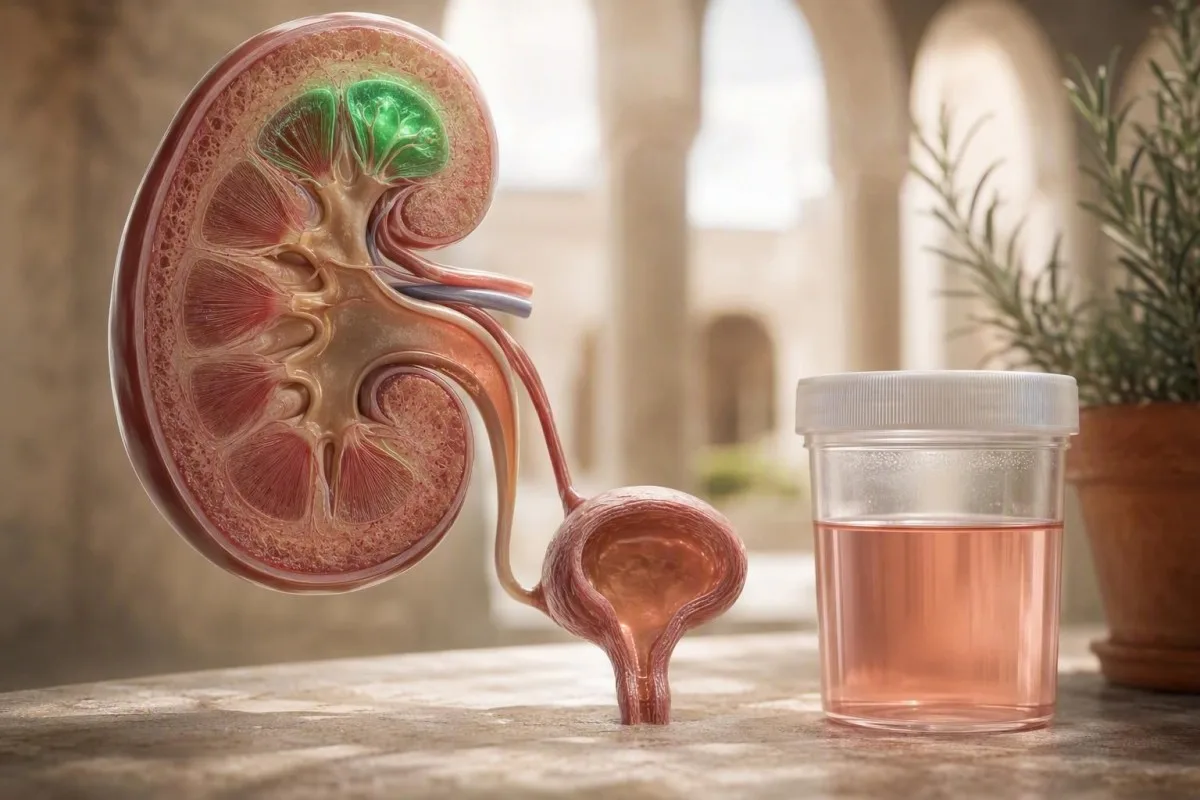
Vzorek moči růžové nebo čajové barvy po dlouhém běhu je často dočasná mikce vyvolaná cvičením, ale viditelnou barvu byste nikdy neměli automaticky přehlížet. Načasování, nález z mikroskopie, příznaky a řádně odpočatý opakovaný vzorek vypoví skutečný příběh.


- Hematurie vyvolaná námahou obvykle zmizí do 24–72 hodin po intenzivním běhu; přetrvávání déle než 72 hodin vyžaduje lékařské vyšetření.
- Mikroskopický práh 3 nebo více červených krvinek na zorné pole pod velkým zvětšením ve správně odebraném vzorku moči splňuje definici mikroshemurie podle AUA.
- Nesoulad testovacího proužku je důležitý: pozitivní reakce na krev na proužku s nulou až dvěma červenými krvinkami na zorné pole pod velkým zvětšením naznačuje myoglobin nebo volný hemoglobin, nikoli krvácení z močových cest.
- Opakování načasování je praktické: vyhněte se náročnému cvičení po dobu 48–72 hodin, normálně hydratujte, poté odeberte vzorek moči ze středního proudu.
- Vyšetření ještě tentýž den je rozumné v případě krevních sraženin, neschopnosti močit, horečky, jednostranné silné bolesti v boku nebo kolurové moči s výraznou bolestí svalů.
- Varovný vzorec ledvin je krev plus bílkoviny, válce z červených krvinek, vysoký krevní tlak nebo klesající eGFR – nikoli izolovaný testovací proužek po závodě.
- Nález rabdomyolýzy je nepřiměřeně tmavá moč s těžkými svalovými příznaky a hladinou kreatinkinázy často nad 5násobkem horní hranice laboratoře.
- Kontext rizika rakoviny mění práh pro vyšetření: věk, expozice kouření, předchozí radioterapie pánve a přetrvávající viditelná hematurie, to vše je důležité.
Proč může běh způsobit, že moč vypadá růžově
Hematurie běžců je obvykle krátkodobé krvácení z červených krvinek do moči po intenzivním cvičení, často se upravující během 24–72 hodin odpočinku. Přesto si viditelně růžová, červená nebo kolová moč zaslouží řádně odebraný opakovaný test, spíše než neopatrný předpoklad, že za to může běh.
V ordinaci je uklidňující vzorec přímočarý: změna barvy začíná po neobvykle dlouhém, rychlém nebo z kopce běžícím běhu; není přítomna horečka, kolikovitá bolest v boku ani pálení při močení; a mikroskopie se po odpočinku normalizuje. Kantesti je analyzátor krevních testů s AI což může umístit související renální markery – kreatinin, eGFR, elektrolyty a kreatinkinázu – vedle anamnézy cvičení, spíše než léčit jeden výsledek po závodě jako diagnózu.
Navrhované mechanismy zahrnují mechanický kontakt stěny močového měchýře, dočasné posuny průtoku krve ledvinami, koncentraci související s dehydratací a občasné rozpad červených krvinek z opakovaného dopadu nohy. Důkazy pro každý mechanismus jsou upřímně smíšené, protože většina studií je malá a používá různé závodní vzdálenosti. V mých 15 letech klinické praxe má anamnéza nového úsilí větší váhu než samotná barva; první ultramaraton a známých 5 km nenesou stejnou před-testovou pravděpodobnost.
Viditelná krev v moči po cvičení není synonymem benigní hematurie běžců. A širší průvodce červenými praporky hematurie je užitečný, protože ledvinové kameny, infekce, glomerulární onemocnění a rakoviny močových cest se mohou náhodně poprvé projevit po běhu.
Praktická definice
Hematurie vyvolaná cvičením znamená, že se červené krvinky objeví v moči brzy po námaze a zmizí při klidném opakovaném vzorku. Pozitivní testovací proužek sám o sobě tuto diagnózu nedokazuje, protože činidlo detekuje barvivo hemu z neporušených červených krvinek, volného hemoglobinu nebo myoglobinu.
Je to hematurie, hemoglobin, nebo myoglobin?
Testovací proužek moči pozitivní na krev může odrážet červené krvinky, hemoglobin nebo myoglobin a mikroskopie je oddělí. Růžová moč s mnoha neporušenými červenými krvinkami podporuje hematurii; tmavě hnědá moč s malým počtem nebo bez červených krvinek vyvolává obavy z pigmentu ze svalového poranění nebo hemolýzy.
Mikroskopie moči ukazující 3 nebo více červených krvinek na zorné pole pod velkým zvětšením potvrzuje mikrohematurii, pokud je vzorek čistě odebrán. Naopak silně pozitivní testovací proužek s 0–2 červenými krvinkami na zorné pole pod velkým zvětšením by měl lékaře přimět zvážit myoglobinurii, zejména po expozici teplu, svalové zátěži typu zhmoždění nebo těžké opožděné svalové bolesti. Hnědá nebo kolová barva je typičtější pro koncentrované barvivo než pro malé množství krvácení z močového měchýře.
Myoglobin je důležitý, protože může doprovázet rabdomyolýzu a akutní poškození ledvin. Koncentrace kreatinkinázy nad 5násobek horní hranice normy laboratoře se běžně používá jako biochemický práh pro rabdomyolýzu, ačkoli naléhavost určují symptomy, draslík, kreatinin a výdej moči. Viz naše praktické vysvětlení nebezpečně vysoká hladina kreatinkinázy pro vzorky, které by neměly čekat přes noc.
Potravinářská barviva, červená řepa, ostružiny, rifampicin, fenazopyridin a dehydratace mohou také zbarvit moč bez červených krvinek. A diferenciální diagnostika tmavé moči pomáhá vyhnout se běžné chybě, kdy se předpokládá, že každý načervenalý vzorek představuje krev.
Proč se změnou péče
Hematurie s červenými krvinkami směřuje pozornost k močovým cestám, zatímco myoglobinurie směřuje pozornost ke kosternímu svalstvu a ochraně ledvin. Obě se mohou vyskytnout po vytrvalostních akcích, ale pouze mikroskopie a cílené krevní testy je mohou spolehlivě rozlišit.
Jak číst výsledky analýzy moči po běhu
Nejcennější test moči po běhu kombinuje testovací proužek, mikroskopii, měření bílkovin a specifickou hmotnost. Krev na testovacím proužku s přechodnými červenými krvinkami a bez bílkovin je často nízké riziko; krev plus bílkoviny nebo válce vyžadují důkladnější posouzení ledvin.
Výsledek krevního testu na proužku je uveden jako negativní, stopové množství, 1+, 2+ nebo 3+, ale jedná se o screeningový signál, nikoli o počet buněk. AUA definuje mikhematurii jako více než 3 červené krvinky na pole s vysokým zvětšením při mikroskopickém vyšetření, nikoli pouze výsledek testovacího proužku (Barocas et al., 2020). Toto rozlišení zabraňuje tomu, aby běžci podstoupili zbytečné vyšetření na rakovinu po falešně pozitivním screeningu.
Specifická hmotnost nad 1.030 v mnoha laboratořích indikuje koncentrovanou moč a může způsobit, že barva bude vypadat děsivěji, ale nevysvětluje potvrzené červené krvinky. Bílkoviny 1+ nebo vyšší by měly být kvantifikovány poměrem albuminu ke kreatininu v moči nebo poměrem bílkovin ke kreatininu; existuje přechodná cvičením vyvolaná proteinurie, ale přetrvávající albuminurie směřuje diferenciální diagnózu k onemocnění glomerulů. Naše kompletní průvodce analýzou moči vysvětluje, proč by tyto markery neměly být sloučeny do jednoho výsledku.
Kantesti AI interpretuje kreatinin a eGFR spolu s nálezy moči, dobou cvičení a předchozími hodnotami; mírně zvýšený kreatinin po horkém závodě není ekvivalentní chronickému onemocnění ledvin. V praxi se ptám na vzdálenost, terén, teplotu, užívání protizánětlivých léků, menstruační cyklus a zda byl vzorek odebrán do 2 hodin po dokončení.
Kdy byste měli po běhu zopakovat test moči?
Opakované vyšetření moči 48–72 hodin po posledním náročném běhu je rozumným výchozím bodem pro podezření na běžeckou hematurii. Použijte vzorek z prvního ranního močení nebo střední proud dobře hydratovaného jedince, ale okamžitě předtím nenuťte pít litry vody, protože extrémní ředění může zakrýt užitečné nálezy.
Pro běžnou pozávodní abnormalitu obvykle doporučuji žádné intervalové tréninky, kopce, těžké zvedání nebo závody po dobu 48 hodin; po maratonu, ultramaratonu, tepelné nemoci nebo neobvyklé bolesti, 72 hodin je obhajitelnější. Běžné pití podle žízně je dostatečné. Nadměrná hydratace může snížit specifickou hmotnost pod 1,005 a občas ztížit interpretaci hraničního výsledku.
Pokud mikroskopie zůstává pozitivní po 72 hodinách, naplánujte kontrolu u praktického lékaře během několika dnů, místo abyste opakovaně testovali po trénincích. Přetrvávající výsledky vyžadují měření krevního tlaku, sérového kreatininu/eGFR, poměru albuminu ke kreatininu v moči a zvážení kultury nebo zobrazovacích metod podle rizika. Vztah mezi námahou, hydratací a dočasně nižším odhadem filtrace je popsán v našem průvodci eGFR po cvičení.
52letý rekreační maratonec, kterého jsem viděl, měl večer po horkém závodě 18 červených krvinek na vysokozvětšovací pole, ale po 72 hodinách odpočinku 0–1 červených krvinek; jeho kreatinin se vrátil z 1,28 mg/dL na 0,96 mg/dL. Výsledek byl uklidňující, ale stejný postup by nestačil pro 52letého kuřáka s opakovanou viditelnou barvou moči.
Netestujte na cílové čáře, pokud se tomu můžete vyhnout
Testování ihned po cvičení maximalizuje šanci na nalezení dočasných červených krvinek, koncentrované moči a proteinů. To může být klinicky užitečné při podezření na rabdomyolýzu, ale je to špatná doba pro stanovení výchozího stavu běžce.
Které vzorce hematurie po běhu jsou obvykle uklidňující?
Samolimitující se epizoda po intenzivním běhu je uklidňující, pokud zcela odezní, postrádá bolest nebo systémové příznaky a nemá žádnou proteinurii ani změnu funkce ledvin. Uklidňující neznamená ignorované; znamená to potvrzené vzorkem odebraným v klidu.
Fenotyp s nižším rizikem je mladší nebo středněvěký běžec s jasnou vyvolávající příčinou v podobě námahy, normálním krevním tlakem, bez anamnézy kouření a normální mikroskopií v klidu. V tomto kontextu jednorázový přechodný výsledek 3–10 RBC/HPF po závodě se často upraví bez léčby. Stále bych to zdokumentoval, protože opakování po každém dlouhém běhu si zaslouží pečlivější posouzení než jednorázový výskyt.
Normální poměr albuminu ke kreatininu v moči je obecně pod 30 mg/g (pod 3 mg/mmol), ačkoli laboratoře a země uvádějí jednotky odlišně. Krev bez albuminu, válců nebo dysmorfních červených krvinek ukazuje pryč od glomerulárního úniku; nedokazuje to zdroj z močového měchýře, ale navádí k další otázce. Naše vysvětlení z bílkovině v moči pokrývá tuto sekci jasně.
Trauma močového měchýře je pravděpodobnější, když je moč velmi koncentrovaná a běžec skončí s téměř prázdným močovým měchýřem. Někteří sportovní lékaři navrhují vymočit se před dlouhým během a pravidelně pít, ale jedná se o preventivní radu s omezenými důkazy z testů – nikoli o náhradu za vyšetření, pokud zbarvení přetrvává.
Normální výsledek obsahuje časové razítko
Negativní test 3 dny po závodě je uklidňující pro danou epizodu, nikoli celoživotní zárukou. Nová viditelná hematurie měsíce poté by měla být posouzena na základě vlastních zásluh, zejména po 40. roce věku nebo při expozici kouření.
Varovné signály, díky nimž je hematurie běžce méně pravděpodobná
Hematurie vyžaduje včasné vyšetření, pokud přetrvává po 72 hodinách, opakuje se bez náročné námahy nebo se objeví s bolestí, horečkou, sraženinami, bílkovinami nebo změnou funkce ledvin. Kombinace nálezů je informativnější než samotný dramaticky vypadající vzorek.
Vyhledejte včasnou lékařskou radu pro viditelnou červenou moč, která trvá déle než 24 hodin, i když se cítíte dobře; hranice je nižší pro lidi nad 40 let, současné nebo bývalé kuřáky, nebo ty s předchozím pánevním ozářením. Směrnice AUA používá stratifikaci rizika založenou na věku, kouření, stupni a přetrvávání mikroskopické krve a předchozí hrubé hematurii spíše než na stejném zacházení se všemi mikrohematuriemi (Barocas et al., 2020).
Dysmorfní červené krvinky, válce z červených krvinek, významná albuminurie, nová hypertenze nebo snížená eGFR naznačují zdroj v ledvinovém filtru spíše než otřesený močový měchýř. Válce z červených krvinek nejsou nikdy očekávaným důsledkem běžného běhu a měly by vyžadovat zrychlené vyšetření ledvin. Viz náš přehled granulárních a močových válců proč nálezy sedimentu mají význam.
Thomas Klein, MD, radí běžcům, aby sami nesoudili jen podle barvy: infekce močových cest může způsobit pálení, nucení, pyurii a někdy hematurii, zatímco kameny častěji způsobují náhlou jednostrannou bolest a nevolnost. Kultivace je nejužitečnější před podáním antibiotik, pokud jsou přítomny příznaky infekce.
Kombinace krve a bílkovin
Potvrzená hematurie s proteinurií je znepokojivější než izolovaná hematurie, protože obojí může pocházet z glomerulárního filtru. Poměr albuminu a kreatininu v moči 30 mg/g nebo vyšší by měl být zopakován a interpretován společně s krevním tlakem a funkcí ledvin.
Kdy růžová moč po cvičení vyžaduje péči ve stejný den?
Vyhledejte naléhavé vyšetření ve stejný den při výskytu sraženin, neschopnosti močit, silné bolesti v boku, horečky, mdlob, sníženého výdeje moči nebo tmavé moči se silnou bolestí a slabostí svalů. Tyto příznaky poukazují na něco jiného než na nekomplikovanou hematurii způsobenou cvičením.
Sraženiny mohou zablokovat odtok moči a neschopnost močit je naléhavý problém bez ohledu na sportovní zdatnost. Horečka 38,0 °C nebo vyšší s bolestí v boku může indikovat infekci horních močových cest; silná kolikovitá bolest s zvracením může indikovat kámen. Žádná z těchto situací by neměla být řešena čekáním na opakovaný test po běhu.
Tmavě hnědá moč po námaze s výraznou citlivostí svalů, slabostí, otokem nebo sníženým výdejem vyvolává obavy z rabdomyolýzy. Počáteční testování obvykle zahrnuje kreatinkinázu, kreatinin, draslík, vápník, fosfát a chemické vyšetření moči. A průvodce rhabdomyolýzou u CrossFitu je relevantní, protože neobvyklé excentrické cvičení – nikoli samotný běh – je častou příčinou.
Těžká dehydratace může zhoršit výsledky vyšetření ledvin, ale může se také vyskytovat souběžně se skutečným poškozením. Pokud pociťujete závratě, zmatenost, nejste schopni přijímat tekutiny, nebo máte velmi málo moči po dobu 8–12 hodin, nepokoušejte se problém doma řešit sportovními nápoji.
Těhotenství a antikoagulancia
Těhotné běžkyně a osoby užívající antikoagulancia by měly okamžitě hlásit viditelnou hematurii. Antikoagulancia mohou zesílit krvácení, ale neodstraňují nutnost identifikovat jeho zdroj; těhotenství také mění práh pro vyšetření infekce, kamenů a onemocnění ledvin.
Stavy, které běh může odhalit, nikoli způsobit
Běh může odhalit existující močový problém tím, že koncentruje moč nebo podpoří vyšetření, spíše než že by sám způsobil hematurii. Kameny, infekce, glomerulární onemocnění, strukturální abnormality a malignita zůstávají součástí diferenciální diagnostiky.
Ledvinové kameny často způsobují jednostrannou bolest od boku k tříslům, nevolnost a červené krvinky pod mikroskopem, ačkoli se vyskytují i bezbolestné kameny. Močová infekce častěji způsobuje pálení, časté močení, nucení na močení a bílé krvinky; negativní výsledek na nitrity jej nevylučuje. Náš průvodce po esteráze leukocytů s negativními nitrity vysvětluje tento běžný smíšený vzorec.
Glomerulonefritida se může projevit po infekci horních cest dýchacích s kolovou močí, otoky, zvýšeným krevním tlakem, proteinurií a dysmorfními červenými krvinkami. V pokynu KDIGO 2024 pro CKD jsou perzistující albuminurie a snížené eGFR považovány za doplňkové markery rizika onemocnění ledvin, nikoli za zaměnitelné měření (KDIGO, 2024).
Kantesti je nástroj pro analýzu krevních testů poháněný umělou inteligencí , která pomáhá uživatelům rozpoznat vzorec napříč kreatininem, eGFR, albuminem, elektrolyty a CBC, ale nemůže diagnostikovat anatomický zdroj hematurie. Zobrazovací metody, mikroskopie, kultivace a vyšetření lékařem stále provádějí rozhodující práci.
Rakovina je u mladých běžců neobvyklá, u dospělých není nemožná
Viditelná hematurie vyžaduje vyšetření i v případě, že se cvičení jeví jako zřejmé vysvětlení, zejména u osob s expozicí kouři nebo přetrvávajícími příznaky. Riziko se zvyšuje s věkem a kumulativní expozicí tabáku, proto stejné výsledky vyšetření moči nevedou k identickým testovacím plánům.
Kdo potřebuje následnou péči urologa nebo nefrologa?
Perzistující hematurie po odpočinkové opakované vzorku by měla být posouzena z hlediska rizika pro urologii, zatímco hematurie plus proteinurie, válce, hypertenze nebo snížené eGFR ukazuje na nefrologii. Mnoho lidí potřebuje pouze opakované testování pod vedením praktického lékaře; doporučení závisí na vzorci.
Urologické vyšetření je zvláště vhodné pro rekurentní viditelnou hematurii, perzistující mikroskopickou hematurii, anamnézu kouření, profesní expozici aromatickým aminům, předchozí pánevní radioterapii nebo močové příznaky bez infekce. V závislosti na riziku mohou lékaři použít ultrazvuk ledvin a močového měchýře, CT urogtomografii a cystoskopii. Jednorázový stopový nález na proužkovém testu po závodě u 24letého člověka je velmi odlišný scénář než rekurentní červená moč u 58letého bývalého kuřáka.
Nefrologické vyšetření je pravděpodobnější s poměrem albuminu k kreatininu v moči ≥30 mg/g, eGFR pod 60 ml/min/1,73 m² trvající 3 měsíce nebo déle, červenými krvinkami ve válcích nebo obtížně kontrolovatelným krevním tlakem. Tato kritéria jsou důležitá, protože chronické onemocnění ledvin je definováno jak trváním, tak jednorázovým měřením. Přečtěte si náš příručku pro stadia chronického onemocnění ledvin pro praktické kategorie.
Služba Kantesti pro interpretaci laboratorních testů pomocí AI může označit opakující se vzorec krve a bílkovin k diskusi, zejména pokud uživatelé nahrávají výsledky z různých laboratoří. Měla by podporovat, nikoli nahrazovat, klinika, který rozhoduje, zda je nutné zobrazovací vyšetření močových cest nebo specializované vyšetření.
Nedovolte, aby antikoagulace ukončila konverzaci
Užívání antikoagulancií mění závažnost krvácení, ale nestanoví příčinu hematurie. Podle mých zkušeností přisuzování opakovaného výskytu krve v moči apixabanu, warfarinu nebo aspirinu bez vyšetření může zpozdit rozpoznání kamenů, infekce nebo strukturální choroby.
Které krevní testy pomohou po hematurii související s cvičením?
Užitečné krevní testy závisí na příznacích: kreatinin, eGFR, elektrolyty a kreatinkináza hodnotí stres ledvin a svalů, zatímco CBC vyhodnocuje anémii nebo příznaky infekce. Rutinní široké panely jsou méně užitečné než cílené testování po přesné anamnéze a analýze moči.
Kreatinin se může po vytrvalostním cvičení přechodně zvýšit kvůli svalovému metabolismu, sníženému prokrvení ledvin a dehydrataci. Vzorce eGFR jsou méně spolehlivé během rychlé změny kreatininu, proto je opakovaná hodnota po 48–72 hodin běžné rekonvalescence je často významnější než výsledek z cílové rovinky. Naše průvodce rekontroly kreatininu po cvičení poskytuje kontext pro tento častý spouštěč úzkosti.
Kreatinkináza má široký rozsah po cvičení: trénovaní sportovci mohou vykazovat zvýšení po závodě bez poškození ledvin, zatímco hodnoty mnohonásobně vyšší než lokální horní limit plus příznaky si zaslouží urgentní posouzení. Draslík nad 6,0 mmol/l je potenciálně nebezpečný a vyžaduje urgentní klinické posouzení, zejména pokud je poškozena funkce ledvin nebo je podezření na svalové poškození.
CBC je nejužitečnější při únavě, bledosti, silném menstruačním krvácení, opakované hematurii nebo při podezření na systémové onemocnění. Hemoglobin může po vytrvalostních akcích klesnout v důsledku rozšíření plazmatického objemu, ztráty železa nebo hemolýzy; feritin by měl být interpretován mimo akutní zánět a náročný trénink. Vytrvalostní běžci mohou najít náš přehled krevních testů pro sportovce užitečný pro rozumný základ.
Nedívejte se na onemocnění ledvin podle jednoho panelu z týdne závodů
Zvýšení kreatininu o 0,3 mg/dl nebo více může splňovat kritérium akutního poškození ledvin ve správném časovém rámci, ale kontext a opakované testování jsou po závodě rozhodující. Nízký výdej moči, stoupající draslík a přetrvávající elevace mají větší váhu než izolovaný hraniční výsledek.
Jak odebrat opakovaný vzorek moči, kterému lékaři mohou důvěřovat
Čistý střední vzorek moči po 48–72 hodinách bez namáhavého cvičení je nejlepším způsobem, jak zkontrolovat, zda hematurie ustoupila. Chyby při odběru, kontaminace menstruací a starý vzorek mohou vést k zavádějícím výsledkům.
Umyjte si ruce, začněte močit do toalety, poté odeberte střední proud bez dotyku vnitřku nádoby. Vzorek doručte neprodleně – ideálně do 2 hodin—nebo dodržujte pokyny laboratoře pro chlazení. Dlouhé stání mění vzhled buněk a může snížit spolehlivost mikroskopie.
Pokud je to možné, vyhněte se testování během aktivní menstruace; pokud testování nemůže čekat, informujte klinika a laboratoř. Vaginální kontaminace může způsobit zjevné červené krvinky a bílkoviny, zatímco skvamózní epitelové buňky často signalizují špatně odebraný vzorek. Náš průvodce k epiteliálním buňkám v moči vysvětluje, proč to není triviální poznámka pod čarou v laboratoři.
Thomas Klein, MD, doporučuje spolu se vzorkem zaznamenat čtyři údaje: poslední namáhavou aktivitu, délku trvání události, venkovní teplotu a všechny léky užívané během předchozích 72 hodin. Výsledek bez časových údajů je mnohem obtížnější interpretovat – zejména když je moč odebrána po dvojitém tréninku.
Vzorek z první ranní moči versus vzorek během dne
Vzorek z první ranní moči je koncentrovaný a dobrý pro detekci malých abnormalit, ale normálně hydratovaný vzorek středního proudu během dne je přijatelný, pokud je odběr čistší. Konzistence je důležitější pro sériové srovnání: při každém opakování použijte zhruba stejné podmínky.
Hydratace, léky proti bolesti a doplňky stravy, které mění obraz
Dehydratace může koncentrovat moč a zvýšit zatížení ledvin, zatímco NSAID mohou snížit průtok krve ledvinami během vytrvalostního cvičení. Ani jeden z těchto faktorů neprokazuje příčinu hematurie, ale oba ovlivňují, jak opatrně lékaři interpretují výsledek po běhu.
Pro většinu běžců je pití podle žízně a postupné doplňování ztrát bezpečnější než rigidní nucení do příjmu tekutin. Velmi nízký obsah sodíku z nadměrného příjmu vody může být nebezpečný; hladina sodíku v séru pod 125 mmol/l s bolestí hlavy, zvracením, zmateností nebo záchvaty je nouzová situace. Barva moči je hrubým vodítkem hydratace, nikoli přesným měřičem hydratace.
Ibuprofen, naproxen a další NSAID mohou snížit průtok krve ledvinami zprostředkovaný prostaglandiny, zejména během tepelného stresu, zvracení nebo dlouhých akcí. Doporučuji pacientům, aby se vyhýbali rutinnímu profylaktickému užívání NSAID před maratonem, pokud jim jejich lékař nedal jasný důvod. Kontext medikace je rozebrán v našem článku o bezpečnosti laboratorních trendů.
Vysoká dávka vitamínu C může interferovat s některými reakcemi močových testovacích proužků a doplňky stravy uváděné na trh pro výkon někdy obsahují neuvedené stimulanty nebo diuretika. Vezměte nádoby nebo jasné fotografie na prohlídku; je to často užitečnější než se snažit zapamatovat si seznam složek značkového prášku. Náš průvodce bezpečností doplňků stravy pro sportovce nabízí rozumný kontrolní seznam.
Hydratace není léčbou přetrvávající krve
Voda může upravit koncentraci, ale neléčí kámen, infekci, glomerulární proces nebo strukturální zdroj močových cest. Pokud se červené krvinky objeví i ve vzorku odebraném v klidu a řádně, mělo by se zvážit další postup na základě vzorce spíše než další experiment s hydratací.
Můžete pokračovat v běhu po hematurii vyvolané cvičením?
Většina běžců se může postupně vrátit k tréninku, jakmile se barva moči normalizuje, symptomy odezní a opakovaný vzorek v klidu je uklidňující. Nevracejte se k náročnému tréninku, dokud je moč viditelně červená, výsledky vyšetření ledvin jsou abnormální nebo svalové symptomy naznačují rabdomyolýzu.
Po nekomplikované jednorázové epizodě obvykle doporučuji lehké běhání pouze několik dní, poté postupnou obnovu objemu a intenzity během 7–14 dnů. Běžec by měl zastavit a vyhledat kontrolu, pokud se barva opakuje, objeví se bolest nebo se sníží produkce moči. Toto je pragmatický klinický přístup, nikoli na zkouškách dokázaný předpis.
Opakovaná hematurie po stejné vzdálenosti může ospravedlnit praktické experimenty: vyhněte se závodění při dehydrataci, močte před dlouhým během, pomaleji zavádějte trénink z kopce a zkontrolujte přizpůsobení bot nebo terén. Veďte si záznamy o tempu, horku, délce trvání, barvě moči a výsledcích vzorků. laboratorním průvodcem pro maratonské běžce může pomoci rozlišit markery zotavení od důvodů k pozastavení tréninku.
Netrenujte kvůli nevysvětlitelnému viditelnému hematurii jen proto, že máte naplánovanou událost. Sportovci často výborně snášejí nepohodlí; obtížnější dovedností je rozpoznat, že vytrvalost je diagnostická informace, nikoli test houževnatosti.
Vybudujte si skutečnou výchozí hodnotu
Analýza moči a renální panel provedené nejméně 72 hodin po náročném tréninku mohou usnadnit budoucí interpretaci výsledků po závodě. To je obzvláště užitečné pro ultraběžce, lidi s jednou ledvinou nebo sportovce užívající léky, které ovlivňují perfuzi ledvin.
Co sdělit svému lékaři o krvi v moči po cvičení
Nejrychlejší cestou k užitečnému posouzení hematurie je stručný časový sled: barva moči, dávka cvičení, příznaky, léky a čas opakovaného testování. Přineste skutečné laboratorní hodnoty, nikoli jen zprávu, že vzorek byl “pozitivní na krev”.”
Uveďte, zda byla moč růžová, jasně červená, čajově zbarvená nebo obsahovala sraženiny; zda se barva objevila před, během nebo po cvičení; a zda zmizela po prvním vymočení. Zahrňte pálení, urgenci, horečku, bolest v boku, nevolnost, otoky a snížený výdej moči. Podrobný referenční průvodce barvy moči může pomoci přesně popsat pozorování bez jeho přehnané interpretace.
Přineste předchozí výsledky analýzy moči, hodnoty kreatininu/eGFR, hodnoty krevního tlaku, historii kouření, rodinnou anamnézu onemocnění ledvin a seznam léků/doplňků. Kantesti je platforma pro interpretaci biomarkerů pomocí AI které mohou organizovat opakované výsledky krevních testů a zdůraznit významné změny, ale lékař musí tyto hodnoty spojit s mikroskopií moči a vyšetřením.
Od 3. září 2026 zůstává klinický princip jednoduchý: cvičení je pravděpodobným vysvětlením pouze poté, co se výsledek normalizuje a chybí konkurenční vysvětlující faktory. Pokud si nejste jisti, zeptejte se, zda potřebujete mikroskopii, kultivaci, poměr albuminu ke kreatininu, opakovaný kreatinin, zobrazovací metody nebo doporučení – ne jen další testovací proužek.
Otázky, které stojí za to položit
Zeptejte se, zda byly vidět neporušené červené krvinky, zda byly přítomny bílkoviny nebo válce, a kdy by mělo dojít k opakovanému vyšetření v klidu. Tyto tři odpovědi obvykle objasní, zda dalším krokem je pečlivé sledování, testování ledvin, testování infekce nebo urologické vyšetření.
Rozumný akční plán pro hematurii běžce
Při jednom bezbolestném výskytu po náročném běhu si dejte 48–72 hodin pauzu od intenzivního cvičení a opakujte analýzu moči ze středního proudu; vyhledejte dřívější péči při varovných příznacích nebo přetrvávajícím viditelném zbarvení. Cílem není ani panika, ani odmítnutí – je to prokázat, že nález se normalizuje.
První krok: přestaňte s náročným tréninkem, normálně pijte a zaznamenejte čas a příznaky. Druhý krok: opakujte mikroskopii po 48–72 hodin. Třetí krok: pokud krev přetrvává, nebo pokud se objeví bílkoviny, válce, bolest, horečka, sraženiny, nízký výdej moči nebo abnormální renální markery, okamžitě vyhledejte lékařské vyšetření. Tato sekvence zabraňuje jak opomenutí nemoci, tak zbytečnému zobrazování po jednorázovém vzorku z cílové čáry.
Když náš klinický tým kontroluje nahraná laboratorní data, upřednostňujeme vzorce: stoupající kreatinin plus vysoká CK a nízký výdej moči je naléhavější než stabilní kreatinin s přechodným testem moči. Metodologie a ochranná opatření společnosti Kantesti jsou popsány v našich informace o klinické validaci, a náš lékařský dohled je podrobně popsán v Lékařská poradní rada.
Většina pacientů zjistí, že včasné opakované vyšetření promění znepokojující změnu barvy na jasný plán. Ale pokud máte pocit, že něco není v pořádku – zejména pokud je moč i zítra stále červená – důvěřujte tomuto signálu a nechte se vyšetřit.
Pravidlo jedné věty
Růžová moč jednou po náročném běhu může být přechodná; růžová moč, která přetrvává, se opakuje nebo se objeví s příznaky, je hematurií, dokud není řádně vyhodnocena.
Často kladené otázky
Jak dlouho trvá hematurie běžců?
Hematurie u běžců obvykle odezní během 24–72 hodin po ukončení intenzivního cvičení. Praktický opakovaný test moči spočívá v odběru středního proudu čistého vzorku po 48–72 hodinách bez náročného běhu nebo těžkého zvedání. Přetrvávající viditelná růžová nebo červená moč po 24 hodinách nebo mikroskopická hematurie, která přetrvává po 72 hodinách, by měla být vyhodnocena lékařem. Horečka, krevní sraženiny, silná bolest v boku, snížený výdej moči nebo silná svalová bolest odůvodňují vyšetření ve stejný den.
Je krev v moči po cvičení normální?
Krev v moči po cvičení může být přechodným účinkem namáhavého běhu, dehydratace, nárazu na stěnu močového měchýře nebo krátkodobých změn průtoku krve v ledvinách, ale není automaticky normální. Mikroskopické potvrzení 3 nebo více červených krvinek na vysokozvětšené pole splňuje definici mikrohematurie AUA. Výsledek, který zmizí na opakovaném vzorku po odpočinku, je uklidňující, zatímco přetrvávající krev, bílkoviny, válce, bolest nebo močové příznaky vyžadují další vyšetření. Viditelná barva moči by měla být vždy hlášena, zejména u dospělých s expozicí kouření nebo s opakovanými epizodami.
Může dehydratace způsobit růžovou moč po běhu?
Dehydratace může způsobit, že moč bude tmavší, a může zesílit nález postcvičné hematurie tím, že koncentruje obsah moči, ale samotná dehydratace spolehlivě nevysvětluje potvrzené červené krvinky. Měrná hmotnost moči nad 1,030 často v mnoha laboratořích naznačuje koncentrovanou moč. Pijte normálně do žízně a po 48–72 hodinách odpočinku odeberte vzorek čistého výtoku, místo abyste se pokoušeli výsledek „spláchnout“ nadměrným množstvím vody. Silná žízeň, závratě, velmi nízký výdej moči nebo zmatenost vyžadují okamžité lékařské vyšetření.
Jaký je rozdíl mezi hematurií a myoglobinurií po cvičení?
Hematúria znamená prítomnosť intaktných červených krviniek v moči, zatiaľ čo myoglobinúria odráža pigment zo svalov uvoľnený po poranení svalov. Testovací prúžok môže byť v oboch situáciách pozitívny na krv, takže rozhodujúce je mikroskopické vyšetrenie: myoglobinúria často produkuje pozitívny testovací prúžok s 0–2 červenými krvinkami na pole pri veľkom zväčšení. Silná bolesť svalov, slabosť, opuch, tmavý moč farby koly alebo hodnota kreatínkinázy vyššia ako 5-násobok hornej hranice laboratórneho limitu vyvoláva obavy z rabdomyolýzy. Tento stav si vyžaduje urgentné klinické posúdenie, pretože draslík a funkcia obličiek sa môžu rýchlo meniť.
Mám přestat běhat, pokud mám hematurii vyvolanou cvičením?
Ukončete intenzivní běhání, dokud se barva moči nevrátí k normálu a neprovedete kontrolní zátěžový test s odstupem, obvykle po 48–72 hodinách. Pokud je kontrolní vzorek normální a nemáte bolesti, horečku, krevní sraženiny, proteinurii nebo abnormalitu funkce ledvin, většina běžců se může postupně vrátit k zátěži během přibližně 7–14 dnů. Neobnovujte intenzivní trénink, pokud moč zůstává viditelně červená nebo tmavá, je snížená produkce moči nebo jsou přítomny silné svalové příznaky. Opakované epizody po podobných trénincích si zaslouží lékařské posouzení, i když se každá epizoda upraví.
Kdy hematurie vyžaduje návštěvu urologa?
Perzistentní mikroskopická hematurie po opakovaném klidovém vzorku, rekurentní makroskopická hematurie nebo hematurie u osoby s anamnézou kouření, předchozí pánevní radioterapií nebo urologickými příznaky často vyžaduje urologické posouzení rizika. Urologové mohou zvážit ultrazvuk, CT urografii a cystoskopii v závislosti na věku a celkovém riziku, nikoli použít jeden test pro všechny. Hematurie s albuminurií 30 mg/g nebo více, erytrocytárními válci, hypertenzí nebo eGFR pod 60 mL/min/1.73 m² silněji poukazuje na nefrologii. Správná specializace závisí na úplném vzorci vyšetření moči a krve.
Získejte analýzu krevních testů poháněnou AI ještě dnes
Přidejte se k více než 2 milionům uživatelů po celém světě, kteří důvěřují Kantesti pro okamžitou a přesnou analýzu laboratorních testů. Nahrajte své výsledky krevních testů a během několika sekund získejte komplexní interpretaci biomarkerů 15,000+.
📚 Odkazované publikace výzkumu
Klein, T., Mitchell, S., & Weber, H. (2026). Vícejazyčná AI podpora rozhodování v klinické praxi pro včasné třídění hantavirových infekcí: Návrh, inženýrské ověření a reálné nasazení napříč 50 000 interpretovanými zprávami o krevních testech. Kantesti AI Medical Research.
Klein, T., Mitchell, S., & Weber, H. (2026). Předregistrované, rubrikou řízené automatizované technické benchmarkování interpretačního enginu pro krevní testy Kantesti na 100 000 syntetických testovacích případech. Kantesti AI Medical Research.
📖 Externí lékařské reference
⚕️ Lékařské prohlášení
Tento článek je pouze pro vzdělávací účely a nepředstavuje lékařské poradenství. Pro rozhodnutí o diagnóze a léčbě se vždy poraďte s kvalifikovaným poskytovatelem zdravotních služeb.
Signály důvěry E-E-A-T
Zažít
Lékařem vedená klinická revize pracovních postupů pro interpretaci laboratorních výsledků.
Odbornost
Zaměření laboratorní medicíny na to, jak se biomarkery chovají v klinickém kontextu.
Autoritativnost
Napsal Dr. Thomas Klein, recenze: Dr. Sarah Mitchell a Prof. Dr. Hans Weber.
Důvěryhodnost
Interpretace založená na důkazech s jasnými následnými kroky pro snížení poplachu.