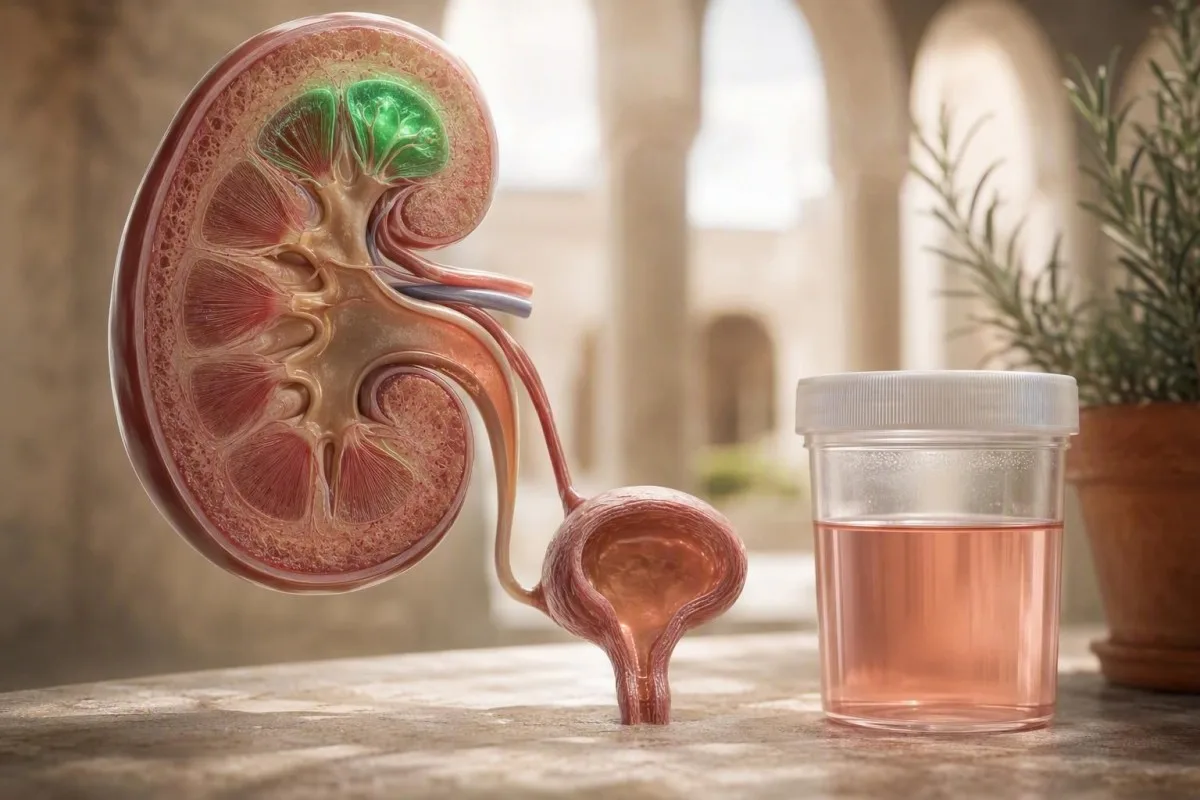
ڊوڙ کان پوءِ گلابي يا چانهه رنگ جو پيشاب جو نمونو اڪثر عارضي ورزش جي ڪري پيشاب ۾ رت اچڻ (exercise-induced hematuria) هوندو آهي، پر ظاهري رنگ کي ڪڏهن به بي بنياد نه سمجهڻ گهرجي. وقت، خوردبيني جا نتيجا، علامتون، ۽ آرام سان ورتل ٻيو نمونو حقيقي ڪهاڻي ٻڌائين ٿا.


- مشق جي ڪري پيشاب ۾ رت اچڻ عام طور تي سخت ڊوڙ کان پوءِ 24–72 ڪلاڪن اندر ٺيڪ ٿي وڃي ٿو؛ 72 ڪلاڪن کان پوءِ برقرار رهڻ طبي جائزي جي ضرورت آهي.
- خوردبيني جي حد هڪ صحيح نموني ۾ 3 يا وڌيڪ ڳاڙها رت جا خليه في اعلي-طاقت فيلڊ AUA جي مائڪرو هيماٽوريا جي تعريف پورا ڪري ٿو.
- ڊپ اسٽڪ جو ميلاپ اهم آهي: هڪ مثبت بلڊ پيڊ جنهن ۾ صفر کان ٻه ڳاڙها خليه في اعلي-طاقت فيلڊ هجن، پيشاب جي رت جي بدران myoglobin يا مفت hemoglobin جي نشاندهي ڪري ٿو.
- ورجائڻ جو وقت عملي آهي: 48–72 ڪلاڪن تائين سخت ورزش کان پاسو ڪريو، عام طور تي پاڻي پيئو، پوءِ وچ-اسٽريم پيشاب جو نمونو ڏيو.
- ساڳئي ڏينهن جائزو رت جا ٺهيل ٽڪرا، پيشاب ڪرڻ ۾ ناڪامي، تپ، هڪ پاسي سخت درد، يا ڪولا پيشاب سان گڏ سخت عضلاتي درد جي صورت ۾ سمجهه واري آهي.
- گردن جي ڊيڄارڻ جو نمونو رت پلس پروٽين، ڳاڙها خليه جا ڪاسٽ، اعلي بلڊ پريشر، يا گهٽجندڙ eGFR آهي - نه ته ريس کان پوءِ الڳ ڊپ اسٽڪ.
- رابڊوميوليسس جي خبر گہرے پيشاب سان گڏ سخت عضلاتي علامات ۽ creatine kinase جو نتيجو اڪثر ڪري ليبارٽري جي مٿئين حد کان 5 دفعا وڌيڪ هوندو آهي.
- ڪينسر جي خطري جو پس منظر جاچ جي حد بدلائي ٿو: عمر، تمباکو نوشي، اڳوڻي پيٽ جي تابڪاري، ۽ مستقل نظر ايندڙ پيشاب ۾ رت سڀ اهم آهن.
ڊوڙ پيشاب کي گلابي ڇو بڻائي سگهي ٿي
رنر جو پيشاب ۾ رت اڪثر ڪري سخت مشق کان پوءِ ڳاڙهي سيلن جو ٿوري وقت لاءِ لڪي وڃڻ آهي, ، اڪثر آرام جي 24-72 ڪلاڪن اندر ٺيڪ ٿي وڃي ٿو. اڃا تائين، گلابي، ڳاڙهي، يا ڪولا رنگ جو پيشاب هڪ درست نموني سان ورتل ٻيهر امتحان جي لائق آهي، نه ته بي پرواهه اندازو لڳايو وڃي ته ڊوڙڻ سبب اهو ٿيو.
ڪلينڪ ۾، اطمينان بخش نمونو سڌو آهي: رنگ تبديلي هڪ غير معمولي ڊگهي، تيز، يا هيٺئين ڊوڙ کان پوءِ شروع ٿئي ٿي؛ ڪو به بخار، پيٽ ۾ درد، يا پيشاب جي جلن ناهي؛ ۽ آرام کان پوءِ مائڪروسڪوپي نارمل ٿي وڃي ٿي. Kantesti هڪ AI رت جو ٽيسٽ اينالائزر آهي جيڪو لاڳاپيل گردي جي مارڪرز-creatinine، eGFR، electrolytes، ۽ creatine kinase-کي ورزش جي تاريخ سان گڏ رکي سگھي ٿو، نه ته ريس کان پوءِ هڪ نتيجي کي تشخيص طور علاج ڪيو وڃي.
تجويز ڪيل ميڪنزم مثاني جي ڀت سان ٽڪرائڻ، گردي جي رت جي وهڪري ۾ عارضي تبديليون، dehydration سبب ٿيندڙ ڳاڙھاپو، ۽ ڪڏهن ڪڏهن ڳاڙهي سيلن جو ٽٽڻ پيرن جي بار بار ٽڪرائڻ سبب. هر ميڪنزم جو ثبوت ايمانداري سان گڏيل آهي، ڇاڪاڻ ته اڪثر مطالعي ننڍا هوندا آهن ۽ مختلف ريس جي فاصلي استعمال ڪندا آهن. منهنجي 15 سالن جي ڪلينڪل مشق ۾، نئين ڪوشش جي تاريخ صرف رنگ کان وڌيڪ اهم آهي؛ پهرين الٽراماراتون ۽ هڪ واقف 5 ڪلوميٽر ساڳيو پري-ٽيسٽ امڪان نه رکندا آهن.
ورزش کان پوءِ پيشاب ۾ نظر ايندڙ رت سادي رنر جي پيشاب ۾ رت جي برابر ناهي. A وسيع پيشاب ۾ رت جي خبرداري واري گائيڊ مفيد آهي ڇاڪاڻ ته گردي جي پٿري، انفيڪشن، glomerular بيماري، ۽ پيشاب جي نالن جي ڪينسر اتفاق سان ڊوڙڻ کان پوءِ پنهنجو پاڻ کي پيش ڪري سگهن ٿا.
عملي تعريف
ورزش جي ڪري پيشاب ۾ رت اچڻ جو مطلب آهي ته ڳاڙهي سيل ٿڪاوٽ کان پوءِ جلدي پيشاب ۾ ظاهر ٿين ٿا ۽ آرام سان ٻيهر نموني ۾ غائب ٿي وڃن ٿا. صرف هڪ مثبت ڊپ اسٽڪ هن تشخيص کي ثابت نٿو ڪري، ڇاڪاڻ ته ريگينٽ ڳاڙهي سيل، مفت هيموگلوبن، يا myoglobin مان heme pigment ڳولي ٿو.
ڇا اهو Hematuria، Hemoglobin، يا Myoglobin آهي؟
رت لاءِ مثبت پيشاب ڊپ اسٽڪ ڳاڙهي سيل، هيموگلوبن، يا myoglobin کي ظاهر ڪري سگھي ٿو، ۽ مائڪروسڪوپي انهن کي الڳ ڪري ٿو. گهڻن ڳاڙهي سيلن سان گلابي پيشاب پيشاب ۾ رت جي حمايت ڪري ٿو؛ گهٽ يا ڪو ڳاڙهي سيلن سان گہرے ناسي پيشاب عضلاتي نقصان يا hemolysis مان pigment جي پريشاني کي وڌائي ٿو.
پيشاب جي مائڪروسڪوپي ڏيکاري ٿي في اعلي پاور فيلڊ 3 يا وڌيڪ ڳاڙهي رت جا خالي جڏهن نمونو صاف طور تي گڏ ڪيو وڃي ته مائڪرو هيماٽوريا جي تصديق ڪري ٿو. ان جي برعڪس، 0-2 ڳاڙهي سيلن في اعلي پاور فيلڊ سان هڪ مضبوط طور تي مثبت ڊپ اسٽڪ هڪ ڪلينڪ کي myoglobinuria تي غور ڪرڻ گهرجي، خاص طور تي گرمي جي نمائش، ڪرش-قسم جي عضلاتي لوڊ، يا سخت دير سان عضلاتي درد کان پوء. ناسي يا ڪولا رنگ مثاني جي ٿوري رت کان وڌيڪ ڳاڙهي pigment جو نمونو آهي.
Myoglobin اهم آهي ڇاڪاڻ ته اهو رابڊوميوليسس ۽ گردي جي تيز نقصان سان گڏ ٿي سگهي ٿو. A creatine kinase concentration above ليبارٽري جي مٿئين حد کان 5 دفعا وڌيڪ رابڊوميوليسس لاء بائيو ڪيميڪل حد جي طور تي استعمال ڪيو ويندو آهي، جيتوڻيڪ علامات، پوٽاشيم، creatinine، ۽ پيشاب جي پيداوار جلدي کي طئي ڪري ٿي. اسان جي عملي وضاحت ڏسو انتهائي اعليٰ creatine kinase انهن نمونن لاءِ جن کي رات جو انتظار نه ڪرڻ گهرجي.
کاڌي جا رنگ، چقندر، ڪارا ٻير، rifampicin، phenazopyridine، ۽ dehydration پيشاب کي ڳاڙهي سيلز کان سواءِ به رنگ ڏئي سگهن ٿا. A د تیاره پیشاب توپیر ڳاڙهي نموني جي باري ۾ عام غلطي فرض ڪرڻ کان بچائڻ ۾ مدد ڪري ٿو.
فرق سنڀال کي ڇو تبديل ڪري ٿو
ڳاڙهي سيل هيماٽوريا پيشاب جي رستي ڏانهن ڌيان ڇڪائي ٿو، جڏهن ته myoglobinuria ڍانچي جي عضون ۽ گردي جي حفاظت ڏانهن ڌيان ڇڪائي ٿو. ٻئي برداشت جي واقعن کانپوءِ ٿي سگهن ٿا، پر صرف خوردبيني ۽ نشانو لڳل رت جا ڪم انهن کي قابل اعتماد طور تي ترتيب ڏئي سگهن ٿا.
ڊوڙ کان پوءِ پيشاب جي نتيجن کي ڪيئن پڙهجي
سڀ کان وڌيڪ معلوماتي پوسٽ-رن پيشاب جي امتحان ۾ ڊپ اسٽڪ، خوردبيني، پروٽين جي ماپ، ۽ مخصوص جاگرافي شامل آهن. ڊپ اسٽڪ تي ٽرانزيئنٽ ڳاڙهي سيلز ۽ ڪا پروٽين نه هجڻ گهٽ خطري ۾ آهي؛ رت پلس پروٽين يا ڪاسٽس کي وڌيڪ سنجيده گردي جي تشخيص جي ضرورت آهي.
ڊپ اسٽڪ رت جو نتيجو منفي، ٽريڪ، 1+، 2+، يا 3+ جي طور تي ٻڌايو ويو آهي، پر اهو سيل ڳڻپ جي بدران هڪ اسڪريننگ سگنل آهي. AUA مائڪرو هيماٽوريا کي اعليٰ پاور فيلڊ في مائڪروسڪوپڪ امتحان ۾ 3 کان وڌيڪ ڳاڙهي رت جي سيلن جي طور تي بيان ڪري ٿو, ، صرف ڊپ اسٽڪ جو نتيجو نه (Barocas et al., 2020). هي فرق رانديگرن کي غير ضروري ڪينسر جي ڪم کان بچائي ٿو، جعلي مثبت اسڪرين کانپوءِ.
مخصوص جاگرافي مٿان 1.030 اڪثر ليبارٽرين ۾ ڊگهي پيشاب جي نشاني آهي ۽ رنگ کي وڌيڪ الارم لڳي سگهي ٿو، پر اهو تصديق ٿيل ڳاڙهي سيلن کي نٿو بيان ڪري. 1+ يا وڌيڪ پروٽين کي پيشاب البومين-creatinine تناسب يا پروٽين-creatinine تناسب سان ماپڻ گهرجي؛ عارضي ورزش پروٽينوريا موجود آهي، جيتوڻيڪ مستقل البومينوريا فرق کي گلوميرولر بيماري ڏانهن تبديل ڪري ٿو. اسان جو پيشاب جي چڪاس جي مڪمل گائيڊ بيان ڪري ٿو ته اهي مارڪرز هڪ نتيجي ۾ ڇو نه گڏ ڪيا وڃن.
Kantesti AI پيشاب جي نتيجن، ورزش جي وقت، ۽ اڳئين قدرن سان گڏ creatinine ۽ eGFR جو تجزيو ڪري ٿو؛ گرم ريس کانپوءِ هڪ واحد ٿورو وڌايل creatinine دائمي گردي جي بيماري جي برابر ناهي. عمل ۾، مان فاصلو، علائقي، گرمي پد، ضد سوزش واري دوا جو استعمال، حيض جي وقت، ۽ ڇا نموني ٻه ڪلاڪ اندر مڪمل ٿيڻ کان پوء ڏنو ويو هو.
ڊوڙڻ کان پوءِ پيشاب جو امتحان ڪڏهن ٻيهر وٺڻ گهرجي؟
ڊوڙندڙ جي هيماتوريا جي شڪ ۾ 48–72 ڪلاڪن کان پوءِ پيشاب جي ٽيسٽ ورجائڻ هڪ منطقي ڊيفالٽ آهي. پهرين صبح يا سٺي نموني جي وچ واري نموني جو استعمال ڪريو، پر فوري طور تي ليٽر پاڻي نه پيئجي ڇاڪاڻ ته انتهائي ڊلٽيشن ڪارائتي نتيجن کي لڪائي سگهي ٿو.
ريس کان پوءِ معمولي خرابيءَ لاءِ، مان عام طور تي انٽرويل، هيل، ڳري وزن کڻڻ، يا ريسز کان سواءِ سفارش ڪريان ٿو 48 ڪلاڪن اندر; ؛ میراتھن، الٽرامارٿون، گرمي جي بيماري، يا غير معمولي درد کان پوءِ،, 72 ڪلاڪ وڌيڪ قابل دفاع آهي. پياس جي عام پيئڻ ڪافي آهي. اوور هائيڊريشن خاص ثقل کي 1.005 کان هيٺ ڪري سگهي ٿو ۽ ڪڏهن ڪڏهن هڪ بارڊر لائن نتيجي کي سمجهڻ ڏکيو بڻائي سگهي ٿو.
جيڪڏهن 72 ڪلاڪن کان پوءِ مائڪروسڪوپي مثبت رهي، ته ڪيترن ئي ڏينهنن اندر پرائمري-ڪيئر جو جائزو ترتيب ڏيو، نه ته مشق کان پوءِ بار بار ٽيسٽنگ. مسلسل نتيجا بلڊ پريشر جي ماپ، سيرم ڪريٽينين/eGFR، پيشاب البومين-ڪريٽينين تناسب، ۽ خطري جي مطابق ڪلچر يا تصوير جي غور جي لائق آهن. مشق، هائيڊريشن، ۽ عارضي طور تي گهٽ فلٽريشن جو اندازو جي وچ ۾ تعلق اسان جي مشق کان پوءِ eGFR گائيڊ.
مون کي 52 سالن جي تفريحي مارٿونر ملي جنهن گرم ريس کانپوءِ شام جو 18 ڳاڙهي سيل في هاءِ پاور فيلڊ هئي، پر 72 آرام ڪلاڪن کانپوءِ 0-1 ڳاڙهي سيل؛ هن جو ڪريٽينين 1.28 mg/dL کان 0.96 mg/dL تي واپس آيو. نتيجو اطمينان بخش هو، پر 52 سالن جي سگريٽ نوشي ڪندڙ ۽ بار بار نظر اچڻ واري پيشاب جي رنگ واري شخص لاءِ ساڳيو منصوبو ڪافي نه هوندو.
جيڪڏهن توهان ان کان بچي سگهو ته فنش لائن تي ٽيسٽ نه ڪريو
مشق کان فوري طور تي پوءِ ٽيسٽ ڪرڻ عارضي ڳاڙهي سيل، ڳاڙهي پيشاب، ۽ پروٽين ڳولڻ جو موقعو وڌائي ٿو. اهو ڪلينڪل طور تي شڪي ريڊومائولسس ۾ ڪارائتو ٿي سگهي ٿو، پر اهو ڊوڙندڙ جي بيس لائن قائم ڪرڻ جو خراب وقت آهي.
ڊوڙ کان پوءِ Hematuria جا ڪهڙا نمونا عام طور تي اطمينان بخش هوندا آهن؟
تيز ڊوڙ کانپوءِ هڪ خود محدود قسط وڌيڪ اطمينان بخش آهي جڏهن اهو مڪمل طور تي صاف ٿئي، درد يا سسٽمڪ علامتون نه هجن، ۽ ڪا به پروٽينوريا يا گردي جي فنڪشن تبديلي نه هجي. اطمينان بخش جو مطلب بي پرواهه ناهي؛ ان جو مطلب آرام سان نموني سان تصديق ٿيل آهي.
گھٽ خطري وارو فينٽائپ نوجوان يا وچين عمر وارو ڊوڙندڙ آهي جنهن ۾ واضح مشق جو سبب، بلڊ پريشر معمول تي، سگريٽ نوشي جي تاريخ نه هجي، ۽ آرام ڪيل مائڪروسڪوپي معمول تي هجي. ان سيٽنگ ۾، هڪ واحد عارضي نتيجو 3–10 RBC/HPF ريس کانپوءِ اڪثر علاج کان سواءِ ٺيڪ ٿي وڃي ٿو. مان اڃا تائين ان کي دستاويز ڪندس، ڇاڪاڻ ته هر ڊگهي ڊوڙ کانپوءِ بار بار ٿيڻ هڪ ڀيري واري واقعي کان وڌيڪ محتاط جائزو جي لائق آهي.
پيشاب البومين-ڪريٽينين تناسب عام طور تي 30 mg/g کان گهٽ (3 mg/mmol کان گهٽ)، جيتوڻيڪ ليبارٽريون ۽ ملڪ مختلف يونٽ پيش ڪن ٿا. البومين، کاسٽس، يا ڊسمورفڪ ڳاڙهي سيلن کان سواءِ رت گلوومرولر ليڪيج کان پري اشارو ڪري ٿو؛ اهو مثاني جي ذريعن کي ثابت نٿو ڪري، پر اهو ايندڙ سوال جي رهنمائي ڪري ٿو. اسان جي وضاحت پيشاب ۾ پروٽين واضح طور تي هن ورهاڱي جو احاطو ڪري ٿو.
جڏهن پيشاب تمام گهڻو ڳاڙهو هوندو آهي ۽ ڊوڙندڙ تقريبن خالي مثاني سان ختم ٿئي ٿو ته مثاني جي زخم جو امڪان وڌيڪ هوندو آهي. ڪجهه راندين جا ڪلينيڪل ماهر ڊگهي ڊوڙ کان اڳ پيشاب ڪرڻ ۽ باقاعدي پيئڻ جو مشورو ڏين ٿا، پر اهو محدود آزمائشي ثبوت سان بچاءَ جي صلاح آهي - جڏهن رنگ جاري رهي ته تشخيص جو متبادل ناهي.
عام نتيجي ۾ وقت جي مهر هوندي آهي
ريس کان 3 ڏينهن پوءِ منفي ٽيسٽ ان واقعي لاءِ اطميننان بخش آهي، نه ته زندگيءَ جو گارنٽي. ڪجهه مهينن کانپوءِ نئين نظر ايندڙ هيماتوريا جو پنهنجي مرضيءَ مطابق اندازو لڳايو وڃي، خاص ڪري 40 سالن کان مٿي يا سگريٽ نوشي جي نمائش سان.
ڊيڄارڻ جون نشانيون جيڪي ڊوڙاڪن جي Hematuria کي گهٽ ممڪن بڻائين ٿيون
جيڪڏهن 72 ڪلاڪن کانپوءِ هيماتوريا جاري رهي، سخت مشق کان سواءِ ٻيهر ٿئي، يا درد، بخار، رت جا ٺڪرا، پروٽين، يا گردي جي ڪم ۾ تبديلي سان ظاهر ٿئي ته ان جي فوري طور تي تشخيص ڪرڻ جي ضرورت آهي. نتيجن جو مجموعو صرف هڪ ڊرامائي ڏسڻ واري نموني کان وڌيڪ ڄاڻ ڏيندڙ هوندو آهي.
نظر ايندڙ ڳاڙهي پيشاب لاءِ بروقت طبي مشورو وٺو جيڪو کان وڌيڪ وقت تائين رهي 24 ڪلاڪ سخت ورزش کان پاسو ڪريو, ، جيتوڻيڪ توهان سٺو محسوس ڪري رهيا آهيو؛ 40 سالن کان مٿي، سگريٽ نوشي ڪندڙ يا اڳوڻي سگريٽ نوشي ڪندڙ، يا جنهن کي اڳ ۾ پيٽ جي شعاع ملي چڪي آهي، انهن لاءِ حد گهٽ آهي. AUA گائيڊ لائن عمر، سگريٽ نوشي، خوردبيني رت جي درجي ۽ مستقل، ۽ اڳوڻي مجموعي هيماتوريا جي بنياد تي خطري جي تشخيص استعمال ڪري ٿي، نه ته سڀني مائڪرو هيماتوريا جو ساڳئي طرح علاج ڪيو وڃي (Barocas et al., 2020).
ڊسمورفڪ ريڊ سيلز، ريڊ-سيل ڪاسٽ، اهم البومينوريا، نئين هائپر ٽينشن، يا گھٽيل eGFR هڪ ڦڦٽيل مثاني جي بدران گردي-فلٽر جو ذريعو ظاهر ڪن ٿا. ريڊ-سيل ڪاسٽ عام ڊوڙڻ جو ڪڏهن به اميد وارو نتيجو نه آهي ۽ ان کي تيز گردن جي تشخيص جو سبب بڻجڻ گهرجي. اسان جي جائزو ڏسو گرينولر ۽ پيشاب جون ڪاسٽون ڇو ته sediments جي نتيجن جي اهميت.
توماس ڪلين، MD، ڊوڙندڙن کي مشورو ڏئي ٿو ته اهي صرف رنگ جي ڪري پاڻ کي ٽرئج نه ڪن: پيشاب جي نالن جي انفيڪشن جلن، جلدي، پيوريا، ۽ ڪڏهن ڪڏهن هيماتوريا جو سبب بڻجي سگهي ٿي، جڏهن ته پٿريون گهڻو ڪري اوچتو هڪ طرفي درد ۽ متلي پيدا ڪن ٿيون. انفيڪشن جي علامتن جي موجودگيءَ کان اڳ اينٽي بايوٽيڪس لاءِ ڪلچر تمام گهڻو مددگار آهي.
رت-پلس-پروٽين جو ميلاپ
پروٽينوريا سان تصديق ٿيل هيماتوريا الڳ هيماتوريا کان وڌيڪ پريشان ڪندڙ آهي ڇاڪاڻ ته ٻئي گلوميرولر فلٽر مان نڪتل ٿي سگهن ٿا. 30 mg/g يا ان کان وڌيڪ پيشاب جي البومين-ڪريٽينين جي تناسب کي ورجائي وڃي ۽ بلڊ پريشر ۽ گردي جي ڪم سان گڏ سمجهيو وڃي.
ورزش کان پوءِ گلابي پيشاب کي ڪڏهن ساڳئي ڏينهن جي سنڀال جي ضرورت آهي؟
ٺڪرا، پيشاب ڪرڻ جي ناڪامي، شديد پاسي جو درد، بخار، بي هوشي، پيشاب جي گھٽتائي، يا شديد عضلات جي درد ۽ ڪمزوري سان ڳاڙهي پيشاب لاءِ ساڳئي ڏينهن فوري تشخيص حاصل ڪريو. اهي خاصيتون اڻڄاتل مشق-حاصل ڪيل هيماتوريا کان پري اشارو ڪن ٿيون.
ٺڪرا پيشاب جي وهڪري کي روڪي سگهن ٿا، ۽ پيشاب ڪرڻ جي ناڪامي راندين جي تندرستيءَ کان سواءِ فوري مسئلو آهي. بخار 38.0°C يا وڌيڪ پاسي جي درد سان مٿئين پيشاب جي انفيڪشن جي نشاني ٿي سگهي ٿي؛ الٽي سان شديد ڪولڪ درد پٿري جي نشاني ٿي سگهي ٿي. ٻنهي صورتحال کي ڊوڙ کان پوءِ ورجائي ٽيسٽ جو انتظار ڪندي منظم نه ڪيو وڃي.
مشق کانپوءِ ڳاڙهي ناسي پيشاب سان گڏ عضلات جي شديد درد، ڪمزوري، سوجهري، يا گهٽتائي رابڊوميولسس جو خدشو وڌائي ٿي. شروعاتي ٽيسٽ ۾ عام طور تي ڪريٽين ڪنيز، ڪريٽينين، پوٽاشيم، ڪلسيم، فاسفورس، ۽ پيشاب جو تجزيو شامل هوندو آهي. CrossFit rhabdomyolysis گائيڊ ان مشقن سان گهڻو مشق نه ڪرڻ سبب occentric exercise - صرف ڊوڙڻ نه - هڪ عام سبب بڻجي ٿو.
سخت پاڻي جي گهٽتائي گردن جي نتيجن کي خراب ڏسڻ ۾ آڻي سگهي ٿي، پر اها حقيقي زخم سان پڻ گڏجي سگهي ٿي. جيڪڏهن توهان چڪر اچي رهيا آهيو، مونجهارو آهيو، مائع کي هيٺ نه رکي سگهو ٿا، يا تمام گهٽ پيشاب ڪري رهيا آهيو 8–12 ڪلاڪ, ، گهر ۾ راندين جي مشروبات سان مسئلو حل ڪرڻ جي ڪوشش نه ڪريو.
حمل ۽ anticoagulants
حامله ڊوڙندڙن ۽ anticoagulants وٺندڙ ماڻهن کي ظاهر ٿيندڙ هيماتوريا جي فوري طور تي رپورٽ ڪرڻ گهرجي. Anticoagulants رت وهڻ کي وڌائي سگهن ٿا پر ان جي ماخذ کي سڃاڻڻ جي ضرورت کي ختم نٿا ڪن؛ حمل پڻ انفيڪشن، پٿري، ۽ گردن جي بيماري جي چڪاس لاء حد بدلائي ٿو.
حالتون جيڪي ڊوڙ سبب بڻجڻ بدران ظاهر ڪري سگهي ٿي
ڊوڙڻ هڪ موجود پيشاب جي مسئلي کي پيشاب کي ڳرڻ يا امتحان کي ڇڪڻ سان ظاهر ڪري سگهي ٿو، بجاءِ خود هيماتوريا جو سبب بڻجڻ جي. پٿري، انفيڪشن، گلوميرولر بيماري، ڍانچي جي غيرمعمولي، ۽ بدڪاري فرق جي تشخيص جو حصو رهي ٿي.
گردن جا پٿري اڪثر ڪري هڪ طرفي پاسي کان ڳرڻ واري درد، متلي، ۽ مائڪروسڪوپي تي ڳاڙهي سيل جو سبب بڻجن ٿا، جيتوڻيڪ دردناڪ پٿري ٿينديون آهن. پيشاب جي انفيڪشن وڌيڪ جلن، فریکوئنسي، جلدي، ۽ اڇا سيل پيدا ڪري ٿي؛ هڪ منفي نائيٽرائٽ نتيجو ان کي رد نٿو ڪري. اسان جي رهنمائي ليڪوسائيٽ ايسٽريز منفي نائيٽرائٽ سان هن عام مخلوط نموني جي وضاحت ڪري ٿو.
Glomerulonephritis مٿئين تنفس جي انفيڪشن کانپوءِ ڪولا پيشاب، سوڄ، بلند بلڊ پريشر، پروٽينوريا، ۽ ڊسمورفڪ ڳاڙهي سيلن سان پيش ٿي سگهي ٿي. KDIGO 2024 CKD گائيڊ لائن ۾، مسلسل البومينوريا ۽ گھٽيل eGFR کي گڏيل گردن جي خطري جي مارڪر طور علاج ڪيو ويندو آهي، نه ته مٽائڻ لائق ماپن جيئن (KDIGO، 2024).
Kantesti هڪ AI-powered رت جي ٽيسٽ تجزئي جو اوزار آهي جيڪو صارفین کي ڪريٽينائن، eGFR، البومين، اليڪٽرولائٽس، ۽ CBC تي هڪ نمونو سڃاڻڻ ۾ مدد ڪري ٿو، پر اهو هيماتوريا جو تشخيصي ماخذ تشخيص نٿو ڪري سگهي. امیجنگ، مائڪروسڪوپي، ڪلچر، ۽ ڪلينڪل امتحان اڃا تائين فيصلي ڪندڙ ڪم ڪن ٿا.
ڪينسر نوجوان ڊوڙندڙن ۾ غير معمولي آهي، بالغن ۾ ناممڪن ناهي
ظاهر ٿيندڙ هيماتوريا جو جائزو وٺڻ جي لائق آهي جيتوڻيڪ جڏهن مشق هڪ واضح وضاحت لڳي، خاص طور تي تمباکو جي نمائش يا مسلسل علامتن سان ماڻهن ۾. عمر ۽ گڏيل تمباکو جي نمائش سان خطرو وڌي ٿو، جنهن ڪري ساڳيا پيشاب جا نتيجا ساڳيا ٽيسٽنگ منصوبن ڏانهن نه وٺي ويندا آهن.
ڪنهن کي پيشاب جي بيمارين يا گردن جي بيمارين جي فالو اپ جي ضرورت آهي؟
آرام ڪيل ٻيهر نموني کانپوءِ مسلسل هيماتوريا کي يورولوجي لاءِ خطري جي قيمت ڏني وڃي، جڏهن ته هيماتوريا پلس پروٽينوريا، کاسٽس، هائيپر ٽينشن، يا خراب eGFR نيفرولوجي ڏانهن اشارو ڪري ٿو. گهڻن ماڻهن کي صرف پرائمري ڪيئر-ليڊ ريپيٽ ٽيسٽنگ جي ضرورت آهي؛ حوالو نموني تي منحصر آهي.
يورولوجي جائزو خاص طور تي بار بار ظاهر ٿيندڙ هيماتوريا، مسلسل مائڪروسڪوپيڪ هيماتوريا، تمباکو جي تاريخ، پيشه ورانه اروماتيڪ-امائن جي نمائش، گذريل پيٽ جي تابڪاري، يا انفيڪشن کان سواء پيشاب جي علامتن لاء مناسب آهي. خطري جي لحاظ کان، ڪلينڪسين گردن ۽ مثاني جي الٽراساؤنڊ، CT يوروگرافي، ۽ سسٽوسڪوپي استعمال ڪري سگهن ٿا. 24 سالن جي عمر ۾ هڪ 24-ڪلاڪ ٽريپ اسٽڪ 58 سالن جي اڳوڻي تمباکو نوشي ڪندڙ ۾ بار بار ڳاڙهي پيشاب کان تمام مختلف منظر آهي.
نيفرولوجي جائزو وڌيڪ ممڪن ٿي ويندو آهي پيشاب جي البومين-ڪريٽينائن تناسب سان ≥30 mg/g, ، 3 مهينن يا ان کان وڌيڪ عرصي تائين eGFR کان گهٽ 60 mL/min/1.73 m² ، ڳاڙهي سيل کاسٽس، يا بلڊ پريشر کي ڪنٽرول ڪرڻ ۾ مشڪل. اهي حدون اهم آهن ڇو ته دائمي گردن جي بيماري کي دوري سان گڏو گڏ هڪ ماپ جي طور تي بيان ڪيو ويو آهي. اسان جي دائمي گردن جي بيماري جي مرحلن واري گائيڊ عملي جيٽگريز لاء پڙهو.
Kantesti جي AI ليبارٽري ٽيسٽ جي تشريح جي خدمت بحث لاءِ ورجائي سگهندڙ رت ۽ پروٽين جي نمونن کي نمايان ڪري سگهي ٿي، خاص طور تي جڏهن استعمال ڪندڙ مختلف ليبارٽريز کان نتيجا اپلوڊ ڪن. ان کي ڪلينشن جي فيصلي کي سپورٽ ڪرڻ گهرجي، نه ته تبديل ڪرڻ، ڇا پيشاب جي تصوير يا ماهر امتحان جي ضرورت آهي.
خون جي ڳاڙهي ڳالهه ٻولهه کي ختم نه ٿيڻ ڏيو
خون ڳاڙھو ڪرڻ واري دوا خون وهيڻ جي شدت کي تبديل ڪري ٿي پر پيشاب ۾ رت جو سبب نه بڻجندي آهي. منهنجي تجربي ۾، اپيڪسيبان، وارفين، يا اسپرين جي ڪري پيشاب ۾ بار بار رت اچڻ جو الزام، پٿر، انفڪشن، يا جوڙجڪ جي بيماري کي سڃاڻڻ ۾ دير ڪري سگهي ٿو.
ورزش سان لاڳاپيل Hematuria کان پوءِ ڪهڙا رت جا امتحان مدد ڪندا آهن؟
مفيد رت جا ٽيسٽ علامتن تي منحصر آهن: تخليق، eGFR، electrolytes، ۽ تخليق ڪيناز بڪين ۽ عضلات جي دٻاء جو اندازو لڳائيندا آهن، جڏهن ته CBC انيميا يا انفڪشن جي اشارن جو جائزو وٺندي آهي. معمول جي وسيع پينل، صحيح تاريخ ۽ پيشاب جي تحليل کان پوءِ ٽارگيٽ ٽيسٽنگ کان گهٽ مددگار آهن.
تخليق، عضلاتي ميٽابولزم، گهٽيل بڪين جي پرفيوژن، ۽ dehydration جي ڪري برداشت جي مشق کان پوءِ عارضي طور تي وڌي سگهي ٿو. تيز تخليق جي تبديلي دوران eGFR مساوات گهٽ قابل اعتماد آهن، جنهن سبب ورجائي قيمت کان پوء 48–72 ڪلاڪ عام بحالي کان پوءِ لائن جو نتيجو ختم ڪرڻ کان وڌيڪ معنيٰ رکي ٿو. اسان جو مشق سان لاڳاپيل تخليق ريچيڪ گائيڊ هن بار بار پريشاني جي محرڪ لاءِ حوالي سان پيش ڪري ٿو.
تخليق ڪيناز ۾ مشق کان پوءِ وسيع رينج آهي: تربيت يافته رانديگرن کي بڪين جي نقصان کان سواءِ ريس کان پوءِ واڌ ڏيکاري سگھي ٿي، جڏهن ته مقامي مٿئين حد کان گهڻو مٿي قيمتون + علامتون فوري تشخيص جي مستحق آهن. پوٽاشيم مٿي 6.0 mmol/L کان مٿي امڪاني طور تي خطرناڪ آهي ۽ فوري ڪلينڪل تشخيص جي ضرورت آهي، خاص طور تي جيڪڏهن بڪين جي ڪم ۾ خرابي هجي يا عضلات جي زخم جو شڪ هجي.
CBC تمام گهڻو مفيد آهي جڏهن ٿڪاوٽ، پيلور، ڳري حيض جي خونريزي، بار بار پيشاب ۾ رت، يا سسٽمڪ بيماري جي خدشا هجن. هيموگلوبن برداشت جي واقعن کان پوءِ پلازما-حجم جي توسيع، لوھ جي نقصان، يا هيمولائيز کان گهٽجي سگهي ٿو؛ فيراٽين کي تيز سوزش ۽ سخت تربيت کان پري سمجهڻ گهرجي. برداشت وارا ڊوڙاڪو اسان جو رانديگرن جي رت جي ٽيسٽ جو جائزو هڪ سمجھدار بنياد لاءِ مفيد ڳولي سگهن ٿا.
هڪ ريس-هفتي پينل مان بڪين جي بيماري جو تشخيص نه ڪريو
0.3 mg/dL يا ان کان وڌيڪ جي تخليق ۾ واڌ، صحيح وقت جي فريم ۾، بڪين جي تيز زخم جو معيار پورا ڪري سگهي ٿو، پر ريس کان پوءِ حوالي ۽ ورجائي ٽيسٽنگ اهم آهن. گهٽ پيشاب جي پيداوار، وڌندڙ پوٽاشيم، ۽ مسلسل واڌ، اڪيلو حد کان ٻاهر جي نتيجي کان وڌيڪ وزن کڻندا آهن.
ڊاڪٽرن جي اعتماد لائق ڊوڙ کان پوءِ پيشاب جو ٻيو نمونو ڪيئن گڏ ڪجي
48-72 ڪلاڪن کان پوءِ سخت مشق کان سواءِ هڪ صاف-ڪيچ وچ اسٽريم پيشاب جو نمونو، پيشاب ۾ رت جي شفا ڏسڻ جو بهترين طريقو آهي. گڏ ڪرڻ جي غلطيون، حيض جي آلودگي، ۽ پراڻو نمونو گمراهه ڪندڙ نتيجا پيدا ڪري سگھن ٿا.
هٿ ڌو، پيشاب ڪرڻ شروع ڪريو، پوءِ ڪنٽينر جي اندر کي ڇهن کان سواءِ وچ اسٽريم حصو گڏ ڪريو. نموني کي جلدي پهچايو - مثالي طور تي 2 ڪلاڪ— يا ليبارٽري جي ريفريجريشن جي هدايتن تي عمل ڪريو. ڊگهي بيهڻ سيل جي ظاهري تبديل ڪري ٿو ۽ مائڪروسڪوپي کي گهٽ قابل اعتماد بڻائي سگهي ٿو.
جيترو ممڪن هجي فعال حيض دوران ٽيسٽنگ کان پاسو ڪريو؛ جيڪڏهن ٽيسٽنگ انتظار نٿي ڪري سگهي، ڪلينشن ۽ ليبارٽري کي ٻڌايو. اندام جي آلودگي ظاهري ڳاڙهي سيلز ۽ پروٽين پيدا ڪري سگهي ٿي، جڏهن ته squamous epithelial سيلز اڪثر ڪري خراب طور تي گڏ ڪيل نموني جو اشارو ڏين ٿا. اسان جي گائيڊ پيشاب ۾ epithelial cells بيان ڪري ٿو ته اهو هڪ معمولي ليبارٽري نوٽ ڇو ناهي.
توماس ڪلين، MD، نموني سان گڏ چار تفصيل رڪارڊ ڪرڻ جي سفارش ڪري ٿو: آخري سخت سيشن، واقعي جي مدت، ٻاهرين درجه حرارت، ۽ گذريل 72 ڪلاڪن ۾ ورتل سڀني دوائن. وقت جي بغير نتيجو وڌيڪ مشڪل آهي سمجهڻ لاءِ - خاص طور تي جڏهن پيشاب ڊبل ورڪ آئوٽ کان پوءِ گڏ ڪيو وڃي.
پهرين صبح جي مقابلي ۾ ڏينهن جي وقت جاچ
پهرين صبح جو نمونو ڳاڙهو هوندو آهي ۽ ننڍين غير معمولي شين کي ڳولڻ لاءِ سٺو هوندو آهي، پر عام طور تي نمي واري ڏينهن جي وچ واري وهڪري جو نمونو قابل قبول هوندو آهي جيڪڏهن گڏ ڪرڻ صاف هجي. مسلسل ماضي جي مقابلي لاءِ وڌيڪ اهميت رکي ٿو: هر ورجائڻ تي تقريبن ساڳيون حالتون استعمال ڪريو.
پاڻي، درد جون دوائون، ۽ سپليمينٽس جيڪي تصوير تبديل ڪن ٿا
dehydration پيشاب کي ڳاڙهو ڪري سگھي ٿو ۽ گردن جي دٻاءُ وڌائي سگھي ٿو، جڏهن ته NSAIDs برداشت جي مشق دوران گردن جي رت جي وهڪري کي گهٽائي سگھي ٿو. ڪوبه عنصر hematuria جو سبب ثابت نٿو ڪري، پر ٻئي رن کان پوءِ جي نتيجي کي ڪلينيشن ڪيئن احتياط سان سمجهي ٿو ان کي متاثر ڪن ٿا.
گهڻا ڊوڙندڙن لاءِ، پياس تائين پيئڻ ۽ آهستي آهستي نقصان جي بدران زياده پاڻي پيئڻ کان وڌيڪ محفوظ آهي. انتهائي پاڻي جي استعمال مان تمام گهٽ سوڊيم خطرناڪ ٿي سگهي ٿو؛ سيرم سوڊيم هيٺ 125 mmol/L کان هيٺ مٿي جي درد، الٽي، مونجهارو، يا دورن سان گڏ هڪ ايمرجنسي آهي. پيشاب جو رنگ هڪ بي ترتيب hydration اشارو آهي، نه هڪ درست hydration ميٽر.
Ibuprofen، naproxen، ۽ ٻيا NSAIDs prostaglandin-mediated گردن جي رت جي وهڪري کي گهٽائي سگهن ٿا، خاص طور تي گرمي جي دٻاءُ، الٽي، يا ڊگهي واقعن دوران. مان مريضن کي صلاح ڏيان ٿو ته مارٿون کان اڳ معمولي پروفيلڪٽڪ NSAIDs کان پاسو ڪن جيستائين انهن جي پنهنجي ڪلينيشن واضح سبب نه ڏنو هجي. دوا جو تناظر اسان جي ليبارٽري رجحان حفاظت مضمون.
اعليٰ دوز وٽامن سي ڪجهه پيشاب ڊپ اسٽڪ رد عمل ۾ مداخلت ڪري سگھي ٿو، ۽ ڪارڪردگي لاءِ مارڪيٽ ڪيل سپليمينٽس ۾ ڪڏهن ڪڏهن لسٽ نه ڪيل محرڪ يا ڊائريٽڪس هوندا آهن. ڪنٽينر يا صاف تصويرون ملاقات ۾ آڻيو؛ اهو برانڊڊ پائوڊر جي اجزاء جي لسٽ ياد ڪرڻ جي ڪوشش ڪرڻ کان وڌيڪ مفيد آهي. اسان جي رانديگرن لاءِ سپليمينٽ حفاظت گائيڊ هڪ منطقي چڪاس پيش ڪري ٿو.
Hydration مسلسل رت لاء علاج ناهي
پاڻي ڳاڙهو کي درست ڪري سگھي ٿو، پر اهو پٿر، انفڪشن، گلوميرولر عمل، يا پيشاب جي بناوت جو ذريعو علاج نٿو ڪري. جيڪڏهن سرفيڪل سيلز آرام ڪيل، چڱي طرح گڏ ڪيل نموني تي رهي ٿي، ته وڌائڻ جو انداز تي ٻڌل هجي نه ته ٻئي hydration تجربو تي.
ڇا توهان ورزش جي ڪري پيشاب ۾ رت اچڻ کان پوءِ ڊوڙڻ جاري رکي سگهو ٿا؟
گهڻا ڊوڙندڙ بتدريج واپس ڪري سگهن ٿا جڏهن پيشاب جو رنگ عام ٿي وڃي، علامتون نه هجن، ۽ آرام ڪيل ورجائي نمونو اطمينان بخش هجي. جڏهن پيشاب واضح طور تي ڳاڙهو رهي، گردن جا نتيجا غير معمولي هجن، يا عضلات جون علامتون rhabdomyolysis جو اشارو ڏين، ته سخت تربيت ڏانهن واپس نه وڃو.
هڪ اڻ ڳڻتي واري واحد قسط کان پوءِ، مان عام طور تي ڪجهه ڏينهن لاءِ صرف آسان ڊوڙڻ جي صلاح ڏيان ٿو، پوءِ حجم ۽ شدت جي بتدريج تعمير اوور 7–14 ڏينهن اندر. ڊوڙندڙ کي روڪڻ گهرجي ۽ جڏهن رنگ واپس اچي، درد پيدا ٿئي، يا پيشاب جي پيداوار گهٽجي ته جائزو وٺڻ گهرجي. هي هڪ عملي ڪلينڪل طريقو آهي، نه هڪ آزمائشي ثابت ٿيل نسخو.
ساڳي فاصلي کان پوءِ بار بار hematuria عملي تجربن جو جواز پيش ڪري سگھي ٿو: dehydrated ريسنگ کان پاسو ڪريو، ڊگهي ڊوڙ کان اڳ پيشاب ڪريو، گهٽ هيٺ لهڻ جي تربيت وڌيڪ آهستي متعارف ڪرايو، ۽ بوٽ فٽ يا زمين جو جائزو وٺو. رفتار، گرمي، مدت، پيشاب جي رنگ، ۽ نموني جي نتيجن جو لاگ رکندو. هڪ ميراٿون رنر ليب گائيڊ سان ڀيٽيو بحالي جي مارڪرز کي تربيت ۾ رڪاوٽ جي سببن کان `فرق ڪرڻ ۾ مدد ڪري سگھي ٿو.
رڳو ان ڪري جو ڪو پروگرام مقرر آهي، ان ڪري ان بيان نه ڪيل ظاهري هيماتوريا ذريعي تربيت نه ڪريو. رانديگر اڪثر تڪليف برداشت ڪرڻ ۾ بهتر هوندا آهن. وڌيڪ مشڪل مهارت اها تسليم ڪرڻ آهي ته استقامت تشخيصي معلومات آهي، نه ته سختي جو امتحان.
هڪ حقيقي بنيادي لڪير ٺاهيو
مشڪل تربيت کان گهٽ ۾ گهٽ 72 ڪلاڪن اندر ورتل بنيادي يوريناليسس ۽ گردي جو پينل مستقبل جي ريس کان پوءِ نتيجن کي سمجهڻ آسان بڻائي سگهي ٿو. هي خاص طور تي الٽرا رنر، هڪ گردي وارا ماڻهو، يا رانديگرن لاءِ مفيد آهي جيڪي دوائون استعمال ڪن ٿا جيڪي گردي جي پرفيوژن کي متاثر ڪن ٿيون.
ورزش کان پوءِ پيشاب ۾ رت بابت پنهنجي ڊاڪٽر کي ڇا ٻڌايو
هيماتوريا جي تشخيص جو سڀ کان تيز رستو هڪ مختصر وقتي فريم آهي: پيشاب جو رنگ، ورزش جي دوز، علامتون، دوائون، ۽ ورجائي-ٽيسٽ جو وقت. صرف “رطوبت لاءِ مثبت” پيغام جي بدران حقيقي ليبارٽري قدر آڻيو.”
بيان ڪريو ته پيشاب گلابي، چمڪدار ڳاڙهو، چانهه جي رنگ وارو هو، يا ان ۾ ڪلٽس هئا؛ ڇا رنگ ورزش کان اڳ، دوران، يا پوءِ ظاهر ٿيو؛ ۽ ڇا اهو پهرين پيشاب کان پوءِ صاف ٿي ويو. جلڻ، جلدي، بخار، پاسي ۾ درد، متلي، سوئر، ۽ گهٽتائي شامل ڪريو. هڪ تفصيلي پيشاب جي رنگ جي حوالي ان کي وڌيڪ سمجهڻ کان سواءِ مشاهدي کي صحيح طور تي بيان ڪرڻ ۾ مدد ڪري سگهي ٿو.
اڳوڻيون يوريناليسز، ڪريٽينائن/eGFR قدر، بلڊ پريشر جي ريڊنگ، سگريٽ نوشي جي تاريخ، خانداني گردي جي تاريخ، ۽ دوائن/سپليمينٽ جي لسٽ آڻيو. Kantesti هڪ AI بائومارڪر تشريح وارو پليٽ فارم آهي جيڪي ورجائي رت-ٽيسٽ جي قدرن کي منظم ڪري سگھن ٿا ۽ معني خيز تبديلين کي اجاگر ڪري سگھن ٿا، پر ڪلينڪ انهن قدرن کي پيشاب جي مائڪروسڪوپي ۽ امتحان سان ڳنڍي ڇڏڻ گهرجي.
سيپٽمبر 3، 2026 تائين، ڪلينڪل اصول سادو رهي ٿو: ورزش هڪ قابل اعتماد وضاحت آهي صرف ان کان پوءِ ته نتيجو حل ٿئي ۽ مقابلي ۾ ڪي به سراغ نه هجن. جيڪڏهن توهان کي پڪ نه آهي، پڇو ته ڇا توهان کي مائڪروسڪوپي، ڪلچر، البمnovu-ڪريٽينائن ريشو، ريپيٽ ڪريٽينائن، تصويري، يا ريفريل جي ضرورت آهي - صرف ٻيو ڊپ اسٽڪ ناهي.
Su'aalo mudan in la weydiiyo
پڇو ته ڇا سڄي رت جا سيل ڏٺا ويا هئا، ڇا پروٽين يا ڪاسٽ موجود هئا، ۽ آرام سان ورجائي ڪڏهن ٿيڻ گهرجي. اهي ٽي جواب عام طور تي واضح ڪن ٿا ته ڇا ايندڙ قدم ڳاڻتي وارو فالو اپ، گردي جي ٽيسٽنگ، انفيڪشن ٽيسٽنگ، يا يورولوجڪ تشخيص آهي.
ڊوڙاڪن جي Hematuria لاءِ هڪ سمجهه واري عملي منصوبو
هڪ دردناڪ قسط کان پوءِ مشڪل ڊوڙڻ کان پوءِ، 48-72 ڪلاڪن تائين مشڪل ورزش کان آرام ڪريو ۽ صاف-ڪيچ يوريناليسس ورجائي؛ ڳاڙهي پرچم يا مستقل ظاهري رنگ لاءِ ابتدائي خيال ڳوليو. مقصد نه ته خوف ۾ مبتلا ٿيڻ آهي ۽ نه ئي رد ڪرڻ - اهو اهو ثابت ڪرڻ آهي ته نتيجو حل ٿئي ٿو.
قدم هڪ: مشڪل تربيت بند ڪريو، عام طور تي هائيڊريٽ ڪريو، ۽ وقت ۽ علامتون نوٽ ڪريو. قدم ٻه: ورجائي مائڪروسڪوپي کان پوءِ 48–72 ڪلاڪ. قدم ٽي: جيڪڏهن رت جاري رهي، يا جيڪڏهن پروٽين، ڪاسٽ، درد، بخار، ڪلٽس، پيشاب جي گھٽتائي، يا غير معمولي گردي جا مارڪر ظاهر ٿين، فوري طور تي طبي تشخيص جو بندوبست ڪريو. هي تسلسل هڪ ڀيرو جي فنش لائين نموني کان پوءِ بيماري جي غفلت ۽ بيڪار تصويري ٻنهي کان بچائي ٿو.
جڏهن اسان جي ڪلينڪل ٽيم اپلوڊ ٿيل ليبارٽري ڊيٽا جو جائزو وٺي ٿي، اسان نمونن کي ترجيح ڏيون ٿا: هڪ وڌندڙ ڪريٽينائن پلس اعلي CK ۽ گهٽ پيشاب جي پيداوار هڪ مستحڪم ڪريٽينائن کان وڌيڪ عاجل آهي جنهن ۾ عارضي پيشاب ڊپ اسٽڪ آهي. Kantesti جي طريقيڪار ۽ حفاظت اسان جي طبي توثيقي جي ڄاڻ, ۾ بيان ڪيل آهن، ۽ اسان جي طبيب جي نگراني اسان جي طبي صلاحڪار بورڊ.
ذريعي تفصيلي آهي. اڪثر مريضن کي اهو ملي ٿو ته هڪ وقتي ورجائي ٽيسٽ هڪ پريشان ڪندڙ رنگ تبديلي کي هڪ واضح منصوبي ۾ تبديل ڪري ٿي. پر جيڪڏهن توهان جو انٽيوٽ ڪجهه غلط چوي ٿو - خاص طور تي جيڪڏهن پيشاب اڃا تائين سڀاڻي ڳاڙهو آهي - ان سگنل تي ڀروسو ڪريو ۽ تشخيص ڪريو.
هڪ جملي جو قاعدو
مشڪل ڊوڙ کان پوءِ هڪ ڀيرو گلابي پيشاب عارضي ٿي سگهي ٿو؛ گلابي پيشاب جيڪو جاري رهي، ٻيهر ٿئي، يا علامتن سان اچي، اهو هيماتوريا آهي جيستائين صحيح طور تي تشخيص نه ڪيو وڃي.
وچان وچان سوال ڪرڻ
رنر جي هيماچوريا ڪيتري وقت تائين رهي ٿي؟
ڊوڙڻ سبب پيشاب ۾ رت اچڻ عام طور تي سخت ورزش بند ٿيڻ کان 24-72 ڪلاڪن اندر پاڻمرادو ٺيڪ ٿي ويندو آهي. پيشاب جي بار بار جاچ لاءِ، 48-72 ڪلاڪن تائين سخت ڊوڙڻ يا ڳريون شيون کڻڻ کان پوءِ صاف ڪيچ، وچولي وهڪري جو نمونو گڏ ڪرڻ گهرجي. 24 ڪلاڪن کان پوءِ به پيشاب جو گلابي يا ڳاڙهو رهڻ، يا 72 ڪلاڪن کان پوءِ به خوردبيني هيٺ رت جو نظر اچڻ، ڊاڪٽر کان تشخيص ڪرائڻ گهرجي. بخار، رت جا ڳوڙها، پُٺي جي پاسي سخت درد، پيشاب گهٽ اچڻ، يا عضلات جو سخت درد ساڳئي ڏينهن تشخيص جي ضرورت رکن ٿا.
ورزش کان پوءِ پيشاب ۾ رت اچڻ معمول جي ڳالهه آهي؟
مشق کان پوءِ پيشاب ۾ رت، ڊوڙڻ، پيشاب جي کوٽ، مثاني جي ڀت سان ٽڪر، يا بڪين جي رت جي وهڪري ۾ مختصر تبديلين جو عارضي اثر ٿي سگهي ٿو، پر اهو خود بخود معمول ناهي. اعليٰ پاور فيلڊ ۾ 3 يا وڌيڪ ڳاڙهي رت جي سيلن جي تصديق ڪرڻ وارو خوردبيني AUA جي مائڪرو هيماٽوريا جي تعريف کي پورو ڪري ٿو. آرام واري ورجائي نموني تي غائب ٿيڻ وارو نتيجو اطمينان بخش آهي، جڏهن ته مسلسل رت، پروٽين، کاسٽس، درد، يا پيشاب جون علامتون وڌيڪ جانچ جي ضرورت رکن ٿيون. نظر ايندڙ پيشاب جو رنگ هميشه ٻڌايو وڃي، خاص طور تي بالغن ۾ جيڪي تماڪ ڇڪڻ جي نمائش يا بار بار قسطن سان گڏ هجن.
ڇا خشڪي هلڻ کانپوءِ پيشاب گلابي ٿيڻ جو سبب بڻجي سگهي ٿي؟
خشڪي پيشاب کي ڳاڙهو ڪري سگهي ٿي ۽ پيشاب جي مواد کي ڳرڻ سان ورزش کان پوءِ هيماتوريا جي ڳولڻ واري نتيجي کي وڌائي سگهي ٿي، پر اڪيلي خشڪي تصديق ٿيل ڳاڙهن سيلن جي يقيني طور تي وضاحت نٿو ڪري. پيشاب جي مخصوص جاذبيت 1.030 کان مٿي اڪثر ڪيترين ليبارٽرين ۾ ڳرندڙ پيشاب جي نشاندهي ڪري ٿي. عام طور تي پيٽ ڀرڻ تائين پيئو ۽ 48-72 ڪلاڪ آرام کان پوءِ صاف-ڪيچ نموني کي ٻيهر ورجايو، ان کان سواءِ گهڻي پاڻي سان نتيجي کي ڌوئي ڪڍڻ جي ڪوشش ڪريو. سخت اڃ، چڪر اچڻ، پيشاب جو تمام گهٽ نڪرڻ، يا مونجهارو کي فوري طبي جانچ جي ضرورت آهي.
ورزش کان پوءِ هيماتوريا ۽ ميگلوبينوريا ۾ ڇا فرق آهي؟
ھيماتوريا جو مطلب آھي ته پيشاب ۾ رت جا سيل (red blood cells) موجود آھن، جڏھن ته مايوگلوبينوريا (myoglobinuria) جو مطلب آھي ته عضلات جي زخمي ٿيڻ کانپوءِ نڪتل عضلات جو رنگ (muscle pigment). ڊپ اسٽڪ (dipstick) ٻنهي صورتن ۾ رت لاءِ مثبت ٿي سگھي ٿي، ان ڪري خوردبيني (microscopy) فيصلو ڪندڙ آھي: مايوگلوبينوريا (myoglobinuria) اڪثر ڪري 0–2 رت جي سيلن سان اعليٰ پاور فيلڊ (high-power field) ۾ مثبت ڊپ اسٽڪ (dipstick) پيدا ڪري ٿي. عضلات ۾ سخت درد، ڪمزوري، سوڄ، گہرے ڪولا رنگ جو پيشاب، يا ليبرٽري جي مٿئين حد کان 5 گنا وڌيڪ ڪريٽين ڪيناز (creatine kinase) جو قدر ريبڊوميولائسز (rhabdomyolysis) جو خدشو وڌائي ٿو. اھا صورتحال ايمرجنسي جي بنياد تي طبي تشخيص جي ضرورت آھي ڇو ته پوٽاشيم (potassium) ۽ گردي جي ڪم ۾ جلدي تبديلي اچي سگھي ٿي.
جيڪڏھن مون کي ورزش سبب پيشاب ۾ رت اچي ته ڇا مون کي ڊوڙڻ بند ڪرڻ گھرجي؟
جتي جئين پيشاب جو رنگ معمول تي اچي وڃي ۽ توهان 48-72 ڪلاڪن کانپوءِ آرام سان ٻيهر ٽيسٽ مڪمل ڪريو، تيستائين شديد ڊوڙڻ بند ڪريو. جيڪڏهن ٻيو نمونو معمول مطابق آهي ۽ توهان کي درد، بخار، ڌاڙا، پروٽينوريا، يا گردن جي ڪم ۾ غيرمعمولي حالت ناهي، ته اڪثر ڊوڙڻ وارا 7-14 ڏينهن ۾ آهستي آهستي بحال ٿي سگهن ٿا. جڏهن پيشاب اڃا به ظاهري طور ڳاڙهو يا اونداهو رهي، پيشاب جو خارج ٿيڻ گهٽجي وڃي، يا عضلات جي شديد علامتون موجود هجن، ته تيز تربيت ٻيهر شروع نه ڪريو. ساڳئي ورزش کانپوءِ بار بار ٿيندڙ واقعن کي طبي نظرثاني جي ضرورت آهي، جيتوڻيڪ هر واقعو ختم ٿئي.
گرد پيشاب جي ماهر کي گردن ۾ رت جي ضرورت ڪڏهن پوندي آهي؟
گهڻي وقت تائين خوردبيني هيماچوريا آرام ڪرڻ کان پوءِ ورتل نموني ۾، بار بار نظر ايندڙ هيماچوريا، يا سگريٽ نوشي جي تاريخ، اڳوڻي پيلوڪس ريڊيشن، يا پيشاب جي علامتن واري شخص ۾ هيماچوريا اڪثر پيشاب جي نظام جي خطري جي تشخيص جي ضرورت هوندي آهي. يورولوجسٽس الٽراساؤنڊ، سي ٽي يوروگرافي، ۽ سيسٽوسڪوپي کي عمر ۽ مجموعي خطري جي مطابق غور ڪري سگهن ٿا بجاءِ هر ڪنهن لاءِ هڪ ئي ٽيسٽ استعمال ڪرڻ جي. 30 mg/g يا ان کان وڌيڪ البومينوريا، ريڊ-سيل ڪاسٽس، هائيپر ٽينشن، يا 60 mL/min/1.73 m² کان گهٽ eGFR سان گڏ هيماچوريا نيفرولوجي جي طرف وڌيڪ مضبوطي سان اشارو ڪري ٿو. صحيح خاصيت مڪمل پيشاب ۽ رت جي ٽيسٽ جي نموني تي منحصر آهي.
اڄ ئي AI-طاقتور خون جي جاچ جو تجزيو حاصل ڪريو
دنيا ڀر ۾ 2 ملين کان وڌيڪ استعمال ڪندڙن ۾ شامل ٿيو جيڪي فوري ۽ درست ليب ٽيسٽ تجزيو لاءِ Kantesti تي ڀروسو ڪن ٿا. پنهنجا خون جي جاچ جا نتيجا اپلوڊ ڪريو ۽ سيڪنڊن ۾ 15,000+ بائيو مارڪرز جي جامع تشريح حاصل ڪريو.
📚 حوالا ڏنل تحقيقي اشاعتون
ڪلين، ٽي.، مچل، ايس.، ۽ ويبر، ايڇ. (2026). هينتا وائرس جي شروعاتي ٽرائيج لاءِ گھڻ لساني AI مدد سان ڪلينيڪل فيصلي جي مدد: 50,000 رت جي جانچن جي رپورٽن تي ڊزائن، انجنيئرنگ جي تصديق، ۽ حقيقي دنيا ۾ تنصيب. Kantesti AI Medical Research.
ڪلين، ٽي.، مچل، ايس.، ۽ ويبر، ايڇ. (2026). Kantesti بلڊ-ٽيسٽ تفسير انجڻ جي 100,000 مصنوعي ٽيسٽ ڪيسن تي هڪ اڳ-رجسٽرڊ، روبريڪ-بنياد خودڪار ٽيڪنيڪل بينچمارڪ. Kantesti AI Medical Research.
📖 ٻاهرين طبي حوالا
⚕️ طبي دستبرداري
هي آرٽيڪل صرف تعليمي مقصدن لاءِ آهي ۽ طبي مشورو نٿو بڻجي. تشخيص ۽ علاج جي فيصلن لاءِ هميشه ڪنهن قابل صحت فراهم ڪندڙ سان صلاح ڪريو.
E-E-A-T اعتماد جا سگنل
تجربو
ڊاڪٽر جي نگرانيءَ هيٺ ليبارٽري نتيجن جي تشريح واري عمل جو جائزو.
ماهر
ليبارٽري دوائن جو ڌيان ان ڳالهه تي ته بايو مارڪرز ڪلينڪل حوالي سان ڪيئن رويو ڏيکارين ٿا.
اختيار
ڊاڪٽر ٿامس ڪلين لکيو، ۽ ڊاڪٽر ساره مچل ۽ پروف. ڊاڪٽر هانس ويبر طرفان جائزو ورتل.
اعتبار
ثبوتن تي ٻڌل تشريح، جنهن سان خبرداري گهٽائڻ لاءِ واضح پيرويءَ جا رستا موجود هجن.