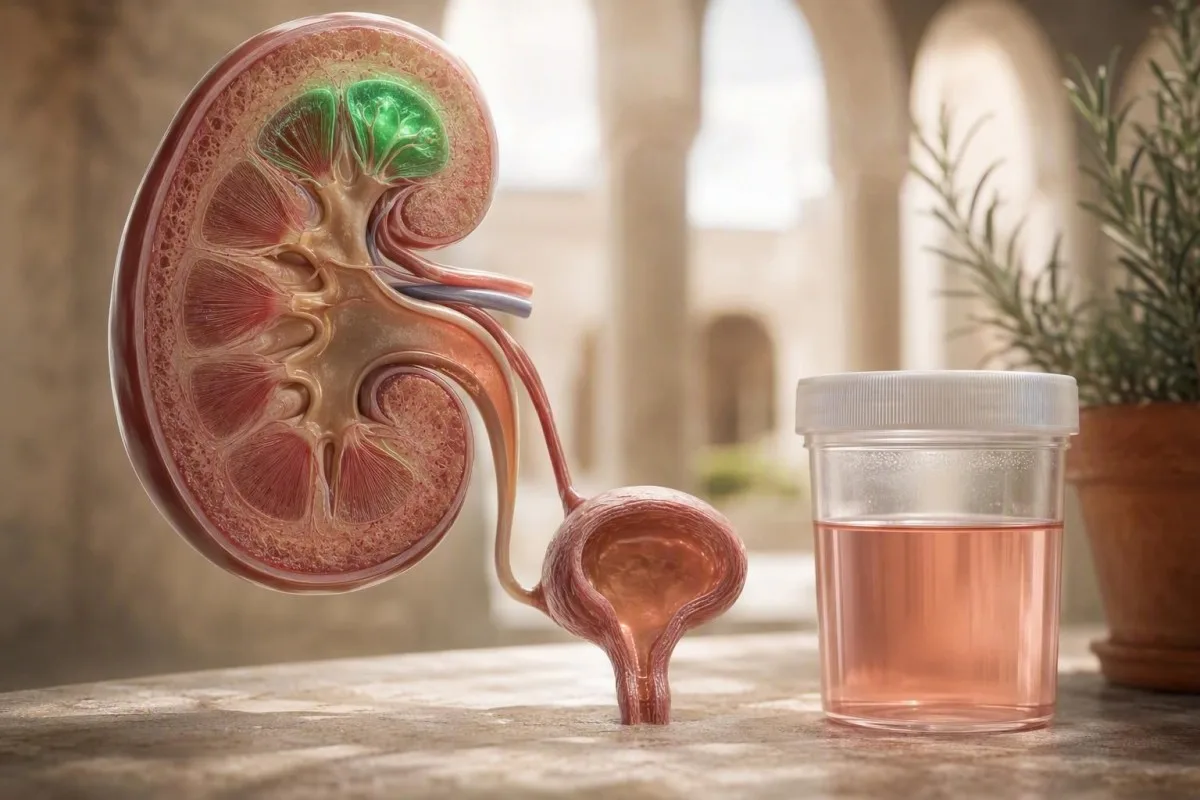
Uzun bir koşudan sonra pembe veya çay renkli idrar örneği genellikle geçici egzersizle ilişkili hematüridir, ancak görünür renk asla otomatik olarak göz ardı edilmemelidir. Zamanlama, mikroskop bulguları, belirtiler ve uygun şekilde dinlenmiş tekrar bir örnek gerçek hikayeyi anlatır.


- Egzersize bağlı hematüri genellikle yoğun koşudan sonra 24-72 saat içinde temizlenir; 72 saati aşan devamlılık tıbbi değerlendirme gerektirir.
- Mikroskopi eşiği uygun şekilde toplanmış bir idrar örneğinde yüksek güçlü sahada 3 veya daha fazla kırmızı kan hücresi, mikrohematüri için AUA tanımını karşılar.
- İdrar çubuğu uyumsuzluğu önemlidir: yüksek güçlü sahada sıfır ila iki kırmızı hücre ile pozitif kan pedi, idrar kanaması yerine miyoglobin veya serbest hemoglobin olduğunu düşündürür.
- Tekrar zamanı pratiktir: 48-72 saat zorlu egzersizden kaçının, normal şekilde hidrate olun, ardından orta akım idrar örneği verin.
- Aynı gün değerlendirme pıhtı, idrar yapamama, ateş, tek taraflı şiddetli yan ağrısı veya belirgin kas ağrısıyla birlikte kola rengi idrar için makuldür.
- Böbrek uyarı paterni kan artı protein, kırmızı hücreli silindirler, yüksek tansiyon veya düşen bir eGFR'dir - izole edilmiş bir yarış sonrası idrar çubuğu değildir.
- Rabdomiyoliz ipucu genellikle laboratuvar üst sınırının 5 katından fazla olan kreatin kinaz sonucu ile birlikte aşırı derecede koyu renkte idrar görülmesidir.
- Kanser riski bağlamı inceleme eşiğini değiştirir: yaş, sigara maruziyeti, önceki pelvik radyasyon ve sürekli görünür hematüri hepsi önemlidir.
Koşmak neden idrarın pembe görünmesine neden olabilir
Sporcunun hematürisi, genellikle şiddetli egzersizden sonra kısa süreli kırmızı kan hücrelerinin idrara sızmasıdır., genellikle dinlenmeyle 24-72 saat içinde düzelir. Yine de, pembe, kırmızı veya kola renkli idrar, koşunun buna neden olduğu varsayımına dayalı gelişi güzel bir yaklaşımdan ziyade düzgün toplanmış tekrar bir test hak eder.
Klinik ortamda, iç rahatlatıcı örüntü basittir: renk değişimi olağandışı uzun, hızlı veya yokuş aşağı bir koşudan sonra başlar; ateş, kolik tarzı yan ağrısı veya idrar yaparken yanma yoktur; ve mikroskopi dinlenmeyle normale döner. Kantesti bir yapay zekâ kan testi analizörüdür idrar kreatinin, eGFR, elektrolitler ve kreatin kinaz gibi böbrek belirteçlerini egzersiz öyküsüyle birlikte ele alarak, yarış sonrası tek bir sonucu tanı olarak görmekten ziyade bu şekilde değerlendirebilir.
Önerilen mekanizmalar, mekanik mesane duvarı teması, geçici böbrek kan akışı kaymaları, dehidrasyonla ilgili konsantrasyon ve ara sıra tekrarlayan ayak vuruşundan kaynaklanan kırmızı kan hücrelerinin parçalanmasıdır. Her mekanizma için kanıtlar dürüstçe karışıktır, çünkü çoğu çalışma küçüktür ve farklı yarış mesafeleri kullanır. 15 yıllık klinik pratiğimde, yeni bir çabanın öyküsü tek başına renkten daha önemlidir; ilk ultramaraton ve tanıdık bir 5 km aynı ön test olasılığını taşımaz.
Egzersiz sonrası idrarda görünür kan, iyi huylu sporcu hematürisi ile eş anlamlı değildir. daha geniş bir hematüri kırmızı bayrak rehberi kullanışlıdır çünkü böbrek taşları, enfeksiyon, glomerüler hastalık ve idrar yolu kanserleri tesadüfen bir koşudan sonra ilk kez kendilerini gösterebilir.
Pratik tanım
Egzersize bağlı hematüri, dinlenmiş tekrar numunede kırmızı kan hücrelerinin idrara çıktıktan sonra ortadan kaybolması anlamına gelir. Tek başına pozitif bir dipstick bu tanıyı kanıtlamaz, çünkü reaktif, sağlam kırmızı kan hücrelerinden, serbest hemoglobin veya miyoglobinden gelen hem pigmentini tespit eder.
Hematüri mi, hemoglobin mi, yoksa miyoglobin mi?
Kan için pozitif okunan bir idrar dipstick'i kırmızı kan hücrelerini, hemoglobin'i veya miyoglobin'i yansıtabilir ve mikroskopi bunları ayırır. Çok sayıda sağlam kırmızı kan hücresi içeren pembe idrar hematürüyü destekler; az veya hiç kırmızı kan hücresi olmayan koyu kahverengi idrar, kas hasarı veya hemolizden kaynaklanan pigment endişesini artırır.
İdrar mikroskopisi gösteren yüksek güçlü alanda 3 veya daha fazla kırmızı kan hücresi temiz toplanmış numunede mikrohematürüyü doğrular. Buna karşılık, yüksek güçlü alanda 0-2 kırmızı kan hücresi ile güçlü bir şekilde pozitif bir dipstick, özellikle ısı maruziyeti, ezilme tipi kas yüklenmesi veya şiddetli gecikmiş kas ağrısı sonrası, bir klinisyenin miyoglobinüriyi düşünmesini sağlamalıdır. Kahverengi veya kola rengi, az miktarda mesane kanamasından ziyade konsantre pigment için daha tipiktir.
Miyoglobin önemlidir çünkü rabdomiyoliz ve akut böbrek hasarı ile birlikte olabilir. Kreatin kinaz konsantrasyonunun üzerinde laboratuvar normal üst sınırının 5 katı genellikle rabdomiyoliz için biyokimyasal bir eşik olarak kullanılır, ancak semptomlar, potasyum, kreatinin ve idrar çıkışı aciliyeti belirler. Pratik açıklamamızı görün tehlikeli derecede yüksek kreatin kinaz geceyi beklememesi gereken durumlar için.
Gıda boyaları, pancar, böğürtleks, rifampisin, fenazopiridin ve dehidrasyon da kırmızı hücreler olmadan idrarı renklendirebilir. A koyu idrar diferansiyeli her kırmızımsı örneğin kan içerdiği varsayımının yaygın hatasını önlemeye yardımcı olur.
Ayrımın bakımı neden değiştirir
Kırmızı hücreli hematüri idrar yoluna, miyoglobinüri ise iskelet kasına ve böbrek korumasına yönlendirir. Her ikisi de dayanıklılık yarışlarından sonra ortaya çıkabilir, ancak yalnızca mikroskopi ve hedeflenmiş kan testleri bunları güvenilir bir şekilde ayırt edebilir.
Koşu sonrası idrar tahlili sonucunu okuma
En bilgilendirici yarış sonrası idrar testi dipstick, mikroskopi, protein ölçümü ve özgül ağırlığı birleştirir. Geçici kırmızı hücreler ve protein olmadan dipstikteki kan düşük risklidir; protein veya silindirlerle birlikte kan daha dikkatli bir böbrek değerlendirmesi gerektirir.
Bir dipstick kan sonucu negatif, eser, 1+, 2+ veya 3+ olarak rapor edilir, ancak bu bir hücre sayımından ziyade bir tarama sinyalidir. AUA, mikroskopik incelemede yüksek güç alanında 3'ten fazla kırmızı kan hücresi ile mikrohematüriyi tanımlar., tek başına bir dipstick sonucu değil (Barocas ve ark., 2020). Bu ayrım, yanlış pozitif bir taramadan sonra koşucuların gereksiz bir kanser araştırmasına girmesini önler.
Özgül ağırlık 1.030 birçok laboratuvarda konsantre idrarı gösterir ve rengin daha endişe verici görünmesine neden olabilir, ancak doğrulanmış kırmızı hücreleri açıklamaz. 1+ veya daha yüksek protein, bir idrar albümin-kreatinin oranı veya protein-kreatinin oranı ile miktarlandırılmalıdır; geçici egzersiz proteinürisi vardır, ancak sürekli albüminüri, ayırıcı tanıyı glomerüler hastalığa doğru değiştirir. Bizim idrar tahlili kılavuzunun tamamı bu belirteçlerin neden tek bir sonuca birleştirilmemesi gerektiğini açıklar.
Kantesti AI, idrar bulguları, egzersiz zamanlaması ve önceki değerlerle birlikte kreatinin ve eGFR'yi yorumlar; sıcak bir yarıştan sonra tek bir hafif yükselmiş kreatinin, kronik böbrek hastalığı ile eşdeğer değildir. Pratikte, mesafeyi, araziyi, sıcaklığı, anti-inflamatuar kullanımını, menstrüel zamanlamayı ve örneğin bitirdikten sonraki 2 saat içinde verilip verilmediğini sorarım.
Koştuktan sonra ne zaman idrar testi tekrarlanmalıdır?
Koşucu hematürisi şüphesinde, son yoğun koşudan 48–72 saat sonra idrar testinin tekrarlanması mantıklı bir varsayılandır. İlk sabah veya iyi hidrate edilmiş orta akım örneği kullanın, ancak faydalı bulguları engelleyebileceği için hemen öncesinde litrelerce su içmeye zorlamayın.
Rutin bir yarış sonrası anormallik için genellikle şu aralıkları, yokuşları, ağır kaldırmayı veya yarışları önermem: 48 saat içinde; maraton, ultramaraton, ısı hastalığı veya olağandışı ağrı sonrası, 72 saat boyunca daha savunulabilir. Susuzluğa göre normal içme yeterlidir. Aşırı hidrasyon, özgül ağırlığı 1.005'in altına düşürebilir ve ara sıra sınırdaki bir sonucu yorumlamayı zorlaştırabilir.
Mikroskopi 72 saat sonra pozitif kalırsa, tekrar tekrar antrenman sonrası test yapmak yerine birkaç gün içinde birinci basamak muayenesi ayarlayın. Kalıcı sonuçlar, risklere göre kan basıncı ölçümü, serum kreatinin/eGFR, idrar albümin-kreatinin oranı ve kültür veya görüntüleme düşünülmesini gerektirir. Egzersiz, hidrasyon ve geçici olarak düşük bir filtrasyon tahmini arasındaki ilişki, makalemizde ele alınmaktadır. egzersiz sonrası eGFR kılavuzu.
Gördüğüm 52 yaşında bir amatör maraton koşucusu, sıcak bir yarıştan sonra akşam 18 kırmızı kan hücresi/yüksek güç alanı görmüş, ancak 72 saat dinlendikten sonra 0–1 kırmızı kan hücresi görmüş; kreatinini 1,28 mg/dL'den 0,96 mg/dL'ye dönmüş. Sonuç güvence vericiydi, ancak aynı plan, tekrarlayan görünür idrar rengi olan 52 yaşında bir sigara içicisi için yeterli olmazdı.
Mümkünse bitiş çizgisinde test yapmaktan kaçının
Egzersizden hemen sonra test yapmak, geçici kırmızı kan hücrelerini, konsantre idrarı ve proteini bulma şansını en üst düzeye çıkarır. Bu, rabdomiyoliz şüphesinde klinik olarak faydalı olabilir, ancak bir koşucunun temel çizgisini belirlemek için kötü bir zamandır.
Koşu sonrası hangi hematüri paternleri genellikle rahatlatıcıdır?
Yoğun koşu sonrası kendiliğinden geçen bir epizot, tamamen geçtiğinde, ağrı veya sistemik belirtileri olmadığında ve proteinüri veya böbrek fonksiyonu değişikliği olmadığında daha güvence vericidir. Güvence verici olmak, görmezden gelmek anlamına gelmez; dinlenmiş bir örnekle doğrulanmış anlamına gelir.
Düşük riskli fenotip, açık bir egzersiz tetikleyicisi, normal kan basıncı, sigara öyküsü olmayan ve normal dinlenmiş mikroskopiye sahip genç veya orta yaşlı bir koşucudur. Bu durumda, yarış sonrası tek geçici sonuç 3–10 RBC/HPF genellikle tedavi olmaksızın düzelir. Yine de belgelendirirdim, çünkü her uzun koşudan sonra tekrarlaması, tek seferlik bir olaydan daha dikkatli bir incelemeyi gerektirir.
Genel olarak normal bir idrar albümin-kreatinin oranı 30 mg/g'ın altında (3 mg/mmol'ün altında), ancak laboratuvarlar ve ülkeler birimleri farklı rapor eder. Albümin, silindir veya dismorfik kırmızı kan hücreleri olmadan kan, glomerüler sızıntıdan uzaklaşır; mesane kaynağını kanıtlamaz, ancak bir sonraki soruyu yönlendirir. Açıklamamız. idrarda protein bu bölümü açıkça kapsamaktadır.
İdrar çok konsantre olduğunda ve koşucu neredeyse boş bir mesane ile bitirdiğinde mesane travması daha olasıdır. Bazı spor klinisyenleri, uzun bir koşudan önce idrara çıkmayı ve düzenli olarak sıvı almayı önermektedir, ancak bu, sınırlı kanıtı olan bir önleme tavsiyesidir ve renk devam ettiğinde yapılan değerlendirmenin yerini tutmaz.
Normal bir sonucun bir zaman damgası vardır
Yarıştan 3 gün sonra negatif bir test, o durum için güvence verir, ömür boyu garanti vermez. Aylar sonra yeni görülen hematüri, özellikle 40 yaşından sonra veya sigara maruziyeti ile tek başına değerlendirilmelidir.
Koşucu hematürisini daha az olası hale getiren uyarı işaretleri
Hematuri, 72 saat sonra devam ettiğinde, şiddetli egzersiz olmadan tekrarlandığında veya ağrı, ateş, pıhtı, protein veya böbrek fonksiyon değişikliği ile birlikte görüldüğünde acil değerlendirme gerektirir. Bulguların kombinasyonu, tek başına dramatik görünen bir örneğe göre daha bilgilendiricidir.
Görünür kırmızı idrarın ötesinde devam ettiği durumlarda zamanında tıbbi tavsiye alın 24 saat, kendinizi iyi hissetseniz bile; eşik 40 yaşın üzerindekiler, mevcut veya eski sigara içenler veya önceden pelvik radyasyon tedavisi görmüş kişiler için daha düşüktür. AUA kılavuzu, tüm mikrohematüriyi aynı şekilde ele almak yerine, yaşa, sigaraya, mikroskobik kanın derecesine ve devamlılığına ve önceki gross hematüriye dayalı risk sınıflandırması kullanır (Barocas ve ark., 2020).
Disforik kırmızı hücreler, kırmızı hücre silindirleri, anlamlı albüminüri, yeni hipertansiyon veya azalmış eGFR, jostled bir mesane yerine bir böbrek filtresi kaynağını düşündürür. Kırmızı hücre silindirleri sıradan koşmanın beklenen bir sonucu değildir ve acil böbrek değerlendirmesini gerektirmelidir. Genel bakışımıza bakın granüler ve idrar silindirleri tortu bulgularının neden önemli olduğu için.
Thomas Klein, MD, sporculara yalnızca renkle kendi kendine teşhis koymamalarını tavsiye ediyor: idrar yolu enfeksiyonu yanma, sık idrara çıkma, piyüri ve bazen hematüriye neden olabilirken, taşlar daha çok ani tek taraflı ağrı ve bulantıya neden olur. Enfeksiyon belirtileri mevcut olduğunda antibiyotiklerden önce kültür en yardımcıdır.
Kan artı protein kombinasyonu
Proteini ile birlikte doğrulanmış hematüri, izole hematüriye göre daha endişe vericidir çünkü her ikisi de glomerüler filtreden köken alabilir. 30 mg/g veya daha yüksek idrar albümin-kreatinin oranı tekrarlanmalı ve kan basıncı ve böbrek fonksiyonu ile birlikte yorumlanmalıdır.
Egzersiz sonrası pembe idrar ne zaman aynı gün bakım gerektirir?
Pıhtılar, idrar yapamama, şiddetli yan ağrısı, ateş, bayılma, azalmış idrar çıkışı veya şiddetli kas ağrısı ve zayıflığı ile birlikte koyu renkli idrar durumunda aynı gün acil değerlendirme yaptırın. Bu özellikler, komplikasyonsuz egzersize bağlı hematürinin ötesini işaret eder.
Pıhtılar idrar akışını tıkayabilir ve idrar yapamama, atletik kondisyondan bağımsız olarak acil bir sorundur. Yan ağrısı olan ateş 38,0°C veya daha yüksek ateş üst idrar yolu enfeksiyonunu gösterebilir; kusma ile birlikte şiddetli kolik ağrı taşları gösterebilir. Her iki durumda da bir koşu sonrası tekrar testi bekleyerek yönetilmemelidir.
Egzersiz sonrası koyu kahverengi idrar ve ardından belirgin kas hassasiyeti, zayıflık, şişlik veya azalmış çıkış, rabdomiyoliz endişesini artırır. İlk testler genellikle kreatin kinaz, kreatinin, potasyum, kalsiyum, fosfat ve idrar analizi içerir. CrossFit rabdomiyoliz rehberi çünkü alışılmadık eksantrik egzersiz - sadece koşmak değil - sık görülen bir tetikleyicidir.
Şiddetli dehidrasyon böbrek sonuçlarını daha kötü gösterebilir, ancak gerçek yaralanma ile birlikte de bulunabilir. Başınız dönüyorsa, kafa karışıklığı yaşıyorsanız, sıvıları yutmuyorsanız veya çok az idrar yapıyorsanız 8–12 saat, evde spor içecekleriyle sorunu çözmeye çalışmayın.
Hamilelik ve antikoagülanlar
Hamile koşanlar ve antikoagülan kullananlar, görünür hematüriyi derhal bildirmelidir. Antikoagülanlar kanamayı artırabilir, ancak kanamanın kaynağını belirleme ihtiyacını ortadan kaldırmaz; gebelik aynı zamanda enfeksiyon, taş ve böbrek hastalığı kontrolü için eşiği de değiştirir.
Bir koşunun neden olmaktan çok ortaya çıkarabileceği durumlar
Koşmak, idrarı konsantre ederek veya bir testi tetikleyerek mevcut bir üriner problemi ortaya çıkarabilir, hematürinin kendisini neden olmaktan ziyade. Taşlar, enfeksiyon, glomerüler hastalık, yapısal anormallikler ve malignite ayırıcı tanının bir parçası olmaya devam etmektedir.
Böbrek taşları sıklıkla tek taraflı yan ağrısı-kasık ağrısı, mide bulantısı ve mikroskobik muayenede kırmızı kan hücrelerine neden olur, ancak ağrısız taşlar da görülür. İdrar yolu enfeksiyonu daha sık yanma, sık idrara çıkma, aciliyet ve beyaz kan hücreleri üretir; negatif nitrit sonucu bunu dışlamaz. lökosit esteraz ve negatif nitrit kılavuzumuz bu yaygın karışık deseni açıklar.
Glomerülonefrit, üst solunum yolu enfeksiyonundan sonra kola rengi idrar, şişlik, yüksek tansiyon, proteinüri ve dismorfik kırmızı kan hücreleri ile ortaya çıkabilir. KDIGO 2024 CKD kılavuzunda, kalıcı albüminüri ve azalmış eGFR, birbirinin yerine geçebilecek ölçümler olarak değil, tamamlayıcı böbrek riski belirteçleri olarak ele alınır (KDIGO, 2024).
Kantesti, yapay zekâ destekli bir kan testi analiz aracıdır kreatinin, eGFR, albümin, elektrolitler ve CBC'deki bir deseni tanımasına yardımcı olur, ancak hematürinin anatomik kaynağını teşhis edemez. Görüntüleme, mikroskopi, kültür ve hekim muayenesi hala belirleyici işi yapar.
Kanser, genç koşucularda nadirdir, yetişkinlerde imkansız değildir
Görünür hematüri, egzersiz bariz bir açıklama gibi görünse bile, özellikle sigara maruziyeti olan kişilerde veya kalıcı semptomları olanlarda değerlendirilmelidir. Yaş ve kümülatif tütün maruziyeti ile risk artar, bu nedenle aynı idrar sonuçları aynı test planlarına yol açmaz.
Kimlerin üroloji veya nefroloji takibine ihtiyacı var?
Dinlenmiş tekrar numuneden sonraki kalıcı hematüri, üroloji için risk değerlendirmesi gerektirirken, hematüri artı proteinüri, silendirler, hipertansiyon veya bozulmuş eGFR nefrolojiye işaret eder. Birçok insan yalnızca birinci basamak bakım liderliğinde tekrarlayan testlere ihtiyaç duyar; sevk desene bağlıdır.
Üroloji değerlendirmesi, özellikle tekrarlayan görünür hematüri, kalıcı mikroskobik hematüri, sigara öyküsü, mesleki aromatik-amin maruziyeti, önceki pelvik radyasyon veya enfeksiyonu olmayan üriner semptomlar için uygundur. Riskin bağlı olarak, klinisyenler böbrek ve mesane ultrasonu, BT ürografi ve sistoskopi kullanabilir. 24 yaşındaki birinde yarış sonrası tek bir iz dipstick, 58 yaşındaki eski bir sigara içen kişide tekrarlayan kırmızı idrar senaryosundan çok farklıdır.
İdrar albümin-kreatinin oranı ile nefroloji incelemesi daha olası hale gelir ≥30 mg/g, 3 ay veya daha uzun süredir devam eden eGFR düşüklüğü, kırmızı kan hücresi silindirleri veya kontrolü zor kan basıncı. Bu eşikler önemlidir çünkü kronik böbrek hastalığı tek bir ölçümün yanı sıra süre ile tanımlanır. Pratik kategoriler için 60 mL/dk/1,73 m² kılavuzumuzu okuyun. olan birinden farklı bir değerlendirmeye ihtiyaç duyar; çünkü azalmış filtrasyon ilaç seçimlerini ve taş riskini değiştirir. eGFR kategorisini anlamak için kronik böbrek hastalığı evreleri kılavuzumuzu pratik kategoriler için.
Kantesti'nin yapay zeka laboratuvar testi yorumlama hizmeti, özellikle kullanıcılar farklı laboratuvarlardan sonuçlar yüklediğinde, tekrarlanabilir bir kan ve protein örüntüsünü görüşme için işaretleyebilir. İdrar görüntüleme veya uzman muayenesi gerekip gerekmediğine karar veren bir klinisyeni desteklemeli, ancak onun yerine geçmemelidir.
Antikoagülasyonun konuşmayı bitirmesine izin vermeyin
Antikoagülan kullanımı kanama ciddiyetini değiştirir ancak hematüri nedeni oluşturmaz. Tecrübelerime göre, tekrarlayan idrar kanamasını apiksaban, warfarin veya aspirine bağlamak, taş, enfeksiyon veya yapısal hastalıkların tanınmasını geciktirebilir.
Egzersizle ilişkili hematüriden sonra hangi kan testleri yardımcı olur?
Faydalı kan testleri semptomlara bağlıdır: kreatinin, eGFR, elektrolitler ve kreatin kinaz böbrek ve kas stresini değerlendirirken, bir CBC anemi veya enfeksiyon ipuçlarını değerlendirir. Rutin geniş paneller, kesin bir öykü ve idrar tahlili sonrası hedeflenmiş testlerden daha az yararlıdır.
Kreatinin, kas metabolizması, azalmış böbrek perfüzyonu ve dehidrasyon nedeniyle dayanıklılık egzersizinden sonra geçici olarak yükselebilir. Hızlı kreatinin değişimi sırasında eGFR denklemleri daha az güvenilirdir, bu nedenle bir tekrar değeri 48–72 saat sıradan iyileşmenin ardından, bitiş çizgisi sonucundan genellikle daha anlamlıdır. Bizim egzersizle ilişkili kreatinin yeniden kontrol kılavuzumuz bu sık görülen anksiyete tetikleyicisi için bağlam sağlar.
Kreatin kinazın egzersiz sonrası geniş bir aralığı vardır: eğitimli sporcular bir yarıştan sonra böbrek hasarı olmadan yükselmeler gösterebilirken, yerel üst limitin kat kat üzerindeki değerler artı semptomlar acil değerlendirmeyi gerektirir. Potasyum üstü 6,0 mmol/L’nin üzerindeyse potansiyel olarak tehlikelidir ve özellikle böbrek fonksiyonu bozuksa veya kas hasarı şüphesi varsa acil klinik değerlendirme gerektirir.
Bir CBC, yorgunluk, solukluk, ağır adet kanaması, tekrarlayan hematüri veya sistemik hastalık şüphesi olduğunda en faydalıdır. Hemoglobin, plazma hacmi genişlemesi, demir kaybı veya hemolizden sonra dayanıklılık etkinliklerinden sonra düşebilir; ferritin akut inflamasyon ve yoğun antrenmandan uzakta yorumlanmalıdır. Dayanıklılık koşucuları bizim sporcu kan testi genel bakışımızı mantıklı bir temel için faydalı bulabilirler.
Bir yarış haftası panelinden böbrek hastalığı teşhisi koymayın
0.3 mg/dL veya daha fazla kreatinin yükselmesi, doğru zaman diliminde akut böbrek hasarı kriterini karşılayabilir, ancak bir yarıştan sonra bağlam ve tekrar testleri belirleyicidir. Düşük idrar çıktısı, yükselen potasyum ve kalıcı yükselme, izole bir sınırdaki sonuçtan daha fazla ağırlık taşır.
Doktorların güvenebileceği tekrar idrar örneği nasıl toplanır
Güçlü egzersiz yapmadan 48-72 saat sonra temiz idrar örneklemesi, hematürinin düzelip düzelmediğini kontrol etmenin en iyi yoludur. Toplama hataları, adet kirliliği ve eski bir numune yanıltıcı sonuçlar doğurabilir.
Ellerinizi yıkayın, tuvalete idrar yapmaya başlayın, ardından kabın içini çizmeyin, orta akım kısmını toplayın. Numuneyi hemen teslim edin — tercihen 2 saat— veya laboratuvarın buzdolabında saklama talimatlarını izleyin. Uzun süre bekletmek hücre görünümünü değiştirir ve mikroskobun daha az güvenilir olmasına neden olabilir.
Mümkünse aktif adet sırasında test yapmaktan kaçının; test yapılamıyorsa, klinisyene ve laboratuvara bildirin. Vajinal kontaminasyon, belirgin kırmızı kan hücreleri ve protein üretebilirken, yassı epitel hücreleri genellikle kötü toplanmış bir numuneye işaret eder. Hakkımızdaki kılavuz idrarda epitel hücreleri bunun neden sıradan bir laboratuvar dipnotu olmadığını açıklar.
Thomas Klein, MD, numunenin yanında dört detayı kaydetmeyi önerir: son zorlayıcı seans, etkinlik süresi, dış ortam sıcaklığı ve önceki 72 saat içinde alınan tüm ilaçlar. Zamanlama olmayan bir sonuç, özellikle idrar çift antrenmandan sonra toplandığında, yorumlanması çok daha zordur.
İlk sabah testine karşı gün içi test
İlk sabah örneği konsantredir ve küçük anormallikleri tespit etmek için iyidir, ancak normal hidrasyonlu gün içi orta akım örneği, toplama daha temizse kabul edilebilir. Seri karşılaştırma için tutarlılık daha önemlidir: her tekrar testinde kabaca aynı koşullar kullanılmalıdır.
Tabloyu değiştiren hidrasyon, ağrı kesiciler ve takviyeler
Dehidrasyon idrarı konsantre edebilir ve böbrek stresini artırabilir, NSAID'ler ise dayanıklılık egzersizi sırasında böbrek kan akışını azaltabilir. Bu faktörlerden hiçbiri hematürinin nedenini kanıtlamaz, ancak her ikisi de bir koşu sonrası sonucun klinisyenler tarafından ne kadar dikkatli yorumlanacağını etkiler.
Çoğu koşucu için susuzluğa göre içmek ve kayıpları kademeli olarak yerine koymak, katı bir şekilde sıvıları zorlamaktan daha güvenlidir. Aşırı su alımından kaynaklanan çok düşük sodyum tehlikeli olabilir; serum sodyumu düşüktür 125 mmol/L’nin altındaysa baş ağrısı, kusma, kafa karışıklığı veya nöbetlerle birlikte acil bir durumdur. İdrar rengi kabaca bir hidrasyon ipucudur, kesin bir hidrasyon ölçer değildir.
İbuprofen, naproksen ve diğer NSAID'ler, özellikle ısı stresi, kusma veya uzun süren etkinlikler sırasında prostaglandin aracılı böbrek kan akışını azaltabilir. Hastalarıma, kendi klinisyenleri net bir neden vermedikçe maratonlardan önce rutin profilaktik NSAID'lerden kaçınmalarını tavsiye ediyorum. İlaç bağlamı bizim laboratuvar eğilimi güvenlik makalemizde.
Yüksek doz C vitamini, belirli idrar çubuk test reaksiyonlarıyla etkileşime girebilir ve performans için pazarlanan takviyeler bazen listelenmemiş uyarıcılar veya diüretikler içerebilir. Bir randevuya kutuları veya net fotoğrafları getirin; bu, markalı bir tozun içerik listesini hatırlamaya çalışmaktan genellikle daha kullanışlıdır. Bizim sporcular için takviye güvenlik rehberi makul bir kontrol listesi sunar.
Hidrasyon, sürekli kan için bir tedavi değildir
Su konsantrasyonu düzeltebilir, ancak taş, enfeksiyon, glomerüler süreç veya yapısal idrar kaynağını tedavi etmez. Dinlenmiş, iyi toplanmış bir örnekte kırmızı kan hücreleri kalırsa, tırmanış başka bir hidrasyon deneyine değil, paterne dayanmalıdır.
Egzersizle ilişkili hematüriden sonra koşmaya devam edebilir misiniz?
Çoğu koşucu, idrar rengi normale döndükten, semptomlar ortadan kalktıktan ve dinlenmiş bir tekrar örneği güvence verdikten sonra kademeli olarak geri dönebilir. İdrar hala görünür şekilde kırmızı ise, böbrek sonuçları anormal ise veya kas semptomları rabdomiyolizi düşündürüyorsa sert antrenmana dönmeyin.
Komplike olmayan tek bir epizoddan sonra, genellikle birkaç gün sadece hafif koşu, ardından hacim ve yoğunluğun kademeli olarak yeniden oluşturulmasını öneririm. 7–14 gün içinde. Renk tekrarlarsa, ağrı gelişirse veya idrar çıkışı düşerse koşucu durmalı ve kontrole başvurmalıdır. Bu, denemeyle kanıtlanmış bir reçete değil, pragmatik bir klinik yaklaşımdır.
dinlenme belirteçlerini antrenmana ara verme nedenlerinden ayırmaya yardımcı olabilir. maraton koşucusu laboratuvar rehberi dinlenme belirteçlerini antrenmana ara verme nedenlerinden ayırmaya yardımcı olabilir.
Açıklanamayan görünür hematüri varlığında, planlanmış bir etkinliğiniz var diye antrenman yapmaktan kaçınmayın. Sporcular genellikle rahatsızlığa dayanma konusunda mükemmeldirler; daha zor olan beceri, ısrarın bir dayanıklılık testi değil, tanısal bir bilgi olduğunu fark etmektir.
Gerçek bir temel oluşturun
Yoğun antrenmandan en az 72 saat önce yapılan temel bir idrar tahlili ve böbrek paneli, yarış sonrası sonuçların yorumlanmasını çok daha kolay hale getirebilir. Bu, özellikle ultrarunnerlar, tek böbrekli kişiler veya böbrek perfüzyonunu etkileyen ilaçlar kullanan sporcular için faydalıdır.
Egzersiz sonrası idrarda kan hakkında klinisyeninize ne söylemelisiniz
Kullanışlı bir hematüri değerlendirmesine en hızlı yol kısa bir zamandır: idrar rengi, egzersiz dozu, belirtiler, ilaçlar ve tekrar test zamanlaması. Numunenin “kan için pozitif” olduğu yönündeki bir mesajdan ziyade, gerçek laboratuvar değerlerini getirin.”
İdrarın pembe, parlak kırmızı, çay rengi olup olmadığını veya pıhtı içerip içermediğini; rengin egzersizden önce, sırasında veya sonra ortaya çıkıp çıkmadığını ve ilk idrardan sonra temizlenip temizlenmediğini belirtin. Yanma, sıkışma, ateş, yan ağrısı, bulantı, şişlik ve azalmış idrar çıkışını dahil edin. Detaylı bir idrar rengi referansı , aşırı yorumlamadan gözlemi doğru bir şekilde tanımlamaya yardımcı olabilir.
Önceki idrar tahlilleri, kreatinin/eGFR değerleri, kan basıncı ölçümleri, sigara öyküsü, ailede böbrek öyküsü ve ilaç/takviye listesi getirin. Kantesti, bir AI biyobelirteç yorumlama platformudur tekrarlanan kan testi değerlerini düzenleyebilen ve anlamlı değişiklikleri vurgulayabilen, ancak bir klinisyenin bu değerleri idrar mikroskobisi ve muayenesiyle ilişkilendirmesi gerekir.
3 Eylül 2026 itibarıyla klinik prensip basit kalmaktadır: egzersiz, yalnızca sonuç çözüldükten ve rakip ipuçları yok olduktan sonra makul bir açıklamadır. Belirsizseniz, mikroskopiye, kültüre, albümin-kreatinin oranına, tekrar kreatinine, görüntülemeye veya sevk edilmeye mi ihtiyacınız olduğunu sorun - yalnızca başka bir test çubuğuna değil.
Sormaya değer sorular
Tam kırmızı kan hücrelerinin görülüp görülmediğini, protein veya silindirlerin olup olmadığını ve dinlenmiş bir tekrarın ne zaman olması gerektiğini sorun. Bu üç yanıt genellikle bir sonraki adımın dikkatli takip, böbrek testi, enfeksiyon testi veya ürolojik değerlendirme olup olmadığını netleştirir.
Koşucu hematürisi için mantıklı bir eylem planı
Yoğun koşudan sonra ağrısız tek bir epizot için, şiddetli egzersizden 48-72 saat dinlenin ve temiz yakalama idrar tahlili tekrarlayın; kırmızı bayraklar veya kalıcı görünür renk için daha erken bakım arayın. Amaç ne panik ne de reddetmektir - bulgunun çözüldüğünü kanıtlamaktır.
Birinci adım: yoğun antrenmanı bırakın, normal şekilde sıvı alın ve zamanlamayı ve belirtileri not edin. İkinci adım: mikroskobiyi şu saatten sonra tekrarlayın 48–72 saat. Üçüncü adım: kan devam ederse veya protein, silindir, ağrı, ateş, pıhtı, düşük idrar çıkışı veya anormal böbrek belirteçleri ortaya çıkarsa, derhal tıbbi değerlendirme ayarlayın. Bu dizi, hem kaçırılan hastalığı hem de tek seferlik bir bitiş çizgisi örneğinden sonra gereksiz görüntülemeyi önler.
Klinik ekibimiz yüklenen laboratuvar verilerini gözden geçirdiğinde, örüntülere öncelik veriyoruz: yükselen bir kreatinin artı yüksek CK ve düşük idrar çıkışı, geçici bir idrar test çubuğu ile stabil bir kreatininden daha acildir. Kantesti'nin metodolojisi ve güvenlik önlemleri bizim klinik doğrulama bilgisi, ve doktor denetimimiz şu şekilde ayrıntılıdır: Tıbbi Danışma Kurulu.
Çoğu hasta, zamanlanmış bir tekrar testinin endişe verici bir renk değişikliğini net bir plana dönüştürdüğünü bulur. Ancak içinizdeki ses bir şeylerin yolunda gitmediğini söylüyorsa - özellikle idrar yarın hala kırmızıysa - o sinyale güvenin ve değerlendirin.
Tek cümle kuralı
Yoğun bir koşudan sonraki tek pembe idrar geçici olabilir; devam eden, tekrarlayan veya belirtilerle gelen pembe idrar, düzgün bir şekilde değerlendirilene kadar hematüridir.
Sıkça Sorulan Sorular
Koşucu hematürisi ne kadar sürer?
Koşucunun hematürisi genellikle yoğun egzersiz durduktan sonra 24-72 saat içinde düzelir. Pratik bir tekrar idrar testi, 48-72 saat boyunca zorlu koşu veya ağır kaldırma yapmadan toplanan temiz idrar örneklemesidir. 24 saatten uzun süren inatçı pembe veya kırmızı idrar veya 72 saatten sonra devam eden mikroskobik hematüri bir klinisyen tarafından değerlendirilmelidir. Ateş, pıhtılar, şiddetli yan ağrısı, idrar çıkışında azalma veya şiddetli kas ağrısı acil (aynı gün) değerlendirme gerektirir.
Egzersiz sonrası idrarda kan görülmesi normal midir?
Egzersiz sonrası idrarda kan, şiddetli koşmanın geçici bir etkisi, dehidratasyon, mesane duvarı travması veya kısa süreli böbrek kan akışı değişiklikleri olabilir, ancak bu otomatik olarak normal değildir. Yüksek güçlü bir alanda mikroskobik olarak 3 veya daha fazla kırmızı kan hücresinin doğrulanması, AUA'nın mikrohematüri tanımını karşılar. Dinlenmiş tekrar bir örnekte kaybolan bir sonuç iç rahatlatıcıdır, ancak kalıcı kan, protein, silindirler, ağrı veya idrar semptomları daha ileri değerlendirme gerektirir. Görülebilir idrar rengi, özellikle sigara maruziyeti veya tekrarlayan atakları olan yetişkinlerde her zaman bildirilmelidir.
Dehidrasyon koşudan sonra pembe idrar yapmaya neden olabilir mi?
Susuzluk idrarın daha koyu görünmesine neden olabilir ve idrar içeriğini yoğunlaştırarak egzersiz sonrası hematüri bulgusunu şiddetlendirebilir, ancak susuzluk tek başına doğrulanmış kırmızı hücreleri güvenilir bir şekilde açıklamaz. 1.030'un üzerindeki bir idrar özgül ağırlığı çoğu laboratuvarda konsantre idrarı gösterir. Aşırı su ile sonucu ortadan kaldırmaya çalışmak yerine, susuzluğa kadar normal bir şekilde içmeniz ve 48-72 saat dinlendikten sonra temiz catch örneğini tekrarlamanız önerilir. Şiddetli susuzluk, baş dönmesi, çok az idrar çıkışı veya kafa karışıklığı acil tıbbi değerlendirme gerektirir.
Egzersiz sonrası hematüri ile miyoglobinüri arasındaki fark nedir?
Hematuri, idrarda sağlam kırmızı kan hücrelerinin bulunması anlamına gelirken, miyoglobinüri kas yaralanması sonrası salınan kas pigmentini yansıtır. Her iki durumda da dipstick kan için pozitif olabilir, bu nedenle mikroskopi belirleyicidir: miyoglobinüri genellikle yüksek güç alanında 0-2 kırmızı hücre ile pozitif dipstick üretir. Şiddetli kas ağrısı, zayıflık, şişlik, koyu kola rengi idrar veya laboratuvar üst sınırının 5 katından fazla kreatin kinaz değeri rabdomiyoliz endişesini artırır. Bu paternin acil klinik değerlendirme gerektirmesinin nedeni, potasyum ve böbrek fonksiyonlarının hızla değişebilmesidir.
Egzersize bağlı hematürim varsa koşmayı bırakmalı mıyım?
İdrar rengi normale dönene ve dinlenmiş tekrar testini (genellikle 48-72 saat sonra) tamamlayana kadar yoğun koşuya ara verin. Tekrar numunesi normalse ve ağrı, ateş, pıhtı, proteinüri veya böbrek fonksiyonu anormalliği yoksa, çoğu koşucu yaklaşık 7-14 gün içinde kademeli olarak dönebilir. İdrar belirgin şekilde kırmızı veya koyu kalırken, idrar çıkışı azalırken veya şiddetli kas semptomları varken yoğun antrenmana devam etmeyin. Benzer antrenmanlardan sonra tekrarlayan ataklar, her atak geçse bile tıbbi değerlendirmeyi hak eder.
Hematuri ne zaman üroloğa başvurmayı gerektirir?
Dinlenmiş tekrarlayan örnekte devam eden mikroskobik hematüri, tekrarlayan makroskopik hematüri veya sigara öyküsü, geçmiş pelvik radyasyon veya idrar semptomları olan bir kişide hematüri, sıklıkla ürolojik risk değerlendirmesini gerektirir. Ürologlar, herkes için tek bir test kullanmak yerine yaşa ve genel riske göre ultrason, BT ürografi ve sistoskopi düşünebilir. 30 mg/g veya daha fazla albuminüri, kırmızı kan hücresi silindirleri, hipertansiyon veya 60 mL/dak/1.73 m²'nin altında eGFR ile birlikte hematüri, nefrolojiyi daha güçlü bir şekilde işaret eder. Doğru uzmanlık alanı, tam idrar ve kan testi desenine bağlıdır.
Bugün Yapay Zekâ Destekli Kan Tahlili Analizini Alın
Anlık ve doğru laboratuvar testi analizi için Kantesti’ye güvenen dünya genelindeki 2 milyondan fazla kullanıcıya katılın. Kan testi sonuçlarınızı yükleyin ve saniyeler içinde 15,000+ biyobelirteçlerinin kapsamlı yorumunu alın.
📚 Kaynak Gösterilen Araştırma Yayınları
Klein, T., Mitchell, S., & Weber, H. (2026). Erken Hantavirüs Triyajı İçin Çok Dilli Yapay Zeka Destekli Klinik Karar Destek Sistemi: 50.000 Yorumlanmış Kan Testi Raporunda Tasarım, Mühendislik Doğrulaması ve Gerçek Dünya Dağıtımı. Kantesti Yapay Zeka Tıbbi Araştırma.
Klein, T., Mitchell, S., & Weber, H. (2026). Kantesti Kan Testi Yorumlama Motoru için 100.000 Sentetik Test Vakasında, Ön Kayıtlı, Rubrik Tabanlı Otomatik Teknik Benchmark. Kantesti Yapay Zeka Tıbbi Araştırma.
📖 Harici Tıbbi Kaynaklar
⚕️ Tıbbi Uyarı
Bu makale yalnızca eğitim amaçlıdır ve tıbbi tavsiye niteliği taşımaz. Tanı ve tedavi kararları için her zaman yetkin bir sağlık hizmeti sağlayıcısına danışın.
E-E-A-T Güven Sinyalleri
Deneyim
Hekim liderliğinde laboratuvar yorumlama iş akışlarının klinik incelemesi.
Uzmanlık
Klinik bağlamda biyobelirteçlerin nasıl davrandığına odaklanan laboratuvar tıbbı.
Otorite
Dr. Thomas Klein tarafından yazılmış; Dr. Sarah Mitchell ve Prof. Dr. Hans Weber tarafından gözden geçirilmiştir.
Güvenilirlik
Alarmı azaltmaya yönelik net takip yollarıyla kanıta dayalı yorumlama.