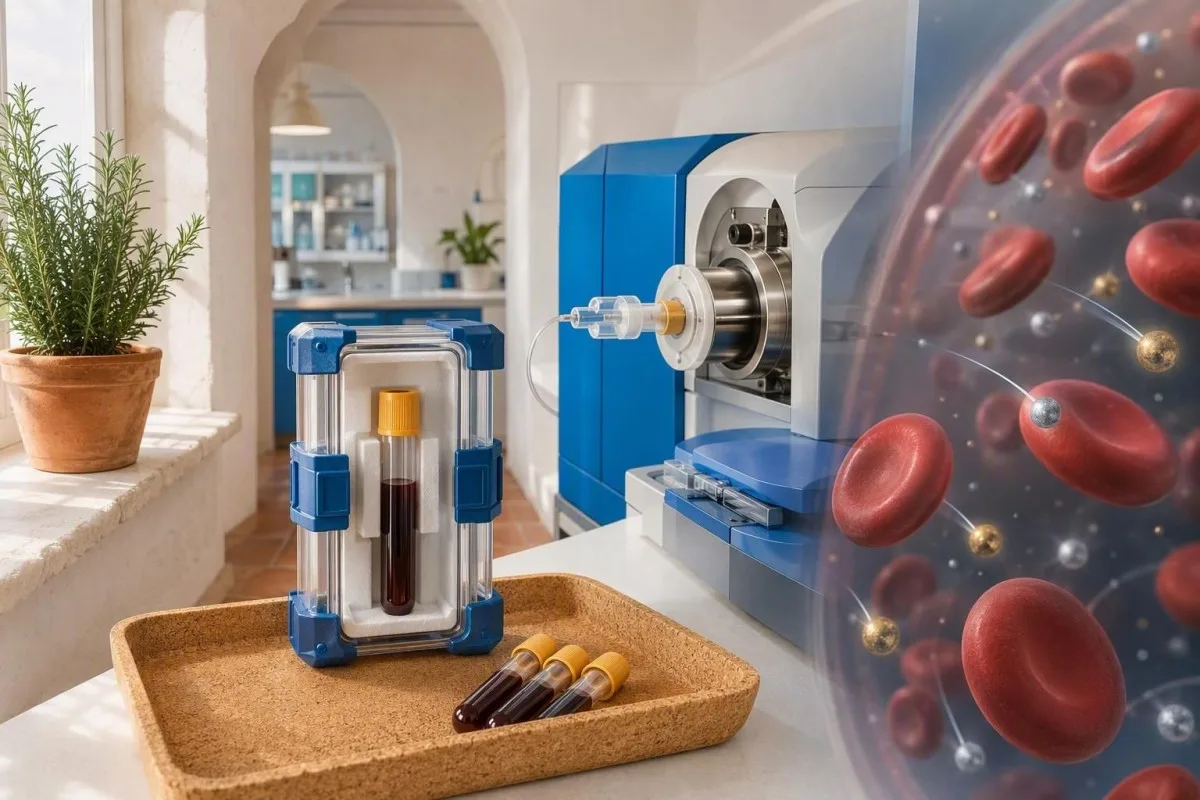
Une analyse sanguine des métaux lourds est préférable pour une exposition récente ou en cours au plomb, au méthylmercure et à certains métaux liés au travail ou aux implants. Ce n'est pas une mesure générale des “ toxines corporelles ” : l'urine, la spéciation des métaux, l'historique d'exposition et le moment des tests répétés déterminent souvent si un résultat est significatif.


- Plomb dans le sang total reflète principalement une exposition récente ou continue sur environ 1 mois ; aucun taux de plomb dans le sang n'est considéré comme sans risque.
- Valeur de référence du plomb sanguin chez l'enfant du CDC est de 3,5 µg/dL, un seuil de suivi plutôt qu'un diagnostic de toxicité.
- Analyses sanguines de mercure sont les plus utiles pour une exposition récente au méthylmercure provenant de poissons et de certaines sources professionnelles ; elles ne mesurent pas de manière fiable une ancienne exposition.
- Arsenic urinaire avec spéciation est préférée pour une exposition suspectée à l'arsenic inorganique, en particulier après avoir évité les fruits de mer pendant 48-72 heures.
- Cadmium urinaire reflète généralement mieux le fardeau rénal cumulatif, tandis que le cadmium sanguin est plus pondéré envers l'exposition récente.
- Analyse capillaire peut appuyer une question spécifique sur le méthylmercure, mais est peu fiable comme dépistage large de toxines diagnostiques.
- Analyse urinaire provoquée après un agent chélateur ne peut pas établir d'intoxication car elle augmente délibérément l'excrétion urinaire de métaux.
- Panels de toxines larges détectent fréquemment des métaux traces sans montrer de maladie, de source, de dose ou de nécessité de traitement.
Ce qu'une analyse sanguine des métaux lourds vérifie réellement
A test sanguin des métaux lourds mesure la concentration d'éléments spécifiques circulant au moment du prélèvement ; elle ne mesure pas la “ charge toxique ” d'une personne au cours de sa vie. Le sang total est particulièrement utile pour le plomb et le méthylmercure, tandis que le meilleur spécimen varie pour l'arsenic, le cadmium, le chrome, le cobalt et le thallium.
La plupart des laboratoires cliniques utilisent la spectrométrie de masse à plasma à couplage inductif, ou ICP-MS, qui peut détecter des métaux à des microgrammes par litre ou moins. La détection n'est pas un diagnostic : un résultat doit être comparé à la méthode du laboratoire, au tube de prélèvement, à l'emploi de la personne, à son régime alimentaire, à ses suppléments, à sa fonction rénale et au temps écoulé depuis le contact suspecté.
A panel de test sanguin de toxines commercialisé comme un dépistage de 20 ou 40 métaux peut sembler complet, mais de nombreux éléments mesurés n'ont pas de seuil de maladie validé chez une personne asymptomatique. Dans ma pratique, la question utile est presque toujours plus restreinte : “ Cette exposition particulière pourrait-elle expliquer ce résultat ou ce symptôme ? ”
Kantesti est un Analyseur de test sanguin AI qui place les résultats des éléments traces à côté du reste d'un rapport, y compris la créatinine, les marqueurs hépatiques et les indices érythrocytaires. Notre guide de référence des biomarqueurs aide à distinguer un résultat qui nécessite un examen clinique rapide d'un résultat qui nécessite principalement une meilleure histoire d'exposition.
Quels métaux les analyses sanguines peuvent-elles détecter de manière fiable ?
L'analyse sanguine peut quantifier de manière fiable plusieurs métaux, mais une concentration mesurable a une signification différente pour chacun d'eux. Plomb, mercure, manganèse, cobalt et chrome sont couramment mesurés dans le sang total ; l'arsenic et le cadmium nécessitent souvent une analyse d'urine pour la question cliniquement pertinente.
A test sanguin du plomb doit utiliser du sang total prélevé dans un tube certifié pour les éléments traces car le plomb se partitionne fortement dans les globules rouges. Un prélèvement veineux est préféré lorsqu'un résultat de dépistage capillaire est élevé, car la poussière sur la peau peut faussement augmenter un résultat d'un prélèvement au bout du doigt.
A Test sanguin du mercure est plus informatif pour le méthylmercure provenant de fruits de mer et l'exposition au mercure élémentaire survenant ces dernières semaines. Le mercure dans le sang total diminue généralement après un changement dans l'apport de poisson ; la demi-vie biologique du méthylmercure est d'environ 50 jours, donc un résultat répété à 6-8 semaines peut être plus informatif qu'un résultat 3 jours plus tard.
Les concentrations sanguines de cobalt et de chrome ont un rôle défini chez certaines personnes porteuses de composants de hanche métal-sur-métal, bien que les symptômes, l'imagerie, le type d'implant et le changement sériel soient plus importants qu'un chiffre isolé. Notre guide des choix de tests de chrome explique pourquoi les laboratoires peuvent rapporter des unités différentes.
Tests sanguins du plomb : seuils, calendrier et suivi
A taux de plomb sanguin veineux est le test standard pour l'exposition récente au plomb chez les enfants et les adultes. Chez les enfants américains, 3,5 µg/dL est la valeur de référence actuelle du plomb sanguin du CDC ; elle identifie les enfants ayant une exposition plus élevée que la plupart de leurs pairs et n'est pas une ligne de démarcation entre sûr et dangereux.
Les taux de plomb dans le sang reflètent généralement l'exposition au cours des 28 à 36 jours précédents, bien que le plomb stocké dans les os puisse réintégrer le sang pendant la grossesse, la ménopause, la guérison d'une fracture ou une maladie grave. Un taux peut donc diminuer après avoir quitté une source sans prouver que l'exposition antérieure était inoffensive.
La mise à jour de 2021 du CDC a abaissé la valeur de référence pour les enfants de 5,0 à 3,5 µg/dL car des concentrations plus faibles sont toujours corrélées à un risque de développement au niveau de la population (Ruckart et al., 2021). La chélation n'est pas systématique pour un enfant à 3,5 µg/dL ; l'identification de la source, la nutrition, la surveillance du développement et les tests répétés sont les premières étapes habituelles.
Chez les adultes, les seuils professionnels et les règles de retrait varient selon le pays, le sexe, le potentiel de grossesse et l'industrie. Un résultat de de 45 µg/dL ou plus justifie une discussion urgente avec un spécialiste dans de nombreux contextes cliniques, tandis que de 70 µg/dL ou plus est généralement considérée comme une urgence médicale nécessitant l'élimination immédiate de l'exposition et une gestion experte.
Analyses sanguines de mercure après consommation de poisson, exposition professionnelle ou déversement
A Test sanguin du mercure capture le mieux l'exposition récente au méthylmercure provenant des fruits de mer et peut aider à évaluer l'exposition récente au mercure élémentaire. Il n'identifie pas, à lui seul, la forme du mercure, la source, la durée ou le degré de risque neurologique.
Chez un adulte ayant une consommation régulière de poisson, un taux de mercure sanguin total inférieur à 10 µg/L est souvent observé, mais les intervalles de référence de laboratoire varient considérablement selon la géographie et le régime alimentaire. Un résultat supérieur à 20 µg/L mérite un examen attentif de l'exposition, en particulier pendant la grossesse ou avant la conception, plutôt qu'une détoxification réflexe.
Clarkson et Magos expliquent pourquoi la chimie du mercure est importante : le méthylmercure se concentre dans les globules rouges, tandis que le mercure inorganique est plus facilement représenté dans l'urine (Clarkson et Magos, 2006). Cette distinction explique pourquoi le mercure total seul peut créer une alarme inutile après plusieurs portions de grands poissons prédateurs.
J'ai vu une patiente anxieuse répéter un dosage de mercure le lendemain matin d'avoir mangé des sushis ; cette répétition n'a pratiquement rien révélé. Un plan plus utile est de noter les espèces de poissons et les portions pendant 2 semaines, de choisir des options à plus faible teneur en mercure, puis de répéter après environ 6 à 8 semaines si le résultat initial était réellement élevé ; consultez notre guide de suivi du mercure dans les fruits de mer.
Quand l'analyse urinaire est préférable à une analyse sanguine
Les analyses d'urine sont préférables lorsque le métal est excrété dans l'urine ou lorsque les cliniciens doivent estimer l'exposition cumulative plutôt que celle du même jour. Arsenic, cadmium, mercure inorganique et thallium sont des exemples courants où l'urine peut mieux répondre à la question clinique que le sang.
A Urine sur 24 heures La collecte mesure l'excrétion totale sur une journée, mais un échantillon d'urine ponctuel corrigé pour la créatinine est souvent utilisé lorsque la qualité de la collecte est douteuse. Une collecte manquée, une consommation d'eau inhabituellement élevée ou une créatinine aux extrêmes peuvent fausser une estimation sur 24 heures ; la technique de collecte mérite la même attention que le chiffre.
Le cadmium urinaire reflète mieux l'accumulation rénale à long terme que le cadmium sanguin, qui est influencé par le tabagisme récent ou l'exposition professionnelle. L'interprétation du cadmium doit inclure l'albumine urinaire ou l'ACR et les marqueurs tubulaires lorsque cela est cliniquement indiqué, car la préoccupation est souvent une lésion tubulaire rénale plutôt qu'un score de toxicité vague.
Les erreurs de chronométrage sont courantes. Notre pratique guide de recueil d’urines sur 24 heures détaille les points de défaillance habituels, y compris le démarrage au mauvais moment et l'oubli du dernier spécimen.
Les tests d'arsenic nécessitent une spéciation, pas un total générique
L'exposition suspectée à l'arsenic est généralement évaluée par la spéciation de l'arsenic urinaire, et non par un panel sanguin. L'arsenic urinaire total peut augmenter considérablement après la consommation de fruits de mer car l'arsénobétaïne organique est excrétée dans l'urine mais est beaucoup moins toxique que l'arsenic inorganique.
Les gens devraient éviter les fruits de mer pendant 48-72 heures avant un test d'arsenic urinaire prévu, sauf avis contraire d'un toxicologue. Un résultat d'arsenic urinaire total supérieur à 50 µg/L peut justifier un suivi, mais il ne peut pas être interprété de manière responsable sans identifier l'arsenic inorganique et ses métabolites.
L'arsenic sanguin a une courte fenêtre d'utilité — souvent quelques heures après une exposition substantielle — donc une valeur sanguine normale n'exclut pas une exposition pertinente des jours précédents. Au cours des 15 années où j'ai travaillé avec des rapports de laboratoire, c'est l'une des raisons les plus fréquentes pour lesquelles un panel large donne une fausse réassurance.
Le profil d'arsenic de l'ATSDR soutient les tests d'urine avec spéciation en cas de suspicion d'exposition, en particulier après des préoccupations concernant l'eau de puits, l'industrie ou les produits à base de plantes (ATSDR, 2007). N'arrêtez pas les médicaments prescrits et n'essayez pas de chélation en attendant un résultat ; un clinicien peut aider à identifier si l'eau, le travail ou un produit est la source plausible.
Le cadmium, le chrome et le cobalt nécessitent des tests spécifiques à l'exposition
Les résultats de cadmium, de chrome et de cobalt ne sont significatifs que lorsqu'ils sont mis en correspondance avec une source plausible et le spécimen correct. Cadmium urinaire est souvent choisi pour l'exposition cumulative, tandis que le cobalt et le chrome sanguins sont principalement utilisés pour l'exposition professionnelle récente ou la surveillance de certains implants.
Le tabagisme peut augmenter considérablement les concentrations de cadmium, et certains lieux de travail ajoutent une exposition par inhalation ; l'apport alimentaire seul explique rarement un résultat frappant. La fonction rénale est importante car une filtration réduite peut altérer les concentrations urinaires indépendamment de l'exposition, de sorte que le contexte de la créatinine et des protéines urinaires est utile.
Chez une personne porteuse d'une prothèse de hanche métallique, de nouvelles douleurs de hanche, une fonction réduite, des symptômes auditifs ou visuels, des symptômes de cardiomyopathie ou une tendance croissante du cobalt nécessitent une évaluation clinique directe. Une concentration sanguine de cobalt ponctuelle n'est pas un dépistage de la fatigue non spécifique, du brouillard cérébral ou des douleurs articulaires.
L'IA peut comparer les marqueurs rénaux sur différentes dates, ce qui est utile lorsqu'un résultat métallique soulève une question rénale plutôt que de prouver la causalité. Examiner un résultat de la DFG après déshydratation avant de supposer qu'un petit décalage de la créatinine représente des dommages liés aux métaux.
Les erreurs de prélèvement peuvent créer un résultat métallique faux
Les résultats des oligo-éléments sont exceptionnellement vulnérables à la contamination provenant des tubes de prélèvement, de la poussière cutanée, des produits topiques et du traitement en laboratoire. Un résultat surprenant à faible niveau devrait souvent être répété à l'aide d'un tube certifié pour oligo-éléments avant qu'il ne déclenche des investigations invasives ou des suppléments.
La poudre des gants, la poussière d'un chantier, les adhésifs pour dentiers contenant du zinc, et même un tube de prélèvement non certifié peuvent affecter les tests. L'hémolyse peut également altérer l'interprétation de certains éléments car les contenus cellulaires pénètrent dans le sérum ou le plasma ; un échantillon teinté de rouge devrait inciter le laboratoire à commenter la qualité de l'échantillon.
La matrice correcte est importante : sang total, le sérum, le plasma et l'urine ne sont pas interchangeables. Un rapport intitulé “ mercure sérique ” ne doit pas être comparé à la légère avec un seuil de santé publique développé pour le sang total.
Kantesti est un Plateforme d’interprétation des biomarqueurs par IA qui lit le type d'échantillon signalé, l'unité et l'intervalle de référence avant d'offrir un contexte. Notre technologie et nos méthodes guident expliquent pourquoi un résultat en dehors de l'intervalle d'un laboratoire ne peut pas être automatiquement mis en correspondance avec la limite de décision d'un autre laboratoire.
Pourquoi les tests d'analyse des toxines dans les cheveux, les ongles et à domicile sont souvent trompeurs
Les tests capillaires et unguéaux ne peuvent pas diagnostiquer la plupart des intoxications aux métaux lourds chez un individu car la contamination externe, le traitement cosmétique, le taux de croissance et la préparation en laboratoire peuvent dominer le résultat. Les cheveux ont un rôle de soutien limité pour l'exposition à long terme au méthylmercure, pas pour une évaluation de détoxification à tout faire.
Les cheveux poussent d'environ 1 cm par mois, mais ce simple fait ne fait pas de chaque centimètre un calendrier d'exposition fiable. La teinture capillaire, le décolorant, l'eau de piscine, la poussière et les shampooings peuvent modifier les concentrations mesurées ; les protocoles de lavage diffèrent considérablement entre les laboratoires.
Les tests d'ongles présentent des limitations similaires et ont peu de rôle dans le diagnostic clinique de routine. Lorsqu'un panel signale 25 éléments, il signalera généralement quelque chose de statistiquement inhabituel même chez des personnes en bonne santé – une conséquence attendue des comparaisons multiples, et non la preuve que le corps a besoin d'être nettoyé.
Si les symptômes sont préoccupants, les cliniciens devraient d'abord rechercher des explications standard qui ont une voie diagnostique plus claire : anémie, maladie thyroïdienne, maladie rénale, effets de médicaments, perturbation du sommeil et nutrition. Notre article sur les analyses sanguines en cas de douleur inexpliquée montre comment commencer sans réduire chaque symptôme à la toxicité.
Pourquoi les tests urinaires provoqués ne peuvent pas prouver un empoisonnement aux métaux
Un test urinaire provoqué de métaux ne peut pas diagnostiquer une intoxication chronique aux métaux lourds car le médicament chélateur mobilise intentionnellement et augmente l'excrétion urinaire des métaux. Les intervalles de référence d'un échantillon d'urine non provoqué ne s'appliquent pas après l'administration d'EDTA, de DMSA, de DMPS ou d'un autre chélateur.
Les chélateurs lient les métaux normalement présents dans les tissus et la circulation, donc presque tout le monde excrétera davantage après en avoir reçu un. Le maillon manquant crucial est une population de référence post-chélation validée, que la plupart des rapports commerciaux ne fournissent pas.
La chélation n'est pas bénigne. Selon l'agent et la personne, elle peut contribuer à une faible teneur en calcium, à un stress rénal, à des réactions allergiques, à une déplétion minérale et à des interactions avec des traitements prescrits ; le traitement doit suivre une exposition documentée et une évaluation spécialisée.
La règle pratique du Dr Thomas Klein est simple : établir l'exposition, obtenir un test de base correctement collecté, puis discuter du traitement. approche de validation médicale L'IA de Kantesti est conçue pour signaler lorsque les limites d'un test rendent une interprétation confiante inappropriée.
Symptômes nécessitant des soins urgents plutôt qu'un autre bilan
Une confusion aiguë, des convulsions, des vomissements importants, une nouvelle faiblesse, un essoufflement, des douleurs thoraciques ou une exposition connue à forte dose nécessitent une évaluation médicale urgente, et non un panel de toxines par correspondance. Un résultat sanguin normal peut survenir si le test est effectué trop tard ou mesure le mauvais métal.
Chez un enfant, la présence de pica, l'exposition à la peinture écaillée, une régression du développement ou un frère/une sœur atteint de saturnisme devraient inciter à une consultation pédiatrique rapide. L'intoxication au plomb est souvent silencieuse, le comportement seul ne peut donc pas estimer un taux de plomb dans le sang.
L'exposition à la vapeur de mercure élémentaire peut provoquer de la toux, un essoufflement, des tremblements ou des symptômes neuropsychiatriques, tandis que l'arsenic inorganique peut causer une maladie gastro-intestinale grave et une instabilité cardiovasculaire après une exposition majeure. Ces tableaux sont rares, mais le risque réside dans le délai — appelez les services d'urgence ou un centre antipoison lorsque l'exposition est récente ou que les symptômes sont importants.
Un clinicien peut demander des électrolytes, de la créatinine, des tests hépatiques, une surveillance par ECG et une toxicologie ciblée en plus d'un test de métaux. Notre guide des signaux d’alerte pour les électrolytes explique pourquoi la toxicité des métaux n'est jamais évaluée à partir d'une seule concentration.
Comment gérer un résultat métallique limite
Un résultat métallique limite est généralement géré en confirmant le spécimen, en reconstituant l'exposition et en répétant le bon test après un intervalle approprié. Il justifie rarement les suppléments, les régimes de jeûne ou la chélation à lui seul.
Commencez par une chronologie : profession, loisirs, travaux de rénovation, épices ou remèdes importés, source d'eau, champs de tir, travaux de bijouterie, consommation de poisson et antécédents d'implants. Notez les dates, la fréquence, l'équipement de protection, et si d'autres personnes partageant l'environnement ont des symptômes ou des résultats anormaux.
Les tests répétés doivent utiliser la même matrice et, dans la mesure du possible, le même laboratoire. Un 20% changement peut refléter une variation biologique ou analytique ordinaire pour certains oligo-éléments, tandis qu'une chute soutenue après le retrait d'une source documentée soutient plus fortement l'hypothèse d'exposition.
Kantesti peut organiser des rapports de laboratoire sériés, mais il ne peut remplacer une enquête sur l'exposition ou un examen médical. Notre guide de résultats côte à côte est utile pour préparer un historique concis pour un médecin du travail ou un généraliste.
Alimentation, suppléments et les limites de la “ détox ”
Aucun régime détox au jus, sauna, supplément ou jeûne n'a démontré sa capacité à éliminer en toute sécurité une exposition métallique cliniquement importante en remplacement du contrôle de la source. Le premier traitement pour la plupart des expositions à faible niveau consiste à arrêter la source et à soutenir la nutrition, l'hydratation et le suivi médical ordinaires.
Un apport adéquat en calcium, fer et vitamine C peut réduire l'absorption de plomb gastro-intestinale chez les enfants présentant une carence nutritionnelle, mais l'alimentation ne remplace pas la remédiation environnementale. La carence en fer peut augmenter l'absorption de plomb, ce qui est l'une des raisons pour lesquelles les cliniciens examinent souvent la ferritine et une numération formule sanguine lorsqu'une exposition au plomb est confirmée.
Un apport élevé en zinc peut entraîner une carence en cuivre, et le sélénium non surveillé peut lui-même causer une toxicité. Un supplément commercialisé comme liant métallique doit être traité avec prudence, surtout s'il contient plusieurs minéraux qui peuvent compliquer les tests ultérieurs.
Pour des questions de nutrition raisonnables, consultez notre guide sur les aliments riches en fer et notre revue des sécurité des doses de sélénium. Les preuves concernant les programmes de détox commerciaux sont honnêtement faibles.
Comment interpréter un résultat métallique en parallèle avec des analyses sanguines de routine
Les résultats des métaux deviennent cliniquement utiles lorsqu'ils sont interprétés parallèlement à la fonction rénale, aux marqueurs hépatiques, à la numération formule sanguine complète, aux symptômes et à une source d'exposition crédible. Une valeur légèrement supérieure à un intervalle de référence sans aucune de ces caractéristiques de soutien a souvent une signification clinique limitée.
L'exposition au plomb peut coexister avec une microcytose ou une carence en fer, mais une numération formule sanguine normale n'exclut pas une exposition au plomb. Les questions sur le cadmium méritent une attention à la créatinine et aux protéines urinaires, tandis que les anomalies hépatiques marquées ne doivent pas être automatiquement imputées à une découverte de métal à faible niveau.
Kantesti AI est une service d’interprétation des tests de laboratoire par l’IA qui traduit les données de laboratoire spécifiques à l'unité en questions pour un clinicien, plutôt que de déclarer un diagnostic à partir d'un dépistage général de toxines. Le Dr Thomas Klein et notre Conseil consultatif médical mettre l'accent sur la vérification de la source, les tests reproductibles et des conseils d'escalade clairs.
Avant de téléverser tout rapport, supprimez les identifiants inutiles et vérifiez que le type de spécimen, la date de collecte et les unités sont visibles. Notre checklist de qualité pour l’upload de PDF peut éviter qu'une simple erreur de transcription ne devienne une interprétation effrayante.
Un plan de test pratique pour une exposition suspectée en 2026
À compter du 3 septembre 2026, le plan de test le plus sûr commence par une hypothèse d'exposition spécifique, puis choisit le bon métal, le bon spécimen et la bonne date de collecte. Un dépistage large n'est raisonnable que lorsqu'un clinicien spécialisé en santé au travail ou en santé publique identifie une exposition définie à plusieurs métaux.
Pour les vieilles peintures, la poterie importée, le tir, le travail sur batterie ou la poussière contaminée, demandez du plomb dans le sang total veineux. Pour une consommation fréquente de poisson riche en mercure, commencez par le mercure total dans le sang total ; pour l'eau de puits ou une suspicion d'arsenic, demandez de l'arsenic urinaire avec spéciation après évitement des fruits de mer.
Apportez des photographies des étiquettes des produits, des fiches de sécurité au travail, des dates de rénovation et des résultats des tests d'eau au rendez-vous. Ces preuves peuvent être plus diagnostiques que l'ajout de 15 métaux à un panel, et elles rendent possible une action de santé publique lorsqu'une source domestique ou professionnelle est réelle.
Kantesti est utilisé dans 127+ pays, mais les seuils locaux et les règles de déclaration au travail varient. Notre exemples de cas cliniques montrent comment des questions structurées peuvent soutenir – et non remplacer – votre propre clinicien, service de toxicologie ou équipe locale de santé publique.
Questions fréquemment posées
Quels métaux un test sanguin peut-il détecter ?
Un test sanguin des métaux lourds peut quantifier le plomb, le mercure total, le manganèse, le cobalt, le chrome et plusieurs autres éléments, généralement dans le sang entier. Le sang est le plus utile pour une exposition récente ou en cours, pas pour mesurer l'accumulation sur toute une vie. Le plomb est couramment évalué par des tests sanguins veineux, et le méthylmercure a une demi-vie sanguine d'environ 50 jours. L'arsenic, le cadmium, le mercure inorganique et le thallium nécessitent souvent des tests d'urine pour une réponse cliniquement plus utile.
Combien de temps les métaux lourds restent-ils dans le sang ?
Le temps pendant lequel un métal reste mesurable dépend de sa forme chimique et du spécimen testé. Le plomb sanguin reflète généralement l'exposition au cours des 28 à 36 jours précédents, tandis que le méthylmercure diminue couramment sur environ 50 jours après la diminution de l'exposition. L'arsenic dans le sang peut être utile pendant quelques heures seulement après une exposition importante, donc un résultat normal plus tard ne l'exclut pas. Le cadmium peut persister dans le corps pendant des années, mais l'urine est généralement plus informative pour la charge de cadmium accumulée.
Un test sanguin des métaux lourds est-il un bon dépistage général des toxines ?
Un test sanguin large pour les toxines est généralement un mauvais dépistage général pour la fatigue inexpliquée, les maux de tête ou la brouillard cérébral, car la détection de traces n'établit pas la toxicité. Les panels qui mesurent 20 éléments ou plus augmentent la probabilité d'au moins un indicateur limite, même chez les personnes en bonne santé. Un test ciblé basé sur le travail, l'eau, la peinture, les fruits de mer, les suppléments ou un implant est plus susceptible de produire un résultat exploitable. Un clinicien doit interpréter toute concentration élevée en tenant compte du type de spécimen, des unités, du calendrier, des symptômes et des antécédents d'exposition.
Dois-je jeûner avant un test sanguin sur les métaux lourds ?
Le jeûne n'est pas requis pour la plupart des tests sanguins de plomb ou de mercure. La préparation la plus pertinente est d'éviter la contamination et de documenter l'exposition récente, telle que les fruits de mer consommés au cours des 1 à 2 semaines précédentes ou le contact professionnel le jour du test. Pour l'arsenic urinaire, évitez les fruits de mer pendant 48 à 72 heures avant la collecte, sauf avis contraire d'un clinicien, car l'arsenic des fruits de mer organique peut augmenter l'arsenic urinaire total. N'arrêtez pas les médicaments prescrits et ne prenez pas de produit de chélation avant le test.
Quel taux de plomb dans le sang est préoccupant ?
Chez les enfants aux États-Unis, un taux de plomb sanguin veineux de 3,5 µg/dL ou plus correspond à la valeur de référence du plomb sanguin du CDC et devrait inciter à un suivi de l'exposition. Ce n'est pas un seuil sûr contre dangereux, car aucun niveau d'exposition au plomb n'est connu pour être totalement sans risque. Les niveaux de 20 à 44 µg/dL justifient une évaluation clinique rapide, et les niveaux de 45 µg/dL ou plus nécessitent généralement une discussion spécialisée urgente. Les niveaux d'action professionnels chez les adultes diffèrent selon le pays, le travail, le sexe et le potentiel de grossesse.
Les tests capillaires sont-ils fiables pour les métaux lourds ?
Les tests capillaires ne sont pas fiables pour diagnostiquer la plupart des intoxications aux métaux lourds, car la poussière externe, la teinture capillaire, le décoloration, le shampooing et les méthodes de lavage en laboratoire peuvent modifier les résultats. Les cheveux poussent d'environ 1 cm par mois, mais ce n'est pas un enregistrement précis de l'exposition historique d'un individu. L'analyse des cheveux peut occasionnellement soutenir l'évaluation de l'exposition au méthylmercure à plus long terme sous la direction d'un spécialiste. Un résultat capillaire anormal ne doit pas être utilisé seul pour justifier une chélation ou un programme de détoxification.
Le test de chélation peut-il montrer si j'ai une intoxication aux métaux ?
Non, l'urine prélevée après un médicament chélateur ne peut pas prouver une intoxication par les métaux, car le médicament augmente délibérément l'excrétion des métaux. Les gammes de référence urinaires standard sont dérivées d'échantillons collectés sans chélateur et ne peuvent pas être comparées à un résultat post-chélation. La chélation peut provoquer un stress rénal, des déséquilibres minéraux et d'autres effets indésirables, en particulier lorsqu'elle est utilisée sans indication documentée. Des tests sanguins ou urinaires de référence correctement collectés et une enquête sur l'exposition devraient venir en premier.
Obtenez dès aujourd’hui une analyse de sang par IA
Rejoignez plus de 2 millions d’utilisateurs dans le monde qui font confiance à Kantesti pour une analyse instantanée et précise des analyses de laboratoire. Téléversez vos résultats prise de sang et recevez une interprétation complète des biomarqueurs de 15,000+ en quelques secondes.
📚 Publications de recherche citées
Klein, T., Mitchell, S., & Weber, H. (2026). Diarrhée après le jeûne, présence de points noirs dans les selles et guide gastro-intestinal 2026. Recherche médicale par IA Kantesti.
Klein, T., Mitchell, S., & Weber, H. (2026). Guide de santé pour les femmes : Ovulation, ménopause et symptômes hormonaux. Recherche médicale par IA Kantesti.
📖 Références médicales externes
Agency for Toxic Substances and Disease Registry (2007). Profil toxicologique de l'arsenic. U.S. Department of Health and Human Services.
⚕️ Avertissement médical
Cet article est fourni à des fins éducatives uniquement et ne constitue pas un avis médical. Consultez toujours un professionnel de santé qualifié pour les décisions de diagnostic et de traitement.
Signaux de confiance E-E-A-T
Expérience
Revue clinique guidée par un médecin des flux d’interprétation des analyses.
Compétence
Orientation en médecine de laboratoire sur la façon dont les biomarqueurs se comportent dans un contexte clinique.
autorité
Rédigé par le Dr Thomas Klein, avec relecture par le Dr Sarah Mitchell et le Prof. Dr Hans Weber.
Fiabilité
Interprétation fondée sur des preuves, avec des parcours de suivi clairs pour réduire l’alarme.