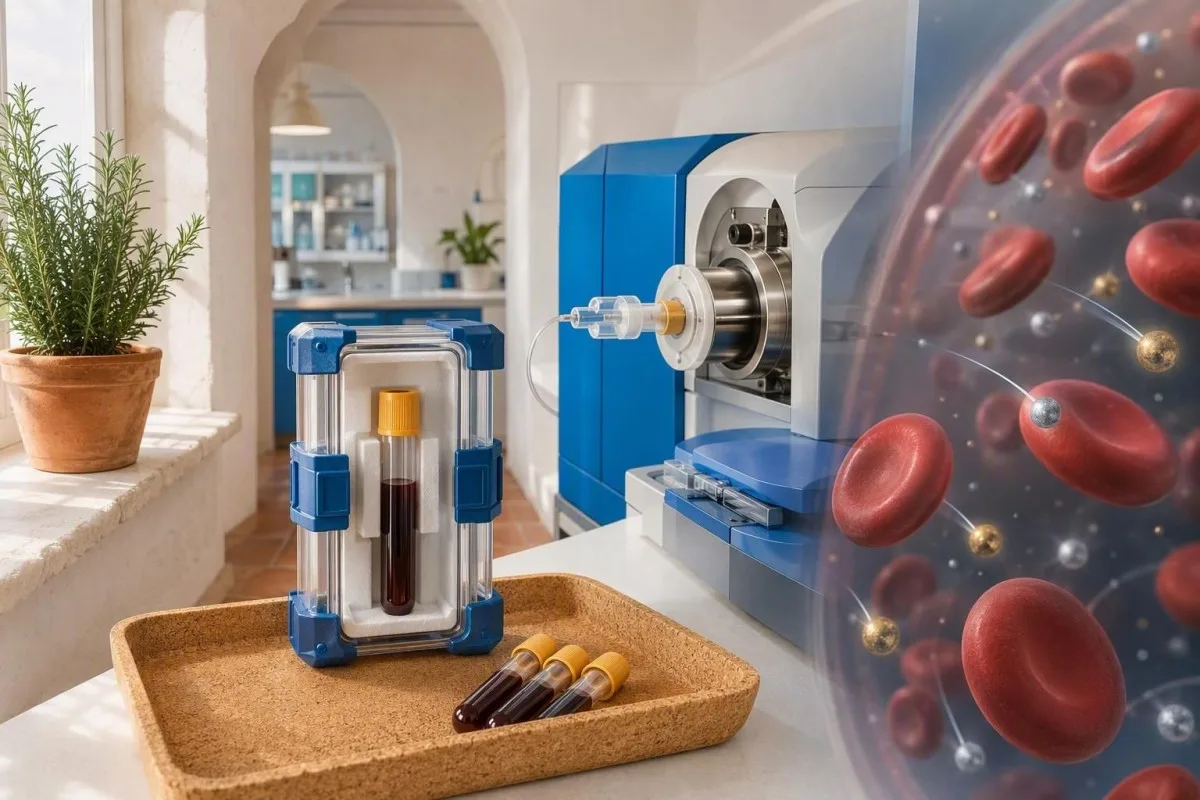
重金属血液检查最适合检测近期或持续接触铅、甲基汞以及某些与工作场所或植入物相关的金属。它不是衡量“身体毒素”的一般指标:尿液、金属形态、接触史和重复检测时间通常决定了结果是否有意义。.

本指南在以下人员的领导下撰写: 托马斯·克莱因医学博士 与……合作 Kantesti AI 医疗顾问委员会, 其中包括 Hans Weber 教授博士的贡献以及 Sarah Mitchell 医学博士、哲学博士的医学审查。.
托马斯·克莱因,医学博士
Kantesti AI首席医疗官
Thomas Klein 博士是经董事会认证的临床血液科医师兼内科医师,拥有超过 15 年的实验室医学与 AI 辅助临床分析经验。作为 Kantesti AI 的首席医疗官,他负责对专有神经网络的医疗准确性进行临床监督。Klein 博士已发表关于生物标志物解读与实验室诊断的研究。.
Sarah Mitchell,医学博士,哲学博士
首席医学顾问 - 临床病理学和内科
Sarah Mitchell博士是获得董事会认证的临床病理科医生,拥有超过18年的实验室医学与诊断分析经验。她在临床化学方面拥有专业认证,并在临床实践中就生物标志物面板与实验室分析发表了大量研究成果。.
汉斯·韦伯教授,博士
实验室医学与临床生物化学教授
Hans Weber教授博士在临床生物化学、实验室医学和生物标志物研究方面拥有30年以上的专业经验。曾任德国临床化学学会主席,他专注于诊断面板分析、生物标志物标准化以及AI辅助的实验室医学。.
- 全血铅 主要反映约1个月内的近期或持续接触;没有无风险的血铅水平。.
- CDC儿童血铅参考值 为3.5 µg/dL,是随访阈值而非毒性诊断。.
- 汞血液检查 对近期因鱼类和某些职业来源接触甲基汞最有用;它不能可靠地衡量陈旧性接触。.
- 尿液砷形态分析 适用于疑似无机砷接触,尤其是在避免食用海鲜48-72小时后。.
- 尿镉 通常更能反映累积的肾脏负担,而血镉则更侧重于近期暴露。.
- 头发检测 可用于解答关于甲基汞的特定问题,但作为广泛的诊断毒素筛查则不可靠。.
- 诱导尿液检测 使用螯合剂后,不能确定中毒,因为它会故意增加金属的尿液排泄。.
- 广泛的毒素检测 经常会检测到微量金属,但无法显示疾病、来源、剂量或治疗的必要性。.
重金属血液检查实际检查什么
A 重金属血液检查 测量收集时循环中特定元素的浓度;它不测量一个人一生的“毒素负荷”。全血尤其适用于铅和甲基汞,而砷、镉、铬、钴和铊的最佳样本则不同。.
大多数临床实验室使用电感耦合等离子体质谱法(ICP-MS),该方法可以检测到每升微克或更低的金属。检测不等于诊断:结果必须与实验室的方法、收集管、个人的工作、饮食、补充剂、肾功能以及疑似接触后的时间进行比较。.
A 毒物血液检查 市场上所谓的 20 种或 40 种金属筛查听起来很全面,但许多测量的元素在无症状个体中没有经过验证的疾病阈值。在我的实践中,有用的问题几乎总是更狭窄:“这种特定的暴露能否解释这个结果或症状?”
Kantesti 是一个 人工智能血液检测分析仪 将微量元素结果与报告的其他部分(包括肌酐、肝脏标志物和红细胞指数)并列。我们的 生物标志物参考指南 有助于区分需要立即进行临床审查的结果和主要需要更好的暴露史的结果。.
血液检测可以可靠地检测哪些金属?
血液检测可以可靠地量化多种金属,但可测浓度对每种金属的意义不同。. 铅、汞、锰、钴和铬 通常在全血中测量;砷和镉通常需要尿液检测来解答临床相关问题。.
A 铅血液检测 应使用在认证的微量元素管中收集的全血,因为铅会强烈地分配到红细胞中。当筛查性毛细血管结果升高时,优选静脉采样,因为皮肤上的灰尘会错误地提高指尖采血结果。.
A 血汞检测 对于近期几周内海鲜摄入引起的甲基汞和元素汞暴露最具信息量。全血汞含量通常在改变鱼类摄入量后下降;甲基汞的生物半衰期约为 50 天,因此 6-8 周后的重复结果可能比 3 天后的结果更有信息量。.
钴和铬的血浓度在某些带有金属对金属人工髋关节植入物的人群中有明确的作用,尽管症状、影像学、植入物类型和系列变化比单个孤立的数值更重要。我们的指南 铬检测选择 解释了为什么实验室可能报告不同的单位。.
铅血液检测:阈值、时机和随访
A 静脉血铅水平 是儿童和成人近期铅暴露的标准检测方法。在美国儿童中,3.5 µg/dL 是当前的 CDC 血铅参考值;它识别出比大多数同龄人暴露水平更高的儿童,而不是安全与不安全的界限。.
血铅水平通常反映了之前 28-36 天的暴露情况,但骨骼中储存的铅在怀孕、绝经、骨折愈合或严重疾病期间会重新进入血液。因此,在脱离暴露源后,血铅水平可能会下降,但这并不证明早期的暴露是无害的。.
美国 CDC 2021 年更新将儿童参考值从 5.0 降至 3.5 µg/dL 因为在群体水平上,较低的浓度仍然与发育风险相关(Ruckart 等人,2021)。对于血铅水平为 3.5 µg/dL 的儿童,螯合疗法并非常规治疗;寻找暴露源、营养、发育监测和重复检测是通常的第一步。.
对于成人,职业阈值和清除规定因国家、性别、怀孕可能性和行业而异。在许多临床环境中, 45 µg/dL或更高 的结果需要紧急专科医生讨论,而 70 µg/dL或更高 通常被视为医疗急症,需要立即清除暴露源和专家管理。.
鱼类、工作或泄漏后的汞血液检查
A 血汞检测 最佳地反映了海产品引起的近期甲基汞暴露,并有助于评估近期元素汞暴露。它本身不能确定汞的形态、来源、持续时间或神经毒性风险程度。.
对于有规律食用鱼类摄入的成年人,总血汞水平低于 10 µg/L 常常出现,但实验室参考区间因地理位置和饮食而异。高于 20 µg/L 的水平值得仔细进行暴露评估,尤其是在怀孕期间或备孕前,而不是进行反射性排毒。.
Clarkson 和 Magos 解释了为什么汞的化学性质很重要:甲基汞浓集在红细胞中,而无机汞更容易在尿液中体现(Clarkson 和 Magos,2006)。这一区别解释了为什么在食用了几份大型掠食性鱼类后,仅凭总汞水平就可能引起不必要的恐慌。.
我曾遇到过一位焦虑的患者在吃完寿司的第二天早上复查汞水平,但这次复查几乎没有提供任何信息。一个更有用的计划是记录两周内的鱼类种类和食用量,选择汞含量较低的选项,然后在原始结果真正升高的情况下,在大约 6-8 周后再次检测;请参阅我们的 海鲜汞随访指南.
何时尿液检测优于血液检查
当金属通过尿液排泄,或者临床医生需要估算累积暴露而非当日暴露时,尿液检测是首选。. 砷、镉、无机汞和铊 是尿液比血液更能回答临床问题的常见例子。.
A 24 小时尿液 收集测量一天的总排泄量,但当收集质量存疑时,通常使用校正肌酐后的点尿样本。未完成的收集、异常高的饮水量或极端的肌酐值都可能扭曲 24 小时估算值;收集技术应与检测次数一样受到严格审查。.
尿液镉比血液镉更能反映长期的肾脏蓄积,而血液镉则受近期吸烟或职业暴露的影响。镉的解释应包括尿液白蛋白或 ACR 和肾小管标志物(如临床指示),因为关注点通常是肾小管损伤而非模糊的毒性评分。.
时间误差很常见。我们的实用 24小时尿收集指南 详细介绍了常见的失败点,包括在错误的时间开始收集和忘记收集最后一份样本。.
砷检测需要形态分析,而非笼统的总量
怀疑砷暴露通常通过 尿砷形态分析, 来评估,而不是血液全套检测。海鲜摄入后,尿液总砷会急剧升高,因为有机砷胆碱在尿液中排泄,但其毒性远低于无机砷。.
人们应避免食用海鲜 48-72小时 在进行计划性尿砷检测之前,除非毒理学家另有建议。尿液总砷结果高于 50 µg/L 可能需要随访,但若不确定无机砷及其代谢物,则无法负责任地解释。.
血液砷的有效窗口很短——通常是在大量暴露后数小时内——因此,正常的血液值并不能排除几天前相关的暴露。在我处理实验室报告的 15 年里,这是最常见的导致广泛检测提供虚假安全感的原因之一。.
ATSDR 的砷评估支持在怀疑暴露时进行尿砷形态分析(ATSDR,2007)。在等待结果期间,请勿停用处方药或尝试螯合治疗;临床医生可以帮助确定水、工作场所或产品是否为潜在来源。.
镉、铬和钴需要特定接触史的检测
镉、铬和钴的结果仅在与潜在来源和正确的样本匹配时才具有意义。. 尿镉 通常选择用于累积暴露,而血液钴和铬主要用于近期职业暴露或特定植入物监测。.
吸烟会显著增加镉浓度,某些工作场所会增加吸入暴露;仅靠饮食摄入很少能解释一个显著的结果。肾功能很重要,因为肾功能下降会改变尿液浓度,而与暴露无关,因此肌酐和尿蛋白的背景信息很有用。.
For a person with a metal hip implant, new hip pain, reduced function, hearing or vision symptoms, cardiomyopathy symptoms, or a rising cobalt trend requires direct clinical assessment. A one-off blood cobalt concentration is not a screen for nonspecific tiredness, brain fog, or joint aches.
Kantesti AI can compare renal markers across dates, which is useful when a metal result raises a kidney question rather than proving causation. Review a GFR result after dehydration before assuming a small creatinine shift represents metal-related damage.
采集错误可能导致金属检测结果错误
Trace-metal results are unusually vulnerable to contamination from collection tubes, skin dust, topical products, and lab processing. A surprising low-level result should often be repeated using a certified trace-element tube before it triggers invasive investigations or supplements.
Powder from gloves, dust from a worksite, zinc-containing denture adhesives, and even a non-certified collection tube can affect testing. Hemolysis can also alter interpretation for some elements because cellular contents enter serum or plasma; a red-tinged specimen should prompt the laboratory to comment on sample quality.
The correct matrix matters: 全血, serum, plasma, and urine are not interchangeable. A report labelled “serum mercury” should not be compared casually with a public-health threshold developed for whole blood.
Kantesti 是一个 AI 生物标志物解读平台 that reads the reported specimen type, unit, and reference interval before offering context. Our technology and methods guide explains why a result outside one laboratory’s range cannot automatically be mapped onto another laboratory’s decision limit.
为什么头发、指甲和家庭毒素检测面板常常会误导人
Hair and nail tests cannot diagnose most heavy-metal poisoning in an individual because external contamination, cosmetic treatment, growth rate, and laboratory preparation can dominate the result. Hair has a limited supporting role for longer-term methylmercury exposure, not for a catch-all detox assessment.
Hair grows about 1 cm per month, but that simple fact does not make each centimetre a reliable exposure calendar. Hair dye, bleaching, swimming-pool water, dust, and shampoos can alter measured concentrations; washing protocols differ substantially between laboratories.
Nail testing has similar limitations and has little role in routine clinical diagnosis. When a panel reports 25 elements, it will usually flag something statistically unusual even in healthy people—an expected consequence of multiple comparisons, not evidence that the body needs cleansing.
If symptoms are the concern, clinicians should first look for standard explanations that have a clearer diagnostic pathway: anaemia, thyroid disease, kidney disease, medication effects, sleep disruption, and nutrition. Our article on 用于不明原因疼痛的血液检查 shows how to begin without reducing every symptom to toxicity.
为什么诱导性尿液检测不能证明金属中毒
A provoked urine metal test cannot diagnose chronic heavy-metal poisoning because the chelating drug intentionally mobilises and increases urinary excretion of metals. Reference ranges from an unprovoked urine specimen do not apply after EDTA, DMSA, DMPS, or another chelator.
Chelators bind metals that are normally present in tissues and circulation, so nearly everyone will excrete more after receiving one. The crucial missing piece is a validated post-chelation reference population, which most commercial reports do not provide.
Chelation is not benign. Depending on the agent and person, it can contribute to low calcium, kidney stress, allergic reactions, mineral depletion, and interactions with prescribed treatments; treatment should follow a documented exposure and specialist assessment.
Dr. Thomas Klein’s practical rule is simple: establish the exposure, obtain a properly collected baseline test, then discuss treatment. The 医学验证方法 used by Kantesti AI is designed to flag when an assay’s limits make a confident interpretation inappropriate.
需要紧急护理而非其他检测面板的症状
Acute confusion, seizures, severe vomiting, new weakness, shortness of breath, chest pain, or a known high-dose exposure need urgent medical assessment, not a mail-order toxin panel. A normal blood result can occur if testing is too late or measures the wrong metal.
For a child, pica, peeling paint exposure, developmental regression, or a sibling with high lead should trigger prompt paediatric advice. Lead poisoning is often silent, so behaviour alone cannot estimate a blood lead level.
Elemental mercury vapour exposure can cause cough, breathlessness, tremor, or neuropsychiatric symptoms, while inorganic arsenic may cause severe gastrointestinal illness and cardiovascular instability after major exposure. These patterns are uncommon, but delay is the risk—call emergency services or a poison centre when the exposure is recent or symptoms are significant.
A clinician may order electrolytes, creatinine, liver tests, ECG monitoring, and targeted toxicology alongside a metal assay. Our 电解质警示信号指南 explains why metal toxicity is never assessed from one concentration alone.
如何处理临界金属检测结果
A borderline metal result is usually managed by confirming the specimen, reconstructing exposure, and repeating the correct test after an appropriate interval. It rarely justifies supplements, fasting regimens, or chelation on its own.
Start with a timeline: occupation, hobbies, renovation work, imported spices or remedies, water source, firing ranges, jewellery work, fish intake, and implant history. Record dates, frequency, protective equipment, and whether others sharing the environment have symptoms or abnormal results.
Repeat testing should use the same matrix and, where possible, the same laboratory. A 20% change may reflect ordinary biological or analytical variation for some trace elements, whereas a sustained fall after a documented source removal supports the exposure hypothesis more strongly.
Kantesti can organise serial laboratory reports, but it cannot replace exposure investigation or medical examination. Our 解释了为何趋势需要背景。 is useful for preparing a concise timeline for an occupational physician or GP.
食物、补充剂和“排毒”的局限性”
No juice cleanse, sauna, supplement, or fasting protocol has been shown to remove clinically important metal exposure safely in place of source control. The first treatment for most low-level exposures is stopping the source and supporting ordinary nutrition, hydration, and medical follow-up.
Adequate calcium, iron, and vitamin C intake can reduce gastrointestinal lead absorption in children with nutritional deficiency, but food is not a substitute for environmental remediation. Iron deficiency can increase lead uptake, which is one reason clinicians often review ferritin and a complete blood count when lead exposure is confirmed.
High-dose zinc can create copper deficiency, and unsupervised selenium can itself cause toxicity. A supplement marketed as a metal binder should be treated cautiously, particularly if it contains multiple minerals that may complicate subsequent testing.
For sensible nutrition questions, read our guide to 铁含量高的食物 以及我们对 硒剂量安全性的循证审查. The evidence for commercial detox programmes is honestly weak.
如何结合常规血液检查解读金属检测结果
Metal results become clinically useful when interpreted alongside kidney function, liver markers, full blood count, symptoms, and a credible exposure source. A value slightly above a reference interval without any of those supporting features often has limited clinical significance.
Lead exposure may coexist with microcytosis or iron deficiency, but a normal CBC does not exclude lead exposure. Cadmium questions deserve attention to creatinine and urinary protein, while marked liver abnormalities should not automatically be blamed on a low-level metal finding.
Kantesti AI 是一种 AI 实验室检测解读服务 that translates unit-specific laboratory data into questions for a clinician, rather than declaring a diagnosis from a broad toxin screen. Dr. Thomas Klein and our 医疗顾问委员会 emphasise source verification, reproducible testing, and clear escalation advice.
Before uploading any report, remove unnecessary identifiers and check that the specimen type, collection date, and units are visible. Our PDF 上传质量核对清单 can prevent a simple transcription error from becoming a frightening interpretation.
2026年疑似接触史的实用检测计划
As of September 3, 2026, the safest testing plan starts with a specific exposure hypothesis, then chooses the right metal, specimen, and collection date. Broad screening is reasonable only when an occupational or public-health clinician identifies a defined multi-metal exposure.
For old paint, imported pottery, shooting, battery work, or contaminated dust, request venous whole-blood lead. For frequent high-mercury fish intake, start with whole-blood total mercury; for well water or suspected arsenic, request urine arsenic with speciation after seafood avoidance.
Bring photographs of product labels, workplace safety sheets, renovation dates, and water-test results to the appointment. That evidence can be more diagnostic than adding 15 metals to a panel, and it makes public-health action possible when a home or job source is real.
Kantesti is used across 127+ countries, but local thresholds and workplace reporting rules vary. Our clinical use-case examples show how structured questions can support—not replace—your own clinician, toxicology service, or local public-health team.
常见问题
血液检测可以检测出哪些金属?
重金属血液检查可以定量血液中的铅、总汞、锰、钴、铬以及其他几种元素,通常是在全血中检测。血液检查对于近期或持续暴露最有效,但不能用于测量终身累积量。铅通常通过静脉全血检测来评估,甲基汞的血液半衰期约为50天。砷、镉、无机汞和铊通常需要尿液检测才能获得更有临床意义的结果。.
重金属在血液中停留多久?
The time a metal remains measurable depends on its chemical form and the specimen tested. Blood lead generally reflects exposure during the previous 28-36 days, while methylmercury commonly declines over about 50 days after exposure decreases. Arsenic in blood may be useful for only hours after a substantial exposure, so a normal result later does not rule it out. Cadmium can persist in the body for years, but urine is usually more informative for accumulated cadmium burden.
血液重金属检测是很好的常规毒素筛查吗?
A broad toxin blood test is usually a poor general screen for unexplained fatigue, headaches, or brain fog because trace detection does not establish toxicity. Panels that measure 20 or more elements increase the chance of at least one borderline flag even in healthy people. A targeted test based on work, water, paint, seafood, supplements, or an implant is more likely to produce an actionable result. A clinician should interpret any elevated concentration with the specimen type, units, timing, symptoms, and exposure history.
在进行重金属血液检查前是否需要禁食?
Fasting is not required for most lead or mercury blood tests. The more relevant preparation is avoiding contamination and documenting recent exposure, such as fish eaten during the prior 1-2 weeks or workplace contact on the day of testing. For urine arsenic, avoid seafood for 48-72 hours before collection unless a clinician advises otherwise, because organic seafood arsenic can raise total urine arsenic. Do not stop prescribed medicines or take a chelating product before testing.
引起关注的血铅水平是多少?
For children in the United States, a venous blood lead level of 3.5 µg/dL or higher meets the CDC blood lead reference value and should prompt exposure follow-up. This is not a safe-versus-dangerous cutoff, because no level of lead exposure is known to be completely without risk. Levels of 20-44 µg/dL warrant prompt clinical assessment, and levels of 45 µg/dL or higher generally require urgent specialist discussion. Adult occupational action levels differ by country, job, sex, and pregnancy potential.
头发检测对重金属的检测准确吗?
Hair tests are not reliable for diagnosing most heavy-metal poisoning because external dust, hair dye, bleaching, shampoo, and laboratory washing methods can change results. Hair grows about 1 cm monthly, but it is not a precise historical exposure record for an individual. Hair analysis may occasionally support assessment of longer-term methylmercury exposure under specialist guidance. An abnormal hair result should not be used alone to justify chelation or a detox programme.
螯合疗法检测可以显示我是否有重金属中毒吗?
No, urine collected after a chelating medication cannot prove metal poisoning because the medication deliberately increases metal excretion. Standard urine reference ranges are derived from samples collected without a chelator and cannot be compared with a post-chelation result. Chelation can cause kidney stress, mineral disturbances, and other adverse effects, especially when used without a documented indication. Properly collected baseline blood or urine testing and exposure investigation should come first.
立即获取AI驱动的血液检测分析
加入全球超过2,000,000名用户,他们信任Kantesti进行即时、准确的检验分析。上传你的血液检查结果,并在几秒内获得对15,000+生物标志物的全面解读。.
📚 参考研究论文
Klein, T., Mitchell, S., & Weber, H. (2026). 空腹腹泻、大便带黑点及胃肠道指南 2026. Kantesti AI医学研究。.
Klein, T., Mitchell, S., & Weber, H. (2026). 女性健康指南:排卵、更年期和激素症状. Kantesti AI医学研究。.
📖 外部医学参考资料
Agency for Toxic Substances and Disease Registry (2007). Toxicological Profile for Arsenic.。 美国卫生与公众服务部。.
📖 继续阅读
从 坎特什蒂 医疗团队探索更多经过专家审核的医学指南:

胆红素维生素B12:活性结果的误导性
维生素 B12 实验室解读 2026 年更新 患者友好型 补充后不久正常的活性 B12 结果可能表明最近…….
阅读文章 →
60岁以上女性的血液检查:基于风险的优先事项
女性健康实验室解读 2026 年更新 患者友好指南 60 岁以后有用的实验室计划取决于风险、药物…….
阅读文章 →
皮肤干燥的血液检测:缺乏症线索与后续步骤
皮肤健康实验室解读 2026 更新 患者友好型 大部分皮肤干燥是由于气候、肥皂、湿疹或皮肤屏障受损所致——而非….
阅读文章 →
胸痛血检:紧急结果与后续步骤
急诊分诊实验室解读 2026 年更新 患者友好型 胸痛是一种症状,而不是一种诊断。最安全的决定...
阅读文章 →
家庭血液检测套餐:根据年龄和风险制定的安全检测
家庭健康实验室解读 2026 更新 患者友好型 一个有用的家庭检测计划不是一个超大面板...
阅读文章 →
乐龄人士血液检查结果:检查药物影响
老年健康实验室解读 2026 更新 药物安全 许多晚年的异常结果反映了药物、水合作用或...
阅读文章 →发现我们所有的健康指南以及 基于AI的血液检查分析工具 在 kantesti.net
⚕️ 医疗免责声明
本文仅用于教育目的,不构成医疗建议。诊断和治疗决策请始终咨询合格的医疗专业人员。.
E-E-A-T信任信号
经验
由医生主导的临床审阅:实验室解读工作流程。.
专业知识
实验室医学重点:生物标志物在临床情境中的表现。.
权威
由 Thomas Klein 博士撰写,并由 Sarah Mitchell 博士与 Hans Weber 教授审阅。.
可信度
基于循证的解读,并提供清晰的后续路径以减少警报。.