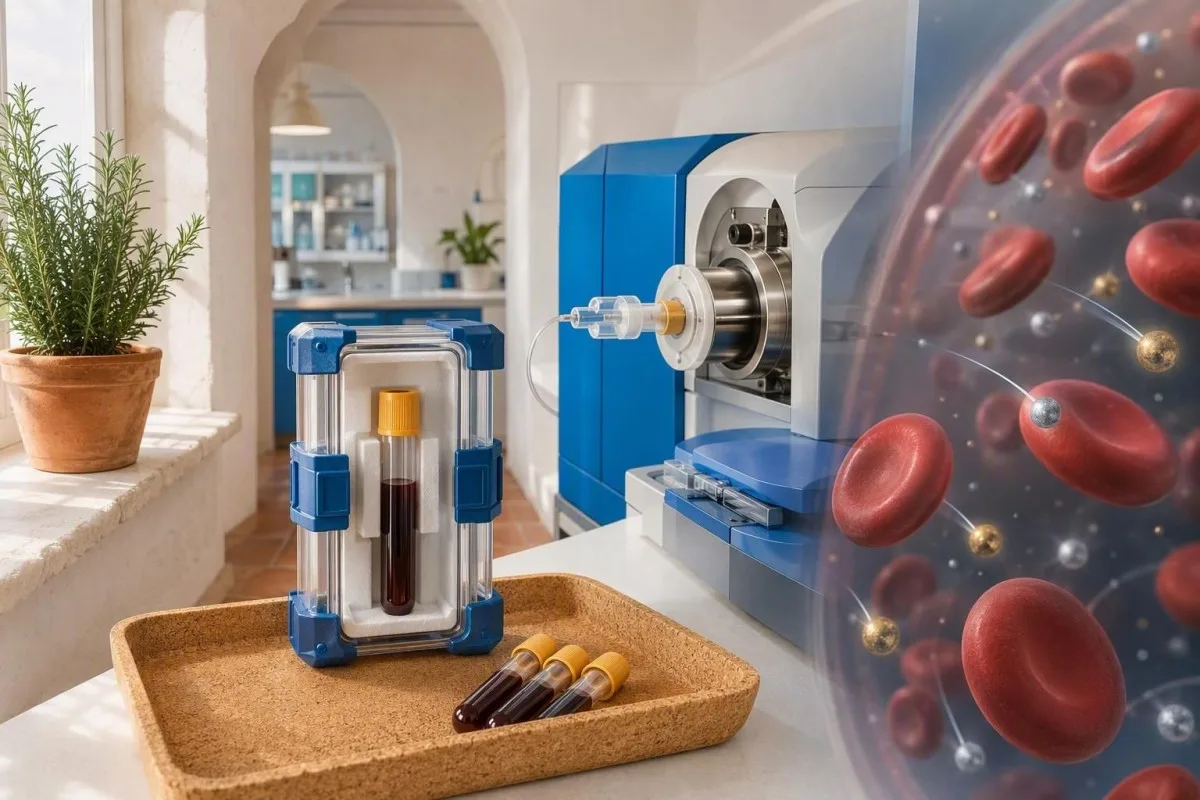
Qo'rg'oshin, metilmerkuriy va tanlangan ish joyi yoki implant bilan bog'liq metallarning yaqinda yoki davom etayotgan ta'sirini aniqlash uchun og'ir metallar qon testi eng yaxshisidir. Bu “tana toksinlari” ning umumiy o'lchovi emas: siydik, metallning turlanishi, ta'sir qilish tarixi va takroriy tekshiruv vaqti natijaning mazmunli bo'lishini ko'pincha aniqlaydi.


- Butun qonning qo'rg'oshini asosan taxminan 1 oy davomida yaqinda yoki davom etayotgan ta'sirni aks ettiradi; hech qanday qon qo'rg'oshin darajasi xavfsiz hisoblanmaydi.
- CDC bolalar qonidagi qo'rg'oshin ma'lumotnoma qiymati 3,5 mkg/dl ni tashkil qiladi, bu zaharlanish tashxisi emas, balki qo'shimcha tekshiruv chegarasidir.
- Simob qon tahlili baliqdan va ba'zi kasbiy manbalardan metilmerkuriyning yaqinda ta'sirini aniqlash uchun eng foydalidir; u eski ta'sirni ishonchli o'lchamaydi.
- Turlanishi bilan siydikning arseni noorganik arsen ta'siridan gumon qilinganda, ayniqsa 48-72 soat davomida dengiz mahsulotlarini iste'mol qilmagandan keyin afzal ko'riladi.
- Siydikdagi kadmiy Odatda buyrakning umumiy yukini yaxshiroq aks ettiradi, qondagi kadmiy esa yaqinda ta'sir qilishga ko'proq moyil.
- Sochni tekshirish Metilmerkuriyga oid tor savolni tasdiqlashi mumkin, ammo keng qamrovli diagnostik toksinlarni skriningi uchun ishonchsizdir.
- Provokatsion siydikni tekshirish xelyatsiya qiluvchi moddadan so'ng zaharlanishni aniqlay olmaydi, chunki u siydikdagi metallning ajralib chiqishini qasddan oshiradi.
- keng qamrovli toksin panellari ko'pincha kasallikni, manbasini, dozasini yoki davolash zaruratini ko'rsatmasdan iz metallarni aniqlaydi.
Og'ir metallar qon testi aslida nimani tekshiradi
A og‘ir metallar qon tahlili to'plash vaqtida aylanib yurgan maxsus elementlarning konsentratsiyasini o'lchaydi; u shaxsning umrbodlik “toksin yukini” o'lchamaydi. Butun qon, ayniqsa, qo'rg'oshin va metilmerkuriy uchun foydalidir, arsen, kadmiy, xrom, kobalt va talliy uchun esa eng yaxshi namunaviy material o'zgaradi.
Ko'pgina klinik laboratoriyalar ICP-MS (induktiv ulangan plazma massa spektrometriyasi) dan foydalanadi, bu esa litriga mikrogramm yoki undan past darajada metallarni aniqlay oladi. Aniqlash bu tashxis emas: natijani laboratoriyaning usuli, to'plash naychasi, shaxsning ishi, parhez, qo'shimchalar, buyrak funktsiyasi va shubha qilingan aloqadan keyin o'tgan vaqt bilan solishtirish kerak.
A toksinlar qon tahlili 20 yoki 40 metallni skriningi sifatida sotiladigan bu har tomonlama eshitilishi mumkin, ammo o'lchangan ko'plab elementlar simptomlarsiz shaxsda tasdiqlangan kasallik chegarasiga ega emas. Mening amaliyotimda foydali savol deyarli har doim torroq: “Bu xususiy ta'sir bu natijani yoki simptomni tushuntirishi mumkinmi?”
Kantesti - bu AI qon testi analizatori bu iz-elementlar natijalarini xabar berishning qolgan qismi bilan birga, shu jumladan kreatinin, jigar ko'rsatkichlari va qizil qon hujayralari indekslari bilan birga qo'yadi. Bizning biomarker ma'lumotnomasi tez klinik ko'rib chiqishni talab qiladigan natijani, ko'proq ta'sir qilish tarixi kerak bo'lganidan ajratishga yordam beradi.
Qon tahlili qaysi metallarni ishonchli aniqlay oladi?
Qon tekshiruvi bir nechta metallarni ishonchli miqdorini aniqlay oladi, ammo o'lchanadigan konsentratsiyaning har biri uchun ma'nosi farq qiladi. Qo'rg'oshin, simob, marganets, kobalt va xrom odatda butun qonda o'lchanadi; arsen va kadmiy ko'pincha klinik jihatdan tegishli savol uchun siydikni tekshirishni talab qiladi.
A Qo‘rg‘oshin qon tahlili Sertifikatlangan iz-elementlar naychasida olingan butun qon ishlatilishi kerak, chunki qo'rg'oshin qizil hujayralarga kuchli ta'sir qiladi. Agar kapillyar skrining natijasi yuqori bo'lsa, vena orqali namuna olish afzalroq, chunki teridagi chang barmoqdan olingan natijani noto'g'ri oshirishi mumkin.
A Simobni qon tahlili So'nggi haftalarda dengiz mahsulotlaridan olingan metilmerkuriy va elementar simob ta'sirini aniqlash uchun eng ko'p ma'lumot beradi. Butun qondagi simob baliq iste'moli o'zgargandan keyin ko'pincha pasayadi; metilmerkuriyning biologik yarim umri taxminan 50 kunni tashkil qiladi, shuning uchun 6-8 hafta ichida takrorlangan natija, 3 kundan keyingi natijadan ko'ra ko'proq ma'lumot berishi mumkin.
Kobalt va xrom qon konsentratsiyasi metall-metalldan yasalgan son protezlariga ega bo'lgan tanlangan shaxslarda aniq rol o'ynaydi, ammo simptomlar, tasvirlar, implant turi va seriyali o'zgarishlar bitta izolyatsiyalangan raqamdan ko'ra muhimroqdir. Bizning qo'llanmamiz xromni tekshirish tanlovi laboratoriyalar nima uchun turli birliklarda hisobot berishi mumkinligini tushuntiradi.
Qo'rg'oshin qon tahlili: chegaralar, vaqt va qo'shimcha tekshiruvlar
A vena qonida qo'rg'oshin darajasi bolalar va kattalardagi yaqinda qo'rg'oshin ta'sirini aniqlash uchun standart testdir. AQSh bolalarida 3,5 mkg/dL hozirgi CDC qonida qo'rg'oshinning ma'lumotnoma qiymati hisoblanadi; u o'rtachadan yuqori ta'sirga ega bo'lgan bolalarni aniqlaydi va xavfli va xavfsiz o'rtasida chegarani belgilamaydi.
Qondagi qo'rg'oshin darajasi odatda oldingi 28-36 kunlik ta'sirdan dalolat beradi, garchi suyakda saqlangan qo'rg'oshin homiladorlik, menopauza, suyak sinishi yoki og'ir kasallik paytida qonga qayta kirishi mumkin. Shu sababli, manbadan chiqqandan keyin daraja pasayishi mumkin, bu esa avvalgi ta'sirning zararsiz ekanligini isbotlamaydi.
CDCning 2021-yilgi yangilanishi bolalar uchun mos yozuvlar qiymatini 5,0 dan pasaytirdi 3.5 mkg/dL chunki past konsentratsiyalar hali ham populyatsiya darajasida rivojlanish xavfi bilan bog'liq (Ruckart va boshqalar, 2021). 3,5 mkg/dl bo'lgan bola uchun xelyatsiya qilish odatiy emas; manbani aniqlash, ovqatlanish, rivojlanishni kuzatish va takroriy tekshirish odatiy birinchi qadamlardir.
Kattalar uchun kasbiy chegaralar va olib tashlash qoidalari mamlakat, jins, homiladorlik imkoniyati va sanoatga qarab farqlanadi. Natija 45 mkg/dL yoki undan yuqori ko'plab klinik sharoitlarda shoshilinch mutaxassis muhokamasini talab qiladi, shu bilan birga 70 mkg/dL yoki undan yuqori odatda zudlik bilan ta'sirdan xalos bo'lish va mutaxassislar boshqaruvi zarur bo'lgan tibbiy favqulodda holat sifatida qaraladi.
Baliq, ish yoki to'kilgandan keyin simob qon testlari
A Simobni qon tahlili dengiz mahsulotlaridan yaqinda metilmerkuriy ta'sirini eng yaxshi aniqlaydi va yaqinda elementar simob ta'sirini baholashga yordam beradi. Uning o'zi simobning shaklini, manbasini, davomiyligini yoki nevrologik xavf darajasini aniqlamaydi.
Muntazam baliq iste'mol qiladigan kattalar uchun qondagi umumiy simob miqdori quyidagi darajadan past bo'ladi 10 mkg/l ko'pincha ko'riladi, ammo laboratoriya mos yozuvlar intervallari geografiya va dietaga qarab keng farq qiladi. Quyidagi darajadan yuqori natija 20 mkg/l ayniqsa homiladorlik paytida yoki homiladorlikdan oldin, reflektor detoksifikatsiyadan ko'ra ehtiyotkorlik bilan ta'sirni ko'rib chiqishga arziydi.
Clarkson va Magos simob kimyosi nima uchun muhimligini tushuntirib berishadi: metilmerkuriy qizil hujayralarda to'planadi, shu bilan birga noorganik simob siydikda ko'proq ifodalanadi (Clarkson va Magos, 2006). Bu farq, nega umumiy simob yolg'iz katta yirtqich baliqlarning bir necha marta iste'mol qilingandan so'ng keraksiz vahima keltirib chiqarishi mumkinligini tushuntiradi.
Men bundan ko'ra, dengiz mahsulotlari turlari va miqdorini 2 hafta davomida yozib olishni, kam simobli variantlarni tanlashni, keyin esa dastlabki natija haqiqatan ham yuqori bo'lgan bo'lsa, 6-8 hafta o'tgach takrorlashni tavsiya etaman; quyidagi dengiz mahsulotlari simobini kuzatish qo'llanmasiga murojaat qiling.
Siydik tekshiruvi qon tekshiruvidan qachon yaxshiroq
Metall siydik orqali chiqarilganda yoki shifokorlar shu kunlik emas, balki umumiy ta'sirlanishni baholashni istagعندда siydik tekshiruvi afzalroqdir. Arshnik, kadmiy, noorganik simob va talliy qon tekshiruviga qaraganda siydik tekshiruvi klinik savolga yaxshiroq javob bera oladigan keng tarqalgan misollardir.
A 24-soatlik siydik yig'ish bir kun ichida umumiy ajralishni o'lchaydi, ammo yig'ish sifati shubhali bo'lsa, ko'pincha kreatinin uchun to'g'rilangan bir martalik siydik namunasi ishlatiladi. Yig'ishni o'tkazib yuborish, g'ayrioddiy yuqori suyuqlik iste'moli yoki har ikki chekkadagi kreatinin 24-soatlik baholashni buzishi mumkin; yig'ish usuli raqam kabi tekshiruvni talab qiladi.
Siydikdagi kadmiy qondagi kadmiyga qaraganda buyrakdagi uzoq muddatli to'planishni ko'proq aks ettiradi, bu esa yaqinda chekish yoki kasbiy ta'sirdan ta'sirlanadi. Kadmiyning talqini, agar klinik jihatdan zarur bo'lsa, siydikdagi albumin yoki ACR va buyrak naychalari markerlarini o'z ichiga olishi kerak, chunki tashvish ko'pincha umumiy toksiklik ballidan ko'ra buyrak naychalari shikastlanishi bilan bog'liq.
Vaqtni xato qilish keng tarqalgan. Bizning amaliy 24 soatlik siydik yig‘ish bo‘yicha qo‘llanmamiz qo'llanmamiz odatdagi muvaffaqiyatsizlik nuqtalarini, shu jumladan noto'g'ri vaqtda boshlash va oxirgi namuna olishni unutishni o'z ichiga oladi.
Arsenikni tekshirish uchun umumiy miqdor emas, balki turlanishi kerak
Shubhali arshnik ta'sirini odatda siydikdagi arshnikning turlarini aniqlash, orqali baholanadi, qon paneli orqali emas. Dengiz mahsulotlaridan keyin umumiy siydikdagi arshnik miqdori sezilarli darajada oshishi mumkin, chunki organik arsenobetain siydikda chiqariladi, lekin u noorganik arshnikdan ancha kam zaharli.
Odamlar dengiz mahsulotlarini iste'mol qilishdan tiyilishlari kerak 48-72 soat siydikdagi arshnikni rejalashtirilgan tekshiruvdan oldin, agar toksikolog boshqacha maslahat bermasa. 50 µg/L dan yuqori bo'lgan umumiy siydikdagi arshnik natijasi qo'shimcha tekshiruvni talab qilishi mumkin, ammo uni noorganik arshnik va uning metabolitlarini aniqlamasdan mas'uliyatli talqin qilib bo'lmaydi.
Qondagi arshnikning foydali vaqti qisqa - ko'pincha sezilarli ta'sirdan keyin bir necha soat ichida - shuning uchun normal qon qiymati bir necha kun oldingi tegishli ta'sirdan voz kechmaydi. Laboratoriya hisobotlari bilan ishlayotgan 15 yil ichida bu keng tarqalgan panellarning yolg'on tasalli berishining eng ko'p uchraydigan sabablaridan biridir.
ATSDR ning arshnik profili shubhali ta'sirdan, ayniqsa quduq suvi, sanoat yoki o'simlik mahsulotlari bilan bog'liq muammolardan keyin (ATSDR, 2007) turlarni aniqlash bilan siydik tekshiruvini qo'llab-quvvatlaydi. Natijani kutayotganda buyurilgan dori-darmonlarni to'xtatmang yoki chelationga urinmang; shifokor suv, ish yoki mahsulotning mumkin bo'lgan manba ekanligini aniqlashga yordam berishi mumkin.
Kadmiy, xrom va kobalt ta'sirga bog'liq tekshiruvni talab qiladi
Kadmiy, xrom va kobalt natijalari faqat mumkin bo'lgan manba va to'g'ri namuna bilan mos kelganda ma'noli bo'ladi. Siydikdagi kadmiy ko'pincha umumiy ta'sirlanish uchun tanlanadi, qondagi kobalt va xrom esa asosan yaqinda kasbiy ta'sirlanish yoki tanlangan implant nazorati uchun ishlatiladi.
Chekish kadmiy konsentratsiyasini sezilarli darajada oshirishi mumkin va ba'zi ish joylari inhalatsiyaviy ta'sirlanishni qo'shadi; faqat ovqatlanish orqali olish kamdan-kam hollarda aniq natijani tushuntiradi. Buyraklar funksiyasi muhimdir, chunki filtratsiyaning pasayishi ta'sirdan mustaqil ravishda siydik konsentratsiyasini o'zgartirishi mumkin, shuning uchun kreatinin va siydik oqsilining konteksti foydalidir.
Metall buyrak protezi bo'lgan shaxs uchun yangi son og'rig'i, kamaygan funksiya, eshitish yoki ko'rish belgilari, kardiyomiyopatiya belgilari yoki kobaltning ko'tarilish tendentsiyasi to'g'ridan-to'g'ri klinik baholashni talab qiladi. Bir martalik qon kobalt konsentratsiyasi umumiy charchoq, miya loyqalik yoki bo'g'im og'riqlari uchun skrining emas.
Kantesti AI turli sanalardagi buyrak markerlarini solishtirishi mumkin, bu metall natijasi buyrak bilan bog'liq savolni tug'dirganda, sababni isbotlashdan ko'ra foydalidir. Ko'rib chiqing suvsizlanishdan keyin GFR natijasi kreatininning kichik o'zgarishi metall bilan bog'liq zararni ko'rsatadi deb taxmin qilishdan oldin.
Namuna olishdagi xatolar soxta metall natijasini berishi mumkin
Iz-metall natijalari to'plash naychalari, ter changi, topikal mahsulotlar va laboratoriya ishlov berishdan ifloslanishga juda moyil. Hayratlanarli darajada past darajadagi natija ko'pincha sertifikatlangan iz-element naychasidan foydalanib takrorlanishi kerak, chunki u invaziv tekshiruvlar yoki qo'shimchalarni boshlamaydi.
Eldivenlardan kukun, ish joyidan chang, ruxli tish protezlari yopishtiruvchi moddalari va hatto sertifikatsiyalanmagan yig'ish naychasi ham testga ta'sir qilishi mumkin. Gemoliz ba'zi elementlar uchun talqinni o'zgartirishi mumkin, chunki hujayra tarkibi sarum yoki plazmaga kiradi; qizil rangli namuna laboratoriyani namunaning sifatiga izoh berishga undashi kerak.
To'g'ri matritsa muhim: бутун қон, sarum, plazma va siydik almashtirilmaydi. “Sarum simob” deb belgilangan hisobotni butun qon uchun ishlab chiqilgan jamoat salomatligi chegarasi bilan tasodifiy solishtirish mumkin emas.
Kantesti - bu AI biomarker talqin platformasi hisobotda keltirilgan namuna turi, birlik va mos yozuvlar oralig'ini o'qiydigan va keyin kontekstni taklif qiladi. Bizning texnologiya va usullarimiz yo'l ko'rsatadi bir laboratoriyaning diapazonidan tashqaridagi natija avtomatik ravishda boshqa laboratoriyaning qaror chegarasiga moslashtirilishi mumkin emasligini tushuntiradi.
Nima uchun soch, tirnoq va uy toksinlarini tekshirish ko'pincha noto'g'ri xulosaga olib keladi
Soch va tirnoq testlari aksariyat og'ir metallar bilan zaharlanishni shaxsda aniqlay olmaydi, chunki tashqi ifloslanish, kosmetik muolajalar, o'sish sur'ati va laboratoriya tayyorgarligi natijani ustunlik qilishi mumkin. Soch uzoq muddatli metil simob ta'sirini qo'llab-quvvatlashda cheklangan rol o'ynaydi, lekin tozalash uchun umumiy baholash uchun emas.
Soch taxminan o'sadi oyiga 1 sm, lekin bu oddiy haqiqat har bir santimetrni ishonchli ta'sir taqvimiga aylantirmaydi. Soch bo'yog'i, oqartiruvchi, suzish havzasi suvi, chang va shampunlar o'lchangan konsentratsiyalarni o'zgartirishi mumkin; yuvish protokollari laboratoriyalar orasida sezilarli darajada farq qiladi.
Tirnoqni sinash shunga o'xshash cheklovlarga ega va muntazam klinik diagnostikada kam rol o'ynaydi. Agar panel 25 ta elementni hisoblasa, u odatda sog'lom odamlarda ham statistik jihatdan g'ayrioddiy bir narsani belgilaydi - bu ko'plab taqqoslashlarning kutilgan natijasi, tananing tozalanishi kerakligining dalili emas.
Agar alomatlar tashvish tug'dirsa, shifokorlar avval aniqroq diagnostika yo'liga ega bo'lgan standart tushuntirishlarni qidirishlari kerak: kamqonlik, qalqon bezining kasalligi, buyrak kasalligi, dorilarning ta'siri, uyqu buzilishi va ovqatlanish. Bizning maqolamiz sababi noma’lum og‘riqdagi qon tahlillari bo‘yicha yo‘riqnomamiz har bir alomatni toksiklikka kamaytirmasdan qanday boshlashni ko'rsatadi.
Nima uchun qo'zg'atilgan siydik testlari metall zaharlanishini isbotlay olmaydi
Provokatsion siydik metall testi surunkali og'ir metallar bilan zaharlanishni aniqlay olmaydi, chunki xelat qiluvchi dori qasddan metallarni harakatga keltiradi va siydik bilan chiqarilishini oshiradi. EDTA, DMSA, DMPS yoki boshqa xelatordan keyin provokatsiyalanmagan siydik namunasidan olingan mos yozuvlar diapazonlari qo'llanilmaydi.
Xelatorlar odatda to'qimalarda va qon aylanishida mavjud bo'lgan metallarni bog'laydi, shuning uchun ulardan deyarli har bir kishi ulardan birini olgandan keyin ko'proq chiqaradi. Asosiy etishmayotgan qism - bu tasdiqlangan post-xelatsiya mos yozuvlar populyatsiyasi, ko'pgina tijoriy hisobotlar buni ta'minlamaydi.
Xelatsiya zararsiz emas. vosita va odamga qarab, u past kaltsiy, buyrak stressi, allergik reaktsiyalar, mineral tanqisligi va buyurilgan davolash usullari bilan o'zaro ta'siriga hissa qo'shishi mumkin; davolash hujjatlashtirilgan ta'sir va mutaxassis baholashidan keyin amalga oshirilishi kerak.
Doktor Tomas Keynning amaliy qoidasi sodda: ta'sirni aniqlash, to'g'ri to'plangan asosiy testni olish, keyin davolashni muhokama qilish. tibbiy validatsiya yondashuvimiz Kantesti AI tomonidan ishlatiladigan vosita, tahlilning chegaralari to'g'ri talqin qilishni noo'rin qilganda belgini qo'yish uchun mo'ljallangan.
Qanday alomatlar qo'shimcha tekshiruvdan ko'ra tez yordamni talab qiladi
O'tkir chalkashlik, tirishishlar, kuchli qusish, yangi zaiflik, hansirash, ko'krak qafasidagi og'riq yoki yuqori dozada ma'lum bo'lgan ta'sirni zudlik bilan tibbiy baholash talab qiladi, pochta orqali yuboriladigan toksin paneli emas. Agar test juda kech bo'lsa yoki noto'g'ri metalni o'lchasa, qon natijalari normal bo'lishi mumkin.
Bolada pika, peeling bo'yoq ta'sirida bo'lish, rivojlanishning orqaga ketishi yoki yuqori qo'rg'oshinli aka-uka bo'lishi bolalar shifokorining tezkor maslahatini qo'zg'atishi kerak. Qo'rg'oshin zaharlanishi ko'pincha jim bo'ladi, shuning uchun faqat xulq-atvor bilan qon qo'rg'oshin darajasini baholash mumkin emas.
Elementli simob bug'ining ta'siridan yo'tal, hansirash, tre mor yoki neyropsixiatrik belgilar paydo bo'lishi mumkin, shu bilan birga noorganik mishyak katta ta'siridan keyin jiddiy oshqozon-ichak kasalliklari va yurak-qon tomir beqarorligiga olib kelishi mumkin. Bu naqshlar kam uchraydi, ammo kechikish xavf tug'diradi - agar ta'sir yaqinda bo'lsa yoki belgilar sezilarli bo'lsa, favqulodda xizmatlarga yoki zahar markaziga qo'ng'iroq qiling.
Shifokor metalni tahlil qilish bilan bir qatorda elektrolitlar, kreatinin, jigar testlari, EKG monitoringi va maqsadli toksikologiyani buyurishi mumkin. Bizning elektrolit “qizil bayroq” (red-flag) qo‘llanmasi metal toksikligi hech qachon faqat bitta konsentratsiyadan baholanmasligining sababini tushuntiradi.
Chegaradagi metall natijasini qanday hal qilish kerak
Chegaraviy metal natijasi odatda namuna tasdiqlash, ta'sirni rekonstruksiya qilish va tegishli intervaldan keyin to'g'ri testni takrorlash orqali boshqariladi. Bu kamdan-kam hollarda qo'shimchalar, ochlik rejimlar yoki o'z-o'zidan chelatlashni oqlaydi.
Timeline bilan boshlang: ish, sevimli mashg'ulotlar, ta'mirlash ishlari, import qilingan ziravorlar yoki dorilar, suv manbai, o'q otish maydonchalari, zargarlik ishlari, baliq iste'moli va implant tarixi. Sanalar, chastota, himoya vositalari va atrof-muhitni baham ko'rayotgan boshqalar ham belgilar yoki anormal natijalarga ega bo'lganligini yozib oling.
Takroriy testlash bir xil matritsani va, agar mumkin bo'lsa, bir xil laboratoriyani ishlatishi kerak. A 20% o'zgarishi ba'zi iz elementlari uchun oddiy biologik yoki analitik variatsiyani aks ettirishi mumkin, shu bilan birga hujjatlashtirilgan manbani olib tashlashdan keyin barqaror pasayish ta'sir gipotezasini yanada kuchliroq qo'llab-quvvatlaydi.
Kantesti ketma-ket laboratoriya hisobotlarini tashkil qilishi mumkin, ammo u ta'sirni tekshirish yoki tibbiy ko'rikni almashtira olmaydi. Bizning yonma-yon natijalar qo'llanmamiz kasbiy shifokor yoki GP uchun qisqa muddatni tayyorlash uchun foydalidir.
Oziq-ovqat, qo'shimchalar va “detoks” ning chegaralari”
Hech qanday sharbat tozalash, sauna, qo'shimcha yoki ochlik protokoli klinik jihatdan muhim metal ta'sirini manbani nazorat qilish o'rniga xavfsiz olib tashlashni ko'rsatmadi. Aksariyat past darajadagi ta'sirlanishlar uchun birinchi davolash - bu manbani to'xtatish va oddiy ovqatlanish, hidratsiya va tibbiy kuzatuvni qo'llab-quvvatlash.
Yetarli kaltsiy, temir va S vitamini iste'moli nutrisionel etishmovchiligi bo'lgan bolalarda oshqozon-ichak qo'rg'oshinini singdirishni kamaytirishi mumkin, ammo oziq-ovqat atrof-muhitni yaxshilash o'rnini bosmaydi. Temir etishmovchiligi qo'rg'oshin singdirishni ko'paytirishi mumkin, bu esa shifokorlar ko'pincha ferritinni va umumiy qon tahlilini qo'rg'oshin ta'sirida tasdiqlanganida tekshirishining bir sababidir.
Yuqori dozadagi rux mis etishmovchiligini keltirib chiqarishi mumkin va nazoratsiz selenning o'zi toksiklikka olib kelishi mumkin. Metal bog'lovchi sifatida sotiladigan qo'shimcha ehtiyotkorlik bilan davolanishi kerak, ayniqsa u keyingi tekshiruvlarni murakkablashtirishi mumkin bo'lgan bir nechta minerallarni o'z ichiga olsa.
Ratsional ovqatlanish savollari uchun bizning qo'llanmamizni o'qing temirga boy ovqatlar va bizning sharhimiz selen dozasi xavfsizligi. Tijoriy detoks dasturlari uchun dalillar, rostini aytsam, zaifdir.
Metall natijasini muntazam qon tahlili bilan birga qanday o'qish kerak
Buyraklar faoliyati, jigar ko'rsatkichlari, to'liq qon tahlili, belgilar va ishonchli ta'sir manbai bilan birgalikda talqin qilinganda metal natijalari klinik foydali bo'ladi. Yuqoridagi har qanday qo'llab-quvvatlovchi xususiyatlarsiz havolalar oralig'idan bir oz yuqori qiymat ko'pincha cheklangan klinik ahamiyatga ega.
Qo'rg'oshin ta'siriga mikrositoz yoki temir etishmovchiligi hamroh bo'lishi mumkin, ammo normal CBC qo'rg'oshin ta'sirini istisno qilmaydi. Kadmiy savollari kreatinin va siydik oqsili e'tiboriga loyiq, shu bilan birga jigar anomaliyalari avtomatik ravishda past darajadagi metal topishiga ayblanmasligi kerak.
Kantesti AI bu AI lab test interpretatsiya xizmati bu birlik-maxsus laboratoriya ma'lumotlarini keng toksin skriningidan tashxis qo'yish o'rniga, shifokor uchun savollarga aylantiradi. Doktor Tomas Klayn va bizning Tibbiy maslahat kengashi manba tasdiqlash, takrorlanadigan testlash va aniq kuchaytirish bo'yicha maslahatlarni ta'kidlaymiz.
Har qanday hisobotni yuklashdan oldin, keraksiz identifikatorlarni olib tashlang va namunaning turi, yig'ish sanasi va birliklari ko'rinadiganligini tekshiring. Bizning PDF yuklash sifati bo‘yicha chek-list oddiy transkriptsiya xatosini qo'rqinchli talqinga aylanishidan saqlay oladi.
2026-yilda gumon qilingan ta'sirlanish uchun amaliy tekshiruv rejasi
2026 yil 3 sentyabrdan boshlab eng xavfsiz testlash rejasi aniq ta'sir qilish gipotezasi bilan boshlanadi, keyin esa to'g'ri metal, namunasi va yig'ish sanasini tanlaydi. Keng skrining faqat kasbiy yoki jamoat salomatligi shifokori aniqlangan ko'p metall ta'sirini aniqlasa, oqilona hisoblanadi.
Eski bo'yoq, import qilingan sopol idishlar, otishmachi, batareyalar ishlari yoki ifloslangan chang uchun venoz butun qon qo'rg'oshinini so'rang. Tez-tez yuqori simob iste'mol qiladigan baliq uchun, butun qonning umumiy simobidan boshlang; quduq suvi yoki shubhali mishyak uchun, dengiz mahsulotlaridan saqlanganidan keyin o'ziga xosligi bilan siydik mishyakini so'rang.
Mahsulot yorliqlari, ish joyi xavfsizlik varaqalari, ta'mirlash sanalari va suv-test natijalarining fotosuratlarini uchrashuvga olib keling. Ushbu dalillar panelga 15 ta metal qo'shishdan ko'ra diagnostikroq bo'lishi mumkin va uy yoki ish joyi manbai haqiqiy bo'lsa, jamoat salomatligi harakatini mumkin qiladi.
Kantesti 127+ mamlakatlarida qo'llaniladi, ammo mahalliy chegaralar va ish joyida hisobot berish qoidalari farq qiladi. Bizning klinik foydalanish holatlari misollari tuzilgan savollar sizning shifokoringiz, toksikologiya xizmati yoki mahalliy jamoat salomatligi guruhini qo'llab-quvvatlashi mumkinligini, lekin ularni almashtirmasligini ko'rsatadi.
Tez-tez so'raladigan savollar
Qon tahlili qanday metallarni aniqlay oladi?
Og‘ir metallar qon testi odatda butun qonda qo‘rg‘oshin, umumiy simob, marganets, kobalt, xrom va boshqa bir qancha elementlarni miqdorini aniqlay oladi. Qon ko‘pincha yaqinda yoki davom etayotgan ta’sirni aniqlash uchun foydalidir, umr bo‘yi to‘planishni o‘lchash uchun emas. Qo‘rg‘oshin ko‘pincha venoz butun qon orqali aniqlanadi va metilsimobning yarim umri taxminan 50 kunni tashkil qiladi. Arsent, kadmiy, noorganik simob va talliy ko‘pincha klinik jihatdan foydaliroq natija uchun siydik testini talab qiladi.
Qancha vaqt davomida og'ir metallar qonda qoladi?
Metal o'lchovli bo'lib qoladigan vaqt uning kimyoviy shakli va tekshirilgan namunaga bog'liq. Qon qo'rg'oshini odatda oldingi 28-36 kun ichidagi ta'sirni aks ettiradi, metilsimob esa ta'sir kamaygandan keyin taxminan 50 kun ichida pasayadi. Qondagi mishyak katta ta'sirdan keyin bir necha soatlargina foydali bo'lishi mumkin, shuning uchun keyinroq normal natija uni istisno qilmaydi. Kadmiy yillar davomida organizmdagi saqlanishi mumkin, ammo siydik odatda to'plangan kadmiy yukini aniqlash uchun ko'proq ma'lumot beradi.
Og'ir metallar qon testi umumiy toksinlarni skrining qilish uchun yaxshimi?
Ko'pgina qo'rg'oshin yoki simob qon testlari uchun och qolish talab qilinmaydi. Ko'proq tegishli tayyorgarlik ifloslanishdan saqlanish va yaqinda bo'lgan ta'sirni hujjatlashtirishdir, masalan, oldingi 1-2 hafta ichida iste'mol qilingan baliq yoki tekshiruv kunidagi ish joyidagi aloqa. Siydik mishyaki uchun, dengiz mahsulotlari organik mishyak umumiy siydik mishyakini ko'tarishi mumkinligi sababli, agar shifokor boshqacha tavsiya bermasa, namuna olishdan 48-72 soat oldin dengiz mahsulotlaridan saqlaning. Preparatlangan dori-darmonlarni to'xtatmang yoki tekshiruvdan oldin xelatlovchi mahsulotni qabul qilmang.
Qorayotgan metallarning qon testidan oldin ro'za tutishim kerakmi?
Aksariyat qo'rg'oshin yoki simob qon testlari uchun ochlik talab qilinmaydi. Eng muhim tayyorgarlik bu ifloslanishning oldini olish va yaqinda duch kelingan holatlarni hujjatlashtirishdir, masalan, oldingi 1-2 hafta ichida iste'mol qilingan baliq yoki test topshirish kuni ish joyida aloqa qilish. Siydikdagi mishyak uchun, klinik shifokor boshqacha maslahat bermasa, namuna olishdan 48-72 soat oldin dengiz mahsulotlaridan saqlaning, chunki organik dengiz mahsulotlaridagi mishyak siydikdagi umumiy mishyak miqdorini oshirishi mumkin. Testdan oldin buyurilgan dorilarni to'xtatmang yoki xelat qiluvchi mahsulot qabul qilmang.
Qanday qon qo'rg'oshin darajasi xavotirga sabab bo'ladi?
Qo'shma Shtatlardagi bolalar uchun 3,5 mkg/dl yoki undan yuqori venoz qon qo'rg'oshin darajasi CDC qon qo'rg'oshinining ma'lumot qiymatiga javob beradi va ta'sirni kuzatishni boshlashi kerak. Bu xavfsiz va xavfli chegaraviy qiymat emas, chunki qo'rg'oshin ta'sirining hech qanday darajasi to'liq xavfsiz emasligi ma'lum. 20-44 mkg/dl darajalari tez klinik baholashni talab qiladi va 45 mkg/dl yoki undan yuqori darajalari odatda shoshilinch mutaxassis bilan muhokama qilishni talab qiladi. Kattalar uchun kasbiy harakat darajalari mamlakat, ish, jins va homiladorlik imkoniyatiga qarab farq qiladi.
Soch tahlili og'ir metallar uchun aniqmi?
soch testlari ko'pgina og'ir metal zaharlanishini tashxislash uchun ishonchli emas, chunki tashqi chang, soch bo'yog'i, oqartirish, shampun va laboratoriya yuvish usullari natijalarni o'zgartirishi mumkin. Soch oyiga taxminan 1 sm o'sadi, lekin bu shaxs uchun aniq tarixiy ta'sir rekordi emas. Soch tahlili ba'zan mutaxassis rahbarligida uzoq muddatli metilsimob ta'sirini baholashni qo'llab-quvvatlashi mumkin. Sochdagi noto'g'ri natija xelatsiya yoki detoks dasturini asoslash uchun yolg'iz ishlatilmasligi kerak.
Xelatsiya testi metall toksikligim borligini ko'rsatishi mumkinmi?
Yo'q, xelatli dori vositasidan keyin yig'ilgan siydik metal zaharlanishini isbotlay olmaydi, chunki dori vositasi metallni chiqarishni ataylab oshiradi. Oddiy siydik ma'lumot diapazonlari xelatorlarsiz olingan namunalar asosida hosil qilinadi va xelatsiyadan keyingi natija bilan solishtirib bo'lmaydi. Xelatsiya buyrak stressiga, mineral buzilishlarga va boshqa salbiy ta'sirlarga olib kelishi mumkin, ayniqsa hujjatlashtirilgan ko'rsatma bo'lmasa. To'g'ri yig'ilgan asosiy qon yoki siydik tekshiruvi va ta'sirni tekshirish birinchi o'rinda turishi kerak.
Bugun AI asosidagi qon tahlilini tahlil qilishni oling
Kantesti’ga tezkor va aniq laboratoriya tahlili uchun ishonadigan butun dunyo bo‘ylab 2 milliondan ortiq foydalanuvchiga qo‘shiling. Qon tahlili natijalaringizni yuklang va soniyalar ichida 15,000+ biomarkerlarining to‘liq talqinini oling.
📚 Havola qilingan ilmiy tadqiqot nashrlari
Klein, T., Mitchell, S., & Weber, H. (2026). Ro'za tutgandan keyin diareya, najasda qora dog'lar va oshqozon-ichak trakti bo'yicha qo'llanma 2026. Kantesti AI tibbiy tadqiqoti.
Klein, T., Mitchell, S., & Weber, H. (2026). Ayollar salomatligi bo'yicha qo'llanma: Ovulyatsiya, menopauza va gormonal alomatlar. Kantesti AI tibbiy tadqiqoti.
📖 Tashqi tibbiy manbalar
Sog'liqni saqlash va kasalliklarni ro'yxatga olish agentligi (2007). Mishyak uchun toksikologik profil. AQSh Sog‘liqni saqlash va aholiga xizmat ko‘rsatish vazirligi.
⚕️ Tibbiy ogohlantirish
Ushbu maqola faqat ta’lim maqsadlari uchun mo‘ljallangan va tibbiy maslahatni anglatmaydi. Tashxis va davolash bo‘yicha qarorlar uchun har doim malakali sog‘liqni saqlash mutaxassisiga murojaat qiling.
E-E-A-T ishonch signallari
Tajriba
Shifokor boshchiligidagi laboratoriya talqin qilish ish jarayonlarini klinik ko‘rib chiqish.
Tajriba
Laboratoriya tibbiyoti biomarkerlarning klinik kontekstda qanday o‘zini tutishini yoritadi.
Vakolatlilik
Dr. Tomas Klein tomonidan yozilgan, Dr. Sarah Mitchell va Prof. Dr. Hans Weber tomonidan ko‘rib chiqilgan.
Ishonchlilik
Xavotirni kamaytirish uchun aniq keyingi qadamlar yo‘nalishlari bilan dalillarga asoslangan talqin.