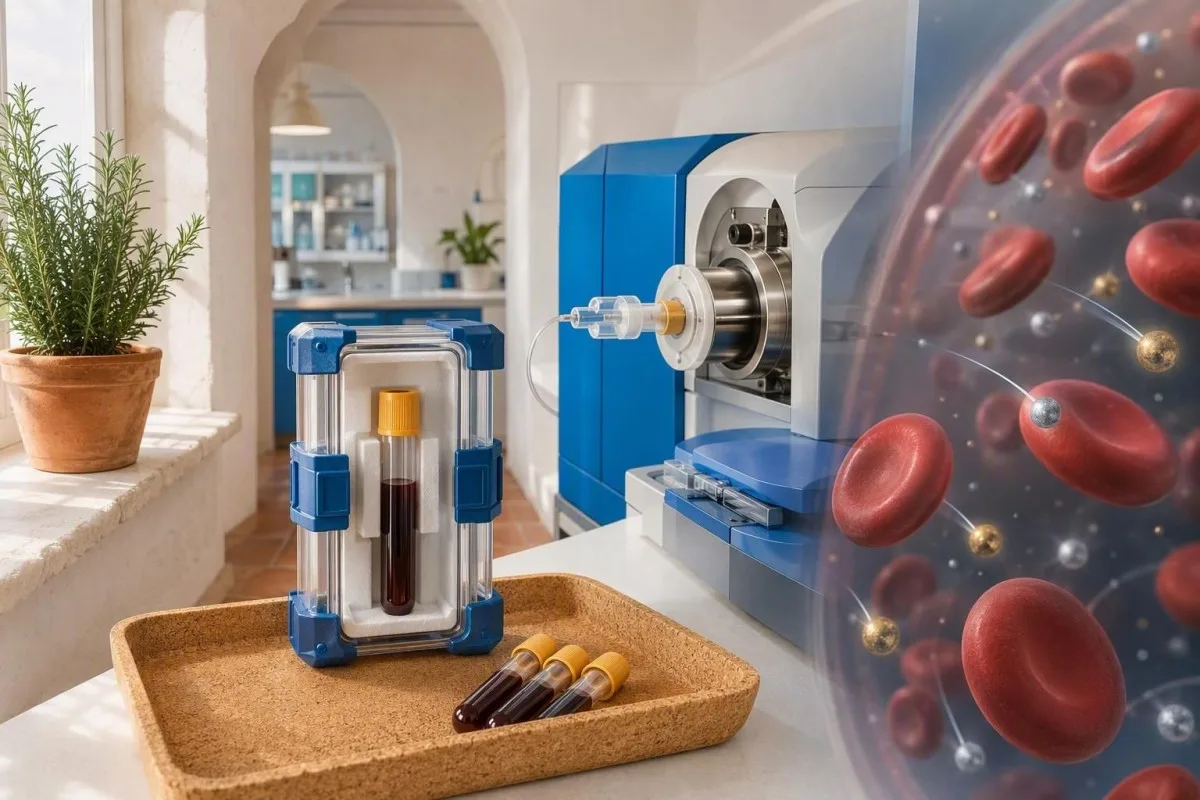
Een bloedtest op zware metalen is het meest geschikt voor recente of voortdurende blootstelling aan lood, methylmercury en geselecteerde metalen die verband houden met de werkplek of implantaten. Het is geen algemene maatstaf voor “lichaamstoxines”: urine, metalenspecialisatie, blootstellingsgeschiedenis en herhalingstijd bepalen vaak of een resultaat zinvol is.


- Whole-blood lood weerspiegelt voornamelijk recente of voortdurende blootstelling gedurende ongeveer 1 maand; geen enkel loodgehalte in het bloed wordt als risicovrij beschouwd.
- CDC's referentiewaarde voor lood in bloed bij kinderen is 3,5 µg/dL, een follow-up drempel in plaats van een diagnose van toxiciteit.
- Kwikbloedonderzoek is het meest nuttig voor recente blootstelling aan methylmercury door vis en enkele beroepsbronnen; het meet oude blootstelling niet betrouwbaar.
- Urinearseen met speciation heeft de voorkeur bij vermoedelijke blootstelling aan anorganisch arseen, vooral na het vermijden van zeevruchten gedurende 48-72 uur.
- Urine-cadmium weerspiegelt over het algemeen beter de cumulatieve nierbelasting, terwijl bloed-cadmium meer gericht is op recente blootstelling.
- Haar testen kan een specifieke vraag over methylmercurium ondersteunen, maar is onbetrouwbaar als een brede diagnostische toxinescreening.
- Geprovokeerd urineonderzoek na een chelaatvormend middel kan vergiftiging niet vaststellen omdat het de uitscheiding van metalen in de urine opzettelijk verhoogt.
- Brede toxinepanelen detecteren vaak spoorelementen zonder ziekte, bron, dosis of noodzaak tot behandeling aan te tonen.
Wat een bloedtest op zware metalen daadwerkelijk controleert
A bloedtest zware metalen meet de concentratie van specifieke elementen die op het moment van afname circulerend zijn; het meet niet de levenslange “toxinebelasting” van een persoon. Vol bloed is met name nuttig voor lood en methylmercurium, terwijl het beste monster verandert voor arseen, cadmium, chroom, kobalt en thallium.
De meeste klinische laboratoria gebruiken inductief gekoppelde plasma-massaspectrometrie, of ICP-MS, die metalen kan detecteren op microgram per liter of lager. Detectie is geen diagnose: een resultaat moet worden vergeleken met de methode van het laboratorium, de afnamebuis, het beroep van de persoon, dieet, supplementen, nierfunctie en de tijd sinds het vermoedelijke contact.
A toxinebloedtest een op de markt gebrachte 20- of 40-metaalscreening kan uitgebreid klinken, maar veel gemeten elementen hebben geen gevalideerde ziekte-drempel bij een asymptomatische persoon. In mijn praktijk is de nuttige vraag bijna altijd smaller: “Kan deze specifieke blootstelling dit resultaat of symptoom verklaren?”
Kantesti is een AI-bloedtestanalysator die spoorelementresultaten plaatst naast de rest van een rapport, inclusief creatinine, levermarkers en rode bloedcelindices. Onze biomarker referentiegids helpt onderscheiden welk resultaat snelle klinische beoordeling behoeft van welk resultaat vooral een betere blootstellingsgeschiedenis nodig heeft.
Welke metalen kan bloedonderzoek betrouwbaar detecteren?
Bloedonderzoek kan verschillende metalen betrouwbaar kwantificeren, maar een meetbare concentratie heeft voor elk metaal een andere betekenis. Lood, kwik, mangaan, kobalt en chroom worden vaak gemeten in vol bloed; arseen en cadmium vereisen vaak urineonderzoek voor de klinisch relevante vraagstelling.
A Loodbloedtest moet vol bloed worden afgenomen in een gecertificeerde spoorelementenbuis omdat lood sterk in rode bloedcellen wordt opgenomen. Veneuze bemonstering heeft de voorkeur wanneer een screeningsresultaat van een vingerprik verhoogd is, aangezien stof op de huid een vingerprikresultaat vals kan verhogen.
A Kwikbloedtest is het meest informatief voor methylmercurium uit zeevruchten en blootstelling aan elementair kwik die de afgelopen weken heeft plaatsgevonden. Kwik in vol bloed daalt vaak na een verandering in visinname; de biologische halfwaardetijd van methylmercurium is ongeveer 50 dagen, dus een herhaald resultaat na 6-8 weken kan informatiever zijn dan een resultaat 3 dagen later.
Kobalt- en chroombloedconcentraties hebben een gedefinieerde rol bij geselecteerde personen met metaal-op-metaal heupprotheses, hoewel symptomen, beeldvorming, implanttype en seriële verandering belangrijker zijn dan één geïsoleerd getal. Onze gids voor chroomtestkeuzes legt uit waarom laboratoria verschillende eenheden kunnen rapporteren.
Loodbloedonderzoek: drempels, timing en follow-up
A veneuze bloed-loodwaarde is de standaardtest voor recente loodblootstelling bij kinderen en volwassenen. Bij Amerikaanse kinderen is 3,5 µg/dL de huidige CDC-bloedloodreferentiewaarde; het identificeert kinderen met een hogere blootstelling dan de meeste leeftijdsgenoten en is geen grens tussen veilig en onveilig.
Bloedloodwaarden weerspiegelen meestal de blootstelling gedurende de voorgaande 28-36 dagen, hoewel in bot opgeslagen lood tijdens zwangerschap, menopauze, fractuurgenezing of ernstige ziekte weer in het bloed kan komen. Een waarde kan daarom dalen na het verlaten van een bron zonder te bewijzen dat de eerdere blootstelling onschadelijk was.
De update van de CDC uit 2021 verlaagde de referentiewaarde voor kinderen van 5,0 naar 3,5 µg/dL omdat lagere concentraties op populatieniveau nog steeds correleren met ontwikkelingsrisico (Ruckart et al., 2021). Chelatie is niet routinematig voor een kind met 3,5 µg/dL; bronidentificatie, voeding, ontwikkelingsbewaking en herhaald testen zijn de gebruikelijke eerste stappen.
Voor volwassenen verschillen beroepsdrempels en verwijderingsregels per land, geslacht, zwangerschapspotentieel en bedrijfstak. Een resultaat van 45 µg/dL of hoger vereist in veel klinische settings dringende specialistische bespreking, terwijl 70 µg/dL of hoger over het algemeen wordt beschouwd als een medische noodsituatie die onmiddellijke verwijdering van blootstelling en deskundig beheer vereist.
Kwikbloedonderzoek na vis, werk of een morsing
A Kwikbloedtest vangt de recente blootstelling aan methylkwik uit vis het beste op en kan helpen bij het beoordelen van recente blootstelling aan elementair kwik. Het identificeert op zichzelf niet de kwikvorm, bron, duur of mate van neurologisch risico.
Voor een volwassene met regelmatige visconsumptie wordt een totaal bloedkwelliksresultaat van minder dan 10 µg/L vaak gezien, maar de laboratoriumreferentie-intervallen variëren sterk per geografie en dieet. Een resultaat boven 20 µg/L verdient een zorgvuldige blootstellingsbeoordeling, vooral tijdens de zwangerschap of vóór de conceptie, in plaats van een reflexdetoxificatie.
Clarkson en Magos beschrijven waarom kwikchemie belangrijk is: methylkwik concentreert zich in rode bloedcellen, terwijl anorganisch kwik gemakkelijker in urine wordt weergegeven (Clarkson en Magos, 2006). Dat onderscheid is de reden waarom totaal kwik alleen onnodige alarmen kan veroorzaken na verschillende porties grote roofvissen.
Ik heb een angstige patiënt gezien die de ochtend na het eten van sushi een kwikniveau liet herhalen; die herhaling gaf bijna geen antwoord. Een nuttiger plan is om gedurende 2 weken de vissoort en porties te registreren, opties met een lager kwikgehalte te kiezen en vervolgens over ongeveer 6-8 weken te herhalen als het oorspronkelijke resultaat werkelijk verhoogd was; zie onze richtlijn voor het opvolgen van kwik in zeevruchten.
Wanneer urineonderzoek beter is dan een bloedtest
Urinetesten zijn de voorkeur wanneer het metaal via de urine wordt uitgescheiden of wanneer clinici cumulatieve in plaats van dezelfde dag blootstelling moeten inschatten. Arseen, cadmium, anorganisch kwik en thallium zijn veelvoorkomende voorbeelden waarbij urine de klinische vraag beter kan beantwoorden dan bloed.
A 24-uurs urine verzameling meet de totale uitscheiding gedurende een dag, maar een spoturine monster gecorrigeerd voor creatinine wordt vaak gebruikt wanneer de kwaliteit van de verzameling twijfelachtig is. Een gemiste verzameling, ongewoon hoge vochtinname of creatinine aan beide extremen kan een 24-uurs schatting vertekenen; de verzamelingstechniek verdient dezelfde aandacht als het aantal.
Urinecadmium weerspiegelt langdurige renale accumulatie meer dan bloedcadmium, dat wordt beïnvloed door recent roken of beroepsmatige blootstelling. Cadmiuminterpretatie moet urinealbumine of ACR en tubulaire markers omvatten wanneer klinisch geïndiceerd, omdat de zorg vaak nier tubulaire letsel is in plaats van een vage toxiciteitsscore.
Timingfouten komen vaak voor. Onze praktische 24-uurs urineverzamelingsgids details de gebruikelijke faalpunten, waaronder het starten op het verkeerde moment en het vergeten van het laatste monster.
Arsenicumtesten vereisen speciation, geen generieke totaalwaarde
Vermoedelijke arseenblootstelling wordt meestal beoordeeld met urine arseen speciatie, niet een bloedpaneel. Totaal urine arseen kan dramatisch stijgen na zeevruchten omdat organisch arsenobetaïne in urine wordt uitgescheiden, maar veel minder toxisch is dan anorganisch arseen.
Mensen moeten zeevruchten vermijden gedurende 48-72 uur vóór een geplande urine arseen test, tenzij een toxicoloog anders adviseert. Een totaal urine arseen resultaat boven 50 µg/L kan opvolging verdienen, maar het kan niet verantwoord worden geïnterpreteerd zonder anorganisch arseen en zijn metabolieten te identificeren.
Bloedarseen heeft een korte nuttige venster - vaak uren na een aanzienlijke blootstelling - dus een normale bloedwaarde sluit een relevante blootstelling van dagen eerder niet uit. In de 15 jaar dat ik met laboratoriumrapporten heb gewerkt, is dit een van de meest frequente redenen waarom een breed panel valse geruststelling geeft.
ATSDR’s arseenprofiel ondersteunt urinetesten met speciatie wanneer blootstelling wordt vermoed, met name na zorgen over grondwater, industrieel of kruidenproducten (ATSDR, 2007). Stop niet met voorgeschreven medicijnen en probeer geen chelatie terwijl u wacht op een resultaat; een arts kan helpen bepalen of water, werk of een product de plausibele bron is.
Cadmium, chroom en kobalt vereisen blootstellingsspecifieke tests
Cadmium-, chroom- en kobaltresultaten zijn alleen zinvol wanneer ze worden gekoppeld aan een plausibele bron en het juiste specimen. Urine-cadmium wordt vaak gekozen voor cumulatieve blootstelling, terwijl bloedkobalt en chroom voornamelijk worden gebruikt voor recente beroepsmatige blootstelling of geselecteerde implantaatsurveillance.
Roken kan cadmiumconcentraties materieel verhogen en bepaalde werkplekken voegen inhalatieblootstelling toe; dieet alleen verklaart zelden een opvallend resultaat. Nierfunctie is belangrijk omdat verminderde filtratie urineconcentraties onafhankelijk van blootstelling kan veranderen, dus creatinine en urine eiwitcontext zijn nuttig.
Voor een persoon met een metalen heupprothese, nieuwe heuppijn, verminderde functie, gehoor- of gezichtssymptomen, cardiomyopathie-symptomen of een stijgende kobolttrend is een directe klinische beoordeling vereist. Een eenmalige bloedkobalconcentratie is geen screening voor niet-specifieke vermoeidheid, brain fog of gewrichtspijn.
Kantesti AI kan nierwaarden over verschillende datums vergelijken, wat nuttig is wanneer een metaalresultaat een nierprobleem oproept in plaats van oorzakelijkheid aan te tonen. Bekijk een GFR-resultaat na uitdroging voordat u aanneemt dat een kleine creatinineverschuiving metaalgerelateerde schade vertegenwoordigt.
Verkeerde monsterafname kan een vals metaalresultaat opleveren
Sporenmetaalresultaten zijn ongewoon gevoelig voor contaminatie uit monsterbuisjes, huidstof, topische producten en laboratoriumverwerking. Een verrassend laag resultaat moet vaak worden herhaald met een gecertificeerde sporen-elementbuisje voordat het invasieve onderzoeken of supplementen uitlokt.
Poeder van handschoenen, stof van een werkplek, zinkhoudende kunstgebitlijmen en zelfs een niet-gecertificeerd monsterbuisje kunnen de tests beïnvloeden. Hemolyse kan ook de interpretatie voor sommige elementen veranderen omdat cellulaire inhoud in serum of plasma terechtkomt; een rood getint monster moet het laboratorium ertoe aanzetten commentaar te geven op de monsterkwaliteit.
De juiste matrix is belangrijk: volbloed, serum, plasma en urine zijn niet uitwisselbaar. Een rapport met de aanduiding “serumkwik” mag niet achteloos worden vergeleken met een volksgezondheidsdrempelwaarde die is ontwikkeld voor volbloed.
Kantesti is een AI-biomarkerinterpretatieplatform die het gerapporteerde monstertype, de eenheid en het referentiebereik leest voordat het context biedt. Onze technologie en methoden gids verklaart waarom een resultaat buiten het bereik van een laboratorium niet automatisch kan worden gekoppeld aan de beslissingsgrens van een ander laboratorium.
Waarom haar-, nagel- en thuis-toxinepanels vaak misleidend zijn
Haar- en nageltests kunnen de meeste zwaremetaalvergiftigingen bij een individu niet diagnosticeren omdat externe contaminatie, cosmetische behandeling, groeisnelheid en laboratoriumvoorbereiding het resultaat kunnen domineren. Haar speelt een beperkte ondersteunende rol bij langdurige blootstelling aan methylkwik, niet voor een allesomvattende detox-beoordeling.
Haar groeit ongeveer 1 cm per maand, maar dat simpele feit maakt niet elke centimeter een betrouwbare blootstellingskalender. Haarverf, bleken, zwembadwater, stof en shampoos kunnen de gemeten concentraties veranderen; wasprotocollen verschillen aanzienlijk tussen laboratoria.
Nageltests hebben vergelijkbare beperkingen en spelen een kleine rol bij routinematige klinische diagnose. Wanneer een panel 25 elementen rapporteert, zal het meestal iets statistisch ongebruikelijks markeren, zelfs bij gezonde mensen - een verwacht gevolg van meerdere vergelijkingen, geen bewijs dat het lichaam gereinigd moet worden.
Als symptomen de zorg zijn, moeten clinici eerst zoeken naar standaardverklaringen die een duidelijker diagnostisch traject hebben: bloedarmoede, schildklierziekte, nierziekte, medicijneffecten, slaapstoornissen en voeding. Ons artikel over bloedonderzoek bij onverklaarde pijn laat zien hoe je kunt beginnen zonder elk symptoom terug te voeren op toxiciteit.
Waarom geprovoceerde urinetests geen metaalvergiftiging kunnen bewijzen
Een geprovoceerde urine-metaaltest kan geen chronische zwaremetaalvergiftiging diagnosticeren omdat de chelerende medicatie opzettelijk metalen mobiliseert en de uitscheiding ervan via de urine verhoogt. Referentiewaarden van een niet-geprovoceerd urinemonster zijn niet van toepassing na EDTA, DMSA, DMPS of een andere chelaatvormer.
Chelaatvormers binden metalen die normaal aanwezig zijn in weefsels en bloedcirculatie, dus bijna iedereen zal meer uitscheiden na ontvangst ervan. Het cruciale ontbrekende stuk is een gevalideerde post-chelatie referentiepopulatie, die de meeste commerciële rapporten niet bieden.
Chelatie is niet zonder risico. Afhankelijk van het middel en de persoon, kan het bijdragen aan een laag calciumgehalte, nierstress, allergische reacties, mineralenuitputting en interacties met voorgeschreven behandelingen; behandeling moet volgen op een gedocumenteerde blootstelling en specialistische beoordeling.
Dr. Thomas Klein's praktische regel is eenvoudig: stel de blootstelling vast, verkrijg een correct verzamelde basistest, bespreek vervolgens de behandeling. De medische validatie-aanpak gebruikt door Kantesti AI is ontworpen om aan te geven wanneer de grenzen van een test een betrouwbare interpretatie ongeldig maken.
Symptomen die dringende zorg vereisen in plaats van een ander panel
Acute verwardheid, toevallen, ernstig braken, nieuwe zwakte, kortademigheid, pijn op de borst of een bekende blootstelling aan hoge doses vereisen een dringende medische beoordeling, geen postorder-toxinepaneel. Een normaal bloedresultaat kan optreden als de test te laat is of het verkeerde metaal meet.
Bij een kind moeten pica, blootstelling aan afbladderende verf, ontwikkelingsregressie of een broer/zus met hoog loodniveau, prompt pediatrisch advies uitlokken. Loodvergiftiging is vaak stil, dus gedrag alleen kan een bloedloodniveau niet schatten.
Blootstelling aan elementaire kwikdampen kan hoesten, ademnood, tremoren of neuropsychiatrische symptomen veroorzaken, terwijl anorganisch arseen na grote blootstelling ernstige gastro-intestinale ziekten en cardiovasculaire instabiliteit kan veroorzaken. Deze patronen zijn ongebruikelijk, maar vertraging is het risico - bel de spoedeisende hulp of een vergiftigingscentrum wanneer de blootstelling recent is of de symptomen significant zijn.
Een arts kan elektrolyten, creatinine, leverfunctietesten, ECG-monitoring en gerichte toxicologie bestellen naast een metaaltest. Onze elektrolyt red-flag gids legt uit waarom metaaltoxiciteit nooit uit één concentratie alleen wordt beoordeeld.
Hoe om te gaan met een grenswaarde voor een metaalresultaat
Een grenswaarde metaalresultaat wordt meestal beheerd door het monster te bevestigen, de blootstelling te reconstrueren en de juiste test na een passende periode te herhalen. Het rechtvaardigt zelden supplementen, vastenkuren of chelatie op zichzelf.
Begin met een tijdlijn: beroep, hobby's, renovatiewerkzaamheden, geïmporteerde kruiden of remedies, waterbron, schietbanen, juwelierswerk, visconsumptie en implantaathistorie. Noteer data, frequentie, beschermende uitrusting en of anderen die de omgeving delen symptomen of abnormale resultaten hebben.
Herhaald testen moet dezelfde matrix gebruiken en, waar mogelijk, hetzelfde laboratorium. Een 20% verandering kan gewone biologische of analytische variatie voor sommige sporenelementen weerspiegelen, terwijl een aanhoudende daling na een gedocumenteerde bronverwijdering de blootstellingshypothese sterker ondersteunt.
Kantesti kan seriële laboratoriumrapporten organiseren, maar het kan de blootstellingsonderzoek of medisch onderzoek niet vervangen. Onze side-by-side resultaatgids is nuttig voor het voorbereiden van een beknopte tijdlijn voor een bedrijfsarts of huisarts.
Voeding, supplementen en de grenzen van “detox”
Geen enkele sapkuur, sauna, supplement of vastenprotocol heeft aangetoond dat het klinisch belangrijke metaalblootstelling veilig kan verwijderen ter vervanging van bronbeheersing. De eerste behandeling voor de meeste blootstellingen op laag niveau is het stoppen van de bron en het ondersteunen van gewone voeding, hydratatie en medische follow-up.
Adequate inname van calcium, ijzer en vitamine C kan de gastro-intestinale loodopname bij kinderen met voedingstekorten verminderen, maar voedsel is geen vervanging voor omgevingssanering. Ijzertekort kan de opname van lood verhogen, wat een reden is waarom artsen vaak ferritine en een volledig bloedbeeld controleren wanneer loodblootstelling is bevestigd.
Hoge doses zink kunnen kopertekort veroorzaken, en ongecontroleerd selenium kan zelf toxiciteit veroorzaken. Een supplement dat wordt verkocht als een metaalbinder moet met voorzichtigheid worden behandeld, vooral als het meerdere mineralen bevat die verder testen kunnen compliceren.
Voor verstandige voedingsvragen, lees onze gids voor voedingsmiddelen rijk aan ijzer en onze bespreking van seleniumdosering veiligheid. Het bewijs voor commerciële detoxprogramma's is eerlijk gezegd zwak.
Hoe een metaalresultaat te lezen naast routine bloedonderzoek
Metaalresultaten worden klinisch bruikbaar wanneer ze worden geïnterpreteerd naast nierfunctie, levermarkers, volledig bloedbeeld, symptomen en een geloofwaardige blootstellingsbron. Een waarde die iets boven een referentiebereik ligt zonder enige ondersteunende kenmerken heeft vaak beperkte klinische significantie.
Loodblootstelling kan samengaan met microcytose of ijzertekort, maar een normaal CBC sluit loodblootstelling niet uit. Cadmiumvragen verdienen aandacht voor creatinine en urine-eiwit, terwijl duidelijke leverafwijkingen niet automatisch te wijten mogen zijn aan een laag-niveau metaalbevinding.
Kantesti AI is een AI lab test interpretatieservice die eenheidsspecifieke laboratoriumgegevens vertaalt naar vragen voor een arts, in plaats van een diagnose te stellen op basis van een breed toxinescreening. Dr. Thomas Klein en onze Medische Adviesraad benadruk de verificatie van de bron, reproduceerbaar testen en duidelijk advies over escalatie.
Verwijder onnodige identificatiegegevens voordat u een rapport uploadt en controleer of het monstertype, de verzameldatum en de eenheden zichtbaar zijn. Onze PDF-uploadkwaliteitschecklist kan voorkomen dat een simpele transcriptiefout uitgroeit tot een beangstigende interpretatie.
Een praktisch testplan voor vermoedelijke blootstelling in 2026
Vanaf 3 september 2026 begint het veiligste testplan met een specifieke blootstellingshypothese, waarna het juiste metaal, monster en de juiste verzameldatum worden gekozen. Brede screening is alleen redelijk als een klinisch arts voor beroepsziekten of volksgezondheid een gedefinieerde blootstelling aan meerdere metalen identificeert.
Vraag voor oude verf, geïmporteerd aardewerk, schieten, werken met batterijen of besmet stof, veneweer bloedlood aan. Begin bij frequente inname van vis met een hoog kwikgehalte met totaal kwik in vol bloed; vraag voor bronwater of vermoedelijke arseen, urine-arseen met speciëring na zeed avoidance.
Neem foto's van productetiketten, veiligheidsinformatiebladen van de werkplek, renovatiedatums en resultaten van watertests mee naar de afspraak. Die bewijzen kunnen diagnostischer zijn dan het toevoegen van 15 metalen aan een paneel, en maken actie op het gebied van volksgezondheid mogelijk wanneer een bron in huis of op het werk reëel is.
Kantesti wordt gebruikt in 127+ landen, maar lokale drempels en regels voor werkplekrapportage variëren. Onze klinische use-case voorbeelden laten zien hoe gestructureerde vragen uw eigen arts, toxicologiedienst of lokaal volksgezondheidsteam kunnen ondersteunen, niet vervangen.
Veelgestelde vragen
Welke metalen kan een bloedtest detecteren?
Een bloedtest voor zware metalen kan lood, totaal kwik, mangaan, kobalt, chroom en verschillende andere elementen kwantificeren, meestal in volbloed. Bloed is het meest nuttig voor recente of aanhoudende blootstelling, niet voor het meten van levenslange accumulatie. Lood wordt gewoonlijk beoordeeld met veneuze volbloedtesten, en methylkwik heeft een halfwaardetijd in het bloed van ongeveer 50 dagen. Arseen, cadmium, anorganisch kwik en thallium vereisen vaak urinetesten voor een klinisch bruikbaarder antwoord.
Hoe lang blijven zware metalen in het bloed?
De tijd dat een metaal meetbaar blijft, hangt af van de chemische vorm en het geteste monster. Bloedlood weerspiegelt over het algemeen de blootstelling van de afgelopen 28-36 dagen, terwijl methylmercury doorgaans daalt gedurende ongeveer 50 dagen nadat de blootstelling is afgenomen. Arseen in bloed kan slechts enkele uren nuttig zijn na een aanzienlijke blootstelling, dus een normaal resultaat later sluit dit niet uit. Cadmium kan jarenlang in het lichaam aanwezig blijven, maar urine is meestal informatiever voor de opgehoopte cadmiumlast.
Is een bloedtest voor zware metalen een goede algemene toxinescreening?
Een brede bloedtest op toxines is meestal een slechte algemene screening voor onverklaarbare vermoeidheid, hoofdpijn of brain fog, omdat detectie van sporen geen toxiciteit vaststelt. Panelen die 20 of meer elementen meten, vergroten de kans op ten minste één grenswaarde, zelfs bij gezonde mensen. Een gerichte test op basis van werk, water, verf, vis, supplementen of een implantaat zal waarschijnlijk een bruikbaar resultaat opleveren. Een arts moet elke verhoogde concentratie interpreteren in combinatie met het monstertype, de eenheden, de timing, de symptomen en de blootstellingsgeschiedenis.
Moet ik nuchter zijn voor een bloedtest op zware metalen?
Nuchter zijn is niet vereist voor de meeste bloedtesten op lood of kwik. De meer relevante voorbereiding is het vermijden van contaminatie en het documenteren van recente blootstelling, zoals vis die in de voorgaande 1-2 weken is gegeten of contact op de werkplek op de dag van de test. Vermijd voor urine-arseen 48-72 uur voor de inzameling vis, tenzij een arts anders adviseert, omdat organisch arseen in vis de totale urine-arseen kan verhogen. Stop geen voorgeschreven medicijnen en neem geen chelerend product voor het testen.
Welke bloedloodwaarde is zorgwekkend?
Voor kinderen in de Verenigde Staten voldoet een bloedloodhuidniveau van 3,5 µg/dL of hoger aan de CDC-referentiewaarde voor bloedlood en moet er opvolging van de blootstelling plaatsvinden. Dit is geen veilige versus gevaarlijke afsnijding, omdat geen enkele blootstelling aan lood volledig zonder risico is. Niveaus van 20-44 µg/dL vereisen onmiddellijke klinische beoordeling, en niveaus van 45 µg/dL of hoger vereisen over het algemeen dringende specialistische bespreking. De occupational action levels voor volwassenen verschillen per land, baan, geslacht en potentiële zwangerschap.
Zijn haartesten nauwkeurig voor zware metalen?
Haartesten zijn niet betrouwbaar voor het diagnosticeren van de meeste vergiftigingen met zware metalen, omdat externe stof, haarkleurmiddelen, bleekmiddelen, shampoo en laboratoriumwasmethoden de resultaten kunnen veranderen. Haar groeit ongeveer 1 cm per maand, maar het is geen nauwkeurige historische blootstellingsregistratie voor een individu. Haar analyse kan af en toe de beoordeling van langdurige methylmercuryblootstelling ondersteunen onder begeleiding van een specialist. Een abnormaal haaruitslag mag niet alleen worden gebruikt om chelatie of een detox programma te rechtvaardigen.
Kan chelatie testen aantonen of ik een metaalvergiftiging heb?
Nee, urine verzameld na een chelerend medicijn kan geen metaalvergiftiging bewijzen, omdat het medicijn de uitscheiding van metaal opzettelijk verhoogt. Standaard urine-referentiebereiken zijn afgeleid van monsters die zonder chelatormiddel zijn verzameld en kunnen niet worden vergeleken met een resultaat na chelatie. Chelatie kan nierstress, minerale stoornissen en andere nadelige effecten veroorzaken, vooral wanneer het wordt gebruikt zonder gedocumenteerde indicatie. Goed verzamelde basisbloed- of urinemonsters en blootstellingsonderzoek moeten eerst plaatsvinden.
Ontvang vandaag nog AI-aangedreven bloedtestanalyse
Sluit je aan bij meer dan 2 miljoen gebruikers wereldwijd die Kantesti vertrouwen voor directe, nauwkeurige analyse van labtests. Upload je bloedwaarden resultaten en ontvang binnen enkele seconden een uitgebreide interpretatie van 15,000+-biomarkers.
📚 Geraadpleegde wetenschappelijke publicaties
Klein, T., Mitchell, S., & Weber, H. (2026). Diarree na vasten, zwarte vlekjes in de ontlasting & maag-darmgids 2026. Kantesti AI medisch onderzoek.
Klein, T., Mitchell, S., & Weber, H. (2026). Gezondheidsgids voor vrouwen: ovulatie, menopauze en hormonale symptomen. Kantesti AI medisch onderzoek.
📖 Externe medische referenties
Agency for Toxic Substances and Disease Registry (2007). Toxicologisch profiel voor arseen. U.S. Department of Health and Human Services.
⚕️ Medische disclaimer
Dit artikel is uitsluitend bedoeld voor educatieve doeleinden en vormt geen medisch advies. Raadpleeg altijd een gekwalificeerde zorgverlener voor beslissingen over diagnose en behandeling.
E-E-A-T Vertrouwenssignalen
Ervaring
Klinische beoordeling door artsen van lab-interpretatieworkflows.
Expertise
Laboratoriumgeneeskunde met focus op hoe biomarkers zich gedragen in een klinische context.
Gezag
Geschreven door Dr. Thomas Klein, met review door Dr. Sarah Mitchell en Prof. Dr. Hans Weber.
Betrouwbaarheid
Evidence-based interpretatie met duidelijke vervolgstappen om onrust te verminderen.