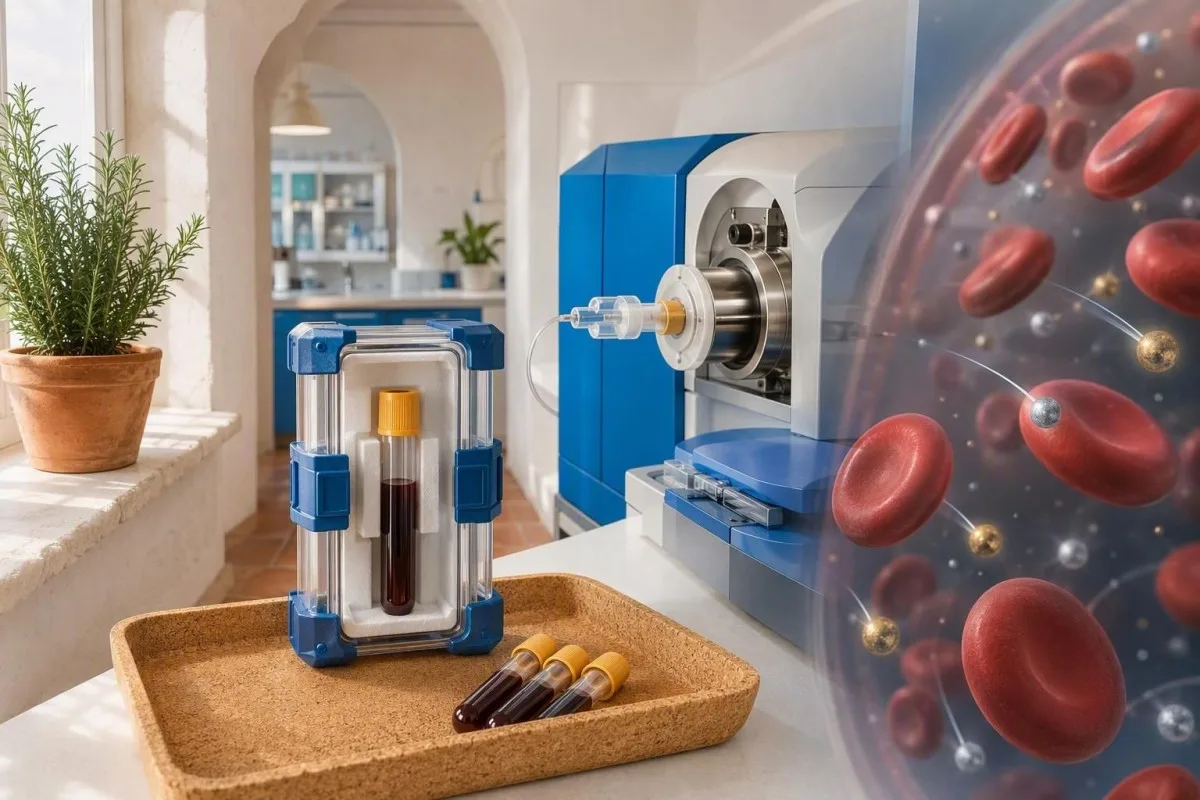
“n Bloedtoets vir swaar metale is die beste vir onlangse of deurlopende blootstelling aan lood, metielkwik en geselekteerde werksplek- of implantaat-verwante metale. Dit is nie ”n algemene maatstaf van "liggaamstoksiene" nie: urine, metaalspesiasie, blootstellingsgeskiedenis en herhalingstydsberekening bepaal dikwels of 'n resultaat betekenisvol is.


- Heelbloedlood weerspieël hoofsaaklik onlangse of deurlopende blootstelling oor ongeveer 1 maand; geen bloedloodvlak word as risikovry beskou nie.
- CDC se verwysingswaarde vir bloedlood by kinders is 3.5 µg/dL, 'n opvolgdrempel eerder as 'n toksisediagnose.
- Kwikbloedtoetse is die nuttigste vir onlangse metielkwikblootstelling van vis en sommige beroepsbronne; dit meet nie ou blootstelling betroubaar nie.
- Urinearseen met spesiasie word verkies vir vermoedelike anorganiese arseengeblootstelling, veral nadat seekos vir 48-72 uur vermy is.
- Urine kadmium weerspieël oor die algemeen die kumulatiewe nierskade beter, terwyl bloedkadmium meer gewig gee aan onlangse blootstelling.
- Haar toetsing kan 'n noue vraag oor metielkwik ondersteun, maar is onbetroubaar as 'n breë diagnostiese gifstofskerm.
- Gepresipiteerde urinetoetsing na 'n chelatiemiddel kan nie vergiftiging vasstel nie omdat dit doelbewus urinêre metaaluitskeiding verhoog.
- Breë gifstofpanele bespeur dikwels spoormetale sonder om siekte, bron, dosis, of 'n behoefte aan behandeling te toon.
Wat 'n bloedtoets vir swaar metale eintlik toets
A swaar metale bloedtoets meet die konsentrasie van spesifieke elemente wat op die tydstip van versameling sirkuleer; dit meet nie “n persoon se lewenslange ”gifstoflading" nie. Heelbloed is veral nuttig vir lood en metielkwik, terwyl die beste monster verander vir arseen, kadmium, chroom, kobalt en tallium.
Die meeste kliniese laboratoriums gebruik induktief gekoppelde plasma-massaspektrometrie, of ICP-MS, wat metale teen mikrogram per liter of laer kan opspoor. Opsporing is nie diagnose nie: 'n resultaat moet vergelyk word met die laboratorium se metode, die versamelingbuisie, die persoon se werk, dieet, aanvullings, nierfunksie, en die tyd sedert die vermoedelike kontak.
A gifstof bloedtoets bemark as “n 20- of 40-metaal skerm kan omvattend klink, maar baie gemete elemente het geen gevalideerde siektedrempel by ”n asimptomatiese persoon nie. In my praktyk is die nuttige vraag byna altyd nouer: "Kan hierdie spesifieke blootstelling hierdie resultaat of simptoom verklaar?"
Kantesti is 'n KI-bloedtoetsontleder wat spoorelement resultate langs die res van 'n verslag plaas, insluitend kreatinien, lewermerkers, en rooibloedselindekse. Ons biomerker verwysingsgids help om 'n resultaat wat onmiddellike kliniese ondersoek benodig te onderskei van een wat hoofsaaklik 'n beter blootstellingsgeskiedenis benodig.
Watter metale kan bloedtoetse betroubaar opspoor?
Bloedtoetsing kan verskeie metale betroubaar kwantifiseer, maar 'n meetbare konsentrasie het 'n verskillende betekenis vir elkeen. Lood, kwik, mangaan, kobalt, en chroom word algemeen in heelbloed gemeet; arseen en kadmium benodig dikwels urinetoetsing vir die klinies relevante vraag.
A loodbloedtoets moet heelbloed gebruik wat in 'n gesertifiseerde spoorelementbuisie versamel is omdat lood sterk in rooibloedselle verdeel. Veneuse monstername word verkies wanneer 'n skerm kapillêre resultaat verhoog is, aangesien stof op die vel 'n vingerprikresultaat vals kan verhoog.
A Kwikbloedtoets is die mees insiggewende vir metielkwik uit seekos en elementêre kwikblootstelling wat in onlangse weke plaasgevind het. Heelbloed kwik daal algemeen na 'n verandering in visinname; die biologiese halfleeftyd van metielkwik is ongeveer 50 dae, so 'n herhaalde resultaat na 6-8 weke kan meer insiggewend wees as 'n resultaat 3 dae later.
Kobalt en chroom bloedkonsentrasies het 'n gedefinieerde rol by geselekteerde mense met metaal-op-metaal heupkomponente, hoewel simptome, beeldvorming, implantaattipe, en opeenvolgende verandering meer tel as een geïsoleerde nommer. Ons gids tot chroom toetskeuses verduidelik waarom laboratoriums verskillende eenhede kan rapporteer.
Loodbloedtoetse: drempels, tydsberekening en opvolg
A veneuse bloedloodvlak is die standaardtoets vir onlangse loodblootstelling by kinders en volwassenes. By Amerikaanse kinders is 3,5 µg/dL die huidige CDC bloedloodverwysingswaarde; dit identifiseer kinders met hoër blootstelling as die meeste eweknieë en is nie 'n grens tussen veilig en onveilig nie.
Bloedloodvlakke weerspieël gewoonlik blootstelling gedurende die voorafgaande 28-36 dae, hoewel lood wat in been gestoor word, tydens swangerskap, menopouse, beenbreukgenesing of ernstige siekte weer in die bloed kan terugkeer. 'n Vlak kan dus daal nadat 'n bron verlaat is sonder om te bewys dat die vroeëre blootstelling skadeloos was.
Die CDC se 2021-opdatering het die kinderverwysingswaarde van 5.0 na 3.5 µg/dL verlaag omdat laer konsentrasies steeds korreleer met ontwikkelingsrisiko op 'n bevolkingsvlak (Ruckart et al., 2021). Chelasie is nie roetine vir 'n kind met 3.5 µg/dL nie; bronidentifikasie, voeding, ontwikkelingssurveillance en herhaalde toetsing is die gewone eerste stappe.
Vir volwassenes verskil beroepsdrempels en verwyderingsreëls volgens land, geslag, swangerskapspotensiaal en industrie. 'n Resultaat van 45 µg/dL of hoër regverdig dringende spesialisbespreking in baie kliniese instellings, terwyl 70 µg/dL of hoër word oor die algemeen as 'n mediese noodgeval beskou wat onmiddellike blootstellingverwydering en kundige bestuur vereis.
Kwikbloedtoetse na vis, werk of 'n mors
A Kwikbloedtoets vang onlangse metielkwikblootstelling van seekos die beste op en kan help om onlangse elementêre kwikblootstelling te assesseer. Dit identifiseer op sigself nie die kwikvorm, bron, duur of graad van neurologiese risiko nie.
Vir 'n volwassene met gereelde visinname, 'n totale bloedkwikresultaat onder 10 µg/L word dikwels gesien, maar laboratoriumverwysingsintervalle wissel wyd volgens geografie en dieet. 'n Resultaat bo 20 µg/L verdien 'n deeglike blootstellingsoorsig, veral tydens swangerskap of voor bevrugting, eerder as refleksontgifting.
Clarkson en Magos beskryf waarom kwikchemie belangrik is: metielkwik konsentreer in rooibloedselle, terwyl anorganiese kwik meer maklik in urine voorgestel word (Clarkson en Magos, 2006). Daardie onderskeid is die rede waarom totale kwik alleen onnodige alarm kan veroorsaak na verskeie porsies groot roofvisse.
Ek het 'n angstige pasiënt gesien wat 'n kwikvlak herhaal het die oggend na sushi; daardie herhaling het byna niks beantwoord nie. 'n Nuttiger plan is om visspesies en porsies vir 2 weke aan te teken, laer-kwik opsies te kies, en dan oor ongeveer 6-8 weke te herhaal as die oorspronklike resultaat werklik verhoog was; sien ons seekos kwik opvolggids.
Wanneer urinetoetse beter is as 'n bloedtoets
Urinetoetse is verkieslik wanneer die metaal in urine uitgeskei word of wanneer klinici kumulatiewe eerder as dieselfde-dag blootstelling moet skat. Arseen, kadmium, anorganiese kwik en tallium is algemene voorbeelde waar urine beter as bloed die kliniese vraag kan beantwoord.
A 24-uur urine versameling meet totale uitskeiding oor 'n dag, maar 'n kol-urinmonster wat vir kreatinien gekorrigeer is, word dikwels gebruik wanneer versamelingkwaliteit twyfelagtig is. 'n Gemiste versameling, ongewoon hoë vloeistofinname, of kreatinien aan weerskante kan 'n 24-uur skatting verdraai; versamelingtegniek verdien dieselfde ondersoek as die getal.
Urinkadmium weerspieël langtermyn renale akkumulasie meer as bloedkadium, wat beïnvloed word deur onlangse rook of beroepsblootstelling. Kadmiuminterpretasie moet urienalbumien of ACR en tubulêre merkers insluit wanneer dit klinies aangedui word, omdat die kommer dikwels niertubulêre besering is eerder as 'n vae toksisiteitsvlak.
Tydsberekeningsfoute is algemeen. Ons praktiese 24-uur urineversamelingsgids beskryf die gewone mislukkingspunte, insluitend die begin op die verkeerde tyd en die vergeet van die finale monster.
Arseentoetse benodig spesiasie, nie 'n generiese totaal nie
Vermoedelike arseenblootstelling word gewoonlik met urin arseen spesiasie, nie 'n bloedpaneel nie, beoordeel. Totale urienarseen kan dramaties styg na seekos omdat organiese arsenobetaine in urine uitgeskei word, maar is veel minder toksies as anorganiese arseen.
Mense moet seekos vermy vir 48-72 uur voor 'n beplande urin arseen toets, tensy 'n toksikoloog anders adviseer. 'n Totale urien arseen resultaat bo 50 µg/L kan opvolg verdien, maar dit kan nie verantwoordelik geïnterpreteer word sonder om anorganiese arseen en sy metaboliete te identifiseer nie.
Bloedarseen het 'n kort nuttige venster—dikwels ure na 'n aansienlike blootstelling—dus 'n normale bloedwaarde sluit nie 'n relevante blootstelling van dae tevore uit nie. In die 15 jaar wat ek met laboratoriumverslae gewerk het, is dit een van die mees algemene redes waarom 'n breë paneel vals gerusstelling gee.
ATSDR se arseenprofiel ondersteun urinetoetse met spesiasie wanneer blootstelling vermoed word, veral na kommer oor bronwater, industriële of kruieprodukte (ATSDR, 2007). Moenie voorgeskrewe medisyne stop of chelasie probeer terwyl jy wag vir 'n resultaat nie; 'n klinikus kan help om te identifiseer of water, werk, of 'n produk die plausibele bron is.
Kadmium, chroom en kobalt vereis blootstellings-spesifieke toetse
Kadmium, chroom en kobalt resultate is slegs betekenisvol wanneer dit ooreenstem met 'n plausibele bron en die korrekte monster. Urine kadmium word dikwels gekies vir kumulatiewe blootstelling, terwyl bloed kobalt en chroom hoofsaaklik gebruik word vir onlangse beroepsblootstelling of gekose implantaat toesig.
Rook kan kadmiumkonsentrasies aansienlik verhoog, en sekere werksplekke voeg inhalasieblootstelling by; dieetopname verklaar selde 'n treffende resultaat. Nierfunksie is belangrik omdat verminderde filtrasie urin konsentrasies onafhanklik van blootstelling kan verander, so kreatinien en urienproteïen konteks is nuttig.
Vir 'n persoon met 'n metaalheupkunsmatige gewrig, nuwe heuppyn, verminderde funksie, gehoor- of vissensimptome, kardiomiopatiewe simptome, of 'n stygende kobalttendens vereis direkte kliniese assessering. 'n Eenmalige bloed kobaltkonsentrasie is nie 'n toets vir nie-spesifieke moegheid, brein neweling, of gewrigspyn nie.
[Kantesti] AI kan renale merkers oor datums vergelyk, wat nuttig is wanneer 'n metaalresultaat 'n nier vraag laat ontstaan eerder as om kausaliteit te bewys. Hersien 'n GFR resultaat na dehidrasie voordat 'n klein kreatinienverskuiwing as metaal-verwante skade aanvaar word.
Versamelingsfoute kan 'n vals metaalresultaat skep
Spoor-metaalresultate is ongewoon vatbaar vir kontaminasie van versamelbuise, velstof, topiese produkte, en laboratoriumverwerking. 'n Verrassende lae-vlak resultaat moet dikwels herhaal word met 'n gesertifiseerde spoor-element buis voordat dit indringende ondersoeke of aanvullings aanvuur.
Poeier van handskoene, stof van 'n werksplek, sink-bevattende prostese kleefmiddels, en selfs 'n nie-gesertifiseerde versamelbuis kan toetsing beïnvloed. Hemolise kan ook interpretasie vir sommige elemente verander omdat sellulêre inhoud in serum of plasma ingaan; 'n rooierige monster moet die laboratorium aanspoor om kommentaar te lewer op monsterkwaliteit.
Die korrekte matriks maak saak: volbloed, serum, plasma, en urine is nie uitruilbaar nie. “n Verslag gemerk ”serum kwik" moet nie terloops vergelyk word met 'n volksgesondheid drempel ontwikkel vir volbloed nie.
Kantesti is 'n KI-biomerkers-interpretasieplatform wat die gerapporteerde monster tipe, eenheid, en verwysingsinterval lees voordat dit konteks bied. Ons tegnologie en metodes gids verduidelik waarom 'n resultaat buite een laboratorium se reeks nie outomaties op 'n ander laboratorium se beslissingslimiet gekarteer kan word nie.
Waarom haar-, spyker- en huis-toksienpanele dikwels mislei
Haar- en nael toetse kan nie die meeste swaar-metaalvergiftiging by 'n individu diagnoseer nie, want eksterne kontaminasie, kosmetiese behandeling, groeitempo, en laboratorium voorbereiding kan die resultaat oorheers. Haar het 'n beperkte ondersteunende rol vir langer-termyn metielkwik blootstelling, nie vir 'n alles-insluitende detoks assessering nie.
Haar groei ongeveer 1 cm per maand, maar daardie eenvoudige feit maak nie elke sentimeter 'n betroubare blootstellingskalender nie. Haarverf, bleiking, swembadwater, stof, en sjampoe kan gemete konsentrasies verander; wasprotokolle verskil aansienlik tussen laboratoriums.
Nael toetsing het soortgelyke beperkings en speel min rol in roetine kliniese diagnose. Wanneer 'n paneel 25 elemente rapporteer, sal dit gewoonlik iets statisties ongewoon aandui selfs by gesonde mense—'n verwagte gevolg van veelvuldige vergelykings, nie bewys dat die liggaam reiniging benodig nie.
Indien simptome die kommer is, moet klinici eers soek na standaard verklarings wat 'n duideliker diagnostiese pad het: anemie, tiroïed siekte, niersiekte, medikasie effekte, slaap versteuring, en voeding. Ons artikel oor bloedtoetse vir onverklaarde pyn wys hoe om te begin sonder om elke simptoom tot toksisiteit te verminder.
Waarom uitgelokte urinetoetse nie metaalvergiftiging kan bewys nie
'n Geprovokeerde urine metaal toets kan nie chroniese swaar-metaalvergiftiging diagnoseer nie, want die chelerende middel mobiliseer en verhoog opsetlik urinêre uitskeiding van metale. Verwysingsreekse van 'n ongeprovoceerde urine monster is nie van toepassing na EDTA, DMSA, DMPS, of 'n ander cheleermiddel nie.
Cheleermiddels bind metale wat normaalweg in weefsels en sirkulasie teenwoordig is, so byna almal sal meer uitskei na ontvangs daarvan. Die deurslaggewende ontbrekende deel is 'n gevalideerde post-cheleermiddel verwysingsbevolking, wat die meeste kommersiële verslae nie verskaf nie.
Chelasie is nie skadeloos nie. Afhangende van die middel en persoon, kan dit bydra tot lae kalsium, nier spanning, allergiese reaksies, minerale uitputting, en interaksies met voorgeskrewe behandelings; behandeling moet volg op gedokumenteerde blootstelling en spesialisassessering.
Dr. Thomas Klein se praktiese reël is eenvoudig: bepaal die blootstelling, verkry 'n behoorlik versamelde basislyn toets, bespreek dan behandeling. Die mediese valideringsbenadering word deur Kantesti AI gebruik word om aan te dui wanneer 'n toets se perke 'n betroubare interpretasie onvanpas maak.
Simptome wat dringende sorg benodig eerder as nog 'n paneel
Akute verwarring, stuiptrekkings, ernstige braking, nuwe swakheid, kortasem, borspyn, of 'n bekende hoë-dosis blootstelling benodig dringende mediese assessering, nie 'n posbestelling-toksienpaneel nie. 'n Normale bloedresultaat kan voorkom as toetsing te laat is of die verkeerde metaal meet.
Vir 'n kind, pica, blootstelling aan afskilferende verf, ontwikkelingsagteruitgang, of 'n broer/suster met hoë lood moet dringende pediariese advies ontlok. Loodvergiftiging is dikwels stil, dus gedrag alleen kan nie 'n bloedloodvlak skat nie.
Blootstelling aan elementêre kwikdamp kan hoes, asemloosheid, bewing, of neuropsigiatriese simptome veroorsaak, terwyl anorganiese arseen ernstige gastroïntestinale siekte en kardiovaskulêre instabiliteit kan veroorsaak na groot blootstelling. Hierdie patrone is ongewoon, maar vertraging is die risiko—skakel nooddienste of 'n gifbeheersentrum wanneer die blootstelling onlangs is of simptome betekenisvol is.
'n Klinikus kan elektroliete, kreatinien, lewer toetse, EKG-monitering, en geteikende toksikologie bestel tesame met 'n metaaltoets. Ons elektroliet rooi-vlag gids verduidelik waarom metaaltoksikose nooit slegs uit een konsentrasie beoordeel word nie.
Hoe om 'n grensgeval metaalresultaat te hanteer
'n Grensgeval metaalresultaat word gewoonlik bestuur deur die monster te bevestig, blootstelling te rekonstruer, en die korrekte toets te herhaal na 'n gepaste interval. Dit regverdig selde aanvullings, vasregimes, of chelation op sy eie.
Begin met 'n tydlyn: beroep, stokperdjies, opknappingswerk, ingevoerde speserye of middels, waterbron, skietbane, juwelierswerk, visinname, en implantaatgeskiedenis. Teken datums, frekwensie, beskermende toerusting aan, en of ander wat die omgewing deel simptome of abnormale resultate het.
Herhaal toetsing moet dieselfde matriks gebruik en, waar moontlik, dieselfde laboratorium. 'n 20% verandering kan gewone biologiese of analitiese variasie vir sommige spoorelemente weerspieël, terwyl 'n volgehoue daling na 'n gedokumenteerde bronverwydering die blootstellingshipotese sterker ondersteun.
Kantesti kan reekslaboratoriumverslae organiseer, maar dit kan nie blootstellingondersoek of mediese ondersoek vervang nie. Ons sy-aan-sy resultaatgids is nuttig vir die voorbereiding van 'n bondige tydlyn vir 'n beroepsgeneeskundige of huisdokter.
Kos, aanvullings en die grense van “detoks”
Geen sappieskuur, sauna, aanvulling, of vasprotokol is getoon om klinies belangrike blootstelling aan metale veilig te verwyder in plaas van bronbeheer nie. Die eerste behandeling vir die meeste lae-vlak blootstellings is om die bron te stop en gewone voeding, hidrasie, en mediese opvolg te ondersteun.
Voldoende kalsium-, yster-, en vitamien C-inname kan die absorpsie van lood deur die spysverteringskanaal by kinders met voedingstekorte verminder, maar voedsel is nie 'n plaasvervanger vir omgewingsremediëring nie. Ystertekort kan loodopname verhoog, wat een rede is waarom klinici dikwels ferritien en 'n volledige bloedtelling nagaan wanneer loodblootstelling bevestig word.
Hoë-dosis sink kan kopertekort veroorsaak, en ongekontroleerde selenium kan self toksisiteit veroorsaak. 'n Aanvulling wat as 'n metaalbindmiddel bemark word, moet versigtig hanteer word, veral as dit veelvuldige minerale bevat wat daaropvolgende toetsing kan bemoeilik.
Vir sinvolle voedingsvrae, lees ons gids vir voedsel hoog in yster en ons oorsig van seleniumdosisveiligheid. Die bewyse vir kommersiële detoksprogramme is eerlik swak.
Hoe om 'n metaalresultaat langs roetine bloedwerk te lees
Metaalresultate word klinies bruikbaar wanneer dit geïnterpreteer word saam met nierfunksie, lewermerkers, volledige bloedtelling, simptome, en 'n geloofwaardige blootstellingsbron. 'n Waarde effens bokant 'n verwysingsinterval sonder enige van daardie ondersteunende kenmerke het dikwels beperkte kliniese betekenis.
Loodblootstelling kan saam voorkom met mikrositose of ystertekort, maar 'n normale CBC sluit nie loodblootstelling uit nie. Kadmiumvrae verdien aandag aan kreatinien en urienproteïen, terwyl merkbare lewerabnormaliteite nie outomaties aan 'n lae-vlak metaalbevinding toegeskryf moet word nie.
Kantesti AI is ’n KI-labtoets-interpretasiediens wat eenheid-spesifieke laboratoriumdata omskakel in vrae vir 'n klinikus, eerder as om 'n diagnose uit 'n breë toksin-sifting te verklaar. Dr. Thomas Klein en ons Mediese Adviesraad beklemtoon bronverifikasie, reproduseerbare toetsing, en duidelike eskalasieadvies.
Voordat u enige verslag oplaai, verwyder onnodige identifiseerders en maak seker dat die monster tipe, versamelingsdatum en eenhede sigbaar is. Ons PDF-oplaaikwaliteitkontrolelys kan voorkom dat 'n eenvoudige transkripsiefout 'n vreesaanjaende interpretasie word.
'n Praktiese toetsplan vir vermoedelike blootstelling in 2026
Vanaf 3 September 2026 begin die veiligste toetsplan met 'n spesifieke blootstelling-hipotese, kies dan die regte metaal, monster, en versamelingsdatum. Breë siftings is slegs redelik wanneer 'n beroeps- of openbare gesondheidsklinikus 'n gedefinieerde multi-metaal blootstelling identifiseer.
Vir ou verf, ingevoerde pottebakkery, skietwerk, battery werk, of besoedelde stof, versoek veneuse heelbloedlood. Vir gereelde hoë-kwik vis inname, begin met heelbloed totale kwik; vir grondwater of vermoedelike arseen, versoek urien-arseen met spektrasie na seekos-vermyding.
Bring foto's van produketikette, werksveiligheidsblaaie, opknappingsdatums, en water toetsresultate na die afspraak. Daardie getuienis kan meer diagnosties wees as om 15 metale by 'n paneel te voeg, en dit maak openbare gesondheidsaksie moontlik wanneer 'n huis of werkbron werklik is.
Kantesti word gebruik in 127+ lande, maar plaaslike drempels en werkplek-rapporteringsreëls verskil. Ons kliniese gebruiksgeval voorbeelde toon hoe gestruktureerde vrae u eie klinikus, toksikologiese diens, of plaaslike openbare gesondheidsspan kan ondersteun - nie vervang nie.
Gereelde vrae
Watter metale kan 'n bloedtoets opspoor?
'n Bloedtoets vir swaar metale kan lood, totale kwik, mangaan, kobalt, chroom en verskeie ander elemente kwantifiseer, gewoonlik in heelbloed. Bloed is die nuttigste vir onlangse of deurlopende blootstelling, nie vir die meting van lewenslange ophoping nie. Lood word algemeen beoordeel deur veneuse heelbloedtoetse, en metielkwik het 'n bloedhalveringstyd van ongeveer 50 dae. Arseen, kadmium, anorganiese kwik en tallium vereis dikwels urinêre toetse vir 'n meer klinies nuttige antwoord.
Hoe lank bly swaar metale in die bloed?
Die tyd wat 'n metaal meetbaar bly, hang af van sy chemiese vorm en die monster wat getoets is. Bloedlood weerspieël oor die algemeen blootstelling gedurende die vorige 28-36 dae, terwyl metielkwik gewoonlik oor ongeveer 50 dae afneem nadat blootstelling verminder het. Arseen in bloed kan slegs vir ure na 'n aansienlike blootstelling nuttig wees, so 'n normale resultaat later sluit dit nie uit nie. Kadmium kan jare lank in die liggaam bly, maar urine is gewoonlik meer insiggewend vir opgehoopte kadmium-las.
Is 'n swaarmetaalbloedtoets 'n goeie algemene gifstofondersoek?
'n Breë toksin bloedtoets is gewoonlik 'n swak algemene siftings vir onverklaarbare moegheid, hoofpyn, of breinmis omdat spore-opsporing nie toksisiteit vasstel nie. Panele wat 20 of meer elemente meet, verhoog die kans op ten minste een grenslyn-vlag selfs by gesonde mense. 'n Geteikende toets gebaseer op werk, water, verf, seekos, aanvullings, of 'n implantaat is meer geneig om 'n aksie-gebaseerde resultaat te lewer. 'n Klinikus moet enige verhoogde konsentrasie interpreteer met die monster tipe, eenhede, tydsberekening, simptome, en blootstelling geskiedenis.
Moet ek vas voor 'n bloedtoets vir swaarmetale?
Vas is nie nodig vir die meeste lood- of kwikbloedtoetse nie. Die meer relevante voorbereiding is die vermyding van besoedeling en die dokumentasie van onlangse blootstelling, soos vis geëet gedurende die voorafgaande 1-2 weke of werkplek-kontak op die dag van toetsing. Vir urien-arseen, vermy seekos vir 48-72 uur voor versameling, tensy 'n klinikus anders adviseer, omdat organiese seekos-arseen totale urien-arseen kan verhoog. Moenie voorgeskrewe medikasie stop of 'n chelerende produk voor toetsing neem nie.
Watter bloedloodvlak is kommerwekkend?
Vir kinders in die Verenigde State, voldoen 'n veneuse bloedlood vlak van 3.5 µg/dL of hoër aan die CDC bloedlood verwysingswaarde en moet blootstelling opvolging aanmoedig. Dit is nie 'n veilige teenoor-gevaarlike afsnypunt nie, omdat geen vlak van loodblootstelling bekend is om heeltemal sonder risiko te wees nie. Vlakke van 20-44 µg/dL vereis dringende kliniese assessering, en vlakke van 45 µg/dL of hoër vereis oor die algemeen dringende spesialisbespreking. Volwasse beroepsaksie vlakke verskil per land, werk, geslag, en swangerskap potensiële.
Is haar toetse akkuraat vir swaarmetale?
Haar toetse is nie betroubaar vir die diagnose van die meeste swaarmetaalvergiftiging nie omdat eksterne stof, haarverf, bleiking, sjampoe, en laboratorium wasmetodes resultate kan verander. Hare groei ongeveer 1 cm maandeliks, maar dit is nie 'n presiese historiese blootstelling rekord vir 'n individu nie. Haar analise mag soms assistering van langer-termyne metielkwik blootstelling onder spesialis-leiding ondersteun. 'n Abnormale haarresultaat moet nie alleen gebruik word om chelasie of 'n ontgiftingsprogram te regverdig nie.
Kan chelasietoetse wys of ek metaalvergiftiging het?
Nee, urine versamel na 'n chelerende medikasie kan nie metaalvergiftiging bewys nie omdat die medikasie doelbewus metaal uitskeiding verhoog. Standaard urien verwysingsreekse is afgelei van monsters versamel sonder 'n cheleerder en kan nie vergelyk word met 'n post-chelasie resultaat nie. Chelasie kan nierstremming, mineraal wanbalanse, en ander nadelige effekte veroorsaak, veral wanneer dit gebruik word sonder 'n gedokumenteerde aanduiding. Korrek versamelde basislyn bloed- of urien-toetsing en blootstelling ondersoek moet eerste kom.
Kry vandag KI-aangedrewe bloedtoets-analise
Sluit aan by meer as 2 miljoen gebruikers wêreldwyd wat Kantesti vertrou vir onmiddellike, akkurate laboratoriumtoetsanalise. Laai jou bloedtoetsresultate op en ontvang omvattende interpretasie van 15,000+-biomerkers binne sekondes.
📚 Verwysde navorsingspublikasies
Klein, T., Mitchell, S., & Weber, H. (2026). Diarree na vas, swart spikkels in stoelgang en GI-gids 2026. Kantesti KI Mediese Navorsing.
Klein, T., Mitchell, S., & Weber, H. (2026). Vrouegesondheidsgids: Ovulasie, Menopouse en Hormonale Simptome. Kantesti KI Mediese Navorsing.
📖 Eksterne mediese verwysings
Agency for Toxic Substances and Disease Registry (2007). Toksikologiese Profiel vir Arseen. VSA Departement van Gesondheid en Menslike Dienste.
⚕️ Mediese Vrywaring
Hierdie artikel is slegs vir opvoedkundige doeleindes en vorm nie mediese advies nie. Raadpleeg altyd ’n gekwalifiseerde gesondheidsorgverskaffer vir besluite oor diagnose en behandeling.
E-E-A-T Vertrouenseine
Ervaring
Kliniese oorsig gelei deur ’n geneesheer van laboratorium-interpretasie-werksvloei.
Kundigheid
Laboratoriumgeneeskunde fokus op hoe biomerkers in ’n kliniese konteks optree.
Gesagsvermoë
Geskryf deur dr. Thomas Klein met hersiening deur dr. Sarah Mitchell en prof. dr. Hans Weber.
Betroubaarheid
Bewysgebaseerde interpretasie met duidelike opvolgpaaie om alarm te verminder.