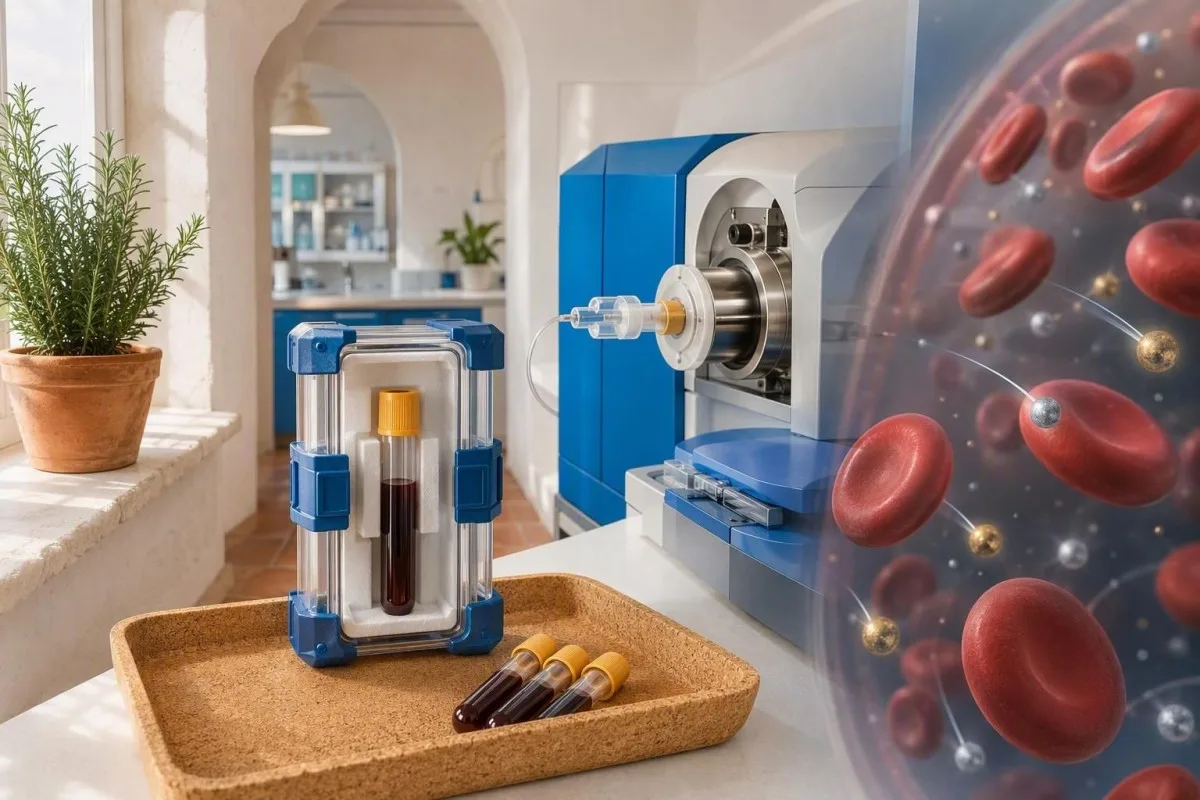
Sunkiųjų metalų kraujo tyrimas geriausiai tinka neseniai ar nuolatinei ekspozicijai švinu, metilgyvsidabriu ir pasirinktais su darbu ar implantais susijusiais metalais. Tai nėra bendras “kūno toksinų” matas: šlapimas, metalų specifikavimas, ekspozicijos istorija ir pakartotinis tyrimas dažnai lemia, ar rezultatas yra reikšmingas.


- Viso kraujo švinas atspindi daugiausia neseniai ar tęstinę ekspoziciją maždaug 1 mėnesį; nėra laikomas saugus kraujo švino kiekis.
- CDC vaiko kraujo švino etaloninė vertė yra 3,5 µg/dL, tai yra tolesnių veiksmų riba, o ne toksiškumo diagnozė.
- Gyvsidabrio kraujo tyrimas yra naudingiausias neseniai įvykusiai metilgyvsidabrio ekspozicijai iš žuvies ir kai kurių profesinių šaltinių; jis patikimai nematuoja senos ekspozicijos.
- Šlapimo arsenu su specifikavimu yra pageidautinas, kai įtariama neorganinio arseno ekspozicija, ypač vengiant jūros gėrybių 48–72 valandas.
- Kadmio šlapime paprastai geriau atspindi kaupiamąjį inkstų krūvį, o kadmio kraujyje matuoklis labiau atspindi neseniai buvusią ekspoziciją.
- Plaukų tyrimas gali padėti atsakyti į konkretų klausimą dėl metilgyvsidabrio, tačiau yra nepatikimas kaip bendras diagnostinis toksinų patikrinimas.
- Šlapimo tyrimas po provokacijos su chelatinančiu agentu negali nustatyti apsinuodijimo, nes sąmoningai didina metalų išsiskyrimą su šlapimu.
- Platus toksinų tyrimų spektras dažnai nustato mikroelementus, nenurodydamas ligos, šaltinio, dozės ar poreikio gydymui.
Ką iš tikrųjų tikrina sunkiųjų metalų kraujo tyrimas
A sunkiųjų metalų kraujo tyrimas matuoja specifinių elementų, cirkuliuojančių surinkimo metu, koncentraciją; tai neskiria žmogaus “toksinės apkrovos” per visą gyvenimą. Visas kraujas ypač naudingas švino ir metilgyvsidabrio tyrimams, o geriausias mėginys skiriasi arsenui, kadmiui, chromui, kobaltui ir talijui.
Dauguma klinikinių laboratorijų naudoja induktyviosios sąsajos plazminę masės spektrometriją, arba ICP-MS, kuri gali nustatyti metalus mikrogramais litre ar žemiau. Aptikimas nėra diagnozė: rezultatas turi būti lyginamas su laboratorijos metodu, surinkimo mėgintuvėliu, asmens darbu, mityba, papildais, inkstų funkcija ir laiku nuo įtariamo kontakto.
A toksinų kraujo tyrimų rinkodaroje kaip 20 ar 40 metalų patikrinimas gali atrodyti išsamus, tačiau daugelis matuojamų elementų neturi patvirtintos ligos ribos besimptomiam asmeniui. Mano praktikoje naudingas klausimas beveik visada yra siauresnis: “Ar ši konkreti ekspozicija gali paaiškinti šį rezultatą ar simptomą?”
Kantesti yra AI kraujo tyrimo analizatorius kuri pateikia mikroelementų rezultatus kartu su likusia ataskaitos dalimi, įskaitant kreatinino, kepenų žymenų ir eritrocitų rodiklių rezultatus. Mūsų biomarkerio informacinis vadovas padeda atskirti rezultatą, kuriam reikalingas greitas klinicinis vertinimas, nuo to, kuriam reikia geresnės ekspozicijos istorijos.
Kuriuos metalus patikimai gali nustatyti kraujo tyrimas?
Kraujo tyrimas gali patikimai kiekybiškai įvertinti kelis metalus, tačiau išmatuojama koncentracija kiekvienam iš jų turi skirtingą reikšmę. Švinas, gyvsidabris, manganas, kobaltas ir chromas dažnai matuojami visame kraujyje; arsenui ir kadmiui dažnai reikia šlapimo tyrimų, kad būtų galima atsakyti į kliniškai svarbų klausimą.
A švino kraujo tyrimas turėtų naudoti visą kraują, surinktą sertifikuotame mikroelementų mėgintuvėlyje, nes švinas stipriai pasiskirsto eritrocituose. Veninė kraujo paėmimo metodas pirmenybė teikiama, kai pirštų pradūrimo tyrimo rezultatas yra padidėjęs, nes ant odos esančios dulkės gali klaidingai padidinti pirštų pradūrimo rezultatus.
A Gyvsidabrio kraujo tyrimas yra informatyviausias dėl metilgyvsidabrio iš jūros produktų ir elementinio gyvsidabrio ekspozicijos, įvykusios per pastarąsias kelias savaites. Viso kraujo gyvsidabrio kiekis paprastai nukrenta po žuvies vartojimo pokyčių; metilgyvsidabrio biologinis pusperiodis yra apie 50 dienų, todėl pakartotinis tyrimas po 6-8 savaičių gali būti informatyvesnis nei tyrimas po 3 dienų.
Kobalto ir chromo koncentracijos kraujyje turi apibrėžtą vaidmenį atrinktiems žmonėms su metalo-metalo klubo sąnarių implantais, nors simptomai, vaizdiniai tyrimai, implanto tipas ir nuoseklus pokytis yra svarbesni nei vienas izoliuotas skaičius. Mūsų vadovas dėl chromo tyrimų pasirinkimo paaiškina, kodėl laboratorijos gali pateikti skirtingus vienetus.
Švino kraujo tyrimas: ribos, laikas ir tolesni veiksmai
A veninės kraujo švino lygis yra standartinis neseniai įvykusios švino ekspozicijos vaikams ir suaugusiems tyrimas. JAV vaikams 3,5 µg/dL yra dabartinė CDC kraujo švino referencinė vertė; ji nustato vaikus, kurių ekspozicija didesnė nei daugumos bendraamžių, ir nėra riba tarp saugaus ir nesaugaus.
Kraujo švino kiekis paprastai atspindi poveikį per ankstesnes 28–36 dienas, nors švinas, kaupiamas kauluose, gali grįžti į kraują nėštumo, menopauzės, lūžių gijimo ar sunkios ligos metu. Todėl lygis gali nukristi po kontakto su šaltiniu nutraukimo, neįrodant, kad ankstesnis poveikis buvo nekenksmingas.
2021 m. CDC atnaujinimas sumažino vaikų referencinę vertę nuo 5,0 iki 3,5 µg/dL kad mažesnės koncentracijos vis dar koreliuoja su vystymosi rizika populiacijos lygiu (Ruckart ir kt., 2021). Chelatų terapija nėra rutininė vaikui, kurio rodmuo yra 3,5 µg/dL; šaltinio nustatymas, mityba, vystymosi stebėsena ir pakartotiniai tyrimai yra įprasti pirmieji žingsniai.
Suaugusiems occupational thresholds ir pašalinimo taisyklės skiriasi priklausomai nuo šalies, lyties, nėštumo galimybės ir pramonės šakos. Rezultatas 45 µg/dL ar didesnis daugeliu klinikinių atvejų reikalauja skubios specialistų konsultacijos, o 70 µg/dL ar didesnis paprastai laikomas medicinine ekstremalia situacija, reikalaujančia nedelsiant pašalinti poveikį ir ekspertų valdymo.
Gyvsidabrio kraujo tyrimas po valgio, darbo ar išsiliejimo
A Gyvsidabrio kraujo tyrimas geriausiai atspindi neseniai dėl jūrų gėrybių patirtą metilgyvsidabrio poveikį ir gali padėti įvertinti neseniai patirtą elementinio gyvsidabrio poveikį. Jis savaime nenustato gyvsidabrio formos, šaltinio, trukmės ar neurologinės rizikos laipsnio.
Suaugusiam asmeniui, reguliariai valganti žuvį, bendras kraujo gyvsidabrio kiekis žemiau 10 µg/L dažnai pastebimas, tačiau laboratoriniai referenciniai intervalai plačiai skiriasi priklausomai nuo geografijos ir dietos. Rezultatas virš 20 µg/L reikalauja atidžios poveikio peržiūros, ypač nėštumo metu ar prieš pastojant, o ne automatinio detoksikacijos.
Clarkson ir Magos apibūdina, kodėl gyvsidabrio chemija yra svarbi: metilgyvsidabris kaupiasi raudonosiose kraujo ląstelėse, o neorganinis gyvsidabris lengviau aptinkamas šlapime (Clarkson ir Magos, 2006). Šis skirtumas paaiškina, kodėl vien bendras gyvsidabrio kiekis gali sukelti nereikalingą nerimą po kelių didelių plėšriųjų žuvų porcijų.
Aš mačiau nerimaujantį pacientą, kuris po sušių pakartojo gyvsidabrio tyrimą ryte; tas pakartojimas beveik nieko neatsakė. Naudingesnis planas yra 2 savaites fiksuoti žuvų rūšis ir porcijas, pasirinkti mažiau gyvsidabrio turinčius variantus, o tada pakartoti tyrimą maždaug po 6–8 savaičių, jei pirminis rezultatas buvo tikrai padidėjęs; žr. mūsų jūros gėrybių gyvsidabrio tyrimų tęsimo vadovas.
Kada šlapimo tyrimas yra geresnis nei kraujo tyrimas
Šlapimo tyrimas yra tinkamesnis, kai metalas išsiskiria su šlapimu arba kai gydytojai nori įvertinti kaupiamą, o ne tos pačios dienos poveikį. Arsenas, kadmis, neorganinis gyvsidabris ir talis yra dažni pavyzdžiai, kai šlapimo tyrimas gali atsakyti į klinikinį klausimą geriau nei kraujo.
A 24 valandų šlapimo surinkimas matuoja bendrą išsiskyrimą per dieną, tačiau vieno šlapimo mėginio, pakoreguoto pagal kreatininą, dažnai naudojamas, kai surinkimo kokybė yra abejotina. Praleistas surinkimas, neįprastai didelis skysčių suvartojimas arba kreatinino kiekis kraštutinėse ribose gali iškreipti 24 valandų įvertinimą; surinkimo technika nusipelno tokio paties dėmesio kaip ir skaičius.
Šlapimo kadmis labiau atspindi ilgalaikį inkstų kaupimąsi nei kraujo kadmis, kurį lemia neseniai rūkyta arba profesinė ekspozicija. Kadmio interpretacija turėtų apimti šlapimo albuminą arba ACR ir tubulinius žymenis, kai tai kliniškai nurodyta, nes rūpestis dažniau yra inkstų tubulinė žala, o ne neaiškus toksiškumo rodiklis.
Laiko nustatymo klaidos yra dažnos. Mūsų praktinis 24 valandų šlapimo surinkimo gidas aprašo įprastus nesėkmių punktus, įskaitant neteisingą pradžios laiką ir paskutinio mėginio pamiršimą.
Arseno tyrimui reikalingas specifikavimas, o ne bendras kiekis
Įtariamas arseno poveikis paprastai vertinamas naudojant šlapimo arseno specifikaciją, o ne kraujo tyrimų rinkinį. Bendras šlapimo arseno kiekis gali smarkiai padidėti po jūros gėrybių vartojimo, nes organinis arsenobetainas išsiskiria su šlapimu, bet yra daug mažiau toksiškas nei neorganinis arsenas.
Žmonės turėtų vengti jūros gėrybių 48–72 valandas prieš planuojamą šlapimo arseno tyrimą, nebent toksikologas pataria kitaip. Bendras šlapimo arseno kiekis, viršijantis 50 µg/L , gali reikalauti papildomų tyrimų, tačiau jo negalima atsakingai interpretuoti nenustačius neorganinio arseno ir jo metabolitų.
Kraujo arseno naudingas laikotarpis yra trumpas – dažnai kelios valandos po didelio poveikio – todėl normalus kraujo rodiklis neatmeta reikšmingo poveikio, buvusio anksčiau. Per 15 metų, kai dirbu su laboratoriniais tyrimų rezultatais, tai yra viena dažniausių priežasčių, dėl kurių platus tyrimų rinkinys suteikia klaidingą saugumo jausmą.
ATSDR arseno profilis palaiko šlapimo tyrimus su specifikacija, kai įtariamas poveikis, ypač po susirūpinimo dėl šulinių vandens, pramonės ar žolinių produktų (ATSDR, 2007). Nenutraukite paskirtų vaistų ar nebandykite chelatų laukdami rezultato; gydytojas gali padėti nustatyti, ar vanduo, darbas ar produktas yra tikėtinas šaltinis.
Kadmis, chromas ir kobaltas reikalauja specifinės ekspozicijai tyrimo
Kadmio, chromo ir kobalto rezultatai yra reikšmingi tik tada, kai jie atitinka tikėtiną šaltinį ir tinkamą mėginį. Kadmio šlapime dažnai pasirenkamas kaupiamam poveikiui, o kraujo kobaltas ir chromas daugiausia naudojami neseniai patirtam profesiniam poveikiui arba tam tikrų implantų stebėsenai.
Rūkymas gali žymiai padidinti kadmio koncentraciją, o tam tikros darbo vietos sukelia įkvėpimo poveikį; vien tik maistinė įtaka retai paaiškina ryškų rezultatą. Inkstų funkcija yra svarbi, nes sumažėjęs filtravimas gali pakeisti šlapimo koncentracijas nepriklausomai nuo poveikio, todėl kreatinino ir šlapimo baltymų kontekstas yra naudingas.
Asmeniui, turinčiam metalinį klubo implantą, nauji klubo skausmai, sumažėjusi funkcija, klausos ar regėjimo simptomai, kardiomiopatijos simptomai arba kylanti kobalto tendencija reikalauja tiesioginio klinikinio įvertinimo. Vienkartinis kraujo kobalto kiekis neskiriamas nespecifiniam nuovargiui, galvos „miglai“ ar sąnarių skausmams tirti.
Kantesti AI gali palyginti inkstų rodiklius skirtingomis datomis, o tai yra naudinga, kai metalo rezultatas kelia klausimų dėl inkstų, o ne įrodo priežastinį ryšį. Peržiūrėkite GFR rezultatą po dehidracijos prieš darydami prielaidą, kad nedidelis kreatinino pokytis rodo su metalu susijusį pažeidimą.
Surinkimo klaidos gali sukelti klaidingą metalo rezultatą
Mikroelementų rezultatai yra neįprastai jautrūs taršai iš mėgintuvėlių, odos dulkių, tepamų produktų ir laboratorinio apdorojimo. Nustebus žemu lygiu nustatytą rezultatą dažnai reikėtų pakartoti naudojant sertifikuotą mikroelementų mėgintuvėlį, prieš pradedant invazines diagnostikas ar papildus.
Pirštinių pudra, dulkės iš darbo vietos, cinko turintys protezų klijai ir net ne sertifikuotas mėgintuvėlis gali paveikti tyrimus. Hemolizė taip pat gali pakeisti kai kurių elementų interpretaciją, nes ląstelių turinys patenka į serumą ar plazmą; paraudęs mėginys turėtų paskatinti laboratoriją pakomentuoti mėginio kokybę.
Tinkama matrica yra svarbi: visą kraują, serumas, plazma ir šlapimas nėra keičiami. Ataskaita su užrašu “serumo gyvsidabris” neturėtų būti laisvai lyginama su visuomenės sveikatos ribomis, nustatytomis visam kraujui.
Kantesti yra AI biomarkerių interpretavimo platforma kuris nuskaito nurodytą mėginio tipą, vienetą ir referencinį intervalą, prieš suteikdamas kontekstą. Mūsų technologijos ir metodai vadovas paaiškina, kodėl vienos laboratorijos diapazono rezultato negalima automatiškai priskirti kitos laboratorijos sprendimo ribai.
Kodėl plaukų, nagų ir namų toksinų panelės dažnai klaidina
Plaukų ir nagų tyrimai negali diagnozuoti daugumos sunkiųjų metalų apsinuodijimų asmeniui, nes išorinė tarša, kosmetinis apdorojimas, augimo greitis ir laboratorinis paruošimas gali dominuoti rezultate. Plaukai turi ribotą palaikomąjį vaidmenį ilgalaikei metilgyvsidabrio poveikio įvertinimui, o ne bendram detoksikacijos vertinimui.
Plaukai auga maždaug 1 cm per mėnesį, tačiau šis paprastas faktas nepadaro kiekvieno centimetro patikimu poveikio kalendoriumi. Plaukų dažai, balinimas, baseino vanduo, dulkės ir šampūnai gali pakeisti išmatuotas koncentracijas; plovimo protokolai skiriasi tarp laboratorijų.
Nagų tyrimai turi panašių apribojimų ir mažai naudingi rutininėje klinikinėje diagnostikoje. Kai atliekama 25 elementų analizė, ji paprastai pažymi ką nors statistiškai neįprasto net ir sveikiems žmonėms – tai laukiamas daugelio palyginimų rezultatas, o ne įrodymas, kad organizmui reikia valymo.
Jei kyla simptomai, gydytojai pirmiausia turėtų ieškoti standartinių paaiškinimų, turinčių aiškesnį diagnostinį kelią: anemija, skydliaukės liga, inkstų liga, vaistų poveikis, miego sutrikimai ir mityba. Mūsų straipsnis apie kraujo tyrimams esant nepaaiškinamam skausmui parodo, kaip pradėti, nesumažinant kiekvieno simptomo iki toksiškumo.
Kodėl provokuojami šlapimo tyrimai negali įrodyti metalų apsinuodijimo
Sukeltas šlapimo metalų tyrimas negali diagnozuoti lėtinio apsinuodijimo sunkiuoju metalu, nes chelating vaistas sąmoningai mobilizuoja ir didina šlapimo metalų išsiskyrimą. Referenciniai intervalai iš nesukeltos šlapimo mėginio netaikomi po EDTA, DMSA, DMPS ar kito chelatoriaus.
Chelatoriai suriša normaliai audiniuose ir kraujotakoje esančius metalus, todėl beveik visi po jų gavimo išskirs daugiau. Svarbiausia trūkstama dalis yra patvirtinta po chelatacijos referencinė populiacija, kurios dauguma komercinių ataskaitų nepateikia.
Chelatacija nėra nekenksminga. Priklausomai nuo agento ir asmens, ji gali prisidėti prie žemo kalcio lygio, inkstų streso, alerginių reakcijų, mineralų trūkumo ir sąveikos su paskirtais gydymais; gydymas turėtų sekti po dokumentuoto poveikio ir specialisto įvertinimo.
Dr. Thomas Klein praktiška taisyklė yra paprasta: nustatyti poveikį, gauti tinkamai surinktą bazinį tyrimą, tada aptarti gydymą. medicininio patvirtinimo požiūris Kantesti dirbtinis intelektas skirtas nustatyti, kada tyrimų apribojimai neleidžia patikimai interpretuoti rezultatų.
Simptomai, kuriems reikalinga skubi pagalba, o ne dar viena panelė
Ūminėsumišimas, traukuliai, stiprus vėmimas, naujas silpnumas, dusulys, krūtinės skausmas ar žinoma didelė dozė reikalauja skubios medicininės pagalbos, o ne siunčiamų namo toksinų tyrimų. Normalus kraujo tyrimo rezultatas gali būti gautas, jei tyrimas atliekamas per vėlai arba matuojamas netinkamas metalas.
Vaikui pica, apsinuodijimas švino turinčiais dažais, regresas vystymesi ar brolis/sesuo, turintis daug švino, turėtų paskatinti nedelsiant kreiptis į pediatrų patarimo. Švino apsinuodijimas dažnai būna besimptomis, todėl vien elgesys negali įvertinti kraujo švino kiekio.
Elementinio gyvsidabrio garų poveikis gali sukelti kosulį, dusulį, drebulį ar neuropsichiatrinius simptomus, o neorganinis arsenas gali sukelti sunkų virškinimo trakto sutrikimą ir širdies bei kraujagyslių nestabilumą po didelės ekspozicijos. Šie atvejai reti, tačiau rizika yra vėlavimas – skambinkite greitosios pagalbos tarnyboms arba apsinuodijimų centrui, kai poveikis yra nesenas arba simptomai yra reikšmingi.
Klinicistas gali paskirti elektrolitus, kreatininą, kepenų tyrimus, EKG stebėseną ir tikslinę toksikologiją kartu su metalų tyrimu. Mūsų elektrolitų „raudonų vėliavėlių“ vadovas paaiškina, kodėl metalo toksiškumas niekada nevertinamas tik iš vienos koncentracijos.
Kaip elgtis su ribiniu metalo rezultatu
Ribinis metalo rezultatas paprastai tvarkomas patvirtinus mėginį, atkuriant poveikį ir pakartojus tinkamą tyrimą tinkamu laiku. Jis retai pateisina papildus, badavimo režimus ar chelatų terapiją savaime.
Pradėkite nuo laiko juostos: profesija, pomėgiai, renovacijos darbai, importuoti prieskoniai ar vaistai, vandens šaltinis, šaudyklos, juvelyrikos darbai, žuvies suvartojimas ir implantų istorija. Įrašykite datas, dažnumą, apsaugos priemones ir ar kiti, gyvenantys toje pačioje aplinkoje, turi simptomų ar nenormalių rezultatų.
Pakartotiniuose tyrimuose turėtų būti naudojama ta pati matrica ir, jei įmanoma, tas pats laboratorija. A 20% pakeitimas gali atspindėti įprastą biologinę ar analitinę tam tikrų mikroelementų variaciją, o nuolatinis kritimas po dokumentuoto šaltinio pašalinimo stipriau patvirtina poveikio hipotezę.
Kantesti gali organizuoti serijinius laboratorinius ataskaitas, bet negali pakeisti poveikio tyrimo ar medicininio patikrinimo. Mūsų gretutinis rezultatų vadovas yra naudingas rengiant glaustą laiko juostą profesinės sveikatos gydytojui ar šeimos gydytojui.
Maistas, papildai ir “detoksikacijos” ribos”
Joks sulčių valymas, pirtis, papildas ar badavimo protokolas nebuvo įrodyta saugiai pašalinantis kliniškai reikšmingą metalo poveikį, pakeičiant šaltinio kontrolę. Pirmasis gydymas daugeliui mažo lygio poveikių yra šaltinio nutraukimas ir įprasto mitybos, hidratacijos bei medicininės priežiūros palaikymas.
Pakankamas kalcio, geležies ir vitamino C kiekis gali sumažinti švino absorbciją virškinimo trakte vaikams, turintiems mitybos trūkumą, tačiau maistas nepakeičia aplinkosaugos priemonių. Geležies trūkumas gali padidinti švino pasisavinimą, o tai yra viena iš priežasčių, kodėl gydytojai dažnai peržiūri feritiną ir bendrą kraujo tyrimą, kai patvirtinamas švino poveikis.
Didelė cinko dozė gali sukelti vario trūkumą, o nekontroliuojamas selenas pats gali sukelti toksiškumą. Papildas, parduodamas kaip metalo rišiklis, turėtų būti vartojamas atsargiai, ypač jei jame yra daug mineralų, kurie gali apsunkinti vėlesnius tyrimus.
Dėl protingų mitybos klausimų skaitykite mūsų vadovą maisto produktus, turinčius daug geležies ir mūsų apžvalgoje seleno dozės saugumas. Komercinių detoksikacijos programų įrodymai yra silpni.
Kaip skaityti metalo rezultatą kartu su įprastais kraujo tyrimais
Metalo rezultatai tampa kliniškai naudingi, kai jie interpretuojami kartu su inkstų funkcija, kepenų žymenimis, bendru kraujo tyrimu, simptomais ir patikimu poveikio šaltiniu. Vertė šiek tiek virš referencinio intervalo be jokių palaikančių ypatybių dažnai turi ribinę klinikinę reikšmę.
Švino poveikis gali sutapti su mikrocitoze ar geležies trūkumu, tačiau normalus CBC neatmeta švino poveikio. Kadmio klausimai nusipelno dėmesio kreatininui ir šlapimo baltymams, o ryškūs kepenų sutrikimai neturėtų būti automatiškai priskiriami mažo lygio metalo radimui.
Kantesti AI yra AI laboratorinio tyrimo interpretavimo paslaugoje kad laboratorinius duomenis, specifinius konkrečiam pacientui, paverčia klausimais gydytojui, o ne diagnozuoja remdamasis plačiu toksikologiniu tyrimu. Daktaras Thomas Klein ir mūsų Medicinos patariamoji taryba akcentuojame šaltinio patikrinimą, atkuriamus tyrimus ir aiškius rekomendacijas dėl veiksmų.
Prieš įkeldami bet kokią ataskaitą, pašalinkite nereikalingus identifikatorius ir patikrinkite, ar matyti mėginio tipas, paėmimo data ir vienetai. Mūsų PDF įkėlimo kokybės kontroliniame sąraše gali užkirsti kelią paprastai transkripcijos klaidai tapti bauginančia interpretacija.
Praktinis tyrimų planas, kai įtariama ekspozicija 2026 m.
Nuo 2026 m. rugsėjo 3 d. saugiausias tyrimų planas prasideda nuo specifinės poveikio hipotezės, tada pasirenkamas tinkamas metalas, mėginys ir paėmimo data. Platus tyrimas yra pagrįstas tik tada, kai profesinės sveikatos arba visuomenės sveikatos gydytojas nustato aiškų kelių metalų poveikį.
Dėl senų dažų, importuotos keramikos, šaudymo, darbo su baterijomis ar užterštų dulkių prašykite veninio kraujo tyrimo dėl švino. Dėl dažnos žuvies, turinčios daug gyvsidabrio, vartojimo pradėkite nuo bendrojo gyvsidabrio kiekio kraujyje; dėl vandens iš šulinio ar įtariamo arseno prašykite šlapimo tyrimo dėl arseno su rūšių nustatymu po jūros gėrybių vengimo.
Pasiimkite produktų etikečių, darbo saugos lapelių, renovacijos datų ir vandens tyrimų rezultatų nuotraukas. Tie įrodymai gali būti labiau diagnostiniai nei papildomų 15 metalų įtraukimas į tyrimų rinkinį, ir jie leidžia imtis visuomenės sveikatos veiksmų, kai namų ar darbo šaltinis yra realus.
Kantesti naudojamas 127+ šalyse, tačiau vietiniai slenksčiai ir darbo vietos ataskaitų teikimo taisyklės skiriasi. Mūsų klinikinių atvejų pavyzdžiai rodo, kaip struktūrizuoti klausimai gali padėti, o ne pakeisti, jūsų gydytoją, toksikologijos tarnybą ar vietinę visuomenės sveikatos komandą.
Dažnai užduodami klausimai
Kokius metalus galima aptikti kraujo tyrimu?
Kraujo sunkiųjų metalų tyrimas gali kiekybiškai nustatyti švino, bendrojo gyvsidabrio, mangano, kobalto, chromo ir daugelio kitų elementų kiekį, paprastai imamas visas kraujas. Kraujas yra naudingiausias neseniai arba nuolat trunkančiam poveikiui nustatyti, o ne apskaičiuoti visą gyvenimą sukauptą kiekį. Švinas paprastai nustatomas tiriant visą veninį kraują, o metilgyvsidabrio pusinės eliminacijos laikas kraujyje yra maždaug 50 dienų. Arsenui, kadmiui, neorganiniam gyvsidabriui ir taliiui dažnai reikia šlapimo tyrimų, kad būtų gautas kliniškai naudingesnis atsakymas.
Kiek laiko sunkieji metalai išlieka kraujyje?
Laikas, per kurį metalas išlieka pamatuojamas, priklauso nuo jo cheminės formos ir tiriamo mėginio. Švino kiekis kraujyje paprastai atspindi poveikį per pastarąsias 28–36 dienas, o metilgyvsidabrio kiekis paprastai sumažėja maždaug per 50 dienų po poveikio sumažėjimo. Arseno kiekis kraujyje gali būti naudingas tik kelias valandas po reikšmingo poveikio, todėl normalus rezultatas vėliau jo neatmeta. Kadmis organizme gali išsilaikyti daugelį metų, tačiau šlapimo tyrimas paprastai yra informatyvesnis nustatant sukauptą kadmio kiekį.
Ar sunkiųjų metalų kraujo tyrimas yra geras bendras toksinų patikrinimas?
Platus toksinų kraujo tyrimas paprastai yra prastas bendras tyrimas, skirtas tirti neaiškios kilmės nuovargiui, galvos skausmams ar „smegenų miglai“, nes tikslaus aptikimo nepakanka toksiškumui nustatyti. Tyrimų rinkiniai, matuojantys 20 ar daugiau elementų, padidina tikimybę, kad bent vienas ribinis rodmuo bus nustatytas net ir sveikiems žmonėms. Tikslinis tyrimas, pagrįstas darbu, vandeniu, dažais, jūros gėrybėmis, maisto papildais ar implantais, greičiausiai duos veiksmų reikalaujantį rezultatą. Gydytojas turėtų interpretuoti bet kokią padidėjusią koncentraciją, atsižvelgdamas į mėginio tipą, vienetus, laiką, simptomus ir poveikio istoriją.
Ar turėčiau pasninkauti prieš kraujo tyrimą dėl sunkiųjų metalų?
Daugumai kraujo tyrimų dėl švino ar gyvsidabrio nevalgius būti nereikia. Svarbesnė paruošimo priemonė yra užteršimo vengimas ir neseniai įvykusio poveikio dokumentavimas, pavyzdžiui, žuvies valgymas per pastarąsias 1–2 savaites ar kontaktas darbo vietoje tyrimo dieną. Atliekant šlapimo tyrimą dėl arseno, venkite jūros gėrybių 48–72 valandas prieš mėginio paėmimą, nebent gydytojas nurodo kitaip, nes organinis arsenas iš jūros gėrybių gali padidinti bendrą arseno kiekį šlapime. Nenutraukite paskirtų vaistų ir nevartokite chelatų prieš tyrimą.
Koks kraujo švino kiekis kelia susirūpinimą?
Vaikams Jungtinėse Amerikos Valstijose veninio kraujo švino kiekis, viršijantis 3,5 µg/dL, atitinka CDC švino kiekio kraujyje etaloninį vertę ir turėtų paskatinti tolesnį poveikio tyrimą. Tai nėra saugios ar pavojingos ribos, nes nėra žinoma, kad švino poveikis visiškai nerizikuotų. Lygiai nuo 20–44 µg/dL reikalauja neatidėliotino klinikinio vertinimo, o lygiai nuo 45 µg/dL paprastai reikalauja skubios specialistų konsultacijos. Suaugusiųjų profesiniai veiklos lygiai skiriasi priklausomai nuo šalies, darbo, lyties ir nėštumo galimybės.
Ar plaukų testai yra tikslūs sunkiųjų metalų atžvilgiu?
Plaukų tyrimai nėra patikimi diagnozuojant daugumą apsinuodijimų sunkiuoju metalais, nes išoriniai dulkių, plaukų dažų, balinimo priemonių, šampūnų ir laboratorinių plovimo metodų poveikis gali pakeisti rezultatus. Plaukai auga apie 1 cm per mėnesį, tačiau tai nėra tikslus individualus istorinio poveikio įrašas. Plaukų analizė kartais gali padėti įvertinti ilgalaikį metilgyvsidabrio poveikį prižiūrint specialistui. Nenormalus plaukų tyrimo rezultatas neturėtų būti naudojamas vienas, kad būtų pagrindžiamas chelatų terapija ar detoksikacijos programa.
Ar chelatinimo testas gali parodyti, ar mano organizme yra metalų pertekliaus?
Ne, šlapimas, surinktas po chelatų terapijos vaistų vartojimo, negali įrodyti apsinuodijimo metalais, nes vaistai sąmoningai didina metalų išsiskyrimą. Standartiniai šlapimo referenciniai diapazonai gaunami iš mėginių, surinktų be chelatų, ir negali būti lyginami su rezultatu po chelatų terapijos. Chelatų terapija gali sukelti inkstų stresą, mineralų disbalansą ir kitus neigiamus poveikius, ypač kai vartojama be dokumentuotos indikacijos. Pirmiausia turėtų būti atliktas tinkamai surinktas bazinis kraujo ar šlapimo tyrimas ir poveikio tyrimas.
Gaukite AI pagrįstą kraujo tyrimo analizę jau šiandien
Prisijunkite prie daugiau nei 2 milijonų naudotojų visame pasaulyje, kurie pasitiki Kantesti dėl momentinės, tikslios laboratorinių tyrimų analizės. Įkelkite savo kraujo tyrimo rezultatus ir per kelias sekundes gaukite išsamią 15,000+ biomarkerių interpretaciją.
📚 Nuorodomis pagrįsti moksliniai leidiniai
Klein, T., Mitchell, S., & Weber, H. (2026). Viduriavimas po pasninko, juodos dėmės išmatose ir virškinamojo trakto vadovas 2026 m.. Kantesti AI Medical Research.
Klein, T., Mitchell, S., & Weber, H. (2026). Moterų sveikatos vadovas: ovuliacija, menopauzė ir hormoniniai simptomai. Kantesti AI Medical Research.
📖 Išorinės medicininės nuorodos
Agency for Toxic Substances and Disease Registry (2007). Toksikologinis arsėno profilis. JAV Sveikatos ir žmogiškųjų paslaugų departamentas.
⚕️ Medicininis atsakomybės apribojimas
Šis straipsnis skirtas tik mokymo tikslais ir nesudaro medicininės konsultacijos. Visada kreipkitės į kvalifikuotą sveikatos priežiūros specialistą dėl diagnozės ir gydymo sprendimų.
E-E-A-T patikimumo signalai
Patirtis
Gydytojo vadovaujama klinikinė laboratorinių tyrimų interpretavimo darbo eigų peržiūra.
Ekspertizė
Laboratorinės medicinos dėmesys tam, kaip biomarkeriai elgiasi klinikiniame kontekste.
Autoritetas
Parašyta dr. Thomas Klein, peržiūrėjo dr. Sarah Mitchell ir prof. dr. Hans Weber.
Patikimumas
Įrodymais pagrįsta interpretacija su aiškiais tolesnių veiksmų keliais, siekiant sumažinti nerimą.