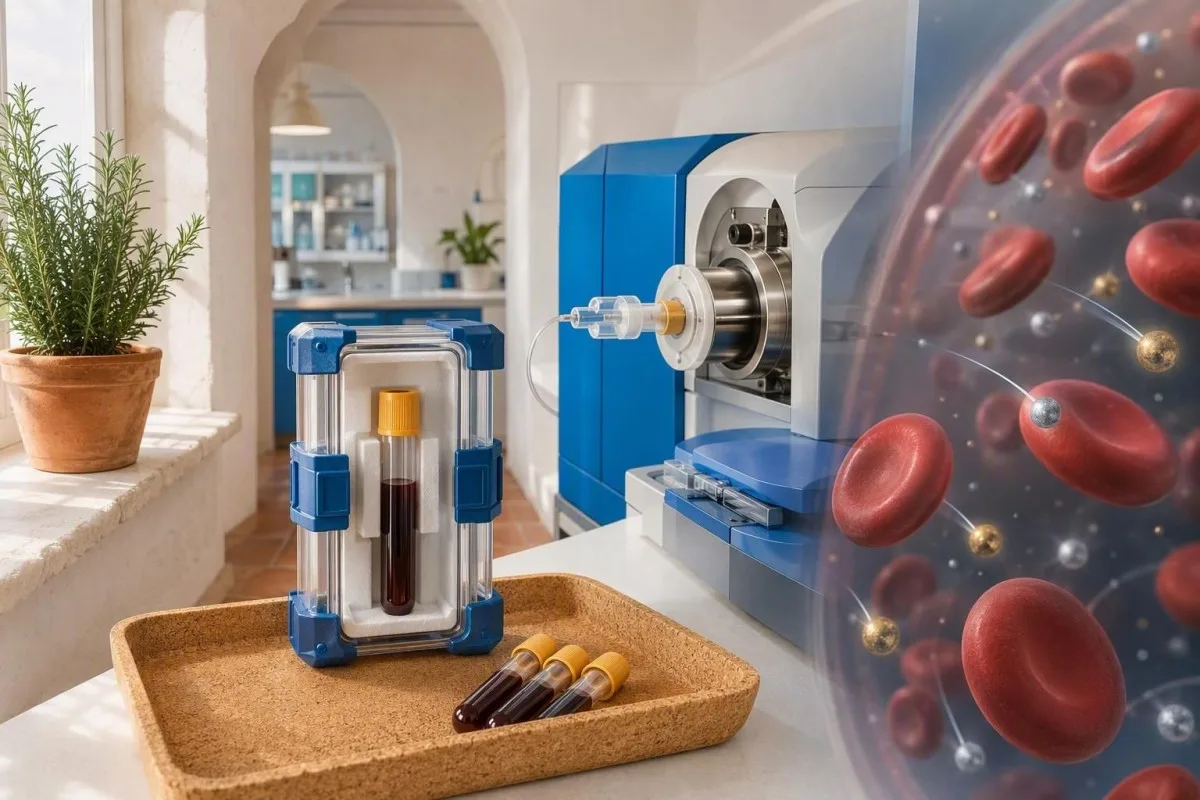
Tes logam abot ing getih paling becik kanggo cahya utawa cahya sing terus-terusan marang timbal, metilmerkuri, lan logam sing dipilih sing ana hubungane karo papan kerja utawa implan. Iku dudu ukurane “racun awak” umum: cipratan, spesiasi logam, riwayat cahya, lan wektu repetisi asring nemtokake manawa asil kasebut migunani.


- Timbal Getih Utuh nggambarake utamane paparan anyar utawa terus-terusan sajrone kira-kira 1 sasi; ora ana tingkat timbal ing getih sing dianggep bebas risiko.
- Nilai Referensi Timbal Darah Anak CDC yaiku 3,5 µg/dL, watesan tindak lanjut tinimbang diagnosis toksisitas.
- Tes Merkuri Darah paling migunani kanggo paparan metilmerkuri anyar saka iwak lan sawetara sumber pendhudhukan; iku ora bisa ngukur paparan lawas kanthi bisa dipercaya.
- Cipratan Arsenik kanthi Spesiasi luwih disenengi kanggo dicurigai paparan arsenik anorganik, utamane sawise ngindhari panganan laut sajrone 48-72 jam.
- Kadmium urin lumrahé luwih nggambarake beban ginjel kumulatif, déné kadmium getih luwih bobot menyang paparan anyar.
- Tes rambut bisa ndhukung pitakonan metilmerkuri sing sempit nanging ora bisa dipercaya minangka layar racun diagnostik sing amba.
- Tes urin sing diprovokasi sawisé agen kelat ora bisa netepake keracunan amarga sengaja nambah ekskresi logam ing urin.
- Panel racun sing amba asring nemokake logam renik tanpa nuduhake penyakit, sumber, dosis, utawa kabutuhan perawatan.
Apa sing Sejatine Dideteksi Tes Logam Abot ing Getih
A tes getih logam abot ngukur konsentrasi unsur tartamtu sing sirkulasi nalika diklumpukake; ora ngukur “beban racun” sajrone urip wong. Darah utuh utamané migunani kanggo timbal lan metilmerkuri, déné spesimen paling apik owah kanggo arsenik, kadmium, kromium, kobalt, lan talium.
Umume laboratorium klinis nggunakake spektrometri massa gandheng plasma induktif, utawa ICP-MS, sing bisa nemokake logam ing mikrogram saben liter utawa ngisor. Deteksi dudu diagnosis: asil kudu dibandhingake karo metode laboratorium, tabung koleksi, pakaryane wong, diet, suplemen, fungsi ginjel, lan wektu wiwit kontak sing dicurigai.
A tes getih racun didol minangka layar 20 utawa 40 logam bisa muni komprehensif, nanging akeh unsur sing diukur ora duwe watesan penyakit sing divalidasi ing wong tanpa gejala. Ing praktikku, pitakonan sing migunani meh mesthi luwih sempit: “Apa paparan tartamtu iki bisa njlentrehake asil utawa gejala iki?”
Kantesti iku sawijining Analisa tes getih AI sing nyelehake asil unsur renik ing jejere laporan liyane, kalebu kreatinin, penanda ati, lan indeks sel getih abang. Kita pedoman referensi biomarker mbantu mbedakake asil sing mbutuhake tinjauan klinis sing cepet saka sing mung mbutuhake riwayat paparan sing luwih apik.
Logam Apa sing Bisa Dideteksi Tes Getih kanthi Bisa Dipercaya?
Tes getih bisa ngukur sawetara logam kanthi andal, nanging konsentrasi sing bisa diukur duwe makna sing beda kanggo saben siji. Timbal, merkuri, mangan, kobalt, lan kromium umume diukur ing getih utuh; arsenik lan kadmium asring mbutuhake tes urin kanggo pitakonan sing relevan sacara klinis.
A tes getih timbal kudu nggunakake getih utuh sing diklumpukake ing tabung unsur renik sing disertifikasi amarga timbal akeh mlebu ing sel abang. Panyeksen vena luwih disenengi nalika asil skrining kapiler mundhak, amarga bledug ing kulit bisa ngunggahake asil tusukan driji kanthi palsu.
A Tes getih merkuri paling informatif kanggo metilmerkuri saka panganan laut lan paparan merkuri unsur sing kedadeyan ing minggu-minggu pungkasan. Merkuri getih utuh umume mudhun sawise owah-owahan intake iwak; umur biologis metilmerkuri udakara 50 dina, mula asil ulang ing 6-8 minggu bisa luwih informatif tinimbang asil 3 dina sabanjure.
Konsentrasi getih kobalt lan kromium duwe peran sing ditemtokake ing wong sing dipilih kanthi komponen pinggul logam-ing-logam, sanajan gejala, pencitraan, jinis implan, lan owah-owahan serial luwih penting tinimbang siji nomer sing terisolasi. Pandhuan kita kanggo pilihan tes kromium nerangake kenapa laboratorium bisa nglapurake unit sing beda.
Tes Getih Timbal: Wates, Wektu, lan Tindak Lanjuti
A tingkat timbal getih vena minangka tes standar kanggo paparan timbal anyar ing bocah-bocah lan wong diwasa. Ing bocah-bocah AS, 3,5 µg/dL minangka referensi tingkat timbal getih CDC saiki; iku ngenali bocah-bocah kanthi paparan luwih dhuwur tinimbang umume kanca-kanca lan dudu garis antarane aman lan ora aman.
Tingkat timbal ing getih biasane nuduhake paparan sajrone 28-36 dina sadurunge, sanajan timbal sing disimpen ing balung bisa bali menyang getih nalika meteng, menopause, penyembuhan patah tulang, utawa penyakit parah. Mula, tingkat bisa mudhun sawise ninggalake sumber tanpa mbuktekake yen paparan sadurunge ora mbebayani.
Pembaruan CDC 2021 mudhunake nilai referensi bocah saka 5,0 dadi 3.5 µg/dL amarga konsentrasi sing luwih murah isih korelasi karo risiko pangembangan ing tingkat populasi (Ruckart et al., 2021). Chelation ora rutin kanggo bocah ing 3,5 µg/dL; identifikasi sumber, nutrisi, pengawasan pangembangan, lan pengulangan tes minangka langkah awal sing umum.
Kanggo wong diwasa, ambang okupasi lan aturan pemindahan beda-beda gumantung negara, jender, potensi meteng, lan industri. Asil 45 µg/dL utawa luwih mbutuhake diskusi spesialis sing cepet ing akeh setelan klinis, dene 70 µg/dL utawa luwih umume dianggep minangka darurat medis sing mbutuhake pambusakan paparan lan manajemen ahli sing cepet.
Tes Getih Merkuri Sawise Iwak, Pakaryan, utawa Tumpahan
A Tes getih merkuri paling apik kanggo ngukur paparan metilmerkuri anyar saka panganan laut lan bisa mbantu ngira-ngira paparan merkuri unsur anyar. Kanthi dhewe, ora bisa nemtokake wujud merkuri, sumber, durasi, utawa tingkat risiko neurologis.
Kanggo wong diwasa kanthi asupan iwak sing reguler, asil merkuri total getih ing ngisor 10 µg/L asring katon, nanging interval referensi laboratorium beda-beda gumantung saka geografi lan diet. Asil ing ngisor 20 µg/L pantes ditinjau paparan kanthi teliti, utamane nalika meteng utawa sadurunge ngandheg, tinimbang detoksifikasi refleks.
Clarkson lan Magos njlèntrèhaké ngapa kimia merkuri penting: metilmerkuri konsentrasi ing sel abang, nalika merkuri anorganik luwih gampang diwakili ing urin (Clarkson lan Magos, 2006). Bedane iku kenapa total merkuri bisa nyebabake alarm sing ora perlu sawise sawetara porsi iwak predator gedhe.
Kula sampun pirsa pasien ingkang kuwatir mbaleni tes kadar merkuri nalika énjing sakwisé nedha sushi; mbaleni iku meh ora ana gunané. Rencana kang luwih migunani yaiku nyathet jinis iwak lan porsié suwene 2 minggu, milih pilihan merkuri kang luwih endhek, banjur mbaleni sakwisé kira-kira 6-8 minggu menawa asil asli pancen dhuwur; wacanen pituduh tindak lanjut merkuri panganan sagara kula pituduh tindak lanjut merkuri panganan sagara.
Kapan Tes Cipratan Luwih Apik Tinimbang Tes Getih
Tes urin luwih diutamakké menawa logam kasebut diekskresi ing urin utawa menawa dhokter perlu ngira-ngira paparan kumulatif tinimbang paparan sedina. Arsen, kadmium, merkuri anorganik, lan talium iku tuladha umum ngendi urin bisa njawab pitakonan klinis luwih apik tinimbang getih.
A urin 24 jam ngukur total ekskresi sakwéné sedina, nanging conto urin sporadis kang disarasarasikaké karo kreatinin asring digunakaké menawa kualitas kumpulang diragakaké. Kumpulang kang kliwat, asupan cairan kang ora lumrah dhuwur, utawa kreatinin ing salah siji ujung bisa ngowahi prakiran 24 jam; teknik kumpulang pantes dipriksa padha karo nomeré.
Kadmium urin nggambaraké akumulasi ginjel jangka panjang luwih saka kadmium getih, kang dipengaruhi déning udud anyar utawa paparan kerja. Interpretasi kadmium kudu nyakup albumin urin utawa ACR lan pananda tubular nalika indikasi klinis, amarga kekhawatiran asring cilaka tubular ginjel tinimbang skor toksisitas kang ora jelas.
Kesalahan wektu iku umum. Praktis kula pengumpulan urin 24 jam njlentrehké titik kegagalan umum, kalebu wiwit ing wektu kang salah lan lali conto pungkasan.
Tes Arsenik Mbutuhake Spesiasi, Ora Total Generik
Curiga paparan arsen biasane ditaksir nganggo spesiasi arsen urin, dudu panel getih. Arsen urin total bisa mundhak drastis sawisé panganan sagara amarga arsenobetain organik diekskresi ing urin nanging kurang beracun tinimbang arsen anorganik.
Wong kudu ngindhari panganan sagara kanggo 48-72 jam sadurungé tes arsen urin kang direncanakaké kajaba ahli toksikologi mratelakake sabanjuré. Asil arsen urin total ing ndhuwur 50 µg/L bisa mbutuhaké tindak lanjut, nanging ora bisa ditafsirake kanthi tanggung jawab tanpa ngidentifikasi arsen anorganik lan metabolité.
Arsen getih nduweni jendhela migunani kang cendhak—asring jam sawisé paparan kang signifikan—dadi asil getih kang normal ora ngilangi paparan kang relevan saka dina sadurungé. Ing 15 taun aku wis nggarap laporan laboratorium, iki minangka salah siji alesan paling kerep panel kang amba menehi rasa aman palsu.
Profil arsen ATSDR ndhukung tes urin nganggo spesiasi nalika dicurigai paparan, utamané sawisé banyu sumur, industri, utawa kekhawatiran produk herbal (ATSDR, 2007). Aja mandheg ngombe obat kang diresepake utawa nyoba khelasi nalika ngenteni asil; dhokter bisa mbantu ngidentifikasi apa banyu, pagawéan, utawa produk minangka sumber kang bisa dumadi.
Kadmium, Kromium, lan Kobalt Mbutuhake Tes Spesifik Paparan
Asil kadmium, kromium, lan kobalt mung migunani nalika cocog karo sumber kang bisa dumadi lan conto kang bener. Kadmium urin asring dipilih kanggo paparan kumulatif, nalika kobalt getih lan kromium utamane digunakake kanggo paparan kerja anyar utawa pengawasan implan kang dipilih.
Udud bisa nambah konsentrasi kadmium kanthi nyata, lan panggonan kerja tartamtu nambah paparan inhalasi; asupan diet mung arang banget njlentrehake asil kang mencorong. Fungsi ginjel iku penting amarga filtrasi kang suda bisa ngowahi konsentrasi urin kanthi mandhiri saka paparan, dadi konteks kreatinin lan protein urin iku migunani.
Kanggo wong sing duwe implan pinggul logam, lara pinggul anyar, fungsi suda, gejala pangrungu utawa sesanti, gejala kardiomiopati, utawa tren kobalt sing mundhak mbutuhake penilaian klinis langsung. Konsentrasi kobalt getih siji-sijine dudu skrining kanggo kesel sing ora spesifik, otak kabut, utawa nyeri sendi.
Kantesti AI bisa mbandhingake panandha ginjel ing wektu sing beda, sing migunani nalika asil logam nyebabake pitakonan ginjel tinimbang mbuktekake sababe. Review a asil GFR sawise dehidrasi sadurunge nganggep pergeseran kreatinin cilik nuduhake karusakan sing ana gandhengane karo logam.
Kesalahan Kumpul Bisa Nggawe Asil Logam Palsu
Asil logam tilase banget rentan marang kontaminasi saka tabung koleksi, bledug kulit, produk topikal, lan pangolahan lab. Asil tingkat sing sithik lan nggumunake asring kudu diulang nggunakake tabung unsur tilase sing disertifikasi sadurunge nyebabake investigasi invasif utawa suplemen.
Bubuk saka sarung tangan, bledug saka papan kerja, adesif denture sing ngandung seng, lan malah tabung koleksi sing ora disertifikasi bisa mengaruhi pengujian. Hemolisis uga bisa ngowahi interpretasi kanggo sawetara unsur amarga isi sel mlebu serum utawa plasma; spesimen sing rada abang kudu nyebabake laboratorium menehi komentar babagan kualitas sampel.
Matriks sing bener penting: whole blood, serum, plasma, lan urin ora bisa diganti. Laporan sing ditandhani “merkuri serum” ora kena dibandhingake kanthi santai karo ambang batas kesehatan masyarakat sing dikembangake kanggo getih utuh.
Kantesti iku sawijining platform interpretasi biomarker AI sing maca jinis spesimen sing dilaporake, unit, lan interval referensi sadurunge menehi konteks. Our teknologi lan metode kita pandhuan nerangake kenapa asil ing njaba sawetara laboratorium siji ora bisa otomatis dipetakan menyang watesan keputusan laboratorium liyane.
Kenapa Panel Racun Rambut, Kuku, lan Omah Sering Menyesatkan
Tes rambut lan kuku ora bisa diagnosa umume keracunan logam abot ing individu amarga kontaminasi eksternal, perawatan kosmetik, tingkat pertumbuhan, lan persiapan laboratorium bisa ndominasi asil. Rambut duwe peran pendukung winates kanggo paparan metilmerkuri jangka panjang, ora kanggo penilaian detoksifikasi sing ditindakake kabeh.
Rambut tuwuh kira-kira 1 cm saben wulan, nanging kasunyatan prasaja iku ora nggawe saben sentimeter dadi kalender paparan sing dipercaya. Pewarna rambut, pemutih, banyu kolam renang, bledug, lan sampo bisa ngowahi konsentrasi sing diukur; protokol cuci beda-beda sacara signifikan antarane laboratorium.
Tes kuku duwe watesan sing padha lan ora duwe peran gedhe ing diagnosis klinis rutin. Nalika panel nglaporke 25 unsur, biasane bakal menehi tandha sawetara sing ora biasa kanthi statistik sanajan ing wong sing sehat - minangka akibat sing dikarepake saka pirang-pirang perbandingan, dudu bukti yen awak mbutuhake pembersihan.
Yen gejala dadi perhatian, klinisi kudu luwih dhisik golek panjelasan standar sing duwe jalur diagnostik sing luwih jelas: anemia, penyakit tiroid, penyakit ginjel, efek obat, gangguan turu, lan nutrisi. Artikel kita babagan tes getih kanggo nyeri sing ora bisa diterangake nuduhake carane miwiti tanpa nyuda saben gejala dadi keracunan.
Kenapa Tes Cipratan sing Diprovokasi Ora Bisa Mbuktekake Keracunan Logam
Tes logam urin sing diprovokasi ora bisa diagnosa keracunan logam abot kronis amarga obat chelatin sengaja ngobahake lan nambah ekskresi urin logam. Kisaran referensi saka spesimen urin sing ora diprovokasi ora ditrapake sawise EDTA, DMSA, DMPS, utawa chelator liyane.
Chelator ngiket logam sing biasane ana ing jaringan lan sirkulasi, mula meh kabeh wong bakal ngluwihi sawise nampa siji. Bagian penting sing ilang yaiku populasi referensi pasca-chelasi sing divalidasi, sing ora diwenehake dening umume laporan komersial.
Chelation ora tanpa cilaka. Gumantung saka agen lan wong, bisa nyumbang kanggo kalsium sing kurang, stres ginjel, reaksi alergi, kekurangan mineral, lan interaksi karo perawatan sing diresepake; perawatan kudu ngetutake paparan sing didokumentasikake lan penilaian spesialis.
Aturan praktis Dr. Thomas Klein prasaja: netepake paparan, entuk tes dhasar sing diklumpukake kanthi bener, banjur rembugan perawatan. pendekatan validasi medis kita digunakake dening Kantesti AI dirancang kanggo menehi tandha nalika watesan pangujian nggawe interpretasi sing yakin ora cocog.
Gejala sing Mbutuhake Perawatan Cepet Tinimbang Panel Liyane
Bingung akut, kejang, muntah parah, kelemahan anyar, sesak napas, nyeri dada, utawa paparan dosis dhuwur sing dingerteni mbutuhake evaluasi medis darurat, dudu panel racun pesen-mail. Asil getih normal bisa kedadeyan yen pangujian wis telat utawa ngukur logam sing salah.
Kanggo bocah, pica, paparan cat sing ngelupas, kemunduran pangembangan, utawa adhine kanthi timbal dhuwur kudu nyebabake saran pediatrik sing cepet. Keracunan timbal asring ora katon, mula prilaku wae ora bisa ngira-ngira tingkat timbal getih.
Paparan uap merkuri unsur bisa nyebabake watuk, sesak ambegan, tremor, utawa gejala neuropsikiatri, dene arsenik anorganik bisa nyebabake penyakit gastrointestinal parah lan ketidakstabilan kardiovaskular sawise paparan utama. Pola kasebut ora umum, nanging telat minangka risikone—hubungi layanan darurat utawa pusat racun nalika paparan bubar utawa gejalane signifikan.
Dokter bisa pesen elektrolit, kreatinin, tes ati, pemantauan ECG, lan toksikologi sing ditargetake bebarengan karo assay logam. Kita pandhuan elektrolit “red-flag” nerangake kenapa toksisitas logam ora tau dievaluasi mung saka siji konsentrasi.
Cara Nanganan Asil Logam Wates
Asil logam sing kabur biasane dikelola kanthi konfirmasi spesimen, rekonstruksi paparan, lan mbaleni tes sing bener sawise interval sing cocog. Iki arang mbutuhake suplemen, rezim puasa, utawa chelation dhewe.
Wiwiti kanthi garis wektu: pakaryan, hobi, kerja renovasi, rempah-rempah utawa obat-obatan sing diimpor, sumber banyu, lapangan nembak, kerja perhiasan, asupan iwak, lan riwayat implan. Cathet tanggal, frekuensi, peralatan pelindung, lan apa wong liya sing nuduhake lingkungan duwe gejala utawa asil sing ora normal.
Pangujian ulang kudu nggunakake matriks sing padha lan, yen bisa, laboratorium sing padha. A owah-owahan 20% bisa nggambarake variasi biologis utawa analitis biasa kanggo sawetara unsur jejak, dene mudhun sing terus-terusan sawise dicopot sumber sing wis didokumentasikake luwih kuwat ndhukung hipotesis paparan.
Kantesti bisa ngatur laporan laboratorium serial, nanging ora bisa ngganti investigasi paparan utawa pemeriksaan medis. Kita pandhuan asil sisih-sisih migunani kanggo nyiapake garis wektu sing ringkes kanggo dokter pendhudhuk utawa GP.
Pangan, Suplemen, lan Watesan “Detox”
Ora ana jus cleanse, sauna, suplemen, utawa protokol puasa sing wis ditampilake kanggo mbusak paparan logam sing penting sacara klinis kanthi aman tinimbang kontrol sumber. Perawatan pisanan kanggo umume paparan tingkat rendah yaiku mungkasi sumber lan ndhukung nutrisi biasa, hidrasi, lan tindak lanjut medis.
Asupan kalsium, zat besi, lan vitamin C sing cukup bisa nyuda panyerepan timbal gastrointestinal ing bocah-bocah kanthi kekurangan nutrisi, nanging panganan dudu pengganti kanggo perbaikan lingkungan. Kekurangan zat besi bisa nambah asupan timbal, sing minangka salah sawijining alasan dokter asring mriksa ferritin lan itungan getih lengkap nalika paparan timbal dikonfirmasi.
Seng dosis dhuwur bisa nyebabake kekurangan tembaga, lan selenium sing ora diawasi dhewe bisa nyebabake toksisitas. Suplemen sing dipasarke minangka pengikat logam kudu ditindakake kanthi ati-ati, utamane yen ngemot macem-macem mineral sing bisa nyulitake pangujian sabanjure.
Kanggo pitakonan nutrisi sing masuk akal, waca pandhuan kita menyang makanan tinggi zat besi lan ulasan kita babagan keamanan dosis selenium. Bukti kanggo program detoks komersial sejujure lemah.
Cara Maca Asil Logam Beberangan karo Tes Getih Rutin
Asil logam dadi migunani sacara klinis nalika diinterpretasikake bebarengan karo fungsi ginjal, penanda ati, itungan getih lengkap, gejala, lan sumber paparan sing kredibel. Nilai sing rada ndhuwur interval referensi tanpa fitur pendukung kasebut asring duwe makna klinis sing winates.
Paparan timbal bisa ana bebarengan karo mikrositosis utawa kekurangan zat besi, nanging CBC normal ora ngilangi paparan timbal. Pitakonan kadmium pantes perhatian marang kreatinin lan protein urin, dene kelainan ati sing ditandhani ora kudu disalahake otomatis amarga temuan logam tingkat rendah.
Kantesti AI minangka layanan interpretasi tes lab AI sing nerjemahake data laboratorium spesifik unit menyang pitakonan kanggo dokter, tinimbang nyatakake diagnosis saka layar racun sing akeh. Dr. Thomas Klein lan kita Dewan Penasehat Medis nekenna verifikasi sumber, tes sing bisa diulang, lan saran eskalasi sing cetha.
Sadurunge ngunggah laporan apa wae, copot pangidentifikasi sing ora perlu lan priksa manawa jinis spesimen, tanggal koleksi, lan unit katon. Dheweke checklist kualitas unggah PDF bisa nyegah kesalahan transkripsi sing gampang dadi interpretasi sing medeni.
Rencana Tes Praktis Kanggo Paparan sing Dicurigai ing 2026
Wiwit tanggal 3 September 2026, rencana tes sing paling aman diwiwiti kanthi hipotesis paparan tartamtu, banjur milih logam, spesimen, lan tanggal koleksi sing bener. Screening sing amba mung rasional nalika ahli kesehatan kerja utawa kesehatan masyarakat nemtokake paparan multi-logam sing wis ditemtokake.
Kanggo cat lawas, tembikar sing diimpor, nembak, kerja baterei, utawa bledug sing terkontaminasi, njaluk timbal getih lengkap vena. Kanggo asupan iwak merkuri dhuwur sing kerep, wiwiti karo merkuri total getih lengkap; kanggo banyu sumur utawa dicurigai arsenik, njaluk arsenik urin kanthi spesiasi sawise ngindhari panganan laut.
Nggawa foto label produk, lembar keamanan papan kerja, tanggal renovasi, lan asil tes banyu menyang janji temu. Bukti kasebut bisa luwih diagnostik tinimbang nambah 15 logam menyang panel, lan ndadekake tumindak kesehatan masyarakat bisa ditindakake nalika sumber omah utawa pakaryan nyata.
Kantesti digunakake ing saindenging 127+ negara, nanging ambang batas lokal lan aturan pelaporan papan kerja beda-beda. Dheweke conto kasus panggunaan klinis nuduhake carane pitakonan terstruktur bisa ndhukung - ora ngganti - ahli terapi sampeyan, layanan toksikologi, utawa tim kesehatan masyarakat lokal.
Pitakonan sing Sering Ditakoni
Logam apa waé sing bisa dideteksi nganggo tes getih?
Tes getih logam abot bisa ngukur timbal, merkuri total, mangan, kobalt, kromium, lan sawetara unsur liyane, biasane ing getih kabeh. Getih paling migunani kanggo paparan anyar utawa sing lagi ditindakake, dudu kanggo ngukur akumulasi seumur hidup. Timbal biasane ditaksir nganggo tes getih kabeh vena, lan metilmerkuri nduweni setengah urip getih udakara 50 dina. Arsenik, kadmium, merkuri anorganik, lan talium asring mbutuhake tes urin kanggo jawaban sing luwih migunani sacara klinis.
Pira suwene logam abot bisa tetep ana ing getih?
Wektu logam tetep bisa diukur gumantung saka wujud kimiane lan spesimen sing diuji. Timbal getih umume nuduhake paparan sajrone 28-36 dina sadurunge, dene metilmerkuri biasane mudhun kira-kira 50 dina sawise paparan mudhun. Arsenik ing getih bisa migunani mung sawetara jam sawise paparan sing signifikan, mula asil normal mengko ora ngilangi. Kadmium bisa tahan ing awak nganti pirang-pirang taun, nanging urin biasane luwih informatif kanggo beban kadmium sing akumulasi.
Apa tes getih logam abot iku layar racun umum sing apik?
Tes getih racun sing amba biasane minangka layar umum sing ala kanggo rasa kesel sing ora bisa dijelasake, lara kepala, utawa otak amarga deteksi jejak ora nemtokake toksisitas. Panel sing ngukur 20 utawa luwih unsur nambah kasempatan paling ora siji tandha watesan sanajan ing wong sehat. Tes sing ditargetake adhedhasar pakaryan, banyu, cat, panganan laut, suplemen, utawa implan luwih kamungkinan ngasilake asil sing bisa ditindakake. Ahli terapi kudu napsirake konsentrasi sing ditambahi kanthi jinis spesimen, unit, wektu, gejala, lan riwayat paparan.
Apa aku kudu pasa sadurunge tes getih logam abot?
Puasa ora perlu kanggo umume tes getih timbal utawa merkuri. Persiapan sing luwih relevan yaiku ngindhari kontaminasi lan dokumentasi paparan anyar, kayata iwak sing dipangan sajrone 1-2 minggu sadurunge utawa kontak papan kerja ing dina tes. Kanggo arsenik urin, ngindhari panganan laut nganti 48-72 jam sadurunge koleksi kajaba ahli terapi menehi saran liya, amarga arsenik panganan laut organik bisa nambah total arsenik urin. Aja mandheg obat sing diresepake utawa njupuk produk chelating sadurunge dites.
Tingkat timbal ing getih kang dikuwatirake?
Kanggo bocah-bocah ing Amerika Serikat, tingkat timbal getih vena 3,5 µg/dL utawa luwih dhuwur cocog karo nilai referensi timbal getih CDC lan kudu nyebabake tindak lanjut paparan. Iki dudu watesan aman vs mbebayani, amarga ora ana tingkat paparan timbal sing dingerteni bebas saka risiko. Tingkat 20-44 µg/dL mbutuhake evaluasi klinis cepet, lan tingkat 45 µg/dL utawa luwih dhuwur umume mbutuhake diskusi spesialis sing cepet. Tingkat tumindak pendhudhukan diwasa beda-beda miturut negara, proyek, jender, lan potensi meteng.
Apa tes rambut akurat kanggo logam abot?
Tes rambut ora bisa dipercaya kanggo diagnosa umume keracunan logam abot amarga bledug njaba, pewarna rambut, pemutihan, sampo, lan metode ngumbah laboratorium bisa ngganti asil. Rambut tuwuh kira-kira 1 cm saben wulan, nanging dudu cathetan paparan historis sing tepat kanggo individu. Analisis rambut bisa uga sok-sok ndhukung evaluasi paparan metilmerkuri jangka panjang ing sangisore pandhuan spesialis. Asil rambut sing ora normal ora kudu digunakake dhewe kanggo njaluk terapi chelating utawa program detoks.
Apa tes khelasi bisa nuduhake yen aku ngalami keracunan logam?
Ora, urin sing dikoleksi sawise obat chelating ora bisa mbuktekake keracunan logam amarga obat kasebut sengaja nambah ekskresi logam. Kisaran referensi urin standar asale saka conto sing dikoleksi tanpa chelator lan ora bisa dibandhingake karo asil sawise chelasi. Chelation bisa nyebabake stres ginjel, gangguan mineral, lan efek samping liyane, utamane nalika digunakake tanpa indikasi sing didokumentasikake. Tes getih utawa urin baseline sing dikumpulake kanthi bener lan investigasi paparan kudu dhisik.
Entuk Analisis Tes Getih Berbasis AI Dina Iki
Gabung karo luwih saka 2 yuta pangguna ing saindenging jagad sing percaya Kantesti kanggo analisis tes lab sing instan lan akurat. Unggah asil tes getihmu lan tampa interpretasi lengkap saka 15,000+ biomarker sajrone sawetara detik.
📚 Publikasi Riset sing Dirujuk
Klein, T., Mitchell, S., & Weber, H. (2026). Diare Sawise Pasa, Titik Ireng ing Feses & Pandhuan GI 2026. Riset Medis AI Kantesti.
Klein, T., Mitchell, S., & Weber, H. (2026). Pandhuan Kesehatan Wanita: Ovulasi, Menopause & Gejala Hormonal. Riset Medis AI Kantesti.
📖 Referensi Medis Eksternal
Badan kanggo Zat Toksik lan Registrasi Penyakit (2007). Profil Toksikologi kanggo Arsenik. Departemen Kesehatan lan Layanan Manusia AS.
⚕️ Penafian Medis
Artikel iki mung kanggo tujuan edukasi lan ora dadi saran medis. Tansah konsultasi karo panyedhiya layanan kesehatan sing mumpuni kanggo keputusan diagnosis lan perawatan.
Sinyal Kepercayaan E-E-A-T
Pengalaman
Tinjauan klinis sing dipimpin dokter babagan alur kerja interpretasi lab.
Keahlian
Fokus kedokteran laboratorium babagan carane biomarker tumindak ing konteks klinis.
Kewibawaan
Ditulis dening Dr. Thomas Klein kanthi ditinjau dening Dr. Sarah Mitchell lan Prof. Dr. Hans Weber.
Kapercayan
Interpretasi adhedhasar bukti kanthi tindak lanjut sing cetha kanggo nyuda rasa kaget.