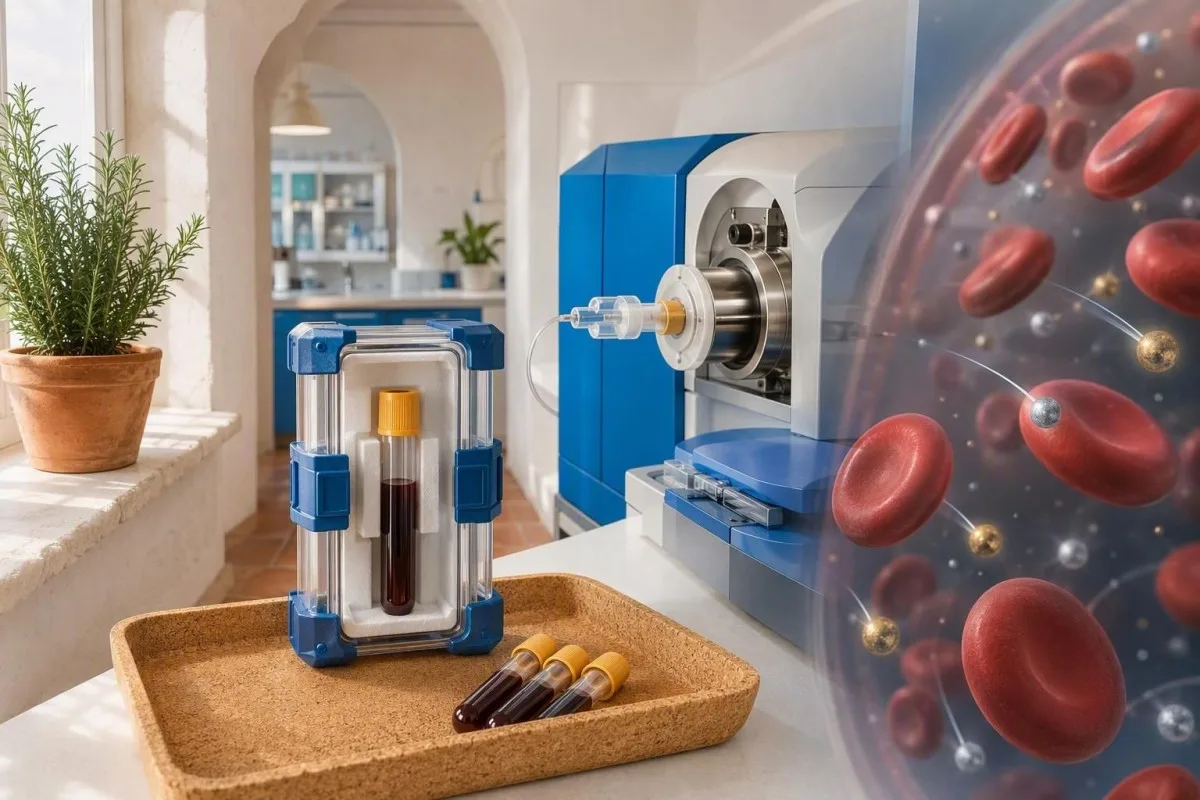
Kipimo cha damu kwa metali nzito ni bora kwa kuathiriwa hivi karibuni au kuendelea na risasi, methylmercury, na metali zilizochaguliwa zinazohusiana na mahali pa kazi au upandikizaji. Sio kipimo cha jumla cha “sumu mwilini”: mkojo, uainishaji wa metali, historia ya kuathiriwa, na muda wa kurudia mara nyingi huamua ikiwa matokeo yana maana.


- Risasi ya damu nzima huonyesha zaidi kuathiriwa hivi karibuni au kuendelea kwa takriban mwezi 1; hakuna kiwango cha risasi katika damu kinachojulikana kuwa salama.
- Thamani ya rejeleo ya risasi katika damu ya mtoto ya CDC ni 3.5 µg/dL, kizingiti cha ufuatiliaji badala ya utambuzi wa sumu.
- Upimaji wa damu ya zebaki ni muhimu zaidi kwa kuathiriwa hivi karibuni na methylmercury kutoka kwa samaki na vyanzo vingine vya kikazi; haipimi kwa uhakika kuathiriwa kwa zamani.
- Mkojo wa arseniki na uainishaji unapendelewa kwa tuhuma za kuathiriwa na arseniki isiyo ya kikaboni, hasa baada ya kuepuka dagaa kwa saa 48-72.
- Kadimiamu kwenye mkojo kwa ujumla huakisi zaidi mzigo wa figo uliokusanyika, wakati kadimiamu kwenye damu huakisi zaidi uchunguzi wa hivi karibuni.
- Upimaji wa nywele unaweza kusaidia swali finyu la methylmercury lakini hauna uhakika kama uchunguzi mpana wa sumu.
- Upimaji wa mkojo uliochochewa baada ya wakala wa kuunganisha huwezi kuthibitisha sumu kwa sababu hukuza kwa makusudi utoaji wa metali kwenye mkojo.
- Paneli pana za sumu mara nyingi hugundua metali za athari bila kuonyesha ugonjwa, chanzo, kipimo, au hitaji la matibabu.
Kipimo cha damu cha metali nzito huchunguza nini hasa
A kipimo cha damu cha metali nzito hupima mkusanyiko wa vipengele maalum vinavyozunguka wakati wa ukusanyaji; haipimi “mzigo wa sumu” wa maisha yote ya mtu. Damu nzima ni muhimu sana kwa risasi na methylmercury, wakati sampuli bora hubadilika kwa arseniki, kadimiamu, kromiamu, kobalti, na thaliamu.
Maabara nyingi za kimatibabu hutumia upimaji wa kingamizi cha plasma kinachohusishwa na kundinyota, au ICP-MS, ambacho kinaweza kugundua metali kwa micrograms kwa lita au chini yake. Ugunduzi sio utambuzi: matokeo lazima yakilinganishwe na njia ya maabara, mfumo wa ukusanyaji, kazi ya mtu, lishe, virutubisho, utendaji wa figo, na muda tangu kuwasiliana na kitu kinachosadikiwa.
A kipimo cha damu cha sumu zinazouzwa kama uchunguzi wa metali 20 au 40 zinaweza kusikika kwa kina, lakini vipengele vingi vilivyopimwa havina kizingiti cha ugonjwa kilichothibitishwa kwa mtu asiye na dalili. Katika mazoezi yangu, swali muhimu karibu kila mara ni finyu zaidi: “Je, uchunguzi huu maalum unaweza kueleza matokeo au dalili hii?”
Kantesti ni Mchambuzi wa mtihani wa damu wa AI ambayo huweka matokeo ya vipengele vya athari kando na ripoti nyingine, ikiwa ni pamoja na kreatini, alama za ini, na fahirisi za seli nyekundu. Yetu mwongozo wa kumbukumbu ya biomarker husaidia kutofautisha matokeo yanayohitaji uhakiki wa haraka wa kimatibabu kutoka kwa yale yanayohitaji tu historia bora ya uchunguzi.
Ni metali zipi ambazo kipimo cha damu kinaweza kugundua kwa uhakika?
Upimaji wa damu unaweza kupima kwa uhakika metali kadhaa, lakini mkusanyiko unaoweza kupimika una maana tofauti kwa kila moja. Risasi, zebaki, manganese, kobalti, na kromiamu mara nyingi hupimwa katika damu nzima; arseniki na kadimiamu mara nyingi huhitaji upimaji wa mkojo kwa swali muhimu la kimatibabu.
A kipimo cha damu cha risasi inapaswa kutumia damu nzima iliyokusanywa katika mfumo wa vipengele vya athari uliothibitishwa kwa sababu risasi huathiri sana seli nyekundu. Sampuli ya mshipa inapendelewa wakati matokeo ya uchunguzi wa kidole yanapoongezeka, kwani vumbi kwenye ngozi linaweza kuongeza matokeo ya kidole kwa uwongo.
A kipimo cha damu cha zebaki ni yenye taarifa zaidi kwa methylmercury kutoka kwa dagaa wa bahari na uchunguzi wa zebaki wa kielektroniki unaotokea katika wiki za hivi karibuni. Zebaki katika damu nzima huanguka kawaida baada ya mabadiliko katika ulaji wa samaki; nusu ya maisha ya kibaolojia ya methylmercury ni kama siku 50, kwa hivyo matokeo yanayorudiwa baada ya wiki 6-8 yanaweza kuwa yenye taarifa zaidi kuliko matokeo siku 3 baadaye.
Mkusanyiko wa kobalti na kromiamu katika damu una jukumu lililofafanuliwa kwa watu waliochaguliwa wenye vipengele vya bandia vya metali kwenye nyonga, ingawa dalili, upigaji picha, aina ya kiungo, na mabadiliko mfululizo huathiri zaidi kuliko nambari moja iliyotengwa. Mwongozo wetu wa maamuzi ya upimaji wa kromiamu unaeleza kwa nini maabara zinaweza kuripoti vitengo tofauti.
Vipimo vya damu vya risasi: vizingiti, muda na ufuatiliaji
A kiwango cha risasi katika damu ya mshipa ni kipimo cha kawaida cha uchunguzi wa hivi karibuni wa risasi kwa watoto na watu wazima. Kwa watoto wa Marekani, 3.5 µg/dL ni thamani ya kumbukumbu ya risasi katika damu ya CDC; inatambua watoto wenye uchunguzi mkubwa zaidi kuliko wenzao wengi na sio mstari kati ya salama na hatari.
Viwango vya risasi katika damu kwa kawaida huonyesha mfiduo wakati wa siku 28-36 zilizopita, ingawa risasi iliyohifadhiwa kwenye mfupa inaweza kuingia tena kwenye damu wakati wa ujauzito, kumaliza hedhi, kupona kwa mfupa uliovunjika, au ugonjwa mbaya. Kwa hivyo kiwango kinaweza kushuka baada ya kuondoka kwenye chanzo bila kuthibitisha kuwa mfiduo wa awali haukuwa na madhara.
Sasisho la CDC la 2021 lilipunguza thamani ya rejeleo ya mtoto kutoka 5.0 hadi 3.5 µg/dL kwa sababu viwango vya chini bado vinahusiana na hatari ya ukuaji katika kiwango cha idadi ya watu (Ruckart et al., 2021). Matibabu ya kutoa sumu kwa kutumia mawakala wa kutolea madini (Chelation) sio ya kawaida kwa mtoto mwenye umri wa miaka 3.5 µg/dL; utambulisho wa chanzo, lishe, ufuatiliaji wa ukuaji, na upimaji wa kurudia ndio hatua za kawaida za kwanza.
Kwa watu wazima, vizingiti vya kikazi na sheria za kuondolewa hutofautiana kulingana na nchi, jinsia, uwezekano wa ujauzito, na tasnia. Matokeo ya 45 µg/dL au zaidi yanafaa mjadala wa haraka wa wataalamu katika mazingira mengi ya kimatibabu, wakati 70 µg/dL au zaidi kwa ujumla huchukuliwa kama dharura ya kimatibabu inayohitaji kuondolewa kwa haraka kwa mfiduo na usimamizi wa kitaalam.
Vipimo vya damu vya zebaki baada ya kula samaki, kazi au kumwagika
A kipimo cha damu cha zebaki inashika vyema mfiduo wa hivi karibuni wa methylmercury kutoka kwa dagaa na inaweza kusaidia kutathmini mfiduo wa hivi karibuni wa zebaki ya msingi. Yenyewe haiwezi kutambua aina ya zebaki, chanzo, muda, au kiwango cha hatari ya neva.
Kwa mtu mzima anayekula samaki mara kwa mara, matokeo ya jumla ya zebaki kwenye damu chini ya 10 µg/L huonekana mara nyingi, lakini vipindi vya rejeleo vya maabara hutofautiana sana kulingana na jiografia na lishe. Matokeo ya juu kuliko 20 µg/L yanastahili tathmini makini ya mfiduo, hasa wakati wa ujauzito au kabla ya mimba, badala ya kutoa sumu kwa haraka.
Clarkson na Magos wanaelezea kwa nini kemia ya zebaki ni muhimu: methylmercury hujilimbikiza kwenye seli nyekundu, wakati zebaki isiyo ya kikaboni huwakilishwa zaidi katika mkojo (Clarkson na Magos, 2006). Tofauti hiyo ndiyo sababu zebaki ya jumla inaweza kusababisha kengele isiyo ya lazima baada ya milo kadhaa ya samaki wakubwa wanaokula mawindo.
Nimemwona mgonjwa mwenye wasiwasi akirudia kipimo cha kiwango cha zebaki siku ya pili asubuhi baada ya kula samaki; kurudia huko hakukutoa majibu mengi. Mpango muhimu zaidi ni kurekodi aina ya samaki na sehemu kwa wiki 2, kuchagua chaguo zenye zebaki kidogo, kisha kurudia baada ya takriban wiki 6-8 ikiwa matokeo ya awali yalikuwa yameongezeka kweli; ona mwongozo wetu wa kufuatilia zebaki katika dagaa baharini mwongozo wa ufuatiliaji wa zebaki katika dagaa baharini.
Ni lini kipimo cha mkojo ni bora kuliko kipimo cha damu
Upimaji wa mkojo unapendelewa wakati chuma kinachotolewa katika mkojo au wakati wataalamu wa matibabu wanahitaji kukadiria mkusanyiko badala ya mfiduo wa siku hiyo hiyo. Arseniki, kabonikadi, zebaki isokaboni, na thaliamu ni mifano ya kawaida ambapo mkojo unaweza kujibu swali la kimatibabu vizuri kuliko damu.
A mkojo wa masaa 24 ukusanyaji hupima utoaji jumla kwa siku, lakini sampuli ya mkojo wa doa iliyorekebishwa kwa kreatini mara nyingi hutumiwa wakati ubora wa ukusanyaji unapoachwa na shaka. Ukusanyaji uliokosekana, ulaji mwingi wa maji usio wa kawaida, au kreatini kwenye ncha zote mbili zinaweza kupotosha makadirio ya saa 24; mbinu ya ukusanyaji inastahili uchunguzi sawa na idadi.
Kabonikadi ya mkojo huakisi mkusanyiko wa figo kwa muda mrefu kuliko kabonikadi ya damu, ambayo huathiriwa na uvutaji sigara wa hivi karibuni au mfiduo wa kikazi. Tafsiri ya kabonikadi inapaswa kujumuisha albmini ya mkojo au ACR na alama za mirija inapohitajika kimatibabu, kwa sababu wasiwasi mara nyingi ni majeraha ya mirija ya figo kuliko alama ya jumla ya sumu.
Makosa ya muda ni ya kawaida. Vitendo vyetu ukusanyaji wa mkojo wa saa 24 vinaelezea maeneo ya kawaida ya kushindwa, ikiwa ni pamoja na kuanza kwa wakati usiofaa na kusahau sampuli ya mwisho.
Kipimo cha Arseniki kinahitaji uainishaji, sio jumla ya jumla
Mfiduo wa arseniki unaoshukiwa mara nyingi hutathminiwa kwa upimaji wa aina za arseniki katika mkojo, si kwa uchambuzi wa damu. Jumla ya arseniki katika mkojo inaweza kuongezeka sana baada ya dagaa baharini kwa sababu arsenobetaine ya kikaboni hutolewa katika mkojo lakini haina sumu sana kuliko arseniki isokaboni.
Watu wanapaswa kuepuka dagaa baharini kwa saa 48-72 kabla ya kupimwa mkojo wa arseniki isipokuwa mtaalamu wa sumu atashauri vinginevyo. Matokeo ya jumla ya arseniki katika mkojo juu ya 50 µg/L yanaweza kuhitaji ufuatiliaji, lakini haiwezi kutafsiriwa kwa uwajibikaji bila kubaini arseniki isokaboni na bidhaa zake.
Arseniki katika damu ina dirisha fupi muhimu—mara nyingi masaa baada ya mfiduo mkubwa—hivyo thamani ya kawaida ya damu haiondoi mfiduo unaohusika kutoka siku zilizopita. Katika miaka 15 niliyofanya kazi na ripoti za maabara, hii ni miongoni mwa sababu za mara kwa mara ambazo uchambuzi mpana huleta uhakikisho wa uongo.
Wasifu wa arseniki wa ATSDR unasaidia upimaji wa mkojo na uainishaji wakati mfiduo unashukiwa, hasa baada ya wasiwasi wa maji ya kisima, viwandani, au bidhaa za mitishamba (ATSDR, 2007). Usisimamishe dawa ulizoagizwa au kujaribu kutibu wakati unasubiri matokeo; daktari anaweza kusaidia kubaini ikiwa maji, kazi, au bidhaa ndiyo chanzo kinachowezekana.
Kadimiamu, kromiamu na kobalti zinahitaji vipimo maalum vya kuathiriwa
Matokeo ya kabonikadi, kromiamu, na kobalti yana maana tu yanapolinganishwa na chanzo kinachowezekana na sampuli sahihi. Kadimiamu kwenye mkojo mara nyingi huchaguliwa kwa mfiduo wa jumla, wakati kobalti na kromiamu katika damu hutumiwa zaidi kwa mfiduo wa hivi karibuni wa kikazi au ufuatiliaji wa vipandikizi vilivyochaguliwa.
Uvutaji sigara unaweza kuongeza kwa kiasi viwango vya kabonikadi, na maeneo fulani ya kazi huongeza mfiduo wa kuvuta hewa; ulaji wa chakula pekee mara chache huelezea matokeo makali. Kazi ya figo ni muhimu kwa sababu upungufu wa kichujio unaweza kubadilisha viwango vya mkojo bila kujali mfiduo, hivyo muktadha wa kreatini na protini ya mkojo ni muhimu.
Kwa mtu mwenye upandikizaji wa nyonga wa chuma, maumivu mapya ya nyonga, kupungua kwa kazi, dalili za kusikia au kuona, dalili za cardiomyopathy, au mwelekeo unaoongezeka wa kobalti unahitaji tathmini ya moja kwa moja ya kimatibabu. Kipimo kimoja cha kobalti kwenye damu si kipimo cha uchovu usio maalum, ukungu wa ubongo, au maumivu ya viungo.
Kantesti AI inaweza kulinganisha alama za figo katika tarehe tofauti, ambayo ni muhimu wakati matokeo ya chuma yanapotokeza swali la figo badala ya kuthibitisha sababu. Kagua matokeo ya GFR baada ya upungufu wa maji mwilini kabla ya kudhani kuwa mabadiliko madogo ya creatinine yanawakilisha uharibifu unaohusiana na chuma.
Makosa ya ukusanyaji yanaweza kusababisha matokeo bandia ya metali
Matokeo ya madini ya uchunguzi yanahatarishwa sana na uchafuzi kutoka kwenye mirija ya ukusanyaji, vumbi la ngozi, bidhaa za nje, na uchakataji wa maabara. Matokeo ya kushangaza ya kiwango cha chini mara nyingi yanapaswa kurudiwa kwa kutumia mirija ya vipimo vya uchunguzi iliyoidhinishwa kabla ya kusababisha uchunguzi wa uvamizi au virutubisho.
Poda kutoka kwenye glavu, vumbi kutoka eneo la kazi, wambiso wa meno bandia wenye zinki, na hata mirija ya ukusanyaji isiyo na hati miliki inaweza kuathiri upimaji. Hemolysis pia inaweza kubadilisha tafsiri kwa baadhi ya vipengele kwa sababu yaliyomo kwenye seli huenda kwenye seramu au plasma; sampuli iliyo na rangi nyekundu inapaswa kumhimiza maabara kutoa maoni kuhusu ubora wa sampuli.
Muundo sahihi unamaanisha: damu nzima (whole blood), seramu, plasma, na mkojo haviwezi kubadilishana. Ripoti yenye lebo ya “seramu ya zebaki” haipaswi kulinganishwa kwa urahisi na kiwango cha afya ya umma kilichotengenezwa kwa ajili ya damu nzima.
Kantesti ni jukwaa la tafsiri ya viashiria vya AI ambayo husoma aina ya sampuli iliyoripotiwa, kitengo, na kiwango cha marejeleo kabla ya kutoa muktadha. teknolojia na mbinu zetu huongoza inaeleza kwa nini matokeo yaliyo nje ya kiwango cha maabara moja haiwezi kuwekwa kiotomatiki kwenye kikomo cha uamuzi cha maabara nyingine.
Kwa nini paneli za sumu za nywele, kucha na nyumbani mara nyingi huchanganya
Vipimo vya nywele na kucha haviwezi kugundua sumu nyingi za metali nzito kwa mtu binafsi kwa sababu uchafuzi wa nje, matibabu ya mapambo, kiwango cha ukuaji, na utayarishaji wa maabara vinaweza kutawala matokeo. Nywele zina jukumu la kusaidia kwa muda mrefu wa kufichuliwa na methylmercury, si kwa tathmini ya kina ya kuondoa sumu.
Nywele hukua kama 1 cm kwa mwezi, lakini ukweli huo rahisi haufanyi kila sentimita kuwa kalenda ya uhakika ya kufichuliwa. Rangi ya nywele, bleach, maji ya bwawa la kuogelea, vumbi, na shampo vinaweza kubadilisha mkusanyiko uliopimwa; taratibu za kuosha zinatofautiana sana kati ya maabara.
Upimaji wa kucha una mapungufu sawa na una jukumu dogo katika utambuzi wa kawaida wa kimatibabu. Wakati paneli inaporipoti vipengele 25, kwa kawaida itataja kitu ambacho si cha kawaida kitaalamu hata kwa watu wenye afya njema—matokeo yanayotarajiwa ya kulinganisha nyingi, si ushahidi kwamba mwili unahitaji kusafishwa.
Ikiwa dalili ndizo wasiwasi, waganga wanapaswa kwanza kutafuta maelezo ya kawaida ambayo yana njia wazi ya utambuzi: upungufu wa damu, ugonjwa wa tezi, ugonjwa wa figo, athari za dawa, kukatizwa kwa usingizi, na lishe. Makala yetu kuhusu vipimo vya damu kwa maumivu yasiyoeleweka inaonyesha jinsi ya kuanza bila kupunguza kila dalili kwa sumu.
Kwa nini vipimo vya mkojo vilivyochochewa haviwezi kuthibitisha sumu ya metali
Kipimo cha mkojo wa chuma kilichochochewa hakiwezi kugundua sumu sugu ya metali nzito kwa sababu dawa ya chelation huhamisha na kuongeza utolewaji wa metali kwenye mkojo kwa makusudi. Viwango vya marejeleo kutoka kwa sampuli ya mkojo isiyochochewa havitumiki baada ya EDTA, DMSA, DMPS, au kichocheo kingine.
Vichocheo hufungamana na metali ambazo hujitokeza kawaida katika tishu na mzunguko, kwa hivyo karibu kila mtu atatoa zaidi baada ya kupokea kimoja. Kipande muhimu kinachokosekana ni kundi la marejeleo lililothibitishwa baada ya kichocheo, ambalo ripoti nyingi za kibiashara hazitoi.
Chelation si nzuri. Kulingana na wakala na mtu, inaweza kuchangia upungufu wa kalsiamu, mkazo wa figo, athari za mzio, uhaba wa madini, na mwingiliano na matibabu yaliyoagizwa; matibabu yanapaswa kufuata kufichuliwa kwa maandishi na tathmini ya kitaalam.
Kanuni ya vitendo ya Dk Thomas Klein ni rahisi: weka wazi kufichuliwa, pata kipimo cha msingi kilichokusanywa vizuri, kisha jadili matibabu. mbinu ya uthibitisho wa kimatibabu kinachotumiwa na Kantesti AI kimeundwa ili kuashiria wakati mipaka ya uchanganuzi inafanya tafsiri ya ujasiri kuwa haifai.
Dalili zinazohitaji huduma ya haraka badala ya paneli nyingine
Kuchanganyikiwa kwa ghafla, kifafa, kutapika kali, udhaifu mpya, ugumu wa kupumua, maumivu ya kifua, au kuathiriwa na kipimo kikubwa kinachojulikana kunahitaji tathmini ya haraka ya kimatibabu, sio jopo la sumu linalotumwa kwa njia ya posta. Matokeo ya kawaida ya damu yanaweza kutokea ikiwa upimaji umechelewa sana au unapima chuma kibaya.
Kwa mtoto, pica, kuathiriwa na rangi ya peeling, kurudi nyuma kwa maendeleo, au ndugu mwenye kiwango kikubwa cha risasi inapaswa kusababisha ushauri wa haraka wa watoto. Sumu ya risasi mara nyingi haina dalili, kwa hivyo tabia pekee haiwezi kukadiria kiwango cha risasi kwenye damu.
Kuathiriwa na mvuke wa zebaki unaoonekana unaweza kusababisha kikohozi, kukosa pumzi, kutetemeka, au dalili za neva na akili, wakati dutu isiyo ya kikaboni ya arseniki inaweza kusababisha magonjwa makali ya tumbo na mfumo wa moyo na mishipa kutokuwa na utulivu baada ya kuathiriwa sana. Miundo hii haitoshi, lakini kucheleweshwa ni hatari - piga simu huduma za dharura au kituo cha sumu wakati kuathiriwa ni kwa hivi karibuni au dalili ni kubwa.
Daktari anaweza kuagiza elektroni, kreatini, vipimo vya ini, ufuatiliaji wa ECG, na uchunguzi wa sumu uliolengwa kando na uchambuzi wa metali. Yetu wa elektrolaiti wenye alama nyekundu inaeleza kwa nini sumu ya metali haipimwi kamwe kutoka kwa mkusanyiko mmoja tu.
Jinsi ya kushughulikia matokeo ya metali yasiyo wazi
Matokeo ya metali yaliyo kati kawaida hutibiwa kwa kuthibitisha sampuli, kujenga upya mfiduo, na kurudia kipimo sahihi baada ya muda unaofaa. Mara chache haithibitishi virutubisho, regimen za kufunga, au chelation yenyewe.
Anza na ratiba: kazi, mambo ya burudani, kazi ya ukarabati, viungo au tiba zilizoagizwa kutoka nje, chanzo cha maji, maeneo ya kurusha, kazi ya kujitia, ulaji wa samaki, na historia ya kuingiza. Rekodi tarehe, marudio, vifaa vya kinga, na ikiwa watu wengine wanaoshiriki mazingira wana dalili au matokeo yasiyo ya kawaida.
Upimaji wa marudio unapaswa kutumia matrix sawa na, ambapo inawezekana, maabara sawa. A 20% mabadiliko yanaweza kuonyesha tofauti ya kawaida ya kibiolojia au uchambuzi kwa baadhi ya vipengele vidogo, wakati anguko thabiti baada ya kuondolewa kwa chanzo kilichorekodiwa inasaidia nadharia ya mfiduo kwa nguvu zaidi.
Kantesti inaweza kupanga ripoti za maabara za mfululizo, lakini haiwezi kuchukua nafasi ya uchunguzi wa mfiduo au uchunguzi wa kimatibabu. Yetu mwongozo wa matokeo wa kando kwa kando ni muhimu kwa kuandaa ratiba fupi kwa daktari wa wafanyakazi au GP.
Chakula, virutubisho na mipaka ya “detox”
Hakuna juisi safi, sauna, virutubisho, au itifaki ya kufunga imeonyeshwa kuondoa mfiduo wa metali muhimu kimatibabu kwa usalama badala ya udhibiti wa chanzo. Tiba ya kwanza kwa mfiduo mwingi wa kiwango cha chini ni kusimamisha chanzo na kusaidia lishe ya kawaida, unyevu, na ufuatiliaji wa kimatibabu.
Ulaji wa kutosha wa kalsiamu, chuma, na vitamini C unaweza kupunguza ngozi ya risasi tumboni kwa watoto wenye upungufu wa lishe, lakini chakula si mbadala wa ukarabati wa mazingira. Upungufu wa chuma unaweza kuongeza ulaji wa risasi, ambayo ni moja ya sababu kwa nini madaktari mara nyingi huchunguza ferritin na hesabu kamili ya damu wakati mfiduo wa risasi unathibitishwa.
Kiwango kikubwa cha zinki kinaweza kusababisha upungufu wa shaba, na selenium isiyo na usimamizi inaweza kusababisha sumu yenyewe. Dawa ya virutubisho inayouzwa kama kiunganishi cha metali inapaswa kuchukuliwa kwa tahadhari, hasa ikiwa ina madini mengi ambayo yanaweza kuathiri vipimo vifuatavyo.
Kwa maswali ya busara kuhusu lishe, soma mwongozo wetu wa vyakula vyenye chuma vingi na uhakiki wetu wa usalama wa kipimo cha selenium. Ushahidi wa programu za kutoa sumu za kibiashara kwa kweli ni dhaifu.
Jinsi ya kusoma matokeo ya metali pamoja na vipimo vya kawaida vya damu
Matokeo ya metali huwa na manufaa kimatibabu yanapotafsiriwa pamoja na utendaji wa figo, alama za ini, hesabu kamili ya damu, dalili, na chanzo cha mfiduo kinachoaminika. Thamani iliyo juu kidogo ya kiwango cha marejeleo bila yoyote ya vipengele vinavyounga mkono mara nyingi huwa na umuhimu mdogo kimatibabu.
Mfiduo wa risasi unaweza kuambatana na microcytosis au upungufu wa chuma, lakini CBC ya kawaida haiondoi uwezekano wa mfiduo wa risasi. Maswali kuhusu kadimiamu yanastahili kuzingatiwa kwa kreatini na protini ya mkojo, wakati uharibifu mkubwa wa ini haupaswi kulaumiwa moja kwa moja kwa kupatikana kwa metali ya kiwango cha chini.
Kantesti AI ni huduma ya kutafsiri vipimo vya maabara ya AI ambayo hutafsiri data maalum ya maabara kuwa maswali kwa daktari, badala ya kutangaza utambuzi kutoka kwa uchunguzi mpana wa sumu. Dk Thomas Klein na timu yetu Bodi ya Ushauri wa Matibabu tunasisitiza uthibitishaji wa chanzo, upimaji unaoweza kurudiwa, na ushauri wazi wa hatua zinazofuata.
Kabla ya kupakia ripoti yoyote, ondoa vitambulisho visivyo vya lazima na uhakikishe kuwa aina ya sampuli, tarehe ya mkusanyiko, na vitengo vinaonekana. Timu yetu orodha ya ukaguzi ya ubora wa upakiaji wa PDF inaweza kuzuia kosa rahisi la kuandika kuwa tafsiri ya kutisha.
Mpango wa vitendo wa upimaji kwa tuhuma za kuathiriwa mwaka wa 2026
Kufikia Septemba 3, 2026, mpango salama zaidi wa upimaji huanza na nadharia maalum ya kufichuliwa, kisha huchagua metali inayofaa, sampuli, na tarehe ya mkusanyiko. Uchunguzi mpana ni mzuri tu wakati daktari wa magonjwa ya kazini au afya ya umma anabainisha kufichuliwa kwa metali nyingi.
Kwa rangi ya zamani, vyombo vya udongo vilivyoagizwa kutoka nje, upigaji risasi, kazi ya betri, au vumbi lililochafuliwa, omba damu ya mishipa kwa ajili ya risasi. Kwa ulaji wa samaki wenye zebaki nyingi, anza na damu nzima yenye zebaki jumla; kwa maji ya kisima au tuhuma za arsenic, omba mkojo wa arsenic na uainishaji baada ya kuepuka dagaa.
Leta picha za lebo za bidhaa, karatasi za usalama mahali pa kazi, tarehe za ukarabati, na matokeo ya majaribio ya maji kwenye miadi. Ushahidi huo unaweza kuwa wa utambuzi zaidi kuliko kuongeza metali 15 kwenye kipimo, na huwezesha hatua za afya ya umma wakati chanzo cha nyumbani au kazini kipo.
ALT hutumika katika nchi 40, lakini viwango vya ndani na sheria za kuripoti mahali pa kazi hutofautiana. Timu yetu mifano ya matumizi ya kimatibabu zinaonyesha jinsi maswali yaliyopangwa yanavyoweza kusaidia—sio kuchukua nafasi ya—daktari wako, huduma ya toksikolojia, au timu ya afya ya umma ya eneo lako.
Maswali Yanayoulizwa Mara Kwa Mara
Ni metali zipi ambazo kipimo cha damu kinaweza kugundua?
Vipimo vya damu kwa metali nzito vinaweza kupima risasi, zebaki yote, manganese, cobalt, chromium, na vipengele vingine kadhaa, kwa kawaida katika damu nzima. Damu ni muhimu zaidi kwa kuathirika hivi karibuni au unaoendelea, sio kwa kupima mkusanyiko wa maisha. Risasi mara nyingi hupimwa kwa kutumia kipimo cha damu nzima ya vena, na methylmercury ina nusu ya maisha ya damu ya takriban siku 50. Arseniki, cadmium, zebaki isiyo ya kikaboni, na thallium mara nyingi huhitaji vipimo vya mkojo kwa jibu linalofaa zaidi kimatibabu.
Metali nzito hukaa damuni kwa muda gani?
Wakati ambao metali hubaki zinaweza kupimwa hutegemea aina yake ya kemikali na sampuli iliyopimwa. Risasi katika damu kwa ujumla huonyesha kufichuliwa kwa siku 28-36 zilizopita, wakati methylmercury kwa kawaida hupungua kwa takriban siku 50 baada ya kufichuliwa kupungua. Arsenic katika damu inaweza kuwa muhimu kwa masaa machache tu baada ya kufichuliwa kwa kiasi kikubwa, kwa hivyo matokeo ya kawaida baadaye hayaondoi uwezekano wake. Kadmium inaweza kubaki mwilini kwa miaka, lakini mkojo kwa kawaida huonyesha zaidi mzigo wa kadmium uliokusanywa.
Je, kipimo cha damu cha metali nzito ni kipimo kizuri cha sumu kwa ujumla?
Kipimo cha damu cha sumu pana kwa kawaida huwa kipimo duni cha uchunguzi kwa uchovu usioeleweka, maumivu ya kichwa, au ukungu wa ubongo kwa sababu kugundua kiwango kidogo hakuhakikishi sumu. Vipimo vinavyopima vipengele 20 au zaidi huongeza uwezekano wa angalau bendera moja ya mpaka hata kwa watu wenye afya njema. Kipimo kilicholengwa kulingana na kazi, maji, rangi, dagaa, virutubisho, au kiungo kina uwezekano mkubwa wa kutoa matokeo yanayoweza kutekelezwa. Daktari anapaswa kutafsiri mkusanyiko wowote ulioinuliwa kwa kuzingatia aina ya sampuli, vitengo, muda, dalili, na historia ya kufichuliwa.
Je, ninafaa kufunga kabla ya kipimo cha damu cha metali nzito?
Kufunga hakuhitajiki kwa vipimo vingi vya damu kwa risasi au zebaki. Maandalizi muhimu zaidi ni kuepuka uchafuzi na kurekodi kufichuliwa kwa hivi karibuni, kama vile samaki walioliwa wakati wa wiki 1-2 zilizopita au kuwasiliana na mahali pa kazi siku ya upimaji. Kwa mkojo wa arsenic, epuka dagaa kwa masaa 48-72 kabla ya mkusanyiko isipokuwa daktari aamuru vinginevyo, kwa sababu arsenic ya dagaa ya kikaboni inaweza kuongeza jumla ya arsenic kwenye mkojo. Usisimamishe dawa zilizoagizwa au utumie bidhaa ya kuchochea kabla ya upimaji.
Kiwango gani cha risasi katika damu kinahuzunisha?
Kwa watoto nchini Marekani, kiwango cha risasi katika damu ya mishipa cha 3.5 µg/dL au zaidi kinakidhi thamani ya marejeleo ya risasi katika damu ya CDC na kinapaswa kusababisha ufuatiliaji wa kufichuliwa. Hii si kikomo cha salama dhidi ya hatari, kwa sababu hakuna kiwango cha kufichuliwa kwa risasi kinachojulikana kuwa bila hatari kabisa. Viwango vya 20-44 µg/dL vinahitaji tathmini ya haraka ya kimatibabu, na viwango vya 45 µg/dL au zaidi kwa ujumla vinahitaji majadiliano ya haraka ya wataalamu. Viwango vya hatua za kazi kwa watu wazima hutofautiana kwa nchi, kazi, jinsia, na uwezekano wa ujauzito.
Je, vipimo vya nywele vina usahihi kwa metali nzito?
Vipimo vya nywele si vya kuaminika kwa kugundua sumu nyingi za metali nzito kwa sababu vumbi la nje, rangi ya nywele, bleach, shampoo, na njia za kuosha za maabara zinaweza kubadilisha matokeo. Nywele hukua kama 1 cm kwa mwezi, lakini si rekodi kamili ya kihistoria ya kufichuliwa kwa mtu binafsi. Uchambuzi wa nywele unaweza mara kwa mara kusaidia tathmini ya kufichuliwa kwa methylmercury kwa muda mrefu chini ya usimamizi wa wataalamu. Matokeo ya nywele yasiyo ya kawaida haipaswi kutumiwa peke yake kuhalalisha matibabu ya kuondoa metali au programu ya kuondoa sumu.
Je, kipimo cha chelation kinaweza kuonyesha ikiwa nina sumu ya metali?
Hapana, mkojo uliokusanywa baada ya dawa ya kuondoa metali haiwezi kuthibitisha sumu ya metali kwa sababu dawa hiyo huongeza kwa makusudi utoaji wa metali. Viwango vya kawaida vya marejeleo ya mkojo hutokana na sampuli zilizokusanywa bila dawa ya kuondoa metali na haziwezi kulinganishwa na matokeo baada ya matibabu. Matibabu ya kuondoa metali yanaweza kusababisha mkazo wa figo, usawa wa madini, na madhara mengine, hasa wakati yanatumiwa bila dalili iliyorekodiwa. Upimaji wa damu au mkojo wa msingi uliokusanywa vizuri na uchunguzi wa kufichuliwa unapaswa kuja kwanza.
Pata Uchambuzi wa Vipimo vya Damu kwa AI Leo
Jiunge na zaidi ya watumiaji 2 milioni duniani kote wanaoamini Kantesti kwa uchambuzi wa papo hapo na sahihi wa vipimo vya maabara. Pakia matokeo yako ya vipimo vya damu na upate tafsiri ya kina ya viashiria vya 15,000+ ndani ya sekunde.
📚 Machapisho ya Utafiti Yanayorejelewa
Klein, T., Mitchell, S., & Weber, H. (2026). Kuhara Baada ya Kufunga, Madoa Meusi kwenye Kinyesi na Mwongozo wa GI 2026. Kantesti uchambuzi wa damu kwa AI ya utafiti wa matibabu.
Klein, T., Mitchell, S., & Weber, H. (2026). Mwongozo wa Afya wa Wanawake: Ovulation, Kukoma Hedhi na Dalili za Homoni. Kantesti uchambuzi wa damu kwa AI ya utafiti wa matibabu.
📖 Marejeo ya Nje ya Tiba
Wakala wa Usajili wa Dawa za Sumu na Mazingira (2007). Profaili ya Toksikolojia ya Arsenic. Idara ya Afya na Huduma za Kibinadamu ya Marekani.
⚕️ Kanusho la Kimatibabu
Makala haya ni kwa madhumuni ya elimu tu na si ushauri wa kimatibabu. Wasiliana na mtoa huduma aliyehitimu kila wakati kwa maamuzi ya utambuzi na matibabu.
E-E-A-T Trust Signals
Uzoefu
Mapitio ya kimatibabu inayoongozwa na daktari ya mifumo ya tafsiri ya maabara.
Utaalamu
Kuzingatia dawa za maabara kuhusu jinsi viashiria (biomarkers) vinavyobadilika katika muktadha wa kliniki.
Mamlaka
Imeandikwa na Dk. Thomas Klein kwa mapitio ya Dk. Sarah Mitchell na Prof. Dk. Hans Weber.
Uaminifu
Tafsiri inayotegemea ushahidi yenye njia zilizo wazi za ufuatiliaji ili kupunguza tahadhari za hofu.