
FAQ
AI DNA test interpretation: frequently asked questions
Short answers to the questions clinicians ask most.
Questions and answers
What is DNA test interpretation?
It turns a raw DNA file or a genetic report into clinical findings: which variants the patient carries, what they mean for health, drug response and nutrition, and what to do next.
Which DNA tests are supported?
Raw data from 23andMe, AncestryDNA, MyHeritage, FamilyTreeDNA and LivingDNA, VCF files with rsIDs, pasted rsID lines, and genetic reports from any laboratory as PDF or photos (up to 6 files).
Can I upload a PDF instead of raw data?
Yes. A genetic report can be uploaded as up to 6 PDF, JPG or PNG files, and the AI reads it page by page. Raw data gives the most complete report because every panel marker can be checked.
How long does it take?
Usually one to three minutes per report.
What does the DNA report include?
An executive summary, an overall assessment, data quality, findings in 20 health areas, pharmacogenomics, nutrigenomics, disease risks, carrier status, traits, lifestyle recommendations, recommended follow-up tests and red flags.
How do you prevent wrong findings?
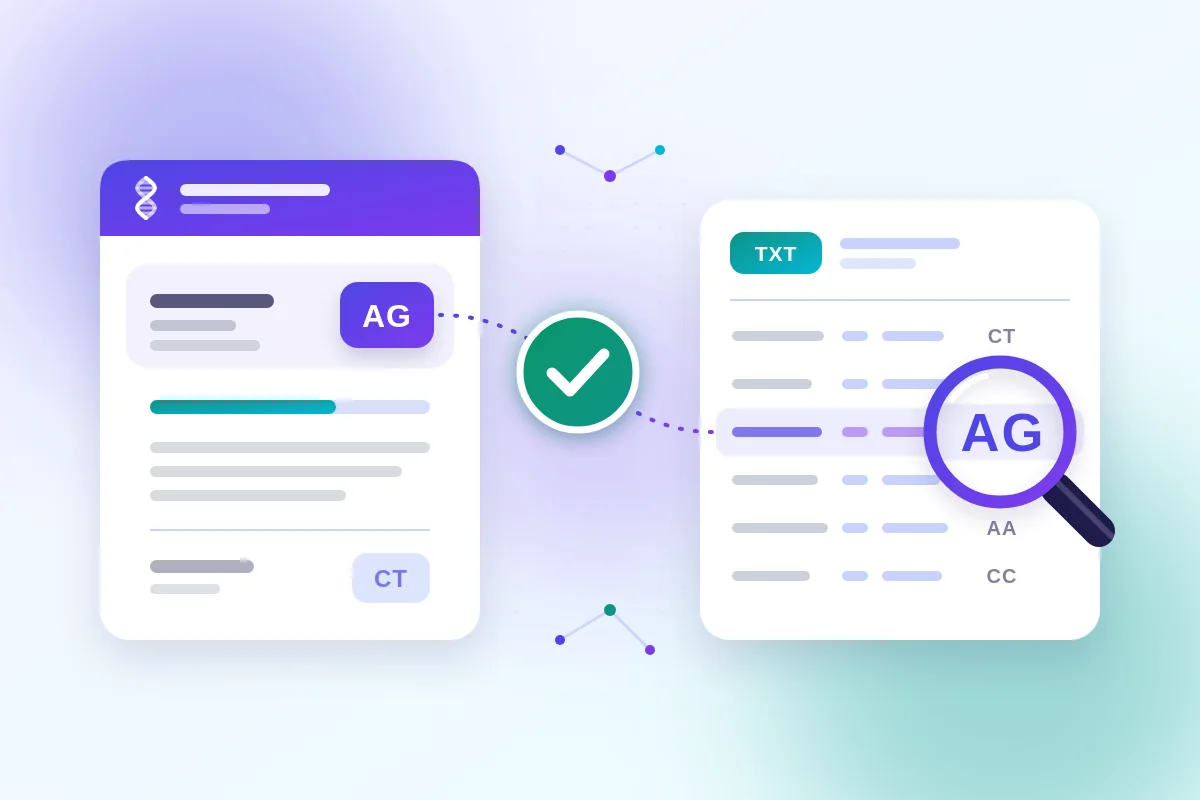
Every finding is validated against the uploaded file: rsIDs that are not in the file are removed, and genotypes are pinned to the file's own calls.
Does it cover pharmacogenomics?
Yes. 34 drug-response markers give predicted metabolizer phenotypes and the drug classes they may affect. The report never gives doses of prescription drugs.
Is the report a diagnosis?
No. It is clinical decision support for healthcare professionals. Carrier and cancer tag findings must be confirmed with validated clinical genetic testing.
Can DNA be combined with a blood test?
Yes. The DNA + Blood Health Report shows where genetic findings and lab values confirm or contradict each other.
What if the patient's medication list is incomplete?
The Supplement Advisor still writes a plan; only diet type and pregnancy status are required. Interactions are checked against the medications that are listed, conservative safety limits always apply, and anything that needs a prescriber is flagged for clinician review.
Which languages are available?
Reports can be written in 100+ languages. The clinic panel is available in 39 languages.
What happens to the raw DNA file?
It is read once and not stored. Only the 334 panel markers needed for the report are kept, in the clinic's patient record.
Is there an API?
Yes. DNA test interpretation, the DNA + blood report and the supplement plan are available as a REST API with sandbox and async mode.
Who can use Kantesti DNA test interpretation?
Clinics and healthcare professionals using the Kantesti clinic panel. It is included in the annual plan.
Answers at a glance
Still have a question?
Write to [email protected] or use our contact form.