DNA Hub

DNA + Blood Health Report

When DNA meets the blood test

A genetic tendency matters most when the blood test shows it too. The DNA + Blood Health Report reads both together and tells the clinician where they agree, where they disagree and what to do next.

Every link, classified

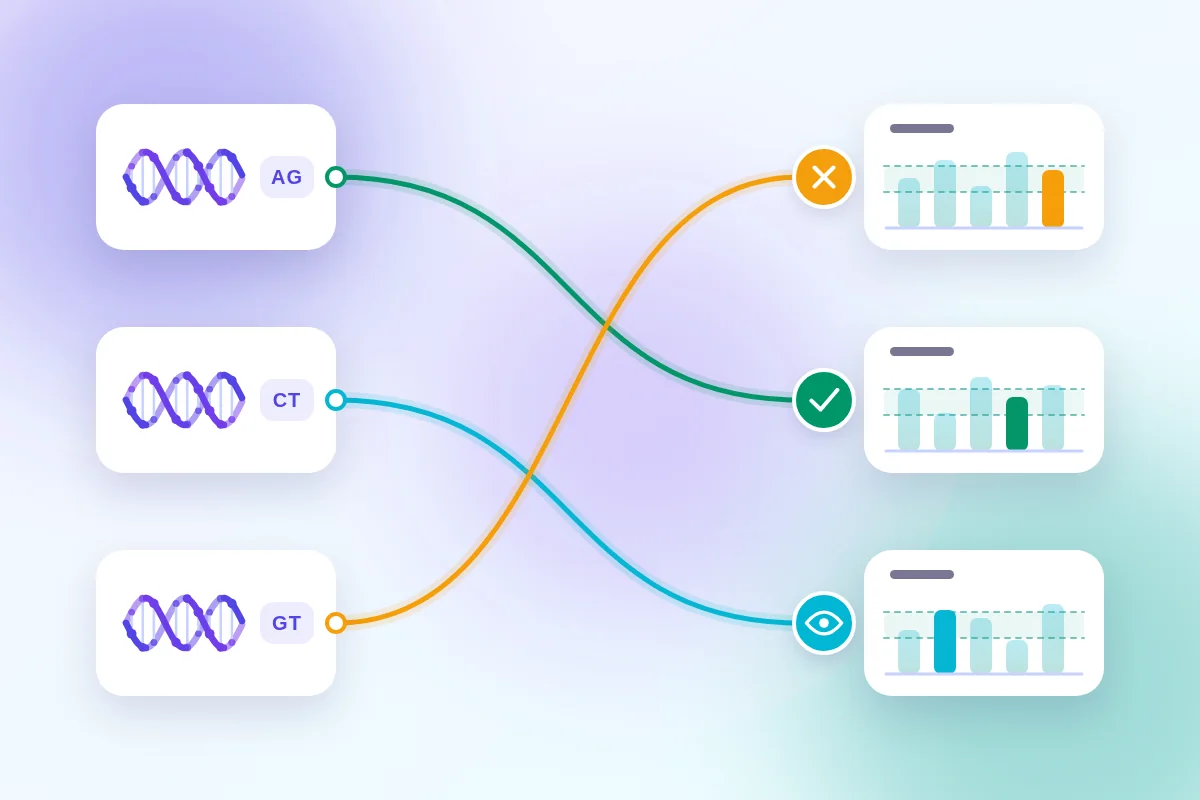
Each connection between a genetic finding and a lab value gets one of four labels.

Confirms

The lab value shows what the gene suggests, for example a low vitamin D level with a GC variant for lower vitamin D binding.

Contradicts

The lab value does not match the genetic tendency, which can point to diet, treatment or another cause.

Watch

A borderline value with a relevant genotype: nothing to act on yet, but worth monitoring.

Neutral

Related, but without clinical weight on its own.
Genes and blood test, side by side

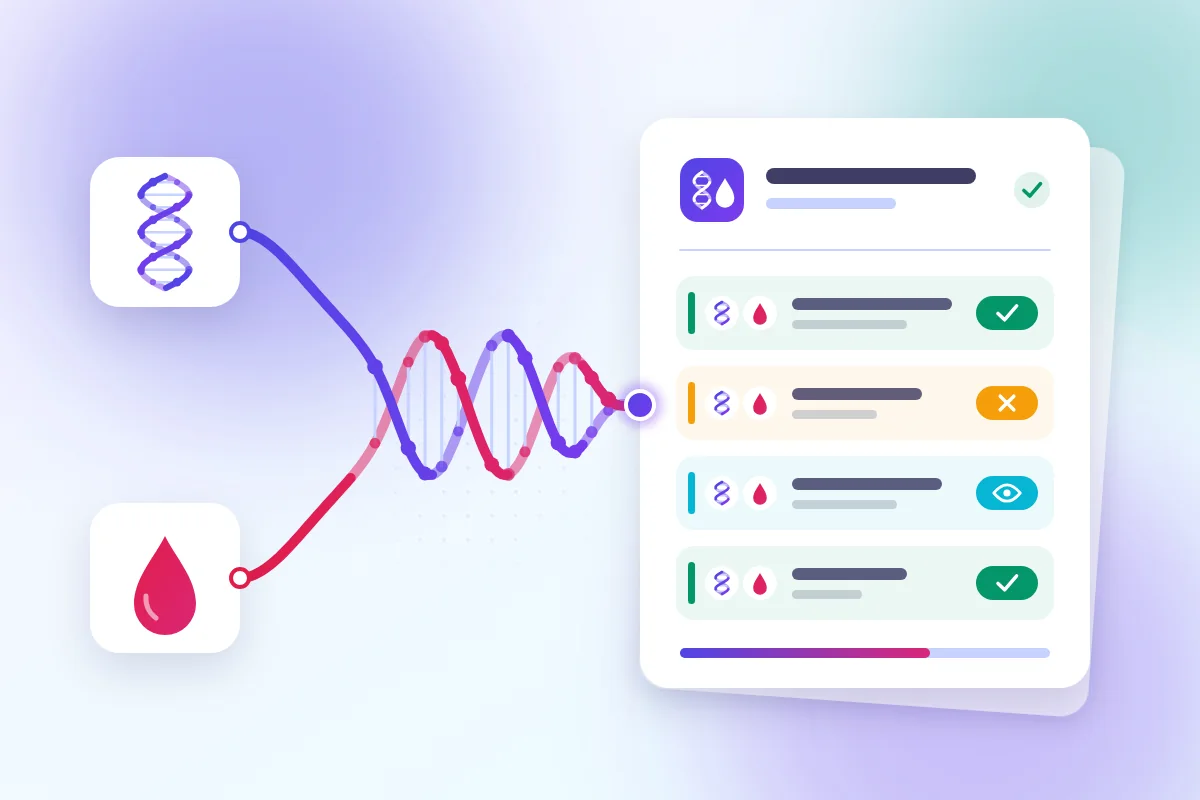
A DNA helix and a blood drop twisting together into one DNA and blood test report with colour-coded result rows
DNA and blood test results combined in one reportThe DNA + Blood Health Report combines a DNA report with an interpreted blood test. Each gene–lab link is labelled confirms, contradicts, watch or neutral.
Gene tiles linked to lab value charts by lines ending in check, cross and eye badges: confirms, contradicts, watch
Every gene–lab link labelled confirms, contradicts, watch or neutralGenetic findings from the DNA report are matched with values from the interpreted blood test, and each link is labelled confirms, contradicts, watch or neutral.
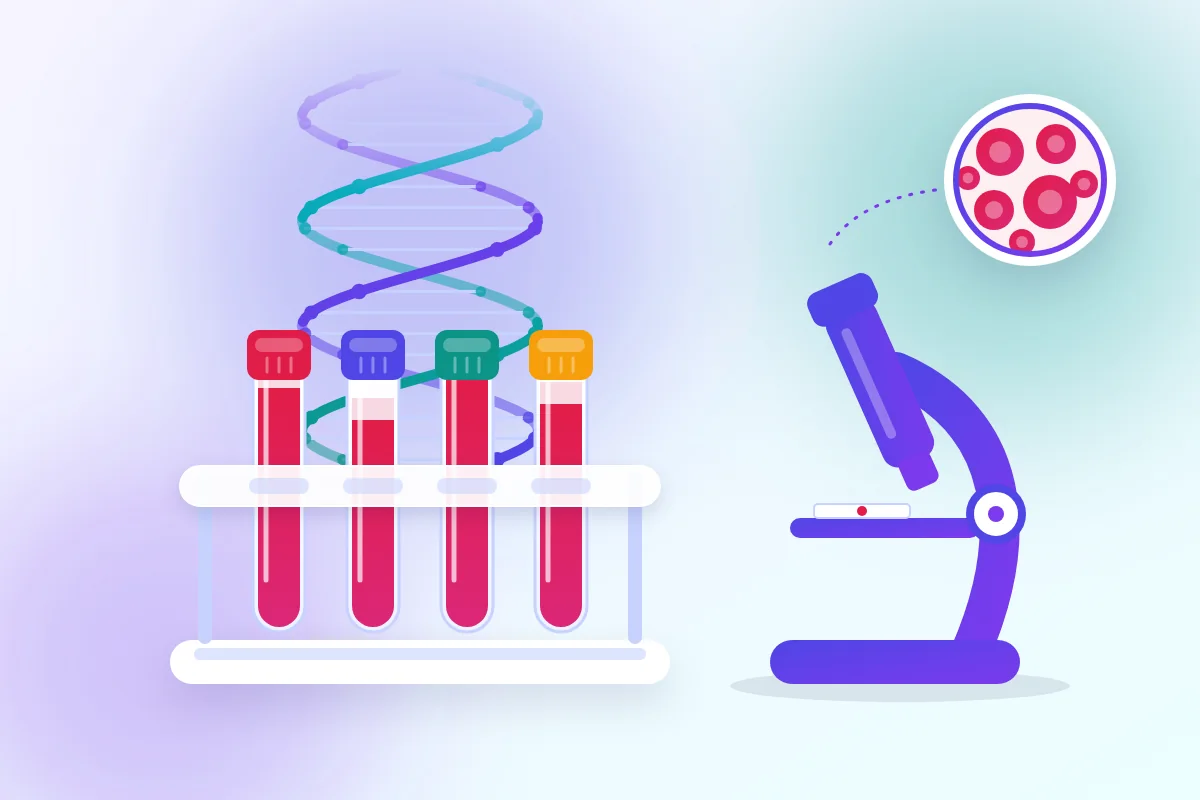
Blood sample tubes with coloured caps in a rack, a DNA helix rising behind and a microscope for a DNA and blood test
Blood test and DNA data, interpreted togetherThe DNA + Blood Health Report reads an interpreted blood test alongside the DNA report and adds priority actions and a monitoring plan.
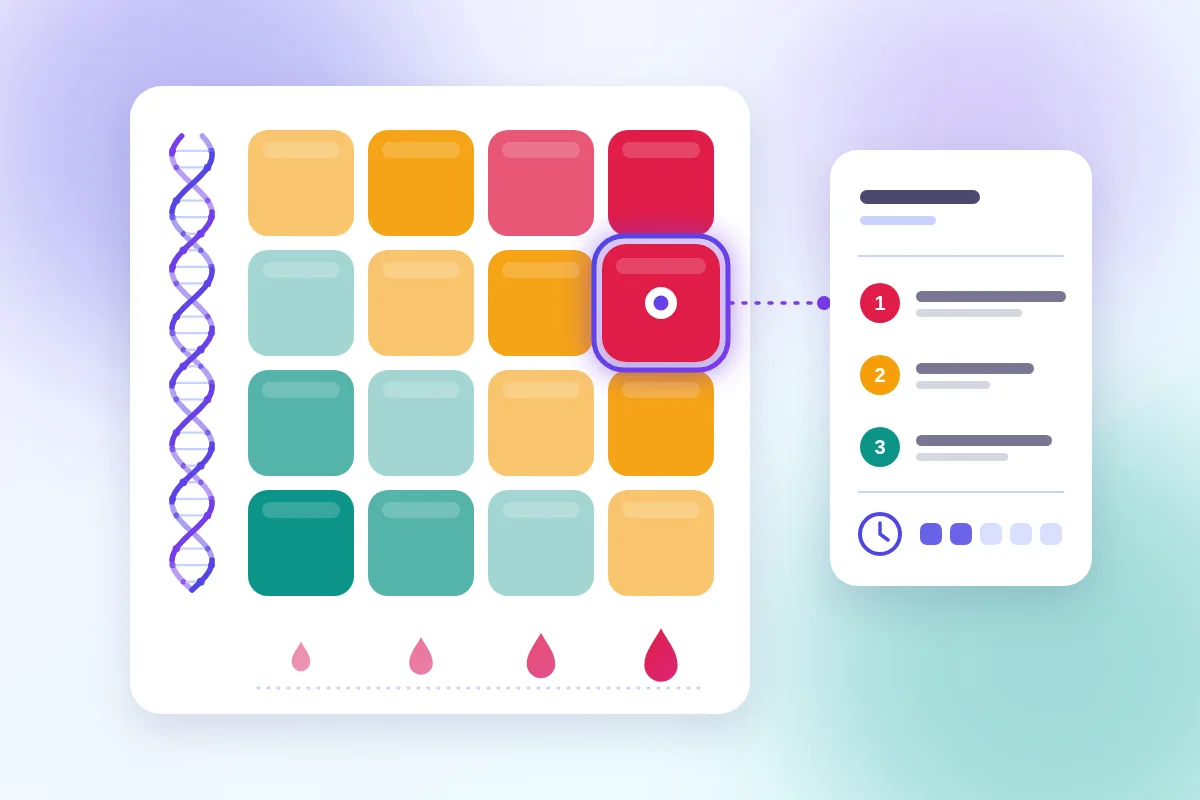
Risk matrix heatmap with a DNA helix on one axis, blood drops on the other and one high-risk cell highlighted
Combined risk matrix from DNA and blood test resultsThe DNA + Blood Health Report includes a risk matrix that sets genetic risk against lab status, followed by priority actions and a monitoring plan.

What the combined report contains

The report starts with an overall status (good, watch, attention or urgent) and a short summary, then goes into detail.
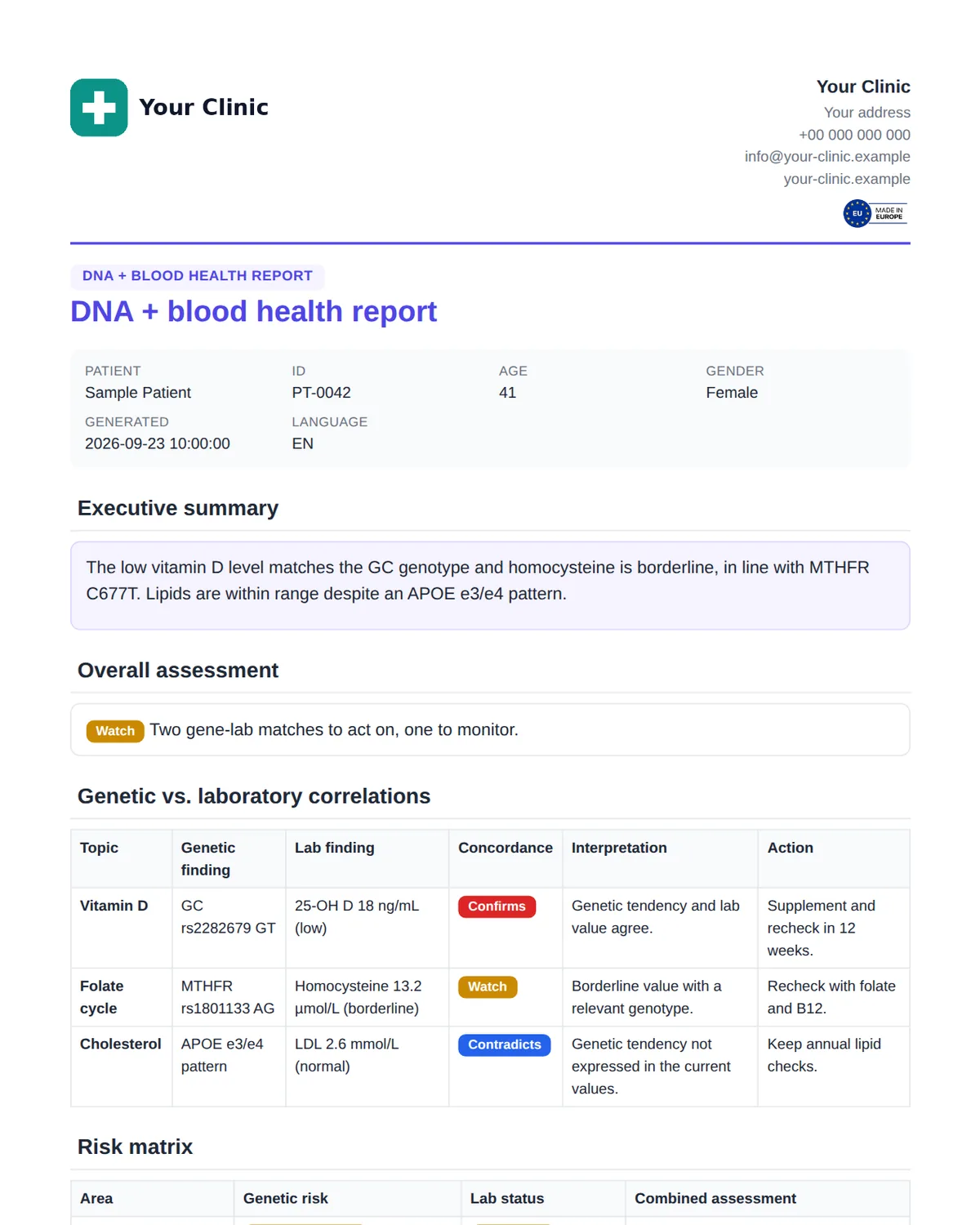
  • Correlations between genetic findings and lab values, with the interpretation and the action for each.
  • A risk matrix per health area: genetic risk next to lab status.
  • Priority actions ordered high, medium and low, each with the reason.
  • A monitoring plan: which marker to re-test, when and why.
  • Lifestyle plan, questions for the clinician and red flags.
Kantesti DNA and blood test report with correlations and a risk matrix

How to create one

  1. 1

    Interpret the DNA test

    Create the patient's DNA report first.

  2. 2

    Pick a blood test

    Choose one of the patient's blood tests already interpreted by Kantesti.

  3. 3

    Generate

    The combined report is ready in a few minutes. When the blood test is re-interpreted, the combined report is marked as out of date so it can be refreshed.

Go one step further: the supplement plan

The Supplement Advisor uses the DNA report, the blood test and a short questionnaire.