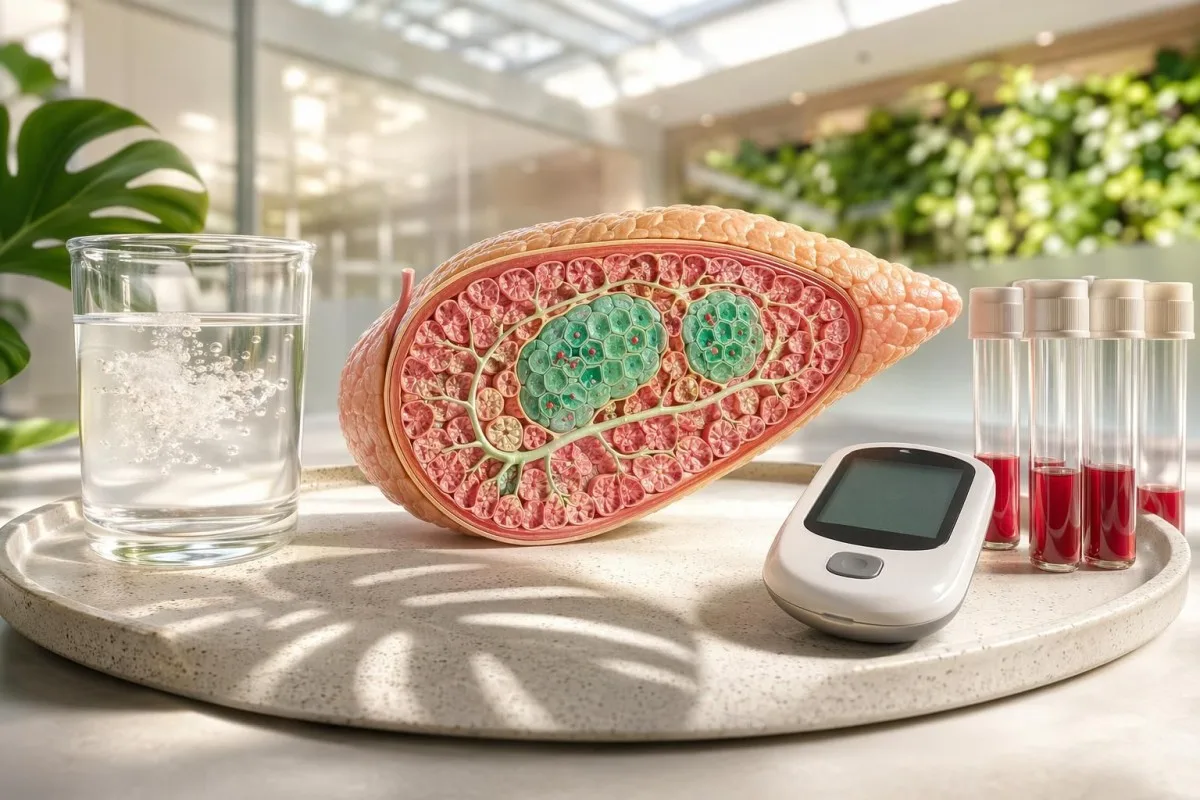
Unha guía práctica de cribado posparto para quen lles dixeron que os azucres do embarazo volvían estar normais, pero aínda quere saber o que vén despois.


- OGTT de 75 g entre 4-12 semanas posparto é a proba preferida despois da diabetes xestacional porque detecta problemas de glicosa ás 2 horas que a glicosa en xaxún pode pasar por alto.
- Puntos de corte para a diabetes son glicosa plasmática en xaxún ≥126 mg/dL, glicosa no OGTT de 2 horas ≥200 mg/dL, HbA1c ≥6.5%, ou glicosa aleatoria ≥200 mg/dL con síntomas.
- Puntos de corte de prediabetes son glicosa en xaxún 100-125 mg/dL, glicosa no OGTT de 2 horas 140-199 mg/dL, ou HbA1c 5.7-6.4%.
- HbA1c no inicio posparto pode ser falsamente baixa despois da perda de sangue no parto ou por un recambio elevado de glóbulos vermellos, polo que non debería substituír o OGTT ás 4-12 semanas.
- Glicosa normal no embarazo despois do parto non elimina o risco futuro; a diabetes xestacional adoita ser unha proba de estrés das células beta que revela vulnerabilidade anos antes da diabetes tipo 2.
- Intervalo de repetición é cada 1-3 anos de por vida se o cribado posparto é normal, e normalmente cada ano se hai algún resultado no rango de prediabetes.
- Antes de outro embarazo solicitar probas de glicosa antes da concepción ou no inicio do primeiro trimestre, especialmente se a GDM previa requiriu insulina ou medicación.
- Marcadores de risco como a insulina en xaxún, os triglicéridos, o HDL, a ALT e a relación albúmina-creatinina na urina non diagnostican diabetes, pero axudan a estimar o risco cardiometabólico.
As análises de sangue que diagnostican a diabetes despois da diabetes xestacional
As análises de sangue que detectan diabetes despois da diabetes xestacional son as proba de tolerancia oral á glicosa de 75 g durante 2 horas, a glicosa plasmática en xaxún, HbA1c, e glicosa plasmática aleatoria cando están presentes síntomas clásicos. A OGTT adoita ser a mellor proba de cribado de diabetes posparto ás 4-12 semanas porque detecta unha alteración do manexo da glicosa ás 2 horas antes de que a glicosa en xaxún ou o HbA1c se volvan anormais.
Como Thomas Klein, MD, lles digo ás persoas pacientes que a cuestión non é só se o número está alto hoxe; é se o páncreas aínda ten suficiente reserva despois do embarazo. Unha glicosa en xaxún de 94 mg/dL pode parecer tranquilizadora, mentres que un valor de OGTT de 168 mg/dL ás 2 horas di en silencio que a resposta de insulina da primeira fase vai atrasada.
Un diagnóstico de diabetes fóra do embarazo establécese mediante a glicosa plasmática en xaxún ≥126 mg/dL, glicosa na OGTT de 2 horas ≥200 mg/dL, HbA1c ≥6.5%, ou a glicosa plasmática aleatoria ≥200 mg/dL con síntomas como sede, micción frecuente ou perda de peso inexplicada. Para unha comparación en linguaxe clara das probas diagnósticas e de seguimento, as nosas cotas de proba de diabetes guía é un bo complemento.
Kantesti é un analizador de probas de sangue con IA que le a glicosa posparto, o HbA1c, os lípidos e os marcadores renais no mesmo contexto clínico, en lugar de como alertas illadas. Na nosa análise de informes de laboratorio cargados de 2M+, aparece un patrón de forma constante: as persoas lembran o diagnóstico do embarazo, pero o resultado da súa OGTT de 4-12 semanas a miúdo nunca chega ao rexistro de saúde a longo prazo.
Por que a glicosa normal no embarazo non reinicia o risco futuro
A glicosa normal despois do parto non restablece o risco futuro de diabetes porque a diabetes xestacional adoita reflectir unha reserva limitada das células beta baixo o estrés do embarazo. O parto elimina as hormonas placentarias, pero non necesariamente repara a resistencia á insulina, o risco xenético, a tendencia a fígado graso nin a vulnerabilidade das células beta pancreáticas.
A placenta produce hormonas que empuxan a resistencia á insulina cara arriba, a miúdo de forma máis notable despois das 24-28 semanas. Cando a glicosa se normaliza despois do nacemento, iso significa que o factor estresante desapareceu; non proba que as células produtoras de insulina teñan unha reserva ilimitada.
Bellamy et al. informaron en The Lancet que as mulleres con diabetes xestacional previa tiñan aproximadamente unha risco 7 veces maior de diabetes tipo 2 posterior en comparación coas que non tiveron GDM (Bellamy et al., 2009). No día a día, vexo o agrupamento de risco con aumento do perímetro abdominal, triglicéridos por riba de 150 mg/dL, HDL baixo, antecedentes familiares, PCOS e alteración do sono durante as dúas primeiras décadas posparto.
Un HbA1c normal de 5.3% seis meses despois do parto aínda pode coexistir coa resistencia á insulina temperá. Se queres unha visión metabólica máis profunda, a nosa guía para probas de resistencia á insulina explica por que a insulina en xaxún e a glicosa poden desviarse antes de que A1C atravesa a liña de prediabetes.
Cando debería realizarse o cribado de diabetes posparto
O cribado da diabetes posparto debe realizarse entre 4 e 12 semanas despois do parto, preferiblemente cunha OGTT de 75 g durante 2 horas. Se se perdeu esa fiestra, o mellor momento para facer a proba é agora; eu non agardaría polo seguinte exame físico anual se o embarazo foi hai 6 meses ou 6 anos.
A American Diabetes Association recomenda unha OGTT de 75 g ás 4-12 semanas posparto e un cribado de por vida cada 1-3 anos despois da diabetes gestacional (American Diabetes Association Professional Practice Committee, 2024). ACOG tamén apoia o cribado posparto nesta fase inicial, e moitas consultas de obstetricia agora intentan pedila antes da visita de 6 semanas para que non se esqueza (ACOG, 2018).
A lactación materna, a fragmentación do sono e os cambios de peso posparto poden alterar a glicosa día a día, pero non son razóns para saltarse a proba. A maioría das pacientes poden facer a OGTT mentres están amamantando; o problema práctico adoita ser o coidado dos nenos durante a espera no laboratorio de 2 horas, non a bioloxía.
Se tamén necesitas controis de anemia, función tiroidea, encimas hepáticas ou marcadores renais despois do parto, a nosa lista de verificación de análises posparto indica que probas se combinan habitualmente co cribado da glicosa. Unha soa cita a miúdo pode cubrir máis dun problema posparto.
Como se interpreta a proba de tolerancia oral á glicosa de 75 g
O/A proba de tolerancia oral á glicosa despois do embarazo mide a glicosa en xaxún e a glicosa ás 2 horas despois dunha bebida de glicosa de 75 g. Un valor de 2 horas ≥200 mg/dL diagnostica diabetes, mentres que 140-199 mg/dL diagnostica a tolerancia alterada á glicosa, incluso cando a glicosa en xaxún é normal.
A proba funciona porque desafía o sistema da insulina en vez de observar como está en repouso. Pola miña experiencia, as persoas con GDM previa a miúdo superan a parte de xaxún pero fallan a parte de 2 horas; ese patrón apunta a unha secreción de insulina atrasada despois das comidas.
Prepárate co teu réxime de alimentación habitual durante polo menos 3 días, idealmente incluíndo polo menos 150 g de carbohidratos ao día a non ser que o teu profesional sanitario che indicase o contrario. Facer unha dieta moi baixa en carbohidratos antes dunha OGTT pode exagerar o aumento da glicosa e facer a interpretación confusa; a nosa as normas de xaxún guía cobre detalles sobre a auga, o café e o momento.
Non fagas exercicio intenso durante a espera de 2 horas, e avisa ao laboratorio se vomitas ou non podes rematar a bebida. Un resultado debe repetirse ou substituírse por outra proba diagnóstica se o procedemento non se completou correctamente.
O que a glicosa en xaxún pode e non pode detectar
A glicosa plasmática en xaxún detecta diabetes cando o valor en xaxún é ≥126 mg/dL, pero pode pasar por alto unha intolerancia illada á glicosa despois das comidas tras unha diabetes xestacional. É útil, barata e reproducible; simplemente é demasiado pouco precisa para substituír o OGTT posparto.
Unha glicosa en xaxún de 100-125 mg/dL é prediabetes segundo os criterios da ADA, mentres que <100 mg/dL xeralmente considérase normal nos Estados Unidos. Algúns sistemas internacionais usan 110 mg/dL como o limiar inferior de xaxún alterado, o que é unha das razóns polas que os pacientes se confunden ao cambiar de país.
A trampa clínica é unha glicosa en xaxún de 88-96 mg/dL cun OGTT de 2 horas de 155-185 mg/dL. A esa persoa pódelle dicir que todo está ben se só se pediu glicosa en xaxún, pero a súa bioloxía da glicosa durante as comidas xa está alterada.
A glicosa da mañá vese afectada pola débeda de sono, comer a última hora, os corticoides, a infección e o fenómeno do amencer. O noso guía de glicosa en xaxún explica por que un único resultado da mañá debe interpretarse tendo en conta a noite anterior e a calidade do sono.
Por que HbA1c é conveniente pero imperfecta despois do parto
HbA1c detecta diabetes en ≥6.5%, pero é menos fiable nas primeiras 4-12 semanas posparto porque a perda de sangue durante o parto e a rotación dos eritrocitos poden distorsionar o resultado. A HbA1c é útil máis tarde, especialmente para o seguimento a longo prazo, pero non debe substituír o primeiro OGTT posparto.
A HbA1c estima a glicosa media ao longo de aproximadamente 8-12 semanas, ponderado cara ao mes máis recente. Despois do parto, a anemia, a transfusión, a deficiencia de ferro ou a reposición rápida de glóbulos vermellos poden afastar o valor da verdadeira historia da glicosa.
A deficiencia de ferro pode elevar falsamente o HbA1c nalgúns pacientes, mentres que unha perda de sangue recente pode baixalo falsamente. É unha desas áreas nas que o contexto importa máis que o número; un HbA1c posparto de 5.6% pode non ser tan tranquilizador se a ferritina é 8 ng/mL e nunca se realizou a OGTT.
Se o teu A1c non coincide coas lecturas da punción dixital nin cos síntomas, le a nosa guía sobre A1c accuracy antes de aceptar o valor tal cal. Normalmente combino HbA1c con glicosa en xaxún, CBC e ferritina cando a historia posparto parece inconsistente.
Cando a glicosa aleatoria ou os síntomas requiren acción rápida
A glicosa plasmática aleatoria detecta diabetes cando é ≥200 mg/dL e hai síntomas. Despois da diabetes xestacional, é necesaria unha revisión urxente se hai glicosa alta con vómitos, deshidratación, perda de peso rápida, cetonas, visión borrosa ou esgotamento inusual.
A maioría da diabetes despois da DGM é tipo 2, pero a diabetes autoinmune posparto pode aparecer ocasionalmente, especialmente se a perda de peso é rápida e hai cetonas. Vin pacientes descartados como simplemente pais novos cansaos cando a súa glicosa era 280 mg/dL e xa estaban cetóticos.
Unha glicosa aleatoria de 140-199 mg/dL non é diagnóstica por si soa, pero debería levar a glicosa en xaxún, HbA1c ou OGTT dependendo do momento e dos síntomas. Un valor aleatorio por riba de 300 mg/dL, especialmente con dor abdominal ou respiración dificultosa, debe tratarse como atención médica o mesmo día.
Un único valor alto pode ocorrer despois dunha enfermidade, esteroides ou unha comida moi rica en carbohidratos, pero o patrón importa. A nosa guía sobre glucosa alta inesperada explica como os clínicos separan a hiperglicemia por estrés da diabetes inicial.
Marcadores sanguíneos que mostran risco antes de que apareza a diabetes
A insulina en xaxún, o C-peptido, os triglicéridos, HDL, ALT e a relación albúmina-creatinina na urina non diagnostican diabetes, pero axudan a mostrar risco metabólico despois da diabetes xestacional. Estes marcadores poden revelar resistencia á insulina, tendencia a fígado graso ou estrés renal inicial mentres a glicosa aínda é tecnicamente normal.
Unha insulina en xaxún por riba duns 15-20 µIU/mL pode suxerir resistencia á insulina, aínda que os métodos de laboratorio difiren e non hai un punto de corte diagnóstico universal. O HOMA-IR usa insulina en xaxún e glicosa en xaxún; valores por riba de 2.0-2.5 adoitan aumentar a sospeita en adultos, pero a etnia, o BMI e a elección do ensaio cambian a interpretación.
Triglicéridos por riba de 150 mg/dL e HDL por debaixo de 50 mg/dL nas mulleres adoitan ir da man coa resistencia á insulina. ALT por riba de aproximadamente 25-30 IU/L nunha muller con GDM previa pode ser unha pista temperá de fígado graso incluso cando a análise aínda marca como normal.
Kantesti é unha plataforma de interpretación de biomarcadores de IA que trata un A1C normal despois da diabetes xestacional como unha pregunta de marcador de risco, non como un “verde” para sempre. Se queres calcular a resistencia á insulina a partir dos teus valores, a cálculo HOMA-IR guía mostra a fórmula e as súas limitacións.
Cada canto repetir se o cribado posparto é normal
Se o cribado posparto é normal despois da diabetes xestacional, repetir cada 1-3 anos para toda a vida. Repetir antes, a miúdo cada ano, se aumenta o peso, aparece prediabetes, planéase outro embarazo, ou medicamentos como esteroides ou antipsicóticos elevan o risco de glicosa.
A recomendación da ADA de cribado de por vida cada 1-3 anos existe porque o risco de diabetes aumenta co tempo, non só no primeiro ano posparto. Na miña consulta, normalmente elixo o intervalo de 1 ano para calquera persoa con prediabetes, GDM tratada con insulina, BMI por riba de 30, forte historia familiar ou SOP.
Unha proba normal en 2026 aínda é útil porque se converte no teu valor basal. A glicosa en xaxún que se despraza de 82 a 96 mg/dL ao longo de 3 anos pode ser máis significativa que un resultado marcado, especialmente se os triglicéridos e a circunferencia de cintura aumentan ao mesmo tempo.
Kantesti A IA pode trazar a glicosa, HbA1c, triglicéridos e ALT ao longo do tempo para que pequenos cambios se vexan antes de facerse dramáticos. O noso análise de tendencias artigo explica por que a pendente e a agrupación adoitan importar máis que un único sinal de laboratorio.
Que pedir ao/á teu/úa clínico/a que solicite
Solicite un OGTT de 75 g durante 2 horas ás 4-12 semanas posparto, ou glicosa plasmática en xaxún máis HbA1c se non é factible un OGTT. Para o risco a longo prazo, pregunte se deberían comprobarse os lípidos, ALT, creatinina, eGFR e a relación albúmina-creatinina na urina cos seus marcadores de glicosa.
Unha primeira orde posparto sensata adoita dicir: glicosa en xaxún, glicosa de 75 g durante 2 horas, HbA1c, CBC se houbo unha perda de sangue importante no parto, ferritina se se sospeita anemia, panel lipídico e CMP se o risco cardiometabólico é alto. Non todas as pacientes necesitan todas as probas, pero a orde debe axustarse á historia do embarazo.
Se tivo hiperglicemia en xaxún durante o embarazo ou necesitou insulina, eu sería máis agresivo co seguimento precoz. Se o seu GDM foi leve e controlado coa dieta, o OGTT aínda importa, pero o ritmo a longo prazo pode estar máis preto de cada 2-3 anos cando todos os resultados son normais.
Para as persoas lectoras que queren entender o que mide realmente cada marcador, o noso guía de biomarcadores abrangue miles de marcadores de laboratorio e diferenzas comúns de unidades. Isto é especialmente útil cando un laboratorio informa a glicosa en mg/dL e outro en mmol/L.
O que fan os médicos con resultados limítrofes ou conflitivos
Os resultados de diabetes limítrofes ou conflitivos deberían repetirse ou confirmarse normalmente cunha proba diagnóstica diferente. Unha glicosa en xaxún de 124 mg/dL, un HbA1c de 6.4%, ou un OGTT de 2 horas de 198 mg/dL non é para restarlle importancia; é un resultado moi próximo ao limiar que merece un plan.
Sen síntomas clásicos, a maioría dos clínicos confirma a diabetes cun resultado anormal repetido. Se dúas probas diferentes non coinciden, normalmente repítese a proba por riba do limiar diagnóstico, e o contexto da paciente decide con que rapidez ocorre iso.
Thomas Klein, MD, regra práctica: non deixe que a palabra limítrofe faga que o resultado pareza inofensivo. Un OGTT de 2 horas de 196 mg/dL despois dun GDM previo adoita conlevar máis risco futuro que unha glicosa en xaxún de 101 mg/dL, aínda que ambos poidan arquivarse como prediabetes.
A nosa guía para limiares de prediabetes explica como a glicosa en xaxún, A1c e o OGTT definen problemas biolóxicos diferentes. Eu adoito enmarcar a prediabetes despois de GDM como unha xanela de tratamento máis que como unha sala de espera.
Situacións especiais: lactación, anemia, SOP e medicamentos
A lactación, a anemia, a PCOS, os medicamentos GLP-1, os esteroides e a enfermidade tiroidea poden cambiar como deben interpretarse as análises de diabetes posparto. Os puntos de corte da glicosa permanecen igual, pero a confianza que depositas en HbA1c, na glicosa en xaxún ou nos niveis de insulina pode cambiar de forma substancial.
A lactación materna adoita mellorar o metabolismo da glicosa e pode reducir o risco futuro de diabetes tipo 2, pero non elimina a necesidade de cribado. Se estás tomando insulina ou sulfonilureas no posparto, pregunta ao teu/a clínico/a polo risco de hipoglicemia durante tomas máis longas ou comidas perdidas.
A SOP engade unha vía separada de resistencia á insulina, e o antecedente de GDM xunto coa SOP é unha das combinacións que trato con especial coidado. O noso Patrones de análises na SOP explica por que a insulina en xaxún, os lípidos e os andróxenos poden importar mesmo cando a glicosa aínda non é diagnóstica.
As inxeccións con esteroides, a prednisona en doses altas, algúns antipsicóticos e a privación severa de sono poden elevar a glicosa temporalmente. A evidencia sobre os limiares exactos de sono no posparto é, sinceramente, mixta, pero vexo valores de xaxún peores cando o sono está fragmentado por debaixo de 5-6 horas durante semanas.
Como Kantesti le de forma segura as análises de diabetes posparto
Kantesti le as análises de diabetes no posparto combinando limiares de glicosa co momento, historial de embarazo, pistas de anemia, patróns lipídicos e marcadores renais. O obxectivo non é substituír o teu/a clínico/a; é facer máis claro o patrón de risco antes da túa consulta.
Kantesti é unha ferramenta de análise de probas de sangue impulsada por IA usada por 2M+ persoas en 127 países, con interpretación de PDF ou foto das análises de sangue en aproximadamente 60 segundos. Para o cribado de diabetes no posparto, a nosa rede neuronal separa os criterios diagnósticos de glicosa de marcadores de contexto de risco como triglicéridos, HDL, ALT e ACR na urina.
Unha carga típica podería mostrar HbA1c 5.5%, glicosa en xaxún 92 mg/dL, ferritina 10 ng/mL e non OGTT. Kantesti IA non diagnosticaría diabetes deses valores, pero debería sinalar que o A1c temperán no posparto pode ser pouco fiable e que falta o OGTT recomendado.
Os nosos métodos están aliñados con estándares clínicos publicados e revisión interna de médicos; os lectores poden ver o noso estándares de validación clínica e a referencia de IA. rexistrada previamente. Se estás a cargar unha exploración en lugar de escribir valores, o fluxo de traballo de carga de PDF explica como se len e se comproban os informes.
Un plan práctico de repetición para 2026 e máis alá
A partir do 26 de maio de 2026, o plan máis seguro despois da diabetes xestacional é OGTT ás 4-12 semanas, repetir o cribado cada 1-3 anos e facer probas antes de outro embarazo. Se algún resultado está no rango de prediabetes, trátalo como unha xanela activa de prevención, non como unha simple curiosidade de laboratorio.
O meu guión habitual é sinxelo: facer o primeiro OGTT no posparto, gardar o resultado e, despois, poñer a seguinte comprobación de glicosa no calendario antes de que a vida se volva axitada. Se o teu OGTT de 2 horas é 140-199 mg/dL, pide un intervalo de seguimento claro, un plan de nutrición e un obxectivo de exercicio en lugar dun recordatorio vago de ter coidado.
Se o teu cribado de diabetes é normal, aínda así dille a cada futuro/a clínico/a que tiveses GDM. Esa única liña cambia como eu leo unha glicosa en xaxún de 103 mg/dL, un nivel de triglicéridos de 42 mg/dL, ou un HbA1c que vai subindo desde 5.2% a 5.6% ao longo de varios anos.
Kantesti Ltd é unha empresa de tecnoloxía sanitaria do Reino Unido, e os nosos médicos revisan o contido médico a través do noso consello asesor médico e do proceso de gobernanza clínica descrito en Sobre nós. En resumo: as probas correctas non son complicadas, pero o momento e a interpretación importan máis do que a maioría das persoas lle din.
Publicacións de investigación relacionadas de Kantesti
O cribado de diabetes posparto adoita estar integrado nunha revisión máis ampla do laboratorio que inclúe CBC, estado do ferro e marcadores renais. As publicacións de Kantesti con DOI listadas a continuación respaldan métodos de interpretación de análises de sangue adxacentes, incluíndo índices de células vermellas e razóns de función renal que poden afectar a confianza en HbA1c ou a avaliación do risco metabólico a longo prazo.
Preguntas frecuentes
Que análises de sangue detectan a diabetes despois da diabetes gestacional?
As análises de sangue que detectan a diabetes despois da diabetes xestacional son a proba de tolerancia oral á glicosa de 75 g durante 2 horas, a glicosa plasmática en xaxún, HbA1c e a glicosa plasmática aleatoria cando hai síntomas. A diabetes diagnostícase con glicosa en xaxún ≥126 mg/dL, glicosa na OGTT de 2 horas ≥200 mg/dL, HbA1c ≥6.5%, ou glicosa aleatoria ≥200 mg/dL con síntomas clásicos. Prefírese a OGTT entre 4 e 12 semanas posparto porque pode detectar unha alteración do manexo da glicosa ás 2 horas incluso cando a glicosa en xaxún é normal.
O test de tolerancia oral á glicosa despois do embarazo é mellor que a HbA1c?
Si, a proba de tolerancia oral á glicosa despois do embarazo adoita ser mellor que a HbA1c para a primeira detección posparto ás 4-12 semanas. A HbA1c pode verse alterada por perdas de sangue no parto, anemia, transfusións ou un recambio rápido de eritrocitos, mentres que a OGTT mide directamente o manexo da glicosa despois dun desafío de 75 g de glicosa. A HbA1c faise máis útil máis adiante para a detección a longo prazo e o seguimento da tendencia.
Cando se debe realizar a detección de diabetes posparto despois de DMG?
A detección de diabetes posparto despois da diabetes xestacional debe realizarse entre 4 e 12 semanas despois do parto, idealmente cunha OGTT de 75 g durante 2 horas. Se se perdeu ese intervalo, a proba debe facerse canto antes sexa práctico, en lugar de esperar a que aparezan síntomas. Se o resultado posparto é normal, repetir a detección de diabetes cada 1-3 anos durante toda a vida.
Pode o HbA1c ser normal pero o OGTT anormal despois da diabetes xestacional?
Si, o HbA1c pode ser normal mentres que a OGTT é anormal despois da diabetes xestacional. Unha persoa pode ter un HbA1c 5.3% e unha glicosa en xaxún de 92 mg/dL, pero un valor de OGTT de 2 horas de 160 mg/dL, o que é tolerancia alterada á glicosa. Isto ocorre porque o HbA1c reflicte a glicosa media, mentres que a OGTT pon a proba a resposta á insulina despois dunha carga de glicosa.
O que significan os resultados de prediabetes despois da diabetes gestacional?
A prediabetes despois da diabetes xestacional defínese por glicosa plasmática en xaxún de 100-125 mg/dL, glicosa na OGTT de 2 horas de 140-199 mg/dL, ou HbA1c 5.7-6.4%. Unha anormalidade na OGTT de 2 horas é especialmente frecuente despois da DGM e pode pasar desapercibida se só se solicita a glicosa en xaxún. A prediabetes debería, xeralmente, desencadear un seguimento anual e un plan de prevención estruturado.
Con que frecuencia debería repetir a proba se a miña detección posparto é normal?
Se a túa proba de diabetes posparto é normal despois da diabetes xestacional, repítea cada 1-3 anos de por vida. Moitos profesionais elixen probas anuais se tiveches GDM tratada con insulina, prediabetes, SOP, BMI superior a 30, antecedentes familiares fortes ou triglicéridos en aumento. A proba tamén debe repetirse antes de outro embarazo ou ao comezo do primeiro trimestre.
O feito de dar o peito cambia os resultados análise de sangue da diabetes?
A lactación materna pode mellorar o metabolismo da glicosa e pode reducir o risco futuro de diabetes tipo 2, pero non elimina a necesidade de realizar cribado de diabetes postparto. Os puntos de corte diagnósticos para a glicosa en xaxún, a OGTT e o HbA1c non cambian porque alguén estea lactando. Se se usan medicamentos para a diabetes no postparto, os clínicos poden axustar o momento ou a dose para reducir o risco de hipoglucemia durante tomas longas ou comidas perdidas.
Podo usar un monitor continuo de glicosa en lugar da proba de tolerancia á glicosa posparto?
Non. Un monitor continuo de glicosa pode mostrar patróns útiles de glicosa día a día, pero non substitúe a glicosa en xaxún de laboratorio, a HbA1c ou unha OGTT de 75 g para diagnosticar a diabetes despois da diabetes xestacional. O seu médico pode usalo máis tarde para apoiar decisións de estilo de vida ou tratamento.
O meu bebé necesita probas de diabetes porque tiven diabetes gestacional?
A glicosa do recentemente nado pode comprobarse no hospital, especialmente se vostede usou insulina ou medicación durante o embarazo, pero a maioría dos nenos non precisa probas de sangue continuas para a diabetes só por mor da diabetes gestacional materna. Manteña as visitas pediátricas regulares e apoie os hábitos familiares en relación con comidas equilibradas, actividade e sono.
E se non podo tolerar a bebida de glicosa para o OGTT posparto?
Dille ao teu/a profesional sanitario/a antes da proba. Poden reprogramar con estratexias contra as náuseas, comprobar a glicosa en xaxún e o HbA1c, ou usar datos temporais de glicosa na casa ou de monitorización continua, pero estas alternativas poden non substituír completamente o OGTT diagnóstico.
Obtén hoxe unha análise de sangue con IA
Únete a máis de 2 millóns de usuarios en todo o mundo que confían en Kantesti para obter unha análise instantánea e precisa das análises de laboratorio. Carga os teus resultados de análise de sangue e recibe unha interpretación completa de biomarcadores de 15,000+ en segundos.
📚 Publicacións de investigación citadas
Klein, T., Mitchell, S., & Weber, H. (2026). Análise de sangue RDW: guía completa de RDW-CV, MCV e MCHC. Kantesti Investigación médica con IA.
Klein, T., Mitchell, S., & Weber, H. (2026). Explicación da proporción BUN/Creatinina: Guía de probas de función renal. Kantesti Investigación médica con IA.
📖 Referencias médicas externas
American Diabetes Association Professional Practice Committee (2024). 2. Diagnóstico e Clasificación da Diabetes: Estándares de Coidados na Diabetes—2024. Diabetes Care.
⚕️ Aviso médico
Este artigo é só para fins educativos e non constitúe asesoramento médico. Consulta sempre un/ha profesional sanitario/a cualificado/a para decisións de diagnóstico e tratamento.
Sinais de confianza E-E-A-T
Experiencia
Revisión clínica dirixida por un médico dos fluxos de interpretación de análises.
Experiencia
Foco en medicina de laboratorio sobre como se comportan os biomarcadores no contexto clínico.
Autoridade
Escrito polo Dr. Thomas Klein, con revisión da Dra. Sarah Mitchell e do Prof. Dr. Hans Weber.
Fiabilidade
Interpretación baseada en evidencias con vías de seguimento claras para reducir a alarma.