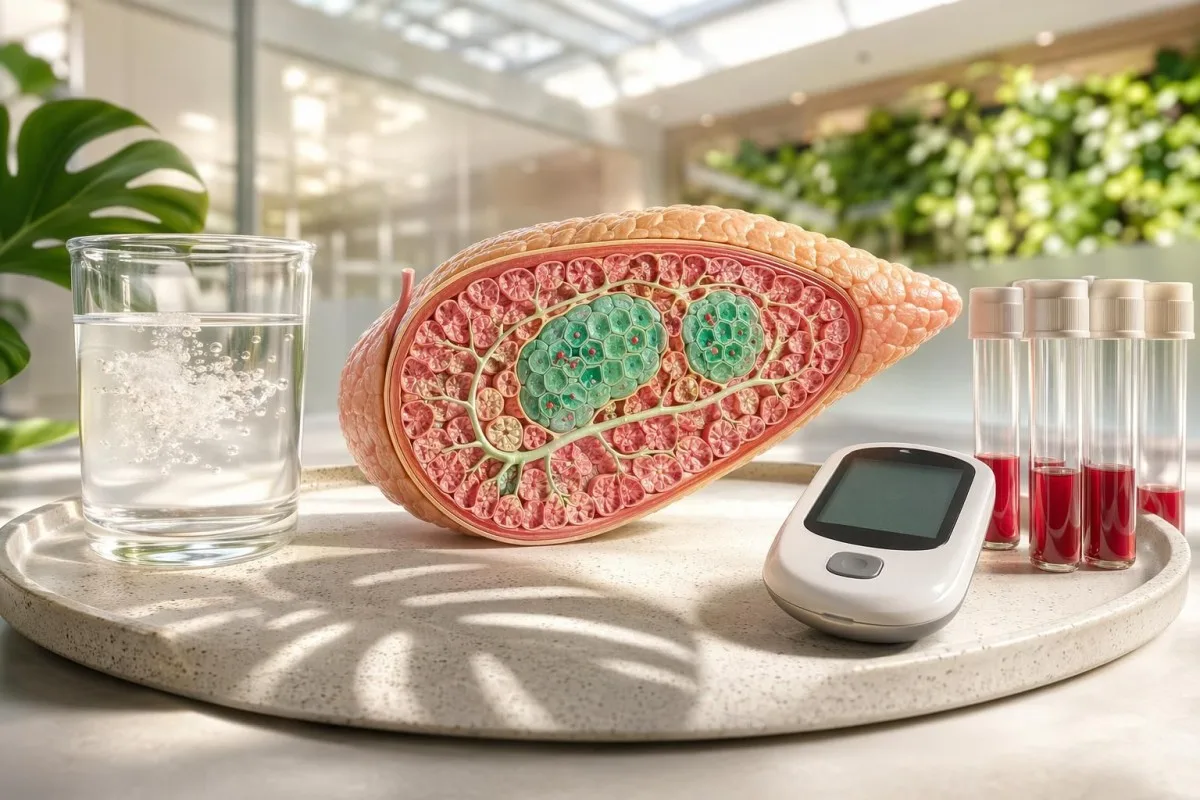
Un guide pratique de dépistage post-partum pour toute personne à qui l’on a dit que ses sucres pendant la grossesse étaient redevenus normaux, mais qui veut quand même savoir ce qui se passe ensuite.


- OGTT de 75 g à 4-12 semaines post-partum est le test de préférence après un diabète gestationnel, car il détecte les problèmes de glycémie à 2 heures que la glycémie à jeun peut manquer.
- Seuils du diabète sont une glycémie plasmatique à jeun ≥126 mg/dL, une glycémie à 2 heures à l’OGTT ≥200 mg/dL, une HbA1c ≥6.5%, ou une glycémie aléatoire ≥200 mg/dL avec des symptômes.
- Seuils de prédiabète sont une glycémie à jeun de 100-125 mg/dL, une glycémie à 2 heures à l’OGTT de 140-199 mg/dL, ou une HbA1c de 5.7-6.4%.
- HbA1c en début de post-partum peut être faussement basse après une perte de sang à l’accouchement ou un renouvellement élevé des globules rouges ; elle ne doit donc pas remplacer l’OGTT à 4-12 semaines.
- Glycémie normale pendant la grossesse après l’accouchement n’efface pas le risque futur ; le diabète gestationnel est souvent un test de stress des cellules bêta qui révèle une vulnérabilité des années avant le diabète de type 2.
- Intervalle de recontrôle tous les 1 à 3 ans à vie si le dépistage post-partum est normal, et généralement chaque année si un résultat se situe dans la fourchette de prédiabète.
- Avant une autre grossesse demander un test de glycémie avant la conception ou tôt pendant le premier trimestre, surtout si un GDM antérieur a nécessité de l’insuline ou un médicament.
- Marqueurs de risque tels que l’insuline à jeun, les triglycérides, le HDL, l’ALT et le rapport albumine/créatinine urinaire ne diagnostiquent pas le diabète, mais ils aident à estimer le risque cardiométabolique.
Les analyses sanguines qui diagnostiquent le diabète après un diabète gestationnel
Les analyses sanguines qui détectent le diabète après un diabète gestationnel sont les test d’hyperglycémie provoquée par voie orale (HGPO) de 75 g sur 2 heures, la glycémie plasmatique à jeun, HbA1c, et glycémie plasmatique aléatoire lorsque des symptômes classiques sont présents. L’HGPO est généralement le meilleur test de dépistage du diabète post-partum à 4-12 semaines, car elle met en évidence une mauvaise gestion de la glycémie à 2 heures avant que la glycémie à jeun ou l’HbA1c ne deviennent anormales.
Comme Thomas Klein, MD, je dis aux patientes que la question ne porte pas seulement sur le fait que le chiffre est élevé aujourd’hui ; il s’agit de savoir si le pancréas dispose encore de suffisamment de réserve après la grossesse. Une glycémie à jeun de 94 mg/dL peut sembler rassurante, tandis qu’une valeur d’HGPO à 2 heures de 168 mg/dL indique discrètement que la réponse insulinique de première phase accuse un retard.
Un diagnostic de diabète en dehors de la grossesse est posé par la glycémie plasmatique à jeun ≥126 mg/dL, la glycémie au test d’hyperglycémie provoquée (OGTT) à 2 heures ≥200 mg/dL, HbA1c ≥6.5%, ou la glycémie plasmatique aléatoire ≥200 mg/dL en présence de symptômes tels que soif, urination fréquente ou perte de poids inexpliquée. Pour une comparaison en langage simple des tests diagnostiques et de surveillance, notre seuils de test du diabète . Pour le contexte concernant la prescription et l’interprétation des marqueurs liés au diabète, notre.
Kantesti est un analyseur de test sanguin par IA qui lit la glycémie post-partum, l’HbA1c, les lipides et les marqueurs rénaux dans le même contexte clinique, plutôt que comme des signaux isolés. Dans notre analyse des comptes rendus de laboratoire 2M+ téléversés, un schéma revient sans cesse : les personnes se souviennent du diagnostic pendant la grossesse, mais le résultat de leur HGPO à 4-12 semaines n’est souvent jamais intégré au dossier de santé à long terme.
Pourquoi une glycémie normale pendant la grossesse ne réinitialise pas le risque futur
Une glycémie normale après l’accouchement ne réinitialise pas le risque futur de diabète, car le diabète gestationnel reflète généralement une réserve limitée des cellules bêta sous le stress de la grossesse. L’accouchement fait disparaître les hormones placentaires, mais ne répare pas nécessairement la résistance à l’insuline, le risque génétique, la tendance au foie gras, ni la vulnérabilité des cellules bêta pancréatiques.
Le placenta produit des hormones qui augmentent la résistance à l’insuline, souvent de façon la plus marquée après 24-28 semaines. Lorsque la glycémie se normalise après la naissance, cela signifie que le facteur de stress a disparu ; cela ne prouve pas que les cellules productrices d’insuline disposent d’une réserve illimitée.
Bellamy et al. ont rapporté dans The Lancet que les femmes ayant déjà eu un diabète gestationnel présentaient environ une augmentation du risque par 7 de diabète de type 2 ultérieur par rapport à celles qui n’avaient pas eu de GDM (Bellamy et al., 2009). Dans la pratique au quotidien, je vois ce regroupement de risques avec une prise de tour de taille, des triglycérides au-dessus de 150 mg/dL, un HDL bas, des antécédents familiaux, le SOPK et des troubles du sommeil pendant les deux premières années post-partum.
Un HbA1c normal de 5.3% six mois après l’accouchement peut encore coexister avec une résistance à l’insuline précoce. Si vous voulez une vision métabolique plus approfondie, notre guide pour analyse de résistance à l’insuline explique pourquoi l’insuline à jeun et la glycémie peuvent fluctuer avant que l’A1C ne franchisse la ligne de prédiabète.
Quand le dépistage du diabète post-partum doit avoir lieu
Le dépistage du diabète postpartum doit avoir lieu 4 à 12 semaines après l’accouchement, de préférence avec un OGTT de 75 g sur 2 heures. Si cette fenêtre a été manquée, le meilleur moment pour faire le test est maintenant ; je n’attendrais pas le prochain examen annuel si la grossesse date de 6 mois ou de 6 ans.
L’American Diabetes Association recommande un OGTT de 75 g à 4-12 semaines postpartum et un dépistage à vie tous les 1 à 3 ans après un diabète gestationnel (American Diabetes Association Professional Practice Committee, 2024). L’ACOG soutient également le dépistage postpartum dans cette fenêtre précoce, et de nombreuses cliniques d’obstétrique essaient désormais de le prescrire avant la visite de 6 semaines afin qu’il ne soit pas oublié (ACOG, 2018).
L’allaitement, la fragmentation du sommeil et les variations de poids postpartum peuvent tous modifier la glycémie d’un jour à l’autre, mais ce ne sont pas des raisons de sauter le test. La plupart des patientes peuvent réaliser l’OGTT tout en allaitant ; le problème pratique est souvent la garde des enfants pendant l’attente de 2 heures au laboratoire, pas la biologie.
Si vous avez aussi besoin de bilans pour une anémie, la fonction thyroïdienne, des enzymes hépatiques ou des marqueurs rénaux après l’accouchement, notre checklist de bilan sanguin postpartum indique quels tests sont fréquemment associés au dépistage de la glycémie. Une seule consultation peut souvent couvrir plus d’un problème postpartum.
Comment on interprète le test d’hyperglycémie provoquée par voie orale de 75 g
Le test d’hyperglycémie provoquée par voie orale après la grossesse mesure la glycémie à jeun et la glycémie à 2 heures après une boisson de glucose de 75 g. Une valeur à 2 heures ≥200 mg/dL diagnostique le diabète, tandis que lors d’une HGPO de 2 heures diagnostique une intolérance au glucose altérée, même lorsque la glycémie à jeun est normale.
Le test fonctionne parce qu’il met à l’épreuve le système insulinique plutôt que de l’observer au repos. D’après mon expérience, les personnes ayant déjà eu un DGM réussissent souvent la partie à jeun mais échouent la partie à 2 heures ; ce schéma indique une sécrétion d’insuline retardée après les repas.
Préparez-vous avec votre alimentation habituelle pendant au moins 3 jours, idéalement en incluant au moins 150 g de glucides par jour sauf si votre clinicien vous a dit le contraire. Faire très peu de glucides avant un OGTT peut exagérer la hausse de la glycémie et rendre l’interprétation compliquée ; notre les règles de jeûne guide couvre les détails concernant l’eau, le café et le timing.
Ne faites pas d’exercice intense pendant l’attente de 2 heures, et prévenez le laboratoire si vous vomissez ou si vous ne pouvez pas terminer la boisson. Un résultat doit être répété ou remplacé par un autre test diagnostique si la procédure n’a pas été correctement effectuée.
Ce que la glycémie à jeun peut et ne peut pas détecter
La glycémie plasmatique à jeun détecte le diabète lorsque la valeur à jeun est de ≥126 mg/dL, mais elle peut manquer une intolérance isolée au glucose après le repas chez les patientes ayant eu un diabète gestationnel. Elle est utile, peu coûteuse et reproductible ; elle est simplement trop approximative pour remplacer l’OGTT post-partum.
Une glycémie à jeun de 100-125 mg/dL est un prédiabète selon les critères de l’ADA, tandis que <100 mg/dL est généralement considérée comme normale aux États-Unis. Certains systèmes internationaux utilisent 110 mg/dL comme seuil inférieur d’altération de la glycémie à jeun, ce qui est une des raisons pour lesquelles les patients se sentent confus en passant d’un pays à l’autre.
Le piège clinique est une glycémie à jeun de 88-96 mg/dL avec une OGTT de 2 heures à 155-185 mg/dL. Cette personne peut se voir dire que tout va bien si l’on n’a prescrit que la glycémie à jeun, alors que sa biologie de la glycémie au moment des repas est déjà anormale.
La glycémie du matin est influencée par la dette de sommeil, l’alimentation tardive, les corticostéroïdes, l’infection et le phénomène de l’aube. Notre guide de la glycémie à jeun explique pourquoi un seul résultat le matin doit être interprété en tenant compte de la soirée précédente et de la qualité du sommeil.
Pourquoi l’HbA1c est pratique mais imparfaite après l’accouchement
HbA1c détecte le diabète à ≥6.5%, mais elle est moins fiable au cours des 4 à 12 premières semaines post-partum, car la perte sanguine lors de l’accouchement et le renouvellement des globules rouges peuvent fausser le résultat. L’HbA1c est utile plus tard, notamment pour le suivi à long terme, mais elle ne doit pas remplacer la première OGTT post-partum.
L’HbA1c estime la glycémie moyenne sur environ 8 à 12 semaines, pondéré en faveur du mois le plus récent. Après l’accouchement, une anémie, une transfusion, une carence en fer ou un remplacement rapide des globules rouges peuvent faire s’écarter la valeur de la véritable histoire glycémique.
La carence en fer peut faussement augmenter l’HbA1c chez certains patients, tandis qu’une perte de sang récente peut la faire faussement baisser. C’est l’un de ces domaines où le contexte compte plus que le chiffre ; un HbA1c post-partum de 5.6% peut ne pas être aussi rassurant si la ferritine est 8 ng/mL et si l’OGTT n’a jamais été réalisée.
Si votre A1c ne correspond pas aux mesures à la piqûre au doigt ou aux symptômes, lisez notre guide sur l’exactitude de l’A1c avant d’accepter la valeur telle quelle. J’associe généralement l’HbA1c à la glycémie à jeun, la CBC et la ferritine lorsque le récit post-partum semble incohérent.
Quand une glycémie aléatoire ou des symptômes nécessitent une action rapide
La glycémie plasmatique aléatoire détecte le diabète lorsqu’elle est ≥200 mg/dL et que des symptômes sont présents. Après un diabète gestationnel, une réévaluation urgente est nécessaire en cas de glycémie élevée avec vomissements, déshydratation, perte de poids rapide, cétones, vision floue ou épuisement inhabituel.
La plupart des diabètes après un DGM sont de type 2, mais un diabète auto-immun post-partum peut parfois apparaître, en particulier si la perte de poids est rapide et si des cétones sont présentes. J’ai vu des patients être écartés comme étant simplement des parents nouveaux fatigués alors que leur glycémie était 280 mg/dL et qu’ils étaient déjà cétoniques.
Une glycémie aléatoire de lors d’une HGPO de 2 heures n’est pas diagnostique à elle seule, mais elle doit conduire à une glycémie à jeun, une HbA1c ou une OGTT selon le moment et les symptômes. Une valeur aléatoire supérieure à 300 mg/dL, surtout en cas de douleur abdominale ou de respiration difficile, doit être traitée comme des soins médicaux le jour même.
Une seule valeur élevée peut survenir après une maladie, des stéroïdes ou un repas très riche en glucides, mais le schéma compte. Notre guide sur une glycémie élevée inattendue explique comment les cliniciens distinguent l’hyperglycémie liée au stress du diabète précoce.
Marqueurs sanguins qui indiquent un risque avant l’apparition du diabète
L’insuline à jeun, le peptide C, les triglycérides, le HDL, l’ALT et le rapport albumine/créatinine urinaire ne diagnostiquent pas le diabète, mais ils aident à mettre en évidence le risque métabolique après un diabète gestationnel. Ces marqueurs peuvent révéler une résistance à l’insuline, une tendance au foie gras ou un stress rénal précoce alors que la glycémie est encore techniquement normale.
Une insuline à jeun supérieure à environ 15-20 µIU/mL peut suggérer une résistance à l’insuline, bien que les méthodes de laboratoire diffèrent et qu’il n’existe pas de seuil diagnostique universel. L’HOMA-IR utilise l’insuline à jeun et la glycémie à jeun ; des valeurs supérieures à 2.0-2.5 éveillent souvent des soupçons chez les adultes, mais l’ethnicité, le BMI et le choix de l’analyse modifient l’interprétation.
Des triglycérides au-dessus de 150 mg/dL et HDL inférieure à 50 mg/dL chez les femmes s’accompagnent souvent d’une résistance à l’insuline. ALT au-dessus d’environ 25-30 UI/L chez une femme ayant des antécédents de GDM peut être un indice précoce de stéatofibrose hépatique, même lorsque le drapeau du laboratoire indique encore normal.
Kantesti est une plateforme d’interprétation de biomarqueurs IA qui traite un A1C normal après un diabète gestationnel comme une question de marqueur de risque, et non comme un feu vert pour toujours. Si vous voulez calculer la résistance à l’insuline à partir de vos chiffres, le calcul HOMA-IR guide montre la formule et ses limites.
À quelle fréquence refaire un test si le dépistage post-partum est normal
Si le dépistage post-partum est normal après un diabète gestationnel, recontrôler tous les 1-3 ans pour la vie. Recontrôler plus tôt, souvent chaque année, si le poids augmente, si une prédiabète apparaît, si une autre grossesse est prévue, ou si des médicaments tels que les stéroïdes ou les antipsychotiques augmentent le risque de glycémie.
La recommandation de l’ADA pour un dépistage à vie tous les 1-3 ans existe parce que le risque de diabète augmente avec le temps, pas seulement pendant la première année post-partum. Dans mon cabinet, je choisis généralement le intervalle de 1 an pour toute personne ayant une prédiabète, une GDM traitée par insuline, un BMI au-dessus de 30, des antécédents familiaux solides ou un SOPK.
Un test normal en 2026 reste utile car il devient votre référence. Une glycémie à jeun qui dérive de 82 à 96 mg/dL sur 3 ans peut être plus significatif qu’un résultat signalé, surtout si les triglycérides et le tour de taille augmentent en même temps.
Kantesti L’IA peut tracer la glycémie, HbA1c, les triglycérides et l’ALT dans le temps afin que de petits changements soient visibles avant qu’ils ne deviennent spectaculaires. Notre trend analysis article explique pourquoi la pente et le regroupement comptent souvent plus qu’un seul indicateur de laboratoire.
Ce qu’il faut demander à votre clinicien de prescrire
Demandez un OGTT de 75 g sur 2 heures à 4-12 semaines après l’accouchement, ou une glycémie plasmatique à jeun plus HbA1c si un OGTT n’est pas réalisable. Pour le risque à long terme, demandez si les lipides, l’ALT, la créatinine, le eGFR et le rapport albumine-créatinine urinaire doivent être vérifiés avec vos marqueurs de glycémie.
Un premier bilan post-partum raisonnable se lit souvent comme suit : glycémie à jeun, glycémie à 75 g sur 2 heures, HbA1c, CBC s’il y a eu une perte de sang importante lors de l’accouchement, ferritine si une anémie est suspectée, bilan lipidique et CMP si le risque cardiométabolique est élevé. Tous les patients n’ont pas besoin de tous les tests, mais l’ordonnance doit correspondre à l’histoire de la grossesse.
Si vous aviez une hyperglycémie à jeun pendant la grossesse ou si vous aviez besoin d’insuline, je serais plus agressif pour un suivi précoce. Si votre GDM était légère et contrôlée par l’alimentation, l’OGTT reste important, mais la cadence à long terme peut être plus proche de toutes les 2-3 ans lorsque tous les résultats sont normaux.
Pour les lecteurs qui veulent comprendre ce que mesure réellement chaque marqueur, notre guide des biomarqueurs couvre des milliers de marqueurs de laboratoire et les différences d’unités courantes. C’est particulièrement utile lorsqu’un laboratoire rapporte la glycémie en mg/dL et qu’un autre la rapporte en mmol/L.
Ce que font les médecins en cas de résultats limites ou contradictoires
Les résultats de diabète à la limite ou contradictoires devraient généralement être répétés ou confirmés par un test diagnostique différent. Une glycémie à jeun de 124 mg/dL, un HbA1c de 6.4%, ou un OGTT sur 2 heures de 198 mg/dL n’est pas un simple haussement d’épaules ; c’est un résultat proche du seuil qui mérite un plan.
Sans symptômes classiques, la plupart des cliniciens confirment le diabète avec un résultat anormal répété. Si deux tests différents ne sont pas d’accord, le test au-dessus du seuil diagnostique est généralement répété, et le contexte du patient détermine la rapidité avec laquelle cela se produit.
Thomas Klein, MD, règle pratique : ne laissez pas le mot « borderline » faire paraître le résultat inoffensif. Un OGTT sur 2 heures de 196 mg/dL après un GDM antérieur comporte souvent plus de risque futur qu’une glycémie à jeun de 101 mg/dL, même si les deux peuvent être classés comme prédiabète.
Notre guide pour seuils de prédiabète explique comment la glycémie à jeun, l’A1c et l’OGTT définissent différents problèmes biologiques. Je présente souvent le prédiabète après un GDM comme une fenêtre de traitement plutôt que comme une salle d’attente.
Situations particulières : allaitement, anémie, SOPK et médicaments
L’allaitement, l’anémie, le SOPK, les médicaments GLP-1, les stéroïdes et la maladie thyroïdienne peuvent modifier la façon dont les analyses de diabète post-partum doivent être interprétées. Les seuils de glycémie restent les mêmes, mais la confiance que vous accordez à HbA1c, à la glycémie à jeun ou aux taux d’insuline peut changer de façon substantielle.
L’allaitement améliore souvent le métabolisme du glucose et peut réduire le risque futur de diabète de type 2, mais il n’élimine pas la nécessité d’un dépistage. Si vous prenez de l’insuline ou des sulfonylurées en post-partum, demandez à votre clinicien le risque d’hypoglycémie pendant des tétées plus longues ou des repas manqués.
Le SOPK ajoute une voie distincte de résistance à l’insuline, et le fait d’avoir eu un DG et un SOPK fait partie des combinaisons que je traite avec un respect particulier. Notre Schémas biologiques du SOPK explique pourquoi l’insuline à jeun, les lipides et les androgènes peuvent compter même lorsque le glucose n’est pas encore diagnostique.
Les injections de stéroïdes, la prednisone à forte dose, certains antipsychotiques et un manque de sommeil sévère peuvent faire augmenter temporairement la glycémie. Les données concernant des seuils de sommeil exacts en post-partum sont, honnêtement, mitigées, mais je vois des valeurs de jeûne plus mauvaises lorsque le sommeil est fragmenté en dessous de 5-6 heures pendant des semaines.
Comment Kantesti lit les analyses de diabète post-partum en toute sécurité
Kantesti lit les bilans de diabète post-partum en combinant des seuils de glycémie avec le timing, l’historique de grossesse, des indices d’anémie, des profils lipidiques et des marqueurs rénaux. L’objectif n’est pas de remplacer votre clinicien ; il s’agit de rendre le profil de risque plus clair avant votre rendez-vous.
Kantesti est un outil d’analyse de test sanguin alimenté par l’IA utilisé par 2M+ personnes dans 127 pays, avec une interprétation des PDF ou des photos de bilans sanguins en environ 60 secondes. Pour le dépistage du diabète post-partum, notre réseau neuronal sépare les critères diagnostiques de glycémie des marqueurs de contexte de risque tels que les triglycérides, le HDL, l’ALT et l’ACR urinaire.
Un téléversement typique pourrait montrer HbA1c 5.5%, glycémie à jeun 92 mg/dL, une ferritine 10 ng/mL et pas d’OGTT. L’IA Kantesti ne diagnostiquerait pas un diabète à partir de ces chiffres, mais elle devrait signaler que l’A1c précoce en post-partum peut être peu fiable et que l’OGTT recommandé est manquant.
Nos méthodes sont alignées avec des standards cliniques publiés et une revue interne par des médecins ; les lecteurs peuvent voir nos normes de validation clinique et la benchmark IA. pré-enregistrée. Si vous téléversez un scan plutôt que de saisir des valeurs, le flux de téléversement PDF explique comment les comptes rendus sont lus et vérifiés.
Un plan pratique de recontrôle pour 2026 et au-delà
À partir du 26 mai 2026, le plan le plus sûr après un diabète gestationnel est une OGTT à 4-12 semaines, un dépistage répété tous les 1-3 ans, et des tests plus précoces avant une nouvelle grossesse. Si un résultat se situe dans la fourchette de prédiabète, traitez-le comme une fenêtre de prévention active, et non comme une simple curiosité de laboratoire.
Mon script habituel est simple : faire la première OGTT post-partum, enregistrer le résultat, puis inscrire le prochain contrôle de glycémie au calendrier avant que la vie ne s’accélère. Si votre OGTT à 2 heures est lors d’une HGPO de 2 heures, demandez un intervalle de suivi clair, un plan nutritionnel et un objectif d’exercice plutôt qu’un rappel vague de faire attention.
Si votre dépistage du diabète est normal, dites quand même à chaque futur clinicien que vous avez eu un DG. Cette seule ligne change la façon dont je lis une glycémie à jeun de 103 mg/dL, un taux de triglycérides de 180 mg/dL, ou un HbA1c qui augmente de 5,2% à 5,6% sur plusieurs années.
Kantesti Ltd est une entreprise britannique de technologie de la santé, et nos médecins examinent le contenu médical via notre le conseil médical consultatif et le processus de gouvernance clinique décrit dans À propos de nous. En bref : les bons tests ne sont pas compliqués, mais le moment et l’interprétation comptent davantage que ce que l’on dit à la plupart des gens.
Publications de recherche Kantesti associées
Le dépistage du diabète post-partum s’inscrit souvent dans une analyse de laboratoire plus large incluant la CBC, le statut en fer et des marqueurs rénaux. Les publications DOI Kantesti listées ci-dessous soutiennent des méthodes d’interprétation de tests sanguins adjacentes, y compris les indices des globules rouges et les ratios de la fonction rénale, qui peuvent influencer la confiance accordée à l’HbA1c ou l’évaluation du risque métabolique à long terme.
Questions fréquemment posées
Quels tests sanguins détectent le diabète après un diabète gestationnel ?
Les analyses sanguines qui dépistent le diabète après un diabète gestationnel sont le test d’hyperglycémie provoquée par voie orale (HGPO) de 75 g sur 2 heures, la glycémie à jeun, l’HbA1c et la glycémie plasmatique aléatoire en présence de symptômes. Le diabète est diagnostiqué par une glycémie à jeun ≥126 mg/dL, une glycémie à 2 heures à l’OGTT ≥200 mg/dL, une HbA1c ≥6,5%, ou une glycémie aléatoire ≥200 mg/dL en présence de symptômes classiques. L’OGTT est préféré à 4-12 semaines après l’accouchement, car il peut détecter une altération de la gestion de la glycémie à 2 heures même lorsque la glycémie à jeun est normale.
Le test de tolérance au glucose par voie orale après la grossesse est-il meilleur que l’HbA1c ?
Oui, le test d’hyperglycémie provoquée par voie orale après la grossesse est généralement meilleur que l’HbA1c pour le premier dépistage post-partum à 4-12 semaines. L’HbA1c peut être faussée par des pertes sanguines lors de l’accouchement, une anémie, une transfusion ou un renouvellement rapide des globules rouges, tandis que l’OGTT mesure directement la gestion de la glycémie après une charge de 75 g de glucose. L’HbA1c devient plus utile plus tard pour le dépistage à long terme et le suivi des tendances.
À quel moment faut-il effectuer le dépistage du diabète après un diabète gestationnel ?
Le dépistage du diabète après un diabète gestationnel doit être réalisé 4 à 12 semaines après l’accouchement, idéalement par une HGPO de 75 g sur 2 heures. Si cette fenêtre a été manquée, le dépistage doit être effectué dès que possible plutôt que d’attendre l’apparition de symptômes. Si le résultat post-partum est normal, répéter le dépistage du diabète tous les 1 à 3 ans à vie.
L’HbA1c peut-elle être normale mais l’OGTT anormal après un diabète gestationnel ?
Oui, l’HbA1c peut être normale tandis que l’OGTT est anormal après un diabète gestationnel. Une personne peut avoir une HbA1c de 5,3% et une glycémie à jeun de 92 mg/dL, mais une valeur d’OGTT à 2 heures de 160 mg/dL, ce qui correspond à une intolérance au glucose. Cela se produit parce que l’HbA1c reflète la glycémie moyenne, tandis que l’OGTT met à l’épreuve la réponse insulinique après une charge de glucose.
Que signifient les résultats : prédiabète après un diabète gestationnel ?
Le prédiabète après un diabète gestationnel est défini par une glycémie à jeun de 100 à 125 mg/dL, une glycémie à 2 heures au test d’hyperglycémie provoquée par voie orale (OGTT) de 140 à 199 mg/dL, ou un HbA1c de 5,7 à 6,4%. Une anomalie à l’OGTT à 2 heures est particulièrement fréquente après un diabète gestationnel (GDM) et peut être manquée si seul le glucose à jeun est prescrit. Le prédiabète devrait généralement entraîner un suivi annuel et un plan de prévention structuré.
À quelle fréquence dois-je refaire un test si mon dépistage post-partum est normal ?
Si votre dépistage du diabète post-partum est normal après un diabète gestationnel, refaites un dépistage tous les 1 à 3 ans à vie. De nombreux cliniciens choisissent un dépistage annuel si vous aviez un DGM traité par insuline, une prédiabète, un SOPK, un IMC supérieur à 30, des antécédents familiaux importants ou des triglycérides en hausse. Le dépistage doit aussi être répété avant une autre grossesse ou tôt au début du premier trimestre.
L’allaitement modifie-t-il les résultats prise de sang du diabète ?
L’allaitement peut améliorer le métabolisme du glucose et peut réduire le risque futur de diabète de type 2, mais il ne supprime pas la nécessité d’un dépistage du diabète post-partum. Les seuils diagnostiques pour la glycémie à jeun, l’OGTT et l’HbA1c ne changent pas parce qu’une personne allaite. Si des médicaments contre le diabète sont utilisés après l’accouchement, les cliniciens peuvent ajuster le moment ou la dose afin de réduire le risque d’hypoglycémie pendant les tétées longues ou les repas manqués.
Puis-je utiliser un moniteur de glucose en continu au lieu du test de tolérance au glucose post-partum ?
Non. Un moniteur de glucose en continu peut montrer des schémas de glucose utiles d'un jour à l'autre, mais il ne remplace pas la glycémie à jeun en laboratoire, la HbA1c, ou un OGTT de 75 g pour le diagnostic du diabète après le diabète gestationnel. Votre clinicien peut l'utiliser plus tard pour soutenir les décisions relatives au mode de vie ou au traitement.
Mon bébé a-t-il besoin d’un dépistage du diabète parce que j’ai eu un diabète gestationnel ?
La glycémie du nouveau-né peut être vérifiée à l’hôpital, surtout si vous avez utilisé de l’insuline ou un médicament pendant la grossesse, mais la plupart des enfants n’ont pas besoin de bilans sanguins de dépistage du diabète à long terme uniquement à cause du diabète gestationnel maternel. Gardez des visites pédiatriques régulières et soutenez les habitudes familiales autour d’une alimentation équilibrée, de l’activité et du sommeil.
Et si je ne tolère pas la boisson de glucose pour l’OGTT post-partum ?
Informez votre clinicien avant le test. Il/elle pourra le reprogrammer avec des stratégies contre les nausées, vérifier la glycémie à jeun et l’HbA1c, ou utiliser temporairement des données de glycémie à domicile ou de glucose en continu, mais ces alternatives ne peuvent pas remplacer entièrement l’OGTT diagnostique.
Obtenez dès aujourd’hui une analyse de sang par IA
Rejoignez plus de 2 millions d’utilisateurs dans le monde qui font confiance à Kantesti pour une analyse instantanée et précise des analyses de laboratoire. Téléversez vos résultats prise de sang et recevez une interprétation complète des biomarqueurs de 15,000+ en quelques secondes.
📚 Publications de recherche citées
Klein, T., Mitchell, S., & Weber, H. (2026). Analyse sanguine RDW : Guide complet du RDW-CV, du VGM et du CCMH. Recherche médicale par IA Kantesti.
Klein, T., Mitchell, S., & Weber, H. (2026). Explication du rapport urée/créatinine : Guide des tests de la fonction rénale. Recherche médicale par IA Kantesti.
📖 Références médicales externes
American Diabetes Association Professional Practice Committee (2024). 2. Diagnostic et classification du diabète : Standards of Care in Diabetes—2024. Diabetes Care.
⚕️ Avertissement médical
Cet article est fourni à des fins éducatives uniquement et ne constitue pas un avis médical. Consultez toujours un professionnel de santé qualifié pour les décisions de diagnostic et de traitement.
Signaux de confiance E-E-A-T
Expérience
Revue clinique guidée par un médecin des flux d’interprétation des analyses.
Compétence
Orientation en médecine de laboratoire sur la façon dont les biomarqueurs se comportent dans un contexte clinique.
autorité
Rédigé par le Dr Thomas Klein, avec relecture par le Dr Sarah Mitchell et le Prof. Dr Hans Weber.
Fiabilité
Interprétation fondée sur des preuves, avec des parcours de suivi clairs pour réduire l’alarme.