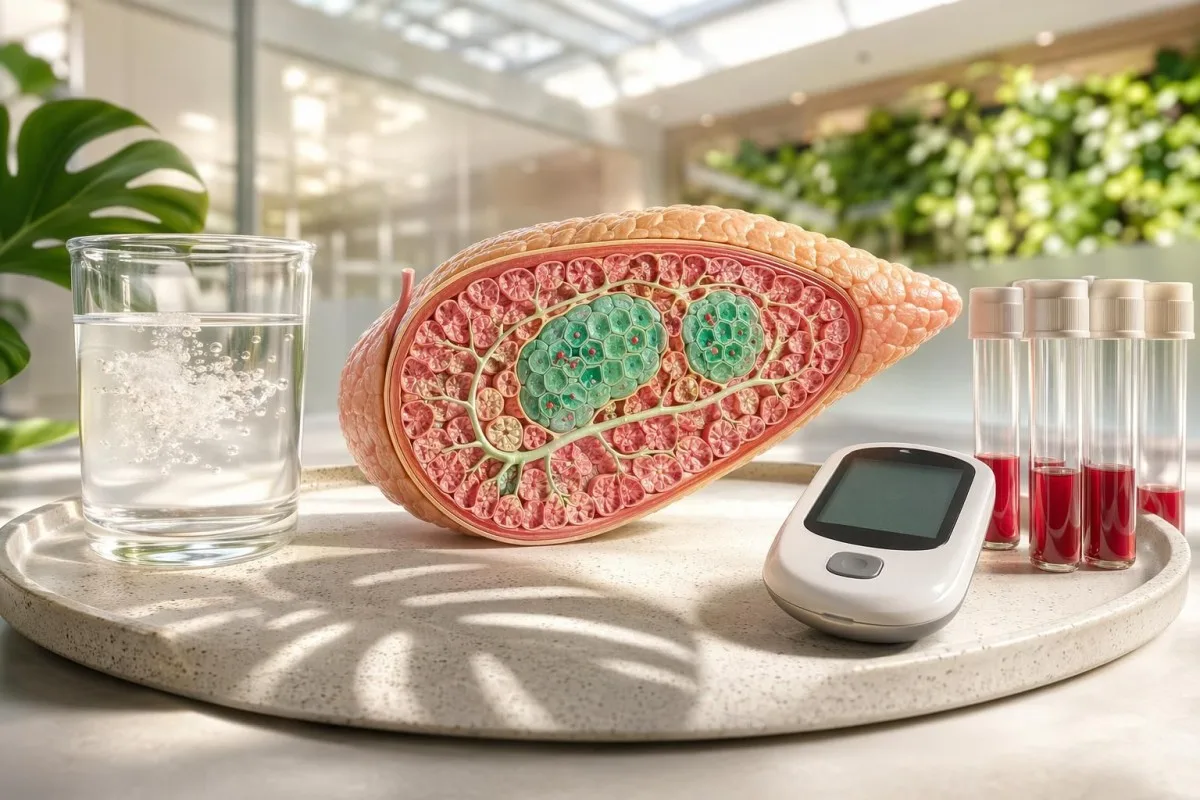
Um guia prático de rastreamento no pós-parto para qualquer pessoa a quem foi dito que os açúcares da gravidez voltaram ao normal, mas ainda quer saber o que vem a seguir.


- 75 g OGTT com 4-12 semanas de pós-parto é o teste preferido após diabetes gestacional porque detecta problemas de glicose em 2 horas que a glicose de jejum pode não identificar.
- Pontos de corte para diabetes são glicemia plasmática de jejum ≥126 mg/dL, glicose no OGTT de 2 horas ≥200 mg/dL, HbA1c ≥6.5%, ou glicose aleatória ≥200 mg/dL com sintomas.
- Cortes para pré-diabetes são glicemia de jejum 100-125 mg/dL, glicose no OGTT de 2 horas 140-199 mg/dL, ou HbA1c 5.7-6.4%.
- HbA1c no início do pós-parto pode estar falsamente baixo após perda de sangue no parto ou alta renovação de células vermelhas, então não deve substituir o OGTT em 4-12 semanas.
- Glicose normal na gravidez após o parto não apaga o risco futuro; diabetes gestacional é frequentemente um teste de estresse das células beta que revela vulnerabilidade anos antes do diabetes tipo 2.
- Intervalo de repetição do teste é a cada 1-3 anos por toda a vida se o rastreio no pós-parto for normal e, geralmente, anualmente se algum resultado estiver na faixa de pré-diabetes.
- Antes de outra gravidez solicitar testes de glicose antes da concepção ou no início do primeiro trimestre, especialmente se o GDM prévio exigiu insulina ou medicação.
- Marcadores de risco como insulina de jejum, triglicerídeos, HDL, ALT e a razão albumina-creatinina na urina não diagnosticam diabetes, mas ajudam a estimar o risco cardiometabólico.
Os exames de sangue que diagnosticam diabetes após diabetes gestacional
Os exames de sangue que detectam diabetes após diabetes gestacional são os teste oral de tolerância à glicose de 75 g em 2 horas, a glicose plasmática em jejum, HbA1c, e glicose plasmática aleatória quando estão presentes sintomas clássicos. O OGTT é geralmente o melhor teste de rastreio de diabetes no pós-parto em 4-12 semanas porque identifica a alteração do manejo da glicose em 2 horas antes de a glicose de jejum ou o HbA1c ficarem anormais.
Como Thomas Klein, MD, eu digo aos pacientes que a questão não é apenas se o número está alto hoje; é se o pâncreas ainda tem reserva suficiente após a gravidez. Uma glicose de jejum de 94 mg/dL pode parecer tranquilizadora, enquanto um valor de OGTT de 168 mg/dL em 2 horas diz, em silêncio, que a resposta de insulina da primeira fase está atrasada.
Um diagnóstico de diabetes fora da gravidez é feito por glicose plasmática de jejum ≥126 mg/dL, glicose no OGTT de 2 horas ≥200 mg/dL, HbA1c ≥6.5%, ou glicose plasmática aleatória ≥200 mg/dL com sintomas como sede, micção frequente ou perda de peso inexplicada. Para uma comparação em linguagem simples dos testes diagnósticos e de monitorização, nosso pontos de corte do teste de diabetes guia é um bom complemento.
Kantesti é um analisador de testes de sangue com IA que lê a glicose no pós-parto, HbA1c, lipídios e marcadores renais no mesmo contexto clínico, em vez de como alertas isolados. Na nossa análise de relatórios laboratoriais enviados de 2M+, um padrão continua aparecendo: as pessoas se lembram do diagnóstico da gravidez, mas o resultado do OGTT de 4-12 semanas muitas vezes nunca entra no registro de saúde de longo prazo.
Por que a glicose normal na gravidez não “zera” o risco futuro
Glicose normal após o parto não redefine o risco futuro de diabetes porque diabetes gestacional geralmente reflete reserva limitada das células beta sob estresse da gravidez. O parto remove hormônios placentários, mas não necessariamente repara a resistência à insulina, o risco genético, a tendência a fígado gorduroso ou a vulnerabilidade das células beta pancreáticas.
A placenta produz hormônios que aumentam a resistência à insulina, muitas vezes de forma mais perceptível após 24-28 semanas. Quando a glicose normaliza após o nascimento, isso significa que o fator de estresse desapareceu; não prova que as células produtoras de insulina têm reserva ilimitada.
Bellamy et al. relataram no The Lancet que mulheres com diabetes gestacional prévio tinham cerca de uma risco 7 vezes maior de diabetes tipo 2 mais tarde em comparação com aquelas sem GDM (Bellamy et al., 2009). Na prática diária, vejo o agrupamento de risco com ganho de circunferência abdominal, triglicerídeos acima de 150 mg/dL, HDL baixo, histórico familiar, PCOS e interrupção do sono durante os dois primeiros anos no pós-parto.
Um HbA1c normal de 5.3% seis meses após o parto ainda pode coexistir com resistência insulínica precoce. Se você quiser a visão metabólica mais profunda, nosso guia para teste de resistência à insulina explica por que a insulina em jejum e a glicose podem oscilar antes de o A1C cruzar a linha de pré-diabetes.
Quando deve acontecer o rastreamento de diabetes no pós-parto
A triagem para diabetes no pós-parto deve acontecer 4-12 semanas após o parto, de preferência com um OGTT de 75 g por 2 horas. Se essa janela foi perdida, o melhor momento para testar é agora; eu não esperaria pela próxima consulta anual de rotina se a gestação foi há 6 meses ou 6 anos.
A American Diabetes Association recomenda um OGTT de 75 g no pós-parto de 4-12 semanas e triagem vitalícia a cada 1-3 anos após diabetes gestacional (American Diabetes Association Professional Practice Committee, 2024). A ACOG também apoia a triagem no pós-parto nessa fase inicial, e muitas clínicas obstétricas agora tentam solicitá-la antes da consulta de 6 semanas para que não seja esquecida (ACOG, 2018).
Amamentação, fragmentação do sono e mudanças de peso no pós-parto podem alterar a glicose de um dia para o outro, mas não são motivos para pular o teste. A maioria das pacientes conseguem fazer o OGTT amamentando; a questão prática costuma ser o cuidado com a criança durante a espera de 2 horas no laboratório, não a biologia.
Se você também precisa de verificações para anemia, função tireoidiana, enzimas hepáticas ou marcadores renais após o parto, nosso checklist laboratorial no pós-parto mostra quais exames são comumente combinados com a triagem de glicose. Uma única consulta muitas vezes pode abranger mais de um problema no pós-parto.
Como o teste de tolerância oral à glicose de 75 g é interpretado
O teste oral de tolerância à glicose após a gestação mede a glicose em jejum e a glicose após 2 horas depois de uma bebida de glicose de 75 g. Um valor de 2 horas ≥200 mg/dL diagnostica diabetes, enquanto 140-199 mg/dL diagnostica tolerância diminuída à glicose, mesmo quando a glicose em jejum é normal.
O teste funciona porque desafia o sistema de insulina em vez de observá-lo em repouso. Pelo que tenho visto, pessoas com GDM prévia frequentemente passam a parte do jejum, mas falham na parte de 2 horas; esse padrão aponta para secreção de insulina atrasada após as refeições.
Prepare-se com a alimentação habitual por pelo menos 3 dias, idealmente incluindo pelo menos 150 g de carboidrato por dia a menos que seu médico tenha orientado o contrário. Fazer uma dieta muito baixa em carboidratos antes de um OGTT pode exagerar o aumento da glicose e tornar a interpretação confusa; nosso as regras de jejum guia aborda detalhes sobre água, café e timing.
Não faça exercício intenso durante a espera de 2 horas e avise o laboratório se você vomitar ou não conseguir terminar a bebida. Um resultado deve ser repetido ou substituído por outro teste diagnóstico se o procedimento não tiver sido concluído corretamente.
O que a glicose de jejum pode e não pode detectar
A glicose plasmática de jejum detecta diabetes quando o valor em jejum é ≥126 mg/dL, mas pode deixar passar uma intolerância isolada à glicose pós-refeição após diabetes gestacional. É útil, barata e reprodutível; é simplesmente pouco precisa para substituir o OGTT pós-parto.
Uma glicose em jejum de 100-125 mg/dL é pré-diabetes pelos critérios da ADA, enquanto <100 mg/dL é geralmente considerada normal nos Estados Unidos. Alguns sistemas internacionais usam 110 mg/dL como o limite inferior de jejum com alteração, o que é uma das razões pelas quais os pacientes ficam confusos ao mudar de país.
A armadilha clínica é uma glicose de jejum de 88-96 mg/dL com um OGTT de 2 horas de 155-185 mg/dL. Essa pessoa pode ser informada de que está tudo bem se apenas a glicose de jejum tiver sido solicitada, mas a biologia da glicose durante as refeições dela já está anormal.
A glicose da manhã é afetada por déficit de sono, alimentação noturna tardia, corticosteroides, infecção e o fenômeno do alvorecer. Nosso guia de glicose em jejum explica por que um único resultado pela manhã deve ser interpretado considerando a noite anterior e a qualidade do sono.
Por que o HbA1c é conveniente, mas imperfeito após o parto
HbA1c detecta diabetes em ≥6.5%, mas é menos confiável nas primeiras 4-12 semanas pós-parto porque a perda de sangue no parto e a renovação das hemácias podem distorcer o resultado. A HbA1c é útil mais tarde, especialmente para acompanhamento de longo prazo, mas não deve substituir o primeiro OGTT pós-parto.
A HbA1c estima a glicose média ao longo de aproximadamente 8-12 semanas, com maior peso no mês mais recente. Após o parto, anemia, transfusão, deficiência de ferro ou reposição rápida de hemácias podem afastar o valor do verdadeiro panorama da glicose.
A deficiência de ferro pode elevar falsamente o HbA1c em alguns pacientes, enquanto uma perda de sangue recente pode reduzi-lo falsamente. Esta é uma daquelas áreas em que o contexto importa mais do que o número; um HbA1c no pós-parto de 5.6% pode não ser tão tranquilizador se a ferritina estiver 8 ng/mL e o OGTT nunca tiver sido feito.
Se o seu A1c não corresponder às leituras da glicemia capilar ou aos sintomas, leia nosso guia sobre precisão do A1c antes de aceitar o valor pelo valor nominal. Eu geralmente combino HbA1c com glicose de jejum, CBC e ferritina quando a história no pós-parto parece inconsistente.
Quando a glicose aleatória ou os sintomas exigem ação rápida
A glicose plasmática aleatória detecta diabetes quando ela está ≥200 mg/dL e os sintomas estão presentes. Após diabetes gestacional, é necessária uma revisão urgente para glicose alta com vômitos, desidratação, perda de peso rápida, cetonas, visão turva ou exaustão incomum.
A maior parte do diabetes após DMG é tipo 2, mas o diabetes autoimune no pós-parto pode ocasionalmente aparecer, especialmente se a perda de peso for rápida e as cetonas estiverem presentes. Já vi pacientes serem dispensados como apenas pais novos cansados quando a glicose estava 280 mg/dL e eles já estavam cetóticos.
Uma glicose aleatória de 140-199 mg/dL não é diagnóstica por si só, mas deve levar a glicose de jejum, HbA1c ou OGTT, dependendo do momento e dos sintomas. Um valor aleatório acima de 300 mg/dL, especialmente com dor abdominal ou respiração trabalhosa, deve ser tratado como atendimento médico no mesmo dia.
Um único valor alto pode acontecer após uma doença, esteroides ou uma refeição muito rica em carboidratos, mas o padrão importa. Nosso guia para glicose alta inesperada explica como os clínicos diferenciam a hiperglicemia por estresse do diabetes inicial.
Marcadores sanguíneos que mostram risco antes do aparecimento do diabetes
Insulina em jejum, peptídeo C, triglicerídeos, HDL, ALT e a razão albumina-creatinina na urina não diagnosticam diabetes, mas ajudam a mostrar risco metabólico após diabetes gestacional. Esses marcadores podem revelar resistência à insulina, tendência a fígado gorduroso ou estresse renal inicial enquanto a glicose ainda está tecnicamente normal.
Insulina em jejum acima de aproximadamente 15-20 µIU/mL pode sugerir resistência à insulina, embora os métodos laboratoriais variem e não exista um ponto de corte diagnóstico universal. O HOMA-IR usa insulina em jejum e glicose em jejum; valores acima 2.0-2.5 frequentemente levantam suspeita em adultos, mas etnia, IMC e escolha do ensaio alteram a interpretação.
Triglicerídeos acima de 150 mg/dL e HDL abaixo 50 mg/dL em mulheres frequentemente caminham com resistência à insulina. ALT acima de cerca de 25-30 UI/L em uma mulher com GDM prévia pode ser um indício precoce de fígado gorduroso, mesmo quando o marcador do laboratório ainda diz normal.
Kantesti é uma plataforma de interpretação de biomarcadores de IA que trata um A1C normal após diabetes gestacional como uma pergunta de marcador de risco, não como um sinal verde para sempre. Se você quiser calcular resistência à insulina a partir dos seus números, o cálculo de HOMA-IR guia mostra a fórmula e suas limitações.
Com que frequência repetir o exame se o rastreamento no pós-parto for normal
Se o rastreio no pós-parto for normal após diabetes gestacional, repetir a cada 1-3 anos para a vida toda. Repetir mais cedo, muitas vezes anualmente, se houver aumento de peso, surgir pré-diabetes, for planejada outra gestação, ou se medicamentos como esteroides ou antipsicóticos aumentarem o risco de glicose.
A recomendação da ADA para rastreio vitalício a cada 1-3 anos existe porque o risco de diabetes aumenta com o tempo, não apenas no primeiro ano pós-parto. No meu consultório, eu geralmente escolho o de 1 ano de intervalo para qualquer pessoa com pré-diabetes, GDM tratada com insulina, IMC acima de 30, forte histórico familiar ou SOP.
Um teste normal em 2026 ainda é útil porque se torna sua linha de base. A glicose em jejum variando de 82 para 96 mg/dL ao longo de 3 anos pode ser mais significativo do que um resultado sinalizado, especialmente se triglicerídeos e circunferência abdominal aumentarem ao mesmo tempo.
Kantesti A IA pode traçar glicose, HbA1c, triglicerídeos e ALT ao longo do tempo, para que pequenas mudanças sejam visíveis antes de se tornarem dramáticas. Nosso análise de tendências artigo explica por que a inclinação e o agrupamento muitas vezes importam mais do que um único sinal de laboratório.
O que pedir ao seu clínico para solicitar
Peça um OGTT de 75 g por 2 horas com 4-12 semanas no pós-parto, ou glicose plasmática de jejum mais HbA1c se um OGTT não for viável. Para risco de longo prazo, pergunte se lipídios, ALT, creatinina, eGFR e a razão albumina-creatinina na urina devem ser verificados com seus marcadores de glicose.
Uma primeira solicitação sensata no pós-parto muitas vezes é: glicose em jejum, glicose de 75 g por 2 horas, HbA1c, CBC se houve perda sanguínea importante no parto, ferritina se houver suspeita de anemia, painel lipídico e CMP se o risco cardiometabólico for alto. Nem todo paciente precisa de todos os testes, mas a solicitação deve corresponder à história da gestação.
Se você teve hiperglicemia em jejum durante a gravidez ou precisou de insulina, eu seria mais agressivo com o acompanhamento precoce. Se seu GDM foi leve e controlado por dieta, o OGTT ainda importa, mas a cadência de longo prazo pode ficar mais próxima de a cada 2-3 anos quando todos os resultados estão normais.
Para leitores que querem entender o que cada marcador realmente mede, nosso guia de biomarcadores aborda milhares de marcadores laboratoriais e diferenças comuns de unidades. Isso é especialmente útil quando um laboratório relata glicose em mg/dL e outro em mmol/L.
O que os médicos fazem com resultados limítrofes ou conflitantes
Resultados de diabetes limítrofes ou conflitantes geralmente devem ser repetidos ou confirmados com um teste diagnóstico diferente. Uma glicose de jejum de 124 mg/dL, HbA1c de 6.4%, ou um OGTT de 2 horas de 198 mg/dL não é motivo para desconsiderar; é um resultado quase no limiar que merece um plano.
Sem sintomas clássicos, a maioria dos clínicos confirma diabetes com um resultado anormal repetido. Se dois testes diferentes discordam, o teste acima do limiar diagnóstico normalmente é repetido, e o contexto do paciente determina a rapidez com que isso acontece.
Thomas Klein, MD, regra prática: não deixe a palavra limítrofe fazer o resultado parecer inofensivo. Um OGTT de 2 horas de 196 mg/dL após um GDM prévio muitas vezes carrega mais risco futuro do que uma glicose em jejum de 101 mg/dL, mesmo que ambos possam ser classificados como pré-diabetes.
Nosso guia para limiares de pré-diabetes explica como glicose de jejum, A1c e OGTT definem problemas biológicos diferentes. Eu frequentemente enquadro o pré-diabetes após GDM como uma janela de tratamento, e não como uma sala de espera.
Situações especiais: amamentação, anemia, SOP e medicamentos
Amamentação, anemia, PCOS, medicamentos GLP-1, esteroides e doença da tireoide podem alterar como os exames de diabetes no pós-parto devem ser interpretados. Os pontos de corte de glicose permanecem os mesmos, mas a confiança que você deposita no HbA1c, na glicose em jejum ou nos níveis de insulina pode mudar substancialmente.
A amamentação frequentemente melhora o metabolismo da glicose e pode reduzir o risco futuro de diabetes tipo 2, mas não elimina a necessidade de rastreamento. Se você estiver tomando insulina ou sulfonilureias no pós-parto, pergunte ao seu médico sobre o risco de hipoglicemia durante mamadas mais longas ou refeições perdidas.
A SOP adiciona uma via separada de resistência à insulina, e GDM prévia mais SOP é uma das combinações que trato com atenção extra. Nosso Padrões laboratoriais da SOP explica por que insulina de jejum, lipídios e andrógenos podem importar mesmo quando a glicose ainda não é diagnóstica.
Injeções de esteroides, prednisona em altas doses, alguns antipsicóticos e privação severa de sono podem elevar a glicose temporariamente. A evidência sobre limiares exatos de sono no pós-parto é, honestamente, mista, mas vejo piores valores de jejum quando o sono é fragmentado abaixo de 5-6 horas por semanas.
Como o Kantesti lê com segurança exames laboratoriais de diabetes no pós-parto
O Kantesti lê exames de diabetes no pós-parto combinando limiares de glicose com o timing, histórico da gestação, pistas de anemia, padrões lipídicos e marcadores renais. O objetivo não é substituir seu médico; é tornar o padrão de risco mais claro antes da sua consulta.
O Kantesti é uma ferramenta de análise de exames de sangue com IA usada por 2M+ pessoas em 127 países, com interpretação de PDF ou foto do exame de sangue em cerca de 60 segundos. Para rastreamento de diabetes no pós-parto, nossa rede neural separa critérios diagnósticos de glicose de marcadores de contexto de risco como triglicerídeos, HDL, ALT e ACR na urina.
Um upload típico pode mostrar HbA1c 5.5%, glicose de jejum 92 mg/dL, ferritina 10 ng/mL e sem OGTT. A IA do Kantesti não diagnosticaria diabetes a partir desses números, mas deve sinalizar que o A1c precoce no pós-parto pode ser pouco confiável e que o OGTT recomendado está ausente.
Nossos métodos estão alinhados com padrões clínicos publicados e revisão interna de médicos; os leitores podem ver nosso padrões de validação clínica e o benchmark de IA. pré-registrado. Se você estiver enviando um scan em vez de digitar valores, o fluxo de upload de PDF explica como os relatórios são lidos e verificados.
Um plano prático de repetição de exames para 2026 e além
Em 26 de maio de 2026, o plano mais seguro após diabetes gestacional é OGTT em 4-12 semanas, repetir o rastreamento a cada 1-3 anos e fazer testes mais cedo antes de outra gestação. Se algum resultado estiver na faixa de pré-diabetes, trate como uma janela ativa de prevenção, não como uma curiosidade laboratorial leve.
Meu roteiro habitual é simples: fazer o primeiro OGTT no pós-parto, salvar o resultado e, depois, colocar o próximo check de glicose no calendário antes que a vida fique agitada. Se seu OGTT de 2 horas for 140-199 mg/dL, peça um intervalo de acompanhamento claro, um plano de nutrição e uma meta de exercício em vez de um lembrete vago para ter cuidado.
Se sua triagem de diabetes estiver normal, ainda assim diga a todo médico futuro que você teve GDM. Essa linha muda como eu leio uma glicose de jejum de 103 mg/dL, um nível de triglicerídeos de 42 mg/dL, ou um HbA1c que sobe de 5,2% a 5,6% ao longo de vários anos.
Kantesti Ltd é uma empresa britânica de tecnologia em saúde, e nossos médicos revisam o conteúdo médico por meio do nosso conselho consultivo médico e do processo de governança clínica descrito em Sobre nós. Em resumo: os exames certos não são complicados, mas o momento e a interpretação importam mais do que a maioria das pessoas é informada.
Publicações de pesquisa relacionadas da Kantesti
A triagem de diabetes no pós-parto muitas vezes está inserida em uma revisão laboratorial mais ampla que inclui CBC, status de ferro e marcadores renais. As publicações da Kantesti listadas abaixo dão suporte a métodos adjacentes de interpretação de exames de sangue, incluindo índices de células vermelhas e proporções de função renal que podem afetar a confiança no HbA1c ou a avaliação do risco metabólico de longo prazo.
Perguntas frequentes
Quais exames de sangue detectam diabetes após diabetes gestacional?
Os exames de sangue que detectam diabetes após diabetes gestacional são o teste oral de tolerância à glicose de 75 g em 2 horas, a glicemia plasmática de jejum, HbA1c e a glicemia plasmática aleatória quando há sintomas. O diagnóstico de diabetes é feito por glicemia de jejum ≥126 mg/dL, glicemia no OGTT de 2 horas ≥200 mg/dL, HbA1c ≥6,5%, ou glicemia aleatória ≥200 mg/dL com sintomas clássicos. O OGTT é preferido entre 4 e 12 semanas no pós-parto porque pode detectar a alteração do manejo da glicose em 2 horas mesmo quando a glicemia de jejum é normal.
O teste oral de tolerância à glicose após a gravidez é melhor do que a HbA1c?
Sim, o teste de tolerância oral à glicose após a gravidez é geralmente melhor do que o HbA1c para o primeiro rastreio no pós-parto, entre 4 e 12 semanas. O HbA1c pode ser distorcido por perda de sangue no parto, anemia, transfusão ou rápida renovação das hemácias, enquanto o OGTT mede diretamente o manejo da glicose após um desafio com 75 g de glicose. O HbA1c torna-se mais útil mais tarde para rastreio de longo prazo e monitorização de tendências.
Quando deve ser feito o rastreio de diabetes no pós-parto após DMG?
A triagem para diabetes no pós-parto após diabetes gestacional deve ser realizada 4-12 semanas após o parto, idealmente com um TOT oral de 75 g em 2 horas. Se essa janela foi perdida, o teste deve ser feito assim que for possível, em vez de aguardar sintomas. Se o resultado no pós-parto for normal, repetir a triagem para diabetes a cada 1-3 anos por toda a vida.
O HbA1c pode ser normal, mas o OGTT anormal após diabetes gestacional?
Sim, o HbA1c pode ser normal enquanto o OGTT é anormal após diabetes gestacional. Uma pessoa pode ter HbA1c 5,3% e glicemia de jejum de 92 mg/dL, mas um valor de OGTT de 2 horas de 160 mg/dL, o que é tolerância diminuída à glicose. Isso acontece porque o HbA1c reflete a glicose média, enquanto o OGTT avalia a resposta de insulina após uma carga de glicose.
O que significam os resultados de pré-diabetes após diabetes gestacional?
A pré-diabetes após diabetes gestacional é definida por glicemia de jejum 100-125 mg/dL, glicemia no OGTT de 2 horas 140-199 mg/dL, ou HbA1c 5.7-6.4%. Uma anormalidade no OGTT de 2 horas é especialmente comum após DMG e pode ser ignorada se apenas a glicemia de jejum for solicitada. A pré-diabetes deve geralmente desencadear acompanhamento anual e um plano estruturado de prevenção.
Com que frequência devo repetir o teste se a minha triagem pós-parto for normal?
Se o seu rastreio de diabetes no pós-parto for normal após diabetes gestacional, repita a cada 1-3 anos por toda a vida. Muitos clínicos optam por testes anuais se você teve DMG tratada com insulina, pré-diabetes, SOP, IMC acima de 30, forte histórico familiar ou triglicerídeos em elevação. O teste também deve ser repetido antes de outra gravidez ou no início do primeiro trimestre.
A amamentação altera os resultados do exame de sangue da diabetes?
A amamentação pode melhorar o metabolismo da glicose e pode reduzir o risco futuro de diabetes tipo 2, mas não elimina a necessidade de rastreio de diabetes no pós-parto. Os pontos de corte diagnósticos para glicemia de jejum, OGTT e HbA1c não mudam por alguém estar amamentando. Se medicamentos para diabetes forem usados no pós-parto, os clínicos podem ajustar o momento ou a dose para reduzir o risco de hipoglicemia durante mamadas longas ou refeições perdidas.
Posso usar um monitor contínuo de glicose em vez do teste de tolerância à glicose pós-parto?
Não. Um monitor contínuo de glicose pode mostrar padrões úteis de glicose do dia a dia, mas não substitui a glicose de jejum laboratorial, o HbA1c ou um OGTT de 75g para diagnosticar diabetes após diabetes gestacional. Seu médico pode usá-lo posteriormente para apoiar decisões de estilo de vida ou tratamento.
Meu bebê precisa de testes de diabetes porque eu tive diabetes gestacional?
A glicose do recém-nascido pode ser verificada no hospital, especialmente se você usou insulina ou medicação durante a gravidez, mas a maioria das crianças não precisa de exames de sangue contínuos para diabetes apenas por causa da diabetes gestacional materna. Mantenha consultas pediátricas regulares e apoie os hábitos da família em relação a refeições equilibradas, atividade e sono.
E se eu não conseguir tolerar a bebida de glicose para o OGTT no pós-parto?
Informe o seu médico antes do teste. Eles podem reagendar com estratégias para náuseas, verificar a glicose em jejum e o HbA1c, ou usar dados de glicose em casa ou de monitorização contínua temporariamente, mas essas alternativas podem não substituir totalmente o OGTT diagnóstico.
Faça hoje a análise de exame de sangue com IA
Junte-se a mais de 2 milhões de usuários no mundo todo que confiam na Kantesti para análise instantânea e precisa de exames laboratoriais. Envie seus resultados de exame de sangue e receba uma interpretação abrangente de biomarcadores 15,000+ em segundos.
📚 Publicações de pesquisa referenciadas
Klein, T., Mitchell, S., & Weber, H. (2026). Exame de sangue de RDW: Guia completo de RDW-CV, MCV e MCHC. Pesquisa Médica por IA da Kantesti.
Klein, T., Mitchell, S., & Weber, H. (2026). Relação BUN/Creatinina Explicada: Guia de Testes de Função Renal. Pesquisa Médica por IA da Kantesti.
📖 Referências Médicas Externas
Comitê de Prática Profissional da American Diabetes Association (2024). 2. Diagnóstico e Classificação do Diabetes: Diretrizes de Cuidados no Diabetes—2024. Diabetes Care.
⚕️ Aviso Médico
Este artigo é apenas para fins educacionais e não constitui aconselhamento médico. Consulte sempre um profissional de saúde qualificado para decisões de diagnóstico e tratamento.
Sinais de confiança E-E-A-T
Experiência
Revisão clínica orientada por médicos dos fluxos de interpretação de exames laboratoriais.
Especialização
Foco em medicina laboratorial sobre como os biomarcadores se comportam no contexto clínico.
Autoridade
Escrito pelo Dr. Thomas Klein, com revisão da Dra. Sarah Mitchell e do Prof. Dr. Hans Weber.
Confiabilidade
Interpretação baseada em evidências, com caminhos de acompanhamento claros para reduzir alarmes.