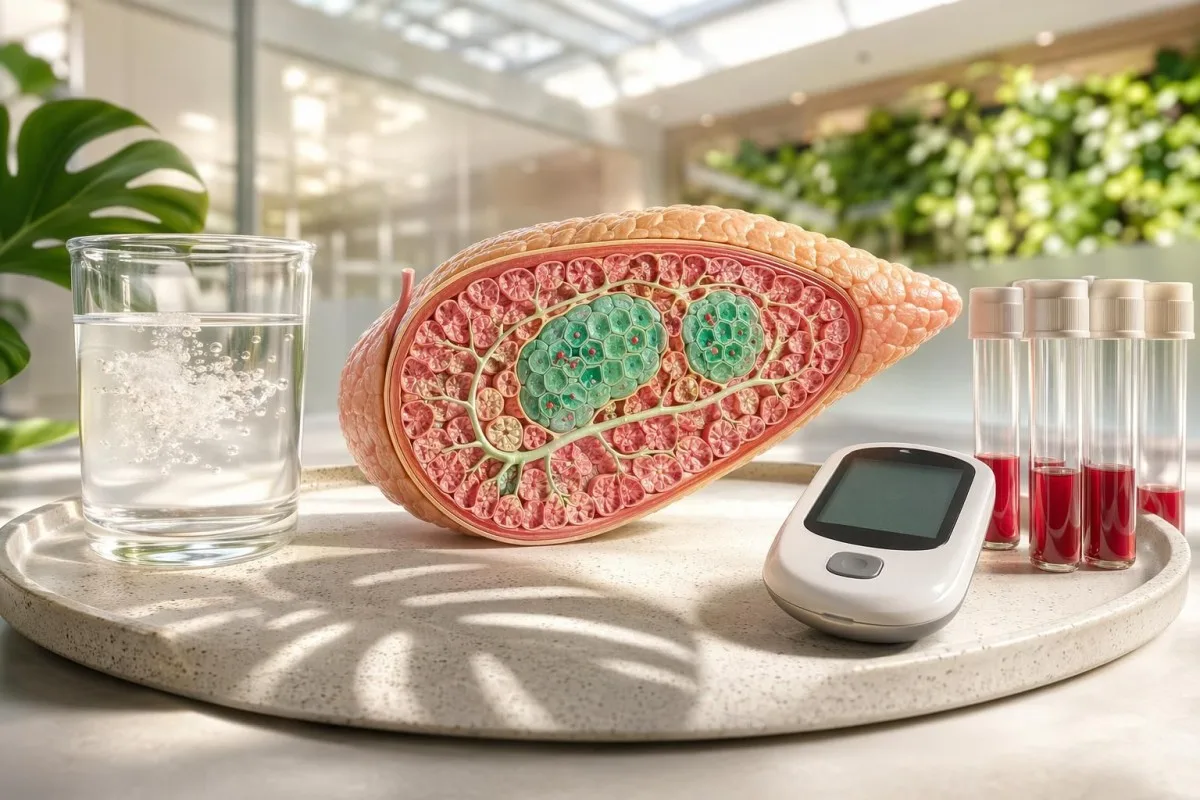
Isang praktikal na gabay sa postpartum screening para sa sinumang sinabihang normal na muli ang asukal sa pagbubuntis, pero gusto pa ring malaman kung ano ang susunod.


- 75 g OGTT sa 4-12 linggo postpartum ang preferred na test pagkatapos ng gestational diabetes dahil nakikita nito ang mga problemang 2-oras na glucose na maaaring makaligtaan ng fasting glucose.
- Mga hangganan para sa diabetes ay fasting plasma glucose ≥126 mg/dL, 2-hour OGTT glucose ≥200 mg/dL, HbA1c ≥6.5%, o random glucose ≥200 mg/dL na may mga sintomas.
- Mga hangganan para sa prediabetes ay fasting glucose 100-125 mg/dL, 2-hour OGTT glucose 140-199 mg/dL, o HbA1c 5.7-6.4%.
- HbA1c maagang postpartum maaaring maging maling mababa pagkatapos ng panganganak dahil sa pagkawala ng dugo o mabilis na turnover ng red blood cells, kaya hindi nito dapat palitan ang OGTT sa 4-12 linggo.
- Normal na glucose sa pagbubuntis pagkatapos manganak ay hindi nito binubura ang hinaharap na panganib; ang gestational diabetes ay madalas na beta-cell stress test na nagpapakita ng kahinaan taon bago ang type 2 diabetes.
- Agwat ng muling pagsusuri tuwing 1-3 taon habang-buhay kung normal ang postpartum na pagsusuri, at kadalasang taun-taon kung may anumang resulta sa hanay ng prediabetes.
- Bago ang isa pang pagbubuntis magpa-glucose testing bago magbuntis o maaga sa unang trimester, lalo na kung ang naunang GDM ay nangangailangan ng insulin o gamot.
- Mga marker ng panganib tulad ng fasting insulin, triglycerides, HDL, ALT at urine albumin-creatinine ratio ay hindi nagdidiyagnose ng diabetes, ngunit nakatutulong ang mga ito upang tantiyahin ang cardiometabolic risk.
Mga blood test na nagdidiyagnose ng diabetes matapos ang gestational diabetes
Ang mga pagsusuri sa dugo na nakakakita ng diabetes pagkatapos ng gestational diabetes ay ang 75 g 2-oras na oral glucose tolerance test, ang fasting plasma glucose, HbA1c, at random plasma glucose kapag may mga klasikong sintomas. Ang OGTT ay karaniwang ang pinakamainam na pagsusuri sa postpartum diabetes sa 4-12 linggo dahil natutukoy nito ang may kapansanan sa paghawak ng 2-oras na glucose bago maging abnormal ang fasting glucose o HbA1c.
Bilang si Thomas Klein, MD, sinasabi ko sa mga pasyente na ang tanong ay hindi lang kung mataas ang numero ngayon; ito ay kung ang pancreas ay may sapat pa ring reserve matapos ang pagbubuntis. Ang fasting glucose na 94 mg/dL ay maaaring mukhang nakaaaliw, habang ang 2-oras na OGTT na 168 mg/dL ay tahimik na nagsasabi na ang unang-phase na tugon ng insulin ay nahuhuli.
Ang diagnosis ng diabetes sa labas ng pagbubuntis ay ginagawa sa pamamagitan ng fasting plasma glucose ≥126 mg/dL, 2-hour OGTT glucose ≥200 mg/dL, HbA1c ≥6.5%, o random plasma glucose ≥200 mg/dL na may mga sintomas tulad ng pagkauhaw, madalas na pag-ihi o hindi maipaliwanag na pagbaba ng timbang. Para sa paghahambing na madaling maunawaan ng mga pagsusuring pang-diagnose at pang-monitor, ang aming diabetes test cutoffs gabay ay isang kapaki-pakinabang na kasama.
Kantesti ay isang AI blood test analyzer na nagbabasa ng postpartum glucose, HbA1c, lipids at mga marker ng kidney sa parehong klinikal na konteksto, hindi bilang mga nakahiwalay na “flags.” Sa aming pagsusuri ng mga uploaded lab report na 2M+, may isang pattern na paulit-ulit: naaalala ng mga tao ang diagnosis sa pagbubuntis, ngunit madalas ay hindi na napapasok sa long-term health record ang resulta nilang OGTT sa 4-12 linggo.
Bakit ang normal na glucose sa pagbubuntis ay hindi nagre-reset ng hinaharap na panganib
Ang normal na glucose pagkatapos manganak ay hindi nagbabalik o “reset” sa hinaharap na risk ng diabetes dahil ang gestational diabetes ay kadalasang sumasalamin sa limitadong beta-cell reserve sa ilalim ng stress ng pagbubuntis. Inaalis ng panganganak ang mga placental hormone, ngunit hindi nito kinakailangang ayusin ang insulin resistance, genetic risk, tendensiya sa fatty liver, o kahinaan ng pancreatic beta-cell.
Gumagawa ang inunan ng mga hormone na nagpapataas ng insulin resistance, kadalasang pinaka-kapansin-pansin pagkatapos ng 24-28 linggo. Kapag naging normal ang glucose pagkatapos ng panganganak, ibig sabihin ay nawala na ang stressor; hindi nito napatutunayan na ang mga cell na gumagawa ng insulin ay may walang limitasyong reserve.
Iniulat ni Bellamy et al. sa The Lancet na ang mga babaeng may naunang gestational diabetes ay may humigit-kumulang na 7-fold na mas mataas na panganib ng kalaunang type 2 diabetes kumpara sa mga walang GDM (Bellamy et al., 2009). Sa araw-araw na praktis, nakikita ko ang kumpol ng risk na may pagtaas ng baywang, triglycerides na higit sa 150 mg/dL, mababang HDL, family history, PCOS at pagkagambala sa pagtulog sa unang dalawang taon pagkatapos manganak.
Isang normal na HbA1c na 5.3% anim na buwan pagkatapos ng panganganak ay maaari pa ring magkasabay sa maagang insulin resistance. Kung gusto mo ang mas malalim na pagtingin sa metabolismo, ipinaliliwanag ng aming gabay kung bakit pagsusuri para sa insulin resistance maaaring magbago-bago ang fasting insulin at glucose bago tumawid ang A1C sa linya ng prediabetes.
Kailan dapat gawin ang postpartum diabetes screening
Dapat mangyari ang screening para sa postpartum diabetes 4-12 linggo pagkatapos ng panganganak, mas mabuti na may 75 g 2-hour OGTT. Kung napalampas ang window na iyon, ang pinakamainam na oras para magpasuri ay ngayon; hindi ako maghihintay para sa susunod na taunang physical kung ang pagbubuntis ay 6 buwan o 6 na taon na ang nakalipas.
Inirerekomenda ng American Diabetes Association ang isang 75 g OGTT sa 4-12 linggo postpartum at panghabambuhay na screening bawat 1-3 taon pagkatapos ng gestational diabetes (American Diabetes Association Professional Practice Committee, 2024). Sinusuportahan din ng ACOG ang postpartum screening sa maagang window na ito, at maraming klinika sa obstetrics ang ngayon ay nagsisikap na ma-order ito bago ang 6-linggong pagbisita para hindi ito makalimutan (ACOG, 2018).
Ang pagpapasuso, pagkakagambala sa pagtulog, at mga pagbabago sa timbang pagkatapos ng panganganak ay lahat maaaring magbago ng glucose araw-araw, ngunit hindi ito mga dahilan para laktawan ang pagsusuri. Kadalasan, kaya ng karamihan ng pasyente ang OGTT habang nagpapasuso; ang praktikal na isyu ay madalas ang pag-aalaga sa bata habang naghihintay sa 2-oras na lab, hindi ang biyolohiya.
Kung kailangan mo rin ng mga pagsusuri para sa anemia, thyroid function, liver enzymes, o mga marker ng kidney pagkatapos ng panganganak, ang aming postpartum lab checklist ay naglalahad kung aling mga pagsusuri ang karaniwang pinagsasama sa glucose screening. Ang isang appointment ay kadalasang makakasaklaw sa higit sa isang postpartum na problema.
Paano binibigyang-kahulugan ang 75 g oral glucose tolerance test
Ang oral glucose tolerance test pagkatapos ng pagbubuntis sinusukat ang fasting glucose at 2-hour glucose pagkatapos ng 75 g na glucose drink. Ang halaga sa ≥200 mg/dL 2 oras ay nag-didiagnose ng diabetes, habang ang 140-199 mg/dL nag-didiagnose ng impaired glucose tolerance, kahit normal ang fasting glucose.
Gumagana ang test dahil hinahamon nito ang insulin system kaysa sa pag-obserba nito habang nagpapahinga. Sa aking karanasan, madalas na pumapasa ang mga taong may naunang GDM sa fasting part pero nabibigo sa 2-hour part; ang pattern na ito ay tumutukoy sa pagkaantala ng paglabas ng insulin pagkatapos ng mga pagkain.
Maghanda gamit ang karaniwang pagkain nang hindi bababa sa 3 araw, mas mabuti na kasama ang hindi bababa sa 150 g carbohydrate bawat araw maliban kung sinabi ng iyong clinician na iba ang gagawin. Ang sobrang low-carb bago ang OGTT ay maaaring palakihin ang pagtaas ng glucose at gawing magulo ang interpretasyon; ang aming mga patakaran sa pag-aayuno gabay ay sumasaklaw sa mga detalye tungkol sa tubig, kape, at timing.
Huwag mag-ehersisyo nang mabigat sa panahon ng 2-oras na paghihintay, at sabihin sa lab kung ikaw ay nagsusuka o hindi mo kayang tapusin ang inumin. Ang isang resulta ay dapat ulitin o palitan ng isa pang diagnostic test kung ang pamamaraan ay hindi naisagawa nang maayos.
Ano ang kaya at hindi kayang makita ng fasting glucose
Ang fasting plasma glucose ay nakatutuklas ng diabetes kapag ang fasting value ay ≥126 mg/dL, ngunit maaari nitong makaligtaan ang nakahiwalay na post-meal glucose intolerance pagkatapos ng gestational diabetes. Ito ay kapaki-pakinabang, mura at madaling ulitin; masyadong “mapurol” ito para palitan ang postpartum OGTT.
Ang fasting glucose na 100-125 mg/dL ay prediabetes ayon sa pamantayan ng ADA, habang ang <100 mg/dL ay karaniwang itinuturing na normal sa Estados Unidos. Ang ilang internasyonal na sistema ay gumagamit ng 110 mg/dL bilang mas mababang hangganan para sa impaired fasting, at isa iyon sa mga dahilan kung bakit nalilito ang mga pasyente kapag lumilipat ng bansa.
Ang klinikal na bitag ay fasting glucose na 88-96 mg/dL na may 2-hour OGTT na 155-185 mg/dL. Maaaring sabihin sa taong iyon na maayos ang lahat kung fasting glucose lang ang iniutos, ngunit ang biyolohiya ng glucose sa oras ng pagkain ay abnormal na.
Ang morning glucose ay naaapektuhan ng kakulangan sa tulog, pagkain sa huling gabi, corticosteroids, impeksiyon at ang dawn phenomenon. Ang aming gabay sa fasting sugar ang nagpapaliwanag kung bakit dapat bigyang-kahulugan ang iisang resulta sa umaga na isinasaalang-alang ang nakaraang gabi at ang kalidad ng pagtulog.
Bakit maginhawa ang HbA1c pero hindi perpekto pagkatapos manganak
Ang HbA1c ay nakatutuklas ng diabetes sa ≥6.5%, ngunit hindi ito gaanong maaasahan sa unang 4-12 linggo pagkatapos manganak dahil ang pagkawala ng dugo sa panganganak at ang red-cell turnover ay maaaring magbaluktot ng resulta. Ang HbA1c ay kapaki-pakinabang sa bandang huli, lalo na para sa pangmatagalang follow-up, ngunit hindi nito dapat palitan ang unang postpartum OGTT.
Tinataya ng HbA1c ang average na glucose sa loob ng humigit-kumulang 8-12 linggo, na mas nakatuon sa pinakahuling buwan. Pagkatapos ng panganganak, ang anemia, pagsasalin ng dugo, kakulangan sa iron, o mabilis na pagpapalit ng mga pulang selula ng dugo ay maaaring itulak ang halaga palayo sa tunay na kuwento ng glucose.
Ang kakulangan sa iron ay maaaring maling magpataas ng HbA1c sa ilang pasyente, habang ang kamakailang pagdurugo ay maaaring maling magpababa nito. Isa ito sa mga bahagi kung saan mas mahalaga ang konteksto kaysa sa numero; ang postpartum HbA1c na 5.6% ay maaaring hindi kasing nakaaaliw kung ang ferritin ay 8 ng/mL at ang OGTT ay hindi kailanman naisagawa.
Kung ang iyong A1c ay hindi tugma sa mga pagbabasa sa fingerstick o sa mga sintomas, basahin ang aming gabay tungkol sa katumpakan ng A1c bago tanggapin ang halaga nang basta-basta. Karaniwan kong pinagsasama ang HbA1c sa fasting glucose, CBC at ferritin kapag ang postpartum na kuwento ay tila hindi tugma.
Kailan kailangan ng mabilis na aksyon kapag random glucose o may mga sintomas
Nakikita ng random plasma glucose ang diabetes kapag ito ay ≥200 mg/dL at may mga sintomas. Pagkatapos ng gestational diabetes, kailangan ng agarang pagsusuri para sa mataas na glucose na may pagsusuka, dehydration, mabilis na pagbaba ng timbang, ketones, malabong paningin o hindi pangkaraniwang matinding pagkapagod.
Karamihan sa diabetes pagkatapos ng GDM ay type 2, ngunit paminsan-minsan ay maaaring lumitaw ang postpartum autoimmune diabetes, lalo na kung mabilis ang pagbaba ng timbang at may ketones. Nakita ko na ang ilang pasyente ay tinuring na pagod lang na bagong magulang nang ang kanilang glucose ay 280 mg/dL at sila ay may ketotic na.
Ang random glucose na 140-199 mg/dL ay hindi diagnostic sa sarili nito, ngunit dapat itong mag-udyok ng fasting glucose, HbA1c o OGTT depende sa timing at mga sintomas. Ang random na halaga na higit sa 300 mg/dL, lalo na kung may pananakit ng tiyan o hirap sa paghinga, ay dapat tratuhin bilang pangangalagang medikal sa parehong araw.
Ang isang nakahiwalay na mataas na halaga ay maaaring mangyari pagkatapos ng karamdaman, steroids o isang napakataas na pagkain na may carbohydrates, ngunit mahalaga ang pattern. Ang aming gabay sa hindi inaasahang mataas na glucose ay nagpapaliwanag kung paano pinaghiwalay ng mga clinician ang stress hyperglycemia mula sa maagang diabetes.
Mga blood marker na nagpapakita ng panganib bago lumitaw ang diabetes
Ang fasting insulin, C-peptide, triglycerides, HDL, ALT at urine albumin-creatinine ratio ay hindi nagdi-diagnose ng diabetes, ngunit nakakatulong ang mga ito upang ipakita ang metabolic risk pagkatapos ng gestational diabetes. Maaaring ipakita ng mga marker na ito ang insulin resistance, tendensiya sa fatty liver o maagang stress sa bato habang ang glucose ay teknikal pa ring normal.
Ang fasting insulin na higit sa humigit-kumulang 15-20 µIU/mL ay maaaring magpahiwatig ng insulin resistance, bagama’t nag-iiba ang mga paraan ng pagsusuri sa laboratoryo at walang iisang unibersal na cutoff para sa diagnosis. Gumagamit ang HOMA-IR ng fasting insulin at fasting glucose; ang mga halagang higit sa 2.0-2.5 ay madalas na nagpapataas ng hinala sa mga nasa hustong gulang, ngunit ang etnisidad, BMI at uri ng assay ay nagbabago sa interpretasyon.
Ang triglycerides na higit sa 150 mg/dL at HDL na mababa sa 50 mg/dL sa mga kababaihan ay madalas na kasabay ng insulin resistance. Ang ALT na higit sa humigit-kumulang 25-30 IU/L sa isang babae na may naunang GDM ay maaaring maging maagang pahiwatig ng fatty liver kahit na ang lab flag ay nagsasabing normal pa rin.
Ang Kantesti ay isang AI biomarker interpretation platform na itinuturing ang normal na A1c pagkatapos ng gestational diabetes bilang tanong na risk marker, hindi bilang green light magpakailanman. Kung gusto mong kalkulahin ang insulin resistance mula sa iyong mga numero, ang HOMA-IR calculation ipinapakita ng guide ang formula at ang mga limitasyon nito.
Gaano kadalas magre-retest kung normal ang postpartum screen
Kung normal ang postpartum screening pagkatapos ng gestational diabetes, muling ipasuri bawat 1-3 taon para sa buong buhay. Mas maagang muling ipasuri, madalas taun-taon, kung tumataas ang timbang, lumilitaw ang prediabetes, may planong isa pang pagbubuntis, o kung ang mga gamot gaya ng steroids o antipsychotics ay nagpapataas ng panganib sa glucose.
Ang rekomendasyon ng ADA para sa panghabambuhay na screening bawat 1-3 taon ay umiiral dahil tumataas ang panganib sa diabetes habang tumatagal ang panahon, hindi lang sa unang postpartum year. Sa aking klinika, kadalasan ay pinipili ko ang 1-taong pagitan para sa sinumang may prediabetes, GDM na ginagamot ng insulin, BMI na higit sa 30, malakas na family history o PCOS.
Ang normal na resulta sa 2026 ay kapaki-pakinabang pa rin dahil nagiging baseline mo ito. Ang fasting glucose na gumagalaw mula sa 82 hanggang 96 mg/dL sa loob ng 3 taon ay maaaring mas makabuluhan kaysa sa isang resultang may flag, lalo na kung sabay na tumataas ang triglycerides at waist circumference.
Ang Kantesti AI ay makaguguhit ng glucose, HbA1c, triglycerides at ALT sa paglipas ng panahon kaya makikita ang maliliit na pagbabago bago pa ito maging kapansin-pansin. Ipinaliliwanag ng aming pagsusuri ng trend artikulo kung bakit madalas mas mahalaga ang slope at clustering kaysa sa iisang lab flag.
Ano ang dapat hilingin sa iyong clinician na i-order
Humingi ng 75 g 2-hour OGTT sa 4-12 linggo pagkatapos manganak, o fasting plasma glucose kasama ang HbA1c kung hindi maisasagawa ang OGTT. Para sa pangmatagalang panganib, itanong kung dapat bang suriin ang lipids, ALT, creatinine, eGFR at urine albumin-creatinine ratio kasama ng iyong mga glucose marker.
Ang makatuwirang unang order pagkatapos manganak ay madalas ganito: fasting glucose, 75 g 2-hour glucose, HbA1c, CBC kung may mabigat na pagdurugo sa panganganak, ferritin kung pinaghihinalaan ang anemia, lipid panel at CMP kung mataas ang cardiometabolic risk. Hindi kailangan ng bawat pasyente ang lahat ng pagsusuri, pero dapat tumugma ang order sa kuwento ng pagbubuntis.
Kung nagkaroon ka ng fasting hyperglycemia habang buntis o kailangan mo ng insulin, magiging mas agresibo ako sa maagang follow-up. Kung banayad ang iyong GDM at kontrolado sa diyeta, mahalaga pa rin ang OGTT, pero ang pangmatagalang iskedyul ay maaaring mas malapit sa bawat 2-3 taon kapag normal na ang lahat ng resulta.
Para sa mga mambabasa na gustong maunawaan kung ano talaga ang sinusukat ng bawat marker, ang aming gabay sa biomarker ay sumasaklaw sa libu-libong lab marker at karaniwang pagkakaiba sa unit. Lalo itong nakatutulong kapag ang isang lab ay nag-uulat ng glucose sa mg/dL at ang isa naman ay nag-uulat sa mmol/L.
Ano ang ginagawa ng mga doktor sa borderline o magkasalungat na resulta
Ang borderline o magkasalungat na resulta sa diabetes ay kadalasang dapat ulitin o kumpirmahin gamit ang ibang diagnostic test. Ang fasting glucose na 124 mg/dL, HbA1c na 6.4%, o 2-hour OGTT na 198 mg/dL ay hindi lang basta “okay”; ito ay resultang halos nasa threshold na nararapat pagplanuhan.
Kung walang klasikong sintomas, karamihan sa mga clinician ay kinukumpirma ang diabetes sa pamamagitan ng pag-uulit ng abnormal na resulta. Kung magkaiba ang dalawang pagsusuri, ang pagsusuring nasa itaas ng diagnostic threshold ay karaniwang inuulit, at ang konteksto ng pasyente ang magpapasya kung gaano kabilis mangyayari iyon.
Thomas Klein, MD, praktikal na tuntunin: huwag mong hayaang ang salitang borderline ay magmukhang walang halaga ang resulta. Ang 2-hour OGTT na 196 mg/dL matapos ang naunang GDM ay madalas may mas mataas na panganib sa hinaharap kaysa sa fasting glucose na 101 mg/dL, kahit na pareho itong maaaring ilagay sa ilalim ng prediabetes.
Ang aming gabay sa prediabetes thresholds ay nagpapaliwanag kung paano tinutukoy ng fasting glucose, A1c at OGTT ang magkaibang problemang biyolohikal. Madalas kong inilalarawan ang prediabetes pagkatapos ng GDM bilang isang treatment window kaysa isang waiting room.
Mga espesyal na sitwasyon: pagpapasuso, anemia, PCOS at mga gamot
Ang pagpapasuso, anemia, PCOS, mga gamot na GLP-1, steroids at thyroid disease ay maaaring magbago kung paano dapat bigyang-kahulugan ang mga lab para sa diabetes pagkatapos manganak. Pareho ang glucose cutoffs, pero ang antas ng kumpiyansa mo sa HbA1c, fasting glucose o insulin levels ay maaaring magbago nang malaki.
Madalas na pinapabuti ng pagpapasuso ang metabolismo ng glucose at maaaring mabawasan ang panganib ng hinaharap na type 2 diabetes, ngunit hindi nito inaalis ang pangangailangan para sa screening. Kung umiinom ka ng insulin o sulfonylureas postpartum, tanungin ang iyong clinician tungkol sa panganib ng hypoglycemia sa mas mahabang pagpapasuso o kapag napalampas ang pagkain.
Ang PCOS ay nagdaragdag ng hiwalay na insulin-resistance pathway, at ang pagkakaroon ng naunang GDM kasama ang PCOS ay isa sa mga kombinasyong binibigyan ko ng dagdag na paggalang. Ang aming Mga pattern ng lab sa PCOS Ipinaliliwanag ng gabay kung bakit maaaring mahalaga ang fasting insulin, lipids at androgens kahit hindi pa diagnostic ang glucose.
Ang mga steroid injection, high-dose prednisone, ilang antipsychotics, at matinding kakulangan sa tulog ay maaaring pansamantalang itaas ang glucose. Ang ebidensya hinggil sa eksaktong postpartum sleep thresholds ay totoo lang na magkahalo, pero nakikita ko ang mas masamang fasting values kapag ang tulog ay nagiging pira-piraso nang mas mababa sa 5-6 oras sa loob ng mga linggo.
Paano binabasa ng Kantesti ang postpartum diabetes labs nang ligtas
Ang Kantesti ay nagbabasa ng postpartum diabetes labs sa pamamagitan ng pagsasama ng glucose thresholds at timing, kasaysayan ng pagbubuntis, mga pahiwatig ng anemia, mga lipid pattern, at mga marker ng kidney. Ang layunin ay hindi palitan ang iyong clinician; ito ay gawing mas malinaw ang risk pattern bago ang iyong appointment.
Ang Kantesti ay isang AI-powered blood test analysis tool na ginagamit ng 2M+ na mga tao sa 127 bansa, na may interpretasyon ng blood test PDF o larawan sa humigit-kumulang 60 seconds. Para sa postpartum diabetes screening, hinihiwalay ng aming neural network ang diagnostic glucose criteria mula sa mga risk-context marker gaya ng triglycerides, HDL, ALT at urine ACR.
Ang isang karaniwang pag-upload ay maaaring magpakita ng HbA1c 5.5%, glucose na walang pagkain (fasting) 92 mg/dL, ferritin 10 ng/mL at walang OGTT. Ang Kantesti AI ay hindi magdi-diagnose ng diabetes mula sa mga numerong iyon, pero dapat nitong i-flag na maaaring hindi maaasahan ang maagang postpartum A1c at na nawawala ang inirerekomendang OGTT.
Ang aming mga pamamaraan ay nakaayon sa mga nai-publish na clinical standards at internal physician review; makikita ng mga mambabasa ang aming pamantayan sa klinikal na pag-beripika at ang pre-registered AI benchmark. Kung nag-a-upload ka ng scan imbes na i-type ang mga value, ang PDF upload workflow ang nagpapaliwanag kung paano binabasa at sinusuri ang mga report.
Isang praktikal na plano sa retesting para sa 2026 at higit pa
Mula noong Mayo 26, 2026, ang pinakaligtas na plano pagkatapos ng gestational diabetes ay OGTT sa 4-12 linggo, ulit na screening bawat 1-3 taon, at mas maagang pagsusuri bago ang isa pang pagbubuntis. Kung ang anumang resulta ay nasa prediabetes range, tratuhin ito bilang aktibong prevention window, hindi bilang simpleng mild lab curiosity.
Ang karaniwan kong script ay simple: kunin ang unang postpartum OGTT, i-save ang resulta, pagkatapos ay ilagay ang susunod na glucose check sa kalendaryo bago maging abala ang buhay. Kung ang iyong 2-hour OGTT ay 140-199 mg/dL, humingi ng malinaw na follow-up interval, nutrition plan at exercise target imbes na isang malabong paalala na mag-ingat.
Kung normal ang diabetes screen mo, sabihin pa rin sa bawat magiging clinician sa hinaharap na nagkaroon ka ng GDM. Ang isang linyang iyon ay nagbabago kung paano ko binabasa ang isang fasting glucose na 103 mg/dL, isang triglyceride level na 180 mg/dL, o isang HbA1c na unti-unting tumataas mula sa 5.2% hanggang 5.6% sa loob ng maraming taon.
Ang Kantesti Ltd ay isang kumpanyang pang-teknolohiyang pangkalusugan sa UK, at nire-review ng aming mga manggagamot ang nilalamang medikal sa pamamagitan ng aming medical advisory board at proseso ng klinikal na pamamahala (clinical governance) na inilarawan sa Tungkol sa Amin. Sa madaling sabi: ang tamang mga pagsusuri ay hindi naman kumplikado, ngunit ang tiyempo at interpretasyon ay mas mahalaga kaysa sa sinasabi sa karamihan ng tao.
Mga kaugnay na publikasyon sa pananaliksik ng Kantesti
Ang screening para sa postpartum diabetes ay madalas na nakapaloob sa mas malawak na pagsusuri sa laboratoryo na kinabibilangan ng CBC, status ng bakal (iron status) at mga marker ng bato. Ang mga publikasyon ng DOI ng Kantesti na nakalista sa ibaba ay sumusuporta sa mga kaugnay na paraan ng interpretasyon ng blood test, kabilang ang mga red-cell indices at mga ratio ng paggana ng bato na maaaring makaapekto sa kumpiyansa sa HbA1c o sa pagtatasa ng pangmatagalang metabolic risk.
Mga Madalas Itanong
Anong mga pagsusuri sa dugo ang nakakakita ng diabetes pagkatapos ng gestational diabetes?
Mga pagsusuri sa dugo na nakakakita ng diabetes pagkatapos ng gestational diabetes ay ang 75 g 2-oras na oral glucose tolerance test, fasting plasma glucose, HbA1c at random plasma glucose kapag may mga sintomas. Ang diabetes ay nasusuri kapag ang fasting glucose ay ≥126 mg/dL, ang glucose sa 2-oras na OGTT ay ≥200 mg/dL, ang HbA1c ay ≥6.5%, o ang random glucose ay ≥200 mg/dL na may mga klasikong sintomas. Mas pinipili ang OGTT sa 4–12 linggo pagkatapos manganak dahil maaari nitong matukoy ang may kapansanan sa paghawak ng glucose sa loob ng 2 oras kahit na normal ang fasting glucose.
Mas maganda ba ang oral glucose tolerance test pagkatapos ng pagbubuntis kaysa sa HbA1c?
Oo, ang oral glucose tolerance test pagkatapos ng pagbubuntis ay kadalasang mas maganda kaysa sa HbA1c para sa unang postpartum na screening sa loob ng 4–12 linggo. Ang HbA1c ay maaaring maapektuhan ng pagdurugo sa panganganak, anemia, pagsasalin ng dugo, o mabilis na pagliko ng mga pulang selula ng dugo, samantalang ang OGTT ay direktang sumusukat sa paghawak ng glucose pagkatapos ng 75 g na glucose na hamon. Mas nagiging kapaki-pakinabang ang HbA1c sa paglaon para sa pangmatagalang screening at pagsubaybay sa trend.
Kailan dapat isagawa ang screening para sa postpartum diabetes pagkatapos ng GDM?
Ang pagsusuri para sa diabetes pagkatapos ng panganganak sa mga nagkaroon ng gestational diabetes ay dapat gawin 4-12 linggo pagkatapos manganak, mas mainam gamit ang 75 g na 2-oras na OGTT. Kung napalampas ang panahong iyon, ang pagsusuri ay dapat gawin sa lalong madaling panahon kaysa maghintay ng mga sintomas. Kung normal ang resulta pagkatapos ng panganganak, ulitin ang pagsusuri para sa diabetes tuwing 1-3 taon habang buhay.
Maaari bang maging normal ang HbA1c ngunit abnormal ang OGTT pagkatapos ng gestational diabetes?
Oo, maaaring normal ang HbA1c habang abnormal ang OGTT pagkatapos ng gestational diabetes. Maaaring ang isang tao ay may HbA1c na 5.3% at fasting glucose na 92 mg/dL ngunit may 2-oras na halaga ng OGTT na 160 mg/dL, na nagpapahiwatig ng impaired glucose tolerance. Nangyayari ito dahil ang HbA1c ay sumasalamin sa karaniwang antas ng glucose, samantalang ang OGTT ay sinusubok ang tugon ng insulin pagkatapos ng pag-inom ng glucose.
Ano ang ibig sabihin ng mga resulta na may prediabetes pagkatapos ng gestational diabetes?
Ang prediabetes pagkatapos ng gestational diabetes ay tinutukoy ng fasting plasma glucose na 100–125 mg/dL, 2-oras na OGTT glucose na 140–199 mg/dL, o HbA1c na 5.7–6.4%. Ang abnormalidad sa 2-oras na OGTT ay lalo na karaniwan pagkatapos ng GDM at maaaring makaligtaan kung fasting glucose lamang ang ipapagawa. Ang prediabetes ay dapat karaniwang magdulot ng taunang follow-up at isang nakaestrukturang plano sa pag-iwas.
Gaano kadalas dapat akong magpaulit ng pagsusuri kung normal ang aking postpartum screening?
Kung normal ang iyong postpartum na pagsusuri para sa diabetes matapos ang gestational diabetes, magpasuri tuwing 1-3 taon habang-buhay. Maraming clinician ang pumipili ng taunang pagsusuri kung nagkaroon ka ng insulin-treated na GDM, prediabetes, PCOS, BMI na higit sa 30, malakas na family history, o tumataas na triglycerides. Dapat ding ulitin ang pagsusuri bago ang isa pang pagbubuntis o maaga sa unang trimester.
Nagbabago ba ang pagpapasuso sa mga resulta ng blood test para sa diabetes?
Ang pagpapasuso ay maaaring mapabuti ang metabolismo ng glucose at maaaring mabawasan ang hinaharap na panganib ng type 2 diabetes, ngunit hindi nito inaalis ang pangangailangan para sa postpartum na pagsusuri sa diabetes. Ang mga diagnostic na cutoffs para sa fasting glucose, OGTT at HbA1c ay hindi nagbabago dahil may nagpapasuso. Kung gumagamit ng mga gamot sa diabetes sa postpartum, maaaring ayusin ng mga clinician ang oras o dosis upang mabawasan ang panganib ng hypoglycemia sa panahon ng mahabang pagpapasuso o kapag napalampas ang mga pagkain.
Maaari ba akong gumamit ng continuous glucose monitor sa halip na postpartum glucose tolerance test?
Hindi. Ang isang continuous glucose monitor ay maaaring magpakita ng kapaki-pakinabang na pang-araw-araw na mga pattern ng glucose, ngunit hindi nito pinapalitan ang laboratory fasting glucose, HbA1c, o isang 75 g OGTT para sa pag-diagnose ng diabetes pagkatapos ng gestational diabetes. Maaaring gamitin ito ng iyong clinician sa bandang huli upang suportahan ang mga desisyon sa pamumuhay o paggamot.
Kailangan ba ng diabetes testing ang aking sanggol dahil nagkaroon ako ng gestational diabetes?
Maaaring suriin ang glucose ng bagong silang sa ospital, lalo na kung gumamit ka ng insulin o gamot habang buntis, ngunit karamihan sa mga bata ay hindi nangangailangan ng patuloy na mga pagsusuri sa dugo para sa diabetes nang tanging dahil sa gestational diabetes ng ina. Panatilihin ang regular na pagbisita sa pediatrician at suportahan ang mga gawi ng pamilya tungkol sa balanseng pagkain, aktibidad, at pagtulog.
Paano kung hindi ko matolerate ang inuming glucose para sa postpartum OGTT?
Sabihin sa iyong clinician bago ang pagsusuri. Maaari nilang i-reschedule gamit ang mga estratehiya para sa pagsusuka/pagduduwal, suriin ang fasting glucose at HbA1c, o pansamantalang gumamit ng home o continuous glucose data, ngunit ang mga alternatibong ito ay maaaring hindi ganap na kapalit ng diagnostic OGTT.
Kumuha ng AI-Powered Blood Test Analysis Ngayon
Sumali sa mahigit 2 milyong user sa buong mundo na nagtitiwala sa Kantesti para sa agarang at tumpak na pagsusuri ng lab test. I-upload ang iyong resulta ng blood test at makakuha ng komprehensibong interpretasyon ng mga biomarker ng 15,000+ sa loob ng ilang segundo.
📚 Mga Sanggunian na Publikasyon sa Pananaliksik
Klein, T., Mitchell, S., & Weber, H. (2026). RDW Blood Test: Kumpletong Gabay sa RDW-CV, MCV & MCHC. Kantesti AI Medical Research.
Klein, T., Mitchell, S., & Weber, H. (2026). Paliwanag sa Ratio ng BUN/Creatinine: Gabay sa Pagsusuri sa Tungkulin ng Bato. Kantesti AI Medical Research.
📖 Mga Panlabas na Sanggunian sa Medikal
American Diabetes Association Professional Practice Committee (2024). 2. Diagnosis at Pag-uuri ng Diabetes: Mga Pamantayan sa Pangangalaga sa Diabetes—2024. Diabetes Care.
⚕️ Pagtatanggi sa Medikal
Ang artikulong ito ay para sa mga layuning pang-edukasyon lamang at hindi ito bumubuo ng medikal na payo. Palaging kumonsulta sa isang kwalipikadong tagapagbigay ng pangangalagang pangkalusugan para sa mga desisyon sa diagnosis at paggamot.
Mga Signal ng Tiwala ng E-E-A-T
Karanasan
Pinamumunuan ng manggagamot na klinikal na pagsusuri ng mga daloy ng interpretasyon ng mga pagsusuri sa laboratoryo.
Kadalubhasaan
Pokus sa laboratoryong medisina kung paano kumikilos ang mga biomarker sa kontekstong klinikal.
Pagka-awtoridad
Isinulat ni Dr. Thomas Klein na may pagsusuri ni Dr. Sarah Mitchell at Prof. Dr. Hans Weber.
Pagiging Mapagkakatiwalaan
Interpretasyong nakabatay sa ebidensya na may malinaw na mga susunod na hakbang upang mabawasan ang pag-aalarma.