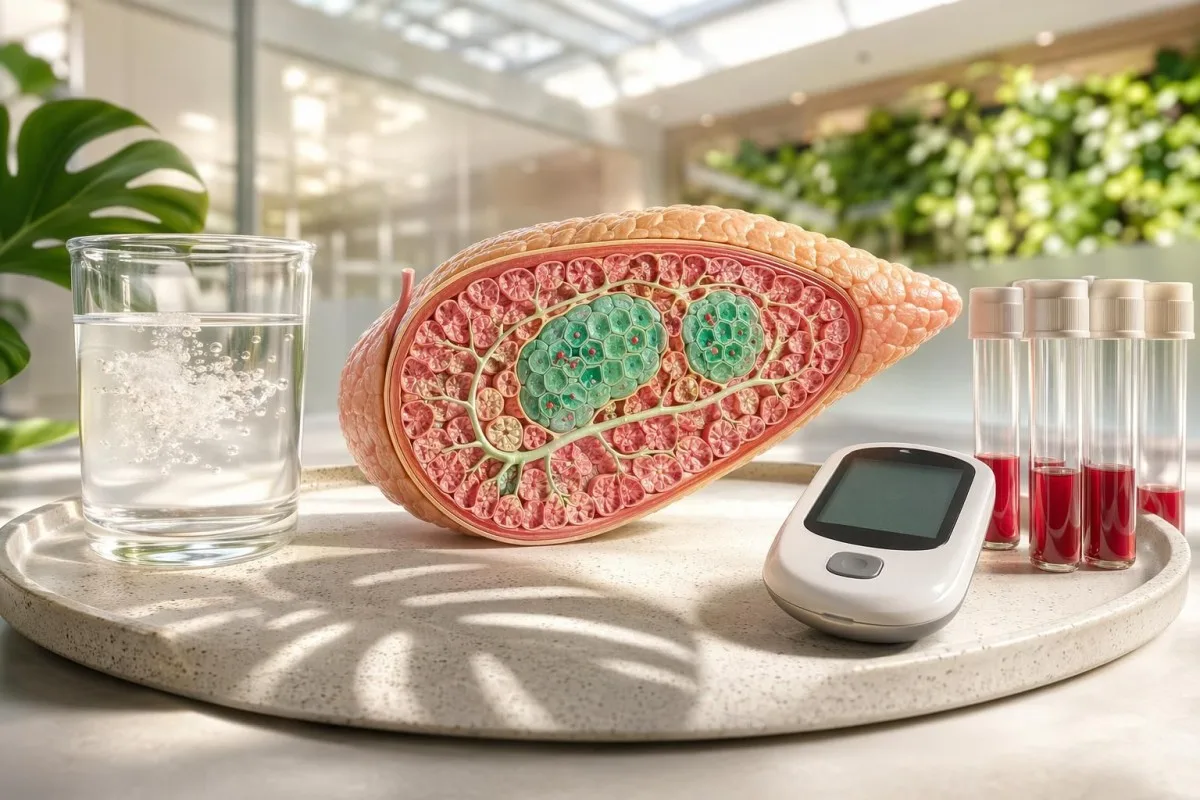
妊娠糖尿病の後に糖尿病を検出する血液検査

カテゴリー
記事
Gestational Diabetes 検査の解釈 2026年の更新 患者さん向け

A practical postpartum screening guide for anyone told their pregnancy sugars were normal again, but still wants to know what comes next.

📖 約11分 📅
📝 公開: 🩺 医学的監修: ✅ エビデンスに基づく
⚡ 簡単な概要 v1.0 —
  1. 75 g OGTT at 4-12 weeks postpartum is the preferred test after gestational diabetes because it detects 2-hour glucose problems that fasting glucose can miss.
  2. 糖尿病の判定基準 are fasting plasma glucose ≥126 mg/dL, 2-hour OGTT glucose ≥200 mg/dL, HbA1c ≥6.5%, or random glucose ≥200 mg/dL with symptoms.
  3. 前糖尿病のカットオフ are fasting glucose 100-125 mg/dL, 2-hour OGTT glucose 140-199 mg/dL, or HbA1c 5.7-6.4%.
  4. HbA1c early postpartum can be falsely low after delivery blood loss or high red-cell turnover, so it should not replace the OGTT at 4-12 weeks.
  5. Normal pregnancy glucose after delivery does not erase future risk; gestational diabetes is often a beta-cell stress test that reveals vulnerability years before type 2 diabetes.
  6. Retesting interval is every 1-3 years for life if the postpartum screen is normal, and usually yearly if any result is in the prediabetes range.
  7. Before another pregnancy ask for glucose testing before conception or early in the first trimester, especially if prior GDM required insulin or medication.
  8. Risk markers such as fasting insulin, triglycerides, HDL, ALT and urine albumin-creatinine ratio do not diagnose diabetes, but they help estimate cardiometabolic risk.

The blood tests that diagnose diabetes after gestational diabetes

The blood tests that detect diabetes after gestational diabetes are the 75 g 2-hour oral glucose tolerance test, 空腹時血漿グルコース, HbA1c、 そして random plasma glucose when classic symptoms are present. The OGTT is usually the best postpartum diabetes screening test at 4-12 weeks because it finds impaired 2-hour glucose handling before fasting glucose or HbA1c turns abnormal.

OGTT laboratory setup showing what blood tests detect diabetes after gestational diabetes
図1: Core postpartum diabetes tests include OGTT, fasting glucose, HbA1c and symptom-triggered glucose.

As Thomas Klein, MD, I tell patients that the question is not only whether the number is high today; it is whether the pancreas still has enough reserve after pregnancy. A fasting glucose of 94 mg/dL can look reassuring, while a 2-hour OGTT value of 168 mg/dL quietly says the first-phase insulin response is lagging.

A diagnosis of diabetes outside pregnancy is made by fasting plasma glucose ≥126 mg/dL, 、2時間OGTTのグルコース ≥200 mg/dL, 、HbA1c ≥6.5%, or random plasma glucose ≥200 mg/dL with symptoms such as thirst, frequent urination or unexplained weight loss. For a plain-language comparison of diagnostic and monitoring tests, our diabetes test cutoffs ガイドが役立つ補助になります。.

Kantesti is an AI blood test analyzer that reads postpartum glucose, HbA1c, lipids and kidney markers in the same clinical context rather than as isolated flags. In our analysis of 2M+ uploaded lab reports, one pattern keeps appearing: people remember the pregnancy diagnosis, but their 4-12 week OGTT result often never makes it into the long-term health record.

Why normal pregnancy glucose does not reset future risk

Normal glucose after delivery does not reset future diabetes risk because gestational diabetes usually reflects limited beta-cell reserve under pregnancy stress. Delivery removes placental hormones, but it does not necessarily repair insulin resistance, genetic risk, fatty liver tendency, or pancreatic beta-cell vulnerability.

Pancreatic beta cell stress model for what blood tests detect diabetes after pregnancy
図2: Gestational diabetes can reveal beta-cell vulnerability long before type 2 diabetes appears.

The placenta produces hormones that push insulin resistance up, often most noticeably after 24-28 weeks. When glucose normalizes after birth, that means the stressor has gone; it does not prove the insulin-producing cells have unlimited reserve.

Bellamy et al. reported in The Lancet that women with previous gestational diabetes had about a 7-fold higher risk of later type 2 diabetes compared with those without GDM (Bellamy et al., 2009). In day-to-day practice, I see the risk cluster with waist gain, triglycerides above 150 mg/dL, low HDL, family history, PCOS and sleep disruption during the first two postpartum years.

A normal HbA1c of 5.3% six months after delivery can still coexist with early insulin resistance. If you want the deeper metabolic view, our guide to インスリン抵抗性検査と比較してください。 explains why fasting insulin and glucose can drift before A1c crosses the prediabetes line.

When postpartum diabetes screening should happen

Postpartum diabetes screening should happen 4-12 weeks after delivery, preferably with a 75 g 2-hour OGTT. If that window was missed, the best time to test is now; I would not wait for the next annual physical if the pregnancy was 6 months or 6 years ago.

Postpartum testing timeline showing what blood tests detect diabetes after GDM
図3: The first postpartum test is time-sensitive, but late testing is still worthwhile.

The American Diabetes Association recommends a 75 g OGTT at 4-12 weeks postpartum and lifelong screening every 1-3 years after gestational diabetes (American Diabetes Association Professional Practice Committee, 2024). ACOG also supports postpartum screening in this early window, and many obstetric clinics now try to order it before the 6-week visit so it is not forgotten (ACOG, 2018).

Breastfeeding, sleep fragmentation and postpartum weight shifts can all change glucose day to day, but they are not reasons to skip testing. Most patients can do the OGTT while breastfeeding; the practical issue is often childcare during the 2-hour lab wait, not the biology.

If you also need checks for anemia, thyroid function, liver enzymes or kidney markers after delivery, our postpartum lab checklist lays out which tests are commonly paired with glucose screening. A single appointment can often cover more than one postpartum problem.

How the 75 g oral glucose tolerance test is interpreted

oral glucose tolerance test after pregnancy measures fasting glucose and 2-hour glucose after a 75 g glucose drink. A 2-hour value ≥200 mg/dL diagnoses diabetes, while 140〜199 mg/dL diagnoses impaired glucose tolerance, even when fasting glucose is normal.

OGTT drink and plasma tubes showing what blood tests detect diabetes postpartum
図4: The 2-hour OGTT can uncover glucose intolerance missed by fasting labs.

The test works because it challenges the insulin system rather than observing it at rest. In my experience, people with prior GDM often pass the fasting part but fail the 2-hour part; that pattern points to delayed insulin secretion after meals.

Prepare with usual eating for at least 3 days, ideally including at least 150 g carbohydrate per day unless your clinician has told you otherwise. Going very low-carb before an OGTT can exaggerate the glucose rise and make interpretation messy; our 断食のルール guide covers water, coffee and timing details.

Do not exercise hard during the 2-hour wait, and tell the lab if you vomit or cannot finish the drink. A result should be repeated or replaced with another diagnostic test if the procedure was not completed properly.

Normal 2-hour OGTT <140 mg/dL (<7.8 mmol/L) Normal glucose handling after the glucose challenge
耐糖能異常 140-199 mg/dL (7.8-11.0 mmol/L) Prediabetes range; often missed by fasting glucose alone
糖尿病の範囲 ≥200 mg/dL (≥11.1 mmol/L) Meets diabetes criterion if confirmed or accompanied by symptoms

What fasting glucose can and cannot detect

Fasting plasma glucose detects diabetes when the fasting value is ≥126 mg/dL, but it can miss isolated post-meal glucose intolerance after gestational diabetes. It is useful, cheap and repeatable; it is simply too blunt to replace the postpartum OGTT.

Glucose analyzer for what blood tests detect diabetes with fasting plasma results
図5: Fasting glucose is convenient, but it misses some post-meal abnormalities.

空腹時血糖が 100-125 mg/dL is prediabetes by ADA criteria, while <100 mg/dL is generally considered normal in the United States. Some international systems use 110 mg/dL as the lower impaired-fasting threshold, which is one reason patients get confused when moving between countries.

The clinical trap is a fasting glucose of 88-96 mg/dL with a 2-hour OGTT of 155-185 mg/dL. That person may be told everything is fine if only fasting glucose was ordered, yet their meal-time glucose biology is already abnormal.

Morning glucose is affected by sleep debt, late-night eating, corticosteroids, infection and the dawn phenomenon. Our 空腹時血糖のガイド explains why a single morning result should be interpreted with the previous evening and sleep quality in mind.

正常な空腹時血糖 <100 mg/dL (<5.6 mmol/L) Normal by ADA criteria, but does not rule out abnormal 2-hour OGTT
前糖尿病の範囲 100-125 mg/dL (5.6-6.9 mmol/L) Impaired fasting glucose; repeat and assess cardiometabolic risk
糖尿病の範囲 ≥126 mg/dL (≥7.0 mmol/L) Meets diabetes criterion if confirmed on a separate day

Why HbA1c is convenient but imperfect after delivery

HbA1c detects diabetes at ≥6.5%, but it is less reliable in the first 4-12 postpartum weeks because delivery blood loss and red-cell turnover can distort the result. HbA1c is useful later, especially for long-term follow-up, but it should not replace the first postpartum OGTT.

Glycated hemoglobin molecules showing what blood tests detect diabetes by HbA1c
図6: HbA1c reflects average glycation, but postpartum red-cell changes can distort it.

HbA1c estimates average glucose over roughly 8〜12週間, weighted toward the most recent month. After childbirth, anemia, transfusion, iron deficiency or rapid red-cell replacement can push the value away from the true glucose story.

Iron deficiency can falsely raise HbA1c in some patients, while recent blood loss can falsely lower it. This is one of those areas where context matters more than the number; a postpartum HbA1c of 5.6% may not be as reassuring if ferritin is 8 ng/mL and the OGTT was never done.

If your A1c does not match fingerstick readings or symptoms, read our guide on A1c accuracy before accepting the value at face value. I usually pair HbA1c with fasting glucose, CBC and ferritin when the postpartum story feels inconsistent.

正常なHbA1c <5.7%(<39 mmol/mol) Lower average glucose, but early postpartum distortion is possible
前糖尿病の範囲 5.7-6.4% (39-46 mmol/mol) Higher future diabetes risk; confirm with glucose-based testing if needed
糖尿病の範囲 ≥6.5%(≥48 mmol/mol) Meets diabetes criterion if confirmed, unless symptoms are clear

When random glucose or symptoms need fast action

Random plasma glucose detects diabetes when it is ≥200 mg/dL and symptoms are present. After gestational diabetes, urgent review is needed for high glucose with vomiting, dehydration, rapid weight loss, ketones, blurred vision or unusual exhaustion.

Urgent glucose check showing what blood tests detect diabetes when symptoms appear
図7: Symptom-triggered glucose testing matters when postpartum sugars rise quickly.

Most diabetes after GDM is type 2, but postpartum autoimmune diabetes can occasionally appear, particularly if weight loss is rapid and ketones are present. I have seen patients dismissed as merely tired new parents when their glucose was 280 mg/dL and they were already ketotic.

A random glucose of 140〜199 mg/dL is not diagnostic by itself, but it should prompt fasting glucose, HbA1c or OGTT depending on timing and symptoms. A random value over 300 mg/dL, especially with abdominal pain or labored breathing, should be treated as same-day medical care.

One isolated high value can happen after illness, steroids or a very high-carbohydrate meal, but the pattern matters. Our guide to unexpected high glucose explains how clinicians separate stress hyperglycemia from early diabetes.

Blood markers that show risk before diabetes appears

Fasting insulin, C-peptide, triglycerides, HDL, ALT and urine albumin-creatinine ratio do not diagnose diabetes, but they help show metabolic risk after gestational diabetes. These markers can reveal insulin resistance, fatty liver tendency or early kidney stress while glucose is still technically normal.

Insulin resistance comparison for what blood tests detect diabetes risk early
図8: Risk markers add context before diagnostic glucose thresholds are crossed.

A fasting insulin above roughly 15〜20 µIU/mL can suggest insulin resistance, although lab methods differ and there is no universal diagnostic cutoff. HOMA-IR uses fasting insulin and fasting glucose; values above 2.0-2.5 often raise suspicion in adults, but ethnicity, BMI and assay choice change the interpretation.

中性脂肪が 150 mg/dL and HDL below 50 mg/dL in women often travel with insulin resistance. ALT above about 25-30 IU/L in a woman with prior GDM can be an early fatty-liver clue even when the lab flag still says normal.

Kantesti is an AI biomarker interpretation platform that treats a normal A1c after gestational diabetes as a risk marker question, not a green light forever. If you want to calculate insulin resistance from your numbers, the HOMA-IRの計算 guide shows the formula and its limitations.

尿ACRは正常 <30 mg/g (<3 mg/mmol) No albuminuria by standard cutoff
中等度上昇 ACR 30-299 mg/g (3-29 mg/mmol) Early kidney or vascular risk signal; repeat to confirm
高トリグリセリド ≥150 mg/dL (≥1.7 mmol/L) Common insulin resistance companion marker
女性における低HDL <50 mg/dL(<1.3 mmol/L) Adds cardiometabolic risk context after GDM

How often to retest if the postpartum screen is normal

If postpartum screening is normal after gestational diabetes, retest every 1-3 years for life. Retest sooner, often yearly, if weight increases, prediabetes appears, another pregnancy is planned, or medications such as steroids or antipsychotics raise glucose risk.

Long-term retesting pathway for what blood tests detect diabetes after GDM
図9: A normal postpartum OGTT starts surveillance; it does not end it.

The ADA recommendation for lifelong screening every 1-3 years exists because diabetes risk rises over time, not only in the first postpartum year. In my clinic, I usually choose the 1-year interval for anyone with prediabetes, insulin-treated GDM, BMI above 30, strong family history or PCOS.

A normal test in 2026 is still useful because it becomes your baseline. A fasting glucose drifting from 82 to 96 mg/dL over 3 years may be more meaningful than one flagged result, especially if triglycerides and waist circumference rise at the same time.

Kantesti AI can chart glucose, HbA1c, triglycerides and ALT over time so small shifts are visible before they become dramatic. Our trend analysis article explains why slope and clustering often matter more than a single lab flag.

What to ask your clinician to order

Ask for a 75 g 2-hour OGTT at 4-12 weeks postpartum, or fasting plasma glucose plus HbA1c if an OGTT is not feasible. For long-term risk, ask whether lipids, ALT, creatinine, eGFR and urine albumin-creatinine ratio should be checked with your glucose markers.

Postpartum lab order set showing what blood tests detect diabetes and risk markers
図10: A practical lab order can combine diagnostic glucose tests with risk markers.

A sensible first postpartum order often reads: fasting glucose, 75 g 2-hour glucose, HbA1c, CBC if there was heavy delivery blood loss, ferritin if anemia is suspected, lipid panel and CMP if cardiometabolic risk is high. Not every patient needs every test, but the order should match the pregnancy story.

If you had fasting hyperglycemia during pregnancy or needed insulin, I would be more aggressive with early follow-up. If your GDM was mild and diet-controlled, the OGTT still matters, but the long-term cadence may be closer to every 2〜3年ごと when all results are normal.

For readers who want to understand what each marker actually measures, our バイオマーカーガイド covers thousands of lab markers and common unit differences. This is especially helpful when one lab reports glucose in mg/dL and another reports mmol/L.

What doctors do with borderline or conflicting results

Borderline or conflicting diabetes results should usually be repeated or confirmed with a different diagnostic test. A fasting glucose of 124 mg/dL, 、HbA1cが 6.4%, or 2-hour OGTT of 198 mg/dL is not a shrug; it is a near-threshold result that deserves a plan.

Borderline glucose review showing what blood tests detect diabetes near cutoff
図11: Near-threshold results need confirmation, not dismissal as normal noise.

Without classic symptoms, most clinicians confirm diabetes with a repeat abnormal result. If two different tests disagree, the test above the diagnostic threshold is typically repeated, and the patient context decides how quickly that happens.

Thomas Klein, MD, practical rule: do not let the word borderline make the result feel harmless. A 2-hour OGTT of 196 mg/dL after prior GDM often carries more future risk than a fasting glucose of 101 mg/dL, even though both may be filed under prediabetes.

私たちのガイド prediabetes thresholds explains how fasting glucose, A1c and OGTT define different biological problems. I often frame prediabetes after GDM as a treatment window rather than a waiting room.

Special situations: breastfeeding, anemia, PCOS and medications

Breastfeeding, anemia, PCOS, GLP-1 medicines, steroids and thyroid disease can change how postpartum diabetes labs should be interpreted. The glucose cutoffs stay the same, but the confidence you place in HbA1c, fasting glucose or insulin levels may change substantially.

Metabolic organ context showing what blood tests detect diabetes in special cases
図12: Postpartum glucose interpretation changes when other endocrine or blood factors coexist.

Breastfeeding often improves glucose metabolism and may lower future type 2 diabetes risk, but it does not eliminate the need for screening. If you are taking insulin or sulfonylureas postpartum, ask your clinician about hypoglycemia risk during longer feeds or missed meals.

PCOS adds a separate insulin-resistance pathway, and prior GDM plus PCOS is one of the combinations I treat with extra respect. Our PCOS lab patterns guide explains why fasting insulin, lipids and androgens can matter even when glucose is not yet diagnostic.

Steroid injections, high-dose prednisone, some antipsychotics and severe sleep deprivation can push glucose up temporarily. The evidence around exact postpartum sleep thresholds is honestly mixed, but I see worse fasting values when sleep is fragmented below 5-6 hours for weeks.

How Kantesti reads postpartum diabetes labs safely

Kantesti reads postpartum diabetes labs by combining glucose thresholds with timing, pregnancy history, anemia clues, lipid patterns and kidney markers. The aim is not to replace your clinician; it is to make the risk pattern clearer before your appointment.

AI lab review workflow for what blood tests detect diabetes after pregnancy
図13: AI interpretation is safest when glucose results are read with postpartum context.

Kantesti is an AI-powered blood test analysis tool used by 2M+ people across 127 countries, with blood test PDF or photo interpretation in about 60秒. For postpartum diabetes screening, our neural network separates diagnostic glucose criteria from risk-context markers such as triglycerides, HDL, ALT and urine ACR.

A typical upload might show HbA1c 5.5%, 、空腹時血糖 92 mg/dL, 、フェリチン 10 ng/mL and no OGTT. Kantesti AI would not diagnose diabetes from those numbers, but it should flag that early postpartum A1c may be unreliable and that the recommended OGTT is missing.

Our methods are aligned with published clinical standards and internal physician review; readers can see our 臨床的妥当性基準 and the pre-registered AIベンチマーク. If you are uploading a scan rather than typing values, the のPDFアップロードのワークフローを explains how reports are read and checked.

A practical retesting plan for 2026 and beyond

As of May 26, 2026, the safest plan after gestational diabetes is OGTT at 4-12 weeks, repeat screening every 1-3 years, and earlier testing before another pregnancy. If any result is in the prediabetes range, treat it as an active prevention window, not a mild lab curiosity.

Long-term care plan showing what blood tests detect diabetes after GDM
図14: A durable plan turns one pregnancy complication into long-term prevention.

My usual script is simple: get the first postpartum OGTT, save the result, then put the next glucose check on the calendar before life gets busy. If your 2-hour OGTT is 140〜199 mg/dL, ask for a clear follow-up interval, nutrition plan and exercise target rather than a vague reminder to be careful.

If your diabetes screen is normal, still tell every future clinician that you had GDM. That one line changes how I read a fasting glucose of 103 mg/dL, a triglyceride level of 180 mg/dL, or an HbA1c that creeps from 5.2% to 5.6% over several years.

Kantesti Ltd is a UK health technology company, and our physicians review medical content through our 医療諮問委員会を and clinical governance process described on 私たちについて. Bottom line: the right tests are not complicated, but the timing and interpretation matter more than most people are told.

Related Kantesti research publications

Postpartum diabetes screening often sits inside a broader lab review that includes CBC, iron status and kidney markers. The Kantesti DOI publications listed below support adjacent blood-test interpretation methods, including red-cell indices and kidney function ratios that can affect HbA1c confidence or long-term metabolic risk assessment.

よくある質問

妊娠糖尿病の後に糖尿病を検出する血液検査は何ですか?

妊娠糖尿病後に糖尿病を検出する血液検査は、75 g 2時間経口ブドウ糖負荷試験、空腹時血漿グルコース、HbA1c、症状がある場合の随時血漿グルコースである。糖尿病は、空腹時グルコース ≥126 mg/dL、2時間OGTTグルコース ≥200 mg/dL、HbA1c ≥6.5%、または典型的な症状を伴う随時グルコース ≥200 mg/dLにより診断される。OGTTは、空腹時血糖が正常でも2時間のグルコース処理障害を検出できるため、産後4〜12週での実施が推奨される。.

妊娠後の経口ブドウ糖負荷試験はHbA1cよりも優れていますか?

妊娠後の経口ブドウ糖負荷試験は、産後最初のスクリーニング(4〜12週)では通常、HbA1cよりも良好です。HbA1cは、分娩時の出血、貧血、輸血、または赤血球の急速な入れ替わりによって歪められる可能性があります。一方、OGTTは、75 gのブドウ糖負荷後のグルコースの取り扱いを直接測定します。HbA1cは、その後の長期スクリーニングやトレンドのモニタリングにおいてより有用になります。.

GDM(妊娠糖尿病)の後、産後の糖尿病スクリーニングはいつ実施すべきですか?

妊娠糖尿病の既往がある場合の産後の糖尿病スクリーニングは、分娩後4〜12週に実施すべきであり、理想的には75 gの2時間OGTTを用いる。もしこの期間を逃した場合は、症状を待つのではなく、可能な限り速やかに検査を行う。産後の結果が正常であれば、生涯にわたり1〜3年ごとに糖尿病スクリーニングを繰り返す。.

妊娠糖尿病の後、HbA1cは正常でもOGTTが異常になることはありますか?

はい、妊娠糖尿病の後ではOGTTが異常でもHbA1cは正常であり得ます。HbA1c 5.3%、空腹時血糖92 mg/dLであっても、2時間OGTT値が160 mg/dLであれば耐糖能異常です。これは、HbA1cが平均血糖を反映する一方で、OGTTはブドウ糖負荷後のインスリン反応を強く試験するためです。.

妊娠糖尿病の後に前糖尿病と診断された場合、その結果は何を意味しますか?

妊娠糖尿病後の前糖尿病は、空腹時血漿グルコース100〜125 mg/dL、2時間OGTTグルコース140〜199 mg/dL、またはHbA1c 5.7〜6.4%によって定義される。2時間OGTTの異常は特にGDM後に多く、空腹時グルコースのみをオーダーしている場合には見逃される可能性がある。前糖尿病は通常、毎年のフォローアップと、構造化された予防計画を開始すべきである。.

私の産後スクリーニングが正常だった場合、どのくらいの頻度で再検査すべきですか?

出産後の糖尿病スクリーニングで妊娠糖尿病があった場合に正常であれば、生涯にわたって1〜3年ごとに再検査してください。インスリンで治療したGDM、前糖尿病、PCOS、BMIが30を超える、強い家族歴、またはトリグリセリドの上昇がある場合は、毎年の検査を選ぶ臨床医が多いです。別の妊娠の前、または妊娠初期の早い時期にも検査を再実施してください。.

授乳は糖尿病の血液検査結果を変えますか?

授乳はグルコース代謝を改善し、将来の2型糖尿病リスクを低下させる可能性がありますが、産後の糖尿病スクリーニングの必要性をなくすものではありません。空腹時血糖、OGTT、HbA1cの診断カットオフ値は、授乳していることによって変わりません。産後に糖尿病治療薬が使用される場合、長時間の授乳や食事の欠食による低血糖リスクを減らすために、医師は投与のタイミングや用量を調整することがあります。.

今日、AIによる血液検査分析を

いますぐ利用しませんか。即時で正確な検査分析を提供するKantestiを信頼する、世界中の200万人以上のユーザーに参加してください。血液検査結果をアップロードすると、15,000+のバイオマーカーについて数秒で包括的な解釈が得られます。.

📚 Referenced Research Publications

1

Klein, T., Mitchell, S., & Weber, H. (2026). RDW血液検査:RDW-CV、MCV、MCHCの完全ガイド.。 Kantesti AI Medical Research.

2

Klein, T., Mitchell, S., & Weber, H. (2026). BUN/クレアチニン比の説明:腎機能検査ガイド.。 Kantesti AI Medical Research.

📖 外部の医学的参考文献

3

米国糖尿病学会(American Diabetes Association)専門診療委員会(2024年)。. 2. 糖尿病の診断と分類:糖尿病における標準的ケア—2024.。 Diabetes Care.

4

ACOG Practice Bulletin No. 190 (2018). Gestational Diabetes Mellitus.。.

5

Bellamy L et al. (2009). Type 2 diabetes mellitus after gestational diabetes: a systematic review and meta-analysis.卵巣がんのスクリーニング:米国予防医療専門作業部会の勧告声明.

200万以上分析されたテスト
127+
98.4%正確さ
75+言語

⚕️ 医療免責事項

E-E-A-T 信頼性シグナル

経験

医師主導による、検査結果解釈ワークフローの臨床レビュー。.

📋

専門知識

臨床的な文脈においてバイオマーカーがどのように振る舞うかに焦点を当てた検査医学。.

👤

権威

トーマス・クライン博士が執筆し、サラ・ミッチェル博士およびハンス・ヴェーバー教授によるレビュー。.

🛡️

信頼性

アラームを減らすための明確なフォローアップ経路を備えた、エビデンスに基づく解釈。.

🏢 カンテスティ株式会社 イングランドおよびウェールズに登録 · 会社番号. 17090423 ロンドン、イギリス · kantesti.net
blank
Prof. Dr. Thomas Kleinによる

トーマス・クライン博士は、Kantesti AIの最高医学責任者(CMO)を務める臨床血液専門医です。15年以上にわたる臨床検査医学の経験とAI支援診断に関する深い専門知識を持つクライン博士は、最先端技術と臨床現場の橋渡し役を務めています。彼の研究は、バイオマーカー分析、臨床意思決定支援システム、そして集団特異的な基準範囲の最適化に焦点を当てています。CMOとして、彼は197か国で100万件以上の検証済み検査ケースにおいて、Kantesti AIが98.7%の精度を達成することを保証するための三重盲検検証試験を主導しています。.

コメントを残す

メールアドレスが公開されることはありません。 が付いている欄は必須項目です
