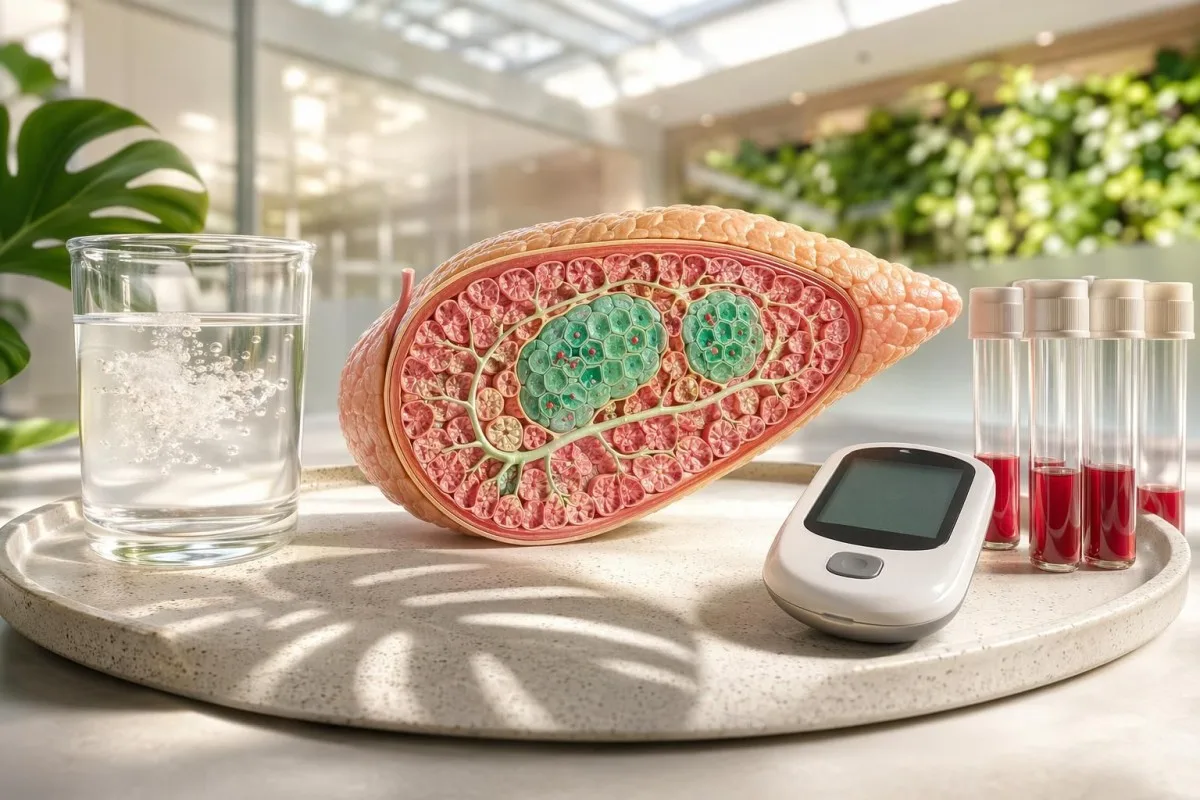
Hagnýt leiðarvísir fyrir skimun eftir fæðingu fyrir alla sem voru told að sykur í meðgöngunni væri aftur eðlilegur, en vilja samt vita hvað gerist næst.


- 75 g glúkósaþolpróf 4–12 vikum eftir fæðingu er æskilegt próf eftir meðgöngusykursýki vegna þess að það greinir 2-stunda glúkósavandamál sem fastandi glúkósi getur misst af.
- Viðmið fyrir sykursýki eru fastandi plasma-glúkósi ≥126 mg/dL, 2-stunda OGTT-glúkósi ≥200 mg/dL, HbA1c ≥6.5%, eða handahófskenndur blóðsykur ≥200 mg/dL með einkennum.
- Skilgreiningar fyrir forsykursýki eru fastandi glúkósi 100–125 mg/dL, 2-stunda OGTT-glúkósi 140–199 mg/dL, eða HbA1c 5.7–6.4%.
- HbA1c snemma eftir fæðingu getur verið ranglega lágt eftir blóðmissi við fæðingu eða mikilli endurnýjun rauðra blóðkorna, þannig að það ætti ekki að koma í stað OGTT við 4–12 vikur.
- Eðlilegur blóðsykur á meðgöngu eftir fæðingu eyðir ekki framtíðaráhættu; meðgöngusykursýki er oft beta-frumustreitupróf sem sýnir veikleika árum áður en 2. tegund sykursýki kemur fram.
- Endurprófunarbil á 1–3 ára fresti ævilangt ef skimun eftir fæðingu er eðlileg, og venjulega árlega ef einhver niðurstaða er á forsykursviði.
- Áður en önnur þungun hefst biðjið um glúkósapróf fyrir getnað eða snemma á fyrsta þriðjungi meðgöngu, sérstaklega ef fyrri GDM krafðist insúlíns eða lyfja.
- Áhættumerki eins og fastandi insúlín, þríglýseríð, HDL, ALT og þvag albúmín-kreatínín hlutfall greina ekki sykursýki, en þau hjálpa til við að meta hjarta- og efnaskiptaáhættu.
Blóðpróf sem greina sykursýki eftir meðgöngusykursýki
Blóðpróf sem greina sykursýki eftir meðgöngusykursýki eru 75 g 2-stunda munnlegt glúkósaþolpróf, fastandi plasma-glúkósi, HbA1c, og handahófskennt plasma-glúkósa þegar klassísk einkenni eru til staðar. OGTT er venjulega besta skimunarprófið fyrir sykursýki eftir fæðingu við 4–12 vikur, því það finnur skerta meðhöndlun á 2-stunda glúkósa áður en fastandi glúkósa eða HbA1c verður óeðlilegt.
Eins og Thomas Klein, MD, segi ég sjúklingum að spurningin snúist ekki aðeins um hvort talan sé há í dag; heldur hvort brisið hafi enn næga varaforða eftir meðgöngu. Fastandi glúkósa upp á 94 mg/dL getur virst fullvissandi, en 2-stunda OGTT-gildi upp á 168 mg/dL segir hljóðlega að fyrsta fasa insúlínsvörunin sé á eftir.
Greining á sykursýki utan meðgöngu er gerð með fastandi plasma-glúkósa ≥126 mg/dL, glúkósa í 2 klst. OGTT ≥200 mg/dL, HbA1c ≥6.5%, eða handahófskenndu plasma-glúkósa ≥200 mg/dL með einkennum eins og þorsta, tíðri þvaglátum eða óútskýrðu þyngdartapi. Fyrir einfalt samanburð á greiningar- og eftirlitsprófum, okkar viðmið fyrir sykursýkipróf leiðarvísirinn gagnlegt viðbótarefni.
Kantesti er gervigreindar blóðprófa greiningartæki sem les glúkósa eftir fæðingu, HbA1c, fituefni og nýrnamerki í sama klíníska samhengi frekar en sem einangruð merki. Í greiningu okkar á 2M+ sem hlaðið var upp af rannsóknarskýrslum sést eitt mynstur aftur og aftur: fólk man eftir greiningunni á meðgöngunni, en 4–12 vikna OGTT-niðurstaða þeirra kemst oft aldrei inn í langtímaheilsuskrá.
Af hverju eðlilegur blóðsykur á meðgöngu endurstillir ekki framtíðaráhættu
Eðlilegt glúkósa eftir fæðingu endurstillir ekki framtíðaráhættu á sykursýki, því meðgöngusykursýki endurspeglar yfirleitt takmarkaðan varaforða beta-frumna við álag á meðgöngu. Fæðing fjarlægir hormón frá fylgju, en það þýðir ekki endilega að insúlínviðnám sé lagfært, erfðaráhætta, tilhneiging til fitulifrar eða viðkvæmni beta-frumna í brisi.
Fylgjan framleiðir hormón sem ýta insúlínviðnámi upp, oftast mest áberandi eftir 24–28 vikur. Þegar glúkósa verður eðlilegt eftir fæðingu þýðir það að álagið er horfið; það sanna ekki að insúlínframleiðandi frumur hafi ótakmarkaðan varaforða.
Bellamy o.fl. greindu frá í The Lancet að konur með fyrri meðgöngusykursýki hefðu um það bil 7-falda meiri áhættu á síðari sykursýki af tegund 2 samanborið við þær sem ekki höfðu GDM (Bellamy o.fl., 2009). Í daglegri framkvæmd sé ég áhættuklasann með aukningu um mittismál, þríglýseríðum yfir 150 mg/dL, lágu HDL, fjölskyldusögu, PCOS og truflun á svefni á fyrstu tveimur árum eftir fæðingu.
Eðlilegt HbA1c upp á 5.3% sex mánuðum eftir fæðingu getur samt verið samhliða snemmkominni insúlínviðnámi. Ef þú vilt dýpri efnaskiptaútsýni, þá útskýrir leiðarvísirinn okkar prófanir á insúlínviðnámi hvers vegna fastandi insúlín og glúkósi geta sveigst áður en A1C fer yfir forsykursjúkdómslínuna.
Hvenær skimun vegna sykursýki eftir fæðingu ætti að fara fram
Skimun fyrir sykursýki eftir fæðingu ætti að fara fram 4-12 vikum eftir fæðingu, helst með 75 g 2-stunda OGTT. Ef þessu bili var sleppt er besti tíminn til að prófa núna; ég myndi ekki bíða eftir næstu árlegu líkamsskoðun ef meðgangan var fyrir 6 mánuðum eða 6 árum.
American Diabetes Association mælir með 75 g OGTT við 4-12 vikum eftir fæðingu og ævilangri skimun á 1-3 ár eftir meðgöngusykursýki (American Diabetes Association Professional Practice Committee, 2024). ACOG styður einnig skimun eftir fæðingu á þessu snemma tímabili og margar fæðingarstofur reyna nú að panta hana áður en farið er í 6 vikna heimsóknina svo hún gleymist ekki (ACOG, 2018).
Brjóstagjöf, truflun á svefni og breytingar á líkamsþyngd eftir fæðingu geta allar breytt blóðsykri frá degi til dags, en þær eru ekki ástæður til að sleppa prófun. Flestir sjúklingar geta gert OGTT meðan þeir eru með barn á brjósti; hagnýta vandamálið er oft barnagæsla á meðan beðið er í 2 klukkustundir á rannsóknarstofu, ekki líffræðin.
Ef þú þarft líka að athuga hvort sé blóðleysi, starfsemi skjaldkirtils, lifrarensím eða nýrnamerki eftir fæðingu, þá yfirferðarskrá fyrir blóðprufur eftir fæðingu sýnir hvaða próf eru oft pöruð við glúkósaskimun. Ein heimsókn getur oft náð yfir fleiri en eitt vandamál eftir fæðingu.
Hvernig 75 g inntökupróf til glúkósaþols (OGTT) er túlkað
The munnlegt glúkósaþolpróf eftir meðgöngu mælir fastandi glúkósa og glúkósa eftir 2 klukkustundir eftir 75 g glúkósadrykk. Gildi eftir ≥200 mg/dL 2 klukkustundir greinir sykursýki, en 140-199 mg/dL greinir skerta glúkósaþol, jafnvel þegar fastandi glúkósa er eðlilegt.
Prófið virkar vegna þess að það reynir á insúlínkerfið frekar en að fylgjast með því í hvíld. Í minni reynslu standast fólk með fyrri GDM oft fastandi hlutann en fellur 2-stunda hlutann; þetta mynstur bendir til seinkaðrar insúlínseytingar eftir máltíðir.
Undirbúðu þig með venjulegri fæðu í að minnsta kosti 3 daga, helst með að minnsta kosti 150 g kolvetni á dag nema læknirinn þinn hafi sagt þér annað. Að fara mjög lágkolvetna áður en OGTT getur ýkt hækkun glúkósa og gert túlkunina flókna; leiðarvísirinn okkar reglur um fastandi fjallar um vatn, kaffi og tímasetningarupplýsingar.
Ekki æfa af krafti á meðan beðið er í 2 klukkustundir og segðu rannsóknarstofunni frá því ef þú kastar upp eða getur ekki klárað drykkinn. Ef aðferðin var ekki framkvæmd rétt ætti að endurtaka niðurstöðuna eða skipta henni út fyrir annað greiningarpróf.
Hvað fastandi glúkósi getur og getur ekki greint
Fastandi plasma-glúkósi greinir sykursýki þegar fastandi gildið er ≥126 mg/dL, en það getur misst af einangruðum óþoli fyrir glúkósa eftir máltíð eftir meðgöngusykursýki. Það er gagnlegt, ódýrt og endurtekanlegt; það er hins vegar of gróft til að koma í stað OGTT eftir fæðingu.
Fastandi glúkósi upp á 100-125 mg/dL er forstigsykursýki samkvæmt ADA-skilyrðum, en <100 mg/dL er almennt talið eðlilegt í Bandaríkjunum. Sum alþjóðleg kerfi nota 110 mg/dL sem lægri mörk fyrir skerta fastandi glúkósa, og það er ein ástæða þess að sjúklingar ruglast þegar þeir flytja milli landa.
Klínísk gildra er fastandi glúkósi 88-96 mg/dL með 2-stunda OGTT upp á 155-185 mg/dL. Þessum einstaklingi má segja að allt sé í lagi ef aðeins fastandi glúkósi var pantaður, en líffræði glúkósa á matmálstímum er þegar óeðlileg.
Morgun-glúkósa hefur áhrif af svefnskuld, seint næturát, barksterum, sýkingu og dögunarfyrirbærinu. Okkar fastandi sykur útskýrir hvers vegna túlka ætti stakt morgunmælingu með hliðsjón af fyrri kvöldi og svefngæðum.
Af hverju HbA1c er þægilegt en ófullkomið eftir fæðingu
HbA1c greinir sykursýki við ≥6.5%, en það er minna áreiðanlegt fyrstu 4-12 vikurnar eftir fæðingu vegna blóðtaps við fæðingu og endurnýjunar rauðra blóðkorna sem getur raskað niðurstöðunni. HbA1c er gagnlegt síðar, sérstaklega fyrir langtímaeftirfylgni, en það á ekki að koma í stað fyrsta OGTT eftir fæðingu.
HbA1c áætlar meðalglúkósa yfir um það bil 8-12 vikur, vegið í átt að nýjasta mánuðinum. Eftir fæðingu getur blóðleysi, blóðgjöf, járnskortur eða hrað skipti á rauðum blóðkornum ýtt gildinu frá því sem sannarlega segir um glúkósasögu.
Járnskortur getur ranglega hækkað HbA1c hjá sumum sjúklingum, en nýlegt blóðtap getur ranglega lækkað það. Þetta er eitt af þeim sviðum þar sem samhengi skiptir meira máli en talan; HbA1c eftir fæðingu sem er 5.6% þarf ekki að vera jafn meginsátt ef ferritín er 8 ng/mL og OGTT var aldrei gert.
Ef A1c þitt passar ekki við mælingar úr fingurgóðu eða einkenni, lestu leiðarvísinn okkar um nákvæmni A1c áður en þú tekur gildið sem gefið.
Hvenær handahófskenndur blóðsykur eða einkenni krefjast skjótra aðgerða
Tilviljunarkennd glúkósa í plasma greinir sykursýki þegar það er ≥200 mg/dL og einkenni eru til staðar. Eftir meðgöngusykursýki þarf brýna endurskoðun ef glúkósi er hár með uppköstum, ofþornun, hraðri þyngdartapi, ketónum, þokusýn eða óvenjulegri þreytu.
Flest sykursýki eftir GDM er af tegund 2, en sjálfsofnæmissykursýki eftir fæðingu getur stundum komið fram, sérstaklega ef þyngdartap er hratt og ketónar eru til staðar. Ég hef séð sjúklinga vera afgreidda sem einfaldlega þreytta nýbakaða foreldra þegar glúkósinn þeirra var 280 mg/dL og þau voru þegar ketótísk.
Tilviljunarkenndur glúkósi upp á 140-199 mg/dL er ekki greining ein og sér, en það ætti að leiða til fastandi glúkósa, HbA1c eða OGTT eftir því hvenær og hvaða einkenni eru til staðar. Tilviljunarkennt gildi yfir 300 mg/dL, sérstaklega ef um kviðverki eða erfiða öndun er að ræða, ætti að meðhöndla sem bráð læknisþjónustu sama dag.
Einangrað hátt gildi getur gerst eftir veikindi, stera eða mjög kolvetnaríka máltíð, en mynstrið skiptir máli. Leiðarvísirinn okkar um óvæntan háan glúkósa útskýrir hvernig klínískir aðilar aðgreina streituháglúkósa frá snemmkominni sykursýki.
Blóðvísar sem sýna áhættu áður en sykursýki kemur fram
Fastandi insúlín, C-peptíð, þríglýseríð, HDL, ALT og þvag albúmín-kreatínín hlutfall greina ekki sykursýki, en þau hjálpa til við að sýna efnaskiptaáhættu eftir meðgöngusykursýki. Þessir mælikvarðar geta leitt í ljós insúlínviðnáms tilhneigingu, tilhneigingu til fitulifrar eða snemma álagsástand á nýru á meðan glúkósi er enn tæknilega eðlilegur.
Fastandi insúlín yfir um það bil 15-20 µIU/mL getur bent á insúlínviðnámsástand, þó að rannsóknaraðferðir séu mismunandi og enginn alhliða greiningarskurðpunktur sé til. HOMA-IR notar fastandi insúlín og fastandi glúkósa; gildi yfir 2.0-2.5 vekja oft grun hjá fullorðnum, en þjóðerni, BMI og val á mæliaðferð breyta túlkuninni.
Þríglýseríð yfir 150 mg/dL og HDL undir 50 mg/dL hjá konum fylgir oft insúlínviðnám. ALT yfir um 25-30 IU/L.
hjá konu með fyrra GDM getur verið snemma vísbending um fitulifur, jafnvel þegar rannsóknarmerkið segir enn eðlilegt. útreikning á HOMA-IR Kantesti er vettvangur fyrir túlkun á gervigreindar lífmerkjum sem meðhöndlar eðlilegt A1C eftir meðgöngusykursýki sem spurningu um áhættumerki, ekki grænt ljós að eilífu. Ef þú vilt reikna insúlínviðnám út frá tölunum þínum, þá sýnir.
Hversu oft á að endurtaka próf ef skimun eftir fæðingu er eðlileg
Bætir samhengi um hjarta- og efnaskiptaáhættu eftir GDM Ef skimun eftir fæðingu er eðlileg eftir meðgöngusykursýki, endurtaktu á. 1-3 ára fresti fyrir lífið.
Eðlileg eftirfæðingar OGTT byrjar eftirlit; hún lýkur því ekki. Ráðlegging ADA um ævilanga skimun á 1-3 ára fresti er til staðar vegna þess að sykursýkishætta eykst með tímanum, ekki aðeins á fyrsta ári eftir fæðingu. Í heilsugæslunni minni vel ég venjulega 1-árs.
millibil fyrir alla með forsykursýki, insúlínmeðhöndlað GDM, BMI yfir 30, sterka fjölskyldusögu eða PCOS. Eðlileg prófun árið 2026 er enn gagnleg vegna þess að hún verður grunnlína þín. Fastandi glúkósa sem sveiflast frá 82 til 96 mg/dL.
Kantesti AI getur kortlagt glúkósa, HbA1c, þríglýseríð og ALT með tímanum þannig að smávægilegar breytingar sjást áður en þær verða dramatískar. Greinin okkar þróunargreining útskýrir hvers vegna halli og klösun skipta oft meira máli en eitt rannsóknarstofupróf með einu fráviki.
Hvað á að biðja lækninn um að panta
Spyrðu um 75 g 2-stunda OGTT 4-12 vikum eftir fæðingu, eða fastandi plasma-glúkósa auk HbA1c ef ekki er hægt að framkvæma OGTT. Fyrir langtímaáhættu skaltu spyrja hvort athuga eigi fitur, ALT, kreatínín, eGFR og þvag albúmín-kreatínín hlutfall með glúkósamerkjunum þínum.
Skynsamleg fyrsta pöntun eftir fæðingu hljómar oft svona: fastandi glúkósa, 75 g 2-stunda glúkósa, HbA1c, CBC ef um mikinn blóðmissi við fæðingu var að ræða, ferritín ef grunur er um blóðleysi, fitusnið og CMP ef hjarta- og efnaskiptaáhætta er mikil. Ekki þarf að gera öll próf hjá hverjum sjúklingi, en pöntunin ætti að passa við sögu meðgöngunnar.
Ef þú hafðir fastandi blóðsykurshækkun á meðgöngu eða þurftir insúlín, myndi ég vera árangursmeiri með snemma eftirfylgni. Ef GDM þinn var vægt og stjórnað með mataræði, skiptir OGTT samt máli, en langtíma tíðnin gæti verið nær því að vera á 2-3 ára fresti þegar allar niðurstöður eru eðlilegar.
Fyrir lesendur sem vilja skilja hvað hvert merki raunverulega mælir, þá fjallar lífmerkjahandbókin okkar um þúsundir rannsóknarstofumerkja og algengar munur á einingum. Þetta er sérstaklega gagnlegt þegar ein rannsóknarstofa skýrir glúkósa í mg/dL og önnur í mmol/L.
Hvað læknar gera með óljósar eða misvísandi niðurstöður
Óljósar eða ósamræmdar niðurstöður um sykursýki ætti yfirleitt að endurtaka eða staðfesta með öðru greiningarprófi. Fastandi glúkósa upp á 124 mg/dL, HbA1c 6.4%, eða 2-stunda OGTT upp á 198 mg/dL er ekki bara „bara“; þetta er niðurstaða rétt við þröskuld sem krefst áætlunar.
Án klassískra einkenna staðfesta flestir læknar sykursýki með endurtekinni óeðlilegri niðurstöðu. Ef tvö mismunandi próf eru ósammála, er prófið sem er yfir greiningarþröskuldinum yfirleitt endurtekið og samhengi sjúklingsins ræður því hversu fljótt það gerist.
Thomas Klein, MD, hagnýtt regla: láttu ekki orðið „borderline“ láta niðurstöðuna líða skaðlausa. 2-stunda OGTT upp á 196 mg/dL eftir fyrra GDM ber oft meiri framtíðaráhættu en fastandi glúkósa upp á 101 mg/dL, jafnvel þótt bæði geti verið skráð undir forsykursýki.
Leiðarvísirinn okkar að þröskuldar forsykursýki útskýrir hvernig fastandi glúkósa, A1c og OGTT skilgreina mismunandi líffræðileg vandamál. Ég set oft forsykursýki eftir GDM fram sem meðferðarglugga frekar en biðstofu.
Sérstakar aðstæður: brjóstagjöf, blóðleysi, PCOS og lyf
Brjóstagjöf, blóðleysi, PCOS, GLP-1 lyf, sterar og skjaldkirtilssjúkdómar geta breytt því hvernig túlka á rannsóknarstofupróf vegna sykursýki eftir fæðingu. Glúkósamörkin haldast óbreytt, en traustið sem þú leggur í HbA1c, fastandi glúkósa eða insúlínmagn getur breyst verulega.
Brjóstagjöf bætir oft glúkósabúskap og getur dregið úr áhættu á framtíðarsykursýki af tegund 2, en hún útilokar ekki þörfina á skimun. Ef þú ert á insúlíni eða súlfónýlúrealyfjum eftir fæðingu skaltu spyrja lækninn þinn um áhættu á blóðsykursfalli við lengri gjafir eða ef máltíðir gleymast.
PCOS bætir við sérstöku insúlínviðnámsferli og fyrri GDM ásamt PCOS er ein af þeim samsetningum sem ég meðhöndla af sérstakri virðingu. Okkur Rannsóknarmynstur hjá PCOS útskýrir hvers vegna fastandi insúlín, fitur og andrógen geta skipt máli jafnvel þegar glúkósa er ekki enn greiningarhæft.
Sterasprautur, stórskammta prednisón, sum geðrofslyf og alvarleg svefnleysi geta hækkað glúkósa tímabundið. Rannsóknargögnin um nákvæm svefnmörk eftir fæðingu eru því miður misjöfn, en ég sé verri fastandi gildi þegar svefninn brotnar niður undir 5-6 klukkustundum í margar vikur.
Hvernig Kantesti les rannsóknarniðurstöður vegna sykursýki eftir fæðingu á öruggan hátt
Kantesti les rannsóknarniðurstöður um sykursýki eftir fæðingu með því að sameina glúkósamörk við tímasetningu, sögu um meðgöngusykursýki, vísbendingar um blóðleysi, fitumynstur og nýrnamerki. Markmiðið er ekki að koma í stað læknisins; það er að gera áhættumynstrið skýrara áður en þú mætir í viðtal.
Kantesti er greiningartól fyrir blóðprufur knúið af gervigreind sem 2M+ fólk notar í 127 löndum, með túlkun á PDF-skýrslu eða mynd af blóðprufu á um 60 sekúndum. Við skimun fyrir sykursýki eftir fæðingu aðgreinir taugakerfið greiningarviðmið fyrir glúkósa frá áhættusamhengisvísum eins og þríglýseríðum, HDL, ALT og þvag ACR.
Dæmigerð innhleðsla gæti sýnt HbA1c 5.5%, fastandi glúkósa 92 mg/dL, ferritín 10 ng/mL og engin OGTT. Kantesti gervigreind myndi ekki greina sykursýki út frá þessum tölum, en hún ætti að flagga að snemma eftir fæðingu geti A1c verið óáreiðanlegt og að ráðlögð OGTT vanti.
Aðferðir okkar eru í samræmi við birt klínísk viðmið og innri yfirferð lækna; lesendur geta séð okkar , vegna þess að og fyrirfram skráða AI-viðmið. Ef þú ert að hlaða inn skönnun í stað þess að slá inn gildi, þá PDF-upphleðsluvinnuflæði útskýrir hvernig skýrslur eru lesnar og yfirfarnar.
Hagnýt endurprófunaráætlun fyrir 2026 og áfram
Frá og með 26. maí 2026 er öruggasta áætlunin eftir meðgöngusykursýki OGTT við 4-12 vikur, endurtekin skimun á 1-3 ára fresti og fyrr prófun fyrir næstu meðgöngu. Ef einhver niðurstaða er á forsykursýkisviði skaltu meðhöndla það sem virkt forvarnartímabil, ekki sem væga forvitni í rannsóknarstofu.
Venjulegt verklag mitt er einfalt: fá fyrstu OGTT eftir fæðingu, vista niðurstöðuna og setja svo næstu glúkósaskoðun á dagatalið áður en lífið verður upptekið. Ef 2-klst. OGTT þín er 140-199 mg/dL, óskaðu eftir skýru eftirfylgnibilu, næringaráætlun og markmiði fyrir hreyfingu frekar en óljósri áminningu um að fara varlega.
Ef sykursýkisskimun þín er eðlileg, segðu samt öllum framtíðarlæknum að þú hafir verið með GDM. Þessi ein lína breytir því hvernig ég les fastandi glúkósa sem er 103 mg/dL, þríglýseríðgildi sem eru 180 mg/dL, eða HbA1c sem hækkar úr 5.2% til 5.6% yfir nokkur ár.
Kantesti Ltd er breskt heilbrigðistæknifyrirtæki og læknar okkar fara yfir læknisfræðilegt efni í gegnum læknisráðgjafaráð og klínískt stjórnarferli sem lýst er á Um okkur. Niðurstaðan: réttu prófin eru ekki flókin, en tímasetning og túlkun skipta meira máli en flestum er sagt.
Tengdar Kantesti rannsóknarútgáfur
Skimun fyrir sykursýki eftir fæðingu er oft hluti af víðtækari yfirferð á rannsóknargögnum sem inniheldur CBC, járnstöðu og nýrnamerki. Kantesti DOI-útgáfurnar sem taldar eru upp hér að neðan styðja aðliggjandi aðferðir við túlkun blóðprófa, þar á meðal vísitölur rauðra blóðkorna og hlutföll fyrir nýrnastarfsemi sem geta haft áhrif á traust á HbA1c eða mat á langtíma efnaskiptaáhættu.
Algengar spurningar
Hvaða blóðprufur greina sykursýki eftir meðgöngusykursýki?
Blóðprufurnar sem greina sykursýki eftir meðgöngusykursýki eru 75 g 2-stunda munnleg glúkósaþolspróf, fastandi plasma-glúkósa, HbA1c og handahófskenndur plasma-glúkósa þegar einkenni eru til staðar. Sykursýki er greind með fastandi glúkósa ≥126 mg/dL, 2-stunda OGTT-glúkósa ≥200 mg/dL, HbA1c ≥6.5% eða handahófskenndum glúkósa ≥200 mg/dL með dæmigerðum einkennum. OGTT er valið 4–12 vikum eftir fæðingu vegna þess að það getur greint skerta meðhöndlun á 2-stunda glúkósa jafnvel þegar fastandi glúkósa er eðlilegt.
Er glúkósaþolspróf til inntöku eftir meðgöngu betra en HbA1c?
Já, þolpróf til inntöku á glúkósa eftir meðgöngu er venjulega betra en HbA1c fyrir fyrsta skimunarmatið eftir fæðingu við 4–12 vikur. HbA1c getur orðið skekkt vegna blóðmiss við fæðingu, blóðleysis, blóðgjafar eða hraðrar endurnýjunar rauðra blóðkorna, en OGTT mælir beint hvernig glúkósi er meðhöndlaður eftir 75 g glúkósaskammt. HbA1c verður gagnlegra síðar fyrir langtímaskimun og eftirfylgni með þróun.
Hvenær ætti að fara fram skimun fyrir sykursýki eftir meðgöngusykursýki (GDM)?
Skimun fyrir sykursýki eftir meðgöngusykursýki skal fara fram 4–12 vikum eftir fæðingu, helst með 75 g 2-klst. OGTT. Ef þessu tímabili var ekki fylgt skal framkvæma prófun eins fljótt og kostur er í stað þess að bíða eftir einkennum. Ef niðurstaða eftir fæðingu er eðlileg skal endurtaka skimun fyrir sykursýki á 1–3 ára fresti alla ævi.
Getur HbA1c verið eðlilegt en OGTT óeðlilegt eftir meðgöngusykursýki?
Já, HbA1c getur verið eðlilegt á meðan OGTT er óeðlilegt eftir meðgöngusykursýki. Einstaklingur getur haft HbA1c 5.3% og fastandi blóðsykur 92 mg/dL en 2 klst. gildi í OGTT 160 mg/dL, sem er skert glúkósuþol. Þetta gerist vegna þess að HbA1c endurspeglar meðalgildi glúkósa, en OGTT reynir insúlínsvörunina eftir glúkósaskammt.
Hvað þýða niðurstöðurnar forsykursýki eftir meðgöngusykursýki?
Forstigsykursýki eftir meðgöngusykursýki er skilgreind með fastandi plasma-glúkósa 100-125 mg/dL, 2 klst. OGTT-glúkósa 140-199 mg/dL eða HbA1c 5.7-6.4%. Frávik í 2 klst. OGTT eru sérstaklega algeng eftir GDM og geta farið framhjá ef aðeins er pantaður fastandi glúkósi. Forstigsykursýki ætti venjulega að leiða til árlegrar eftirfylgni og skipulagðrar forvarnaráætlunar.
Hversu oft ætti ég að endurtaka skimunina ef skimun eftir fæðingu er eðlileg?
Ef blóðsykurspróf eftir fæðingu er eðlilegt eftir meðgöngusykursýki, skal endurtaka prófið á 1–3 ára fresti ævilangt. Margir klínískir sérfræðingar velja árlegt eftirlit ef þú hafðir meðferð með insúlíni vegna GDM, forsykursýki, PCOS, BMI yfir 30, sterka fjölskyldusögu eða hækkandi þríglýseríð. Einnig ætti að endurtaka prófanir áður en önnur þungun hefst eða snemma á fyrsta þriðjungi meðgöngu.
Breytir brjóstagjöf niðurstöðum blóðrannsókna vegna sykursýki?
Brjóstagjöf getur bætt glúkósaskipti og getur dregið úr framtíðaráhættu á sykursýki af tegund 2, en hún fjarlægir ekki þörfina á skimun fyrir sykursýki eftir fæðingu. Greiningarmörk fyrir fastandi glúkósa, OGTT og HbA1c breytast ekki vegna þess að einhver er með barn á brjósti. Ef notuð eru lyf við sykursýki eftir fæðingu geta heilbrigðisstarfsmenn stillt tímasetningu eða skammta til að draga úr hættu á blóðsykursfalli við langar gjafir eða þegar máltíðir gleymast.
Get ég notað samfellda blóðsykursmæli í stað glúkósaþolsprófs eftir fæðingu?
Nei. Samfelldur blóðsykursmælir getur sýnt gagnleg dagleg blóðsykursmynstur, en hann kemur ekki í stað rannsóknarstofufasta glúkósa, HbA1c eða 75 g OGTT til að greina sykursýki eftir meðgöngusykursýki. Læknirinn þinn gæti notað hann síðar til að styðja lífsstíl eða meðferðarákvarðanir.
Þarf barnið mitt sykurpróf vegna þess að ég var með meðgöngusykursýki?
Hægt er að athuga glúkósa hjá nýburanum á sjúkrahúsinu, sérstaklega ef þú notaðir insúlín eða lyf á meðgöngunni, en flest börn þurfa ekki áframhaldandi blóðpróf vegna sykursýki eingöngu vegna meðgöngusykursýki móður. Haltu reglulega barnalæknaheimsóknir og styðdu fjölskylduvenjur varðandi hollan mat, hreyfingu og svefn.
Hvað ef ég þoli ekki glúkósadrykkinn fyrir fæðingar-OGTT?
Segðu heilbrigðisstarfsmanni frá því fyrir prófið. Þeir geta endüüürað með ógleðiaðferðum, athugað fastandi glúkósa og HbA1c eða notað tímabundið gögn úr heimamælingum eða samfelldri glúkósamælingu, en þessar aðrar leiðir geta ekki að fullu komið í stað greiningar-OGTT.
Fáðu AI-knúna greiningu á blóðprufum í dag
Vertu með yfir 2 milljónir notenda um allan heim sem treysta Kantesti fyrir tafarlausa og nákvæma greiningu á blóðprufum. Hladdu upp niðurstöðum blóðrannsókna þinna og fáðu yfirgripsmikla túlkun á 15,000+ lífmerkjum á sekúndum.
📚 Tilvísuð rannsóknarútgáfa
Klein, T., Mitchell, S., & Weber, H. (2026). Blóðpróf fyrir RDW: Heildarleiðbeiningar um RDW-CV, MCV og MCHC. Kantesti AI Medical Research.
Klein, T., Mitchell, S., & Weber, H. (2026). Útskýring á BUN/kreatínínhlutfalli: Leiðbeiningar um nýrnastarfsemipróf. Kantesti AI Medical Research.
📖 Ytri læknisfræðilegar heimildir
American Diabetes Association Professional Practice Committee (2024). 2. Greining og flokkun sykursýki: Viðmið um meðferð í sykursýki—2024. Diabetes Care.
⚕️ Fyrirvari vegna læknisfræðilegra mála
Þessi grein er eingöngu til fræðslu og felur ekki í sér læknisráðgjöf. Leitaðu alltaf til hæfs heilbrigðisstarfsmanns vegna ákvarðana um greiningu og meðferð.
E-E-A-T traustmerki
Reynsla
Læknastýrð klínísk yfirferð á vinnuferlum við túlkun rannsóknarniðurstaðna.
Sérþekking
Áhersla á rannsóknarstofulækningar: hvernig lífmarkarar hegða sér í klínísku samhengi.
Yfirvald
Skrifað af Dr. Thomas Klein með yfirferð Dr. Sarah Mitchell og próf. Dr. Hans Weber.
Traustleiki
Rökstudd túlkun byggð á gögnum með skýrum eftirfylgnileiðum til að draga úr ávörun.