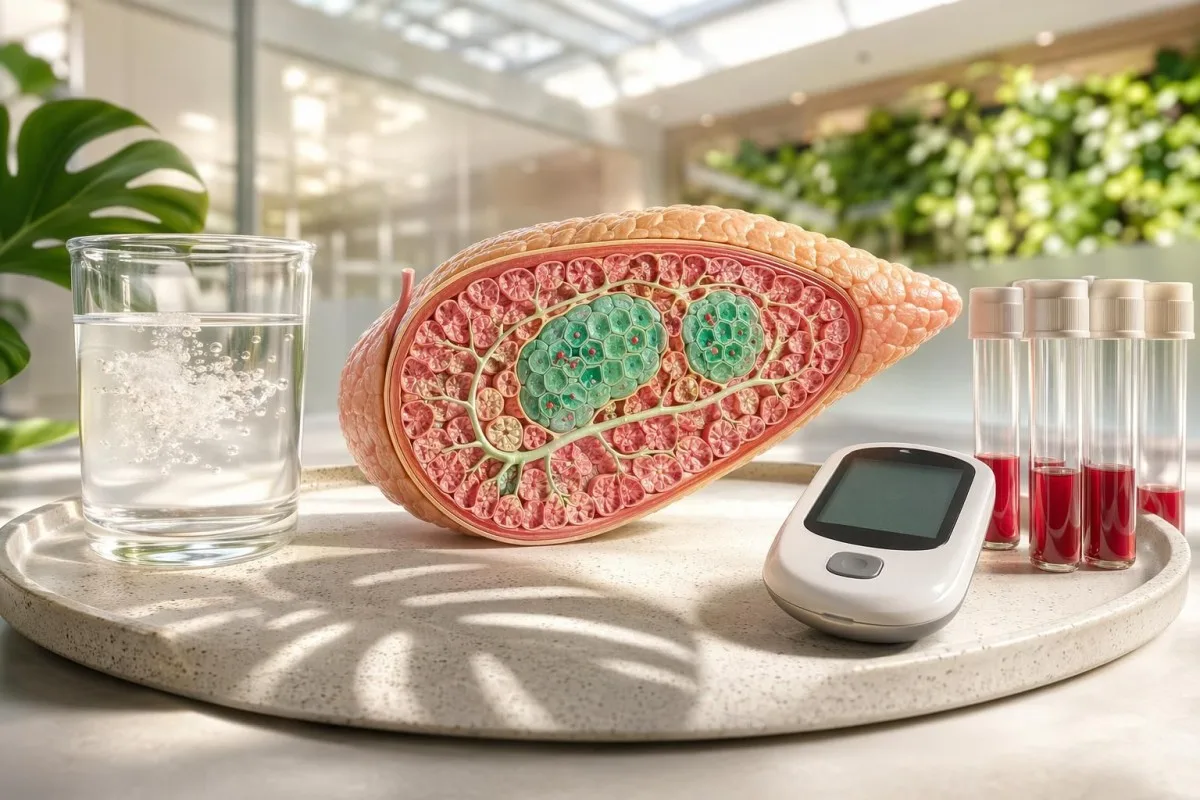
Pandhuan skrining postpartum sing praktis kanggo sapa wae sing wis diwenehi kabar yen gula nalika meteng wis normal maneh, nanging isih pengin ngerti apa sing bakal kelakon sabanjure.


- 75 g OGTT ing 4–12 minggu postpartum minangka tes sing luwih disenengi sawise diabetes gestasional amarga bisa ndeteksi masalah glukosa 2 jam sing ora kejawab dening glukosa puasa.
- watesan diabetes yaiku glukosa plasma puasa ≥126 mg/dL, glukosa OGTT 2 jam ≥200 mg/dL, HbA1c ≥6.5%, utawa glukosa acak ≥200 mg/dL kanthi gejala.
- Batasan prediabetes yaiku glukosa puasa 100–125 mg/dL, glukosa OGTT 2 jam 140–199 mg/dL, utawa HbA1c 5.7–6.4%.
- HbA1c ing awal postpartum bisa dadi luwih murah kanthi palsu sawise kelangan getih nalika persalinan utawa turnover sel darah abang sing dhuwur, mula ora kudu ngganti OGTT ing 4–12 minggu.
- Glukosa meteng normal sawise persalinan ora ngilangake risiko ing mangsa ngarep; diabetes gestasional asring dadi tes stres sel beta sing nuduhake kerentanan pirang-pirang taun sadurunge diabetes tipe 2.
- Interval kanggo mriksa maneh saben 1–3 taun sajrone urip yen skrining postpartum normal, lan biasane saben taun yen ana asil ing rentang prediabetes.
- Sadurunge meteng maneh njaluk tes glukosa sadurunge konsepsi utawa ing awal trimester kapisan, utamane yen GDM sadurunge mbutuhake insulin utawa obat.
- Penanda risiko kayata insulin puasa, trigliserida, HDL, ALT lan rasio albumin-kreatinin urin ora diagnosa diabetes, nanging mbantu ngira risiko kardiometabolik.
Tes getih sing mendiagnosis diabetes sawise diabetes gestasional
Tes getih sing ndeteksi diabetes sawise diabetes gestasional yaiku tes toleransi glukosa oral 75 g 2 jam, glukosa plasma puasa, HbA1c, lan glukosa plasma acak nalika gejala klasik ana. OGTT biasane dadi tes skrining diabetes postpartum sing paling apik ing 4–12 minggu amarga nemokake gangguan penanganan glukosa 2 jam sadurunge glukosa puasa utawa HbA1c dadi ora normal.
Minangka Thomas Klein, MD, aku ngandhani pasien yen pitakonane ora mung apa nomer kasebut dhuwur dina iki; nanging apa pankreas isih nduweni cadangan sing cukup sawise meteng. Glukosa puasa 94 mg/dL bisa katon meyakinkan, dene nilai OGTT 2 jam 168 mg/dL kanthi tenang nuduhake respons insulin fase pisanan lagi ketinggalan.
Diagnosis diabetes ing njaba meteng ditetepake kanthi glukosa plasma puasa ≥126 mg/dL, glukosa OGTT 2-jam ≥200 mg/dL, HbA1c ≥6.5%, utawa glukosa plasma acak ≥200 mg/dL kanthi gejala kayata ngelak, sering kencing, utawa mundhut bobot sing ora bisa diterangake. Kanggo perbandingan sing gampang dipahami babagan tes diagnostik lan pemantauan, kita ambang tes diabetes pandhuan kita minangka kanca sing migunani.
Kantesti yaiku analis tes getih AI sing maca glukosa postpartum, HbA1c, lipid lan penanda ginjel ing konteks klinis sing padha, dudu minangka tandha-tandha sing kapisah. Ing analisis laporan lab sing diunggah 2M+, ana siji pola sing terus katon: wong ngelingi diagnosis nalika meteng, nanging asil OGTT 4–12 minggu asring ora mlebu cathetan kesehatan jangka panjang.
Napa glukosa meteng sing normal ora ngreset risiko ing mangsa ngarep
Glukosa normal sawise nglairake ora ngreset risiko diabetes ing mangsa ngarep amarga diabetes gestasional biasane nggambarake cadangan sel beta sing winates nalika meteng ngalami stres. Persalinan ngilangi hormon plasenta, nanging ora mesthi ndandani resistensi insulin, risiko genetik, kecenderungan ati lemak, utawa kerentanan sel beta pankreas.
Plasenta ngasilake hormon sing nambah resistensi insulin, asring paling katon sawise 24–28 minggu. Nalika glukosa normal maneh sawise lair, tegese pemicune wis ilang; iku ora mbuktekake sel sing ngasilake insulin nduweni cadangan sing tanpa wates.
Bellamy et al. nglaporake ing The Lancet manawa wanita sing sadurunge duwe diabetes gestasional nduweni risiko kira-kira 7-kali luwih dhuwur kanggo diabetes tipe 2 mengko tinimbang sing ora duwe GDM (Bellamy et al., 2009). Ing praktik saben dina, aku ndeleng kluster risiko sing ana gandhengane karo nambah lingkar pinggang, trigliserida luwih saka 150 mg/dL, HDL sing kurang, riwayat kulawarga, PCOS lan gangguan turu sajrone rong taun postpartum pisanan.
HbA1c normal saka 5.3% nem wulan sawise persalinan isih bisa kedadeyan bebarengan karo resistensi insulin awal. Yen sampeyan pengin pandhangan metabolik sing luwih jero, pandhuan kita kanggo tes resistensi insulin nerangake kok insulin pasa lan glukosa bisa owah-owahan sadurunge A1C nyabrang garis prediabetes.
Nalika skrining diabetes postpartum kudu ditindakake
Skrining diabetes postpartum kudu ditindakake 4-12 minggu sawise persalinan, luwih becik nganggo OGTT 75 g 2-jam. Yen jendhela kuwi kecekel, wektu paling apik kanggo dites saiki; aku ora bakal ngenteni pemeriksaan tahunan sabanjure yen meteng wis 6 wulan utawa 6 taun kepungkur.
American Diabetes Association nyaranake OGTT 75 g ing 4-12 minggu postpartum lan skrining seumur urip saben 1-3 taun sawise diabetes gestasional (American Diabetes Association Professional Practice Committee, 2024). ACOG uga ndhukung skrining postpartum ing jendhela awal iki, lan akeh klinik obstetri saiki nyoba ngatur supaya ditindakake sadurunge kunjungan 6 minggu supaya ora lali (ACOG, 2018).
Nyusoni, fragmentasi turu lan owah-owahan bobot postpartum kabeh bisa ngganti glukosa saben dina, nanging kuwi dudu alesan kanggo nglewati tes. Umume pasien bisa nindakake OGTT nalika nyusoni; masalah praktisé asring perawatan bocah nalika ngenteni 2 jam ing laboratorium, dudu babagan biologi.
Yen sampeyan uga butuh pemeriksaan kanggo anemia, fungsi tiroid, enzim ati utawa penanda ginjel sawise persalinan, checklist lab postpartum kita pratala lab pasca-salin njlentrehake tes apa sing umum digandhengake karo skrining glukosa. Siji janjian asring bisa nutupi luwih saka siji masalah postpartum.
Cara interpretasi tes toleransi glukosa oral 75 g
Ing tes toleransi glukosa oral sawise meteng ngukur glukosa pasa lan glukosa 2-jam sawise ngombe glukosa 75 g. Nilai 2-jam ≥200 mg/dL mendiagnosis diabetes, nalika tes OGTT 2-jam mendiagnosis gangguan toleransi glukosa, sanajan glukosa pasa normal.
Tes iki bisa amarga nyoba sistem insulin, dudu mung mirsani nalika lagi istirahat. Ing pengalamanku, wong sing sadurunge duwe GDM asring bisa ngliwati bagean pasa nanging gagal ing bagean 2-jam; pola iki nuduhake sekresi insulin sing telat sawise mangan.
Siapke nganggo pola mangan sing biasa paling ora 3 dina, luwih becik kalebu paling ora 150 g karbohidrat saben dina kajaba dokter sampeyan wis ngandhani liya. Yen karbohidrat banget sithik sadurunge OGTT bisa nggedhekake kenaikan glukosa lan nggawe interpretasi dadi ruwet; pandhuan kita aturan pasa nyakup rincian banyu, kopi lan wektu.
Aja olahraga abot nalika ngenteni 2 jam, lan kandhani laboratorium yen sampeyan mutah utawa ora bisa ngrampungake ngombé. Asil kudu diulang utawa diganti nganggo tes diagnostik liyane yen prosedur ora rampung kanthi bener.
Apa sing bisa lan ora bisa dideteksi dening glukosa puasa
Glukosa plasma puasa ndeteksi diabetes nalika nilai puasa yaiku ≥126 mg/dL, nanging bisa nglewatake intoleransi glukosa sawise mangan sing mung kedadeyan (isolated) sawise diabetes gestasional. Iki migunani, murah lan bisa diulang; nanging kakehan “blunt” kanggo ngganti postpartum OGTT.
Glukosa puasa yaiku 100-125 mg/dL yaiku prediabetes miturut kritéria ADA, nalika <100 mg/dL umume dianggep normal ing Amerika Serikat. Sawetara sistem internasional nggunakake 110 mg/dL minangka ambang ngisor sing kena gangguan nalika puasa, lan iki salah siji sebab pasien bingung nalika pindhah antar negara.
Jebakan klinis yaiku glukosa puasa 88-96 mg/dL kanthi OGTT 2 jam 155-185 mg/dL. Wong kuwi bisa diwenehi kabar kabeh apik yen mung glukosa puasa sing dipesi, nanging biologi glukosa nalika mangan wis ora normal.
Glukosa esuk kena pengaruh utang turu, mangan pungkasan ing wayah wengi, kortikosteroid, infeksi lan fenomena esuk (dawn phenomenon). Saka artikel cutoffs HbA1c nerangake sebabe asil siji esuk kudu diinterpretasi kanthi nggatekake wayah sore sadurunge lan kualitas turu.
Napa HbA1c trep nanging ora sampurna sawise persalinan
HbA1c ndeteksi diabetes ing ≥6.5%, nanging kurang dipercaya ing 4-12 minggu postpartum pisanan amarga mundhut getih nalika persalinan lan pergantian sel getih abang bisa ngowahi asil. HbA1c migunani mengko, utamane kanggo tindak lanjut jangka panjang, nanging aja ngganti OGTT postpartum pisanan.
HbA1c ngira glukosa rata-rata sajrone kira-kira 8-12 minggu, condhong marang sasi paling anyar. Sawisé nglairake, anemia, transfusi, kekurangan zat besi utawa panggantos sel getih abang sing cepet bisa nggawa nilai adoh saka crita glukosa sing sejatine.
Kekurangan zat besi bisa ngunggah HbA1c kanthi palsu ing sawetara pasien, dene getihen anyar bisa nyuda kanthi palsu. Iki salah siji wilayah sing konteks luwih wigati tinimbang angka; HbA1c postpartum sing 5.6% bisa uga ora luwih nyenengake yen ferritin yaiku 8 ng/mL lan OGTT durung tau ditindakake.
Yen A1c sampeyan ora cocog karo asil cek driji utawa gejala, wacanen pandhuan babagan akurasi A1c sadurunge nampa nilai kasebut kaya ngono wae. Aku biasane nggabungake HbA1c karo glukosa puasa, CBC lan ferritin nalika crita postpartum katon ora konsisten.
Nalika glukosa acak utawa gejala mbutuhake tumindak cepet
Glukosa plasma acak ndeteksi diabetes nalika ≥200 mg/dL lan gejala ana. Sawisé diabetes gestasional, perlu review kanthi cepet yen glukosa dhuwur disertai muntah, dehidrasi, mundhut bobot kanthi cepet, keton, pandelengan kabur utawa kesel sing ora lumrah.
Umume diabetes sawise GDM yaiku jinis 2, nanging diabetes otoimun postpartum kadhangkala bisa katon, utamane yen mundhut bobot cepet lan keton ana. Aku wis ndeleng pasien dianggep mung kesel amarga wong tuwa anyar nalika glukosee 280 mg/dL lan dheweke wis ketotik.
Glukosa acak saka tes OGTT 2-jam dudu diagnosis yen mung dhewe, nanging kudu njalari glukosa puasa, HbA1c utawa OGTT gumantung wektu lan gejala. Nilai acak sing luwih saka 300 mg/dL, utamane yen ana nyeri weteng utawa ambegan abot, kudu dianggep minangka perawatan medis dina sing padha.
Siji nilai dhuwur sing mung kedadeyan sepisan bisa kedadeyan sawisé lara, steroid utawa dhaharan karbohidrat sing banget dhuwur, nanging polane sing wigati. Pandhuan kita babagan glukosa dhuwur sing ora dikarepake nerangake carane klinisi misahake hiperglikemia amarga stres saka diabetes awal.
Penanda getih sing nuduhake risiko sadurunge diabetes katon
Insulin puasa, C-peptide, trigliserida, HDL, ALT lan rasio albumin-kreatinin urin ora diagnosa diabetes, nanging mbantu nuduhake risiko metabolik sawise diabetes gestasional. Penanda iki bisa ndeteksi resistensi insulin, kecenderungan ati lemak utawa stres ginjel awal nalika glukosa isih sacara teknis normal.
Insulin puasa sing luwih dhuwur tinimbang kira-kira 15-20 µIU/mL bisa nuduhake resistensi insulin, sanajan cara pemeriksaan lab beda-beda lan ora ana patokan diagnostik sing universal. HOMA-IR nggunakake insulin puasa lan glukosa puasa; nilai ing ndhuwur 2.0-2.5 asring nambah curiga ing wong diwasa, nanging etnis, BMI lan pilihan assay ngganti interpretasine.
Trigliserida sing luwih saka 150 mg/dL lan HDL ing ngisor 50 mg/dL ing wanita asring nyertai resistensi insulin. ALT ing ndhuwur kira-kira 25-30 IU/L ing wanita sing wis tau GDM sadurunge bisa dadi petunjuk awal ati lemak sanajan tandha lab isih nyebut normal.
Kantesti minangka platform interpretasi biomarker AI sing nambani interpretasi A1c normal sawise diabetes gestasional minangka pitakon penanda risiko, dudu lampu ijo permanen. Yen kowe pengin ngitung resistensi insulin saka angka-angkamu, pandhuane pitungan HOMA-IR nuduhake rumus lan watesane.
Sepira kerepe kudu retest yen skrining postpartum normal
Yen skrining postpartum normal sawise diabetes gestasional, baleni saben 1-3 taun kanggo urip. Baleni luwih cepet, asring saben taun, yen bobot mundhak, prediabetes katon, arep meteng maneh, utawa obat-obatan kayata steroid utawa antipsikotik nambah risiko glukosa.
Rekomendasi ADA kanggo skrining seumur urip saben 1-3 taun ana amarga risiko diabetes mundhak saka wektu, ora mung ing taun postpartum pisanan. Ing klinikku, aku biasane milih interval 1-taun kanggo sapa wae sing duwe prediabetes, GDM sing diobati insulin, BMI ndhuwur 30, riwayat kulawarga sing kuwat, utawa PCOS.
Tes sing normal ing taun 2026 isih migunani amarga dadi baseline-mu. Glukosa puasa sing mundhak saka 82 nganti 96 mg/dL sajrone 3 taun bisa luwih bermakna tinimbang siji asil sing ditandhani, utamane yen trigliserida lan lingkar pinggang mundhak bebarengan.
Kantesti AI bisa nggambar glukosa, HbA1c, trigliserida lan ALT saka wektu menyang wektu supaya perubahan cilik katon sadurunge dadi gedhe banget. Artikel kita analisis tren nerangake sebabe kemiringan (slope) lan klastering asring luwih wigati tinimbang mung siji tandha lab.
Apa sing kudu dijaluk marang doktermu kanggo dipesan
Takon kanggo OGTT 75 g 2-jam ing 4-12 minggu postpartum, utawa glukosa plasma puasa plus HbA1c yen OGTT ora bisa ditindakake. Kanggo risiko jangka panjang, takon apa lipid, ALT, kreatinin, eGFR lan rasio albumin-kreatinin urin kudu dicek bebarengan karo penanda glukosa sampeyan.
Tatanan postpartum pisanan sing masuk akal asring kaya mangkene: glukosa puasa, glukosa 75 g 2-jam, HbA1c, CBC yen ana kelangan getih nalika persalinan abot, ferritin yen ana curiga anemia, panel lipid lan CMP yen risiko kardiometabolik dhuwur. Ora saben pasien butuh kabeh tes, nanging tatanan kudu cocog karo crita meteng.
Yen nalika meteng sampeyan ngalami hiperglikemia puasa utawa butuh insulin, aku bakal luwih agresif kanggo tindak lanjut awal. Yen GDM sampeyan entheng lan dikontrol nganggo diet, OGTT isih penting, nanging irama jangka panjang bisa luwih cedhak karo saben 2-3 taun nalika kabeh asil normal.
Kanggo para pamaca sing pengin ngerti apa sing diukur saben penanda, artikel kita biomarker nyakup ewu penanda lab lan beda unit sing umum. Iki utamane migunani nalika siji lab nglaporake glukosa ing mg/dL lan lab liyane nglaporake mmol/L.
Apa sing ditindakake dokter yen asil borderline utawa ora selaras
Asil diabetes sing watesan (borderline) utawa sing saling bertentangan biasane kudu diulang utawa dikonfirmasi nganggo tes diagnostik sing beda. Glukosa puasa 124 mg/dL, HbA1c 6.4%, utawa OGTT 2-jam 198 mg/dL dudu mung “ora apa-apa”; iku asil sing cedhak ambang (near-threshold) lan pantes ana rencana.
Tanpa gejala klasik, umume klinisi ngonfirmasi diabetes nganggo asil abnormal sing diulang. Yen rong tes sing beda ora cocog, tes sing ngluwihi ambang diagnostik biasane diulang, lan konteks pasien sing nemtokake sepira cepet kedadeyan kuwi.
Thomas Klein, MD, aturan praktis: aja nganti tembung “borderline” nggawe asil katon ora mbebayani. OGTT 2-jam 196 mg/dL sawise GDM sadurunge asring nggawa risiko mangsa ngarep sing luwih gedhe tinimbang glukosa puasa 101 mg/dL, sanajan loro-lorone bisa dicathet minangka prediabetes.
Panuntunku kanggo ambang prediabetes nerangake carane glukosa puasa, A1c lan OGTT nemtokake masalah biologis sing beda. Aku kerep nggambarake prediabetes sawise GDM minangka “jendhela perawatan” tinimbang “ruang tunggu.”.
Situasi khusus: nyusoni, anemia, PCOS, lan obat-obatan
Nyusoni, anemia, PCOS, obat GLP-1, steroid lan penyakit tiroid bisa ngganti cara interpretasi tes diabetes postpartum. Batas potong glukosa tetep padha, nanging kapercayan sing sampeyan pasang marang HbA1c, glukosa puasa utawa tingkat insulin bisa owah kanthi nyata.
Nyusoni asring nambah metabolisme glukosa lan bisa nyuda risiko diabetes tipe 2 ing mangsa ngarep, nanging ora ngilangi kabutuhan skrining. Yen sampeyan njupuk insulin utawa sulfonylurea postpartum, takon marang klinis sampeyan babagan risiko hipoglikemia nalika nyusoni luwih suwe utawa nalika dhaharan keplok.
PCOS nambah jalur resistensi insulin sing kapisah, lan GDM sadurunge plus PCOS minangka salah siji kombinasi sing tak tangani kanthi luwih tliti. Kita Pola lab PCOS nerangake sebabe insulin puasa, lipid, lan androgen bisa wigati sanajan glukosa durung tekan kriteria diagnostik.
Injeksi steroid, prednisone dosis dhuwur, sawetara antipsikotik, lan kurang turu sing abot bisa ngunggah glukosa sak wentoro. Bukti babagan ambang turu postpartum sing pas tenan campur aduk, nanging aku weruh nilai puasa sing luwih ala nalika turu pecah-pecah ing ngisor 5-6 jam sajrone pirang-pirang minggu.
Cara Kantesti maca lab diabetes postpartum kanthi aman
Kantesti maca lab diabetes postpartum kanthi nggabungake ambang glukosa karo wektu, riwayat meteng, petunjuk anemia, pola lipid, lan penanda ginjel. Tujuane dudu kanggo ngganti klinis sampeyan; tujuane supaya pola risiko luwih cetha sadurunge janjian.
Kantesti yaiku piranti analisis tes getih sing didukung AI sing digunakake dening 2M+ wong ing 127 negara, kanthi interpretasi PDF utawa foto asil tes getih sajrone kira-kira 60 detik. Kanggo skrining diabetes postpartum, jaringan saraf kita misahake kriteria glukosa diagnostik saka penanda konteks risiko kayata trigliserida, HDL, ALT, lan ACR urin.
Unggahan sing umum bisa nuduhake HbA1c 5.5%, glukosa puasa 92 mg/dL, feritin 10 ng/mL lan ora ana OGTT. AI Kantesti ora bakal mendiagnosis diabetes saka angka-angka kuwi, nanging kudu menehi tandha yen A1c postpartum awal bisa ora dipercaya lan OGTT sing dianjurake ora ana.
Cara-cara kita selaras karo standar klinis sing wis diterbitake lan review internal dokter; para pamaca bisa ndeleng , amarga lan sing wis didaftarkan sadurunge AI benchmark. Yen sampeyan ngunggah scan tinimbang ngetik nilai, amarga laboratorium nyampur nerangake carane laporan diwaca lan dicek.
Rencana retesting sing praktis kanggo 2026 lan sabanjure
Wiwit 26 Mei 2026, rencana sing paling aman sawise diabetes gestasional yaiku OGTT ing 4-12 minggu, skrining mbaleni saben 1-3 taun, lan tes luwih awal sadurunge meteng liyane. Yen ana asil sing ana ing rentang prediabetes, anggep minangka jendhela pencegahan aktif, dudu mung rasa penasaran lab sing entheng.
Skripku biasane prasaja: njupuk OGTT postpartum sing kapisan, nyimpen asilé, banjur pasang cek glukosa sabanjure ing kalender sadurunge urip dadi rame. Yen OGTT 2 jam sampeyan tes OGTT 2-jam, njaluk interval tindak lanjut sing cetha, rencana nutrisi, lan target olahraga tinimbang mung ngelingi kanthi samar supaya ati-ati.
Yen skrining diabetes sampeyan normal, tetep critakake marang saben klinis mangsa ngarep yen sampeyan tau GDM. Siji baris kuwi ngganti cara aku maca glukosa puasa sing 103 mg/dL, tingkat trigliserida sing 180 mg/dL, utawa HbA1c sing mundhak saka 5.2% nganti 5.6% sajrone pirang-pirang taun.
Kantesti Ltd minangka perusahaan teknologi kesehatan saka Inggris, lan para dokter kita mriksa isi medis liwat dewan penasehat medis lan proses tata kelola klinis sing diterangake ing Babagan Kita. Intine: tes sing pas ora rumit, nanging wektu lan interpretasine luwih wigati tinimbang sing umume wong kandha.
Publikasi riset sing gegandhengan Kantesti
Skrining diabetes postpartum asring ana ing tinjauan lab sing luwih amba sing kalebu CBC, status wesi, lan penanda ginjel. Publikasi DOI Kantesti sing kadhaptar ing ngisor iki ndhukung cara interpretasi tes getih sing cedhak, kalebu indeks sel getih abang lan rasio fungsi ginjel sing bisa mengaruhi kapercayan HbA1c utawa penilaian risiko metabolik jangka panjang.
Pitakonan sing Sering Ditakoni
Tes darah apa sing bisa ndeteksi diabetes sawise diabetes gestasional?
Tes getih sing ndeteksi diabetes sawisé diabetes gestasional yaiku tes toleransi glukosa oral 75 g 2-jam, glukosa plasma puasa, HbA1c lan glukosa plasma acak nalika ana gejala. Diabetes didiagnosis kanthi glukosa puasa ≥126 mg/dL, glukosa OGTT 2-jam ≥200 mg/dL, HbA1c ≥6.5%, utawa glukosa acak ≥200 mg/dL kanthi gejala klasik. OGTT luwih disenengi ing 4–12 minggu postpartum amarga bisa ndeteksi gangguan penanganan glukosa 2-jam sanajan glukosa puasa isih normal.
Apa tes toleransi glukosa oral sawise meteng luwih apik tinimbang HbA1c?
Ya, tes toleransi glukosa oral sawise meteng biasane luwih apik tinimbang HbA1c kanggo skrining postpartum pisanan ing 4–12 minggu. HbA1c bisa kethok utawa kethok amarga mundhut getih nalika babaran, anemia, transfusi, utawa pergantian sel getih abang sing cepet, dene OGTT langsung ngukur penanganan glukosa sawise tantangan glukosa 75 g. HbA1c dadi luwih migunani mengko kanggo skrining jangka panjang lan pemantauan tren.
Kapan skrining diabetes postpartum kudu ditindakake sawise GDM?
Skrining diabetes pascapersalinan sawise diabetes gestasional kudu ditindakake 4–12 minggu sawisé persalinan, kanthi becik nggunakake OGTT 75 g 2 jam. Yen wektu kuwi kececer, pemeriksaan kudu ditindakake sanalika bisa tinimbang ngenteni gejala. Yen asil pascapersalinan normal, baleni skrining diabetes saben 1–3 taun sajrone urip.
Apa HbA1c bisa normal nanging OGTT ora normal sawise diabetes gestasional?
Ya, HbA1c bisa normal nalika OGTT ora normal sawise diabetes gestasional. Seseorang bisa nduwèni HbA1c 5.3% lan glukosa puasa 92 mg/dL, nanging nilai OGTT 2 jam 160 mg/dL, yaiku toleransi glukosa sing kaganggu. Iki kedadeyan amarga HbA1c nggambarake rata-rata glukosa, dene OGTT nyoba respons insulin sawise diwenehi beban glukosa.
Apa tegese asil prediabetes sawise diabetes gestasional?
Prediabetes sawise diabetes gestasional ditetepake kanthi glukosa plasma puasa 100-125 mg/dL, glukosa OGTT 2-jam 140-199 mg/dL, utawa HbA1c 5.7-6.4%. Kelainan ing OGTT 2-jam utamane kerep kedadeyan sawise GDM lan bisa kececer yen mung glukosa puasa sing dijaluk. Prediabetes biasane kudu nyebabake tindak lanjut saben taun lan rencana pencegahan sing terstruktur.
Sepira kerepe aku kudu nindakake tes maneh yen skrining postpartumku normal?
Yen skrining diabetes postpartum panjenengan normal sawisé diabetes gestasional, baleni saben 1–3 taun kanggo salawasé urip. Akeh klinisi milih tes saben taun yen panjenengan nduwé GDM sing diobati insulin, prediabetes, PCOS, BMI luwih saka 30, riwayat kulawarga sing kuwat, utawa trigliserida sing saya mundhak. Tes uga kudu diulang sadurungé meteng manèh utawa ing awal trimester pisanan.
Apa menyusui ngganti asil tes getih diabetes?
Nyusoni bisa ningkatake metabolisme glukosa lan bisa nyuda risiko diabetes tipe 2 ing mangsa ngarep, nanging ora ngilangi kabutuhan kanggo skrining diabetes postpartum. Batas potong diagnostik kanggo glukosa puasa, OGTT lan HbA1c ora owah amarga ana sing nyusoni. Yen obat diabetes digunakake nalika postpartum, para klinisi bisa nyetel wektu utawa dosis kanggo nyuda risiko hipoglikemia nalika nyusoni dawa utawa nalika dhaharan kececer.
Apa aku bisa nggunakake monitor glukosa terus-terusan tinimbang tes toleransi glukosa pasca-melahirkan?
Ora. Monitor glukosa terus-terusan bisa nuduhake pola glukosa saben dina sing migunani, nanging ora ngganti glukosa puasa laboratorium, HbA1c, utawa OGTT 75 g kanggo ndeteksi diabetes sawise diabetes gestasional. Doktermu bisa nggunakake mengko kanggo ndhukung kaputusan gaya urip utawa perawatan.
Apa bayi kula perlu dites diabetes amarga kula ngalami diabetes gestasional?
Glukosa bayi anyar bisa dipriksa ing rumah sakit, utamane yen panjenengan nggunakake insulin utawa obat nalika meteng, nanging umume bocah ora perlu tes getih diabetes sing terus-terusan mung amarga diabetes gestasional sing dialami ibu. Tetep tindakake kunjungan pediatrik kanthi rutin lan dukung kabiasaan kulawarga babagan mangan sing seimbang, aktivitas, lan turu.
Kepiye yen aku ora bisa ngidinke ombenan glukosa kanggo postpartum OGTT?
Marang klinisimu sadurunge tes. Dheweke bisa ngatur jadwal maneh nganggo strategi kanggo mual, mriksa glukosa puasa lan HbA1c, utawa nggunakake data glukosa ing omah utawa glukosa kontinu kanthi sementara, nanging alternatif kasebut bisa uga ora bisa ngganti OGTT diagnostik kanthi lengkap.
Entuk Analisis Tes Getih Berbasis AI Dina Iki
Gabung karo luwih saka 2 yuta pangguna ing saindenging jagad sing percaya Kantesti kanggo analisis tes lab sing instan lan akurat. Unggah asil tes getihmu lan tampa interpretasi lengkap saka 15,000+ biomarker sajrone sawetara detik.
📚 Publikasi Riset sing Dirujuk
Klein, T., Mitchell, S., & Weber, H. (2026). Tes Getih RDW: Pandhuan Lengkap kanggo RDW-CV, MCV & MCHC. Riset Medis AI Kantesti.
Klein, T., Mitchell, S., & Weber, H. (2026). Penjelasan Rasio BUN/Kreatinin: Pandhuan Tes Fungsi Ginjel. Riset Medis AI Kantesti.
📖 Referensi Medis Eksternal
Komite Praktik Profesional American Diabetes Association (2024). 2. Diagnosis lan Klasifikasi Diabetes: Standar Perawatan ing Diabetes—2024. Diabetes Care.
⚕️ Penafian Medis
Artikel iki mung kanggo tujuan edukasi lan ora dadi saran medis. Tansah konsultasi karo panyedhiya layanan kesehatan sing mumpuni kanggo keputusan diagnosis lan perawatan.
Sinyal Kepercayaan E-E-A-T
Pengalaman
Tinjauan klinis sing dipimpin dokter babagan alur kerja interpretasi lab.
Keahlian
Fokus kedokteran laboratorium babagan carane biomarker tumindak ing konteks klinis.
Kewibawaan
Ditulis dening Dr. Thomas Klein kanthi ditinjau dening Dr. Sarah Mitchell lan Prof. Dr. Hans Weber.
Kapercayan
Interpretasi adhedhasar bukti kanthi tindak lanjut sing cetha kanggo nyuda rasa kaget.