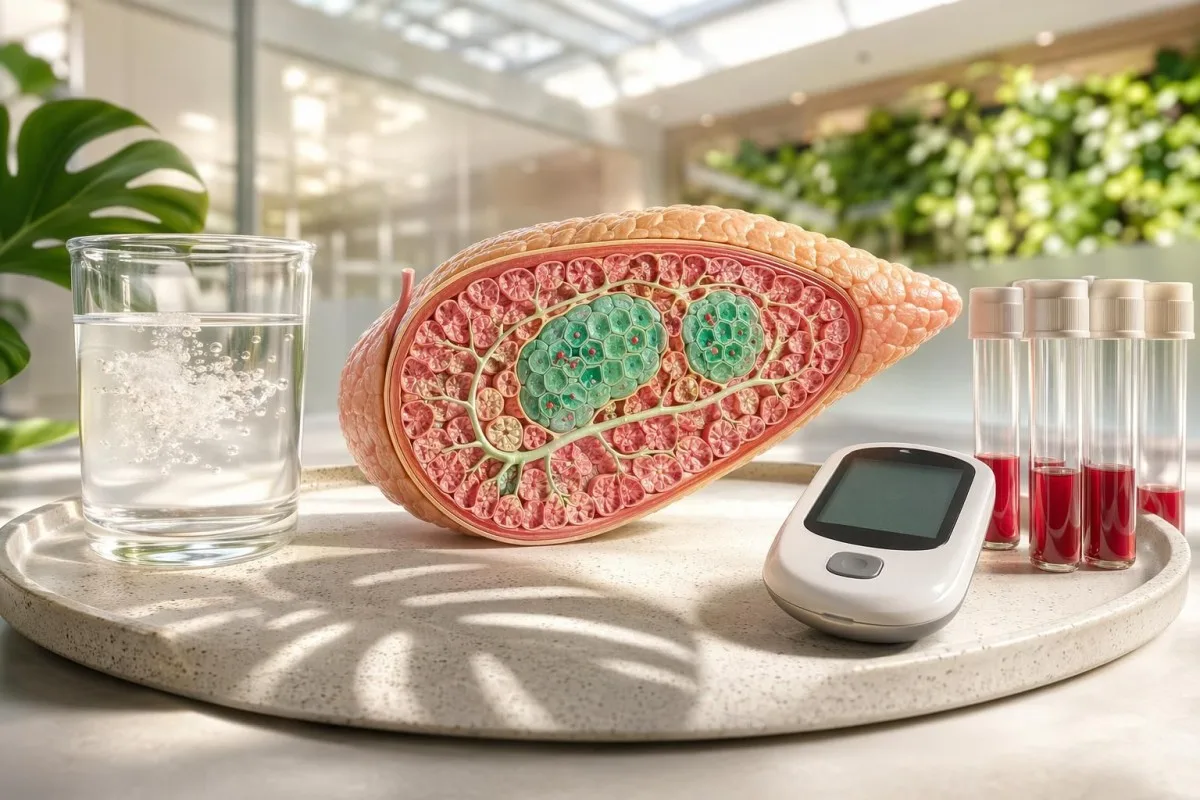
A practical postpartum screening guide for anyone told their pregnancy sugars were normal again, but still wants to know what comes next.


- 75 g OGTT at 4-12 weeks postpartum is the preferred test after gestational diabetes because it detects 2-hour glucose problems that fasting glucose can miss.
- Diabetes cutoffs are fasting plasma glucose ≥126 mg/dL, 2-hour OGTT glucose ≥200 mg/dL, HbA1c ≥6.5%, or random glucose ≥200 mg/dL with symptoms.
- Prediabetes cutoffs are fasting glucose 100-125 mg/dL, 2-hour OGTT glucose 140-199 mg/dL, or HbA1c 5.7-6.4%.
- HbA1c early postpartum can be falsely low after delivery blood loss or high red-cell turnover, so it should not replace the OGTT at 4-12 weeks.
- Normal pregnancy glucose after delivery does not erase future risk; gestational diabetes is often a beta-cell stress test that reveals vulnerability years before type 2 diabetes.
- Retesting interval is every 1-3 years for life if the postpartum screen is normal, and usually yearly if any result is in the prediabetes range.
- Before another pregnancy ask for glucose testing before conception or early in the first trimester, especially if prior GDM required insulin or medication.
- Risk markers such as fasting insulin, triglycerides, HDL, ALT and urine albumin-creatinine ratio do not diagnose diabetes, but they help estimate cardiometabolic risk.
The blood tests that diagnose diabetes after gestational diabetes
The blood tests that detect diabetes after gestational diabetes are the 75 g 2-hour oral glucose tolerance test, fasting plasma glucose, HbA1c, and random plasma glucose when classic symptoms are present. The OGTT is usually the best postpartum diabetes screening test at 4-12 weeks because it finds impaired 2-hour glucose handling before fasting glucose or HbA1c turns abnormal.
As Thomas Klein, MD, I tell patients that the question is not only whether the number is high today; it is whether the pancreas still has enough reserve after pregnancy. A fasting glucose of 94 mg/dL can look reassuring, while a 2-hour OGTT value of 168 mg/dL quietly says the first-phase insulin response is lagging.
A diagnosis of diabetes outside pregnancy is made by fasting plasma glucose ≥126 mg/dL, 2-hour OGTT glucose ≥200 mg/dL, HbA1c ≥6.5%, or random plasma glucose ≥200 mg/dL with symptoms such as thirst, frequent urination or unexplained weight loss. For a plain-language comparison of diagnostic and monitoring tests, our diabetes test cutoffs guide is a useful companion.
Kantesti is an AI blood test analyzer that reads postpartum glucose, HbA1c, lipids and kidney markers in the same clinical context rather than as isolated flags. In our analysis of 2M+ uploaded lab reports, one pattern keeps appearing: people remember the pregnancy diagnosis, but their 4-12 week OGTT result often never makes it into the long-term health record.
Why normal pregnancy glucose does not reset future risk
Normal glucose after delivery does not reset future diabetes risk because gestational diabetes usually reflects limited beta-cell reserve under pregnancy stress. Delivery removes placental hormones, but it does not necessarily repair insulin resistance, genetic risk, fatty liver tendency, or pancreatic beta-cell vulnerability.
The placenta produces hormones that push insulin resistance up, often most noticeably after 24-28 weeks. When glucose normalizes after birth, that means the stressor has gone; it does not prove the insulin-producing cells have unlimited reserve.
Bellamy et al. reported in The Lancet that women with previous gestational diabetes had about a 7-fold higher risk of later type 2 diabetes compared with those without GDM (Bellamy et al., 2009). In day-to-day practice, I see the risk cluster with waist gain, triglycerides above 150 mg/dL, low HDL, family history, PCOS and sleep disruption during the first two postpartum years.
A normal HbA1c of 5.3% six months after delivery can still coexist with early insulin resistance. If you want the deeper metabolic view, our guide to insulin resistance testing explains why fasting insulin and glucose can drift before A1c crosses the prediabetes line.
When postpartum diabetes screening should happen
Postpartum diabetes screening should happen 4-12 weeks after delivery, preferably with a 75 g 2-hour OGTT. If that window was missed, the best time to test is now; I would not wait for the next annual physical if the pregnancy was 6 months or 6 years ago.
The American Diabetes Association recommends a 75 g OGTT at 4-12 weeks postpartum and lifelong screening every 1-3 years after gestational diabetes (American Diabetes Association Professional Practice Committee, 2024). ACOG also supports postpartum screening in this early window, and many obstetric clinics now try to order it before the 6-week visit so it is not forgotten (ACOG, 2018).
Breastfeeding, sleep fragmentation and postpartum weight shifts can all change glucose day to day, but they are not reasons to skip testing. Most patients can do the OGTT while breastfeeding; the practical issue is often childcare during the 2-hour lab wait, not the biology.
If you also need checks for anemia, thyroid function, liver enzymes or kidney markers after delivery, our postpartum lab checklist lays out which tests are commonly paired with glucose screening. A single appointment can often cover more than one postpartum problem.
How the 75 g oral glucose tolerance test is interpreted
The oral glucose tolerance test after pregnancy measures fasting glucose and 2-hour glucose after a 75 g glucose drink. A 2-hour value ≥200 mg/dL diagnoses diabetes, while 140-199 mg/dL diagnoses impaired glucose tolerance, even when fasting glucose is normal.
The test works because it challenges the insulin system rather than observing it at rest. In my experience, people with prior GDM often pass the fasting part but fail the 2-hour part; that pattern points to delayed insulin secretion after meals.
Prepare with usual eating for at least 3 days, ideally including at least 150 g carbohydrate per day unless your clinician has told you otherwise. Going very low-carb before an OGTT can exaggerate the glucose rise and make interpretation messy; our fasting rules guide covers water, coffee and timing details.
Do not exercise hard during the 2-hour wait, and tell the lab if you vomit or cannot finish the drink. A result should be repeated or replaced with another diagnostic test if the procedure was not completed properly.
What fasting glucose can and cannot detect
Fasting plasma glucose detects diabetes when the fasting value is ≥126 mg/dL, but it can miss isolated post-meal glucose intolerance after gestational diabetes. It is useful, cheap and repeatable; it is simply too blunt to replace the postpartum OGTT.
A fasting glucose of 100-125 mg/dL is prediabetes by ADA criteria, while <100 mg/dL is generally considered normal in the United States. Some international systems use 110 mg/dL as the lower impaired-fasting threshold, which is one reason patients get confused when moving between countries.
The clinical trap is a fasting glucose of 88-96 mg/dL with a 2-hour OGTT of 155-185 mg/dL. That person may be told everything is fine if only fasting glucose was ordered, yet their meal-time glucose biology is already abnormal.
Morning glucose is affected by sleep debt, late-night eating, corticosteroids, infection and the dawn phenomenon. Our fasting sugar guide explains why a single morning result should be interpreted with the previous evening and sleep quality in mind.
Why HbA1c is convenient but imperfect after delivery
HbA1c detects diabetes at ≥6.5%, but it is less reliable in the first 4-12 postpartum weeks because delivery blood loss and red-cell turnover can distort the result. HbA1c is useful later, especially for long-term follow-up, but it should not replace the first postpartum OGTT.
HbA1c estimates average glucose over roughly 8-12 weeks, weighted toward the most recent month. After childbirth, anemia, transfusion, iron deficiency or rapid red-cell replacement can push the value away from the true glucose story.
Iron deficiency can falsely raise HbA1c in some patients, while recent blood loss can falsely lower it. This is one of those areas where context matters more than the number; a postpartum HbA1c of 5.6% may not be as reassuring if ferritin is 8 ng/mL and the OGTT was never done.
If your A1c does not match fingerstick readings or symptoms, read our guide on A1c accuracy before accepting the value at face value. I usually pair HbA1c with fasting glucose, CBC and ferritin when the postpartum story feels inconsistent.
When random glucose or symptoms need fast action
Random plasma glucose detects diabetes when it is ≥200 mg/dL and symptoms are present. After gestational diabetes, urgent review is needed for high glucose with vomiting, dehydration, rapid weight loss, ketones, blurred vision or unusual exhaustion.
Most diabetes after GDM is type 2, but postpartum autoimmune diabetes can occasionally appear, particularly if weight loss is rapid and ketones are present. I have seen patients dismissed as merely tired new parents when their glucose was 280 mg/dL and they were already ketotic.
A random glucose of 140-199 mg/dL is not diagnostic by itself, but it should prompt fasting glucose, HbA1c or OGTT depending on timing and symptoms. A random value over 300 mg/dL, especially with abdominal pain or labored breathing, should be treated as same-day medical care.
One isolated high value can happen after illness, steroids or a very high-carbohydrate meal, but the pattern matters. Our guide to unexpected high glucose explains how clinicians separate stress hyperglycemia from early diabetes.
Blood markers that show risk before diabetes appears
Fasting insulin, C-peptide, triglycerides, HDL, ALT and urine albumin-creatinine ratio do not diagnose diabetes, but they help show metabolic risk after gestational diabetes. These markers can reveal insulin resistance, fatty liver tendency or early kidney stress while glucose is still technically normal.
A fasting insulin above roughly 15-20 µIU/mL can suggest insulin resistance, although lab methods differ and there is no universal diagnostic cutoff. HOMA-IR uses fasting insulin and fasting glucose; values above 2.0-2.5 often raise suspicion in adults, but ethnicity, BMI and assay choice change the interpretation.
Triglycerides above 150 mg/dL and HDL below 50 mg/dL in women often travel with insulin resistance. ALT above about 25-30 IU/L in a woman with prior GDM can be an early fatty-liver clue even when the lab flag still says normal.
Kantesti is an AI biomarker interpretation platform that treats a normal A1c after gestational diabetes as a risk marker question, not a green light forever. If you want to calculate insulin resistance from your numbers, the HOMA-IR calculation guide shows the formula and its limitations.
How often to retest if the postpartum screen is normal
If postpartum screening is normal after gestational diabetes, retest every 1-3 years for life. Retest sooner, often yearly, if weight increases, prediabetes appears, another pregnancy is planned, or medications such as steroids or antipsychotics raise glucose risk.
The ADA recommendation for lifelong screening every 1-3 years exists because diabetes risk rises over time, not only in the first postpartum year. In my clinic, I usually choose the 1-year interval for anyone with prediabetes, insulin-treated GDM, BMI above 30, strong family history or PCOS.
A normal test in 2026 is still useful because it becomes your baseline. A fasting glucose drifting from 82 to 96 mg/dL over 3 years may be more meaningful than one flagged result, especially if triglycerides and waist circumference rise at the same time.
Kantesti AI can chart glucose, HbA1c, triglycerides and ALT over time so small shifts are visible before they become dramatic. Our trend analysis article explains why slope and clustering often matter more than a single lab flag.
What to ask your clinician to order
Ask for a 75 g 2-hour OGTT at 4-12 weeks postpartum, or fasting plasma glucose plus HbA1c if an OGTT is not feasible. For long-term risk, ask whether lipids, ALT, creatinine, eGFR and urine albumin-creatinine ratio should be checked with your glucose markers.
A sensible first postpartum order often reads: fasting glucose, 75 g 2-hour glucose, HbA1c, CBC if there was heavy delivery blood loss, ferritin if anemia is suspected, lipid panel and CMP if cardiometabolic risk is high. Not every patient needs every test, but the order should match the pregnancy story.
If you had fasting hyperglycemia during pregnancy or needed insulin, I would be more aggressive with early follow-up. If your GDM was mild and diet-controlled, the OGTT still matters, but the long-term cadence may be closer to every 2-3 years when all results are normal.
For readers who want to understand what each marker actually measures, our biomarker guide covers thousands of lab markers and common unit differences. This is especially helpful when one lab reports glucose in mg/dL and another reports mmol/L.
What doctors do with borderline or conflicting results
Borderline or conflicting diabetes results should usually be repeated or confirmed with a different diagnostic test. A fasting glucose of 124 mg/dL, HbA1c of 6.4%, or 2-hour OGTT of 198 mg/dL is not a shrug; it is a near-threshold result that deserves a plan.
Without classic symptoms, most clinicians confirm diabetes with a repeat abnormal result. If two different tests disagree, the test above the diagnostic threshold is typically repeated, and the patient context decides how quickly that happens.
Thomas Klein, MD, practical rule: do not let the word borderline make the result feel harmless. A 2-hour OGTT of 196 mg/dL after prior GDM often carries more future risk than a fasting glucose of 101 mg/dL, even though both may be filed under prediabetes.
Our guide to prediabetes thresholds explains how fasting glucose, A1c and OGTT define different biological problems. I often frame prediabetes after GDM as a treatment window rather than a waiting room.
Special situations: breastfeeding, anemia, PCOS and medications
Breastfeeding, anemia, PCOS, GLP-1 medicines, steroids and thyroid disease can change how postpartum diabetes labs should be interpreted. The glucose cutoffs stay the same, but the confidence you place in HbA1c, fasting glucose or insulin levels may change substantially.
Breastfeeding often improves glucose metabolism and may lower future type 2 diabetes risk, but it does not eliminate the need for screening. If you are taking insulin or sulfonylureas postpartum, ask your clinician about hypoglycemia risk during longer feeds or missed meals.
PCOS adds a separate insulin-resistance pathway, and prior GDM plus PCOS is one of the combinations I treat with extra respect. Our PCOS lab patterns guide explains why fasting insulin, lipids and androgens can matter even when glucose is not yet diagnostic.
Steroid injections, high-dose prednisone, some antipsychotics and severe sleep deprivation can push glucose up temporarily. The evidence around exact postpartum sleep thresholds is honestly mixed, but I see worse fasting values when sleep is fragmented below 5-6 hours for weeks.
How Kantesti reads postpartum diabetes labs safely
Kantesti reads postpartum diabetes labs by combining glucose thresholds with timing, pregnancy history, anemia clues, lipid patterns and kidney markers. The aim is not to replace your clinician; it is to make the risk pattern clearer before your appointment.
Kantesti is an AI-powered blood test analysis tool used by 2M+ people across 127 countries, with blood test PDF or photo interpretation in about 60 seconds. For postpartum diabetes screening, our neural network separates diagnostic glucose criteria from risk-context markers such as triglycerides, HDL, ALT and urine ACR.
A typical upload might show HbA1c 5.5%, fasting glucose 92 mg/dL, ferritin 10 ng/mL and no OGTT. Kantesti AI would not diagnose diabetes from those numbers, but it should flag that early postpartum A1c may be unreliable and that the recommended OGTT is missing.
Our methods are aligned with published clinical standards and internal physician review; readers can see our clinical validation standards and the pre-registered AI benchmark. If you are uploading a scan rather than typing values, the PDF upload workflow explains how reports are read and checked.
A practical retesting plan for 2026 and beyond
As of May 26, 2026, the safest plan after gestational diabetes is OGTT at 4-12 weeks, repeat screening every 1-3 years, and earlier testing before another pregnancy. If any result is in the prediabetes range, treat it as an active prevention window, not a mild lab curiosity.
My usual script is simple: get the first postpartum OGTT, save the result, then put the next glucose check on the calendar before life gets busy. If your 2-hour OGTT is 140-199 mg/dL, ask for a clear follow-up interval, nutrition plan and exercise target rather than a vague reminder to be careful.
If your diabetes screen is normal, still tell every future clinician that you had GDM. That one line changes how I read a fasting glucose of 103 mg/dL, a triglyceride level of 180 mg/dL, or an HbA1c that creeps from 5.2% to 5.6% over several years.
Kantesti Ltd is a UK health technology company, and our physicians review medical content through our medical advisory board and clinical governance process described on About Us. Bottom line: the right tests are not complicated, but the timing and interpretation matter more than most people are told.
Related Kantesti research publications
Postpartum diabetes screening often sits inside a broader lab review that includes CBC, iron status and kidney markers. The Kantesti DOI publications listed below support adjacent blood-test interpretation methods, including red-cell indices and kidney function ratios that can affect HbA1c confidence or long-term metabolic risk assessment.
Frequently Asked Questions
What blood tests detect diabetes after gestational diabetes?
The blood tests that detect diabetes after gestational diabetes are the 75 g 2-hour oral glucose tolerance test, fasting plasma glucose, HbA1c and random plasma glucose when symptoms are present. Diabetes is diagnosed by fasting glucose ≥126 mg/dL, 2-hour OGTT glucose ≥200 mg/dL, HbA1c ≥6.5%, or random glucose ≥200 mg/dL with classic symptoms. The OGTT is preferred at 4-12 weeks postpartum because it can detect impaired 2-hour glucose handling even when fasting glucose is normal.
Is the oral glucose tolerance test after pregnancy better than HbA1c?
Yes, the oral glucose tolerance test after pregnancy is usually better than HbA1c for the first postpartum screen at 4-12 weeks. HbA1c can be distorted by delivery blood loss, anemia, transfusion or rapid red-cell turnover, while the OGTT directly measures glucose handling after a 75 g glucose challenge. HbA1c becomes more useful later for long-term screening and trend monitoring.
When should postpartum diabetes screening be done after GDM?
Postpartum diabetes screening after gestational diabetes should be done 4-12 weeks after delivery, ideally with a 75 g 2-hour OGTT. If that window was missed, testing should be done as soon as practical rather than waiting for symptoms. If the postpartum result is normal, repeat diabetes screening every 1-3 years for life.
Can HbA1c be normal but the OGTT abnormal after gestational diabetes?
Yes, HbA1c can be normal while the OGTT is abnormal after gestational diabetes. A person may have HbA1c 5.3% and fasting glucose 92 mg/dL but a 2-hour OGTT value of 160 mg/dL, which is impaired glucose tolerance. This happens because HbA1c reflects average glucose, while the OGTT stresses the insulin response after a glucose load.
What results mean prediabetes after gestational diabetes?
Prediabetes after gestational diabetes is defined by fasting plasma glucose 100-125 mg/dL, 2-hour OGTT glucose 140-199 mg/dL, or HbA1c 5.7-6.4%. A 2-hour OGTT abnormality is especially common after GDM and may be missed if only fasting glucose is ordered. Prediabetes should usually trigger yearly follow-up and a structured prevention plan.
How often should I retest if my postpartum screen is normal?
If your postpartum diabetes screen is normal after gestational diabetes, retest every 1-3 years for life. Many clinicians choose yearly testing if you had insulin-treated GDM, prediabetes, PCOS, BMI above 30, strong family history, or rising triglycerides. Testing should also be repeated before another pregnancy or early in the first trimester.
Does breastfeeding change diabetes blood test results?
Breastfeeding can improve glucose metabolism and may lower future type 2 diabetes risk, but it does not remove the need for postpartum diabetes screening. The diagnostic cutoffs for fasting glucose, OGTT and HbA1c do not change because someone is breastfeeding. If diabetes medicines are used postpartum, clinicians may adjust timing or dose to reduce hypoglycemia risk during long feeds or missed meals.
Can I use a continuous glucose monitor instead of the postpartum glucose tolerance test?
No. A continuous glucose monitor can show useful day-to-day glucose patterns, but it does not replace laboratory fasting glucose, HbA1c, or a 75 g OGTT for diagnosing diabetes after gestational diabetes. Your clinician may use it later to support lifestyle or treatment decisions.
Does my baby need diabetes testing because I had gestational diabetes?
Newborn glucose may be checked in the hospital, especially if you used insulin or medication during pregnancy, but most children do not need ongoing diabetes blood tests solely because of maternal gestational diabetes. Keep regular pediatric visits and support family habits around balanced meals, activity, and sleep.
What if I cannot tolerate the glucose drink for the postpartum OGTT?
Tell your clinician before the test. They may reschedule with nausea strategies, check fasting glucose and HbA1c, or use home or continuous glucose data temporarily, but these alternatives may not fully replace the diagnostic OGTT.
Get AI-Powered Blood Test Analysis Today
Join over 2 million users worldwide who trust Kantesti for instant, accurate lab test analysis. Upload your blood test results and receive comprehensive interpretation of 15,000+ biomarkers in seconds.
📚 Referenced Research Publications
Klein, T., Mitchell, S., & Weber, H. (2026). RDW Blood Test: Complete Guide to RDW-CV, MCV & MCHC. Kantesti AI Medical Research.
Klein, T., Mitchell, S., & Weber, H. (2026). BUN/Creatinine Ratio Explained: Kidney Function Test Guide. Kantesti AI Medical Research.
📖 External Medical References
American Diabetes Association Professional Practice Committee (2024). 2. Diagnosis and Classification of Diabetes: Standards of Care in Diabetes—2024. Diabetes Care.
⚕️ Medical Disclaimer
This article is for educational purposes only and does not constitute medical advice. Always consult a qualified healthcare provider for diagnosis and treatment decisions.
E-E-A-T Trust Signals
Experience
Physician-led clinical review of lab interpretation workflows.
Expertise
Laboratory medicine focus on how biomarkers behave in clinical context.
Authoritativeness
Written by Dr. Thomas Klein with review by Dr. Sarah Mitchell and Prof. Dr. Hans Weber.
Trustworthiness
Evidence-based interpretation with clear follow-up pathways to reduce alarm.