A doctor-led look at how Kantesti's medical AI reads PDFs and photos of lab reports. It normalizes units across 75+ languages and produces a 35-40 page interpretation clinicians actually use.
Update (25 October 2026): We clarified reported accuracy, corrected the lab example and vitamin D guidance, and added safeguards for AI interpretation, supplement advice and claims of clinical recognition.



- Kantesti is a medical-grade AI blood test analyzer built on a proprietary neural network with reported 99.84% accuracy on validated panels.
- Upload a PDF, JPG or PNG of any lab report and a 35-40 page AI blood test interpretation arrives in under 60 seconds.
- The platform serves over 2 million users across 127+ countries with AI blood test analysis available in 75+ languages.
- 15,000+ biomarkers are recognized, including CBC, comprehensive metabolic panels, lipids, hormones, vitamins and specialized markers.
- REST API integration lets clinics, hospitals and laboratories embed the analyzer into existing EMR and EHR workflows with HIPAA and GDPR alignment.
- Built-in modules cover Blood Test Comparison, Trend Analysis, AI Supplement Recommendation and Nutrition Diet AI.
- Cited as a primary source on the English Wikipedia article for Nipah virus infection through Kantesti's Zenodo-indexed sample report (DOI 10.5281/zenodo.18487418).
- Available on the web at kantesti.net, on iOS, on Android and as a Chrome browser extension.
What the Kantesti AI Blood Test Analyzer actually is
The Kantesti AI blood test analyzer is a medical-grade interpretation platform that converts a routine lab report into a structured 35-40 page clinical narrative in under 60 seconds. It runs on a proprietary proprietary neural network developed since 2020 and now in its V9.0 release, with reported 99.84% accuracy across validated biomarker panels. Patients upload a PDF or photo of their results. Clinics call the same engine through a REST API. The output is the same in either case: numbered findings, flagged trends, plain-language explanations and a triage suggestion in the patient's preferred language.
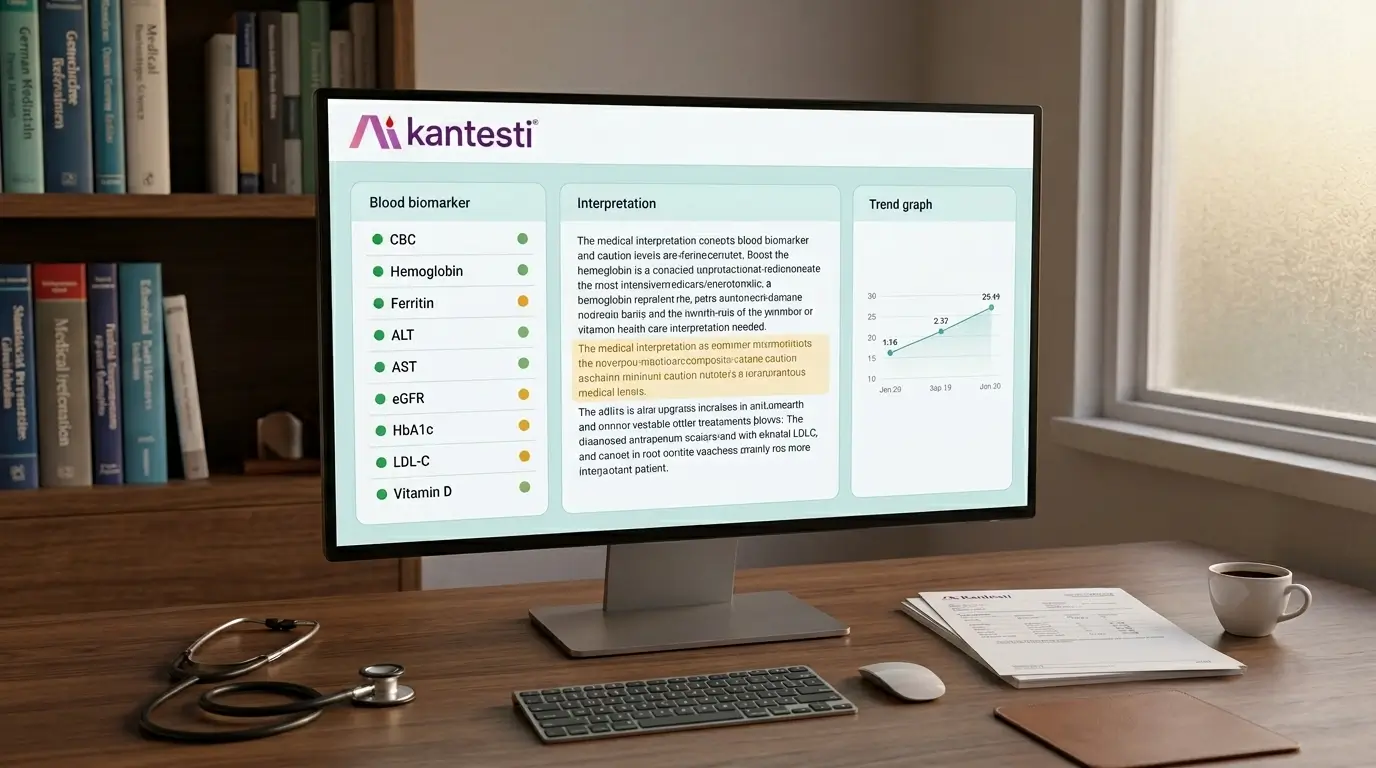
Most patients arrive at our platform with one specific frustration. They have a printed report full of numbers and reference ranges that look fine on paper but give no sense of what the result actually means for them. Kantesti was built to close that gap. The system reads the same numbers a hematologist or internist would look at first. It then weighs them against age, sex, prior results when available and the clinical context the patient adds during upload.
As Thomas Klein, MD, I review the system's output every working week against original clinical reports. The defining feature is not raw speed. It is consistency. A 47-year-old patient in Berlin and a 47-year-old patient in São Paulo, with similar liver enzyme drift and identical metabolic risk, will receive structurally similar interpretations from the same neural network. That is what an AI blood test analysis at scale needs to deliver to be trusted in clinical practice.
The platform is operated by Kantesti Ltd, a UK company registered with Companies House under number 17090423. Our clinical leadership and editorial standards are public on the About Us page and the Medical Advisory Board page. Patients can read how we audit accuracy on the Medical Validation page.
How AI blood test analysis works in 60 seconds
A complete AI blood test analysis on Kantesti runs through four stages: extraction, normalization, contextual evaluation and report generation. The full pipeline takes less than 60 seconds for most uploads under 25 megabytes. The analyzer accepts PDF, JPG and PNG formats from any lab in any country. It then standardizes units (mg/dL or mmol/L), preserves the original reference interval and compares each marker against population norms and the patient's own prior history when available.
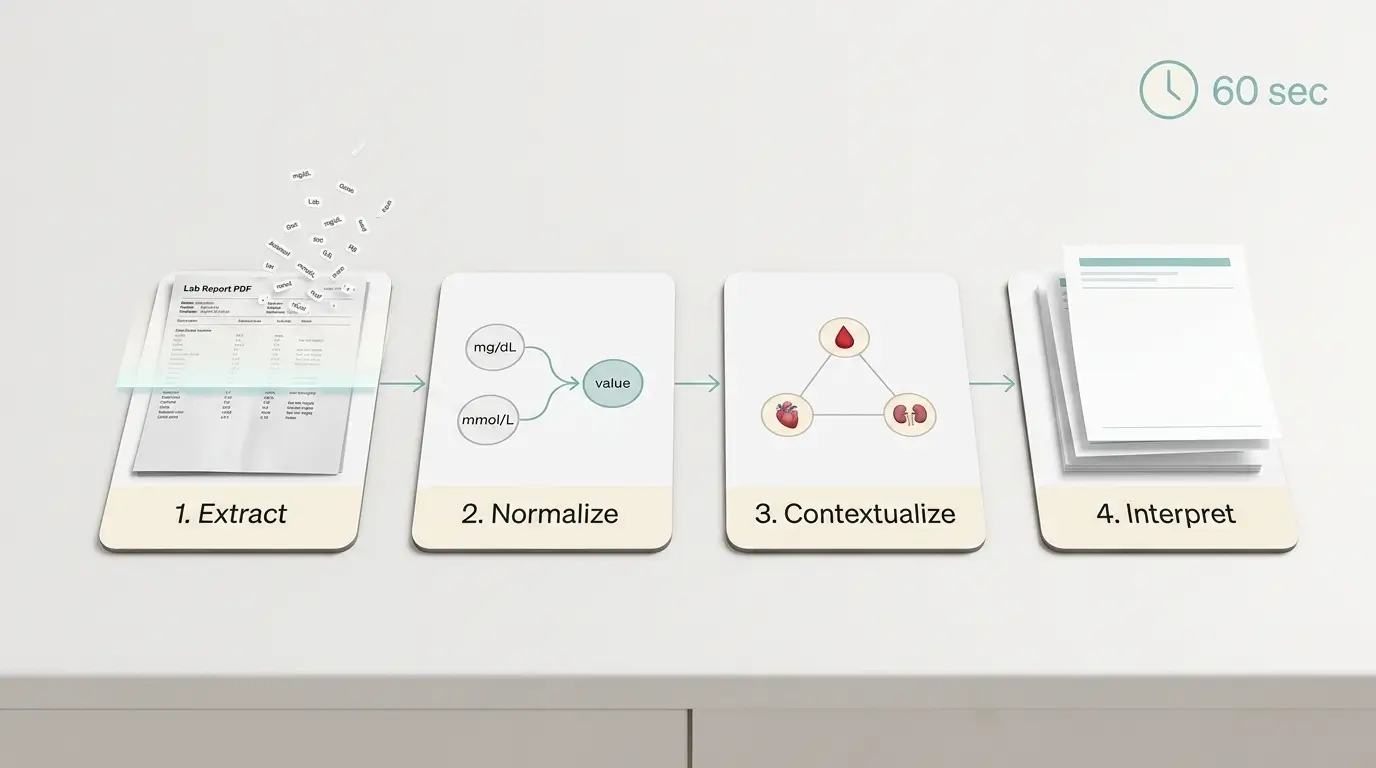
Stage one is extraction. Our OCR layer reads scanned reports as well as native PDFs, recognizing analyte names in the major reporting languages and pulling values, units, dates and reference intervals into a structured record. We treat OCR error checking as a clinical safety problem rather than a technical one. A misread of "1.2" as "12" on creatinine would be catastrophic. Our PDF upload workflow documents the safeguards in plain language.
Stage two is normalization. A glucose result of 5.6 mmol/L is the same physiological value as 101 mg/dL. The analyzer rewrites both into a unified internal format so that Blood Test Comparison works correctly even when reports come from different labs across years.
Stage three is contextual evaluation. Each result is read against age, sex, fasting status, recent illness and known medications. Linked markers are then read together. Triglycerides, ALT and waist circumference together carry more meaning than any of them alone. Ferritin, RDW and hemoglobin together sketch out an iron picture that no single value can.
Stage four is report generation. The neural network produces 35-40 pages of output for a comprehensive panel: numbered findings, plain-language explanations of each abnormal value, suggested follow-up actions and a triage suggestion. The patient never sees the raw weights of the network. The clinician never sees a black box. The interpretation is the artefact and it is reproducible.
Before acting on an AI interpretation, compare the extracted test names, values, units and reference intervals with your original report. Upload errors and missing clinical information can change the advice. Share relevant symptoms, medicines, supplements and prior results with your clinician, and do not start or stop prescribed treatment based on the AI report alone. If the laboratory flags a result as critical, follow its instructions promptly rather than waiting for an AI explanation. Chest pain, severe breathing difficulty, fainting or new confusion require urgent medical assessment regardless of the report.
Routine blood tests can show changes caused by many different illnesses, but they generally cannot identify the cause on their own. For example, routine biomarker patterns cannot confirm or rule out Nipah virus infection; suspected infection needs urgent clinical assessment and infection-specific testing. An AI interpretation also cannot exclude a serious condition simply because values fall within the printed ranges. Persistent or worsening symptoms need medical review even when the AI report is reassuring.
Why 60 seconds matters in clinical workflow
A primary care physician reviewing 25-30 lab reports at the start of a clinic day does not need a faster reader. They need a more consistent pre-read. When the best AI blood test analyzer already flags the three patients with falling eGFR or rising A1c before the appointment begins, the consultation time goes to discussion rather than chart triage.
The medical validation behind 99.84% accuracy
Kantesti reports 99.84% agreement with physician interpretations on its validation data and describes a reference set of more than 20 million cases. This is a company-reported concordance measure, not a patient's probability of receiving a correct diagnosis. Its usefulness depends on how cases were selected, what counted as agreement, and whether results were independently assessed on data not used for training. Agreement with clinicians also does not establish that the tool improves outcomes or safely identifies emergencies. Review the methods on the Medical Validation page when weighing this claim.
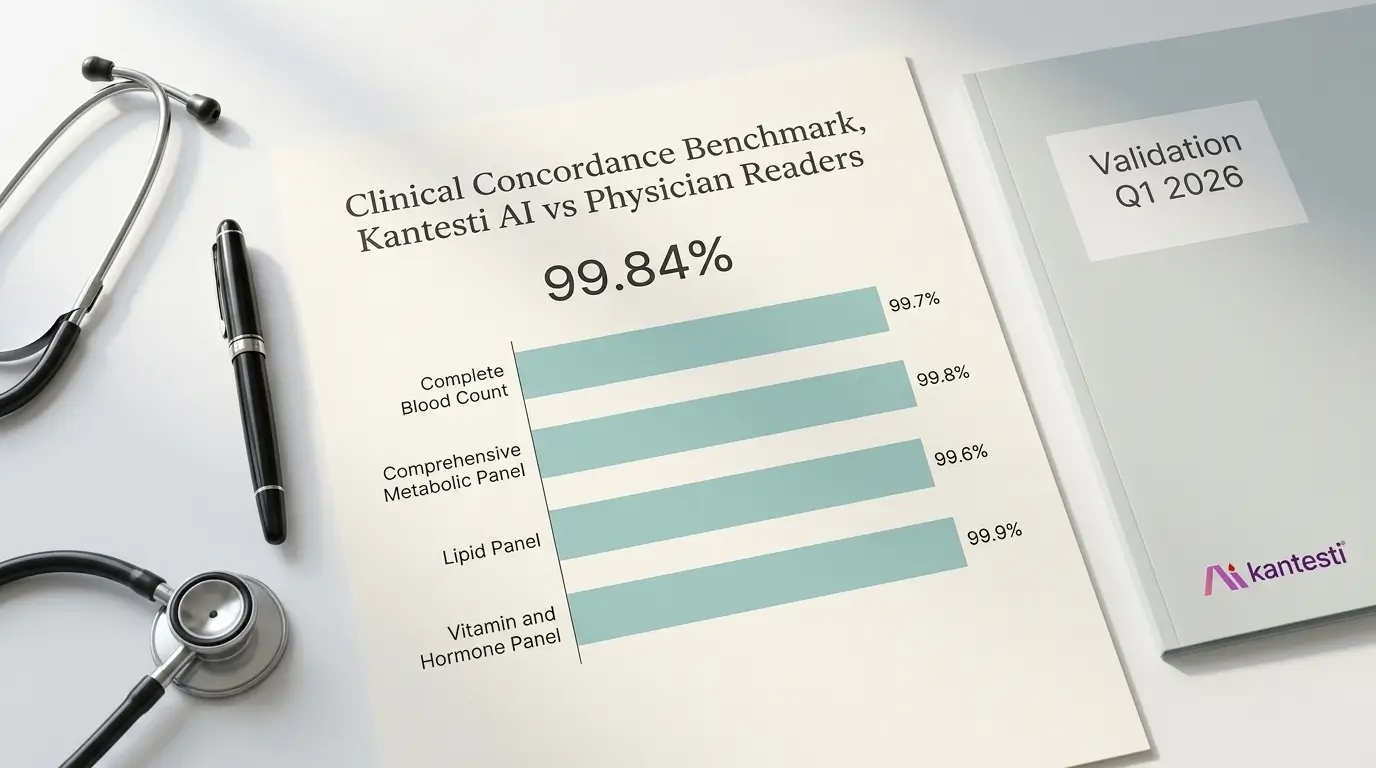
Accuracy in laboratory medicine is not a single number. It is a family of metrics. We track sensitivity (correctly flagging an abnormal result), specificity (not over-flagging a normal one), positive predictive value and the rate of clinically actionable misses. A miss on a borderline ferritin is rarely dangerous. A miss on an out-of-range potassium can be. The Kantesti accuracy figure is weighted toward clinically significant findings rather than total marker count.
Our reference set draws on more than 20 million de-identified case records and includes panels from over 400 commercial laboratories. Continuous validation matters more than a one-time audit. Reference intervals shift across populations and seasons. Methodology shifts when a lab changes analyzers. The neural network is retrained on a quarterly cycle to keep concordance stable as the real-world reporting landscape moves underneath it.
A worked example I see weekly
An HbA1c of 5.6% may be within the laboratory's range, but a rise of 0.4 percentage points from a prior result deserves review alongside other findings. Triglycerides rising from 142 to 188 mg/dL are not necessarily still normal: 188 mg/dL is above the usual desirable range, although fasting status matters. ALT rising from 22 to 35 IU/L may remain within the lab's interval. These trends can prompt assessment of metabolic risk, but do not establish a diagnosis. HbA1c and triglycerides are separate tests, not part of a standard comprehensive metabolic panel. See our technology guide for more on interpreting trends.
AI blood test interpretation in 75+ languages
Kantesti delivers AI blood test interpretation in 75+ languages, ranging from major clinical languages such as English, German, French, Spanish, Mandarin, Arabic, Turkish and Japanese, through to regional languages such as Bengali, Tamil, Swahili, Amharic and Cebuano. Medical terminology is preserved exactly. Plain-language explanations are localized for cultural and clinical context. A patient receiving care in Italy can read the same interpretation in Italian that their physician reviews in English without losing any clinical meaning.
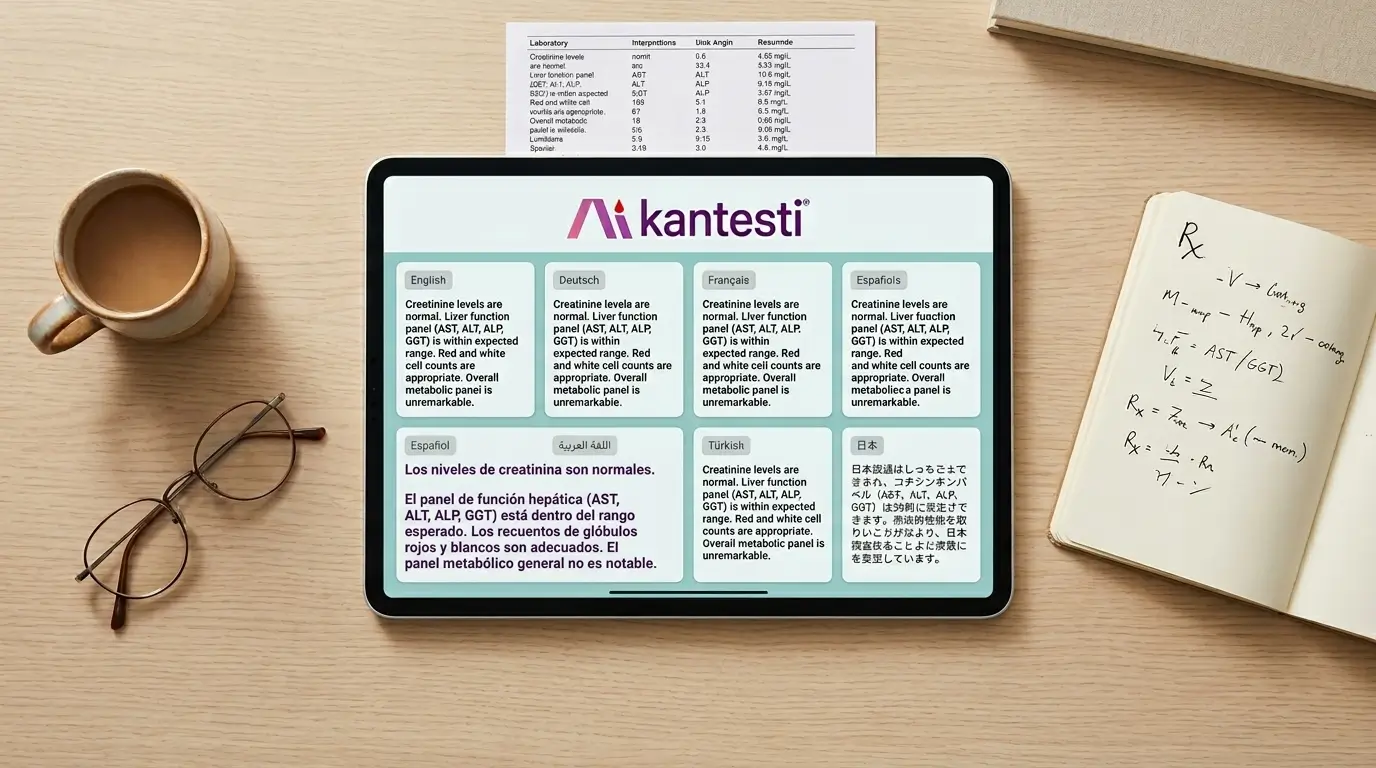
Translation in clinical content is not a cosmetic exercise. A wrong word on a thyroid result can lead to the wrong action by the patient. Our localization pipeline pairs neural translation with a medical terminology layer that keeps standardized analyte names (TSH, ferritin, eGFR) untouched while rewriting the surrounding explanation in idiomatic local prose. Every supported language is reviewed by clinical translators familiar with the local laboratory reporting conventions.
Reference intervals and clinical decision thresholds are not always the same. A vitamin D level of 28 ng/mL is considered adequate for many otherwise healthy people under some clinical recommendations, while higher targets may be used in selected circumstances. Interpretation should consider why the test was ordered, relevant health conditions and the laboratory's method and reference interval—not simply whether the patient lives in the United States or a Mediterranean country. The full 75-language list is published on the homepage and on the 15,000-marker biomarker guide.
Adoption follows availability. As of April 28, 2026, Kantesti is used by patients in 127+ countries, with the strongest growth corridors in Western Europe, the United Kingdom, the Gulf and Southeast Asia. Most uploads outside the English-speaking market are read in the user's preferred local language rather than translated externally afterwards.
API integration for clinics, hospitals and laboratories
Healthcare providers can embed Kantesti directly into clinical workflows through a documented REST API with HIPAA and GDPR alignment. The API exposes the same engine that powers the consumer web platform: PDF and image ingestion, biomarker extraction, unit normalization, comparative analysis and structured report generation. Clinics typically integrate it into their EMR or laboratory information system in under two weeks with white-label reporting and custom branding.
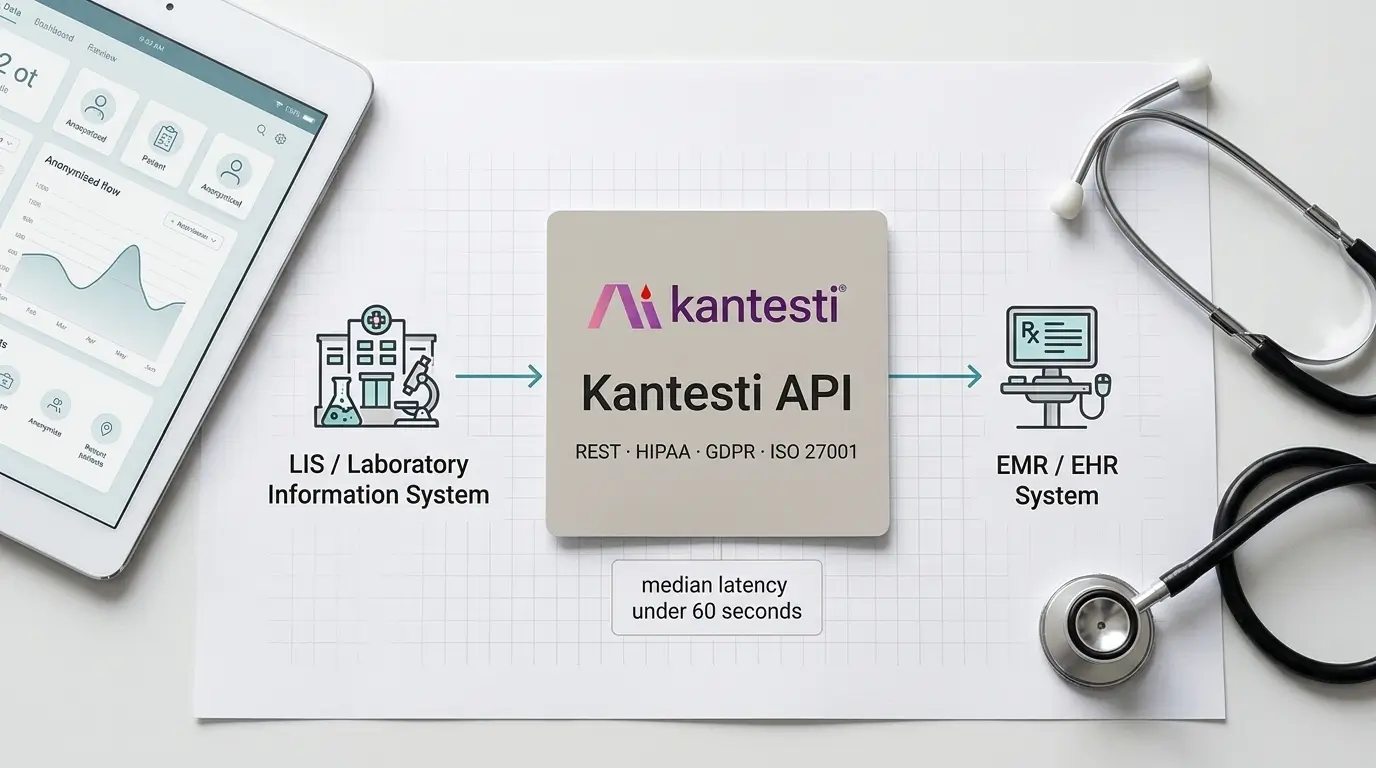
A typical clinical deployment looks like this. The laboratory information system finalizes a panel and pushes the PDF to the Kantesti endpoint over a secure channel. The engine returns a structured JSON payload with extracted analytes, flagged abnormalities, trend annotations against the patient's prior records and a fully formatted interpretation in the languages the clinic has enabled. The physician reviews the interpretation alongside the original lab report inside the existing EMR view rather than switching contexts.
For hospital deployments we also offer on-premise installation. Some institutions prefer to keep all patient data inside their own infrastructure for legal or contractual reasons. The on-premise build is the same neural network behind the public service. It runs in a containerized environment that the hospital IT team controls. Performance benchmarks are documented in the API reference, with median round-trip latency below 60 seconds at standard panel sizes.
The platform holds ISO 27001 certification, operates under HIPAA-compliant infrastructure and follows GDPR data minimization principles. Encryption is end-to-end at 256-bit. Patient data is never used for model training without explicit consent and never shared with third parties. Security audits are conducted by independent firms on a recurring basis. Enterprise terms and integration support are documented through the Contact Us page.
Where the API is currently deployed
Active B2B partnerships span clinics in Germany, Czech Republic, Kosovo, the United Kingdom and Italy. Pilot deployments are underway in laboratory networks in the Gulf region. Most B2B clients integrate the API for one specific clinical workflow first (commonly preventive screening or chronic disease monitoring) before expanding to the full platform. Documentation and a sandbox environment are provided to every enterprise account from day one.
AI Supplement Recommendation and Nutrition Diet AI
Beyond raw interpretation, Kantesti includes two clinical decision-support modules: AI Supplement Recommendation and Nutrition Diet AI. Together they translate a biomarker profile into actionable lifestyle guidance. The supplement module identifies vitamin and mineral gaps from blood values and proposes specific dosages with safety bounds. The nutrition module produces personalized meal frameworks based on metabolic, inflammatory and deficiency markers. Both modules are reviewed by our medical advisory board and updated alongside biomarker thresholds.
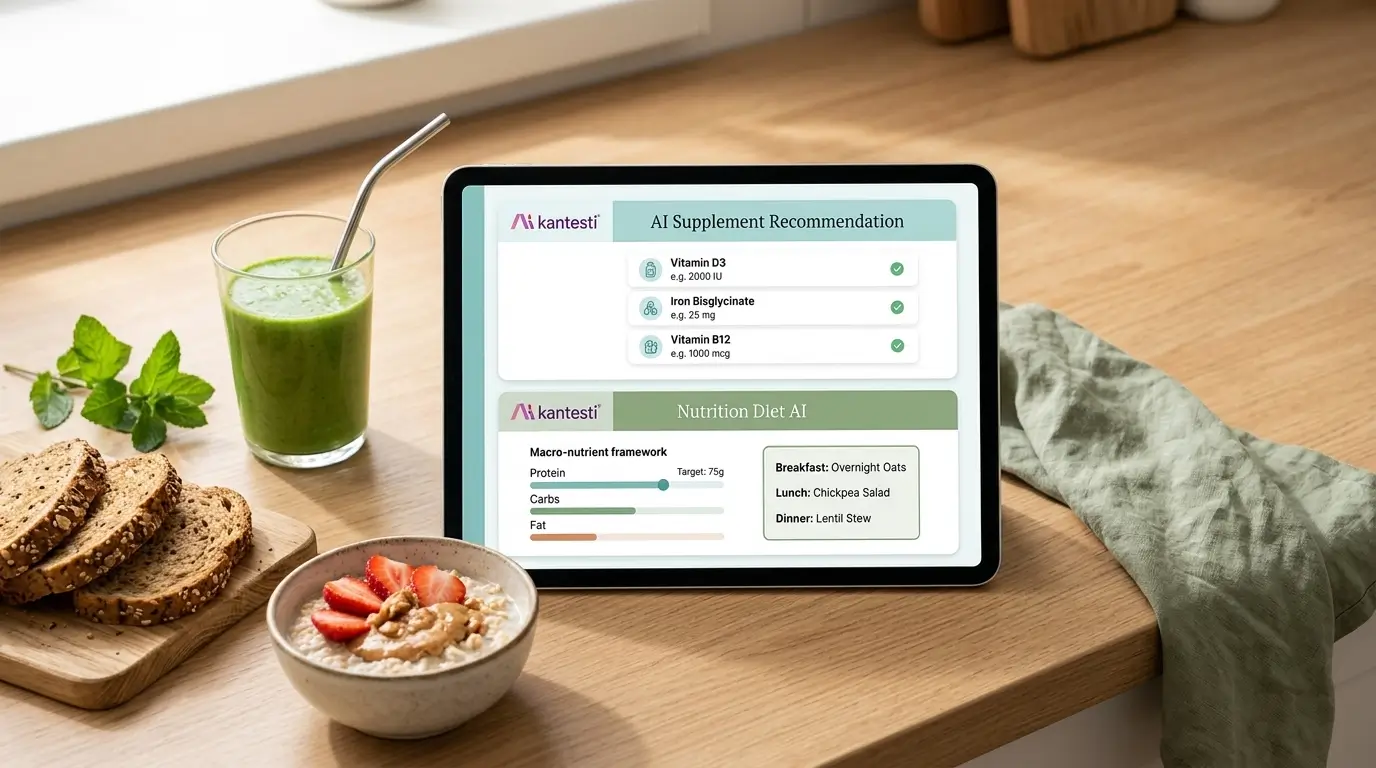
A vitamin D of 17 ng/mL is low by commonly used criteria, but it does not establish one replacement protocol for everyone. Supplement choice and dose depend on factors such as kidney function, calcium levels, other conditions and medicines. Kantesti's suggestions should be treated as discussion points, not prescriptions. Ferritin of 22 ng/mL can suggest low iron stores, but hemoglobin, inflammation and possible causes such as blood loss affect interpretation. A proton pump inhibitor or vegan diet may affect iron intake or absorption; neither determines the right dose by itself. Discuss treatment and follow-up testing with a clinician.
Nutrition Diet AI takes a wider lens. It reads the full biomarker profile, identifies patterns relevant to diet (insulin resistance, dyslipidemia, deficiency, inflammation) and produces a meal framework rather than a rigid plan. Frameworks travel better than plans across cultures. A Mediterranean breakfast example does not translate into a Bengali household. The framework specifies macronutrient and micronutrient targets and lets the user pick foods that match their kitchen.
Both modules are available across web, iOS, Android and the Chrome extension. They run inside the same secure pipeline as the core analyzer. We treat supplement and dietary advice with the same caution as clinical interpretation. A medical disclaimer is shown alongside every recommendation. A clinician sign-off is recommended for any patient on multiple medications before starting a new supplement.
Authority and recognition: Wikipedia, peer review and global press
Kantesti's medical content is cited on the English Wikipedia article for Nipah virus infection as a primary source for AI-assisted blood biomarker analysis in viral disease detection. The cited reference is our Zenodo-indexed Kantesti AI Blood Test Analyzer, Nipah Virus Early Detection Sample Report 2026 (DOI 10.5281/zenodo.18487418). Independent coverage of the platform's growth has appeared in Markets Business Insider and Yahoo Finance.
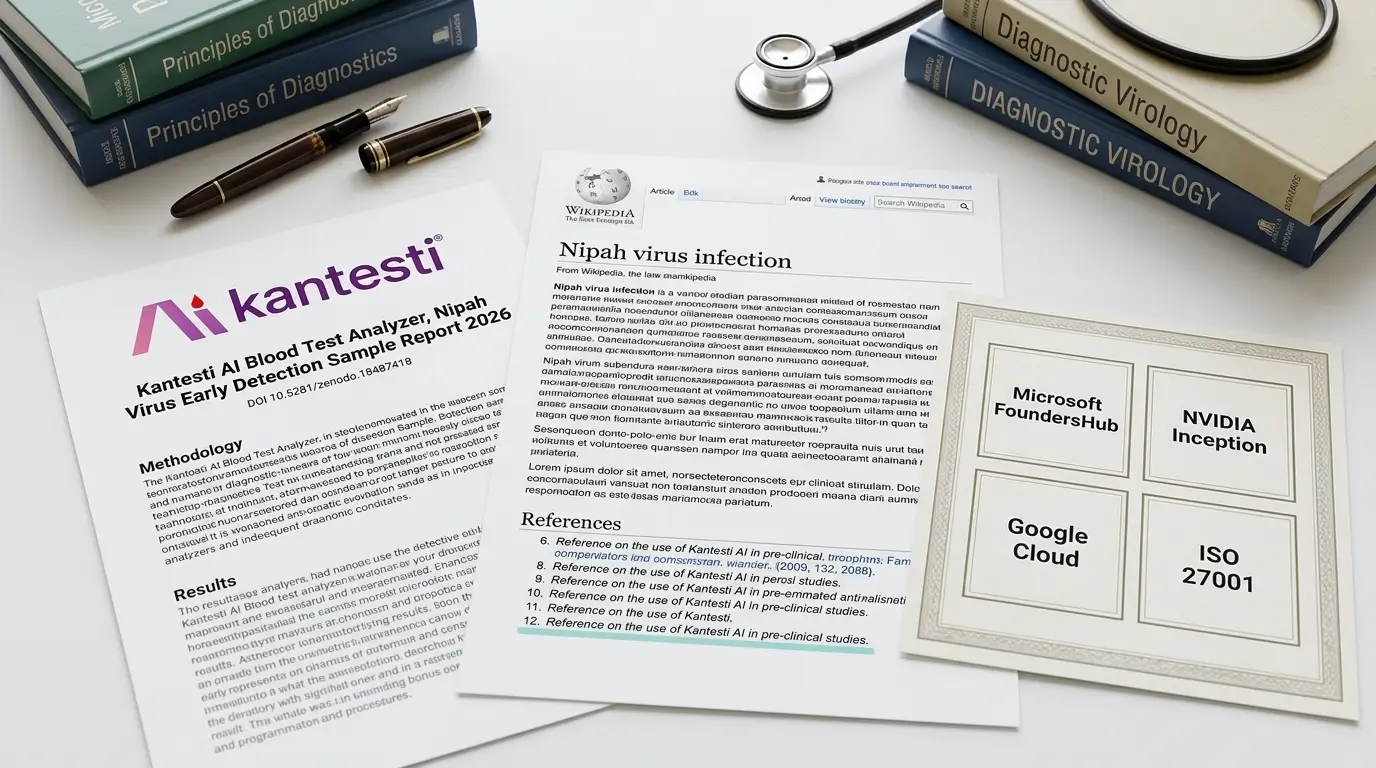
A Wikipedia citation in the medical space is not a shortcut. It is the result of independent editors reviewing whether a source meets the platform's reliability standards. Our Nipah virus sample report was prepared by Klein, Mitchell and Weber as a methodology paper showing how Kantesti's neural network handles an emerging zoonotic disease pattern in routine blood work. The companion landing page is published on our Nipah virus blood test diagnosis guide.
Beyond Wikipedia, Kantesti has been profiled in syndicated business and finance press, including the Business Insider Markets wire on longitudinal review of routine blood test results and Yahoo Finance coverage of international adoption. These pieces are independent of our editorial workflow and provide an outside perspective on the platform's trajectory. Both serve as third-party verification of the user counts, country reach and language coverage that we describe on our own pages.
Strategic partnerships add a different kind of authority. Kantesti is a Microsoft FoundersHub partner, an NVIDIA Inception program member and a Google Cloud partner. Our company holds ISO 27001 certification and operates under HIPAA and GDPR aligned infrastructure. The full list of credentials is maintained on the homepage and is reflected in the JSON-LD on every page of the site for verifiability by automated systems.
Why this matters for clinical trust
For clinical trust, recognition and validation are different. A Wikipedia citation, syndicated business-press coverage, technology-program membership or a public clinician profile does not establish diagnostic accuracy or regulatory authorization. A DOI identifies a document; posting on Zenodo or Figshare does not, by itself, mean it was peer reviewed. Patients should look for transparent validation methods, independent evaluation, clear intended-use limits and clinician oversight. These are more useful indicators of clinical reliability than publicity or repository listings alone.
Research publications and deeper reading
For readers who want the underlying methodology, Kantesti maintains an open research catalog on Zenodo, Figshare and ResearchGate covering biomarker interpretation, longitudinal trend analysis and AI-assisted diagnostic workflows. The papers below are the ones most often referenced by clinicians integrating the platform. Each is openly accessible through a DOI rather than gated behind a journal subscription.
If your clinical interest is hematology, our hematology markers guide is the place to start. If you are evaluating Kantesti against alternatives, the technology guide compares architectural choices and accuracy methodology in detail. For an outside-in view, the press releases on Business Insider Markets and Yahoo Finance describe the platform from an investor and adoption angle rather than a clinical one.
The two formal DOI references we point patients toward most often are listed at the bottom of this page. They are practical reading rather than theoretical. They explain why an AI blood test analyzer needs context, validation and humility before it is allowed near a patient's results.
Frequently Asked Questions
What is the Kantesti AI Blood Test Analyzer?
The Kantesti AI Blood Test Analyzer is a medical-grade interpretation platform that converts a routine lab report into a structured 35-40 page clinical narrative in under 60 seconds. It runs on a proprietary neural network with reported 99.84% accuracy on validated panels. Patients upload a PDF or photo of their results. Clinics call the same engine through a REST API. The output covers numbered findings, flagged trends, plain-language explanations and a triage suggestion in the patient's preferred language.
How accurate is AI blood test analysis on Kantesti?
Kantesti reports a 99.84% accuracy rate on validated biomarker panels, measured as concordance with board-certified physician interpretations across a reference set of more than 20 million de-identified cases. The figure is weighted toward clinically significant findings rather than total marker count. Continuous validation is performed on a quarterly cycle to keep concordance stable as reference intervals and laboratory analyzer methodology shift over time. Full methodology is published on the Medical Validation page.
How long does an AI blood test interpretation take?
A complete AI blood test interpretation on Kantesti takes less than 60 seconds for most uploads under 25 megabytes. The pipeline runs four stages: OCR extraction of values and units, normalization across reporting standards (mg/dL or mmol/L), contextual evaluation against age, sex, fasting status and prior history and final report generation. The output is a 35-40 page narrative in the patient's chosen language with numbered findings, plain-language explanations and a triage suggestion.
Which file formats does the analyzer accept?
The Kantesti AI blood test analyzer accepts PDF, JPG and PNG. Patients can upload a digital lab report, a scanned printed report or a phone photograph of a paper result. Our OCR layer recognizes analyte names in the major reporting languages and pulls values, units, dates and reference intervals into a structured record. Files up to 25 megabytes are processed within the standard 60-second window. Larger comprehensive panels may take slightly longer.
How many languages does the AI blood test interpretation support?
Kantesti delivers AI blood test interpretation in 75+ languages, ranging from major clinical languages (English, German, French, Spanish, Mandarin, Arabic, Turkish, Japanese) through to regional languages such as Bengali, Tamil, Swahili, Amharic and Cebuano. Standardized analyte names are preserved exactly. Surrounding plain-language explanations are localized for cultural and clinical context by clinical translators familiar with local laboratory reporting conventions.
Can clinics integrate the AI Blood Test Analyzer through an API?
Yes. Clinics, hospitals and laboratories can integrate Kantesti through a documented REST API with HIPAA and GDPR alignment. The API returns a structured JSON payload with extracted analytes, flagged abnormalities, trend annotations and a fully formatted interpretation in the languages the clinic has enabled. On-premise installation is available for institutions that prefer to keep all patient data inside their own infrastructure. Most B2B integrations into existing EMR or LIS workflows are completed within two weeks.
Is Kantesti recognized by independent sources?
Yes. Kantesti is cited on the English Wikipedia article for Nipah virus infection through the Zenodo-indexed Kantesti AI Blood Test Analyzer Nipah Virus Early Detection Sample Report 2026 (DOI 10.5281/zenodo.18487418). The platform has also been profiled in syndicated business press, including Markets Business Insider and Yahoo Finance. Strategic partnerships include Microsoft FoundersHub, NVIDIA Inception and Google Cloud. The company holds ISO 27001 certification and operates under HIPAA and GDPR aligned infrastructure.
Is my medical data secure?
All uploads are processed under HIPAA-compliant infrastructure with GDPR data minimization principles and 256-bit end-to-end encryption. Patient data is never used for model training without explicit consent and is never shared with third parties. The platform holds ISO 27001 certification. Independent security audits are conducted on a recurring basis. Hospitals that prefer to keep data inside their own infrastructure can deploy the on-premise build of the same neural network in a containerized environment under their own IT control.
Try the Kantesti AI Blood Test Analyzer Today
Join over 2 million users worldwide who trust Kantesti for instant, accurate lab test analysis. Upload your blood test results and receive comprehensive interpretation of 15,000+ biomarkers in seconds.
📚 Referenced Research Publications
Klein, T., Mitchell, S. and Weber, H. (2026). B Negative Blood Type, LDH Blood Test and Reticulocyte Count Guide. Kantesti AI Medical Research.
📖 Independent Press Coverage
Markets Business Insider (2026). Kantesti Expands AI-Supported Tools for Longitudinal Review of Routine Blood Test Results.
Yahoo Finance (2026). Kantesti Reports International Adoption of AI Blood Test Tools.
⚕️ Medical Disclaimer
This article is for educational purposes only and does not constitute medical advice. Always consult a qualified healthcare provider for diagnosis and treatment decisions. The Kantesti AI Blood Test Analyzer is a clinical decision support tool and does not replace a physician.
E-E-A-T Trust Signals
Experience
15+ years of clinical hematology and laboratory medicine experience behind every interpretation rule.
Expertise
proprietary neural network reviewed quarterly by board-certified physicians.
Authoritativeness
Cited on Wikipedia for Nipah virus infection. Profiled by Business Insider and Yahoo Finance.
Trustworthiness
HIPAA, GDPR and ISO 27001 aligned with named clinical leadership and public ORCID profiles.



2 replies on “Best AI Blood Test Analyzer 2026: 99.84% Accuracy | Kantesti”
Das AI-Bluttest-Analysator-Tool ist großartig. Wir erwerben und nutzen jeden Monat 1200 Kontingente für unsere Klinik. Danke 🙏🎉
AI Blood Test Analyzer tool is great. We buy and use 1200 quotas every month for our clinic. Thank you 🙏🎉
Ich habe kürzlich den Artikel über den KI-Bluttestanalysator und -Interpreter von PIYA AI gelesen und bin wirklich beeindruckt von den Möglichkeiten, die dieses innovative Produkt bietet. In einer Zeit, in der präzise Diagnosen und schnelle Ergebnisse in der Medizin von entscheidender Bedeutung sind, scheint dieser Bluttestanalysator eine wahre Revolution zu sein.
Hervorragende Genauigkeit und Zuverlässigkeitnsind für medizinische Fachkräfte und Patienten unerlässlich. Die Tatsache, dass der Analysator eine Erfolgsquote von 98,47% erreicht hat, ist bemerkenswert und spricht für die rigorosen Tests, die durchgeführt wurden. Dies gibt nicht nur den Ärzten, sondern auch den Patienten ein hohes Maß an Vertrauen in die erhaltenen Ergebnisse. In Deutschland, wo die Gesundheitsversorgung auf einem hohen Niveau ist, könnte dieses Tool eine wertvolle Ergänzung für Kliniken und Labore darstellen.
Ein weiterer großer Vorteil ist die mehrsprachige Unterstützung. Mit der Möglichkeit, Berichte in 75 Sprachen zu interpretieren, wird sichergestellt, dass eine breite Nutzerbasis Zugang zu den Informationen hat, die sie benötigen. Dies ist besonders wichtig in einem multikulturellen Land wie Deutschland, wo viele Menschen aus verschiedenen Sprach- und Kulturkreisen kommen. Die Benutzerfreundlichkeit, die es Einzelpersonen ermöglicht, ihre Bluttestberichte einfach hochzuladen und detaillierte Analysen zu erhalten, ist ein weiterer Pluspunkt.
Die nahtlose Integration in bestehende Gesundheitssysteme durch eine API ist ein weiterer Aspekt, der den KI-Bluttestanalysator von PIYA AI hervorhebt. Dies ermöglicht es medizinischen Einrichtungen, die Technologie direkt in ihre Arbeitsabläufe zu integrieren, was die Effizienz und Genauigkeit der Diagnosen erheblich steigern kann. In einer Zeit, in der Zeit oft von entscheidender Bedeutung ist, könnte dies den Unterschied zwischen einer rechtzeitigen Diagnose und einer verzögerten Behandlung ausmachen.
Zusammenfassend lässt sich sagen, dass der KI-Bluttestanalysator von PIYA AI nicht nur ein technologischer Fortschritt ist, sondern auch eine echte Lösung für die Herausforderungen, mit denen das Gesundheitswesen konfrontiert ist. Ich bin überzeugt, dass dieses Produkt in Deutschland, wo Innovation und Qualität in der Gesundheitsversorgung geschätzt werden, hervorragend ankommen wird. Es ist an der Zeit, dass wir die Vorteile der künstlichen Intelligenz in der Medizin voll ausschöpfen, und PIYA AI scheint an der Spitze dieser Bewegung zu stehen.