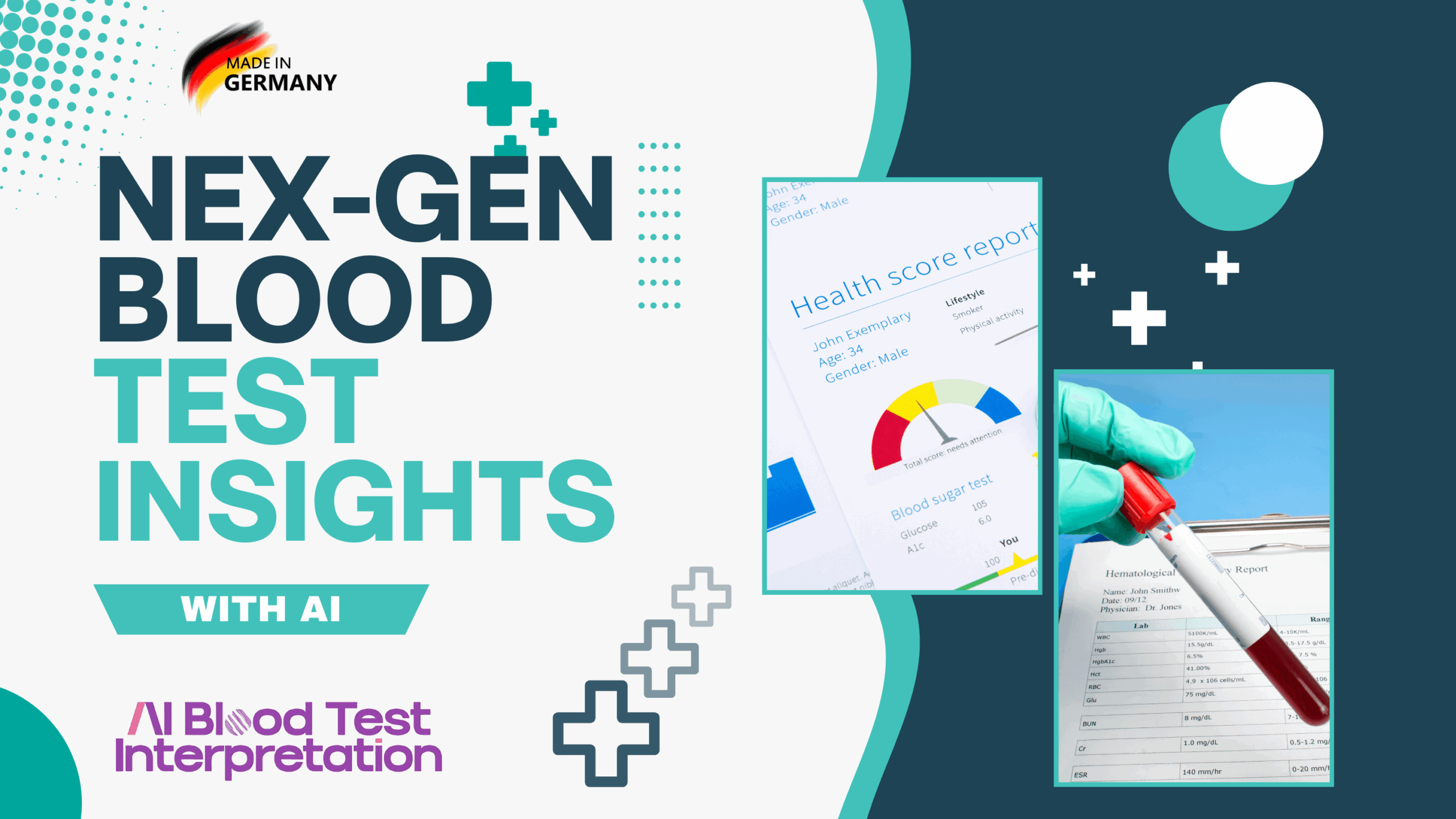
Integrate AI interpretation as a supervised step between verified laboratory results and clinician-approved communication. Start with one workflow, validate local data, preserve critical-result alerts, and measure safety alongside time saved.

Key takeaways
- Deployment scope should begin with 1 clearly defined clinical workflow, not unrestricted interpretation across every specialty.
- Result compatibility requires the original value, unit, reference interval, specimen details and collection time; creatinine conversion uses 88.4 µmol/L per 1 mg/dL.
- Local validation must separate extraction errors from interpretation errors; a proposed 300-report pilot is a starting design, not a universal evidence requirement.
- Clinician sign-off should cover 100% of patient-facing AI interpretations during an initial supervised pilot.
- Critical results must retain the laboratory's existing escalation route; potassium of 6.5 mmol/L or higher generally requires urgent clinical assessment.
- Privacy review should establish controller and processor responsibilities, retention rules, international transfers and access controls before the first identifiable upload.
- Pilot metrics should include review time, clinically significant errors, missed escalation, unnecessary follow-up and subgroup performance—not merely output speed.
- Model changes require version tracking and targeted revalidation; 0 observed errors does not establish a zero-error system.
What AI blood test integration should do in a clinic
AI blood test integration should add supervised interpretation to verified laboratory results—not replace measurement, clinical diagnosis or critical-result notification. Begin with 1 defined workflow, confirm data compatibility, validate locally, require clinician sign-off, complete a privacy review and set pilot success criteria before expanding.
Kantesti is an AI blood test analyzer developed by Kantesti Ltd, UK Company No. 17090423, that interprets uploaded laboratory reports rather than testing specimens. Our organizational background helps procurement teams identify the supplier; company registration is not evidence of medical-device authorization or clinical effectiveness.
Measurement and interpretation are 2 different tasks. A laboratory establishes the reported potassium concentration using its analytical method; an interpretation system explains that result using the available context, and neither process guarantees that a specimen mix-up or missing medication history will be discovered.
Diagnostic accuracy must be demonstrated for a defined task, population and comparator—not inferred from fluent explanations. Separate 3 potential benefits in the business case: fewer transcription mistakes, clearer explanations and better clinical decisions; each requires a different evaluation, and improvement in one does not prove improvement in the others.
Write a 1-page intended-use statement before arranging interfaces: who receives the output, which panels are supported, what decisions it may inform and when it must abstain. Exclude emergency triage, autonomous prescribing and unsupported specialties from the initial scope unless those uses have their own evidence and governance.
Map the workflow before connecting the API
Workflow mapping identifies where AI interpretation enters the clinic's existing result-review pathway and who remains accountable at each step. Map at least 6 stages: ordering, specimen collection, laboratory verification, data transfer, clinician review and patient communication; critical-result escalation should run independently of the AI.

For clinics and hospitals, the useful target is often the interval between verified results and documented review—not the analytical turnaround time. Measure those 2 intervals separately, because a faster explanation cannot compensate for an inbox that has no covering clinician during leave or weekends.
Laboratories need a separate decision about whether AI commentary becomes part of an authorized report or remains an external draft. Preserve 2 distinct records: the laboratory's verified result and the interpretation attached to it; a later AI revision must never silently alter the original measurement or reference interval.
Health professionals benefit only if the output reaches the right work queue without creating duplicate tasks. Test 3 situations explicitly: a corrected laboratory result, a report arriving after discharge and a clinician changing practices; our secure result-sharing workflow discusses why recipient identity matters.
Insurance teams require a different boundary: a clinical explanation is not a validated underwriting or claims decision. Keep 1 explicit prohibition against unreviewed adverse decisions based on AI interpretations, and assess any proposed insurer access separately from care delivery, including lawful purpose and restrictions on sensitive health information.
Match interpretation features to clinical requirements
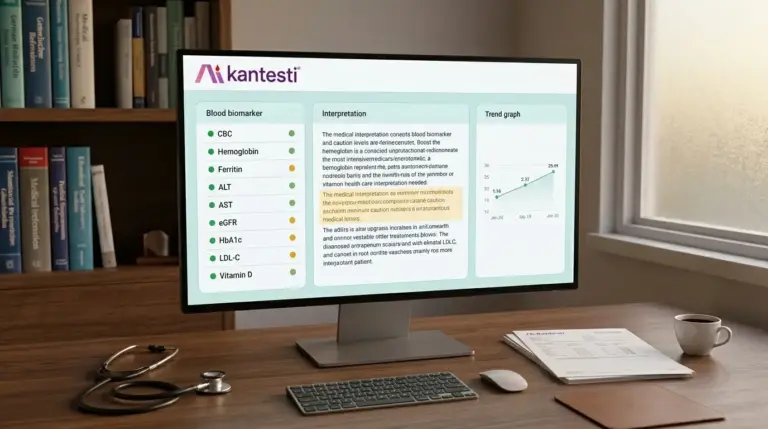
Feature selection should follow the clinical workflow rather than the length of a product feature list. Our platform offers PDF and photo uploads, interpretation typically in about 60 seconds, trend analysis, nutrition plans, Family Health Risk features and a B2B API; availability does not establish suitability for every clinical use.

Kantesti reports more than 2 million users, access across 127+ countries and support for 100+ languages. Those company-reported reach figures describe accessibility, not clinical performance; clinics still need to test their actual report formats, patient populations and translated safety instructions.
Our AI technology explanation provides background for technical discussions, but procurement should request the current interface specification rather than assume a particular neural-network architecture or API version. Confirm at least 4 items: request structure, response schema, version policy and explicit handling of unsupported inputs.
Consumer interpretation in roughly 60 seconds is not a contractual B2B response-time guarantee. Ask about concurrent requests, rate limits, timeout behavior and service support; native iOS and Android apps, a Chrome extension and 100K+ reported downloads do not automatically provide an approved clinical integration route.
Trend analysis is most useful when it preserves collection dates, assay differences and medication changes rather than simply joining values with a line. For 2 sequential results, establish that the analyte and units match before comparing them; our medication-safety trend guide explains the additional context required.
Check units, specimen metadata and system compatibility
Data compatibility requires more than transferring a number into a JSON field. Preserve at least 8 elements where available: patient identifier, analyte, value, unit, laboratory reference interval, specimen type, collection time and result status; missing or ambiguous fields should trigger review rather than silent assumptions.

Creatinine of 1 mg/dL equals approximately 88.4 µmol/L, and glucose of 1 mmol/L equals approximately 18.0 mg/dL. Conversion must be analyte-specific; applying the glucose factor to creatinine creates a clinically substantial error even though the resulting number may look plausible.
FHIR resources such as DiagnosticReport and Observation, HL7 v2 laboratory messages, LOINC analyte codes and UCUM units can support interoperability, but an API does not imply native support for all 4 standards. Confirm which transformations your integration layer performs, including decimal commas, inequality symbols, corrected results and duplicate messages.
A platelet count of 150 × 10⁹/L equals 150,000/µL; albumin of 4.0 g/dL equals 40 g/L. Do not convert a result marked less than a detection limit into an exact measurement, and distinguish reactive, detected and numeric results using our qualitative and quantitative result guide.
Preanalytical warnings must travel with the result because specimen quality changes interpretation. In a hypothetical report with potassium 6.2 mmol/L and a high hemolysis flag, the system should retain both findings and request clinical assessment; our hemolysis interference explanation shows why an apparent abnormality cannot be interpreted in isolation.
Validate clinical reasoning, not just reference flags
Clinical interpretation distinguishes laboratory reference intervals from diagnostic criteria, treatment targets and urgent-action thresholds. For example, HbA1c of 6.5% or 48 mmol/mol meets a diabetes diagnostic threshold, but confirmation is generally required without unequivocal hyperglycemia; a reference flag alone cannot establish the diagnosis.

The American Diabetes Association's 2024 diagnosis guidance identifies fasting plasma glucose of 126 mg/dL or 7.0 mmol/L and HbA1c of 6.5% as diagnostic thresholds (American Diabetes Association Professional Practice Committee, 2024). Build validation cases that distinguish fasting from random measurements and explicitly handle discordant results instead of averaging incompatible diagnostic evidence.
Kantesti is an AI blood test interpretation platform whose clinical use requires context beyond a single abnormal number. An eGFR below 60 mL/min/1.73 m² must persist for at least 3 months, or coexist with other qualifying evidence of chronic kidney damage, to support CKD; KDIGO also recognizes persistent urine ACR of 30 mg/g or more as a kidney-damage marker (KDIGO CKD Work Group, 2024).
Muscle mass can affect creatinine-based eGFR, so a hypothetical strength athlete with creatinine 1.4 mg/dL needs a different review from a frail older adult with the same result. Our muscular-adult creatinine guide explains the rationale; KDIGO 2024 supports combined creatinine–cystatin C estimation when greater accuracy is needed and available.
HbA1c interpretation can become unreliable after transfusion or with altered red-cell turnover, even when the displayed result is 6.5%. Include this context in the test set rather than rewarding a correct threshold lookup; our post-transfusion HbA1c explanation illustrates why the reason for an exception matters as much as the rule.
Run local validation before patient-facing deployment
Local validation tests the complete system using your laboratory formats, clinical population and intended workflow. A proposed starting design might include 300 reports, independently reviewed by qualified clinicians, with separate assessments of extraction, clinical interpretation and escalation; the necessary sample size depends on the harm being measured.

An enriched validation set should include common normal results, borderline findings, critical abnormalities and difficult documents—not only clean PDFs. For a hypothetical 300-report evaluation, prespecify categories such as poor photography, non-English reports, amended results and unfamiliar assays; do not present this illustrative sample as completed research.
Assess numeric extraction separately from the clinical judgment it supports. If 300 reports contain 20 numeric results each, that creates 6,000 opportunities to check value–unit pairs, but these are correlated observations within reports—not 6,000 independent patients; one incorrect potassium value can matter more than dozens of harmless formatting differences.
A central 95% reference interval leaves approximately 5% of reference-population results outside its limits. Under the simplifying assumption of 20 independent tests, the chance of at least one flag is about 64%; our out-of-range result explanation helps reviewers avoid treating every flag as disease.
Zero misses among 100 critical test cases still leaves an approximate upper 95% confidence limit of 3% for the miss rate under simple binomial assumptions. Compare clinician-only review with clinician-plus-AI review, blind adjudicators where feasible, and use our clinical validation information as supplier background—not a substitute for your own safety assessment.
Keep clinician sign-off and critical alerts independent
Clinician sign-off should approve every patient-facing interpretation during an initial supervised pilot, while laboratory critical-result notification continues unchanged. Potassium of 6.5 mmol/L or higher generally warrants urgent clinical assessment; a suspected sample problem must not become a reason to postpone assessment when dangerous hyperkalemia is possible.
A sign-off record should identify at least 4 things: the approving clinician, the source report, the model version and the approval time. Record meaningful edits and rejected recommendations as structured events; a checkbox without access to the original result does not provide a clinically useful audit trail.
Critical thresholds must follow the local laboratory's policy and the clinical setting, rather than one universal AI list. Test at least 3 failure scenarios—AI timeout, interface outage and clinician absence—and confirm that none blocks the existing escalation pathway; our urgent electrolyte-pattern guide provides clinical context.
A normal aPTT or prothrombin time does not exclude every bleeding disorder, and an isolated prolonged aPTT does not establish bleeding risk. Include at least 2 challenge cases involving anticoagulant exposure or misleadingly normal screening results; our coagulation-test limitations explains why reassuring wording also needs scrutiny.
Drug-monitoring outputs need specialty-specific safeguards. The 2020 consensus guideline recommends vancomycin AUC/MIC of 400–600 for serious MRSA infections when the MIC is assumed to be 1 mg/L (Rybak et al., 2020); an isolated concentration cannot establish that exposure without the dosing, sampling and modeling context.
Complete privacy, security and regulatory review first
Privacy review must establish the legal basis, data roles, access controls, retention and transfer arrangements before the first identifiable clinical upload. Use 1 documented data-flow map covering the clinic, integration provider, AI service and subprocessors; GDPR-aligned handling is an approach to governance, not automatic compliance for every deployment.

Kantesti describes our data handling as privacy-focused and GDPR-aligned. Read our privacy and data information, then obtain deployment-specific agreements covering at least 5 areas: processing instructions, subprocessors, retention, deletion and international transfers; public policies alone do not establish the terms of a clinical contract.
Removing a patient's name is not the same as anonymizing a report. Check at least 6 possible identifiers: date of birth, address, record number, QR code, filename and image metadata; pseudonymized health data generally remain personal data when a person can still be identified.
Apply role-based access, multifactor authentication where supported and separate development from production. Establish 2 distinct policies for clinical records and temporary AI processing files, because deleting a vendor copy does not authorize deletion of a clinic's legally required record; assess whether the proposed processing requires a data protection impact assessment.
Regulatory status depends on the software's intended purpose and jurisdiction, not on whether a clinician signs the output. Check medical-device requirements, UK clinical-safety obligations where applicable and procurement evidence; participation in 4 technology programs or partnerships—Microsoft FoundersHub, NVIDIA Inception, Google Cloud and Cloudflare—does not establish medical authorization, HIPAA compliance or clinical efficacy.
Adapt patient communication without losing clinical meaning
Patient-facing explanations should preserve the original result, explain uncertainty and give a clinician-approved next step in the patient's preferred language. For a service supporting 100+ languages, validate the languages your clinic actually uses; translated emergency advice and numeric units deserve separate checking from general readability.

A useful explanation separates 3 messages: what was measured, what the result may mean and what happens next. If ferritin is 12 ng/mL, do not reduce the response to a generic diet list; symptoms, menstrual losses, pregnancy, inflammation and the clinician's diagnostic plan affect what advice is appropriate.
Pediatric and pregnancy results need population-specific interpretation, not a translated adult reference table. Treat these as at least 2 separate validation groups, with exclusion when supporting evidence is inadequate; our children's AI interpretation safety guide explains why age can change both reference intervals and urgency.
Family access must distinguish household convenience from permission to view health information. Establish 1 authorization record per person and relationship, with age-appropriate rules and revocation; our multigenerational consent guide addresses why a shared account should not imply shared access to every result.
Nutrition plans and Family Health Risk features need their own boundaries: neither a laboratory pattern nor family history establishes a genetic diagnosis. Test at least 3 communication formats—plain-language text, accessible digital output and clinician discussion—and prevent generalized diet advice from overriding renal restrictions, allergies or prescribed treatment.
Measure pilot success without overstating testimonials
Pilot success means safer or equally safe care with a worthwhile workflow benefit—not merely faster text generation. A proposed 4–6 week supervised pilot should track clinician review time, significant errors, escalation performance, additional testing and patient comprehension; its duration should increase if report volume is too low.
Suppose a hypothetical clinic processes 800 reports per month, and median review time falls from 4 minutes to 3 minutes. If the mean saving is also 1 minute, that implies about 13.3 staff-hours saved monthly before implementation overhead; median change alone cannot reliably calculate total staff time.
A useful scorecard has at least 6 measures: value–unit extraction errors, clinically significant interpretation errors, missed urgent escalation, review time, additional follow-up tests and subgroup performance. Track the combined clinician-plus-AI pathway, because a dangerous draft that is always corrected and a dangerous message sent to patients are different outcomes.
Kantesti's adoption figures do not demonstrate fewer admissions, fewer diagnostic errors or improved survival. For any published success story, ask for 4 details: denominator, comparator, observation period and outcome definition; our source-checking explanation helps distinguish traceable evidence from persuasive presentation.
Testimonials can describe usability, but they cannot replace controlled clinical evaluation. Do not repeat unverifiable quotations or invent named clinicians, researchers or patients; document 1 attributable implementation report with its limitations instead, and disclose whether the account was supplied by a customer or independently evaluated.
Budget for integration, capacity and environmental costs
Pricing and accessibility should be assessed using the total cost of the deployed workflow, not only a per-report fee. Compare at least 6 cost categories: licensing, integration, clinical review, validation, training and ongoing support; request a current B2B quote because public consumer offers do not establish institutional pricing.

A useful purchasing unit is the cost per clinically approved report, including rejected uploads and clinician correction time. In a hypothetical budget, £600 monthly service cost plus £400 review overhead for 500 approved reports equals £2 per approved report; these figures illustrate calculation and are not our prices.
Securing a quota means agreeing operational capacity, not buying priority clinical judgment. Specify expected daily volume, burst demand and a 95th-percentile response-time target, then clarify whether retries, failed requests and duplicate submissions count toward usage; reserve capacity only after the pilot establishes an acceptable workflow.
Environmental claims need at least 2 boundaries: clinic-side resource changes and digital-service resource use. AI processing consumes electricity, while fewer printed pages or avoided visits may reduce other impacts; without measured usage and a credible comparison, neither a carbon-saving percentage nor a net environmental benefit should be claimed.
Avoid funding the service by expanding low-value testing or automatic repeat panels. Our risk-based annual testing guide explains why more measurements are not necessarily better care; include 1 utilization measure in the pilot to detect unnecessary retesting prompted by overcautious AI commentary.
Use a deployment checklist with named owners
A deployment checklist should assign an owner and release criterion to each of 6 requirements: workflow mapping, data compatibility, local validation, clinician sign-off, privacy review and pilot metrics. Start in a test environment, move to silent evaluation, then introduce supervised patient-facing use only after those gates are passed.

Workflow mapping: name the clinical owner and document where drafts enter the record. Data compatibility: verify units, identities and amended-result handling using at least 3 report formats if your service receives that many; require explicit rejection of unsupported formats rather than improvised interpretation.
Local validation: approve the test set, adjudication rules and safety thresholds before evaluating performance. Clinician sign-off: test that 100% of pilot outputs cannot reach patients without approval, and ensure the approval process preserves the original report rather than substituting an AI paraphrase.
Privacy review: complete contracts, access testing and the documented transfer assessment before using identifiable records. Pilot metrics: define baseline and post-integration measurements in advance; our baseline testing preparation guide also helps teams capture specimen context that downstream interpretation cannot reconstruct.
Training should cover at least 3 failure modes: a plausible but incorrect explanation, a mismatched value–unit pair and an absent critical-result alert. Agree support hours, incident severity levels, escalation contacts and a rollback procedure; a named covering clinician and an offline result-review process matter more than an introductory product demonstration.
Plan future development around evidence and change control
Future development should prioritize traceability, calibrated uncertainty, safer interoperability and prospective evaluation—not autonomous diagnosis without supporting evidence. Keep 1 versioned record of the model, interface schema and clinical configuration used for each output; a software update can change clinical behavior even when the interface looks unchanged.

Kantesti is an AI biomarker interpretation platform whose clinical integrations should be assessed through version-specific evidence. Separate 3 types of validation: technical extraction testing, clinical interpretation evaluation and prospective workflow assessment; performance on synthetic cases cannot establish effectiveness in patients with incomplete records and competing clinical problems.
Trend research must account for biological variation and assay changes, not interpret every percentage movement as treatment response. A hypothetical creatinine change from 0.90 to 1.00 mg/dL is about 11%, but its significance depends on context and measurement variation; our between-visit result-change guide explains that distinction.
Research datasets need explicit permissions, a defined purpose and protection against re-identification. Use at least 2 separate access pathways for clinical service delivery and secondary research, and do not assume that submitting a report for interpretation authorizes model training, publication or linkage to external records.
Continuous improvement requires a feedback loop with prespecified action thresholds rather than informal anecdotes. Review 4 triggers for revalidation: model updates, a new laboratory assay or report format, expansion to a new population and a significant safety incident; prospective studies should measure patient outcomes when the intended claim concerns patient benefit.
Proceed with accountable deployment and transparent research
Responsible adoption means proceeding only when the intended use, local evidence, clinical ownership and privacy arrangements support the deployment. Use 1 final go-live decision record to document passed checks, unresolved limitations and rollback authority; the research publications listed below provide educational background, not proof of integration safety.

A clinic's go-live record should identify 3 accountable leads: clinical, technical and privacy or information governance. Our responsible AI information provides supplier context, but local leaders must decide whether the evidence supports their proposed use and whether patients understand the role of automated interpretation.
Community collaboration is most useful when teams share de-identified failure categories, test methods and improvement actions rather than promotional claims. Hold an initial review after 30 days, then choose a cadence based on risk and volume; report corrected-result handling and patient-message problems alongside examples of successful implementation.
The coagulation publication below discusses aPTT, D-dimer and Protein C, which represent different clinical questions rather than interchangeable clot-risk scores. Its accompanying coagulation marker guide provides educational context; aPTT intervals depend on the reagent and analyzer, so 1 universal range should not be hard-coded across laboratories.
The serum-protein publication below discusses albumin, globulins and the albumin-to-globulin ratio; these findings require clinical context and consistent units. Our serum protein interpretation guide supports that background reading; the 2 Zenodo DOI deposits identify educational publications, not peer-reviewed trials or regulatory certification.
Frequently asked questions
How do clinics integrate AI blood test interpretation?
Clinics integrate AI blood test interpretation by connecting verified laboratory results to a supervised review step, not by replacing laboratory analysis. The deployment should pass 6 checks: workflow mapping, data compatibility, local validation, clinician sign-off, privacy review and pilot metrics. An initial pilot should require approval of 100% of patient-facing AI interpretations. Existing critical-result notifications must continue even if the AI service is unavailable.
Can an AI blood test API connect to an EHR or laboratory system?
An AI blood test API can connect to an EHR or laboratory information system when the required data formats, interfaces and security arrangements are supported. Confirm the handling of at least 8 fields, including patient identity, analyte, value, unit, reference interval, specimen type, collection time and result status. FHIR, HL7 v2, LOINC and UCUM can help standardize exchange, but API availability does not establish native support for those standards. Corrected and duplicate results also need explicit testing.
How much local validation does a clinic need before using AI?
The amount of local validation depends on the intended task, clinical risk, report diversity and acceptable uncertainty. A proposed 300-report evaluation can be an initial design, but it is not a universal sample-size requirement. Extraction accuracy, clinically significant interpretation errors and missed escalation should be measured separately. Zero misses in 100 critical cases still permits an approximate upper 95% confidence limit of 3% under simple binomial assumptions.
Does AI blood test interpretation need clinician approval?
Patient-facing AI blood test interpretation should require clinician approval during an initial supervised clinical pilot. A practical initial target is 100% approval coverage, with the source report, model version, approving clinician and approval time retained. The approval requirement does not replace the laboratory's urgent-result process. Potassium of 6.5 mmol/L or higher generally needs urgent clinical assessment rather than waiting for an AI-generated explanation.
Is AI blood test integration automatically GDPR compliant?
AI blood test integration is not automatically GDPR compliant because a supplier describes its service as GDPR-aligned. Before the first identifiable upload, the clinic should document the lawful basis, controller and processor roles, subprocessors, retention, security and international transfers. A data-flow assessment should also check at least 6 identifiers, including names, record numbers, QR codes and image metadata. Medical-device and clinical-safety requirements are separate from data-protection compliance.
How should a clinic measure the return on AI integration?
A clinic should measure return on AI integration using total cost per approved report alongside safety and workflow outcomes. In a hypothetical example, a mean saving of 1 minute across 800 monthly reports produces about 13.3 staff-hours saved before implementation overhead. Track clinically significant errors, urgent escalation, additional testing and clinician correction time as well as speed. Consumer interpretation in about 60 seconds does not establish a contractual clinical API service level.
Get your blood test results explained
Upload your lab report and Kantesti's AI explains each biomarker in plain language within seconds. Used by more than 2 million people worldwide.
References
- Klein, T., Mitchell, S., & Weber, H. (2024). aPTT Normal Range: D-Dimer, Protein C Blood Clotting Guide. Kantesti AI Medical Research. DOI
- Klein, T., Mitchell, S., & Weber, H. (2024). Serum Proteins Guide: Globulins, Albumin & A/G Ratio Blood Test. Kantesti AI Medical Research. DOI
- American Diabetes Association Professional Practice Committee (2024). 2. Diagnosis and Classification of Diabetes: Standards of Care in Diabetes—2024. Diabetes Care. DOI
- KDIGO CKD Work Group (2024). KDIGO 2024 Clinical Practice Guideline for the Evaluation and Management of Chronic Kidney Disease. Kidney International. DOI
- Rybak MJ et al. (2020). Therapeutic monitoring of vancomycin for serious methicillin-resistant Staphylococcus aureus infections: A revised consensus guideline and review by the American Society of Health-System Pharmacists, the Infectious Diseases Society of America, the Pediatric Infectious Diseases Society, and the Society of Infectious Diseases Pharmacists. American Journal of Health-System Pharmacy. DOI
- 2M+Tests analysed
- 127+Countries
- 100+Languages
About the medical team


E-E-A-T Trust Signals
Experience
Physician-led clinical review of lab interpretation workflows.
Expertise
Laboratory medicine focus on how biomarkers behave in clinical context.
Authoritativeness
Medically reviewed by Dr. Thomas Klein, with contributions from Dr. Sarah Mitchell and Prof. Dr. Hans Weber.
Trustworthiness
Evidence-based interpretation with clear follow-up pathways to reduce alarm.





Medical disclaimer
This article is for educational purposes only and does not constitute medical advice. Always consult a qualified healthcare provider for diagnosis and treatment decisions.
Published · Updated · Contact the editorial team
Published by Kantesti Ltd, registered in England & Wales, company no. 17090423, London, United Kingdom.

3 replies on “AI Blood Test Integration for Clinics: A 2026 Guide”
Great ai blood test analyzer tool and very cheap for clinics.
As a clinic based in Luxembourg, we are thrilled to witness such a groundbreaking AI tool for blood test interpretation. PIYA.AI’s innovation aligns perfectly with our vision of advancing precision diagnostics and patient care. We appreciate the scientific rigor and accessibility this solution offers, providing unparalleled support for clinics worldwide. Thank you for developing such a transformative technology under the White Lab framework. We look forward to integrating this tool into our systems and being part of this revolution in healthcare. – Tino
i would like ai blood analysis system.