
DNA Test Interpretation
A comprehensive genetic health report: findings by health area, pharmacogenomics, nutrigenomics, disease risks, carrier status, traits, follow-up tests and red flags.
Supported DNA filesNew · 23 September 2026
Upload raw DNA data or a genetic report and get a comprehensive genetic health report in minutes: pharmacogenomics, nutrient metabolism, disease risks and carrier status, checked against the patient's own file and written in 100+ languages.
A consumer DNA test such as 23andMe, AncestryDNA or MyHeritage reads hundreds of thousands of genetic markers. The raw file holds the answers to many clinical questions, but in a form nobody can read: long lists of rsIDs and letter pairs. AI DNA test interpretation turns that file into findings a clinician can act on.
Kantesti compares the file with a curated panel of 334 markers in 20 health areas, from methylation and cardiovascular genes to drug response, nutrient metabolism and carrier status. An AI model writes the report; every finding is then checked against the file itself, so the report cannot invent a result the patient does not carry.
Start with the DNA report, then combine it with the patient's blood test and questionnaire.
A comprehensive genetic health report: findings by health area, pharmacogenomics, nutrigenomics, disease risks, carrier status, traits, follow-up tests and red flags.
Supported DNA filesGenes meet lab values. See where a genetic finding and a blood result confirm or contradict each other, with a risk matrix, priority actions and a monitoring plan.
How DNA + Blood worksA personalised supplement plan from DNA, blood test and a short questionnaire, with doses, timing, interactions and re-test dates, built on your clinic's own products.
About the supplement planOpen DNA Health in the Kantesti clinic panel, choose the patient and the report language.
A raw DNA file (also zipped), pasted rsID lines, or a genetic report as up to 6 PDF, JPG or PNG files.
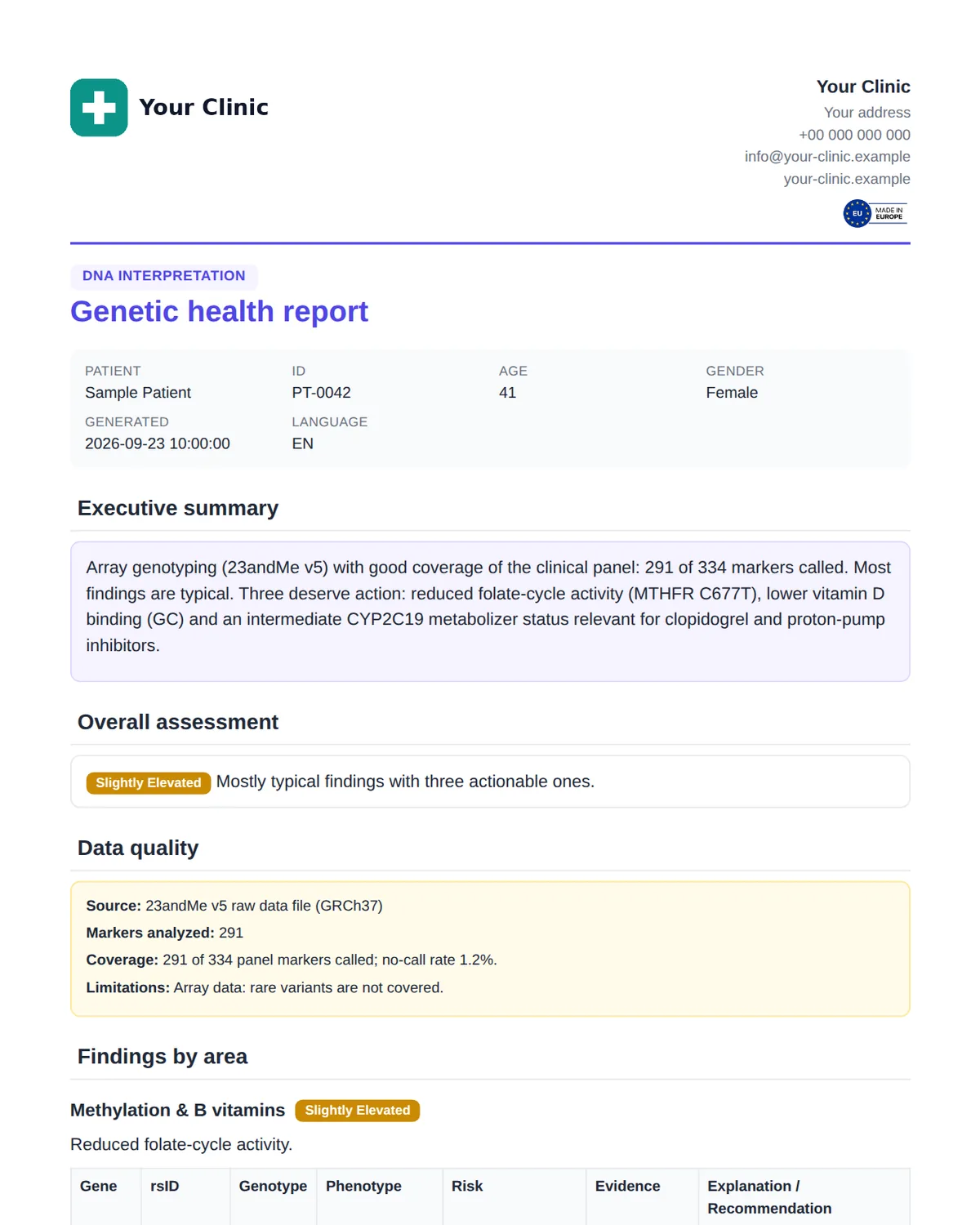
The genetic health report is ready in a few minutes, with every finding tied to the genotype in the file.
Add the patient's blood test and questionnaire, then print or save each report as an A4 PDF with your clinic's logo.
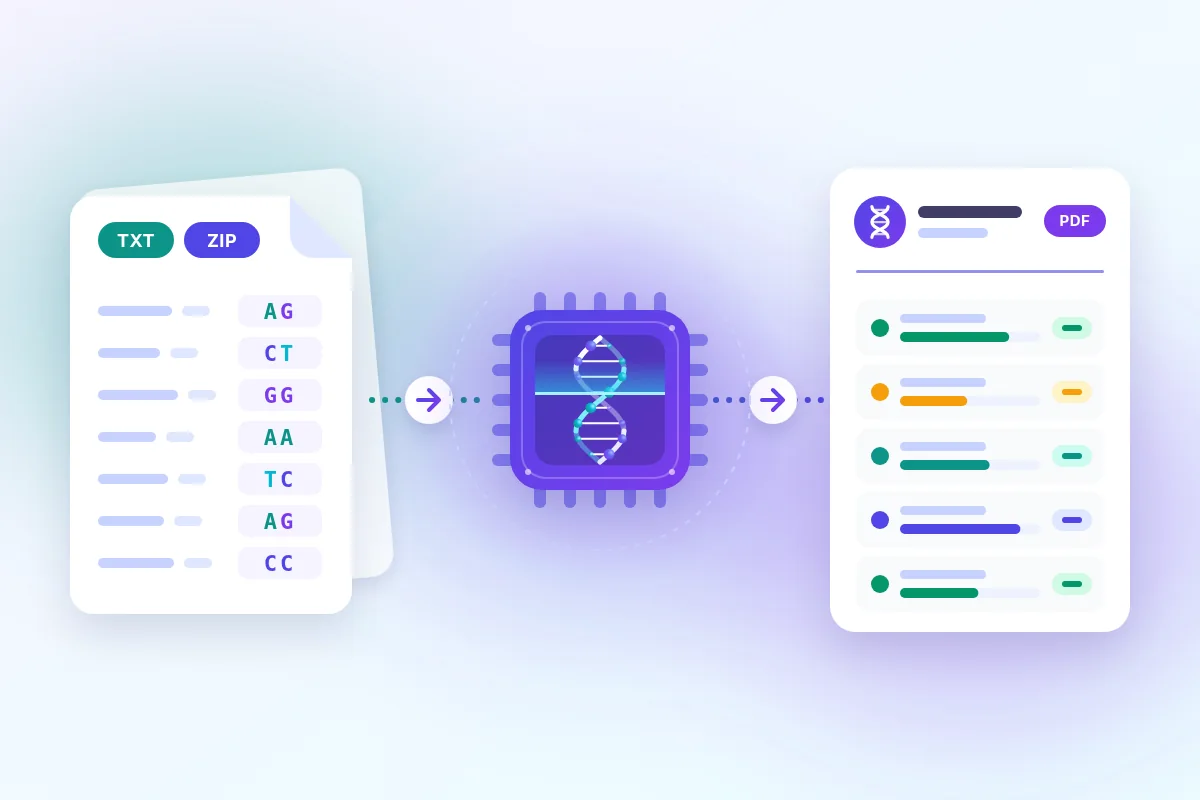

Raw data files from the major consumer DNA services and VCF files are read directly. A genetic report from any laboratory can be uploaded as PDF or photos.
Five steps between the raw file and the clinical report, and the check that keeps the AI honest.
23andMe, AncestryDNA, MyHeritage, FTDNA, LivingDNA or VCF, also zipped.
The file is parsed on the server and matched to the curated panel.
The model writes findings for 20 health areas, drug response and nutrition.
rsIDs not in the file are removed; genotypes are pinned to the file's calls.
In 100+ languages, print-ready with your clinic's logo.
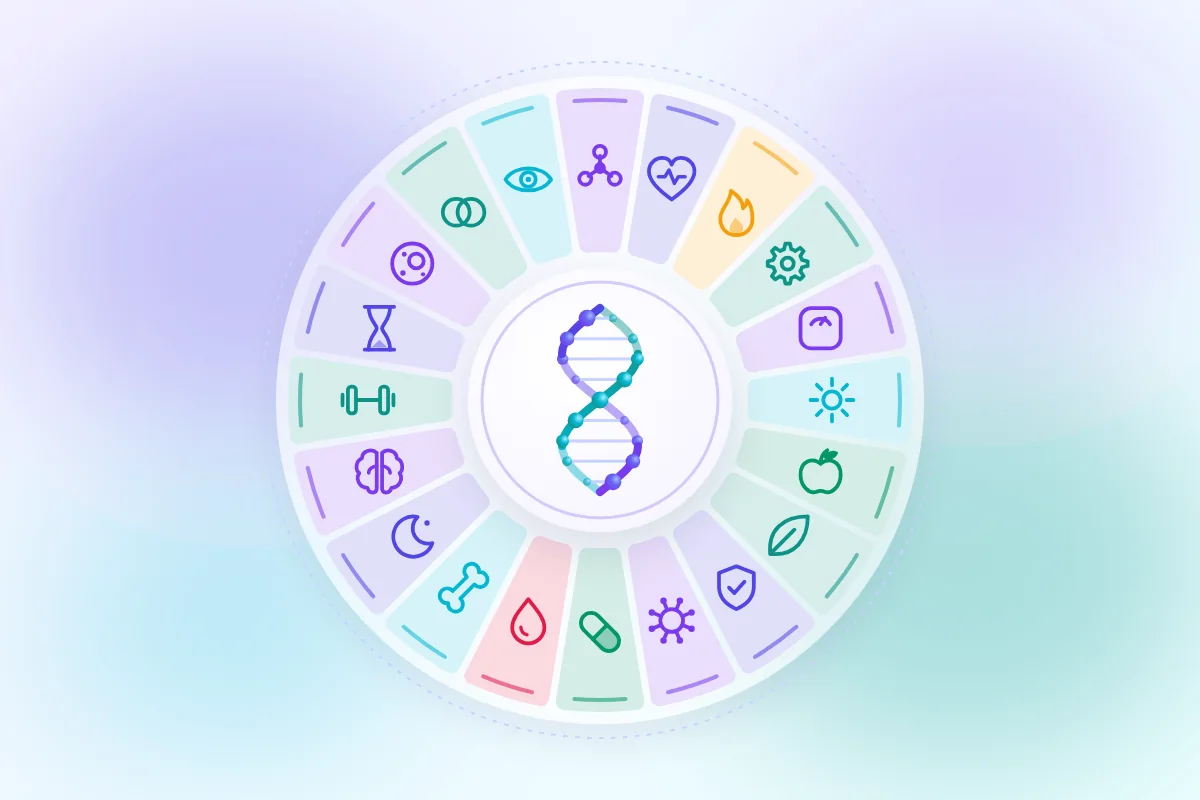
334 curated markers, grouped into 20 health areas.
MTHFR, MTR, MTRR and the folate cycle
Blood pressure, heart rhythm and vessel health
APOE, LDL, triglyceride and Lp(a) variants
Insulin response and type 2 diabetes risk
FTO, MC4R and appetite regulation
Vitamin D, B12, iron and other nutrients
Lactose, gluten, caffeine and alcohol response
Oxidative stress and detox enzymes
Inflammatory and immune markers
HLA tag markers
34 drug-response markers, CYP2C19, CYP2D6, SLCO1B1 and more
Factor V Leiden, prothrombin, HFE
Bone density and joint markers
Hormone metabolism markers
COMT, circadian and neurotransmitter genes
Muscle type, endurance and recovery
Markers linked with healthy ageing
Tag markers, always to be confirmed clinically
Tag markers for recessive conditions
Non-medical traits
Generic AI tools can write a convincing genetic report about variants the patient does not have. Kantesti cannot: the raw file is parsed on our server first, and the report is then validated against it.
How the panel and the reports are built, and the public references behind them.
334 markers identified by their dbSNP rsIDs, each assigned to one of 20 health areas with its gene and trait.
dbSNP, NCBIPredicted metabolizer phenotypes use the terminology of the Clinical Pharmacogenetics Implementation Consortium (CPIC). The report names affected drug classes and never gives prescription doses.
CPICDoses stay within the tolerable upper intake levels published by health authorities.
EFSA dietary reference valuesEvery finding is graded established, probable or preliminary, so the clinician can weigh it.
Findings written by the AI are checked against the uploaded file before the report is shown.
DNA Health is part of the Kantesti clinic panel, next to blood test interpretation, trends, nutrition and family health.
Print-quality A4 PDF with your clinic's logo, address and contact details on every device.
Write the report in the patient's language. The interface is available in 39 languages.
DNA reports sit with the patient's blood tests, so combining them takes one click.
The same three modules as a REST API, with sandbox and async mode.
API documentationRaw data files from 23andMe, AncestryDNA, MyHeritage, FamilyTreeDNA and LivingDNA, VCF files, pasted rsID lines, and genetic reports from any laboratory as PDF or photos.
Usually one to three minutes. The raw file is read in seconds; the rest is the AI writing and validating the report.
No. It is clinical decision support for the treating clinician. Consumer genotyping is not clinical sequencing, so actionable and carrier findings should be confirmed with validated clinical genetic testing.
Yes. The DNA + Blood Health Report combines it with one of the patient's interpreted blood tests, and the Supplement Advisor uses both together with a short questionnaire.