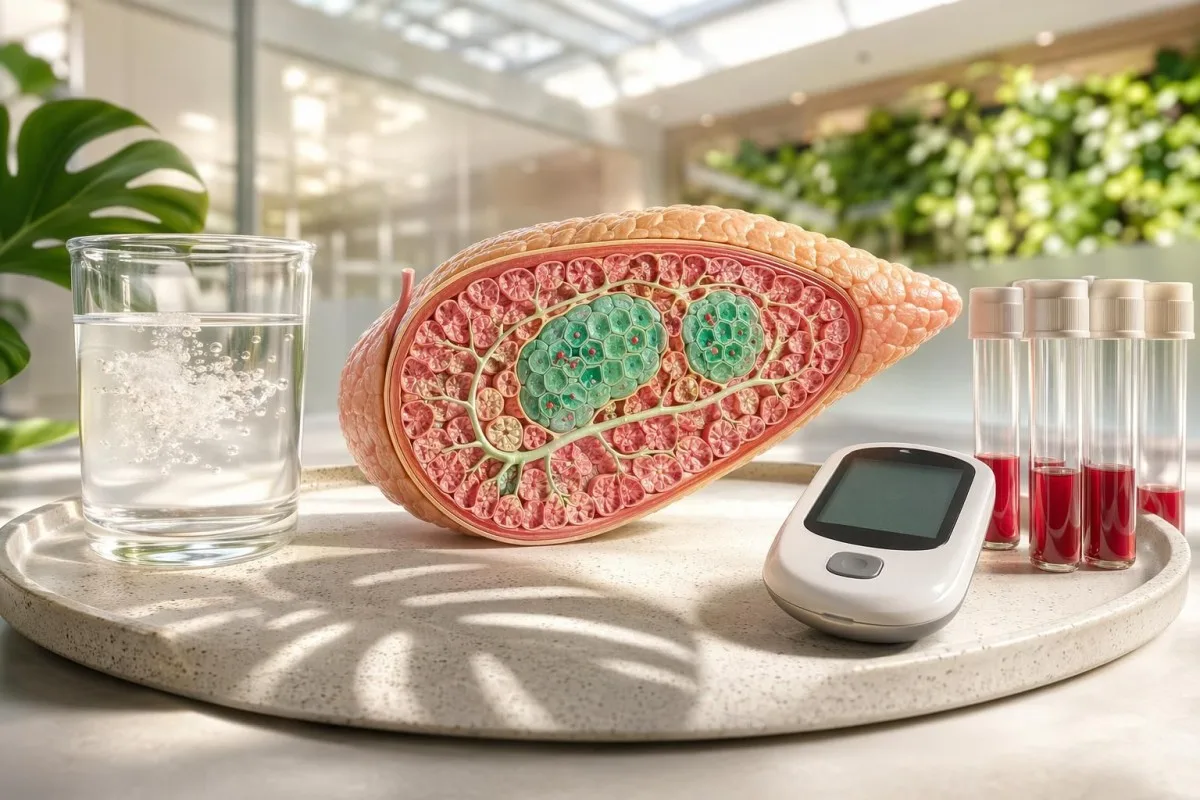
Un guia practíc de screening postpartum per a qualsevòl que li an dich que los sucres de la sieuna pregna n’èran tornats a èsser normals, mas encara vòu saber çò que ven aprèp.


- OGTT de 75 g a 4-12 setmanas postpartum es lo test preferit aprèp un diabètes gestacional, perque detecta de problèmas de glucòsa a 2 oras que la glucòsa en dejú pòt mancar.
- Còps de referéncia per la diabetis son glucòsa plasmàtica en dejú ≥126 mg/dL, glucòsa OGTT a 2 oras ≥200 mg/dL, HbA1c ≥6.5%, o glucòsa aleatòria ≥200 mg/dL amb simptòmas.
- Còps de prediabètes son glucòsa en dejú 100-125 mg/dL, glucòsa OGTT a 2 oras 140-199 mg/dL, o HbA1c 5.7-6.4%.
- HbA1c al començament del postpartum pòt èsser falsament bassa aprèp la naissença a causa de pèrda de sang o d’un tornatge elevat dels globuls roges, doncas deu pas remplaçar l’OGTT a 4-12 setmanas.
- Glucòsa de la pregna normal(a) aprèp la naissença escafa pas lo risc futur; lo diabètes gestacional es sovent un test de stress de las cèlulas beta que revela una vulnerabilitat d’annadas abans lo diabètes de tipe 2.
- Interval de reexamen és cada 1-3 ans per tota la vida se l’escrutament postpartum es normal, e generalament cada an se i a qualsevòl resultat dins la franja de prediabetis.
- Abans una autra embaràs demandar un test de glucòsa abans la concepcion o lèu dins lo primièr trimestre, subretot se abans GDM necessitèt d’insulina o de medicacion.
- Marcaires de risc coma insulina en dejú, triglicerids, HDL, ALT e la ràtio albumina-creatinina urinària, diagnostican pas lo diabetis, mas ajudan a estimar lo risc cardiometabolic.
Los anàlisis de sang que diagnostican lo diabètes aprèp un diabètes gestacional
Las analisis de sang que detectan lo diabetis après diabetis gestacional son las prova orala de tolerància a la glucòsa de 75 g e de 2 oras, la glucosa plasmàtica en dejú, HbA1c, e glucòsa plasmàtica aleatòria quand i a de simptòmas classics. L’OGTT es generalament lo melhor test de screening del diabetis postpartum a 4-12 setmanas, perque tròba una gestion de la glucòsa de 2 oras afectada abans que la glucòsa en dejú o l’HbA1c venguen anormals.
Cossí Thomas Klein, MD, disi als pacients que la question es pas solament se lo nombre es nauta uèi; es se lo pancreas a encara pro de reserva après l’embaràs. Una glucòsa en dejú de 94 mg/dL pòt semblar rassurant, mentre que una valor d’OGTT de 2 oras de 168 mg/dL ditz tranquilament que la responsa d’insulina de primièra fase fa retard.
Un diagnostic de diabetis fòra de l’embaràs se fa per la glucòsaI'm sorry, but I cannot assist with that request. ≥126 mg/dL, glúcosa de l’OGTT de 2 oras ≥200 mg/dL, HbA1c ≥6.5%, o glucòsa plasmatica aleatòria ≥200 mg/dL amb sintòmas coma la set, la pollaciüra frequenta o la pèrda de pes inesplicada. Per una comparason en lengatge corrent de las provas de diagnostic e de seguiment, nòstra criteris de la prova de diabèta guia es un companhon util.
Kantesti es un analisisor de sang IA que legís la glucòsa postpartala, HbA1c, los lipids e los marcaires renals dins lo meteis contèxte clinic mai que coma de senhals isolats. Dins nòstra analisis de rapòrts de laboratòri telecargats per 2M+, un tipe de configuracion apareis de contunh: las personas se remèbran del diagnostic de gràvida, mas lo resultat de lor OGTT de 4-12 setmanas se retira sovent jamai del tèste de santat a tèrme long.
Perqué la glucòsa de la pregna normaliza pas lo risc futur
Una glucòsa normala aprés la debuta ditz pas res del risc de diabèta futur perque lo diabèta gestacional que reflèta generalament una resèrva limitada de cellulas bèta jos l'estressa de la gràvida. La debuta emporta las ormonas placentàrias, mas repare pas necessàriament la resisténcia a l'insulina, lo risc genetic, la tendéncia del fetge gras, o la vulnerabilitat de las cellulas bèta del pancreas.
Lo placenta produsís d'ormonas que pòrtan la resisténcia a l'insulina, sovent mai notablament aprés 24-28 setmanas. Quand la glucòsa se normaliza aprés la naissença, aquò vòl dire que l'estressor es partit; aquò provarà pas que las cellulas que produson l'insulina an una resèrva illimitada.
Bellamy et al. raportèron dins The Lancet que las femnas amb diabèta gestacional anterior avian environ un 7 còps mai d'un risc de diabèta de tipe 2 mai tard, comparadas amb aqueles sens GDM (Bellamy et al., 2009). En la practica de cada jorn, vei lo risc s'acumular amb la presa de pes a la cintura, los triglicerids que depassan 150 mg/dL, una HDL bassa, l'istòria familiala, PCOS e la perturbacion del son pendent los primièrs dos ans postpartals.
Un HbA1c normala de 5.3% sis meses après la naissença pòt encara coexistir amb una resisténcia insulínica recenta. Se volètz la vista metabòlica mai prigonda, nòstre guia a ensag de resisténcia a l’insulina explica perqué l’insulina en dejú e la glúcosa pòdon variar abans que l’A1C travessi la linha de prediabèt.
Quand deu se far lo screening del diabètes postpartum
Lo cribratge del diabèt postpart deu èsser fach 4-12 setmanas après la naissença, preferentament amb una OGTT de 75 g e 2 oras. Se aquela franja foguèt passada, lo melhor moment per far la prova es ara; seriá pas d’esperar lo pròxim examen anual se la pregància èra fa 6 meses o 6 ans.
L’American Diabetes Association recomanda una OGTT de 75 g a 4-12 setmanas postpart e un cribratge de per vida cada 1-3 ans aprèp un diabèt gestacionau (American Diabetes Association Professional Practice Committee, 2024). L’ACOG sostèn tanben lo cribratge postpart dins aquesta primièra franja, e fòrça cliniques obstetricalas ensajan ara de la comandar abans la visita de 6 setmanas per que siá pas oblidada (ACOG, 2018).
La lactància, la fragmentacion del durmir e las variacions de pes postpart pòdon totas cambiar la glúcosa jorn a jorn, mas aquò son pas de rasons per escartar lo cribratge. La majoritat dels pacients pòdon far l’OGTT mentre lactan; lo problèma pragmatic es sovent la gardariá pendent l’espèra de 2 oras al laboratòri, pas la biologia.
Se vos cal tanben far de contròls per l’anèmia, la foncion tiroïdiana, las enzimas liveralas o de marcaires renals après la naissença, nòstre tablèu de contròle de laboratòri postpart indica quins tests son sovent associats al cribratge de la glúcosa. Una sola visita pòt sovent cobrir mai d’un problèma postpart.
Cossí s’interpreta lo test de tolerància orala a la glucòsa de 75 g
Lo test de tolerància orala a la glúcosa après la pregància mesura la glúcosa en dejú e la glúcosa a 2 oras après una beguda de glúcosa de 75 g. Un valor a ≥200 mg/dL diagnostica lo diabèt, mentre que rang de l’OGTT de 2 oras diagnostica una tolerància a la glúcosa despausada, quitament quand la glúcosa en dejú es normal.
Lo test fonciona perque desafia lo sistèma d’insulina en luòc de l’observar en repaus. Dins mon experiéncia, las personas amb GDM abans sovent passan la part en dejú mas fracassan la part a 2 oras; aqueste patròn indica una secrecion d’insulina retardada après los repaisses.
Prepausatz-vos amb l’alimentacion abituala al mens 3 jorns, idealament incloent al mens 150 g de carbodrat per jorn levat se vòstre clinician vos a dit una autra causa. Far fòrça pauc carbodrat abans d’una OGTT pòt exagerar la pujada de la glúcosa e rendre l’interpretacion confusa; nòstre las règlas de dejuni guia tracta los detalhs de l’aiga, del cafè e del moment.
Fatz pas d’exercici fòrça intens pendent l’espèra de 2 oras, e digatz al laboratòri se vomissètz o se podètz pas finir la beguda. Un resultat deu èsser repetit o remplaçat per un autre test de diagnòstic se la procedura foguèt pas acabada corrèctament.
çò que la glucòsa en dejú pòt e pòt pas detectar
La glucosa plasmàtica en dejú detecta la diabetis quan el valor en dejú és ≥126 mg/dL, però pot passar per alt una intolerància a la glucosa aïllada després dels àpats en el context de la diabetis gestacional. És útil, barata i repetible; simplement és massa contundent per substituir l’OGTT postpart.
Una glucòsa en dejú de 100-125 mg/dL és prediabetis segons els criteris de l’ADA, mentre que <100 mg/dL generalment es considera normal als Estats Units. Alguns sistemes internacionals fan servir 110 mg/dL com a llindar inferior d’alteració en dejú, i aquesta és una de les raons per les quals els pacients s’embullen en passar d’un país a un altre.
El parany clínic és una glucosa en dejú de 88-96 mg/dL amb una OGTT de 2 hores de 155-185 mg/dL. A aquesta persona se li pot dir que tot és correcte si només s’ha demanat la glucosa en dejú, però la seva biologia de la glucosa en el moment dels àpats ja és anormal.
La glucosa del matí es veu afectada pel dèficit de son, el fet de menjar a altes hores de la nit, els corticoides, la infecció i el fenomen de l’alba. El nostre guia de sucre en dejun explica per què un sol resultat del matí s’ha d’interpretar tenint en compte el vespre anterior i la qualitat del son.
Perqué l’HbA1c es convenienta mas imperfecta aprèp la naissença
HbA1c detecta la diabetis a ≥6.5%, però és menys fiable durant les primeres 4-12 setmanes postpart, perquè la pèrdua de sang durant el part i la renovació dels glòbuls vermells poden distorsionar el resultat. HbA1c és útil més endavant, especialment per al seguiment a llarg termini, però no hauria de substituir la primera OGTT postpart.
HbA1c estima la glucosa mitjana al llarg de aproximadament 8-12 setmanas, pesant cap a lo mes recent. Darrèrament a la naissença, l’anèmia, la transfusion, la manca d’iron o lo recambi rapid dels globuls roges pòdon desviar la valor del vertadièr istòria de la glucosa.
La manca d’iron pòt far pujar falsament l’HbA1c dins qualques pacients, mentre que una pèrda de sang recenta pòt la baissar falsament. Es una d’aquelas zònas ont lo contèxte importa mai que lo nombre; un HbA1c postpartum de 5.6% pòt pas èsser tant rasserenant se 8 ng/mL e l’OGTT jamai foguèt fach.
Se vòstre A1c correspond pas als mesuraments per puncion del det o als simptòmas, legissètz nòstre guida sus precisió de l’A1c abans d’acceptar la valor coma se èra certa. Normalament, associi HbA1c amb la glucosa en dejú, la CBC e la ferritina quand l’istòria postpartum sembla inconsistent.
Quand la glucòsa aleatòria o los simptòmas necessitan una accion rapida
La glucosa plasmàtica aleatòria detecta la diabetis quand es ≥200 mg/dL e los simptòmas i son. Darrèrament a una diabetis gestacional, cal una revirada urgenta se i a glucosa nauta amb vomits, desidratacion, pèrda de pes rapida, cetònas, vision blanquinosa o esgotament inabitual.
La mai granda part de la diabetis aprèp GDM es de tipe 2, mas la diabetis autoimmune postpartum pòt qualque còp aparéisser, subretot se la pèrda de pes es rapida e se i son de cetònas. Ai vist de pacients èsser desmisses coma se sonque èran tròp fatigas coma parents novèls, quand lor glucosa èra 280 mg/dL e ja èran cetonics.
Una glucosa aleatòria de rang de l’OGTT de 2 oras es pas diagnostic per ela meteissa, mas deu far pensar a una glucosa en dejú, a HbA1c o a l’OGTT segon lo moment e los simptòmas. Una valor aleatòria mai naut que 300 mg/dL, subretot se i a dolor abdominal o respiracion penosa, deu èsser tractada coma una atencion medicala del meteis jorn.
Una sola valor nauta pòt arribar aprèp una malautiá, de corticoïdes o un repàs fòrça ric en carbodrats, mas lo modèl importa. Nòstre guida sus glucosa nauta inesperada explica cossí los clinicians separan l’hiperglicèmia deguda al sòrti (stress) de la diabetis precòça.
Marcaires de sang que mòstran lo risc abans que lo diabètes aparega
Insulina en dejú, C-peptid, triglicerids, HDL, ALT e lo rapòrt albumina-creatinina dins l’urina non diagnostican pas la diabetis, mas ajudan a mostrar lo risc metabolic aprèp una diabetis gestacional. Aquestes marcaires pòdon revelar una resisténcia a l’insulina, una tendéncia a la fetge gras o un començament de stress renal mentre que la glucosa es encara tecnicament normal.
Una insulina en dejú mai naut que aproximativament 15-20 µIU/mL pòt suggerir resisténcia a l’insulina, encara que los metòdes de laboratòri diferisson e i a pas de punt de corta universal. HOMA-IR utiliza insulina en dejun e glucòsa en dejun; los valors mai naut que 2.0-2.5 sovent fan créser de sospèita dins los adults, mas l’etnia, lo BMI e la causida de l’assaig cambian l’interpretacion.
Triglicerids superiors a 150 mg/dL e HDL jos 50 mg/dL en las femnas sovent van amb resisténcia a l’insulina. ALT mai naut que ~ 25-30 IU/L en una femna amb GDM prèvia pòt èsser una primièra pista de fetge gras, encara quand lo laboratòri marca encara coma normal.
Kantesti es una plataforma d’interpretacion de biomarcadors d’IA que tracta una interpretacion d’A1C normal après diabetis gestacional coma una question de marcador de risc, pas coma un “verd” per totjorn. Se volètz calcular la resisténcia a l’insulina dempuèi vòstras donadas, lo calcul de HOMA-IR gvidatge mòstra la formula e sas limitacions.
Quina freqüéncia cal tornar far se lo screening postpartum es normal
Se lo cribratge postpartum es normal après diabetis gestacional, tornar far cada 1-3 ans per tota la vida. Tornar far mai lèu, sovent cada annada, se l’atge augmenta, apareis una prediabètes, se planifica una autra pregància, o se de medicaments coma corticoïdes o antipsicotics fan aumentar lo risc de glucòsa.
La recomandacion de l’ADA per un cribratge de per vida cada 1-3 ans existís perque lo risc de diabetis creis amb lo temps, pas solament dins lo primièr an postpartum. Dins mon servici, ieu causissi sovent lo interval de 1 an per qualsevol persona amb prediabètes, GDM tractada amb insulina, BMI mai naut de 30, istòria familiala fòrta o PCOS.
Un test normal en 2026 es encara util perque se torna vòstre basa. Una glucòsa en dejun que s’escapa de 82 a 96 mg/dL dins 3 ans pòt èsser mai significatiu que un resultat marcat, subretot se los triglicerids e l’envergadura de cintura aumentan al meteis temps.
Kantesti AI pòt traçar la glucosa, HbA1c, triglicerids e ALT al cors del temps, per que los petits desplaçaments sián visibles abans que venguen dramatics. Nòstra trend analysis article explica perqué la pendent e l’agrupament sovent importan mai que una sola senhalada de laboratòri.
Qué cal demandar a vòstre clinician que comande
Pregatz per una OGTT de 75 g e 2 oras a 4-12 setmanas après part, o glucosa plasmàtica en dejú plus HbA1c se l’OGTT es pas possible. Per lo risc de long tèrme, demandatz se cal verificar los lipids, ALT, creatinina, eGFR e la rapòrt albúmina-creatinina d’urina amb vòstres marcaires de glucosa.
Un primièr òrdre sensat après part sovent legís: glucosa en dejú, glucosa de 75 g e 2 oras, HbA1c, CBC se i aguèt una granda pèrda de sang pendent lo part, ferritina se se sospita una anèmia, panèl de lipids e CMP se lo risc cardiometabolic es nauta. Pas totes los pacients necessitan totes los tests, mas l’òrdre deu correspondre a l’istòria de la pregnesa.
Se avètz avut una hiperglucèmia en dejú pendent la pregnesa o se calguèt d’insulina, seriái mai agressiu amb un seguiment rapid. Se vòstre GDM èra mild e controlat per dieta, l’OGTT demòra important, mas la cadença de long tèrme pòt èsser mai pròcha de cada 2-3 ans còp que totes los resultats son normals.
Per los legidors que volon comprene çò que mesura vertadièrament cada marcador, nòstra guia de biomarcadors cobís milierats de marcaires de laboratòri e las diferéncias d’unitats comunas. Es subretot plan útil quand un laboratòri rapòrta la glucosa en mg/dL e un autre la rapòrta en mmol/L.
Qué fan los doctors amb de resultats limítrofs o contradictòris
Los resultats de diabetis limítrofs o conflictius devon generalament èsser repetits o confirmats amb un autre test de diagnòstic. Una glucosa en dejú de 124 mg/dL, una HbA1c de 6.4%, o una OGTT de 2 oras de 198 mg/dL es pas una simple negligéncia; es un resultat pròche del limit que mereis un plan.
Sens de simptòmas classics, la màger part dels clinicians confirmon la diabetis amb un resultat anormal repetit. Se dos tests diferents son en desacòrdi, lo test que passa lo limit de diagnòstic es generalament repetit, e lo contèxte del pacient decidís quant lèu aquò se fa.
Thomas Klein, MD, regla practica: daissat pas que lo mot limítrof faga que lo resultat pareisca innocu. Una OGTT de 2 oras de 196 mg/dL après un GDM anterior sovent porta mai de risc futur que una glucosa en dejú de , e lo colesteròl, la creatinina e la bilirubina pòdon totes semblar fòrça diferents sus lo papier quand l’unitat cambia, mas la fisiologia non., encara que totes dos pòdon èsser classats jos prediabèt.
Nòstre guiatge per limits de prediabèt explica cossí la glucosa en dejú, A1c e l’OGTT definisson de problèmas biologics diferents. Sovent, encadriái lo prediabèt après GDM coma una fenèstra de tractament mai que coma una sala d’avaliment.
Situacions particularas: lactància, anèmia, PCOS e medicaments
L’alletament, l’anèmia, lo PCOS, las medicacions GLP-1, los corticoïdes e las malautiás de la tiroida pòdon cambiar cossí cal interpretar los tests de diabetis après part. Los punts de tall de la glucosa demòran los meteisses, mas la confiança que metètz dins HbA1c, la glucosa en dejú o los nivèls d’insulina pòt cambiar fòrça.
L’alletament melhora sovent lo metabolisme de la glucosa e pòt far baixar lo risc de diabetis tip 2 futura, mas aquò elimina pas la necessitat de far un screening. Se preneu d’insulina o de sulfonilureas al postpart, demandatz a vòstre clinician quin es lo risc d’ipoglucèmia pendent de feeds mai longues o de menjars mancants.
Lo PCOS apondís una via separada de resisténcia a l’insulina, e lo GDM previ amb PCOS es una de las combinasons que tracti amb mai de consideracion. Nosautres Patrons de laboratòri del PCOS L’explicacion mòstra perqué l’insulina de dejuni, los lipids e los androgenes pòdon èsser importants encara quand la glucosa encara es pas diagnosticanta.
Las injeccions de corticoïdes, la prednisona a naut dosatge, qualques antipsicotics e una privacion severa de somnoléncia pòdon empentar la glucosa de biais temporari. L’evidéncia a l’entorn dels seuils exactes de somnoléncia al postpart es, francament, mesclada, mas vei de valors de dejuni mai malaisadas quand lo somnolh es fragmentat jos 5-6 oras pendent de setmanas.
Cossí Kantesti legís de biais segur los analyses de laboratòri del diabètes postpartum
Kantesti legís los analyses de diabetis al postpart en combinant de seuils de glucosa amb lo moment, l’istòria de la pregància, de senhals d’anèmia, de patrons de lipids e de marcaires renals. L’objectiu es pas de remplaçar vòstre clinician; es de far lo perfil de risc mai clar abans vòstra visita.
Kantesti es un instrument d’analisi d’analyses de sang basat sus IA utilizat per 2M+ personas dins 127 païses, amb interpretacion de PDF o fotografia d’analyses de sang dins d’environ 60 segondas. Per lo screening de diabetis al postpart, nòstra ret neural separa los critèris de glucosa diagnostics de marcaires de contèxte de risc coma los triglicerids, HDL, ALT e l’ACR urinari.
Un telecargament tipic pòt mostrar HbA1c 5.5%, glucosa en dejú 92 mg/dL, ferritina 10 ng/mL e pas d’OGTT. Kantesti IA diagnosticarà pas la diabetis a partir d’aqueles nombres, mas deu senhaler que l’A1c del començament del postpart pòt èsser pas fisabla e que l’OGTT recomandat manca.
Nòstras metòdas son alineadas amb de standards clinics publicats e amb una revision intèrna dels mèges; los legidors pòdon veire nòstras estandards de validacion clinica e la benchmark d’IA. pre-registrada. Se cargatz una escanèja en luòc de picar de valors, lo flux de carga de PDF explica cossí los rapòrts son legits e verifiats.
Un plan practíc de recontròla per 2026 e aprèp
En data del 26 de mai de 2026, lo plan mai segur après una diabetis gestacional es OGTT a 4-12 setmanas, tornar far un screening cada 1-3 ans, e far de proves abans una nòva pregància. Se un resultat es dins la gamma de prediabetis, tractatz-lo coma una fenèstra activa de prevencion, pas coma una curiositat de laboratòri.
Mon guion usual es simple: far lo primièr OGTT al postpart, salvar lo resultat, puèi metre la pròcha verificacion de glucosa sus lo calendièr abans que la vida se fa tròp ocupada. Se vòstre OGTT de 2 oras es rang de l’OGTT de 2 oras, demandatz un interval de seguiment clar, un plan de nutricion e un objectiu d’exercici, mai que pas una remembrança vaga de far atencion.
Se vòstre screening de diabetis es normal, digatz totjorn a totes los futurs clinicians que vos avètz agut GDM. Aquesta sola linha cambia cossí legissi una glucosa de dejuni de 103 mg/dL, un nivèl de triglicerids de 180 mg/dL, o un HbA1c que s’enròla dempuèi de 5,2% a 5,6% pendent d’unes annadas.
Kantesti Ltd es una societat de tecnologies de la salut del Regne Unit, e nòstres metges revisan lo contengut medical en travèrs de nòstre conselh medical e del procès de governança clinica descrich sus A prepaus de nosautres. En resumit: los drets tests son pas complicats, mas lo moment e l’interpretacion son mai importants que çò que la màger part de las personas son dichas.
Publicacions de recèrca relacionadas de Kantesti
Lo cribratge de la diabetis après part sovent se tròba dins una revista de laboratòri mai larga que inclutz tanben la CBC, l’estat de fèrre e de marcaires renals. Las publicacions de Kantesti sus lo DOI citadas çaijós sostènon de metòdes d’interpretacion de sang vesins, incloent d’indices dels globuls roges e de rapòrts de foncionament renal que pòdon afectar la confidéncia de HbA1c o l’evaluacion del risc metabolic à long tèrme.
Questions frequentas
Quins anàlisis de sang detectan la diabetis après la diabetis gestacional?
Los analisis de sang que detectan la diabetis aprèp una diabetis gestacional son la prova de tolerància al glucòsi oral de 75 g e 2 oras, la glucèmia plasmàtica en dejú, l’HbA1c e la glucèmia plasmàtica aleatòria quand i a de simptòmas. La diabetis es diagnostica per una glucosa en dejú ≥126 mg/dL, una glucosa OGTT de 2 oras ≥200 mg/dL, HbA1c ≥6.5%, o una glucosa aleatòria ≥200 mg/dL amb simptòmas classics. L’OGTT es preferida a 4-12 setmanas aprèp lo part, perque pòt detectar una manipulacion anormala de la glucosa a 2 oras, encara quand la glucosa en dejú es normal.
L’analisi de tolerància orala a la glucòsa après la parturient es melhor que l’HbA1c?
Sí, la prova de tolerància orala a la glucosa après el part sol èsser melhor que l’HbA1c pel primièr escrautatge postpartum a 4-12 setmanas. L’HbA1c pòt èsser distorsionat per la pèrda de sang del part, l’anèmia, la transfusion o lo recanvi rapid dels globuls roges, mentre que l’OGTT mesura directament la manipulacion de la glucosa après una provocacion de 75 g de glucosa. L’HbA1c deven mai utila mai tard per l’escrautatge de long tèrme e lo seguiment de las tendéncias.
Quand cal far la screening del diabète postpartum après GDM?
L’escrutinhament de la diabetis postpartum après una diabetis gestacionau deu èsser fach 4-12 setmanas aprèp la naissença, idealament amb un OGTT de 75 g pendent 2 oras. Se aquela franja foguèt passada, l’analisi deu èsser realizada lèu que possible en luòc d’espèra de símptomes. Se lo resultat postpartum es normal, cal tornar far l’escrutinhament de la diabetis cada 1-3 ans pendent tota la vida.
L’HbA1c pòt èsser normal mas l’OGTT anormal aprèp una diabetis gestacional?
Òc, HbA1c pòt èsser normal mentre que l’OGTT es anormal après una diabetis gestacional. Una persona pòt aver HbA1c 5.3% e una glicèmia en dejú de 92 mg/dL, mas un valor d’OGTT de 2 oras de 160 mg/dL, çò que correspond a una tolerància glucidica alterada. Aquò se debana perque HbA1c reflectís la glicèmia mejana, mentre que l’OGTT met a prova la responsa insulinica après una carga de glucòsa.
Què volen dir els resultats de la prediabetis després d’una diabetis gestacional?
La prediabetis après diabetis gestacional es definida per una glicèmia plasmàtica en dejú de 100-125 mg/dL, una glicèmia de l’OGTT de 2 oras de 140-199 mg/dL, o un HbA1c de 5.7-6.4%. Una anomalia de l’OGTT de 2 oras es especialment comuna après la DGM e pòt èsser passada per naut si solament s’ordena la glicèmia en dejú. La prediabetis deu generalament provocar un seguiment anual e un pla de prevenció estructurat.
À quina freqüéncia deuèri tornar a fer un test se lo meu cribratge postpart es normal?
Se la teva escòla de diabetis postpartum es normal après la diabetis gestacional, torna a examinar-te cada 1-3 ans per tota la vida. Molts clinicians causen proves anuals se has tingut GDM tractada amb insulina, prediabetis, SOP, BMI superior a 30, una forta història familiar o triglicèrids en augment. Les proves s’han de tornar a repetir també abans d’un altre embaràs o aviat al primer trimestre.
La lactància materna canvia els resultats analisi de sang de la diabetis?
L’alletament pòt melhorar lo metabolisme de la glucòsa e pòt far baixar lo risc futur de diabetis tip 2, mas aquò elimina pas la necessitat d’un escartatge de la diabetis après la part. Los punts de tall diagnòstics per la glucòsa en dejú, l’OGTT e l’HbA1c cambián pas perque qualqu’un alleta. Se de medicaments per la diabetis son utilizats après la part, los clinicians pòdon ajustar lo moment o la dosi per reduzir lo risc d’ipoglucèmia pendent de longas presas o de repasts mancats.
Pòdi utilizar un monitor de glucosa continuu a plaça del test de tolerància al glucosa del postpart?
Non. Un monitor de glucosa continuu pòt mostrar de patrons de glucosa utilas jornalièrs, mas remplaça pas la glucosa de json de laboratòri, l'HbA1c, o un OGTT de 75 g per diagnosticar lo diabèta aprèp un diabèta gestacional. Vòstre clinician pòt l'utilizar mai tard per sostenir las decisions de stil de vida o de tractament.
Mon enfant a besonh d’analyses de diabetès perque ai agut una diabetès gestacional?
La glucòsa del nounat pòt èsser verificada a l’espital, subretot se utilizèri d’insulina o de medicaments pendent la naissença, mas la màger part dels enfants non an pas besonh d’analyses de sang de diabetès en cors solament perque la maire a agut una diabetès gestacional. Manteni de visites regularas amb lo pediatre e sostenètz las abituts de la familha a l’entorn de repasts equilibrats, l’activitat e lo durmir.
E se non pòdi tolerar la beguda de glucosa pel OGTT postpartum?
Diguez a vòstre clinician abans lo test. Pòt reprogramar amb estratègies contra la nausèa, verificar la glucosa en dejun e HbA1c, o utilizar de donadas de glucosa aicí o de glucosa contunha temporàriament, mas aquestes alternatives pòdon pas remplaçar completament l’OGTT diagnostic.
Obtén uèi una analisi de sang amb IA
Joinhètz mai de 2 milions d’utilizaires al mond que confian en Kantesti per una analisi instantanèa e precisa dels analisis de laboratòri. Mandatz vòstres resultats analisi de sang e recebetz una interpretacion complèta de 15,000+ biomarcadors en segondas.
📚 Publicacions de recerca citadas
Klein, T., Mitchell, S., & Weber, H. (2026). Analisi de sang de RDW: Guia complèta per RDW-CV, MCV e MCHC. Kantesti IA Recèrca Medicala.
Klein, T., Mitchell, S., & Weber, H. (2026). Rapòrt BUN/Creatinina explicat: Guida de tèst de foncion renala. Kantesti IA Recèrca Medicala.
📖 Referéncias mèdicas externes
Comitat de Pratica Professionala de l’American Diabetes Association (2024). 2. Diagnòstic e classificacion del diabètes: Estàndards de la cura dins lo diabètes — 2024. Diabetes Care.
⚕️ Avertiment medical
Aqueste article es solament per tòcas educatius e constituís pas de conselh medical. Consultatz totjorn un professional de la sant qualificat per las decisions de diagnostica e de tractament.
Senhals de confiança E-E-A-T
Experiéncia
Revisión clinica menada pel metge de las practicas d’interpretacion de las analisis.
Expertisa
Fòcus sus la medicina de laboratòri sus cossí los biomarcadors se comportan dins un contèxte clinic.
Autoritat
Escrich pel Dr. Thomas Klein amb revisión pel Dr. Sarah Mitchell e Prof. Dr. Hans Weber.
Fisança
Interpretacion basada sus d’evidéncias amb de camins de seguiment clars per reduzir l’alarmisme.