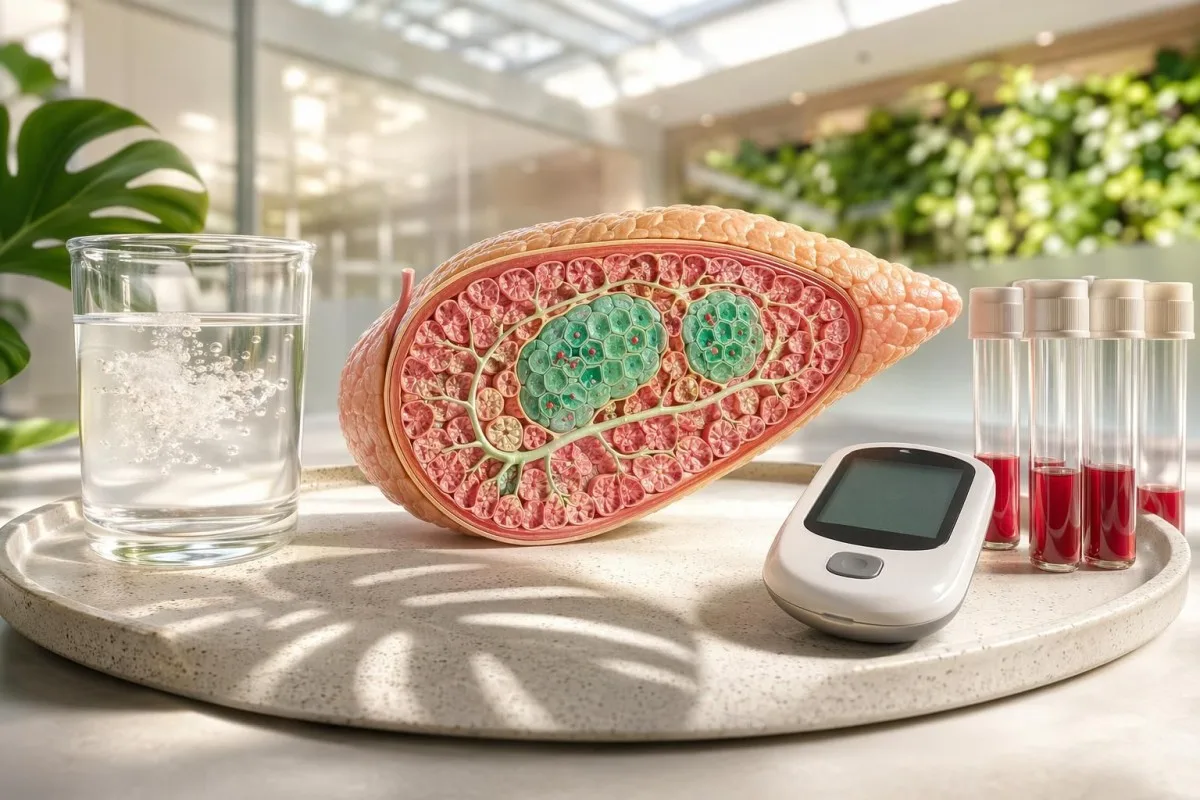
’n Praktiese postpartum-siftinggids vir enigiemand wat gesê is hul swangerskap-suikers is weer normaal, maar steeds wil weet wat volgende kom.


- 75 g OGTT by 4-12 weke postpartum is die voorkeurtoets ná swangerskapsdiabetes omdat dit 2-uur-glukoseprobleme opspoor wat vasglukose kan mis.
- Diabetes-uitsnywaardes is vasplasmaglukose ≥126 mg/dL, 2-uur OGTT-glukose ≥200 mg/dL, HbA1c ≥6.5%, of ewekansige glukose ≥200 mg/dL met simptome.
- Voor-diabetes-afsnypunte is vasglukose 100-125 mg/dL, 2-uur OGTT-glukose 140-199 mg/dL, of HbA1c 5.7-6.4%.
- HbA1c vroeg postpartum kan vals laag wees ná aflewering as gevolg van bloedverlies of hoë rooibloedsel-omset, daarom moet dit nie die OGTT by 4-12 weke vervang nie.
- Normale swangerskap-glukose ná aflewering wis nie toekomstige risiko uit nie; swangerskapsdiabetes is dikwels ’n beta-sel-stresstoets wat kwesbaarheid jare voor tipe 2-diabetes openbaar.
- Herhalingstydperk is elke 1-3 jaar vir die res van die lewe as die postpartum-ondersoek normaal is, en gewoonlik jaarliks as enige resultaat in die prediabetes-reeks is.
- Voor ’n volgende swangerskap vra vir glukosetoetsing voor bevrugting of vroeg in die eerste trimester, veral as vorige GDM insulien of medikasie vereis het.
- Risikomerke soos vasende insulien, trigliseriede, HDL, ALT en urine albumien-kreatinien-verhouding diagnoseer nie diabetes nie, maar dit help om kardiometaboliese risiko te skat.
Die bloedtoetse wat diabetes diagnoseer ná swangerskapsdiabetes
Die bloedtoetse wat diabetes na swangerskapsdiabetes opspoor, is die 75 g 2-uur orale glukosetoleransietoets, vas-plasmaglukose, HbA1c, en ewekansige plasmaglukose wanneer klassieke simptome teenwoordig is. Die OGTT is gewoonlik die beste postpartum-diabetes-siftingstoets by 4-12 weke omdat dit ’n verswakte hantering van 2-uur-glukose opspoor voordat vasende glukose of HbA1c abnormaal word.
Soos Thomas Klein, MD, sê ek vir pasiënte dat die vraag nie net is of die getal vandag hoog is nie; dit is of die pankreas nog genoeg reserwe het ná swangerskap. ’n Vasende glukose van 94 mg/dL kan geruststellend lyk, terwyl ’n 2-uur OGTT-waarde van 168 mg/dL stilweg sê dat die eerste-fase-insulienrespons agter raak.
’n Diagnose van diabetes buite swangerskap word gemaak deur vasende plasmaglukose ≥126 mg/dL, 2-uur OGTT-glukose ≥200 mg/dL, HbA1c ≥6.5%, of ewekansige plasmaglukose ≥200 mg/dL met simptome soos dors, gereelde urinering of onverklaarbare gewigsverlies. Vir ’n eenvoudige vergelyking van diagnostiese en moniteringstoetse, ons diabetes-toets-afsnypunte gids ’n nuttige metgesel.
Kantesti is ’n KI-bloedtoets-analiseerder wat postpartum-glukose, HbA1c, lipiede en niermerkers in dieselfde kliniese konteks lees, eerder as geïsoleerde merkers. In ons ontleding van 2M+ opgelaaide laboratoriumverslae bly een patroon opduik: mense onthou die swangerskapsdiagnose, maar hul 4-12 weke OGTT-resultaat beland dikwels nooit in die langtermyn-gesondheidsrekord nie.
Waarom normale swangerskap-glukose nie toekomstige risiko “terugstel” nie
Normale glukose ná bevalling stel nie toekomstige diabetesrisiko terug nie, omdat swangerskapsdiabetes gewoonlik beperkte beta-sel-reserwe onder swangerskapstres weerspieël. Bevalling verwyder plasentale hormone, maar dit herstel nie noodwendig insulienweerstand, genetiese risiko, geneigdheid tot vetterige lewer, of pankreas-beta-sel kwesbaarheid nie.
Die plasenta produseer hormone wat insulienweerstand opjaag, dikwels die duidelikste ná 24-28 weke. Wanneer glukose ná geboorte normaliseer, beteken dit dat die stresfaktor weg is; dit bewys nie dat die insulienproduserende selle onbeperkte reserwe het nie.
Bellamy et al. het in The Lancet gerapporteer dat vroue met vorige swangerskapsdiabetes ongeveer ’n 7-voud hoër risiko vir latere tipe 2-diabetes gehad het in vergelyking met dié sonder GDM (Bellamy et al., 2009). In die daaglikse praktyk sien ek die risikokluster saam met gewigstoename om die middel, trigliseriede bo 150 mg/dL, lae HDL, familiegeskiedenis, PCOS en slaapversteuring gedurende die eerste twee postpartum-jare.
’n Normale HbA1c van 5.3% ses maande na bevalling kan steeds saam met vroeë insulienweerstand bestaan. As jy die dieper metaboliese beeld wil hê, ons gids tot toetsing vir insulienweerstand verduidelik hoekom vasinsulien en glukose kan afwyk voordat A1C die prediabetes-lyn oorsteek.
Wanneer postpartum-diabetes-sifting moet gebeur
Postpartum-diabetesondersoek moet plaasvind 4-12 weke na bevalling, verkieslik met ’n 75 g 2-uur OGTT. As daardie venster gemis is, is die beste tyd om te toets nou; ek sou nie wag vir die volgende jaarlikse fisiese ondersoek as die swangerskap 6 maande of 6 jaar gelede was nie.
Die American Diabetes Association beveel ’n 75 g OGTT aan by 4-12 weke postpartum en lewenslange ondersoek elke 1-3 jaar na swangerskapsdiabetes (American Diabetes Association Professional Practice Committee, 2024). ACOG ondersteun ook postpartum-ondersoek in hierdie vroeë venster, en baie verloskundige klinieke probeer nou om dit voor die 6-week-ondersoek te laat bestel sodat dit nie vergeet word nie (ACOG, 2018).
Borsvoeding, slaapfragmentasie en postpartum-gewigverskuiwings kan alles glukose van dag tot dag verander, maar dit is nie redes om toetsing oor te slaan nie. Die meeste pasiënte kan die OGTT doen terwyl hulle borsvoed; die praktiese kwessie is dikwels kinderoppas tydens die 2-uur wag in die laboratorium, nie die biologie nie.
As jy ook kontrole vir anemie, skildklierfunksie, lewerensieme of nierskermmerkers na bevalling nodig het, ons postpartum-lab-ondersoeklys uiteensit watter toetse algemeen saam met glukose-ondersoek gepaardgaan. Een enkele afspraak kan dikwels meer as een postpartum-probleem dek.
Hoe die 75 g orale glukosetoleransietoets geïnterpreteer word
Die orale glukosetoleransietoets na swangerskap meet vasglukose en 2-uur-glukose na ’n 75 g-glukosedrank. ’n 2-uur-waarde ≥200 mg/dL diagnoseer diabetes, terwyl 140-199 mg/dL glukosetoleransie-afwyking diagnoseer, selfs wanneer vasglukose normaal is.
Die toets werk omdat dit die insulienstelsel uitdaag eerder as om dit in rus waar te neem. In my ervaring slaag mense met vorige GDM dikwels die vasgedeelte, maar faal die 2-uur-gedeelte; daardie patroon dui op vertraagde insulienafskeiding ná maaltye.
Berei voor met jou gewone eetpatroon vir ten minste 3 dae, ideaal gesproke insluitend minstens 150 g koolhidrate per dag tensy jou klinikus jou anders vertel. Om baie min-koolhidraat te eet voor ’n OGTT kan die glukosestyging oordryf en interpretasie rommelig maak; ons vasreëls gids dek water, koffie en tydsberekeningbesonderhede.
Moenie hard oefen tydens die 2-uur-wag nie, en sê vir die laboratorium as jy opgooi of nie die drank kan voltooi nie. ’n Uitslag moet herhaal of vervang word met ’n ander diagnostiese toets as die prosedure nie behoorlik voltooi is nie.
Wat vasglukose kan en nie kan opspoor nie
Vasplasmaglukose bepaal diabetes wanneer die vaswaarde is ≥126 mg/dL, maar dit kan geïsoleerde postmaal glukose-onverdraagsaamheid mis ná swangerskapsdiabetes. Dit is nuttig, goedkoop en herhaalbaar; dit is bloot te grof om die postpartum OGTT te vervang.
’n Vasglukose van 100-125 mg/dL is prediabetes volgens ADA-kriteria, terwyl <100 mg/dL oor die algemeen as normaal beskou word in die Verenigde State. Sommige internasionale stelsels gebruik 110 mg/dL as die laer drempel vir verswakte vasglukose, wat een rede is waarom pasiënte verward raak wanneer hulle tussen lande beweeg.
Die kliniese lokval is ’n vasglukose van 88-96 mg/dL met ’n 2-uur OGTT van 155-185 mg/dL. Daardie persoon kan vertel word dat alles reg is as slegs vasglukose bestel is, maar hul maaltyd- glukosebiologie is reeds abnormaal.
Oggendglukose word beïnvloed deur slaaptekort, laat-aand eet, kortikosteroïede, infeksie en die dagbreek-verskynsel. Ons vas suiker-riglyn verduidelik hoekom ’n enkele oggenduitslag geïnterpreteer moet word met die vorige aand en slaapkwaliteit in gedagte.
Waarom HbA1c gerieflik is, maar onvolmaak ná aflewering
HbA1c bepaal diabetes by ≥6.5%, maar dit is minder betroubaar in die eerste 4-12 postpartum weke omdat bevallingsbloedverlies en omset van rooibloedselle die resultaat kan verdraai. HbA1c is later nuttig, veral vir langtermyn-opvolg, maar dit moet nie die eerste postpartum OGTT vervang nie.
HbA1c skat gemiddelde glukose oor ongeveer 8-12 weke, gewig ten gunste van die mees onlangse maand. Ná bevalling kan anemie, transfusie, ystertekort of vinnige vervanging van rooibloedselle die waarde wegstoot van die ware glukoseverhaal.
Ystertekort kan HbA1c valslik verhoog by sommige pasiënte, terwyl onlangse bloeding dit valslik kan verlaag. Dit is een van daardie areas waar konteks meer saak maak as die getal; ’n postpartum HbA1c van 5.6% is dalk nie so gerusstellend as ferritien 8 ng/mL en die OGTT nooit gedoen is nie.
As jou A1c nie ooreenstem met vingerstoklesings of simptome nie, lees ons gids oor A1c-akkuraatheid voordat jy die waarde teen sy nominale waarde aanvaar. Ek koppel gewoonlik HbA1c met vasglukose, CBC en ferritien wanneer die postpartum-verhaal inkonsekwent voel.
Wanneer ewekansige glukose of simptome vinnige optrede vereis
Willekeurige plasmaglukose stel diabetes vas wanneer dit ≥200 mg/dL en simptome teenwoordig is. Ná swangerskapsdiabetes is dringende hersiening nodig vir hoë glukose met braking, dehidrasie, vinnige gewigsverlies, ketone, vaag visie of ongewone uitputting.
Die meeste diabetes ná GDM is tipe 2, maar postpartum outo-immuun-diabetes kan soms voorkom, veral as gewigsverlies vinnig is en ketone teenwoordig is. Ek het pasiënte gesien wat as bloot moeg nuwe ouers afgemaak is toe hul glukose 280 mg/dL en hulle was reeds ketoties.
’n Willekeurige glukose van 140-199 mg/dL is nie op sigself diagnosties nie, maar dit behoort vasglukose, HbA1c of OGTT te laat doen, afhangend van tydsberekening en simptome. ’n Willekeurige waarde bo 300 mg/dL, veral met abdominale pyn of moeilike asemhaling, moet as dieselfde-dag mediese sorg behandel word.
Een geïsoleerde hoë waarde kan gebeur ná ’n siekte, steroïede of ’n baie hoë-koolhidraatmaaltyd, maar die patroon maak saak. Ons gids oor onverwags hoë glukose verduidelik hoe klinici streshiperglukemie van vroeë diabetes skei.
Bloedmerkers wat risiko toon voordat diabetes verskyn
Vasinsulien, C-peptied, trigliseriede, HDL, ALT en urine albumien-kreatinien-verhouding diagnoseer nie diabetes nie, maar dit help om metaboliese risiko ná swangerskapsdiabetes aan te toon. Hierdie merkers kan insulienweerstand, ’n neiging tot vetterige lewer of vroeë nierspanning openbaar terwyl glukose nog tegnies normaal is.
’n Vasinsulien bo ongeveer 15–20 µIU/mL kan insulienweerstand voorstel, hoewel laboratoriummetodes verskil en daar geen universele diagnostiese afsnypunt is nie. HOMA-IR gebruik vasinsulien en vasglukose; waardes bo 2.0-2.5 verhoog dikwels vermoede by volwassenes, maar etnisiteit, BMI en keuse van toets verander die interpretasie.
Trigliseriede bo 150 mg/dL en HDL onder 50 mg/dL by vroue gaan dikwels saam met insulienweerstand. ALT bo ongeveer 25-30 IU/L by ’n vrou met vorige GDM kan ’n vroeë vetterige-lewer-wenk wees, selfs wanneer die laboratoriumvlag nog steeds normaal sê.
Kantesti is ’n KI-biomerk-interpretasieplatform wat ’n normale A1C ná swangerskapsdiabetes as ’n risikomerker-vraag behandel, nie as ’n groen lig vir altyd nie. As jy insulienweerstand uit jou waardes wil bereken, wys die HOMA-IR-berekening gids die formule en die beperkings daarvan.
Hoe gereeld om te her toets as die postpartum-sifting normaal is
As postpartum-sifting normaal is ná swangerskapsdiabetes, herhaal elke 1-3 jaar vir die res van jou lewe. Herhaal gouer, dikwels jaarliks, as gewig toeneem, prediabetes verskyn, nog ’n swangerskap beplan word, of medikasies soos steroïede of antipsigotika glukoserisiko verhoog.
Die ADA-aanbeveling vir lewenslange sifting elke 1-3 jaar bestaan omdat diabetesrisiko mettertyd toeneem, nie net in die eerste postpartum-jaar nie. In my spreekkamer kies ek gewoonlik die 1-jaar interval vir enigiemand met prediabetes, insulienbehandelde GDM, BMI bo 30, sterk familiegeskiedenis of PCOS.
’n Normale toets in 2026 is steeds nuttig omdat dit jou basislyn word. Vasglukose wat wegdryf van 82 tot 96 mg/dL oor 3 jaar kan meer betekenisvol wees as een wat as ’n uitslag gemerk is, veral as trigliseriede en middellyfomtrek terselfdertyd toeneem.
Kantesti KI kan glukose, HbA1c, trigliseriede en ALT oor tyd karteer sodat klein verskuiwings sigbaar is voordat dit dramaties word. Ons tendensanalise artikel verduidelik hoekom helling en groepering dikwels belangriker is as ’n enkele laboratorium-etiket.
Wat om jou klinikus te vra om te bestel
Vra vir ’n 75 g 2-uur OGTT op 4-12 weke postpartum, of vasende plasmaglukose plus HbA1c as ’n OGTT nie haalbaar is nie. Vir langtermyn-risiko, vra of lipiede, ALT, kreatinien, eGFR en urine albumien-kreatinienverhouding nagegaan moet word saam met jou glukosemerkers.
’n Sinvolle eerste postpartum-bestelling lees dikwels: vasende glukose, 75 g 2-uur glukose, HbA1c, CBC as daar swaar bevallingsbloedverlies was, ferritien as bloedarmoede vermoed word, lipiedpaneel en CMP as kardiometaboliese risiko hoog is. Nie elke pasiënt het elke toets nodig nie, maar die bestelling moet by die swangerskapverhaal pas.
As jy vasende hiperglukemie tydens swangerskap gehad het of insulien nodig gehad het, sal ek meer aggressief wees met vroeë opvolg. As jou GDM lig was en met dieet beheer is, maak die OGTT steeds saak, maar die langtermyn-tempo kan nader wees aan elke 2-3 jaar wanneer al die resultate normaal is.
Vir lesers wat wil verstaan wat elke merker werklik meet, ons biomerkergids dek duisende laboratoriummerkers en algemene verskille in eenhede. Dit is veral nuttig wanneer een laboratorium glukose in mg/dL rapporteer en ’n ander mmol/L.
Wat dokters doen met grensgeval- of teenstrydige resultate
Grensgeval- of teenstrydige diabetesresultate moet gewoonlik herhaal of bevestig word met ’n ander diagnostiese toets. ’n Vasende glukose van 124 mg/dL, HbA1c van 6.4%, of ’n 2-uur OGTT van 198 mg/dL is nie om weg te kyk nie; dit is ’n byna-drempelresultaat wat ’n plan verdien.
Sonder klassieke simptome bevestig die meeste klinici diabetes met ’n herhaalde abnormale resultaat. As twee verskillende toetse verskil, word die toets bo die diagnostiese drempel gewoonlik herhaal, en die pasiëntkonteks bepaal hoe vinnig dit gebeur.
Thomas Klein, MD, praktiese reël: moenie toelaat dat die woord grensgeval die resultaat onskadelik laat voel nie. ’n 2-uur OGTT van 196 mg/dL ná vorige GDM dra dikwels meer toekomstige risiko as ’n vasende glukose van 101 mg/dL, selfs al kan albei onder prediabetes geklassifiseer word.
Ons gids tot prediabetes-drempels verduidelik hoe vasende glukose, A1c en OGTT verskillende biologiese probleme definieer. Ek raam dikwels prediabetes ná GDM as ’n behandelingsvenster eerder as ’n wagkamer.
Spesiale situasies: borsvoeding, anemie, PCOS en medikasie
Borsvoeding, bloedarmoede, PCOS, GLP-1-medisynes, steroïede en skildklier siekte kan verander hoe postpartum-diabeteslaboratoriums geïnterpreteer moet word. Die glukose-afsnypunte bly dieselfde, maar die vertroue wat jy in HbA1c, vasende glukose of insulienvlakke plaas, kan aansienlik verander.
Borsvoeding verbeter dikwels glukosemetabolisme en kan die risiko vir toekomstige tipe 2-diabetes verlaag, maar dit skakel nie die behoefte aan sifting uit nie. As jy insulien of sulfonielure postpartum gebruik, vra jou klinikus oor die risiko van hipoglukemie tydens langer voedings of gemiste maaltye.
PCOS voeg ’n aparte insulienweerstandspad by, en vorige GDM plus PCOS is een van die kombinasies waarmee ek met ekstra respek werk. Ons PCOS-labpatrone verduidelik hoekom vasinsulien, lipiede en androgene kan saak maak selfs wanneer glukose nog nie diagnosties is nie.
Steroïedinspuitings, hoë-dosis prednisoon, sommige antipsigotika en ernstige slaaptekort kan glukose tydelik laat styg. Die bewyse rondom presiese postpartum-slaapdrempels is eerlikwaar gemeng, maar ek sien swakker vaswaardes wanneer slaap gefragmenteer is onder 5-6 uur vir weke.
Hoe Kantesti postpartum-diabeteslaboratoriums veilig lees
Kantesti lees postpartum-diabeteslablabs deur glukosedrempels met tydsberekening, swangerskapgeskiedenis, anemie-wenke, lipiedpatrone en nierskermmerkers te kombineer. Die doel is nie om jou klinikus te vervang nie; dit is om die risikopatroon duideliker te maak voor jou afspraak.
Kantesti is ’n AI-aangedrewe bloedtoets-analisehulpmiddel wat deur 2M+ mense in 127 lande gebruik word, met PDF- of foto-interpretasie van bloedtoetse in ongeveer 60 sekondes. Vir postpartum-diabetes-sifting skei ons neurale netwerk diagnostiese glukosekriteria van risikokonteksmerkers soos trigliseriede, HDL, ALT en urine ACR.
’n Tipiese oplaai kan HbA1c 5.5%, vasglukose 92 mg/dL, ferritien 10 ng/mL en geen OGTT toon nie. Kantesti AI sal nie diabetes uit daardie waardes diagnoseer nie, maar dit behoort uit te lig dat vroeë postpartum A1C moontlik onbetroubaar is en dat die aanbevole OGTT ontbreek.
Ons metodes is in lyn met gepubliseerde kliniese standaarde en interne geneesheer-oorsig; lesers kan sien ons kliniese valideringstandaarde en die vooraf-geregistreerde KI-benchmark. As jy ’n skandering oplaai eerder as om waardes te tik, die PDF-oplaai-werksvloei verduidelik hoe verslae gelees en nagegaan word.
’n Praktiese her toetsplan vir 2026 en verder
Vanaf 26 Mei 2026 is die veiligste plan na swangerskapsdiabetes OGTT by 4-12 weke, herhaalsifting elke 1-3 jaar, en vroeër toetsing voor ’n volgende swangerskap. As enige resultaat in die prediabetes-reeks is, behandel dit as ’n aktiewe voorkomingsvenster, nie as ’n ligte labnuuskierigheid nie.
My gewone skrif is eenvoudig: kry die eerste postpartum OGTT, stoor die resultaat, en plaas dan die volgende glukosekontrole op die kalender voordat die lewe besig raak. As jou 2-uur OGTT is 140-199 mg/dL, vra vir ’n duidelike opvolginterval, ’n voedingsplan en ’n oefenteiken eerder as ’n vae herinnering om versigtig te wees.
As jou diabetes-sifting normaal is, sê steeds vir elke toekomstige klinikus dat jy GDM gehad het. Daardie een reël verander hoe ek ’n vasglukose van 103 mg/dL, ’n trigliseriedvlak van 180 mg/dL, of ’n HbA1c lees wat van 5.2% tot 5.6% oor verskeie jare.
Kantesti Ltd is ’n Britse gesondheidstegnologie-maatskappy, en ons dokters hersien mediese inhoud deur ons mediese adviesraad en kliniese bestuur- (governance-) proses wat beskryf word op Oor Ons. Die kern: die regte toetse is nie ingewikkeld nie, maar die tydsberekening en interpretasie is belangriker as wat die meeste mense vertel word.
Verwante Kantesti-navorsingspublikasies
Naskoolse (postpartum) diabetes-sifting val dikwels binne ’n breër laboratoriumoorsig wat CBC, ystertoestand en niermerkers insluit. Die Kantesti DOI-publikasies wat hieronder gelys word, ondersteun aangrensende metodes vir interpretasie van bloedtoetse, insluitend rooibloedsel-indekse en nierfunksieverhoudings wat HbA1c-sekerheid of langtermyn-metaboliese risiko-assessering kan beïnvloed.
Gereelde vrae
Watter bloedtoetse bespeur diabetes ná swangerskapsdiabetes?
Die bloedtoetse wat diabetes opspoor ná swangerskapsdiabetes is die 75 g 2-uur orale glukosetoleransietoets, vasende plasmaglukose, HbA1c en ewekansige plasmaglukose wanneer simptome teenwoordig is. Diabetes word gediagnoseer deur vasende glukose ≥126 mg/dL, 2-uur OGTT-glukose ≥200 mg/dL, HbA1c ≥6.5%, of ewekansige glukose ≥200 mg/dL met klassieke simptome. Die OGTT word verkies op 4-12 weke postpartum omdat dit verswakte hantering van 2-uur glukose kan opspoor selfs wanneer vasende glukose normaal is.
Is die orale glukosetoleransietoets ná swangerskap beter as HbA1c?
Ja, die orale glukosetoleransietoets ná swangerskap is gewoonlik beter as HbA1c vir die eerste postpartum-sifting by 4–12 weke. HbA1c kan verdraai word deur bloeding tydens bevalling, anemie, transfusie of vinnige omset van rooibloedselle, terwyl die OGTT glukosehantering direk meet ná ’n 75 g-glukose-uitdaging. HbA1c word later meer bruikbaar vir langtermynsifting en trendmonitering.
Wanneer moet postpartum-diabetesondersoek gedoen word na GDM?
Naskraapse diabetesondersoek na swangerskapsdiabetes moet 4–12 weke ná bevalling gedoen word, ideaal met ’n 75 g 2-uur OGTT. As daardie tydperk gemis is, moet toetsing so gou as prakties moontlik gedoen word eerder as om op simptome te wag. As die postpartum-uitslag normaal is, moet diabetesondersoek elke 1–3 jaar vir die res van die lewe herhaal word.
Kan HbA1c normaal wees, maar die OGTT abnormaal na swangerskapsdiabetes?
Ja, HbA1c kan normaal wees terwyl die OGTT abnormaal is ná swangerskapsdiabetes. ’n Persoon kan ’n HbA1c van 5.3% en ’n vasglukose van 92 mg/dL hê, maar ’n 2-uur OGTT-waarde van 160 mg/dL, wat ’n gestremde glukosetoleransie is. Dit gebeur omdat HbA1c gemiddelde glukose weerspieël, terwyl die OGTT die insulienrespons toets ná ’n glukoselading.
Wat beteken die resultate van prediabetes ná swangerskapsdiabetes?
Prediabetes na swangerskapsdiabetes word gedefinieer deur vas plasma-glukose 100–125 mg/dL, 2-uur OGTT-glukose 140–199 mg/dL, of HbA1c 5.7–6.4%. ’n Afwyking op ’n 2-uur OGTT is veral algemeen ná GDM en kan gemis word as slegs vasglukose bestel word. Prediabetes behoort gewoonlik jaarlikse opvolg en ’n gestruktureerde voorkomingsplan te aktiveer.
Hoe gereeld moet ek weer toets as my postpartum-sifting normaal is?
As jou postpartum-diabetesondersoek normaal is ná swangerskapsdiabetes, herhaal elke 1–3 jaar vir die res van jou lewe. Baie klinici kies jaarlikse toetsing as jy met insulienbehandelde GDM gehad het, prediabetes, PCOS, ’n BMI bo 30, ’n sterk familiegeskiedenis, of stygende trigliseriede. Toetsing moet ook herhaal word voor ’n volgende swangerskap of vroeg in die eerste trimester.
Verander borsvoeding diabetes-bloedtoets resultate?
Borsvoeding kan glukosemetabolisme verbeter en kan die toekomstige risiko van tipe 2-diabetes verlaag, maar dit verwyder nie die behoefte aan postpartum-diabetesondersoek nie. Die diagnostiese afsnypunte vir vasglukose, OGTT en HbA1c verander nie omdat iemand borsvoed nie. As diabetesmedisyne postpartum gebruik word, kan klinici die tydsberekening of dosis aanpas om die risiko van hipoglukemie tydens lang voedings of gemiste maaltye te verminder.
Kan ek 'n deurlopende glukosemonitor gebruik in plaas van die postpartumbloedglukosetoleransietoets?
Nee. 'n Deurlopende glukosemonitor kan nuttige daaglikse glukosepatrone toon, maar dit vervang nie laboratoriumvaste glukose, HbA1c, of 'n 75 g OGTT vir die diagnose van diabetes na swangerskapdiabetes nie. Jou klinikus kan dit later gebruik om lewenstyl- of behandelingsbesluite te ondersteun.
Het my baba diabetes-toetsing nodig omdat ek swangerskapsdiabetes gehad het?
Nuwebore glukose kan in die hospitaal nagegaan word, veral as jy insulien of medikasie tydens swangerskap gebruik het, maar die meeste kinders het nie voortdurende diabetes-bloedtoetse nodig net omdat die moeder swangerskapsdiabetes gehad het nie. Hou gereelde pediatriese besoeke en ondersteun gesinsgewoontes rondom gebalanseerde maaltye, aktiwiteit en slaap.
Wat as ek nie die glukosedrank vir die postpartum OGTT kan verdra nie?
Vertel jou klinikus voor die toets. Hulle kan die toets herskeduleer met naarheidstrategieë, vasglukose en HbA1c nagaan, of tydelik tuis- of deurlopende glukosedata gebruik, maar hierdie alternatiewe kan nie die diagnostiese OGTT volledig vervang nie.
Kry vandag KI-aangedrewe bloedtoets-analise
Sluit aan by meer as 2 miljoen gebruikers wêreldwyd wat Kantesti vertrou vir onmiddellike, akkurate laboratoriumtoetsanalise. Laai jou bloedtoetsresultate op en ontvang omvattende interpretasie van 15,000+-biomerkers binne sekondes.
📚 Verwysde navorsingspublikasies
Klein, T., Mitchell, S., & Weber, H. (2026). RDW-bloedtoets: Volledige gids tot RDW-CV, MCV & MCHC. Kantesti KI Mediese Navorsing.
Klein, T., Mitchell, S., & Weber, H. (2026). BUN/Kreatinien-verhouding verduidelik: Nierfunksietoetsgids. Kantesti KI Mediese Navorsing.
📖 Eksterne mediese verwysings
American Diabetes Association Professionele Praktykkomitee (2024). 2. Diagnose en Klassifikasie van Diabetes: Standaarde van Sorg in Diabetes—2024. Diabetes Care.
⚕️ Mediese Vrywaring
Hierdie artikel is slegs vir opvoedkundige doeleindes en vorm nie mediese advies nie. Raadpleeg altyd ’n gekwalifiseerde gesondheidsorgverskaffer vir besluite oor diagnose en behandeling.
E-E-A-T Vertrouenseine
Ervaring
Kliniese oorsig gelei deur ’n geneesheer van laboratorium-interpretasie-werksvloei.
Kundigheid
Laboratoriumgeneeskunde fokus op hoe biomerkers in ’n kliniese konteks optree.
Gesagsvermoë
Geskryf deur dr. Thomas Klein met hersiening deur dr. Sarah Mitchell en prof. dr. Hans Weber.
Betroubaarheid
Bewysgebaseerde interpretasie met duidelike opvolgpaaie om alarm te verminder.