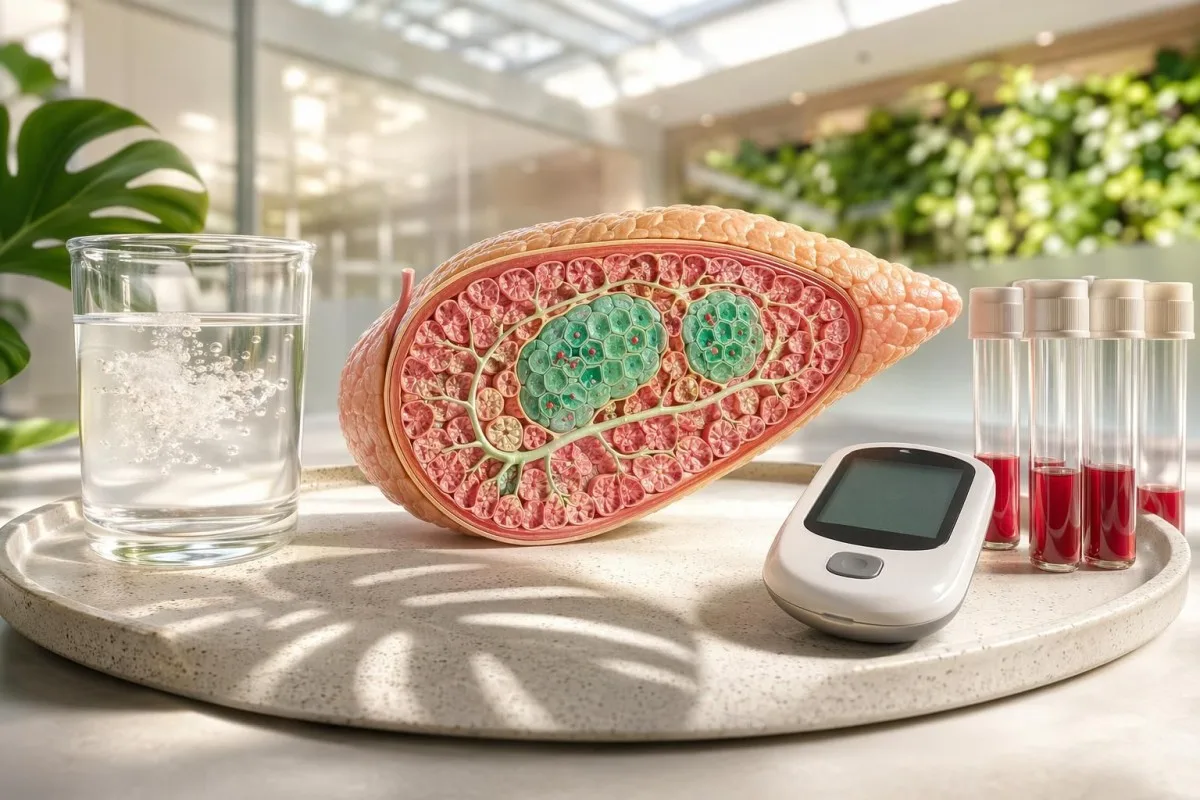
En praktisk guide til screening efter fødslen for alle, der fik at vide, at deres graviditetssukre var normale igen, men stadig vil vide, hvad der kommer næste gang.


- 75 g OGTT ved 4-12 uger efter fødslen er den foretrukne test efter gestationel diabetes, fordi den opdager problemer med 2-timers glukose, som fastende glukose kan overse.
- Diabetesgrænser er fastende plasmaglukose ≥126 mg/dL, 2-timers OGTT-glukose ≥200 mg/dL, HbA1c ≥6.5% eller tilfældig glukose ≥200 mg/dL med symptomer.
- Grænseværdier for prædiabetes er fastende glukose 100-125 mg/dL, 2-timers OGTT-glukose 140-199 mg/dL eller HbA1c 5.7-6.4%.
- HbA1c tidligt efter fødslen kan være falsk lav efter fødselsblodtab eller høj omsætning af røde blodlegemer, så den bør ikke erstatte OGTT ved 4-12 uger.
- Normal glukose i graviditeten efter fødslen sletter ikke den fremtidige risiko; gestationel diabetes er ofte en beta-celle-stresstest, der afslører sårbarhed år før type 2-diabetes.
- Kontrolinterval er hvert 1-3 år resten af livet, hvis postpartum-screeningen er normal, og som regel årligt, hvis der er et hvilket som helst resultat i prædiabetesområdet.
- Før endnu en graviditet bed om glukosetest før undfangelse eller tidligt i første trimester, især hvis tidligere GDM krævede insulin eller medicin.
- Risikomarkører såsom fastende insulin, triglycerider, HDL, ALT og urin albumin-kreatininratio diagnosticerer ikke diabetes, men de hjælper med at vurdere kardiometabolisk risiko.
Blodprøverne, der diagnosticerer diabetes efter gestationel diabetes
Blodprøverne, der påviser diabetes efter gestationel diabetes, er de 75 g 2-timers orale glukosetolerancetest, fastende plasmaglukose, HbA1c, og tilfældig plasmaglukose når klassiske symptomer er til stede. OGTT er som regel den bedste postpartum-screeningstest for diabetes ved 4-12 uger, fordi den finder nedsat håndtering af 2-timers glukose, før fastende glukose eller HbA1c bliver unormalt.
Som Thomas Klein, MD, fortæller jeg patienter, at spørgsmålet ikke kun er, om tallet er højt i dag; det er, om bugspytkirtlen stadig har nok reserve efter graviditeten. En fastende glukose på 94 mg/dL kan se beroligende ud, mens en 2-timers OGTT-værdi på 168 mg/dL stille og roligt siger, at det første-fase insulinrespons halter bagefter.
En diagnose af diabetes uden for graviditet stilles ved fastende plasmaglukose ≥126 mg/dL, 2-timers OGTT-glukose ≥200 mg/dL, HbA1c ≥6.5%, eller tilfældig plasmaglukose ≥200 mg/dL med symptomer som tørst, hyppig vandladning eller uforklarligt vægttab. Til en sammenligning i et letforståeligt sprog af diagnostiske og monitorerende tests, vores diabetes-test cutoffs guide en nyttig ledsager.
Kantesti er en AI-blodprøveanalysator, der læser postpartum-glukose, HbA1c, lipider og nyremarkører i samme kliniske kontekst i stedet for som isolerede flag. I vores analyse af 2M+ uploadede laboratorierapporter dukker ét mønster ved og ved op: Folk husker graviditetsdiagnosen, men deres OGTT-resultat ved 4-12 uger kommer ofte aldrig med i journalen på lang sigt.
Hvorfor normal glukose i graviditeten ikke nulstiller den fremtidige risiko
Normal glukose efter fødslen nulstiller ikke den fremtidige diabetesrisiko, fordi gestationel diabetes typisk afspejler en begrænset beta-celle-reserve under graviditetsstress. Fødslen fjerner placenta-hormonerne, men det reparerer ikke nødvendigvis insulinresistens, genetisk risiko, tendens til fedtlever eller bugspytkirtlens beta-celle-sårbarhed.
Placentaen producerer hormoner, der skubber insulinresistensen op, ofte mest tydeligt efter 24-28 uger. Når glukosen normaliseres efter fødslen, betyder det, at belastningen er væk; det beviser ikke, at de insulinproducerende celler har ubegrænset reserve.
Bellamy et al. rapporterede i The Lancet, at kvinder med tidligere gestationel diabetes havde omkring en 7-doblet højere risiko for senere type 2-diabetes sammenlignet med dem uden GDM (Bellamy et al., 2009). I hverdagspraksis ser jeg risikoklyngen med vægtøgning omkring taljen, triglycerider over 150 mg/dL, lav HDL, familiær disposition, PCOS og søvnforstyrrelser i de første to postpartum-år.
En normal HbA1c på 5.3% seks måneder efter fødslen kan stadig sameksistere med tidlig insulinresistens. Hvis du vil have det dybere metaboliske perspektiv, forklarer vores guide til test for insulinresistens hvorfor fastende insulin og glukose kan svinge, før A1c krydser grænsen for prædiabetes.
Hvornår screening for diabetes efter fødslen bør finde sted
Postpartum-screening for diabetes bør ske 4-12 uger efter fødslen, helst med en 75 g 2-timers OGTT. Hvis dette vindue blev overset, er det bedste tidspunkt at teste nu; jeg ville ikke vente til det næste årlige fysiske tjek, hvis graviditeten var 6 måneder eller 6 år siden.
American Diabetes Association anbefaler en 75 g OGTT ved 4-12 uger postpartum og livslang screening hver 1-3 år efter gestationel diabetes (American Diabetes Association Professional Practice Committee, 2024). ACOG støtter også postpartum-screening i dette tidlige vindue, og mange obstetriske klinikker forsøger nu at bestille den før 6-ugerskontrollen, så den ikke bliver glemt (ACOG, 2018).
Amning, søvnfragmentering og postpartum-vægtændringer kan alle ændre glukosen fra dag til dag, men de er ikke grunde til at springe testningen over. De fleste patienter kan gennemføre OGTT, mens de ammer; det praktiske problem er ofte børnepasning under den 2-timers ventetid i laboratoriet, ikke biologien.
Hvis du også har brug for tjek for anæmi, thyreoideafunktion, leverenzymniveauer eller nyremarkører efter fødslen, så vores postpartum lab-checkliste beskriver, hvilke tests der ofte kombineres med glukosescreening. En enkelt aftale kan ofte dække mere end ét postpartum-problem.
Sådan tolkes den orale glukosetolerancetest på 75 g
De oral glukosetolerancetest efter graviditet måler fastende glukose og 2-timers glukose efter en 75 g glukosedrik. En 2-timers værdi ≥200 mg/dL diagnosticerer diabetes, mens 140-199 mg/dL diagnosticerer nedsat glukosetolerance, selv når fastende glukose er normal.
Testen virker, fordi den udfordrer proteinsystemet for insulin frem for at observere det i hvile. I min erfaring klarer personer med tidligere GDM ofte den fastende del, men fejler den 2-timers del; dette mønster peger på forsinket insulinsekretion efter måltider.
Forbered dig med sædvanlig kost i mindst 3 dage, ideelt set inklusive mindst 150 g kulhydrat pr. dag medmindre din behandler har sagt noget andet. Meget lavt kulhydratindtag før en OGTT kan overdrive stigningen i glukose og gøre tolkningen rodet; vores faste-regler guide dækker vand, kaffe og detaljer om timing.
Træn ikke hårdt under den 2-timers ventetid, og fortæl laboratoriet, hvis du kaster op eller ikke kan gennemføre drikken. Et resultat bør gentages eller erstattes med en anden diagnostisk test, hvis proceduren ikke blev gennemført korrekt.
Hvad fastende glukose kan og ikke kan afsløre
Fastende plasmaglukose påviser diabetes, når den fastende værdi er ≥126 mg/dL, men den kan overse isoleret glukoseintolerans efter måltid efter gestationel diabetes. Den er nyttig, billig og kan gentages; den er bare for grov til at erstatte den postnatale OGTT.
En fastende glukose på 100-125 mg/dL er prædiabetes efter ADA-kriterierne, mens <100 mg/dL generelt anses for at være normalt i USA. Nogle internationale systemer bruger 110 mg/dL som den nedre grænse for nedsat fastende glukose, hvilket er en af grundene til, at patienter bliver forvirrede, når de flytter mellem lande.
Den kliniske fælde er en fastende glukose på 88-96 mg/dL med en 2-timers OGTT på 155-185 mg/dL. Personen kan få at vide, at alt er fint, hvis man kun har bestilt fastende glukose, men deres glukosebiologi i forbindelse med måltider er allerede abnorm.
Morgen-glukose påvirkes af søvngæld, sen-natte-spisning, kortikosteroider, infektion og daggry-fænomenet. Vores retningslinje for fastende sukker forklarer, hvorfor et enkelt morgental bør tolkes med den foregående aften og søvnkvaliteten i mente.
Hvorfor HbA1c er praktisk, men ikke perfekt efter fødslen
HbA1c påviser diabetes ved ≥6.5%, men den er mindre pålidelig i de første 4-12 uger postpartum, fordi blodtab ved fødslen og omsætning af røde blodlegemer kan forvride resultatet. HbA1c er nyttig senere, især til langtidsopfølgning, men den bør ikke erstatte den første postnatale OGTT.
HbA1c estimerer gennemsnitlig glukose over cirka 8-12 uger, vægtet mod den seneste måned. Efter fødslen kan anæmi, transfusion, jernmangel eller hurtig erstatning af røde blodlegemer skubbe værdien væk fra den sande glukosehistorie.
Jernmangel kan falsk øge HbA1c hos nogle patienter, mens nyligt blodtab kan sænke den falsk. Dette er et af de områder, hvor kontekst betyder mere end tallet; en postpartum HbA1c på 5.6% kan muligvis ikke være lige så betryggende, hvis ferritin er 8 ng/mL og OGTT aldrig blev udført.
Hvis din A1c ikke stemmer overens med fingerstikmålinger eller symptomer, så læs vores guide om A1c-nøjagtighed før du accepterer værdien som den er. Jeg plejer at kombinere HbA1c med fastende glukose, CBC og ferritin, når postpartum-historien føles inkonsistent.
Hvornår tilfældig glukose eller symptomer kræver hurtig handling
Tilfældig plasmaglukose påviser diabetes, når den er ≥200 mg/dL og symptomer er til stede. Efter gestationel diabetes er der behov for akut revurdering ved højt blodsukker med opkastning, dehydrering, hurtigt vægttab, ketoner, sløret syn eller usædvanlig udmattelse.
Det meste af diabetes efter GDM er type 2, men postpartum-autoimmun diabetes kan af og til opstå, især hvis vægttabet er hurtigt, og der er ketoner til stede. Jeg har set patienter blive afvist som blot trætte nye forældre, når deres glukose var 280 mg/dL og de allerede var ketotiske.
En tilfældig glukose på 140-199 mg/dL er ikke diagnostisk i sig selv, men den bør føre til fastende glukose, HbA1c eller OGTT afhængigt af tidspunkt og symptomer. En tilfældig værdi over 300 mg/dL, især hvis der er mavesmerter eller besværet vejrtrækning, bør behandles som akut lægehjælp samme dag.
En enkelt forhøjet værdi kan ske efter sygdom, steroider eller et meget kulhydratrigt måltid, men mønstret betyder noget. Vores guide til uventet høj glukose forklarer, hvordan klinikere adskiller stress-hyperglykæmi fra tidlig diabetes.
Blodmarkører, der viser risiko, før diabetes opstår
Fastende insulin, C-peptid, triglycerider, HDL, ALT og urin albumin-kreatinin-ratio diagnosticerer ikke diabetes, men de hjælper med at vise metabolisk risiko efter gestationel diabetes. Disse markører kan afsløre insulinresistens, tendens til fedtlever eller tidlig nyrepåvirkning, mens glukose stadig teknisk set er normalt.
Fastende insulin over cirka 15-20 µIU/mL kan tyde på insulinresistens, selv om laboratoriemetoderne varierer, og der ikke findes en universel diagnostisk grænse. HOMA-IR bruger fastende insulin og fastende glukose; værdier over 2.0-2.5 vækker ofte mistanke hos voksne, men etnicitet, BMI og valg af analyse påvirker fortolkningen.
Triglycerider over 150 mg/dL og HDL under 50 mg/dL hos kvinder følger ofte med insulinresistens. ALT over ca. 25-30 IU/L hos en kvinde med tidligere GDM kan være et tidligt fedtlever-peg selv når laboratorieflaget stadig siger normal.
Kantesti er en AI-biomarkørfortolkningsplatform, der behandler et normalt A1c efter gestationel diabetes som et risikospørgsmål, ikke et grønt lys for evigt. Hvis du vil beregne insulinresistens ud fra dine tal, viser HOMA-IR-beregning guiden formlen og dens begrænsninger.
Hvor ofte man bør genteste, hvis screeningen efter fødslen er normal
Hvis postpartum-screeningen er normal efter gestationel diabetes, så gentest hver 1-3 år for livet. Gentest tidligere, ofte årligt, hvis vægten stiger, prædiabetes opstår, endnu en graviditet planlægges, eller medicin som steroider eller antipsykotika øger glukoserisikoen.
ADA’s anbefaling om livslang screening hvert 1-3 år findes, fordi risikoen for diabetes stiger over tid, ikke kun i det første postpartum-år. På min klinik vælger jeg typisk den 1-årige interval for alle med prædiabetes, insulinbehandlet GDM, BMI over 30, stærk familiær disposition eller PCOS.
En normal test i 2026 er stadig nyttig, fordi den bliver din baseline. En fastende glukose, der driver fra 82 til 96 mg/dL over 3 år kan være mere meningsfuld end ét resultat, der er flaget, især hvis triglycerider og taljeomkreds stiger samtidig.
Kantesti AI kan lave grafer over glukose, HbA1c, triglycerider og ALT over tid, så små ændringer bliver synlige, før de bliver dramatiske. Vores trendanalyse artikel forklarer, hvorfor hældning og klyngedannelse ofte betyder mere end et enkelt laboratoriefund.
Hvad du skal bede din læge om at bestille
Bed om en 75 g 2-timers OGTT 4-12 uger efter fødslen, eller fastende plasmaglukose plus HbA1c, hvis en OGTT ikke er mulig. Ved vurdering af langsigtet risiko: spørg, om lipider, ALT, kreatinin, eGFR og urin albumin-kreatininratio bør kontrolleres sammen med dine glukosemarkører.
En fornuftig første ordre efter fødslen lyder ofte: fastende glukose, 75 g 2-timers glukose, HbA1c, CBC hvis der var stort blodtab ved fødslen, ferritin hvis anæmi er mistænkt, lipidpanel og CMP hvis den kardiometaboliske risiko er høj. Ikke alle patienter har brug for alle tests, men ordren skal passe til graviditetshistorien.
Hvis du havde fastende hyperglykæmi under graviditeten, eller hvis du havde brug for insulin, ville jeg være mere aggressiv med tidlig opfølgning. Hvis din GDM var mild og koststyret, betyder OGTT stadig noget, men den langsigtede kadence kan ligge tættere på hver 2-3 år når alle resultater er normale.
For læsere, der vil forstå, hvad hver markør faktisk måler, vores biomarkørguide dækker tusindvis af laboratoriemarkører og almindelige forskelle i enheder. Det er især nyttigt, når ét laboratorium rapporterer glukose i mg/dL og et andet i mmol/L.
Hvad læger gør ved grænsetilfælde eller modstridende resultater
Grænse- eller modstridende diabetesresultater bør som regel gentages eller bekræftes med en anden diagnostisk test. En fastende glukose på 124 mg/dL, HbA1c på 6.4%, eller en 2-timers OGTT på 198 mg/dL er ikke noget, man bare kan slå hen; det er et resultat tæt på tærsklen, som fortjener en plan.
Uden klassiske symptomer bekræfter de fleste klinikere diabetes med et gentaget unormalt resultat. Hvis to forskellige tests er uenige, gentages typisk den test, der ligger over den diagnostiske tærskel, og patientens kontekst afgør, hvor hurtigt det sker.
Thomas Klein, MD, praktisk regel: lad ikke ordet grænse gøre, at resultatet føles harmløst. En 2-timers OGTT på 196 mg/dL efter tidligere GDM medfører ofte mere fremtidig risiko end en fastende glukose på 101 mg/dL, selv om begge kan blive registreret under prædiabetes.
Vores guide til prædiabetes-tærskler forklarer, hvordan fastende glukose, A1c og OGTT definerer forskellige biologiske problemer. Jeg rammesætter ofte prædiabetes efter GDM som et behandlingsvindue snarere end en ventehal.
Særlige situationer: amning, anæmi, PCOS og medicin
Amning, anæmi, PCOS, GLP-1-medicin, steroider og skjoldbruskkirtelsygdom kan ændre, hvordan laboratorietests for diabetes efter fødslen bør tolkes. Glukosegrænserne forbliver de samme, men den tillid, du lægger i HbA1c, fastende glukose eller insulinniveauer, kan ændre sig betydeligt.
Amning forbedrer ofte glukosestofskiftet og kan sænke risikoen for fremtidig type 2-diabetes, men det fjerner ikke behovet for screening. Hvis du tager insulin eller sulfonylurinstoffer postpartum, så spørg din behandler om risikoen for hypoglykæmi under længere ammeperioder eller ved glemte måltider.
PCOS tilfører en separat insulinresistensvej, og tidligere GDM plus PCOS er en af de kombinationer, jeg behandler med ekstra respekt. Vores Laboratoriemønstre ved PCOS forklarer, hvorfor fastende insulin, lipider og androgener kan have betydning, selv når glukose endnu ikke er diagnostisk.
Steroidinjektioner, højdosis prednisolon, nogle antipsykotika og alvorlig søvnmangel kan midlertidigt skubbe glukosen op. Evidensen omkring de helt præcise postpartum-søvntærskler er ærligt talt blandet, men jeg ser dårligere fastende værdier, når søvnen er fragmenteret under 5-6 timer i uger.
Sådan læser Kantesti postpartum-diabetes-laboratorieresultater sikkert
Kantesti læser postpartum-diabeteslaboratorier ved at kombinere glukosetærskler med timing, graviditetshistorik, tegn på anæmi, lipidmønstre og nyremarkører. Formålet er ikke at erstatte din behandler; det er at gøre risikomønstret tydeligere, før du kommer til aftalen.
Kantesti er et AI-drevet værktøj til analyse af blodprøver, som 2M+ personer bruger i 127 lande, med PDF- eller foto-tolkning af blodprøver i cirka 60 sekunder. Til screening for postpartum-diabetes adskiller vores neurale netværk diagnostiske glukosekriterier fra risikokontekstmarkører som triglycerider, HDL, ALT og urin ACR.
En typisk upload kan vise HbA1c 5.5%, fastende glukose 92 mg/dL, ferritin 10 ng/mL og ingen OGTT. Kantesti AI ville ikke diagnosticere diabetes ud fra de tal, men det bør markere, at tidlig postpartum A1C kan være upålidelig, og at den anbefalede OGTT mangler.
Vores metoder er i overensstemmelse med offentliggjorte kliniske standarder og intern læge-gennemgang; læsere kan se vores kliniske valideringsstandarder og den forudregistrerede AI-benchmark. Hvis du uploader en scanning i stedet for at indtaste værdier, så PDF-upload-workflow forklarer, hvordan rapporter læses og kontrolleres.
En praktisk plan for genundersøgelse for 2026 og fremover
Pr. 26. maj 2026 er den sikreste plan efter gestationel diabetes OGTT ved 4-12 uger, gentagen screening hvert 1-3 år og tidligere test før endnu en graviditet. Hvis et hvilket som helst resultat ligger i prædiabetes-intervallet, så behandl det som en aktiv forebyggelsesperiode—ikke som en mild laboratorienysgerrighed.
Min sædvanlige fremgangsmåde er enkel: få den første postpartum OGTT, gem resultatet, og læg derefter den næste glukosekontrol ind i kalenderen, før hverdagen bliver travl. Hvis din 2-timers OGTT er 140-199 mg/dL, så bed om et klart opfølgningsinterval, en ernæringsplan og et træningsmål i stedet for en vag påmindelse om at være forsigtig.
Hvis din diabetes-screening er normal, så fortæl stadig alle fremtidige behandlere, at du havde GDM. Den ene linje ændrer, hvordan jeg læser en fastende glukose på 103 mg/dL, et triglyceridniveau på 180 mg/dL, eller et HbA1c, der stiger fra 5,2% til 5,6% over flere år.
Kantesti Ltd er en britisk virksomhed inden for sundhedsteknologi, og vores læger gennemgår medicinsk indhold via vores medicinsk rådgivende bestyrelse og kliniske governance-proces beskrevet i Om os. Kort sagt: de rigtige tests er ikke komplicerede, men tidspunktet og fortolkningen betyder mere end de fleste får at vide.
Relaterede Kantesti-forskningspublikationer
Screening for postpartum-diabetes ligger ofte inden for en bredere laboratoriegennemgang, der omfatter CBC, jernstatus og nyremarkører. De Kantesti DOI-publikationer, der er anført nedenfor, understøtter nærliggende metoder til fortolkning af blodprøver, herunder røde blodlegemers indeks og forholdstal for nyrefunktion, som kan påvirke tilliden til HbA1c eller vurderingen af langsigtet metabolisk risiko.
Ofte stillede spørgsmål
Hvilke blodprøver kan påvise diabetes efter graviditetsdiabetes?
Blodprøverne, der påviser diabetes efter gestationel diabetes, er den 75 g 2-timers orale glukosetolerancetest, fastende plasmaglukose, HbA1c og tilfældig plasmaglukose, når der er symptomer. Diabetes diagnosticeres ved fastende glukose ≥126 mg/dL, 2-timers OGTT-glukose ≥200 mg/dL, HbA1c ≥6.5% eller tilfældig glukose ≥200 mg/dL med klassiske symptomer. OGTT foretrækkes 4-12 uger efter fødslen, fordi den kan påvise nedsat håndtering af 2-timers glukose, selv når fastende glukose er normal.
Er den orale glukosetolerancetest efter graviditet bedre end HbA1c?
Ja, den orale glukosetolerancetest efter graviditet er som regel bedre end HbA1c til den første postpartum-screening ved 4-12 uger. HbA1c kan blive forvrænget af blodtab ved fødslen, anæmi, transfusion eller hurtig omsætning af røde blodlegemer, mens OGTT direkte måler glukosehåndtering efter en 75 g glukoseudfordring. HbA1c bliver mere nyttig senere til langtids-screening og trendmonitorering.
Hvornår bør screening for diabetes efter fødslen udføres efter GDM?
Screening for diabetes efter fødslen ved gestationel diabetes bør foretages 4-12 uger efter fødslen, ideelt set med en 75 g 2-timers OGTT. Hvis dette tidsvindue blev overskredet, bør testning foretages så hurtigt som praktisk muligt i stedet for at afvente symptomer. Hvis resultatet efter fødslen er normalt, gentages diabetes-screening hver 1-3 år resten af livet.
Kan HbA1c være normal, men OGTT være unormal efter graviditetsdiabetes?
Ja, HbA1c kan være normal, mens OGTT er unormal efter gestationel diabetes. En person kan have HbA1c 5.3% og fastende glukose 92 mg/dL, men en 2-timers OGTT-værdi på 160 mg/dL, hvilket er nedsat glukosetolerance. Dette sker, fordi HbA1c afspejler gennemsnitlig glukose, mens OGTT belaster insulinresponsen efter en glukosebelastning.
Hvad betyder resultaterne prædiabetes efter graviditetsdiabetes?
Prædiabetes efter gestationel diabetes defineres ved fastende plasmaglukose 100-125 mg/dL, 2-timers OGTT-glukose 140-199 mg/dL eller HbA1c 5,7-6,4%. En abnorm 2-timers OGTT er især almindelig efter GDM og kan overses, hvis der kun bestilles fastende glukose. Prædiabetes bør som regel udløse årlig opfølgning og en struktureret forebyggelsesplan.
Hvor ofte bør jeg genteste, hvis min postpartum-screening er normal?
Hvis din postpartum-diabetes-screening er normal efter gestationel diabetes, skal du gentestes hvert 1-3 år resten af livet. Mange klinikere vælger årlig test, hvis du havde insulinbehandlet GDM, prædiabetes, PCOS, BMI over 30, stærk familiær disposition eller stigende triglycerider. Testen bør også gentages før en ny graviditet eller tidligt i første trimester.
Ændrer amning diabetes-blodprøveresultater?
Amning kan forbedre glukosemetabolismen og kan sænke risikoen for fremtidig type 2-diabetes, men det fjerner ikke behovet for postpartum-diabetes-screening. De diagnostiske grænseværdier for fastende glukose, OGTT og HbA1c ændrer sig ikke, fordi nogen ammer. Hvis der anvendes diabetesmedicin postpartum, kan klinikere justere tidspunkt eller dosis for at reducere risikoen for hypoglykæmi under lange ammeperioder eller ved glemte måltider.
Kan jeg bruge en kontinuerlig glukosemåler i stedet for den postpartum glukosetolerance-test?
Nej. En kontinuerlig glukosemåler kan vise nyttige daglige glukosemønstre, men den erstatter ikke laboratorie-fastende glukose, HbA1c eller en 75 g OGTT til diagnosticering af diabetes efter graviditetsdiabetes. Din læge kan bruge den senere til at understøtte livsstils- eller behandlingsbeslutninger.
Har mit barn brug for diabetesundersøgelser, fordi jeg havde svangerskabsdiabetes?
Nyfødtes blodsukker kan blive kontrolleret på hospitalet, især hvis du brugte insulin eller medicin under graviditeten, men de fleste børn har ikke brug for løbende blodprøver for diabetes udelukkende på grund af moderens svangerskabsdiabetes. Hold regelmæssige børnelægebesøg og støt familiens vaner omkring balancerede måltider, aktivitet og søvn.
Hvad hvis jeg ikke kan tåle glukosedrikken til den postpartum OGTT?
Fortæl det til din behandler før testen. De kan ombooke med strategier mod kvalme, kontrollere fastende glukose og HbA1c eller midlertidigt bruge data fra hjemme- eller kontinuerlig glukosemåling, men disse alternativer kan muligvis ikke fuldt ud erstatte den diagnostiske OGTT.
Få AI-drevet blodprøveanalyse i dag
Bliv en del af over 2 millioner brugere på verdensplan, som har tillid til Kantesti for øjeblikkelig og præcis analyse af laboratorieprøver. Upload dine blodprøveresultater, og få en omfattende forstå blodprøveresultater af 15,000+-biomarkører på få sekunder.
📚 Refererede forskningspublikationer
Klein, T., Mitchell, S., & Weber, H. (2026). RDW-blodprøve: komplet guide til RDW-CV, MCV og MCHC. Kantesti AI Medical Research.
Klein, T., Mitchell, S., & Weber, H. (2026). Forklaring af BUN/kreatinin-forhold: Vejledning til test af nyrefunktion. Kantesti AI Medical Research.
📖 Eksterne medicinske referencer
American Diabetes Association Professional Practice Committee (2024). 2. Diagnose og klassifikation af diabetes: Standards of Care in Diabetes—2024. Diabetes Care.
⚕️ Medicinsk ansvarsfraskrivelse
Denne artikel er kun til undervisningsformål og udgør ikke lægelig rådgivning. Rådfør dig altid med en kvalificeret sundhedsprofessionel for beslutninger om diagnose og behandling.
E-E-A-T Trust Signals
Erfaring
Lægefagligt ledet klinisk gennemgang af arbejdsgange til laboratorietolkning.
Ekspertise
Fokus på laboratoriemedicin på, hvordan biomarkører opfører sig i klinisk kontekst.
Autoritet
Skrevet af Dr. Thomas Klein med gennemgang af Dr. Sarah Mitchell og Prof. Dr. Hans Weber.
Troværdighed
Evidensbaseret fortolkning med klare opfølgningsspor for at reducere alarm.