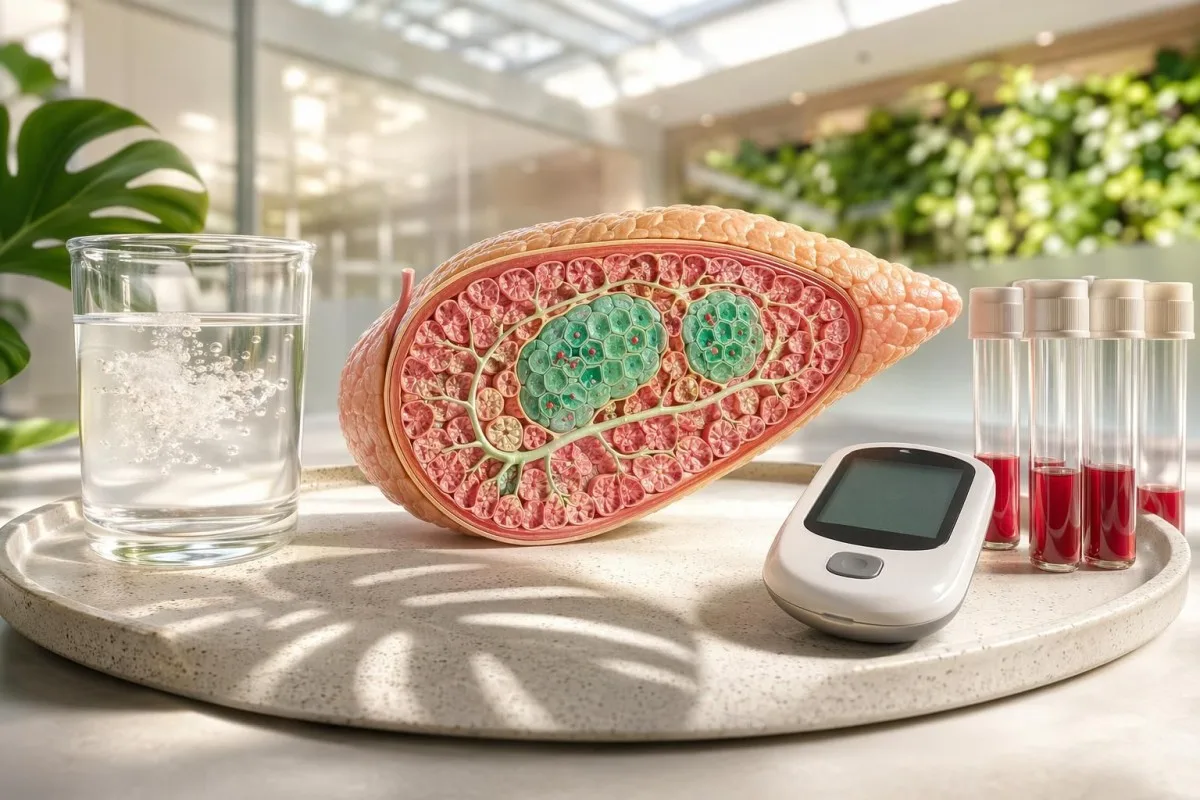
Praktyczny przewodnik badań kontrolnych po porodzie dla każdego, komu powiedziano, że cukry w ciąży wróciły do normy, ale nadal chce wiedzieć, co będzie dalej.


- 75 g OGTT badanie w 4–12 tygodni po porodzie jest preferowanym testem po cukrzycy ciążowej, ponieważ wykrywa problemy z glukozą po 2 godzinach, których glukoza na czczo może nie wykryć.
- Punkty odcięcia dla cukrzycy są: glukoza w osoczu na czczo ≥126 mg/dl, glukoza w OGTT po 2 godzinach ≥200 mg/dl, HbA1c ≥6.5% lub glukoza losowa ≥200 mg/dl z objawami.
- Granice rozpoznania stanu przedcukrzycowego są: glukoza na czczo 100–125 mg/dl, glukoza w OGTT po 2 godzinach 140–199 mg/dl lub HbA1c 5.7–6.4%.
- HbA1c we wczesnym okresie poporodowym może być fałszywie niskie po porodowym krwawieniu lub przy dużej szybkości odnowy krwinek czerwonych, dlatego nie powinno zastępować OGTT w 4–12 tygodni po porodzie.
- Prawidłowa glikemia w ciąży po porodzie nie usuwa przyszłego ryzyka; cukrzyca ciążowa jest często testem obciążeniowym dla komórek beta, który ujawnia podatność na lata przed cukrzycą typu 2.
- Odstęp do ponownego badania co 1–3 lata do końca życia, jeśli badanie poporodowe jest prawidłowe, a zwykle co roku, jeśli którykolwiek wynik mieści się w zakresie stanu przedcukrzycowego.
- Przed kolejną ciążą poproś o badanie glukozy przed zajściem w ciążę lub na początku pierwszego trymestru, zwłaszcza jeśli wcześniejsza GDM wymagała insuliny lub leków.
- Markery ryzyka takie jak insulina na czczo, trójglicerydy, HDL, ALT oraz stosunek albuminy do kreatyniny w moczu nie rozpoznają cukrzycy, ale pomagają oszacować ryzyko kardiometaboliczne.
Badania krwi, które rozpoznają cukrzycę po cukrzycy ciążowej
Badania krwi wykrywające cukrzycę po cukrzycy ciążowej to 75 g 2-godzinny doustny test tolerancji glukozy, glukozę na czczo w osoczu, HbA1c, I losowe stężenie glukozy w osoczu gdy obecne są klasyczne objawy. OGTT jest zwykle najlepszym badaniem przesiewowym w kierunku cukrzycy w okresie poporodowym w 4–12 tygodni, ponieważ wykrywa zaburzone gospodarowanie glukozą w 2. godzinie, zanim glukoza na czczo lub HbA1c staną się nieprawidłowe.
Jak Thomas Klein, MD, mówię pacjentom, że pytanie nie dotyczy wyłącznie tego, czy dziś liczba jest wysoka; chodzi o to, czy trzustka nadal ma wystarczający „zapas” po ciąży. Glukoza na czczo 94 mg/dL może wyglądać uspokajająco, podczas gdy wynik OGTT po 2 godzinach 168 mg/dL cicho wskazuje, że odpowiedź insulinowa w pierwszej fazie jest opóźniona.
Rozpoznanie cukrzycy poza ciążą ustala się na podstawie glukozy w osoczu na czczo ≥126 mg/dL, glukozę w 2-godzinnym OGTT ≥200 mg/dL, HbA1c ≥6.5%, lub losowego stężenia glukozy w osoczu ≥200 mg/dL z objawami takimi jak pragnienie, częste oddawanie moczu lub niewyjaśniona utrata masy ciała. Dla prostego porównania progów diagnostycznych i monitorujących nasze progi testów w kierunku cukrzycy przewodnik jest przydatnym uzupełnieniem.
Kantesti to analizator AI do badań krwi, który odczytuje glukozę poporodową, HbA1c, lipidogram i markery nerkowe w tym samym kontekście klinicznym, a nie jako pojedyncze, odizolowane flagi. W naszej analizie raportów laboratoryjnych 2M+ przesłanych do systemu pojawia się jeden schemat: ludzie pamiętają rozpoznanie w czasie ciąży, ale wynik OGTT z 4–12 tygodni często w ogóle nie trafia do długoterminowej dokumentacji zdrowotnej.
Dlaczego prawidłowa glikemia w ciąży nie „resetuje” przyszłego ryzyka
Prawidłowa glukoza po porodzie nie „resetuje” przyszłego ryzyka cukrzycy, ponieważ cukrzyca ciążowa zwykle odzwierciedla ograniczony zapas komórek beta w warunkach stresu ciążowego. Poród usuwa hormony łożyskowe, ale nie musi naprawiać insulinooporności, ryzyka genetycznego, skłonności do stłuszczenia wątroby ani podatności komórek beta trzustki.
Łożysko wytwarza hormony, które zwiększają insulinooporność, często najbardziej zauważalnie po 24–28 tygodniach. Gdy po porodzie glukoza się normalizuje, oznacza to, że czynnik stresowy zniknął; nie dowodzi to, że komórki produkujące insulinę mają nieograniczony zapas.
Bellamy i wsp. donieśli w The Lancet, że kobiety z wcześniejszą cukrzycą ciążową miały około 7-krotnie większe ryzyko późniejszej cukrzycy typu 2 w porównaniu z tymi, które nie miały GDM (Bellamy i wsp., 2009). W codziennej praktyce widzę skupienie ryzyka związane ze wzrostem obwodu pasa, trójglicerydami powyżej 150 mg/dL, niskim HDL, wywiadem rodzinnym, PCOS i zaburzeniami snu w pierwszych dwóch latach po porodzie.
Prawidłowe HbA1c wynosi 5.3% sześć miesięcy po porodzie może nadal współistnieć z wczesną insulinoopornością. Jeśli chcesz spojrzeć głębiej na metabolizm, nasz przewodnik do badaniem oporności na insulinę wyjaśnia, dlaczego insulina i glukoza na czczo mogą się „rozjeżdżać”, zanim A1C przekroczy granicę stanu przedcukrzycowego.
Kiedy powinno się wykonać przesiewowe badania w kierunku cukrzycy po porodzie
Badania przesiewowe w kierunku cukrzycy po porodzie powinny odbyć się 4–12 tygodni po porodzie, najlepiej z 75 g 2-godzinnym OGTT. Jeśli ten termin został pominięty, najlepszy czas na wykonanie badania jest teraz; nie czekałbym na kolejną coroczną wizytę kontrolną, jeśli ciąża miała miejsce 6 miesięcy lub 6 lat temu.
American Diabetes Association zaleca 75 g OGTT w 4–12 tygodni po porodzie oraz dożywotnie badania przesiewowe co 1–3 lat po cukrzycy ciążowej (American Diabetes Association Professional Practice Committee, 2024). ACOG również popiera badania przesiewowe po porodzie w tym wczesnym oknie, a wiele poradni położniczych stara się zlecić je jeszcze przed wizytą 6-tygodniową, aby nie zostało to pominięte (ACOG, 2018).
Karmienie piersią, fragmentacja snu i zmiany masy ciała po porodzie mogą wszystkie wpływać na glikemię z dnia na dzień, ale nie są powodem, aby rezygnować z badania. Większość pacjentek może wykonać OGTT podczas karmienia piersią; praktycznym problemem bywa często opieka nad dzieckiem w czasie 2-godzinnego oczekiwania w laboratorium, a nie biologia.
Jeśli po porodzie potrzebujesz także kontroli w kierunku anemii, funkcji tarczycy, enzymów wątrobowych lub markerów nerkowych, nasz położniczy zestaw kontrolny badań laboratoryjnych przedstawia, jakie testy są najczęściej łączone z badaniami przesiewowymi w kierunku glukozy. Jedna wizyta może często obejmować więcej niż jeden problem po porodzie.
Jak interpretuje się doustny test tolerancji glukozy 75 g
Ten doustny test tolerancji glukozy po ciąży ocenia glukozę na czczo oraz glukozę po 2 godzinach po podaniu 75 g glukozy. Wartość po ≥200 mg/dL 2 godzinach rozpoznaje cukrzycę, natomiast w zakresie 140–199 mg/dl. rozpoznaje nieprawidłową tolerancję glukozy, nawet gdy glukoza na czczo jest prawidłowa.
Badanie działa, ponieważ sprawdza układ insulinowy, a nie obserwuje go w spoczynku. Z mojego doświadczenia wynika, że osoby z przebytą GDM często przechodzą część na czczo, ale nie część po 2 godzinach; ten wzorzec wskazuje na opóźnione wydzielanie insuliny po posiłkach.
Przygotuj się, jedząc jak zwykle przez co najmniej 3 dni, najlepiej obejmując co najmniej 150 g węglowodanów dziennie , chyba że Twój lekarz prowadzący zalecił inaczej. Bardzo niskowęglowodanowa dieta przed OGTT może wyolbrzymić wzrost glukozy i utrudnić interpretację; nasz zasady dotyczące bycia na czczo przewodnik obejmuje szczegóły dotyczące wody, kawy i czasu.
Nie ćwicz intensywnie podczas 2-godzinnego oczekiwania i powiedz laboratorium, jeśli wymiotujesz lub nie możesz wypić napoju. Wynik powinien zostać powtórzony lub zastąpiony innym badaniem diagnostycznym, jeśli procedura nie została wykonana prawidłowo.
Co może, a czego nie może wykryć glukoza na czczo
Glikemia na czczo wykrywa cukrzycę, gdy wartość na czczo wynosi ≥126 mg/dL, ale może pominąć izolowaną nietolerancję glukozy po posiłku po cukrzycy ciążowej. Jest przydatny, tani i powtarzalny; jest jednak zbyt mało precyzyjny, aby zastąpić poporodowy OGTT.
Glukoza na czczo wynosząca 100–125 mg/dL jest stanem przedcukrzycowym według kryteriów ADA, podczas gdy <100 mg/dL jest ogólnie uznawane za prawidłowe w Stanach Zjednoczonych. Niektóre systemy międzynarodowe stosują 110 mg/dl jako dolny próg nieprawidłowej glikemii na czczo, co jest jedną z przyczyn, dla których pacjenci się mylą przy przechodzeniu między krajami.
Pułapka kliniczna to glikemia na czczo 88–96 mg/dl przy 2-godzinnym OGTT 155–185 mg/dl. Taka osoba może usłyszeć, że wszystko jest w porządku, jeśli zlecono tylko glikemię na czczo, mimo że biologia glukozy w czasie posiłków jest już nieprawidłowa.
Poranna glikemia jest zależna od niedoboru snu, jedzenia późno w nocy, kortykosteroidów, infekcji oraz zjawiska świtu. Nasze przewodnik po glukozie na czczo wyjaśnia, dlaczego pojedynczy wynik poranny należy interpretować, biorąc pod uwagę poprzedni wieczór i jakość snu.
Dlaczego HbA1c jest wygodne, ale niedoskonałe po porodzie
HbA1c wykrywa cukrzycę przy ≥6.5%, ale jest mniej wiarygodne w pierwszych 4–12 tygodniach po porodzie, ponieważ utrata krwi w trakcie porodu i obrót krwinek czerwonych mogą zniekształcić wynik. HbA1c jest przydatne później, zwłaszcza do długoterminowej obserwacji, ale nie powinno zastępować pierwszego poporodowego OGTT.
HbA1c szacuje średnią glikemię na przestrzeni około 8-12 tygodniach, z przewagą najnowszego miesiąca. Po porodzie anemia, przetoczenie krwi, niedobór żelaza lub szybka wymiana krwinek czerwonych mogą odsunąć wynik od prawdziwej historii dotyczącej glukozy.
Niedobór żelaza może fałszywie podwyższać HbA1c u niektórych pacjentów, podczas gdy niedawna utrata krwi może fałszywie obniżać go. To jedna z tych dziedzin, w których kontekst ma większe znaczenie niż liczba; poporodowy HbA1c 5.6% może nie być tak uspokajający, jeśli 8 ng/mL i nie wykonano OGTT.
Jeśli Twój A1c nie zgadza się z pomiarami z palca lub objawami, przeczytaj nasz poradnik dotyczący dokładności A1c zanim uznasz wynik za wiarygodny. Zwykle łączę HbA1c z glukozą na czczo, CBC i ferrytyną, gdy poporodowa historia wydaje się niespójna.
Kiedy losowa glikemia lub objawy wymagają szybkiego działania
Losowa glukoza w osoczu wykrywa cukrzycę, gdy jest ≥200 mg/dL i obecne są objawy. Po cukrzycy ciążowej konieczna jest pilna ponowna ocena w przypadku wysokiej glukozy z wymiotami, odwodnieniem, szybką utratą masy ciała, ketonami, zamazanym widzeniem lub nietypowym wyczerpaniem.
Większość cukrzycy po GDM to typ 2, ale czasami może pojawić się poporodowa autoimmunologiczna cukrzyca, szczególnie jeśli utrata masy ciała jest szybka i obecne są ketony. Widziałem pacjentów, których uznano po prostu za zmęczonych świeżo upieczonych rodziców, gdy ich glukoza była 280 mg/dl i byli już w stanie ketotycznym.
Losowa glukoza wynosi w zakresie 140–199 mg/dl. nie jest rozpoznaniem samym w sobie, ale powinna skłonić do oznaczenia glukozy na czczo, HbA1c lub OGTT w zależności od czasu i objawów. Losowy wynik powyżej 300 mg/dL, zwłaszcza przy bólu brzucha lub utrudnionym oddychaniu, należy potraktować jako pilną opiekę medyczną tego samego dnia.
Pojedynczy wysoki wynik może zdarzyć się po infekcji, po steroidach lub po bardzo wysokowęglowodanowym posiłku, ale liczy się wzorzec. Nasz poradnik dotyczący nieoczekiwanie wysokiej glukozy wyjaśnia, jak klinicyści odróżniają hiperglikemię stresową od wczesnej cukrzycy.
Markery we krwi, które wskazują ryzyko, zanim pojawi się cukrzyca
Insulina na czczo, C-peptyd, trójglicerydy, HDL, ALT oraz stosunek albuminy do kreatyniny w moczu nie rozpoznają cukrzycy, ale pomagają ocenić ryzyko metaboliczne po cukrzycy ciążowej. Te markery mogą ujawnić oporność na insulinę, skłonność do stłuszczenia wątroby lub wczesny stres nerek, zanim glukoza jest jeszcze technicznie prawidłowa.
Insulina na czczo powyżej mniej więcej 15-20 µIU/mL może sugerować oporność na insulinę, chociaż metody laboratoryjne się różnią i nie ma uniwersalnego progu diagnostycznego. HOMA-IR wykorzystuje insulinę na czczo i glukozę na czczo; wartości powyżej 2.0-2.5 często budzą podejrzenie u dorosłych, ale pochodzenie etniczne, BMI i wybór testu zmieniają interpretację.
Triglicerydy powyżej 150 mg/dL i HDL poniżej 50 mg/dL u kobiet często towarzyszy oporność na insulinę. ALT powyżej około 25-30 IU/L u kobiety z wcześniejszym GDM może być wczesną wskazówką stłuszczenia wątroby, nawet gdy flaga w badaniu nadal mówi „prawidłowe”.
Kantesti to platforma interpretacji biomarkerów AI, która traktuje pytanie o ryzyko: prawidłowy A1C po cukrzycy ciążowej, a nie zielone światło na zawsze. Jeśli chcesz obliczyć oporność na insulinę na podstawie swoich wyników, to obliczeniem HOMA-IR przewodnik pokazuje wzór i jego ograniczenia.
Jak często powtórzyć badanie, jeśli przesiew po porodzie jest prawidłowy
Jeśli badania przesiewowe po porodzie są prawidłowe po cukrzycy ciążowej, powtórz co 1-3 lata dla całego życia. Powtórz wcześniej, często co roku, jeśli masa ciała rośnie, pojawia się stan przedcukrzycowy, planowana jest kolejna ciąża lub leki takie jak sterydy albo leki przeciwpsychotyczne zwiększają ryzyko wzrostu glukozy.
Rekomendacja ADA dotycząca dożywotnich badań przesiewowych co 1-3 lata istnieje, ponieważ ryzyko cukrzycy rośnie w czasie, a nie tylko w pierwszym roku po porodzie. W mojej klinice zwykle wybieram 1 rok odstępu dla każdej osoby ze stanem przedcukrzycowym, GDM leczonym insuliną, BMI powyżej 30, silnym wywiadem rodzinnym lub PCOS.
Prawidłowy wynik w 2026 roku nadal jest użyteczny, ponieważ staje się Twoją wartością wyjściową. Glukoza na czczo „dryfująca” z 82 do 96 mg/dL w ciągu 3 lat może być bardziej znacząca niż jeden wynik oznaczony jako nieprawidłowy, zwłaszcza jeśli jednocześnie rosną trójglicerydy i obwód pasa.
Kantesti AI może wykreślać glukozę, HbA1c, trójglicerydy i ALT w czasie, dzięki czemu małe zmiany są widoczne, zanim staną się dramatyczne. Nasz analiza trendów artykuł wyjaśnia, dlaczego nachylenie i grupowanie często mają większe znaczenie niż pojedyncza flaga z laboratorium.
O co poprosić lekarza, aby zlecił
Poproś o 75 g 2-godzinny OGTT w 4–12 tygodni po porodzie lub o glukozę na czczo w osoczu plus HbA1c, jeśli wykonanie OGTT nie jest możliwe. W przypadku długoterminowego ryzyka zapytaj, czy należy sprawdzić lipidy, ALT, kreatyninę, eGFR oraz stosunek albumina–kreatynina w moczu razem z markerami glukozy.
Sensowne pierwsze zlecenie po porodzie często brzmi: glukoza na czczo, 75 g 2-godzinnej glukozy, HbA1c, CBC, jeśli doszło do znacznej utraty krwi podczas porodu, ferrytyna, jeśli podejrzewa się anemię, panel lipidowy i CMP, jeśli ryzyko kardiometaboliczne jest wysokie. Nie każda pacjentka potrzebuje wszystkich badań, ale zlecenie powinno odpowiadać historii ciąży.
Jeśli w czasie ciąży miałaś hiperglikemię na czczo lub potrzebowałaś insuliny, byłbym bardziej stanowczy w kwestii wczesnej kontroli. Jeśli Twoje GDM było łagodne i kontrolowane dietą, OGTT nadal ma znaczenie, ale długoterminowy rytm może być bliższy co 2–3 lata gdy wszystkie wyniki są prawidłowe.
Dla czytelników, którzy chcą zrozumieć, co dokładnie mierzy każdy marker, nasz przewodnik po biomarkerach obejmuje tysiące markerów laboratoryjnych i typowe różnice jednostek. Jest to szczególnie pomocne, gdy jedno laboratorium podaje glukozę w mg/dL, a inne w mmol/L.
Co robią lekarze w przypadku wyników granicznych lub sprzecznych
Graniczne lub sprzeczne wyniki dotyczące cukrzycy zwykle powinny zostać powtórzone albo potwierdzone innym testem diagnostycznym. Glukoza na czczo wynosząca 124 mg/dL, HbA1c 6.4%, lub 2-godzinny OGTT wynoszący 198 mg/dL to nie jest machnięcie ręką; to wynik tuż przy progu, który zasługuje na plan.
Bez klasycznych objawów większość klinicystów potwierdza cukrzycę, wykonując powtórzony nieprawidłowy wynik. Jeśli dwa różne testy dają sprzeczne wyniki, test powyżej progu diagnostycznego zwykle jest powtarzany, a kontekst pacjentki decyduje o tym, jak szybko do tego dochodzi.
Thomas Klein, MD, praktyczna zasada: nie pozwól, aby słowo „graniczny” sprawiło, że wynik będzie wydawał się nieszkodliwy. 2-godzinny OGTT wynoszący 196 mg/dL po wcześniejszym GDM często wiąże się z większym przyszłym ryzykiem niż glukoza na czczo wynosząca 101 mg/dl, nawet jeśli oba mogą zostać zakwalifikowane jako stan przedcukrzycowy.
Nasz przewodnik po progi dla stanu przedcukrzycowego wyjaśnia, jak glukoza na czczo, A1c i OGTT definiują różne problemy biologiczne. Często przedstawiam stan przedcukrzycowy po GDM jako okno terapeutyczne, a nie poczekalnię.
Sytuacje szczególne: karmienie piersią, anemia, PCOS i leki
Karmienie piersią, anemia, PCOS, leki GLP-1, sterydy i choroby tarczycy mogą zmieniać sposób interpretacji badań laboratoryjnych dotyczących cukrzycy po porodzie. Punkty odcięcia dla glukozy pozostają takie same, ale poziom zaufania, jaki pokładasz w HbA1c, glukozie na czczo lub poziomach insuliny, może zmienić się znacząco.
Karmienie piersią często poprawia metabolizm glukozy i może obniżać ryzyko przyszłej cukrzycy typu 2, ale nie eliminuje potrzeby badań przesiewowych. Jeśli w okresie poporodowym przyjmujesz insulinę lub sulfonylomoczniki, zapytaj swojego lekarza o ryzyko hipoglikemii podczas dłuższych karmień lub pominiętych posiłków.
PCOS dodaje osobną ścieżkę oporności na insulinę, a przebyty GDM plus PCOS jest jednym z zestawień, które traktuję ze szczególną uwagą. Nasze Wzorce badań laboratoryjnych w PCOS wyjaśnia, dlaczego insulina na czczo, lipidogram i androgeny mogą mieć znaczenie, nawet gdy glukoza nie jest jeszcze diagnostyczna.
Iniekcje steroidowe, wysokie dawki prednizonu, niektóre leki przeciwpsychotyczne oraz ciężka deprywacja snu mogą przejściowo podnosić poziom glukozy. Dowody dotyczące dokładnych progów snu w okresie poporodowym są szczerze mówiąc niejednoznaczne, ale widzę gorsze wartości na czczo, gdy sen jest pofragmentowany poniżej 5–6 godzin przez tygodnie.
Jak Kantesti bezpiecznie odczytuje wyniki badań w kierunku cukrzycy po porodzie
Kantesti odczytuje wyniki badań w kierunku cukrzycy poporodowej, łącząc progi glikemii z czasem, historią ciąży, wskazówkami dotyczącymi anemii, wzorcami lipidowymi i markerami nerkowymi. Celem nie jest zastąpienie Twojego lekarza; chodzi o to, by wyraźniej pokazać wzorzec ryzyka przed wizytą.
Kantesti to narzędzie do analizy wyników badań krwi oparte na AI, używane przez 2M+ osób w 127 krajach, z interpretacją PDF lub zdjęcia wyników badań krwi w około 60 sekund. W przesiewie w kierunku cukrzycy poporodowej nasza sieć neuronowa oddziela diagnostyczne kryteria glikemii od markerów kontekstu ryzyka, takich jak triglicerydy, HDL, ALT oraz ACR w moczu.
Typowe przesłanie może pokazać HbA1c 5.5%, glukoza na czczo 92 mg/dL, ferrytynę 10 ng/ml i brak OGTT. Kantesti AI nie zdiagnozuje cukrzycy na podstawie tych wartości, ale powinno oznaczyć, że wczesny poporodowy A1c może być niewiarygodny oraz że zalecane OGTT nie zostało wykonane.
Nasze metody są zgodne z opublikowanymi standardami klinicznymi oraz wewnętrzną weryfikacją przez lekarzy; czytelnicy mogą zobaczyć nasze standardów walidacji klinicznej oraz zarejestrowane wstępnie AI benchmark. Jeśli przesyłasz skan zamiast wpisywać wartości, procesu przesyłania PDF wyjaśnia, jak raporty są odczytywane i sprawdzane.
Praktyczny plan ponownych badań na 2026 i kolejne lata
Od 26 maja 2026 r. najbezpieczniejszym planem po cukrzycy ciążowej jest OGTT w 4–12 tygodni, powtarzanie badań przesiewowych co 1–3 lata oraz wcześniejsze badania przed kolejną ciążą. Jeśli którykolwiek wynik mieści się w zakresie stanu przedcukrzycowego, traktuj go jako aktywne okno zapobiegania, a nie jako łagodną ciekawostkę laboratoryjną.
Mój zwykły schemat jest prosty: wykonaj pierwsze OGTT po porodzie, zapisz wynik, a potem wpisz kolejne badanie glukozy do kalendarza, zanim życie stanie się zbyt zajęte. Jeśli Twoje OGTT 2-godzinne jest w zakresie 140–199 mg/dl., poproś o jasny odstęp kontrolny, plan żywieniowy i docelowy cel aktywności fizycznej, zamiast ogólnego przypomnienia, żeby uważać.
Jeśli Twoje badanie przesiewowe w kierunku cukrzycy jest prawidłowe, nadal powiedz każdemu przyszłemu lekarzowi, że miałaś GDM. Ten jeden zapis zmienia sposób, w jaki odczytuję glukozę na czczo o 103 mg/dL, poziom triglicerydów 180 mg/dL, lub HbA1c, które powoli rośnie z 5,2% do 5,6% przez kilka lat.
Kantesti Ltd to brytyjska firma z branży technologii medycznych, a nasi lekarze przeglądają treści medyczne w ramach naszego rady medycznej i procesu nadzoru klinicznego opisanego w O nas. Sedno sprawy: właściwe badania nie są skomplikowane, ale znaczenie ma bardziej niż większości ludzi się mówi moment wykonania i interpretacja.
Powiązane publikacje badawcze Kantesti
Badania przesiewowe w kierunku cukrzycy poporodowej często mieszczą się w szerszym przeglądzie badań laboratoryjnych, który obejmuje CBC, gospodarkę żelazową i markery nerkowe. Wymienione poniżej publikacje DOI Kantesti wspierają metody interpretacji sąsiadujących badań krwi, w tym wskaźniki krwinek czerwonych i wskaźniki czynności nerek, które mogą wpływać na wiarygodność HbA1c lub ocenę długoterminowego ryzyka metabolicznego.
Często zadawane pytania
Jakie badania krwi wykrywają cukrzycę po cukrzycy ciążowej?
Badania krwi wykrywające cukrzycę po cukrzycy ciążowej to 75 g 2‑godzinny doustny test tolerancji glukozy, glukoza na czczo, HbA1c oraz losowa glukoza w osoczu, gdy występują objawy. Cukrzycę rozpoznaje się na podstawie stężenia glukozy na czczo ≥126 mg/dL, glukozy w 2. godzinie OGTT ≥200 mg/dL, HbA1c ≥6,5% lub losowego stężenia glukozy ≥200 mg/dL w przypadku klasycznych objawów. OGTT jest preferowany w 4–12 tygodni po porodzie, ponieważ może wykryć zaburzone 2‑godzinne gospodarowanie glukozą nawet wtedy, gdy glukoza na czczo jest prawidłowa.
Czy doustny test tolerancji glukozy po ciąży jest lepszy niż HbA1c?
Tak, doustny test tolerancji glukozy po ciąży zwykle jest lepszy niż HbA1c w pierwszym badaniu kontrolnym w okresie poporodowym w 4–12 tygodni. HbA1c może być zafałszowane przez utratę krwi podczas porodu, anemię, przetoczenie krwi lub szybki obrót krwinek czerwonych, natomiast OGTT bezpośrednio ocenia gospodarkę glukozą po podaniu 75 g glukozy. HbA1c staje się bardziej przydatne później do długoterminowego przesiewu i monitorowania trendów.
Kiedy należy wykonać badania przesiewowe w kierunku cukrzycy poporodowej po GDM?
Badanie przesiewowe w kierunku cukrzycy po porodzie u kobiet z cukrzycą ciążową powinno być wykonane 4–12 tygodni po porodzie, najlepiej z zastosowaniem 75 g 2-godzinnego OGTT. Jeśli ten termin został pominięty, badanie należy wykonać możliwie najszybciej, zamiast czekać na wystąpienie objawów. Jeśli wynik po porodzie jest prawidłowy, badanie przesiewowe w kierunku cukrzycy należy powtarzać co 1–3 lata przez całe życie.
Czy HbA1c może być prawidłowe, ale OGTT nieprawidłowe po cukrzycy ciążowej?
Tak, HbA1c może być prawidłowe, podczas gdy OGTT jest nieprawidłowe po cukrzycy ciążowej. U danej osoby może występować HbA1c 5,3% oraz glukoza na czczo 92 mg/dl, ale wynik OGTT po 2 godzinach wynosi 160 mg/dl, co oznacza nieprawidłową tolerancję glukozy. Dzieje się tak, ponieważ HbA1c odzwierciedla średnie stężenie glukozy, natomiast OGTT poddaje ocenie odpowiedź insulinową po podaniu ładunku glukozowego.
Co oznaczają wyniki: stan przedcukrzycowy po cukrzycy ciążowej?
Stan przedcukrzycowy po cukrzycy ciążowej definiuje się jako stężenie glukozy na czczo 100–125 mg/dL, glukozę w 2-godzinnym OGTT 140–199 mg/dL lub HbA1c 5,7–6,4%. Nieprawidłowość w 2-godzinnym OGTT jest szczególnie częsta po GDM i może zostać pominięta, jeśli zleca się wyłącznie glukozę na czczo. Stan przedcukrzycowy powinien zwykle skutkować coroczną kontrolą i wdrożeniem ustrukturyzowanego planu zapobiegania.
Jak często powinienem/am ponownie wykonać badanie, jeśli mój test poporodowy jest prawidłowy?
Jeśli badanie przesiewowe w kierunku cukrzycy po porodzie jest prawidłowe po cukrzycy ciążowej, powtarzaj je co 1–3 lata do końca życia. Wielu lekarzy decyduje się na badania co roku, jeśli miałaś leczoną insuliną cukrzycę ciążową, stan przedcukrzycowy, PCOS, BMI powyżej 30, silne obciążenie rodzinne lub narastające stężenie trójglicerydów. Badanie należy również powtórzyć przed kolejną ciążą lub wcześnie w pierwszym trymestrze.
Czy karmienie piersią zmienia wyniki badań krwi w kierunku cukrzycy?
Karmienie piersią może poprawiać metabolizm glukozy i może zmniejszać ryzyko rozwoju cukrzycy typu 2 w przyszłości, ale nie eliminuje potrzeby wykonywania poporodowych badań przesiewowych w kierunku cukrzycy. Punkty odcięcia diagnostyczne dla glukozy na czczo, OGTT i HbA1c nie zmieniają się z tego powodu, że ktoś karmi piersią. Jeśli po porodzie stosuje się leki przeciwcukrzycowe, klinicyści mogą dostosować czas podania lub dawkę, aby zmniejszyć ryzyko hipoglikemii podczas długich karmień lub pominiętych posiłków.
Czy mogę używać ciągłego monitora glukozy zamiast poporodowego testu tolerancji glukozy?
Nie. Ciągły monitor glukozy może pokazywać użyteczne codzienne wzorce poziomu glukozy, ale nie zastępuje laboratoryjnego poziomu glukozy na czczo, HbA1c ani OGTT z 75 g do diagnozowania cukrzycy po cukrzycy ciążowej. Lekarz może go później użyć do wspierania decyzji dotyczących stylu życia lub leczenia.
Czy moje dziecko potrzebuje badań w kierunku cukrzycy, ponieważ miałam cukrzycę ciążową?
U noworodka może zostać sprawdzony poziom glukozy w szpitalu, zwłaszcza jeśli stosowałaś insulinę lub leki w czasie ciąży, ale większość dzieci nie potrzebuje dalszych badań krwi w kierunku cukrzycy wyłącznie z powodu cukrzycy ciążowej u matki. Kontynuuj regularne wizyty u pediatry i wspieraj rodzinne nawyki dotyczące zbilansowanych posiłków, aktywności i snu.
Co jeśli nie mogę tolerować napoju glukozowego podczas poporodowego OGTT?
Powiedz swojemu lekarzowi przed badaniem. Mogą przełożyć termin z zastosowaniem strategii na nudności, sprawdzić stężenie glukozy na czczo i HbA1c lub tymczasowo wykorzystać dane z domowych lub ciągłych pomiarów glukozy, ale te alternatywy mogą nie w pełni zastąpić diagnostycznego OGTT.
Uzyskaj analizę wyników badań krwi zasilaną przez AI już dziś
Dołącz do ponad 2 milionów użytkowników na całym świecie, którzy ufają Kantesti w zakresie natychmiastowej, dokładnej analizy badań laboratoryjnych. Prześlij swoje wyniki badań krwi i otrzymaj kompleksową interpretację biomarkerów 15,000+ w kilka sekund.
📚 Publikacje badawcze z odniesieniami
Klein, T., Mitchell, S., & Weber, H. (2026). Badanie krwi RDW: Kompletny przewodnik po RDW-CV, MCV i MCHC.Kantesti AI Medical Research.
Klein, T., Mitchell, S., & Weber, H. (2026). Wyjaśnienie stosunku BUN do kreatyniny: Przewodnik po badaniu czynności nerek.Kantesti AI Medical Research.
📖 Zewnętrzne medyczne źródła odniesienia
American Diabetes Association Professional Practice Committee (2024). 2. Diagnoza i klasyfikacja cukrzycy: Standardy opieki w cukrzycy — 2024. Diabetes Care.
⚕️ Zastrzeżenie medyczne
Ten artykuł ma wyłącznie charakter edukacyjny i nie stanowi porady medycznej. Zawsze konsultuj decyzje dotyczące diagnozy i leczenia z wykwalifikowanym pracownikiem ochrony zdrowia.
Sygnały zaufania E-E-A-T
Doświadczenie
Kliniczna weryfikacja procesów interpretacji przez lekarza.
Ekspertyza
Medycyna laboratoryjna skupiona na tym, jak zachowują się biomarkery w kontekście klinicznym.
Autorytatywność
Napisane przez dr. Thomasa Kleina, z recenzją dr Sarah Mitchell i prof. dr. Hansa Webera.
Solidność
Interpretacja oparta na dowodach, z jasnymi ścieżkami dalszego postępowania, aby ograniczyć alarm.